What Is The Best Town To Stay In The Black Forest In Germany?
Choosing the best Black Forest town for a Strasbourg day trip or overnight stay: compare Freiburg, Triberg, and Baden-Baden for scenery, activities, and ease of access.
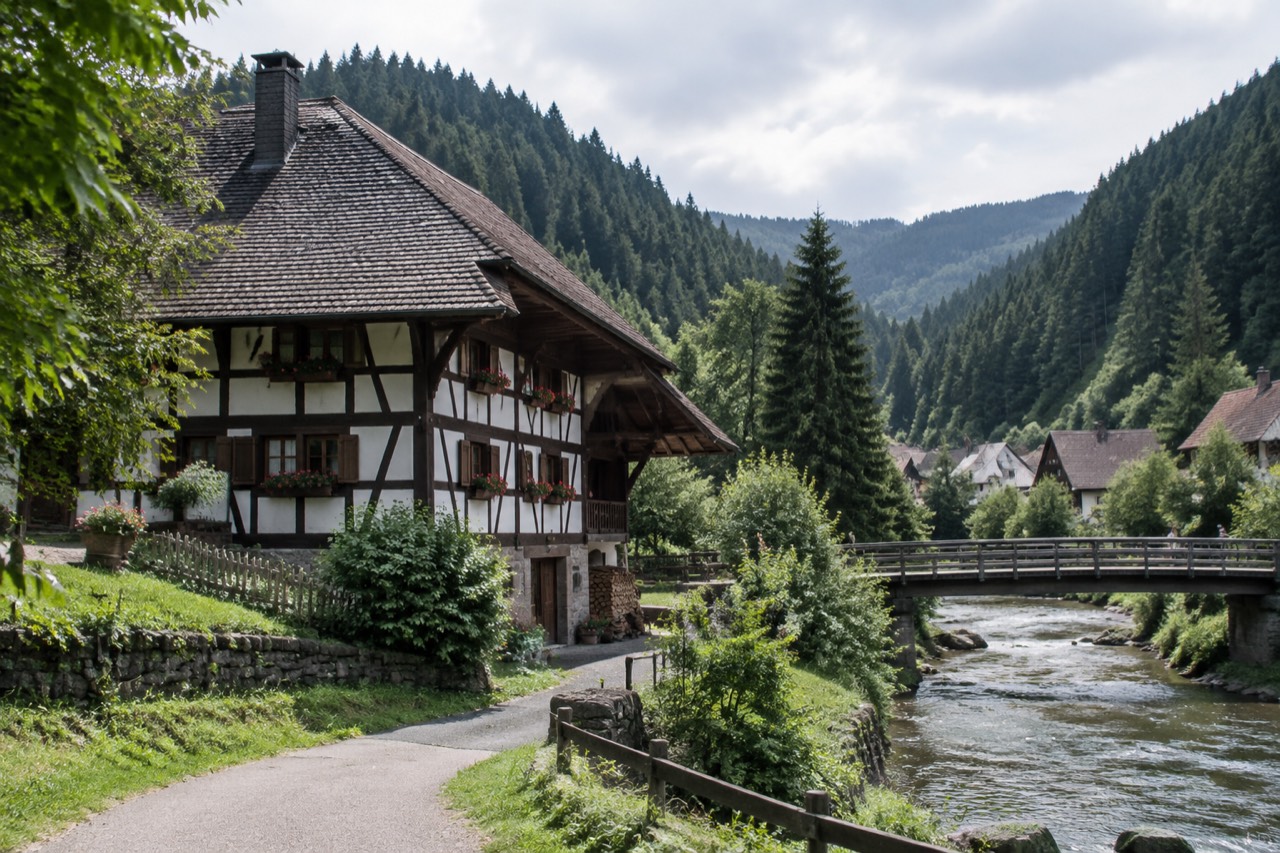
The Black Forest stretches across southwestern Germany across the Rhine from Strasbourg, and its mix of dense woodlands, cuckoo-clock workshops and thermal springs draws day-trippers and overnight visitors alike. But picking a town to stay in, or even to target on a single day trip, is not straightforward. Strasbourg Travel Guide has looked at what each town actually delivers, how easy it is to reach from Strasbourg, and which one fits a short winter visit, a summer hiking break or a spa weekend.
What Is The Best Town To Stay In The Black Forest In Germany?
The best town to stay in the Black Forest depends entirely on your travel style. Freiburg is the strongest all-round choice for first-time visitors who want a lively city with direct train links from Strasbourg, a medieval Altstadt and easy access to forest trails. Triberg appeals to travellers who want waterfalls, cuckoo-clock heritage and a quieter, village-scale stay. Baden-Baden suits those who prioritise thermal spas, fine dining and Belle Époque architecture. None is a wrong pick, but they serve different trips.
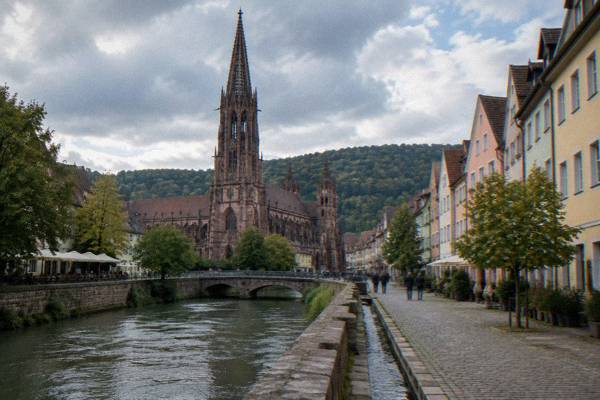
Freiburg sits at the western edge of the forest, a university city whose cobbled lanes and gabled merchants’ houses feel unmistakably German yet carry a relaxed, sun-warmed pace that surprises many first-time visitors. Its Minster, a red-sandstone Gothic church with a filigree spire, anchors a central square that fills with a farmers’ market every morning except Sunday. The Bächle, small open water channels that run along the streets, are a Freiburg trademark and a child-friendly curiosity. From the city, hiking trails climb straight into the wooded hills of the Schauinsland and the Rosskopf, and the Schlossberg hill offers a panorama of the old town and the Rhine plain. Freiburg also has the best public-transport connections of the three: direct regional trains from Strasbourg pull into Freiburg Hauptbahnhof multiple times an hour, making it the easiest Black Forest town to visit without a car.
Triberg, by contrast, is a compact village tucked into a narrow valley in the central Black Forest. It is famous for two things: Germany’s highest waterfalls, a multi-tiered cascade that drops through a forested gorge, and its cuckoo-clock heritage. Triberg claims the world’s largest cuckoo clock, a walk-in curiosity, and several workshops where you can watch clocks being carved and assembled. The village itself is quiet, with a handful of guesthouses, traditional Black Forest restaurants serving Schwarzwälder Schinken and Kirschtorte, and a pace that slows to near-silence after dusk. Triberg works best for travellers who want a nature-focused overnight stay or a half-day immersion on a day trip rather than a full city break.
Baden-Baden is the outlier. It lies at the northern edge of the Black Forest, closer to the Rhine valley, and has been a spa town since Roman times. Its thermal baths, the modern Caracalla Therme and the historic Friedrichsbad, draw a crowd that skews older and more wellness-oriented. The Kurhaus colonnade, the casino and the Trinkhalle pump room give the town a Belle Époque polish that feels more like a miniature Baden-Baden than a forest village. The surrounding hills offer gentle walks and vineyard trails, but the town’s real draw is the soak-and-dine rhythm. Baden-Baden is the priciest of the three, with a hotel scene that runs from grand dame palaces to design-led boutiques, and it is the best choice if your Black Forest trip is built around spa time rather than hiking or clock-spotting.
Freiburg: The Best All-Round Base
Freiburg earns its reputation as the best all-round base with a compact, car-free old town of medieval lanes and the photogenic Münsterplatz market, a youthful, affordable bar scene fueled by the university, and a tram network that whisks you directly to trailheads. As the natural gateway to the southern Black Forest, it puts the Höllental valley, Feldberg summit, and Titisee lake within an hour by train or bus.
The most efficient way to cover Freiburg, Titisee and Triberg in a single day is a guided tour from Strasbourg. Several operators run the circuit, handling the cross-border logistics and fitting the three stops into a long but well-paced day. The Black Forest day trip from Strasbourg is the most convenient way to see Triberg’s waterfalls and the cuckoo-clock workshops without spending a night in the village.
Even if you plan to stay overnight in Freiburg, a guided day trip can serve as a taster that helps you decide which corners of the forest to explore in more depth on your own. The town’s compact centre also makes it a realistic day-trip destination on its own: you can leave Strasbourg after breakfast, wander the Altstadt and the Schlossberg, and be back in time for a late dinner in Petite France.
Freiburg’s accommodation spans family-run guesthouses in the old town, mid-range chain hotels near the station and a handful of design hotels in the Wiehre neighbourhood. Prices rise in summer and during the Christmas market weeks, but the range is broad enough that a comfortable double room is rarely hard to find outside peak periods. The city’s restaurant scene is equally varied: traditional Badisch taverns sit next to modern vegetarian cafés and Michelin-starred kitchens, and the local wine, mostly dry white and rosé from the Kaiserstuhl and Markgräflerland, is served in generous quarter-litre glasses.
Triberg: Waterfalls, Clocks, And A Slower Pace
Triberg's thundering waterfalls are the star, with a well-maintained path of viewing platforms and bridges winding through the gorge for a leisurely hour-long walk, while the adjacent Black Forest Museum displays intricate clocks and traditional costumes; the falls glow at night in summer and freeze into icy sculptures in winter, all for a modest fee that encourages a slower pace.
The cuckoo-clock shops are Triberg’s second pillar. Clock shops and several smaller workshops line the main street, and you can watch carvers at work and buy a clock that ranges from a simple souvenir piece to a hand-carved heirloom that costs several hundred euros. The town’s cuckoo-clock claim is genuine: the world’s largest example, a walk-in structure the size of a small house, sits a short drive from the centre and chimes on the hour.
Triberg’s weakness is its size. The village centre is a single main road with a handful of restaurants and guesthouses, and after the waterfalls and the clock shops, there is little else to fill an afternoon. That makes it a better stop on a day trip than an overnight destination for most travellers, unless you are using it as a base for multi-day hiking in the central Black Forest. The forest trails around Triberg are excellent, with routes that link to the neighbouring villages of Hornberg and Schonach, but they require a car or a willingness to walk long distances on forest roads.
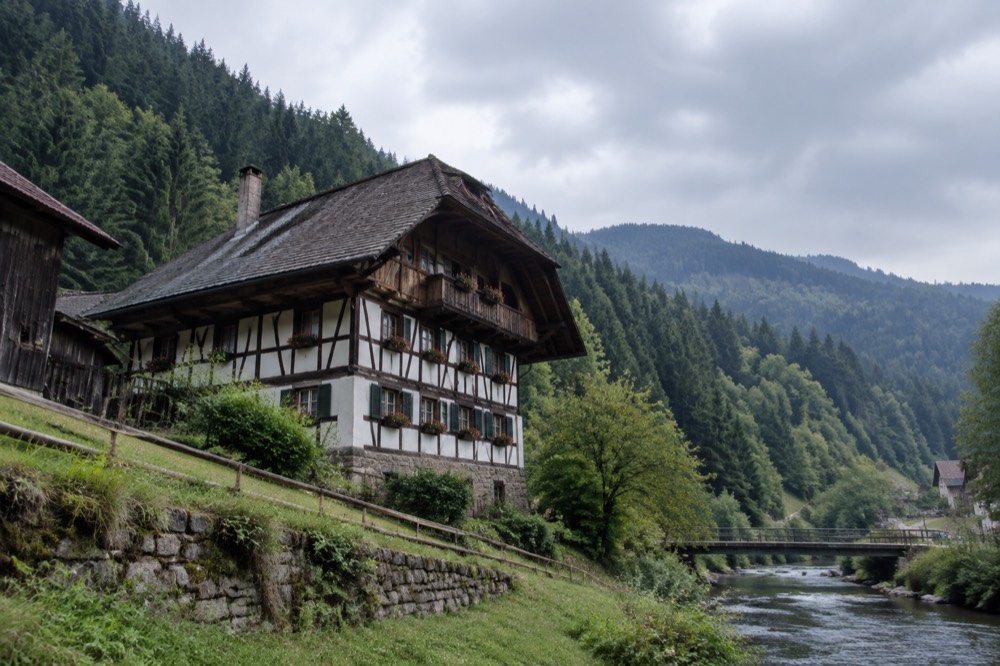
If you do stay overnight, Triberg’s accommodation is mostly small, family-run hotels and guesthouses, many of them in traditional Black Forest buildings with steep roofs and flower-box balconies. The food is hearty: Black Forest ham, venison, Spätzle and the obligatory Kirschtorte. The town is quiet after dark, and the lack of nightlife is either a feature or a drawback depending on what you came for.
Baden-Baden: Thermal Baths And Belle Époque Charm
Baden-Baden feels like a different country from the deep forest villages. The town's thermal springs bubble up at naturally hot temperatures, and the Roman-Irish bathing ritual at the Friedrichsbad, a historic marble-and-mosaic temple, is a two-hour sequence of warm-air baths, soap-brush massages and thermal pools that leaves visitors horizontal. The more modern Caracalla Therme next door offers a family-friendly alternative with indoor and outdoor pools, saunas and a wellness floor.
The spa culture sets the tone for the whole town. The Kurhaus colonnade, a long arcade of shops and cafés, leads to the casino, which Marlene Dietrich once called the most beautiful in the world. The Trinkhalle, a neoclassical pump room with a frescoed loggia, still serves the thermal water, which tastes faintly of salt and minerals. The Lichtentaler Allee, a tree-lined park along the River Oos, is a gentle, flat walk that passes rose gardens, a small art museum and several Belle Époque villas.
Baden-Baden’s hotel scene is the most upmarket of the three towns, with historic grand hotels, modern spa resorts and a few boutique options. The restaurant landscape is similarly elevated: Michelin-starred kitchens sit alongside classic Baden taverns, and the wine lists lean heavily on the local Spätburgunder and Riesling. The town is also a gateway to the northern Black Forest, with the Schwarzwaldhochstraße scenic road starting just outside town and the Mummelsee, a small glacial lake, a short drive away.
The downside is cost. Baden-Baden is noticeably more expensive than Freiburg or Triberg for accommodation, dining and even a simple coffee. It also lacks the immediate forest immersion of Triberg or the youthful energy of Freiburg. If your Black Forest trip is built around a spa weekend or a romantic break, Baden-Baden is the clear winner. If you want hiking, waterfalls and cuckoo clocks, it is the wrong base.
How To Choose The Right Town For Your Trip
Choose Freiburg for a first-time visit blending city sights and forest hikes with excellent transport and dining; pick Triberg for a short nature break focused on hiking and waterfalls, best as a day trip or two-night stay; and opt for Baden-Baden if you seek a luxurious spa-centred getaway and are willing to pay more.
The table below summarises the key differences.
| Town | Vibe | Best For | Key Attraction | Getting There From Strasbourg |
|---|---|---|---|---|
| Freiburg | Lively university city | First-time visitors, day trips, hiking access | Münster, Bächle, Schlossberg | Direct regional trains run frequently; a short drive across the Rhine |
| Triberg | Quiet forest village | Waterfalls, cuckoo clocks, nature stays | Triberg Waterfalls, cuckoo-clock workshops | Best reached by car or guided tour; train connections require a change |
| Baden-Baden | Elegant spa town | Thermal baths, fine dining, romantic breaks | Friedrichsbad, Caracalla Therme, Kurhaus | Direct trains from Strasbourg; a short drive north of the city |
A second table lays out how you can reach each town without a car, which is the most common question from Strasbourg-based travellers.
| Town | Train | Car | Guided Tour |
|---|---|---|---|
| Freiburg | Regular direct regional services; journey is short and straightforward | Easy, mostly motorway; parking in city centre garages | Included on most Black Forest day trips from Strasbourg |
| Triberg | Regional train to Offenburg, then change; less frequent service | Scenic drive through the Kinzig valley; parking near the falls | The most practical option for a day trip; tour handles all logistics |
| Baden-Baden | Direct regional trains from Strasbourg; station a short walk from the centre | Quick motorway drive; ample parking near the spa quarter | Rarely included on day trips; better visited independently or by train |
What Else Can You Do From Strasbourg?
Beyond the classic Black Forest day trip, Strasbourg itself rewards active exploration by bike. A guided tour covers the Grande Île, Neustadt, and European Quarter on flat, easy terrain, stopping at the cathedral, Petite France, covered bridges, and European institutions at a comfortable pace.
If pedalling is not your style, a Segway tour covers similar ground with less effort. The introductory option is a good introduction to the city's layout, and the guides are skilled at keeping the group moving through the narrow lanes and across the tram lines without drama. Both the bike and Segway tours are popular in summer, so booking a day or two ahead is sensible.
For travellers who want to combine the Black Forest with another cross-border day, the Alsace wine route and the medieval villages of Riquewihr, Eguisheim and Kaysersberg are a shorter drive south of Strasbourg and offer a completely different landscape of vineyards, half-timbered villages and wine caves. A guided day trip that covers the Best of Alsace is the most efficient way to see several villages in a single day without driving the narrow roads yourself. If you are still weighing whether to base yourself in Strasbourg or Colmar, our comparison of Colmar and Strasbourg lays out the trade-offs. And for accommodation advice closer to home, the Strasbourg accommodation guide covers every neighbourhood from Petite France to the Neustadt.
Common Questions About Black Forest Towns
Is Freiburg better than Triberg?
Freiburg is better for most travellers because it offers more variety: a medieval old town, a lively food and café scene, and easy train access from Strasbourg. Triberg is better if your priority is seeing the waterfalls and cuckoo-clock workshops in a quiet, forest-immersed setting. The two towns are not really competitors; they serve different trip styles.
Can you visit the Black Forest as a day trip from Strasbourg?
Yes, a day trip is the most practical way for many visitors. A guided tour from Strasbourg can cover Freiburg, Titisee and Triberg in a single long day, handling the driving and border crossing. Freiburg and Baden-Baden are also reachable by direct train from Strasbourg, making an independent day trip straightforward.
Which Black Forest town is best for families?
Freiburg is the most family-friendly of the three. The Bächle channels fascinate young children, the Schlossberg is an easy climb with a playground at the top, and the city has plenty of casual restaurants and ice-cream shops. Triberg appeals to families who want a short waterfall walk and the novelty of the giant cuckoo clock, but the village is quieter and has fewer child-focused activities.
Is Baden-Baden worth visiting if I do not use the spas?
Baden-Baden still has enough to fill a half-day: the Trinkhalle, the Kurhaus colonnade, the casino exterior and the Lichtentaler Allee park are all worth a stroll. The town’s architecture and café culture are elegant, and the surrounding vineyards offer short walks. However, if you skip the thermal baths entirely, you miss the main reason most people visit.
How many days do you need in the Black Forest?
A single day trip from Strasbourg is enough to see Freiburg’s old town and one other stop, such as Titisee or Triberg. Two days allow you to add a hike, a spa visit or a second town. Three days open up the scenic Schwarzwaldhochstraße, the Mummelsee and a deeper exploration of the forest trails.
Do I need a car to explore the Black Forest from Strasbourg?
A car gives you the most flexibility, especially for reaching Triberg and the smaller forest villages. However, Freiburg and Baden-Baden are well served by direct regional trains from Strasbourg, and a guided day trip removes the need for a car entirely if you only want to see the highlights in a single day.
Choosing the right Black Forest town is less about finding a single “best” and more about matching the place to the trip you actually want. Freiburg delivers city energy and forest access, Triberg delivers waterfalls and quiet, and Baden-Baden delivers thermal waters and old-world polish. Whichever you pick, the journey across the Rhine from Strasbourg is short enough that you can sample all three over a few days and still be back in Alsace for a late-night tarte flambée.