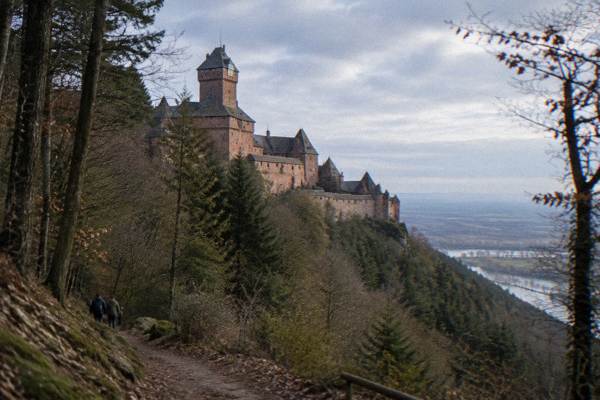
Is Colmar A Tourist Trap?
An honest look at whether Colmar, the half-timbered wine town in Alsace, north-eastern France, is a tourist trap, and how to visit it well from Strasbourg.
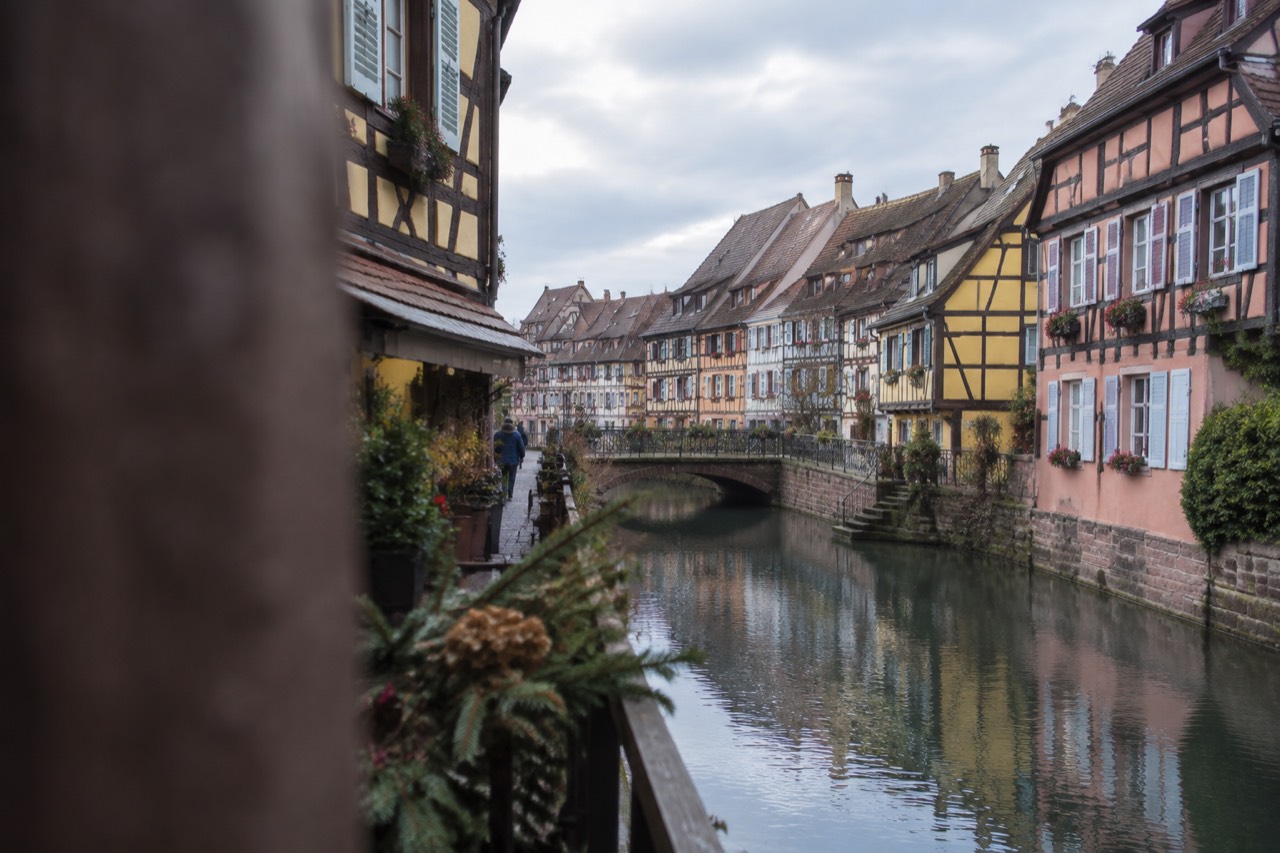
Colmar, the wine town in Alsace, north-eastern France, sits in the vine-covered plain south of Strasbourg. When a place appears on this many postcards and social feeds, travellers reasonably wonder whether the town itself is real or whether it has been rebuilt as a backdrop for visitors. The short answer is that Colmar is a genuine historic town with a small, concentrated old centre, and the "tourist trap" label mostly describes what happens when high-season crowds meet narrow lanes, not anything fake about the place itself.
Is Colmar A Tourist Trap?
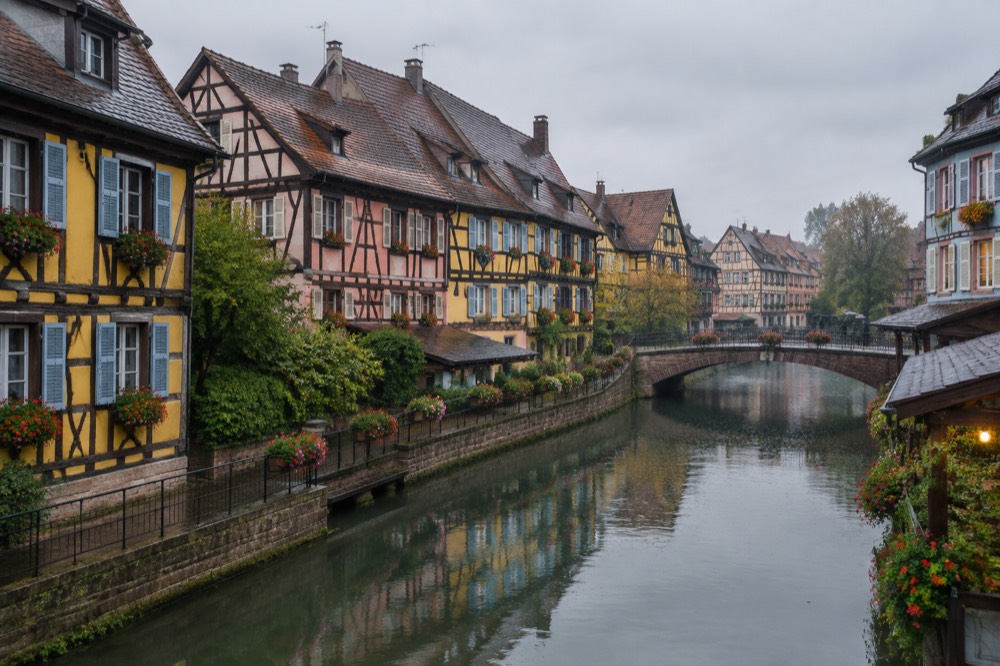
No, Colmar in Alsace, north-eastern France, is not a tourist trap in the rigged sense of a place built or rebuilt to extract money from visitors. Its half-timbered old centre is authentic heritage, and the town functions year-round as a working administrative and wine-trade centre. The trap feeling is real but has a different cause: a very small old town absorbing heavy seasonal crowds, which concentrates souvenir shops and pushes prices up in the most visited lanes.
The distinction matters. A true tourist trap is a place whose main economic engine is the visitor itself: attractions manufactured for arrival, food priced for one-time customers, nothing that survives in the low season. Colmar does not fit that description. It is the seat of a French arrondissement, a wine-trade town with a surrounding vineyard economy, and its old buildings are protected heritage rather than stage sets. What Colmar does have is an unusually compact concentration of the picturesque, which means the same three or four lanes carry nearly all the foot traffic.
The honest version of the complaint is this: in July and August, and during the Christmas season, the lanes around the canals feel less like a living town and more like a queue with scenery. Visitors who arrive at midday in peak season, walk the two or three most famous streets, eat at the first terrace they find and leave, will experience something close to a trap, because that itinerary is exactly the one the crowd follows. Visitors who arrive early, walk one block off the main lanes and eat where the menu is written in Alsatian dialect as often as in English, experience a different town entirely.
| Tourist-trap signal | What you find in Colmar | Verdict |
|---|---|---|
| Attractions built for visitors only | Old centre is protected historic fabric, not a reconstruction | Not a trap |
| Everything closed off-season | Town is a working administrative and wine centre year-round | Not a trap |
| Identical souvenir shops everywhere | Concentrated on a handful of main lanes; side streets hold ordinary shops | Partly, in peak lanes |
| Food priced for one-time customers | Riverside terraces carry the premium; winstubs a few streets away do not | Partly, choose carefully |
| Nothing beyond the photo | Museums, churches and a surrounding wine route give the town depth | Not a trap |
Where The Crowds Gather In Colmar
The crowds in Colmar concentrate on the canal-side lanes of La Petite Venise, the streets around the old town's coloured half-timbered houses, and the main square, with the heaviest pressure from late morning through late afternoon in summer and throughout the Christmas season. The further you walk from those few streets, the faster the crowd thins. Colmar's old centre is small enough that the famous views and the quiet lanes are only minutes apart on foot.
La Petite Venise, the canal quarter, is the image that travels: flowers on the balconies, coloured timber frames, flat boats on the water. It deserves its reputation and it is genuinely pretty, but it is also the single most visited corner of the town, so the experience there is defined by when you arrive. Early morning, before the day-trip coaches from Strasbourg and the wider region pull in, the quarter is close to serene. By early afternoon in July you will be sharing the footbridges with a crowd that moves at shuffle pace.
The second pressure point is seasonal rather than geographic. Alsace's Christmas markets draw a large winter audience to the whole region, and Colmar's illuminated old centre is a headline act. Strasbourg's own edition, the reference point for the region, ran from 26 November to 24 December in 2025 and drew 3.05 million visitors according to the city's own bilan, which gives a sense of the scale of December travel through Alsace generally. Colmar's market is smaller in footprint but proportionally intense for the size of its lanes. If your question is really "will I be alone with the pretty houses?", the answer in December is plainly no.
A useful way to think about Colmar's crowd problem is that it is a distribution problem, not an authenticity problem. The town has more quiet, equally old streets than it has famous ones; it simply has no incentive to advertise them. The sections below cover how to use that, and for anyone using Strasbourg as a base, a guided format can do some of that distribution work for you, since a local guide's route deliberately skips the pinch points.
How To See Colmar Without The Crush
The reliable tactics are timing, geometry and meal choice: arrive before mid-morning or later in the afternoon, walk one or two lanes off the canal quarter, and eat lunch away from the waterside terraces. None of this requires insider knowledge. It requires accepting that the three most photographed streets in Colmar are also the three most crowded, and choosing to spend part of your day in the other ninety percent of the old centre.
Timing is the single biggest lever. Day-trip traffic builds from late morning and eases in the late afternoon, so an early start from your base, or an afternoon arrival after the coaches have gone, changes the character of the visit completely. Overnight visitors get the best version of the town: the early evening and the early morning, when Colmar belongs to the people who live and work in it. The town's coloured facades also photograph better in low light than at midday, so the crowd-avoiding hours happen to be the best hours for the pictures that brought you there in the first place.
Geometry is the second lever. The canal quarter is small; the old town around it is larger, and the streets beyond the main lanes hold the town's ordinary life: bakeries, wine merchants, the covered market, churches that are as old as anything on the postcards. Walking five minutes from La Petite Venise in any direction puts you in streets where the crowd is a trickle rather than a stream. Nothing about this is a secret, it is simply that the crowd follows the photographs, and the photographs follow three streets.
The food decision matters as much as the route. Waterside terraces in the canal quarter price for the view and the one-time customer; a winstub a few streets inland prices for neighbours who come back weekly. The same Alsatian dishes, choucroute, tarte flambée, baeckeoffe, appear on both menus. This is the one place where Colmar genuinely behaves like a trap, at the tables nearest the water, and it is also the easiest trap to sidestep. The same logic applies in Strasbourg, where the food culture is the same and the stakes are higher because the city is bigger; a gourmet walk with tastings, such as the Strasbourg tasting tour, is one way to get taken to the food places that survive on repeat business rather than on foot traffic, and it pairs naturally with a Colmar day trip since both towns share the same table culture. Check availability
Colmar Or Strasbourg: Which Town Handles A Visit Better?
Strasbourg offers more depth and spreads its crowds across a larger World Heritage old centre plus a modern tram network, while Colmar offers higher scenic density in a smaller, walkable package. Strasbourg's Grande Île and Neustadt carry UNESCO World Heritage status, and its cathedral platform at 66 m, its astronomical clock show at 12:30 daily and its river boat tours give it anchor sights Colmar cannot match. Colmar wins on concentration: the famous views are all within a short walk of each other.
The comparison is worth making because the two towns are routinely visited together, and the answer shapes where you sleep and how long you stay. Strasbourg is a city of 293,771 residents (INSEE, 2023), a prefecture with a university, European institutions and a full urban transport system: a single CTS ticket is 1.90 EUR, a 24-hour Solo pass 4.60 EUR. Colmar is a town on a different scale, and that scale is part of its charm and part of its crowd problem, because the same visitor numbers that Strasbourg absorbs across a large centre land on Colmar's handful of lanes.
Strasbourg's anchor sights are priced and scheduled like a city's. The cathedral platform costs 10 EUR full, 6 EUR reduced, with the tower open in two daily windows that shift by season; the astronomical clock show is at 12:30 sharp with a 4 EUR ticket sold on the day only; the Batorama river boats run a long tour at 16.20 EUR full and a short tour at 12.50 EUR full, with the Red Tour lasting 1h10 and the Blue Tour 0h45. Colmar's equivalent offering is softer: canals, lanes, museums and wine, without a single must-queue monument. For a fuller head-to-head, see the detailed Strasbourg versus Colmar comparison and the answer to whether it is better to stay in Colmar or Strasbourg.
| Factor | Strasbourg | Colmar |
|---|---|---|
| Scale of old centre | Large World Heritage core, Grande Île plus Neustadt | Small, concentrated old town |
| Anchor monument | Single-spired cathedral, platform at 66 m, 10 EUR full | No single dominant monument; churches and museums |
| Crowd spread | Absorbed across a wide centre and tram network | Concentrated on a few lanes |
| River experience | Batorama boats, long tour 16.20 EUR full, 1h10 | Canal quarter on foot, flat boats in the lanes |
| Best base for the region | City base with rail and day-trip options | Town base inside the wine country |
| Food culture | Winstubs, full urban range | Winstubs and wine-town tables, smaller choice |
A quick orientation walk can be worth it in Strasbourg before you head south, and the sixty-minute walk with a local is built for exactly that: a short first-day route that fixes the geography so the rest of the stay, including the Colmar excursion, sits properly on the mental map.
When To Visit Colmar For Fewer Crowds
The quietest months for Colmar are the shoulder seasons, roughly late autumn outside the Christmas run, and the weeks of late winter and early spring, when the town keeps its ordinary rhythm. The busiest are July and August plus the late-November to 24 December Christmas period. The region's semi-continental climate means warm summers and cold, grey winters, so the quiet months are also the cold ones, which is the trade-off.
The climate data for the wider plain, measured at Strasbourg-Entzheim, shows what the seasons actually feel like: mean daily maxima of 26.4 C in July against 5.2 C in January, with rain spread fairly evenly through the year, 635.7 mm annually and between 8.0 and 10.8 rain days per month depending on the season. There is no dry season to aim for and no Mediterranean warmth in the off-season; the reward for visiting in, say, February is empty lanes and low light on the coloured facades, at the price of cold fingers.
The Christmas period is a category of its own. The region's market calendar runs late November to 24 December, with the Strasbourg edition's 2025 dates, 26 November to 24 December, as the reference point, and Colmar's own illuminations running on the same rhythm. If your trip is specifically about the Christmas atmosphere, the crowd is part of the atmosphere and avoiding it would mean avoiding the thing you came for; the workable compromise is visiting on a weekday, arriving outside the middle of the day, and booking tables ahead. For the market question specifically, the Colmar Christmas market guide covers it in detail.
| Period | Crowd level in Colmar | What to expect |
|---|---|---|
| Late November to 24 December | Heavy, market season | Illuminations, chalets, evening atmosphere, full terraces |
| July and August | Heavy, summer holidays | Warm days, peak coach traffic, fullest canal lanes |
| May and June | Moderate | Long evenings, flowers out, wine-country greenery |
| September and October | Moderate to light | Harvest season in the vineyards, softer light |
| January to April | Light | Cold, quiet lanes, ordinary town life, some closures |
Is Colmar Worth The Day Trip From Strasbourg?
Yes, for scenery, wine and a change of scale, Colmar earns its place on almost any Alsace itinerary, and the trap risk is manageable with early timing and one lane of detour. It is not worth it as a box to tick at midday in peak season, which is the version of the visit that generates the tourist-trap reputation. Give it a full day or an overnight, not two hours, and pair it with at least one wine village nearby.
The practical shape of the trip matters more than the destination itself. A day trip that leaves Strasbourg early, spends the morning in Colmar's lanes before the crowd peaks, lunches away from the water, and then pushes out into the surrounding wine villages in the afternoon, delivers everything the region promises. A day trip that arrives at noon, fights through La Petite Venise and leaves by three, delivers the postcard and the queue and nothing else. The Colmar day trip guide covers the practical planning, and the Strasbourg and Colmar itinerary shows how the two towns divide a multi-day stay. If you are weighing how long to give the town, the answer to how many days in Colmar is enough works through the trade-offs.
A guided loop from Strasbourg handles that timing for you. Book a Colmar and villages day trip here.
One honest caveat: Colmar's fame is doing exactly what fame does to small beautiful places, and the pressure is not evenly distributed onto the town's own terms. The old centre is protected, the wine economy is real, and the town is not going anywhere. But the visitor experience is increasingly a timed one, and travellers who pretend otherwise, arriving unannounced at midday in December, will find the trap feeling waiting for them even though nothing about the town itself is false. This site, the Strasbourg Travel Guide, covers the whole region from a Strasbourg base precisely because the two experiences are so often conflated.
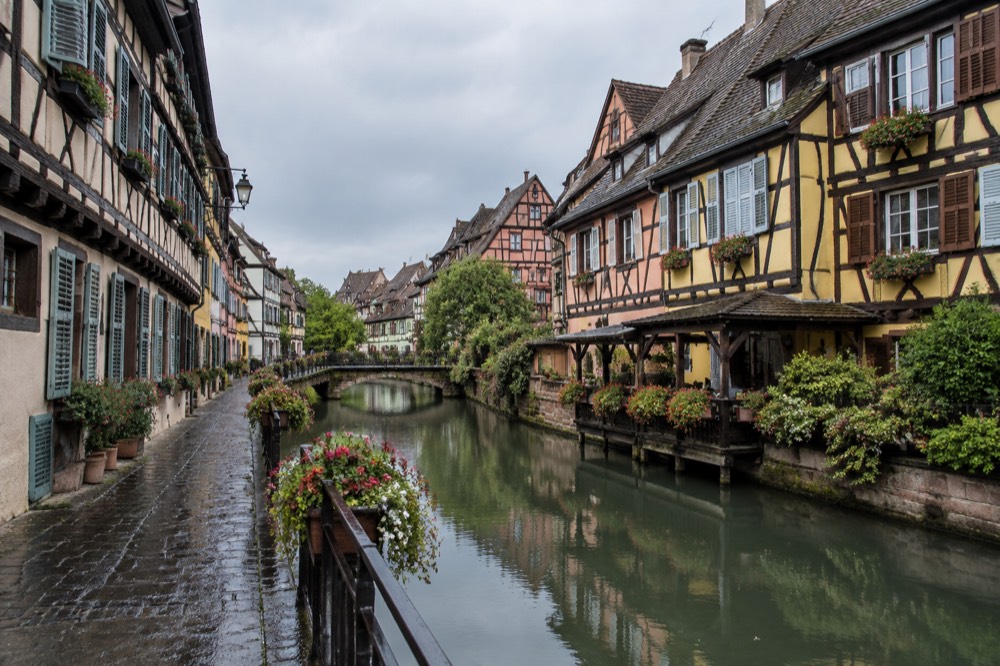
The verdict, then, is conditional rather than binary. Colmar is a real town with real heritage, and the tourist-trap label is a fair description of a certain way of visiting it, not of the place. Choose your hour, choose your street, choose your table, and the question answers itself in the town's favour.
Common Questions About Colmar
Is Colmar a tourist trap?
No. Colmar's old centre in Alsace, north-eastern France, is genuine protected heritage and the town works year-round as an administrative and wine-trade centre. The trap feeling comes from heavy seasonal crowds concentrated on a few canal-side lanes, not from anything fake about the town itself.
When is Colmar most crowded?
July and August, plus the Christmas market period that runs from late November to 24 December across the Alsace region. Within any day, the canal quarter is at its fullest from late morning through late afternoon.
How do I avoid the crowds in Colmar?
Arrive before mid-morning or later in the afternoon, walk one or two lanes away from the canal quarter, and eat away from the waterside terraces. The town's quiet, equally old streets begin minutes from the famous views.
Is Colmar or Strasbourg better for a first visit?
Strasbourg offers more depth, a larger World Heritage old centre and anchor sights such as its single-spired cathedral and river boat tours. Colmar offers higher scenic density in a smaller package. Many travellers do both, using Strasbourg as the base.
Is Colmar worth visiting in winter outside the Christmas market?
Yes, if you accept the cold. The region's semi-continental climate gives January a mean daily maximum of 5.2 C, but the lanes are quiet, the facades photograph well in low light, and the town keeps its ordinary rhythm once the market ends on 24 December.
Should I stay overnight in Colmar or visit on a day trip?
An overnight stay gives you the town's best hours, early morning and evening, after the day-trip traffic has gone. A well-timed day trip from Strasbourg also works, provided it starts early and leaves the canal quarter before the afternoon peak.