Strasbourg Vs Colmar
Strasbourg and Colmar are the two names every Alsace itinerary throws at you, and they answer different needs: one is a working European capital on the Ill, the other a small wine town built for wandering. Here is how the choice actually breaks down.
Short answer
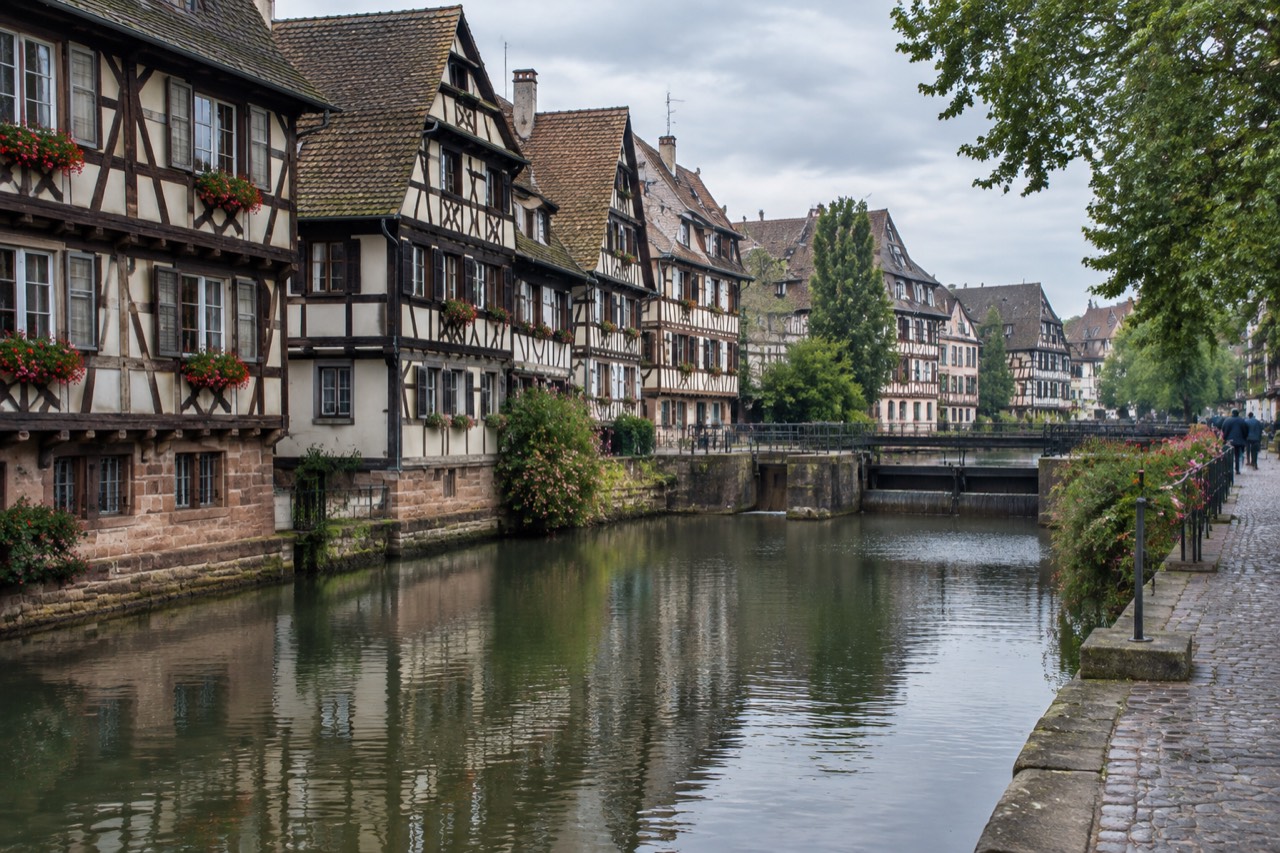
Strasbourg is the region's capital, a city of 293,771 residents (INSEE 2023) with a cathedral platform at 66 m, a boat circuit and European institutions. Colmar is a far smaller wine-town showcase. Give Strasbourg the nights and the sights, Colmar a day trip, and pair them with a short regional train ride.
Strasbourg, the prefecture of the Bas-Rhin in Alsace, north-eastern France, sits on the River Ill beside the Rhine, with the German town of Kehl on the far bank. Colmar lies to the south, deeper into the Alsatian wine country. Travellers planning an Alsace trip almost always end up weighing the two against each other, and the honest answer is that the comparison is not really a contest: they are different animals, and the decision that matters is which one gets your hotel nights. This guide sets out what each city does well, what each one costs where figures are sourced, and how to split a trip between them without guessing.
Which City Should You Choose: Strasbourg Or Colmar?
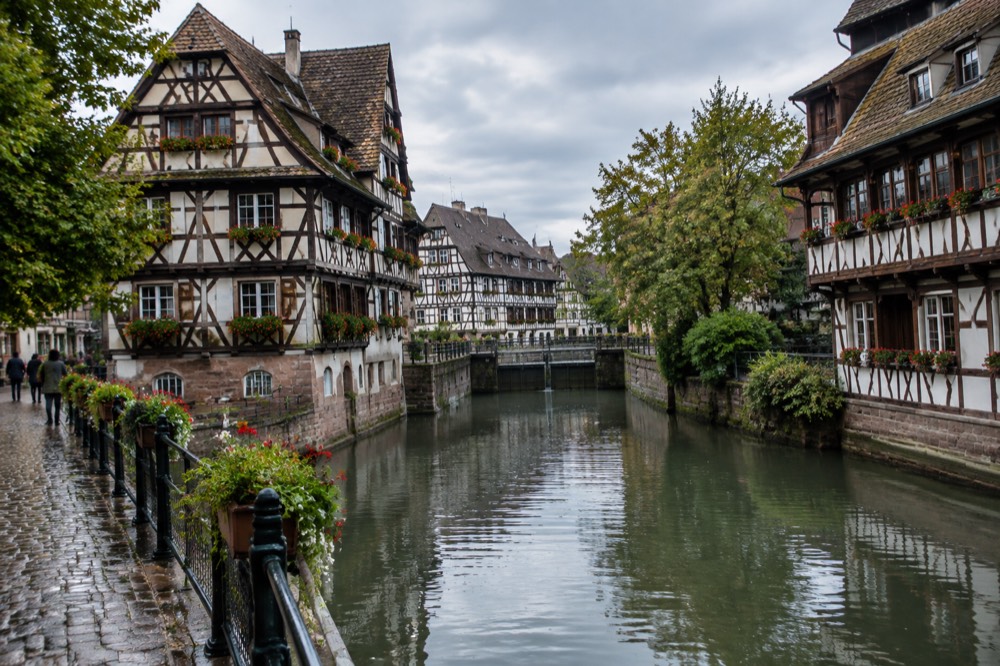
Choose Strasbourg if you want a full city with a Gothic cathedral, a UNESCO-listed river island, European institutions and enough restaurants, museums and evening life to fill three days; choose Colmar if you want one concentrated dose of half-timbered lanes and vineyard scenery and are happy to see it in a single day. Strasbourg carries the region's weight, Colmar carries its picture postcard. Doing both is the normal plan.
The two cities are separated by a short regional train ride, which is why nearly every visitor to one ends up at the other. Strasbourg is the seat of the European Parliament and the region's transport hub, so it handles the logistics: the TGV connections, the airport shuttle, the tram network. Colmar has none of that machinery and does not need it, because its appeal is a compact old core that you walk from end to end between lunch and dinner.
A useful framing: Strasbourg is where Alsace runs its affairs, Colmar is where Alsace sells its charm. If your trip is short and you can only sleep in one place, sleep in Strasbourg and day-trip south. If your trip is built around the wine route and you have a car, Colmar becomes the more natural base, and Strasbourg becomes your arrival and departure point. The rest of this guide works through that logic sight by sight and euro by euro.
How Do The Two Cities Compare On Size And Atmosphere?
Strasbourg is a city of 293,771 residents in the commune (INSEE, 2023), spread across the Grande Île, the Neustadt and districts beyond the centre, so its atmosphere shifts block by block from medieval lanes to imperial boulevards. Colmar is a small town whose historic core is walkable end to end, with an atmosphere that stays uniformly picturesque. One feels like a capital, the other like a set piece.
The size difference is the single most practical thing to understand. In Strasbourg you will use the tram at some point: a single ticket costs 1.90 EUR bought through the Badgéo card, the CTS app or contactless payment, or 2.50 EUR if bought on board the bus, and a 24-hour Solo pass is 4.60 EUR. In Colmar the equivalent machinery barely matters, because the distances that require it do not exist. That contrast shapes everything else: where you eat, how late you stay out, how tired your feet get.
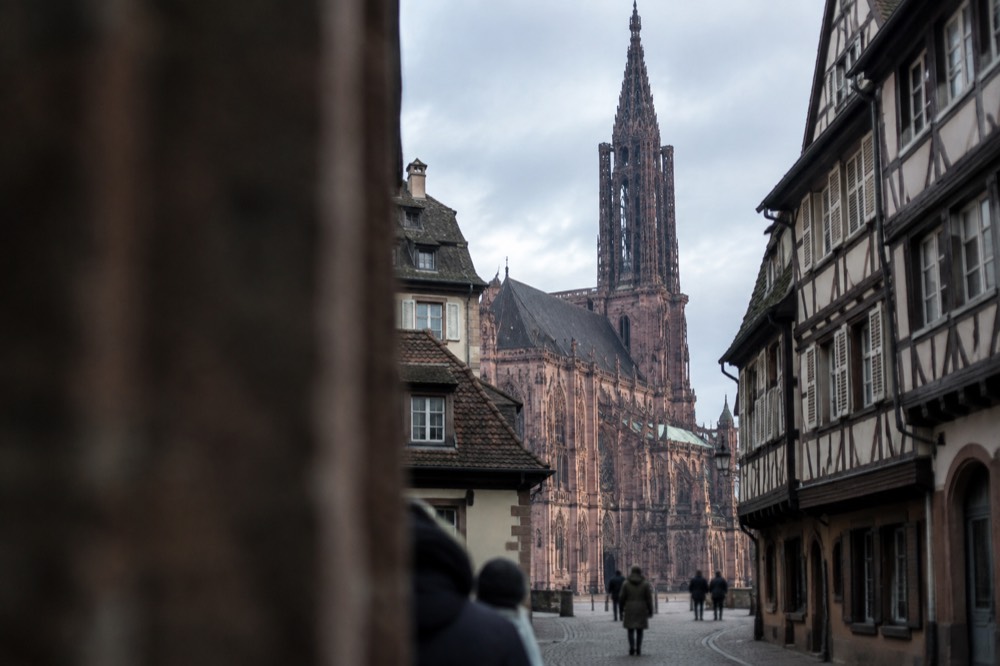
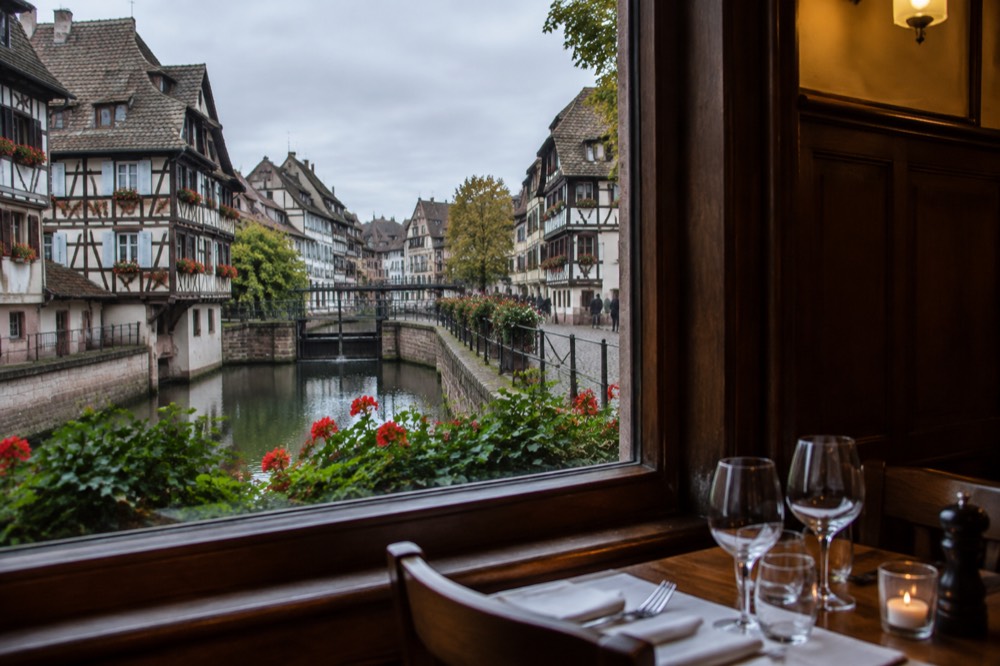
Strasbourg's atmosphere also has layers that Colmar's does not. The Grande Île holds the cathedral, Petite France and the covered bridges; the Neustadt, added later around the imperial German era, gives the city wide avenues and official buildings; the European Quarter to the north-east is glass and flags. Colmar's atmosphere is essentially one note, played very well: canals, coloured render, timber frames, wine. Neither approach is better. But if you bore of pretty lanes quickly, Strasbourg will keep you busy for days, and if you want pretty lanes and nothing else, Colmar delivers without the city friction.
The choice also interacts with the seasons. Strasbourg's semi-continental climate means cold, grey winters and warm summers: Meteo-France's 1991-2020 normals for Strasbourg-Entzheim put the mean January maximum at 5.2 C and the mean July maximum at 26.4 C, with 635.7 mm of rain across the year. Colmar sits in the same climate zone a short way south, so weather is not a differentiator between the two; what differs is what each offers when it rains, and there Strasbourg's museums win outright. The Strasbourg Travel Guide covers that side of the city in depth, including a dedicated rainy day plan for Strasbourg.
| Dimension | Strasbourg | Colmar |
|---|---|---|
| Scale | Commune of 293,771 residents (INSEE 2023) | Small town; historic core walkable end to end |
| Setting | River Ill beside the Rhine, German border at Kehl | Alsatian plain between the Vosges foothills and the Rhine |
| Core districts | Grande Île, Neustadt, Petite France, Krutenau, European Quarter | One concentrated old town plus canal quarters |
| Role | Regional capital, European Parliament seat, transport hub | Wine-route town, museum town, day-trip magnet |
| Getting around | Tram and bus network; single ticket 1.90 EUR (app/contactless) or 2.50 EUR on board | On foot within the centre |
| Best suited to | Trips of two to four nights, mixed interests | One full day, or a base for the wine route by car |
What Are The Must-See Sights In Each City?
Strasbourg's headline sights are the single-spired cathedral with its 66 m tower platform, the astronomical clock with its daily 12:30 show, Petite France, the covered bridges and the European institutions; entry figures here cover the platform at 10 EUR full and 6 EUR reduced, the clock show at 4 EUR, and municipal museums at 9 EUR full and 5 EUR reduced. Colmar's sights are its old-town lanes, canals and museums.
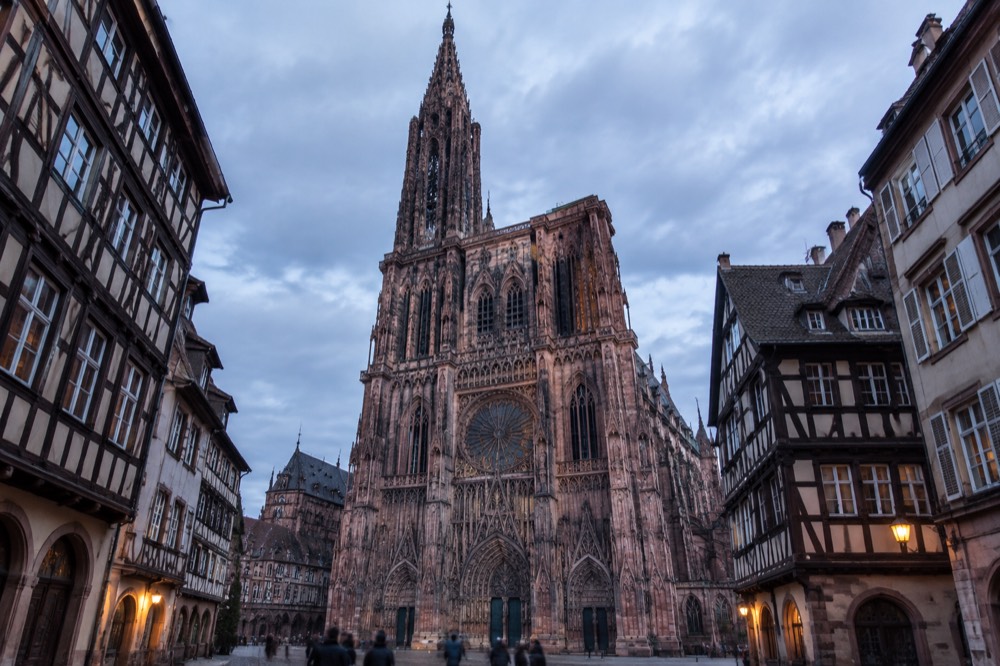
Start with the cathedral, because it is the one thing in either city that genuinely justifies the journey. Strasbourg Cathedral has a single spire, not a pair, and the tower platform sits at 66 m; the climb is rewarded with the best view over the red roofs of the Grande Île. The platform costs 10 EUR full and 6 EUR reduced, with children under 6 free, and it runs on seasonal hours: 09:30 to 13:00 and 13:30 to 20:00 from 1 April to 30 September, and 10:00 to 13:00 and 13:30 to 18:00 from 1 October to 31 March, with the last ascent earlier than the closing time. The nave keeps daytime visiting hours around services, and the astronomical clock performs its automaton show daily at 12:30 sharp, with tickets at 4 EUR bought on the day only, at the cathedral stalls or the Saint-Michel entrance on the Place du Château side.
Beyond the cathedral, Strasbourg's sight list divides into the medieval core and the modern institutions. Petite France is the former tanners' and millers' quarter at the south-western tip of the Grande Île, all timber frames and water wheels; the covered bridges and the Barrage Vauban terrace sit just beyond it, with the terrace keeping seasonal hours (08:00 to 19:00 in September-October and March-April, 08:30 to 16:00 from November to February). The European Quarter holds the European Parliament, the Council of Europe and the European Court of Human Rights; the Parlamentarium visitor centre is open Monday to Friday 09:00-18:00 and Saturday 09:30-12:00 and 13:00-18:00 outside plenary weeks, with an airport-style security check at the door and different hours during plenary sessions. A guided walk such as the European District tour covers this ground efficiently, and you can Check availability alongside the dedicated European Quarter guide.
Colmar's sights, described without figures since none are in this guide's sources, are of a different order: the old town's painted merchant houses, the canal-side quarter that earns the town its reputation, its art museum built around a Grünewald altarpiece, and its role as the practical gateway to the wine route villages. It is a town you experience as a whole rather than as a list of ticketed monuments, which is exactly why it compresses so well into a day trip. The full Colmar guide walks the town in that spirit.
Food deserves its own word, because Alsace is a region you eat as much as see. Strasbourg's winstubs serve choucroute, baeckeoffe and tarte flambée alongside local Riesling and beer, and the city's restaurant scene runs from those stubborn taverns to modern kitchens. A gourmet walk with tastings is one of the better ways to sample across several stops in a single afternoon, and it suits visitors who would rather have someone else read the menu. Colmar's food culture overlaps heavily with Strasbourg's, since it is the same regional larder, but its scene is smaller and oriented around the day-trip rhythm.
| Strasbourg sight | Entry figure | Notes |
|---|---|---|
| Cathedral nave | Check the cathedral's own hours page | Mon-Sat 08:30-11:15 and 12:45-17:45; Sun 14:00-17:15 |
| Cathedral platform at 66 m | 10 EUR full, 6 EUR reduced, under 6 free | Seasonal hours; last ascent before close |
| Astronomical clock show | 4 EUR (3 EUR groups of 12+, students to 25; 2 EUR children 6-17) | Daily at 12:30; day-of tickets only |
| Municipal museums | 9 EUR full, 5 EUR reduced; 1-day Pass Musées 20 EUR | Free for everyone on the first Sunday of each month |
| Batorama river tour | Long tour 16.20 EUR full / 8.90 EUR reduced; short tour 12.50 EUR / 7.20 EUR | Red Tour 1h10, Blue Tour 0h45 |
| Musée Alsacien | Closed for works until 2028 | Do not plan around it |
How Do The Christmas Markets Compare?
Strasbourg's Christmas market, the region's flagship, ran from 26 November to 24 December in its 2025 edition and drew 3.05 million visitors, and the next edition's dates are not yet published, so confirm them on the city's Christmas site; Colmar also runs a well-known market, smaller in scale, which suits visitors who want the atmosphere without the capital's crowds. Both are at their best after dark, and both close early on 24 December.
Strasbourg markets itself as a Christmas capital, and the numbers behind that claim are real: the 2025 edition, 26 November to 24 December, attracted 3.05 million visitors according to the city's own bilan, down from 3.4 million the year before. The usual pattern is an opening in the last week of November and a run to 24 December, with chalets open from late morning into the evening and an early close on the final day. For 2026, the city's Christmas site states that the dates and programme are still being finalised, so treat the pattern as a planning guide rather than a promise and check the official page before booking anything non-refundable.
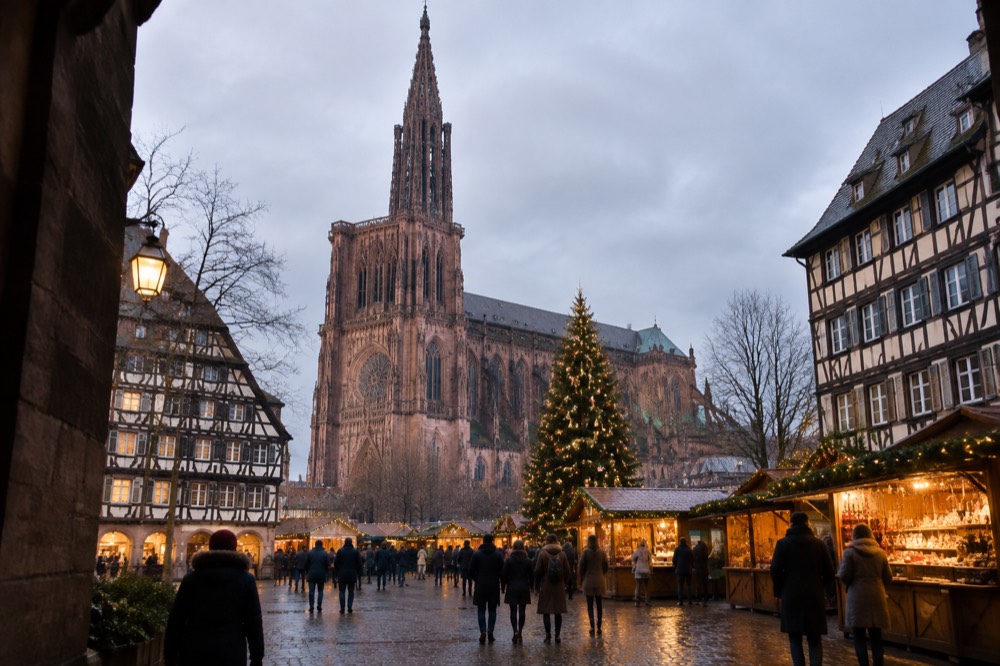
Colmar's market is the natural rival, and the comparison has its own dedicated answer page. In general terms, Colmar's version trades on the old town's looks: chalets along lanes and canals that are already photogenic before a single light goes up. Strasbourg's trades on scale and ceremony: several squares tied together across the Grande Île, with the cathedral and the great tree on Place Kléber as anchors. Visitors who want one intense, compact market evening often prefer Colmar; visitors who want a multi-day Christmas programme with concerts, a cathedral and a full city around the markets prefer Strasbourg.
The pairing question is well worn: the Strasbourg and Colmar itinerary covers doing both in one trip, and the Colmar Christmas market guide handles the southern half in detail. December hotel prices in both towns climb around the market weeks, which is its own argument for booking early; the where to stay for the Strasbourg Christmas market guide maps the neighbourhood trade-offs.
| Christmas market dimension | Strasbourg | Colmar |
|---|---|---|
| Dates of the 2025 edition | 26 November to 24 December 2025 | Not in this guide's sources; check the town's official page |
| Attendance in 2025 | 3.05 million (city press release) | No sourced figure |
| Setting | Several squares across the Grande Île, cathedral and tree as anchors | Chalets along old-town lanes and canals |
| Scale | The region's flagship, city-wide | Smaller, concentrated in the historic core |
| 2026 dates | Not yet published; confirm on the city's Christmas site | Not in this guide's sources; confirm on the official page |
| Best for | A multi-day Christmas programme in a full city | One or two concentrated market evenings |
Which City Makes The Better Base?
Strasbourg makes the better base for a trip built around city sights, Christmas markets and rail day trips, because it holds the region's main station, the tram network and the airport shuttle; Colmar makes the better base for a car trip built around the wine route villages, which sit on its doorstep. If you are arriving by TGV from Paris, which takes under two hours at its fastest, Strasbourg is the practical first stop.
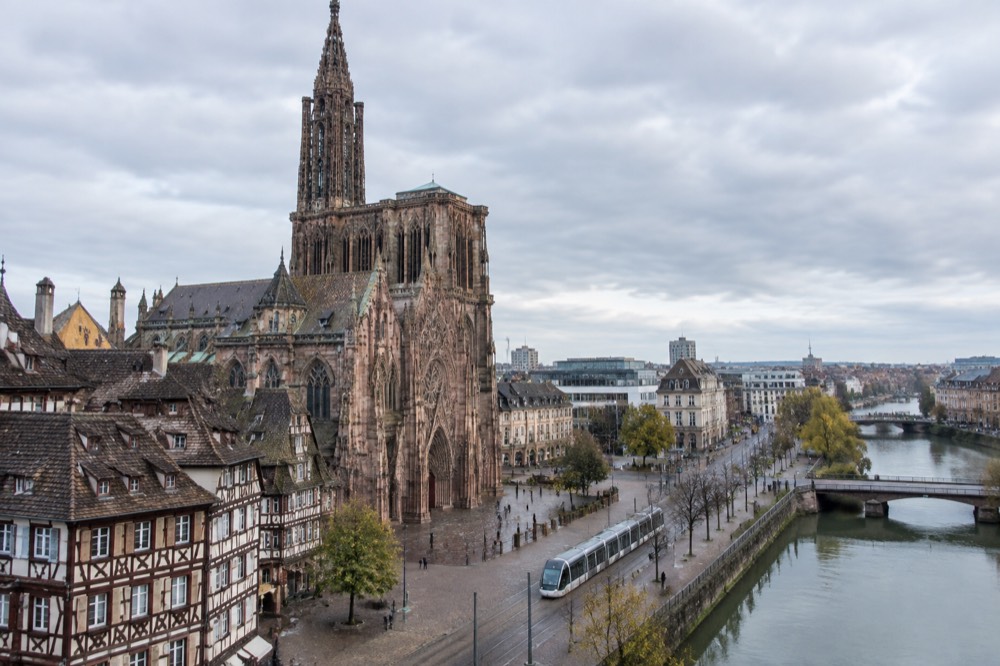
The transport arithmetic is one-sided. Strasbourg's Gare Centrale handles the long-distance services and the airport connection: a TER shuttle runs between the station and Strasbourg-Entzheim airport in 8 minutes, up to five trains an hour, and a combined train-plus-24-hour-CTS ticket covers the whole journey for 4.60 EUR. Within the city, the 24-hour Solo pass at 4.60 EUR and the 24-hour Trio at 10.20 EUR for two to three people cover the trams and buses. Colmar is on the same regional rail spine, a short regional train ride away, so basing in Strasbourg and visiting Colmar by rail is straightforward; basing in Colmar and visiting Strasbourg by rail is equally possible, just with a smaller city around your hotel.
The car changes the answer. The wine route villages, Eguisheim, Riquewihr, Kaysersberg and their neighbours, are strung out along country roads where buses are thin and a car earns its keep, and Colmar sits at the practical end of that string. Strasbourg is the worse place to keep a car: parking is managed and metered, and the historic core is pedestrian in all the ways that matter. A common compromise is to spend the first half of the trip in Strasbourg without a car, then collect one for the wine route half. The Strasbourg car rental guide and parking guide cover that handover.
For first-time visitors who want a quick orientation before committing to a base, a guided walk with a local guide covers the core efficiently, and the operator's live listing shows current times and availability. The is it better to stay in Colmar or Strasbourg answer works the same question from the sleep-over side.
Want a quick orientation before committing to a base? Book a guided walking tour here.
What Does Each City Cost?
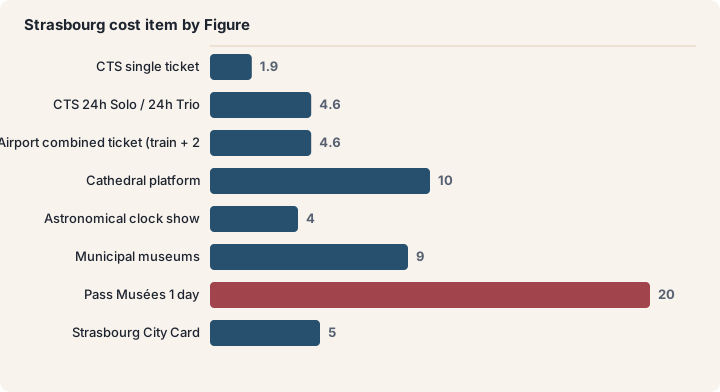
Sourced Strasbourg costs: a single tram ticket at 1.90 EUR (2.50 EUR on board), municipal museums at 9 EUR full, the cathedral platform at 10 EUR, the clock show at 4 EUR, Batorama's long tour at 16.20 EUR, and the 1-day Pass Musées at 20 EUR; the Strasbourg City Card at 5 EUR is a discount card, not an all-inclusive pass. Check specifics on official pages.
Strasbourg's sight costs are low by big-city standards, and they cluster in ways that reward a little planning. The museum cluster is the clearest example: every municipal museum charges 9 EUR full and 5 EUR reduced, the 1-day Pass Musées is 20 EUR, and all municipal museums are free for everyone on the first Sunday of every month, which turns a well-timed Sunday into a genuinely cheap museum day. The catch is the Musée Alsacien, closed for works until 2028, so the folk-art collection is off the table for this trip; the Strasbourg museums guide maps what remains.
The Strasbourg City Card deserves a careful read because it is often mis-sold in travel forums as a pass. It is a 5 EUR discount card (3.50 EUR for children aged 3 to 17), valid seven days, that knocks money off participating attractions: the card's own page lists reductions on the municipal museums, the cathedral platform, the astronomical clock, the Batorama boats, guided tours and more. It is not an all-inclusive pass, and at 5 EUR it does not need to be; it pays for itself quickly if you are doing the platform, the clock and a boat tour in one visit. The full City Card breakdown does the arithmetic.
Eating is where the two cities feel most similar, since both serve the same Alsatian repertoire at regional prices. A winstub dinner in Strasbourg, choucroute or baeckeoffe with a glass of local Riesling, is the reference meal, and lunch menus generally undercut the evening carte. For visitors trimming the budget, the Strasbourg on a budget guide and the free things to do in Strasbourg roundup list what costs nothing, including strolling the public squares and the riverbanks.
| Strasbourg cost item | Figure |
|---|---|
| CTS single ticket | 1.90 EUR (Badgéo, app, contactless); 2.50 EUR on board bus |
| CTS 24h Solo / 24h Trio | 4.60 EUR / 10.20 EUR (2-3 people) |
| Airport combined ticket (train + 24h CTS) | 4.60 EUR |
| Cathedral platform | 10 EUR full, 6 EUR reduced, under 6 free |
| Astronomical clock show | 4 EUR adult |
| Municipal museums | 9 EUR full, 5 EUR reduced; free first Sunday of each month |
| Pass Musées 1 day | 20 EUR |
| Strasbourg City Card | 5 EUR adult, 3.50 EUR child (3-17), 7 days, discounts only |
How Many Days Should You Give Each City?
Give Strasbourg two or three full days: one for the Grande Île and the cathedral, one for Petite France, the covered bridges and a boat tour, and a third for the European Quarter and the museums you care about; give Colmar one full day, or two if you are pairing it with the wine route villages by car. Trying to see both properly from a single base in either town compresses one of them into a rushed half.
The two-day Strasbourg split works well because the city divides naturally along the Ill. Day one stays on the Grande Île: the cathedral in the morning, the 12:30 clock show if the timing lands, then the lanes down through Petite France to the covered bridges and the Barrage Vauban terrace. Day two crosses outward: the Neustadt's broad avenues, the European Quarter, and a Batorama circuit from the quay, with the Red Tour at 1 hour 10 minutes and the Blue Tour at 45 minutes both fitting an afternoon. A third day absorbs the museums, the Orangerie park or a day trip. The two days in Strasbourg itinerary and three days in Strasbourg itinerary are written out in full.
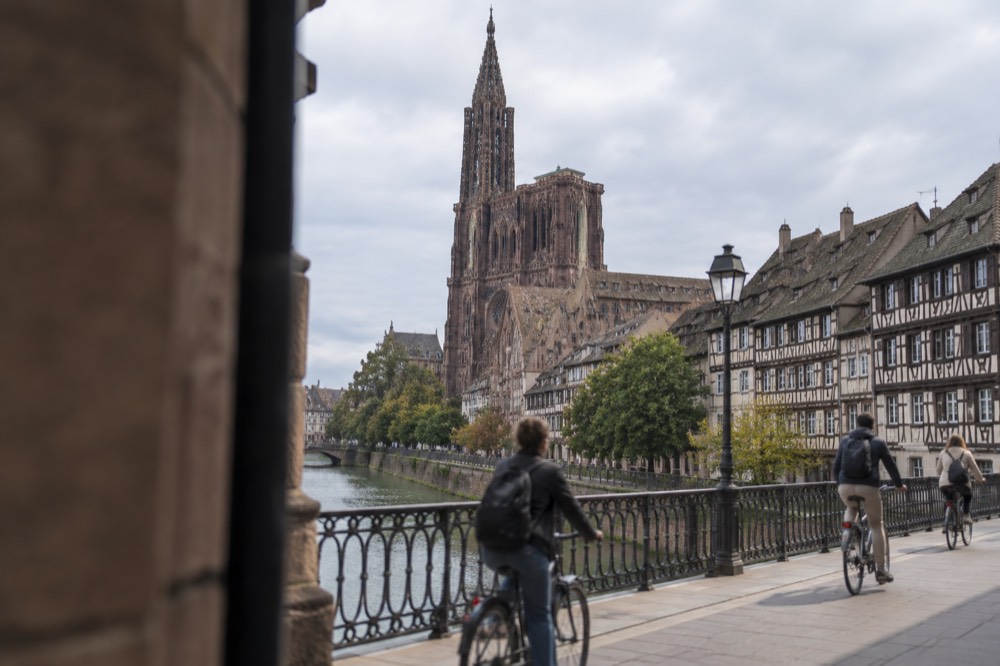
Colmar compresses because it has to: the old core is small, and its pleasures are walking, looking, eating and a museum or two. The how many days in Colmar is enough answer lands on the same conclusion, one day for the town itself, more if the wine route is attached. A bike is a good way to bridge the two rhythms, and a guided bike tour of Strasbourg covers the riverside and the outer districts faster than feet allow; the operator's live listing carries the current schedule.
If the trip is a week, the classic split is three nights in Strasbourg, then a shift south to Colmar or a wine-route village for two or three nights with a car. That order front-loads the city while energy is high and ends on the slow, scenic half. Reversing it works too, arriving through Colmar and finishing in Strasbourg for the TGV home, and the one day in Strasbourg guide is the fallback if the calendar only allows a taste.
| Trip length | Suggested split | What it gives you |
|---|---|---|
| 2 nights | All Strasbourg, Colmar as a rail day trip | The cathedral, Petite France, a market evening, a Colmar day |
| 3 nights | 2 Strasbourg + 1 Colmar or wine village | The full city plus the southern old town at an unhurried pace |
| 5-7 nights | 3 Strasbourg + 2-3 Colmar/wine route by car | Both cities plus Eguisheim, Riquewihr, Kaysersberg and a castle |
| Christmas season | Nights in whichever town holds the market you want; the other by train | Market evenings in both without changing hotels twice |
When Is The Time To Visit Either City?
The strongest windows are late May to September, when Strasbourg's mean daily maximum runs from 20.9 C to 26.4 C, and typically late November to 24 December for the Christmas markets; December is cold, with a mean maximum of 5.9 C and a mean minimum of 0.8 C, and it brings 10.2 rain days of 1 mm or more. Colmar shares the same semi-continental pattern, so choose by event and crowd tolerance, not by weather.
The climate here is semi-continental, which means real winters and warm summers rather than the mild pattern of Atlantic France. The Meteo-France 1991-2020 normals for Strasbourg-Entzheim put July at a mean maximum of 26.4 C and January at 5.2 C, with June recording 68.5 mm of rain and rain falling on 112.3 days a year across the measuring threshold. Practically, that means pack for the season you are actually in: a proper coat from November to February, and expect some rain whenever you come, because 8 to 10 wet days a month is the year-round norm.
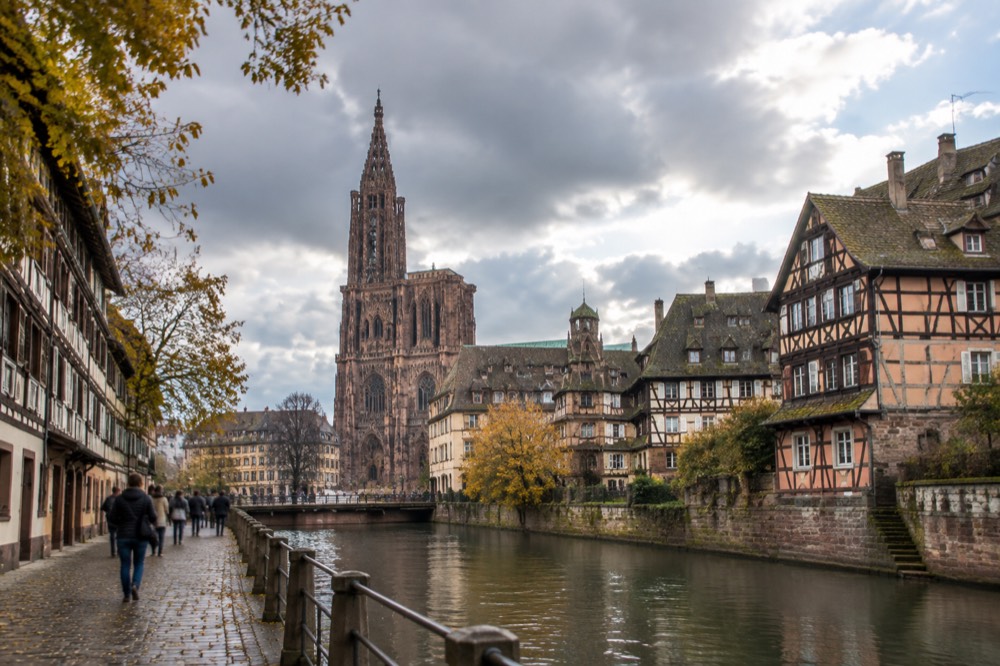
For the Christmas market window, the trade-offs are explicit. December in Strasbourg is atmospheric and cold, and the market weeks are the city's busiest of the year; hotel rates and crowd levels both climb. The payoff draws 3.05 million people: the Grande Île lit end to end, the tree on Place Kléber, chalets from late morning into the evening. Colmar in the same weeks offers the smaller, denser version of the magic. The best time to visit Strasbourg guide and the Strasbourg in winter guide weigh the whole calendar, and the Strasbourg weather guide holds the full monthly table.
| Season | Strasbourg-Entzheim normals (1991-2020) | What it means for the trip |
|---|---|---|
| Spring (Mar-May) | Mean max 12.1 to 20.9 C; rain days 8.5 to 10.8 per month | Mild, green, changeable; good for walking both towns |
| Summer (Jun-Aug) | Mean max 24.4 to 26.4 C; rain days 9.5 to 10.4 | Warm evenings, river life, occasional storms |
| Autumn (Sep-Nov) | Mean max 21.6 down to 9.4 C; rain days 8.0 to 9.6 | Harvest season on the wine route; golden early October |
| Winter (Dec-Feb) | Mean max 5.9, 5.2, 7.3 C; Dec mean min 0.8 C; 10.2 rain days in Dec | Cold and grey; the Christmas market window runs to 24 December |
Strasbourg Or Colmar: The Verdict
Sleep in Strasbourg unless the wine route is the point of your trip. The capital holds the heavyweight sights, the cathedral platform at 66 m, the astronomical clock, the museums, the boat tours and the European institutions, and it is the rail and air hub that makes the Colmar day trip trivial. Give Colmar its day, unhurried, and give it your second base only when a car and the villages are in the plan.
That verdict comes with one honest caveat: visitors who arrive expecting Colmar to be a smaller Strasbourg are sometimes disappointed, and visitors who arrive expecting Strasbourg to be a bigger Colmar are always disappointed. They share a region's architecture and larder, but Strasbourg is a functioning capital with crowds, trams and institutions, while Colmar is a preserved townscape tuned for visitors. Knowing which of those you are shopping for settles the question before any itinerary does.
For most travellers the answer is both, in that order, with the short regional train doing the connecting and the wine route waiting south of Colmar for whoever has a third day and a set of wheels. Book the Strasbourg nights first, because the December weeks fill earliest, and let the rest of the plan follow from there.
Common Questions About Strasbourg Vs Colmar
Which City Should You Choose: Strasbourg Or Colmar?
Choose Strasbourg for a full city stay of two to four nights with the cathedral, Petite France, the museums and the European Quarter; choose Colmar for one concentrated day of half-timbered lanes and canals, or as a base for the wine route by car. Doing both, with Strasbourg first, is the standard plan.
Is It Better To Stay In Strasbourg Or Colmar?
Stay in Strasbourg if you are arriving by train or plane, since the city holds the main station, the airport shuttle and the tram network. Stay in Colmar if the wine route villages are the core of your trip and you will have a car. The full trade-off is worked through in the dedicated answer on whether it is better to stay in Colmar or Strasbourg.
How Many Days Do You Need For Each City?
Give Strasbourg two or three full days: the Grande Île and cathedral on day one, Petite France, the covered bridges and a boat tour on day two, and the European Quarter plus chosen museums on day three. Give Colmar one full day on its own, or two when the wine route is attached.
Which Christmas Market Is Better, Strasbourg Or Colmar?
Strasbourg's market is the flagship: the 2025 edition ran 26 November to 24 December and drew 3.05 million visitors, with chalets across several squares and the cathedral as anchor. Colmar's market is smaller and denser, set along lanes that are already photogenic. Strasbourg suits a multi-day Christmas programme; Colmar suits one or two concentrated evenings.
Is Colmar Just A Day Trip From Strasbourg?
For a city-focused trip, yes: the two are connected by a short regional train ride, and Colmar's old core is walkable end to end in a day. If your trip is built around the wine route by car, Colmar earns its own nights as the southern base, and Strasbourg becomes the arrival point instead.
When Is The Best Time To Visit Strasbourg And Colmar Together?
Late May to September gives the warmest walking weather, with Strasbourg's mean daily maximum between 20.9 C and 26.4 C. Late November to 24 December is the Christmas window, cold at a December mean maximum of 5.9 C but atmospheric in both towns. Rain is possible in every month, so pack a layer and an umbrella either way.