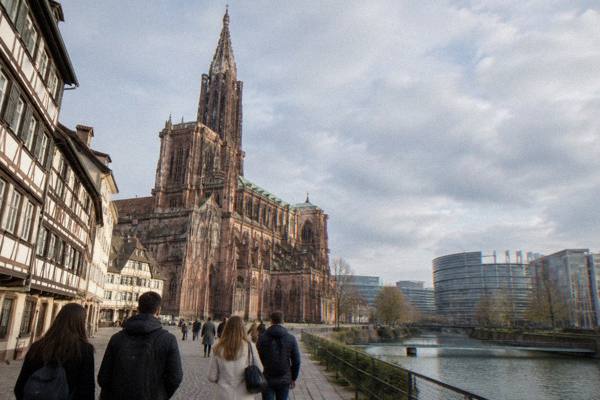
European Quarter Strasbourg
Strasbourg's European Quarter, in north-eastern France beside the German border, is the district where the European Parliament, the Council of Europe and the European Court of Human Rights stand within walking distance of each other.
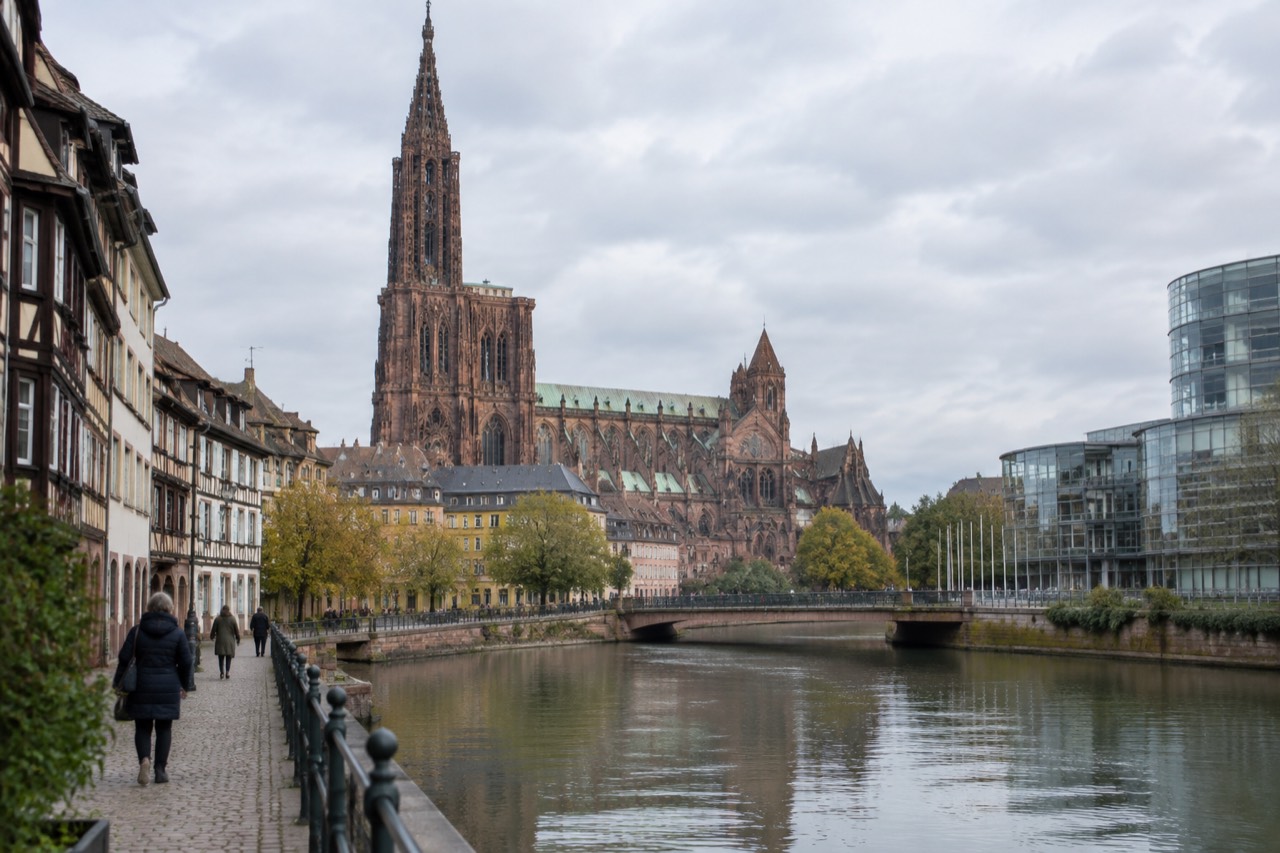
Short answer
The European Quarter in Strasbourg, France, is the riverside district north-east of the city centre that hosts the European Parliament, the Council of Europe and the European Court of Human Rights. The Parlamentarium visitor centre opens Mon-Fri 09:00-18:00 and Sat 09:30-12:00 and 13:00-18:00 outside plenary weeks, and a CTS tram ride from the centre costs 1.90 EUR.
Strasbourg, the prefecture of the Bas-Rhin in Alsace, north-eastern France, is one of the very few cities where several European institutions stand in a single district, and the European Quarter is where that arrangement plays out. The district stretches along the River Ill and around the Parc de l'Orangerie, a short tram ride from the Grande Île, and it brings together the European Parliament, the Council of Europe and the European Court of Human Rights. For many travellers it is the part of the city that feels least like Alsace and most like a working capital, which is exactly why it deserves a planned visit rather than an accidental one.
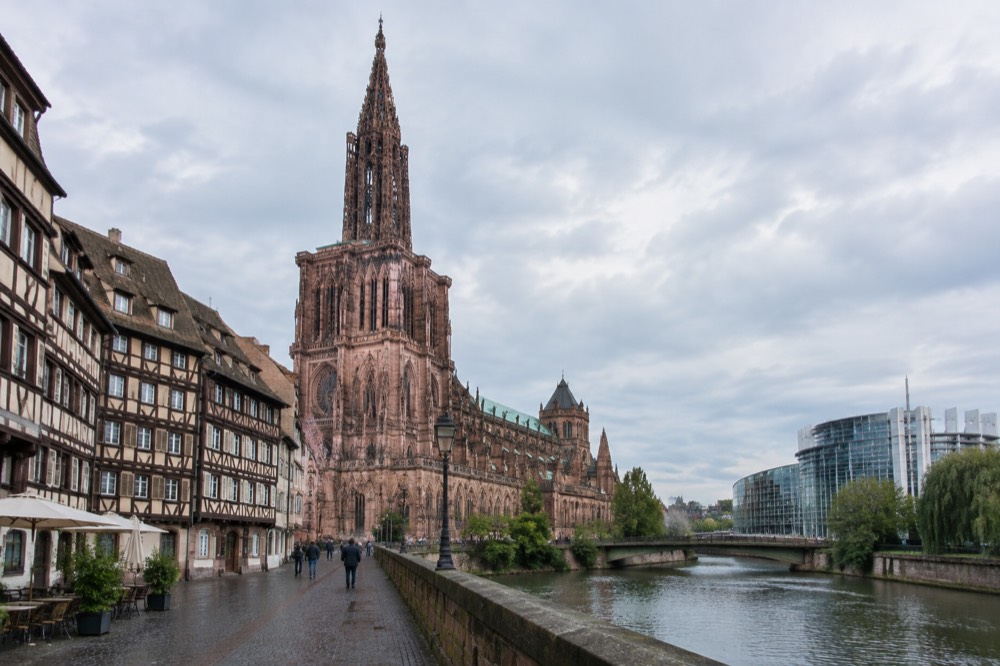
What Is The European Quarter In Strasbourg?
The European Quarter is the institutional district of Strasbourg, France, built along the Ill north-east of the historic centre, where the European Parliament, the Council of Europe and the European Court of Human Rights all sit within a compact area. It is not a medieval neighbourhood. The architecture is modern, the streets are wide, and the mood is administrative rather than picturesque, set beside water and parkland. The district exists because Strasbourg was chosen as a seat of European bodies, a role the city still holds, and it functions as a working political centre during plenary and session weeks, then settles back into a calm, green riverside quarter between them.
The contrast with the rest of Strasbourg is the point. By tram from the half-timbered lanes of the Grande Île, the city's World Heritage island, you are among glass façades, flagpoles and delegations. The quarter is bordered on one side by the Ill, which loops around it, and on the other by the Parc de l'Orangerie, the largest park in central Strasbourg. The neighbouring Neustadt, the German imperial extension of the city, lies between the quarter and the old centre, so a walk from the cathedral to the Parliament passes through three entirely different eras of the city in well under an hour of strolling.
Visitors often ask whether the quarter is worth their time when the Petite France district and the cathedral are pulling at the schedule. The honest answer is that it depends on what interests you. If European politics, modern architecture or the simple curiosity of seeing three continent-scale institutions in one place appeals, then yes, and a half-day is enough to do it properly. If only picture-book Alsace will do, the Petite France riverside quarter is the better use of a morning, and this page's companion guides cover it in detail.
Which Institutions Sit In The European Quarter Strasbourg?
Three institutions anchor the quarter: the European Parliament, which holds its plenary sessions here; the Council of Europe, the continent's wider human rights body; and the European Court of Human Rights, which rules on the European Convention on Human Rights. Each has its own building, its own visitor offer and its own story, and each is a separate organisation, a distinction that confuses plenty of first-time visitors. The Parliament belongs to the European Union, while the Council of Europe and its Court are older, broader bodies whose membership extends beyond the EU. Walking the district with that distinction clear turns a confusing cluster of glass buildings into a legible political map.
The European Parliament is the headline tenant. Its Strasbourg building is the seat where elected members gather for plenary sessions, and the question of where the Parliament's headquarters sit is one readers ask often; the site's answer page on the Parliament's headquarters covers it in full. Around session weeks the district fills with members, staff, journalists and security, hotels tighten up, and restaurants near the Ill do brisk lunch business. Outside those weeks the building stands quiet, and the visitor experience shifts to the Parlamentarium, the Parliament's exhibition and information centre, which is described in its own section below.
The Council of Europe sits closest to the park, and the European Court of Human Rights stands beside it. The Court is the judicial arm of the Council of Europe, and its Strasbourg home is where judgments under the European Convention on Human Rights are delivered. Both buildings face the water, and the riverside path between them is one of the calmest stretches of walking in the whole city. A guided walk is the efficient way to absorb what each institution actually does, and the European Quarter guided walking tour is built around exactly these buildings, or you can Check availability for your dates.
The first is the district walk itself; the second is a full-day Alsace excursion for travellers using Strasbourg as a base; the third is a private boat option for seeing the city, including stretches of the institutional riverfront, from the water. The table below summarises the institutions at street level.
| Institution | What It Is | What You See From Outside | Visitor Offer |
|---|---|---|---|
| European Parliament | EU assembly, plenary seat in Strasbourg | Large curved glass building beside the Ill | Parlamentarium visitor centre |
| Council of Europe | Human rights body, wider membership than the EU | Flag-lined building by the Parc de l'Orangerie | Check the official visitor page |
| European Court of Human Rights | Court ruling on the European Convention | Riverside building with distinctive façade | Check the official visitor page |
How Do You Visit The European Parliament And The Parlamentarium?
Outside plenary weeks the Parlamentarium, the European Parliament's visitor centre in Strasbourg, opens Mon-Fri 09:00-18:00 and Sat 09:30-12:00 and 13:00-18:00, with last entry at 17:00, and every visitor passes an airport-style security check. During plenary weeks the hours change, so the Parliament's own visitor page is the place to confirm before you set out. The centre explains how the Parliament works, what its members do and why Strasbourg shares the institution with Brussels, through interactive displays rather than dry text. Allow a relaxed morning for the visit itself, plus travel time from the centre.
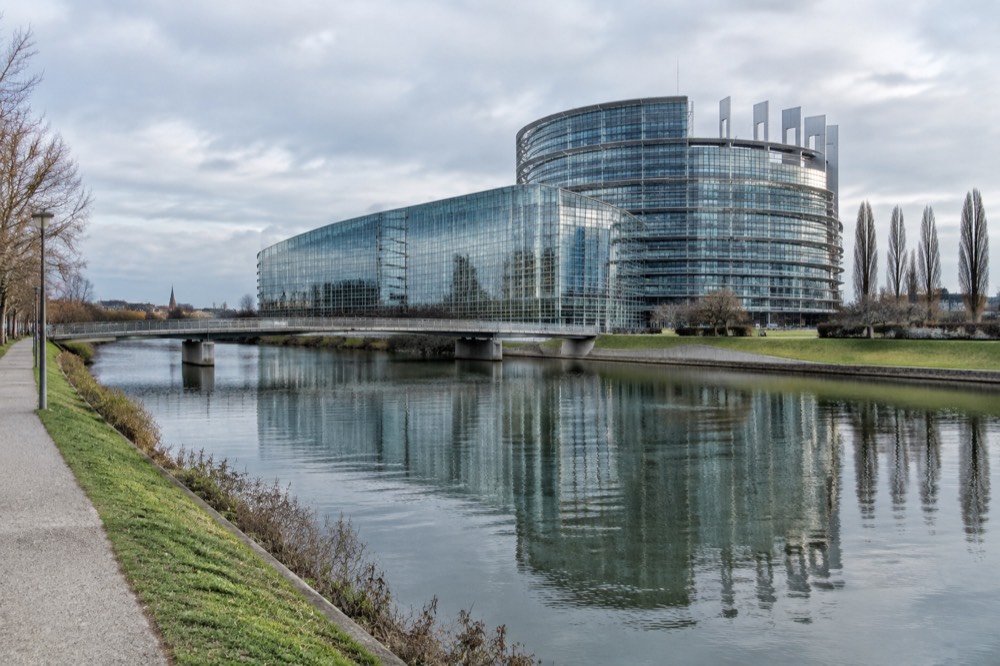
The security check shapes the visit more than people expect. It works like an airport: bags on the belt, walk through the scanner, pockets emptied. In plenary weeks, when members are in the building, access is tighter and the whole district takes on a different rhythm, with police presence at intersections and coach queues at the entrances. The table below sets out the verified hours.
| Period | Monday To Friday | Saturday | Notes |
|---|---|---|---|
| Outside plenary weeks | 09:00-18:00 | 09:30-12:00 and 13:00-18:00 | Last entry 17:00 |
| Plenary weeks | Hours differ | Hours differ | Check the Parliament's visitor page |
What the page does state plainly is the security procedure and the hours above, and those two facts are the ones that actually determine whether your visit goes smoothly. If a self-guided visit leaves you wanting the political context, a guided walk of the whole district fills the gap, and the tours section below covers the options.
The box above links the district's featured walking tour. Between the Parliament and the Court, the riverside lawns are a good place to decompress after the security formalities, and the Parc de l'Orangerie, covered later in this guide, lies further along the water.
What Can You See At The Council Of Europe And The European Court Of Human Rights?
The Council of Europe and the European Court of Human Rights sit side by side in the quarter's parkland corner, and both are best appreciated from the outside and from the riverside path, since neither is organised around drop-in public galleries the way the Parliament's visitor centre is. The Council of Europe is the older and broader of the two organisations, devoted to human rights, democracy and the rule of law across the continent, and the Court is its judicial arm, the place where cases under the European Convention on Human Rights are heard. For most visitors the experience is architectural and atmospheric rather than interior.
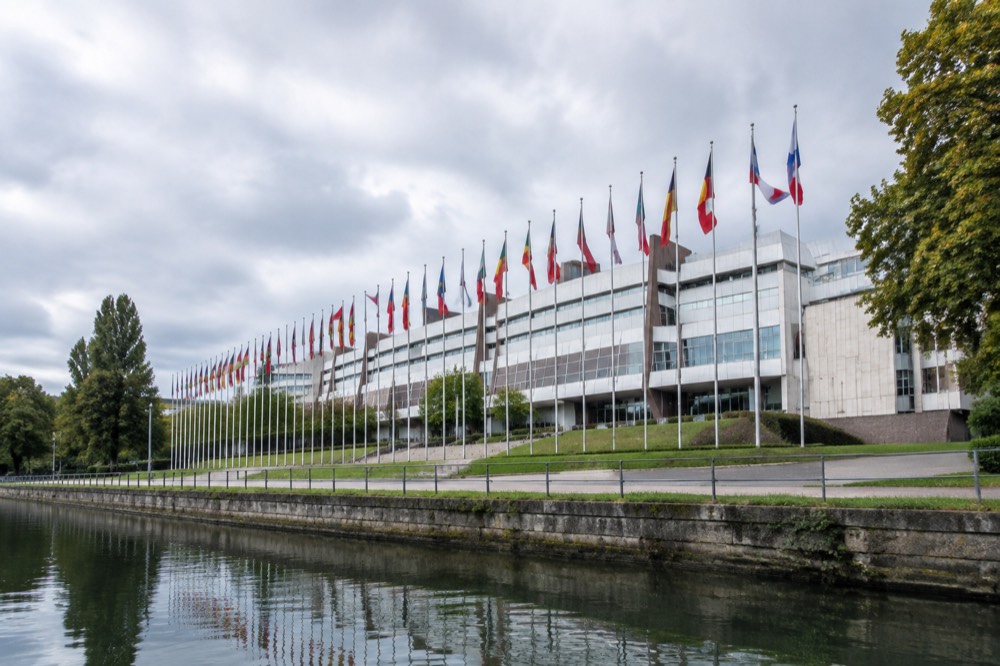
The flag-lined approach to the Council of Europe is the most photographed stretch of the district, and it is the image that says "European Strasbourg" in a single frame. The Court's building, with its curved metal façade facing the river, is the quarter's most striking piece of modern architecture. Both are working institutions, so the etiquette of the visit is simple: photograph from the public paths, keep to the marked areas, and check each institution's own visitor arrangements on its official page before assuming an interior tour. Guided district walks handle this well, because the guides know which entrances are public and which are not.
A distinction worth carrying with you: the Council of Europe is not an EU body. Its membership reaches beyond the EU, and its work centres on the European Convention on Human Rights rather than on EU law. That is why the Court here is not an EU court, and why Strasbourg's institutional family is broader than the Parliament alone. A walk that explains this clearly, building by building, is worth more than an afternoon of unguided wandering, and the tour options later in this guide do exactly that.
How Do You Get To The European Quarter Strasbourg?
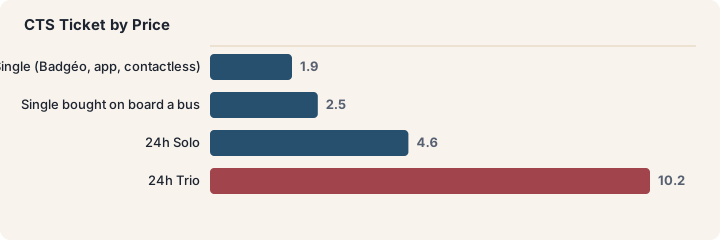
The European Quarter is a short CTS tram ride from Strasbourg's centre and station, with a single ticket at 1.90 EUR bought through the Badgéo card, the CTS app or contactless payment, or 2.50 EUR if bought on board a bus. The district is also walkable from the Grande Île along a pleasant route through the Neustadt, and the riverside path makes the approach on foot as rewarding as the destination. Trams run frequently through the district, and the stops nearest the institutions are a few minutes' walk from each building.
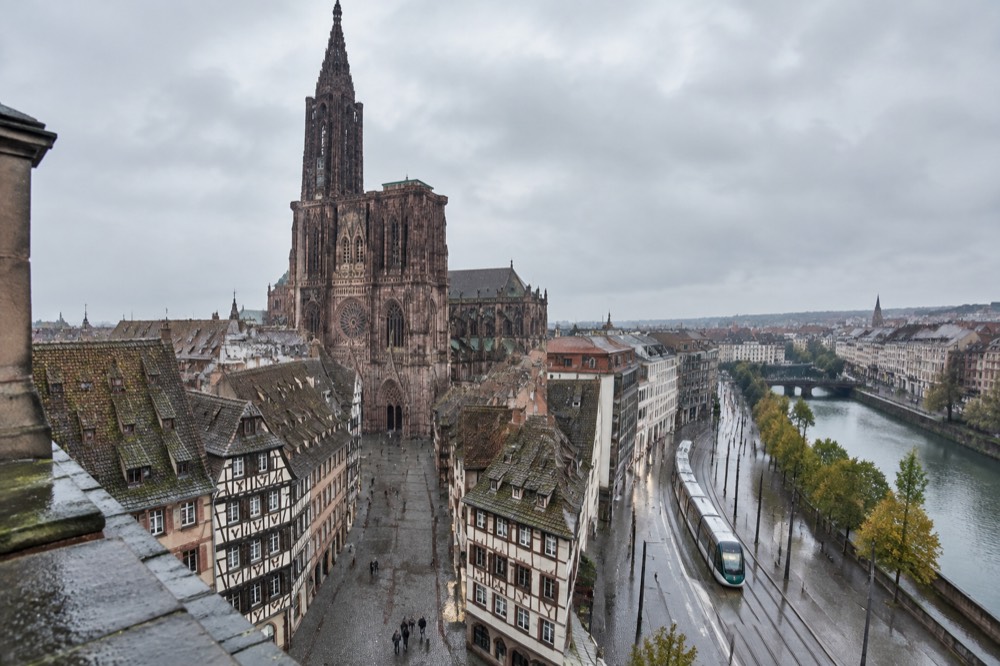
Ticketing is where visitors lose money without noticing. The cheapest single is the contactless or app fare at 1.90 EUR; buying on board the bus costs 2.50 EUR, so plan ahead or tap. For a day of exploring, the 24h Solo pass at 4.60 EUR covers unlimited rides, and the 24h Trio at 10.20 EUR covers two or three people travelling together, which suits families. The fares below are the verified CTS prices. The full index of guides sits on Strasbourg Travel Guide.
| CTS Ticket | Price | Valid For |
|---|---|---|
| Single (Badgéo, app, contactless) | 1.90 EUR | One journey |
| Single bought on board a bus | 2.50 EUR | One journey |
| 24h Solo | 4.60 EUR | One person, 24 hours |
| 24h Trio | 10.20 EUR | Two to three people, 24 hours |
Cyclists and pedestrians have the nicer approach. The Ill-side path runs from the Barrage Vauban through the Neustadt to the institutional riverfront, and Strasbourg's bike culture makes two wheels a genuinely practical option; the site's guide to Strasbourg by bike covers routes and hire. Drivers should note that the quarter's car parks can be busy at peak times, so the tram may be the easier choice.
When Is The Best Time To Visit The European Quarter?
Weekday mornings outside plenary weeks are the calmest time to visit the European Quarter, when the Parlamentarium runs its full opening hours, the paths are quiet and the district can be walked at leisure; session weeks bring energy, flags and crowds but tighter access. The choice is between atmosphere and ease. A quiet Tuesday morning gives you empty riverside lawns and short security lines; a plenary week gives you the spectacle of a working parliamentary capital, with coaches, delegations and press, at the cost of busier trams and fuller hotels.
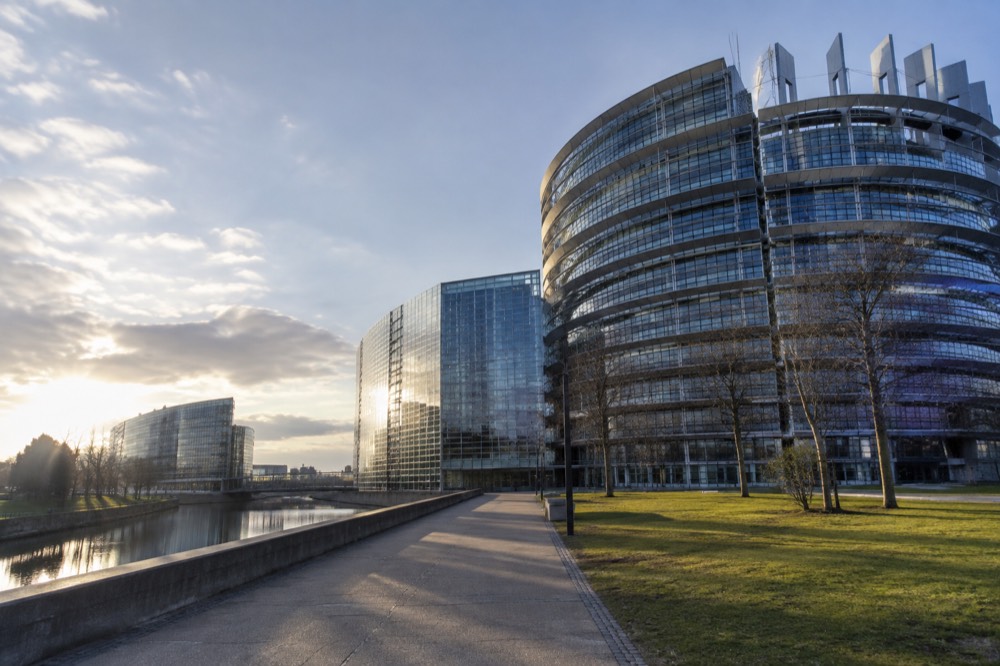
Season matters less here than in the old centre, because the quarter's attractions are modern buildings and parkland rather than open-air lanes. Summer, with mean July maxima of 26.4 C in the Meteo-France 1991-2020 normals, is fine for the riverside walk but warm on the unshaded esplanades. Winter, with mean January maxima of 5.2 C and minima below freezing, is brisk but atmospheric, and the city's Christmas season, which runs from late November to 24 December, keeps the whole city lively while the quarter stays relatively calm. The table below frames the choice.
| Timing | What You Get | What To Weigh |
|---|---|---|
| Weekday morning, no session | Quiet paths, relaxed security lines | Fewer staff and members about |
| Plenary week | Full political spectacle, flags, activity | Busier trams, tighter access, fuller hotels |
| Summer months | Green parkland, long evenings | Heat on open esplanades |
| Late November to 24 December | Citywide Christmas market in full swing | Cold weather, busier old centre nearby |
Which Guided Tours Cover The European Quarter?
The main guided options are a dedicated European Quarter walking tour of about two hours, a shorter European district walk, and a bike tour that sweeps the district into a wider city loop, with prices and current ratings shown on each operator's live listing. A guided walk earns its cost in this district more than in most, because the buildings do not explain themselves: what each façade houses, why the institutions are here at all, and how the Parliament, the Council of Europe and the Court differ is exactly the material a good guide carries and a plaque does not.
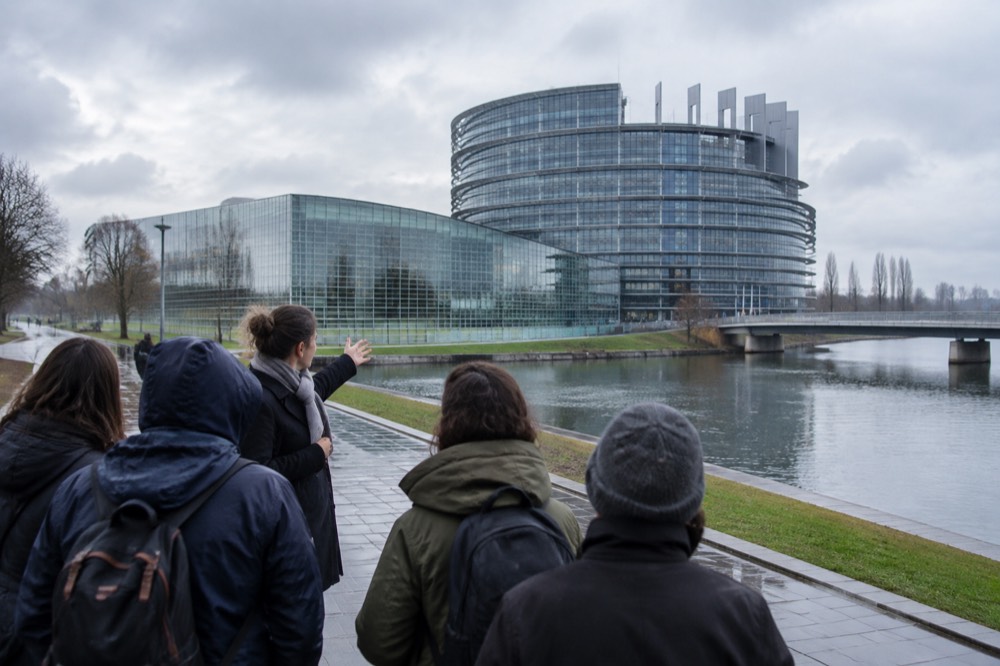
The dedicated district walk is the featured choice on this site, and its details, price and rating render in the tour cards on this page. For travellers who prefer a quicker pass, a shorter European district walk covers the same three institutions in less time, and suits anyone pairing the quarter with a morning in the old centre.
Prefer the fuller district walk with a guide? Book a free walking tour here.
That shorter option suits tight schedules. For a fuller experience of the district within a wider city tour, a guided bike ride covers more ground than walking, and Strasbourg's flat terrain and cycle paths make the institutional riverfront a natural segment of a two-wheeled loop.
Readers who enjoy curiosities and small-group storytelling may prefer a general city walk that includes the institutional edge among its stops. The small-group curiosities walk below is that format, and its figures are on the listing.
Whichever format you choose, book ahead for session weeks, when demand for guided slots rises with the crowds. The operator's live listing carries the current calendar, meeting point and cancellation terms, and the button on every card on this page reads Check availability for exactly that reason.
What Else Is Near The European Quarter?
The Parc de l'Orangerie, Strasbourg's largest central park, wraps around the quarter's eastern edge, and the residential calm of the Robertsau district lies just beyond it, while the Neustadt and the Grande Île sit between the quarter and the city's medieval core. The park is the quarter's green counterweight: lawns, tree-lined avenues, a small lake and stork enclosures that make it a favourite with families, covered in the site's guide to visiting Strasbourg with kids. The Parc de l'Orangerie page covers it in detail.
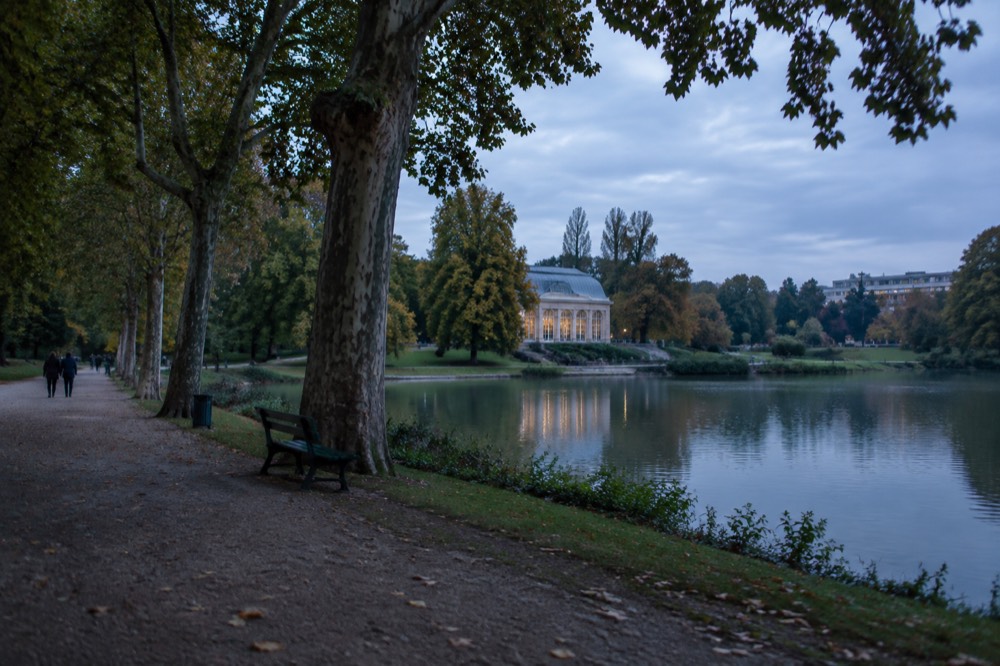
Beyond the park, the Robertsau district is a quiet, leafy residential area with embassies and consulates scattered among its streets, and it rewards a slow walk for travellers with time to spare. Back toward the centre, the Krutenau student quarter, just south of the old island, is where the city's younger, scruffier charm lives, with independent cafés and a riverside buzz that contrasts sharply with the institutional polish of the quarter. A day that pairs the European Quarter in the morning with Krutenau in the evening shows both faces of modern Strasbourg.
The Gare district around the station is the practical base for many visitors, and the tram links it directly to the institutions. For travellers arriving from farther afield, the site's guides to the Strasbourg train station and to getting around Strasbourg cover the connections in depth, including the airport shuttle, whose combined train-and-tram ticket costs 4.60 EUR.
How Does The European Quarter Compare With The Grande Île?
The European Quarter and the Grande Île are two different cities in one: the island is the medieval World Heritage core of half-timbered houses, the cathedral and Petite France, while the quarter is the modern political district of glass, flags and parkland, and a complete Strasbourg visit includes both. Neither substitutes for the other. The island rewards slow wandering and a camera; the quarter rewards a guide, a bit of political curiosity and comfortable shoes for its wide, open distances. The table below sets the two against each other honestly.
| Aspect | European Quarter | Grande Île |
|---|---|---|
| Character | Modern institutional district | Medieval World Heritage island |
| Main draws | Parliament, Council of Europe, Court | Cathedral, Petite France, historic lanes |
| Best pace | Guided walk, half a day | Slow wandering, a full day |
| Atmosphere | Administrative, green, riverside | Picturesque, busy, touristy |
| Signature view | Flag-lined institutional façades | Cathedral spire over rooftops |
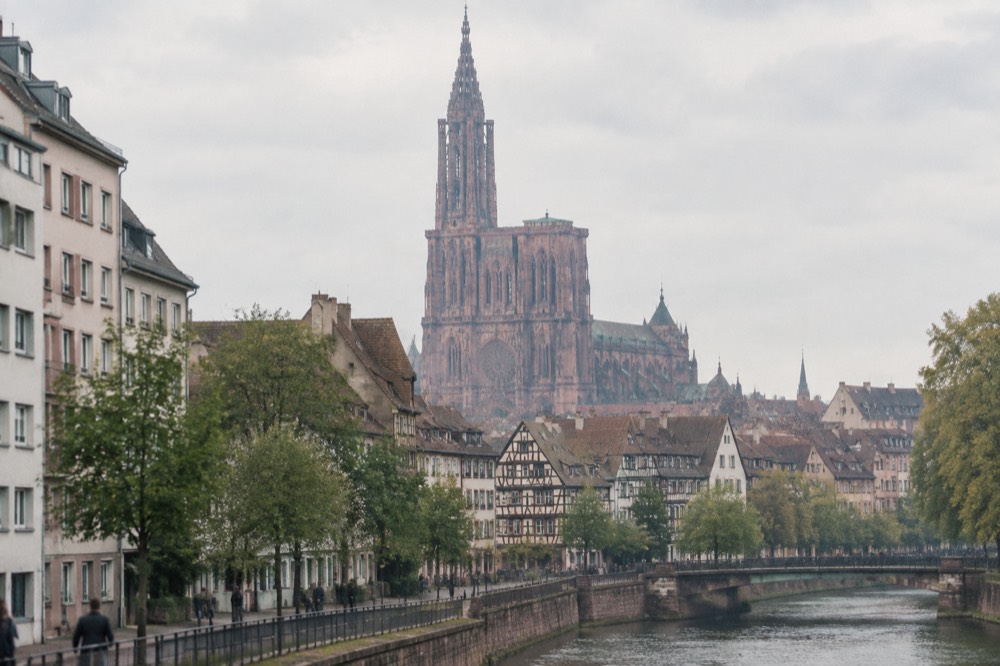
The practical split for a short visit is simple. Give the island your first day, because it is the reason most people come to Strasbourg, and give the quarter a morning or afternoon on day two, ideally with a guided walk so the buildings speak. The Strasbourg Cathedral and its astronomical clock are covered in their own guides, as are Place Kléber and the Palais Rohan. This site's one day in Strasbourg itinerary folds the institutions into a tight schedule, and the two days in Strasbourg version gives the quarter its own proper block.
Common Questions About The European Quarter Strasbourg
Is The European Quarter Worth Visiting?
Yes, if European politics or modern architecture interests you at all. The district concentrates the European Parliament, the Council of Europe and the European Court of Human Rights within a compact, green riverside area, and a guided walk of about two hours explains what each body does. Travellers interested only in historic Alsace will prefer the Grande Île and Petite France.
Can You Visit The European Parliament In Strasbourg?
Yes, through the Parlamentarium, the Parliament's visitor centre. Outside plenary weeks it opens Mon-Fri 09:00-18:00 and Sat 09:30-12:00 and 13:00-18:00, with last entry at 17:00, and every visitor passes an airport-style security check. Plenary-week hours differ, so check the Parliament's own visitor page before travelling.
How Do I Get To The European Quarter From Strasbourg City Centre?
The district is a short CTS tram ride from the centre and the station. A single ticket costs 1.90 EUR bought through the Badgéo card, the CTS app or contactless payment, or 2.50 EUR bought on board a bus. A 24h Solo pass at 4.60 EUR suits a day of exploring, and the walk from the Grande Île through the Neustadt is pleasant in good weather.
What Is The Difference Between The European Parliament, The Council Of Europe And The European Court Of Human Rights?
The European Parliament is an EU institution and holds its plenary sessions in Strasbourg. The Council of Europe is a separate, broader organisation devoted to human rights, democracy and the rule of law, with a membership that extends beyond the EU. The European Court of Human Rights is the Council of Europe's judicial arm, ruling on cases under the European Convention on Human Rights.
When Is The European Quarter Busiest?
Plenary weeks, when members arrive for parliamentary sessions, bring coaches, delegations, security and busier trams, along with fuller hotels. Weekday mornings outside those weeks are the calmest time to walk the district and visit the Parlamentarium. The Parliament's own visitor pages carry the session calendar.
How Long Should I Spend In The European Quarter?
Half a day is enough for a comfortable visit: a guided walk of the district plus time in the Parlamentarium, with a stroll through the Parc de l'Orangerie afterwards. Travellers with a deeper interest in the institutions can fill a full day, while a quick pass of the exteriors and the riverside path takes about an hour.
The European Quarter is the side of Strasbourg that the postcards leave out, and that is precisely its value. A morning among the flags, glass and riverside lawns explains why this Alsatian city beside the German border hosts continent-wide decisions, and it pairs naturally with everything the old island offers. Plan the visit around the verified hours, buy your tram ticket before boarding, and let a guide turn the façades into a story.