Strasbourg With Kids
Strasbourg packs a surprising amount of family appeal into its compact, walkable centre. From boat rides on the Ill to hands-on science museums and parks where storks nest in the treetops, the city works for toddlers, school-age children and teenagers alike. This guide lays out the best things to do, where to stay and how to get around so you can build a Strasbourg itinerary that keeps everyone happy.
Short answer
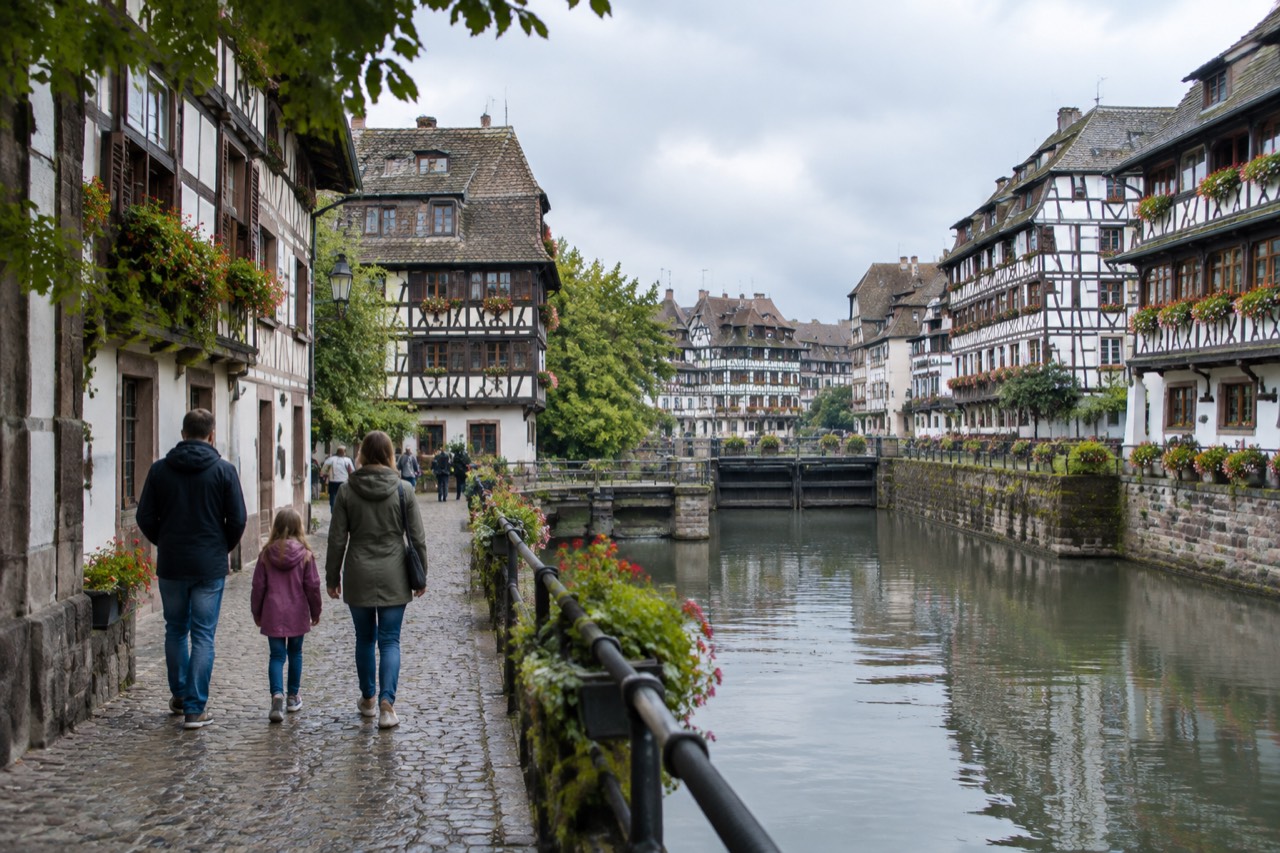
Strasbourg is one of France's most family-friendly city breaks. The pedestrianised Grande Île is flat and easy to navigate with a pushchair, the public tram network is affordable and reliable, and the city's parks, boat tours and interactive museums give children plenty to do. A boat cruise on the Ill, a morning at Le Vaisseau science museum and an afternoon in the Parc de l'Orangerie make a near-perfect family day.
Strasbourg, the Alsatian capital in north-eastern France, is one of those rare European cities where a family holiday feels effortless rather than a logistical puzzle. The historic centre, the Grande Île, is almost entirely pedestrianised, flat and compact enough that small legs can manage a full day of sightseeing without a meltdown. From the moment you step off the train, Strasbourg Travel Guide shows you a city that seems designed for families: a network of canals you can explore by boat, parks where storks nest in plain view, and museums built around the idea that children should touch, climb and experiment rather than stand behind a rope. This guide pulls together the practical detail you need to plan a Strasbourg trip with kids, from the best playgrounds and indoor escapes to the day trips that work when you have a five-year-old and a teenager in tow.
Is Strasbourg A Good City For A Family Trip?
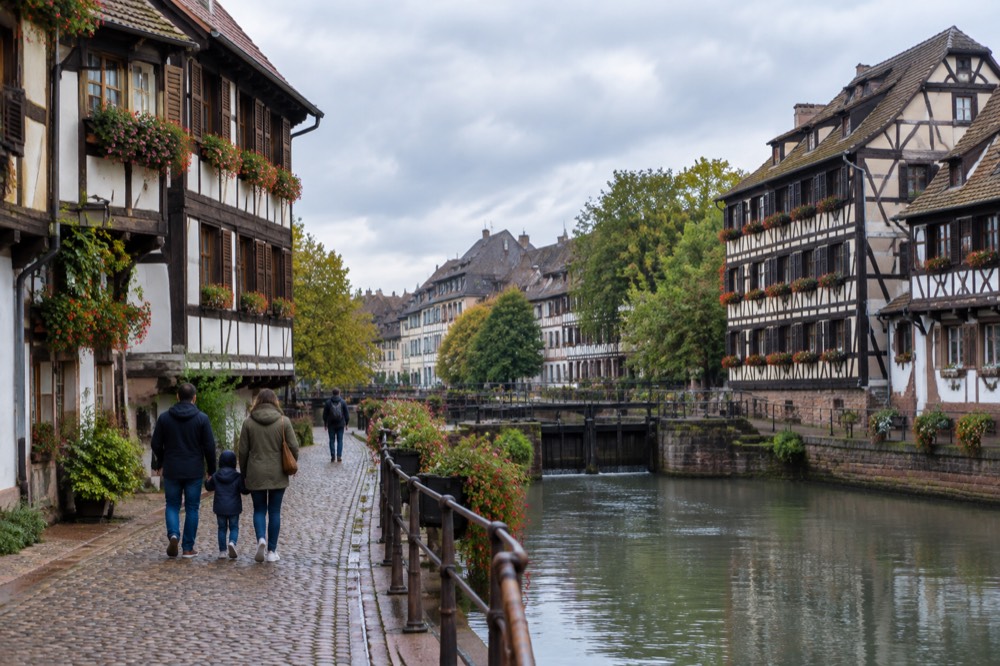
Strasbourg is an excellent family destination. The Grande Île UNESCO core is flat, traffic-calmed and easy to walk with a pushchair, the public transport system is clean and affordable, and attractions include a children's science museum, a zoo, several large parks, boat cruises that work for all ages and a cathedral platform that older children love. The semi-continental climate means warm summers ideal for outdoor play and a Christmas market season that turns the city into a festive family favourite, though winter visits require warm layers.
The city's layout works in a family's favour. Most of the sights sit within a loop of the River Ill that you can cross on foot in twenty minutes, so you are never far from a playground, a café with high chairs or a tram stop when energy flags. The Strasbourg Cathedral is the obvious centrepiece, and climbing the 66-metre platform gives children a tangible reward for the effort. The Parc de l'Orangerie, a short walk from the European institutions, combines a free zoo, a stork reintroduction centre, a boating lake and several playgrounds in one green space. Even on a rainy day, the city's museums step up: Le Vaisseau is a purpose-built science discovery centre where every exhibit is hands-on, and the Tomi Ungerer Museum showcases the work of the local illustrator with a playfulness that appeals to children and adults alike.
Eating out with children is straightforward. Alsatian cuisine is hearty and informal, and most winstubs and brasseries are relaxed about families. Tarte flambée, the thin, wood-fired flatbread topped with crème fraîche, onions and lardons, is essentially Alsace's answer to pizza and disappears fast from a child's plate. A boat cruise on the Ill is the one activity that works for every age group from babies to grandparents, and a private cruise gives you the flexibility to go at your own pace without worrying about a toddler's attention span.
What Are The Best Things To Do In Strasbourg With Kids?
The best family activities combine Strasbourg's walkable geography with its waterways, parks and hands-on museums. A boat cruise on the Ill gives children a seated view of Petite France and the European institutions, the Parc de l'Orangerie offers a free zoo and playgrounds, Le Vaisseau science museum keeps children busy with interactive exhibits, and the cathedral platform climb rewards older children with a panoramic view. A family walking tour, a Segway ride for teenagers and a bike tour round out the options.
A family-friendly walking tour is the fastest way to get your bearings while keeping children engaged. Guides who work regularly with families know how to pitch the history at a level that holds a child's attention, often weaving in stories about the cathedral's astronomical clock, the medieval tanning quarter and the city's shifting border between France and Germany. You cover the main sights at a comfortable pace, leaving the afternoon free for a playground or a boat ride.
For teenagers who have outgrown playgrounds, a Segway tour is a novelty that gets them moving. The Euro Segway route covers the European Quarter and the Parc de l'Orangerie, combining wide-open paths with a guided commentary on the EU institutions. The minimum age is usually twelve or fourteen, and the operator provides a short training session before you set off, so no prior experience is needed.
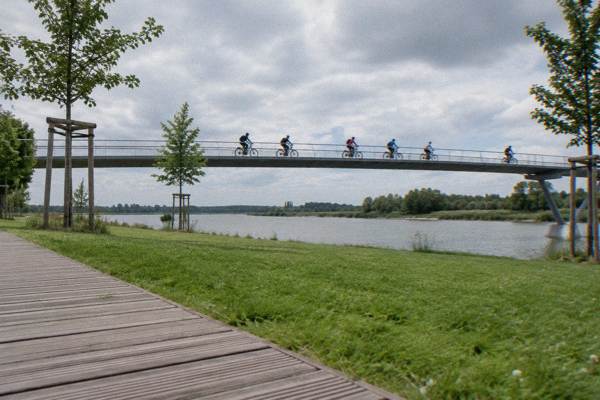
A bike tour is another way to cover ground without exhausting small legs. Strasbourg has one of France's most extensive urban cycle networks, with dedicated lanes along the Ill and through the Neustadt. A guided ride with bikes included means you do not need to bring your own equipment, and the pace is relaxed enough for occasional cyclists. The route typically takes in Petite France, the European Quarter and the Parc de l'Orangerie, with stops for photos and commentary.
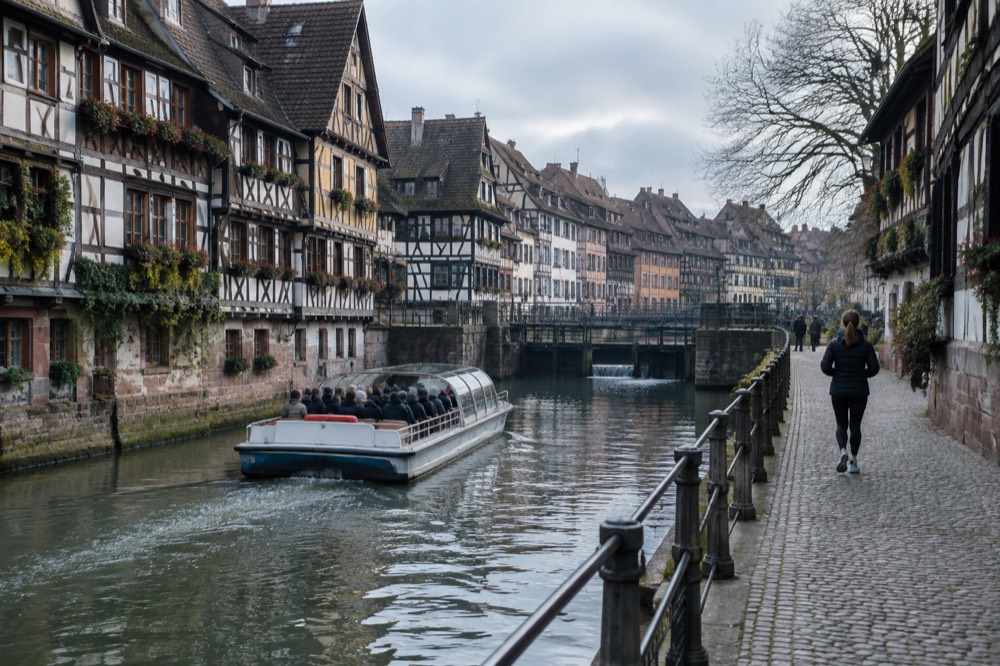
Below is a selection of three family-friendly tours that work particularly well in Strasbourg. The private boat cruise gives you the freedom to set your own pace, the walking tour introduces the city's stories in a child-friendly format, and the Segway tour adds a dose of adventure for older children and teenagers.
Where Can Kids Play Outdoors In Strasbourg?
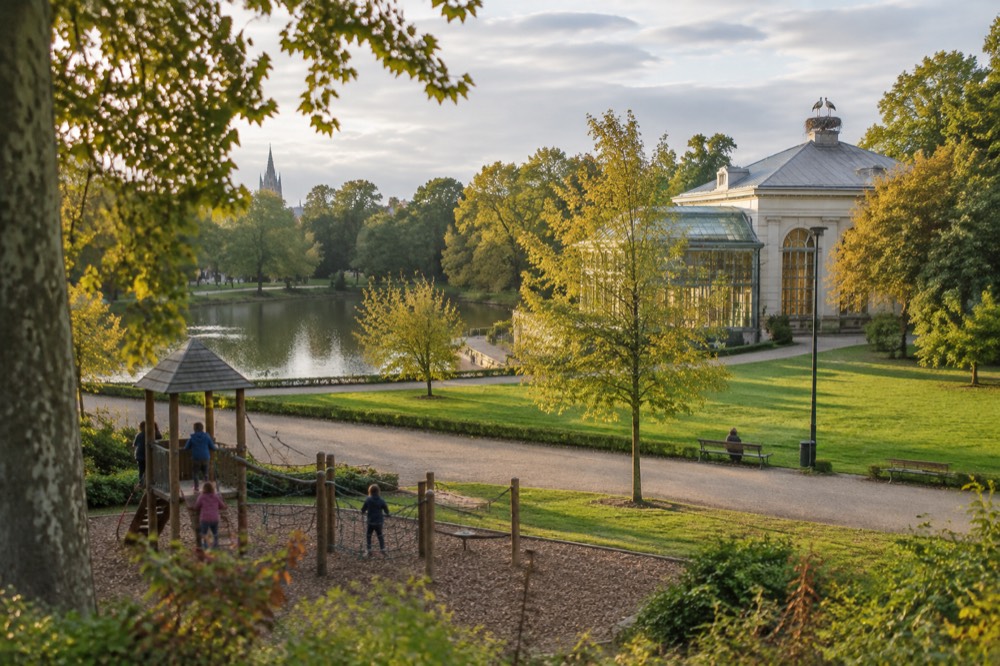
Strasbourg has several large, well-maintained parks with dedicated playgrounds, and the Parc de l'Orangerie is the standout. It houses a free zoo with storks, flamingos and farm animals, a boating lake with rowing boats for hire, a miniature train and multiple play areas for different age groups. The Jardin des Deux Rives stretches across the Rhine into Germany and includes a vast adventure playground, while the Parc de la Citadelle and the Place de la République offer smaller but central green spaces with climbing frames and sandpits.
The Parc de l'Orangerie is the city's oldest park, refreshed over the years with family facilities. The stork enclosure is the main draw: Alsace's emblematic bird nests on the rooftops and chimney pots of the park, and the reintroduction centre explains how the species was brought back from near-extinction in the region. The small zoo is free and includes farm animals, water birds and a few exotic species. The boating lake rents rowing boats by the half-hour, and the miniature train loops around the park's perimeter. There are three playgrounds, one aimed at toddlers, one for older children and one with a zip line and climbing structures.
The Jardin des Deux Rives is a cross-border park that connects Strasbourg with the German town of Kehl via a footbridge over the Rhine. The French side has a large adventure playground with a water play area in summer, while the German side offers wide lawns and a riverside promenade. It is a twenty-minute tram ride from the city centre, and the open space makes it a good choice for a picnic and an afternoon of running around.
| Park | Key Features | Best For | Location |
|---|---|---|---|
| Parc de l'Orangerie | Stork enclosure, free zoo, boating lake, miniature train, three playgrounds | All ages, from toddlers to teenagers | Neustadt, opposite the European Parliament |
| Jardin des Deux Rives | Cross-border park, large adventure playground, water play area, Rhine views | Primary-school children and older | Tram line D |
| Parc de la Citadelle | Playground, sports fields, quiet lawns | A quick outdoor break | Near the European Quarter |
| Place de la République | Central garden with playground, pond and lawns | Toddlers and a rest stop between sights | Neustadt, between the university and the Palais du Rhin |
A bike ride along the Ill canals is another way to get outdoors with children. The towpaths are flat, traffic-free and shaded by plane trees in summer. You can rent child seats, tag-along bikes and trailers from several rental shops near the station, and the route from Petite France to the Parc de l'Orangerie takes about half an hour at a child's pace.
What Museums In Strasbourg Are Good For Children?
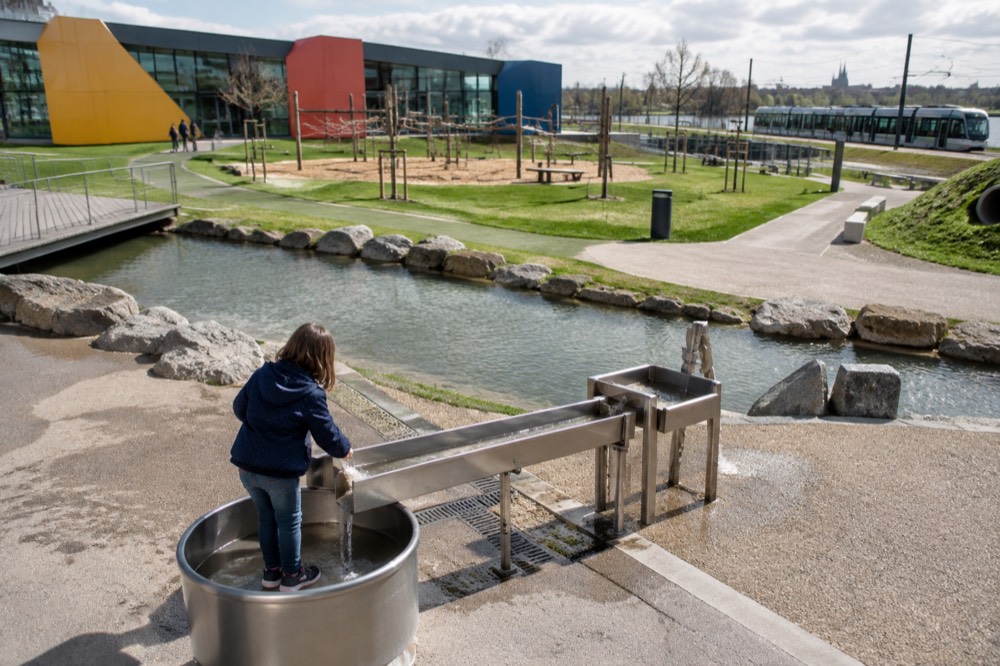
Le Vaisseau is Strasbourg's dedicated children's science museum and the best indoor option for families. It is built around hands-on exhibits covering water, light, the human body and construction, with every display designed to be touched and explored. The Tomi Ungerer Museum appeals to older children with its collection of the Alsatian illustrator's playful drawings. The Musée Historique tells the city's story through models and multimedia displays, and the MAMCS modern art museum runs family workshops on weekends and during school holidays.
Le Vaisseau, on the southern edge of the city near the Neudorf district, is purpose-built for children aged three to fifteen. The exhibits are organised into themed zones: a water area where children can build dams and channels, a construction zone with giant building blocks, a light and shadow room, and a section on the human body with a walk-through digestive system. Everything is labelled in French, German and English. There is a dedicated toddler area and a garden with outdoor experiments. Plan on at least three hours, and book online in advance during school holidays as the museum fills up. The Le Vaisseau guide has more detail on current exhibitions and ticket prices.
The Tomi Ungerer Museum, housed in a villa near the Place de la République, showcases the work of the Strasbourg-born illustrator known for his playful children's books, as well as his satirical drawings for adults. The children's section is bright and interactive, with reading corners and drawing tables. It is a quieter, smaller museum that works well for a one-hour visit with primary-school children who already know his books.
The Musée Historique, in a historic building near the cathedral, walks you through Strasbourg's history from the Middle Ages to the present day. The scale model of the city, the armour and weapons section, and the multimedia displays on the Second World War tend to hold the attention of children aged eight and above. Admission to all municipal museums is free on the first Sunday of every month, a useful saving for families.
| Museum | Age Suitability | Highlights | Admission Notes |
|---|---|---|---|
| Le Vaisseau | 3 to 15 years | Hands-on science exhibits, water play, construction zone, toddler area | Paid entry; book online for peak periods |
| Tomi Ungerer Museum | 5 years and up | Original illustrations, reading corners, drawing tables | Paid entry; free first Sunday of the month |
| Musée Historique de Strasbourg | 8 years and up | City model, armour, multimedia displays | Paid entry; free first Sunday of the month |
| MAMCS (Modern Art) | All ages with family workshops | Family workshops at weekends, large open galleries | Paid entry; free first Sunday of the month |
The Musée Alsacien is closed for renovation until 2028, so cross it off your list for now. The MAMCS runs regular family workshops where children can create their own art after a short tour of the collection, and the building's large atrium is a good place to let toddlers stretch their legs on a rainy day.
After a morning spent indoors, a boat cruise is a natural next step. A private cruise on the Ill lets you relax while the children watch the half-timbered houses and the European Parliament slide past, and you can bring snacks and drinks on board.
After a morning indoors, a boat cruise is a natural next step, book a private boat cruise here.
How Can Families Get Around Strasbourg Easily?
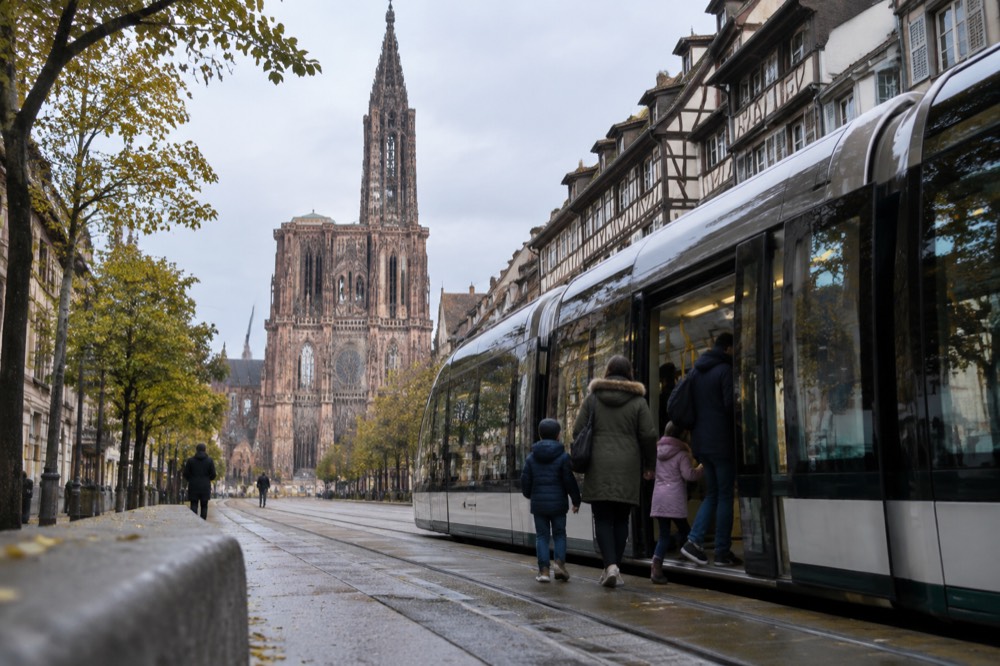
Families can easily get around Strasbourg using the CTS public transport network, where a single ticket costs €1.90 via app, contactless card, or Badgéo card (€2.50 on board buses), but the best-value option is the 24-hour Trio pass at €10.20 for up to three people. The largely pedestrianised city centre and extensive tram network reaching Parc de l’Orangerie, the European institutions, and the German border at Kehl make family travel straightforward.
The compact size of the Grande Île means you can walk between most sights. The cathedral to Petite France takes ten minutes with a pushchair, and the route from the cathedral to the Parc de l'Orangerie is a flat, tree-lined thirty-minute walk or a five-minute tram ride on line E. Trams run every few minutes during the day and are step-free, with designated spaces for pushchairs and wheelchairs. Children under four travel free.
Bike rental is another practical option. Strasbourg has one of France's most extensive urban cycle networks, and several rental shops near the station offer child seats, tag-alongs and trailers. The Vélhop self-service scheme has stations across the city, though it is better suited to adults and teenagers as the bikes are one-size-fits-all. A guided bike tour with bikes included removes the hassle of finding the right equipment.
| Transport Mode | Cost | Best For | Notes |
|---|---|---|---|
| Walking | Free | All ages; the centre is flat and pedestrianised | Most sights within a 20-minute walk |
| Tram and bus (single ticket) | 1.90 EUR (app/card), 2.50 EUR on board | Short hops or occasional journeys | Children under 4 free |
| 24h Solo pass | 4.60 EUR | One adult for a full day of unlimited travel | Includes airport shuttle |
| 24h Trio pass | 10.20 EUR | Two to three people travelling together | Best value for a family of three |
| Bike rental (Vélhop) | From a few euros per hour | Teenagers and adults | Child seats and trailers available from rental shops |
| Public boat tour (Batorama) | 16.20 EUR adult, 8.90 EUR reduced (long tour) | A seated, scenic overview of the city | Red Tour 1h10, Blue Tour 0h45 |
| Private boat cruise | See listing | Families wanting flexibility and privacy | Book ahead via the operator's live listing |
The CTS network also connects to Strasbourg-Entzheim Airport via a frequent TER train shuttle that takes eight minutes. The combined Alsa+ 24h EMS ticket at 4.60 EUR includes the airport train and unlimited tram and bus travel for a day, a useful option if you are flying in and heading straight to the city centre.
What Are The Best Day Trips From Strasbourg With Kids?
The best day trips from Strasbourg with kids include the fairy-tale town of Colmar with its toy museum and canals, the thrilling Europa-Park theme park just across the German border, and the medieval Haut-Koenigsbourg castle. For animal lovers, Monkey Mountain and the Eagle Park in Kintzheim are top picks, while the Black Forest's lakes and open-air museums offer outdoor fun, and a car is handy for rural spots.
Colmar is the easiest day trip by public transport. The old town, with its half-timbered houses and flower-lined canals, is compact and walkable, and the Musée du Jouet (Toy Museum) has a collection of vintage toys, model trains and a play area. The covered market is a good spot for a family lunch. The Strasbourg and Colmar itinerary page lays out a full day combining the two cities.
Europa-Park in Rust, Germany, is a full-day outing that needs no introduction to families who love theme parks. It has over a hundred rides and attractions spread across themed areas representing different European countries, with a dedicated children's area and plenty of gentler rides for younger visitors. Shuttle buses run from Strasbourg during the park's operating season, and driving takes around forty-five minutes. Check the park's official site for opening dates and ticket prices, which vary by season.
For a dose of nature and wildlife, the Monkey Mountain (Montagne des Singes) and the Eagle Park (Volerie des Aigles) in Kintzheim, near the Haut-Koenigsbourg castle, are a popular combination. At Monkey Mountain, Barbary macaques roam freely in a forested park and you walk through their habitat. The Eagle Park stages flying displays with eagles, vultures and owls against the backdrop of the castle ruins. Both are outdoor attractions and best visited between April and October.
| Destination | Highlights | Transport Note |
|---|---|---|
| Colmar | Canals, half-timbered houses, toy museum, covered market | Direct TER train from Strasbourg, frequent service |
| Europa-Park (Germany) | Theme park with over 100 rides, children's area | Car or shuttle bus; check seasonal opening |
| Haut-Koenigsbourg Castle | Restored medieval castle with panoramic views | Car or organised tour; steep paths inside |
| Monkey Mountain and Eagle Park (Kintzheim) | Free-roaming macaques, bird-of-prey flying displays | Car recommended; open April to October |
| Black Forest (Germany) | Lakes, open-air museums, hiking trails | Car or train to Freiburg then regional bus |
The Colmar day trip guide and the Europa-Park page have more detail on planning each outing. For the castle and the animal parks, a guided day trip from Strasbourg takes care of transport and tickets, which can simplify the logistics when you are travelling with children.
What Is The Best Family-Friendly Accommodation In Strasbourg?
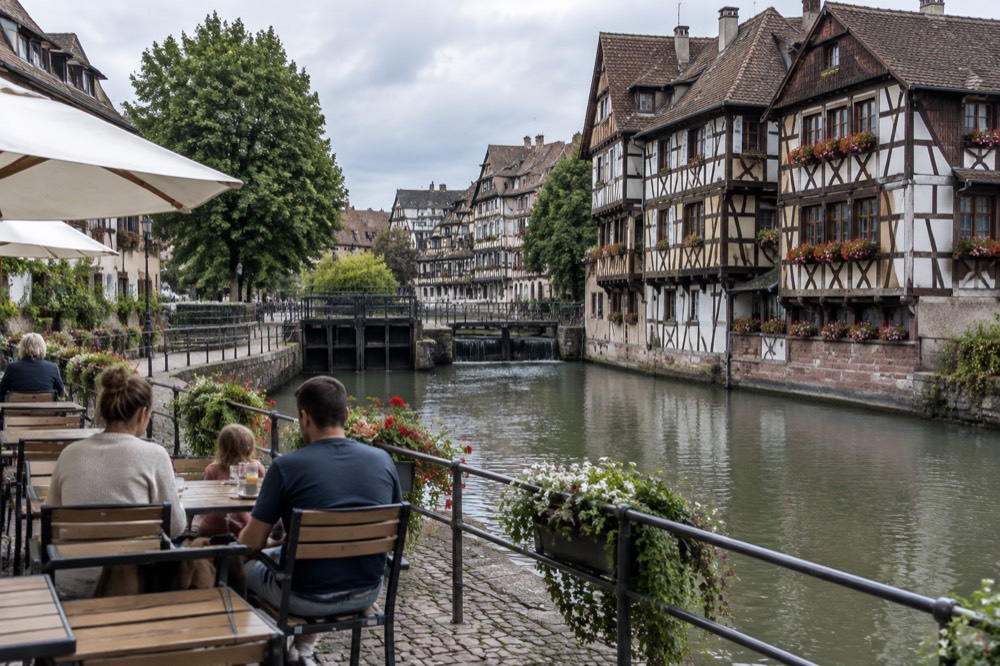
The best areas for families are Petite France, the cathedral quarter and the Neustadt around the Parc de l'Orangerie. Petite France puts you in the prettiest part of the old town, with canal views and easy access to boat cruises, though the cobbled streets can be tricky with a pushchair. The Neustadt offers wider pavements, larger apartments and proximity to the park, making it ideal for families with young children who need outdoor space. The area around the train station is convenient for day trips but less atmospheric.
Self-catering apartments are widely available and give families the flexibility to prepare meals and manage early bedtimes. Many apartments in Petite France and the cathedral quarter occupy historic buildings with steep staircases, so check for a lift or a ground-floor unit if you are bringing a pushchair. The Neustadt, built during the German imperial period, has grand boulevards and larger apartments with high ceilings, and the streets are quieter in the evening.
| Area | Why Good For Families | Nearby Attractions |
|---|---|---|
| Petite France | Canal views, central, close to boat cruises | Covered Bridges, Barrage Vauban, boat landings |
| Cathedral Quarter | Central, pedestrianised, lively in the evening | Strasbourg Cathedral, astronomical clock, Place Kléber |
| Neustadt | Wide streets, larger apartments, near the park | Parc de l'Orangerie, European Parliament, Place de la République |
| Krutenau | Student neighbourhood, casual eateries, near the Ill | University gardens, riverside paths, tram line to the centre |
| Station District | Convenient for day trips and airport shuttle | Train station, car rental desks, tram hub |
The where to stay in Strasbourg guide compares neighbourhoods in more detail and suggests specific hotels and apartments for families. Booking early is essential for the Christmas market season, when the city fills up months in advance.
Is Strasbourg Safe For Children?
Strasbourg is a safe city for families. The historic centre is well-lit, heavily pedestrianised and busy with locals and visitors until late in the evening. The tram network is monitored by CCTV and transport police, and the city's crime rates are low by European standards. The main practical concern for parents is the network of canals and the River Ill, which have unfenced quays in some sections of Petite France, so keep small children within arm's reach near the water.
The city's layout works in your favour. Most of the streets in the Grande Île are either fully pedestrianised or restricted to delivery vehicles, so you are not constantly managing traffic. The pavements in the Neustadt and around the university are wide and pushchair-friendly. Strasbourg's parks are well-maintained and busy with local families, particularly after school and at weekends.
The only caution worth flagging is the water. The Ill runs through the heart of the old town, and the quays in Petite France and along the Quai des Bateliers have no railings in places. The canal locks and the Barrage Vauban area have deep water, so keep an eye on toddlers. The boat cruises and the Batorama landing stages are fenced and safe.
What Is The Best Time To Visit Strasbourg With Kids?
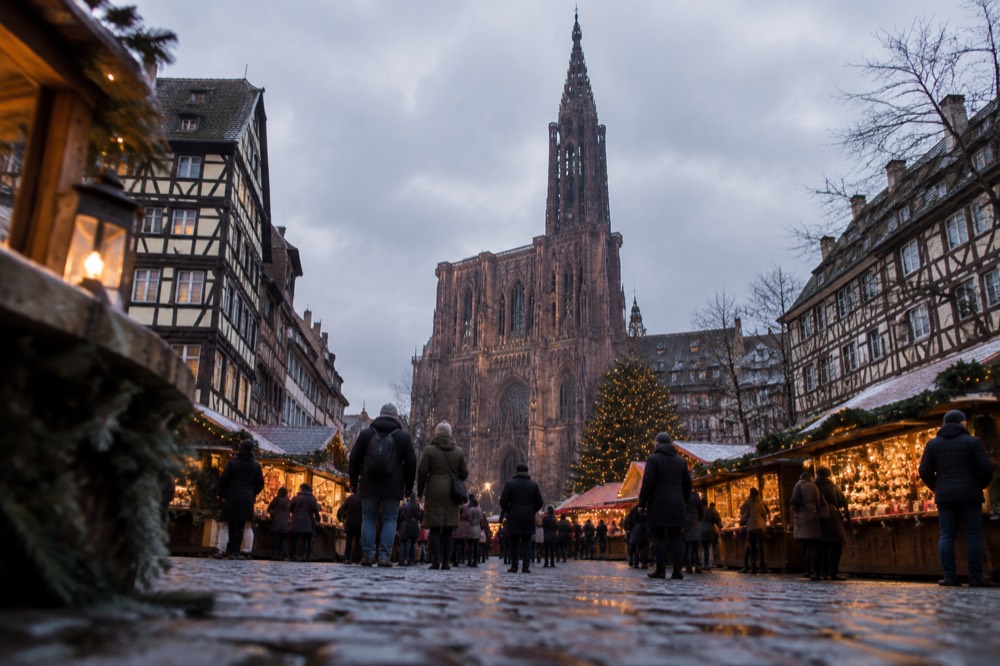
Late spring and early summer, from May to July, offer the best combination of warm weather, long daylight hours and manageable crowds for a family trip. September is another excellent month, with mild temperatures and fewer visitors after the summer peak. The Christmas market season, from late November to 24 December, is magical for children but brings cold weather, large crowds and high accommodation prices, so it suits families who are prepared to wrap up warmly and book well ahead.
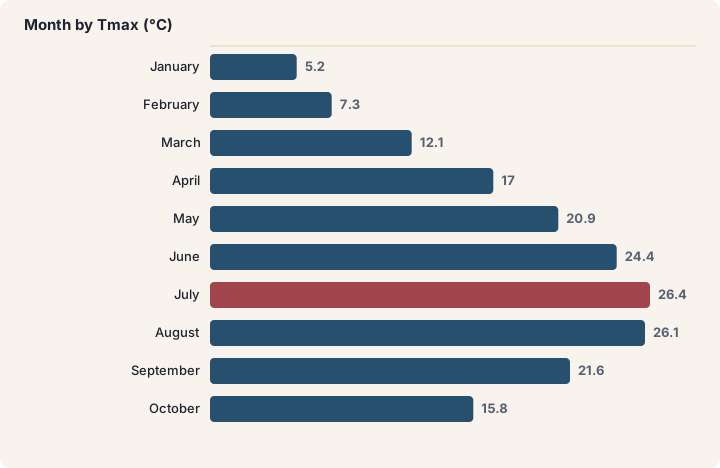
The semi-continental climate means Strasbourg has distinct seasons. Summers are warm but rarely excessively hot, with average maximum temperatures of 24.4°C in June and 26.4°C in July. The parks and the river provide natural cooling, and many cafés have shaded terraces. Spring, from April to May, is cooler but the gardens and the Parc de l'Orangerie are in bloom, and the storks are nesting. Autumn, from September to October, brings crisp, sunny days and the grape harvest in the Alsace vineyards, which can be a colourful day trip.
Winter is cold and often grey, with December averaging a maximum of 5.9°C and a minimum of 0.8°C. Snow is possible but not guaranteed. The Christmas market transforms the city into a festive spectacle, with chalets spread across several squares, a large Christmas tree on Place Kléber and an ice rink. The 2025 edition ran from 26 November to 24 December and drew 3.05 million visitors. The city posts each edition's dates on its Christmas site, but the market traditionally opens in the last week of November and closes on the evening of 24 December. Check the city's Christmas site for confirmed dates before you book.
| Month | Tmax (°C) | Tmin (°C) | Rain Days (≥1 mm) | Family Notes |
|---|---|---|---|---|
| January | 5.2 | -0.2 | 9.1 | Cold; indoor activities and museums |
| February | 7.3 | 0.0 | 8.3 | Quiet; good for a short break |
| March | 12.1 | 2.6 | 8.5 | Spring begins; parks coming to life |
| April | 17.0 | 5.7 | 8.6 | Pleasant; storks nesting in the Orangerie |
| May | 20.9 | 10.1 | 10.8 | Warm; ideal for outdoor play |
| June | 24.4 | 13.4 | 10.2 | Long days; parks and river activities |
| July | 26.4 | 14.9 | 10.4 | Warmest month; water play at the Jardin des Deux Rives |
| August | 26.1 | 14.5 | 9.5 | Busy; many locals on holiday |
| September | 21.6 | 10.7 | 8.0 | Mild; fewer crowds, good for cycling |
| October | 15.8 | 7.2 | 9.6 | Cooler; autumn colours in the vineyards |
| November | 9.4 | 3.3 | 9.2 | Chilly; Christmas market opens late in the month |
| December | 5.9 | 0.8 | 10.2 | Cold; Christmas market, festive atmosphere |
The Strasbourg weather guide has a month-by-month breakdown with more detail on what to expect and what to pack.
What Should We Pack For A Family Trip To Strasbourg?
Pack for a semi-continental climate with distinct seasons. In summer, bring light layers, sun hats and sunscreen, as the riverside paths and park lawns offer limited shade. In winter, waterproof coats, warm layers, gloves and sturdy shoes are essential, especially for the Christmas market. A lightweight pushchair that folds easily is useful for the tram, and a baby carrier helps on the cobbled streets of Petite France. Restaurants are relaxed about children, but packing a few familiar snacks can bridge the gap between French meal times.
Comfortable walking shoes are the most important item for everyone in the family. You will cover more ground than you expect, and the cobbles in the old town can be uneven. A rain jacket is useful in any season: Strasbourg averages between eight and eleven rainy days a month, and showers can arrive without much warning.
If you are visiting during the Christmas market, bring a reusable cup for the hot chocolate and mulled wine, as the market operates a deposit system on cups and the refund queues can be long. A small backpack for carrying purchases, snacks and extra layers leaves your hands free for managing children in the crowd.
The private boat cruise gives you a flexible, all-ages activity, the walking tour introduces the city in a child-friendly format, and the Segway tour keeps teenagers engaged.
Common Questions About Visiting Strasbourg With Kids
Is Strasbourg A Walkable City?
Yes, the Grande Île is almost entirely pedestrianised and flat, making it easy to explore on foot with children. Most sights are within a twenty-minute walk of each other, and the tram network fills the gaps for longer journeys.
How Many Days In Strasbourg Is Enough?
Two full days are enough to cover the main sights, a boat cruise and a park visit with children. Three days allow a day trip to Colmar or the Black Forest, and a four-day stay gives you time for a slower pace with playground stops and a museum morning.
Is December A Good Time To Visit Strasbourg?
December is cold and busy, but the Christmas market makes it a memorable family trip if you are prepared for the weather and the crowds. Book accommodation and any tours well in advance, and plan indoor breaks during the day to warm up.
Can I Drink Tap Water In Strasbourg France?
Yes, tap water in Strasbourg is safe to drink and is served free in restaurants if you ask for a carafe. Carry refillable water bottles for the children, as public drinking fountains are not widespread.
Where To Stay In Petite France Strasbourg?
Petite France has a range of family-friendly apartments and small hotels with canal views. Look for ground-floor units or a lift if you are bringing a pushchair, as many buildings have steep staircases. The where to stay guide lists specific options.
What To Avoid In Strasbourg?
Avoid relying on a car in the city centre, as parking is limited and expensive. The Musée Alsacien is closed until 2028. Keep small children away from unfenced quays along the Ill, and be aware that many restaurants close between lunch and dinner service, so plan meal times around the French schedule.