Le Vaisseau Strasbourg
Le Vaisseau is Strasbourg's hands-on science and discovery centre for children, a short tram ride from the historic centre.
Short answer
Le Vaisseau is a hands-on science and discovery centre for children in Strasbourg, in the Alsace region of north-eastern France. It sits beside the Parc de l'Orangerie axis, easy to reach by tram, and it is built almost entirely around touching, building and experimenting rather than looking at display cases. Opening hours and admission are published on the venue's own page, so check those before setting out.
Le Vaisseau is a purpose-built science and discovery centre for children in Strasbourg, the prefecture of the Bas-Rhin in Alsace, north-eastern France, a city that sits on the River Ill beside the Rhine, which forms the border with Germany. Where the cathedral quarter is about looking up at medieval stonework, Le Vaisseau is the opposite kind of outing: nearly everything inside is designed to be pushed, poured, built, climbed on or taken apart, and the whole venue exists because a region decided that families with curious children deserved a building of their own. This page explains what the venue is, what a visit involves, how to reach it with the city's tram network, and which other Strasbourg sights pair well with it on the same day.
What Is Le Vaisseau Strasbourg?
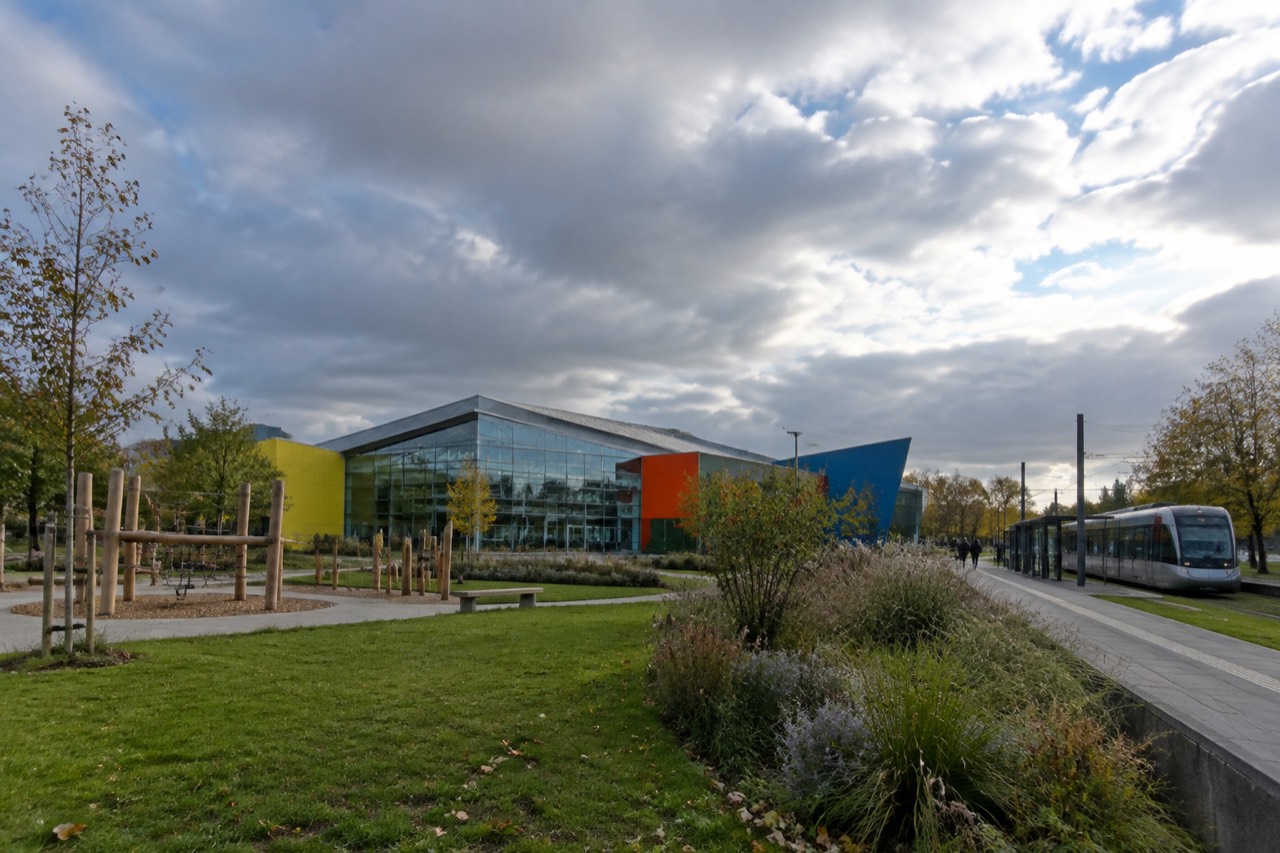
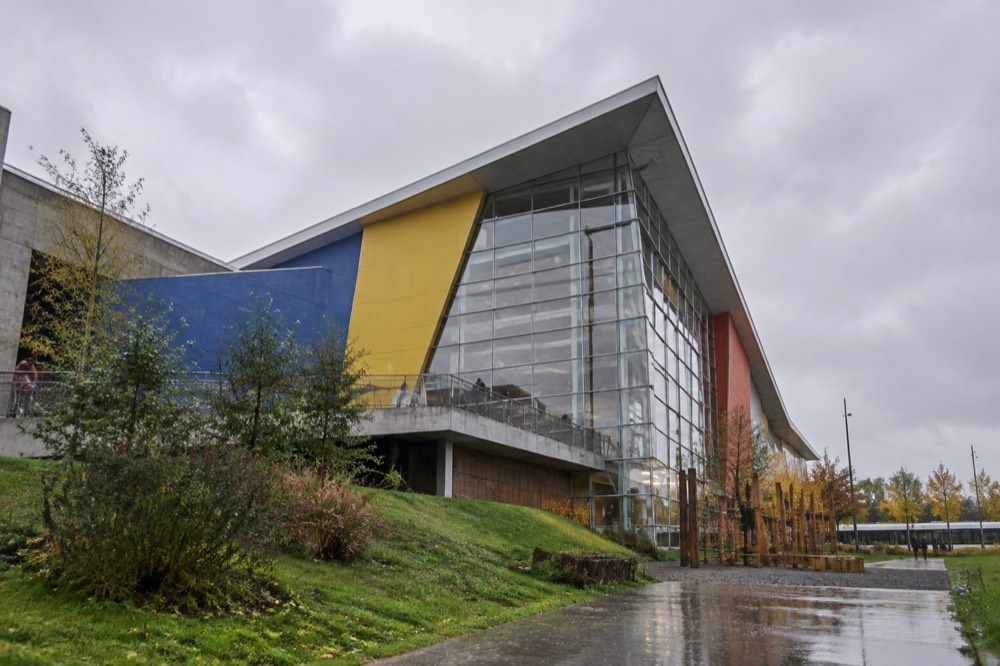
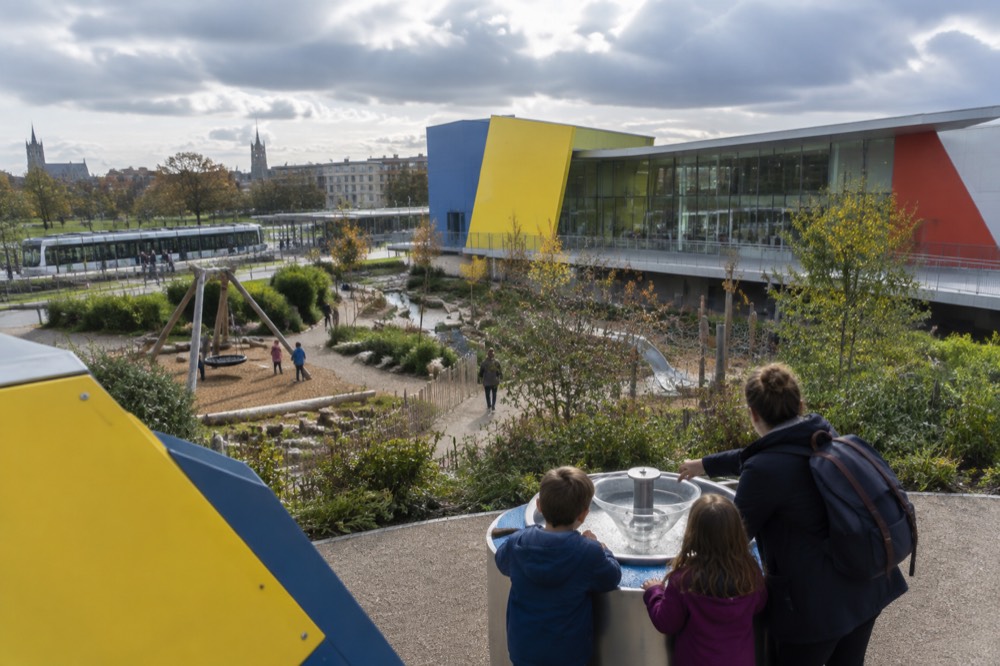
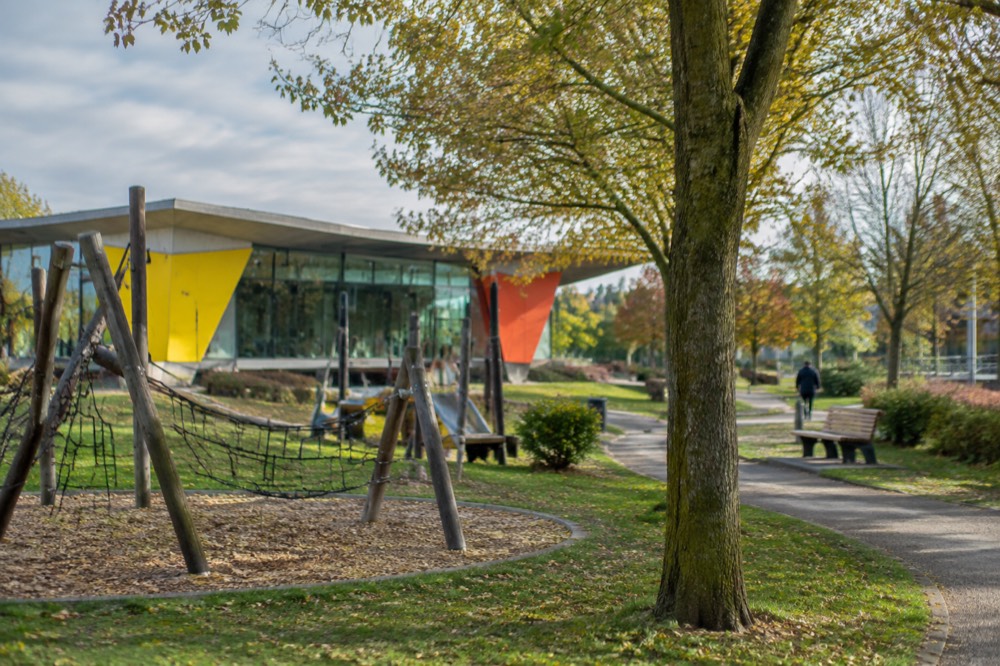
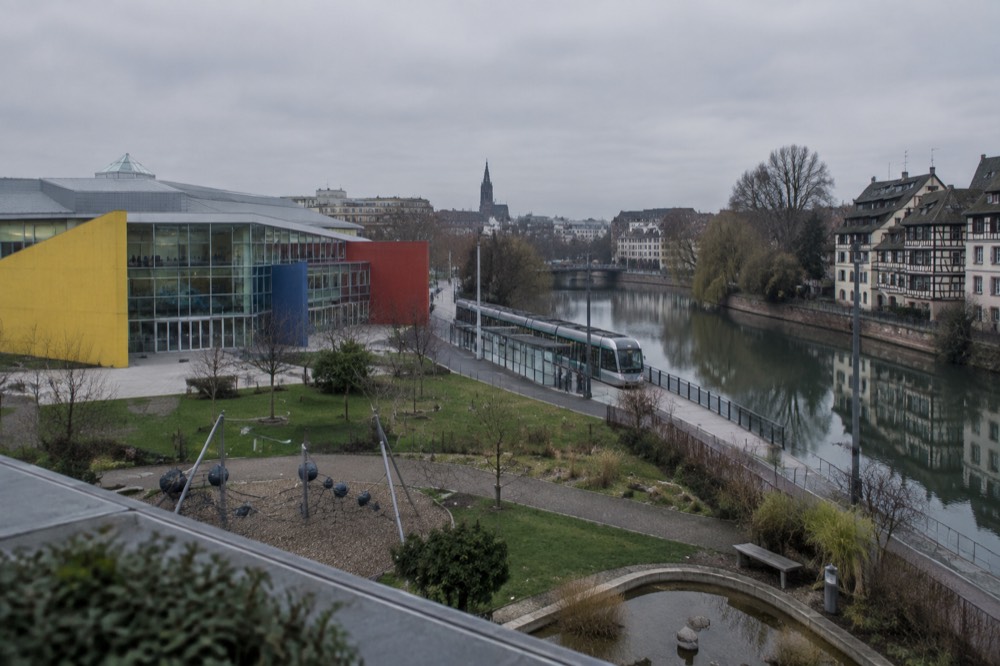
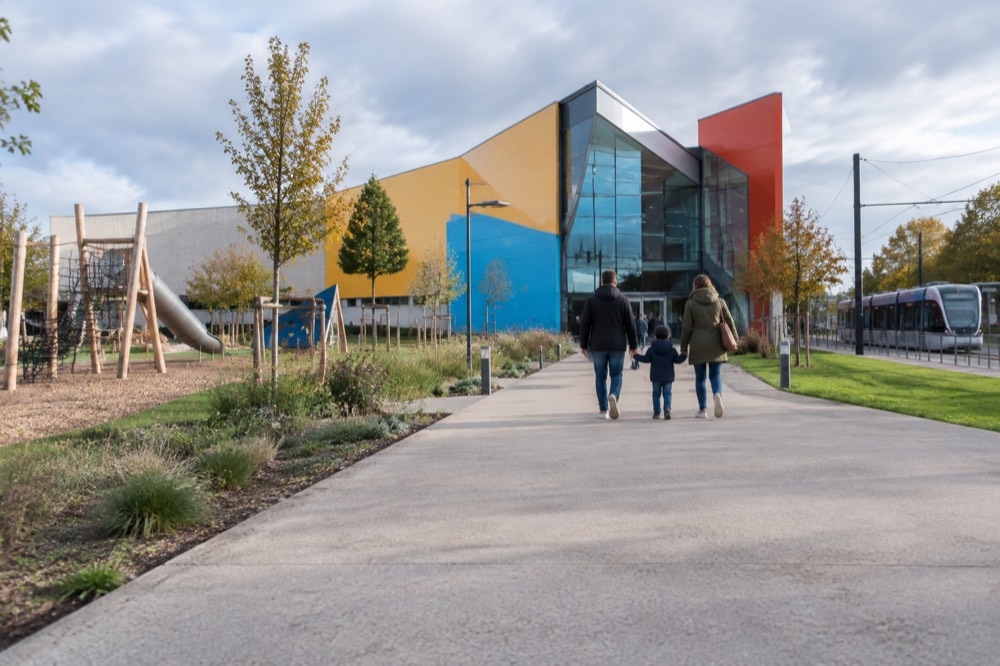
Le Vaisseau is an interactive science and technology museum aimed principally at children and families, located in Strasbourg, in the Alsace region of north-eastern France, on the city's eastern side toward the Parc de l'Orangerie, and it is run as a departmental institution rather than as part of the city's municipal museum network. It is not a municipal museum in the network that includes the Palais Rohan collections; it is a separate kind of institution, run for the wider department, with its own admission policy, its own opening calendar and its own programme of temporary exhibitions and workshops. The building's name means "the vessel", and the naming is deliberate: the architecture reads as a ship moored at the edge of a park, and the interior is organised as a deck of themed worlds a child moves through rather than a corridor of glass cabinets.
That distinction matters for planning. Strasbourg's municipal museums, from the Musée des Beaux-Arts to the Musée de l'Œuvre Notre-Dame, charge 9 EUR full and 5 EUR reduced, with a 1-day Pass Musées at 20 EUR, and every one of them is free on the first Sunday of the month. Le Vaisseau sits outside that pricing structure, so a family assuming the museum rules apply here will plan wrongly. The venue's own page publishes its current admission and hours, and those are the figures to rely on, because a science centre with school groups, holiday workshops and a planetarium-style programme changes its calendar through the year.
| Question | Answer for Le Vaisseau | What to check on the official page |
|---|---|---|
| What kind of venue is it | A hands-on science and discovery centre for children | Current programme and zones |
| Who runs it | A departmental science institution, not the city's municipal museum network | Admission categories and family rates |
| Where is it | Strasbourg, Alsace, north-eastern France, toward the Parc de l'Orangerie side of the city | Access directions and parking |
| Who is it for | Families with children, school groups and curious adults | Age recommendations per zone |
| What is inside | Themed interactive zones, workshops and temporary exhibitions | What is open on your date |
What Can Children Do Inside Le Vaisseau?
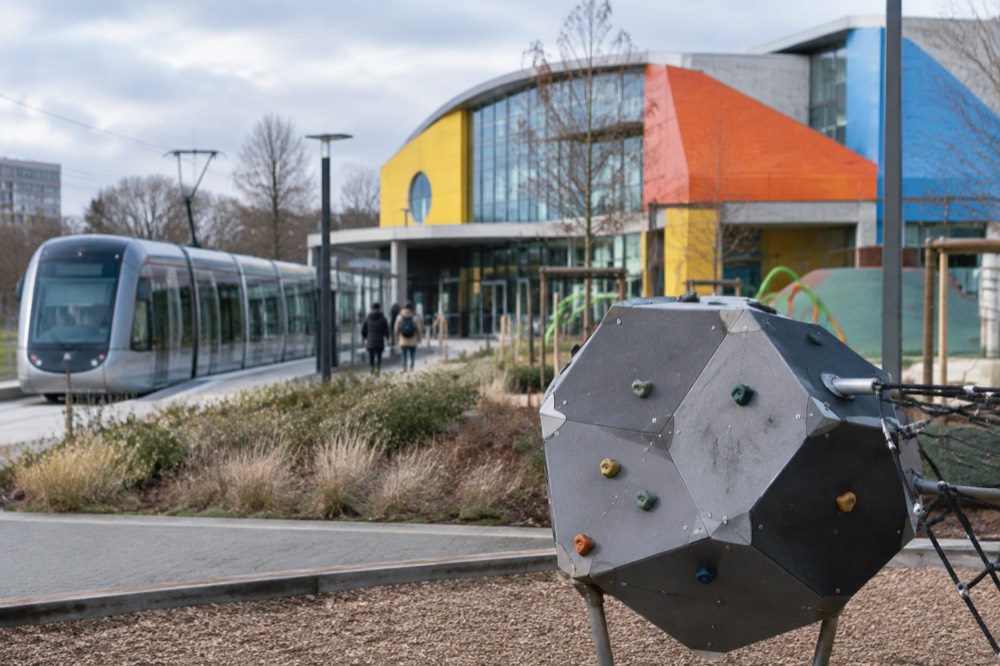
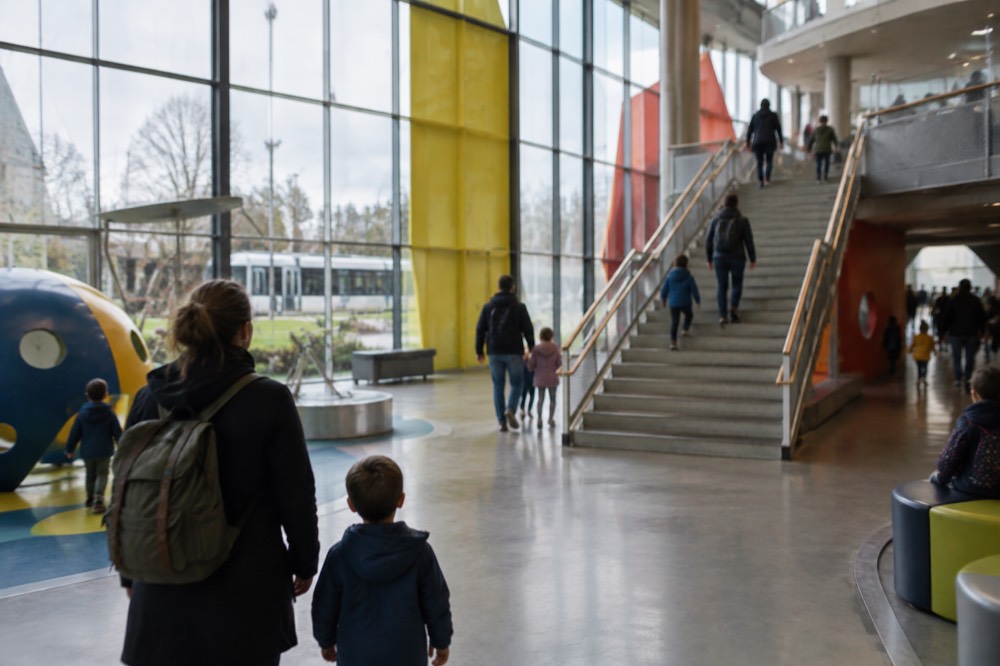
Inside Le Vaisseau children work with their hands: the exhibits are interactive stations built around themes such as water, light, the human body, building and technology, and the design assumption is that a child who manipulates something understands it better than a child who reads a label. The venue is organised as a series of worlds rather than numbered rooms, and each zone is engineered for a different kind of play: one area invites construction and destruction, another invites experiments with flow and floating, another puts the child's own body at the centre of the demonstration. Workshop spaces run supervised sessions, and the temporary exhibition changes the reason to return, which is why local families treat the venue as a membership destination rather than a one-off.
The tone is worth understanding before you go, because it changes what a good visit looks like. A child who wants to read every panel will move slowly and finish less; a child who wants to do will spend an hour at three stations. Parents of very young children should check the venue's own page for the toddler-oriented areas and their age guidance, since the zones are graded and the venue publishes which spaces suit which ages. School-term weekdays bring organised groups, and holiday periods change the rhythm of the building entirely, so the timing question is genuinely part of the visit plan rather than an afterthought.
| Zone type | What it asks of a child | Who it suits best | What to check before visiting |
|---|---|---|---|
| Water and flow stations | Pouring, channelling, floating and problem solving | Children who like wet, messy experiments | Whether aprons or spare clothes are advised |
| Building and structures | Stacking, balancing and testing constructions | Children who like blocks and engineering play | Age guidance for loose parts |
| Body and senses exhibits | Testing perception, balance and reaction | Children curious about how they work | Height or age limits on any apparatus |
| Light and optics | Shadow play, reflection and colour mixing | Younger children and visual learners | Whether the room is darkened |
| Workshop sessions | Following a guided activity with a facilitator | School-age children who can sit for a task | Booking rules and session times |
The workshop programme deserves a sentence of its own. Sessions are led by the venue's own facilitators, they usually tie into the temporary exhibition, and they can fill, so a family arriving mid-afternoon in a holiday week may find the day's sessions already taken. The venue's page is the place to see what is running on your date, and it is a better five minutes of research than any general rule about when to arrive.
How To Plan A Visit To Le Vaisseau With Kids
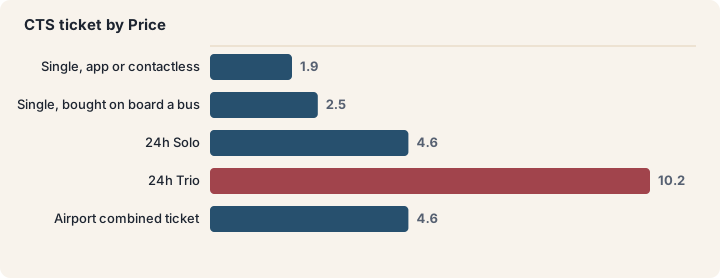
Plan a Le Vaisseau visit around three things: the venue's own published hours and admission, the tram connection from the centre, and the age of your children, because those three decide whether you get two hours of happy play or a rushed hour before closing. The transport side is the easiest to state precisely. The CTS network runs the city's trams and buses, a single ticket costs 1.90 EUR bought through the Badgéo card, the CTS app or contactless payment, or 2.50 EUR bought on board a bus, and the 24h Solo day pass costs 4.60 EUR. For a family of two adults and one child travelling together, the 24h Trio at 10.20 EUR covers two to three people, and for a larger family two day passes usually beat a stack of singles.
Timing is the part no outside page can fix for you, because a science centre's calendar moves. Term-time weekdays are shaped by school groups; weekends and school holidays are shaped by families; some zones close for maintenance or retheming; and the temporary exhibition changes on its own schedule. The venue's own page lists all of this, and it is the only source worth trusting for the day you actually plan to come. What a general guide can usefully say is structural: allow a half day rather than an hour, expect to leave through the shop, and build in a park stop afterwards, because the green space around this side of the city is part of what makes the trip pleasant.
If the science centre fills the morning, the afternoon can take a different register, and the walks above are the natural complement: a guided walk through the European District turns the institutional half of this side of the city into something a family can actually read, and a food walk turns the late afternoon into a tasting route through the old quarter. The short walk is the easy option for legs that are already tired.
| Planning item | What to decide | Where the answer lives |
|---|---|---|
| Opening hours | Weekday, weekend and holiday hours differ | The venue's own page |
| Admission | Full, reduced and family rates | The venue's own page |
| Age fit | Which zones suit your children's ages | The venue's zone descriptions |
| Workshops | Whether to book a session ahead | The venue's programme page |
| Transport | Day pass versus singles | CTS fare information |
| Weather backup | Indoor alternative if a zone closes | The venue's announcements |
One honest note on money: the Strasbourg City Card, at 5 EUR for an adult and 3.50 EUR for a child aged 3 to 17, valid for 7 days, lists Le Vaisseau among the attractions it discounts. It is a discount card rather than an all-inclusive pass, so it does not replace buying admission; it reduces it, alongside reductions at the municipal museums, the cathedral platform, the astronomical clock and the river boats. A family combining the science centre with two or three paid sights in the same week can do the arithmetic in a minute and see whether the card pays for itself.
Is Le Vaisseau Worth The Trip From The City Centre?
For families with children between roughly toddler and early-secondary age, Le Vaisseau is one of the few Strasbourg attractions built entirely for them, and that alone justifies the short tram ride; for adult travellers without children, it is a specialist stop that only makes sense if the programme or the architecture interests you. The honest framing is that Strasbourg's core offer, the Grande Île with its cathedral, Petite France and half-timbered riversides, is a world-class walk that needs no child to enjoy it, and Le Vaisseau is not competing with that. It is competing with the question every parent faces on day three of a city break: what do we do that the children will choose to remember?
That question is where the venue earns its place. A morning of interactive play resets a family's patience for the afternoon, and the geography cooperates, because this side of the city also holds the Parc de l'Orangerie with its lawns and its stork enclosure, the European Parliament and the Council of Europe. A day that pairs a Le Vaisseau morning with a park picnic and a stroll past the institutions is a genuinely rounded Strasbourg day.
The European District walk is the guided version of that afternoon, and it is the tour this site features alongside the venue: a walk with a guide, run at a from-price shown on the operator's live listing, with the rating and review count rendered there too. Because the district sits on the same side of the Ill as the science centre, the pairing costs almost no extra travel, which is exactly the kind of sequencing that makes a family day feel planned rather than improvised. You can see the tour's details and Check availability on the live listing, and read more about the district itself on the European Parliament visitor guide.
Want the European District's story told with a guide? Book a guided walking tour here.
The walk is worth holding a slot for even on a day built around the science centre, since it starts from the district side of the city and finishes with time to spare before dinner. Families who prefer to keep the afternoon unguided can simply walk the same streets on their own, but the guided version turns the institutional facades into a story children can follow, and the free-cancellation terms on the live listing make it a low-commitment addition to the plan.
A word on seasons, because they change the trip. Strasbourg's climate is semi-continental, with Meteo-France 1991-2020 normals for Strasbourg-Entzheim showing a mean maximum of 26.4 C in July against 5.2 C in January, and rain on 112.3 days a year at the 1 mm threshold. In practice that means the park-and-tram version of this day is at its best from late spring to early autumn, while a wet or cold afternoon is exactly when an all-indoor venue like this one earns its keep, and December adds the complication of the Christmas market crowds filling the Grande Île.
| Season | Mean daily maximum | Mean daily minimum | Rain days of 1 mm or more | How it shapes a Le Vaisseau day |
|---|---|---|---|---|
| Winter (Dec-Feb) | 5.2 to 7.3 C | -0.2 to 0.8 C | 8.3 to 10.2 | Indoor day; park stop short |
| Spring (Mar-May) | 12.1 to 20.9 C | 2.6 to 10.1 C | 8.5 to 10.8 | Best balance of indoor and outdoor |
| Summer (Jun-Aug) | 24.4 to 26.4 C | 13.4 to 14.9 C | 9.5 to 10.4 | Park picnic after the visit |
| Autumn (Sep-Nov) | 9.4 to 21.6 C | 3.3 to 10.7 C | 8.0 to 9.6 | Indoor day with a dry-window walk |
How Do You Get To Le Vaisseau By Tram Or Bus?
Le Vaisseau is reached on the CTS tram and bus network, and the fare arithmetic is simple: a single costs 1.90 EUR through the Badgéo card, the CTS app or contactless, or 2.50 EUR on board a bus, while the 24h Solo day pass at 4.60 EUR and the 24h Trio at 10.20 EUR cover a family's round trip and any other rides that day. The venue sits on the side of the city served from the central hub at the Gare Centrale and through the Homme de Fer interchange in the centre, and the venue's own access page names the stop to aim for, which is the detail to confirm before travelling with tired children.
Buy the day pass when the day includes more than the round trip. A family that rides to the science centre in the morning, moves on to the Parc de l'Orangerie at midday and finishes in the Grande Île in the late afternoon will use the pass three or four times, and the Trio version exists precisely for two to three people travelling together. Visitors arriving from the airport should know that the combined train-plus-network ticket, which includes the airport shuttle and a 24h pass, costs 4.60 EUR, a figure worth remembering if the science centre is the first stop of a trip.
| CTS ticket | Price | What it covers | Best for |
|---|---|---|---|
| Single, app or contactless | 1.90 EUR | One journey with connections | One-off trips |
| Single, bought on board a bus | 2.50 EUR | One journey | Last-resort purchase |
| 24h Solo | 4.60 EUR | One person, unlimited rides for a day | A day of hopping between sights |
| 24h Trio | 10.20 EUR | Two to three people travelling together | A small family's day pass |
| Airport combined ticket | 4.60 EUR | Airport train shuttle plus a 24h pass | Arriving visitors |
Cycling is the other realistic option. Strasbourg is one of France's most bike-friendly cities, the flat terrain of the Ill valley makes the ride undemanding, and a guided bike tour is a way to see this side of the city with a local explaining it, with bicycles included in the booking. The two-and-a-half-hour tour with a local guide is the version that covers enough ground to justify itself; families with older children can treat it as the afternoon half of the day, and the operator's live listing carries the price, the rating and the review count.
Which Other Strasbourg Sights Pair Well With Le Vaisseau?
The sights that pair naturally with Le Vaisseau are the ones on the same eastern side of the Ill: the Parc de l'Orangerie for a run-around after the exhibits, the European Parliament and Council of Europe for the institutional architecture, and then, across the river, the Grande Île classics such as the cathedral, Petite France and the Ponts Couverts. The logic is simply geography and energy. A morning indoors, a park at midday, an easy institutional stroll in the afternoon and, if legs allow, the old quarter in the early evening, is a sequence that keeps every member of a family inside their comfort zone.
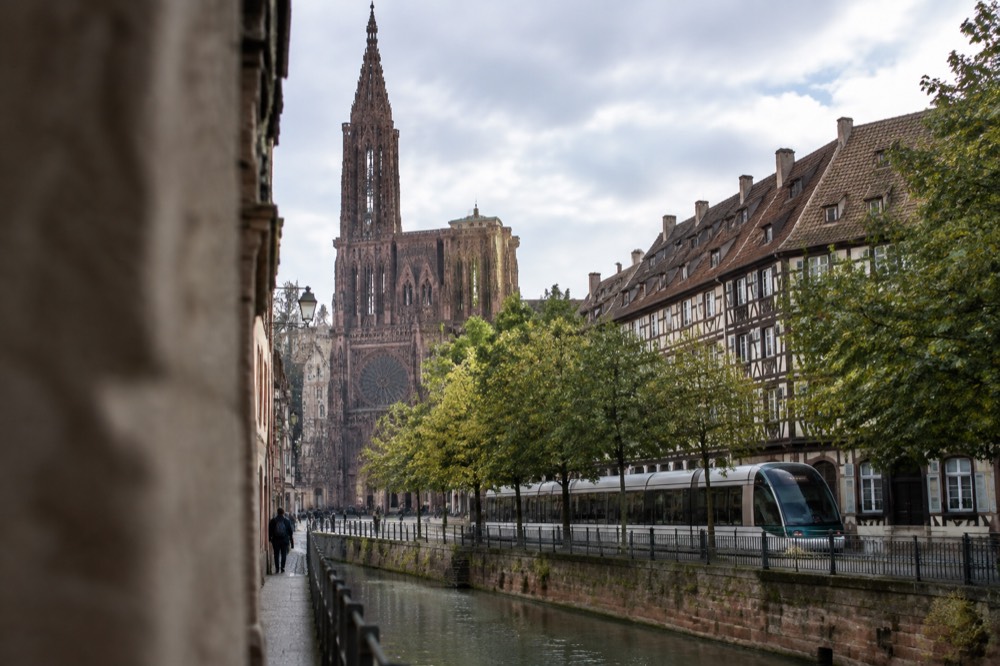
For the old-quarter half of the day, the anchors are the ones every visitor should know. The Strasbourg Cathedral with its single spire and its 66 m platform is the city's defining building, and the astronomical clock inside it performs its automaton show daily at 12:30, with tickets at 4 EUR bought on the day only. Petite France, the former tanners' and millers' quarter at the western tip of the Grande Île, delivers the half-timbered postcard streets, and the Ponts Couverts with the Barrage Vauban terrace give the classic panorama over them, with the terrace keeping seasonal hours published on the city's page for the site.
| Pairing sight | Why it works after Le Vaisseau | Segment of the day |
|---|---|---|
| Parc de l'Orangerie | Open lawns and a stork enclosure, minutes away | Late morning to midday |
| European Parliament and Council of Europe | Architecture and institutional Strasbourg on the same side of the Ill | Early afternoon |
| Strasbourg Cathedral and astronomical clock | The historic core's defining sights | Late afternoon |
| Petite France and Ponts Couverts | Riverside walking at the golden hour | Evening |
| Place Kléber and Place Gutenberg | Squares for an easy wander and a snack | Any time |
Museum-minded families should note one closure and one opportunity. The Musée Alsacien, the folk-life museum, is closed for works until 2028 and cannot be part of any plan this season. The opportunity is the first Sunday of the month, when every municipal museum is free, which makes a science-centre-plus-museum day unusually cheap if the calendar cooperates. The Musée de l'Œuvre Notre-Dame and the Palais Rohan collections are the natural picks for that Sunday, and the cathedral platform ticket, at 10 EUR full and 6 EUR reduced, carries a reduced rate at the Œuvre Notre-Dame museum.
What Age Is Le Vaisseau Best For?
Le Vaisseau is built for children from toddlers through the early secondary years, with zones and workshops graded by age, and it rewards the ages that still learn by manipulating things most: roughly four to twelve is the sweet spot, with younger children catered for in dedicated areas and teenagers better served by the temporary exhibitions and workshops than by the general floor. The venue's own zone descriptions give the age guidance per area, and that is the page to read closely, because a family with a three-year-old and a ten-year-old needs to know which stations suit both and which need splitting up.
Adults travelling without children should weigh the visit honestly. The building and its landscaping are pleasant, the temporary exhibitions sometimes tackle genuinely interesting science, and a visitor with a specific interest in the programme can have a good hour. But the core floor is a children's space by design, loud and busy on weekends, and the city's adult-facing offer, from the cathedral to the Musée des Beaux-Arts at 9 EUR full and 5 EUR reduced, competes for that time very strongly. The short answer for solo adults: go only if the current programme pulls you.
For families who want a guide in the old quarter once the children are tired of walking, the small-group curiosities walk is a good fit: two and a half hours at a gentle pace, stories rather than dates, and a group small enough that a child's question actually gets asked. The operator's live listing shows the price, the rating and the review count, and the tour earns its place in a family itinerary precisely because it does not demand museum-level attention.
What Should You Know Before You Go?
Before you go, confirm three things on the venue's own page: the opening hours for your specific date, the admission prices for your family's composition, and whether any zone or workshop requires booking, because those three are the only variables that can genuinely spoil the day. Everything else on this page, the tram fares, the climate, the pairings, is stable planning knowledge that will hold for the season.
Pack for mess. Water zones mean wet sleeves, construction zones mean sitting on floors, and a spare layer or a change of top is the difference between leaving early and leaving on time. Eat before or after rather than assuming an in-house café fits your family's rhythm, and check the venue's page for picnic options, because the surrounding park makes a packed lunch a genuinely good plan in the warmer half of the year. In the colder half, the semi-continental winter, with a January mean maximum of 5.2 C and a mean minimum of -0.2 C, argues for the indoor plan with the park as a brief stop rather than the main event.
| Checklist item | Why it matters | Where to confirm |
|---|---|---|
| Hours on your date | Holiday and term-time calendars differ | The venue's own page |
| Family admission | Rates are not the municipal museum rates | The venue's own page |
| Workshop booking | Sessions fill in holiday weeks | The venue's programme page |
| Tram stop and route | The venue names its nearest stop | The venue's access page |
| Spare clothes | Water and building zones are hands-on | Common sense |
| City Card discount | The 5 EUR card lists Le Vaisseau among its reductions | The tourist office's shop page |
Strasbourg rewards the family that plans one anchor per half-day and lets the rest drift, and Le Vaisseau is the strongest anchor on the eastern side of the city. Pair it with the park, the institutions or a guided walk, hold the old quarter for the evening light, and the day tends to assemble itself. For the wider picture of the city, the Strasbourg Travel Guide homepage collects the full set of neighbourhoods, itineraries and tours, and it is the right place to plan the days around this one.
Common Questions About Le Vaisseau
What Is Le Vaisseau Strasbourg?
Le Vaisseau is a hands-on science and discovery centre for children in Strasbourg, Alsace, north-eastern France, organised as themed interactive zones with workshops and a changing temporary exhibition programme. It is a departmental institution rather than part of the city's municipal museum network, so its hours and admission are published on its own page.
What Ages Is Le Vaisseau Best For?
The venue is built for children from toddlers through early secondary age, with the richest engagement roughly between four and twelve. Zones and workshops are graded by age, and the venue's own descriptions give the guidance per area, so check those before visiting with a mixed-age family.
How Do You Get To Le Vaisseau By Tram?
Take the CTS tram network from the centre toward the venue's stop, named on its access page. A single costs 1.90 EUR via the Badgéo card, the CTS app or contactless, or 2.50 EUR on board a bus, while the 24h Solo day pass costs 4.60 EUR and the 24h Trio, for two to three people, costs 10.20 EUR.
Does The Strasbourg City Card Cover Le Vaisseau?
The City Card, at 5 EUR for an adult and 3.50 EUR for a child aged 3 to 17 and valid for 7 days, lists Le Vaisseau among the attractions it discounts, alongside the municipal museums, the cathedral platform, the astronomical clock and the river boats. It is a discount card, not an all-inclusive pass, so admission still applies.
Is Le Vaisseau Worth It For Adults Without Children?
Only if the current temporary exhibition or programme interests you. The core floor is a children's space by design, and Strasbourg's adult-facing sights, from the cathedral to the Musée des Beaux-Arts at 9 EUR full and 5 EUR reduced, compete strongly for that time. Check the venue's programme page before deciding.
What Else Can You Do Near Le Vaisseau?
The Parc de l'Orangerie sits close by for a post-visit run-around, and the European Parliament and Council of Europe give the same side of the city its institutional architecture. Across the Ill, the Grande Île holds the cathedral, Petite France and the Ponts Couverts for the evening part of the day.