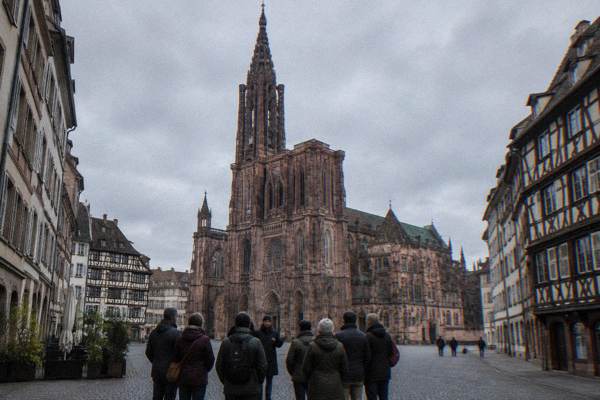
Palais Rohan
Palais Rohan stands beside Strasbourg Cathedral in Strasbourg, France, holding several of the city's municipal museums behind one grand facade. Here is what it holds, what tickets cost and how to plan a visit.
Short answer
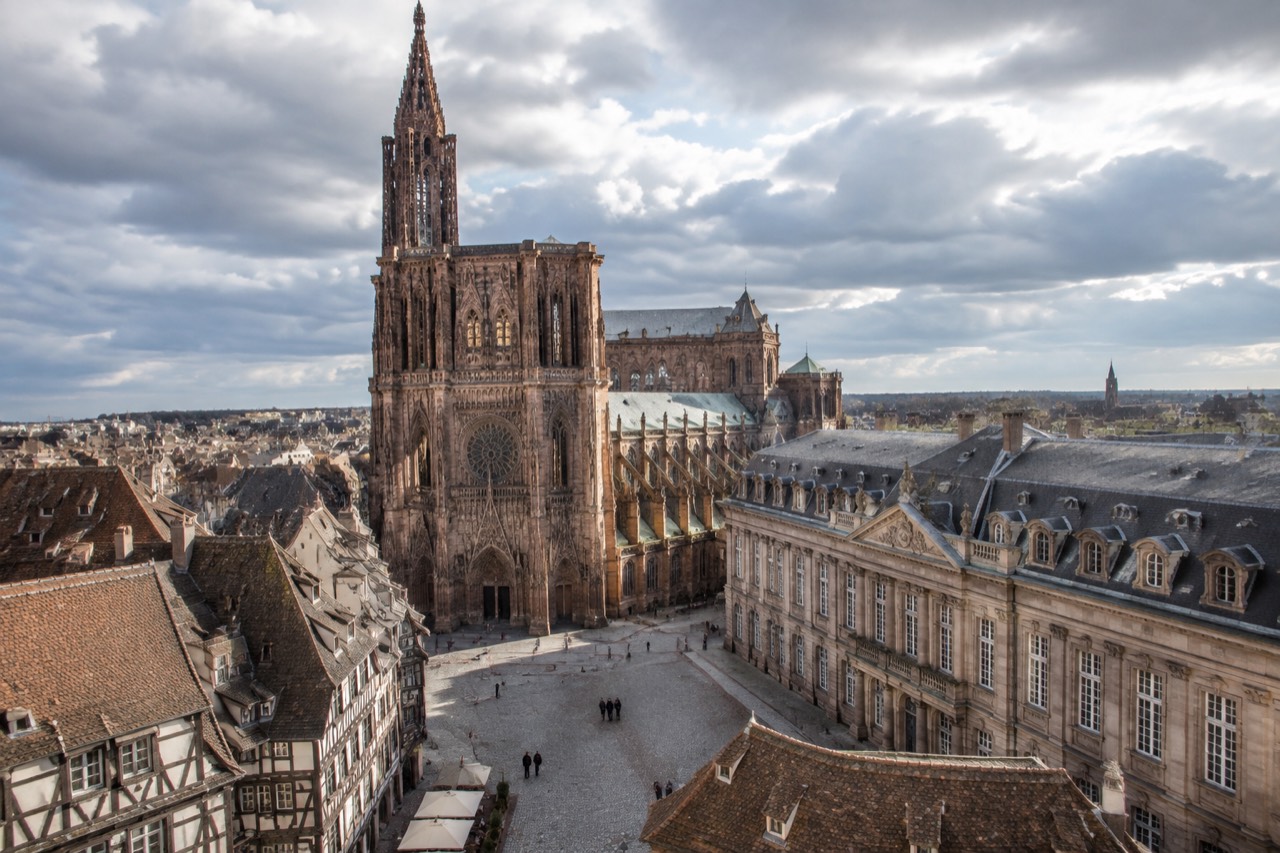
Palais Rohan is a grand former bishops' palace facing Strasbourg Cathedral in Strasbourg, Alsace, north-eastern France. It houses municipal museums whose tickets cost 9 EUR full and 5 EUR reduced, with a 1-day Pass Musées at 20 EUR and free entry to every municipal museum on the first Sunday of each month.
Palais Rohan faces Strasbourg Cathedral across its square in Strasbourg, the prefecture of the Bas-Rhin department in Alsace, part of the Grand Est region of north-eastern France, a city on the River Ill beside the Rhine and the German border. The palace is one of the grandest secular buildings in the old town, a wide classical range set hard against the cathedral's southern flank, and it packs several of the city's municipal museums under a single roof. For visitors it works as the indoor half of a cathedral-square visit: the nave and astronomical clock on one side of the square, painted ceilings and museum galleries on the other. This page lays out what the palace holds, what tickets genuinely cost, when the free days fall, and how to fold it into a day on the Grande Île.
What Is Palais Rohan In Strasbourg, France?
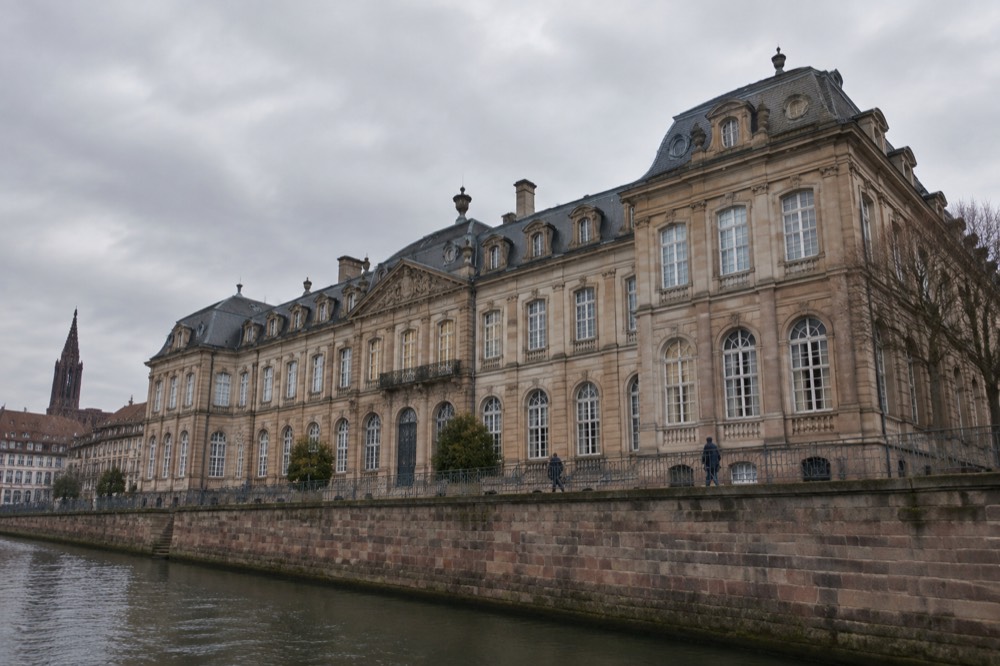
Palais Rohan is a large palace immediately south of Strasbourg Cathedral in Strasbourg, Alsace, in north-eastern France, built as the residence of the city's prince-bishops and now home to several of the city's municipal museums. It stands on the cathedral square in the heart of the Grande Île, the river-island district at the core of Strasbourg's World Heritage property, within a few minutes' walk of the Ill river channels and the half-timbered lanes of Petite France.
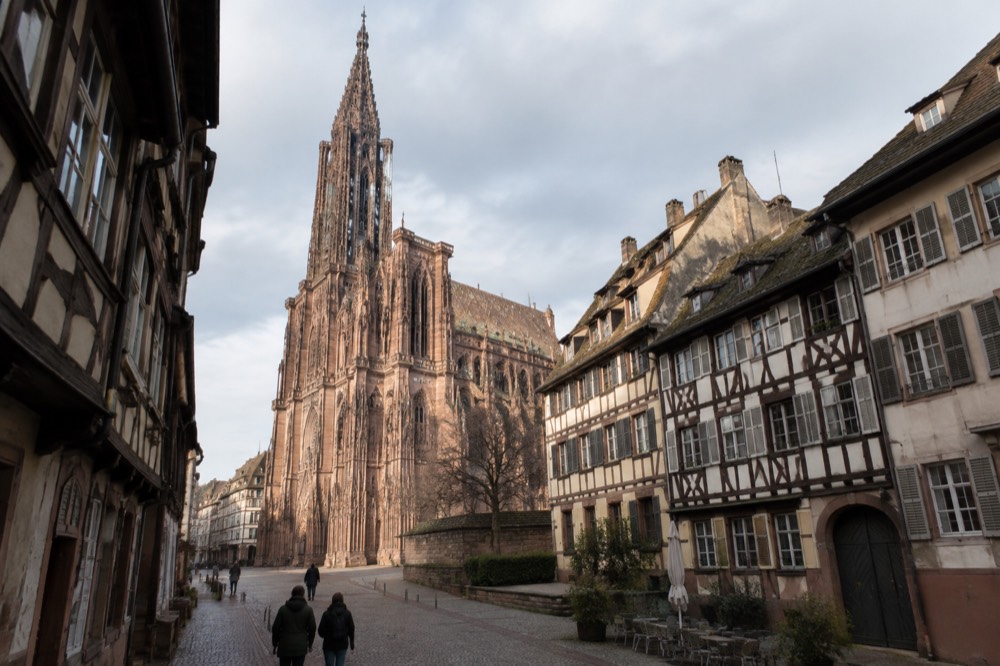
The building reads as a statement of power placed deliberately close to the cathedral. Where the church towers over the square, the palace stretches horizontally, its regular facade and courtyard arrangement speaking the classical language of European court architecture rather than the Gothic of its neighbour. Visitors coming from Place Kléber or the tram stops on the Grand'Rue reach it through narrow streets that open suddenly onto the square.
The palace's role today is civic rather than princely. The city of Strasbourg runs its municipal museum network from buildings across the centre, and the Palais Rohan buildings hold a substantial share of those collections. That makes the palace less a single sight than a cluster of them: a fine arts collection, an archaeological collection and a decorative arts collection, each with its own galleries, each covered by the same municipal ticketing rules described below.
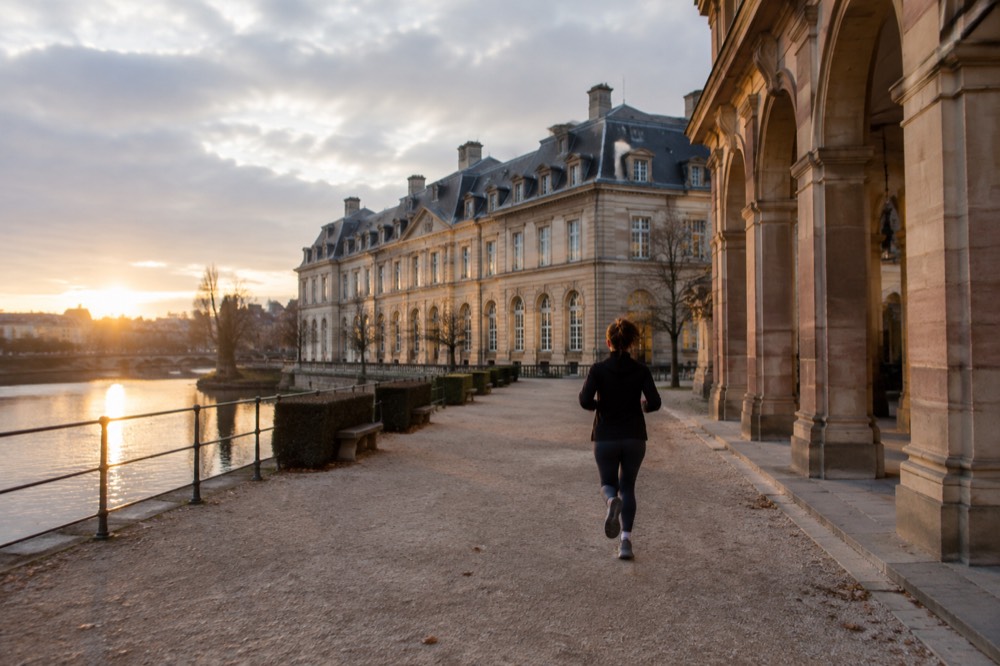
The setting matters as much as the contents. The Grande Île, the island core of old Strasbourg, is a World Heritage property named "Strasbourg, Grande-Île and Neustadt", with the later Neustadt extension covering the German-built district across the river. The palace sits inside the original inscribed island, surrounded by the dense medieval street plan that makes the centre of Strasbourg such a compact place to explore on foot. Everything described on this page sits within an easy walk of everything else.
Which Museums Are Inside Palais Rohan?
The palace houses several of Strasbourg's municipal museums, principally the Musée des Beaux-Arts fine arts collection, the Musée Archéologique archaeological collection and the Musée des Arts Décoratifs decorative arts collection. All three fall under the city's municipal museum ticketing: 9 EUR full price, 5 EUR reduced, free on the first Sunday of every month, with a 1-day Pass Musées at 20 EUR covering the municipal network.
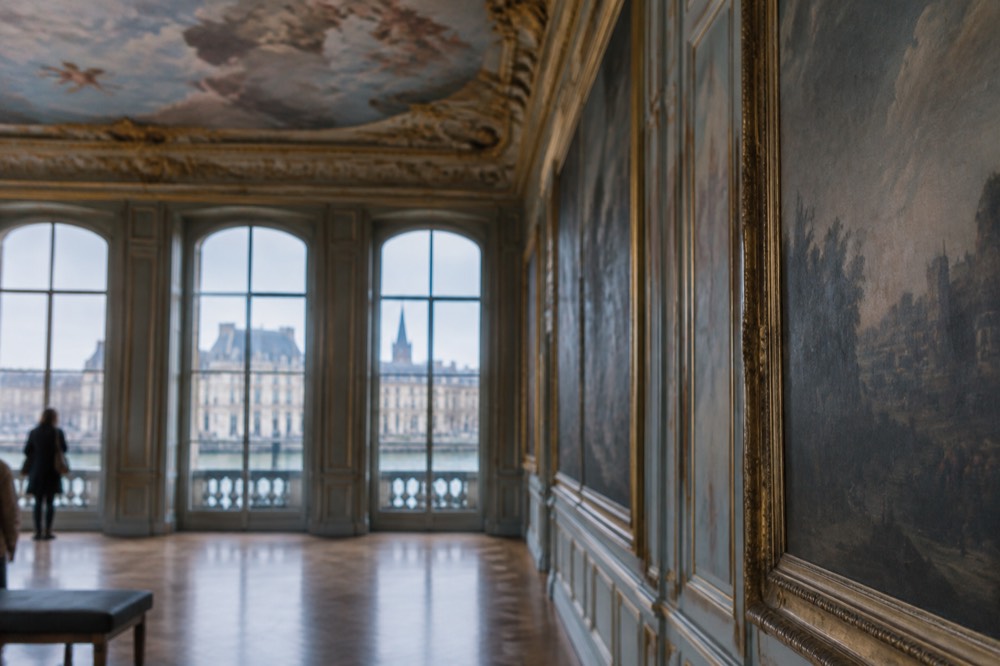
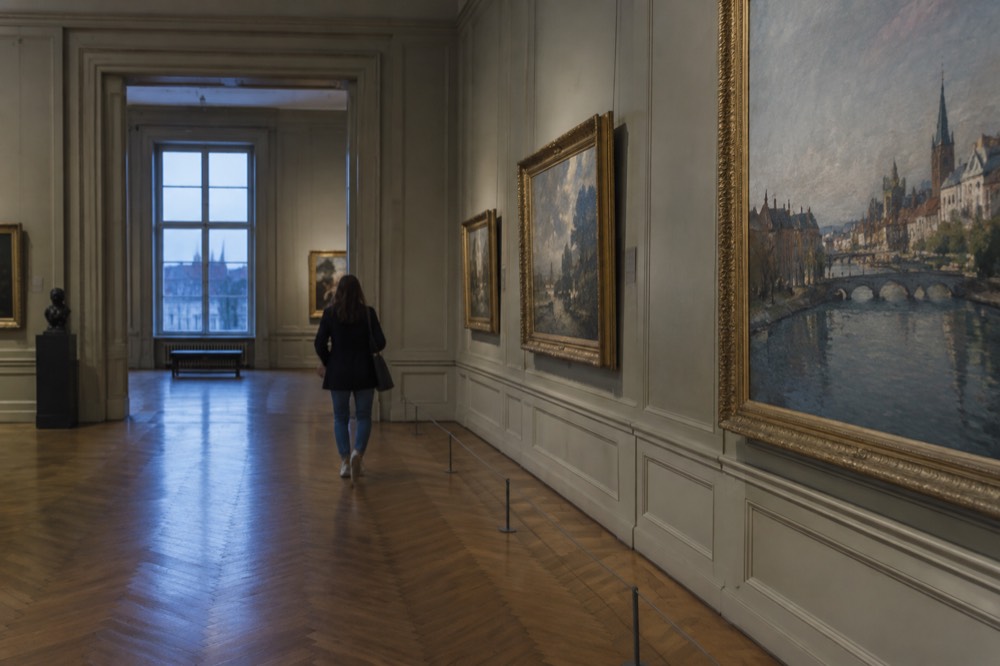
The fine arts galleries hold the palace's headline paintings, displayed in suites of rooms whose interiors are part of the attraction in their own right. The decorative arts collection fills adjoining spaces with furniture, ceramics and applied arts tied to the region's craft traditions. The archaeological museum reaches much further back, into the layers of settlement that sit beneath Strasbourg and the wider Rhine plain. The city's museums tariffs page lists all the municipal museums together, and the Palais Rohan collections sit inside that single pricing structure.
| Collection in the palace | What it covers | Who it suits | What to check before visiting |
|---|---|---|---|
| Musée des Beaux-Arts | Fine art galleries inside the palace's state rooms | Painters and anyone wanting the palace interiors | Gallery opening hours on the museums page |
| Musée des Arts Décoratifs | Furniture, ceramics and applied arts | Design and craft enthusiasts | Whether combined rooms are open |
| Musée Archéologique | Archaeology of Strasbourg and the Rhine plain | History-led visitors | Floor layout, the collection runs deep |
Two neighbouring municipal museums complete the picture for a museum day. The Musée de l'Œuvre Notre-Dame, a short walk away, holds medieval and Renaissance sculpture and art connected to the cathedral, and a cathedral platform ticket carries a reduced rate there, a pairing the cathedral's own visitor pages point out. The Musée Historique covers the city's story in another building nearby. Note one closure: the Musée Alsacien is shut for works until 2028, so it should not feature in any current museum plan.
A guided walk is a good way to anchor the palace inside the wider old town before going in. A small-group curiosities walk of the kind run by local operators covers the historic centre's odd corners and stories, pairing naturally with an afternoon in the galleries, and the operator's live listing carries the current times and meeting point.
How Much Do Tickets To Palais Rohan Cost?
A single municipal museum ticket costs 9 EUR full price or 5 EUR reduced, and it applies to the municipal museums including the collections in Palais Rohan. The Pass Musées 1-day ticket costs 20 EUR and covers the municipal network for a day. Every municipal museum is free on the first Sunday of each month, and the museums' own tariffs page is the place to confirm reductions before you buy.
The pricing is simple because it is shared. One tariff structure covers the municipal museums across the city, so a ticket bought for the palace's collections works under the same rules as one bought for the modern art museum or the historical museum. The reduced rate at 5 EUR applies to the categories the museums page lists, and families, students and groups should read that page directly rather than rely on second-hand summaries, since the qualifying categories are set by the city.
| Ticket option | Price | What it covers | Notes |
|---|---|---|---|
| Single municipal museum ticket | 9 EUR full, 5 EUR reduced | One municipal museum, including the palace collections | Reductions listed on the museums tariffs page |
| Pass Musées 1 day | 20 EUR | The municipal museums for one day | Worth it only across several museums in a day |
| Palais Rohan 1-day pass | 20 EUR | Listed on the museums tariffs page alongside the city pass | Same price as the city-wide day pass |
| First Sunday of the month | Free for everyone | All municipal museums | Expect company, the free day is popular |
The free first Sunday deserves a note of honesty: it is genuinely free and genuinely crowded. The city's culture pages confirm that all Strasbourg's municipal museums are free every first Sunday of the month, or pick any other day and pay 9 EUR for quieter rooms.
A pass only pays off with a full museum day. At 20 EUR, the day pass needs several museum visits in one day to come out ahead, which is achievable but makes for a dense itinerary. Casual visitors who want the palace and the cathedral and nothing else should simply buy the single ticket at the door.
The palace also pairs well with a guided orientation walk of the centre. A guided walking tour with a local guide covers the old town's streets and squares, and the operator's live listing shows current departure times, prices and meeting points.
What Can You See Inside The Palace?
Inside, the palace shows its collections in rooms that are themselves part of the display: painted and panelled interiors from the palace's residential past, galleries of fine art, decorative arts rooms of furniture and ceramics, and an archaeological collection reaching into the deep past of Strasbourg and the Rhine plain. The municipal network's shared ticketing applies throughout, and the museums' own pages carry the floor plans and current gallery openings.
The state rooms are the quiet highlight. Museum visitors often arrive for the paintings and leave talking about the architecture, because the palace's interiors survived into civic use and now serve as the frame for the collections. The fine arts galleries hang their paintings against these walls, and the decorative arts rooms place regional furniture and craftwork in sequence, which suits a building whose whole point was display.
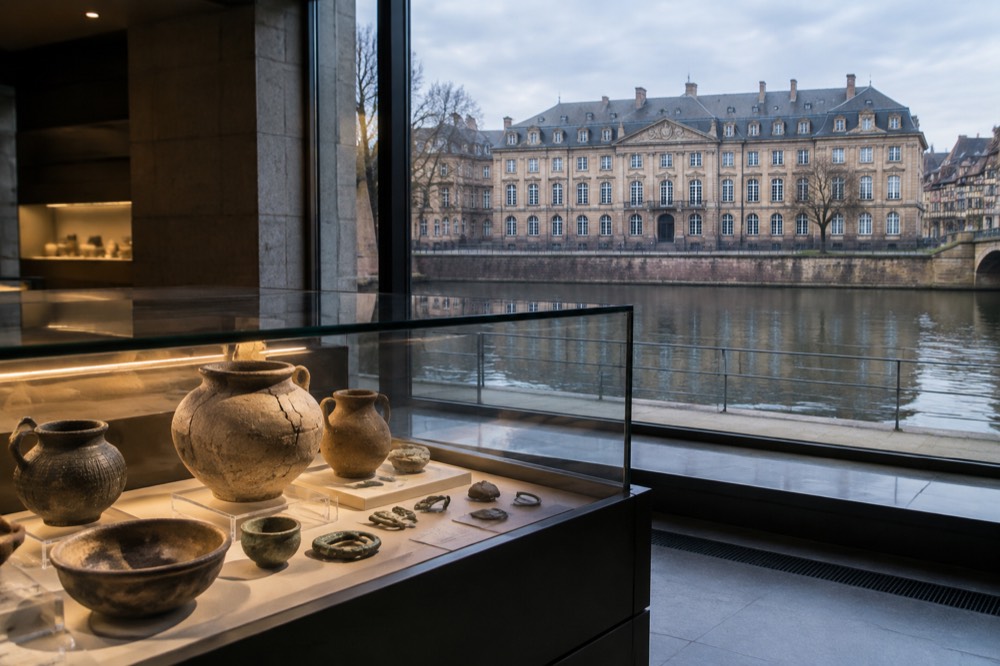
The archaeological galleries go the other way in time. Strasbourg has been settled for a very long stretch, and the collection assembles the material record of that settlement, from the Roman period of the city's river-crossing site through the medieval centuries. Visitors with children often find this floor the most concrete: cases, models and objects rather than canvases.
Plan the interior around two constraints. First, museum hours are not cathedral hours: the palace keeps the municipal museums' schedule, which the museums' pages state, while the cathedral nave next door opens Mon-Sat 08:30-11:15 and 12:45-17:45 and on Sunday afternoons from 14:00-17:15. Second, the astronomical clock show runs at 12:30 sharp with a 4 EUR ticket sold on the day only, so a palace morning naturally hands off to a clock-and-lunch sequence on the square.
| Part of the visit | What you get | Time to allow | What to check |
|---|---|---|---|
| State rooms and fine arts | Palace interiors with the painting collection | A relaxed morning | Which suites are open that day |
| Decorative arts rooms | Furniture, ceramics, applied arts | An hour or so | Combined-entry layout on the floor plan |
| Archaeological galleries | Deep-history finds from the region | An hour or more | Suitability for children, it varies |
| Cathedral square handoff | Nave, clock show, platform | The afternoon | Clock tickets sell on the day only |
How Does Palais Rohan Compare With Strasbourg Cathedral?
The palace and the cathedral are two halves of one square. Strasbourg Cathedral, with its single spire and viewing platform at 66 m, charges 10 EUR full and 6 EUR reduced for the platform and 4 EUR for the 12:30 astronomical clock show, while the palace's museums use the municipal 9 EUR and 5 EUR ticket. The cathedral nave's visiting hours run Mon-Sat 08:30-11:15 and 12:45-17:45, with Sunday afternoons 14:00-17:15.
The contrast is the point. The cathedral is vertical, free-flowing and Gothic; the palace is horizontal, room-based and classical. The cathedral costs nothing to stand inside during visiting hours apart from the platform and clock options, while the palace is a ticketed museum experience throughout. Visitors short on time who want one overwhelming sight choose the cathedral; visitors who want to sit down, warm up and look at paintings choose the palace; visitors with a full day do both in sequence.
| Sight on the square | Ticket figures | What the ticket buys | Hours to check |
|---|---|---|---|
| Cathedral nave | No ticket figure published here | Visiting hours in the nave | Mon-Sat 08:30-11:15, 12:45-17:45; Sun 14:00-17:15 |
| Cathedral platform | 10 EUR full, 6 EUR reduced | Ascent to the 66 m platform | Seasonal hours on the cathedral's page |
| Astronomical clock show | 4 EUR | The 12:30 automaton show | Tickets sold on the day only |
| Palais Rohan museums | 9 EUR full, 5 EUR reduced | The palace's municipal collections | The museums' own hours page |
The pairing works best in one direction. Do the palace in the morning while the light comes through the gallery windows, take lunch on the square, then do the cathedral's clock show at 12:30 or the platform in the afternoon. The platform's hours shift with the seasons, and the cathedral's own pages carry the current slots, so check the day's hours rather than a remembered pattern.
A dedicated cathedral guided tour adds depth to the church half of the pairing, and the operator's live listing carries the current price and schedule.
To go deeper into the church half of the pairing, book a cathedral guided tour here.
When Should You Visit Palais Rohan?
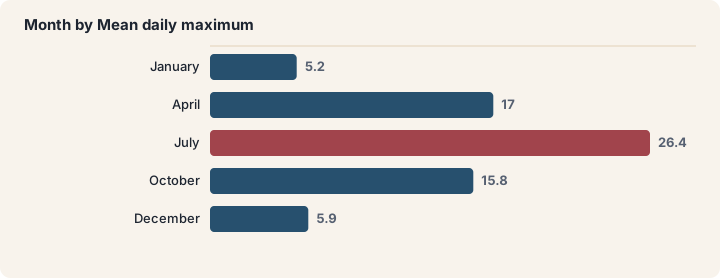
Visit on any first Sunday of the month for free entry to all municipal museums, or on an ordinary weekday for the quietest galleries. Strasbourg's semi-continental climate gives warm summers and cold winters, with mean daily maxima from 5.2 C in January to 26.4 C in July, so the palace doubles as a warm refuge in winter and a cool one in the July and August heat.
The climate table below comes from the Meteo-France 1991-2020 normals for Strasbourg-Entzheim, and it explains the rhythm of a Strasbourg year. Winter is genuinely cold, with a mean January minimum below freezing, and December brings 10.2 days of rain of 1 mm or more, which is exactly the weather that makes an indoor palace visit the right call. Summer is warm and occasionally showy, with July means of 26.4 C by day and 14.9 C by night.
| Month | Mean daily maximum | Mean daily minimum | Rain days of 1 mm or more | What it means for the palace |
|---|---|---|---|---|
| January | 5.2 C | -0.2 C | 9.1 | Cold days made for gallery interiors |
| April | 17.0 C | 5.7 C | 8.6 | Mild, good for walking plus one museum |
| July | 26.4 C | 14.9 C | 10.4 | Cool rooms as a break from the heat |
| October | 15.8 C | 7.2 C | 9.6 | Autumn light on the square, fewer crowds |
| December | 5.9 C | 0.8 C | 10.2 | Christmas-market season, indoor warm-up |
December deserves its own note. During the Christmas market, the cathedral is open continuously Mon-Sat on the Place du Château side, 08:30-17:45, and the square between the cathedral and the palace fills with chalets in the usual late-November-to-24-December pattern. The market's 2026 dates are still being finalised on the city's Christmas site, so confirm them there before planning a December trip. The palace makes a natural warm pause between the chalets, and the museums' free first Sundays can land inside the market season.
How To Combine Palais Rohan With A Guided Walk?
Pair the palace with a morning or afternoon guided walk of the historic centre: the walks cover the cathedral square, the river channels and Petite France, then hand off to the palace galleries for the indoor stretch. A guided walking tour with a local guide is this site's featured pairing for the palace, covering the old town's streets while the palace covers its collections, and the operator's live listing carries current times and prices.
The logic is simple. The palace rewards an hour or two indoors, and the old town rewards legs and daylight. A guided walk through the historic centre and Petite France with a local guide strings together the cathedral, the river defences and the Petite France quarter, ending close enough to the palace square that the museum visit becomes the next step rather than a detour. Visitors who prefer to go deeper into the riverside lanes can check availability on the operator's listing and read the meeting-point details before booking.
Free walks exist too, on a pay-what-you-want basis through GuruWalk, with English-language walks covering the cathedral quarter and Petite France; the tip-based model suits travellers who want an orientation before deciding on paid tours. Whatever the format, the sequence holds: walk the streets first, then let the palace's interiors explain what the outside only hints at.
What Else Is Near Palais Rohan?
Within a short walk of Palais Rohan sit Strasbourg Cathedral with its astronomical clock, the Musée de l'Œuvre Notre-Dame, Maison Kammerzell on the cathedral square, Place Kléber, the Barrage Vauban terrace and the Ponts Couverts, and the half-timbered lanes of Petite France beyond them. The whole cluster sits on the Grande Île, compact enough that the palace works as the pivot of a single walking day.
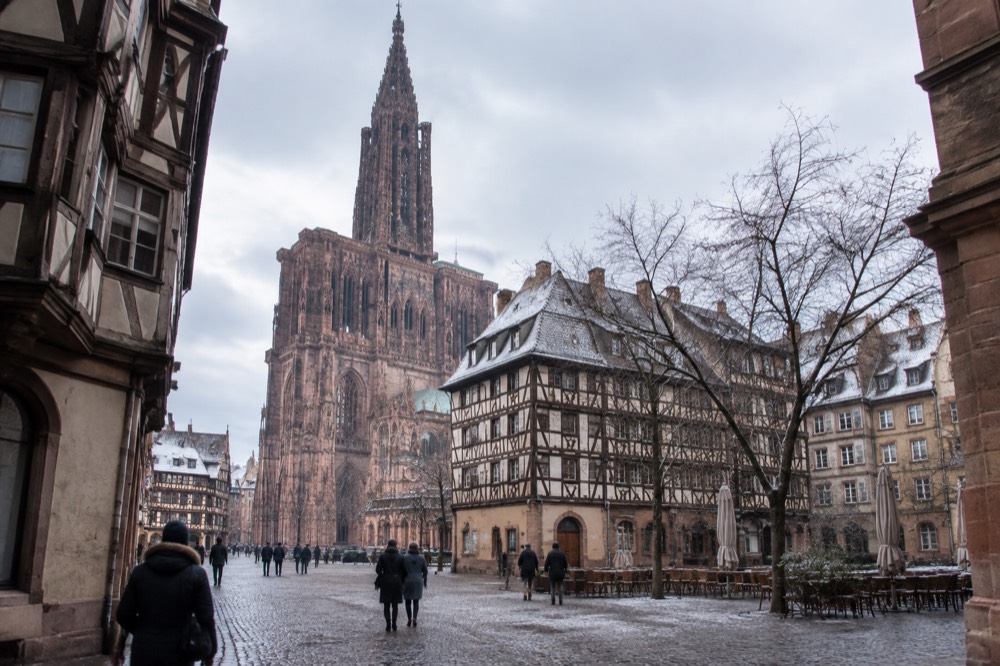
The immediate square alone holds a full morning. Maison Kammerzell stands on the cathedral square's side, a landmark in its own right, and the astronomical clock inside the cathedral runs its 12:30 show daily. From the square, the streets drop south toward the river, past the Musée de l'Œuvre Notre-Dame with its cathedral sculpture, toward the Barrage Vauban terrace and the Ponts Couverts, where the Ill splits into its channels around Petite France.
| Nearby sight | What it is | Why it pairs with the palace | What to check |
|---|---|---|---|
| Strasbourg Cathedral | Gothic church with a single spire and 66 m platform | Same square, one ticket each side | Platform hours shift by season |
| Astronomical clock | Automaton show inside the cathedral | 12:30 show fits a palace morning | 4 EUR, tickets sold on the day only |
| Musée de l'Œuvre Notre-Dame | Cathedral sculpture and medieval art | Platform ticket carries a reduced rate there | Municipal hours apply |
| Maison Kammerzell | Landmark half-timbered house on the square | Zero detour between palace and cathedral | Opening arrangements on site |
| Barrage Vauban terrace | Panoramic terrace over the rooftops | Views of the spire you just climbed past | Seasonal hours, 08:00-19:00 Sep-Oct |
| MAMCS | Modern and contemporary art museum | Second museum stop for an art day | Municipal ticketing, 9 EUR full |
Art visitors can extend the day across the river plain of the city's museum network: the MAMCS modern art museum sits a walk away and uses the same municipal ticket. Place Kléber, the city's main square, and the Place Gutenberg both sit inside the same few blocks, so a palace visit rarely stands alone. This Strasbourg Travel Guide site carries a full page on each of these sights, each with its own hours and ticket notes.
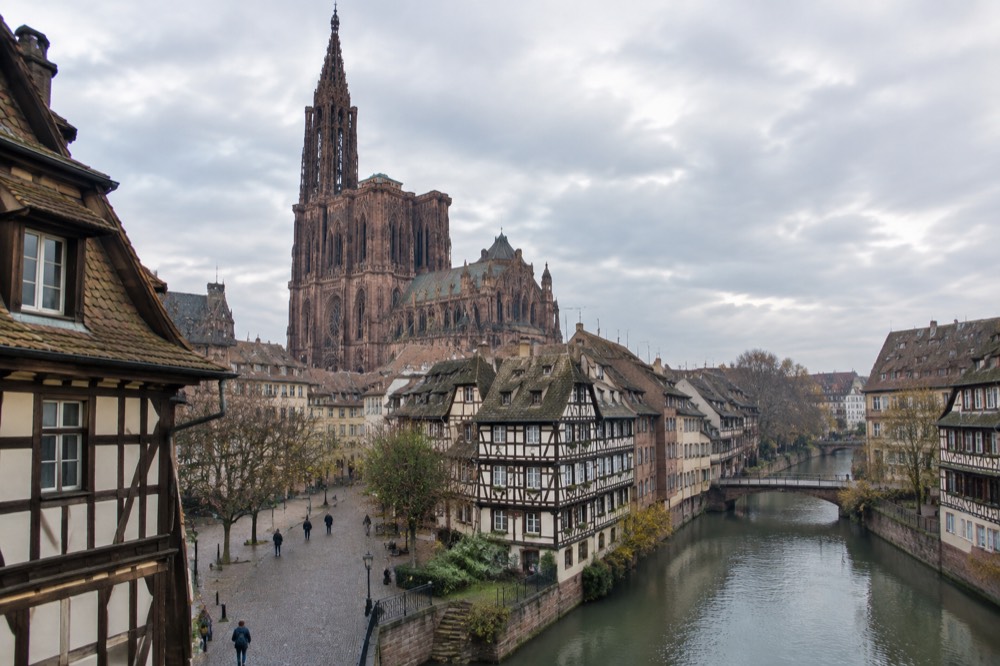
For travellers deciding how to spend a first day in the city, the palace quarter is the sensible core: one square, one palace, one cathedral, and a river quarter wrapped around all three. The walks below cover that core with a guide, and each operator's live listing carries the current price, duration and meeting point.
Common Questions About Palais Rohan
Is Palais Rohan in Strasbourg, France?
Yes. Palais Rohan stands on the cathedral square in Strasbourg, the prefecture of the Bas-Rhin in Alsace, north-eastern France, beside the German border. It faces Strasbourg Cathedral on the Grande Île, the World Heritage island at the centre of the city.
How much does it cost to visit Palais Rohan?
The municipal museum ticket costs 9 EUR full price or 5 EUR reduced, and a 1-day Pass Musées costs 20 EUR. Every municipal museum in Strasbourg, including the palace collections, is free on the first Sunday of each month.
Which museums are inside Palais Rohan?
The palace holds several of Strasbourg's municipal collections, principally the fine arts galleries, the decorative arts collection and the archaeological museum. All share the city's municipal ticketing structure, and the museums' own tariffs page lists the full network.
Can you visit Palais Rohan and Strasbourg Cathedral on the same day?
Yes, easily, since they share a square. A common sequence is the palace galleries in the morning, lunch on the square, then the cathedral's 12:30 astronomical clock show, for which tickets at 4 EUR are sold on the day only, followed by the platform if the seasonal hours allow.
When are the museums in Palais Rohan free?
On the first Sunday of every month, all of Strasbourg's municipal museums are free for everyone. The free day is popular, so arriving near opening time is the practical move.
Is the Musée Alsacien near Palais Rohan open?
No. The Musée Alsacien is closed for works until 2028 and should not be part of a current museum plan. The other municipal museums, including the palace collections, continue under the standard 9 EUR and 5 EUR ticketing.