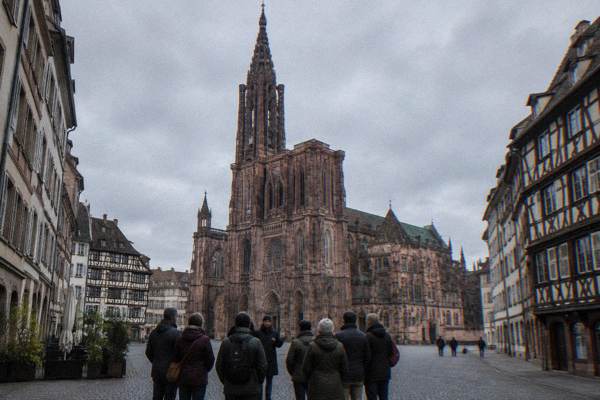
Strasbourg Museum Of Modern And Contemporary Art
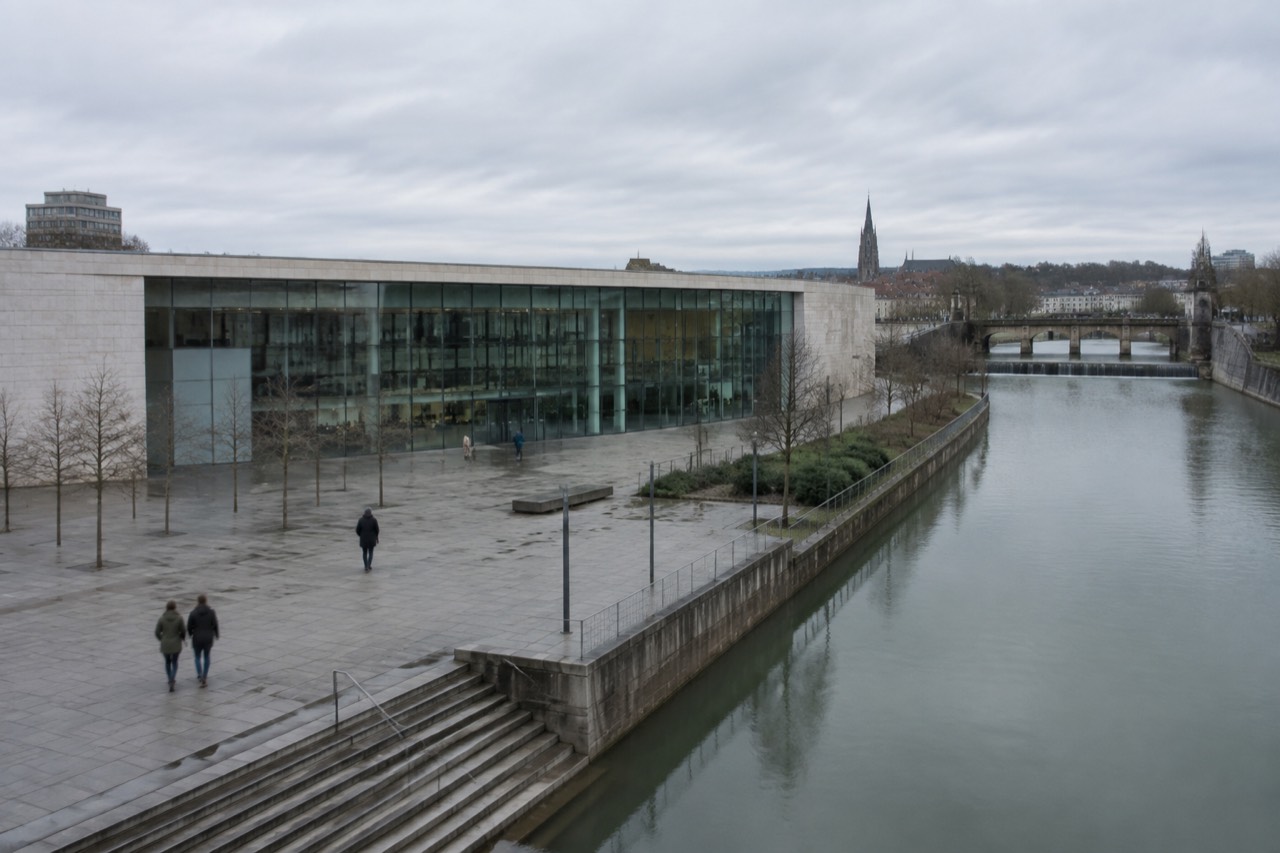
The Strasbourg Museum Of Modern And Contemporary Art, known locally as MAMCS, stands on the bank of the River Ill in Strasbourg, in Alsace, north-eastern France, directly opposite the Barrage Vauban. This guide covers what is inside, what tickets cost and how to plan a visit.
Short answer
MAMCS is Strasbourg's municipal museum of modern and contemporary art, one of the city's museums at 9 EUR full price and 5 EUR reduced, free on the first Sunday of every month. It sits on the River Ill beside the historic centre, a short walk from the cathedral and Petite France, and shares its ticketing system with the other municipal museums.
Strasbourg, the prefecture of the Bas-Rhin in Alsace, in the Grand Est region of north-eastern France, holds its modern art on the bank of the River Ill. The Strasbourg Museum Of Modern And Contemporary Art, almost always shortened to MAMCS, faces the water on one side and the city's historic core on the other, with the Barrage Vauban and the Ponts Couverts in view from its terraces. It is a municipal museum, run by the city alongside the Musée Historique, the Musée de l'Œuvre Notre-Dame and the museums of the Palais Rohan, which means its ticket prices, its pass options and its free first Sunday all follow one shared system. That system is worth understanding before you arrive, because it changes how a two-museum afternoon adds up. This guide walks through the collections, the practicalities and the neighbourhood, and points to a few guided options for travellers who prefer a host to a self-guided afternoon.
What Is The Strasbourg Museum Of Modern And Contemporary Art?
MAMCS is the city of Strasbourg's own museum of art from the modern and contemporary periods, one of seven municipal museums whose tickets cost 9 EUR full price and 5 EUR reduced, all free on the first Sunday of every month. It stands on the bank of the River Ill, a short walk from the cathedral and the Petite France quarter. As a municipal museum it belongs to the same family as the Musée Historique and the Palais Rohan museums, which matters for planning: the same price structure, the same free Sunday and the same 20 EUR one-day pass apply across the network.
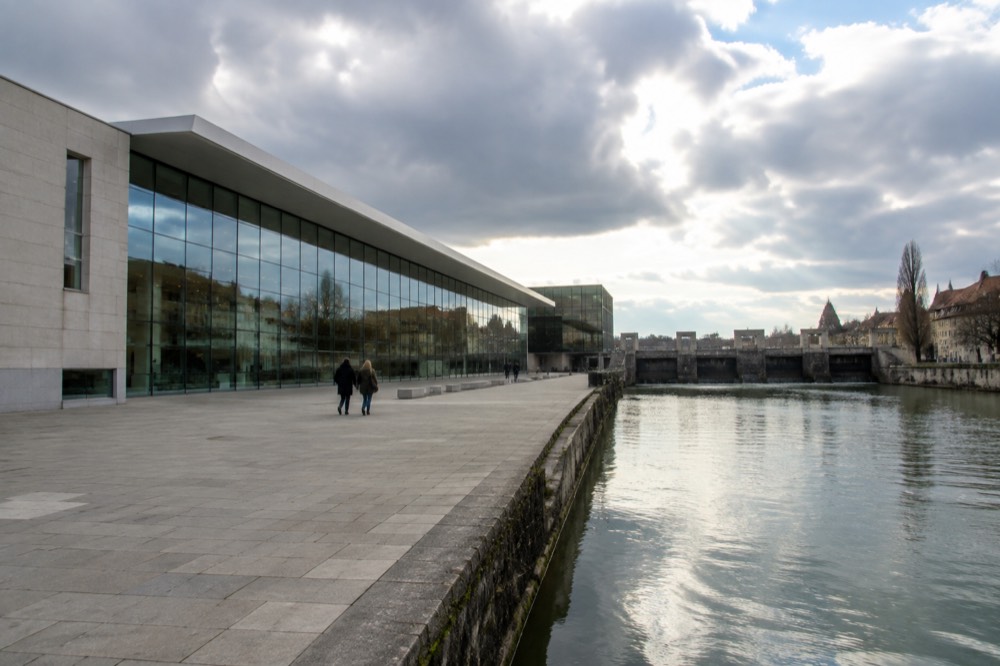
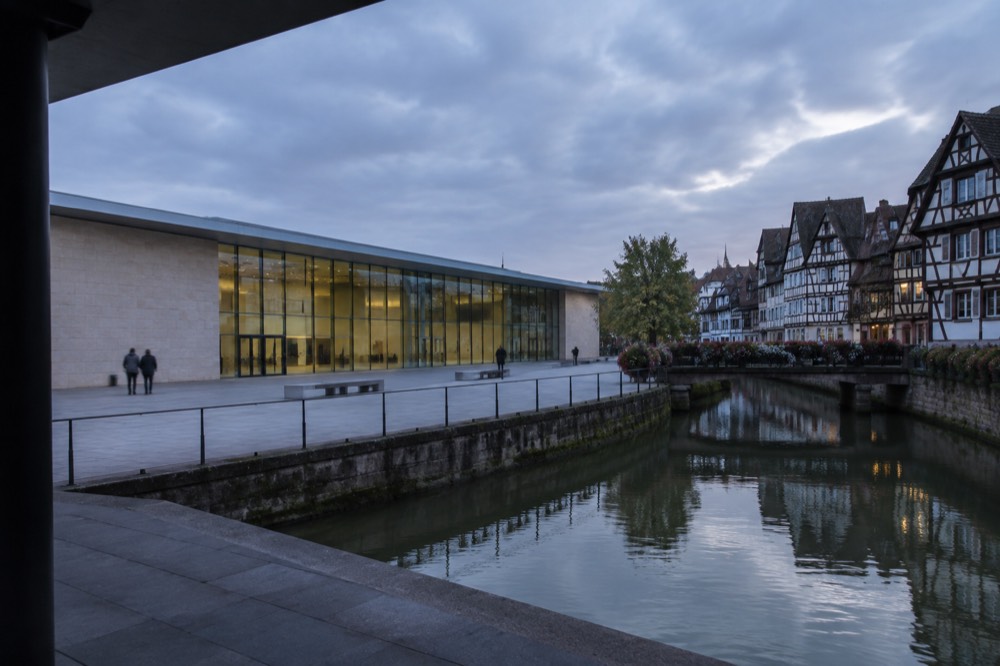
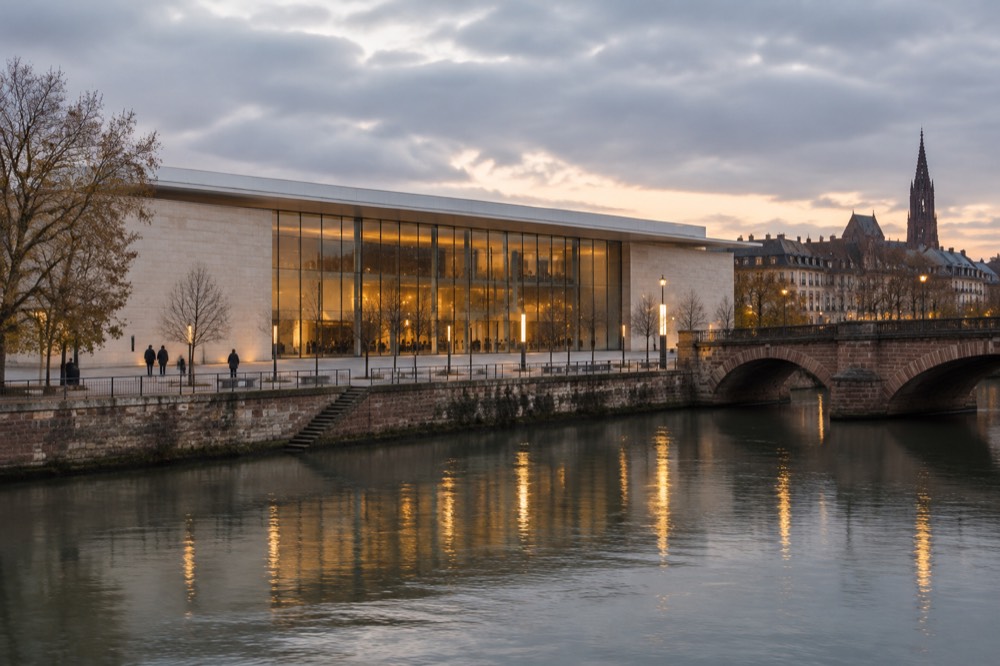
The museum's position is unusual among European art museums of its kind. Rather than sitting in a purpose-built cultural district on the edge of town, it occupies a riverside site in the middle of a working historic city, with half-timbered houses, a defensive dam and a working boat landing all within a few minutes' stroll. The building itself, with its long glass frontage and its terraced roofline, was designed to dialogue with that setting rather than to block it out, and the upper floors frame deliberate views across the water toward the Ponts Couverts.
For visitors, the practical effect is that MAMCS slots naturally into a walking day. You are not choosing between the museum and the old town; the museum is in the old town. A typical morning might pair an hour or two of galleries with a loop past the Barrage Vauban, the Ponts Couverts and the cathedral, with a winstub lunch somewhere in between. The museum's scale is moderate rather than overwhelming, which suits that rhythm: it rewards a focused visit better than a marathon one.
The city's museum network is worth a quick map before you go. The table below shows the municipal museums that share MAMCS's ticket system, all verified on the museums' own tariffs page.
| Municipal museum | Subject | Ticket (full) | Ticket (reduced) |
|---|---|---|---|
| MAMCS | Modern and contemporary art | 9 EUR | 5 EUR |
| Musée des Beaux-Arts | Old master paintings | 9 EUR | 5 EUR |
| Musée Archéologique | Archaeology of Alsace | 9 EUR | 5 EUR |
| Musée des Arts Décoratifs | Decorative arts | 9 EUR | 5 EUR |
| Musée de l'Œuvre Notre-Dame | Medieval and Upper Rhine art | 9 EUR | 5 EUR |
| Musée Historique | City history of Strasbourg | 9 EUR | 5 EUR |
Note the one absence from that list: the Musée Alsacien, the folklore museum, is closed for works until 2028 and cannot be visited on any current itinerary. It keeps its place in the network on paper, but no ticket to it can be bought, and no route through Strasbourg should send you to its door.
Which Collections And Artists Can You See At MAMCS?
The collection spans art from the modern era onward, with a strong base in European modernism and a contemporary programme that keeps the galleries changing, and it is the only municipal museum in Strasbourg dedicated to this period rather than to the city's medieval and decorative heritage. Where the Musée de l'Œuvre Notre-Dame holds the Gothic sculpture and the Palais Rohan holds the old masters, MAMCS carries the story forward: painting, sculpture, photography, installation and new media from the generations that followed. The exact hanging rotates, so any specific work named on a third-party page may not be on view the week you arrive; the museum's own programme pages are the place to confirm what is up.
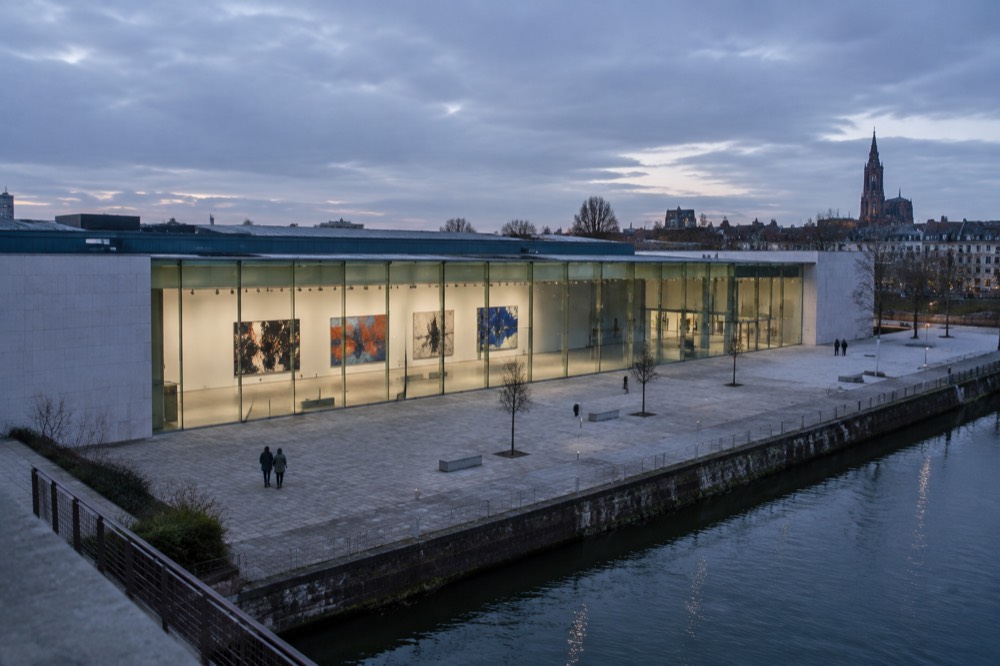
The museum's collecting logic follows the city's own history. Strasbourg sits between the French and German cultural worlds, and its modern art collections reflect that double inheritance, with art from both sides of the Rhine sitting alongside international contemporary acquisitions. Photography has a dedicated place in the programme, as does design, which keeps the galleries from reading as a purely painterly museum. Temporary exhibitions are a genuine reason to return: the contemporary programme means the museum you saw two years ago is not the museum you will see this year.
For first-time visitors, three habits make the collection land better. First, start at the top and work down, since the building's upper levels hold the signature spaces and the river views. Second, give the temporary exhibition a full hour rather than a walk-past; it is where the museum's curatorial voice is loudest. Third, plan the visit around a meal, because the neighbourhood on the museum's side of the river is one of the city's best for winstubs and small restaurants, and the contrast between an installation piece and a plate of choucroute is a very Strasbourg afternoon indeed.
Travellers who want the modern art placed in the context of the whole city often do better with a guide than with a museum audioguide alone, since the story of Strasbourg's art is inseparable from the story of its streets.
A guided walk through the historic centre pairs naturally with a MAMCS afternoon: the walk covers the cathedral, the Grande Île and the riverside quarters in the morning, and the museum takes the afternoon once your feet want a roof and a climate-controlled room. The selections above cover that pairing, a full-day option for travellers using Strasbourg as a base for the Alsatian countryside, and a shorter history walk for a tight schedule.
How Much Are MAMCS Tickets And When Should You Visit?
A full-price MAMCS ticket costs 9 EUR, the reduced ticket costs 5 EUR, the one-day Pass Musées covering the municipal network costs 20 EUR, and every municipal museum in Strasbourg, MAMCS included, is free on the first Sunday of each month. Those figures come from the museums' own tariffs page and apply to the whole municipal network, so the decision is never just about one museum: if you plan to visit MAMCS plus two or three others on the same day, the 20 EUR pass is the arithmetic to check first, and if your trip happens to include a first Sunday, the entire network opens without a ticket charge.
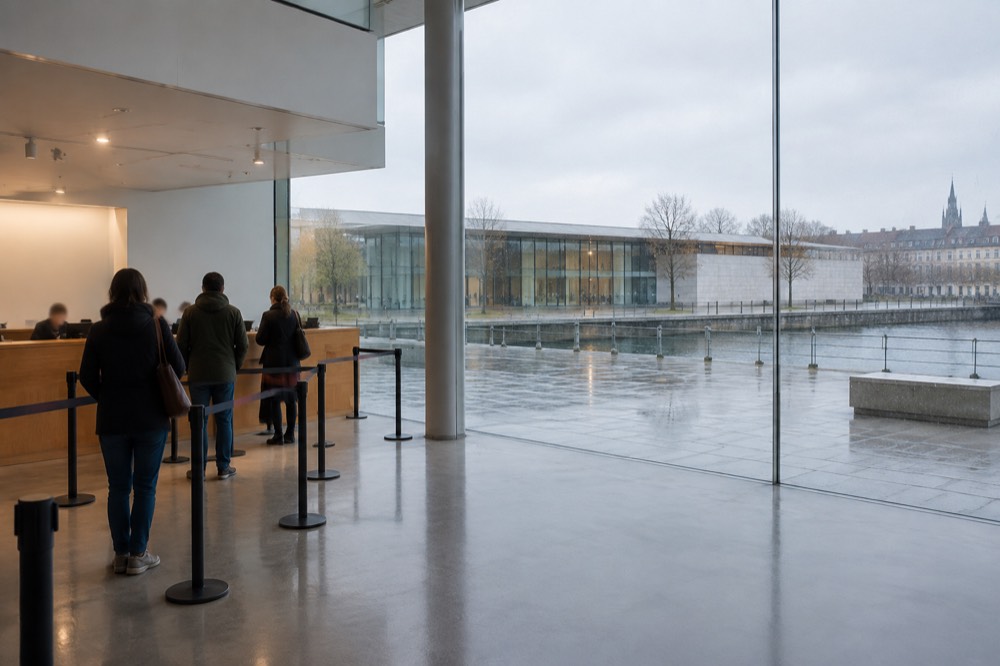
The pass and single-ticket options break down like this.
| Ticket option | Price | What it covers | Best for |
|---|---|---|---|
| MAMCS single, full price | 9 EUR | One municipal museum | A one-museum visit |
| MAMCS single, reduced | 5 EUR | One municipal museum | Students, seniors and other eligible visitors |
| Pass Musées, 1 day | 20 EUR | The municipal museums over one day | Three or more museums in a day |
| First Sunday of the month | Free entry | Every municipal museum | Any visit that lands on a first Sunday |
Timing matters as much as ticketing. The Christmas period draws very large crowds to Strasbourg as a whole, and the market season from late November to 24 December fills the squares and the riverside; a museum visit in that window is a good way to spend a cold, wet afternoon, but the galleries themselves get busy too. Weekday mornings outside the market season are the quietest combination for an unhurried look at the contemporary floors. The city's climate is semi-continental, with Meteo-France 1991-2020 normals showing a mean maximum of 5.9 C in December against 26.4 C in July, so winter visitors should expect genuinely cold days and summer visitors a warm walk along the Ill.
One more planning note: the Strasbourg City Card, sold by the tourist office at 5 EUR for adults and 3.50 EUR for children, is a discount card rather than an all-inclusive pass, and it lists reductions on museums, the cathedral platform, the astronomical clock and the river boats. It does not replace a museum ticket; it trims the price of several of them. Whether it pays off depends on how many listed attractions you actually use it against.
If your MAMCS afternoon runs long and dinner follows, a guided food walk through the old town turns the rest of the day into a single plan.
The box above links to the operator's live listing, where the current price, the departure point and the free-cancellation terms are shown before you book. A culinary walk and a museum ticket pair well because both stay inside the historic centre, with no transport leg between them.
What Makes The MAMCS Building Worth Seeing?
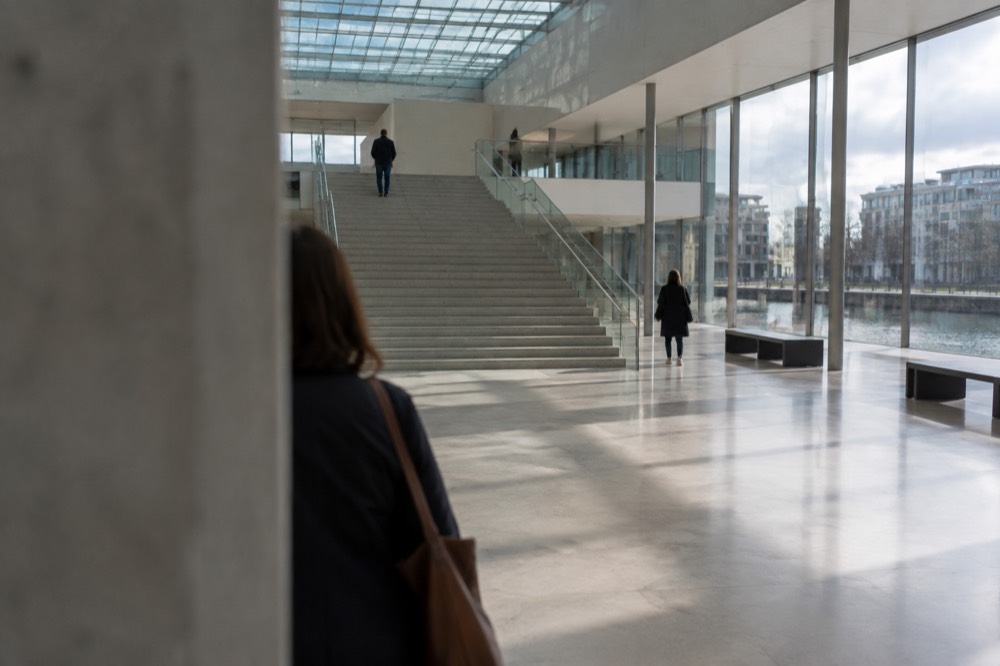
The building is a long, glass-fronted structure laid out on a terrace plan that steps down toward the River Ill, and its upper levels open onto views across the water toward the Ponts Couverts and the Barrage Vauban, making the architecture itself part of the visit. The design gives the museum a horizontal rather than vertical character: floors follow the slope of the site, and the galleries unfold along the river rather than stacking above a single grand lobby. Natural light, river sightlines and a roof terrace vocabulary tie the interior to the city outside.
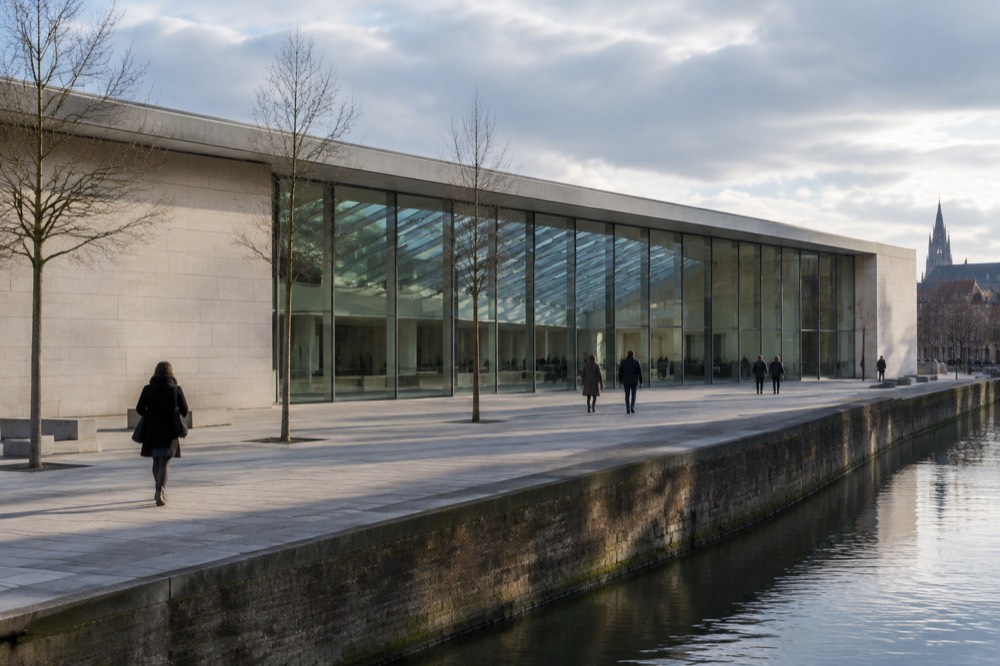
What this means in practice is that the museum rewards slow movement. The route between galleries passes window lines that reframe the same riverside scenery at different heights, and the building's relationship to the water becomes a running theme of the visit. Photographers tend to enjoy the upper floors in late afternoon, when the light comes down the Ill and the glass frontage picks it up. More of these guides are collected on Strasbourg Travel Guide.
The building sits in a part of the city where several eras are visible at once: the defensive works of the Barrage Vauban, the covered bridges, the half-timbered Petite France quarter and the Neustadt extension across the river. The museum's terraces make a good vantage point for taking that layered skyline in, and they give a sense of why the World Heritage property is described as Grande Île and Neustadt together rather than as a single island core.
Travellers who want that architectural story told rather than self-discovered can fold the museum's riverside setting into a broader guided loop of the historic centre.
How Do You Get To MAMCS From Strasbourg City Centre?
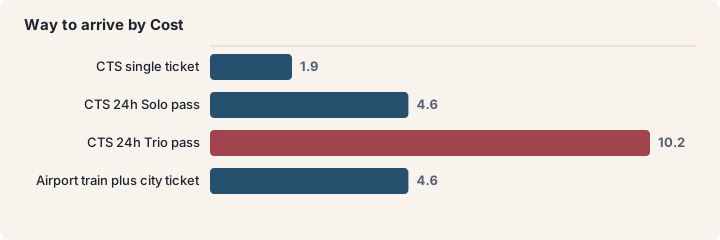
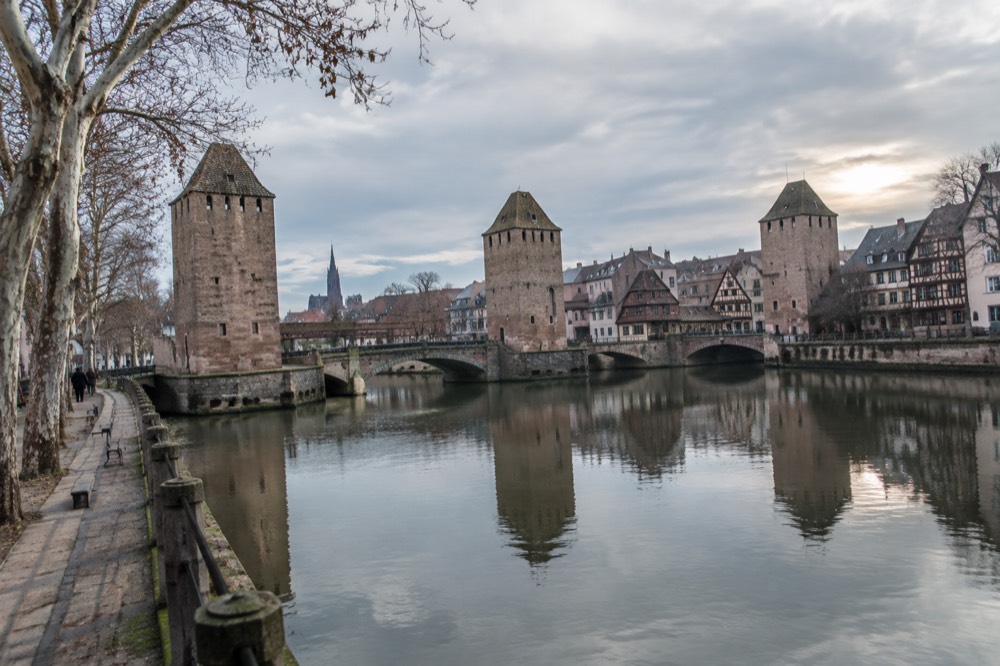
MAMCS is inside the walkable historic core of Strasbourg, within easy walking distance of the cathedral, Place Kléber and Petite France, and the city's tram and bus network, with a single ticket at 1.90 EUR bought via the app or contactless and 2.50 EUR on board a bus, covers any leg you would rather not walk. The museum sits on the river's edge opposite the Barrage Vauban, so the approach on foot is along the quays, past the Ponts Couverts, which is itself one of the pleasant walks in the city.
The transport options for reaching the museum district are straightforward.
| Way to arrive | Cost | Notes |
|---|---|---|
| On foot from the cathedral | Free | A walk through the Grande Île along the quays |
| CTS single ticket | 1.90 EUR via Badgéo, the CTS app or contactless | 2.50 EUR if bought on board a bus |
| CTS 24h Solo pass | 4.60 EUR | Unlimited travel for one person for 24 hours |
| CTS 24h Trio pass | 10.20 EUR | 24 hours for two or three travelling together |
| Airport train plus city ticket | 4.60 EUR combined | The shuttle runs between the airport and the station, up to five trains an hour |
From anywhere in the centre, walking is the answer. The historic core is compact, the riverside approach is the scenic route, and the museum's location opposite the Barrage Vauban means you arrive by passing the very sights you came to see. Cyclists will find the flat quays easy, and the city's bike culture makes two wheels a genuine option for a day that combines the museum with the Parc de l'Orangerie or the European quarter further north-east.
Visitors arriving from further out, including the airport, should note that the combined train-and-city ticket at 4.60 EUR covers the shuttle into the station plus the tram and bus network, which is the simplest single purchase for a museum day that starts at Entzheim. The tram works near the central station ran during summer 2026 and had finished by autumn, but checking the CTS works page before a visit is always prudent, since network changes are announced there first.
What Else Can You See Around MAMCS?
Within a few minutes of MAMCS you can reach the Barrage Vauban, the Ponts Couverts, the Petite France quarter, the Musée de l'Œuvre Notre-Dame and the cathedral, so the museum anchors one of the densest sightseeing clusters in Strasbourg and pairs well with almost any half-day plan. The riverside stretch on the museum's side of the Ill is the connective tissue: you can walk the quays in one direction toward the covered bridges and in the other toward the Palais Rohan and the Place Gutenberg, stringing together medieval, classical and modern Strasbourg without crossing the same street twice.
A sensible pairing plan for a full day looks like this.
| Pairing | What it is | Who it suits | When to go |
|---|---|---|---|
| MAMCS plus the cathedral | Modern art and the Gothic single-spire landmark | First-time visitors | Morning cathedral, afternoon museum |
| MAMCS plus the astronomical clock | Art galleries and the 12:30 automaton show | Families with older children | Clock at midday, museum after lunch |
| MAMCS plus Petite France | Galleries and the riverside old quarter | Photographers | Late afternoon light on the water |
| MAMCS plus the Palais Rohan museums | Modern art and three museums in one palace | Art-focused travellers | Check the 20 EUR pass arithmetic first |
| MAMCS plus a river boat tour | Galleries and the water view from below | Visitors short on walking time | Boat first for orientation |
The clock show deserves its own note because its ticketing is unusual: the 12:30 automaton performance at the astronomical clock costs 4 EUR, tickets are sold on the day only, and sales happen at the cathedral stalls or at the Saint-Michel entrance from 11:30. That fits neatly ahead of a MAMCS afternoon, and the cathedral's own platform ticket, 10 EUR full price and 6 EUR reduced for a viewing level at 66 m, is another morning option in the same cluster.
For travellers whose interest in the region extends beyond the city, the Alsatian wine country is the classic extension, and the medieval villages of the wine route make a natural second day.
The tour above is a full-day option, so it belongs on a different day from the museum rather than squeezed beside it. A common pattern is one city day built around MAMCS, the cathedral and Petite France, then one countryside day among the wine villages, with the culinary traditions of the region tasting very different in a half-timbered village square than they do in a museum café.
Is MAMCS A Good Choice For Families And First-Time Visitors?
MAMCS suits first-time visitors who want one modern art museum in a city better known for its Gothic cathedral, and it suits families with school-age children well, since its moderate scale, its rotating contemporary installations and its riverside setting make for a visit that rarely outlasts a child's attention. It is not an encyclopedic collection that demands a full day, and that is a strength for family planning: an hour or two inside leaves the afternoon free for the Parc de l'Orangerie or a boat trip on the Ill.
A few practical habits help with children. Let the contemporary floors do the entertaining: installation art and video work invite conversation in a way that old-master galleries do not. Set the visit after lunch rather than before, when legs are tired and a roof is welcome. And use the free first Sunday if your calendar allows, since a no-cost entry removes any pressure to stay long enough to justify the ticket.
First-time visitors to Strasbourg should think of MAMCS as the modern chapter of a city whose story is usually told in medieval terms. The Musée de l'Œuvre Notre-Dame holds the Gothic sculpture that built the cathedral, the Musée Historique tells the city's own past, and MAMCS carries the account into the modern era and up to the present day. Doing two of the three in one day, with the 20 EUR pass if the arithmetic works, gives you a genuinely rounded picture of the place, and the Tomi Ungerer Museum, the city's museum dedicated to the Strasbourg-born illustrator, sits inside the same ticket system as a smaller, quirkier alternative.
For visitors who prefer a host to a plan, a guided walk of the historic centre covers the ground between the museum and the other landmarks.
Prefer a host to a plan for the city's story? Book a guided walking tour here.
Whether you go guided or alone, the museum rewards being scheduled rather than stumbled into: the first Sunday free entry, the 20 EUR pass and the 12:30 clock show all reward a little arithmetic done the evening before. Strasbourg is a city that repays planning without ever demanding it, and MAMCS, sitting quietly on the Ill with the Ponts Couverts in view, is a good example of that temperament: a major collection that never makes you work for it.
Common Questions About The Strasbourg Museum Of Modern And Contemporary Art
How much does MAMCS cost to visit?
A full-price ticket to MAMCS costs 9 EUR and the reduced ticket costs 5 EUR, the same as every municipal museum in Strasbourg. The one-day Pass Musées, which covers the municipal network, costs 20 EUR, and all municipal museums are free on the first Sunday of every month.
Is MAMCS free on Sundays?
Yes, on the first Sunday of each month. The city's policy applies to every municipal museum, including MAMCS, and it is a standing arrangement rather than a seasonal offer. On other Sundays the standard 9 EUR and 5 EUR tickets apply.
How long should I spend at MAMCS?
The time depends on how much of the contemporary programme is on show and how deeply you read the temporary exhibition. The museum's moderate scale means it pairs easily with a cathedral visit, a Petite France walk or a river boat tour in the same day.
Where is MAMCS located in Strasbourg?
The museum stands on the bank of the River Ill in the historic core, opposite the Barrage Vauban and within a short riverside walk of the Ponts Couverts, Petite France and the cathedral. It is inside the area covered by the city's tram and bus network, and a single CTS ticket costs 1.90 EUR bought via the app or contactless.
Is MAMCS good for children?
It suits school-age children well, because the contemporary installations invite conversation and the museum's size means a visit does not have to be long. Families often pair a gallery hour with the Parc de l'Orangerie or a boat trip on the Ill, both of which are close by.
Can I visit MAMCS and other museums on the same day?
Yes, and that is where the 20 EUR one-day Pass Musées earns its keep: three or more municipal museum visits in a day make it cheaper than separate tickets. The Musée Alsacien is closed for works until 2028, so plan any museum day around the museums that are open.