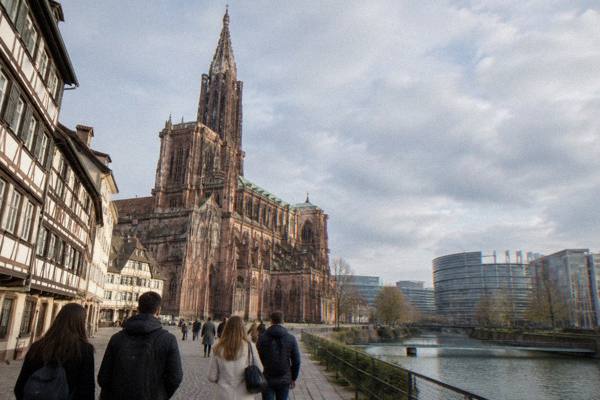
Parc De L'Orangerie
Parc de l'Orangerie is the great green space of Strasbourg's Orangerie quarter, in Alsace, north-eastern France, a short distance from the German border and right beside the city's European institutions. This guide covers how to reach it, what to see inside it, and how to fit it into a day in Strasbourg.
Short answer
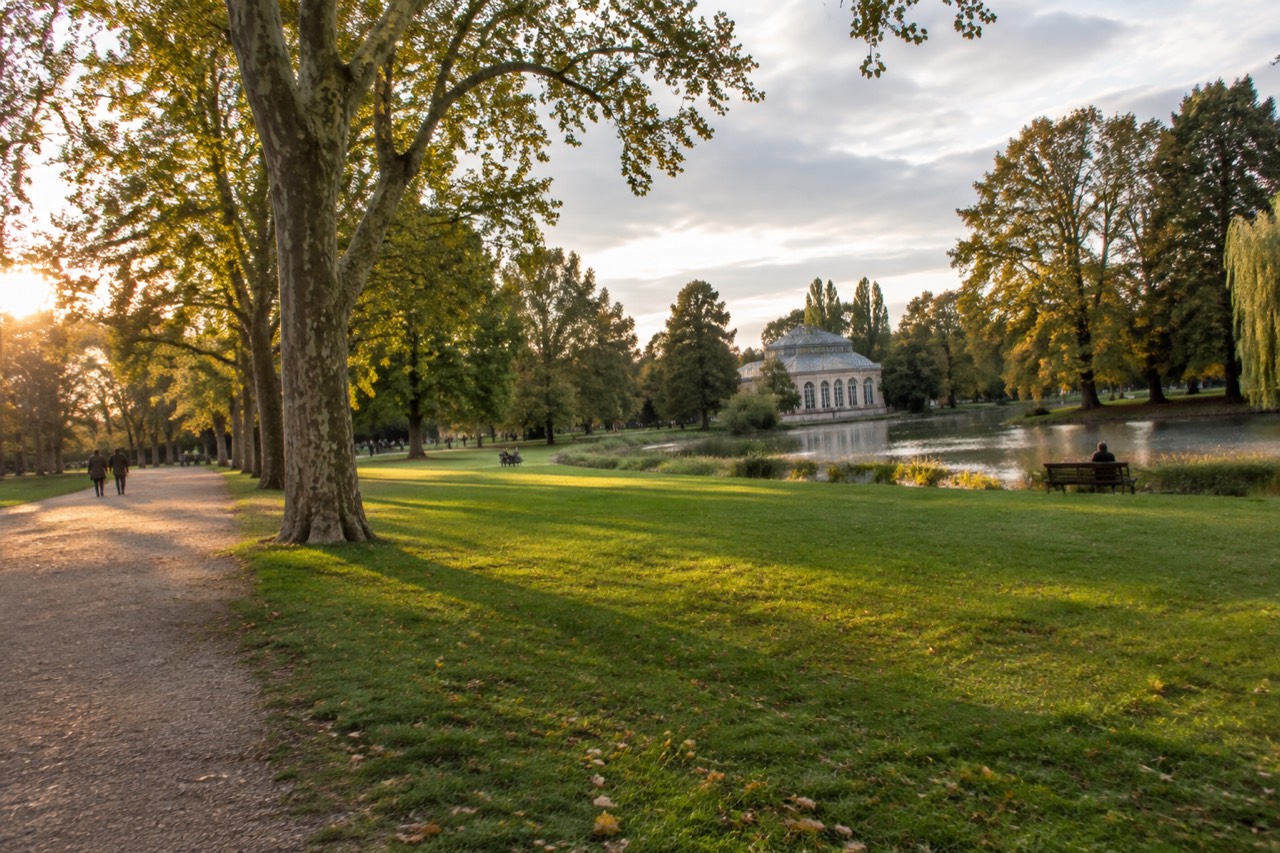
Parc de l'Orangerie is the large public park of Strasbourg's Orangerie quarter, in Alsace, north-eastern France, beside the European Parliament and the Council of Europe. A CTS single ticket costs 1.90 EUR, or 4.60 EUR for a 24h Solo pass. The park is a public space of lawns, mature trees, a lake and a stork enclosure.
Parc de l'Orangerie is the great green space of Strasbourg, prefecture of the Bas-Rhin, in Alsace on the north-eastern edge of France beside the German border. It sits in the Orangerie quarter, a calm, well-to-do district of grand apartment buildings and embassies, within easy reach of the European Parliament and the Council of Europe. For travellers who have spent a morning among the half-timbered lanes of Petite France or the stone height of the cathedral, the park is where the city exhales: broad lawns, tall old trees, a lake, and the slow flap of the storks that have become a symbol of the whole Alsace region.
What Is Parc De L'Orangerie?
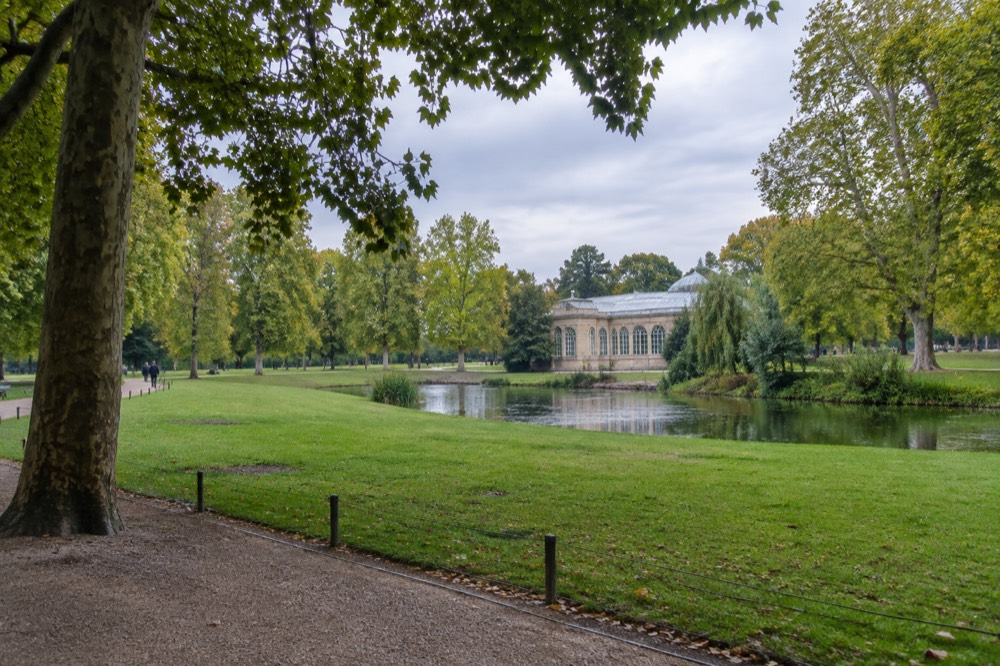
Parc de l'Orangerie is a large, historic public park in the Orangerie quarter of Strasbourg, in Alsace, north-eastern France, laid out around lawns, mature trees, a lake and animal enclosures that include the city's stork enclosure. It is a public space, open to stroll through, and it stands beside the European Parliament and the Council of Europe, which makes it the natural green pause in any visit to Strasbourg's institutional district.
The park is the green heart of a quarter that bears its name. Where the Grande Île, Strasbourg's UNESCO-listed river island old town, is dense with medieval and half-timbered buildings, the Orangerie quarter is wide, leafy and residential, and the park itself is its centre of gravity. Locals use it the way a city uses any great park: for jogging loops, for picnics on the lawns, for slow Sunday walks under the trees, and for letting children run somewhere with no traffic.
The signature sight inside is the stork enclosure. The white stork is the emblem bird of Alsace, and the park's enclosure is one of the places where the region's stork population is kept and reared. Standing by the enclosure and watching the birds, with the towers of the European institutions visible beyond the tree line, is one of those only-in-Strasbourg moments: heritage nature and modern Europe sharing one view. No ticket is needed to walk in.
The park also has a small, free-flowing network of paths rather than one formal axis, which is worth knowing before you arrive. Visitors who like a plan can loop the lake, visit the stork enclosure, then walk out towards the institutional buildings; visitors who prefer to drift can simply pick a direction under the trees and let the park do the work. Either way, an hour or two here is a genuine change of pace from the old town, and it costs nothing but a tram ticket to reach.
| Aspect | What to expect | Who it suits |
|---|---|---|
| Setting | Orangerie quarter, north-east Strasbourg, beside the European institutions | Anyone pairing greenery with the European quarter |
| Character | Lawns, mature trees, a lake, stork and animal enclosures | Families, joggers, picnic-makers, photographers |
| Atmosphere | Calm, residential, local rather than touristy | Travellers wanting a break from crowded sights |
| Scale | Large enough for a half-day without repeating yourself | Slow travellers and repeat visitors |
| Access | Public space, walk-in, reached by tram and bus | All budgets |
How To Get To Parc De L'Orangerie?
The park is reached by Strasbourg's CTS tram and bus network, with a single ticket at 1.90 EUR bought through the CTS app, a Badgéo card or contactless payment, 2.50 EUR if bought on board a bus, and a 24h Solo pass at 4.60 EUR covering unlimited rides. The park sits in the Orangerie quarter, a few stops from the station and the old town, and walking from the European quarter is straightforward on a fine day.
The CTS network is the practical way around Strasbourg for visitors without a car, and the fares are simple enough to plan against. The table below gathers the verified ticket prices; check the CTS fare page for anything beyond these, because the network's full tariff list is longer than a visitor needs. Note that the on-board price is higher than the app price, so it pays to sort a ticket before boarding.
| CTS ticket | Price | Notes |
|---|---|---|
| Single | 1.90 EUR | Via Badgéo, the CTS app or contactless |
| Single bought on board a bus | 2.50 EUR | More expensive; buy before boarding |
| 24h Solo pass | 4.60 EUR | One traveller, unlimited rides for a day |
| 24h Trio pass | 10.20 EUR | Two or three travelling together |
| Airport combined ticket | 4.60 EUR | Train shuttle plus tram and bus, includes a 24h EMS pass |
For orientation, the park lies north-east of the old town, beyond the Place de la République axis, and the tram lines that serve the European quarter run close to it. Visitors coming from the cathedral or Petite France will typically change once or ride a single line out, and the ride is short enough that the park works as easily for a one-hour stroll as for a whole afternoon. On a dry day, the walk out along the République axis, past the grand square and its monumental buildings, is a pleasant approach in its own right, with the park arriving as the reward at the end of it.
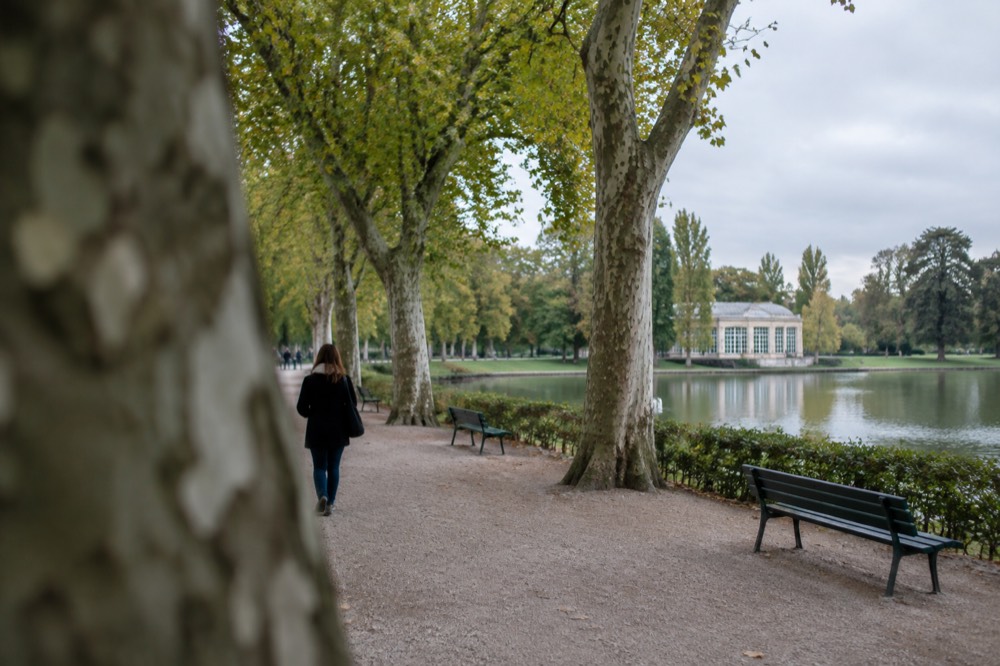
Cyclists have an easy time of it too. Strasbourg is a flat, bike-friendly city, and the ride out to the Orangerie quarter from the centre is gentle. The city's bike infrastructure is one of the reasons guided bike circuits are such a popular format here, and a two-wheeled approach to the park is covered in its own section below. Drivers should note that parking in Strasbourg is covered separately on this site, and that the residential streets around the park fill quickly in fine weather.
If you are building a whole Strasbourg day rather than a single outing, the park slots naturally into a route that starts in the old town, at the cathedral with its single spire and 66 m platform, crosses to the Orangerie quarter for the green pause, and ends by the river. Travellers short on time can also treat the park as the calm second half of a morning that begins at the astronomical clock and its 12:30 automaton show, since the two sit within one easy tram ride of each other.
What To See Inside The Park?
Inside Parc de l'Orangerie the sights are the stork enclosure, the lake with its waterfowl, the small animal enclosures, the broad lawns and the mature tree cover that gives the park its character. It is a park to walk rather than a monument to tour: the pleasure is in the loop of paths, the birdlife on the water, and the sense of a local Strasbourg afternoon unfolding around you.
Start with the storks. The enclosure is the park's signature, and the birds are unmistakable: large, white, and unhurried. Alsace's identity is bound up with the white stork, and seeing them here, in the middle of a working city, is the kind of detail that stays with a visit. The enclosure sits within the animal area of the park, alongside the other small enclosures, and it is the natural first stop for families.
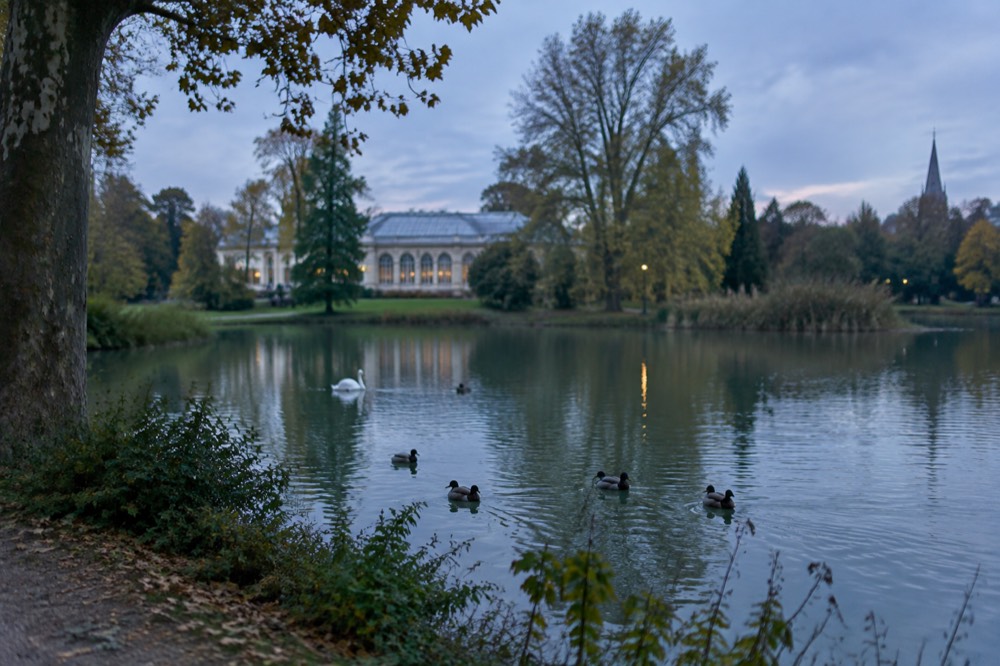
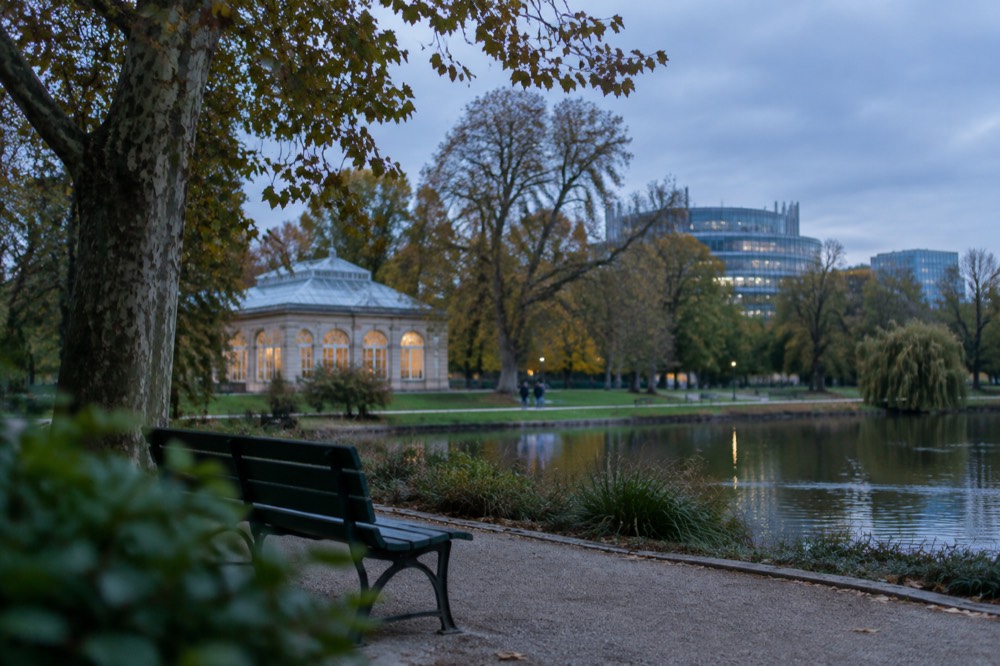
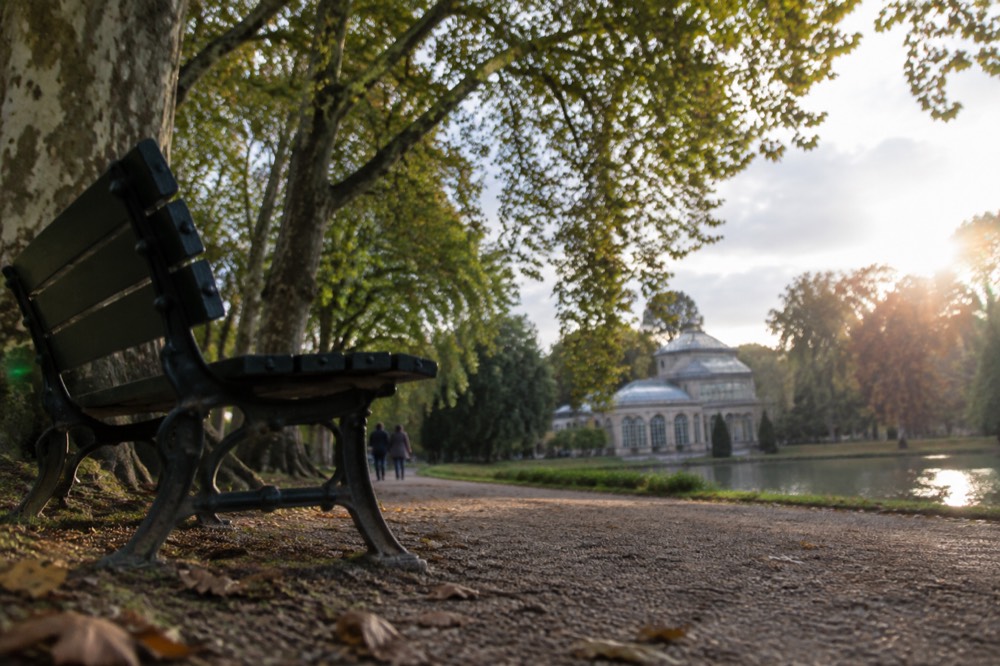
The lake is the second anchor. Its water attracts ducks and other waterfowl, and the paths around it form the park's easiest walking loop. Benches line the water, and on a warm afternoon the lawns around it fill with picnics. Photographers will find the light on the water at its best early or late in the day, when the trees throw long shade across the grass.
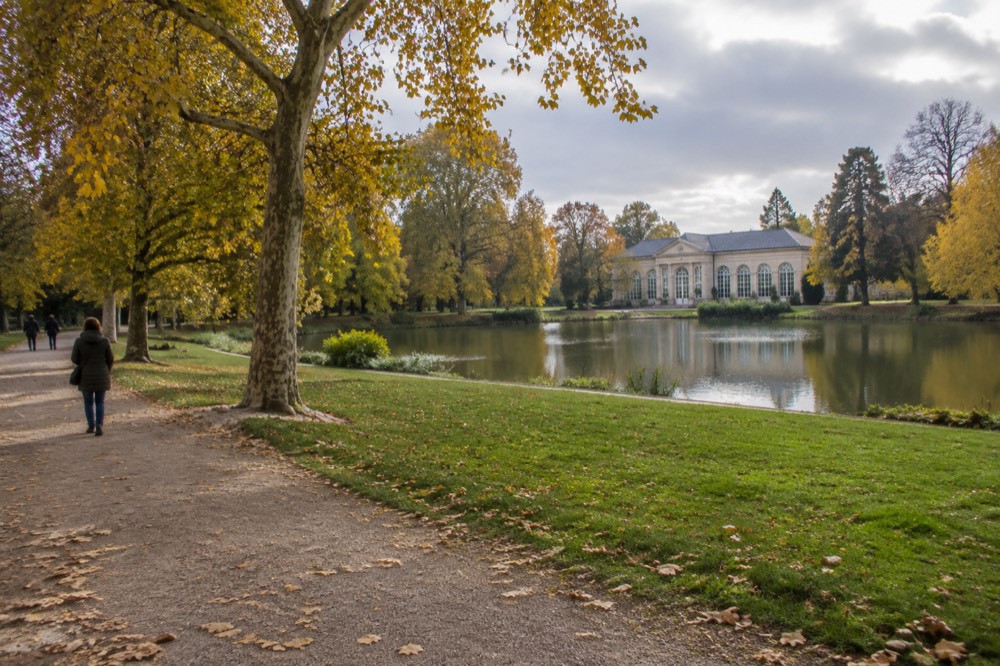
Beyond the lake, the park's pleasure is structural: broad gravel paths, tall trees, and open green that feels genuinely expansive after the compressed lanes of the Grande Île. There is no route that must be followed, and no monument that must be ticked. That is the point of the place. Visitors who want structure can pair the park with the institutional sights on its doorstep, covered in a later section, or make it the midday pause between museum visits, since the Palais Rohan and its collections sit a short tram ride back towards the centre.
One honest note on expectations: this is a local park, not a botanical garden with a curated programme. There is no light show, no ticketed attraction, and no guided circuit inside the park itself. What there is, reliably, is space, birds, trees and calm, within a city that can otherwise feel intense in peak season. Travellers who enjoy that trade will love it; travellers who need a constant stream of sights should fold the park into a wider Orangerie-quarter walk rather than making it the whole destination.
When Is The Best Time To Visit The Park?
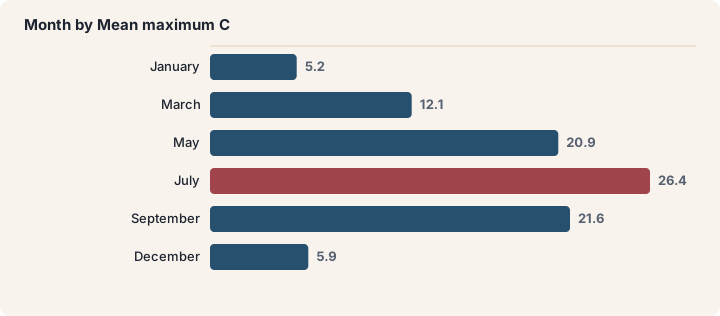
The best time to visit Parc de l'Orangerie is late spring through early autumn, when Strasbourg's semi-continental climate gives mean maximums of 20.9 C in May, 26.4 C in July and 21.6 C in September, and the lawns and lake are at their liveliest. Winter visits are quieter and colder, with a mean January maximum of 5.2 C, but the park stays a real option on a bright, still day.
Strasbourg's climate is semi-continental, which means real summers, real winters and a good spread of rain through the year: 635.7 mm annually, spread across 112.3 days of 1 mm or more in the 1991-2020 Meteo-France normals. The table below pulls the months that matter most for a park visit. The numbers are long-term averages, not forecasts, so read them as a planning shape rather than a promise.
| Month | Mean maximum C | Mean minimum C | Days with 1 mm rain or more |
|---|---|---|---|
| January | 5.2 | -0.2 | 9.1 |
| March | 12.1 | 2.6 | 8.5 |
| May | 20.9 | 10.1 | 10.8 |
| July | 26.4 | 14.9 | 10.4 |
| September | 21.6 | 10.7 | 8.0 |
| December | 5.9 | 0.8 | 10.2 |
May and June are the sweet spot for greenery, with the trees in full leaf and the lawns in use, though May carries the highest rain-day count of the year at 10.8. July and August are the warm months, and the park's shade becomes an asset rather than decoration. September, with a mean maximum of 21.6 C and the lowest rain-day figure in the table, is arguably the most reliable month of all for a long, unhurried visit.
Winter deserves a fair word. The Christmas season pulls visitors into the old town, and the park is not a Christmas destination, but a crisp December morning under bare trees has its own appeal, and the mean December maximum of 5.9 C with 10.2 rain days says pack for weather rather than stay away. A December visitor can pair a park walk with the market's old-town circuit and treat the two as opposites: crowd and calm, within one tram ride. The usual market pattern, late November to 24 December, fills the centre; the park stays local throughout.
Can You Explore The Park By Bike Or Segway?
Yes: the park and the Orangerie quarter are flat, paved and well suited to both bikes and segways, and guided circuits in both formats run in Strasbourg with the European quarter as a regular highlight. The park itself is a place to glide or pedal slowly, and a guided circuit is the simplest way to combine it with the institutional sights on its doorstep rather than finding the way alone.
The bike is the more familiar option and suits the park's scale. Strasbourg is famously flat, the ride out from the centre passes along calm axes, and inside the park the paths make a slow loop easy. A guided bike circuit with a local guide runs about two and a half hours and covers the city's highlights with bikes included in the booking; the operator's live listing carries the current price and departure details, and the format suits travellers who want the ride, the commentary and the logistics handled in one go. The rest of the planning pages sit on Strasbourg Travel Guide.
The segway is the more distinctive one. The Euro Segway tour is this site's featured pick for exactly this part of Strasbourg: it is built around the European quarter and the park-side district, it is one of the most heavily reviewed circuits on the roster, and it turns a walk that would take an afternoon into a glide that fits a morning. First-time riders are taken through handling before the circuit sets off, and the flat terrain of the Orangerie quarter is ideal segway country. You can Check availability on the operator's live listing for the day you plan to visit.
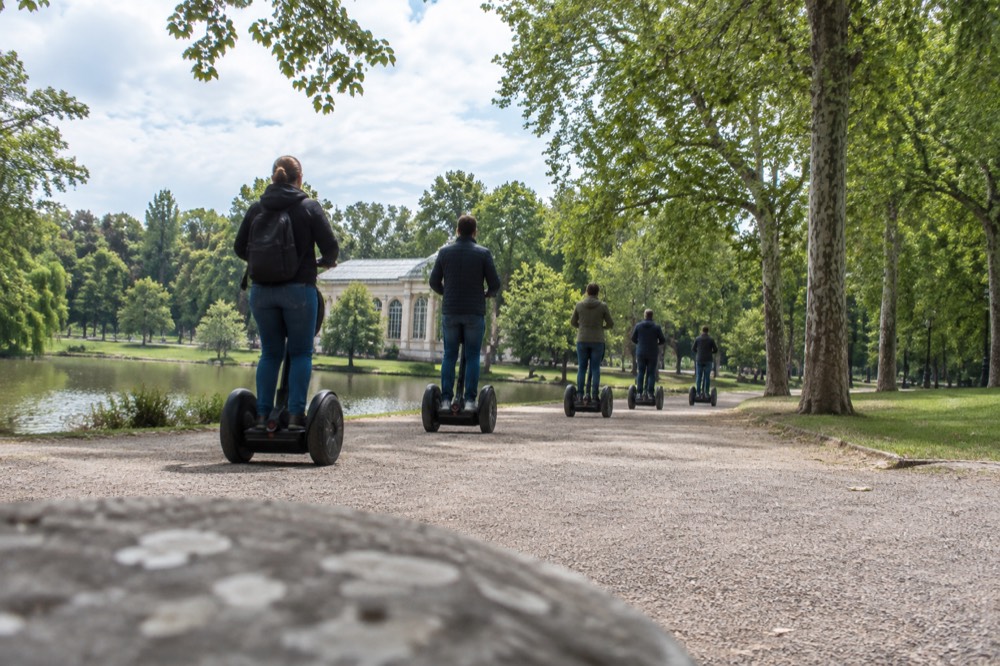
One practical note for both formats: the park is a shared space. On busy afternoons the lawns host picnics and the paths host everyone from toddlers to joggers, so the riding in and around the park is unhurried, and the speed lives on the connecting avenues rather than inside the gates. That suits the segway format well, since the pleasure of the machine is the glide, not the pace. Travellers who prefer to keep their own schedule can rent bikes independently and simply follow the river; the park finds itself easily from the Ill-side paths.
Is Parc De L'Orangerie Good For Families?
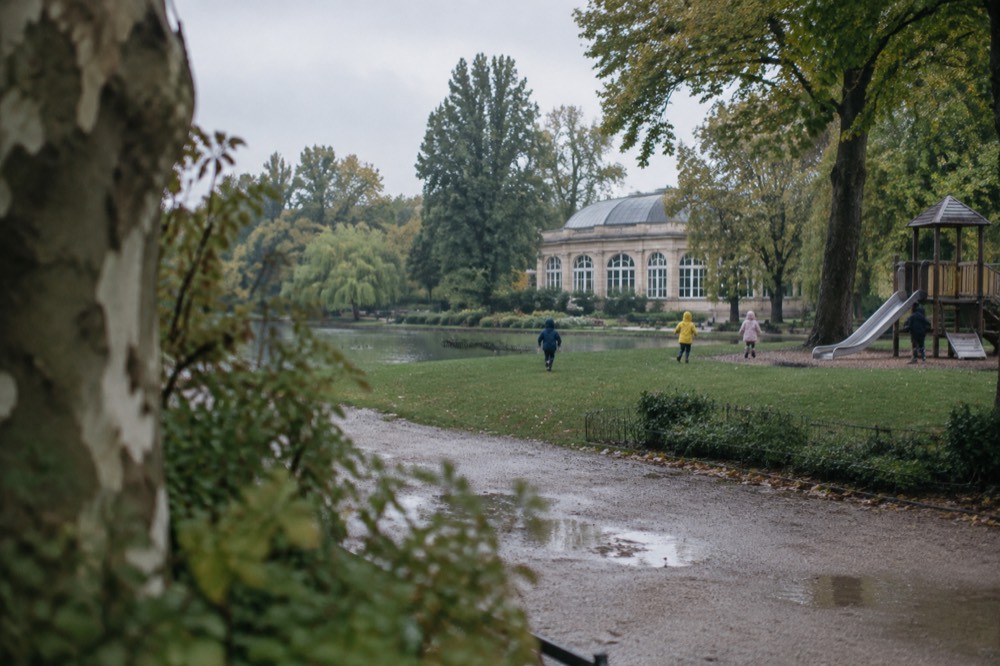
Yes, the park is one of the most family-friendly places in Strasbourg: it is a traffic-calmed public space of lawns, a lake, playgrounds and animal enclosures, with the stork enclosure as the headline draw for children, and it costs only a tram ticket to reach. There is no ticketed attraction inside, which makes it a low-pressure outing that can be as short or as long as small legs allow.
The combination is what works. Children get animals, water and open grass in one compact loop, and adults get shade, benches and a café culture nearby. The animal enclosures and the lake give the visit a shape that a plain lawn cannot, and the scale means a family can arrive, do one loop, see the storks, eat a picnic, and leave without anyone reaching meltdown. For families on a longer stay, the site's guide to visiting Strasbourg with kids places the park in a fuller itinerary.
| Family feature | What it offers | Practical note |
|---|---|---|
| Stork and animal enclosures | The park's signature sight for children | Walk-in; watch for feeding notices on site |
| Lake and waterfowl | Ducks and birds to watch, easy loop path | Keep small children close at the water's edge |
| Open lawns | Picnic and run-around space | At its best May to September |
| Playgrounds | Climbing and play equipment | Surfaces can be damp after rain |
| Traffic-calmed paths | Safe, slow walking circuit | Shared with cyclists; keep to the side |
The honest caveat is the same one that applies to any park: the experience depends on the day. A wet February afternoon is a short, brisk loop; a warm June afternoon is a whole outing. Families visiting in the colder months should fold the park into a day that also includes indoor stops, and the municipal museums are the obvious pairing, with tickets at 9 EUR full and 5 EUR reduced, and free entry for everyone on the first Sunday of every month. The MAMCS and the historical museum both sit within easy tram reach of the Orangerie quarter.
Where To Eat And Drink Near The Park?
Eating near Parc de l'Orangerie means café terraces and brasserie-style tables in the surrounding Orangerie quarter rather than food stalls inside the park, with the classic move being a picnic on the lawns bought from a bakery or market further into the centre. For a full Alsatian food experience, a guided food walk in the old town pairs naturally with a park afternoon, since the two sit within one short tram ride.
The picnic is the local way. Strasbourg's boulangeries and food shops outfit a park picnic better than restaurant-hopping does, and the lawns are made for it in the warmer months. Pick up supplies in the centre, ride out, and eat under the trees: it is the cheapest good meal available in the city, and it needs no booking. The site's guide to Strasbourg food and specialities covers what to put in the basket, from tarte flambée to kougelhopf.
Around the park, the quarter's cafés and restaurants cater to a residential crowd, which keeps the cooking honest and the terraces calm. A sit-down lunch here is a different experience from the old town: fewer menus in four languages, more local tables, and a slower pace. For the evening, travellers usually head back towards the centre, where the winstubs of Strasbourg serve the region's classic dishes, and where the Cave Historique des Hospices pours Alsatian wine in a memorable setting.
| Eating option | What it is | Who it suits |
|---|---|---|
| Picnic on the lawns | Bakery supplies eaten in the park | Families, budgets, warm days |
| Quarter cafés and brasseries | Residential, calm, terrace tables | Long lunches, coffee stops |
| Old-town winstubs | Traditional Alsatian dishes and local wine | Evening meals after the park |
| Guided food walk | Tastings across several old-town stops | Travellers wanting the food explained |
Travellers who want the food side of Strasbourg explained rather than just eaten have a strong option in the gourmet tastings walk, which moves through the old town with stops along the way; the operator's live listing carries the current price and schedule. It makes a natural half-and-half day: tastings in the lanes in the late afternoon, then the park's calm the following morning before the crowds build anywhere.
What To See Around The Orangerie Quarter?
Around the park the sights are the European Parliament, the Council of Europe and the European Court of Human Rights, all within the same institutional district on Strasbourg's north-eastern side, plus the Place de la République axis and the Musée de l'Œuvre Notre-Dame back towards the centre. The quarter is walkable, calm and modern, a deliberate contrast with the medieval old town across the city.
The European quarter is the park's reason for being on so many itineraries. The European Parliament sits within easy walking distance, the Council of Europe stands nearby, and the European Court of Human Rights completes the trio of institutions that give Strasbourg its second identity beyond the half-timbered lanes. The Parlamentarium visitor centre is the indoor option in the district: outside plenary weeks it opens Monday to Friday 09:00-18:00 and Saturday 09:30-12:00 and 13:00-18:00, with an airport-style security check on entry, and plenary-week hours differ, so check the official page before going.
| Nearby sight | What it is | How it pairs with the park |
|---|---|---|
| European Parliament | Seat of the institution, with the Parlamentarium visitor centre | Walk over after a morning loop of the lake |
| Council of Europe | The continent's oldest political institution's seat | Same walk, same quarter |
| European Court of Human Rights | The court's riverside building | Photographs well against the river |
| Place de la République | Monumental square on the axis back to the centre | Natural route between park and old town |
| Jardin des Deux Rives | Cross-border park shared with Kehl, across the Rhine in Germany | For a second green half-day |
Back towards the centre, the Jardin des Deux Rives offers a completely different green experience: a cross-border park shared with the German town of Kehl, reached across the Rhine. Visitors with two green half-days available can pair the two, since the Orangerie park is the stately, local one and the Deux Rives garden is the modern, cross-border one. For a third option, the Parc de la Citadelle sits nearer the old town's southern edge.
Museum-minded visitors can fold in the Musée de l'Œuvre Notre-Dame, whose medieval collections connect directly to the cathedral, and whose ticket pairs with the cathedral platform visit; the platform itself costs 10 EUR full and 6 EUR reduced, with children under 6 free. The MAMCS modern art museum rounds out the district options. Note again that the Musée Alsacien is closed for works until 2028 and should not be planned into any visit.
Which Guided Tours Pair Well With A Park Visit?
The tours that pair best with a park visit are the two-hour Euro Segway circuit through the European quarter, a guided bike tour of the city's highlights, and a pay-what-you-want free walking tour of the old town for the day before or after, because all three cover ground the park itself does not explain. A day-trip tour into the Alsace wine country also pairs well, as the park fills the city morning and the excursion fills the following day.
The logic is simple. The park is a place, not a story: it does not come with a guide attached, and its history and setting go unexplained unless someone tells you. The segway circuit tells the institutional quarter's story while gliding past it; the bike circuit tells the whole city's story at pedal pace; the free walks tell the old town's story on foot. Together they cover the three Strasbourgs: medieval, institutional and green.
The free walking tours in Strasbourg run through GuruWalk in English, pay what you want, with the tip handed to the guide at the end; the duration and meeting point are stated on each listing, so check the listing rather than assuming a schedule. The highlights walk covers the canal-laned Petite France quarter and the covered bridges with the Barrage Vauban terrace alongside the old town's core sights, which makes it the ideal first-day orientation before a park visit on day two.
For travellers using Strasbourg as a base, the Best of Alsace historical day trip fills a full day, roughly ten and a half hours, with the region's villages and wine country; the operator's live listing carries the current price and departure point. The rhythm that works is city-then-countryside: old town and park on the first days, wine route and villages on the day after, with the park as the calm hinge between the two halves of the trip.
What To Check Before You Go?
Before visiting Parc de l'Orangerie, check the CTS network page for any tram or bus disruption on your travel dates, the park's own notice boards for seasonal rules in force, the weather forecast against the climate normals above, and the opening details of any paired sight such as the Parlamentarium or a municipal museum. No ticket or booking is needed for the park itself, so the checks are about the journey and the pairing, not the entry.
Transport first. The CTS network runs trams and buses across the city, and works or disruptions are announced on the CTS site, so a one-minute check on the day saves a wrong-platform surprise. The single ticket at 1.90 EUR, or the 24h Solo pass at 4.60 EUR if the park is one stop among several, covers the ride out; the contactless option means no ticket machine queue.
| What to check | Where to check | Why it matters |
|---|---|---|
| Tram and bus disruption | CTS network site | Works can change the route out to the quarter |
| Weather on the day | Any forecast, against the normals table above | The park is a fair-weather pleasure at heart |
| Parlamentarium hours | The European Parliament's visiting page | Plenary weeks change the opening hours |
| Museum opening and free Sundays | The municipal museums' site | First Sundays are free; the Alsacien is closed until 2028 |
| Tour times and prices | Each operator's live listing | Product details are on the listing |
Season and pairing decide the experience more than any other factor. A May or September afternoon with a picnic, a lake loop and a walk past the storks is the park at its best; a grey February morning needs the European quarter or a museum bolted on to make the trip out worthwhile. Either way, the park asks nothing of the visitor but a tram ticket and an unhurried hour or two, as the calm counterweight to the old town's crowds. Plan the transport, pick the day, and let the park do the rest.
Common Questions About Parc De L'Orangerie
Is Parc de l'Orangerie free to enter?
The park is a public green space in Strasbourg's Orangerie quarter, open to stroll through, and no ticket booth guards its gates. The only costs are the transport to reach it, with a CTS single ticket at 1.90 EUR from the app, a Badgéo card or contactless payment, or 2.50 EUR bought on board a bus, and anything you buy to eat. Check the park's notice boards for any seasonal rules in force during your visit.
How do I get to Parc de l'Orangerie from Strasbourg city centre?
The park is reached on the CTS tram and bus network from the centre and the station, typically with one line or a single change, and the ride is short. A single ticket costs 1.90 EUR via the CTS app, Badgéo or contactless, and a 24h Solo pass costs 4.60 EUR if the park is one of several stops in your day. On foot, the approach along the Place de la République axis is a pleasant walk on a dry day.
What animals can you see in Parc de l'Orangerie?
The park's animal area includes its signature stork enclosure, where Alsace's emblem birds are kept and reared, alongside small animal enclosures and the waterfowl on the lake. The storks are the headline: large white birds, unhurried and easy to watch at close range. The enclosures are part of the ordinary park visit, with no separate route or schedule to follow.
Is Parc de l'Orangerie worth visiting in winter?
Yes, with the right expectations. Strasbourg's semi-continental climate gives a mean January maximum of 5.2 C and a mean December maximum of 5.9 C, so a winter visit is a brisk, quiet loop rather than a long lawn afternoon. On a bright, still day the bare trees and empty paths have real appeal, and the park pairs naturally with the European quarter's indoor sights or a museum morning.
Can you visit Parc de l'Orangerie and the European Parliament on the same day?
Yes, easily, because they sit in the same quarter within walking distance of each other. The natural order is a morning loop of the park, then a walk to the European institutions, with the Parlamentarium as the indoor anchor: outside plenary weeks it opens Monday to Friday 09:00-18:00 and Saturday 09:30-12:00 and 13:00-18:00, with a security check on entry. Plenary-week hours differ, so check the official page before you set out.
Are there guided tours that include Parc de l'Orangerie?
The park itself has no guided circuit inside it, but the two-hour Euro Segway tour of the European quarter covers exactly this district, and guided bike tours of the city's highlights pass through the flat terrain around it. Free pay-what-you-want walking tours through GuruWalk cover the old town and make a good pairing for the day before or after. Every tour's current times and prices are on the operator's live listing.