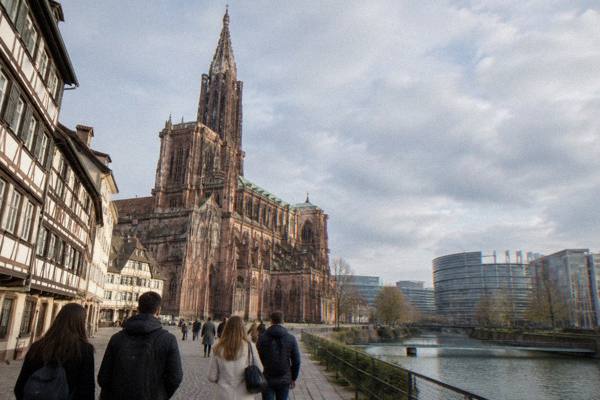
Council Of Europe Strasbourg
The Council of Europe is one of the three European institutions that give Strasbourg its political identity, and its headquarters sits in the city's leafy European Quarter, a short tram ride from the cathedral. Here is what it is, how to reach it, and what to combine it with.
Short answer
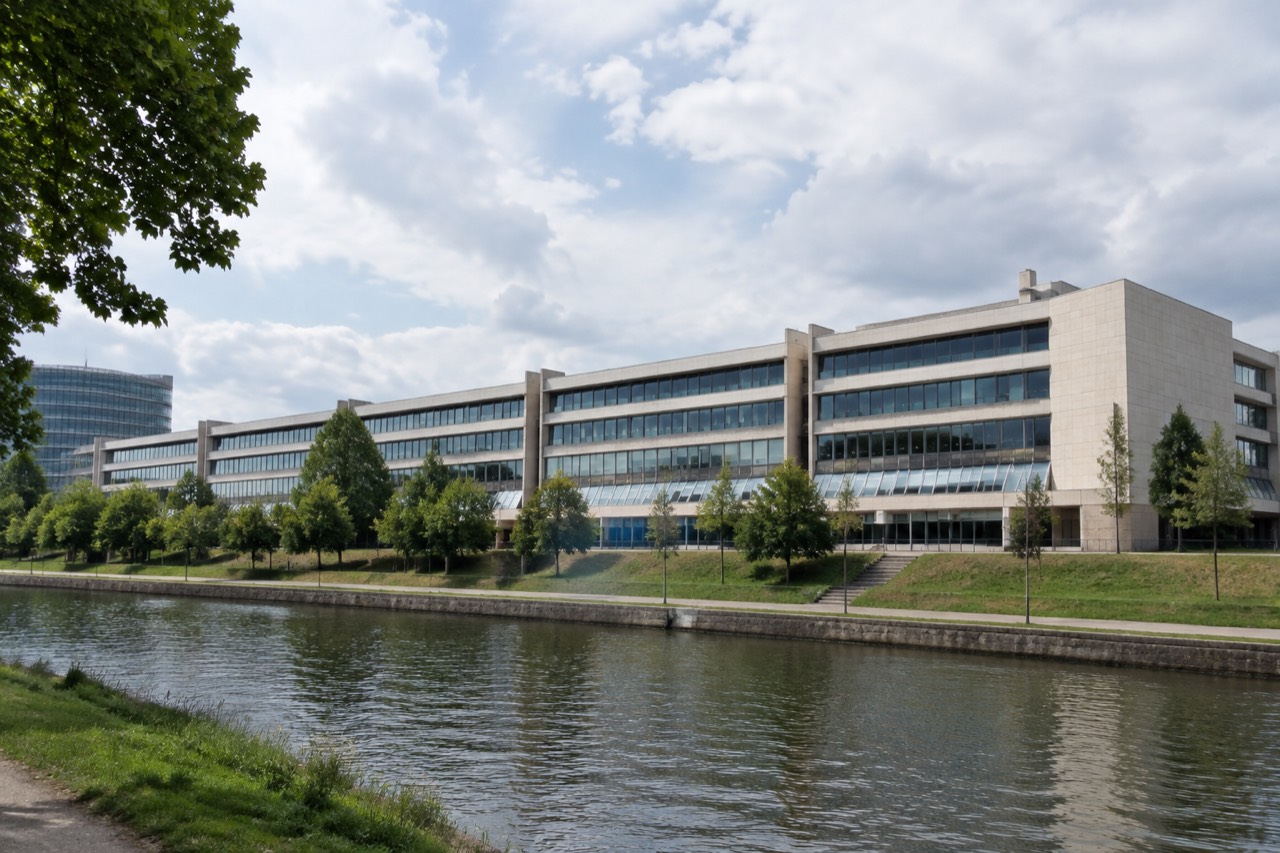
The Council of Europe is a pan-European organisation focused on human rights, democracy and the rule of law, with its headquarters in Strasbourg's European Quarter in north-eastern France. It is separate from the European Union, and visitor arrangements are set out on its own official pages rather than at the door.
Strasbourg, prefecture of the Bas-Rhin in Alsace, part of the Grand Est region of north-eastern France, is a city whose identity is inseparable from European politics. It sits on the River Ill, a short way from the Rhine, which forms the border with Germany here, and it hosts not one but several European institutions within walking distance of one another. The Council of Europe is the oldest of them, and its headquarters anchors a whole district of modern buildings, embassies and green parkland north-east of the historic centre. This page explains what the organisation actually is, how it differs from the European Union, how to reach its doorstep by tram, and what else in Strasbourg is worth pairing with a trip to the European Quarter.
What Is The Council Of Europe?
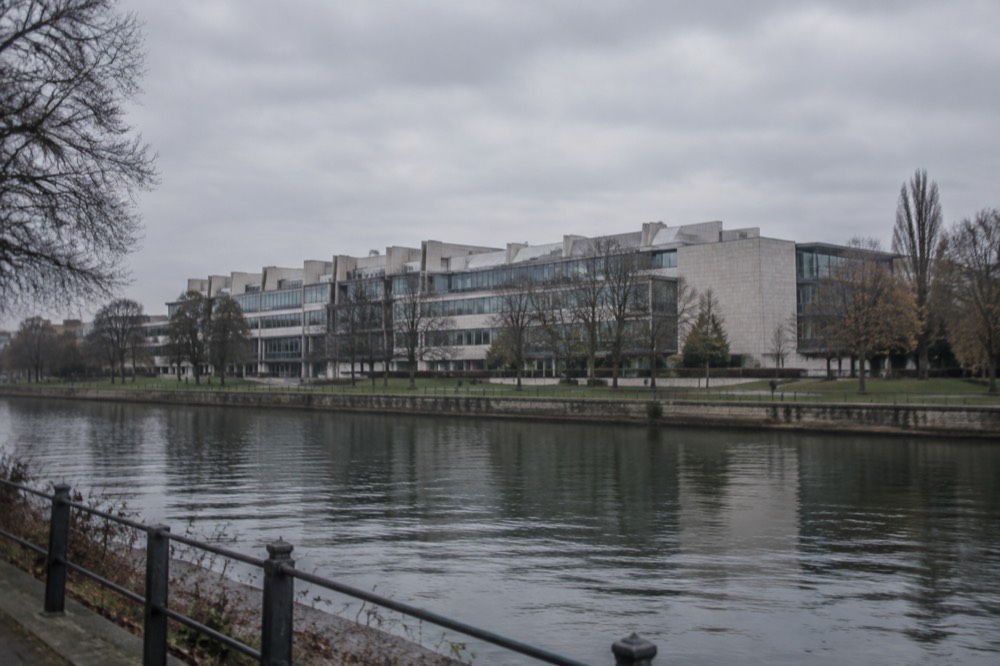
The Council of Europe is a separate organisation from the European Union, founded to uphold human rights, democracy and the rule of law across the European continent, and Strasbourg has been its seat since the body was established in the years after the Second World War. It brings together national governments rather than EU member states, and its best-known instruments are the European Convention on Human Rights and the court that enforces it.
The distinction matters more than anywhere else in Strasbourg, because the city hosts both. The Council of Europe works through intergovernmental cooperation: committees of national ministers, a parliamentary assembly of delegates from national parliaments, and a secretariat. Its output is legal and normative, conventions and monitoring reports that shape law across the continent, rather than legislation in the EU sense. The European Court of Human Rights, which you can read about in the guide to the European Court of Human Rights building, operates under its umbrella and sits in a striking purpose-built palace beside the headquarters.
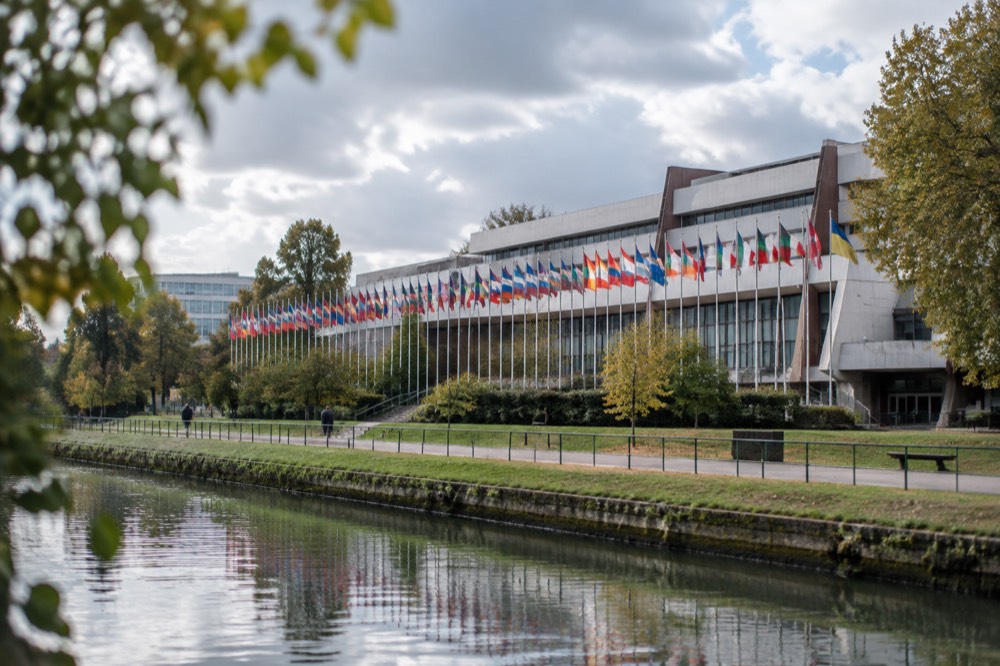
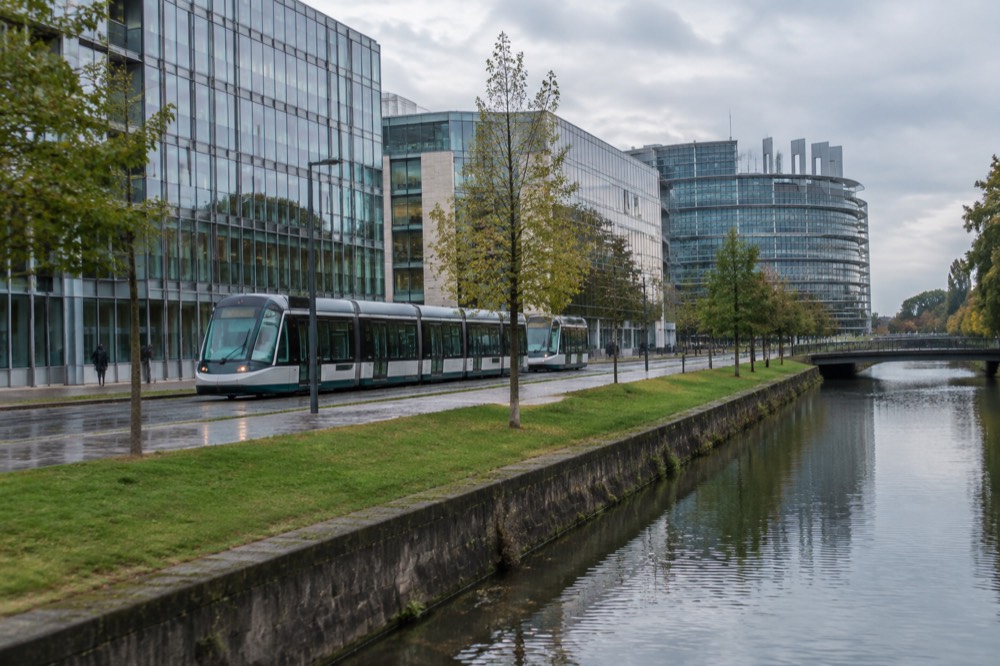
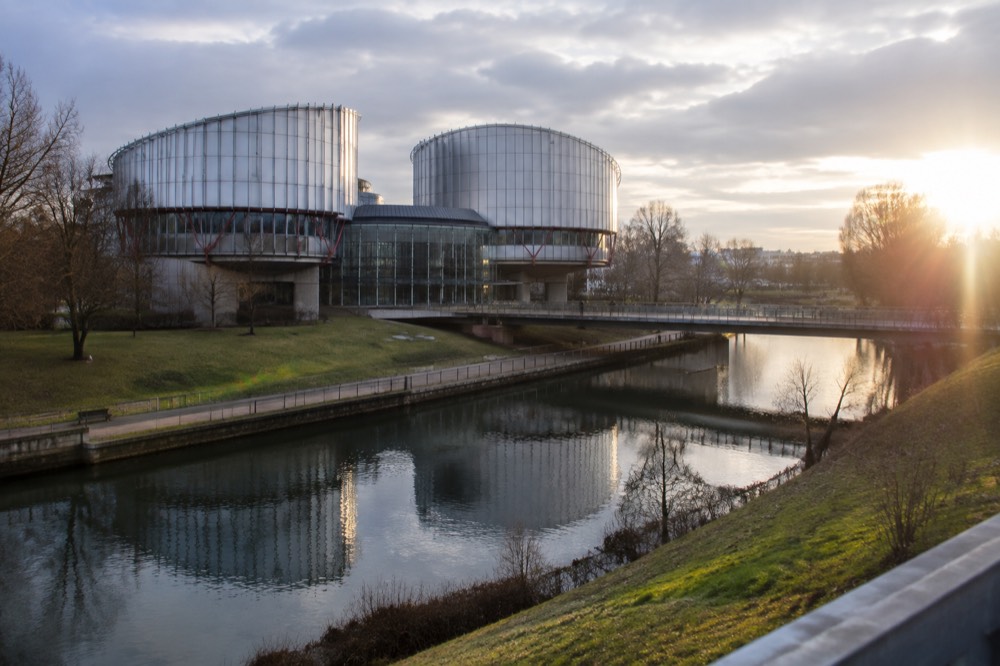
For a traveller, the practical significance is architectural and geographic. The Council of Europe campus sits in the European Quarter, the district described in detail on this Strasbourg Travel Guide and its neighbourhood pages, a stretch of modern civic architecture that contrasts sharply with the half-timbered lanes of the Grande Île. The building's curved facade, its flags and its riverside setting make it one of the most photographed pieces of contemporary architecture in the city, and it is a five-part ensemble rather than a single tower. There is no exact-figure claim to make about its size or its visitor numbers here, so check the Council of Europe's own visitor pages for the current access arrangements.
Where Is The Council Of Europe In Strasbourg?
The Council of Europe stands in the Wacken and Orangerie area of Strasbourg, in the European Quarter north-east of the historic centre, beside the River Ill and facing the Parc de l'Orangerie. The European Parliament and the European Court of Human Rights are both within the same district, so one tram stop delivers you to all three. The address sits on the Quai Jacoutot side of the river, and the walk from the nearest tram stop passes through parkland rather than city streets.
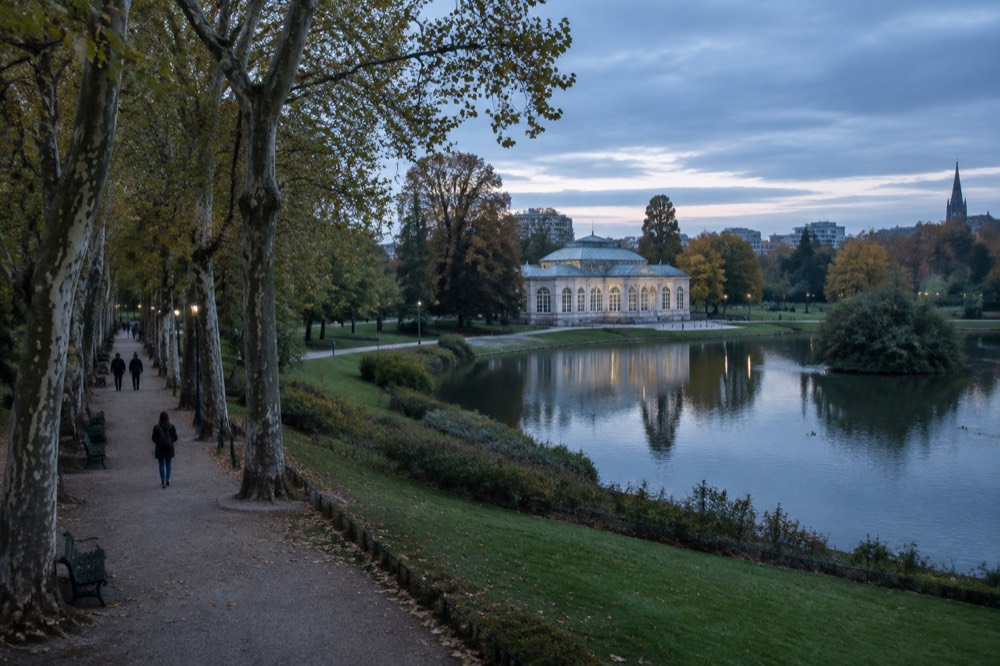
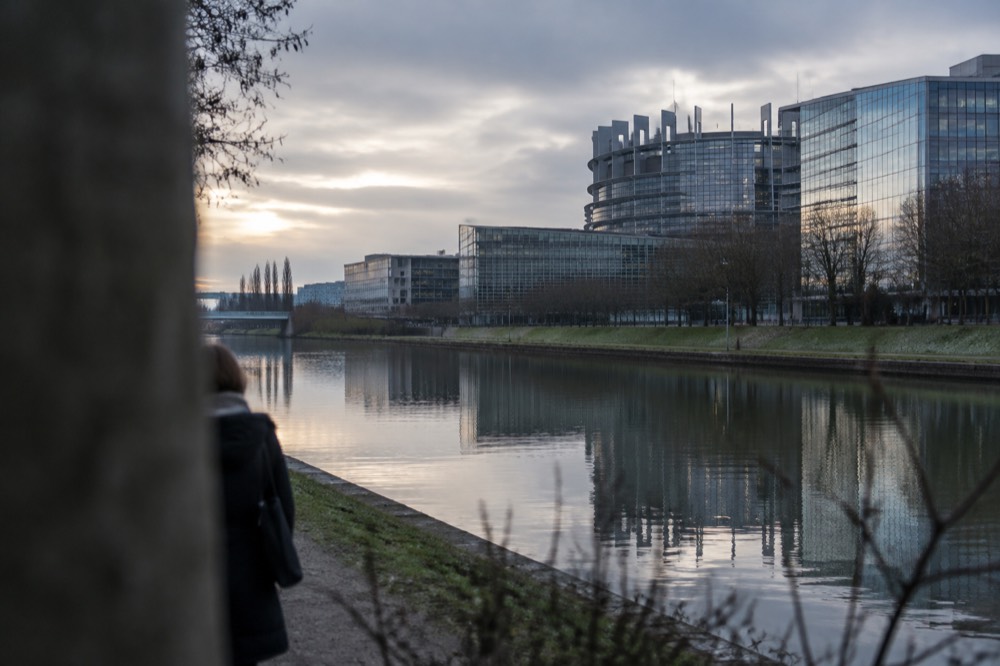
The European Quarter is the youngest of Strasbourg's major districts, and it reads like a catalogue of contemporary institutional architecture. Arriving from the centre, you leave the medieval grain of the Grande Île behind and enter a landscape of glass, steel, water and lawns. The Parc de l'Orangerie, the city's oldest public park, sits directly across the water and gives the district its green lung; storks are kept there as part of a conservation programme, and the park is a favourite with families for exactly that reason.
| Institution | Role | What To Check Before Visiting |
|---|---|---|
| Council of Europe | Intergovernmental human rights and democracy body | Guided visit arrangements on its official visitor page |
| European Parliament | EU assembly, Strasbourg seat | Parlamentarium hours and plenary-week differences |
| European Court of Human Rights | Court applying the European Convention on Human Rights | Whether hearings or visits are open that week |
The three institutions sit close enough that a slow loop on foot between them takes in the whole ensemble, and the riverside path is the pleasant way to do it. The quarter is also where a lot of Strasbourg's diplomatic community lives and works, which changes the rhythm of the streets: quieter at weekends, busier on sitting days, with a cluster of cafes that serve the office crowd rather than tourists. For a sense of how the district fits into a wider route around the city, the one day in Strasbourg itinerary shows how a morning in the institutions can be balanced against an afternoon in the old town.
If you would rather have the politics and the architecture explained while you walk, there are guided options that cover this ground.
The evening walk in that band is the one this site features for Strasbourg: a private, after-dark tour of the city's mysterious corners, which pairs naturally with an institutions morning, since the European Quarter is at its calmest and most photogenic in the late-day light. Availability and pricing render on the operator's live listing, and the format suits travellers who want a guide's full attention rather than a group departure.
Can You Visit The Council Of Europe?
Access to the Council of Europe headquarters is organised rather than casual: the building is a working diplomatic venue, and visits run on a schedule published by the organisation itself, with pre-booking the norm and security checks at the door. There is no drop-in ticket desk comparable to a museum. Group visits, individual visits and school programmes are handled separately, and the current offer, dates and booking conditions are set out on the Council of Europe's own visitor pages.
That is the honest position, and it is worth being blunt about it because many visitors arrive expecting a museum-style experience. The Council of Europe is not a visitor attraction in the way the cathedral is; it is a seat of an organisation, and what you can see depends on what is running that week. When the parliamentary assembly is in session, the building is full of delegates and delegations; in quieter weeks, the visitor programme is the only way past the entrance.
The contrast with the European Parliament next door is instructive. The Parliament's visitor centre, the Parlamentarium Simone Veil, runs published hours outside plenary weeks, Monday to Friday 09:00-18:00 and Saturday 09:30-12:00 and 13:00-18:00, with an airport-style security check on arrival, and plenary-week hours differ, so the official page is the reference. The Council of Europe's arrangements sit on its own pages in the same way, and the sensible plan is to book the Parliament visit first, since its hours are firmly published, then check what the Council of Europe is offering for the same dates.
A guided format solves part of the problem. A private evening walk through Strasbourg's mysterious corners, the tour this page features, gives you the city's stories with a guide's undivided attention, and it works well as the bookend to a day that began with modern institutions. You can Check availability alongside the evening walks covered in the night guide, and the operator's listing carries the current price and departure details.
How Do You Get To The European Quarter?
The European Quarter is reached by tram on Strasbourg's CTS network, with lines E and B serving the Wacken and Droits de l'Homme stops beside the institutions, and a single ticket costs 1.90 EUR bought through the Badgeo card, the CTS app or contactless payment, or 2.50 EUR bought on board the bus. A 24-hour Solo pass is 4.60 EUR, and a 24-hour Trio pass for two to three people is 10.20 EUR.
The tram is the practical answer for almost every visitor. The CTS network is frequent, and the ride from the station or the centre to the institutions takes you across the Ill and into the district without any transfers for most departure points. Tickets are cheapest through the app or a contactless card tap, and the on-board surcharge is worth knowing about in advance so you are not caught short at the door of the tram.
| CTS Ticket | Price | Where To Buy |
|---|---|---|
| Single | 1.90 EUR | Badgeo, CTS app, contactless |
| Single bought on board bus | 2.50 EUR | From the driver |
| 24h Solo pass | 4.60 EUR | CTS app, ticket machines |
| 24h Trio pass (2-3 people) | 10.20 EUR | CTS app, ticket machines |
| Airport combined ticket (train + tram/bus + 24h EMS) | 4.60 EUR | Airport station and app |
The airport row deserves a note, because it surprises people: Strasbourg Airport is linked to the city by a regional train shuttle that takes 8 minutes to the main station, running up to five trains an hour at peak times, and the combined ticket that bundles the train with a day of urban travel is 4.60 EUR. Anyone flying in and heading straight for the institutions can be at the tram stop outside the station within minutes of arriving.
For travellers who prefer a guided introduction to the district over a self-guided tram ride, a walking tour of the European District covers the institutions, their history and their architecture with a local guide, and it removes the guesswork about what you are looking at.
If you would rather have the district explained on foot, book a European District walking tour here.
The tour above is a short format, and the operator's listing carries the current price, duration and departure point. It suits first-time visitors who want the political geography explained once, clearly, and who would then rather spend their remaining time in the old town or the museums.
What Can You See Near The Council Of Europe?
Within a short walk of the Council of Europe you can reach the European Parliament and its Parlamentarium, the European Court of Human Rights, the Parc de l'Orangerie with its storks, and the riverside path along the Ill; the historic centre, including the cathedral and Petite France, is a short tram ride away. The district rewards a half-day loop on foot rather than a single-destination trip, and the park is the natural place to pause between buildings.
The loop is simple to plan. Start at the tram stop nearest the institutions, walk the riverside path past the flags, cross into the Parc de l'Orangerie for the stork enclosure and the lawns, then return along the water to the Parliament's glass hemicycle. The Court of Human Rights sits at the southern end of the ensemble, and its building, all timber and light, is one of the most admired pieces of architecture in the city. None of this requires a ticket; the exteriors and the park are public space, and the interiors are the part that needs booking. The wider set of guides lives on Strasbourg Travel Guide.
| Nearby Sight | Verified Hours Or Price | Notes |
|---|---|---|
| Parlamentarium Simone Veil (outside plenary weeks) | Mon-Fri 09:00-18:00, Sat 09:30-12:00 and 13:00-18:00 | Airport-style security check; plenary weeks differ |
| Barrage Vauban terrace | 08:00-19:00 Sep-Oct; 08:30-16:00 Nov-Feb; 08:00-19:00 Mar-Apr | Seasonal hours; check admission on the city page |
| Strasbourg Cathedral platform | 10 EUR full, 6 EUR reduced; 10:00-13:00 and 13:30-18:00 Oct-Mar | Platform at 66 m; closed 1 Jan, 1 May, 25 Dec |
| Astronomical clock show | 4 EUR, daily at 12:30 | Day-of purchase only, no reservations |
| Municipal museums | 9 EUR full, 5 EUR reduced; 1-day Pass Musées 20 EUR | Free on the first Sunday of every month |
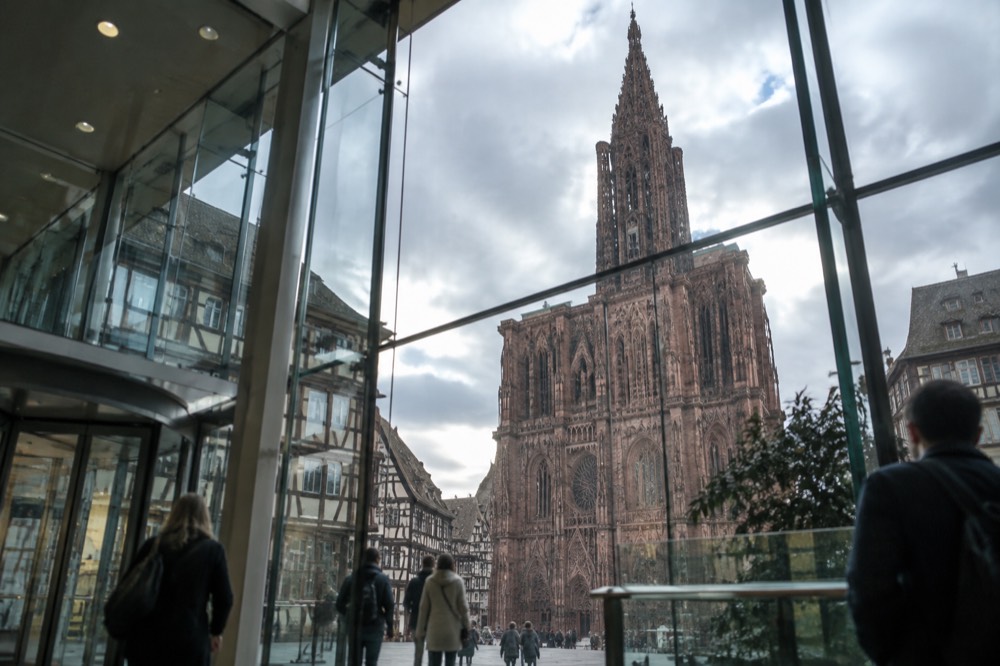
The cathedral deserves its half of any Strasbourg day. It has a single spire and a viewing platform at 66 m, and the nave's visiting hours are 08:30-11:15 and 12:45-17:45 Monday to Saturday, 14:00-17:15 on Sundays and feast days. The full detail is in the Strasbourg Cathedral guide, and the clock show at 12:30, ticketed at 4 EUR on the day only, is covered in the astronomical clock guide. From the institutions, the tram back toward the centre sets you down within a short walk of the Place du Chateau side of the building.
If your loop through the quarter ends mid-afternoon, the Petite France walk and the covered bridges are the classic next stop, and the Barrage Vauban terrace gives the single best elevated view over that whole tangle of water and timber framing. The terrace keeps the seasonal hours listed above, and the admission situation is one to check on the city's own page rather than assume.
What Else Can You Do Around The Institutions?
A day that starts in the European Quarter can finish with street art, wine or water: Strasbourg's guided options include a street-art walk through the city's painted facades and gable ends, an Alsace wine tasting in the city centre, and boat trips on the Ill, with the long Batorama tour at 16.20 EUR full and 8.90 EUR reduced and the short tour at 12.50 EUR full and 7.20 EUR reduced. The Red Tour runs 1h10 and the Blue Tour 0h45.
The street-art walk is the surprise package in that list. Strasbourg's contemporary art scene spills across the Krutenau and Neustadt districts in murals and installations, and a guided walk through it is a genuine counterweight to a morning of marble halls and flagpoles. The tour below is a compact format with bikes-free walking, and the operator's listing carries the current price and meeting point.
For something quieter, the wine option works well in the early evening. Alsace produces whites that travellers often meet for the first time in Strasbourg, riesling above all, and a tasting in the city centre is a low-effort way to learn the region's grape names before a winstub dinner. The Alsace wine guide and the winstubs in Strasbourg guide cover what to order once the tasting has taught you the vocabulary.
| Afternoon Or Evening Option | Format | Who It Suits |
|---|---|---|
| Batorama long tour (Red Tour) | 1h10 boat circuit on the Ill | First-time visitors wanting the city from the water |
| Batorama short tour (Blue Tour) | 0h45 boat circuit | Short stays, families with small children |
| Street-art walk | Guided walk, painted facades | Art and design minded travellers |
| Alsace wine tasting | Guided tasting, city centre | Adults wanting the region's grapes explained |
| Petite France evening stroll | Self-guided, riverside lanes | Anyone ending the day at dusk |
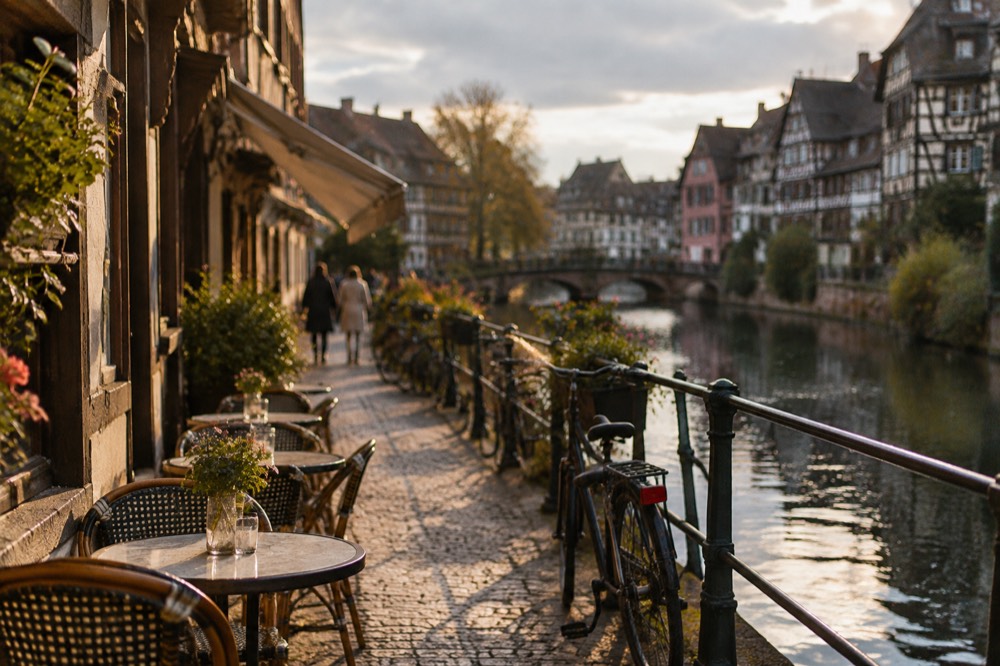
The boat tours deserve their line in the table because they are the one activity that physically connects the European Quarter to the old town: the Ill runs past the institutions and under the covered bridges, and the longer circuit takes in both worlds in a single sitting. Departures run from the quay near the Palais Rohan, whose own museums and the nearby Musée de l'Œuvre Notre-Dame are covered in the Strasbourg museums guide.
Where Can You Taste Alsace Wine After The Institutions?
A short guided tasting in Strasbourg city centre introduces Alsace's white grape varieties, riesling, gewurztraminer, pinot gris among them, in about an hour, and it fits neatly between an institutions morning and a winstub dinner. Prices and times for the tasting itself render on the operator's live listing, and the city's wine shops and bars mean you can follow up anything you liked.
The point of a structured tasting is vocabulary. Alsace labels grapes by variety, which is unusual for France, and once you can name what is in the glass, the region's wine route opens up as a plan: the Alsace wine route guide covers the villages, and the Riquewihr and Eguisheim pages describe the two that travellers most often add as day trips. A tasting in Strasbourg is the cheapest possible rehearsal for that bigger trip.
The tasting above is a one-hour format, and the operator's listing carries the current price per person and the departure point. It suits travellers who want the region's wine explained once, clearly, without committing a day to it, and it leaves the evening free for dinner in a winstub, where the same grapes reappear by the glass.
When Is The Best Time To Visit The European Quarter?
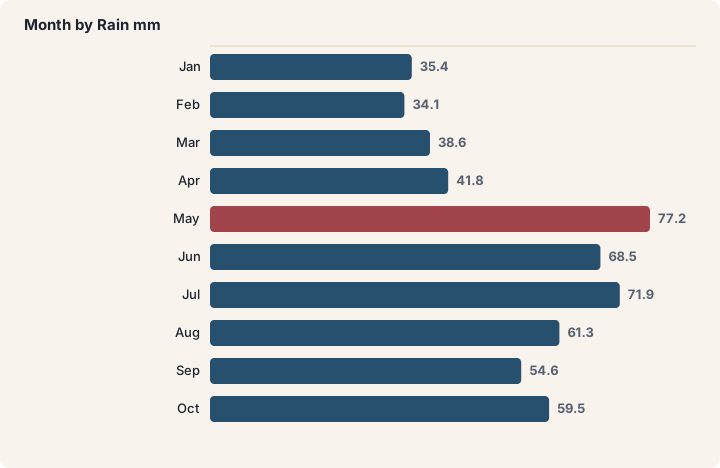
The European Quarter is at its best from late spring to early autumn, when the Parc de l'Orangerie is in leaf and the riverside path is comfortable to walk: Meteo-France 1991-2020 normals for Strasbourg give mean maxima of 20.9 C in May, 24.4 C in June and 21.6 C in September, against 5.2 C in January. Rain falls on 112.3 days a year on average, so a light layer and a rain plan matter in every season.
The climate here is semi-continental, which means real summers and real winters rather than the mild, even temperatures of the Atlantic coast. July's mean maximum of 26.4 C can feel warm on the exposed lawns of the quarter, and January's mean minimum of -0.2 C puts frost on the Ill. The table below gives the full monthly picture from the verified normals.
| Month | Mean Max C | Mean Min C | Rain mm | Rain Days (1 mm Or More) |
|---|---|---|---|---|
| Jan | 5.2 | -0.2 | 35.4 | 9.1 |
| Feb | 7.3 | 0.0 | 34.1 | 8.3 |
| Mar | 12.1 | 2.6 | 38.6 | 8.5 |
| Apr | 17.0 | 5.7 | 41.8 | 8.6 |
| May | 20.9 | 10.1 | 77.2 | 10.8 |
| Jun | 24.4 | 13.4 | 68.5 | 10.2 |
| Jul | 26.4 | 14.9 | 71.9 | 10.4 |
| Aug | 26.1 | 14.5 | 61.3 | 9.5 |
| Sep | 21.6 | 10.7 | 54.6 | 8.0 |
| Oct | 15.8 | 7.2 | 59.5 | 9.6 |
| Nov | 9.4 | 3.3 | 47.6 | 9.2 |
| Dec | 5.9 | 0.8 | 45.2 | 10.2 |
Two seasonal notes are worth folding into any plan. December brings the Christmas market, which runs in the last week of November to 24 December in its usual pattern, and last year's edition ran 26 November to 24 December 2025 with 3.05 million visitors; the next edition's dates are still being finalised on the city's Christmas site, so confirm there before booking around them. And sitting weeks at the Parliament change the quarter's atmosphere, filling the cafes and the tramcars, so the official plenary calendar is worth a glance if you want to see the district either buzzing or calm.
Whatever the season, the same three formats that opened this page can close it: a private evening walk, a street-art walk and a wine tasting, each a different way to spend the hours after the institutions close.
Common Questions About The Council Of Europe
Is the Council of Europe part of the European Union?
No. The Council of Europe is a separate intergovernmental organisation focused on human rights, democracy and the rule of law, with a membership of national governments that is broader than the EU. The European Parliament, which also sits in Strasbourg, is an EU institution, and the two are often confused because they stand in the same district.
Can you go inside the Council of Europe building?
Access is organised rather than casual, and the building is a working diplomatic venue. Visits run on a schedule published by the organisation itself, with pre-booking the norm and security checks at the door. The current offer, dates and booking conditions are on the Council of Europe's own visitor pages, which is where any plan should start.
How far is the Council of Europe from Strasbourg Cathedral?
The two sit in different districts: the Council of Europe is in the European Quarter north-east of the centre, and the cathedral stands on the Grande Île. The tram connects them in one ride, and the exact journey depends on the line you take, so the CTS journey planner is the reference for timings on the day.
What else can you see in the European Quarter?
The European Parliament and its Parlamentarium visitor centre, the European Court of Human Rights, and the Parc de l'Orangerie with its storks are all within a short walk of the Council of Europe. The riverside path along the Ill links them into a comfortable half-day loop, and the exteriors and the park are public space.
Is the European Parliament's visitor centre open the same hours as the Council of Europe?
The two run separate arrangements. The Parlamentarium Simone Veil publishes hours outside plenary weeks, Monday to Friday 09:00-18:00 and Saturday 09:30-12:00 and 13:00-18:00, with an airport-style security check, and plenary-week hours differ. The Council of Europe's visitor arrangements sit on its own pages, so check both before you plan a combined day.
Which tram goes to the Council of Europe in Strasbourg?
The CTS tram network serves the European Quarter, with stops including Wacken and Droits de l'Homme beside the institutions. A single ticket costs 1.90 EUR through the Badgeo card, the CTS app or contactless, or 2.50 EUR bought on board the bus, and a 24-hour Solo pass is 4.60 EUR. The CTS network map confirms current lines and stop names.
Strasbourg's European Quarter rewards a little planning: book what needs booking, ride the tram out, walk the riverside loop, and finish the day in the old town or over a glass of something Alsatian. The Council of Europe is the anchor of that district, and understanding what it is, and is not, makes every other building around it easier to read.