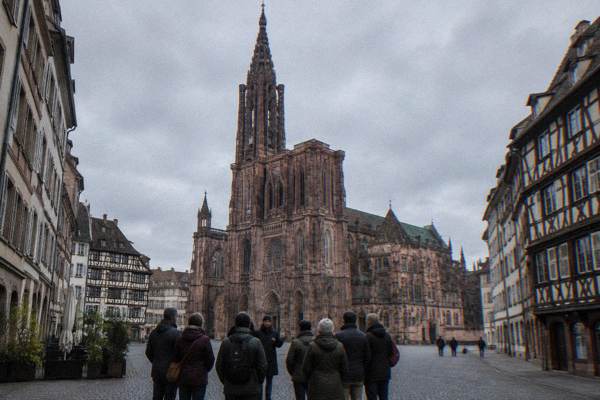
One Day In Strasbourg
One day is enough to see the cathedral, walk the Grande Île, drift past Petite France on the river Ill and eat well in a winstub, provided the day is planned around a few fixed times.
Short answer
Spend the morning at Strasbourg Cathedral and the Grande Île, see the astronomical clock at 12:30, walk Petite France and the Ponts Couverts in the afternoon, and take a Batorama boat tour (16.20 EUR full fare, 1h10). A 24h Solo CTS transport pass costs 4.60 EUR, the cathedral platform is 10 EUR, and municipal museums are 9 EUR.
Strasbourg, the prefecture of the Bas-Rhin in Alsace, sits in north-eastern France on the river Ill, a short way upstream of the Rhine, which forms the border with Germany here; Kehl is on the far bank. The city's historic core, the Grande Île, is compact enough that a single well-planned day reaches the cathedral, the half-timbered lanes of Petite France, the covered bridges and the river itself, with time left for a proper Alsatian lunch. The commune counted 293,771 residents in the 2023 INSEE figure, yet the part a visitor needs is small and walkable, and the tram network stitches the edges together cheaply.
What Can You Fit Into One Day In Strasbourg?
A single day in Strasbourg covers the cathedral and its astronomical clock, the lanes of the Grande Île, Petite France, the Ponts Couverts and a boat trip on the Ill, plus a winstub lunch, if you fix two anchors first: the 12:30 clock show and an afternoon boat departure. Everything else flexes around those. The cathedral's own hours page lists the nave open Mon-Sat 08:30-11:15 and 12:45-17:45, so an early start beats the queues, and the clock show sells tickets on the day only, which rewards arriving before the midday rush.
The shape of the day matters more than the speed. Strasbourg's old town is a loop: out from the cathedral through Place Kléber, down to the river at Petite France, along the Ill to the Barrage Vauban terrace, then back through the Krutenau or over to the Neustadt if legs allow. Walking that loop is the default plan; trams rescue the tired. A good fallback for orientation on day one is a guided walk, and the small-group welcome walk that this site features runs with a local guide, which leaves a full afternoon intact; Check availability if that framing suits your arrival day.
Here is a realistic timetable for one day, built around the fixed opening times rather than guesswork:
| Time | Where | What you do |
|---|---|---|
| 08:30 | Cathedral nave | Enter when the Mon-Sat morning opening begins |
| 10:00 | Cathedral platform | Climb to the 66 m platform (10 EUR full, 6 EUR reduced) |
| 11:30 | Saint-Michel entrance | Buy the 4 EUR clock ticket for the 12:30 show |
| 12:30 | Astronomical clock | Watch the automaton show |
| 13:00 | Grande Île lanes | Winstub lunch, then Place Kléber and Place Gutenberg |
| 15:00 | Petite France | Walk the quarter and the Ponts Couverts |
| 16:00 | Barrage Vauban terrace | Panoramic view over the rooftops |
| 17:00 | Batorama departure | Boat tour on the Ill (Red Tour 1h10) |
Morning: Strasbourg Cathedral And The Grande Île
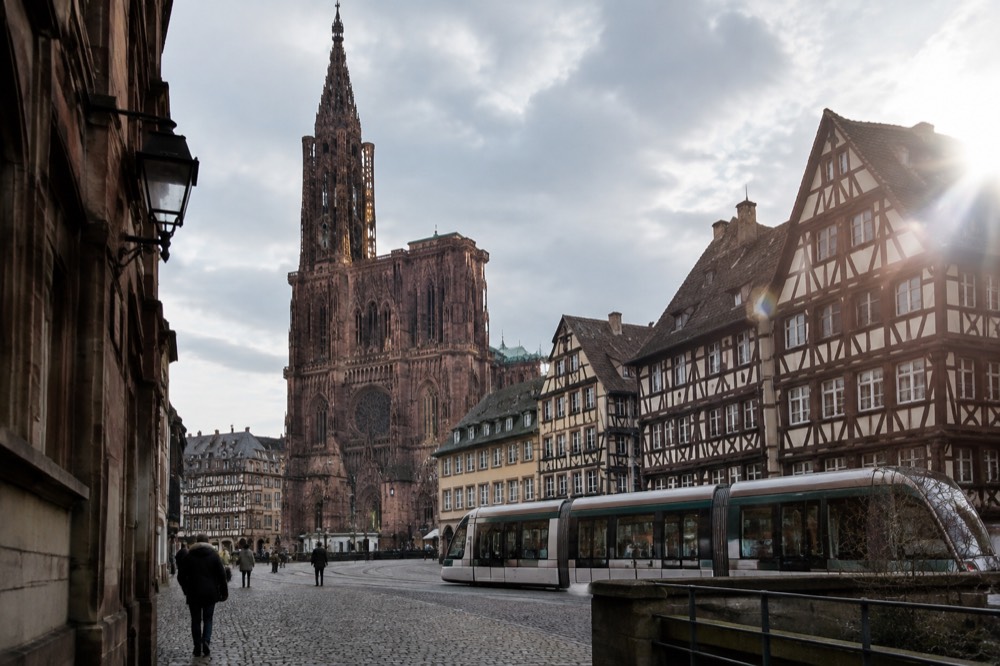
Begin at the cathedral, because its nave opens Mon-Sat at 08:30 and the astronomical clock show runs at 12:30 sharp with day-of tickets only, so the morning is the one part of the day that cannot be reshuffled. The platform ticket costs 10 EUR full fare and 6 EUR reduced, children under 6 go free, and the terrace stands at 66 m on a single-spired building; there are no luggage lockers at the cathedral, so travel light. The clock ticket is 4 EUR, with 3 EUR for groups of 12 or more and students to 25, and 2 EUR for children 6-17.
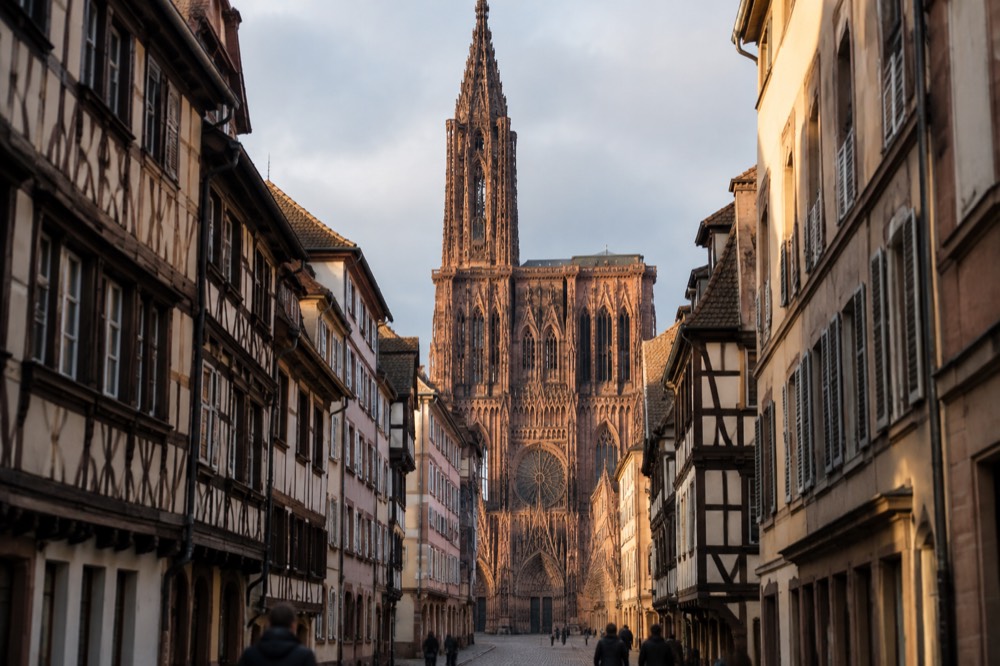
The cathedral deserves more than a photo stop. The nave's pink sandstone changes colour with the hour, and the interior holds the astronomical clock, whose figures move at 12:30 each day except when the 11:00 Sunday mass replaces the show. The clock page states that tickets are sold at the cathedral stalls from 10:00-11:00 or at the Saint-Michel entrance from 11:30, with no reservations, which is why the timetable above puts you there at 11:30. After the show, the Place du Château side and the Musée de l'Œuvre Notre-Dame fill an easy half hour; the platform ticket carries a reduced rate at that museum, a detail worth knowing if you plan to come back down slowly.
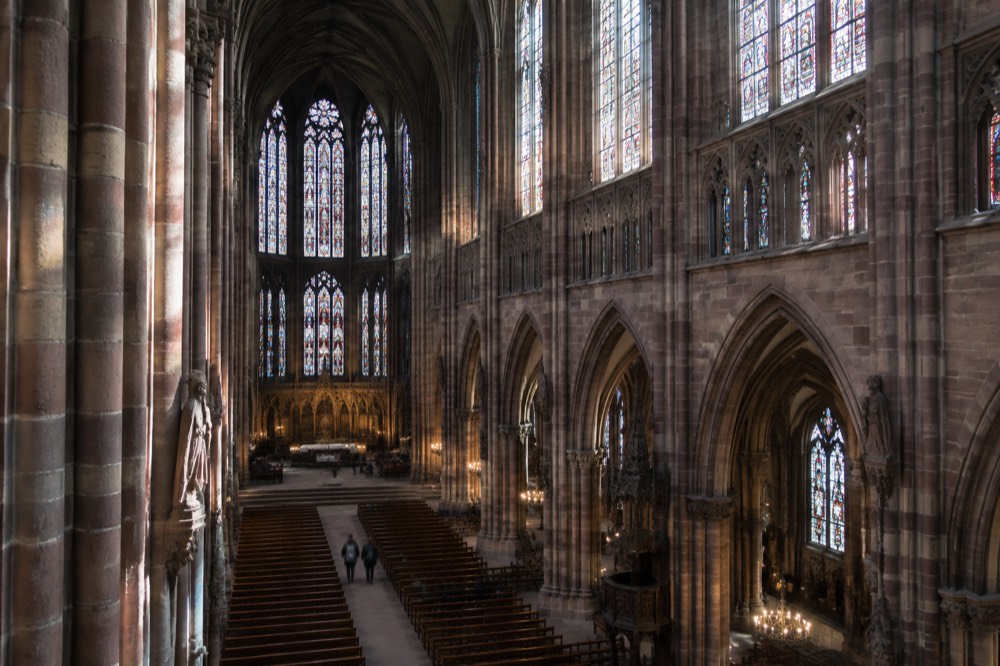
The rest of the morning belongs to the Grande Île, the river-island core of the city. Place Kléber, the largest square in the old town, and Place Gutenberg sit a few minutes apart, and both are on the natural route between the cathedral and the river.
A guided morning is not obligatory. The old town reads well on its own, and it asks nothing but attention: the cathedral guide page and the astronomical clock page on this site carry the full hours and ticket detail if you want to plan the climb to the platform around a specific lighting hour.
If you would rather have a guide for the morning anyway, book a free walking tour here.
How Do You See Petite France And The River In One Afternoon?
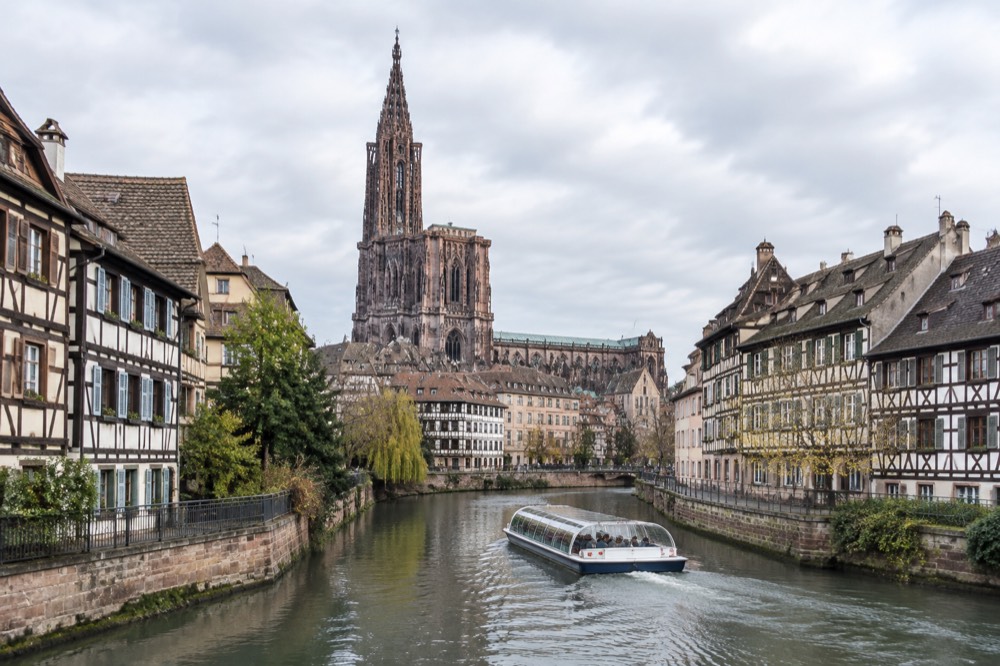
Petite France, the Ponts Couverts and the Barrage Vauban terrace form a single walkable sequence along the Ill, and a Batorama boat tour ties it together from the water, with the Red Tour lasting 1h10 at 16.20 EUR full fare and 8.90 EUR reduced. The terrace at the Barrage Vauban has seasonal hours, 08:00-19:00 in September and October, and its admission price is not stated on the official page, so check there before you plan the climb. The quarter itself is public streets, open at all hours.
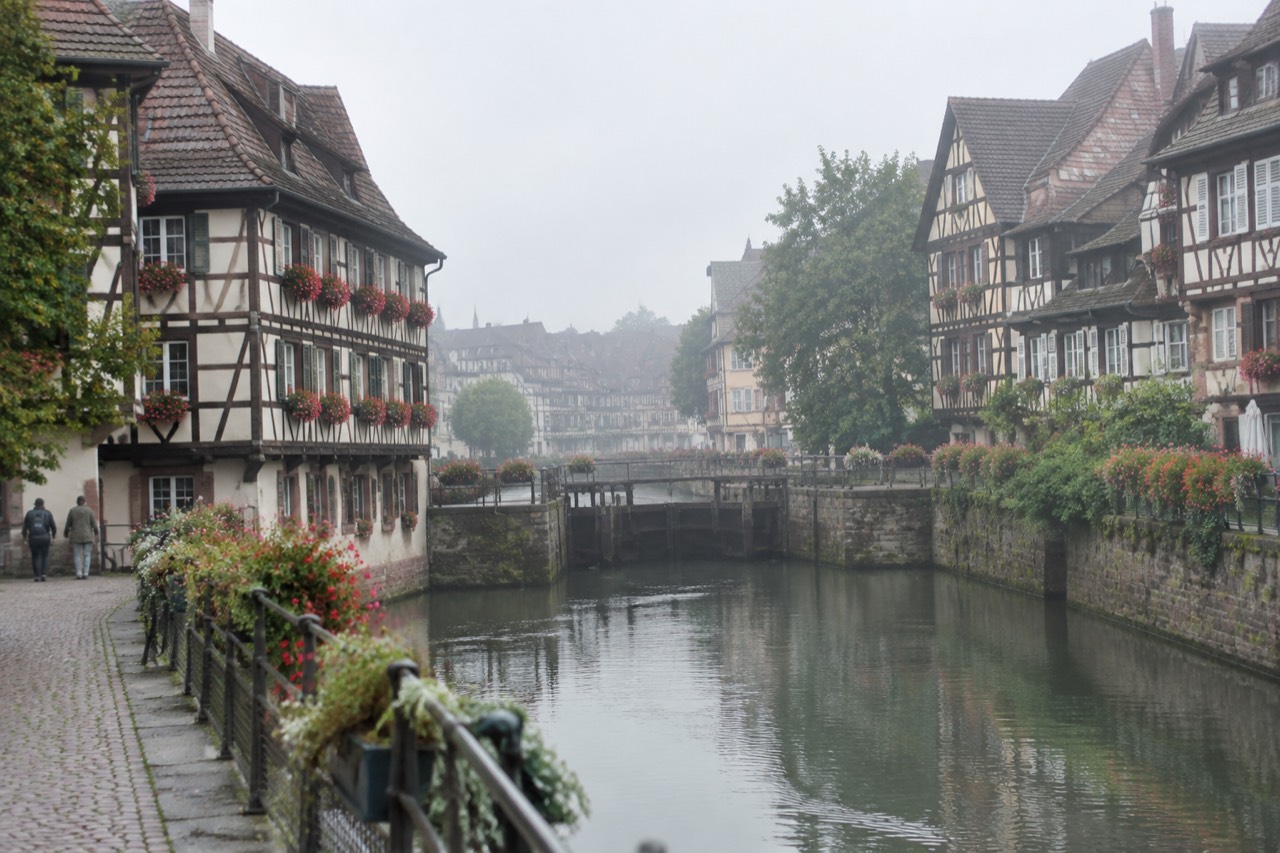
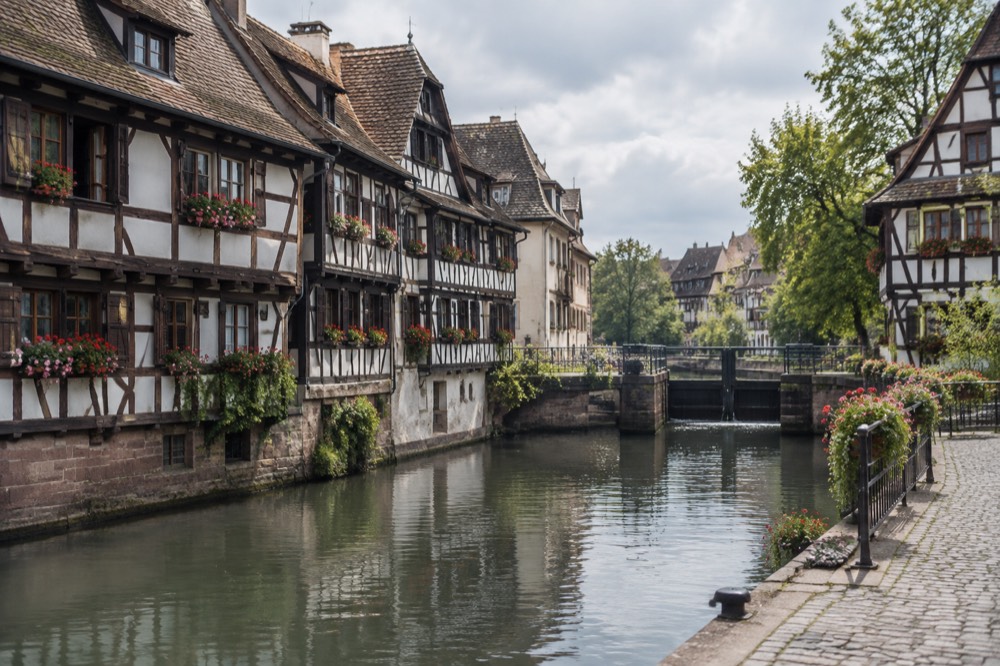
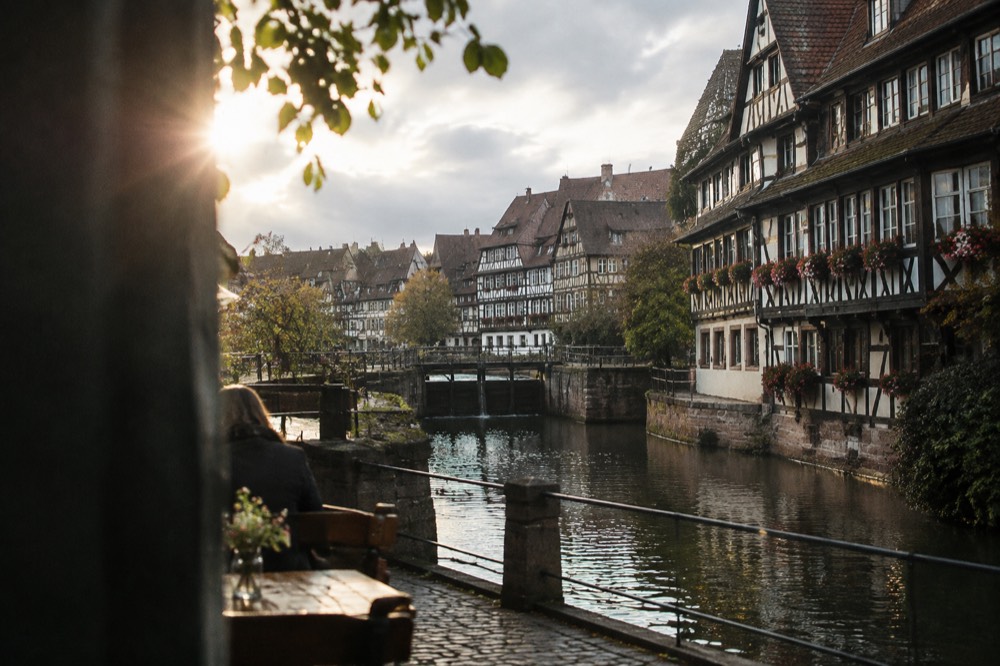
Petite France was a working river quarter, and it still behaves like one: tanners' houses, water channels, weirs that you hear before you see. The walk from Place Kléber takes in the quarter's lanes, then the Ponts Couverts, the covered bridges that once closed off the river approach, and then the Barrage Vauban, whose terrace gives the classic rooftop panorama with the cathedral spire centred. The detailed pages on Petite France, the Ponts Couverts and the Barrage Vauban cover each stop in depth if you want to linger.
The boat is the one paid activity in this half of the day that genuinely adds something walking cannot. Batorama runs several circuits from the quay near the Palais Rohan; the two main ones are set out below with the official prices and durations.
| Batorama tour | Duration | Full fare | Reduced fare |
|---|---|---|---|
| Red Tour (old town and Petite France) | 1h10 | 16.20 EUR | 8.90 EUR |
| Blue Tour (short circuit) | 0h45 | 12.50 EUR | 7.20 EUR |
If your one day in Strasbourg is actually a river-cruise stop, the shape of the plan changes: the Strasbourg river cruise stop itinerary on this site is built for a half-day ashore and covers the same priorities in a tighter order.
Where Should You Stop For Lunch In Strasbourg?
Lunch in Strasbourg belongs to the winstub, the Alsatian tavern style, and the dishes to order are tarte flambée, choucroute and baeckeoffe, eaten inside the Grande Île so that the afternoon walk starts where the meal ends and no tram ride interrupts the loop. A winstub serves the region's plain cooking at midday prices, and the old town holds enough of them that a short walk in any direction from the cathedral finds one with a free table. Reservations matter in December, when the Christmas market fills the centre and tables turn over slowly.
Tarte flambée is a thin bread base with fromage blanc, onions and lardons; choucroute is the sauerkraut platter with sausages and pork; baeckeoffe is a slow-baked casserole of meats and potatoes. This site's pages on tarte flambée, choucroute and the winstubs of Strasbourg explain each dish and where to find the traditional versions. For a structured introduction, a gourmet walking tour with tastings turns lunch into a moving meal across several stops, and it is one of the few ways to taste a range of Alsatian specialities in a single afternoon.
One practical note for December visitors: the Christmas market's food chalets sell the same specialities outdoors, and the market's usual pattern runs from the last week of November to 24 December, with last year's edition running 26 November to 24 December 2025. The city's Christmas site states that the 2026 dates and programme are still being finalised, so confirm them there before you build a food stop around a specific square.
Afternoon Choices: Museums, The European Quarter Or Two Wheels?
With the old town walked by mid-afternoon, the three realistic add-ons are a municipal museum (9 EUR full, 5 EUR reduced), the European Quarter a short tram ride out, or a guided bike tour that covers both banks in a couple of hours; the choice is weather and interest, not distance. All the municipal museums are free on the first Sunday of every month, a detail that can reorganise a whole day's budget if your dates line up. The Musée Alsacien is closed for works until 2028 and should not be on any plan.
The museum option is stronger than visitors expect. The Musée de l'Œuvre Notre-Dame holds the cathedral's medieval sculpture, the Musée des Beaux-Arts sits in the Palais Rohan, and the MAMCS covers modern art; a one-day Pass Musées at 20 EUR covers the set, and the Strasbourg City Card, at 5 EUR adult and 3.50 EUR child for seven days, is a discount card rather than a pass, taking set amounts off museums, the boat, the cathedral platform and the clock. The full museum picture, including what is open and what the passes actually cover, is laid out in the site's Strasbourg museums guide.
| Ticket or pass | Price | What it covers |
|---|---|---|
| Municipal museum entry | 9 EUR full, 5 EUR reduced | One museum, single visit |
| Pass Musées 1 day | 20 EUR | The municipal museums for a day |
| Strasbourg City Card | 5 EUR adult, 3.50 EUR child (3-17) | Seven days of discounts, not entry |
| Cathedral platform | 10 EUR full, 6 EUR reduced | The 66 m terrace |
| Astronomical clock show | 4 EUR | The 12:30 automaton show |
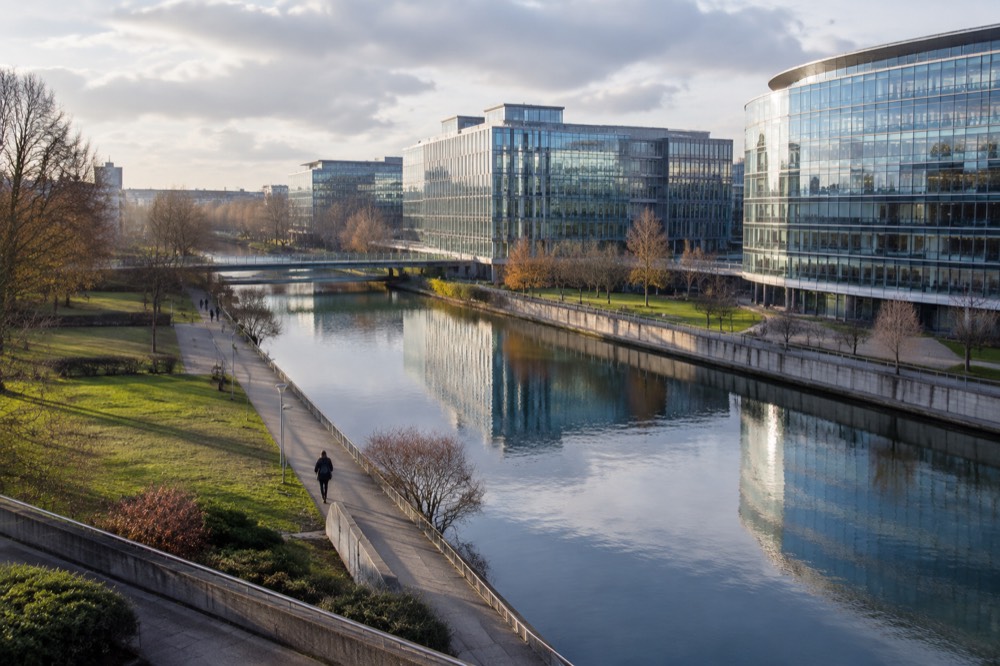
The European Quarter is the other half of Strasbourg's identity: the European Parliament, the Council of Europe and the European Court of Human Rights sit in a district of glass and water a tram ride from the old town. The Parlamentarium Simone Veil opens Mon-Fri 09:00-18:00 and Sat 09:30-12:00 and 13:00-18:00 outside plenary weeks, with an airport-style security check at the door and different hours during plenary weeks, so its official page is the one to check before you commit. A guided walk of the European District covers the institutions' story in an hour and a half for anyone who wants the politics explained rather than just photographed. The full index of guides sits on Strasbourg Travel Guide.
The bike option suits a fine afternoon. Strasbourg is flat, the Ill has towpaths, and a guided bike tour with a local guide crosses from the Grande Île to the Neustadt and the Orangerie park in a format designed for visitors who have never ridden the city before.
What About Evening In Strasbourg After Dark?
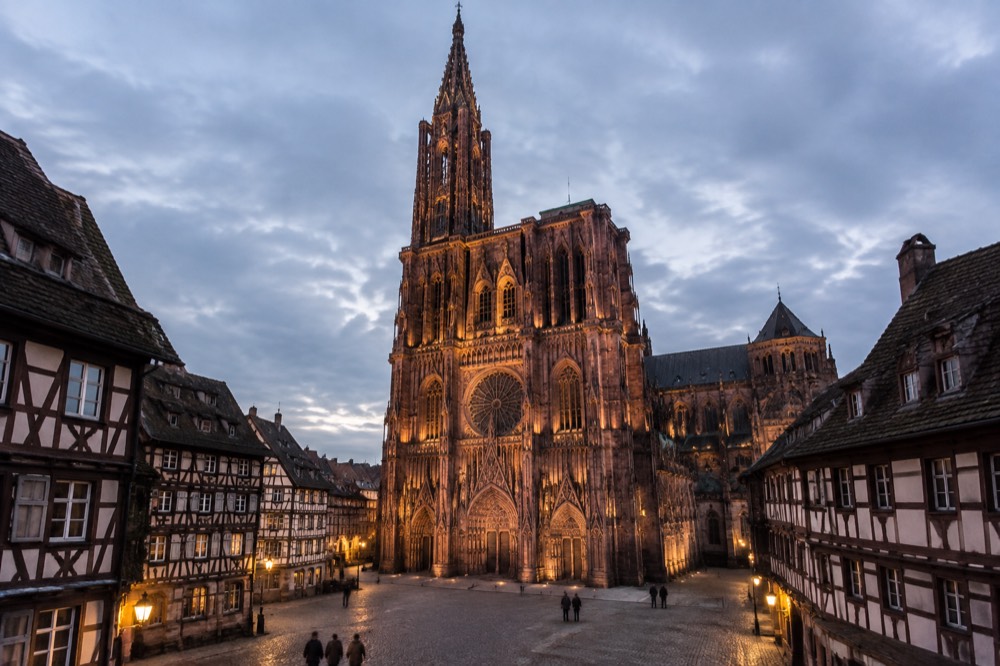
Evening in Strasbourg is low-key and architectural: the cathedral's facade is floodlit, the winstubs serve dinner into the later evening, and an after-dark walk through the Grande Île or along the Ill is the standard close to a one-day visit. The astronomical clock show is a midday event, not an evening one, and the platform's last ascent in the winter season is 17:15, so the tower belongs firmly to daylight. Night is for the streets.
The two classic evening walks are the cathedral square, where the west front is lit after dark, and the river loop from the Ponts Couverts to the Barrage Vauban, where the half-timbered houses reflect in the still water of the Ill. In summer, the late light extends both; in December, the Christmas market's chalets typically open from late morning into the evening, and the question of whether the market is better by day or by night has its own answer page on this site: are Christmas markets better in day or night. Dinner repeats the lunch logic: a winstub, a craft beer bar, or one of the restaurants covered in the best restaurants in Strasbourg guide.
How Much Does One Day In Strasbourg Cost?
A disciplined one-day visit costs very little beyond food: the cathedral nave is entered during its open hours, the platform is 10 EUR, the clock show 4 EUR, a Batorama short tour 12.50 EUR and a 24h Solo transport pass 4.60 EUR, so the sightseeing total sits near 30 EUR per person before lunch and dinner.
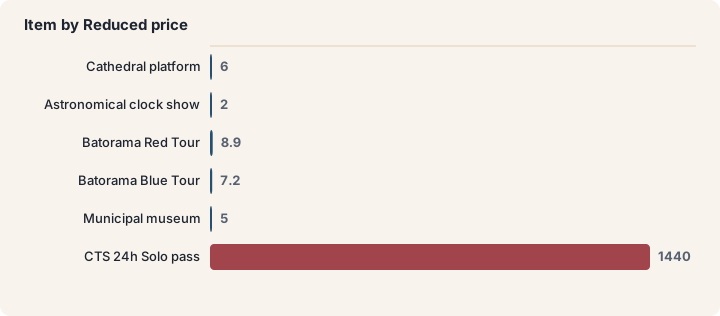
| Item | Full price | Reduced price |
|---|---|---|
| Cathedral platform | 10 EUR | 6 EUR (6-18, students; under 6 free) |
| Astronomical clock show | 4 EUR | 2 EUR (children 6-17); 3 EUR (students to 25, groups 12+) |
| Batorama Red Tour | 16.20 EUR | 8.90 EUR |
| Batorama Blue Tour | 12.50 EUR | 7.20 EUR |
| Municipal museum | 9 EUR | 5 EUR |
| CTS 24h Solo pass | 4.60 EUR | 10.20 EUR for a 24h Trio (2-3 people) |
Two structural savings are worth planning around. First, the first Sunday of every month is free at all municipal museums, so a Sunday visit shifts the museum line of the budget to zero. Second, the Strasbourg City Card at 5 EUR takes a set amount off several of the items above, including the platform and the boat, and pays for itself within a full day if you are doing three or more of the priced sights; the card's own shop page lists the exact reductions. The budget picture, including where a one-day plan leaks money, is expanded in the site's Strasbourg on a budget guide.
What If The Weather Turns Or You Have More Time?
Strasbourg's climate is semi-continental, with Meteo-France 1991-2020 normals showing mean maxima from 5.2 C in January to 26.4 C in July and 635.7 mm of rain across 112.3 rain days a year, so a wet afternoon is a real possibility in any season and the plan needs an indoor branch. The museums, the Palais Rohan and a long winstub lunch are the standard shelter; the rainy day in Strasbourg itinerary is this site's full wet-weather plan.
| Season | Mean max | Mean min | Rain days (1 mm or more) |
|---|---|---|---|
| December-February | 5.2-7.3 C | -0.2 to 0.8 C | 8.3-10.2 per month |
| March-May | 12.1-20.9 C | 2.6-10.1 C | 8.5-10.8 per month |
| June-August | 24.4-26.4 C | 13.4-14.9 C | 9.5-10.4 per month |
| September-November | 9.4-21.6 C | 3.3-10.7 C | 8.0-9.6 per month |
If the day runs long and a second or third appears, the natural extensions are the two days in Strasbourg itinerary and the three days in Strasbourg itinerary, which add the European Quarter, the Neustadt and the Orangerie at an unhurried pace. Day trips open a different door: the Black Forest and Basel pages cover the two neighbours, one in Germany and one in Switzerland, and Basel is in Schengen but not in the euro, so budget in Swiss francs there. A combined plan is already mapped in the Strasbourg and Colmar itinerary, and the wider region has its own Alsace road trip itinerary.
In late November and December the whole calculus changes, because the Christmas market overlays the old town. Last year's edition ran 26 November to 24 December 2025 and drew 3.05 million visitors, and the 2026 dates are not yet published; the city's Christmas site is the place to confirm them. The dedicated Strasbourg Christmas market itinerary reshapes this same one-day plan for the market, and a guided day trip into the wider region turns the same day outward instead.
Practical Tips For A Single Day In Strasbourg
Move on foot inside the Grande Île and by tram everywhere else: a CTS single ticket is 1.90 EUR bought through the Badgéo card, the CTS app or contactless, 2.50 EUR if bought on board the bus, and the 24h Solo pass at 4.60 EUR covers a full day of hops. The airport shuttle deserves its own note: the TER train between Strasbourg station and Entzheim airport takes 8 minutes, runs up to 5 trains per hour, and a combined ticket covering the train plus a day of city transport costs 4.60 EUR.
| CTS ticket | Price | Notes |
|---|---|---|
| Single | 1.90 EUR | Badgéo, CTS app or contactless |
| Single bought on the bus | 2.50 EUR | More expensive on board |
| 24h Solo | 4.60 EUR | One traveller, all day |
| 24h Trio | 10.20 EUR | Two or three travellers together |
| Airport combined ticket | 4.60 EUR | TER train to Entzheim plus 24h city transport |
Timing advice that holds in every season: start at the cathedral at 08:30, because the nave's Mon-Sat morning window closes at 11:15 and the clock show at 12:30 is the day's fixed point; buy the clock ticket at the Saint-Michel entrance from 11:30, since day-of sales only; and treat the platform's seasonal hours, 09:30-13:00 and 13:30-20:00 from April to September with the last ascent at 19:15, and 10:00-13:00 and 13:30-18:00 from October to March with the last ascent at 17:15, as the boundary of your climbing window. The platform closes on 1 January, 1 May and 25 December.
Arriving from Paris? The rail link is fast on the direct services, and the Paris to Strasbourg guide covers whether a day return is realistic or an overnight is the better shape. Whatever the arrival, the plan above holds: two fixed anchors, one loop of the old town, a boat on the Ill, and a winstub table at midday. If a guided start would take the guesswork out of the morning, the featured small-group welcome walk and its alternatives are compared once more below.
Common Questions About One Day In Strasbourg
Is one day enough for Strasbourg?
One day covers the cathedral, the astronomical clock show, Petite France, the Ponts Couverts, the Barrage Vauban terrace and a Batorama boat tour, with a winstub lunch in between. It does not cover the European Quarter in depth or any museums beyond a quick single visit; the two-day and three-day itineraries on this site are the natural extensions.
What is the best time of day to visit Strasbourg Cathedral?
The nave opens Mon-Sat at 08:30 and the morning window closes at 11:15, so the early slot is the quiet one. The astronomical clock show runs at 12:30 sharp, with day-of tickets only, sold at the cathedral stalls from 10:00-11:00 or at the Saint-Michel entrance from 11:30.
Can you walk everywhere in Strasbourg in one day?
Inside the Grande Île, yes: the cathedral, Petite France, the Ponts Couverts and the Barrage Vauban form a walkable loop. The European Quarter and the Orangerie are a tram ride out, and a 24h Solo pass at 4.60 EUR covers a full day of tram and bus hops.
How much does one day in Strasbourg cost?
The priced sights are the platform at 10 EUR, the clock show at 4 EUR, a Batorama short tour at 12.50 EUR and a 24h transport pass at 4.60 EUR, before food. Municipal museums at 9 EUR full fare are free on the first Sunday of every month.
What should you eat with only one day in Strasbourg?
Lunch in a winstub and order tarte flambée, choucroute or baeckeoffe, the three dishes the region is known for. A gourmet walking tour with tastings is the efficient alternative if you want to try several specialities in one moving afternoon.
Is Strasbourg worth visiting in December?
Yes, and the Christmas market is the reason: last year's edition ran 26 November to 24 December 2025 and drew 3.05 million visitors. The 2026 dates are not yet published, so confirm them on the city's Christmas site, and use the dedicated Christmas market itinerary on this site for a market-shaped day.
One day in Strasbourg, done well, is a loop of an island: up the cathedral tower in the morning light, down to the river by early afternoon, afloat on the Ill before the light goes, and fed from a winstub kitchen somewhere in the middle of it all. Fix the 12:30 clock show, let everything else move around it, and the city fits.