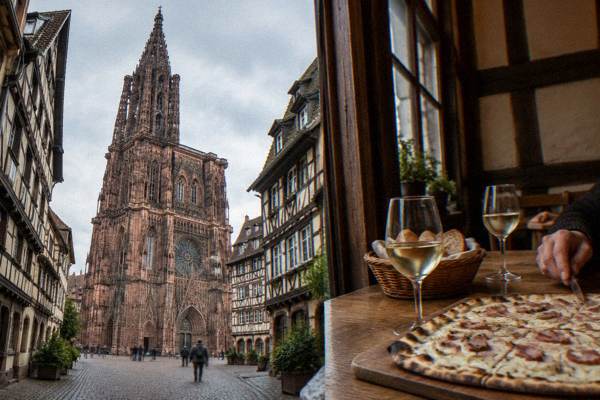
Choucroute
Choucroute garnie is the heavyweight signature dish of Alsace, a plate of fermented cabbage piled with pork and sausages that turns a Strasbourg winter evening into an event. This guide explains what is in it, where to eat it in the city, and how to build a trip around it.
Short answer
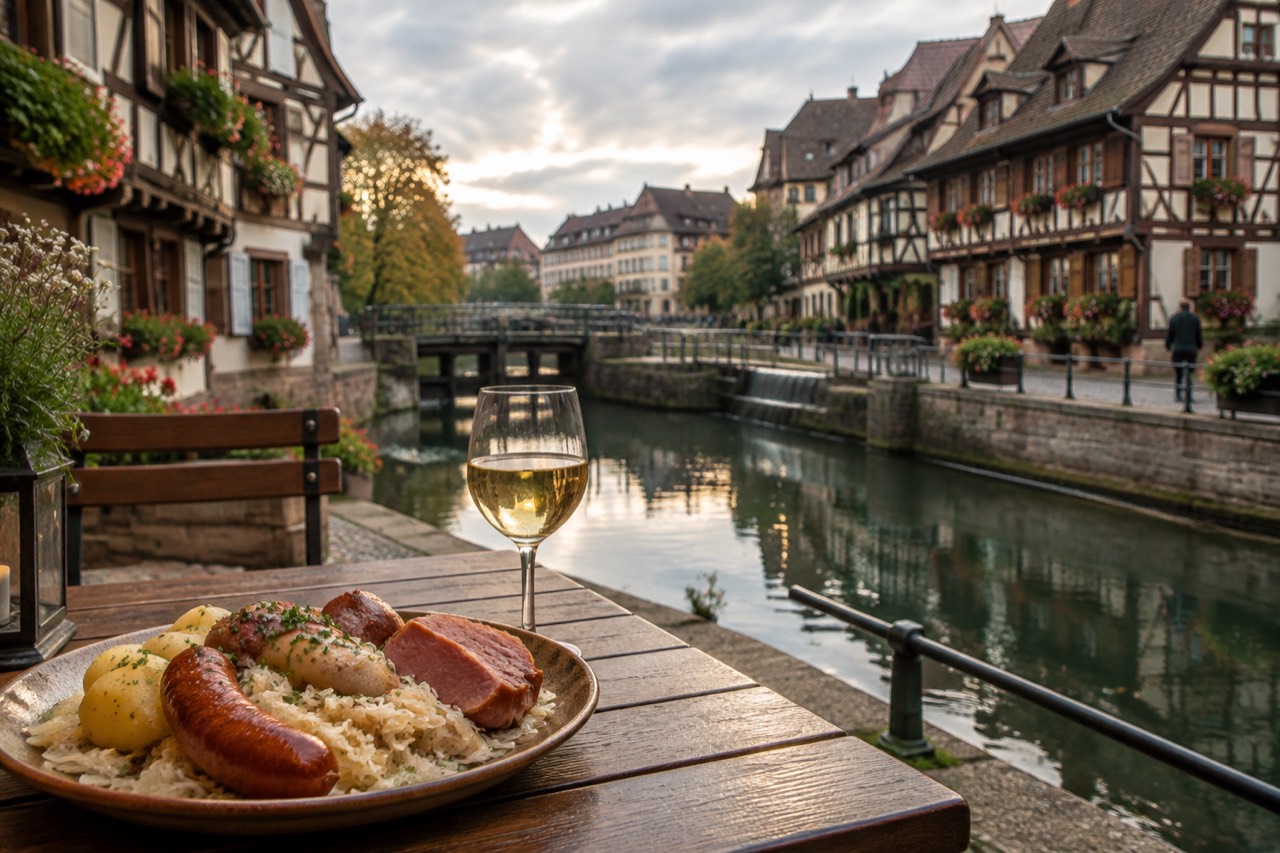
Choucroute garnie is Alsatian sauerkraut cooked in white wine with potatoes, pork shoulder, bacon and sausages, served in Strasbourg's winstubs and brasseries year round. It is a cold-season dish at its best from late autumn through the Christmas market, which in 2025 ran 26 November to 24 December and drew 3.05 million visitors.
Choucroute garnie is the dish that answers the Alsatian winter: fermented cabbage slow-cooked in white wine, heaped with potatoes, smoked bacon, pork shoulder and sausages, and served in the winstubs and brasseries of Strasbourg, the prefecture of the Bas-Rhin in Alsace, north-eastern France, on the River Ill beside the German border. It is a plate with German roots and a French address, and in this city it is treated less as a novelty than as a weekly habit. This guide sets out what is actually in the dish, where to eat it well, what to drink beside it, and how to fold it into a Strasbourg trip, whether that trip is built around the Christmas market or around a long weekend of eating.
What Is Choucroute Garnie?
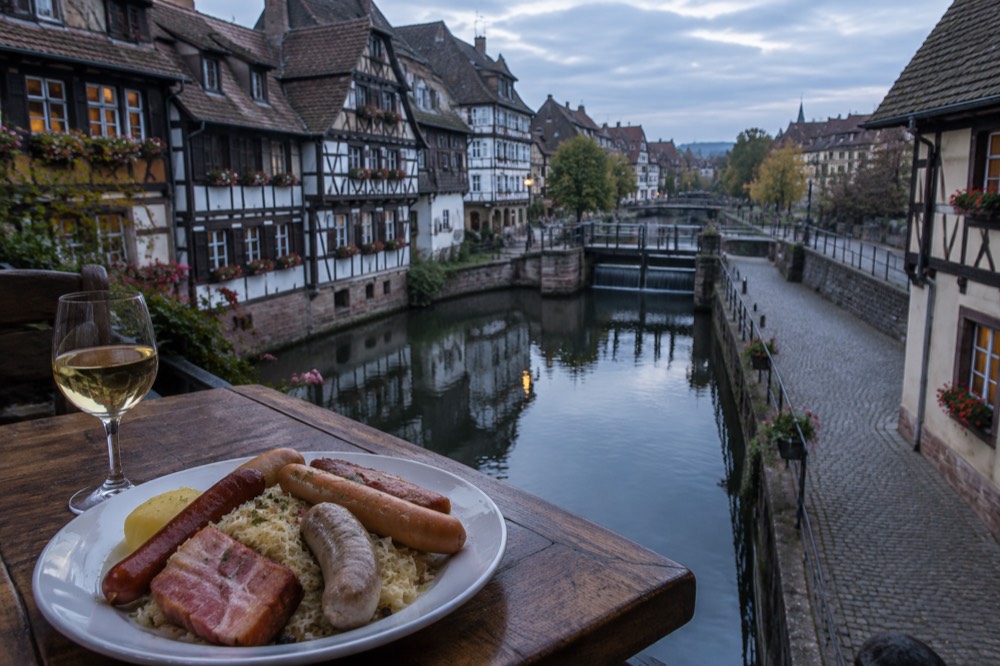
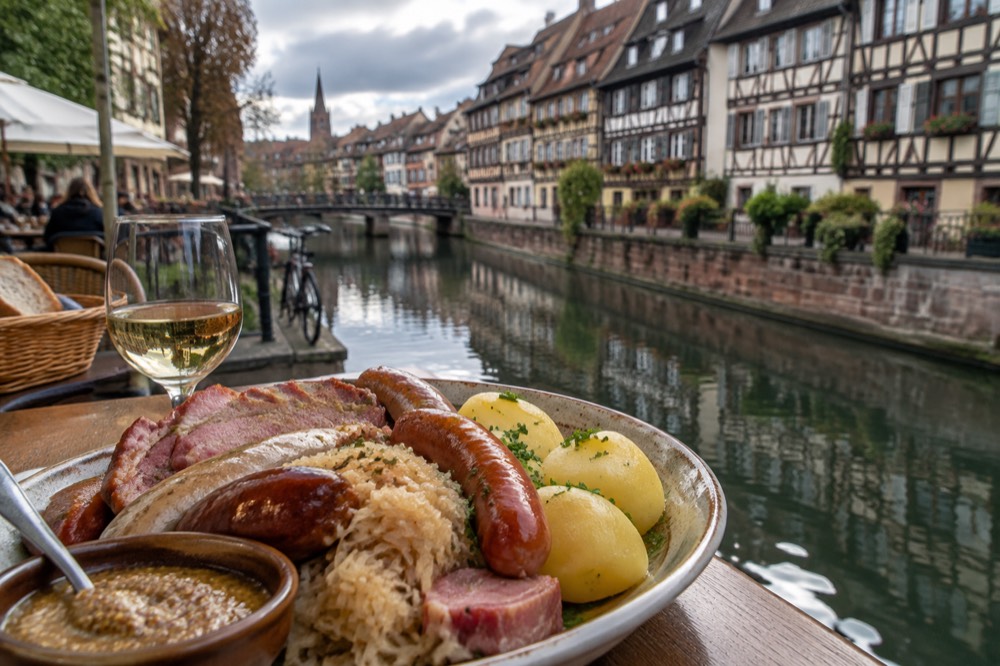
Choucroute garnie is Alsatian sauerkraut, cabbage fermented with salt and then cooked long and slow in dry white wine with aromatics, served garnished with boiled potatoes, smoked bacon, pork shoulder, frankfurter-style sausages and often a slice of smoked pork loin. It is a one-plate meal rather than a side, it is built for sharing platters in a winstub, and its garnish list varies from kitchen to kitchen more than its cabbage does. The wine in the pot is the Alsatian signature.
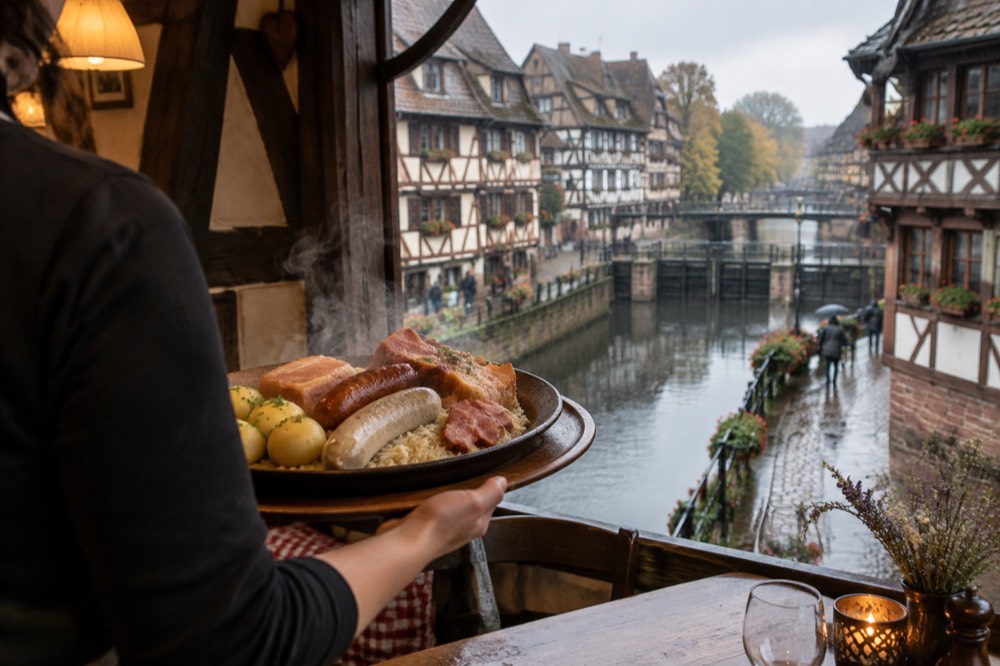
The name splits neatly. Choucroute is the local French rendering of the cabbage itself, borrowed from the German Sauerkraut, and garnie simply means garnished. The cabbage is fermented in the Alsatian tradition, which keeps it crisper and less sour than many central European versions, then rinsed, layered with onion, juniper, bay and a generous pour of Riesling, and left to simmer until it turns soft and faintly sweet. What arrives at the table is a deep platter, usually earthenware, with the cabbage as a bed and the meats set into it in rows.
The garnish is where kitchens argue. A classic Strasbourg platter carries a smoked pork shoulder or knuckle, a thick slab of smoked bacon, one or two frankfurter-type sausages, and often a slice of Kassler-style smoked loin. Some winstubs add Montbéliard sausage, a smoky variety with a coarser texture. Potatoes, boiled separately, sit around the edge. Mustard, ideally the grainy Alsatian kind, comes alongside rather than over the top, so each forkful can be adjusted.
It is worth being clear about what choucroute is not. It is not a light lunch, and it is not a starter to share politely before a second course. It is a full plate with a weight to it, ordered once, finished once, and usually followed by nothing stronger than a digestif or a slice of kougelhopf.
| Element | What It Is | Role On The Plate |
|---|---|---|
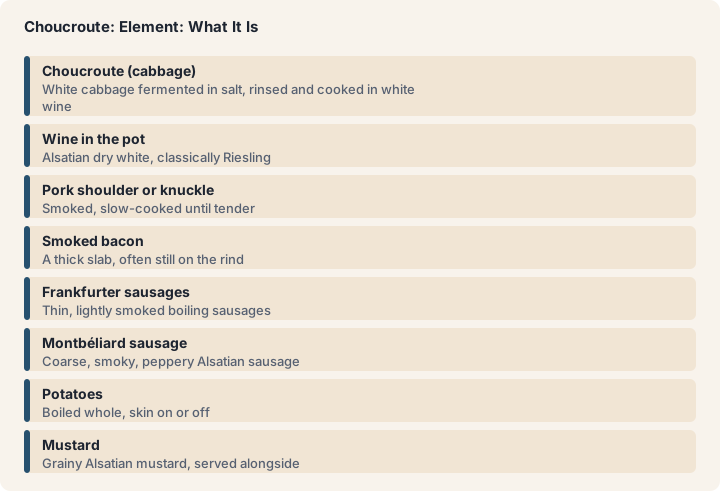
| Choucroute (cabbage) | White cabbage fermented in salt, rinsed and cooked in white wine | The base and the largest portion by weight |
| Wine in the pot | Alsatian dry white, classically Riesling | Softens the sourness and carries the aroma |
| Pork shoulder or knuckle | Smoked, slow-cooked until tender | The centrepiece meat |
| Smoked bacon | A thick slab, often still on the rind | Depth of salt and smoke |
| Frankfurter sausages | Thin, lightly smoked boiling sausages | The everyday Alsatian garnish |
| Montbéliard sausage | Coarse, smoky, peppery Alsatian sausage | A richer alternative garnish |
| Potatoes | Boiled whole, skin on or off | Turns the platter into a complete meal |
| Mustard | Grainy Alsatian mustard, served alongside | Adjusted forkful by forkful |
Where To Eat Choucroute In Strasbourg?
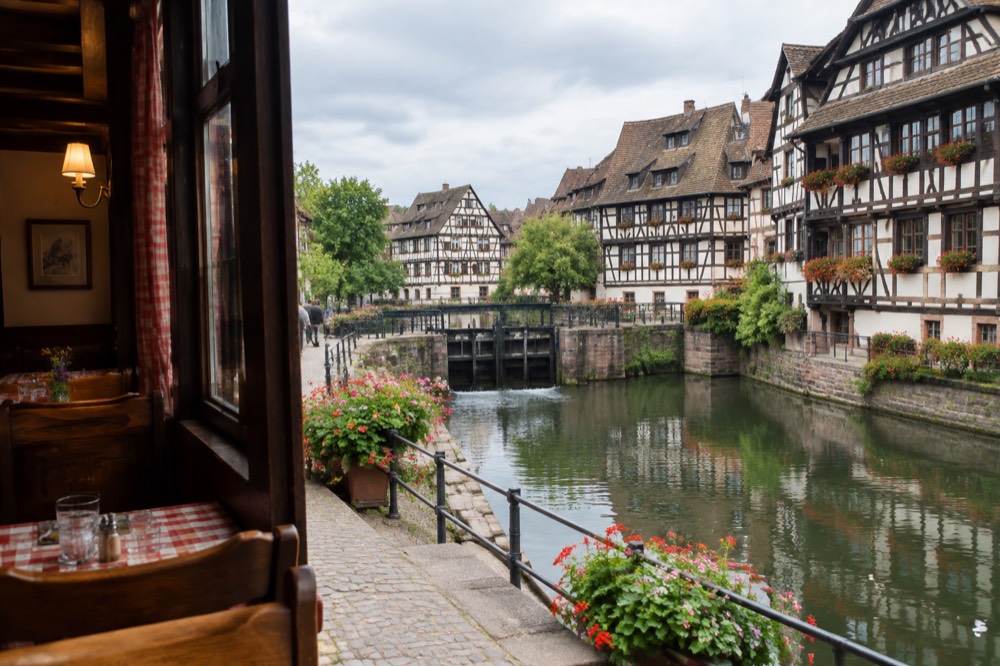
The natural home of choucroute in Strasbourg is the winstub, the traditional Alsatian wine room with checked tablecloths, wooden benches and a short menu, and the greatest concentration of them sits on and around the Grande Île, the World Heritage island quarter that holds the cathedral, Petite France and the old merchant streets. Brasseries around Place Kléber and the Krutenau neighbourhood east of the Ill carry solid versions too. Reservations matter on winter weekends.
The winstub is a specific institution rather than a generic restaurant. The word means wine room, and the original function was a place where an Alsatian winemaker sold the year's production by the glass, with food designed to keep customers at the table. That is why the menus are short and heavy: choucroute garnie, baeckeoffe, tarte flambée, and a cheese or kougelhopf course. The classic rooms have wooden panelling, ceramic stoves in winter and a chalkboard rather than a printed card. Ordering choucroute in a winstub puts you in the dish's native setting, and the platters are built for two.
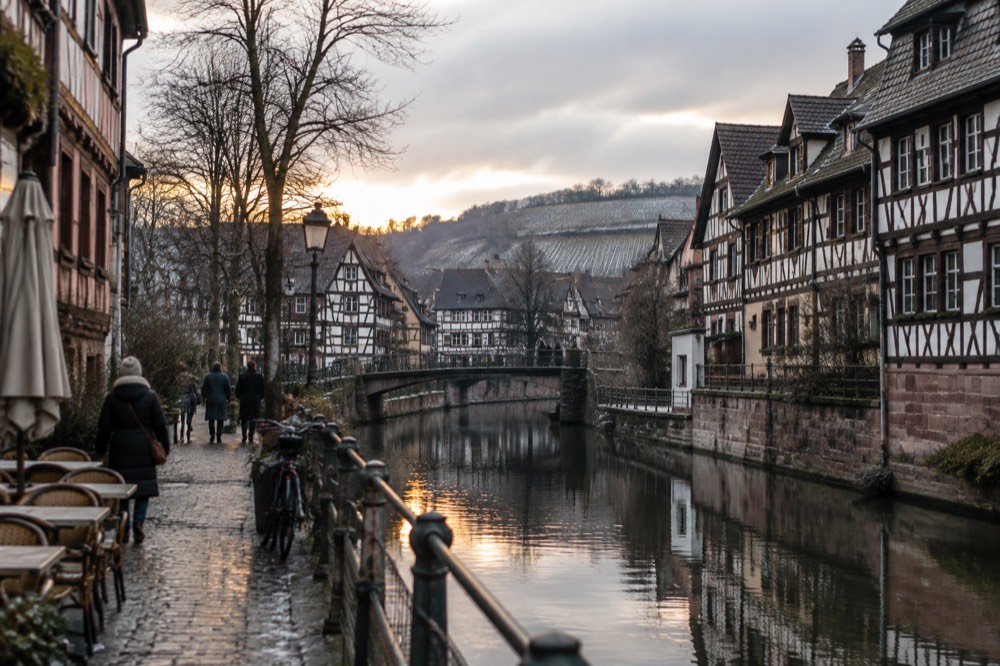
Geography helps the visitor. The Grande Île, the river-island old town listed by UNESCO as part of "Strasbourg, Grande-Île and Neustadt", packs the cathedral, Place Kléber, Place Gutenberg and the Petite France quarter into a walkable core, and the winstubs cluster along its lanes. East of the Ill, the Krutenau, the old boatmen's and fishermen's quarter turned student neighbourhood, holds smaller, cheaper rooms where students and families eat. The Neustadt, the German-built extension of the city around Place de la République, carries grand brasseries with bigger platters and more space between tables.
Practical timing matters more than geography. A winstub kitchen often cooks choucroute in one large pot for the evening, and a Saturday in late December, when the Christmas market fills the old town, can sell a kitchen's platters early. Book a table for any evening between late November and Christmas, and book for lunch as well if you want a seat in a small room. Midweek and mid-afternoon are the relaxed windows, and the dish reheats so well that some rooms serve it at lunch from the previous evening's pot, which regulars consider a point in its favour.
If you are building the whole trip around Alsatian food, the seasonal timing is worth a thought, and the question of when to plan a Strasbourg visit has a clear answer for choucroute purposes: the colder half of the year.
How Does Choucroute Fit A Strasbourg Christmas Market Trip?
Choucroute and the Christmas market are natural companions because the market season, which runs from late November to 24 December, is exactly the cold-weather window the dish is built for, and the market's food stalls push visitors towards hearty plates rather than away from them. The 2025 edition ran 26 November to 24 December and drew 3.05 million visitors, so the winstubs fill up alongside the chalets. Book the table before you book the market stroll.
Strasbourg styles itself as the Capital of Christmas, and the city's own Christmas site confirms that the 2026 dates and programme are still being finalised, so any trip plan should follow the usual pattern: the market opens in the last week of November and runs until 24 December, with chalets typically open from late morning into the evening and an early-evening close on 24 December itself. Last year's edition, 26 November to 24 December 2025, brought 3.05 million visitors, and the city's press release recorded the figure plainly. That scale is the reason a choucroute plan needs a reservation.
The rhythm of a market day suits the dish. A morning of chalets around the cathedral and Place Kléber, with a tarte flambée or a roasted chestnut in hand, builds an appetite that only a full platter answers, and a winstub dinner is the warm, seated counterweight to an afternoon on cold streets. December in Strasbourg averages a mean maximum of 5.9 C and a mean minimum of 0.8 C, with 10.2 rain days of 1 mm or more across the month, so an indoor table with a ceramic stove is not a fallback, it is part of the design.
For a deeper dive into what the stalls themselves serve, the Strasbourg Christmas market food guide covers the chalet specialities, and the broader Strasbourg Christmas market guide handles dates, layout and logistics. If you are staying several days and want to eat your way through the region's markets rather than only the city's, the Christmas markets in Alsace overview and the Colmar Christmas market guide map out the smaller towns.
A guided option exists for exactly this appetite. The Alsace Christmas markets day tour from Strasbourg runs a full-day circuit of the region's market towns with a guide and transport included, which removes the winter driving and the parking question entirely, and pairs naturally with a choucroute dinner back in the city at the end of the day. You can Check availability on the operator's live listing, and the free-cancellation terms on the listing make it a low-commitment addition to a December plan.
The same tour earns its place in a food plan in a second way: it returns you to Strasbourg in the evening with the driving already handled, which is exactly the state you want to be in before a booked winstub table. A day of small tastings in the region's market towns, followed by the city's own platter, is the shape of a very good December day.
For travellers who prefer to keep the day simple, the same logic works without a guide: the region's market towns are reachable by regional train, and the Strasbourg Christmas market itinerary guide lays out a self-guided pattern. Either way, the dinner reservation is the anchor of the day.
| Market-Season Moment | What Suits It | What To Check |
|---|---|---|
| Late-November opening week | Smaller crowds, full winstub availability | The city's Christmas site for the confirmed dates |
| Early December weekends | Peak chalet atmosphere, peak demand | A winstub table booked well ahead |
| Midweek December lunch | Relaxed rooms, market still in full swing | Which winstubs open for lunch |
| 24 December | Early-evening market close, quiet old town | Which kitchens serve a reduced menu |
| Between Christmas and New Year | Market over, winstubs still in winter mode | Holiday opening days of individual rooms |
Choucroute Versus The Other Alsatian Classics
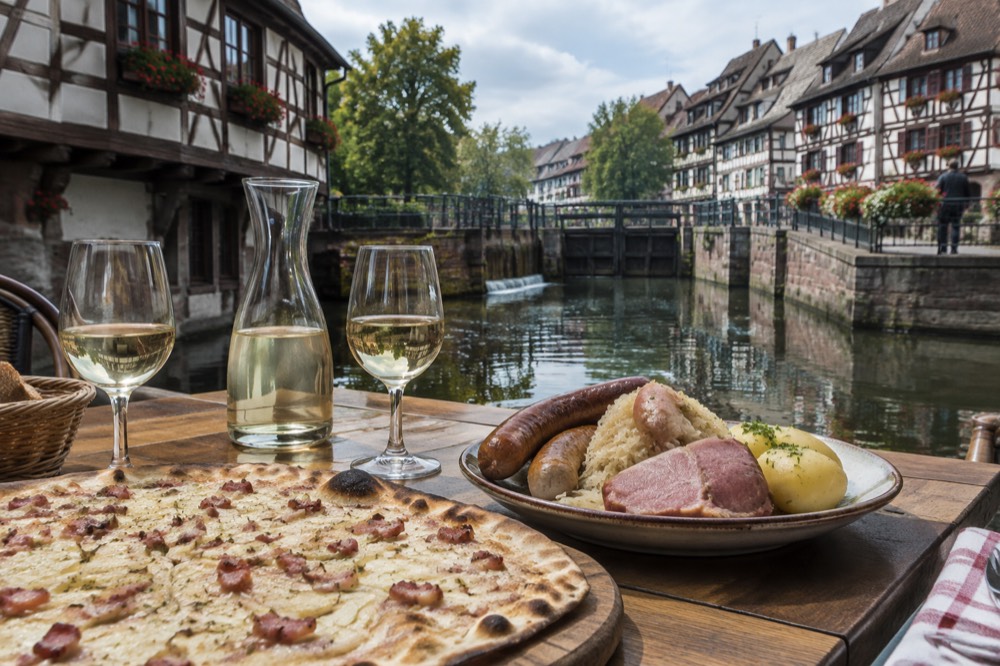
Choucroute garnie stands among four heavyweight Alsatian plates, and the difference is method: choucroute is cabbage cooked in wine, baeckeoffe is three meats and potatoes braised for hours in wine, tarte flambée is a thin flatbread baked in seconds, and cochonnaille platters are cured pork served cold. All four share the winstub setting, the pork tradition and the same white wines. Choosing between them is a matter of appetite size and evening length.
The comparison matters because a winstub menu presents all of these at once and a first-time visitor has to choose. Choucroute is the largest and the most communal, the platter built for a slow evening and a table of people happy to eat from the same dish. Baeckeoffe, the marinated meat and potato braise traditionally left with the baker on the way to church, is the closest cousin in weight and wine, but it is a single-pot casserole rather than a composed platter. Tarte flambée, the paper-thin bread with fromage blanc, onion and lardons, is the opposite pole: light, fast, ordered in rounds, and better for a market-afternoon snack than a dinner.
Around these sit the smaller plates. A cochonnaille board, cold cured pork with pickled vegetables, makes a starter that does not spoil the main. Kougelhopf, the Alsatian ring-shaped brioche, is the dessert or the breakfast, and it is a genuinely local shape rather than an import. For a fuller walk through the rooms that serve all of this, the site's winstubs in Strasbourg coverage is the dedicated page, and the wider Strasbourg food guide sets the whole table.
| Dish | What It Is | Appetite It Suits | Ordering Habit |
|---|---|---|---|
| Choucroute garnie | Sauerkraut in wine with pork and sausages | A full, slow dinner | One platter, often shared |
| Baeckeoffe | Meats and potatoes braised in wine | A full, slow dinner | Individual casseroles |
| Tarte flambée | Thin flatbread, fromage blanc, onion, lardons | A light meal or a snack | Ordered in rounds |
| Cochonnaille platter | Cured and smoked cold pork | A starter or a lunch | Shared board |
| Kougelhopf | Ring-shaped brioche, sometimes with raisins | Breakfast or dessert | A slice with coffee |
Which Wine Should You Drink With Choucroute?
Riesling is the classic pour with choucroute, and the logic is structural: the wine that cooked the cabbage is the wine that drinks beside it, its dry acidity cutting the fat of the pork and the salt of the sausages. Sylvaner is the traditional lighter alternative, Pinot Blanc the softest option, and a glass of the same grape you cooked with is the rule of thumb in a winstub. Beer, Alsace being a brewing region, is a fully legitimate choice too.
Want to know those Alsace whites before the platter arrives? Book an Alsace wine tasting here.
The pairing is not a sommelier's invention, it is a kitchen economy. A winstub that cooks its choucroute in Riesling pours that Riesling by the glass, and the match of acid against fat is what makes the plate finishable. The Alsatian whites run from the lean, mineral Riesling through the gentler Pinot Blanc to the spicier, broader Pinot Gris, and all three work, with the choice coming down to how much weight you want beside an already heavy plate. Gewurztraminer, the aromatic flagship, is usually saved for the cheese course or a foie gras, where its perfume has room.
For visitors who want to understand the bottle before the platter, the site's Alsace wine guide covers the grape range and the labels, and the question of what Strasbourg is famous for drinking extends to the local brewing tradition. Alsace beer culture is real, the region has a long history of small breweries, and a blonde or amber local beer beside choucroute is a combination you will see on neighbouring tables, not a tourist mistake. A dry cider, closer to the traditions west of Alsace, appears on some lists too.
One practical note on ordering: in a winstub the house wine comes by the carafe or the glass, and the house pour is usually local and modestly priced, which suits the setting. Ask what went into the pot. The answer is often the best value on the list, and it turns the pairing into a story rather than a guess.
Can You Cook Choucroute At Home?
Yes, and the Strasbourg method is forgiving: rinse fermented cabbage, layer it with onion, juniper, bay, goose or pork fat and a bottle of dry white wine, bury the smoked pork and bacon in it, simmer for a couple of hours, then add the sausages and potatoes near the end so they do not overcook. The two things that decide the result are the quality of the sauerkraut and the wine you pour into the pot.
The home version rewards patience more than precision. Fermented cabbage, sold raw in Alsatian shops and in jars elsewhere, should be rinsed and squeezed, because the raw ferment is sharper than the finished dish. The fat matters: a spoon of goose fat or a piece of pork rind gives the softness that restaurant versions have, and the wine should be a dry white you would drink, since it reduces into the cabbage and any sweetness in the bottle becomes sweetness on the plate. A Riesling from anywhere in Alsace is the honest choice.
The order of operations is the only technique. Hard smoked meats go in from the start, sausages go in for the final stretch, potatoes boil separately and join at the table, and the pot needs only a lid and a low flame. Choucroute is one of those dishes that is genuinely better reheated the next day, which is why a home batch stretches across two evenings and why winstub kitchens cook it in one large pot. For travellers who want to bring the ingredients home, Alsatian food shops sell the raw cabbage, the sausages and the mustard together, and a vacuum-packed kit travels well.
| Step | What Goes In | Timing Note |
|---|---|---|
| Prepare the cabbage | Rinsed, squeezed raw sauerkraut | Rinse until the sharpness drops |
| Build the base | Onion, juniper, bay, fat, wine | Wine to barely cover |
| First simmer | Smoked pork shoulder, bacon | Longest stage, low heat |
| Final stretch | Frankfurter and Montbéliard sausages | Last stretch only, they split if boiled hard |
| At the table | Boiled potatoes, grainy mustard | Potatoes boiled separately |
When Does Choucroute Season Run In Strasbourg?
Choucroute is served in Strasbourg year round, but its natural season runs from October through March, matching the city's semi-continental cold half of the year, when mean maximums fall from 15.8 C in October to 5.9 C in December and 5.2 C in January. The Christmas market window of late November to 24 December is the peak of demand. Summer kitchens serve it to visitors, and it is a fair plate then too, just an odd one.
The climate data explains the season better than custom does. Strasbourg sits in the rain shadow of the Vosges, with a semi-continental pattern: cold, relatively dry winters and warm summers, 635.7 mm of rain across the year and 112.3 rain days. October's mean maximum of 15.8 C dropping to November's 9.4 C is the moment winstubs move tables indoors and the choucroute pot goes back on the stove. By the time the market opens in the last week of November, the dish is in full season, and it stays there through the coldest months, with January's mean minimum of -0.2 C giving it plenty of work to do.
The shoulder seasons have their own case. Late September and early October, with mean maximums of 21.6 C and 15.8 C, are pleasant walking months when the winstubs are quiet and the platter is available without a reservation, and spring brings the same combination from the other side. If the food is the point of the trip rather than the market, the Strasbourg in autumn guide and the Strasbourg in spring guide are the planning pages, and the Strasbourg weather guide holds the full monthly table.
How Do You Build A Choucroute Day Around Strasbourg?
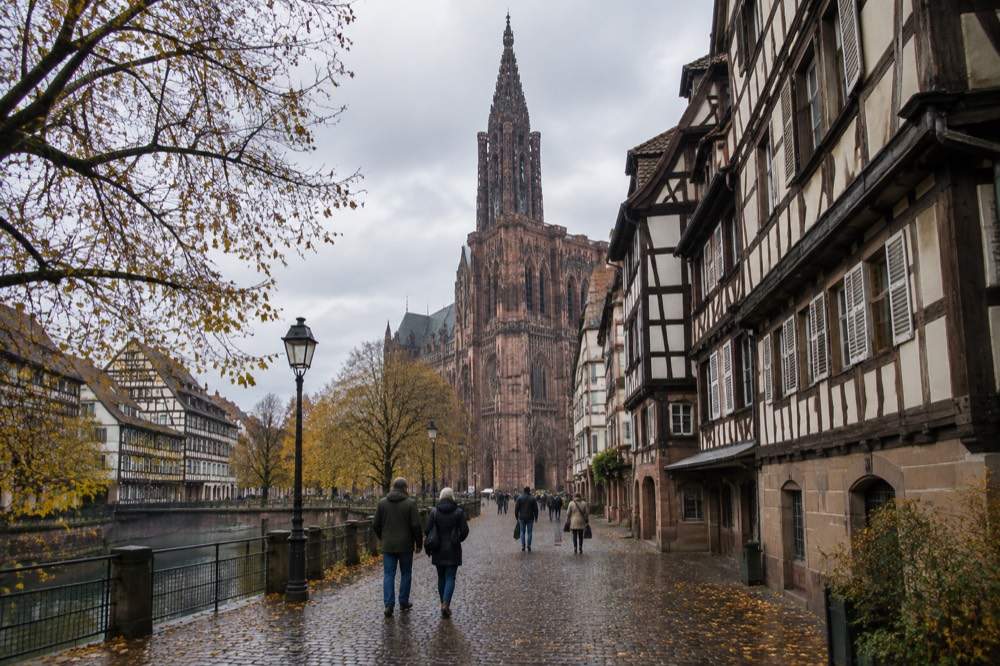
A satisfying choucroute day in Strasbourg pairs the platter with a walk that earns it: a morning through the Grande Île from the cathedral to Petite France, a river crossing at the Barrage Vauban or the Covered Bridges for the view, a light market or bakery lunch, and the winstub booked for the evening. The city is compact and flat, the old quarters sit within a short walk of each other, and the dish works as both the destination and the reward.
The morning walk writes itself. Start at Strasbourg Cathedral, whose single spire and 66 m platform define the old town's skyline, then drop south through the lanes to Petite France, the former tanners' and millers' quarter where the Ill splits into channels past half-timbered houses. Cross to the Barrage Vauban, the historic defensive barrage whose panoramic terrace has seasonal opening hours, and the adjacent Covered Bridges, then loop back along the quays. The whole circuit is an easy morning, and the site's Petite France guide and Barrage Vauban guide cover each stop in detail.
The afternoon is where the day flexes to your appetite. A light option is a tarte flambée at a bakery counter, saving the full appetite for the evening platter; a fuller option is a food-focused walk with a guide who routes you through the winstubs, producers and market streets. For a first visit, the one day in Strasbourg itinerary is the template, and the free things to do in Strasbourg guide lists the no-cost quarters, squares and riverbanks that fill the hours between meals without spending anything.
The evening needs a plan because the good rooms fill. Book the winstub for 19:00 or later, order the choucroute for the table rather than a plate each unless the appetite is certain, and let the wine be the house pour. If you would rather have the city explained on the way to dinner, an evening walking tour with a private guide covers the old town's stories in a short loop and ends you in the heart of the winstub quarter; the site's Strasbourg at night guide has the fuller picture of what stays open late, and the tour's own listing carries the current details and booking terms.

| Time Of Day | What To Do | Why It Pairs With Choucroute |
|---|---|---|
| Morning | Cathedral, then walk south to Petite France | Builds the appetite slowly |
| Late morning | Barrage Vauban terrace and Covered Bridges | A viewpoint pause before lunch |
| Lunch | Light bakery or market stall food | Protects the evening platter |
| Afternoon | Museums, river cruise or guided walk | Fills the hours indoors or on the water |
| Evening | Booked winstub, choucroute garnie, house Riesling | The reward the day was built around |
Can You Pair Choucroute With A Day Trip Out Of Strasbourg?
Yes, and the pairing works both ways: a full-day trip into the Alsace wine country or the Vosges foothills ends with a choucroute dinner back in Strasbourg, or a shorter half-day excursion leaves the evening free for the same table. The region's own villages, Colmar and the wine route towns, have their own choucroute traditions, so the dish follows you out of the city. Guided tours handle the winter roads and the parking.
The logic of the day trip is appetite management in reverse. A guided excursion through the wine route villages or the medieval towns gives you a day of small tastings, a glass here and a fortifying snack there, and returns you to Strasbourg in time for a booked table. The Black Forest trip runs the other direction across the Rhine into Germany, a full day of Triberg, Titisee and Freiburg, and its hearty food culture rhymes with the Alsatian plate waiting at home; the operator's live listing carries the schedule and the booking terms. The site's Black Forest guide and Alsace wine route guide cover the destinations themselves.
For travellers without a car, the guided options are the practical answer in winter, when the wine villages are quiet, the daylight is short and the roads can be cold. The site's overview of Strasbourg tours sets out the formats, from walking tours to full-day excursions, and the Strasbourg on a budget guide has the money-saving pattern for a food-focused trip: one big booked dinner, cheap lunches, and the free quarters in between.
What Should First-Time Visitors Know Before Ordering?
Order one platter to share rather than one each, expect the cabbage to be milder than the word sauerkraut suggests because the wine cooking sweetens it, ask what went into the pot so the wine beside the plate matches it, and book the table for any evening between late November and Christmas when the market fills the old town. The dish is forgiving of beginners, the rooms are used to visitors, and the only real mistake is ordering it as a starter.
The practical list is short. Portion sizes in a winstub run generous, and a shared platter for two with a side order of potatoes feeds two people comfortably. The cabbage itself surprises people: properly cooked Alsatian choucroute is soft, faintly sweet and winey, not the sharp, crunchy ferment of a deli counter, and the difference is the hours in the pot. The meats are the part that varies most, so if there is a sausage you do not recognise, ask, because the answer is usually a local variety with a story.
Dietary needs are worth stating plainly. The classic platter is a pork dish through and through, and a vegetarian choucroute, cabbage and potatoes with the meats left off, exists in some kitchens but is not a winstub standard, so check ahead rather than assume. Fish versions appear in some modern Alsatian restaurants, a coastal adaptation that has travelled inland. For anyone eating around the dish rather than into it, the best restaurants in Strasbourg guide covers the broader table, and the tarte flambée guide is the light alternative.
| Practical Point | What To Do | Why It Matters |
|---|---|---|
| Portioning | One platter between two | Winstub portions run generous |
| The cabbage | Expect soft and winey, not sharp | Wine cooking changes the ferment |
| The wine | Ask what cooked in the pot | The house pour usually matches |
| Booking | Reserve for December evenings | The market season fills the rooms |
| Dietary needs | State them when booking | Pork is the core of the classic dish |
| Leftovers | Reheats better the next day | A home batch stretches two evenings |
Where Does Choucroute Sit In Alsatian Identity?
Choucroute sits at the exact point where Alsace's German and French halves meet: the cabbage and the sausage tradition come from the German side of the Rhine, the wine in the pot and the gastronomic polish come from the French side, and the dish is claimed without embarrassment by both. Strasbourg has changed hands between the two countries across its history, and the plate is the edible record of that.
That framing is not decoration, it explains the plate. A sauerkraut from further east is cooked with fat and beer or stock; the Alsatian version reaches for the bottle, because Alsace is white-wine country and the winstub is a wine room first. The result is a dish that German visitors recognise instantly and French gastronomy counts as its own, served in a region whose language, architecture and table habits carry the same double inheritance. The site's Alsace region guide and the Strasbourg history guide unpack that inheritance at length.
For the eater, the identity question resolves into something simpler: choucroute is the dish that tells you where you are. When a platter of wine-cooked cabbage and smoked pork arrives beside a carafe of Riesling in a half-timbered room on a river island, no signage is needed. You are in Alsace, and the rest of the trip, the market, the cathedral, the wine route, is arranged around the table. The Strasbourg Travel Guide covers each of those pieces in turn, from the cathedral quarter to the wine route villages, so the dinner can be planned as part of a whole rather than as a single lucky evening.
Common Questions About Choucroute
What is the difference between choucroute and sauerkraut?
The words refer to the same fermented cabbage, but choucroute in the Alsatian sense means the finished cooked dish: the cabbage is rinsed, slow-cooked in dry white wine with aromatics, and served garnished with potatoes, pork and sausages. Sauerkraut on a deli counter is the raw ferment; choucroute garnie is the platter that ferment becomes in a Strasbourg winstub.
Is choucroute garnie only eaten in winter?
It is served year round in Strasbourg's winstubs, but it is a cold-season dish at heart, and its natural window runs from October through March, when mean maximums in the city fall from 15.8 C towards 5.2 C in January. The Christmas market period, late November to 24 December, is when demand peaks and tables need booking.
What wine goes with choucroute garnie?
Riesling is the classic pour, because the dry acidity cuts the pork fat and it is often the same wine that cooked in the pot. Sylvaner and Pinot Blanc are lighter alternatives, Pinot Gris a broader one, and Alsatian beer is a fully legitimate match in a region with its own brewing tradition.
Can vegetarians eat choucroute in Strasbourg?
The classic platter is built on pork, so vegetarians should not assume a version exists. Some kitchens will serve the cabbage and potatoes without the meats if asked when booking, and some modern Alsatian restaurants offer a fish variation, but the honest approach is to state the requirement ahead and treat the winstub as a place that specialises in the full dish.
How many people does one choucroute platter feed?
A full garnished platter in a winstub is built for sharing and comfortably feeds two, especially after a day of walking or market grazing. Ordering one between two with a side of potatoes is the standard pattern; ordering one each is a commitment that leaves little room for a kougelhopf afterwards.
Where did choucroute originate?
Fermented cabbage is a broad central European tradition, and the Alsatian contribution is the wine: cooking the cabbage in dry white rather than fat alone is what marks the Alsatian plate, reflecting a region that is white-wine country first. Strasbourg's position on the Rhine border, between the German and French traditions, is exactly why the dish reads as both.