Best Time To Visit Strasbourg
Strasbourg, the prefecture of Bas-Rhin in Alsace, north-eastern France, rewards different travellers in different months: here is how the climate, the crowds and the Christmas market shape the year.
Short answer
The best time to visit Strasbourg is late spring or early autumn for mild weather and thinner crowds, or late November to December for the Christmas market. Meteo-France 1991-2020 normals show mean maxima of 20.9 C in May and 21.6 C in September, against 5.2 C in January. Last year's market ran 26 November to 24 December 2025 and drew 3.05 million visitors.
Strasbourg, in Alsace (Bas-Rhin, Grand Est), north-eastern France, sits on the River Ill beside the Rhine, and its year swings between two very different cities: a warm-weather riverside town of terrace tables and boat trips, and a winter one wrapped in the Christmas market that gives the city its "Capitale de Noel" title. Picking the right month matters more here than in Mediterranean destinations, because the climate is semi-continental: Meteo-France 1991-2020 normals for Strasbourg-Entzheim put the mean daily maximum at 5.2 C in January and 26.4 C in July, with 635.7 mm of rain spread over 112.3 days of the year. This guide works through the seasons, the climate table, the Christmas market timing, and the price and crowd patterns, so the choice rests on figures rather than guesswork.
What Is The Best Time To Visit Strasbourg?
The honest answer is that Strasbourg has two best times, and they suit different travellers. Late April to June and September to October bring the mildest weather and the thinnest crowds, with mean maxima between 15.8 C and 24.4 C. Late November to December trades comfort for atmosphere: last year's Christmas market ran 26 November to 24 December 2025 and drew 3.05 million visitors, so the old town is at its liveliest and its most booked-up.
The shoulder seasons win on almost every practical measure. The 1991-2020 normals give May a mean maximum of 20.9 C and September 21.6 C, with rain-day counts of 10.8 and 8.0 respectively, so the difference between them is mainly crowd level: September sits at the end of the summer holiday flow while May sits before it. Both months let you walk the Grande Ile, Petite France and the riverside quays comfortably, and both leave room in the winstubs without a December-style wait for a table.
Want someone to walk you through the old town while you decide? Book a free walking tour here.
December is a different proposition, and it is the month people travel the farthest for. The city's own bilan for the 2025 edition counted 3.05 million visitors to the Christmas market, against 3.4 million in 2024, and the tourist office's welcome desk logged 66,001 visitors in December 2025 alone. Those numbers explain why hotel rates climb and why the old town feels full by late afternoon. If the market is the reason for the trip, that trade is worth making; if it is not, pick a shoulder month and come back in winter for a weekend.
| Season | Mean max / min (C) | Why go | What to accept |
|---|---|---|---|
| Spring (Mar-May) | 12.1 / 2.6 to 20.9 / 10.1 | Blossom, thin crowds, museum weather | Cool starts, May is the wettest month at 77.2 mm |
| Summer (Jun-Aug) | 24.4 / 13.4 to 26.4 / 14.9 | Terrace season, river life, long days | Peak crowds, July rain days at 10.4 |
| Autumn (Sep-Nov) | 21.6 / 10.7 to 9.4 / 3.3 | Warm September, golden vines, quiet streets | Shortening days, November grey |
| Winter (Dec-Feb) | 5.9 / 0.8 to 7.3 / 0.0 | Christmas market, gluhwein, cosy winstubs | Cold, dark afternoons, December crowds |
For a fuller breakdown of what each period feels like on the ground, the season guides cover Strasbourg In Spring, Strasbourg In Summer, Strasbourg In Autumn and Strasbourg In Winter in detail, and the question is December a good time to visit Strasbourg gets its own direct answer.
How Cold And Wet Does Strasbourg Get Month By Month?
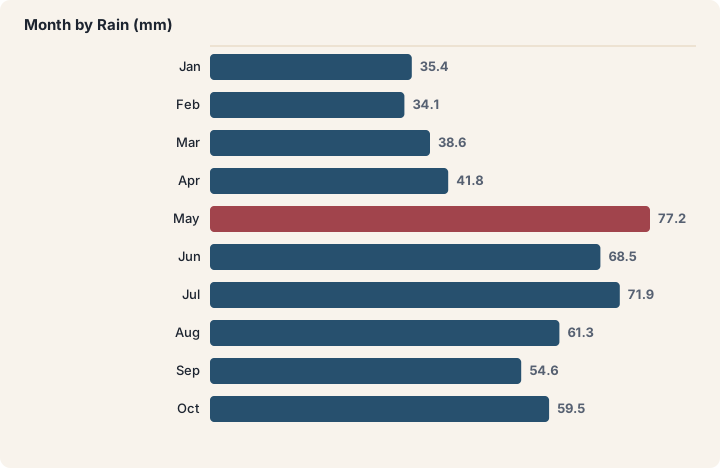
Strasbourg's climate is semi-continental, with cold winters and warm summers in the rain shadow of the Vosges. The Meteo-France 1991-2020 normals for Strasbourg-Entzheim give a January mean maximum of 5.2 C and minimum of -0.2 C, a July maximum of 26.4 C and minimum of 14.9 C, and 635.7 mm of rain over 112.3 days with 1 mm or more. May is the wettest month at 77.2 mm and February the driest at 34.1 mm.
The table below is the full normals set, and it answers the packing question better than any rule of thumb. Rain is remarkably evenly spread: every month sits between 8.0 and 10.8 days with at least 1 mm of rain, so there is no reliably dry month and no monsoon month either. What changes through the year is the temperature, sharply, and the amount of it that falls as snow in deep winter.
| Month | Mean max (C) | Mean min (C) | Rain (mm) | Days rain >= 1 mm |
|---|---|---|---|---|
| Jan | 5.2 | -0.2 | 35.4 | 9.1 |
| Feb | 7.3 | 0.0 | 34.1 | 8.3 |
| Mar | 12.1 | 2.6 | 38.6 | 8.5 |
| Apr | 17.0 | 5.7 | 41.8 | 8.6 |
| May | 20.9 | 10.1 | 77.2 | 10.8 |
| Jun | 24.4 | 13.4 | 68.5 | 10.2 |
| Jul | 26.4 | 14.9 | 71.9 | 10.4 |
| Aug | 26.1 | 14.5 | 61.3 | 9.5 |
| Sep | 21.6 | 10.7 | 54.6 | 8.0 |
| Oct | 15.8 | 7.2 | 59.5 | 9.6 |
| Nov | 9.4 | 3.3 | 47.6 | 9.2 |
| Dec | 5.9 | 0.8 | 45.2 | 10.2 |
Two readings of that table are worth pausing on. First, September is quietly the best-behaved month in the set: the warmest of the autumn, the driest day-count of the year at 8.0, and a mean maximum of 21.6 C that is comfortable for walking all day. Second, the summer months carry more rain days than the winter ones, 10.4 in July against 9.1 in January, which surprises travellers who expect a dry Alsatian summer; the difference is that summer rain tends to come in heavier bursts while winter drizzles.
Because the climate shapes the visit so directly, a guided walk that keeps moving suits the colder months better than long open-air pauses. The Hidden Stories small-group walk with a local guide threads the Grande Ile's lanes while telling the city's stranger episodes, which holds up well when the wind comes off the Ill. The same logic applies in reverse in summer, when an evening departure lets you see the half-timbered quarter in the cool of the day. If that format appeals, the site's Strasbourg Tours round-up compares it against the other walking formats on offer.
The related hidden stories walk is the one this site points first-time visitors toward, because the old town's appeal is as much in its stories as in its facades, and a small-group format keeps the guide audible on narrow lanes. Check availability on the operator's live listing if the timing of your month suits a two-and-a-half-hour walk.
Is December The Best Time To Visit Strasbourg?
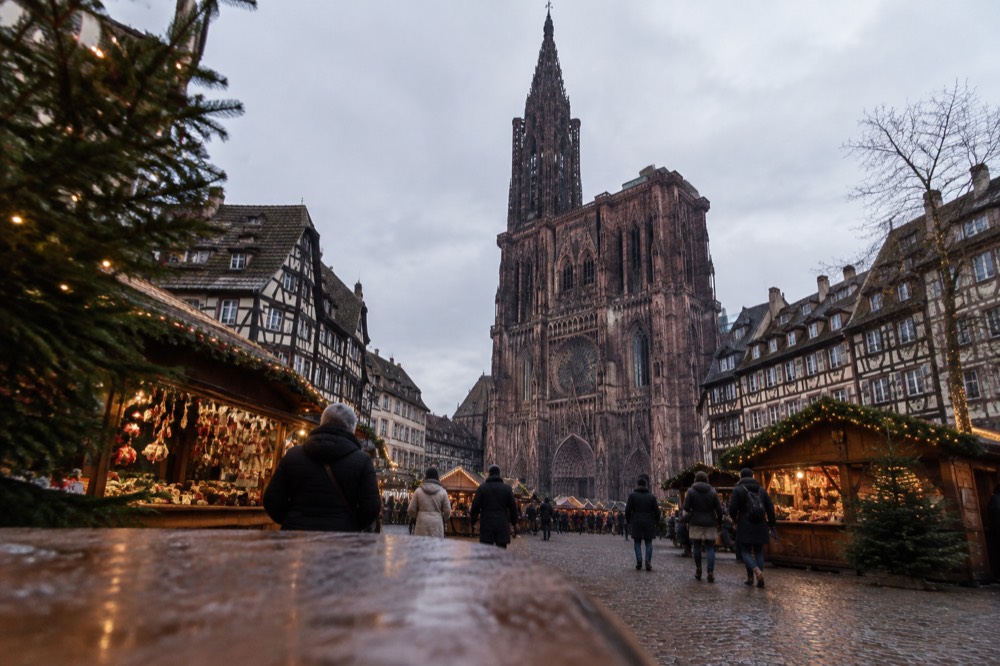
December is the best time to visit Strasbourg if the Christmas market is the point of the trip, and the trade-offs are real. The 2025 edition ran 26 November to 24 December and drew 3.05 million visitors. The 2026 dates are not yet published: the city's Christmas site states that the official dates and programme are still being finalised, so confirm them there before booking anything non-refundable.
The market's usual pattern is stable in shape even when the dates are not yet announced: it opens in the last week of November and runs until 24 December, with the closing day ending early in the evening. Chalets across the historic squares typically open late morning and run into the evening. Beyond the market itself, the cathedral adjusts too, opening continuously on the Place du Chateau side through the market period, which removes the midday closure that applies the rest of the year.
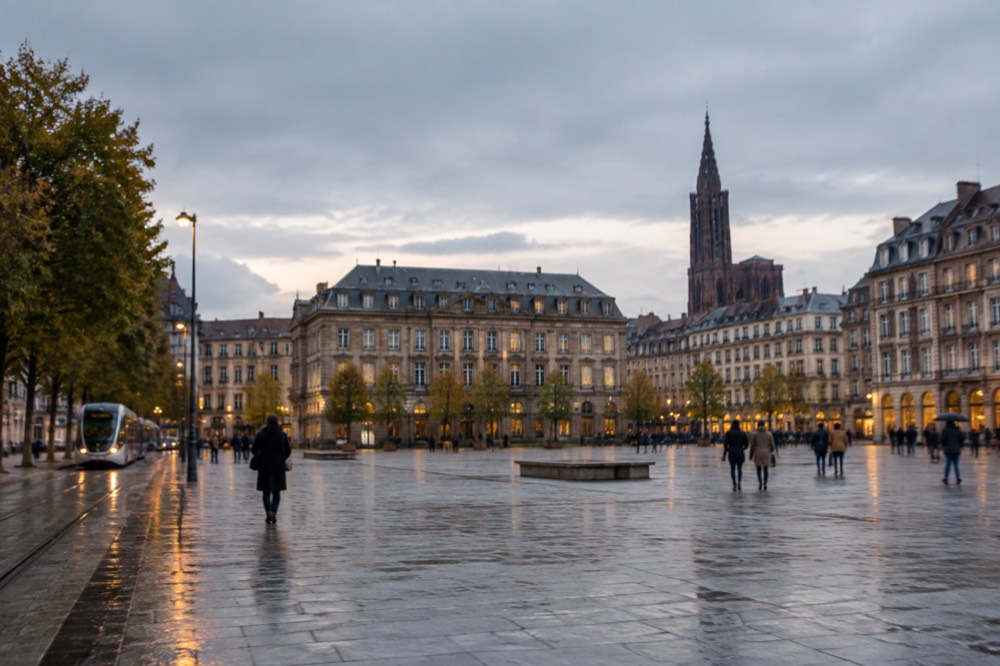
What December costs you is comfort and space. The normals give the month a mean maximum of 5.9 C, a minimum of 0.8 C and 10.2 rain days, so warm layers and a waterproof are not optional. The crowd figures speak for themselves: 3.05 million visitors across roughly four weeks means the old town is dense from late morning onward, and the tourist office welcome desk alone handled 66,001 visitors in December 2025. Hotels price accordingly, and the question why is Strasbourg so expensive in December is asked often enough to deserve its own answer.
| Christmas market fact | Figure or status | Where to check |
|---|---|---|
| 2025 edition dates | 26 November to 24 December 2025 | The city's Christmas site |
| 2025 attendance | 3.05 million visitors | The city's bilan press release |
| 2024 attendance | 3.4 million visitors | The city's bilan press release |
| 2026 dates | Not yet published | The city's Christmas site |
| Usual pattern | Opens in the last week of November, runs to 24 December | The city's Christmas site |
| Cathedral during the market | Open continuously Mon-Sat, Place du Chateau side, 08:30-17:45 | The cathedral's hours page |
December also reshapes how you eat. A traditional food walk with tastings moves the visit indoors between stops and pairs the market stalls with the winstubs that serve the cold-weather classics; the site's Strasbourg Christmas Market Food guide covers the dishes worth ordering in market season. The market pages themselves, starting with Strasbourg Christmas Market and the wider Christmas Markets In Alsace round-up, handle the planning detail, including the comparison with Colmar Christmas Market.
What Are Spring And Autumn Like In Strasbourg?
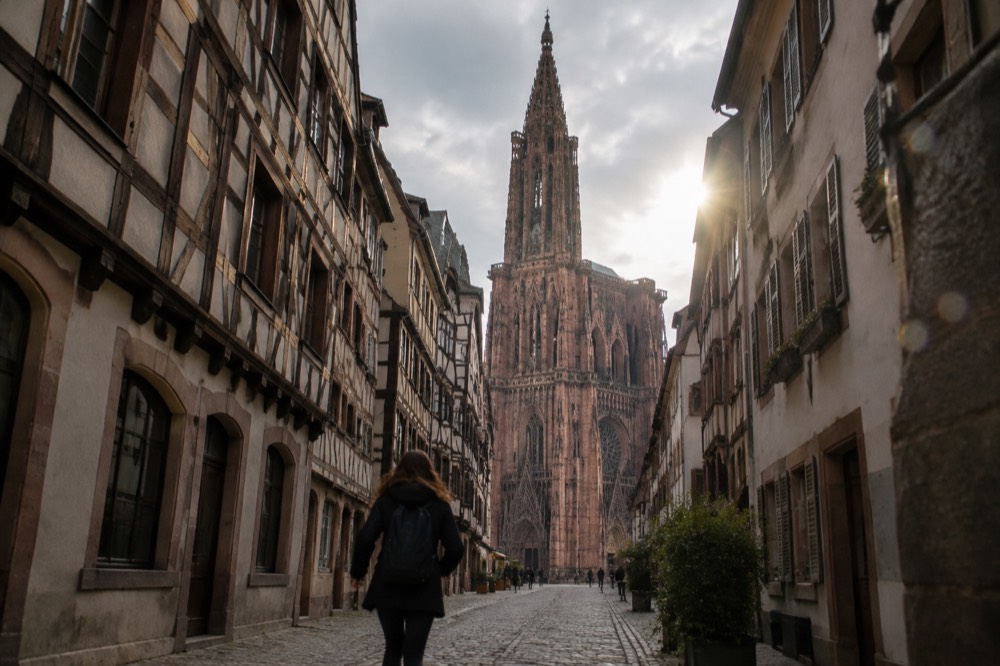
Spring and autumn are the shoulder seasons where Strasbourg is at its most liveable. April to June moves from a mean maximum of 17.0 C to 24.4 C, and September to October from 21.6 C to 15.8 C, with rain-day counts between 8.0 and 10.8. Crowds thin after the summer holidays and before the market build-up, museum queues shorten, and the riverside terraces open or close gently rather than all at once.
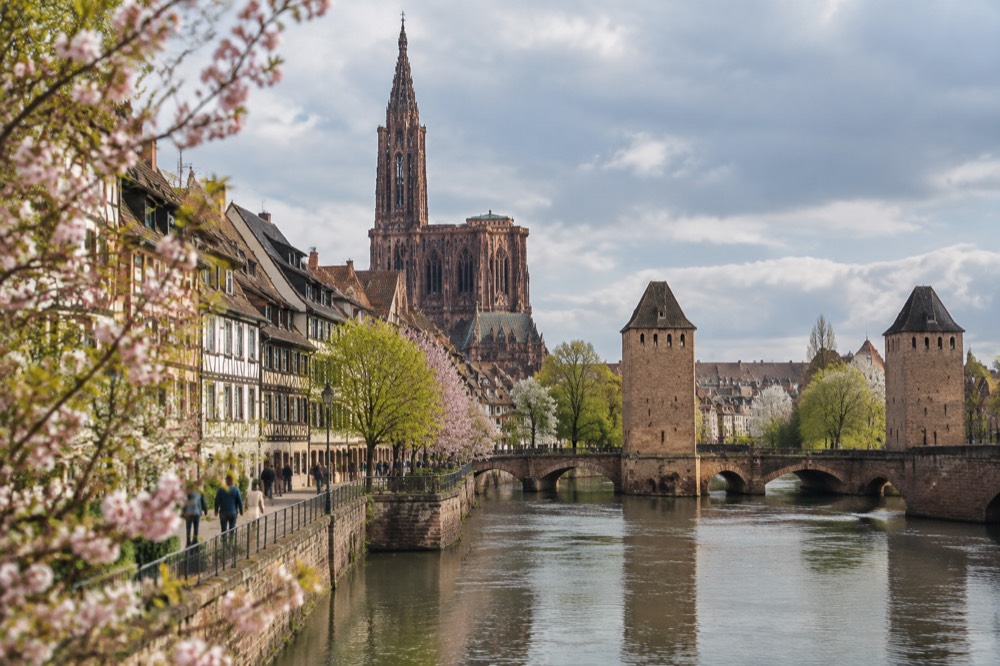
Spring arrives quickly in Alsace. March still carries a mean minimum of 2.6 C, but by April the maximum averages 17.0 C and the vineyards on the surrounding hills begin their season. The catch in the normals is May: at 77.2 mm it is the wettest month of the year, ahead of July at 71.9 mm, so the loveliest-temperature month of spring is also the one most likely to hand you a soaked afternoon. June splits the difference, 24.4 C maximum, 68.5 mm of rain, and the longest evenings of the first half of the year. Everything else covered here is indexed on Strasbourg Travel Guide.
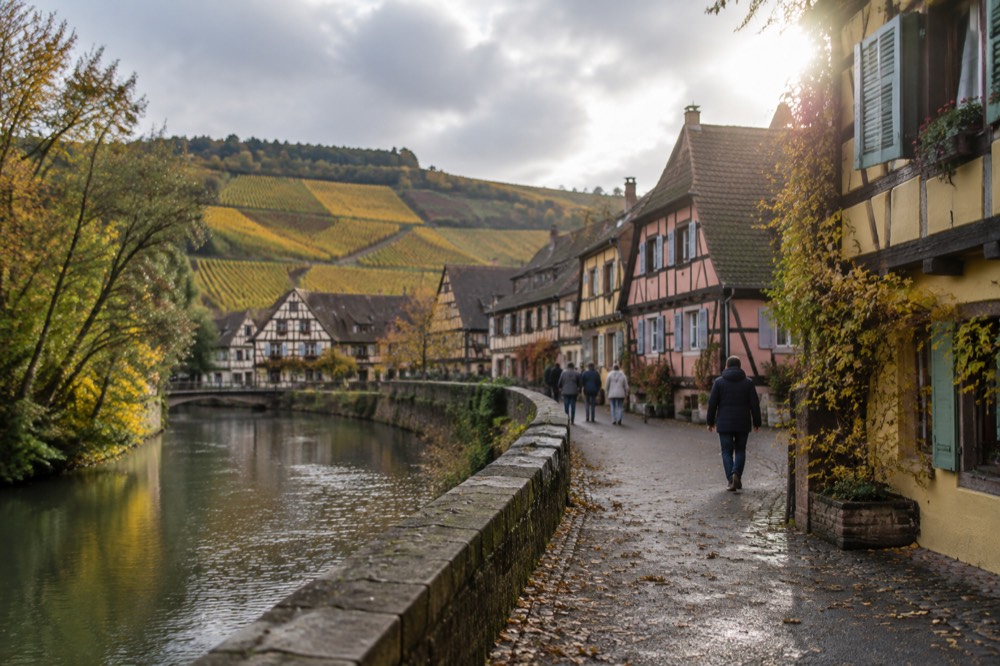
Autumn is the connoisseur's pick. September's combination of a 21.6 C mean maximum and the year's lowest rain-day count, 8.0, makes it arguably the single best month in the table for a walking city. October cools to a 15.8 C maximum and 7.2 C minimum, which is still comfortable for a full day on the Grande Ile, and the wine villages around the city move into harvest season. November is the month to be honest about: 9.4 C maximum, 3.3 C minimum, and the grey that precedes the market. It is quiet and cheap, but it is a month for museums, winstubs and the Strasbourg Museums circuit rather than long riverside days.
| Shoulder month | Mean max / min (C) | Rain days | Best use of the day |
|---|---|---|---|
| Apr | 17.0 / 5.7 | 8.6 | Old town walking, first terraces |
| May | 20.9 / 10.1 | 10.8 | Parks and river, with a museum fallback |
| Jun | 24.4 / 13.4 | 10.2 | Long evenings, boat tour, day trips |
| Sep | 21.6 / 10.7 | 8.0 | Full-day walking, vineyard visits |
| Oct | 15.8 / 7.2 | 9.6 | Harvest season, winstubs, museums |
| Nov | 9.4 / 3.3 | 9.2 | Museums, indoor food, market build-up |
The shoulder seasons are also when a guided format pays off least and most: least, because you can linger anywhere without a schedule; most, because a guide's stories fill the hours between sights when nothing else is queuing for your attention. The Strasbourg Hidden Gems page lists the corners that shoulder-season quiet makes genuinely pleasant, and the Strasbourg Events And Festivals guide tracks the calendar, with the festival programme published on the tourist office's events page as dates firm up.
Is Summer A Good Time To Visit Strasbourg?
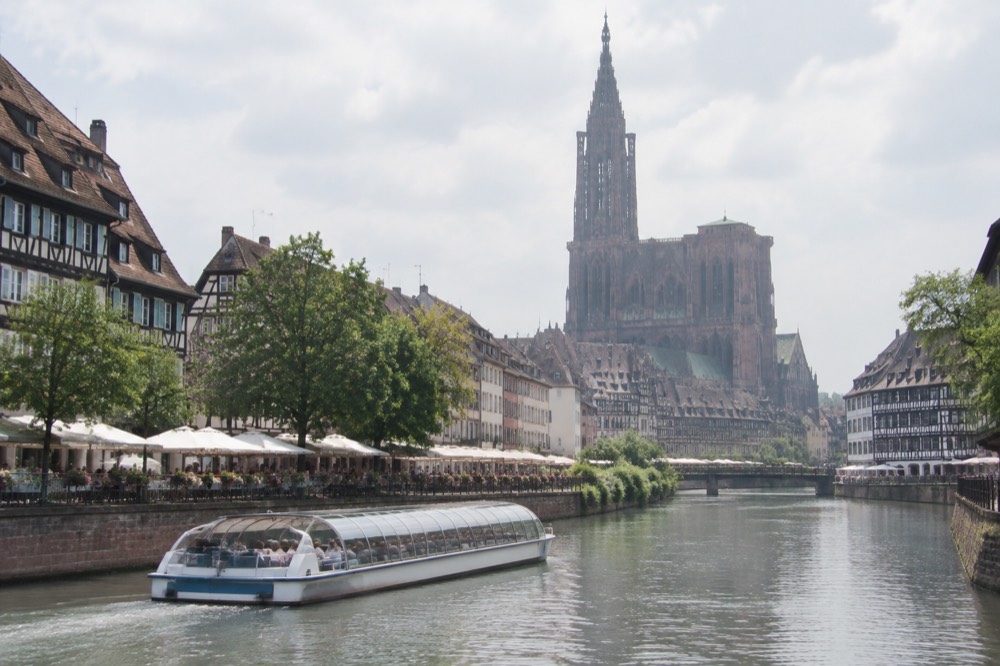
Summer is a good time to visit Strasbourg if terrace weather and river life matter more than having the place to yourself. July averages a 26.4 C maximum and 14.9 C minimum, August 26.1 C and 14.5 C, and rain-day counts of 10.4 and 9.5 mean bursts rather than washouts. The trade is crowds: the old town is at its busiest, and tables in Petite France need booking rather than walking in.
The summer case rests on how the city uses its rivers. The Ill is the spine of a Strasbourg summer: boat tours run their full circuits, the quays fill in the evenings, and the semi-continental warmth, 26.4 C mean maximum in July, is warm without the southern-French extremes, because nights cool to a 14.9 C mean minimum. The Batorama circuits give the river perspective in fixed figures: the Red Tour runs 1h10 and the Blue Tour 0h45, at 16.20 EUR full and 8.90 EUR reduced for the long tour, and 12.50 EUR and 7.20 EUR for the short one.
Summer is also the season for going further afield. The Alsace wine route wakes up properly, and the day-trip circuit that pairs Colmar, Riquewihr, Kaysersberg and Haut-Koenigsbourg Castle runs as a single booked day from Strasbourg, which suits a summer base in the city with the vineyards as excursions. The site's Alsace Wine Route and Best Of Alsace day trip pages cover the planning, and the Strasbourg And Colmar Itinerary shows how to split a week between the two.
One summer caution comes straight from the normals: July's 10.4 rain days sit above January's 9.1, so summer rain is not a rarity, it is a pattern. Build one indoor block into each day, whether that is the Musée de l'Œuvre Notre-Dame beside the cathedral or the MAMCS, and a wet hour costs nothing. The Rainy Day In Strasbourg guide exists for exactly this, and the Free Things To Do In Strasbourg page has options that survive a downpour.
How Do Prices And Crowds Change Through The Year?
The city's own ticket prices do not move with the seasons, but hotel rates and availability do, hardest around the Christmas market. Fixed figures hold year-round: CTS single tickets at 1.90 EUR, a 24h Solo pass at 4.60 EUR, cathedral platform entry at 10 EUR, the astronomical clock show at 4 EUR, municipal museums at 9 EUR full, and the 1-day Pass Musées at 20 EUR. Every municipal museum is free on the first Sunday of the month, whatever the season.
That last line is the single most useful planning fact in this guide for a budget-conscious visit, and it pairs with a low-season stay: a first-Sunday arrival in, say, November turns the museum circuit into a free one. The Strasbourg City Card, 5 EUR adult and 3.50 EUR for a child aged 3 to 17, valid 7 days, stacks reductions on top, including 4 EUR off each municipal museum, 5 EUR off the cathedral platform, and discounts on the boat tours; it is a discount card, not an all-inclusive pass, and the Strasbourg City Pass page works through the arithmetic. The Strasbourg On A Budget guide covers the rest of the cheap visit.
| Item | Price (EUR) | Notes |
|---|---|---|
| CTS single ticket | 1.90 | Badgeo, CTS app or contactless; 2.50 EUR bought on board the bus |
| CTS 24h Solo pass | 4.60 | One person, 24 hours |
| CTS 24h Trio pass | 10.20 | Two to three people |
| Cathedral platform | 10 full / 6 reduced | Under 6 free; platform at 66 m |
| Astronomical clock show | 4 | Daily at 12:30; day-of tickets only |
| Municipal museums | 9 full / 5 reduced | Free the first Sunday of every month |
| Pass Musées 1 day | 20 | All municipal museums in one day |
| Strasbourg City Card | 5 adult / 3.50 child | 7 days, discount card |
| Batorama long tour | 16.20 full / 8.90 reduced | Red Tour, 1h10 |
| Batorama short tour | 12.50 full / 7.20 reduced | Blue Tour, 0h45 |
Crowds follow a predictable shape around those stable prices. The December market period is the peak, on the city's own numbers. July and August bring the summer holiday flow. The shoulder months, and above all November outside the market's final week, are when the same streets hold a fraction of the people. The Is Strasbourg Worth Visiting question gets harder to answer honestly in the last week of November, when the market build-up closes lanes, and easier in September, when the city is simply itself.
Which Month Should You Actually Pick?
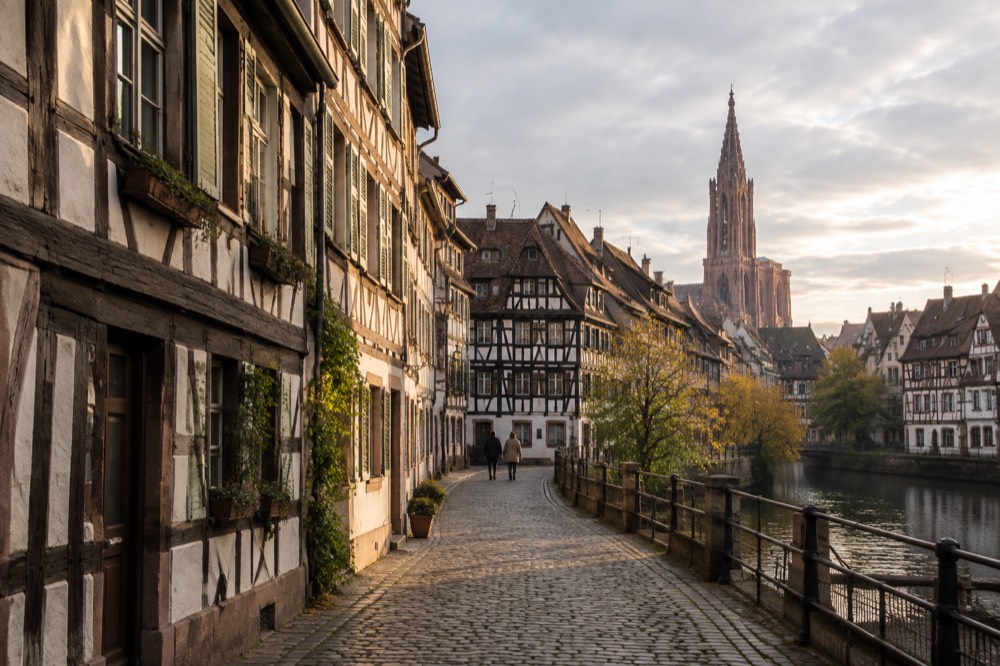
Pick September for the best all-round balance of warmth, low rain and thin crowds, or May if you want the same warmth with spring light and accept the year's wettest month. Pick late November to 24 December if the Christmas market is the trip's reason, and book early. Pick June or July for terrace and river days, February for the quietest, cheapest old town, and October for the vineyards.
The month table below compresses everything above into one decision. It leans on the normals for weather, on the city's own figures for the market period, and on the fixed ticket prices for cost planning, and it assumes the 2026 market dates will follow the usual pattern of a late-November opening and a 24 December close, which the city's Christmas site asks you to confirm.
| If you want | Pick | Why |
|---|---|---|
| The best weather-to-crowd ratio | September | 21.6 C mean max, 8.0 rain days, post-summer quiet |
| Spring light and blossom | May | 20.9 C mean max; 77.2 mm of rain, so pack for it |
| The Christmas market | Late Nov to 24 Dec | The 2025 edition drew 3.05 million visitors; book ahead |
| Terrace and river days | July | 26.4 C mean max, 14.9 C nights, full boat season |
| The cheapest quiet visit | February | 7.3 C mean max, the driest month at 34.1 mm |
| Vineyards and harvest | October | 15.8 C mean max, wine route in season |
| Free museums | Any first Sunday | All municipal museums free, every month |
Two closing pointers sharpen the choice. First, the cathedral's own hours page lists a platform schedule that changes with the seasons, longer hours from April to September and shorter ones from October to March, with closures on 1 January, 1 May and 25 December, so a winter visit trades some evening daylight for a market the summer traveller never sees. Second, the Musée Alsacien is closed for works until 2028, so no museum plan should route through it this year or next; the Musée Alsacien page explains what is happening, and the rest of the municipal circuit is open.
For travellers weighing Strasbourg against its neighbour, Strasbourg Vs Colmar compares the two directly, and the Where To Stay In Strasbourg guide maps the neighbourhoods against each season's needs. However you time it, the seasons here are real and distinct, and the city's own numbers, from the Meteo-France normals to the market bilan, are the most reliable basis for choosing between them.
Common Questions About The Best Time To Visit Strasbourg
What is the best month to visit Strasbourg?
September, on the numbers: the Meteo-France 1991-2020 normals give it a mean maximum of 21.6 C, the year's lowest rain-day count at 8.0, and it falls after the summer holiday crowds. May is the spring alternative at 20.9 C, though it is the wettest month at 77.2 mm.
Is December a good time to visit Strasbourg?
December is the best month if the Christmas market is the point of the trip. The 2025 edition ran 26 November to 24 December and drew 3.05 million visitors. The trade-offs are a 5.9 C mean maximum, 10.2 rain days and the year's densest crowds.
When does the Strasbourg Christmas market run?
The 2026 dates are not yet published; the city's Christmas site states the official dates and programme are still being finalised. The usual pattern is an opening in the last week of November and a close on 24 December, ending early that evening. The 2025 edition ran 26 November to 24 December.
What is the rainiest month in Strasbourg?
May, at 77.2 mm across 10.8 days of 1 mm or more, ahead of July at 71.9 mm. February is the driest month at 34.1 mm. The annual total is 635.7 mm over 112.3 rain days, spread evenly enough that no month is reliably dry.
Is summer too hot in Strasbourg?
No. The semi-continental normals give July a mean maximum of 26.4 C and a mean minimum of 14.9 C, so days are warm and nights cool. The caveat is that July carries 10.4 rain days, more than January's 9.1, so summer showers are part of the pattern.
When is Strasbourg cheapest to visit?
Outside the Christmas market period and the July-August school holidays, with February the quietest month on the normals. City ticket prices are fixed year-round, and every municipal museum is free on the first Sunday of each month, which pairs well with a low-season arrival.
Whichever month you choose, book the walk, the boat and the market-week hotel ahead of the crowd curve: the figures above move slowly, but the availability does not.