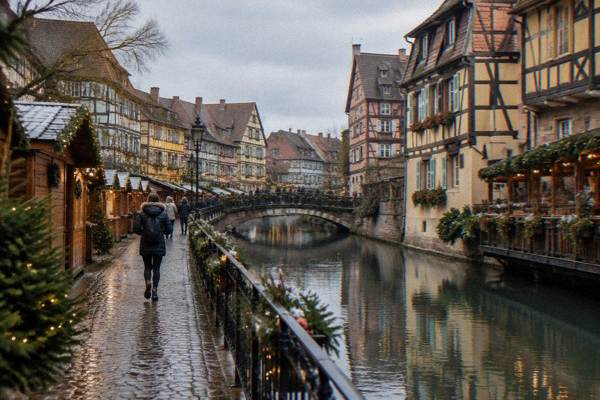
Alsace Christmas Markets
Alsace, in north-eastern France, runs one of Europe's great Christmas market circuits: Strasbourg's Grande Île, Colmar's old town and the wine villages between them. Here is how the season works, what each market is for and how to plan the trip.
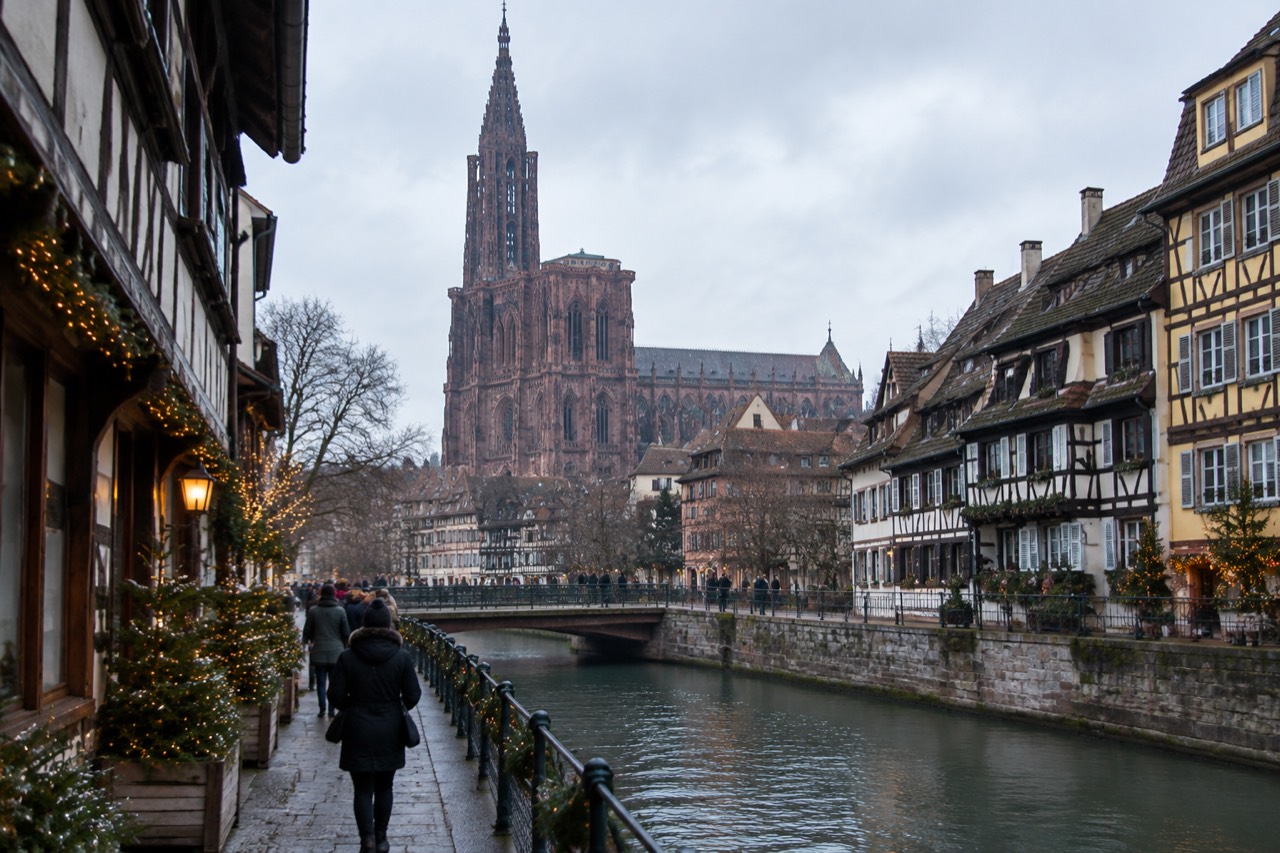
Short answer
Last year's Strasbourg edition drew 3.05 million visitors between 26 November and 24 December 2025.
Alsace, the strip of France that runs along the German border north of Strasbourg and south to Mulhouse, turns itself into a Christmas circuit every December. The region's capital, Strasbourg, calls itself the Christmas capital, and its markets spread across the Grande Île, the river-island old town that UNESCO lists as part of the property "Strasbourg, Grande-Île and Neustadt". Colmar runs its own set of markets in a half-timbered old town, and the wine villages between the two join in with small squares of chalets. The season is short, it is busy, and it rewards a little planning.
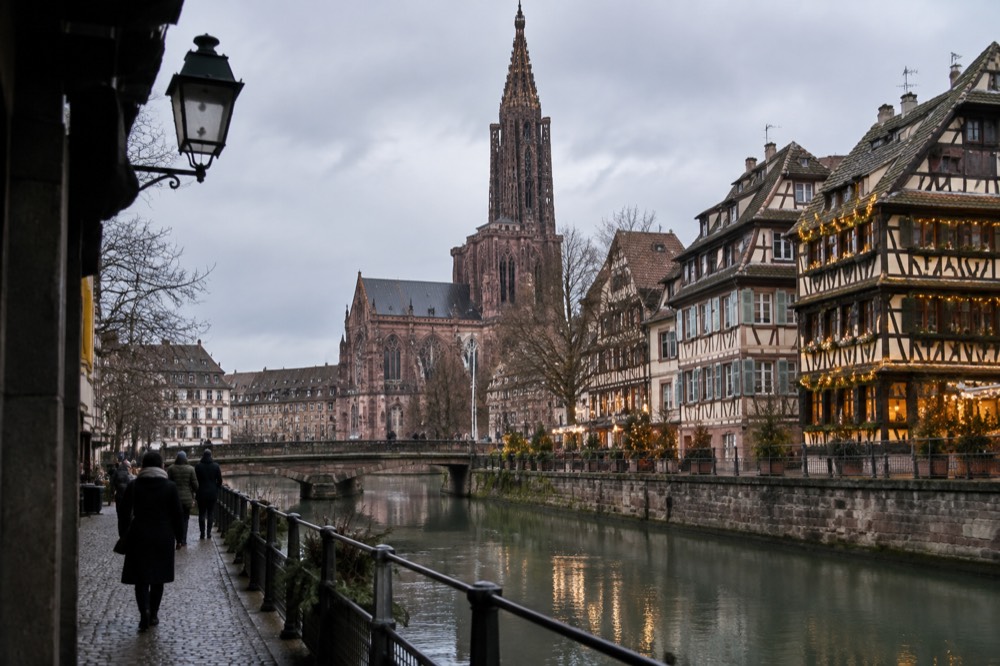
This guide, published by Strasbourg Travel Guide, walks through what the Alsace markets actually are, how Strasbourg's season works, what Colmar and the villages offer, and how to plan days, transport and budget. The city posts each edition's dates on its Christmas site, so confirm them there.
What Are The Alsace Christmas Markets?
The Alsace Christmas markets are a seasonal network of outdoor chalet markets that runs across the historic towns of Alsace, in north-eastern France, from late November until 24 December. Strasbourg holds the largest and best-known set, Colmar runs several markets in its old town, and the wine villages along the Alsace Wine Route hold small editions of their own. The region treats the season as a serious civic tradition rather than a tourist add-on.
The word for the thing is "Marché de Noël", and in Alsace it is plural: not one market but a circuit of them, each town running its own chalets, its own lights and its own opening ritual. The tradition is tied to the region's own history of decorated trees and Advent, a story traced in the real story behind the Christmas tree. Strasbourg's edition is the anchor, and its scale is a citywide affair: chalets across several squares in the historic centre, a tree on Place Kléber, and crowds that the city's own press release counted at 3.05 million visitors for the 2025 edition, down from 3.4 million in 2024.
What makes the circuit unusual in Europe is the density of pretty small towns within a short drive or train ride of each other. The half-timbered villages of the Alsace Wine Route, places such as Riquewihr, Kaysersberg, Eguisheim and Obernai, hold their own small markets, so a single trip can take in a big-city set and a handful of village squares. Whether that density works for you depends on how many days you have, a question answered in detail in how many days do you need in Strasbourg for Christmas markets.
A note on dates before anything else. The city's Christmas site states that the 2026 dates and programme are still being finalised. The pattern, in plain words: the season opens in the last week of November and runs to 24 December, with the closing day ending early in the evening. Last year's Strasbourg edition ran 26 November to 24 December 2025. Confirm the 2026 dates on the city's own Christmas site before booking anything, and see what are the dates of the Strasbourg Christmas market for the full picture.
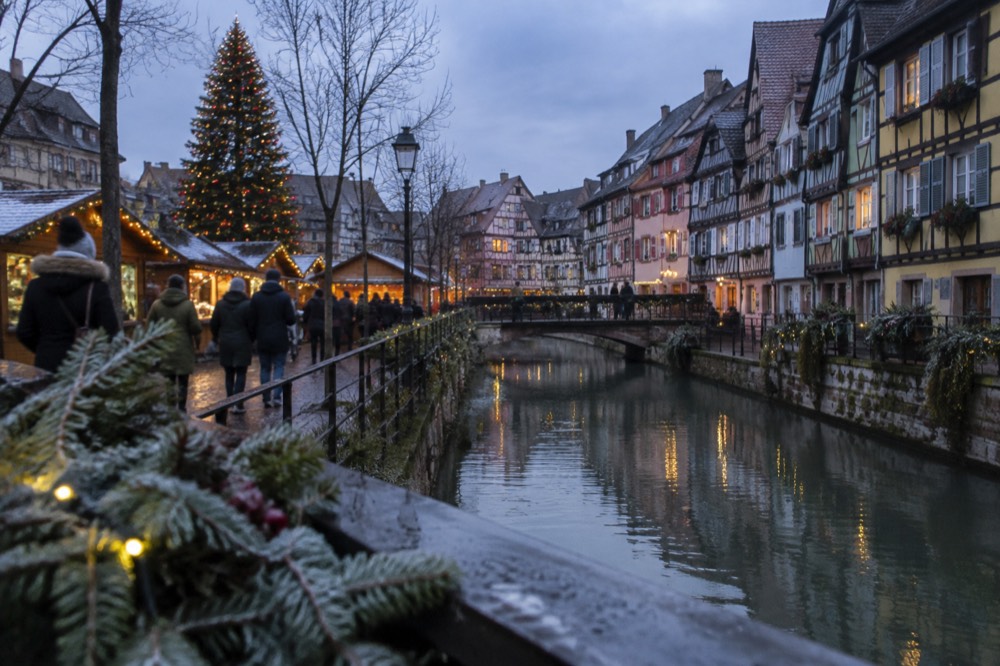
Strasbourg: The Christmas Capital Of Alsace
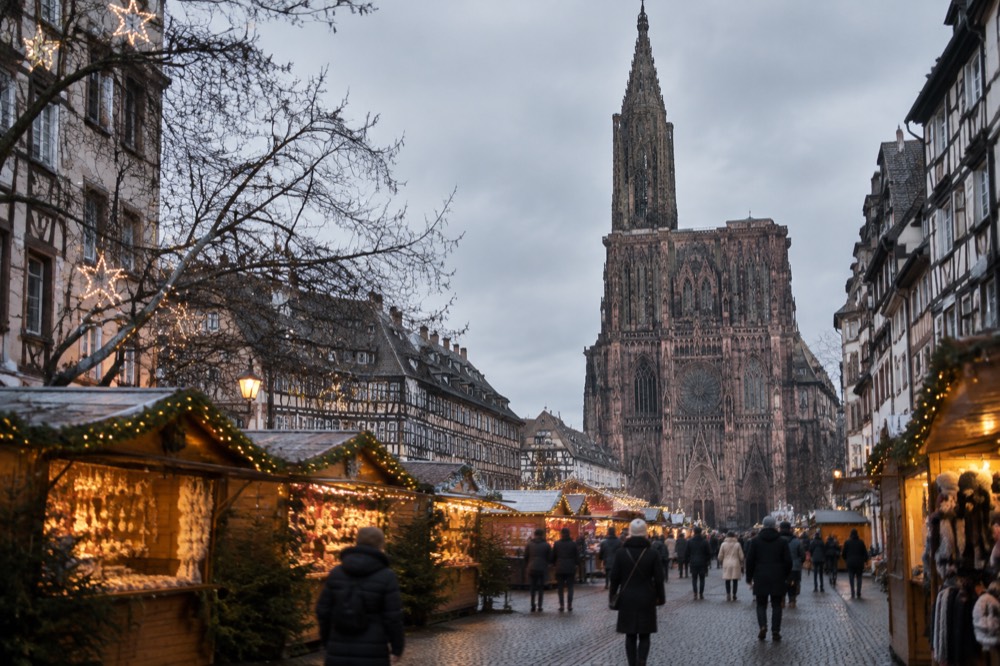
Strasbourg's markets fill the squares of the Grande Île, the island historic centre, with chalets during the run-up to Christmas. The 2025 edition drew 3.05 million visitors, and the city holds the season around a giant tree on Place Kléber. The cathedral stays open through the market hours on the Place du Château side, and the whole thing is walkable without transport.
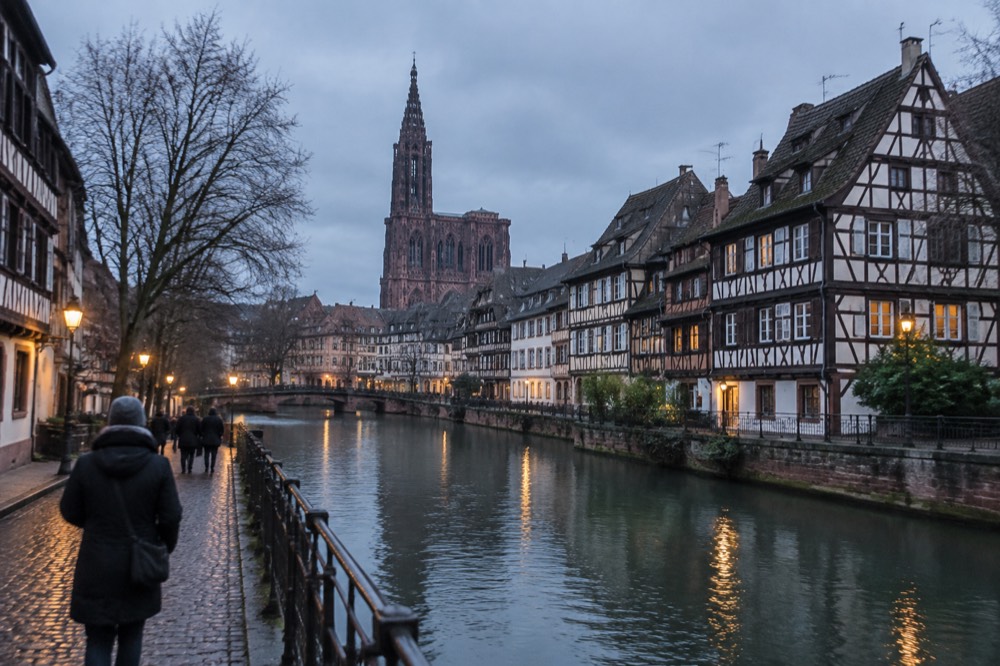
Strasbourg is the prefecture of the Bas-Rhin, in the Grand Est region of France, on the River Ill beside the Rhine, which is the border with Germany; Kehl sits on the far bank. The city's Christmas season is its biggest event of the year. Chalets spread across several squares in the historic centre, and the city's own bilan for the 2025 edition counted 3.05 million visitors across the season, with 66,001 people passing through the tourist office's welcome desk in December 2025 alone.
The practical shape of a visit is simple. The markets sit inside the Grande Île, so you walk between them: Place Kléber with the big tree, Place Gutenberg, Place du Château beside the cathedral, and the lanes around Petite France and the river. During the market the cathedral is open continuously Monday to Saturday on the Place du Château side, 08:30 to 17:45. If you want a full plan, the site's Strasbourg Christmas market itinerary lays out a day by day route, and which Strasbourg Christmas market is best compares the squares against each other.
To find your way between the squares with a local guide, book a Christmas markets walking tour here.
Two paid extras inside the season are worth knowing about. The cathedral's astronomical clock runs its full automaton show daily at 12:30 sharp, with tickets at 4 EUR bought on the day only. The tower platform, at 66 m, costs 10 EUR full or 6 EUR reduced, and from October to March it opens 10:00 to 13:00 and 13:30 to 18:00 with last ascent at 17:15. Both are covered in detail in the site's cathedral guide.
If you would rather have someone else handle the route, a guided option exists: the Alsace Christmas markets day tour from Strasbourg covers several market towns in a single day with a guide. Check availability on the operator's live listing, and read the site's Strasbourg Christmas market guide for the self-guided version.
Colmar And The Wine Villages In December
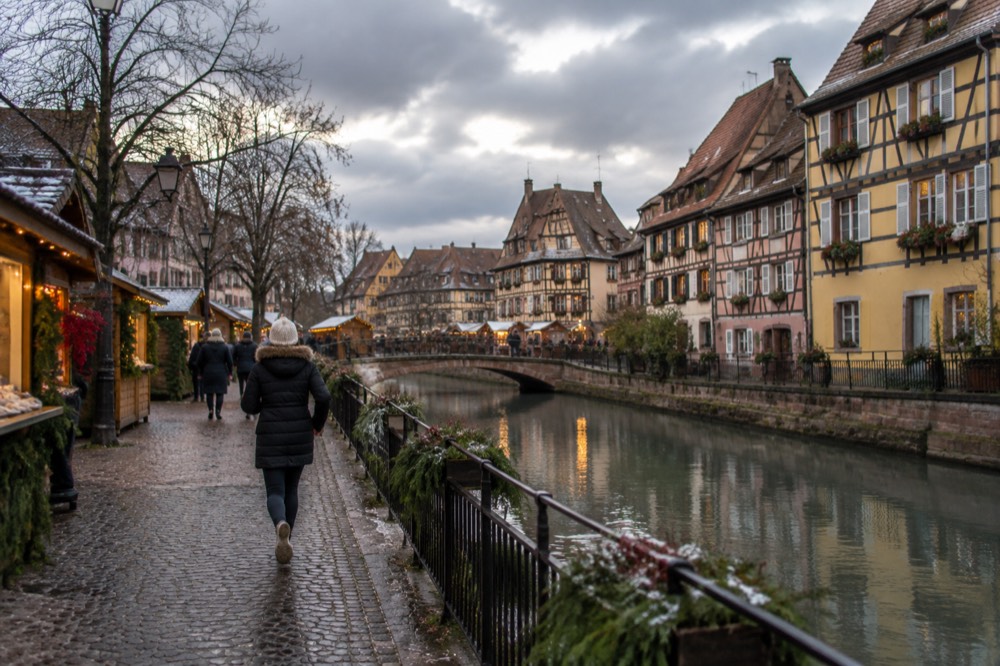
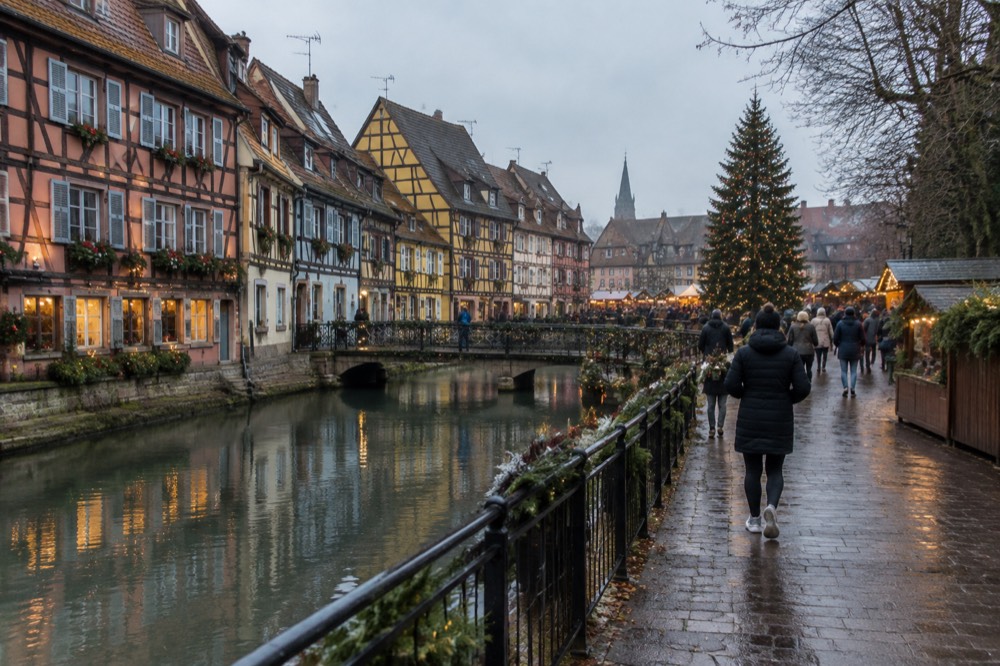
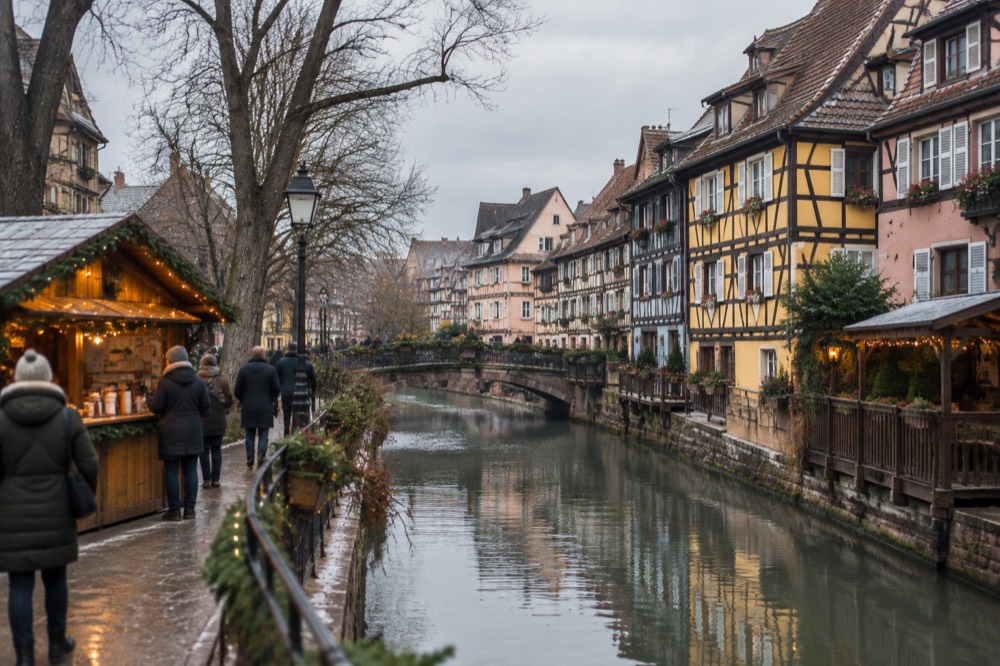
Colmar runs its own set of Christmas markets across the old town, smaller in feel than Strasbourg's but concentrated in a half-timbered centre that is easy to cover on foot. The wine villages along the Alsace Wine Route, places such as Riquewihr, Kaysersberg, Eguisheim and Obernai, hold small editions of their own, usually weekend-scale, and they pair naturally with a day trip from Strasbourg.
Colmar is in France, south of Strasbourg in the Haut-Rhin, and its December identity is the decorated old town: canals, timber-framed houses and market squares a few minutes' walk from each other. The town's markets are the second pole of the Alsace circuit, and the comparison with Strasbourg is a genuine decision point for travellers. The site's Colmar Christmas market guide covers the town on its own, and which Christmas market is better, Strasbourg or Colmar makes the head-to-head comparison directly.
The villages are arguably its best-kept character. Riquewihr, Kaysersberg and Eguisheim are small wine towns on the Alsace Wine Route whose ordinary streetscape is already half-timbered and flower-hung; in December they add chalets and lights to squares you can cross in ten minutes. The trade-off is scale: a village market is an hour or two of atmosphere, not a full day, and village editions often run weekends only, so check each town's own page before you commit a day to one. The site's guides to Riquewihr, Kaysersberg and Eguisheim describe each town outside the market season.
What can be said plainly: the wine villages sit along the route south of Strasbourg towards Colmar, they are reachable by car and by a mix of regional train and short hops, and a guided day tour is the way many visitors cover several of them without planning the logistics themselves.
Which Alsace Christmas Market Should You Choose?
Choose Strasbourg for the biggest, citywide set with the cathedral and the giant tree; choose Colmar for a compact, storybook old town with markets a short walk apart; and choose the wine villages for small, quiet squares with fewer crowds and a slower rhythm. First-time visitors with two days or fewer should base in Strasbourg and day trip to Colmar or the villages.
The honest way to compare the options is by what each does well, not by invented figures. No verified chalet counts or attendance numbers exist for the village markets, and the Strasbourg chalet count is unconfirmed, so the table below compares on character and logistics rather than scale.
| Market | Setting | Best For | Watch Out For | What To Check First |
|---|---|---|---|---|
| Strasbourg | Squares across the Grande Île, a UNESCO-listed island centre | The full city experience: cathedral, tree on Place Kléber, river quarter | December crowds, especially evenings and weekends | 2026 dates on the city's Christmas site |
| Colmar | Half-timbered old town with canals, markets a short walk apart | A compact, photogenic day or overnight | Popular with day trippers in the middle of the day | Each market's own opening days |
| Riquewihr | Wine village on the Alsace Wine Route | Wine, quiet lanes, a small square of chalets | Small scale; not a full day alone | Weekend-only schedules |
| Kaysersberg | Wine village on the Weiss river | Village atmosphere with a riverside setting | Limited dining capacity at peak | Village market dates |
| Eguisheim | Circular wine village, concentric lanes | A short, charming stop between bigger towns | Very small market footprint | Opening hours on the town page |
Two further comparisons help if you are weighing Alsace against somewhere else entirely. What are the top 3 Christmas markets in Europe places the region in a wider frame, and is the Rhine or Danube better for Christmas markets compares river-cruise approaches, which matters because Strasbourg sits on the Ill beside the Rhine and is a regular river-cruise stop.
How Many Days Do You Need For The Alsace Markets?
Two days is the realistic minimum for Strasbourg alone at a comfortable pace, and three to four days lets you add Colmar and one or two wine villages without rushing. One day in Strasbourg works only if you accept missing the evening lights, which is when the markets are at their best. Anything under two days means choosing between Strasbourg and Colmar rather than doing both.
The reason days matter more than usual here is the evening. The markets change character after dark: the lights on the timber-framed buildings are the point, and the question of timing, day versus night, is argued properly in are Christmas markets better in day or night. A day trip that leaves Strasbourg by late afternoon sees half the show. The site's how many days do you need in Strasbourg for Christmas markets breaks this down with a day-by-day plan.
A sensible shape for a first visit:
| Trip Length | What It Covers | Realistic Shape | Trade-off |
|---|---|---|---|
| 1 day | Strasbourg's main squares | Morning chalets, cathedral, clock at 12:30, evening lights | No Colmar, no villages, rushed |
| 2 days | Strasbourg properly | Day one Grande Île and Petite France, day two at a slower pace plus a river boat | Villages missed |
| 3 days | Strasbourg plus Colmar | Two days Strasbourg, one day Colmar by train or tour | Only one village, if any |
| 4 days | The circuit | Two days Strasbourg, one day Colmar, one day wine villages | Needs a car or a good tour |
The river boat is worth a line of its own. Batorama, the Strasbourg operator, runs glass-roofed boats from the city centre, with the long tour at 16.20 EUR full fare and 8.90 EUR reduced, and the short tour at 12.50 EUR full and 7.20 EUR reduced. In December the boats give a warm, dry hour of the city from the water, which is a genuine asset when the weather turns. The site's Strasbourg boat tour guide covers the circuits in full.
What The Weather Is Really Like In December
December in Strasbourg is cold and grey rather than snowy: the Meteo-France 1991-2020 normals for Strasbourg-Entzheim give a mean daily maximum of 5.9 C and a mean minimum of 0.8 C, with 45.2 mm of rain across the month and 10.2 days of rain of 1 mm or more. Snow happens but is not the norm, and the climate is semi-continental, not Mediterranean or oceanic. Plan for cold, wet evenings rather than a picture-book white market.
Those normals are worth internalising because they contradict the postcard image. The full winter picture from the same station:
| Month | Mean Max C | Mean Min C | Rain mm | Days With 1 mm Or More |
|---|---|---|---|---|
| November | 9.4 | 3.3 | 47.6 | 9.2 |
| December | 5.9 | 0.8 | 45.2 | 10.2 |
| January | 5.2 | -0.2 | 35.4 | 9.1 |
| February | 7.3 | 0.0 | 34.1 | 8.3 |
Practical consequences follow. The markets are outdoors, so layers, a real coat and waterproof shoes matter more than they do in southern-European markets. The cathedral nave, the astronomical clock area, the museums and the boats are the standing indoor options, and the site's rainy day in Strasbourg guide lists them properly. The full monthly breakdown, including the warmer months if you are weighing a different season, is in Strasbourg weather and best time to visit Strasbourg.
One indoor point specific to December: the Musée Alsacien, the folk museum that would otherwise be the natural Christmas-season museum, is closed for works until 2028 and should not be on any plan. The other municipal museums are open, at 9 EUR full fare or 5 EUR reduced, with a one-day Pass Musées at 20 EUR covering them all, and every municipal museum is free on the first Sunday of the month, which in December falls inside the market season.
Getting Around Alsace During The Market Season
Inside Strasbourg you walk, and the city's tram network covers anything beyond walking range: a CTS single ticket is 1.90 EUR bought through the app or contactless, or 2.50 EUR bought on board a bus, and a 24-hour Solo pass is 4.60 EUR. Between Strasbourg and the other market towns you take a regional train, a tour, or a car; no verified door-to-door times or fares for the wine villages are given here because none were checked.
The Strasbourg transport facts are solid and worth having in advance. CTS, the city network, sells a single ticket at 1.90 EUR through the Badgéo card, the CTS app or contactless payment, at 2.50 EUR if bought from the driver on board. The 24-hour Solo pass is 4.60 EUR, and the 24-hour Trio, covering two to three people together, is 10.20 EUR. During the market season the trams run late and the centre gets crowded, so the pass is usually the better buy for a full day of square-hopping.
| Ticket | Price | Valid For | Where To Buy |
|---|---|---|---|
| CTS single | 1.90 EUR | One journey | Badgéo, CTS app, contactless |
| CTS single, on board bus | 2.50 EUR | One journey | From the driver |
| 24h Solo | 4.60 EUR | One person, 24 hours | CTS app and sales points |
| 24h Trio | 10.20 EUR | Two to three people, 24 hours | CTS app and sales points |
| Airport train + city ticket | 4.60 EUR | Train from Entzheim plus city transport | Airport station and combined ticketing |
For the wider circuit, the honest position is that no verified journey times or fares between Strasbourg and Colmar, Riquewihr or Kaysersberg are printed. What can be said: Colmar is reachable by regional train from Strasbourg's Gare Centrale, the wine villages are easiest by car or by a guided day tour, and Basel, in Switzerland, is a possible rail day trip but is not in the euro, so euros do not work there. The site's getting around Strasbourg guide covers the city network in detail, and Strasbourg car rental addresses the driving question.
If you are arriving from Paris, the site's Strasbourg Christmas market from Paris guide covers the rail options and whether the day trip is realistic. The fast train from Paris to Strasbourg takes under two hours; check SNCF Connect for the current timetable and fares rather than relying on any figure printed in an article.
Food And Drink At The Alsace Markets
The markets are as much about eating as shopping: the Alsatian staples are tarte flambée, choucroute, baeckeoffe, kougelhopf and spiced bredele biscuits, with vin chaud, local Riesling and Crémant d'Alsace in the glasses. A food walk or a winstub meal is the structured way to eat the region, and the cathedral square's chalets sit beside some of the city's oldest eating houses.
The Alsatian Christmas plate is its own cuisine rather than generic market food. Tarte flambée, the thin cream-and-bacon flatbread baked in a wood oven, is the signature dish of Strasbourg, and choucroute, the sauerkraut and pork platter, is the hearty end of the spectrum. Kougelhopf, the ring-shaped brioche, is the region's cake, and bredele, the small spiced biscuits, appear in tins everywhere in December. The site has a guide to each: tarte flambée, choucroute, kougelhopf and winstubs in Strasbourg, the traditional eating houses that are the indoor alternative to chalet food.
The drink question has a local answer. Alsace is a wine region, and the market glasses lean Riesling, Pinot Gris and Crémant d'Alsace rather than imported anything. Whether Crémant stands beside Champagne is a fair question, argued in is Crémant as good as Champagne, and whether Riesling's reputation for cheapness is deserved is covered in is Riesling considered cheap wine. For the market food specifically, Strasbourg Christmas market food is the dedicated guide.
The structured way to eat the season is a food walk with tastings. The traditional food walking tour with tastings runs about three and a half hours and moves between winstubs and market stalls with a guide who explains what each dish is.
Planning Your Trip: Tickets, Tours And Timing
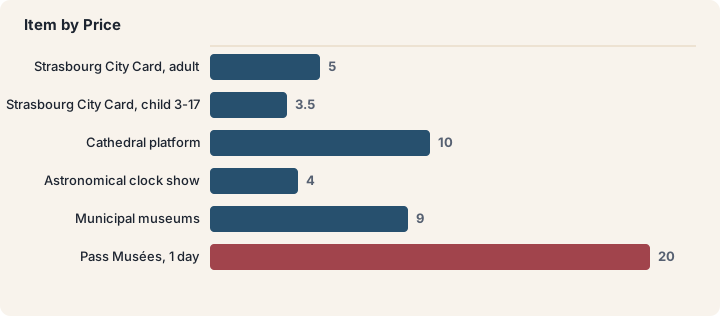
Book accommodation early, confirm the 2026 dates on the city's Christmas site before anything else, and decide your base before you book transport: Strasbourg for the full circuit, Colmar for a quieter centre. A Strasbourg City Card at 5 EUR buys seven days of discounts rather than entry, the cathedral platform and clock are paid extras at 10 EUR and 4 EUR, and the municipal museums are free on the first Sunday of the month.
The order of operations matters because December in Strasbourg fills up. The city's own bilan counted 3.05 million market visitors in 2025, and the accommodation market reflects that. The site's where to stay for the Strasbourg Christmas market and where to stay in Strasbourg guides cover the neighbourhood choices, and why is Strasbourg so expensive in December explains the pricing pattern.
What the various cards and tickets actually do:
| Item | Price | What It Gives | Notes |
|---|---|---|---|
| Strasbourg City Card, adult | 5 EUR | Seven days of discounts at museums, the boat, the platform and the clock | A discount card, not an all-inclusive pass |
| Strasbourg City Card, child 3-17 | 3.50 EUR | Same discounts for a child | Valid seven days |
| Cathedral platform | 10 EUR full, 6 EUR reduced | Tower platform at 66 m | Under 6 free; closed 1 Jan, 1 May, 25 Dec |
| Astronomical clock show | 4 EUR | The 12:30 automaton show | Day-of purchase only, no reservations |
| Municipal museums | 9 EUR full, 5 EUR reduced | Each municipal museum | Free the first Sunday of every month |
| Pass Musées, 1 day | 20 EUR | All municipal museums in one day | Musée Alsacien closed until 2028 |
Timing within the season is the last lever. The opening week in late November and the first days of December are quieter than the run-up to Christmas; the final week before 24 December is the busiest, and the closing day ends early in the evening. The market's worth as an experience, argued honestly rather than assumed, is the subject of is the Christmas market in Strasbourg worth it, and the prettiest-market question, which in this region is a real contest between Strasbourg, Colmar and the villages, is taken on in where is the prettiest Christmas market. For the fame question specifically, what is the most famous Christmas market in France answers it directly.
For the villages and Colmar in one day without driving, the guided day tour remains the practical answer for many travellers, and the evening version of the Strasbourg experience, the city after dark with a private guide, is the other half of the day.
What To Do Beyond The Markets In December
Strasbourg in December is not only the markets: the cathedral nave is open continuously through the season on the Place du Château side, the Batorama boats run from the centre, the municipal museums are open at 9 EUR or 5 EUR, and the European Quarter institutions keep their own hours. The street-art tour and the city's covered passages give a different angle on the same city between market visits.
The cathedral deserves more than a walk-past. The nave, free of market noise inside, is open Monday to Saturday 08:30 to 17:45 on the Place du Château side during the market, and on Sundays and feast days 14:00 to 17:15. The clock show at 12:30 sharp is a 4 EUR ticket bought on the day, sold at the cathedral stalls from 10:00 to 11:00 or at the Saint-Michel entrance from 11:30. The platform at 66 m gives a cold, clear view over the roofs and, on a December evening, over the lit squares; it costs 10 EUR full or 6 EUR reduced, and from October to March the last ascent is at 17:15.
The European Quarter is the other Strasbourg. The Parlamentarium, the European Parliament's visitor centre, opens Monday to Friday 09:00 to 18:00 and Saturday 09:30 to 12:00 and 13:00 to 18:00 outside plenary weeks, with an airport-style security check at the door and different hours during plenary weeks, so check the official page before going. The site's European Parliament guide covers the visit, and the European Quarter guide covers the district.
For something off the Christmas trail entirely, the street-art walk takes in the city's contemporary murals and graffiti with a guide, about an hour and a half of a very different Strasbourg. It pairs well with a market afternoon: one half of the day in the crowds, the other in the quieter back streets.
Where To Stay For The Alsace Circuit
Stay in Strasbourg if the circuit is the point: the Grande Île and Krutenau put you inside the markets on foot, and the city is the transport hub for every day trip. Stay in Colmar only if you have already seen Strasbourg or want a smaller, quieter base. Kehl, across the river in Germany, is a budget option but puts you outside the walkable centre.
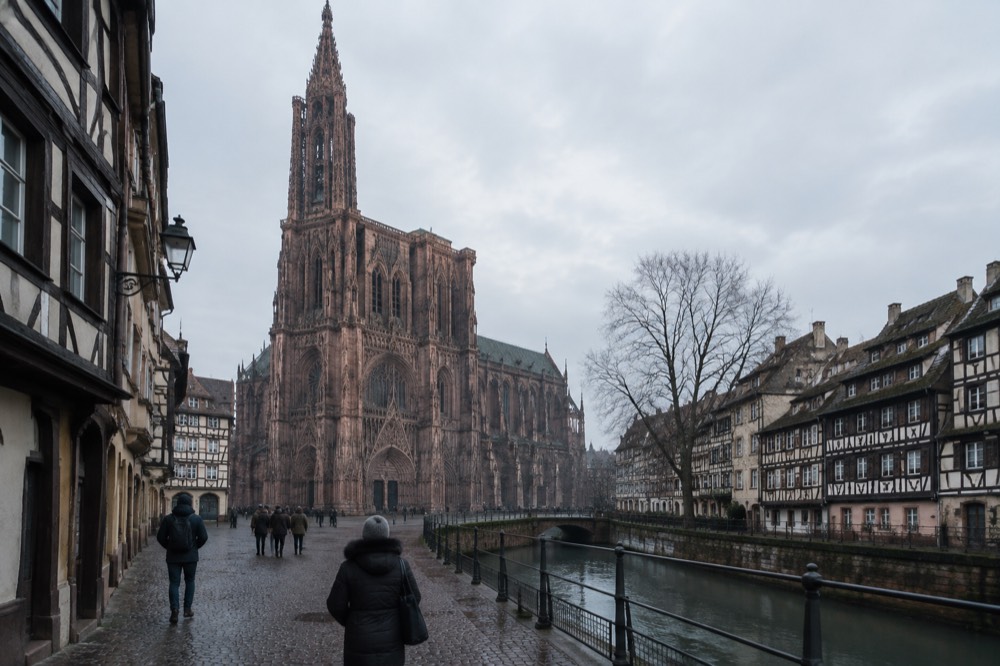
The Strasbourg neighbourhood choices are covered in the site's where to stay in Strasbourg guide, but the December-specific version matters. Inside the Grande Île you are in the middle of the markets, which is atmospheric and, on weekend evenings, loud and crowded until the chalets close. Petite France is the postcard quarter on the river; the site's where to stay in Petite France answer covers it directly. Krutenau, the student quarter just south-east of the centre, is the compromise: a short walk from the squares, cheaper, and full of its own eating places.
The December premium is real and worth planning around. The 2025 edition drew 3.05 million visitors across roughly four weeks in a city of 293,771 residents (INSEE, 2023), and the hotel market prices accordingly. Book as early as you can, and if the Strasbourg rates are out of range, the German side of the river around Kehl is the usual fallback, with the trade-off that you are commuting into the centre rather than staying in it.
A Practical Checklist Before You Go
Confirm the 2026 dates on the city's Christmas site, book accommodation and any tour before the December rush, carry cash and a contactless card for the chalets, and plan your days around the evening lights rather than the morning. The checklist below is the short version of everything this guide has argued.
| Task | When | Why |
|---|---|---|
| Confirm 2026 market dates on the city's Christmas site | Before booking anything | The official dates were still being finalised; do not rely on a printed pattern |
| Book accommodation | As early as possible | The 2025 season drew 3.05 million visitors to a city of 293,771 residents |
| Decide your base: Strasbourg or Colmar | Before booking transport | It sets the shape of the whole trip |
| Check the cathedral platform and clock arrangements | The week you travel | Platform hours are seasonal; clock tickets are day-of only |
| Plan for cold and rain, not snow | When packing | December normals: 5.9 C mean max, 10.2 rain days |
| Book any guided day tour in advance | Before travel | December tours fill around the market weeks |
The last word on timing: go late in the day. The Alsace markets are a daytime commerce and an evening spectacle, and the traveller who leaves at four in the afternoon sees the chalets but misses the reason people cross borders for them. Eat early, walk the squares after dark, and take the slower route home past the cathedral.
Common Questions About The Alsace Christmas Markets
When do the Alsace Christmas markets run?
The season runs from late November to 24 December. The city's Christmas site states that the 2026 dates are still being finalised. Last year's Strasbourg edition ran 26 November to 24 December 2025, with the closing day ending early in the evening.
Which is better, Strasbourg or Colmar at Christmas?
Strasbourg is bigger and citywide, with the cathedral, the tree on Place Kléber and markets across the Grande Île. Colmar is smaller, compact and storybook in feel. First-time visitors with limited days should base in Strasbourg and day trip to Colmar; the site's head-to-head answer compares them square by square.
How many days do you need for the Alsace Christmas markets?
Two days for Strasbourg alone at a comfortable pace, three to four to add Colmar and the wine villages. One day in Strasbourg works only if you stay into the evening, which is when the markets are at their best.
Is December a good time to visit Strasbourg?
December is the city's peak season and its coldest. The Meteo-France normals give a December mean maximum of 5.9 C and a mean minimum of 0.8 C, with 10.2 rain days of 1 mm or more. If the markets are the point of the trip, the weather is part of the deal.
Can you visit the wine village markets from Strasbourg?
Yes, by car or by a guided day tour. The villages, including Riquewihr, Kaysersberg and Eguisheim, hold small market editions, often at weekend scale, so check each town's own page for dates before planning a day around one.
What does the Strasbourg City Card include?
The City Card is a discount card, not an all-inclusive pass: 5 EUR for an adult or 3.50 EUR for a child aged 3 to 17, valid seven days, with reductions at the municipal museums, the Batorama boats, the cathedral platform and the astronomical clock.
The Alsace circuit rewards the traveller who treats it as a region rather than a single event: Strasbourg for the scale and the cathedral, Colmar for the compact old town, the villages for the quiet squares, and an evening in the lights as the fixed point of every day. Confirm the 2026 dates on the city's own site, book the bed early, and the rest of the season tends to arrange itself.