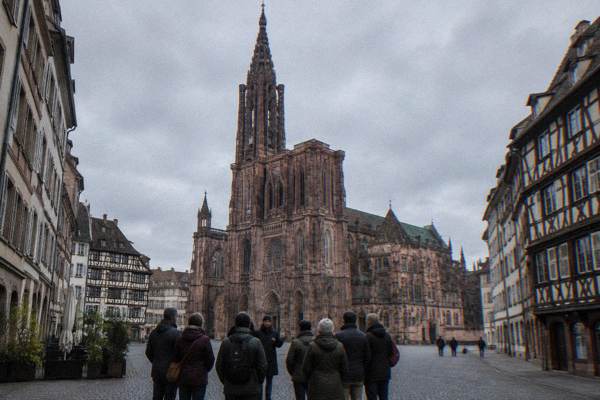
Which Strasbourg Christmas Market Is Best?
A square-by-square comparison of the Strasbourg Christmas market in Alsace, France, with sight prices, hours, transport fares and December weather figures to help you pick where to start.
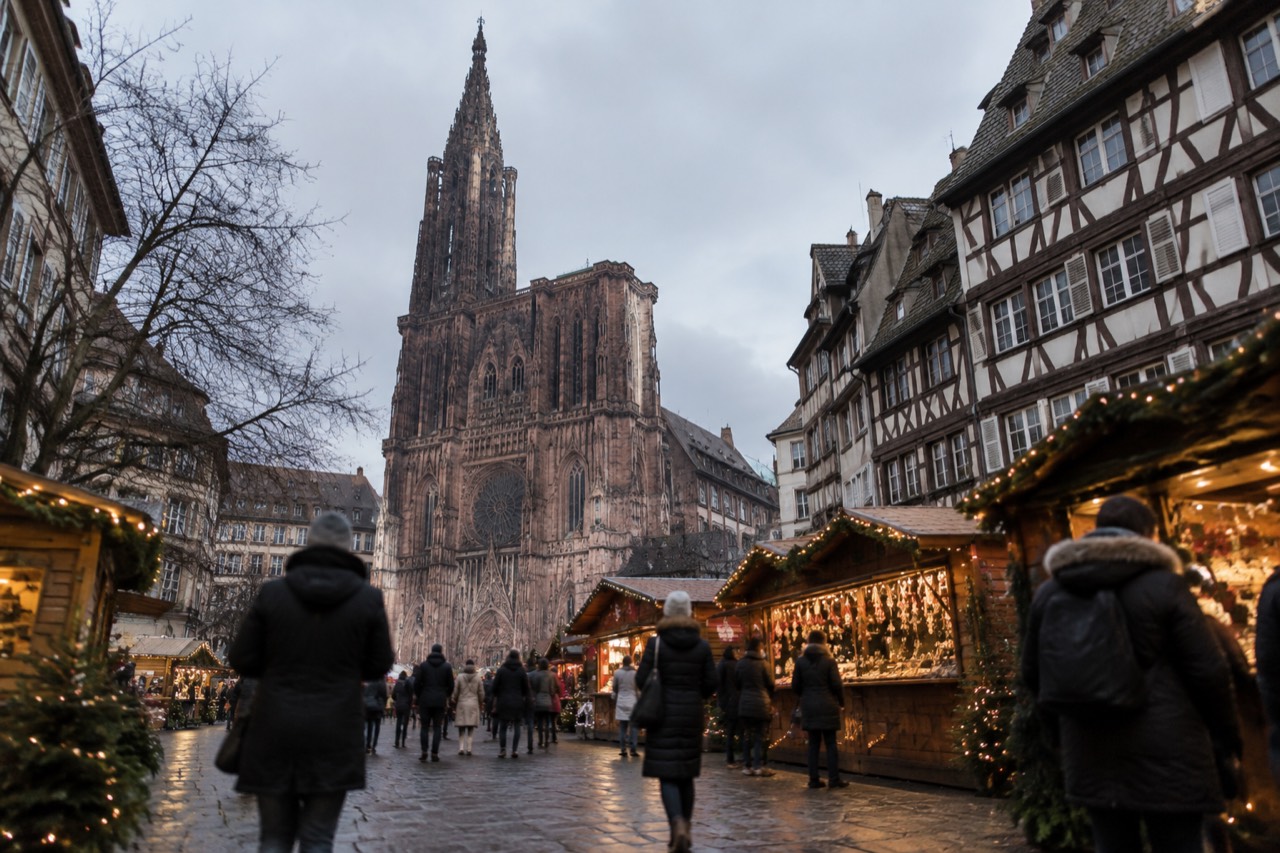
Strasbourg, in Alsace in north-eastern France, brands its December season Strasbourg Capitale de Noël, and the numbers behind the name are serious: the 2025 edition of the Christmas market ran from 26 November to 24 December and drew 3.05 million visitors, down from 3.4 million the year before, according to the city's own press release. The market, though, is not one market. Chalets spread across several squares of the historic centre, each with its own character. This page compares them square by square, with the sight prices, opening hours, transport fares and December weather figures that matter once you are standing in front of the cathedral.
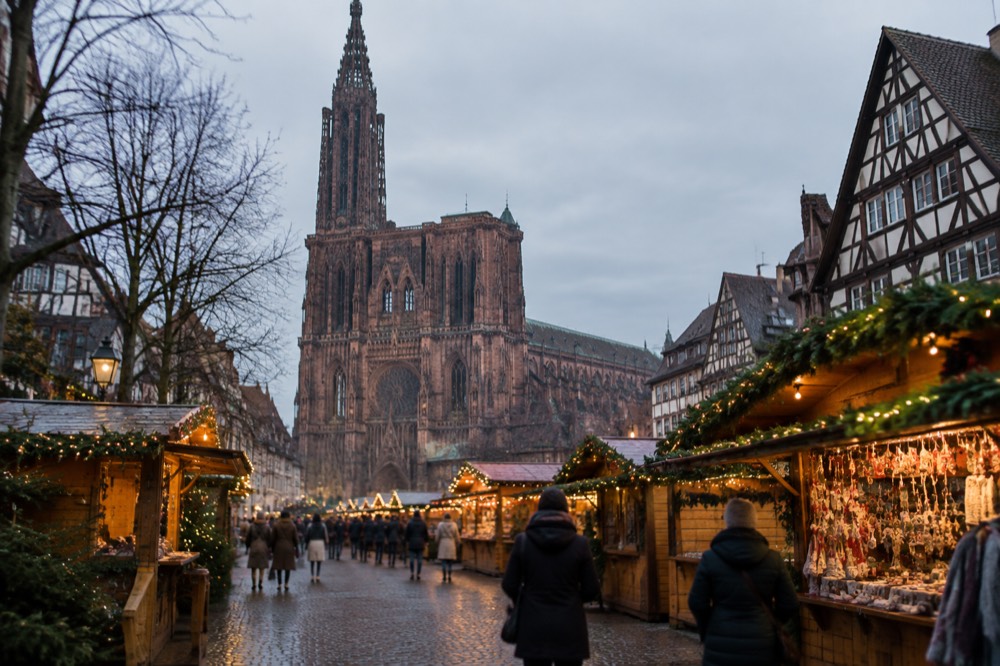
Which Strasbourg Christmas Market Is Best?
For a first visit, the cluster around the cathedral is the pick: the chalets sit against the single-spired nave, the 12:30 astronomical clock show is a few steps away, and the platform ascent at 66 m puts the whole market below you. Food-led visitors get more from the lanes and winstubs off Place Kléber. Last year's edition, 26 November to 24 December 2025, drew 3.05 million visitors, and the whole loop between squares is walkable.
The honest version of the answer is that "best" depends on what you came for. The cathedral square delivers the scene people cross borders for: medieval stone, the single spire, and the automaton clock show at 12:30 sharp, which the cathedral's own page confirms runs daily with tickets sold on the day only. If your Christmas market is really about food, the lanes around the main squares hold the winstubs, the bredele bakers and the mulled wine stands, and you will spend less time photographing and more time eating.
What the market is not is a single site you can tick off in an hour. It is one connected season spread across several squares of the Grande Île, the historic centre, so the practical question is where to start and in what order to walk. The rest of Strasbourg Travel Guide covers each square and each sight in depth; this page stays on the comparison. For the full square-by-square walkthrough, see the full guide to the Strasbourg Christmas market.
To sort out your route across the squares, book a free walking tour here.
Where Are The Christmas Markets Held In Strasbourg?
The market spreads across several squares of the Grande Île, the historic centre that UNESCO lists as "Strasbourg, Grande-Île and Neustadt". The heart of it sits around the cathedral, where the nave stays open continuously Monday to Saturday on the Place du Château side, 08:30 to 17:45, for the whole market. From there the season spreads to Place Kléber, the main square, and the riverside lanes of Petite France. Chalets typically open late morning and run into the evening.
Start at the cathedral and work outward, because everything else hangs off that loop. The Place du Château side gives you the Gothic backdrop, the clock show ticket stall and the platform entrance in one stop, and the cathedral's hours page confirms the continuous Monday-to-Saturday opening through the market period. From the cathedral it is a short walk down to Place Kléber, the city's main square and the focal point of the lights, then on through the old lanes towards Petite France, where the half-timbered riverside scenery takes over from the stall rows.
Place Gutenberg sits on the same loop, a historic square in the old centre that gives a calmer browse within a few minutes of the densest rows. Petite France itself is the postcard quarter: timber-framed buildings over the Ill, the Ponts Couverts and the Barrage Vauban terrace nearby, with winstubs tucked into the lanes. The terrace has seasonal opening hours, so check the city's page before you count on the view. For what to eat along the way, the Christmas market food and drink guide breaks the stalls and winstubs down dish by dish.
| Square Or Quarter | Setting | What You Get There | Who It Suits |
|---|---|---|---|
| Place du Château, beside the cathedral | Against the single-spired nave, in the heart of the Grande Île | The classic chalet rows, the 12:30 astronomical clock show and the platform ascent at 66 m within a few steps | First-time visitors wanting the scene the city is known for |
| Place Kléber | The main square, a short walk from the cathedral | The focal point of the lights and the season's big gatherings | Photographers and anyone who wants the wide-open frame |
| Place Gutenberg | A quieter historic square on the same loop | A calmer browse minutes from the densest rows | Families and visitors who want stalls without the squeeze |
| Petite France and the riverside lanes | Half-timbered quarter on the Ill, past the Ponts Couverts | Riverside scenery, winstubs and the terrace viewpoint nearby | Visitors pairing the market with the postcard streets |
Read the table as a walking order rather than a ranking. Cathedral first, while your legs are fresh and the clock show is still ahead of you; Kléber next for the lights; Gutenberg when you want a pause; Petite France to finish either in daylight or after dark, when the timber frames catch the glow. Chalets typically open late morning and run into the evening, so an afternoon start still catches the full circuit, and the 24 December close comes early in the evening.
How Much Should You Budget For The Sights Around The Markets?
The market squares themselves cost nothing to wander; the money goes on food, gifts and the sights. The cathedral platform is 10 EUR full and 6 EUR reduced for the view from 66 m, the 12:30 astronomical clock show is 4 EUR, municipal museums are 9 EUR full and 5 EUR reduced, and the Batorama boat tours run 12.50 EUR to 16.20 EUR full price. A 24-hour CTS transit pass at 4.60 EUR covers the trams between squares.
The cathedral costs are the ones to plan around, because the two headline experiences sell differently. The platform ticket, 10 EUR full and 6 EUR reduced with children under 6 free, is on sale at the entrance; the platform sits at 66 m and is closed on 1 January, 1 May and 25 December. Hours shift with the seasons: 09:30 to 13:00 and 13:30 to 20:00 from April to September with the last ascent at 19:15, and 10:00 to 13:00 and 13:30 to 18:00 from October to March with the last ascent at 17:15. The clock show at 12:30 sharp is 4 EUR, and the cathedral's page is strict about the mechanics: tickets are bought on the day only, no reservations, sold at the cathedral stalls from 10:00 to 11:00 or at the Saint-Michel entrance from 11:30.
The museums make a good bad-weather line, and the municipal museums are 9 EUR full and 5 EUR reduced, free on the first Sunday of every month, with a 1-day Pass Musées at 20 EUR. One caveat: the Musée Alsacien is closed for works until 2028, so do not route a visit there. The Strasbourg City Card at 5 EUR, or 3.50 EUR for a child aged 3 to 17, is a seven-day discount card rather than an all-inclusive pass, and it takes money off the museums, the boat tours, the platform and the clock.
| Sight Or Ticket | Full Price | Reduced Price | Notes |
|---|---|---|---|
| Cathedral platform, 66 m | 10 EUR | 6 EUR (children 6-18, students) | Children under 6 free; closed 1 Jan, 1 May, 25 Dec; last ascent 19:15 in summer, 17:15 in winter |
| Astronomical clock show, 12:30 sharp | 4 EUR | 3 EUR (groups of 12+, students to 25); 2 EUR (children 6-17) | Day-of purchase only, no reservations; stalls 10:00-11:00, Saint-Michel entrance from 11:30 |
| Municipal museums | 9 EUR | 5 EUR | Free on the first Sunday of every month; Musée Alsacien closed until 2028 |
| Pass Musées, 1 day | 20 EUR | - | Covers the municipal museums in a single day |
| Batorama long tour, 1h10 | 16.20 EUR | 8.90 EUR | The full river circuit of the city |
| Batorama short tour, 0h45 | 12.50 EUR | 7.20 EUR | The shorter circuit, good between market stops |
| Strasbourg City Card, 7 days | 5 EUR | 3.50 EUR (child 3-17) | A discount card, not an all-inclusive pass |
Treat the table as a menu rather than a must-do list. The platform plus the clock show is the pairing that defines a cathedral visit. The boat tour pairs naturally with an afternoon on the squares, and the short circuit fits between the late-morning stall opening and the evening lights.
What Is The Best Way To See The City During The Market?
Walk the loop first, then see it from the water. The historic centre is compact and pedestrian, so a guided walk with a local guide covers the cathedral, Place Kléber and Petite France in one loop, and a boat on the Ill gives the riverside half-timbered scenery without the crowds at street level. The private cruise option carries up to four people with a skipper, which suits couples and families who want the schedule to themselves.
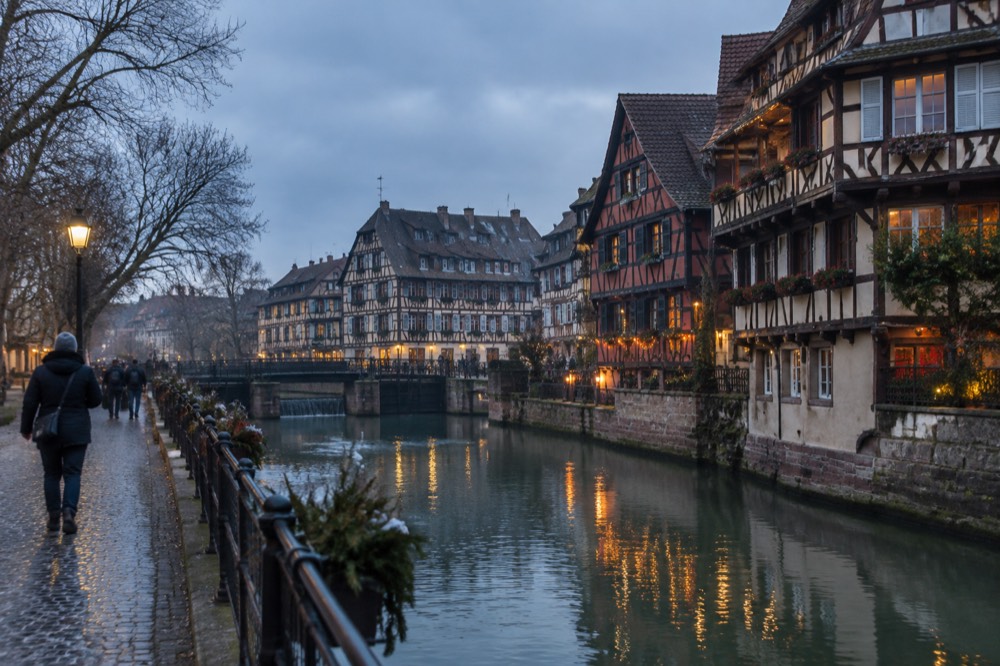
The walking argument is simple: everything in this article sits inside one pedestrian loop, and the squares connect through lanes that a guide can read for you, from the cathedral's stonework to the half-timbered construction of the old quarter. A guided walk with a local guide is the efficient version of that loop, and it ends where the food lanes begin, which is the natural handoff point for the rest of the afternoon.
The water is the other half of the answer. Strasbourg's riverside scenery, Petite France, the Ponts Couverts and the museum-lined banks of the Ill, reads differently from a boat, and a private cruise on the Ill with your own skipper turns it into a closed loop with the lights on. The boat takes a group of up to four, the skipper handles the navigation, and the departure point sits within walking distance of the market squares, so it slots between the afternoon stalls and dinner. Check availability on the operator's live listing, because winter departures depend on daylight and weather.
Timing matters more on the water than on foot. The timber frames of Petite France catch the evening lights from the river, and the afternoon departures line up with the moment the chalets start glowing, so book the slot that ends after dark if the lights are the point of the trip.
If a private skipper is more boat than the trip needs, the guided options scale down cleanly. A guided walk with a local guide covers the same ground at street level, cathedral to Petite France, with the stories attached, and it costs a fraction of a private cruise; the operator's live listing carries the current price and the departure point. Pair the walk with a Batorama short tour, 12.50 EUR full price, and you get the river angle without renting the whole boat.
The combination that works on a single day: walk the loop in the late morning while the chalets open, catch the 12:30 clock show, take the water in the afternoon, and finish on Place Kléber after dark. That sequence is the reason the "which market is best" question resolves into an order of visits rather than a single winner.
How Do You Get Between The Market Squares?
On foot for the centre, tram for everything else. The market squares sit within walking distance of one another across the Grande Île, and a CTS single at 1.90 EUR from the app or a contactless tap, or 2.50 EUR bought on board a bus, covers any one tram or bus ride. A 24h Solo pass at 4.60 EUR, or a 24h Trio at 10.20 EUR for two to three people travelling together, suits a day of hopping between squares.
CTS, the city network, is the fallback for tired legs and the link to anything outside the loop, and the fare page gives the numbers plainly: 1.90 EUR for a single bought through the Badgeo card, the CTS app or a contactless tap, 2.50 EUR if you buy on board a bus, 4.60 EUR for a 24h Solo pass and 10.20 EUR for a 24h Trio covering two to three people. The squares themselves need none of it. The cathedral-to-Petite-France loop is a walk, and the tram earns its fare on the legs to and from the station, the European quarter or a hotel beyond the centre.
For covering ground faster than feet allow, a guided Segway tour sweeps from the old quarter out towards the European quarter, which is the one part of a Strasbourg visit that sits outside the Christmas loop. The operator's live listing carries the current price, the meeting point and the seasonal schedule, and the winter departures wrap up before the coldest hours. It suits visitors who want the institutions and the market in the same day without spending all of it walking.
One practical note for arrival: the airport train shuttle runs to Strasbourg station in 8 minutes with up to five trains an hour, and a combined train-plus-transit ticket covering the shuttle and a day of CTS travel is 4.60 EUR, which is the same figure as the 24h Solo pass on its own. If you are flying in for the market, that combined ticket is the one to look at first.
When Should You Visit And What Should You Pack?
Go in the opening days, from late November, and pack for cold rather than for snow. Meteo-France 1991-2020 normals for Strasbourg-Entzheim put the mean December maximum at 5.9 C, the mean minimum at 0.8 C, and December rain at 45.2 mm across 10.2 days of 1 mm or more. The market runs late November to 24 December and closes early in the evening on the 24th. The city's Christmas site publishes the 2026 dates once they are finalised.
The dates question deserves its own care, because the 2026 edition is not yet announced: the city's Christmas site states that the official dates and programme are still being finalised. The pattern to plan around is late November to 24 December, with the closing day ending early in the evening, and the 2025 edition, 26 November to 24 December, is the reference point. The official dates of the Strasbourg Christmas market are tracked separately, and that page is the one to check before booking anything non-refundable.
| Period | Mean Maximum | Mean Minimum | Rainfall | Rain Days Of 1 mm Or More |
|---|---|---|---|---|
| November | 9.4 C | 3.3 C | 47.6 mm | 9.2 |
| December | 5.9 C | 0.8 C | 45.2 mm | 10.2 |
| Year | 16.0 C | 6.9 C | 635.7 mm | 112.3 |
Those are Meteo-France 1991-2020 normals for Strasbourg-Entzheim, and they describe a semi-continental climate: cold, grey-leaning Decembers with rain on roughly a third of the month's days. That last figure is a derived share, so take the raw number instead, 10.2 days of 1 mm or more, and pack accordingly: waterproof layers over warm ones, proper shoes for cobbles, and a plan for the museums when the rain settles in. The rainy day guide to Strasbourg covers the indoor half of that plan, and the municipal museums' free first Sundays are worth checking against your dates.
Lodging is the other seasonal decision. December fills the centre early, and the question of where to stay for the Christmas market is really a question of how far you will walk at night. If you are weighing the length of the trip itself, how many days you need for the markets depends on whether the European quarter and the museums are on your list; the squares alone fit in a long weekend.
Strasbourg Or Colmar: Which Christmas Market Should You Choose?
Strasbourg for scale and the city around it, Colmar for a small-town counterpart you can take at a stroll. Strasbourg's edition spreads across several squares of a World Heritage historic centre around its single-spired cathedral and drew 3.05 million visitors in 2025; Colmar's is the compact version in a canal town on the wine route. Choose Strasbourg if museums, boat tours and the European quarter matter; choose Colmar for concentration.
The two cities sell different Decembers. Strasbourg gives you the cathedral, the clock show, the platform, the boat circuits on the Ill and the European institutions, all inside one walkable core, and the market is the thread that ties them together. Colmar gives you a tighter market in a town whose canals and wine-route setting do half of the atmospheric work on their own. The Strasbourg or Colmar market comparison runs the head-to-head in detail, and the Colmar Christmas market guide covers the other side.
The honest tiebreaker is the rest of the day. If your ideal December evening is a winstub and a river view, Strasbourg holds the edge; if it is a wine-cellar afternoon inside a town you can cross on foot, Colmar does that with less planning. Plenty of visitors treat the two as one trip, and the pairing question, is the Christmas market in Strasbourg worth it, answers itself once the squares are lit and the clock show has run.
Common Questions About Strasbourg Christmas Markets
Which Strasbourg Christmas market is best?
The cluster around the cathedral is the best starting point for a first visit: the chalets sit against the single-spired nave, the 12:30 astronomical clock show and the 66 m platform are a few steps away, and the loop to Place Kléber and Petite France runs from there. Food-led visitors get more from the lanes and winstubs off the main squares.
What are the dates of the Strasbourg Christmas market?
The 2026 dates are not yet published; the city's Christmas site states they are still being finalised. The usual pattern runs late November to 24 December, and the 2025 edition ran 26 November to 24 December 2025. Confirm the current dates on the city's Christmas site before booking travel.
Is the Christmas market in Strasbourg worth it?
The 2025 edition drew 3.05 million visitors, and the setting carries the case: a World Heritage historic centre, a single-spired cathedral, a 12:30 clock show and riverside quarters all inside one walkable loop. Visitors who want a market plus a real city around it get their money's worth; visitors after only stalls may prefer a smaller town such as Colmar.
How many days do you need in Strasbourg for Christmas markets?
One long day covers the main squares, the clock show and the platform. A second day adds the boat tour on the Ill, the municipal museums at 9 EUR full price and the European quarter, and it gives you a spare evening for the lights after dark. Two days is the comfortable answer for a first visit.
Are Christmas markets better in day or night?
Both, in order. The late morning and afternoon are for browsing the chalets, the clock show at 12:30 and the platform view in daylight; the evening is when the lights over the squares and the timber frames of Petite France do their work. A single day that runs from midday to after dark catches the market in both registers.