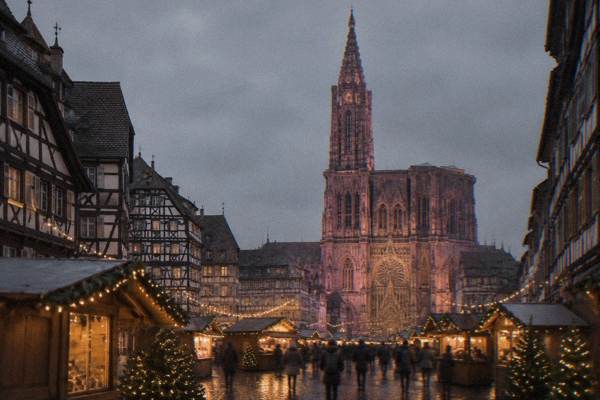
Strasbourg Christmas Market Food
Tarte flambée, bretzels, vin chaud and kougelhopf: a practical eating guide to the Strasbourg Christmas Market in Alsace, north-eastern France, square by square.
Short answer
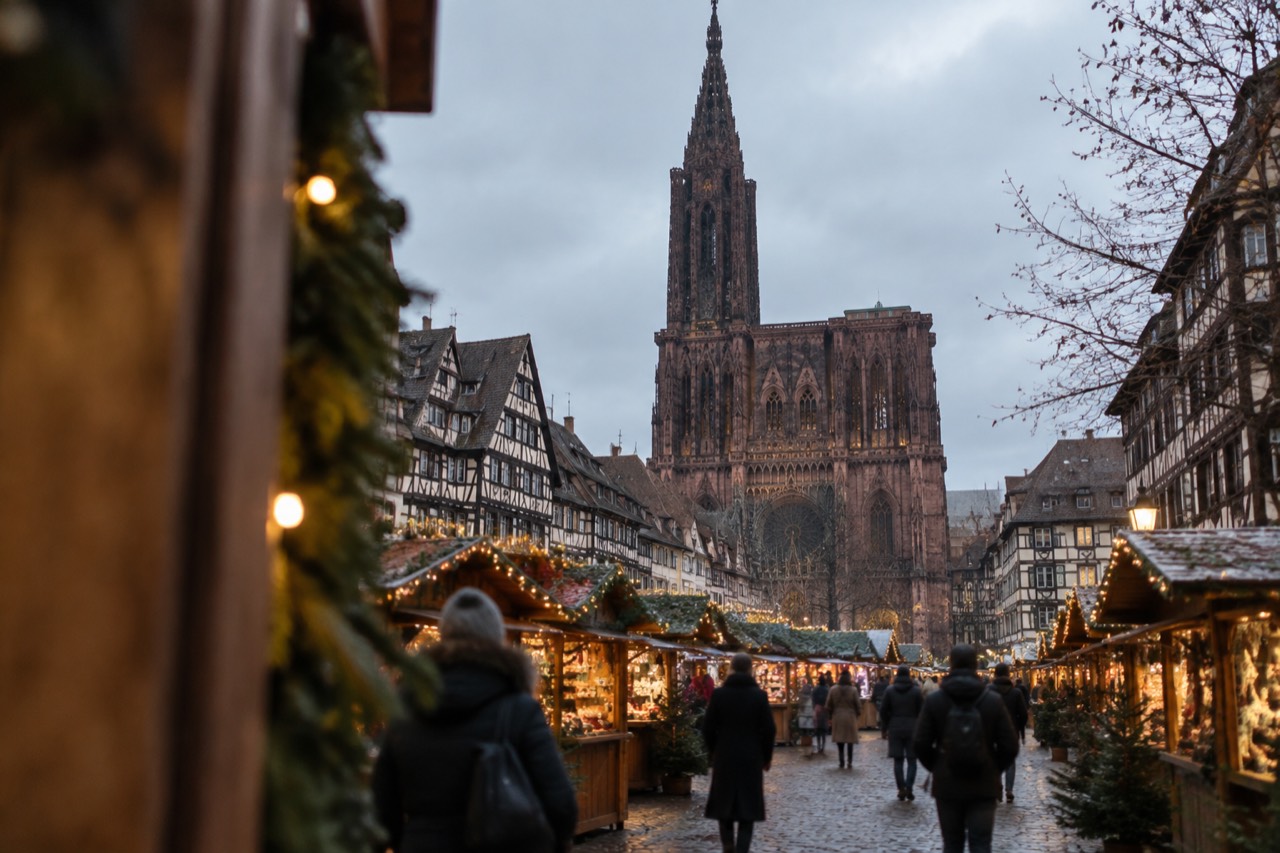
The Strasbourg Christmas Market, in Alsace in north-eastern France, is a grazing market: tarte flambée, bretzels, choucroute, foie gras, vin chaud and kougelhopf, eaten from chalets across the historic centre. The 2025 edition ran 26 November to 24 December and drew 3.05 million visitors, so eat early and eat in motion.
Strasbourg, prefecture of the Bas-Rhin in Alsace, north-eastern France, turns its historic centre into an eating circuit every December. The Christmas market here is not one square of chalets but a chain of them, strung from Place Kléber through Place Gutenberg and Petite France, and the food is the reason plenty of visitors come at all: tarte flambée pulled from a wood oven, bretzels warm enough to bend, vin chaud ladled from copper kettles. This guide walks through what to eat, where in the city to eat it, what it pairs with, and how to plan a day around it without repeating yourself.
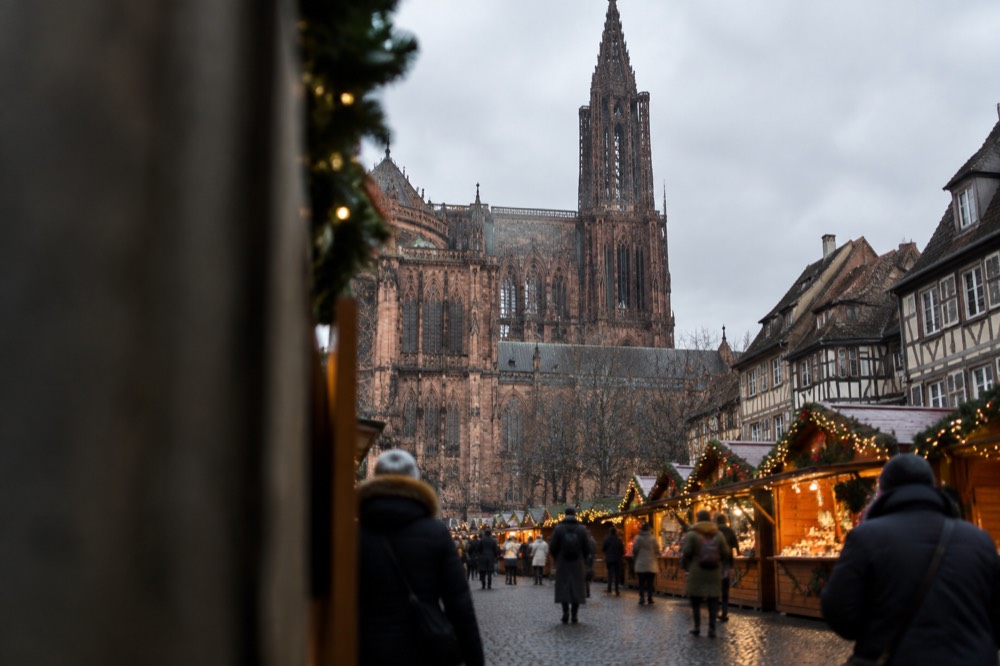
The 2025 edition ran 26 November to 24 December and drew 3.05 million visitors, down from 3.4 million in 2024, which tells you the one thing that shapes an eating plan here: crowds. The city's Christmas site states that the 2026 dates and programme are still being finalised, so confirm them there before booking anything. The pattern, in words rather than dates, is an opening in the last week of November and a run to 24 December, with the final day closing early in the evening. Chalets typically open late morning and trade into the evening.
What Food Is The Strasbourg Christmas Market In France Known For?
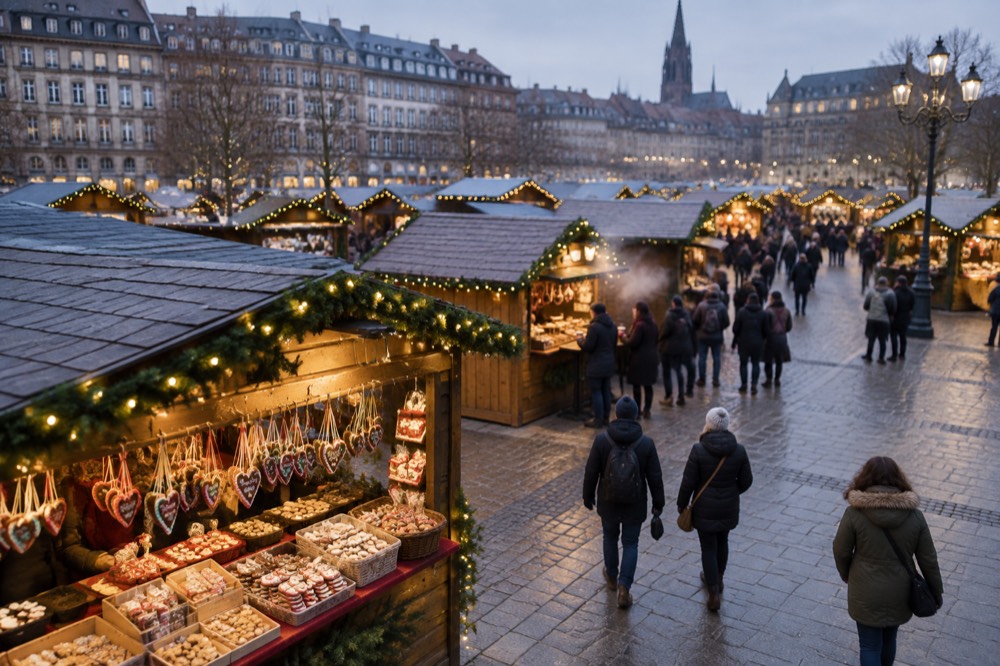
The market's food identity is Alsatian home cooking served standing up: tarte flambée, the thin crème fraîche and bacon flatbread baked in a wood fire; bretzels; choucroute garnie; foie gras and terrines; charcuterie; roasted chestnuts; and a sweet counterweight of kougelhopf, bredele Christmas biscuits and gingerbread. Vin chaud, spiced hot wine, is the drink that ties it together. None of it is French bistro food; it is the farmhouse cooking of the Rhine plain.
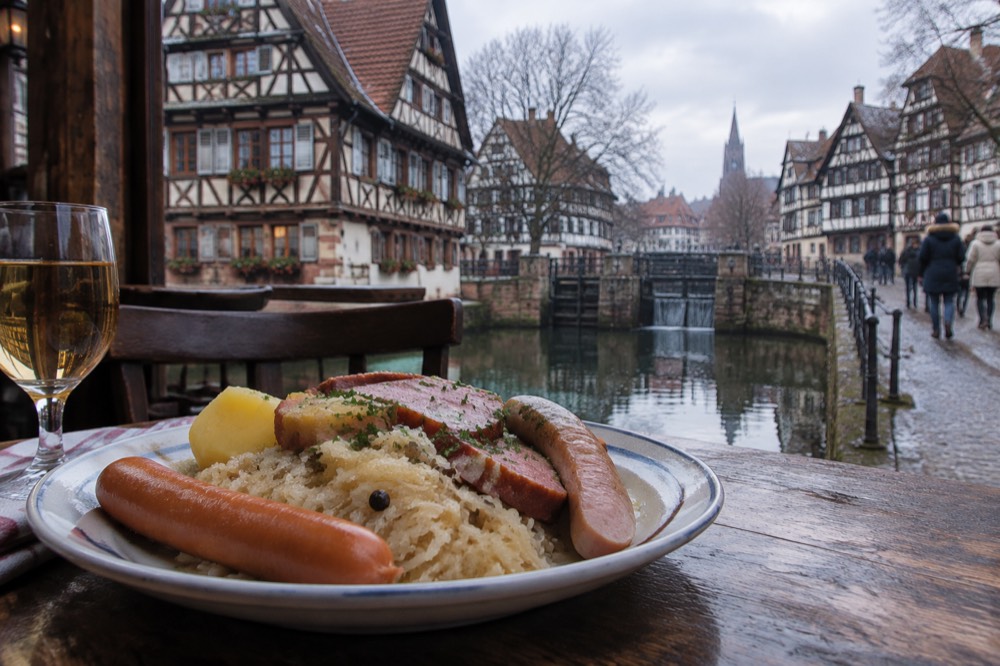
That distinction matters. Alsace's cooking is its own tradition, shaped by a border that has moved back and forth, and the market chalets serve the dishes a winstub would serve, only faster and in your hand. A tarte flambée from a chalet oven arrives in minutes, blistered and floppy, cut into strips you fold like a letter. Choucroute, the heaped plate of sauerkraut, sausage and pork, sits at the other end of the scale, a full sit-down meal that needs a bench and an hour.
The sweet side is just as specific. Kougelhopf, the ring-shaped brioche with almonds and raisins, is the Alsatian cake of Christmas; bredele are the small butter, cinnamon and aniseed biscuits baked in every household in the weeks before the market; gingerbread, pain d'épices, comes stencilled and iced. For the full background on the city's food culture beyond the chalets, read the Strasbourg food guide, and for the market itself start with the Strasbourg Christmas Market overview.
| Dish | What It Is | How The Chalets Serve It | What To Pair It With |
|---|---|---|---|
| Tarte flambée | Thin flatbread of crème fraîche, onions, lardons | Wood-fired, folded in the hand, eaten hot | Riesling or a glass of water; it is rich |
| Bretzel | Lye-glazed bread knot, salted | Warm, plain or with cheese | A mug of Christmas beer |
| Choucroute garnie | Sauerkraut with sausages and pork belly | A plated meal at a bench table | Riesling or pinot blanc |
| Foie gras and terrines | Alsatian pâtés and preserved duck | Sold by weight, often with bread | Gewurztraminer |
| Roasted chestnuts | Whole chestnuts roasted on a brazier | A paper cone, eaten walking | Vin chaud |
| Pain d'épices | Honeyed spiced gingerbread | Sliced, iced, or as decorated loaves | Coffee or hot chocolate |
Where To Eat At The Christmas Markets, Square By Square
Eat Place Kléber for the biggest spread and the Christmas tree, Place Gutenberg for sit-down winstub food within a few steps of the chalets, Place du Château beside the cathedral for the wood-fired tarte flambée stands, and Petite France and the river quarter for the prettiest backdrop and the smaller, food-focused stalls. Each square has a distinct character, and the mistake visitors make is eating only where they arrive.
Place Kléber is the market's centre of gravity, the biggest open square in the city, and its chalets run from snacks to full plates. It is also where you will want to be after dark, when the tree lights are on and the crowd is at its thickest; eat here early or accept a queue. Place Gutenberg, a short walk away, is the natural spot to graduate from a chalet snack to a bench meal, since the half-timbered streets around it hold some of the city's traditional winstubs, the dining rooms described in the winstubs in Strasbourg guide.
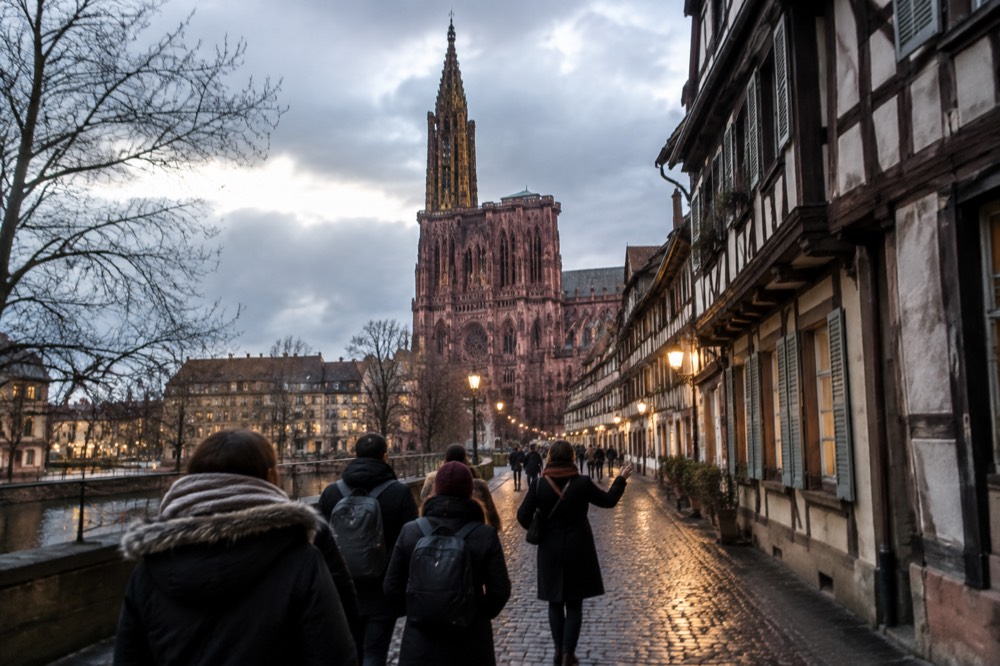
Place du Château, the cobbled square behind the cathedral, is where the tarte flambée ovens cluster, and the smell of wood smoke does half the selling. Petite France, the former tanners' quarter of leaning half-timbered houses and canals, holds smaller stalls and the best photographs; the Petite France guide covers the quarter in depth. If you are deciding which square deserves your evening, the answer to which Strasbourg Christmas market is best depends less on the food than on the atmosphere you want with it.
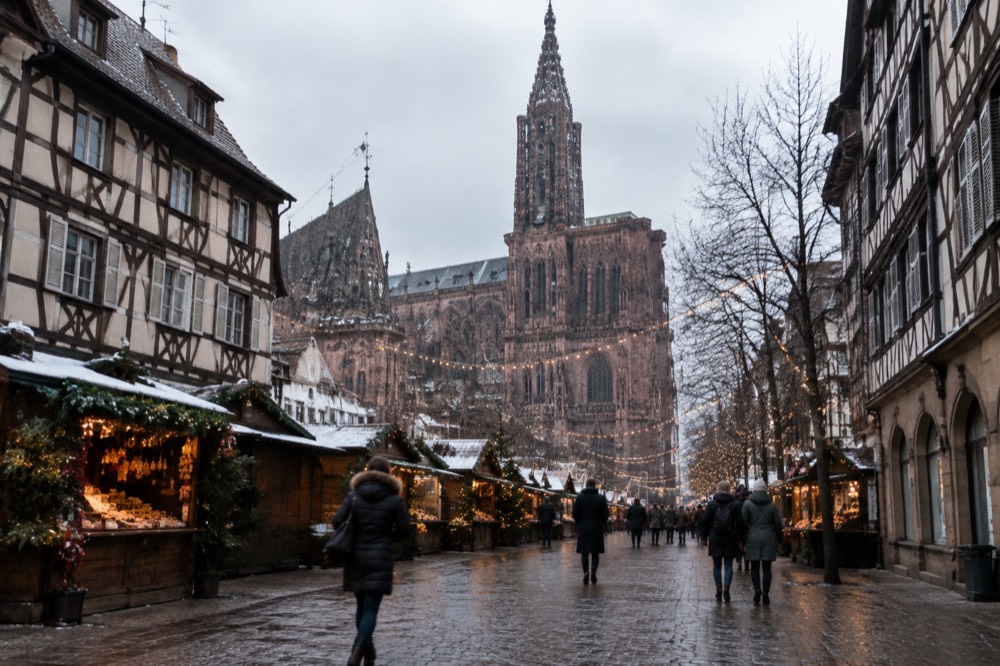
A sensible grazing order starts at the cathedral square for tarte flambée, works down to Place Kléber for a drink and a sweet, and finishes in Petite France after dark. Walk it once in daylight to see the layout, then eat it once at night. The whole circuit sits inside the Grande Île, the river-island historic centre, so nothing on this route is more than a stroll apart.
How To Plan A Full Food Day Around The Strasbourg Christmas Market
Plan the day as three passes: a late-morning circuit while the chalets are quiet and the ovens are fresh, a proper sit-down winstub lunch away from the market, and an evening graze after dark when the lights are on. Book the winstub, buy the clock or platform ticket early, and keep the market itself for standing food. December is cold, with a mean maximum of 5.9 C and 10.2 rain days, so build in warm-up stops.
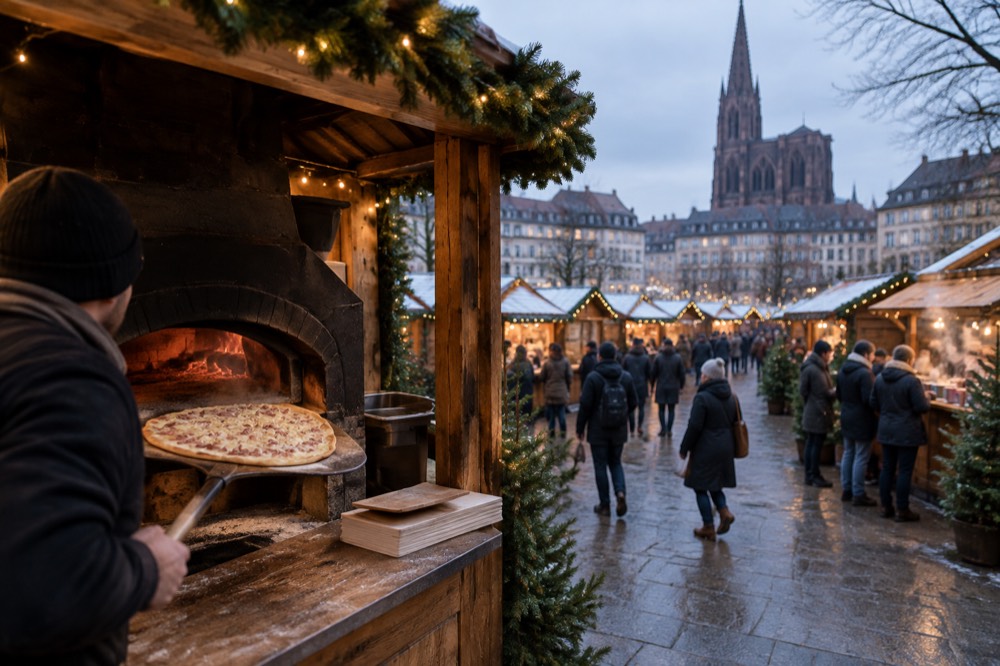
Chalets typically open late morning, the queues are short, and the tarte flambée stands fire their ovens fresh. This is the time to eat the things that suffer from waiting: anything from a wood oven, anything hot, chestnuts straight from the brazier. It is also the time to see the squares before the evening crowd; the Christmas market itinerary lays out a full route with timings.
Lunch is the meal to take indoors. A winstub lunch of choucroute or baeckeoffe, the slow-cooked meat and potato casserole, costs less patience than the same plate at dinner and resets you for the evening. The afternoon belongs to the non-food sights: the cathedral nave, the astronomical clock show at 12:30 (ticket 4 EUR, day-of purchase only), or the platform at 66 m, at 10 EUR full and 6 EUR reduced. The evening pass is for vin chaud, lights and sweets.
One way to cover the ground between food stops without walking every square twice is a guided segway loop. The guided segway tour runs with a local guide around the market squares and the Ill riverbanks, which pairs neatly with a day whose centre of gravity is a bench and a plate: ride the circuit, then settle. Check availability on the operator's live listing.
Which Traditional Alsatian Dishes To Try At The Market
The five dishes that define a Strasbourg Christmas food day are tarte flambée, bretzels, choucroute garnie, foie gras with Alsatian wine, and roasted chestnuts, with baeckeoffe as the indoor upgrade. Each has a season and a setting: the first three are chalet food, foie gras is the gift-and-treating food, and chestnuts are the walking food. Eat them in that order of commitment, from hand-held to sit-down.
Tarte flambée is the one dish you should not leave without trying, and the chalet versions are the point: a live wood fire, a two-minute bake, and a flatbread that never survives the walk. The traditional recipe is crème fraîche, onions and lardons, and the variations, gratinée with cheese, or forestière with mushrooms, are chalet inventions in the best sense. The tarte flambée guide covers its history and where the city's specialists are.
Choucroute garnie is the commitment meal, sauerkraut slow-cooked in Riesling under a load of smoked sausage, frankfurters and pork belly. At the market it is a bench plate rather than a chalet snack, and it is the dish that explains why the winstub lunch matters: eat it sitting down, with a Riesling, and let the evening be lighter. Foie gras and terrines are the treating side of the market, sold by weight from glass-fronted stalls, and they are the thing to carry home as well as eat there.
| Dish | Setting At The Market | Time Of Day It Suits | Level Of Commitment |
|---|---|---|---|
| Tarte flambée | Chalet oven, cathedral quarter | Late morning or early evening | Hand-held, minutes |
| Bretzel | Any chalet stall | Any time, between meals | One hand, walking |
| Choucroute garnie | Bench table or winstub | Lunch | A full hour, seated |
| Foie gras and terrine | Deli-style chalet | Any time; also travels | Bought by weight |
| Roasted chestnuts | Brazier stall | Evening, cold hands | A paper cone, walking |
| Baeckeoffe | Winstub only | Lunch | Slow food, indoors |
What To Drink: Vin Chaud, Alsatian Wine And Christmas Beer
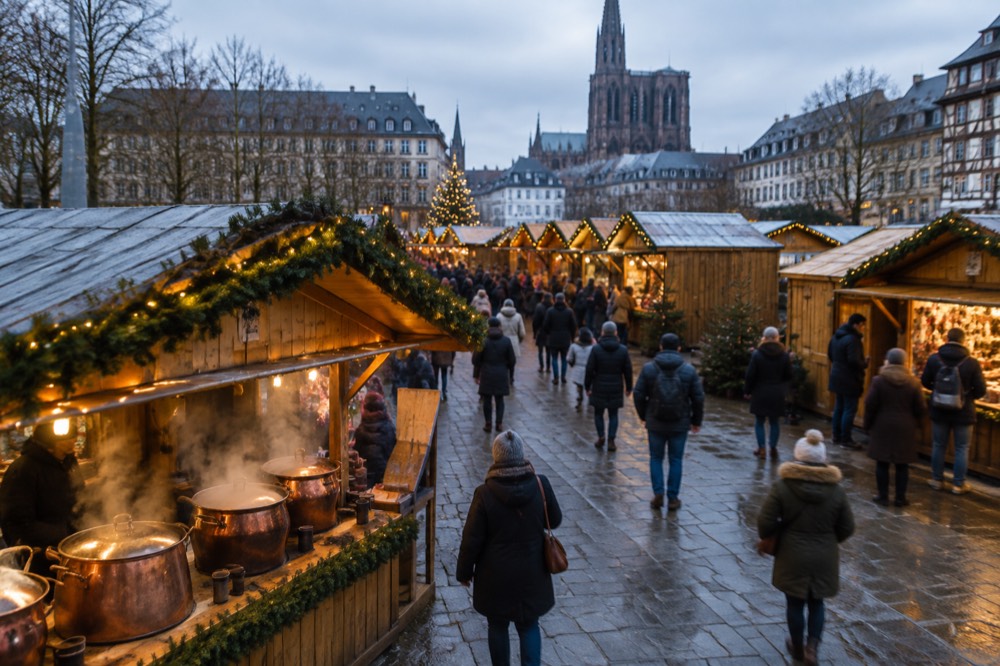
Vin chaud, mulled wine spiced with cinnamon and citrus, is the market's signature drink, served in branded mugs you pay a deposit on and return or keep. Around it sit Alsatian wine by the glass, Riesling and Gewurztraminer above all, Christmas beers brewed for the season, hot chocolate for children and drivers, and juice for the same. The mug deposit is the one system to understand before your first cup.
The mug works like this: you pay for the drink plus a deposit on the decorated ceramic mug, and you swap or return the mug at any participating chalet. Keeping it is allowed and it is the standard souvenir; the deposit is what stops the mugs walking off. The drink itself varies from stall to stall, some sweeter, some heavier on the spice, and part of the fun is finding your stand. More of these guides are collected on Strasbourg Travel Guide.
Alsatian wine deserves more attention than the hot version gets. The region's whites, above all Riesling, Gewurztraminer and pinot gris, are poured by the glass at several chalets and they are the correct partner for foie gras, choucroute and tarte flambée. The Alsace wine guide explains the grapes; the short version is that Riesling is dry and cutting, Gewurztraminer is aromatic and generous, and both are grown within a short drive of the city. Christmas beer, brewed spiced and strong for the season by Alsatian breweries, is the third option, covered with the city's wider beer culture in the Strasbourg beer guide.
| Drink | What It Is | Best Paired With | Who It Suits |
|---|---|---|---|
| Vin chaud | Red wine mulled with spice and citrus | Chestnuts, bredele, cold evenings | Everyone; the mug is the souvenir |
| Riesling by the glass | Dry Alsatian white | Tarte flambée, choucroute, terrines | Wine drinkers who like it dry |
| Gewurztraminer | Aromatic, generous white | Foie gras, gingerbread | Sweet-spice palates |
| Christmas beer | Seasonal spiced ale | Bretzels, sausages | Beer drinkers |
| Hot chocolate | Rich chocolate, cream | Kougelhopf, children | Families, drivers |
Which Sweets And Desserts Define A Strasbourg Christmas
The Christmas sweets are kougelhopf, the almond and raisin ring brioche; bredele, the small butter and spice biscuits baked before the market; gingerbread and pain d'épices in iced and stencilled forms; and the chocolate and covered-marshal stalls that fill the gaps. Mannala, the little brioche figures baked for Saint-Nicolas in early December, appear if you arrive in the market's first weeks. Sweets are the cheapest way to try everything.
Kougelhopf is the one to take seriously. It keeps for days, it travels, and it is the cake that says Alsace on a breakfast table back home; the kougelhopf guide covers where the city's best are baked. Bredele are the opposite: small, various, and at their best in mixed paper bags, butter biscuits with aniseed, cinnamon and orange. The chalets sell them by the box, and a mixed box is the correct purchase.
Gingerbread in Alsace is pain d'épices, honeyed rather than snappy, and the decorated loaves and stencilled hearts sold at the market are as much ornament as food. If your trip falls in the market's opening weeks, look for mannala, the brioche figures that mark Saint-Nicolas; the festival's dates move and the tourist office's events calendar lists them. For the sweet tooth's full itinerary, the dessert Strasbourg is known for is kougelhopf, and the answer has not changed in generations.
How To Budget For Food At The Strasbourg Christmas Market
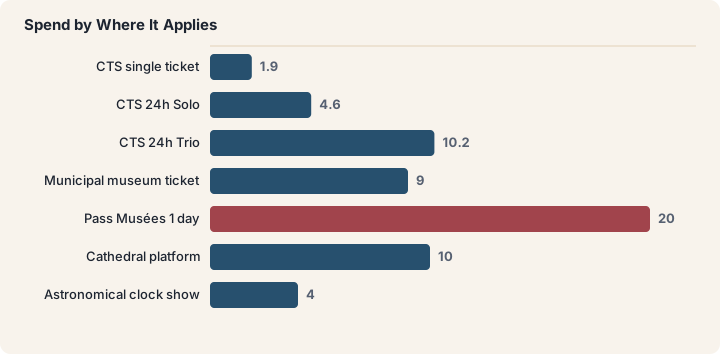
Budget for the market as a day of many small payments rather than one meal: standing food and drinks are bought per item per chalet, the mug carries a returnable deposit, and the big spends are the sit-down winstub lunch and any wine or foie gras you carry home. City transport is cheap, a 24-hour CTS pass is 4.60 EUR, and museum sightseeing around the market is free on the first Sunday of the month.
The pattern of spending is the thing to plan. A grazing day of tarte flambée, a bretzel, vin chaud and a box of bredele is a series of small sums, one per chalet, and it is easy to lose track; carry coins and small notes. The winstub lunch is a known quantity, a sit-down price on a printed menu, and it is the meal worth booking. Anything you buy to carry home, wine by the bottle, foie gras by the tin, a ceramic kougelhopf mould, is gift shopping rather than food spending, and it deserves its own budget line.
Sightseeing around the eating is cheap or free. Strolling the squares and streets costs nothing, the municipal museums are 9 EUR full and 5 EUR reduced with a 20 EUR one-day pass covering them, and every municipal museum is free on the first Sunday of the month. The Musée Alsacien, the folklore museum a food-focused visitor might expect, is closed for works until 2028, so do not plan around it. The Strasbourg City Card, 5 EUR for seven days, is a discount card rather than a pass, worth it if the reductions line up with your plans.
| Spend | What You Get | Where It Applies | Notes |
|---|---|---|---|
| CTS single ticket | One tram or bus ride | 1.90 EUR via app or contactless, 2.50 EUR on board | Cheapest way in and out |
| CTS 24h Solo | Unlimited travel for one | 4.60 EUR | Suits a one-day market visit |
| CTS 24h Trio | Unlimited travel, 2-3 people | 10.20 EUR | Pays off for couples |
| Municipal museum ticket | One museum, full price | 9 EUR, 5 EUR reduced | Free first Sunday of the month |
| Pass Musées 1 day | The municipal museums | 20 EUR | Only worth it beyond two museums |
| Cathedral platform | The tower view at 66 m | 10 EUR full, 6 EUR reduced | Closed 1 Jan, 1 May, 25 Dec |
| Astronomical clock show | The 12:30 automaton display | 4 EUR | Day-of purchase only, no reservations |
Which Guided Food Experiences Pair Well With The Market
A guided food walk is the best pairing for the market itself, because a local guide routes you to the producers and explains what you are eating between stops; a gourmet tasting walk covers several stops with tastings built in; and a segway or bike loop covers the ground between food stops. The market chalets serve food fast and explain nothing, so the guided layer is where the story gets told.
The gourmet tastings walk strings together several tasting stops with a guide, a format that suits a first visit: you cover more ground than a self-guided graze, and the tastings are pre-arranged rather than queued for. It is also the answer to the December cold, since stops alternate between street and indoors.
To cover the tasting stops without planning each one yourself, book a gourmet food tour here.
For visitors who want the market's traditional cooking rather than gourmet stops, the traditional food walk takes the winstub route, the sit-down dishes and the city's everyday eating culture, which balances a day of standing chalet food with the real thing on a plate.
A different pairing again is the Christmas markets day tour, which takes the market idea beyond the city to the Alsatian towns that run their own, a full-day format for visitors who want the regional picture rather than a second day in the same squares. Colmar's market is the well-known alternative, and the Colmar Christmas Market guide plus the Christmas markets in Alsace overview cover the wider map; the question of Strasbourg or Colmar comes down to whether you want one big city market or a picture-postcard one.
What To Know Before You Go: Weather, Timing And Getting Around
Strasbourg in December is cold and damp, averaging a daily high of 5.9 C and a low of 0.8 C with 45.2 mm of rain across 10.2 rain days, so pack warm layers, waterproof shoes, and plan indoor warm-up stops. The 2026 market dates are not yet announced, but the usual pattern runs from the last week of November until 24 December, closing early that final day, and the tram network delivers you right to the squares, with a 24h pass costing 4.60 EUR.
The weather numbers deserve respect. This is a semi-continental climate, cold enough in December that a day of standing outdoors needs planning: gloves you can eat in, shoes that survive wet cobbles, and a route with indoor stops built in. Rain is more likely than snow, and the rain days figure, 10.2 for the month, means a waterproof layer earns its space. The Strasbourg in winter guide and the Strasbourg weather guide carry the full picture, including the monthly normals.
Timing follows the crowd. The 2025 edition's attendance of 3.05 million over roughly four weeks means the squares fill after dark, and the calm windows are late morning and the early afternoon. Weekdays beat weekends, and the market's opening fortnight is quieter than the run to Christmas. If your dates are flexible, the how many days you need for the Christmas markets question is worth settling before you book, and the market dates answer tracks the official announcement.
| Month | Mean Maximum | Mean Minimum | Rainfall | Rain Days Of 1 mm Or More |
|---|---|---|---|---|
| November | 9.4 C | 3.3 C | 47.6 mm | 9.2 |
| December | 5.9 C | 0.8 C | 45.2 mm | 10.2 |
Getting around the market is trivial once you are in the centre: the whole circuit is walkable, and the tram exists for the legs at either end. A single ticket is 1.90 EUR from the app or contactless, 2.50 EUR bought on board, and the 24h Solo at 4.60 EUR covers a day of coming and going. Visitors flying in should note the airport train shuttle runs to the central station in 8 minutes, with a combined ticket covering train and city travel at 4.60 EUR. The getting around Strasbourg guide has the full transport detail.
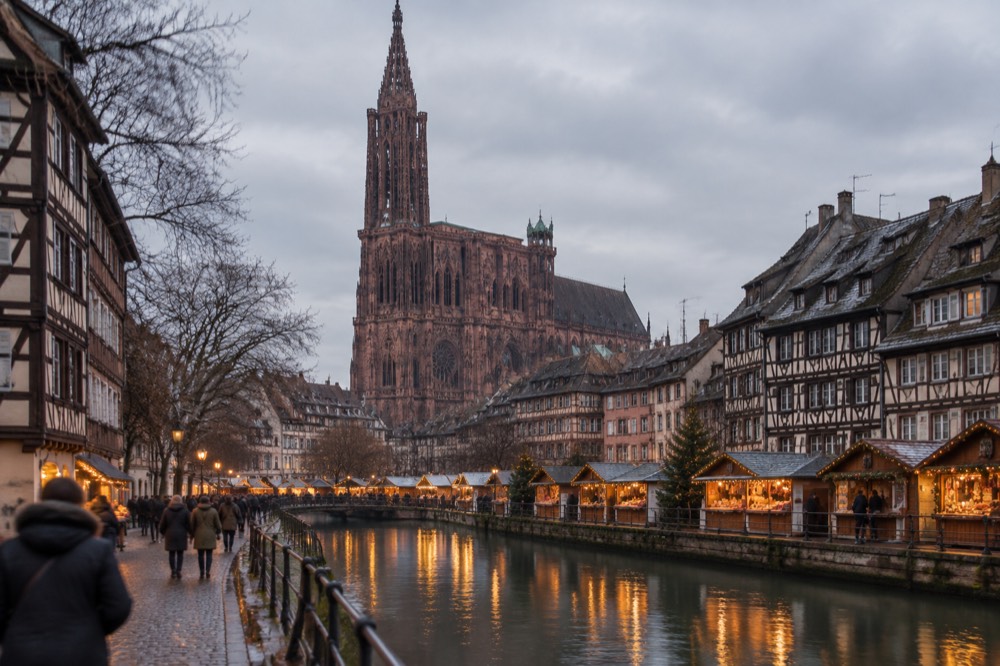
For a stay built around the food, choose a base inside the Grande Île or just across the river from it: everything in this guide is then a walk away, and the evening graze ends at your door. The where to stay for the Strasbourg Christmas Market guide maps the neighbourhoods against the squares, and visitors coming from Paris should read the Strasbourg Christmas Market from Paris guide for the rail options.
Common Questions About Strasbourg Christmas Market Food
What food is the Strasbourg Christmas Market known for?
Tarte flambée from wood-fired chalet ovens, warm bretzels, choucroute garnie, foie gras and terrines, roasted chestnuts, and sweets including kougelhopf, bredele and pain d'épices, with vin chaud as the standing drink. It is Alsatian farmhouse cooking served standing up, not French bistro food, and the cathedral quarter is where the wood-fired stands cluster.
How much does food cost at the Strasbourg Christmas Market?
Chalet food is bought per item, in small sums spread across the day, so plan for many small payments rather than one meal. The mug for vin chaud carries a returnable deposit you can also keep as a souvenir. The sit-down winstub lunch is the known-quantity spend, with prices printed on the menu.
Where is the best place to eat at the Strasbourg Christmas Market?
Place du Château for wood-fired tarte flambée, Place Kléber for the biggest spread and the tree, Place Gutenberg for winstub food within steps of the chalets, and Petite France for the prettiest backdrop and smaller stalls. A grazing route that takes in all of them fits inside the Grande Île.
What drink should I try at the Strasbourg Christmas Market?
Vin chaud, the spiced mulled wine served in deposit-mug ceramic cups, is the signature. Around it, Alsatian whites by the glass, above all Riesling and Gewurztraminer, pair with the food, and spiced Christmas beer covers the beer drinkers. Hot chocolate suits children and drivers.
When does the Strasbourg Christmas Market open?
The 2026 dates are not yet published; the city's Christmas site states the programme is still being finalised. The usual pattern is an opening in the last week of November and a run to 24 December, with the final day closing early in the evening. Last year's edition ran 26 November to 24 December.
Is a food tour worth it at the Strasbourg Christmas Market?
A guided food walk is the layer the chalets do not provide: pre-arranged tastings, a route to the best producers, and the story behind the dishes between stops. It suits a first visit, a cold day, or anyone who would rather eat than queue. The market itself explains nothing, so the guide is where the context comes from.
Eat the market the way the city eats it: early, in motion, and with a plan for the one meal that deserves a chair.