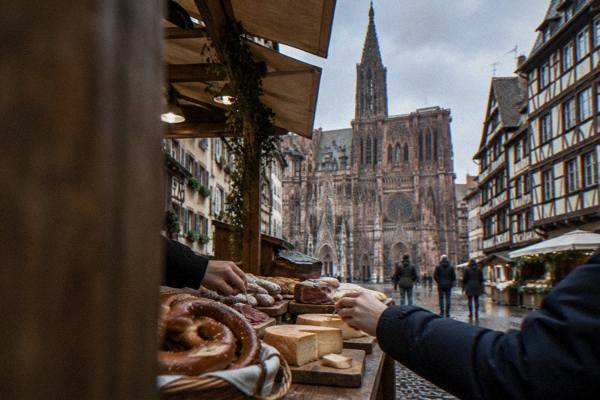
What Dessert Is Strasbourg Known For?
The dessert Strasbourg in France is known for is the kougelhopf, an Alsatian ring-shaped brioche with almonds and raisins. Here is where to eat it and what else to try.
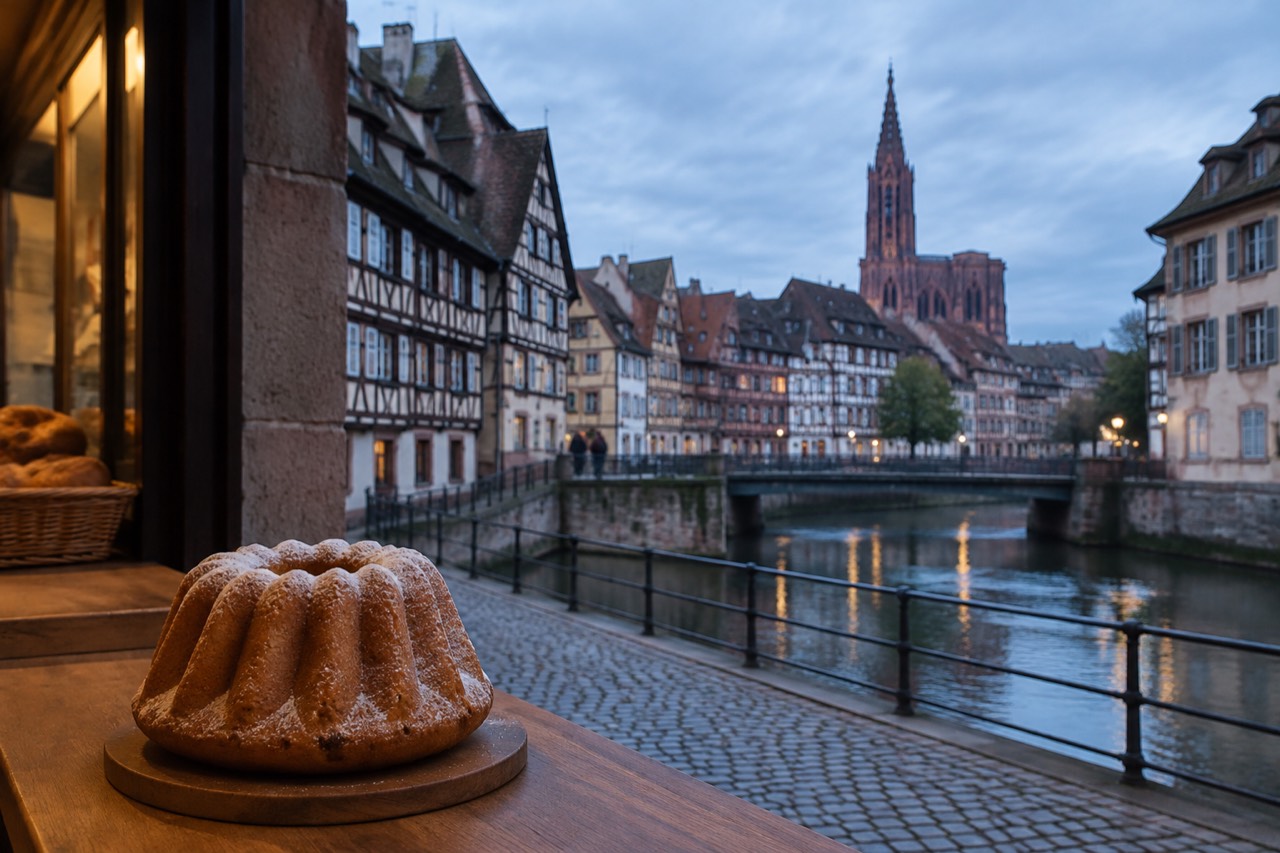
Strasbourg, the prefecture of the Bas-Rhin in Alsace, north-eastern France, is a city that takes its bakery counter as seriously as its cathedral, and the dessert it is known for is the kougelhopf: a tall, ring-shaped brioche baked in a fluted mould, studded with almonds and raisins, and dusted with icing sugar. You will see its distinctive shape on tablecloths, shop signs and souvenir ceramics all over the Grande Île. The cake is the edible emblem of the whole Alsace region, and Strasbourg is where visitors usually meet it first.
What Dessert Is Strasbourg Known For?
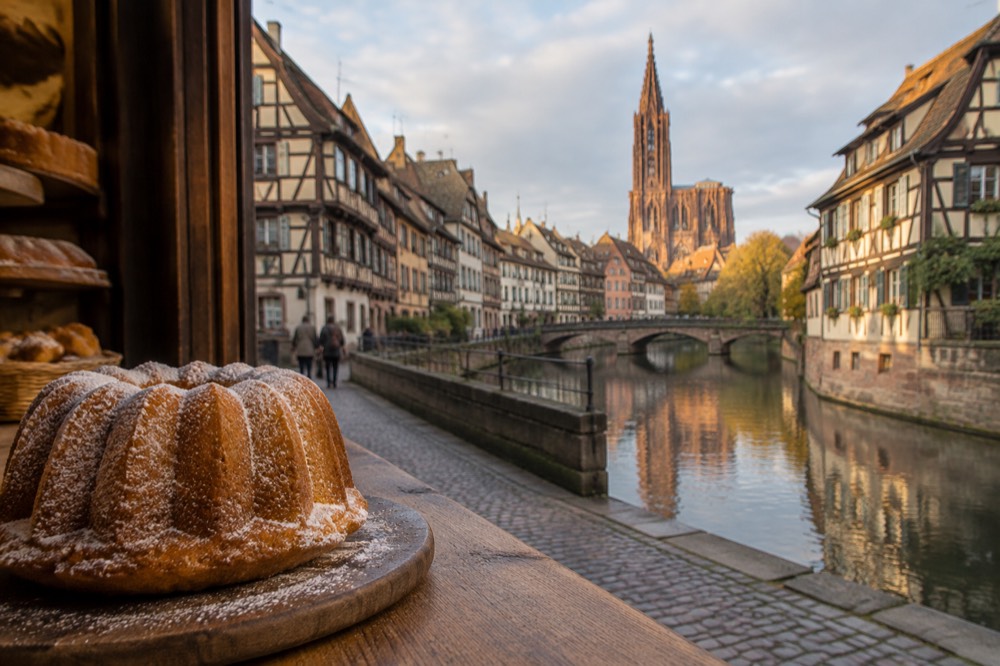
The dessert Strasbourg is known for is the kougelhopf, a yeasted ring-shaped brioche from Alsace, baked in a scalloped mould with raisins and whole almonds on top and a snow of icing sugar. It is served at breakfast, with afternoon coffee and as a dessert in the city's winstubs, often alongside a glass of local wine. No other Alsatian sweet carries the same regional identity, and no visit to Strasbourg is complete without a slice.
The name itself tells you where the cake belongs. Kougelhopf is an Alsatian word, and the cake belongs to the whole region rather than to Strasbourg alone: it appears on tables in Colmar, in the wine villages of the Alsace Wine Route, and across the border in German bakeries under a cousin spelling. What Strasbourg offers is the densest concentration of places to eat it, from traditional winstubs in the Petite France quarter to plain neighbourhood bakeries where locals buy theirs on a Sunday morning.
The cake is richer than a standard brioche and firmer than a sponge, with a slightly dry crumb that is made for soaking up coffee or sweet wine. A proper kougelhopf should be tall, with a defined fluted silhouette, a golden crust and a soft interior threaded with raisins that have usually been soaked beforehand. The almonds sit in the hollows of the mould and end up toasted on the crown. It keeps for a couple of days and is often sliced rather than portioned, which is why winstubs treat it as a sharing dessert rather than an individual plated one.
If you want the fuller picture of how the city's food culture fits together, the pieces are connected: the signature dish of Strasbourg is savoury, the dessert is sweet, and both are built on the same Alsatian pantry of butter, cream, pork and Riesling. Reading up on why Strasbourg is so famous before a trip helps put the bakery counter in context, and planning with how many days in Strasbourg is enough leaves room for both the cathedral and the cake.
Where To Eat Kougelhopf In Strasbourg
The best places to eat kougelhopf in Strasbourg are the winstubs of the Grande Île and Petite France, where it is served sliced as a dessert with a glass of Alsace wine, and the city's traditional bakeries, which sell whole cakes to take away. A winstub portion comes with the local pairing culture; a bakery cake comes fresh and warm if you time it to the morning batch. Both routes are cheap compared with a restaurant dessert.
Kougelhopf pairs naturally with a glass of local wine. Book a wine tasting here.
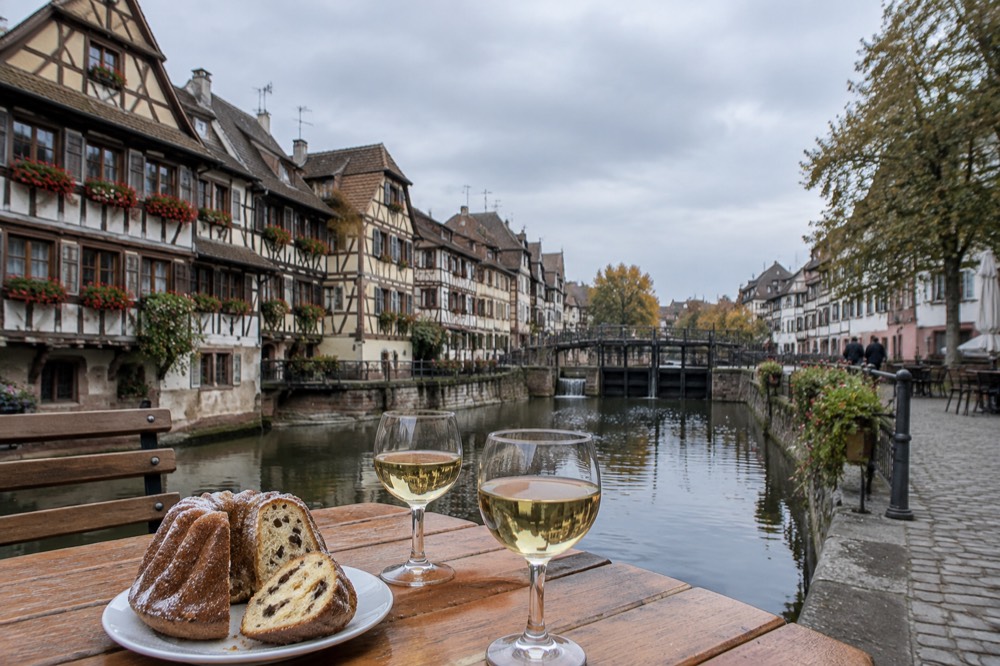
The winstub is the Alsatian equivalent of a tavern, a wood-panelled dining room serving regional plates, and the kougelhopf on its dessert list is usually the house cake. Order it after a plate of choucroute or tarte flambée and you get the classic sequence: savoury Alsatian, then sweet Alsatian, with the same glass of wine carrying through. The cake pairs naturally with the late-harvest and vendange tardive styles of Alsace wine, whose sweetness matches the brioche, and a server will often suggest exactly that.
Bakeries are the other route, and the more everyday one. Strasbourg's boulangeries bake kougelhopf in the distinctive glazed earthenware moulds that are also sold as souvenirs, and a whole cake from a neighbourhood bakery is the version locals actually eat at home. Go in the morning for the freshest bake, and expect the mini kougelhopf, a small individual ring, to be sold alongside the full-size one. The miniature is the standard coffee-break format in offices across the city.
| Where you buy it | Format | What you get | Best timing |
|---|---|---|---|
| Winstub in the Grande Île | Sliced portion | Dessert with a suggested wine pairing | After lunch or dinner service |
| Traditional bakery | Whole or mini cake | Take-away cake, freshest of the day | Morning, close to the bake time |
| Christmas market chalet | Slice or mini | Seasonal stall version beside mulled wine | Late November to 24 December |
| Alsatian food shop | Packaged cake | A cake to carry home as a gift | Any opening hour |
The Christmas market deserves its own line in that table. Strasbourg's market is a food event as much as a craft one, and the kougelhopf stalls are part of the winter landscape of the Grande Île. The city's Christmas site states that the 2026 dates and programme are still being finalised, so confirm them there before planning a December trip around the cake; the usual pattern runs from the last week of November to 24 December, and last year's edition drew 3.05 million visitors.
A guided walk is a good way to work between the bakery stops, and the food side of the city rewards a guide who knows which counter to point at.
What Other Alsatian Sweets Are Worth Trying?
Beyond kougelhopf, the Alsatian sweets worth trying in Strasbourg are the bredele, the small spiced biscuits baked for Christmas; pain d'épices, a honey and spice loaf; and the fruit tartes built on Alsatian quetsches, mirabelles and red berries in late summer. Each belongs to a season, so what is on the counter depends heavily on the month you visit. Christmas is the peak, and the bredele season turns every bakery into a biscuit shop.
The bredele are the Christmas institution. Dozens of varieties, from buttery sablé to cinnamon and anise versions, are baked at home and sold by weight in the weeks before Christmas, and the assortment plate is the standard December offering with coffee. The tradition is domestic first and commercial second: families bake their own batches, and the bakery counter simply mirrors what happens in kitchens across the region. Pair a visit with is December a good time to visit Strasbourg, because the month changes the entire dessert landscape of the city.
Pain d'épices is the quieter classic, a dense honey-and-spice loaf sold sliced, and it makes a good breakfast alternative when a full kougelhopf feels too rich. The fruit tartes are the summer answer: Alsace grows quetsches, a small dark plum, and mirabelles, and the late-summer weeks fill bakery windows with open fruit tartes that need nothing but the fruit itself. More of these guides are collected on Strasbourg Travel Guide.
| Sweet | What it is | Its season | Where to find it |
|---|---|---|---|
| Kougelhopf | Ring-shaped brioche with almonds and raisins | All year, plus a Christmas stall presence | Winstubs, bakeries, market chalets |
| Bredele | Small assorted Christmas biscuits, sold by weight | Late November to Christmas | Bakeries and Christmas market stalls |
| Pain d'épices | Honey and spice loaf, sliced | All year | Bakeries and food shops |
| Fruit tarte | Open tart of quetsches, mirabelles or berries | Late summer | Bakery counters |
A food tour is the most efficient way to sample across that table without doing the research yourself, and Strasbourg has a tasting walk that covers the city's traditional plates, including its sweets. The tour runs about three and a half hours with a local guide leading from stop to stop.
How Kougelhopf Fits A Strasbourg Day
A kougelhopf stop fits most naturally into the middle of a Strasbourg day: a slice at breakfast with coffee, a walk through the Grande Île and Petite France in the morning, a winstub lunch, and the dessert portion after the evening plate. The city centre is compact and walkable, so the cake is never more than a few minutes off any route, and the bakery detour costs almost no time.
The practical shape of the day matters because Strasbourg rewards walking. The historic core is a UNESCO World Heritage property, "Strasbourg, Grande-Île and Neustadt", with the Neustadt as the later extension, and the distance from the cathedral to Petite France is short enough that a dessert stop slots between them without effort. Is Strasbourg a walkable city? Yes, and the dessert map is effectively the sightseeing map: the best bakeries sit inside the same streets as the half-timbered facades.
For travellers who want the dessert in its regional context, the wine route villages are where the kougelhopf is a household staple rather than a tourist item, and a day trip from Strasbourg into the Alsace countryside pairs the cake with the places that bake it at home. The Best of Alsace historical day trip covers that loop with a guide, and you can check dates and seats through the operator's live listing: Check availability.
When Is The Best Season For Alsatian Desserts?
December is the strongest single season for Alsatian desserts, because the Christmas market brings the bredele, the kougelhopf stalls and the mulled wine together across the historic centre, but the late-summer fruit tartes are the quieter rival. Spring and autumn are the shoulder choices: full bakery ranges, thinner crowds and comfortable walking weather between stops.
The winter case rests on concentration. During the market weeks the dessert culture of the whole region is on display in one walkable centre, and the pairing of a warm slice with a glass of mulled wine is the season's signature combination. The city's Christmas site confirms that the 2026 dates and programme are still being finalised, so check it before booking anything around the opening week; the pattern in recent editions has been a late-November start and a 24 December close.
The summer case rests on fruit. The quetsche and mirabelle harvests land in the orchards of Alsace in late summer, and the open tartes that follow are among the simplest and best things in the city's bakery windows. Either season delivers; the choice is between spice and fruit.
| Season | Dessert highlight | The pairing | What to check first |
|---|---|---|---|
| December | Bredele and market kougelhopf | Mulled wine or sweet Alsace wine | The city's Christmas site for dates |
| Late summer | Quetsche and mirabelle tartes | Riesling or coffee | Bakery windows for the fruit in season |
| Spring and autumn | Full kougelhopf range | Coffee or vendange tardive | Winstub dessert lists |
Whatever the month, the kougelhopf is the one dessert that defines the city, and it travels well: a whole cake wrapped for the journey home is the standard souvenir, and the mould itself, sold in kitchen shops across the old town, lets you attempt the bake at home with the exact shape Strasbourg is known for.
Common Questions About Strasbourg Desserts
What dessert is Strasbourg known for?
Strasbourg is known for the kougelhopf, a ring-shaped Alsatian brioche baked in a fluted mould with raisins and almonds and dusted with icing sugar. It is served in winstubs as a dessert with a glass of sweet Alsace wine, and sold whole in the city's bakeries.
What is a kougelhopf made of?
A kougelhopf is a yeasted brioche dough enriched with butter and eggs, baked in a scalloped ring mould, with raisins folded through the dough and whole almonds set into the top. It is finished with a light dusting of icing sugar and served sliced.
Where can I buy a kougelhopf in Strasbourg?
Traditional bakeries across the Grande Île and the surrounding neighbourhoods sell whole and mini kougelhopf, best bought in the morning near the bake time. Winstubs serve it by the slice as a dessert, and Christmas market chalets sell a seasonal version in December.
What wine goes with kougelhopf?
Sweet and late-harvest Alsace wines are the classic pairing, because their richness matches the butter in the brioche. Winstubs frequently suggest a vendange tardive with the slice; coffee is the everyday non-alcoholic partner at breakfast.
Are bredele only available at Christmas?
Yes, bredele are a Christmas-season biscuit, baked and sold in the weeks before Christmas. Outside that window, the year-round Alsatian sweets are the kougelhopf and pain d'épices, with fruit tartes joining them in late summer.
Can I bring a kougelhopf home from Strasbourg?
A whole kougelhopf keeps for a couple of days and travels well wrapped, which is why it is a standard souvenir. Alsatian food shops also sell packaged versions built for longer journeys, and the fluted mould itself is sold in kitchen shops across the old town.