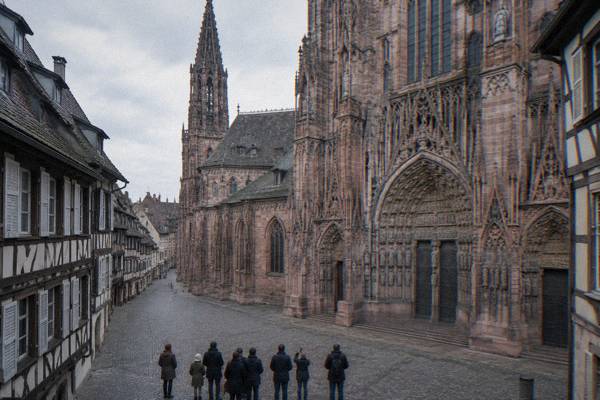
How Many Days In Strasbourg Is Enough?
A practical answer to how many days Strasbourg needs, with one-day, two-day and three-day plans, entry prices and day-trip options.
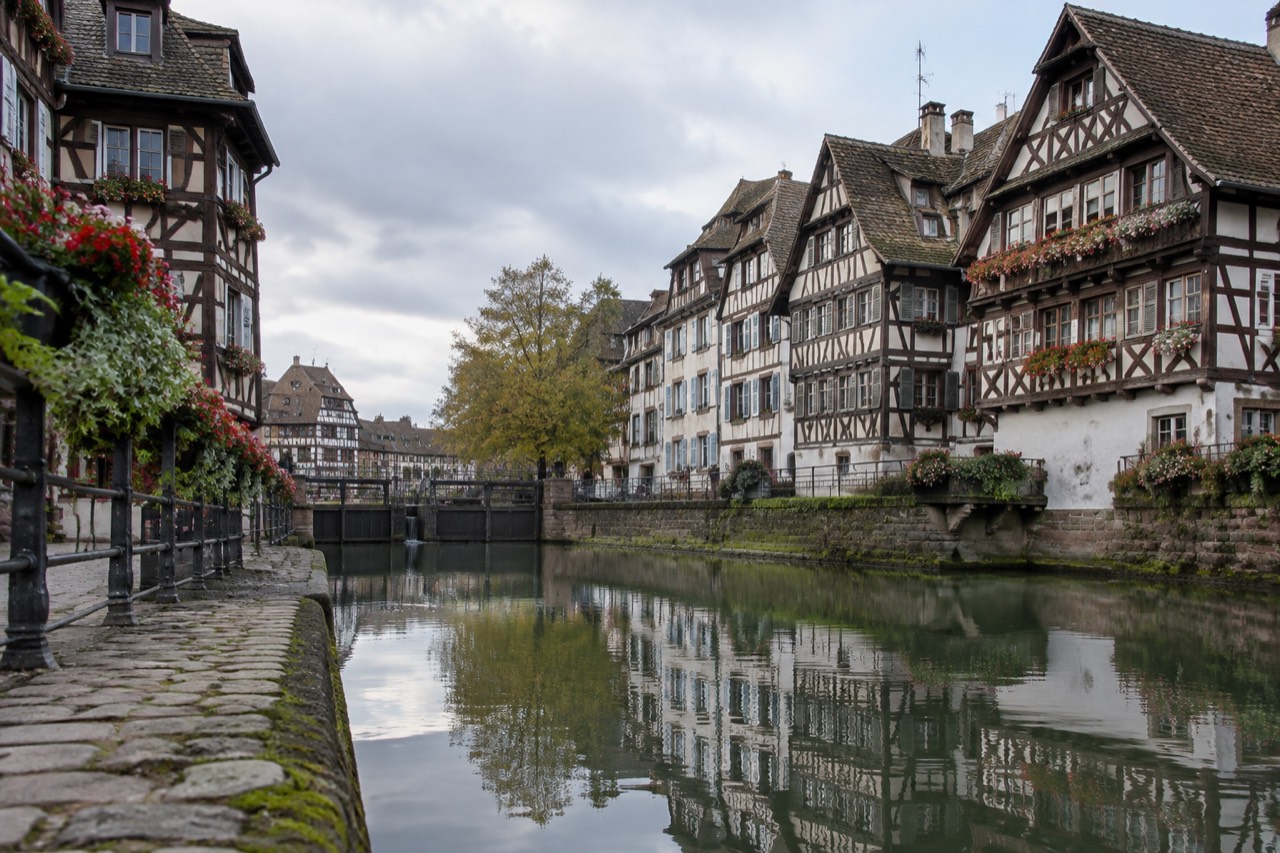
Strasbourg, the prefecture of the Bas-Rhin in Alsace, sits in north-eastern France on the River Ill, a short way from the Rhine and the German border. The city that greets you is small at its core: the Grande Île, the river-island old centre, is a UNESCO World Heritage property together with the later Neustadt extension, and nearly everything a first visitor wants sits within walking distance of it. That compactness is why the question of trip length has a shorter answer here than in Paris or Lyon, and why adding a day buys real new sightseeing rather than just slower pacing.
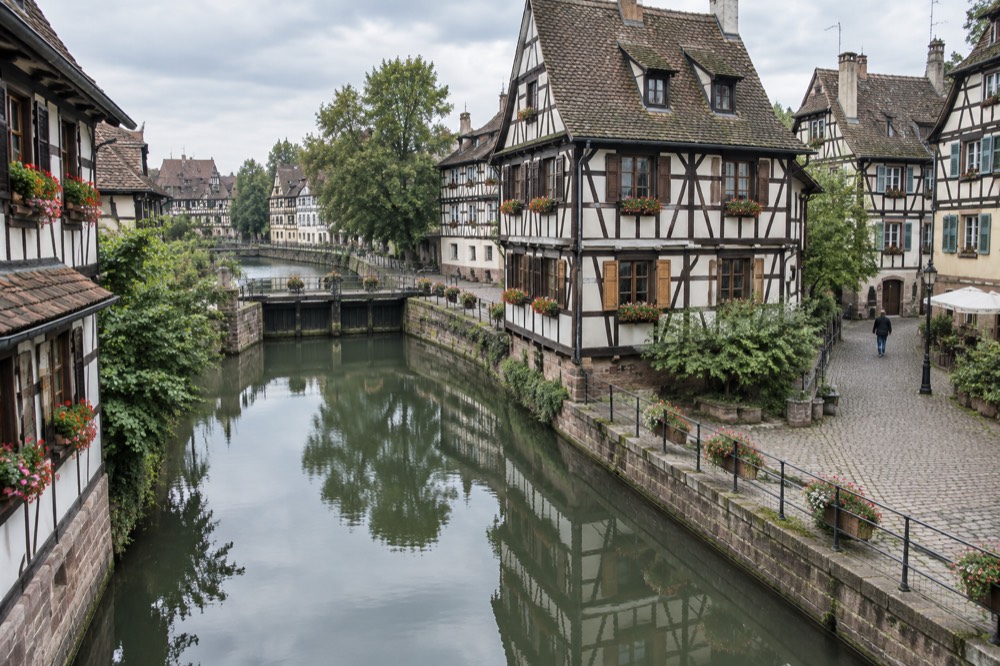
The honest answer depends on three things: whether you want to go inside the museums or just walk past them, whether the Christmas market season is part of the plan, and whether you intend to use Strasbourg as a base for Alsace or the Black Forest. The sections below work through each length of stay, what it realistically contains, and where the time pressure appears.
How Many Days In Strasbourg Is Enough?
Two full days is enough for Strasbourg itself, and it is the right answer for a first visit. Two days cover the cathedral and its astronomical clock, Petite France, the Ponts Couverts and Barrage Vauban terrace, a boat circuit on the Ill, and time to eat in a winstub. A third day is worth adding when you want the municipal museums, the European Quarter, or a day trip into the Alsace wine country or across the Rhine.
The reason two days works is geometry. The old centre is an island roughly a kilometre from end to end, so sightseeing time is spent looking at things rather than moving between them. Strasbourg is also a genuinely walkable city, a point covered in detail in is Strasbourg a walkable city, and the tram network fills any gap quickly: a CTS single ticket is 1.90 EUR bought through the Badgéo card, the CTS app or contactless payment, or 2.50 EUR bought on board a bus, and a 24h Solo pass is 4.60 EUR.
| Trip length | What it comfortably contains | Who it suits |
|---|---|---|
| One day | Cathedral nave, astronomical clock show, Petite France, Ponts Couverts, one winstub meal | Cruise stopovers, rail passers-through, a first taste before a longer return |
| Two days | All of the above plus the cathedral platform, a Batorama boat circuit, Place Kléber and Place Gutenberg, unhurried meals | First-time visitors, most short breaks |
| Three days | All of the above plus two or three municipal museums and the European Quarter | Museum lovers, architecture enthusiasts |
| Four days or more | All of the above plus one or two day trips into Alsace or Germany | Travellers using Strasbourg as a regional base |
Notice what the table does not say: that one day is a bad idea. A single day in Strasbourg is a real visit, and the section below shows how to spend it without feeling rushed. The trap is trying to force the museums into it.
What Can You Fit Into One Day In Strasbourg?
A well-planned single day in Strasbourg holds the cathedral nave, the 12:30 astronomical clock show, Petite France, the Ponts Couverts and Barrage Vauban terrace, and a boat tour, with a winstub lunch in between. What it cannot hold is the municipal museums, the European Quarter, or any day trip. Choose a walking core and accept the omissions.
Start at the cathedral. The nave is open Monday to Saturday from 08:30 to 11:15 and from 12:45 to 17:45, and on Sundays from 14:00 to 17:15, so an early start lets you see it before the square fills. The astronomical clock performs its full automaton show daily at 12:30 sharp; the ticket is 4 EUR, with reduced rates for groups and students, and it is sold on the day only, so plan to buy in the morning rather than at noon.
The afternoon belongs to the river quarter. Walk down to Petite France, the former tanners' and millers' district of half-timbered houses and canal views, then continue to the Ponts Couverts and climb the Barrage Vauban terrace, which keeps seasonal opening hours, for the classic panorama back across the old town. A Batorama boat circuit is a sensible way to close the day: the short Blue Tour runs 45 minutes at 12.50 EUR full fare or 7.20 EUR reduced, and the long Red Tour runs 1h10 at 16.20 EUR full or 8.90 EUR reduced.
A guided walk compresses this further. The Welcome To Strasbourg small-group walking tour is built exactly for this kind of day, since a local guide covers the old town's layout and history in one organised sweep; Check availability on the operator's live listing. A shorter alternative with a different pace is described in the two-day section below.
A guided walk compresses this further. Book a free walking tour here.
One warning about the one-day plan in December: the Christmas market changes the arithmetic. Chalets typically open from late morning into the evening, and the market's pull is strong enough that a day planned around the cathedral and Petite France will drift toward the markets whether you intend it or not. The question of how many days the Christmas market edition of Strasbourg needs has its own answer in how many days do you need in Strasbourg for Christmas markets, and that answer starts at two.
Is Two Days The Right Length For Strasbourg?
Yes, two days is the right length for a first visit to Strasbourg, and it is the length this site recommends by default. Day one covers the cathedral, the clock, Petite France and the river; day two adds the cathedral platform, a boat tour, the Neustadt and slower food. Two days also absorb bad weather without losing a whole sight.
The second day is where the city opens up. The cathedral platform, at 66 m up the single spire, costs 10 EUR full fare or 6 EUR reduced, with children under 6 free, and runs seasonal hours: from 1 April to 30 September it opens 09:30 to 13:00 and 13:30 to 20:00 with the last ascent at 19:15, and from 1 October to 31 March it opens 10:00 to 13:00 and 13:30 to 18:00 with the last ascent at 17:15. It closes on 1 January, 1 May and 25 December. The platform ticket also carries a reduced rate at the Musée de l'Œuvre Notre-Dame, which makes pairing the two a natural second-morning plan. More of these guides are collected on Strasbourg Travel Guide.
For the second afternoon, cross into the Neustadt, the German imperial quarter added to the World Heritage property as a later extension, and finish with a long dinner. A full two-day plan with timings is laid out in a two-day Strasbourg itinerary. A guided historic-centre walk is a good way to anchor day two if you would rather not navigate the detail yourself.
The historic-centre walking tour above is the mid-length option: it spends part of the day on the old core with a guide, which leaves time for the platform, the platform-adjacent museum, or simply sitting in a winstub with a glass of Alsace wine.
| Sight or ticket | Full fare | Reduced | Notes |
|---|---|---|---|
| Cathedral platform | 10 EUR | 6 EUR | Children under 6 free; closed 1 Jan, 1 May, 25 Dec |
| Astronomical clock show | 4 EUR | 3 EUR groups and students, 2 EUR ages 6-17 | Sold on the day only, show at 12:30 |
| Municipal museum ticket | 9 EUR | 5 EUR | Free on the first Sunday of every month |
| Pass Musées, 1 day | 20 EUR | - | Covers the municipal museums in one day |
| Batorama long tour (Red, 1h10) | 16.20 EUR | 8.90 EUR | Old town and European Quarter circuit |
| Batorama short tour (Blue, 0h45) | 12.50 EUR | 7.20 EUR | Compact old town circuit |
| Strasbourg City Card | 5 EUR adult | 3.50 EUR ages 3-17 | A 7-day discount card, not an all-inclusive pass |
Two practical notes sit inside that table. The first-Sunday rule is the strongest saver in the city: every municipal museum is free on the first Sunday of the month, so a visit that lands on one saves the 9 EUR ticket at each museum it enters. The City Card is the other: it is a 5 EUR discount card valid for 7 days, worth buying only if your list of paid attractions is long enough for the reductions to clear the card's own price.
When Does Strasbourg Need Three Days Or More?
Three days becomes the right answer when museums or the European Quarter matter to you, or when December brings the Christmas market. Two museum-heavy days plus the Palais Rohan cluster and the Musée de l'Œuvre Notre-Dame fill a third day easily, and the European Quarter with the Parlamentarium Simone Veil takes half a day on its own. Market season rewards the extra day at every turn.
The museum case is straightforward. The municipal museums cost 9 EUR full or 5 EUR reduced each, or 20 EUR for a one-day pass, and they are scattered rather than clustered: the fine arts and archaeological collections sit in the Palais Rohan, the modern collection at MAMCS faces the river, and the cathedral workshops' sculpture museum stands beside the cathedral itself. Note one exception: the Musée Alsacien is closed for works until 2028 and cannot be part of any plan.
The European Quarter is the other third-day candidate. The Parlamentarium Simone Veil, the European Parliament's visitor centre, opens Monday to Friday 09:00 to 18:00 and Saturday 09:30 to 12:00 and 13:00 to 18:00 outside plenary weeks, with an airport-style security check at entry and different hours during plenary weeks, so its official page is the one to check before you go. A guided walk of the district turns the institutional sprawl into something legible; the Welcome To Strasbourg small-group tour below is the walking-tour pairing this site suggests for a first visit of any length.
If your third day is a market day rather than a museum day, spend it slowly. The 2025 edition of Strasbourg's Christmas market ran from 26 November to 24 December and drew 3.05 million visitors, and the city posts each edition's dates on its Christmas site, so confirm them there before booking anything. A three-day framework for that season is laid out in a three-day Strasbourg itinerary.
How Do Day Trips Change The Trip Length?
Day trips do not shorten what Strasbourg itself needs, they add days on top of it. Keep two days for the city, then add one full day per excursion: the Alsace wine route and its villages, Colmar, or the Black Forest across the Rhine in Germany each consume a day. A Strasbourg stay of four nights is the practical floor for the city plus two excursions.
This is the planning mistake worth avoiding: booking two nights in Strasbourg and hoping to squeeze Colmar or a wine village into the gaps. The old town deserves its two days on its own terms, and every excursion is a full-day commitment, so the arithmetic is additive. The pairing question for Colmar specifically, including how its own old town compares, is handled in how many days in Colmar is enough.
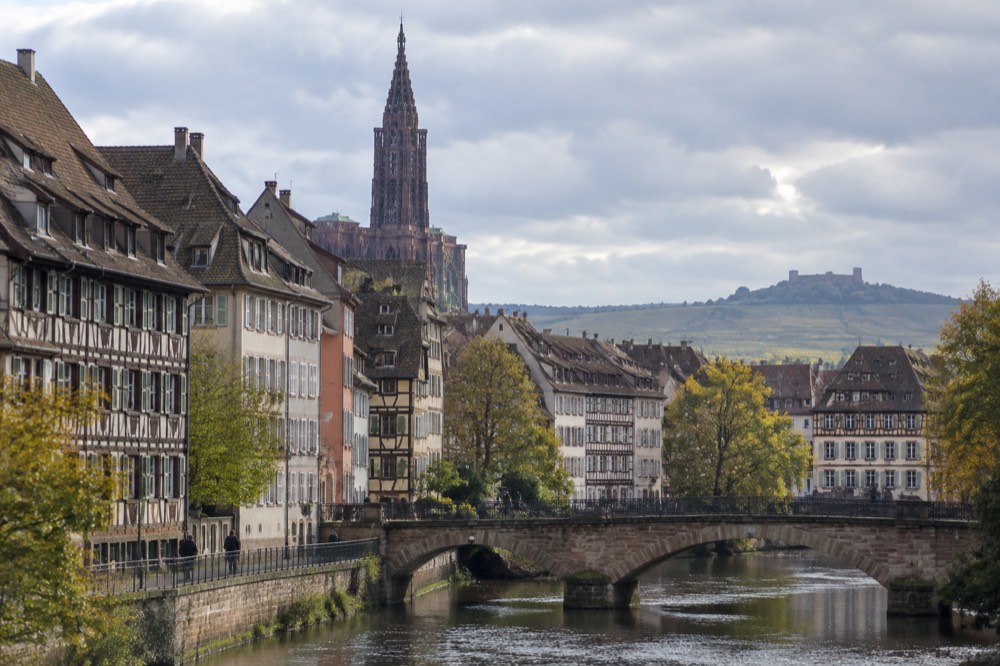
| Day trip | What it is | What to check before booking |
|---|---|---|
| Colmar and the wine villages | Half-timbered Alsatian towns and vineyard slopes south of Strasbourg | Tour inclusions and village stops on the operator's listing |
| Black Forest and Baden-Baden | German spa town and forest scenery across the Rhine | Passport carry rules and return time on the listing |
| Haut-Koenigsbourg and Riquewihr | A restored hilltop castle above the wine route | Castle opening dates in low season |
| Alsace half-day wine tour | Compact tasting circuit closer to Strasbourg | Tasting stops included and departure point |
A guided excursion removes the transport planning entirely, which matters when the wine villages sit at the end of regional connections. The Black Forest and Baden-Baden day trip below is the format contrast in this article's picks: it trades the Alsatian villages for German forest and spa architecture, and it suits a stay that has already seen the French side.
Whatever the excursion, the day before it should stay light. The cathedral platform, a boat circuit and an early dinner make a calm pre-trip evening, and the CTS 24h Trio pass at 10.20 EUR covers two or three people travelling together on the days you stay in town.
To close the loop on the original question: two days is enough for Strasbourg, three is better if museums, the European Quarter or the Christmas market are in play, and four or more is a regional trip that happens to sleep in Strasbourg. Count the city's days first, then add one day per excursion, and the trip plans itself.
Common Questions About Days In Strasbourg
How many days in Strasbourg is enough?
Two full days is enough for a first visit to Strasbourg. That covers the cathedral and astronomical clock, Petite France, the Ponts Couverts and Barrage Vauban terrace, a boat circuit and unhurried meals. Add a third day for the municipal museums or the European Quarter, and one further day per excursion into Alsace or the Black Forest.
Can you see Strasbourg in one day?
Yes, a single day holds the cathedral nave, the 12:30 clock show, Petite France, the Ponts Couverts, the Barrage Vauban terrace and a short boat tour. What one day cannot hold is the museums, the European Quarter or any day trip, so treat it as a walking day and skip the interiors.
Is three days too long in Strasbourg?
No. Three days fills naturally once the municipal museums, the Neustadt and the European Quarter are on the list, and the Parlamentarium Simone Veil alone takes half a day with its security check. Three days is also the comfortable length during the Christmas market season, when the evenings belong to the chalets.
How many days do you need for Strasbourg and Colmar together?
Plan three days as a floor: two for Strasbourg's old town and one full day for Colmar, whether by train or on a guided excursion that adds wine villages. Four days is more relaxed and lets you split the wine route from Colmar itself, giving each its own pace.
Do I need more days in Strasbourg at Christmas?
Yes, the market season rewards at least two full days in the city alone, since the chalets run from late morning into the evening and the cathedral's visitor flow changes with the season. The market typically opens in the last week of November and runs to 24 December, closing early that evening; the city's Christmas site publishes each edition's confirmed dates.