How Many Days Do You Need In Strasbourg For Christmas Markets?
Two days is the minimum for Strasbourg's Christmas markets, three is comfortable. A practical day-by-day plan with verified costs, hours and weather figures for a December visit.
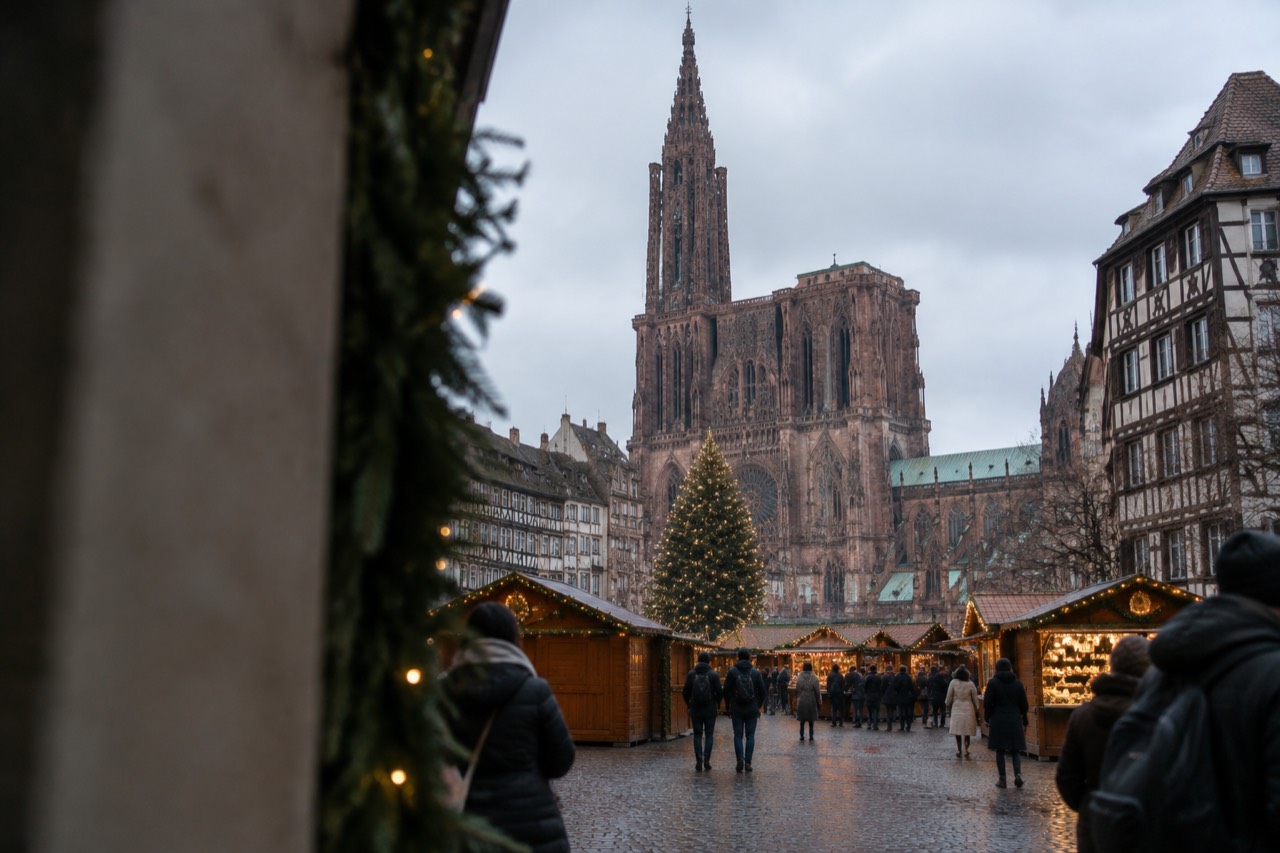
Strasbourg, the prefecture of the Bas-Rhin in Alsace, north-eastern France, sits on the River Ill beside the Rhine and the German border, and from late November to 24 December it hosts the Christmas market that gave the city its Capital of Christmas name. The question of how long to stay is not a small one: the markets spread across several squares on the Grande Île, the crowds build sharply after dark, and the city's own press release counted 3.05 million visitors to the 2025 edition. A short stay can work, but the difference between one, two and three days changes what you actually see.
How Many Days Do You Need In Strasbourg For Christmas Markets?
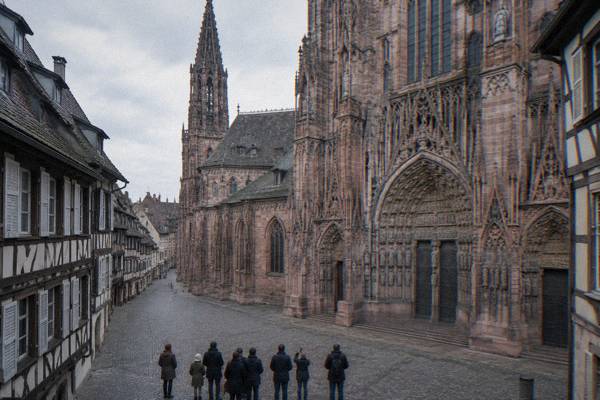
Two full days is the realistic minimum for Strasbourg's Christmas markets, and three days makes the visit comfortable. One day covers the Grande Île cluster around the cathedral and Place Kléber, plus the astronomical clock if timed well. A second day adds Petite France, the winstubs and the smaller squares at a human pace. A third day leaves room for an Alsace day trip to Colmar or the wine villages, which is where the region's second set of markets lives.
The honest breakdown is about geography and energy rather than a fixed rule. The market squares sit inside walking distance of each other on and around the Grande Île, so nothing here demands long transit time. What demands time is the rhythm of a December day in Strasbourg: the light goes early, the chalets typically open late morning and run into the evening, and the atmosphere flips completely once the illuminations come on. A visitor who arrives at midday and leaves at midday next day sees the markets in exactly one configuration, daylight, and misses the version the city is known for.
Want a local guide to walk you through the old town? Book a free walking tour here.
The 2025 edition ran from 26 November to 24 December, and the city's Christmas site states that the 2026 dates and programme are still being finalised, so confirm the exact window on the official page before booking anything. The pattern to plan around is stable in shape: opening in the last week of November and closing on 24 December, with the final day closing early in the evening. The full dates and pattern are covered here, and the main market guide goes square by square.
What One Day In Strasbourg Actually Covers
One well-planned day covers the core Christmas market circuit: the cathedral square and its tree, Place Kléber, Place Gutenberg, the chalets along the riverside, and a first pass through Petite France. It also leaves room for the cathedral's astronomical clock show at 12:30 and a winstub dinner. What one day cannot absorb is queueing for the tower platform, a boat trip, the outlying squares at leisure, or any Alsace excursion; something has to be cut.
The single-day plan works best as a loop. Start at Place Kléber, where the great tree stands, walk through the chalets to the cathedral square, and go inside the nave between the morning visiting window and the afternoon one: the cathedral's own hours page lists Monday to Saturday openings of 08:30 to 11:15 and 12:45 to 17:45, with Sunday hours of 14:00 to 17:15. Time the 12:30 clock show deliberately rather than hoping to stumble on it, because tickets are day-of purchases only and the 4 EUR adult ticket sells from the cathedral stalls in the morning.
Afternoon belongs to the smaller squares and the riverside. The Ponts Couverts and the Barrage Vauban terrace give the classic view over Petite France's half-timbered roofs, and the terrace keeps seasonal hours, 08:00 to 19:00 in the September and October window, with shorter winter hours from November to February, so check the city's page for the December opening. The terrace admission price is not stated on that page, so confirm on site. Then the evening: the illuminations switch on, the squares fill, and dinner in a winstub, a tarte flambée with a Riesling or a choucroute, is the natural close. The food and drink at the markets deserve their own hour of the day.
If one day is genuinely all you have, the one-day itinerary sequences this loop hour by hour, and the question of whether the market is worth the trip has a longer answer for borderline cases.
Why A Second Day Changes The Visit
A second day converts a march into a visit. It lets you see the markets twice, in daylight and after dark, which are effectively two different events, and it frees the morning for the cathedral platform at 66 m before the queues build. It also makes room for a Batorama river boat, the Old Town's smaller squares, and a proper winstub lunch rather than a standing snack at a chalet.
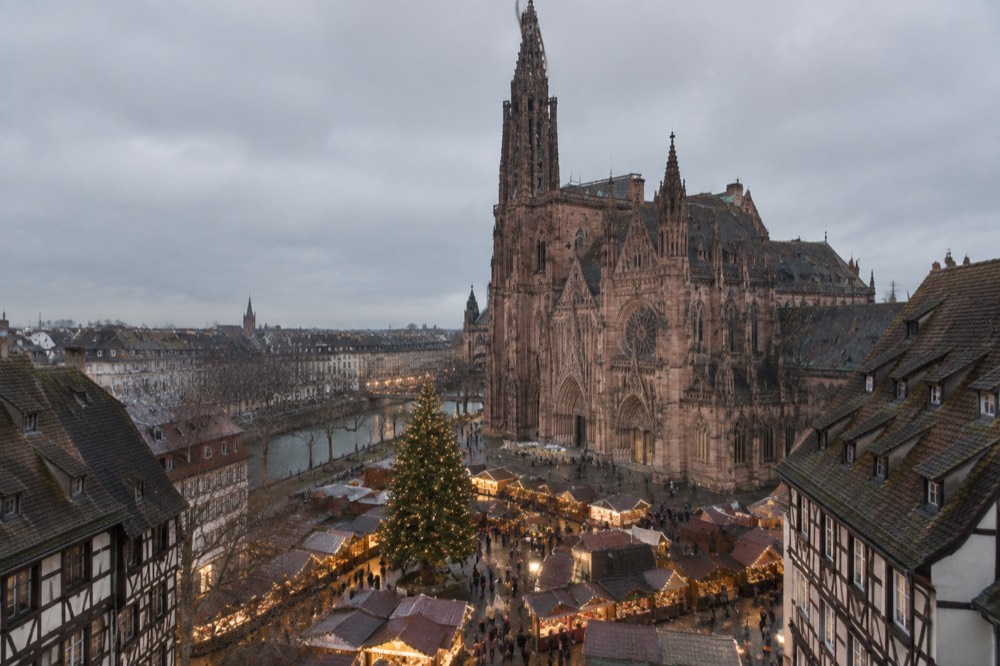
The daylight-versus-dark contrast is the single best argument for the second day, and it is not a marginal one. In daylight you see the half-timbering, the decorations and the layout; after dark the chalets glow, the cathedral is floodlit, and the atmosphere that draws three million people is in full effect. The day-or-night question has its own page, but the short version is that a two-day stay removes the need to choose.
The second morning is also the practical window for the cathedral platform. The tower hours page gives 10:00 to 13:00 and 13:30 to 18:00 with last ascent at 17:15 in the October-to-March season, and the ticket is 10 EUR full fare or 6 EUR reduced, with children under 6 free. The platform ticket also carries a reduced rate at the Musée de l'Œuvre Notre-Dame, which sits right on the square and is one of the municipal museums at 9 EUR full or 5 EUR reduced. Note that all municipal museums are free on the first Sunday of every month, which lands inside the market season if your dates align.
For the river, Batorama's own site lists the long tour at 16.20 EUR full and 8.90 EUR reduced, the short tour at 12.50 EUR and 7.20 EUR, with the Red Tour running 1h10 and the Blue Tour 0h45. A boat is a sitting-down hour between market circuits, and from the water the Grande Île's skyline, single cathedral spire included, reads very differently than from the streets.
When The Markets Are At Their Best
The markets are at their best in the late afternoon and evening, and the practical planning point is to treat about 16:00 to 20:00 as the peak window. Weekdays run quieter than weekends, the first hour after the chalets open late morning is the calmest for photographs, and the final days before 24 December, when the city's own figures show attendance peaking, are the most crowded of the whole run.
December weather in Strasbourg is a real input, and the numbers are worth knowing before packing. The Meteo-France 1991-2020 normals for Strasbourg-Entzheim give a December mean maximum of 5.9 C and a mean minimum of 0.8 C, with 45.2 mm of rain across 10.2 days of 1 mm or more, and November is milder at 9.4 C and 3.3 C with 9.2 rain days. The climate is semi-continental, so cold snaps bite harder than in coastal France, and the evenings at the chalets are genuinely cold: layers, a hat and shoes that handle wet cobbles matter more than they do in southern France's markets.
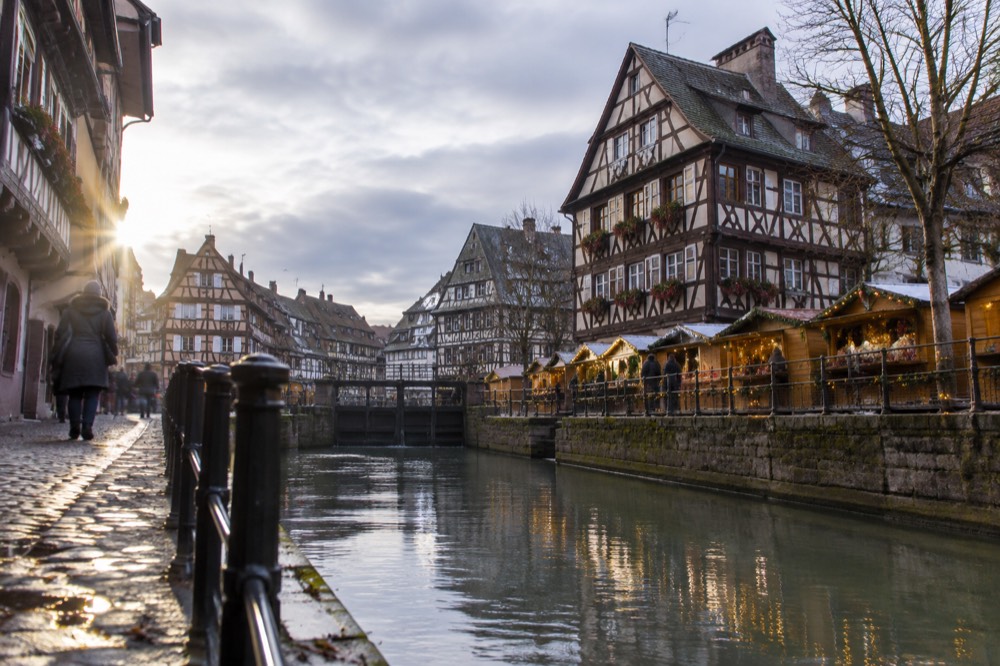
The evening circuit also rewards a plan. The illuminations along the Ill and through the Grande Île are the city's signature after dark, and a guided evening format is one way to see them with the stories attached: a small-group segway circuit around the Christmas lights is a popular option, and the operator's live listing carries the current times.
What A Third Day Adds: Colmar And The Alsace Markets
A third day opens the door to the Alsace Christmas markets beyond Strasbourg, above all Colmar, whose old town hosts its own decorated quarter and can absorb a full day. It also makes the wine villages reachable, Eguisheim, Riquewihr and Kaysersberg among them, each with a small market in season. Without a third day, the honest choice is to stay in Strasbourg and save the villages for a return trip.
The trade-off is simple. Strasbourg's markets need two unhurried days; the region's second layer needs a third. Colmar's market scene has its own character, canals and half-timbered lanes rather than a cathedral square, and the Colmar market guide plus the page on how many days Colmar needs cover that side. The Strasbourg-versus-Colmar comparison is worth reading before splitting your nights, because the two cities are close enough that travellers with four or five days often do both.
Getting around the region without a car is the main friction point, and it is where a guided day tour earns its place. The Alsace Christmas markets day tour from Strasbourg bundles the driving, the village stops and the timings into one booked outing, which matters in December when daylight is short and rural bus services thin out. Check availability on the operator's live listing if a third day is on the table. The broader Christmas markets in Alsace guide lists the other towns in season.
What A December Trip Costs To Plan Around
A two-day Christmas market trip in Strasbourg can be planned around a small set of fixed prices: the cathedral platform at 10 EUR, the clock show at 4 EUR, a Batorama boat from 12.50 EUR, and a 24-hour CTS transport pass at 4.60 EUR. Food at the chalets and winstubs sits on top, and the Strasbourg City Card, at 5 EUR for seven days, is a discount card rather than a pass, worth it only if your itinerary matches its reductions.
The transport figure deserves a note: the CTS single ticket is 1.90 EUR bought through the app or contactless, or 2.50 EUR on board the bus, and the 24h Solo pass is 4.60 EUR, so a pass pays off from the third ride of the day. The airport shuttle combined ticket, train plus tram plus a 24h pass, is also 4.60 EUR, which covers arrival day neatly.
| Item | Full price | Reduced | What to check |
|---|---|---|---|
| Cathedral platform (66 m) | 10 EUR | 6 EUR | Last ascent 17:15 in winter season; closed 1 Jan, 1 May, 25 Dec |
| Astronomical clock show, 12:30 | 4 EUR | 3 EUR students, 2 EUR children 6-17 | Day-of tickets only, no reservations |
| Batorama long tour (1h10) | 16.20 EUR | 8.90 EUR | Timetable on the operator's site |
| Batorama short tour (0h45) | 12.50 EUR | 7.20 EUR | Same departure point |
| Municipal museums | 9 EUR | 5 EUR | Free on the first Sunday of each month; Musée Alsacien closed until 2028 |
| CTS 24h Solo pass | 4.60 EUR | 24h Trio 10.20 EUR for 2-3 people | Single ticket 1.90 EUR app, 2.50 EUR on board |
| Strasbourg City Card | 5 EUR adult | 3.50 EUR child, 7 days | Discount card only, not an all-inclusive pass |
Set against that, the weather table is the one to pack from:
| Month | Mean max | Mean min | Rain | Days of 1 mm or more |
|---|---|---|---|---|
| November | 9.4 C | 3.3 C | 47.6 mm | 9.2 |
| December | 5.9 C | 0.8 C | 45.2 mm | 10.2 |
Neither month is a washout, and put plainly: the normals show about ten days of measurable rain in each month, so a waterproof layer belongs in the bag regardless of the forecast you check before flying.
The verdict, then, in one line: book two days as the floor, three if the Alsace villages are part of the plan, and read the two-day and three-day itineraries against your own pace before committing. This Strasbourg Travel Guide page keeps the answer short, but the surrounding guides carry the detail.
Common Questions About Days For The Christmas Markets
How many days do you need in Strasbourg for Christmas markets?
Two full days is the minimum that lets you see the markets in daylight and after dark, visit the cathedral, and eat properly. Three days adds an Alsace excursion to Colmar or the wine villages. One day works only as a compressed loop of the Grande Île squares.
What are the dates of the Strasbourg Christmas market?
The 2026 dates are not yet published; the city's Christmas site states the dates and programme are still being finalised. The usual pattern runs from the last week of November to 24 December, and the 2025 edition ran 26 November to 24 December. Confirm on the official page before booking.
Are Christmas markets better in day or night?
Both have a case: daylight shows the half-timbered architecture and decorations clearly, while the evening brings the illuminations and the atmosphere the city is known for. A two-day stay lets you do both without choosing.
Is the Christmas market in Strasbourg worth it?
For a first Christmas market trip, yes: the setting on the Grande Île, the cathedral backdrop and the food make it one of the strongest in France. The trade-off is crowds, with 3.05 million visitors to the 2025 edition, so plan mornings and weekdays where you can.
Which Christmas market is better, Strasbourg or Colmar?
Strasbourg is the bigger, grander city event with the cathedral and the tree on Place Kléber; Colmar is smaller, prettier per square metre and easier to cover in a day. With three or more days, seeing both is the standard answer.