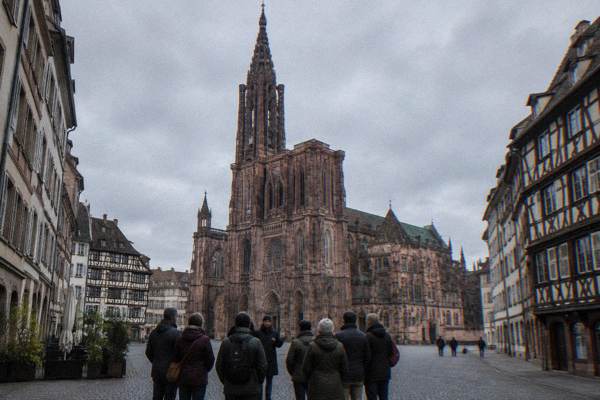
Is The Christmas Market In Strasbourg Worth It?
An honest assessment of Strasbourg's Christmas market in Alsace, France: what it costs, what the crowds and December weather are like, and when a different plan serves you better.
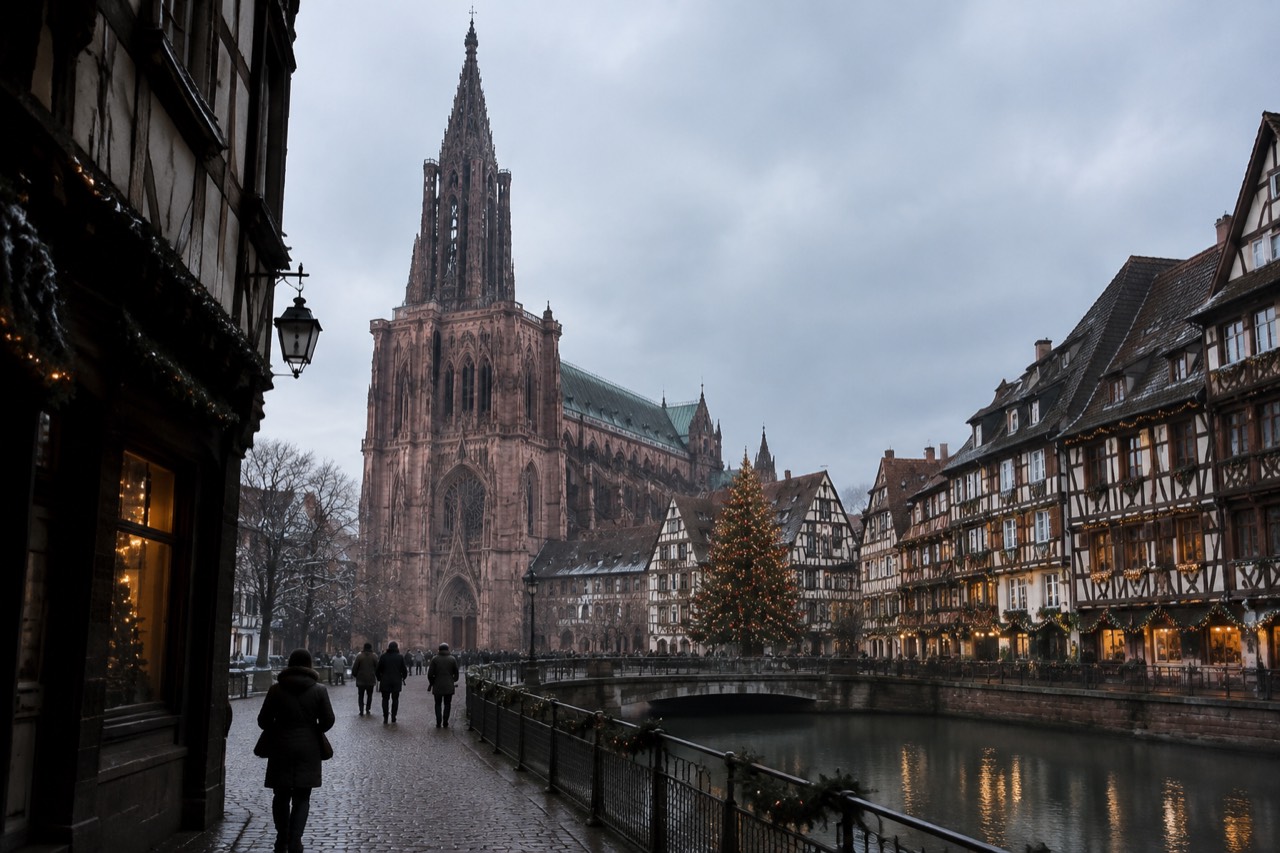
Strasbourg, in Alsace in the north-east of France, has been trading on Christmas for a very long time, and the city's December market is the reason a large share of its winter visitors come at all. The question worth asking before booking anything is not whether the market is pretty. It is. The question is whether the experience justifies the December hotel rates, the crowds and the cold, and the honest answer is that it depends on which days you pick and what you expect from the visit. This page sets out what the market delivers, what it costs in real figures, and the situations in which a different plan would serve you better.
Is The Christmas Market In Strasbourg Worth It?
Yes, last year's edition, which ran 26 November to 24 December 2025, drew 3.05 million visitors. It is worth it if you want half-timbered streets, a monumental tree on Place Kléber and a genuinely old market tradition rather than a fairground. It is not worth it if you arrive on a peak December weekend expecting calm, cheap food or short queues.
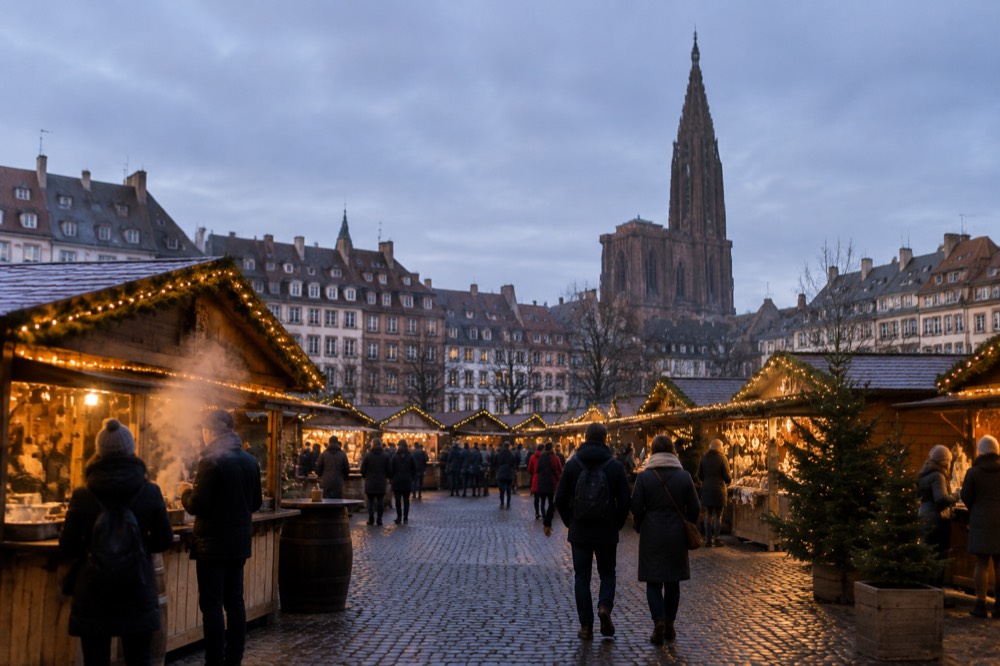
That verdict deserves unpacking. Strasbourg does not run one market so much as a set of them, spread across squares in the historic centre, each with its own character: craft stalls near the cathedral, food and drink around Place Kléber, smaller clusters elsewhere. The 2026 dates are not yet published on the city's Christmas site, which states that the official dates and programme are still being finalised, so plan around the usual pattern: a late-November opening and a run through to 24 December, with the closing day ending early in the evening. For the confirmed pattern and how to track the announcement, the dates question answered in full is the page to read.
A guided stroll helps you find your way between the squares. Book a free walking tour here.
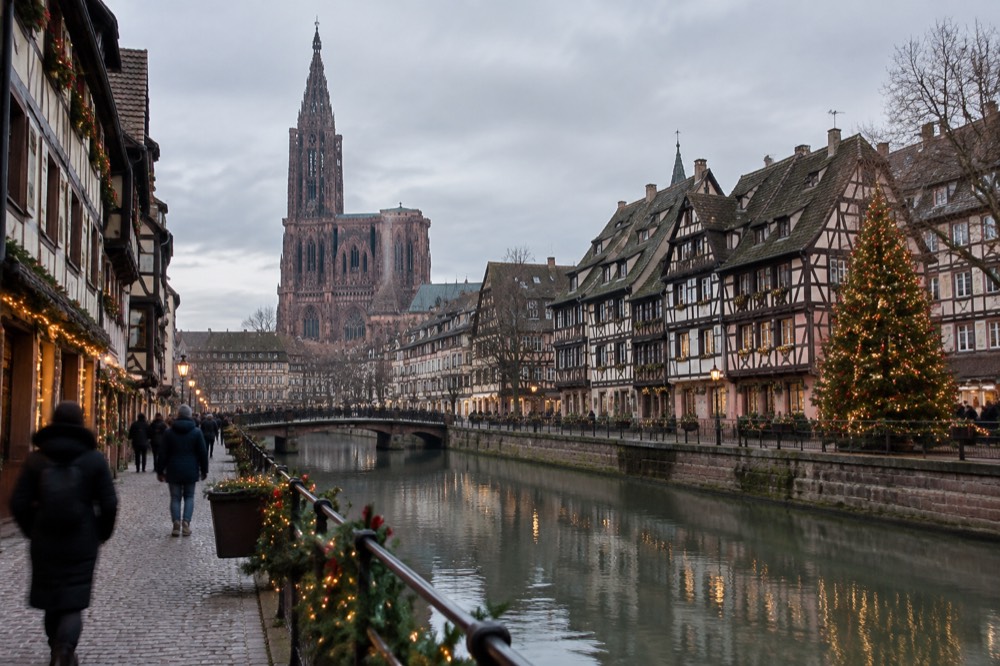
The deeper reason the market works is the setting. The Grande Île, the river-island core of the city, is a World Heritage property, and in December its medieval lanes, canals and half-timbered facades carry the decorations rather than competing with them. A market that looked like this in a purpose-built exhibition hall would be a shopping errand. In Strasbourg it is the reason people photograph the same three streets for a fortnight. The full Christmas market guide covers the layout square by square.
What You Actually Get For Your Money
The market itself costs nothing to walk: the squares and streets are public, and wandering them is the core experience. What you pay for is everything around it: the cathedral platform at 10 EUR full price, the astronomical clock show at 4 EUR, municipal museums at 9 EUR full price, and the Batorama river boat at 12.50 EUR to 16.20 EUR full price depending on the circuit. Food, mulled wine and gifts are priced market-premium.
The value question therefore turns on what you do beyond the stalls. The cathedral is the anchor: its single spire dominates the old town, and the viewing platform at 66 m. The astronomical clock show at 12:30 sharp is the other classic, with tickets sold on the day only, at the cathedral stalls or the Saint-Michel entrance. Neither needs booking months ahead, but both need timing.
| What | Full price | Reduced price | Notes |
|---|---|---|---|
| Cathedral platform | 10 EUR | 6 EUR | Children under 6 free; platform at 66 m |
| Astronomical clock show | 4 EUR | 3 EUR students, 2 EUR ages 6-17 | 12:30 daily; day-of tickets only |
| Municipal museums (each) | 9 EUR | 5 EUR | Free on the first Sunday of every month |
| Pass Musées, 1 day | 20 EUR | Covers the municipal museums | |
| Batorama short tour | 12.50 EUR | 7.20 EUR | Blue Tour, 0h45 |
| Batorama long tour | 16.20 EUR | 8.90 EUR | Red Tour, 1h10 |
| Strasbourg City Card | 5 EUR | 3.50 EUR ages 3-17 | Discount card, 7 days, not a pass |
Two savings notes. The Strasbourg City Card is a 5 EUR discount card valid 7 days, not an all-inclusive pass: it knocks money off museums, the boat, the platform and the clock, so it pays for itself quickly if you plan to do several of these. And the municipal museums are free on the first Sunday of every month, which in December can fall inside the market run. The Musée Alsacien, the folklore museum, is closed for works until 2028 and should not be on any list this season.
The market's own food offering is a big part of the answer for some visitors and a disappointment for others. The stalls sell the Alsatian classics, tarte flambée, bredele biscuits, mulled wine and kougelhopf, at prices a winstub would blush at, and the quality varies stall by stall. The Christmas market food guide separates the stalls worth queueing for from the ones you can walk past, and the winstub tradition, sit-down, warm, slower, is covered in its own pages.
If the plan is to do the market properly and still see the city, a guided format helps. A bike loop is the efficient option: Check availability on the bike tour with a local guide, which covers the river banks and the island core while the market squares are at their busiest, then return to the stalls in the late afternoon when the light comes on.
The Crowds, The Weather And The Timing
December in Strasbourg is cold and grey more often than it is snowy: Meteo-France 1991-2020 normals give the city a mean December maximum of 5.9 C, a mean minimum of 0.8 C, 45.2 mm of rain across the month and 10.2 days with 1 mm of rain or more. Snow is possible but not the default. Crowds peak on December weekends and the evenings, and the market's 3.05 million visitors last year were not spread evenly across them.
The climate is semi-continental, which in practice means real winter: frosty nights, short days, and a damp cold that gets into the bones faster than the numbers suggest. Pack for it and the atmosphere is an asset. Arrive in thin shoes and the two hours between the clock show and dinner become an endurance test. The rain figure matters more than people expect, because 10.2 rain days in December means roughly one day in three carries rain, and the market has almost no shelter. The rest of the planning pages sit on Strasbourg Travel Guide.
| Month | Mean max | Mean min | Rain | Rain days (1 mm+) |
|---|---|---|---|---|
| November | 9.4 C | 3.3 C | 47.6 mm | 9.2 |
| December | 5.9 C | 0.8 C | 45.2 mm | 10.2 |
| January | 5.2 C | -0.2 C | 35.4 mm | 9.1 |
Timing is the single biggest lever on whether the trip feels worth it. The market traditionally opens in the last week of November and runs to 24 December, with the final day closing early in the evening; chalets typically open late morning and run into the evening. The first fortnight, late November into early December, is calmer, cheaper to stay in and fully decorated. The last ten days before Christmas, above all the weekends, are the crush: hotel rates in the centre climb, restaurant tables need booking, and the prettiest lanes move at shuffling pace. Anyone weighing Strasbourg against its Alsatian rival should read the Strasbourg or Colmar comparison before committing, and anyone deciding how long to stay should start with how many days the markets need.
One structural point that first-time visitors miss: Strasbourg's market is a citywide event, not a single square, so crowd pressure is uneven. The squares nearest the cathedral and Place Kléber carry the heaviest footfall in the evenings, while the smaller clusters a few streets away stay walkable even on peak nights. A planned loop, rather than drifting, is the difference between a good night and a slow one. The day-by-day market itinerary sequences the squares so the busiest ones are hit in the morning.
When The Market Is Not Worth It
The market is the wrong trip for three kinds of visitor: anyone hoping for a quiet, local, undiscovered Christmas experience, since 3.05 million people came last year; anyone on a tight food budget, since market eating is priced at captive-audience rates; and anyone visiting only for the shopping, since the stalls lean toward craft and gift items at premium prices rather than bargains. For those visitors, the wine villages, the museums or a river cruise serve better.
Be blunt about the local-experience question. Strasbourg in December is a city performing Christmas at scale, and it is good at it, but it is not a small-town market where the stallholder knows your name. If that is the fantasy, the Alsatian village markets, Colmar's included, deliver a version of it. The trade-off is that the villages are harder to reach without a car or a tour, and the Alsace Christmas markets guide maps which ones reward the effort. Daylight versus evening matters too: the day or night question has a real answer in Strasbourg, because the decorations are the show and they switch on at dusk.
The shopping point deserves honesty. The market's craft chalets are curated, which keeps the quality up, but curated also means priced accordingly. Nobody should travel to Strasbourg to save money on gifts. The people who rate the market highest treat the stalls as scenery and spend their money on the table instead: a winstub dinner, a proper tarte flambée, a bottle from a cave. The winstub guide is the companion page for that plan.
Alternatives And Better Ways To Spend A Day
If the verdict is that the market alone does not fill a trip, Strasbourg's December offer is still deep: the cathedral platform and clock, the river boat circuits, the municipal museums at 9 EUR each or 20 EUR on the one-day pass, and the Alsace wine country within a day's reach. A market evening paired with a daytime wine-route or villages excursion is the pattern that satisfies people who came for more than stalls.
The pairing logic is simple. The market is at its best after dark, roughly from late afternoon, which leaves mornings and whole days open. The two strongest fills for those hours are the boat, which shows the city from the Ill and runs on a fixed timetable, and the wine country south of the city, which is a different Alsace altogether: villages, vineyard slopes and tasting rooms. The medieval villages day trip with wine tasting is the format that fits this best, since it bundles Riquewihr-type villages with cellar stops and returns you to Strasbourg in time for the evening lights.
The full-day highlights tour covers similar ground with a broader sweep, and both pair naturally with a market evening. For travellers basing themselves in the city rather than touring, the where to stay for the Christmas market guide explains which neighbourhoods keep you inside the lights and which ones trade a short tram ride for a quieter night, and the getting around guide covers the tram tickets: a 24h Solo pass is 4.60 EUR, a single is 1.90 EUR bought in the app or by contactless, 2.50 EUR on board a bus.
There is also the question of arrival. Plenty of visitors combine the market with a Paris trip, and the Paris to Strasbourg page works through that plan, train timings and all, while the famous-city explainer gives the background that makes the market more than a shopping event: Strasbourg's Christmas tradition is the city's own claim, and the decorated tree on Place Kléber belongs to that story, which the history of the Christmas tree unpacks.
Common Questions About The Strasbourg Christmas Market
Is the Christmas market in Strasbourg worth it?
For the majority of visitors, yes: the setting, the scale and the atmosphere justify the trip, and 3.05 million people attended last year's edition. It is not worth it for anyone seeking a quiet, local market, a cheap food stop or a shopping bargain, and peak December weekends can overwhelm the experience.
When does the Strasbourg Christmas market run?
The 2026 dates are not yet published on the city's Christmas site, which says the dates and programme are still being finalised. The usual pattern is an opening in the last week of November and a run through to 24 December, with the final day closing early in the evening. Last year's edition ran 26 November to 24 December 2025.
Is the market expensive?
Walking the squares costs nothing, but the paid extras add up: the cathedral platform is 10 EUR full price, the astronomical clock show is 4 EUR, municipal museums are 9 EUR each or 20 EUR on the one-day pass, and the Batorama boat tours run 12.50 EUR to 16.20 EUR full price. Food and drink at the chalets are priced at a premium, so budget for a sit-down winstub dinner instead of grazing at stalls.
How cold is Strasbourg in December?
Cold and damp rather than snowy. The Meteo-France 1991-2020 normals give a mean December maximum of 5.9 C, a mean minimum of 0.8 C, 45.2 mm of rain and 10.2 days with 1 mm of rain or more. Warm layers, proper shoes and a plan for wet evenings matter more than hoping for snow.
Which Strasbourg market is the best one?
The squares nearest the cathedral carry the craft stalls and the heaviest crowds, while the food and drink clusters around Place Kléber are the busiest in the evenings. The smaller clusters a few streets out stay walkable on peak nights, so a planned loop beats drifting. The full square-by-square comparison is on the dedicated best-market page.
Strasbourg or Colmar for Christmas?
Strasbourg offers scale, the cathedral and the citywide set of markets; Colmar offers a smaller, more concentrated old-town atmosphere with easier walking between clusters. Many visitors do both, since the two cities sit close together in Alsace. The detailed comparison lives on the Strasbourg-versus-Colmar page.
The verdict, in one line: go, but go with a plan, go outside the peak weekends if the calendar allows, and treat the stalls as the scenery rather than the whole show. Strasbourg in December rewards the visitors who book the platform, the clock and a winstub table in advance, and spend the rest of the evening simply walking the lights.