Strasbourg Christmas Market Itinerary
Strasbourg, in Alsace in north-eastern France, runs its Christmas market from late November to 24 December. This itinerary puts the markets, the cathedral and the food stalls into a workable order across two days.
Short answer
Plan two days in Strasbourg. The market runs late November to 24 December, and the 2025 edition drew 3.05 million visitors. Walk the Grande Île markets on day one, add Petite France and the cathedral platform on day two, and book any day trip in advance. A 24-hour CTS transit pass costs 4.60 EUR.
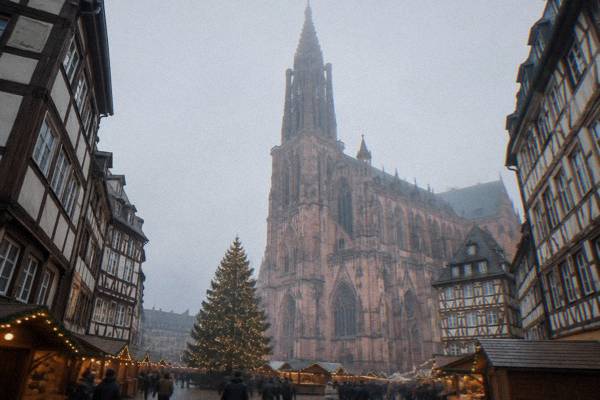
Strasbourg, the prefecture of the Bas-Rhin in Alsace, north-eastern France, turns itself into a Christmas city for a month each winter. The market, known locally as Strasbourg Capitale de Noël, spreads across the Grande Île and beyond, with the cathedral square at its heart and stalls reaching down toward the river. The 2025 edition ran 26 November to 24 December 2025 and drew 3.05 million visitors, down from 3.4 million in 2024, which tells you how busy the squares get. The city's Christmas site states that the dates and programme are still being finalised, so confirm them there before booking anything. What follows is a two-day itinerary that works with the usual pattern, late November to 24 December, without depending on any single square being open on any single day.
How To Plan A Strasbourg Christmas Market Itinerary
A workable Strasbourg Christmas market itinerary needs two days in the city itself, one for the Grande Île markets around the cathedral and one for Petite France, the river and the outer squares. The market runs from late November to 24 December, closing early in the evening on the final day. Chalets typically open late morning and run into the evening, so plan indoor stops for the morning and treat the markets as an afternoon and after-dark experience.
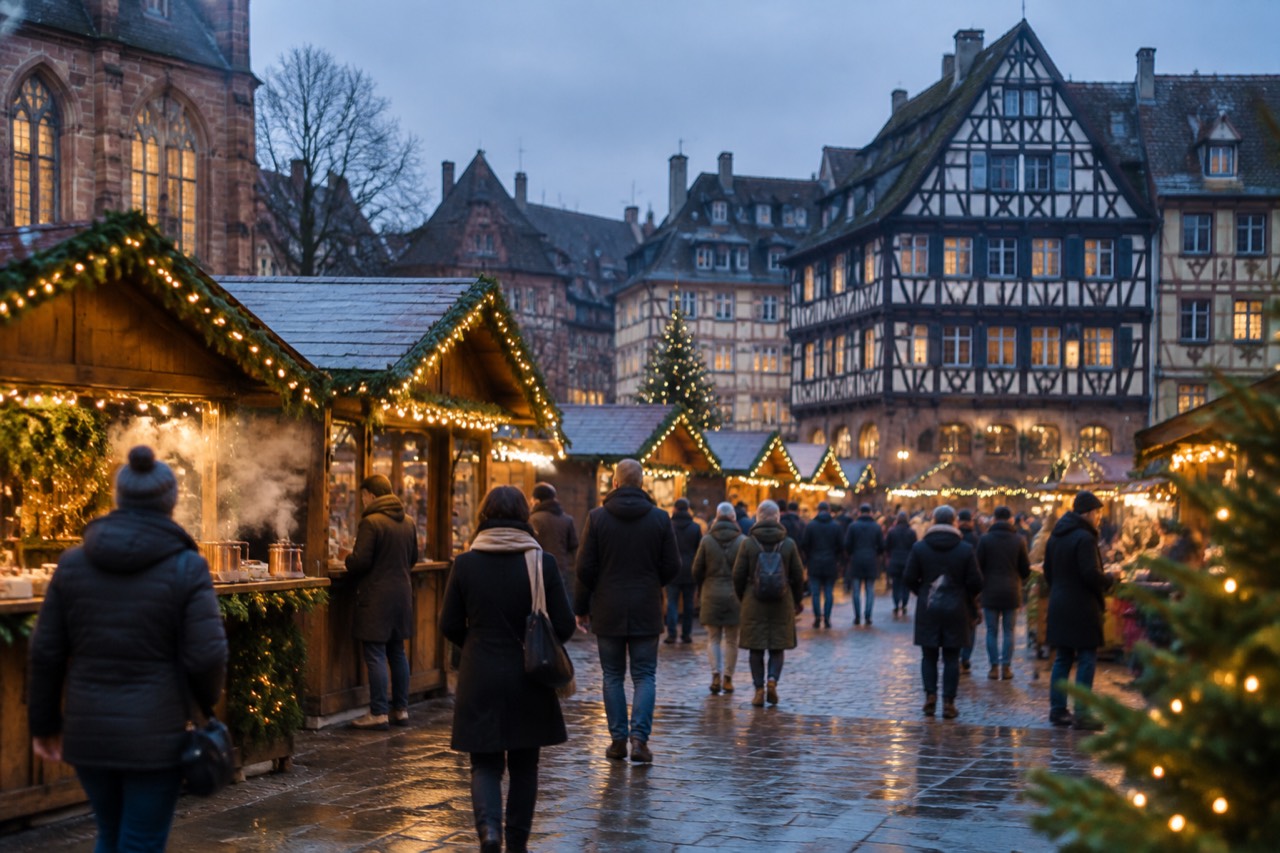
Start with the shape of the event rather than a fixed list of squares. The market is not one market but a set of them strung through the old town, each with its own character, from the cathedral's Place du Château to Place Kléber, where the great tree stands, and out to Place Gutenberg and beyond. Because the 2026 layout is still being finalised, treat any square-by-square plan as a route to walk rather than a timetable to keep. The city's own Christmas pages publish the confirmed locations once the programme is set.
Two days is the honest minimum. One day works for the cathedral square, the tree and a boat trip, but it leaves Petite France and the Krutenau quarter rushed, and it leaves nothing for the food, which is half the reason to come. The question of how many days the markets justify is covered in full in how many days you need for the Strasbourg Christmas markets, and the answer there is the same one this itinerary is built around: two, with a third if you want a day trip into the Alsace villages or the Black Forest.
Book two things early. The first is your bed: December is the city's busiest month and the areas near the market fill first, a question examined in where to stay for the Strasbourg Christmas market. The second is any guided excursion beyond the city, because the popular village and castle day trips sell out on peak weekends. Everything else, cathedral tickets, boat trips, transit passes, can be bought on the day.
What Order Should You Visit The Markets In?
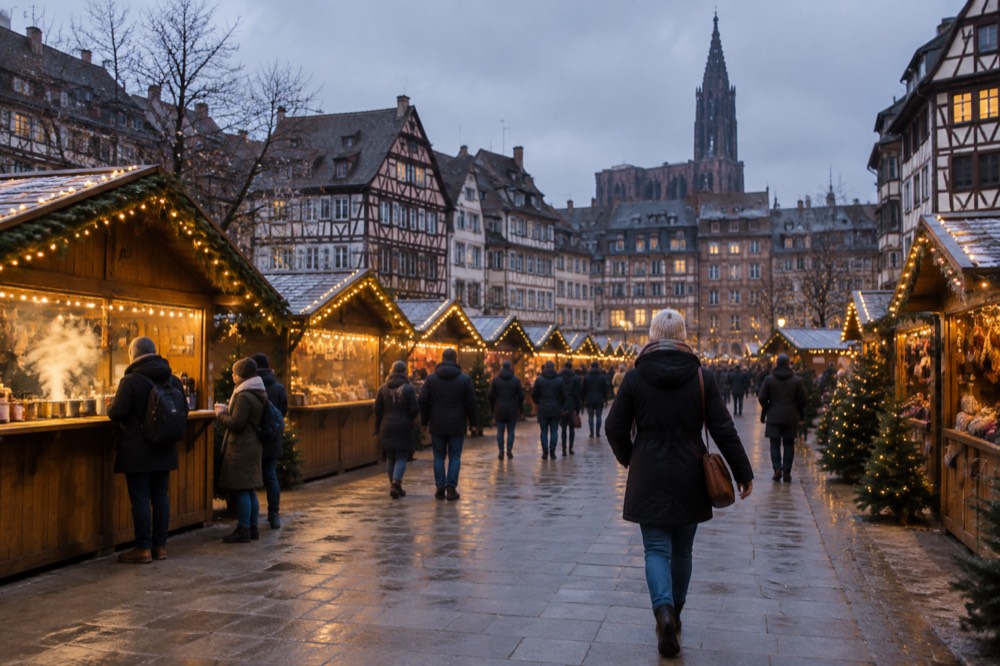
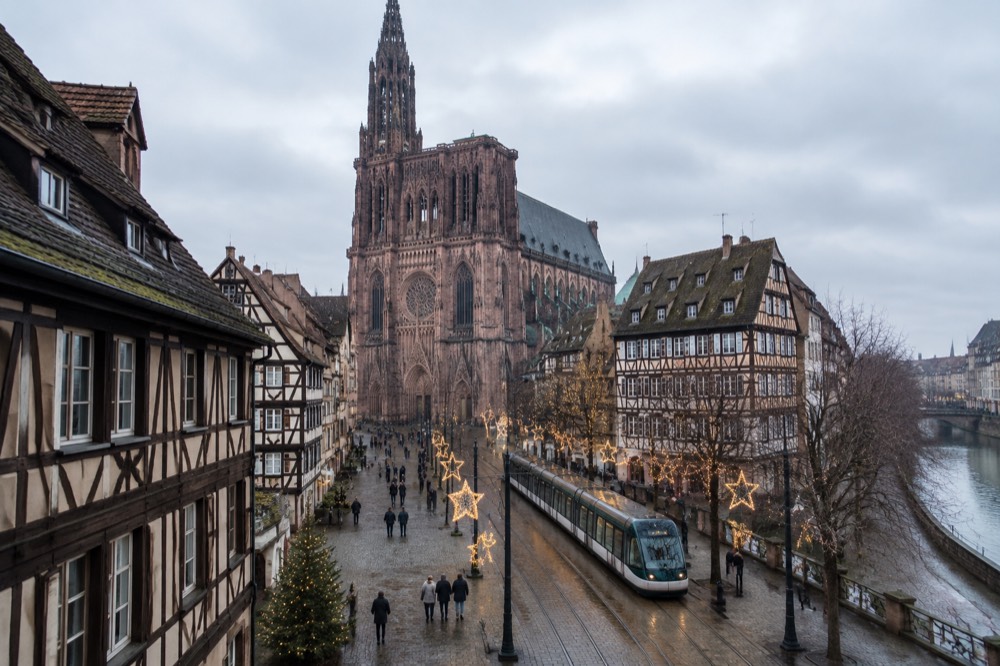
Walk the markets in a loop that starts at the cathedral and Place du Château, moves to Place Kléber for the tree, then down through Place Gutenberg to the river at Petite France, and finishes along the quays as the lights come on. That order keeps the busiest squares for the afternoon, when the chalets are fully open, and saves the riverside for dusk, when the half-timbered houses of Petite France look their best. It is a walking route, flat throughout, on cobbles.
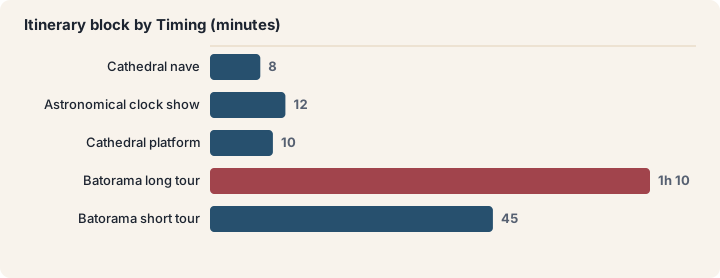
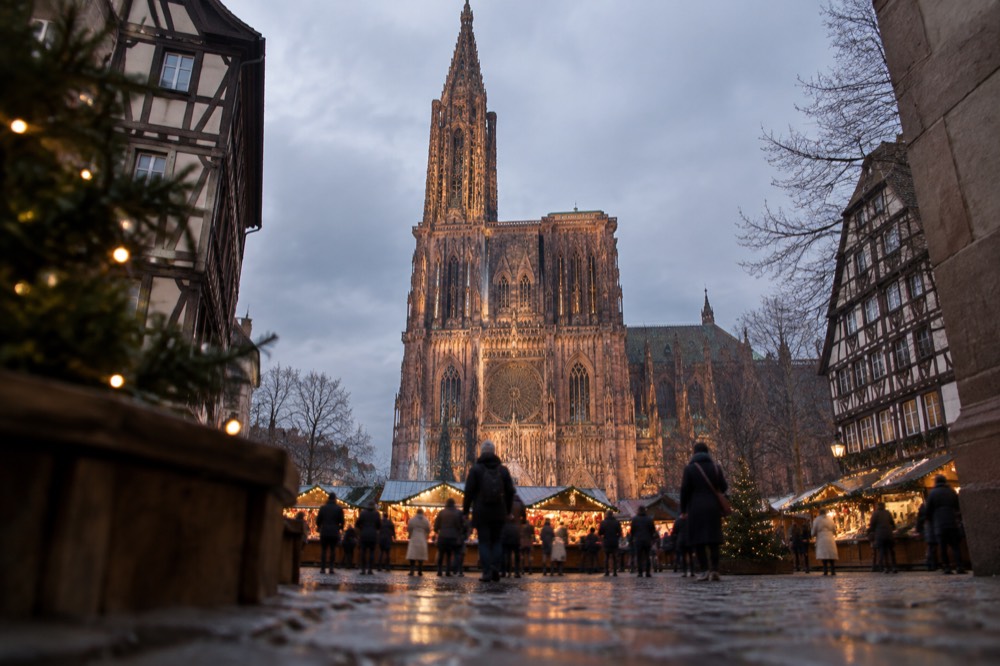
The logic is simple: the cathedral is the anchor. During the market the cathedral stays open continuously Monday to Saturday on the Place du Château side, 08:30 to 17:45, so you can step inside between chalet browsing without queueing for a timed slot. The nave is free of the clock crowds before midday, and the astronomical clock's automaton show runs daily at 12:30 sharp, with tickets at 4 EUR bought on the day only, sold at the cathedral stalls from 10:00 to 11:00 or at the Saint-Michel entrance from 11:30. If the clock matters to you, plan lunch around it, because there is no advance booking.
From the cathedral, the route to Place Kléber passes the Maison Kammerzell, and the tree on Place Kléber is the market's centrepiece. The squares then descend gently toward the Ill: Place Gutenberg, the quays, and finally Petite France and the Ponts Couverts, with the Barrage Vauban terrace above the river. The terrace keeps seasonal hours, 08:00 to 19:00 through September and October and shorter hours in the winter months, so check the city's page for the December opening before you count on the view.
| Stop on the loop | What it is for | Best time of day | What to check first |
|---|---|---|---|
| Place du Château and the cathedral | Chalets, the nave, the astronomical clock | Late morning, then the 12:30 clock show | Clock tickets sell on the day only |
| Place Kléber | The great tree and the largest square | Afternoon into evening | The tree lighting after dark |
| Place Gutenberg | Smaller chalet cluster, food stalls | Afternoon | Seating near the food chalets |
| Petite France and the Ponts Couverts | Half-timbered riverside, photo stops | Dusk onward | Cobbles and crowds after dark |
| Barrage Vauban terrace | Panorama over the roofs | Daylight hours | Seasonal opening hours in winter |
For a first evening, resist the urge to see everything. The loop above, walked slowly with a food stop, is a full afternoon. A guided walk is a good way to compress the orientation on day one, and a historic walk with a local guide covers the old town's layout and stories while the light fades; the historic walking tour runs daily through the season, and its figures and availability are on the operator's live listing.
Want a local guide to orient you on day one? Book a free walking tour here.
How Much Time Do You Need At Each Market?
Give the cathedral and Place du Château a full two hours, the tree square an hour, and each smaller cluster thirty to forty-five minutes, which lands the whole loop at a comfortable half day plus an evening. The cathedral platform alone deserves thirty minutes: it sits at 66 m, costs 10 EUR full and 6 EUR reduced, and is closed on 25 December, 1 January and 1 May. Do not plan the platform for the final day of the market, when closing is early.
The platform is the one timed decision inside the cathedral. Hours shift with the seasons: from 1 April to 30 September it runs 09:30 to 13:00 and 13:30 to 20:00 with the last ascent at 19:15, and from 1 October to 31 March it runs 10:00 to 13:00 and 13:30 to 18:00 with the last ascent at 17:15. In market season that means the winter timetable, and the afternoon session is the one that pairs with a morning of chalets. The platform ticket also gives a reduced rate at the Musée de l'Œuvre Notre-Dame next door, which is worth knowing on a rainy afternoon.
The clock and the platform are separate tickets, and the nave itself is open continuously on the market side through the season. If you would rather understand the building than climb it, the cathedral's own guided tour is a shorter, warmer alternative, and the guided cathedral tour is listed with its current price and times on the operator's page.
Museums are the weather valve. Municipal museums cost 9 EUR full and 5 EUR reduced, a one-day Pass Musées is 20 EUR, and every municipal museum is free on the first Sunday of the month, which in December is a genuine crowd-management lever. Note one exception: the Musée Alsacien is closed for works until 2028 and will not be open during the market, so route that hour elsewhere. The Strasbourg City Card, 5 EUR for seven days, is a discount card rather than a pass, worth it only if you stack several paid sights.
A Two-Day Strasbourg Christmas Market Itinerary
Day one: the Grande Île loop, cathedral nave and clock at 12:30, Place Kléber's tree, food chalets around Place Gutenberg, and the riverside after dark. Day two: Petite France in the morning light, a Batorama boat trip, the cathedral platform in the afternoon session, and an evening in the Krutenau quarter or a guided walk. This order puts the two paid climbs on separate days and keeps each evening different.
Day one begins at the cathedral, because the nave opens at 08:30 and the market side stays open continuously Monday to Saturday through the season. See the nave first, buy the clock ticket at the stall or the Saint-Michel entrance from 11:30, watch the 12:30 automaton show, then eat. The food question deserves its own section below, but the short version is that the market's food stalls cluster around the squares and lunch before 12:30 or after 14:00 avoids the crush. The afternoon is the loop: Place Kléber, Place Gutenberg, and the descent to the river as the lights come on.
Day two is calmer. Petite France in the morning is the classic photograph, half-timbered tanners' houses reflected in the Ill, and it is quietest before the chalets open late morning. A Batorama boat trip is the efficient way to see the river geometry: the long tour costs 16.20 EUR full and 8.90 EUR reduced and runs 1h10 on the Red Tour, while the short tour is 12.50 EUR full and 7.20 EUR reduced at 0h45 on the Blue Tour. Boats run through the winter, but sailing schedules tighten in late December, so check the day's departures at the landing stage on the Quai des Bateliers.
| Itinerary block | Day | Timing | Cost | Booking note |
|---|---|---|---|---|
| Cathedral nave | Day 1 | 08:30 onward, continuous on the market side | No ticket stated for the nave | Open continuously Mon-Sat in market season |
| Astronomical clock show | Day 1 | 12:30 sharp | 4 EUR | Day-of purchase only, no reservations |
| Cathedral platform | Day 2 | Winter session 10:00-13:00, 13:30-18:00 | 10 EUR full, 6 EUR reduced | Closed 25 Dec, 1 Jan, 1 May |
| Batorama long tour | Day 2 | Red Tour 1h10 | 16.20 EUR full, 8.90 EUR reduced | Check winter departures on the day |
| Batorama short tour | Day 2 | Blue Tour 0h45 | 12.50 EUR full, 7.20 EUR reduced | Same landing stage |
| Municipal museums | Either | Typical daytime hours | 9 EUR full, 5 EUR reduced | Free the first Sunday of the month |
The evening of day two is where a guided walk earns its place, because the old town's stories are the part of Strasbourg a map cannot give you. The historic walk with a local guide is the natural fit for that final evening, and its rating, duration and current price render on its live listing rather than being quoted here.
If two days is all you have, this itinerary is complete. If you have three, the third day belongs outside the city, and the next section makes the case for where.
What Should You Eat On A Christmas Market Day?
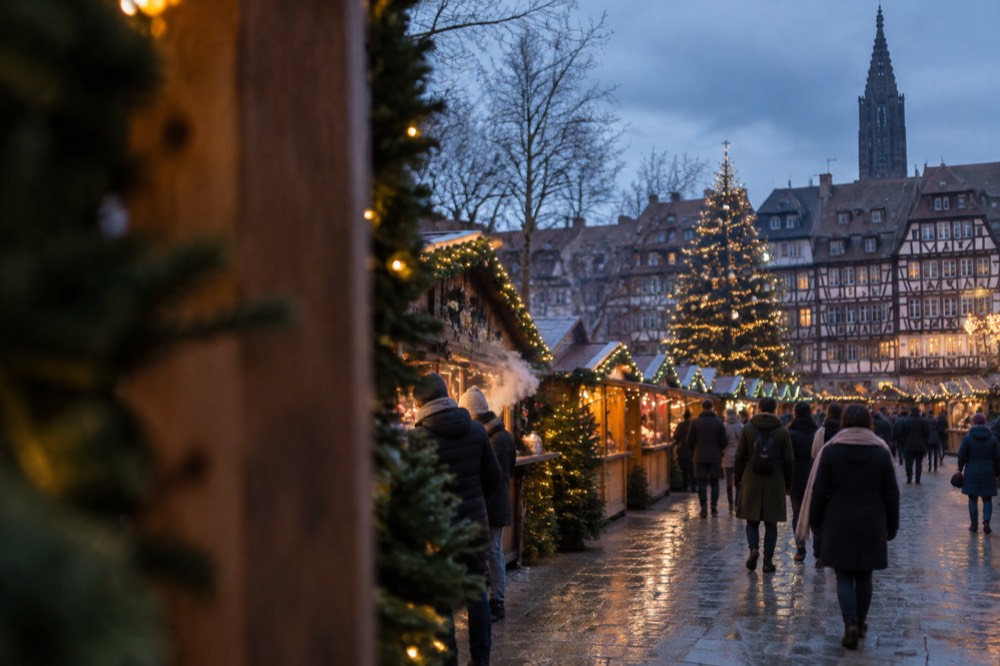
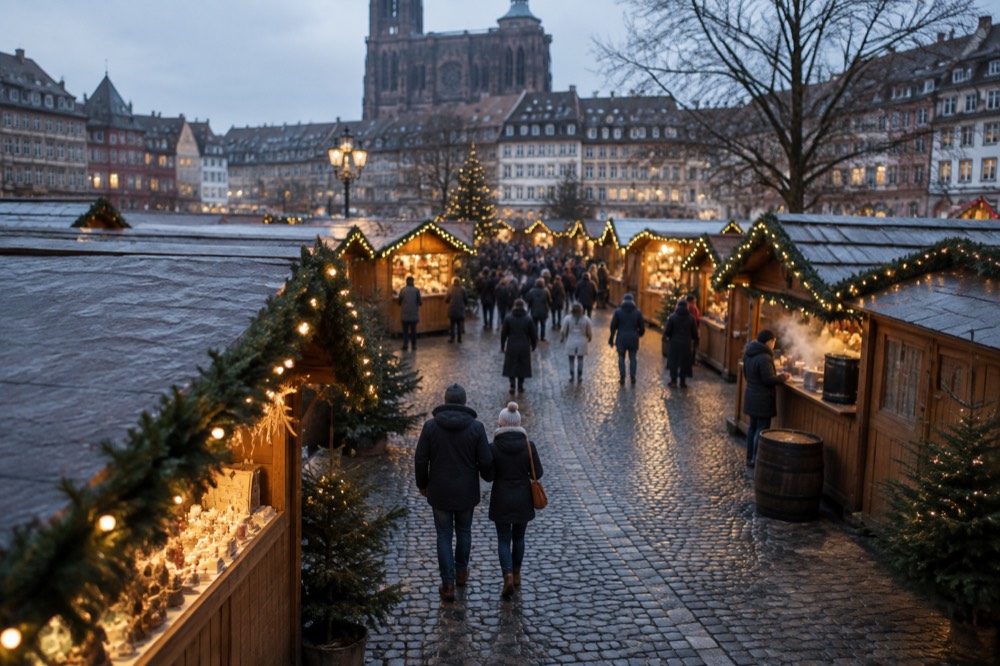
Eat the market's own specialities at the chalets, bredele biscuits, spiced bread, roasted chestnuts and vin chaud, and save one proper restaurant meal for a winstub, the Alsatian tavern, at a table booked ahead. Chalet food is standing food: plan one sit-down meal a day, because December evenings in Alsace are cold and the warm rooms fill without walk-ins. The market's food stalls and their dishes are covered in full in the dedicated food guide.
The honest division of labour is this: chalets for grazing, winstubs for meals. The market's own food culture, bredele, mannala, the spiced bread and the mulled wine, is standing-and-walking food, best bought in the mid-afternoon gap when the queues are short. A winstub meal, choucroute or baeckeoffe or tarte flambée with a local Riesling, is the sit-down counterweight, and in December the good ones are booked, not found. The full food picture, dish by dish, is in the Strasbourg Christmas market food guide, and the classic restaurant shortlist is separate again.
| Eating stop | What to have | When it works best | Planning note |
|---|---|---|---|
| Market chalets | Bredele, spiced bread, roasted chestnuts, vin chaud | Mid-afternoon between squares | Standing food, cash-friendly |
| Winstub | Choucroute, baeckeoffe, tarte flambée | Lunch or a booked dinner | Reserve ahead in December |
| Place Gutenberg food stalls | Grilled and street dishes | Early lunch, before 12:30 | Queues build at midday |
| Wine tasting rooms | Alsace whites and crémant | Late afternoon | Some close early on 24 December |
One practical note on timing: the 12:30 clock show makes a natural lunch pivot. Eat either side of it, not during it, and the cathedral square's stalls are the fastest lunch in the loop. For the evening, a food tour turns the grazing into a structured meal with a guide who knows which stall does which dish best; the roster carries several, from a two-hour culinary walk to a three-and-a-half-hour traditional food walk, and their prices and ratings are on their own listings. The full index of guides sits on Strasbourg Travel Guide.
Should You Add A Day Trip Beyond The City?
Add a third day for the Alsace wine villages or the Black Forest, because the market evenings are the part of Strasbourg you cannot get anywhere else, while the villages are the part of the region Strasbourg is merely the gateway to. A guided medieval villages and wine tasting day trip runs about ten and a half hours and returns you to the city in the evening. Independent travel to the villages is possible by regional train, but winter service is thinner and the villages' own markets close early.
The case for the guided version is December itself. The wine route villages, Riquewihr, Eguisheim, Kaysersberg, are small and their Christmas markets are compact, so a day that strings several together needs a vehicle and a driver who knows which village is open. The medieval villages and wine tasting day trip from the roster does exactly that, with tastings built in, and it pairs naturally with two market days in the city: villages by day, chalets by night. Its rating, duration and price are carried by its live listing rather than printed here, and the operator offers free cancellation, which matters when December weather turns. Check availability
The alternative third day is heavier. The Natzweiler-Struthof camp, the only concentration camp on French soil, sits in the Vosges above the wine route, and a half-day guided visit from Strasbourg is the way to see it with context. It is not a Christmas outing and it does not pair with a market evening, but for a traveller with three days and a reason, the Struthof half-day tour is on the roster with its own listing. The Alsace region guide lays out the full set of options, from the wine route to the castles.
| Third-day option | What it delivers | Who it suits | What to check |
|---|---|---|---|
| Medieval villages and wine tasting day trip | Several wine-route villages plus tastings, about ten and a half hours | First-time visitors wanting the postcard Alsace | Live listing for price, dates, cancellation |
| Struthof half-day guided visit | The former camp in the Vosges with a guide, about four and a half hours | Visitors with a specific historical purpose | Winter access and opening days |
| Colmar on your own | Colmar's own market and old town | Those who want a second city's market | The Strasbourg and Colmar itinerary |
| Black Forest day trip | Freiburg, Titisee and the forest, a full day | Repeat visitors to Alsace | Winter road and weather conditions |
Colmar deserves its own mention because its market is the region's other great one, and the comparison between the two cities, their markets and their atmosphere, is argued out in which Christmas market is better, Strasbourg or Colmar. If you would rather split your stay, the Strasbourg and Colmar itinerary does exactly that, and the wider set of markets across the region is in the Christmas markets in Alsace guide.
What Does December Weather Mean For Your Plans?
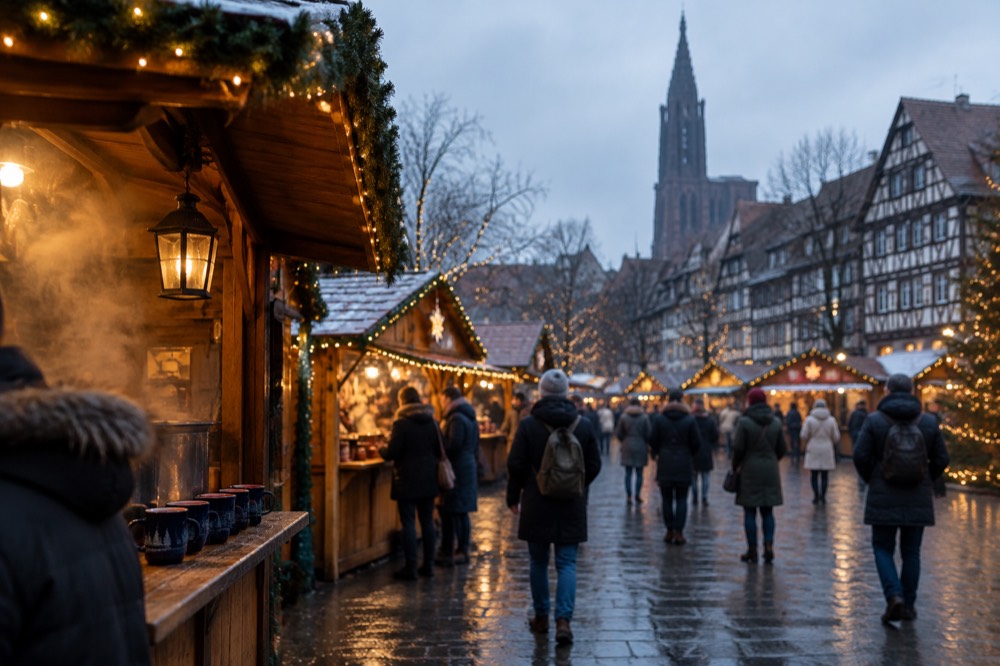
December in Strasbourg is cold and damp rather than snowy: Meteo-France 1991-2020 normals give a mean daily maximum of 5.9 C and a mean minimum of 0.8 C, with 45.2 mm of rain over 10.2 days of 1 mm or more. Plan for rain on a fair share of your days, layer for near-freezing evenings, and hold indoor stops, the museums, the boat, the winstubs, ready as substitutes. Snow happens, but the climate is semi-continental, not alpine.
Those normals are the planning numbers. Ten rain days in the month means a two-day visit has a real chance of one wet afternoon, and the market squares, cobbled and open, offer little shelter. The substitutes are strong: the municipal museums at 9 EUR, the Musée de l'Œuvre Notre-Dame beside the cathedral, the boat tours with covered cabins, and the winstubs. The first-Sunday free admission across the municipal museums is the single best bad-weather lever in the calendar, and the Musée Alsacien's closure until 2028 removes one indoor stop, so the fine arts and modern art museums carry that weight instead.
| December normal (1991-2020, Strasbourg-Entzheim) | Value |
|---|---|
| Mean daily maximum | 5.9 C |
| Mean daily minimum | 0.8 C |
| Rainfall | 45.2 mm |
| Days with rain of 1 mm or more | 10.2 |
What this means for the itinerary is sequencing, not cancellation. The platform climb is better in dry weather, so hold it as a movable block. The clock show is indoors and fixed at 12:30. The boat is sheltered. The loop itself is walkable in rain with the right layers, and the chalets' vin chaud exists precisely for this climate. The full seasonal picture, month by month, is in the best time to visit Strasbourg guide, and the December-specific question, whether the month is worth the cold and the crowds, is answered directly in is December a good time to visit Strasbourg.
How Do You Get Around During The Market?
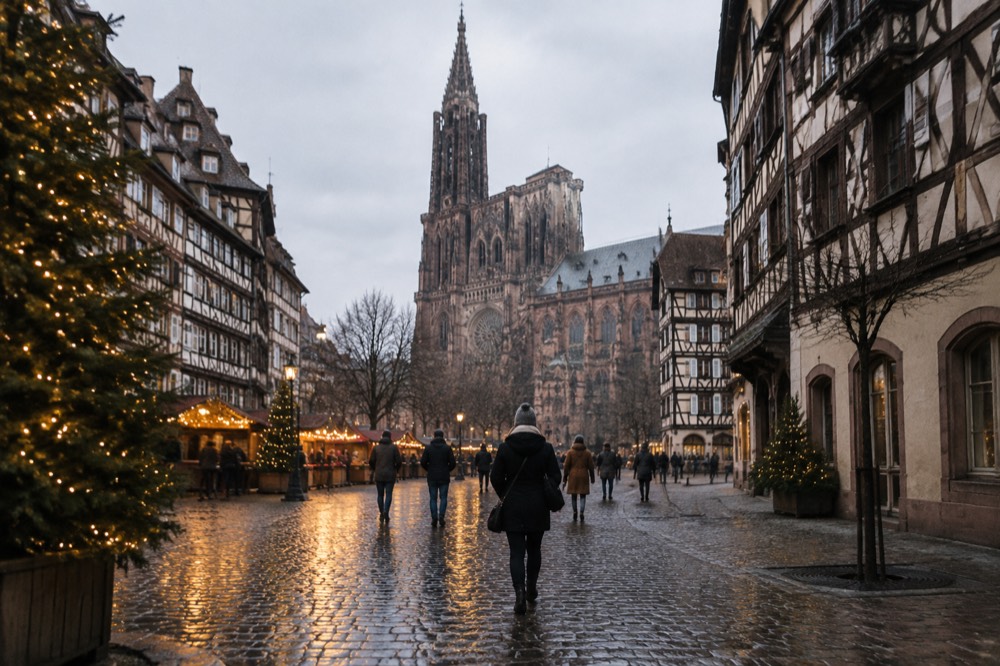
Walk. The market loop sits entirely on the Grande Île and in Petite France, flat and pedestrian-scaled, and a car is a liability in December Strasbourg. For anything beyond walking distance, a CTS single costs 1.90 EUR from the app or contactless and 2.50 EUR bought on board a bus, a 24-hour Solo pass is 4.60 EUR, and a 24-hour Trio pass for two to three people is 10.20 EUR.
The transit arithmetic favours the 24-hour Solo pass the moment you make three journeys in a day, and the Trio pass covers two or three people travelling together for less than three Solo passes. During the market the trams run late and the squares fill, so the practical pattern is transit in from your hotel, then walking for the rest. If you are flying in, the airport shuttle is the cheapest airport transfer there is: the combined ticket covers the 8-minute train ride from Entzheim plus a day of city transit, and it is bought like any CTS ticket.
| Ticket | Price | What it covers |
|---|---|---|
| CTS single, app or contactless | 1.90 EUR | One journey |
| CTS single, bought on board a bus | 2.50 EUR | One journey |
| CTS 24h Solo | 4.60 EUR | One person, 24 hours |
| CTS 24h Trio | 10.20 EUR | Two to three people, 24 hours |
| Airport combined ticket (Alsa+ 24h EMS) | 4.60 EUR | Train from Entzheim plus city transit for a day |
Parking is the one thing to avoid planning around: the parking in Strasbourg guide explains why, and the short version is that December demand meets a medieval street plan. Arrive by train if you can, and if you are coming from Paris, the Paris to Strasbourg guide covers the rail options without the guesswork. The broader question of whether Strasbourg rewards a car at all is settled in the car rental guide, and for this itinerary the answer is no.
Which Stops Deserve Your Last Evening?
Give the last evening to the cathedral square and the tree on Place Kléber after dark, because those two are the images the market is famous for, and the lights are the whole argument for a December visit. If you have already done them, spend the final evening in the Krutenau quarter, the old boatmen's and fishermen's streets south of the Grande Île, where the market thins out and the winstubs are local rather than central. Close on the river, not on a queue.
The last evening is also the right slot for a private guide if the trip is a special one. A private evening walking tour, an hour and a half with the city to yourselves after the day-trippers have gone, is the roster's most flexible evening option, and its price and availability are on its own listing. For a couple or a family marking something, it converts the final hours from sightseeing into the part of the trip people remember.
The question of which market square is actually the best one, rather than merely the most central, has its own answer page: which Strasbourg Christmas market is best. The short planning answer is that the cathedral square and the tree square carry the spectacle, while the smaller clusters carry the calm, and a good itinerary uses both. If your stay is shorter than two days, the one day in Strasbourg itinerary shows what to cut, and the two days in Strasbourg itinerary is the non-December version of this same plan.
What Should You Book Before You Arrive?
Book three things in advance and nothing else: your hotel, any guided day trip beyond the city, and a table for one winstub dinner per stay. Cathedral tickets, boat trips, transit passes and museum entry are all bought on the day, and the clock tickets are day-of only by rule. The 2026 market dates are not yet published, so hold refundable rates where you can and confirm the dates on the city's Christmas site before committing to non-refundable plans.
That ordering is about what sells out versus what does not. Beds and village day trips sell out in December. The clock does not, because it cannot. The boat does not, because it runs all day. The museums do not, and on the first Sunday of the month they are free. The one genuinely scarce table is the winstub dinner, and a phone call a week ahead solves it.
For the day trip, the medieval villages and wine tasting excursion is the one this site features for this itinerary, and it is the pairing that makes a three-day Strasbourg Christmas trip feel complete: two days of markets and cathedral, one day of vineyards and half-timbered villages, and an evening back at the chalets. Its current price, rating and departure days are on the operator's live listing, with free cancellation if the December weather argues otherwise.
Common Questions About The Strasbourg Christmas Market Itinerary
What are the dates of the Strasbourg Christmas market?
The official 2026 dates are not yet published; the city's Christmas site states that the dates and programme are still being finalised. The usual pattern runs from late November to 24 December, with the final day closing early in the evening. The 2025 edition ran 26 November to 24 December 2025 and drew 3.05 million visitors. Confirm the current dates on the city's Christmas site before you book travel.
How many days do you need for the Strasbourg Christmas market?
Two days covers the markets, the cathedral, Petite France and a boat trip comfortably. A third day adds either the Alsace wine villages, Colmar, or the Black Forest. One day is possible but rushed, and it leaves the food and the riverside shortchanged.
What order should you visit the Strasbourg markets in?
Start at the cathedral and Place du Château, move to Place Kléber for the tree, then descend through Place Gutenberg to Petite France and the river. That order keeps the busiest squares for the afternoon and saves the riverside for dusk, when the half-timbered houses look their best.
Is the astronomical clock show worth planning around?
The full automaton show runs daily at 12:30 sharp and the ticket is 4 EUR, bought on the day only, with no reservations. Tickets are sold at the cathedral stalls from 10:00 to 11:00 or at the Saint-Michel entrance from 11:30. If you are in the city at midday, it is a thirty-minute stop that is easy to build a lunch around.
Can you visit the Strasbourg Christmas market without a car?
Yes, and a car is a liability during the market. The whole itinerary is walkable, and CTS transit covers anything beyond: a single ticket is 1.90 EUR from the app or contactless, a 24-hour Solo pass is 4.60 EUR, and the airport train shuttle takes 8 minutes with a combined ticket at 4.60 EUR.
What should you eat at the Strasbourg Christmas market?
Graze the chalets for bredele biscuits, spiced bread, roasted chestnuts and vin chaud, and book one proper winstub dinner a day for choucroute, baeckeoffe or tarte flambée with a local Riesling. The market food stalls are standing food, so plan one sit-down meal each day.
Strasbourg's Christmas market rewards a plan and forgives a loose one. The squares are close enough together that no itinerary survives first contact with a vin chaud stall unchanged, and the cathedral, the tree and the river will still be there tomorrow. Book the bed and the day trip, walk the rest, and let the city do the December work it has been doing for longer than any guide has been writing about it.