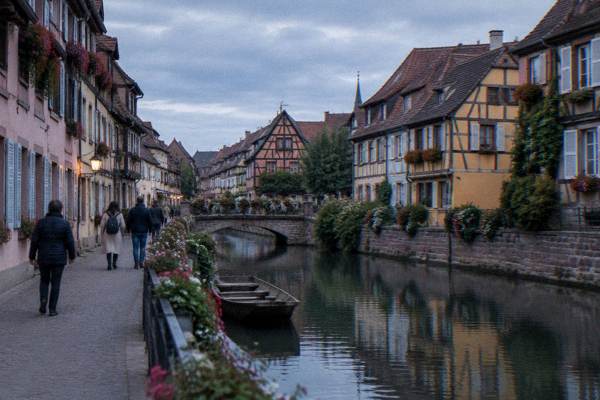
Alsace France
Alsace is the French region that hugs the German border along the Rhine, and Strasbourg, its prefecture in the Bas-Rhin department of Grand Est, is the natural base for seeing it: the cathedral and Petite France in the city, wine villages and castles within a day trip, and the Vosges foothills beyond.
Short answer
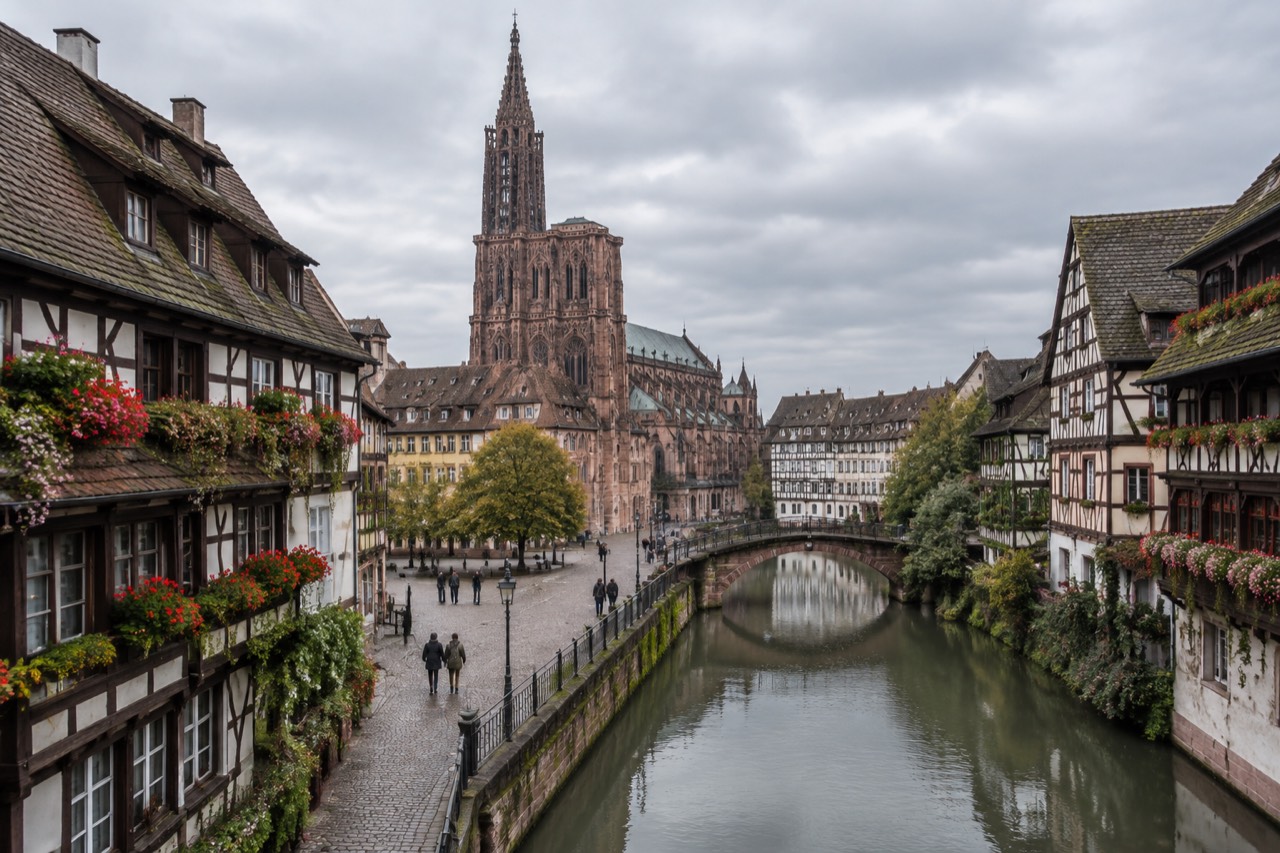
Alsace sits in north-eastern France beside the German border, with Strasbourg as its capital in the Bas-Rhin department of Grand Est. The region pairs a UNESCO-listed historic centre with a wine route of half-timbered villages, a semi-continental climate with warm summers and cold winters, and easy cross-border day trips into Germany and Switzerland.
Alsace is a region of north-eastern France, and everything in this guide is planned from its capital: Strasbourg, prefecture of the Bas-Rhin department, in the Grand Est region, on the River Ill beside the Rhine, which forms the border with Germany, with Kehl on the far bank. The region is small enough that a single base in Strasbourg serves the whole of it, from the vineyards of the foothills to the castles on the Vosges ridge and the Christmas chalets that fill the city each December. This page sets out where Alsace is, what it is known for, how many days it deserves, which villages and wines to prioritise, when to go and how to move around, all with Strasbourg as the working hub.
Where Is Alsace In France?
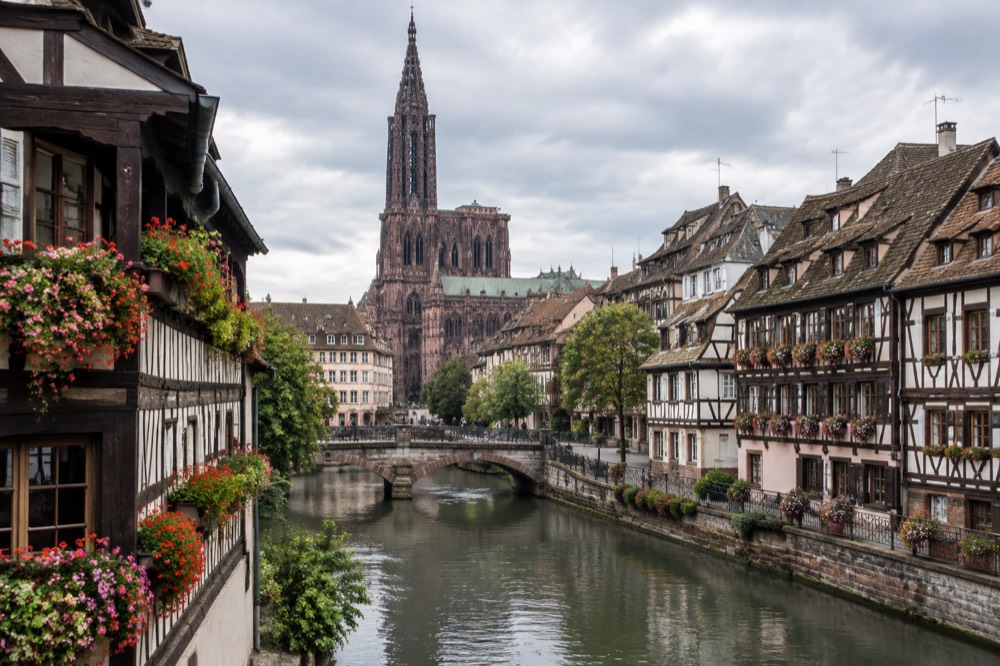
Alsace is the far north-eastern corner of France, a strip of land between the Vosges mountains and the Rhine, which is the border with Germany, and its capital Strasbourg sits in the Bas-Rhin department of the Grand Est region, roughly across the river from the German town of Kehl. The commune counted 293,771 residents at the last INSEE census year, and the whole region is served by Strasbourg's airport at Entzheim, with a train shuttle running to the central station. The border position is not incidental: the region changed hands between France and Germany several times across its modern history, and the architecture, food and dialects all carry the mark of both countries. The Strasbourg Travel Guide covers the city in depth; this page widens the lens to the region around it.
The practical shape of the region is simple. Strasbourg sits at the north end, Colmar toward the south, and the wine route runs along the foothills between them, through villages such as Riquewihr, Eguisheim, Kaysersberg and Ribeauvillé. West of that line the Vosges rise, with castles such as Haut-Koenigsbourg on the ridge and Mont Sainte-Odile above the plain. East of Strasbourg the Rhine is crossed by bridges to Kehl, and beyond it the Black Forest, Baden-Baden and Freiburg are all realistic day trips, in Germany. Basel, in Switzerland, is reachable toward the south; it is in Schengen but outside the euro, so euros do not work there.
| Question | Answer |
|---|---|
| Country | France |
| Region | Grand Est |
| Departments | Bas-Rhin (Strasbourg) and Haut-Rhin (Colmar) |
| Capital | Strasbourg |
| Border | Germany, along the Rhine; Switzerland near Basel |
| Currency | Euro (Germany too; Switzerland is not in the euro) |
| Climate | Semi-continental |
| Main airport | Strasbourg-Entzheim, linked to the central station by train |
For orientation, the where is Strasbourg guide maps the city against the French and German sides in more detail, and it is worth reading before booking anything, because the border shapes every itinerary decision in this region.
What Is Alsace Known For?
Alsace is known for three things above all: the half-timbered wine villages of the foothills, the food and wine culture that goes with them, and Strasbourg itself, whose Grande Île and Neustadt are inscribed together as a UNESCO World Heritage property, with the Neustadt as the later extension. The region's cathedral, in Strasbourg, is a single-spired Gothic landmark with a viewing platform at 66 m, and the city's Christmas market, which in its last edition ran from 26 November to 24 December 2025 and drew 3.05 million visitors, has made the region a December destination in its own right. Add the storks that nest across the plain, the fortified castles of the Vosges, and a white-wine tradition built on Riesling and other local varieties, and the outline of a trip writes itself.
If you want the city's stories told on foot, book a free walking tour here.
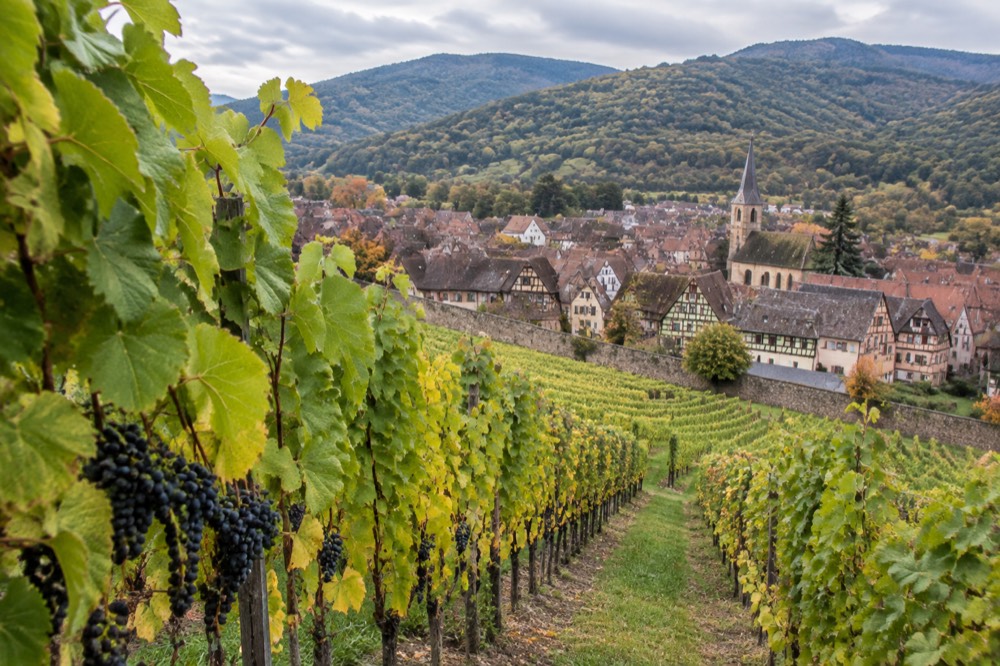
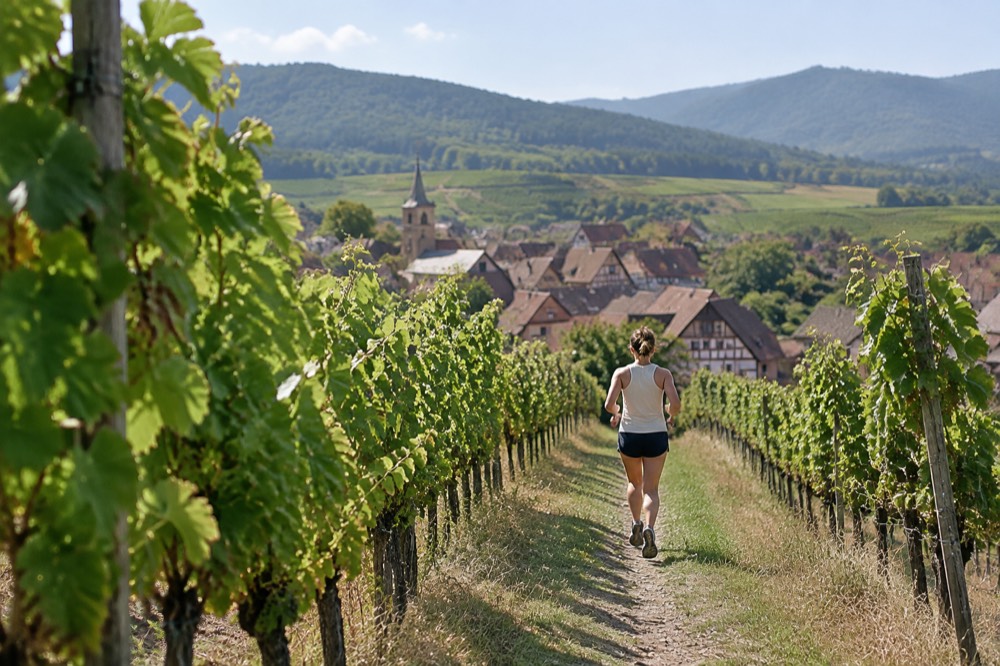
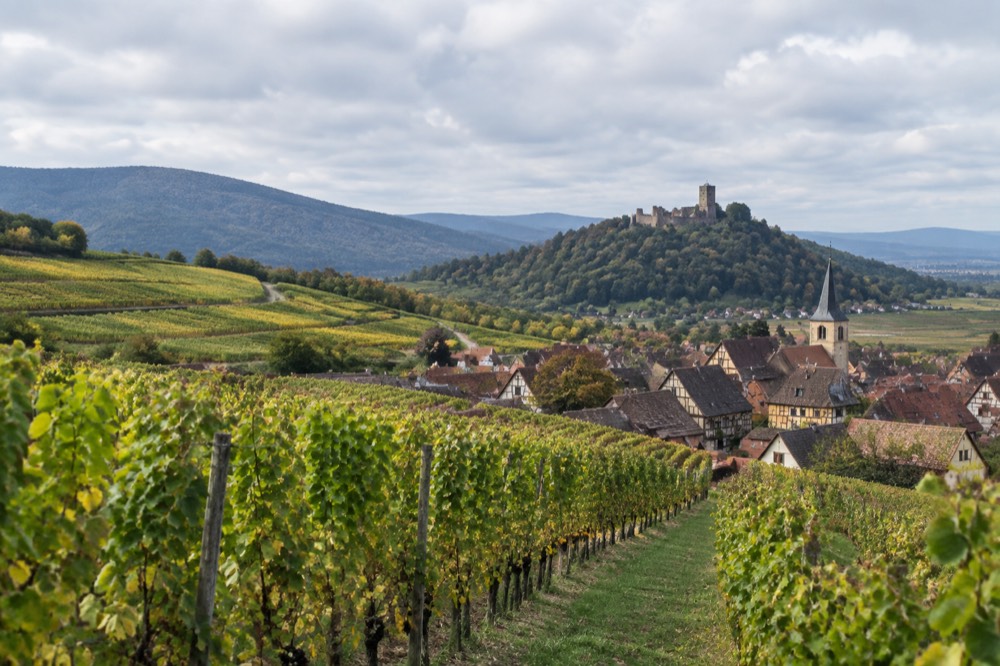
The villages are the region's signature. Riquewihr and Eguisheim in particular are walled, half-timbered and intensely photographed, and Kaysersberg and Ribeauvillé sit in the same cluster along the wine route. Each is small enough to walk in an afternoon, and each pairs with a cellar visit, which is where the region's second reputation, its wine, comes in. The wine route is the thread that ties the villages together, and it is covered in depth on the Alsace wine route guide.
The food deserves the same billing as the wine. Tarte flambée, choucroute, baeckeoffe and kougelhopf are the region's core dishes, all served in the winstubs of Strasbourg and the village restaurants beyond it, and each has its own page in this guide's food section. The Christmas season then layers a market culture on top: chalets across the city's squares, a great tree on Place Kléber, and satellite markets in Colmar and the villages, all covered in the Christmas markets in Alsace guide.
How Many Days Do You Need For Alsace?
Plan on at least four days for Alsace: two in Strasbourg and two exploring the wine route villages. That is the honest minimum for a satisfying trip. With five days, you can see the city, the villages, visit one castle, and add a short German or Swiss border crossing, all without rushing anything. Strasbourg alone rewards two full days: the cathedral, Petite France, the Grande Île and the European quarter fill a first day comfortably, and a second day can take the museums, a boat tour on the Ill, or a lazy winstub afternoon. The wine route is best done as a single focused day from Strasbourg or Colmar rather than a series of half visits, because the villages cluster tightly and a guided day trip covers several of them in one move. The one day in Strasbourg and three days in Strasbourg itineraries set out the city side hour by hour.
For the region beyond the city, the arithmetic is about appetite rather than distance. A traveller who wants wine above all else can spend a full day on cellars and still not exhaust a single village's producers. A traveller who wants castles and scenery will point at Haut-Koenigsbourg and Mont Sainte-Odile and give the vineyards a morning. Families with children often split the difference, and the Strasbourg with kids guide covers the options, from the zoo to the stork centres.
A guided wine day solves the region's one real logistical problem: the villages are awkward without a car, and the person who wants to taste should not be the person driving. The half-day wine tour from Strasbourg is the region's most flexible option in that respect, and it pairs naturally with a self-guided city morning, since it returns to Strasbourg with the evening free. Check availability on the operator's live listing before locking the rest of the day, because departure windows shape what else fits around it.
Which Are The Prettiest Villages In Alsace?
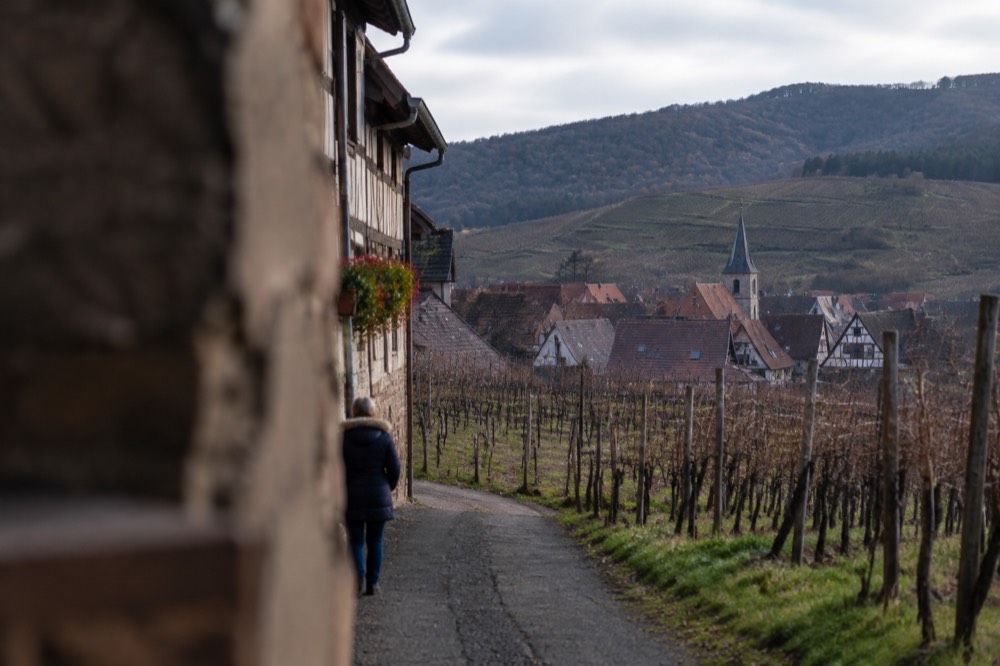
Riquewihr, Eguisheim, Kaysersberg and Ribeauvillé are the four villages that define the Alsatian postcard, all walled, half-timbered and set among vineyards, and each is walkable in a couple of hours; Colmar, larger and canal-crossed, is the town that anchors the southern end of the route. Riquewihr is the classic postcard: ramparts, cobbled lanes and wine cellars in every other building. Eguisheim is the round-walled one, built in concentric streets around its original centre, and it is the easiest of the four to combine with Colmar. Kaysersberg adds a castle ruin above the rooftops, and Ribeauvillé is the quietest of the cluster.
Beyond the famous four, the region keeps going. Obernai sits south of Strasbourg and is the easiest half-timbered town to reach from the city for a shorter outing, Hunawihr and Bergheim are smaller and calmer neighbours of Riquewihr, and Sélestat and its surroundings hold the humanist library and the stork park. The most beautiful villages in Alsace guide ranks the full set, and the Riquewihr, Eguisheim and Kaysersberg pages each go deeper on one village.
| Village | What It Is For | Who It Suits | What To Check Before Going |
|---|---|---|---|
| Riquewihr | Ramparts, cellars, the classic Alsatian streetscape | First-time visitors, photographers | Parking fills early in summer and December |
| Eguisheim | Concentric old streets, wine tasting | Short visits, Colmar combinations | Cellar opening days vary by season |
| Kaysersberg | Castle ruin, river setting, quiet lanes | Walkers, history-minded visitors | Steep path to the ruin; wear proper shoes |
| Ribeauvillé | Smaller crowds, same architecture | Repeat visitors to the route | Fewer English-language cellar tours |
| Obernai | Closest half-timbered town to Strasbourg | Half-day trips from the city | Train and bus connections rather than drive times |
| Colmar | Canals, museums, the southern anchor | Anyone spending two days or more | Museum days, since some close weekly |
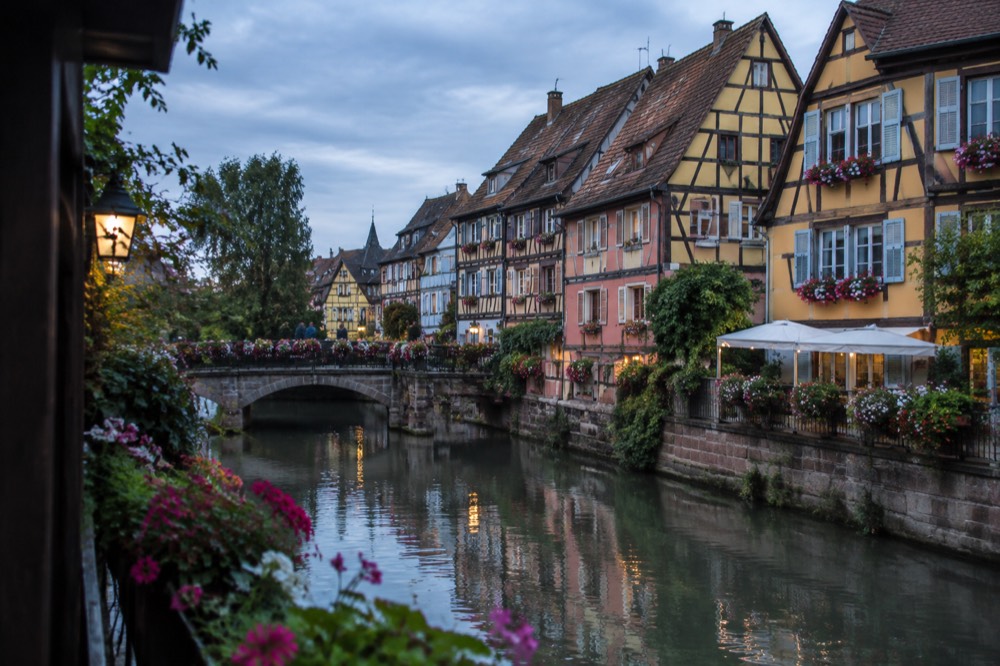
The honest planning note is that the villages are small and the crowds are seasonal. In July and August, and again during the Christmas weeks, Riquewihr in particular feels its popularity, and an early arrival changes the character of the visit entirely. In spring and autumn the same streets are calm, the vineyards are at their most photogenic, and cellars have time to talk. The trade-offs by month are set out in the best time to visit Strasbourg guide, which applies to the region as a whole.
What Wine Should You Taste In Alsace?
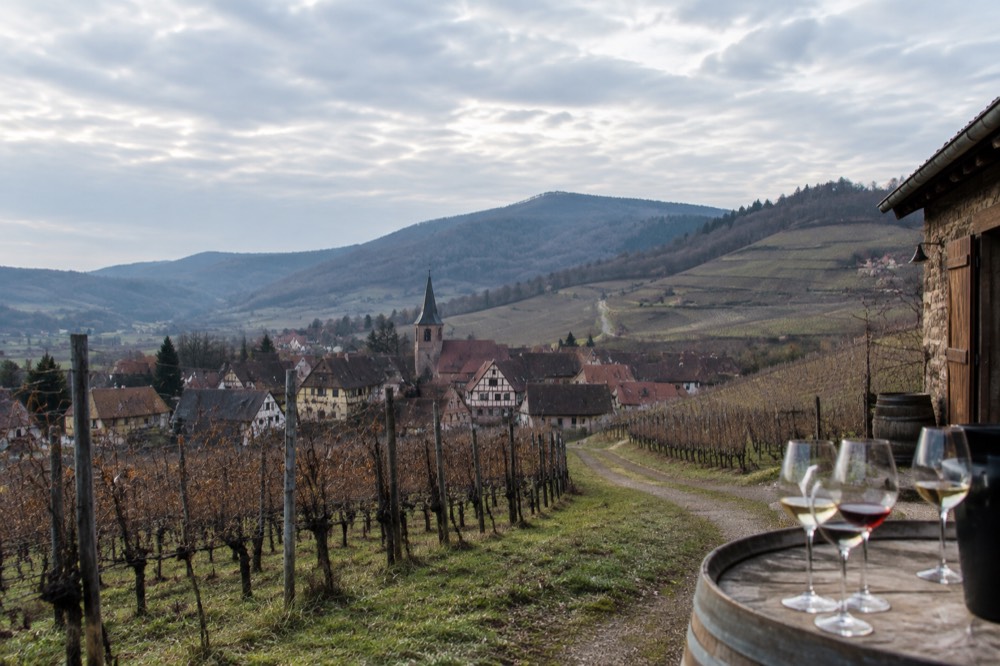
Alsace is a white-wine region first: Riesling is the flagship, and the local sparkling wine, Crémant d'Alsace, is the everyday celebration pour, with Gewurztraminer and Pinot Gris rounding out the classic range; the region's wines are sold by grape variety on the label, which is unusual for France and makes cellar visits easy to navigate. The wine route itself, the Route des Vins, strings the cellars and villages along the foothills, and tasting is arranged in the traditional way: walk into a producer's courtyard, taste at the counter, buy what you liked. Fees, where they exist, are modest and often waived on purchase, so check the room rather than assuming a price.
The Alsace wine guide explains the grapes and styles in detail, and the is Riesling considered cheap wine and is Crémant as good as Champagne answers cover the two questions everyone asks. The short version is that the region's Riesling is dry, structured and food-focused, nothing like the sweet reputation the grape carries elsewhere, and that Crémant d'Alsace is made by the same traditional method as Champagne at a friendlier price, which makes it the region's default gift and festivity bottle.
| Grape Or Style | Broad Character | Classic Pairing |
|---|---|---|
| Riesling | Dry, mineral, precise | Choucroute, river fish |
| Gewurztraminer | Aromatic, generous, spicy | Munster cheese, spicy dishes |
| Pinot Gris | Rich, rounded | Poultry, mushroom dishes |
| Sylvaner | Light, fresh, dry | Tarte flambée, cold cuts |
| Pinot Blanc | Soft, easy, everyday | Winstub lunches |
| Crémant d'Alsace | Traditional-method sparkling | Aperitif, kougelhopf |
For tasting in the city rather than on the route, Strasbourg carries the region well. The Cave Historique des Hospices holds a deep cellar of Alsatian bottles, wine shops around the Grande Île pour by the glass, and a one-hour tasting experience in the city covers several varieties in a single sitting for visitors who want the education without the drive. The Strasbourg food tour guide covers the guided tasting walks, which pair the wines with the region's dishes.
When Is The Best Time To Visit Alsace?
The best months for a classic visit are May, June and September, when the semi-continental climate gives warm, settled days without the July and August crowds; December is the region's second season, built entirely around the Christmas markets, and it is cold, busy and unlike any other month. The Meteo-France 1991-2020 normals for Strasbourg-Entzheim put the mean daily maximum at 26.4 C in July against 5.2 C in January, with 635.7 mm of rain spread over 112.3 rain days a year, so the region is never dry, it simply varies between warm-rainy and cold-rainy. Spring warms quickly, autumn stays pleasant into October, and winter regularly drops below freezing at night.
| Month | Mean Max C | Mean Min C | Rain Mm | Rain Days |
|---|---|---|---|---|
| Jan | 5.2 | -0.2 | 35.4 | 9.1 |
| Apr | 17.0 | 5.7 | 41.8 | 8.6 |
| Jul | 26.4 | 14.9 | 71.9 | 10.4 |
| Sep | 21.6 | 10.7 | 54.6 | 8.0 |
| Oct | 15.8 | 7.2 | 59.5 | 9.6 |
| Dec | 5.9 | 0.8 | 45.2 | 10.2 |
The seasonal guides break this down month by month: Strasbourg in spring, Strasbourg in summer, Strasbourg in autumn and Strasbourg in winter, with the Strasbourg weather guide holding the full normals table. The December question has its own page, because the Christmas market changes everything: hotel prices, crowd levels and the entire rhythm of the day. The 2025 edition ran from 26 November to 24 December, and the 2026 dates are still being finalised, so confirm them on the city's Christmas site before booking anything for late November onward.
How Do You Travel Around Alsace Without A Car?
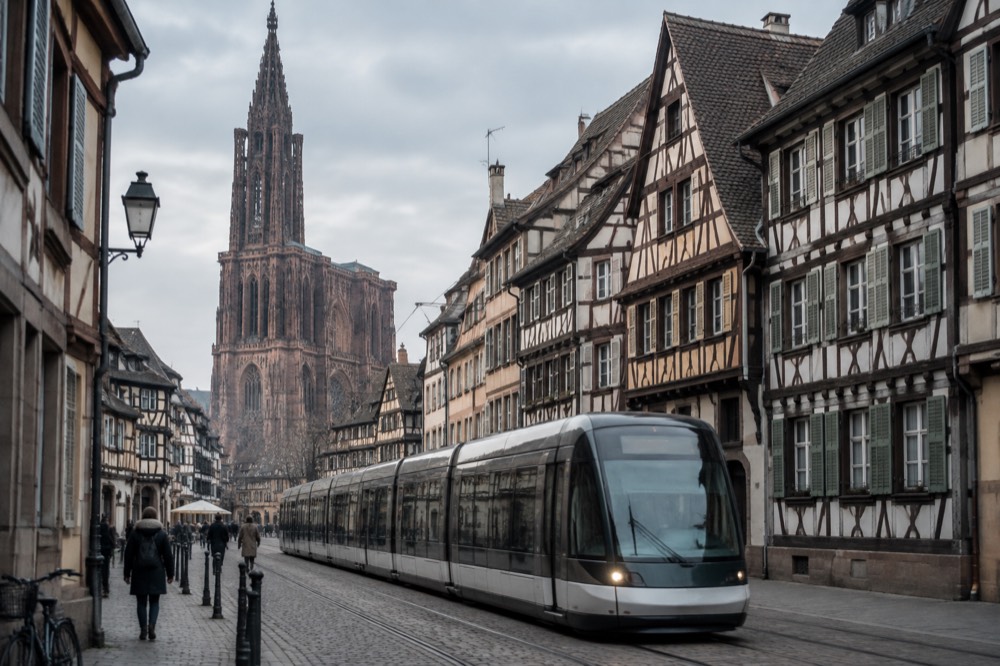
Strasbourg is the transport hub, and a car-free trip works well for the city and Colmar by train, but the wine villages are the weak link: regional trains and buses reach some of them, and a guided day tour is the reliable car-free answer for the rest. Inside Strasbourg itself the tram network run by CTS covers everything a visitor needs, with a single ticket at 1.90 EUR bought through the app or by contactless, or 2.50 EUR bought on board a bus, a 24-hour Solo pass at 4.60 EUR and a 24-hour Trio pass for two to three people at 10.20 EUR. The airport shuttle to Entzheim takes 8 minutes by train and a combined ticket covering the train plus a day of city transport costs 4.60 EUR.
| Ticket | Price | What It Covers |
|---|---|---|
| CTS single | 1.90 EUR | One journey, app or contactless |
| CTS single, on board bus | 2.50 EUR | One journey, bought from the driver |
| CTS 24h Solo | 4.60 EUR | One person, 24 hours |
| CTS 24h Trio | 10.20 EUR | Two to three people, 24 hours |
| Airport combined ticket | 4.60 EUR | Train to Entzheim plus 24h city transport |
For the region, the train is the spine. Colmar is a straightforward regional ride from Strasbourg, and from Colmar the wine villages are reachable by a mix of short train hops and local buses, though frequencies thin out on Sundays and outside school terms, so check the regional transport site for the day you actually travel. The German border is equally easy in the other direction: Kehl is the immediate neighbour across the Rhine, and the Kehl guide covers the cross-border side. Basel, in Switzerland, is reachable by train toward the south of the region; remember that Switzerland is outside the euro, so a card or francs are needed there.
The car question then answers itself by itinerary. A trip that is city plus Colmar plus one guided village day needs no car at all. A trip that wants Haut-Koenigsbourg, Mont Sainte-Odile and a string of small cellars at the driver's own pace is easier with one, and the Strasbourg car rental and parking in Strasbourg guides cover the practical side of that choice, including where to leave the car outside the pedestrian centre.
What Does A Day Trip From Strasbourg Look Like?
A day trip from Strasbourg falls into one of four shapes: the wine route with a guide, the castles and scenery of the Vosges, a German border town across the Rhine, or a second city such as Colmar explored independently; each is a full day, and none should be squeezed alongside a second outing on the same date. The guided options handle the driving and the cellar bookings, which matters on the wine route where tasting and driving do not mix. The castle day points at Haut-Koenigsbourg, the restored fortress on the Vosges ridge, often combined with the eagle park and monkey reserve at Kintzheim. The German days cross into the Black Forest, Baden-Baden or Freiburg, and the Swiss option runs to Basel.
| Day Trip | Country | What The Day Is For | How It Pairs With Strasbourg |
|---|---|---|---|
| Wine route villages | France | Cellars, half-timbered streets | Guided tour or slow self-drive |
| Haut-Koenigsbourg and Kintzheim | France | Castle, eagles, monkey reserve | Car or castle-focused day tour |
| Colmar | France | Canals, museums, old town | Direct regional train |
| Black Forest and Freiburg | Germany | Forest scenery, a German city | Guided tour or cross-border train |
| Baden-Baden | Germany | Spa town, parks | Guided tour or train via the border |
| Basel | Switzerland | Museums, the Rhine, old town | Train; non-euro currency |
Two guided days illustrate the range. The medieval villages and wine tasting day trip strings together the walled villages with cellar stops built in, which is the shape of trip that is genuinely hard to replicate by public transport in a single day. The best-of-Alsace historical day trip takes the wider regional sweep instead, castle and villages together, and suits a visitor who wants the outline of the whole region in one long outing. Both return to Strasbourg in the evening, which keeps a single hotel base workable for the whole trip.
The border days deserve their own word of caution about planning rather than distance: cross-border trips involve two countries' timetables and, for Basel, a second currency, so the day needs slightly more preparation than a domestic one. The Black Forest, Baden-Baden, Freiburg and Basel guides each cover their destination, and the Alsace road trip page sets out the multi-day version for travellers who would rather loop the region than commute to it.
Is Alsace Expensive?
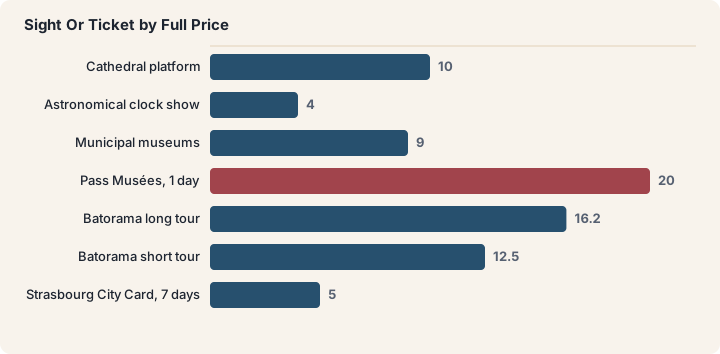
Alsace is mid-priced by French standards: Strasbourg's core sights are cheap or free to see, municipal museums cost 9 EUR full price with a 1-day Pass Musées at 20 EUR, and the real costs are accommodation, food and the December hotel premium, not tickets. The cathedral nave is open to visitors during its published hours, the platform costs 10 EUR full price or 6 EUR reduced, and the astronomical clock's daily show at 12:30 costs 4 EUR. A Batorama boat tour on the Ill runs 16.20 EUR full price for the long circuit or 12.50 EUR for the short one. The Strasbourg City Card, at 5 EUR for seven days, is a discount card rather than an all-inclusive pass, and it takes money off museums, the boat, the platform and the clock.
| Sight Or Ticket | Full Price | Reduced |
|---|---|---|
| Cathedral platform | 10 EUR | 6 EUR |
| Astronomical clock show | 4 EUR | 2 EUR children 6-17 |
| Municipal museums | 9 EUR | 5 EUR |
| Pass Musées, 1 day | 20 EUR | - |
| Batorama long tour | 16.20 EUR | 8.90 EUR |
| Batorama short tour | 12.50 EUR | 7.20 EUR |
| Strasbourg City Card, 7 days | 5 EUR | 3.50 EUR ages 3-17 |
The savings levers are the same as anywhere in France, with one regional bonus: every municipal museum is free on the first Sunday of the month, which turns a weekend trip into a cheap museum day if the dates align. The Strasbourg on a budget and free things to do in Strasbourg guides list the rest, and the Strasbourg city pass page explains exactly what the City Card does and does not include, which is worth reading before buying anything.
Food costs sit in a comfortable middle band. A winstub lunch is cheaper than a dinner sitting, tarte flambée is the region's affordable default plate, and the covered markets sell bread, cheese and fruit for picnic budgets. December is the exception to every price statement: the Christmas season lifts hotel rates across the city and the villages, and the why is Strasbourg so expensive in December answer explains the mechanics of it, while where to stay for the Christmas market covers the neighbourhoods that keep the walk home short.
Common Questions About The Alsace Region
Is Alsace in France or Germany?
Alsace is in France. It is the north-eastern corner of the country, in the Grand Est region, with the Bas-Rhin department anchored by Strasbourg and the Haut-Rhin by Colmar. The Rhine forms the border with Germany along its eastern edge, and the region's history of changing hands between the two countries explains its mixed architectural and culinary character, but it is French territory today and uses the euro.
What is the capital of Alsace?
Strasbourg is the capital. It is the prefecture of the Bas-Rhin department, the seat of the Grand Est regional institutions, and the home of European institutions including the European Parliament. The commune counted 293,771 residents in the INSEE 2023 figures, and the whole region's transport spine, including the airport link at Entzheim, runs through it.
How many days do you need in Alsace?
Plan on at least three: two for Strasbourg itself and one for the wine route or a castle day. Five days allows the city, the villages, Haut-Koenigsbourg and one cross-border trip into Germany or Switzerland without rushing. Anything shorter turns the region into a drive-by, because the villages reward slow time and the cellars reward conversation.
What is the best time of year to visit Alsace?
May, June and September combine the region's warmest, calmest weather with thinner crowds, on a semi-continental climate that averages a July maximum of 26.4 C and a January maximum of 5.2 C. December is the second season: the Christmas markets fill Strasbourg and the villages, the 2025 edition drew 3.05 million visitors, and the trade-off is cold weather, crowds and peak hotel rates. Confirm the current edition's dates on the city's Christmas site before booking.
Can you visit the Alsace wine villages without a car?
Yes, with planning. Colmar is an easy regional train ride from Strasbourg, and some villages are reachable by short train hops and local buses, though services thin out on Sundays. For a single day that strings several cellars together, a guided wine day tour from Strasbourg is the reliable car-free option, since it handles the driving while the tasting happens.
Do they speak German or English in Alsace?
French is the everyday language of the region. The local Alsatian dialect survives among older residents, and German is commonly understood near the border and in the service sector, a legacy of the region's shared history. English is spoken in hotels, museums and the larger restaurants of Strasbourg and Colmar, and less reliably in the small villages, where a few French phrases go a long way.
Alsace rewards a traveller who treats Strasbourg as a base rather than a drive-through: the city carries the cathedral, the museums and the Christmas season, the wine route carries the villages and the cellars, and the borders on either side add Germany and Switzerland to a single trip. Pick the season honestly, decide early whether the car-free or the self-drive version suits, and the region's small scale does the rest.