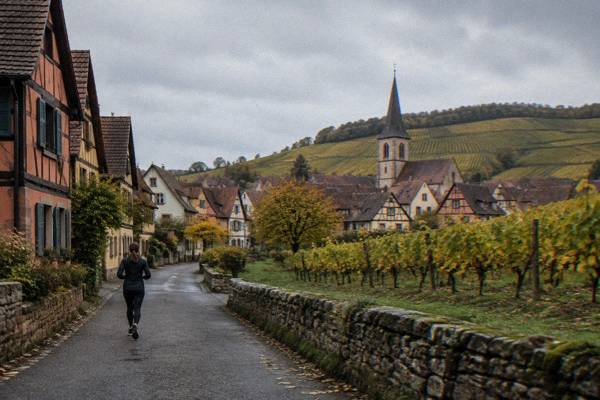
Most Beautiful Villages In Alsace
The villages of Alsace, the wine-growing region around Strasbourg in north-eastern France, hold some of the prettiest streets in Europe. Here is which ones to see, how to reach them and when to go.
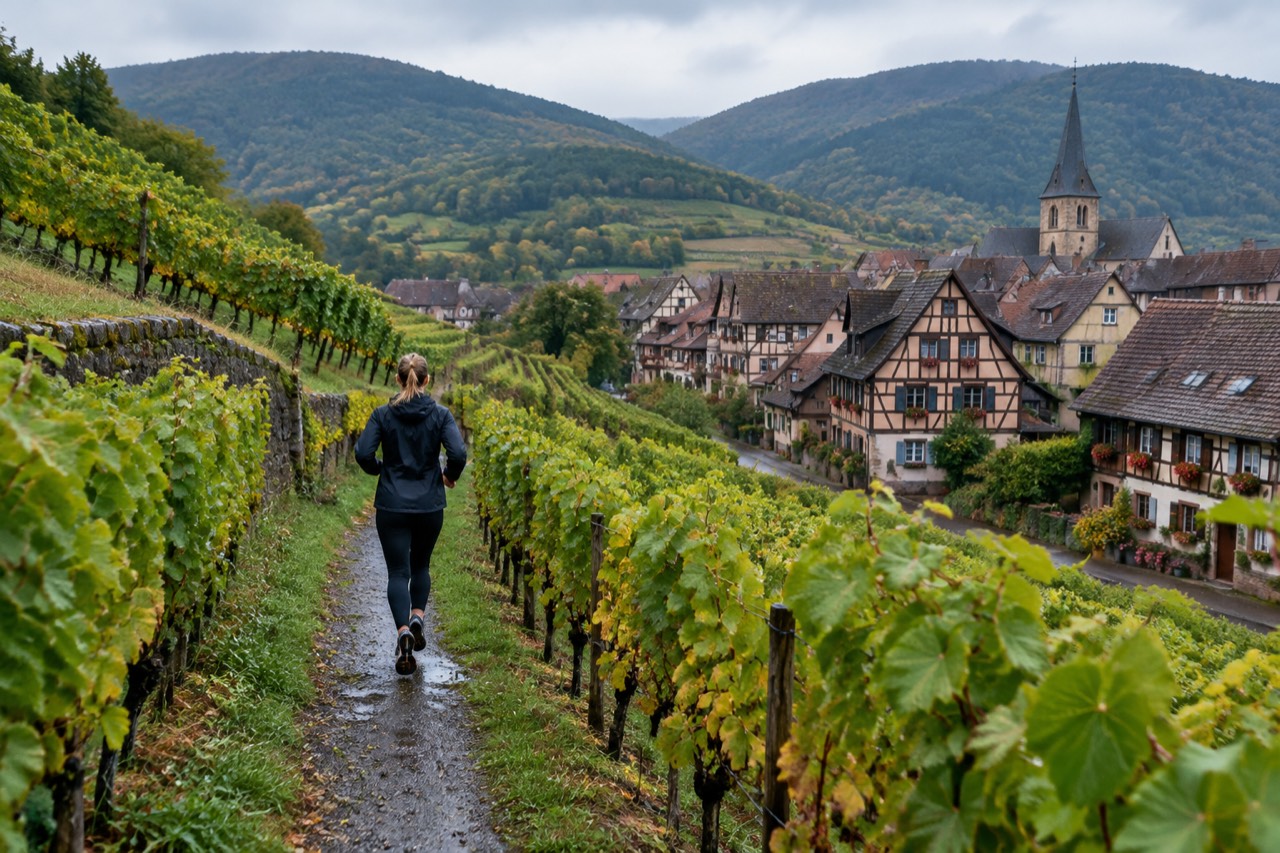
Short answer
The villages that draw travellers to Alsace are Eguisheim, Riquewihr, Kaysersberg, Hunawihr, Bergheim and Obernai, all within the wine country around Strasbourg in north-eastern France. They are small, half-timbered and best reached by car or a small-group day trip, since rail links serve only some of them.
Alsace, the region whose capital is Strasbourg in north-eastern France, keeps its beauty in two places: the Gothic cathedral at the centre of the city, and the wine villages scattered through the hills to the south and west. The villages are small, half-timbered and dense with geraniums in summer, and they sit inside a landscape of vineyards that rises from the plain of the Rhine toward the Vosges mountains. Strasbourg makes the natural base: it is a city of 293,771 residents at the last national census, with a train station, an airport shuttle and a tram network that reaches the edge of the old town, and the wine country begins a short drive or a regional train ride away.
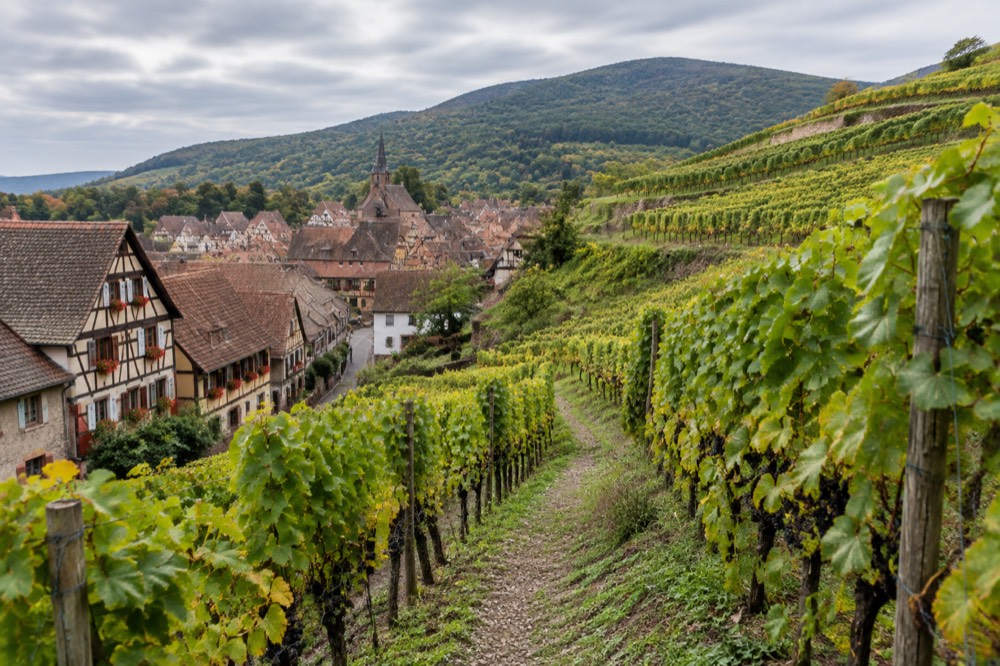
This guide names the villages worth the journey, explains how to string them together, and sets out what each one is actually like once you are standing in the square, which is not always what the postcards suggest. It also covers food, seasons and the Christmas period, when the same villages hang their markets between the timber frames. For the wider region, the Strasbourg Travel Guide homepage collects the city itself, and a companion piece on Christmas markets across Alsace picks up where this page ends.
Which Are The Most Beautiful Villages In Alsace?
The villages that consistently earn the description are Eguisheim, Riquewihr, Kaysersberg, Hunawihr, Bergheim and Obernai, all in the Haut-Rhin and Bas-Rhin wine country within reach of Strasbourg. Each has a walled or partly walled old core of half-timbered houses, a parish church and a main street lined with tasting rooms. Eguisheim and Riquewihr draw the crowds, Hunawihr and Bergheim stay quieter, and Obernai works as a larger small town with a full range of places to eat.
Eguisheim is the one travellers usually mean when they describe an Alsatian village: concentric streets curling around a central square, houses painted in a dozen colours, vines on the slopes at the edge of the village. It sits just above Colmar, which makes it an easy pairing with the larger town. Riquewihr, a little further north on the wine route, is the postcard village, a single fortified main street running downhill between timbered houses with carved corbels and shopfronts selling Riesling and Gewurztraminer from the surrounding Grands Crus. Kaysersberg, on the Weiss river, is built around a bridge and a church and climbs toward a castle ruin above the rooftops; it reads as a working town rather than a film set.
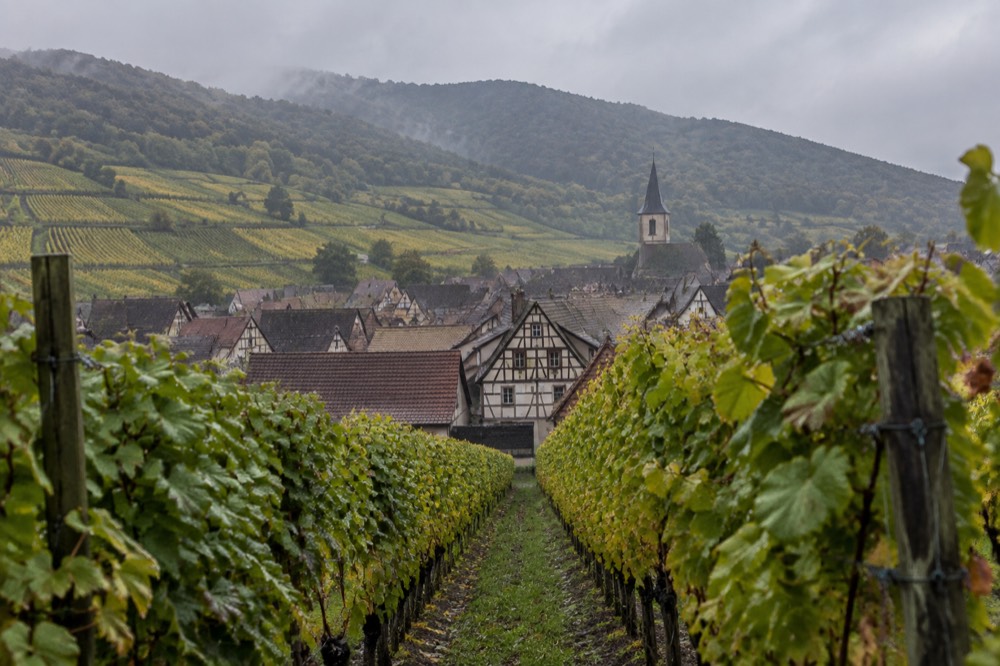
The quieter choices reward the extra effort. Hunawihr has a fortified church standing in its vines and a stork reintroduction site on its edge, and it is small enough to walk end to end in a slow half hour. Bergheim keeps its complete ring of defensive walls, which almost no other village on the route can claim, and its main street is residential rather than retail. Obernai, closer to Strasbourg, is bigger, with a belfry, a well in its square and enough restaurants to hold a whole afternoon. Ribeauville, next to Riquewihr on the same road, shares the architecture and the vines and shares fewer of the visitors.
| Village | Character | What It Is Known For | Who It Suits |
|---|---|---|---|
| Eguisheim | Concentric lanes around a small square | Colour-washed houses, vineyard slopes at the village edge | First-time visitors, photographers |
| Riquewihr | One fortified main street on a slope | Wine shops, Grands Crus vineyards, carved timber facades | Wine buyers, shoppers |
| Kaysersberg | Valley town on a river | Bridge, church, castle ruin above the rooftops | Walkers, history readers |
| Hunawihr | Tiny, quiet | Fortified church in the vines, stork site | Travellers avoiding crowds |
| Bergheim | Walled, residential | Complete ring of ramparts | Slow travellers, repeat visitors |
| Obernai | Larger small town | Belfry, square, restaurants | Families, lunch stops |
How Do You Visit The Wine Villages From Strasbourg?
The practical options are a hire car, a small-group day tour, a regional train to the towns on the rail line, or a private driver, and the choice matters because the villages are scattered and the rail network touches only some of them. A car gives full control over timing and lets you reach Hunawihr and Bergheim as easily as Riquewihr. A guided day trip removes the driving and the parking question entirely, which is worth a great deal in July and December.
Driving is the classic way to do the route. The wine road, the Route des Vins d'Alsace, strings the villages along the foothills, and a self-drive day can take in four of them at a natural pace with a long lunch in one. The trade-offs are parking, which is tight and metered in the popular villages in high season, and the temptation to rush, because the distances look short on the map and the roads are narrow. A road trip plan for Alsace covers the driving shape of the region in detail, including where to overnight if one day is not enough.
Driving the wine road at your own pace. Book a rental car here.
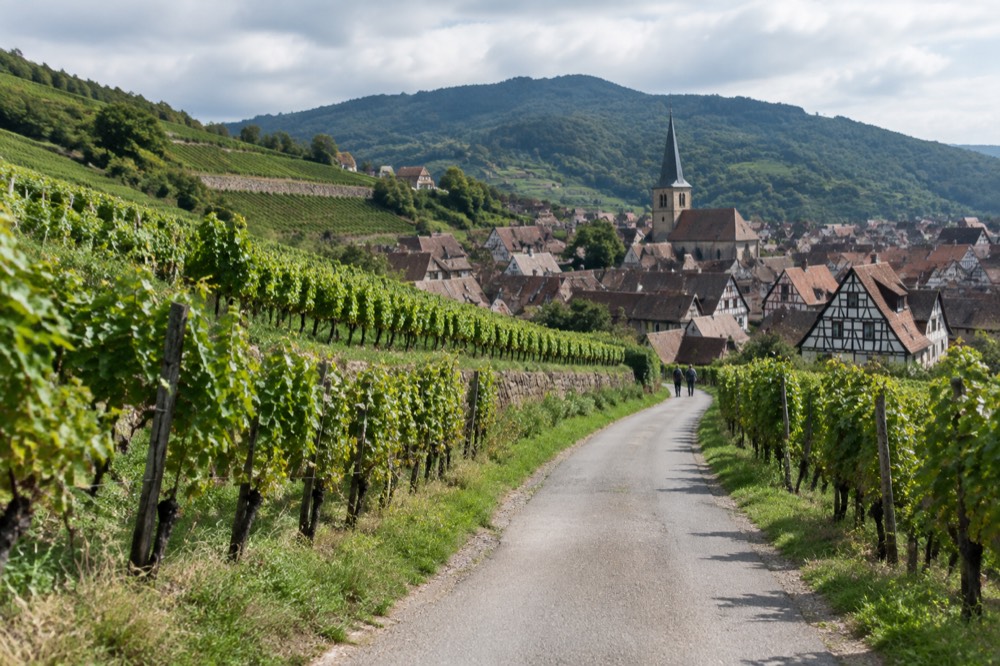
Guided small-group day trips solve the logistics and add a commentary that most self-drivers miss. The roster on this site includes a Colmar, Haut-Koenigsbourg and Riquewihr day trip and a medieval villages and wine tasting trip, both built around the same cluster of villages, and the prices and current schedules render on the listings themselves rather than being quoted here. The trade-off is fixed timing: you get three or four stops, a guide who knows the growers, and no freedom to linger in Bergheim for an extra glass. For travellers staying in Strasbourg without a car, a day trip is usually the difference between seeing the villages and not seeing them.
Trains work for the rail-served towns but not for the classic villages. Colmar is a straightforward regional ride from Strasbourg, and Colmar itself is the natural rail gateway to Eguisheim, with a local bus or short taxi connection on the last leg. Riquewihr, Kaysersberg, Hunawihr and Bergheim have no stations; the practical rail-and-bus combinations exist but they eat the day. Obernai does sit on a regional line and is the one village on this list that works comfortably without a car. Check times on SNCF Connect before committing, because frequencies thin out on Sundays.
What Makes Eguisheim And Riquewihr So Photogenic?
Both villages were built compactly, inside defensive footprints that never allowed sprawl, so the streets are narrow, the houses touch, and the upper storeys overhang the lanes. The timber framing is painted in strong colour, the window boxes are a local habit rather than a tourist gesture, and the vineyards begin at the last house rather than at a distance. The result is a density of detail that photographs well from almost any angle, which is exactly why the images circulate so widely.
The half-timbering itself is structural, not decorative. The oak frames carry the floors and the roofs, and the panels between are infill; the colours came later, and they vary from house to house because ownership varied. In Eguisheim the layout does the work: the village grew in rings around a hilltop core, so every lane curves and every corner presents a new facade. In Riquewihr the geometry is opposite and equally effective, one main street on a slope with gatehouses at either end, so the whole village reads as a single composed view.
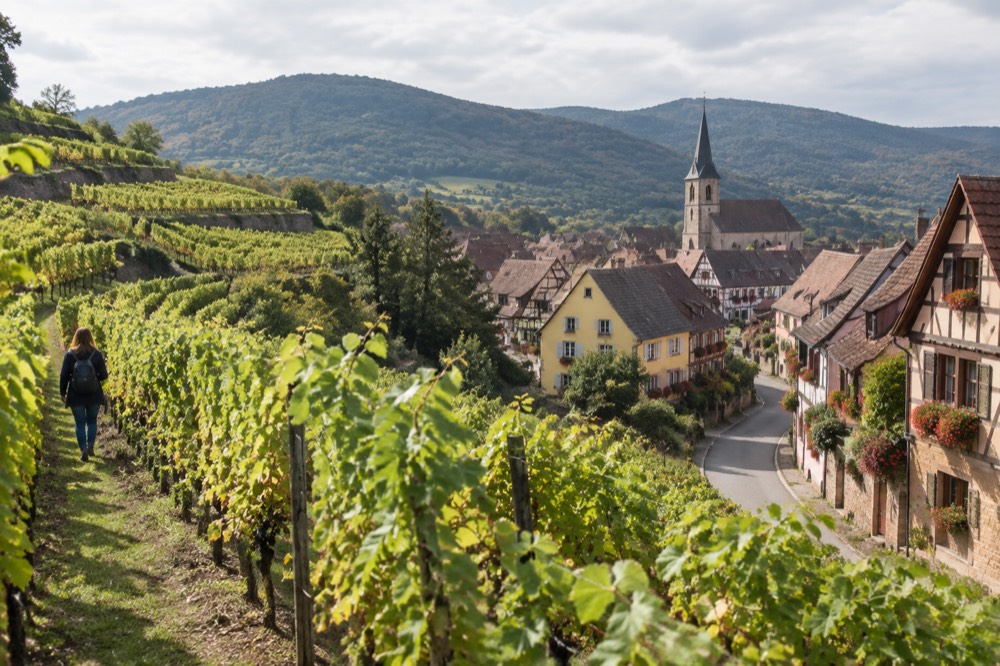
The crowds are the honest counterweight. In July and August, and on weekends in the Christmas run, Riquewihr's main street carries a steady flow of visitors from mid-morning, and photographing an empty lane means being there early. Eguisheim spreads its visitors across more lanes, so it feels lighter even when busy. The quiet hours are reliably the first hour after sunrise and the last hour before dinner, and the light in the Vosges foothills is softest then in any case. Hunawihr and Bergheim, an easy drive on from either, hold the same architecture with a fraction of the footfall.
A guided day trip is one way to hand the whole question over: the Colmar, Haut-Koenigsbourg, Riquewihr and Kaysersberg itinerary on this site's roster covers the photogenic cluster in a single organised day, with the castle as the anchor stop and the villages timed around it. The listing carries the current price, schedule and cancellation terms, and it suits travellers who would rather not parse four separate parking plans.
Where To Eat And Drink In The Alsatian Villages?
Village food is winstub food: tarte flambée, choucroute garnie, baeckeoffe, kougelhopf and the local white wines, served in dining rooms with bench seats and painted plates. Every village on this list has at least one traditional restaurant and several tasting rooms where you can drink the wine grown on the slope you are looking at. Lunch is the meal to plan, because kitchens close between services and several village restaurants book out in summer.
The dishes travel from Strasbourg to the villages unchanged. Tarte flambée is a thin bread base with fromage blanc, cream, onions and lardons, baked fast and eaten folded; choucroute garnie is fermented cabbage slow-cooked in Riesling with a plate of pork and sausage over it; baeckeoffe is a meat and potato casserole that bakes for hours and appears on weekend menus. Kougelhopf, the brioche-like cake baked in a fluted mould, is the standard companion to a late-afternoon glass. A guide to tarte flambee and one on choucroute cover each dish in depth.
| Dish Or Drink | What It Is | Where To Try It |
|---|---|---|
| Tarte flambée | Thin flatbread with fromage blanc, cream, onion, lardons | Village winstubs at lunch, wood-fired where marked |
| Choucroute garnie | Riesling-braised cabbage with pork and sausage | Traditional restaurants in Obernai and Kaysersberg |
| Baeckeoffe | Slow-baked meat and potato casserole | Weekend menus, book ahead |
| Kougelhopf | Fluted brioche-style cake with almonds | Bakeries in every village, with afternoon wine |
| Riesling and Gewurztraminer | Dry and aromatic whites from village slopes | Tasting rooms on the main streets |
Tasting rooms are the better value in the smaller villages. Growers sell from their own doorsteps in Riquewihr, Hunawihr and Bergheim, and pouring a flight of three wines with an explanation of the slope is normal practice. Ask what is poured from the village's own Grands Crus rather than reaching for the familiar names, and buy a bottle of whatever you liked rather than what travels well. If you want the food story anchored in the city before you drive out, a traditional food walking tour of Strasbourg walks the winstub classics with a guide, and the guided walk with tastings on this site's roster covers the same ground in the old town. Check availability
When Is The Best Time To Visit The Alsatian Villages?
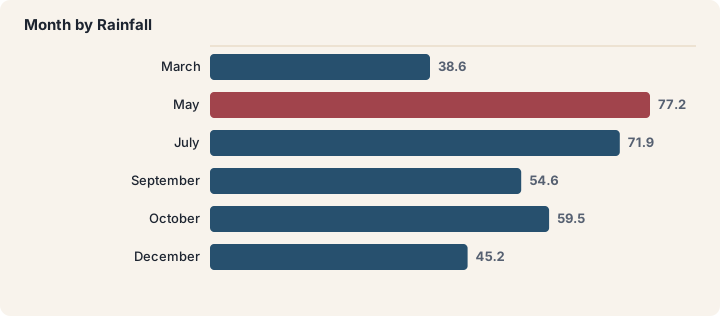
Late spring to early autumn is the comfortable window, with May to September offering warm days, flowering window boxes and open tasting rooms, and the vineyards turning colour from late September into October. December brings the Christmas markets, the busiest and most atmospheric period of all. The climate is semi-continental, so winter nights drop below zero and rain falls somewhere in the region on eight to eleven days a month in every month of the year.
The Meteo-France 1991-2020 normals for Strasbourg-Entzheim give the shape of the year: a mean daily maximum of 20.9 C in May rising to 26.4 C in July, falling to 9.4 C in November and 5.9 C in December, with 635.7 mm of rain across the year. May is the wettest month at 77.2 mm, and June, July and October each carry around ten days of rain of 1 mm or more. The practical reading is simple: there is no dry season here, and a day trip plan should hold an indoor fallback in every month.
| Month | Mean Daily Maximum | Mean Daily Minimum | Rainfall |
|---|---|---|---|
| March | 12.1 C | 2.6 C | 38.6 mm |
| May | 20.9 C | 10.1 C | 77.2 mm |
| July | 26.4 C | 14.9 C | 71.9 mm |
| September | 21.6 C | 10.7 C | 54.6 mm |
| October | 15.8 C | 7.2 C | 59.5 mm |
| December | 5.9 C | 0.8 C | 45.2 mm |
The full monthly breakdown, including the rain-day counts, sits in the Strasbourg weather guide, and the seasonal trade-offs are compared in the best time to visit Strasbourg. For the villages specifically, the harvest period from late September is the connoisseur's choice: the vines go gold and red, the new wine arrives in the tasting rooms, and the summer crowds have gone. Winter, outside the market weeks, is quiet to the point of shuttered shops in the smallest villages, though the architecture holds up under frost remarkably well.
A different way to see the region from the water is a private cruise on the Ill with a skipper, which pairs the village day with a slow river view of Strasbourg's own half-timbered quarters. The boat carries up to four people, the listing shows the current per-group price and availability, and it makes a calm evening counterweight to a day of driving.
How Many Days Do You Need For The Villages?
One well-planned day from Strasbourg covers three villages and a castle or a wine lunch, and two days let you add Colmar, sleep in a village and reach the quieter places like Hunawihr and Bergheim. Trying to see more than four villages in a day turns the route into a checklist, because each old core genuinely needs an hour of slow walking plus whatever you spend in the tasting rooms. Three days suits a first visit that also wants Strasbourg itself.
The one-day shape that works is Eguisheim, Riquewihr and Kaysersberg with Colmar either as the start or the end, since they cluster on one stretch of the wine road. Two days split naturally: the Colmar and Eguisheim cluster on day one, the Riquewihr, Kaysersberg, Hunawihr and Bergheim cluster on day two, with Haut-Koenigsbourg castle above the villages as the anchor stop. Obernai belongs to a different day that pairs well with Mont Sainte-Odile on the heights above it. The Alsace road trip guide lays out overnight options along the route.
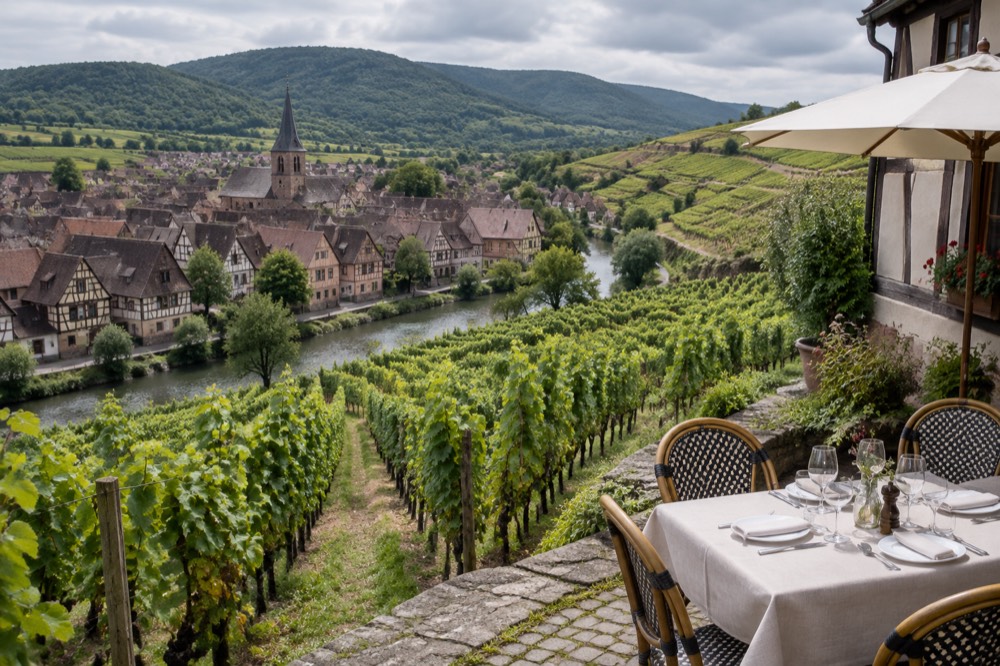
Guided trips compress the same ground. The day trips on the roster bundle Colmar with the castle and a village, or several medieval villages with a wine tasting, and they suit travellers who want the region without the wheel. For city-first visitors, the one day in Strasbourg and two days in Strasbourg planners show how much the city itself absorbs before the villages even begin. A sensible split for a four-night stay is two nights in the city, then two on the wine route, or the reverse.
| Trip Length | What It Covers Realistically | Where To Base |
|---|---|---|
| One day | Three villages plus one anchor stop | Strasbourg, or Colmar |
| Two days | Both village clusters, a castle, a long lunch | Colmar or a village inn |
| Three days | Villages plus Strasbourg city time | Split stay, city then route |
| Four days or more | Villages, city, Vosges heights, a German crossing | Strasbourg with overnights on the route |
Which Villages Suit A Christmas Market Trip?
In December the villages run their own small Christmas markets, and Strasbourg's city-wide market anchors the region. The village markets are compact, a square with a few dozen chalets and a craft bias rather than a fairground feel, and they close for the season on 24 December. The 2025 edition of the Strasbourg market ran from 26 November to 24 December and drew 3.05 million visitors, so December in the villages means crowds and booked-out inns unless you plan early.
The pattern is stable in shape even where the dates are not yet fixed: the season opens in the last week of November and runs to 24 December, with chalets typically open from late morning into the evening and an early close on the final day. The city's Christmas site states that the 2026 dates and programme are still being finalised, so confirm them there before locking travel plans. What the villages add is intimacy: a Kaysersberg or Eguisheim market is a square, a choir and a glass of mulled wine rather than a city-scale production.
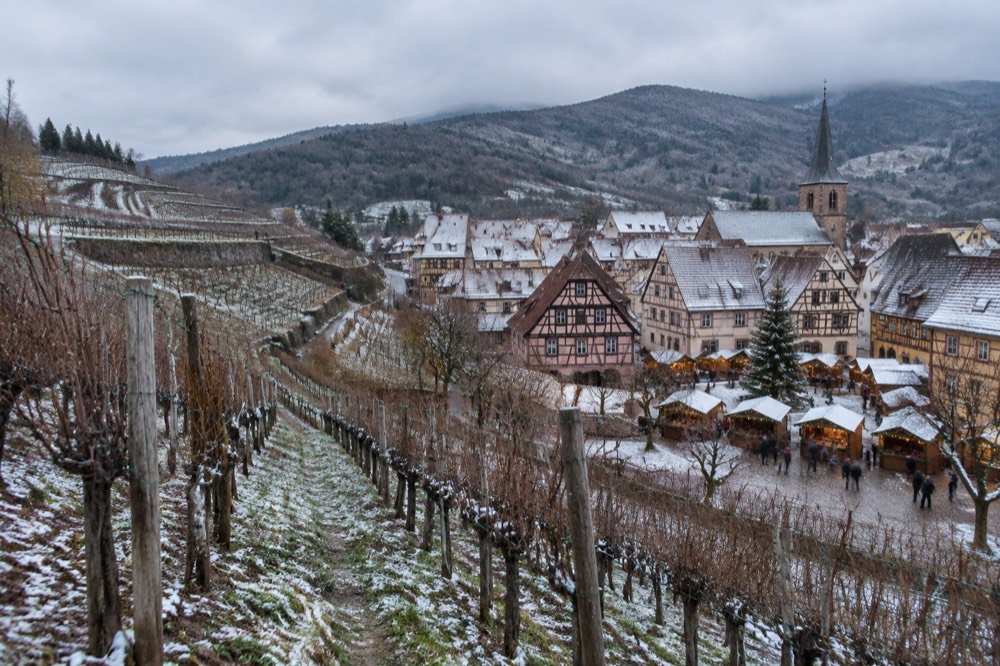
Kaysersberg's market is the one that draws people out of Strasbourg specifically, and Eguisheim and Riquewihr hold their own smaller versions. Colmar, the town rather than a village, runs several markets across its old quarters and pairs naturally with Eguisheim on the same day. The trade-off in December is light: at 5.9 C mean daily maximum and 0.8 C overnight, the afternoons shorten quickly, so plan the outdoor hours between late morning and the early evening, and keep the last hour for an indoor dinner. The Strasbourg in winter guide and the piece on where to stay for the Strasbourg Christmas market cover the December logistics in full.
What Does A Village Day Trip Actually Cost?
The spend splits into transport, lunch and tasting fees, and the transport leg dominates. A hire car day plus fuel sits above any per-person tour price once you are three or four travelling together, while a guided day trip is per person and includes the driving. Lunch in a village winstub and a tasting flight are modest, fixed and paid on the spot, and the municipal levers that make Strasbourg itself cheap, such as free museum first Sundays, do not reach the private village attractions.
Tour and experience prices on this site render from live listings rather than being typed here, and they vary by date and group size, so compare them on the listings themselves. What can be said in the abstract is the structure of the spend: one guided day trip per person, or one car day shared across the group, then lunch, then tastings, which growers price per flight and often waive against a bottle purchase. The Strasbourg on a budget guide covers the city-side savings, and the Strasbourg City Card page explains what the discount card does and does not include.
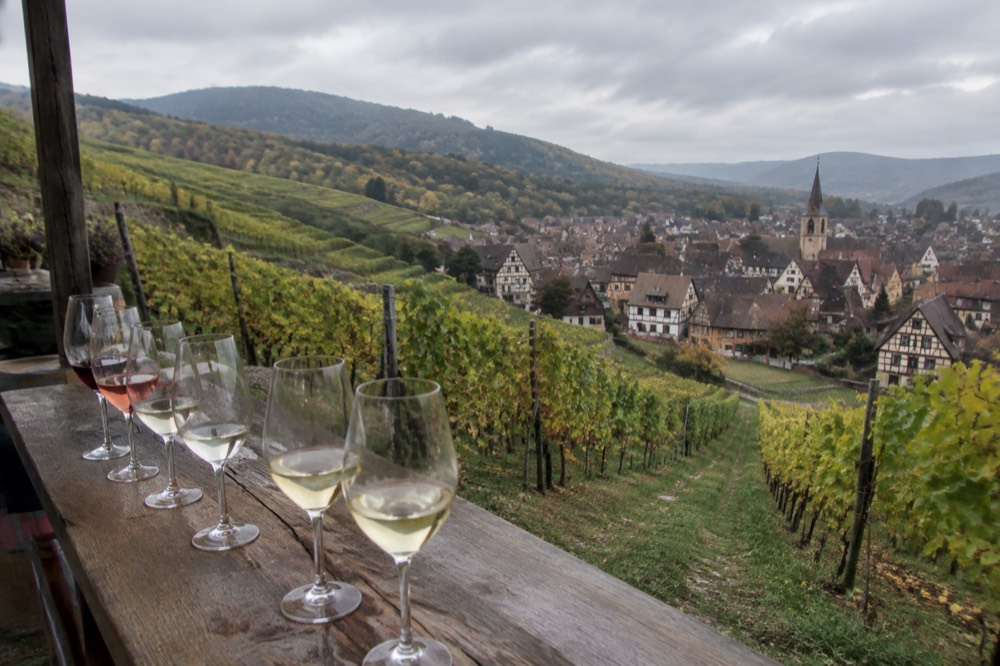
The castle and the wine cellars are the two paid anchors. Haut-Koenigsbourg, the restored fortress above the Riquewihr cluster, charges admission and takes a half day with the drive and the walk; the caves historiques and the grower cellars along the route charge by the tasting. Storks, half-timbered churches and the village lanes themselves cost nothing to walk, and the free things to do in Strasbourg approach extends partway into the villages. The honest budget line is that the villages reward spending on two things, a good lunch and a good bottle, and forgive economy everywhere else.
Common Questions About The Villages Of Alsace
Which Is The Prettiest Village In Alsace?
Eguisheim and Riquewihr are the two that appear on the postcards, and both earn it: Eguisheim for its concentric lanes and colour, Riquewihr for its single fortified main street. Travellers who want the same architecture with fewer people usually name Hunawihr or Bergheim instead.
Can You Visit The Alsace Villages Without A Car?
Partly. Obernai sits on a regional line from Strasbourg, and Colmar is an easy train ride with a bus connection on to Eguisheim. Riquewihr, Kaysersberg, Hunawihr and Bergheim have no stations, so a guided day trip or a private driver is the practical answer for those.
How Many Alsatian Villages Can You See In One Day?
Three comfortably, four at a push. Each old core takes an hour of walking plus tasting-room time, and the connecting roads are narrow, so a four-village day means rushing the last two. A better plan is three villages and a long lunch.
Are The Alsace Villages Worth Visiting In Winter?
Yes, with expectations set. From late November the villages run small Christmas markets, and the half-timbering looks striking under frost or snow. Outside the market weeks some shops and tasting rooms close or shorten their hours, so check ahead for the smallest villages.
Where Should You Stay To Explore The Villages?
Strasbourg works as a single base for a two or three-day visit, with day trips out. For longer wine-route stays, Colmar or an inn inside one of the villages puts you in the middle of the route and removes the daily drive back. The trade-off is evening dining choice, which the city wins.
Is The Alsace Wine Route The Same As The Villages?
They overlap. The wine route is the signed driving road along the Vosges foothills, and the villages sit on or just off it. You can drive the route without stopping in a single old core, but the point of it is the villages and the cellars inside them.
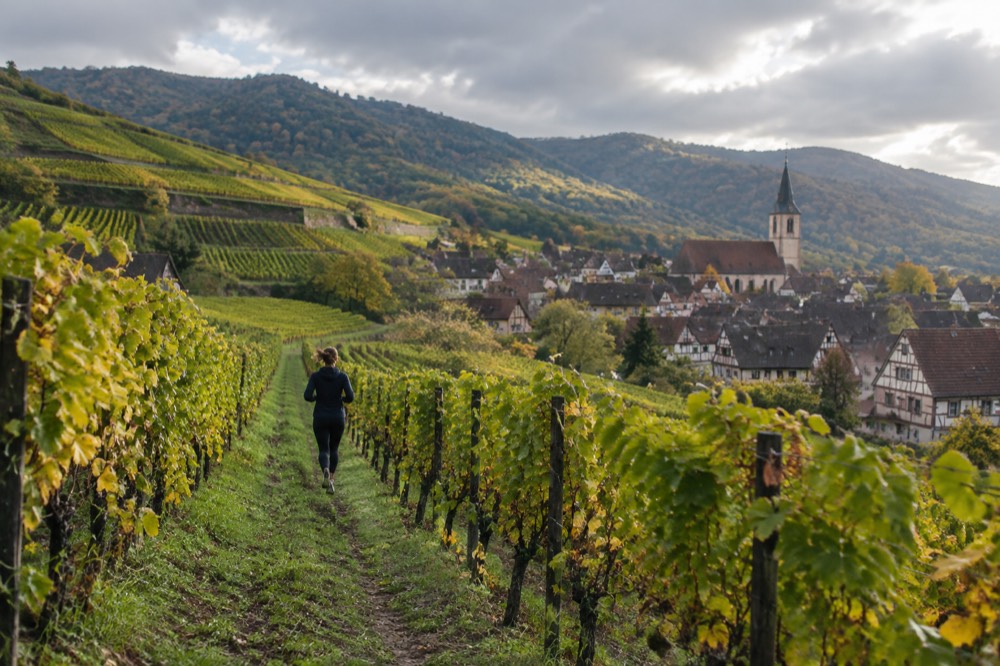
The villages of Alsace are small, close together and generous with what they do well, which is wine, timbered architecture and long lunches. Pick two or three rather than all of them, give the biggest one an early morning, and let Strasbourg hold the evenings.