Alsace Road Trip
An Alsace road trip runs out of Strasbourg, in north-eastern France, through wine villages and medieval towns, with the German border and the Black Forest close enough to cross for a day.
Short answer
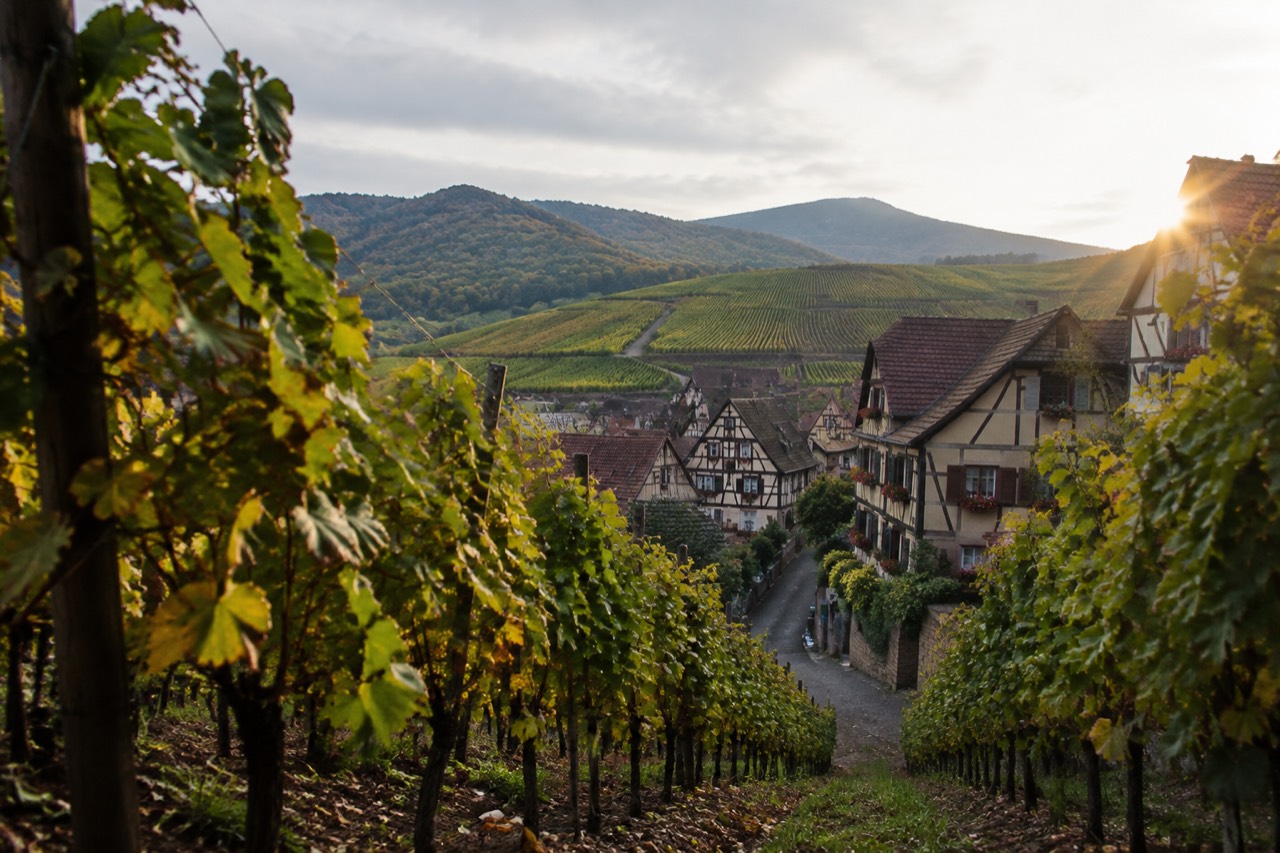
Base yourself in Strasbourg, in Alsace in north-eastern France, and loop out through the wine route villages such as Riquewihr, Eguisheim and Kaysersberg, with Haut-Koenigsbourg castle and the Vosges foothills on the way. Cross-border detours to the Black Forest or Basel are easy since France and Germany share the euro and Schengen. Allow three to five days for the core loop.
Alsace is the strip of France that runs down the western side of the Rhine, and Strasbourg, its largest city and the prefecture of the Bas-Rhin department in the Grand Est region, is the natural base for any road trip through it. The city sits on the River Ill, a short distance from the Rhine, which is the border with Germany; Kehl is on the far bank. From Strasbourg, the classic loop threads south through the wine route villages, up into the Vosges foothills to Haut-Koenigsbourg, and back, with optional crossings into Germany's Black Forest or, further south, Switzerland around Basel. This guide lays out the route, the timing, the costs and the car-free alternatives.
What Makes An Alsace Road Trip From Strasbourg So Rewarding?
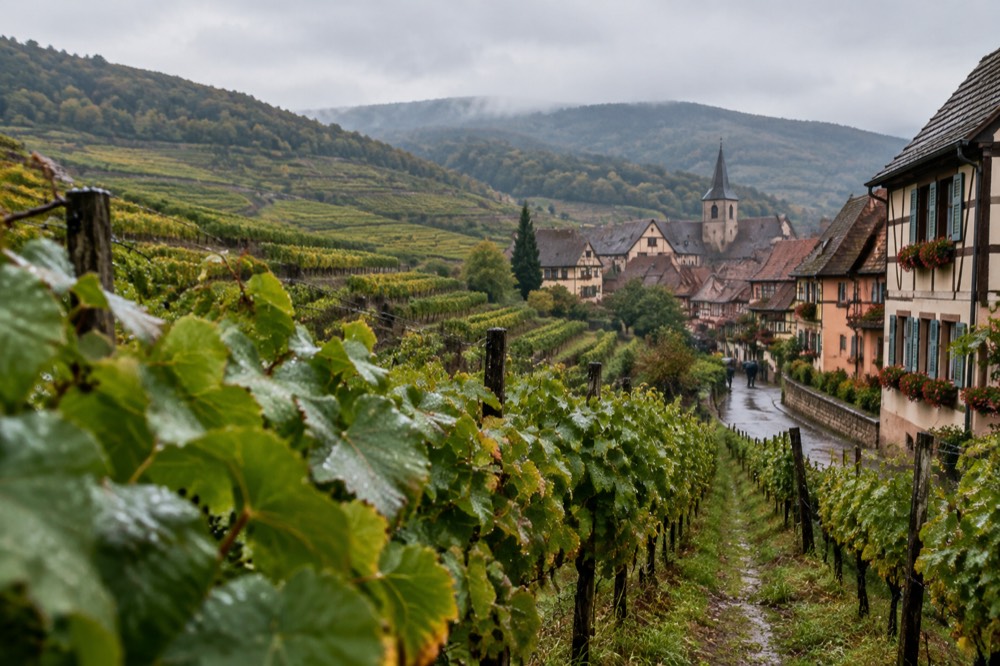
An Alsace road trip from Strasbourg compresses an unusual amount into a small radius: a UNESCO-listed city centre, a famous wine route strung with half-timbered villages, a medieval castle in the Vosges, and two other countries within easy reach across the Rhine. The region's semi-continental climate gives warm summers and cold winters, so the same loop feels like two different trips depending on the month you choose. Strasbourg itself anchors the route at one end.
The city's own heritage is the reason many travellers are here at all. Strasbourg's historic core, the Grande Île, together with the Neustadt district on the other side of the Ill, is a World Heritage property, one of the rare cases where an entire city centre carries that status. The cathedral, with its single spire and a viewing platform at 66 m, stands at the heart of it, and Petite France, the old tanners' quarter, spreads along the river to the west. Before setting off south, it is worth giving the city at least a full day; the one day in Strasbourg itinerary covers the core loop on foot.
What makes the region work as a driving destination is variety in a compact frame. The Alsatian plain is flat, threaded with vineyards and wine villages; the Vosges rise to the west with forested ridges and castle ruins; the Rhine plain to the east opens into Germany within minutes of the city. A single week can hold a French wine village in the morning, a German spa town or forest lake in the afternoon, and a Strasbourg winstub for dinner, all without a long haul between any of them.
The cultural texture is the other draw. Alsace has changed hands between France and Germany across its history, and it shows in the architecture, the food and the dialect still heard in villages. That layering is why the region does not feel like the rest of France, and why the drive itself, village to village, is the point rather than the transit between destinations.
How Many Days Should Your Alsace Road Trip Take?
Three days is the realistic minimum for a Strasbourg-based loop that includes the wine route and Haut-Koenigsbourg, and five days allows the same loop plus a cross-Rhine detour into the Black Forest or a run south toward Basel. Two days forces a choice between the vineyards and the Vosges, which is a shame on a first visit. Anything longer than a week suits travellers who want to linger in the villages rather than tick them off.
The shape of the trip matters more than its length. A tight three-day version keeps Strasbourg as the base throughout, returning each evening to the same hotel, and radiates out on day trips: the northern wine route one day, the southern villages and castle another, the city itself on the third. A five-day version can add an overnight in Colmar or one of the villages, which changes the rhythm entirely, since the villages are at their best in the early morning and late evening, before and after the day-trip traffic.
| Trip length | What it covers | Who it suits | What to accept |
|---|---|---|---|
| 2 days | Strasbourg plus one wine route sweep | Weekend visitors from Paris or Germany | Villages visited at day-trip pace only |
| 3 days | Strasbourg, northern and southern wine route, Haut-Koenigsbourg | First-time visitors on a short break | No time for Germany or Basel |
| 5 days | The full loop plus a Black Forest or Basel detour | Travellers who want two countries | A faster pace through some villages |
| 7 days or more | The loop, detours and slow mornings in the villages | Repeat visitors, photographers, food-focused trips | Needs booking ahead in peak season |
For travellers who cannot spare the days, or who would rather not drive at all, guided day tours from Strasbourg compress the region's signature stops into single outings. A full-day Alsace highlights tour covers the historic villages and castle in one long day, and the operator's live listing carries the current departure details and prices.
Mixing one guided day into a self-drive week is a common pattern, since it hands the navigation and parking to someone else on the day when the itinerary is densest.
What Is The Best Route For A First Alsace Road Trip?
The classic first route leaves Strasbourg heading south along the wine route toward Obernai and Riquewihr, climbs to Haut-Koenigsbourg in the late afternoon, and returns to Strasbourg either through the Vosges passes or back up the plain. Run it over two days rather than one, with the southern villages on the first day and the castle plus the northern loop on the second. The order is flexible; the constraint is daylight.
Day one of the classic loop takes in the southern half of the wine route. Obernai is the usual first stop, a walled market town with a bell tower and a main square ringed by restaurants, and from there the route strings south through villages that grow progressively smaller and more photographed. The Strasbourg and Colmar itinerary covers the two-city version of this drive, with Colmar as an overnight option at the southern end of the route.
Day two swings north and up. Haut-Koenigsbourg castle, perched on a Vosges ridge, is the region's landmark fortress, and its position makes it the natural climax of the loop. From the castle, the return can run through the vineyards around Riquewihr and Kaysersberg before rejoining the plain toward Strasbourg. Check the castle's own site for opening times and admission before setting out, since hilltop sites in France often close one day a week and reduce hours outside summer.
| Route stage | Signature stops | What it is for | What to check first |
|---|---|---|---|
| Strasbourg to Obernai | Obernai old town, vineyard lanes | Easing into the wine route | Parking in the old town |
| Southern wine route | Eguisheim, Riquewihr, Kaysersberg | The half-timbered village heart of Alsace | Village parking fills by late morning |
| Vosges climb | Haut-Koenigsbourg, forest ridges | The castle and the views | Castle hours and admission on its official page |
| Northern return | Ribeauvillé, wine road back to Strasbourg | A slower lane back | Cellar opening hours if tasting is planned |
If the density of that two-day loop looks like hard work, the guided alternative exists: a Best Of Alsace historical day trip from Strasbourg runs the villages-and-castle circuit with a driver and guide, and its live listing shows the current itinerary and price.
If the two-day loop looks like hard work, book an Alsace historical day trip here.
For a self-drive version, the practical advice is simple: start early, park on the edge of each village rather than in it, and keep the tasting stops to the afternoon so the morning light goes to the villages themselves. The wine route is a signed tourist trail, and following its brown markers is easier than plotting every lane in advance.
A question worth settling early is whether to book a guided villages day at all. If you want the region's medieval villages with wine tasting built in, and the driving handed off, the medieval villages and wine tasting day trip from Strasbourg is the roster's dedicated option.
Which Wine Route Villages Belong On Your Itinerary?
Riquewihr, Eguisheim and Kaysersberg are the three villages almost every first-time visitor should see, and they are different enough from each other to justify all three. Riquewihr is the most intact walled wine town, Eguisheim is a concentric circle of lanes around a small square, and Kaysersberg pairs its old bridge and church with a ruin above. Add Obernai as the gateway and Ribeauvillé as a quieter fifth.
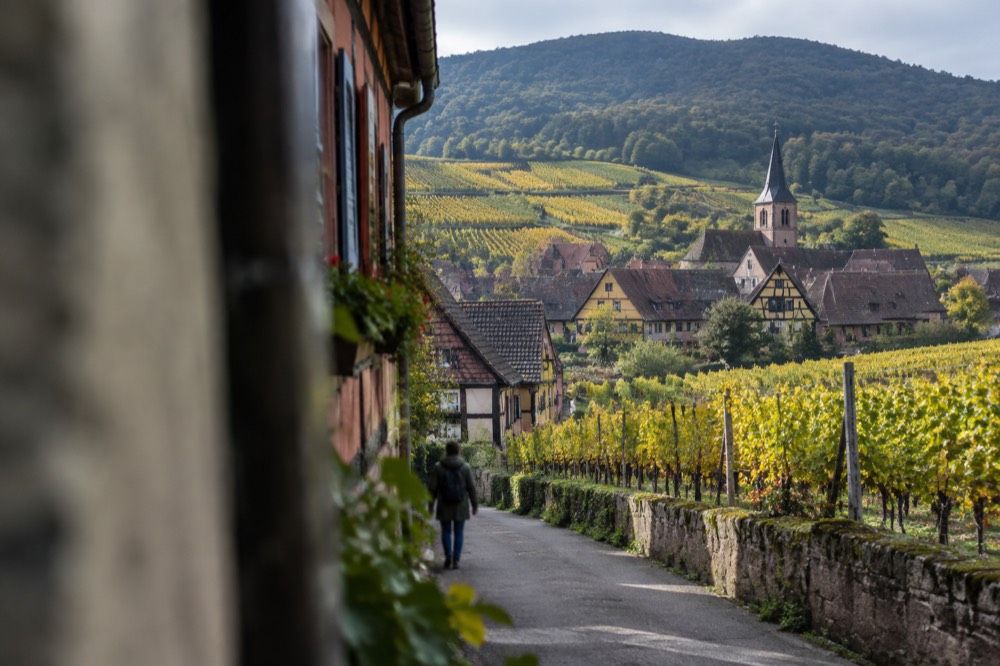
The villages share a look, flower-bedecked half-timbering in pink, blue and ochre, but they do not share a character. Eguisheim's layout is the most unusual: the streets wind in rings around a central square, so a slow lap of the village takes in everything without backtracking. Riquewihr runs along a single main street between two former town gates, which makes it the easiest to photograph and the quickest to feel full. Kaysersberg has the most vertical interest, with a ruined castle above the village and a river crossing at its centre.
Tasting is the activity that structures a village stop. Cellars line the main streets, and the practical pattern is one cellar per village rather than a marathon in one place. Fees and pour sizes vary from cellar to cellar, so ask at the counter what a tasting costs before sitting down. The region's signature grapes, riesling above all, plus pinot gris and gewurztraminer, appear on nearly every list, and the Alsace wine guide explains the labels and the sweetness codes worth knowing before you order.
| Village | What it is known for | Best time of day | Practical note |
|---|---|---|---|
| Obernai | Walled market town, bell tower | Morning, before the day trips arrive | Good first stop from Strasbourg |
| Eguisheim | Concentric lanes, small central square | Late morning | Walk the full ring on foot |
| Riquewihr | Intact walled wine town, main street | Early morning or late afternoon | Park at the edge, walk in |
| Kaysersberg | Old bridge, church, castle ruin above | Afternoon, climb to the ruin for light | Steep lane up to the ruin |
| Ribeauvillé | Quieter lanes, wine fountains | Any time | A calmer alternative to Riquewihr |
The villages are small, and that is the whole point. A stop of some unhurried length, walked slowly with one tasting, is the right scale; racing through five villages in a day turns the route into a blur of timber and geraniums. Travellers who want the villages with a guide's commentary and the logistics handled can look at the medieval villages and wine tasting day trip, whose live listing carries the current route and price.
One more village deserves a slot if the trip falls in late November or December, when the region's Christmas markets turn the main squares into chalet villages. The pattern in Strasbourg is an opening in the last week of November running to 24 December, and the smaller towns follow a similar rhythm; the Strasbourg Christmas market itinerary covers the city edition, and the Christmas markets in Alsace guide covers the wider region.
What Should You Know About Driving In Alsace And Across The Rhine?
Driving in Alsace means French road rules, French motorway signage and, in the vineyards, narrow single-lane village streets where parking is the daily puzzle. Crossing into Germany adds no border formalities, since both countries are in Schengen and share the euro, but Switzerland around Basel is Schengen only, not in the euro, so plan cards or francs for any Swiss stop. Fuel, tolls and vignettes differ on each side of the Rhine.
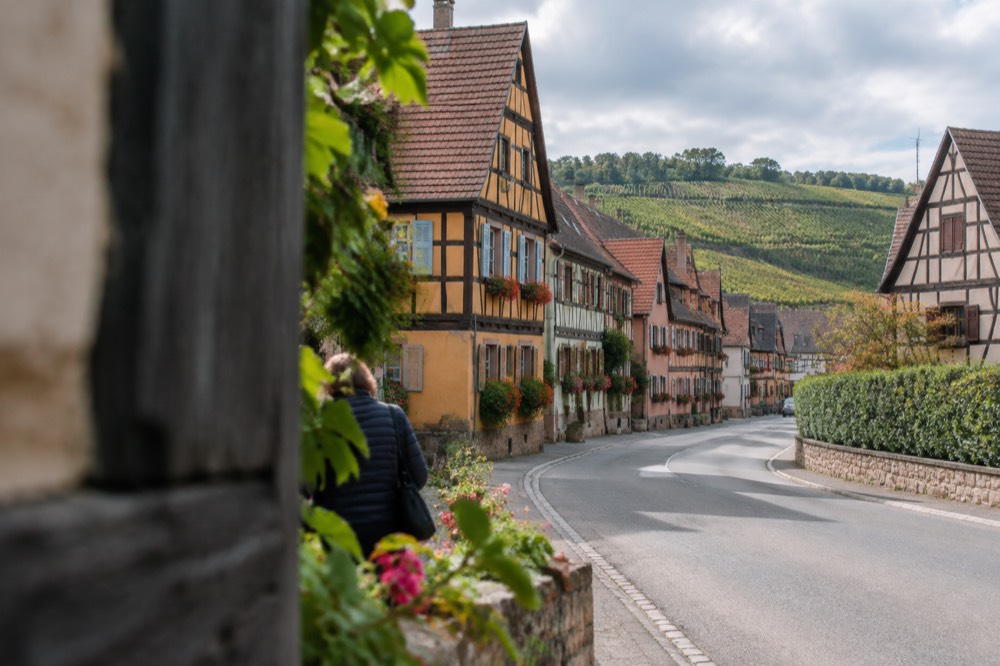
The French side is straightforward. Motorways are tolled, and the route south from Strasbourg toward Colmar can be run either on the motorway or on the slower D-road wine route; the latter is the point of the trip. In the villages, the rule that saves the most friction is to park at the signed edge-of-village lots and walk in. Village centres were built for carts, not cars, and the lanes between houses are genuinely narrow. The rest of the planning pages sit on Strasbourg Travel Guide.
The German crossings change the practical picture in two ways. There are no border checks, and the currency stays the euro, so a Black Forest detour needs no planning. The Black Forest day trip guide covers what the German side holds, from Freiburg to the forest lakes and waterfall towns, and the Freiburg guide profiles the nearest substantial German city. What no guide should promise is a fixed drive time; check a live route planner on the day, since traffic on the Rhine crossings varies.
Switzerland is the different case. Basel sits just across the border from the southern end of the Alsace route, and it makes a strong final stop on a five-day loop. The Basel day trip guide covers the city, but the currency point matters enough to repeat here: Switzerland is not in the euro, so budget in francs or on a card, and expect Swiss motorway rules to require their own vignette. Never assume euros are accepted everywhere across the border.
Parking back in Strasbourg is the last piece. The city centre is largely pedestrianised, and the practical pattern is a park-and-ride or a hotel car park with tram access; the getting around Strasbourg guide details the tram network, and the parking in Strasbourg guide lists the options. A 24-hour Solo pass on the CTS network costs 4.60 EUR, and a single ticket is 1.90 EUR bought through the app or contactless, or 2.50 EUR on board the bus, figures that make the park-and-ride arithmetic easy to run.
Which Stops Beyond The Wine Route Are Worth The Detour?
Haut-Koenigsbourg is the headline detour, but the Vosges ridges hold more: the Route des Crêtes drive along the crest, Mont Sainte-Odile's monastery plateau, and the ruined castles dotted along the heights. On the eastern side, the Black Forest, Baden-Baden and Heidelberg extend the trip into Germany, and Basel and Nancy stretch it south and north in opposite directions. None of these need a second base if the trip runs five days or more.
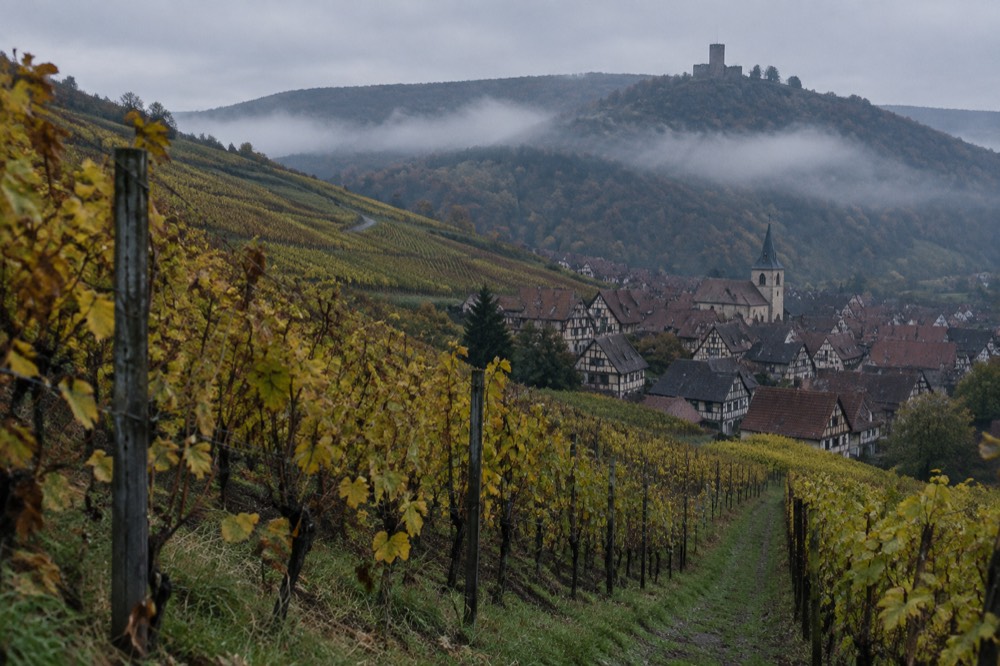
The Vosges detours share one feature: height. Haut-Koenigsbourg, the restored castle that anchors the region's skyline, sits on a ridge with views over the plain to the Rhine, and the Route des Crêtes runs along the crest between forest and high pastures. Mont Sainte-Odile, the monastery plateau further south, pairs a pilgrimage site with walking trails along the ridge. The dedicated guides, Haut-Koenigsbourg, Mont Sainte-Odile and the Route des Crêtes, cover each in depth, including what to check on their official pages before you go.
The German extensions change the character of the trip. Baden-Baden adds a spa town with formal gardens and a famous bathhouse, the Black Forest adds lakes, gorges and clock-making towns, and Heidelberg, further north, adds a university city with its own castle ruin above a river. The Heidelberg day trip guide profiles the northern option; the Baden-Baden guide covers the closest German spa town to Strasbourg. Each is a full day on its own, so pick one rather than attempting several.
| Detour | Country | What it adds | How it fits the loop |
|---|---|---|---|
| Haut-Koenigsbourg | France | The region's landmark castle and ridge views | Built into the classic two-day loop |
| Route des Crêtes | France | A crest road through forest and high pasture | A half-day alternative to the plain road |
| Mont Sainte-Odile | France | Monastery plateau and ridge walking | Pairs with the southern wine route |
| Black Forest | Germany | Lakes, waterfalls and forest towns | A full cross-Rhine day from Strasbourg |
| Baden-Baden | Germany | Spa town, gardens, bathhouse | Combines with a northern Black Forest stop |
| Basel | Switzerland | A Rhine city with a different currency | A final stop on a five-day loop |
| Nancy | France | A grand classical square, north of Strasbourg | A separate day in the opposite direction |
Two French stops round out the list for travellers with a week. Nancy, to the north-west, holds one of the great classical squares of France and makes a contrast to the half-timbered villages; the Nancy day trip guide covers it. And for a sobering counterweight to the prettiness, the Natzweiler-Struthof memorial site in the Vosges preserves the only concentration camp on French soil; the Struthof guide explains the visit. It sits close to the Route des Crêtes and the castle, which is worth knowing when planning the ridge day.
How Much Does An Alsace Road Trip Cost?
The controllable costs split into fuel and motorway tolls on the road, admission tickets at the castle and museums, and tasting fees in the cellars, and the Strasbourg figures give a reliable anchor: the cathedral platform is 10 EUR full and 6 EUR reduced, municipal museums are 9 EUR full and 5 EUR reduced, and a 1-day Pass Musées is 20 EUR. Village tastings and castle admission vary by stop, so check each official page. Lodging in Strasbourg is the single biggest line.
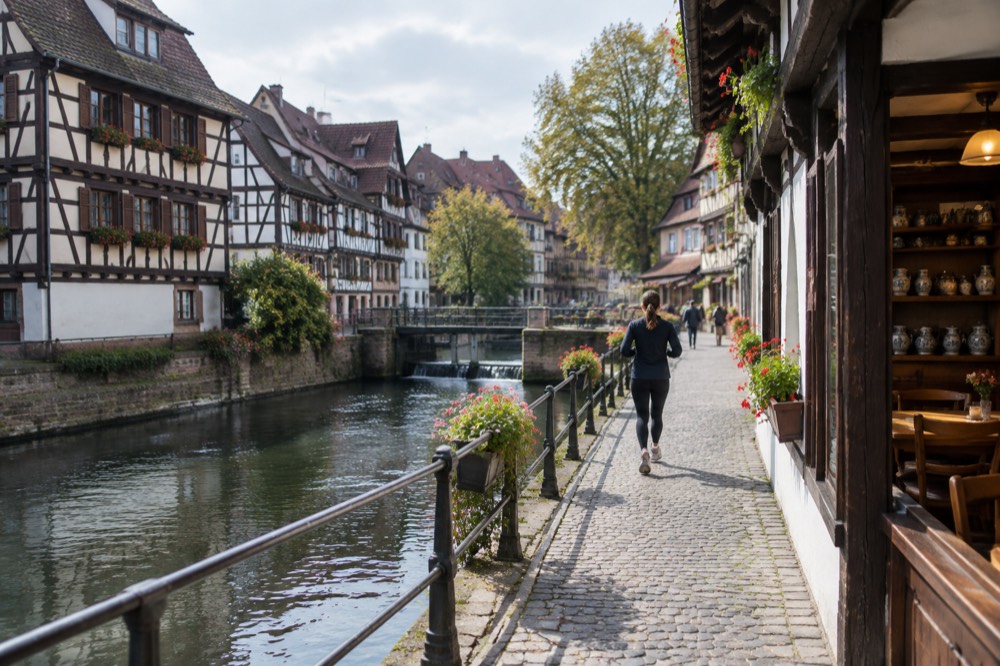
The table below gathers the verified Strasbourg figures that a road tripper actually touches. They are city figures, but they hold as a planning baseline for the region, since the municipal museum tariff and the cathedral prices are set by the same institutions whether you arrive by car or tram.
| Cost item | Full price | Reduced price | Notes |
|---|---|---|---|
| Cathedral platform, Strasbourg | 10 EUR | 6 EUR | Children under 6 free; platform at 66 m |
| Astronomical clock show, 12:30 daily | 4 EUR | 3 EUR students, 2 EUR ages 6-17 | Day-of purchase only, no reservations |
| Municipal museums, each | 9 EUR | 5 EUR | Pass Musées 1 day is 20 EUR |
| Museums, first Sunday of the month | Free entry | Free entry | Applies at all municipal museums |
| Strasbourg City Card | 5 EUR adult | 3.50 EUR child (3-17) | A 7-day discount card, not an all-inclusive pass |
| Batorama boat tour, long circuit | 16.20 EUR | 8.90 EUR | Short circuit 12.50 EUR / 7.20 EUR |
| CTS 24h Solo pass | 4.60 EUR | 24h Trio 10.20 EUR | Covers trams and buses citywide |
Two notes on that list. The Strasbourg City Card is a discount card, not a pass that includes entry: it knocks fixed amounts off museums, the boat tour, the cathedral platform and the clock show over seven days, so it pays for itself only across several visits. And the free first Sunday applies to the municipal museums only, not to the cathedral platform or the clock show, which are church and foundation operations with their own tariffs.
The Musée Alsacien, the folk museum that would otherwise be the natural rainy-day stop on any regional itinerary, is closed for works until 2028, so strike it from the plan. The Strasbourg museums guide covers the ones that remain open, including the Beaux-Arts in the Palais Rohan and the modern art museum.
Food costs follow the winstub pattern. The classic Alsatian plates, choucroute, baeckeoffe and tarte flambée, appear on menus across the region at village prices, and the winstubs in Strasbourg guide explains the format. Tasting fees in the wine villages are set cellar by cellar; ask at the counter, and treat any quoted range as a planning estimate rather than a promise.
When Is The Best Time Of Year For An Alsace Road Trip?
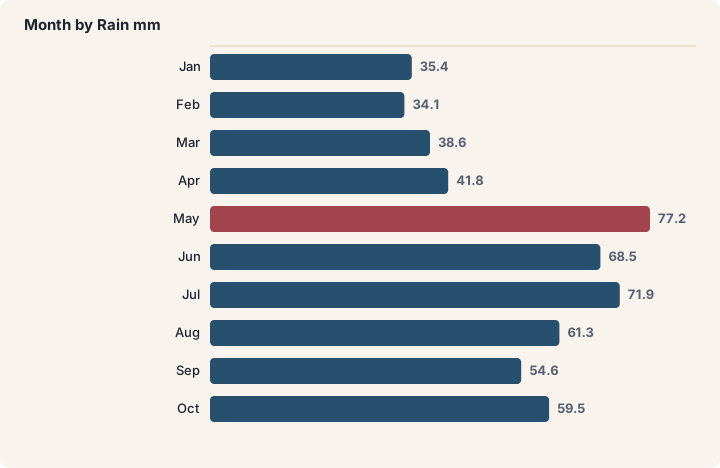
Late May through September is the window that combines reliable warmth with full opening hours, with mean daily maxima from 20.9 C in May to 26.4 C in July and rain spread fairly evenly through the year at 635.7 mm annually. December is the region's second season, colder at a 5.9 C mean maximum, but transformed by the Christmas markets. Late November to 24 December is the market window, and it books out early.
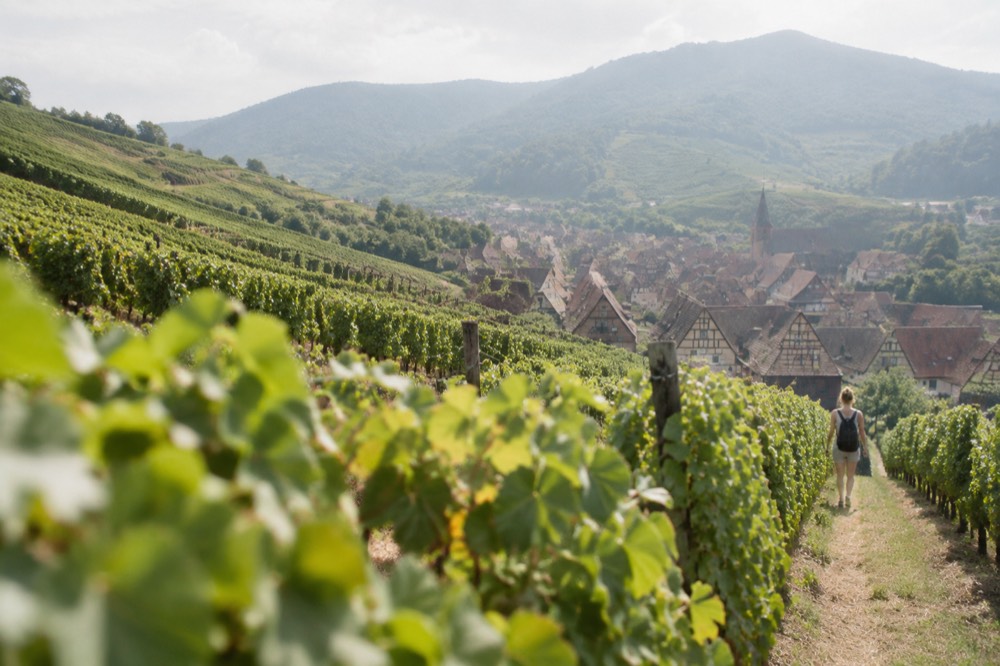
The climate table below is the Meteo-France 1991-2020 normals for the Strasbourg-Entzheim station, and it is the honest way to pick a month. The region's semi-continental climate means real winters and warm summers, unlike the Mediterranean south, and rain days sit between 8 and 11 in every month of the year, so no month is a dry guarantee.
| Month | Mean max C | Mean min C | Rain mm | Rain days >= 1 mm |
|---|---|---|---|---|
| Jan | 5.2 | -0.2 | 35.4 | 9.1 |
| Feb | 7.3 | 0.0 | 34.1 | 8.3 |
| Mar | 12.1 | 2.6 | 38.6 | 8.5 |
| Apr | 17.0 | 5.7 | 41.8 | 8.6 |
| May | 20.9 | 10.1 | 77.2 | 10.8 |
| Jun | 24.4 | 13.4 | 68.5 | 10.2 |
| Jul | 26.4 | 14.9 | 71.9 | 10.4 |
| Aug | 26.1 | 14.5 | 61.3 | 9.5 |
| Sep | 21.6 | 10.7 | 54.6 | 8.0 |
| Oct | 15.8 | 7.2 | 59.5 | 9.6 |
| Nov | 9.4 | 3.3 | 47.6 | 9.2 |
| Dec | 5.9 | 0.8 | 45.2 | 10.2 |
The December market season deserves its own planning logic. Last year's edition in Strasbourg opened in the last week of November and closed on 24 December, and the villages run their own smaller markets on the same rhythm; the where to stay for the Strasbourg Christmas market guide covers the lodging crunch. For a December trip built around the markets, the Alsace Christmas markets day tour from Strasbourg is the guided option that covers the region's market villages in one outing, and its live listing carries current dates and prices Check availability.
The shoulder months have their own case. May and September carry the best balance of warmth and thin crowds, and September overlaps the grape harvest, when the vineyards are at their busiest in the best sense. October brings the autumn colour to the Vosges ridges. Winter outside the market window is the quietest time, but hilltop sites and some village cellars reduce their hours, so check each official page for a winter itinerary.
Can You Do An Alsace Road Trip Without A Car?
Yes, and in two ways: guided day tours from Strasbourg cover the wine villages, the castle and the Black Forest as day outings with transport included, and the rail network reaches the bigger towns such as Colmar and Basel directly, so a car-free week can combine trains for the cities with tours for the villages. The trade-off is pace and spontaneity, since village hopping by public transport is slow and the small lanes are the trip's charm.
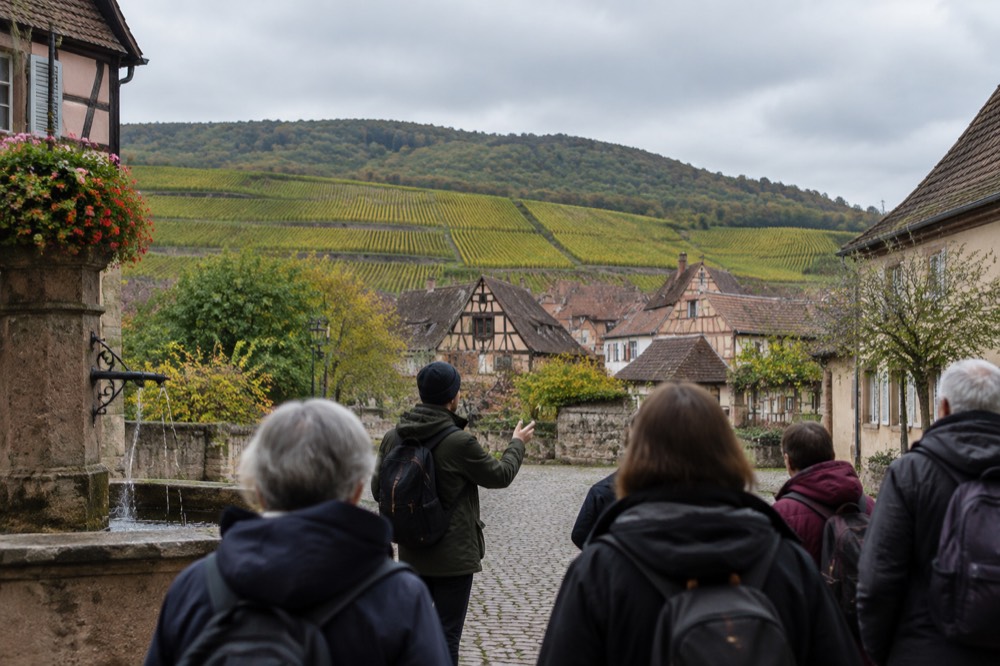
The guided-day approach is the stronger of the two for the core loop. The villages that make the wine route famous are small and dispersed, which is exactly the pattern that punishes bus timetables, and a day tour solves it by taking the whole circuit in one vehicle. The half-day Alsace wine tour from Strasbourg is the compact version, built around cellar visits rather than village sightseeing, and its live listing carries the current itinerary.
The rail approach works for the bigger nodes. Colmar is the region's second city and the natural rail stop south of Strasbourg, and the Colmar guide covers what to do there; Basel is reachable for a Swiss day; and the German side opens up at Kehl across the river. The getting around Strasbourg guide details the city network that stitches it all together, including the airport shuttle, which runs up to five trains an hour and takes 8 minutes from Entzheim to the station, with a combined ticket at 4.60 EUR.
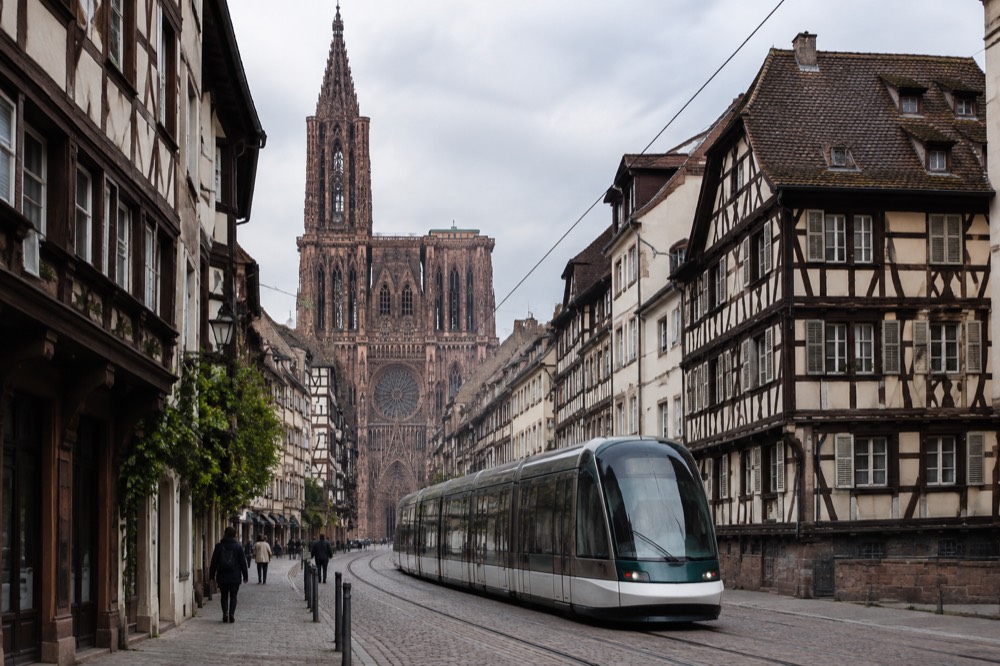
A hybrid week is the pattern this site's own itineraries are built on: two or three guided days for the dispersed villages and castle, rail days for Colmar and Basel, and walking days in Strasbourg itself. The two days in Strasbourg itinerary and the three days in Strasbourg itinerary show how the city side of that week fills out, and the Strasbourg tours overview gathers every guided option in one place.
For travellers who arrive by river rather than rail, the same logic applies. Cruise passengers docking for a day can run one guided outing and still see the cathedral and Petite France on foot; the Strasbourg river cruise stop guide is written for exactly that case.
Common Questions About An Alsace Road Trip
How many days do you need for an Alsace road trip?
Three days covers Strasbourg, the wine route villages and Haut-Koenigsbourg at a steady pace. Five days adds a cross-Rhine detour into the Black Forest or a run south to Basel, and a week allows slow mornings in the villages and a second base such as Colmar. Two days works only if you accept choosing between the vineyards and the Vosges.
Where should an Alsace road trip start?
Strasbourg is the natural base: it is the region's largest city, the prefecture of the Bas-Rhin, and the transport hub with the airport shuttle, the rail lines and the tour departures. Starting there also gives you the Grande Île and the cathedral before you head south, which sets the context for everything that follows.
Can you cross into Germany on an Alsace road trip?
Yes, easily. France and Germany are both in the Schengen area and both use the euro, so there are no border formalities and no currency change. Kehl sits directly across the Rhine from Strasbourg, and the Black Forest, Baden-Baden and Freiburg are the standard German stops. Switzerland around Basel is different: Schengen yes, euro no, so plan for francs or cards there.
What is the best month for an Alsace road trip?
May through September carries the warmest normals, with mean maxima from 20.9 C in May to 26.4 C in July, and September overlaps the harvest. December is the second season: colder at a 5.9 C mean maximum, but animated by the Christmas markets, which in Strasbourg run from the last week of November to 24 December. Confirm the current year's dates on the city's Christmas site.
Do you need a car for the Alsace wine route?
A car is the flexible option, but it is not required. Guided day tours from Strasbourg cover the villages and Haut-Koenigsbourg with transport included, and a half-day wine tour focuses on cellar visits. Rail reaches the larger towns such as Colmar, but the small villages are poorly served by public transport, so tours beat buses for those.
Is Strasbourg worth including on an Alsace road trip?
Yes, and not only as a launch pad. The Grande Île and the Neustadt together form a World Heritage property, the cathedral's platform at 66 m gives the best rooftop view of the region, and Petite France is the half-timbered quarter that the villages echo in miniature. Give the city at least one full day at either end of the drive.
An Alsace road trip, planned from Strasbourg and run at the pace the villages reward, is one of the most satisfying loops in France: a single base, two countries within reach, and a wine route that delivers a different village every half hour of driving. Pick the month from the climate table rather than from postcards, book early if the month is December, and leave one afternoon unplanned for the cellar you did not know you would stop at.