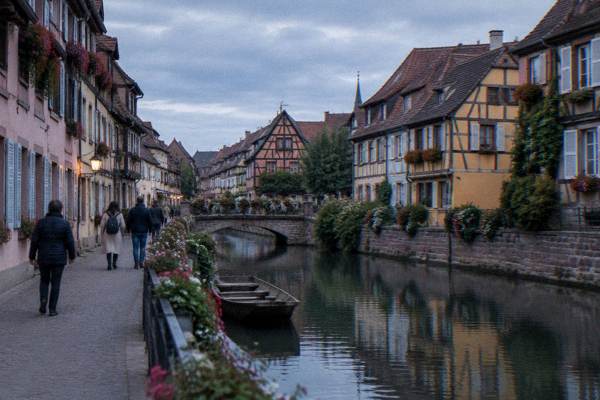
Basel Day Trip From Strasbourg
Basel sits in north-eastern Alsace, and a day there swaps half-timbered Alsace for Swiss riverfront streets, museums and the Rhine. This guide covers how the crossing works, what changes when you leave the euro, and how to weigh Basel against the closer Alsace and Black Forest options.
Short answer
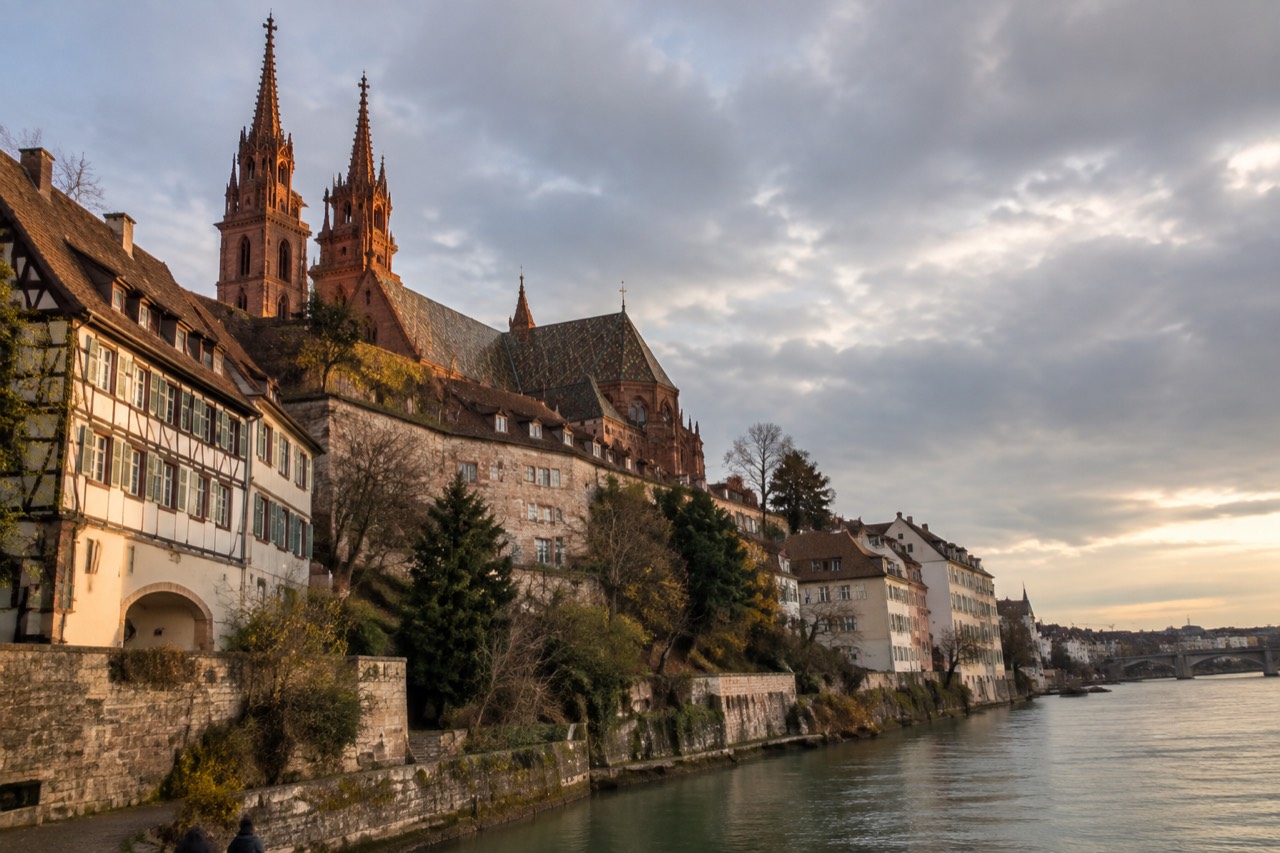
Basel is a practical day trip from Strasbourg: the two cities are linked by trains, and Switzerland stays in Schengen while keeping the Swiss franc, so plan for francs or a card rather than euros. The old town, the Rhine bank and Basel's museums fill a day comfortably.
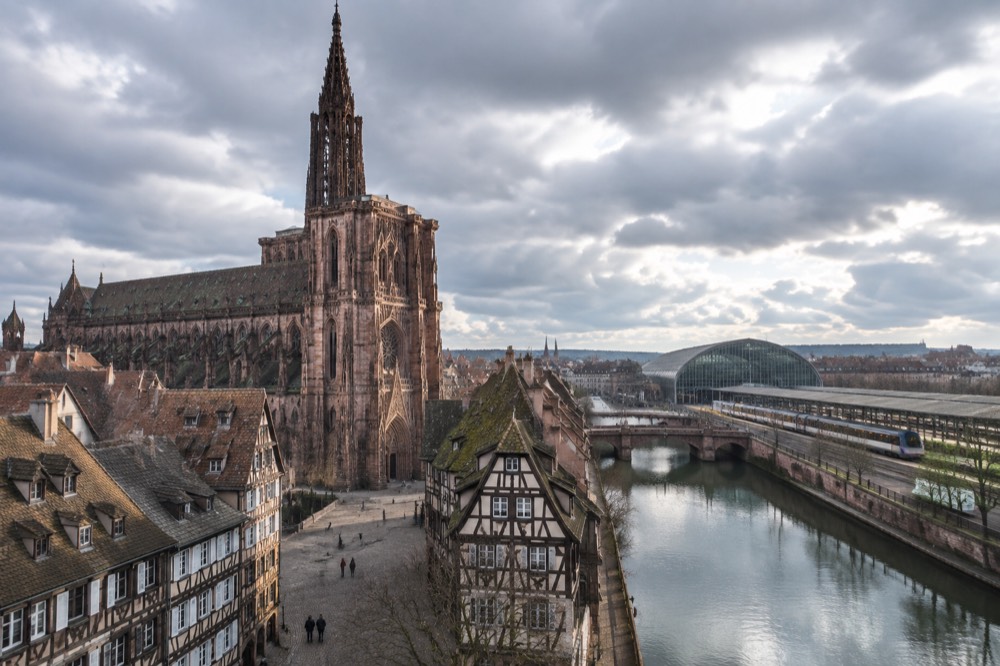
Strasbourg, in Alsace (Bas-Rhin, Grand Est), is a French city on the River Ill beside the Rhine, and the German border at Kehl is a short hop away on the far bank. What surprises first-time visitors is that a second country sits almost as close in the other direction: Switzerland, whose north-western gateway, Basel, grew up around the point where the Rhine turns north. A day trip there is one of the easiest border crossings in Europe, and it changes more than the scenery: the currency, the price level and the rhythm of the day all shift the moment you leave France.
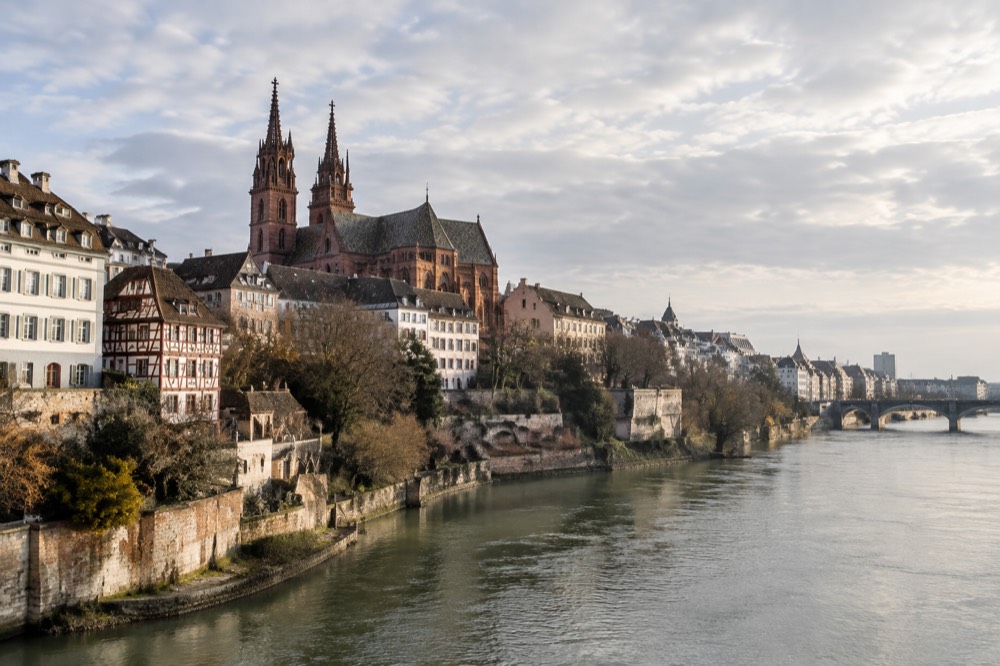
Basel rewards a slow, wandering day rather than a checklist. The old town is compact, the Rhine runs straight through the middle of it, and the city's museums are close enough together that a rainy day there is arguably better than a sunny one. This guide sets out how the trip works from Strasbourg, what to see once you arrive, what changes at the border, and how to decide between Basel and the other day trips competing for the same day of your itinerary.
Why Basel Works As A Day Trip From Strasbourg
Basel is the one day trip from Strasbourg that puts you in a third country and a different currency before lunch, without a flight or a long transfer. The city is compact and walkable once you arrive, its old town and riverside sit close to the stations, and the return leg in the evening drops you back into the heart of Alsace. The trade-off is cost: Switzerland is a dearer place to eat and shop than France.
The appeal is variety. Strasbourg's Grande Île and the wine villages of the Alsace route share a landscape, a cuisine and a language; Basel feels deliberately different, with Swiss signage, a different pace of restaurant service and a river so wide it reads as a second city centre. Travellers who spend several days in Alsace often reach a point where another half-timbered street blurs into the last one, and Basel is the antidote.
It also pairs well with the rest of a Strasbourg stay. A day in Basel balances a day in the vineyards, a day in the Black Forest or a day given over to the cathedral and Petite France. If your trip is short, though, weigh it honestly: Strasbourg itself absorbs two days easily, and the Strasbourg Travel Guide covers the sights you would be skipping.
| What | Where It Sits | What It Offers | What To Check Before You Go |
|---|---|---|---|
| Basel old town | Between the Rhine's south bank and the ring of former walls | Squares, the Minster, covered shopping lanes | Opening hours of any specific museum |
| The Rhine | Straight through the city | Riverside walks, views of both banks | Weather, since the riverbank is exposed |
| Museums | Clustered within the old town and just across the river | Art, history and design collections | Whether a museum pass suits your day |
| Markets and food halls | Around the old town's main squares | Swiss and Basler specialities | Market days on the city's official pages |
How To Travel From Strasbourg To Basel
Trains are the sensible way to do this trip: Strasbourg's station has direct regional services towards Basel, the journey stays under way for a manageable stretch of the day, and both stations sit centrally so no transfer is wasted. Book through the operator's own site or app, and check the last return departure before you commit to a late dinner. Driving is possible but parking in Basel is dearer than in Strasbourg.
Ready to sort your cross-border rail journey? Book a train ticket here.
The practicalities matter more here than on a French domestic trip, because you are leaving one currency zone and entering another. Buy your ticket in euros on the French side or through an app, then expect to pay in Swiss francs for everything after arrival. Switzerland is in Schengen, so there is normally no passport control on a cross-border regional train, but carry ID anyway: border police on both sides can and do check documents, and a passport or national ID card is required to cross.
Timing is the one thing to nail down in advance. The day works best with a morning start and an evening return, giving Basel the middle of the day when its shops, museums and restaurants are open. Swiss cities close earlier than French ones on Sundays in particular, so a Sunday trip needs a plan built around the riverbank and the open museums rather than retail.
A guided alternative exists if you would rather not manage the border yourself, and it is worth weighing against the DIY train day. The Best Of Alsace Historical Day Trip keeps you on the French side and pairs a guide with the driving, which suits travellers who want commentary rather than independence, and its live listing carries the current price and departure details: Check availability. For the Basel run itself, the train remains the straightforward option.
What To See In Basel On A Day Trip
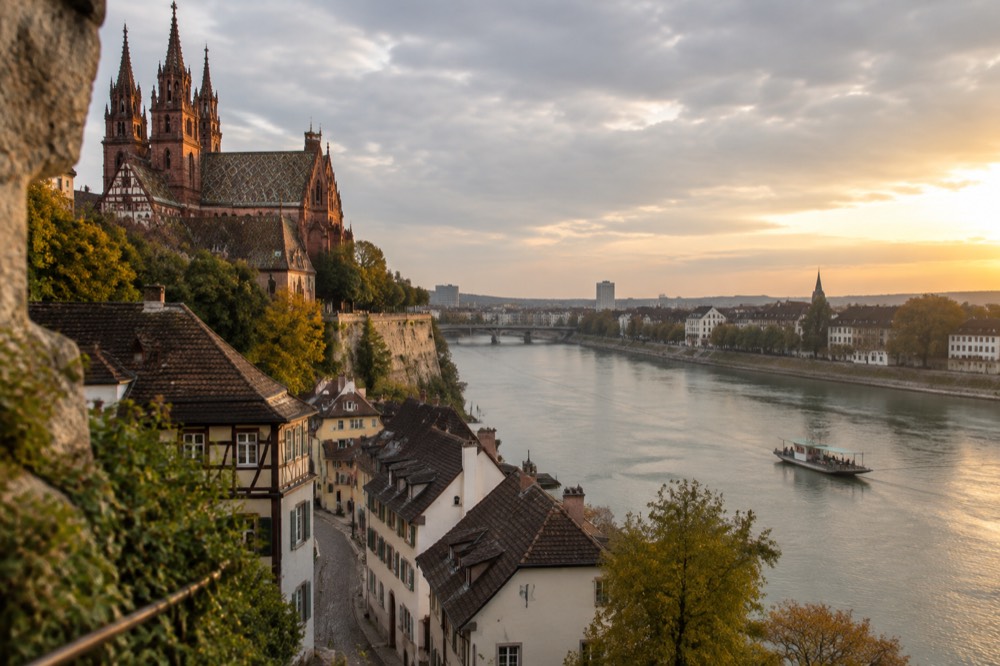
Spend the day on foot between three anchors: the Minster and its hill above the Rhine, the old town's squares and lanes around it, and one museum chosen before you travel. That is a full day without rushing, and it leaves the riverbank crossings, the ferries and the view from the Minster terrace as the connective tissue between them. Resist adding a fourth anchor; the old town rewards lingering.
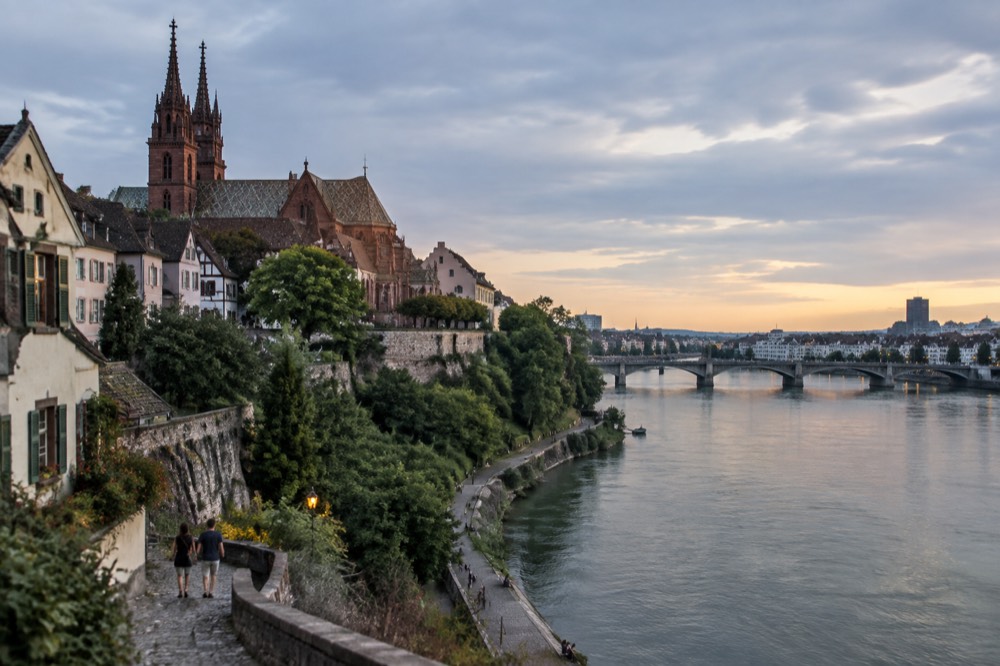
The Minster is the natural first stop. The red sandstone church dominates the old town's highest point, and its terrace looks out over the Rhine to the districts beyond. From there, the lanes drop down towards the main squares, where the town hall and the market life of the city concentrate. Give the squares the late morning: this is where Basel feels most like a working Swiss city rather than a museum piece.
The Rhine is the second anchor and the one people underestimate. The river splits Basel in two, and the middle of the day is well spent crossing it: on foot by bridge, or on one of the small cable ferries that drift across on the current, a Basel institution. On warm days locals swim in the Rhine, drifting downstream with waterproof bags; watching that, or joining it, tells you more about the city than any exhibit.
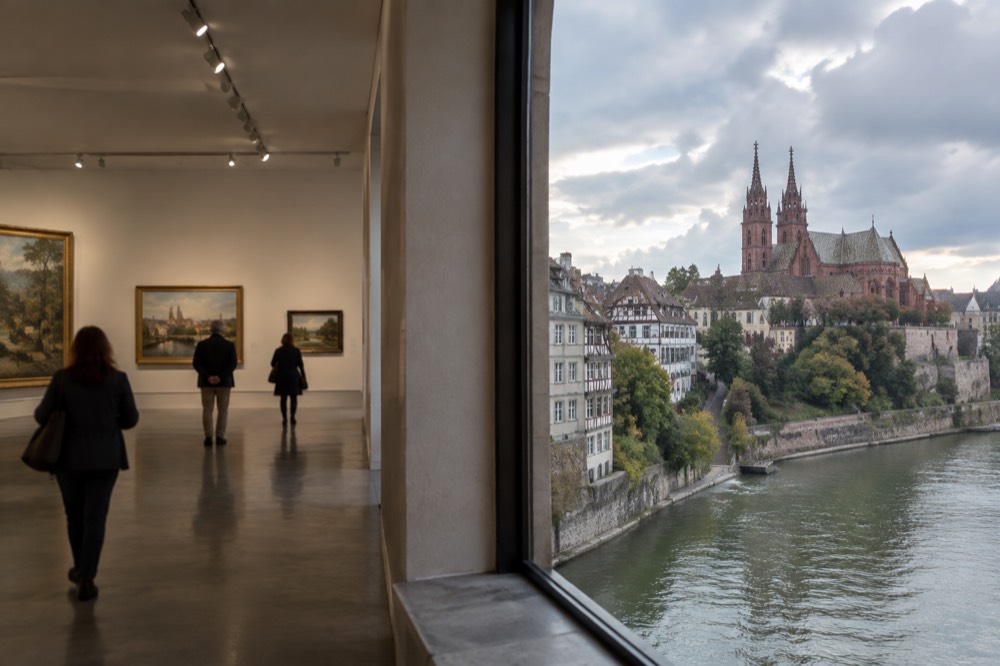
The museum is the third anchor, and the choice should be made the night before, not on the day. Basel's art collections are the city's strongest suit, and the flagship galleries sit within reach of the old town. Pick one, buy the ticket online if the museum offers it, and give it a fixed slot in the afternoon so the old town gets the morning light and the museum gets the post-lunch hours.
| Anchor | What It Is | Who It Suits | What To Check |
|---|---|---|---|
| The Minster and its terrace | A hilltop church above the Rhine with a viewing terrace | First-time visitors, photographers | Terrace opening hours and any service times |
| The old town squares | Market squares, the town hall, covered lanes | Shoppers, families, anyone who likes wandering | Market days, which vary through the week |
| The Rhine crossings | Bridges and the traditional cable ferries | Anyone, including children | Ferry operation in bad weather |
| One museum | Art or history, chosen in advance | Rainy days, art lovers, repeat visitors | Opening days, since some close on Mondays |
If the day runs long and you would rather have a guide's stories than your own planning, guided options exist on the Strasbourg side too, and they remove the schedule entirely.
What Changes When You Cross Into Switzerland
Three things change the moment you leave France for Basel: the currency becomes the Swiss franc, prices for food and everyday shopping rise noticeably, and your phone may roam onto a Swiss network even though Switzerland sits inside Schengen. None of this is dramatic, but each one catches out travellers who treat the trip as domestic. Carry a card, carry ID, and check your mobile plan before you board.
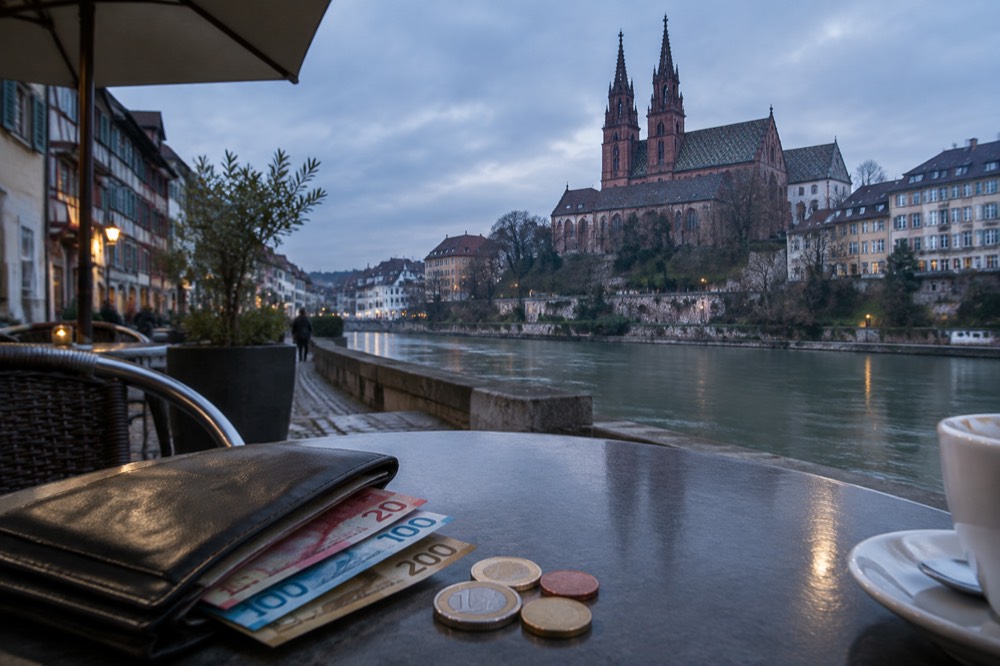
The currency point deserves emphasis because it is the one people get wrong. Switzerland is not in the euro, and euros are not everyday money in Basel: some shops near the station accept them, but at an unfavourable rate and with change in francs. Pay by card where you can, withdraw francs once if you need cash, and keep the two currencies separate in your head and your wallet so the day's budget stays readable.
Roaming is the quiet one. European Union mobile plans treat Switzerland differently from France and Germany, and a traveller who crosses without checking can return to a surprise on the bill. Look at your plan's terms for Switzerland before the trip, or keep the phone in flight mode and use offline maps for the day; Basel's old town is small enough that a paper map from the station covers it.
| What Changes | Strasbourg Side | Basel Side | What To Do |
|---|---|---|---|
| Currency | Euro | Swiss franc | Pay by card or withdraw francs once |
| Border | France, inside Schengen | Switzerland, also Schengen | Carry ID; checks happen |
| Mobile roaming | EU plan rules apply | Swiss roaming may be charged | Check your plan or use offline maps |
| Price level | Alsace prices | Noticeably dearer food and drink | Budget the day accordingly |
| Language | French | German spoken locally, English common | No barrier for English speakers |
For travellers who would rather keep the whole day inside the euro zone, Strasbourg itself has depth that rewards an evening, and the city's own numbers back up how much there is to pack into the French side of the border.
The Secrets Walk is a guided route through the city's hidden corners, and it makes a good bookend to a day spent abroad.
Where To Eat And Drink In Basel
Eat one proper Swiss meal and treat the rest of the day as grazing: Basel's food strengths are its covered market halls, its riverside cafés and its bakeries rather than long restaurant lunches. A sit-down lunch in the old town is the dearer way to eat, while market food and bakery lunches keep the budget closer to French levels. Book nothing in advance unless dinner in Basel is part of the plan.
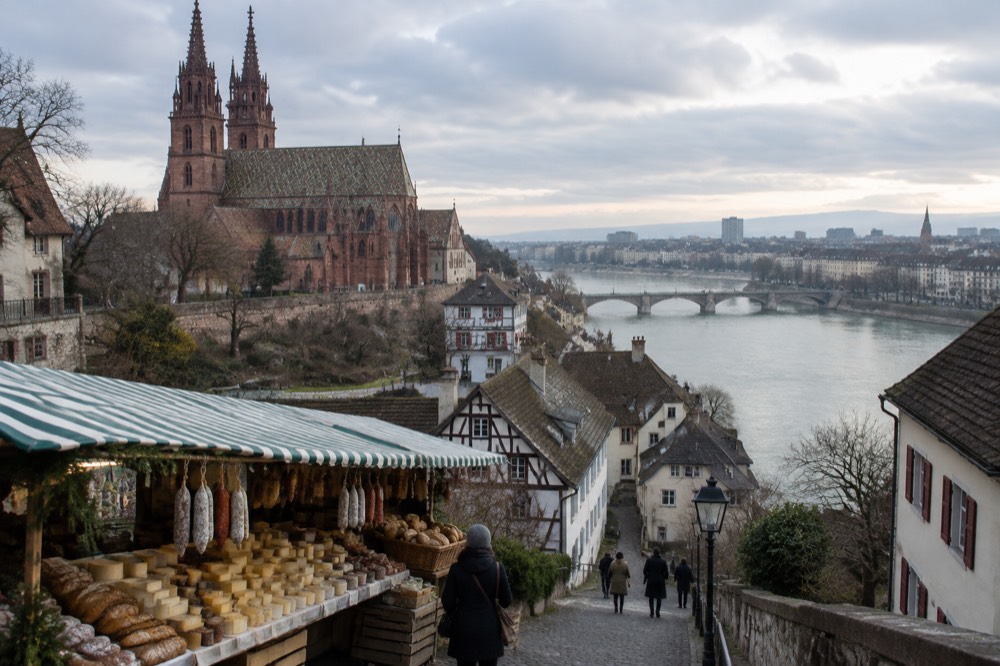
The market squares are the heart of Basler food culture. Around them sit cheese sellers, bakers and prepared-food stalls, and a lunch assembled from them costs less than a restaurant plate while tasting more of the region. Look for the local flour soup and the spiced Basler biscuits in the run-up to Christmas, and expect the chocolate to be the souvenir that buys itself.
Restaurants, when you do sit down, run to hearty Swiss standards: rösti, sausages, river fish and cheese dishes that suit the semi-continental climate the two cities share. Service is unhurried and portions are generous, so a long lunch eats a large hole in a one-day itinerary. A better structure is a light market lunch, an afternoon café stop, and dinner back in Strasbourg, where the winstubs of the old town are open late and priced in euros.
| Eating Style | Where It Works | What It Costs Relative To France | Best For |
|---|---|---|---|
| Market and bakery lunch | The old town's market squares | Closer to French prices | Budget and time-pressed days |
| Café stop | Riverside and around the Minster | Moderate | A rest between anchors |
| Sit-down Swiss lunch | Old town restaurants | Dearer | A deliberate slow day |
| Dinner back in Strasbourg | Winstubs and old town tables | Euro prices | Making the train home relaxed |
Basel Or The Alsace Wine Route: Which Day Trip Suits You
Choose Basel for variety, museums and the novelty of a third country; choose the Alsace wine route for scenery, wine and lower costs, because the vineyards sit inside France and keep French prices. Basel suits repeat visitors to Alsace who have seen the villages; the wine route suits first-timers, since the half-timbered villages and the tasting rooms are the region's signature. The Black Forest offers a third flavour: German rather than French or Swiss.
The honest test is what your trip is missing. If you have three days in Strasbourg, the wine route or Colmar should come first: the villages are what people picture when they book Alsace, and a day among them, such as the one described in the Alsace road trip itinerary, covers the ground efficiently. Basel answers a different need, the need for contrast, and it earns its day best on a longer stay.
Cost tilts the decision too. A wine route day keeps you in the euro, in French restaurants and in villages built for day trippers, while a Basel day spends francs at Swiss prices. Neither is wrong; they are simply different products. The Colmar day trip guide and the Black Forest day trip guide set out those alternatives in full if you want to compare before committing a day.
| Day Trip | Country | What It Is For | Who It Suits Best |
|---|---|---|---|
| Basel | Switzerland | Museums, river city life, contrast | Repeat Alsace visitors, art lovers |
| Colmar and wine villages | France | Half-timbered villages, tasting rooms | First-time visitors, food and wine travellers |
| Black Forest | Germany | Forest scenery, waterfalls, cuckoo-clock country | Families, drivers, nature lovers |
| Freiburg | Germany | A lively university city with a stream-crossed old town | A relaxed city day without museums |
Guided versions of the French and German days run from Strasbourg and remove the driving entirely. The Best Of Alsace Historical Day Trip is the strongest of the French options for a first visit, pairing several of the region's historical stops with a guide and transport in one booked day, and it suits a traveller who wants the Alsace highlights without hiring a car.
For the German option, the Black Forest day trip to Freiburg, Titisee and Triberg pairs a city, a lake and a waterfall in one guided run, and it makes a fair comparison piece against a Basel day.
When A Basel Day Trip Works Best
Basel works best from late spring to early autumn, when the Rhine bank, the cable ferries and the swimming are in season and the old town's squares are full; it also works in December, when Basel's own Christmas season overlaps Strasbourg's and the two cities can be done back to back. Midwinter days are short and the riverbank is raw, so a winter visit should lean on the museums. Rain matters less in Basel than in the villages.
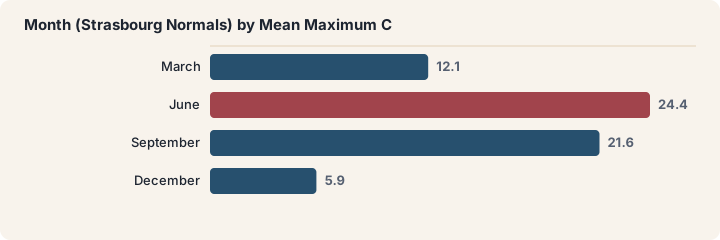
The climate you depart from is Strasbourg's. Meteo-France's 1991-2020 normals for Strasbourg-Entzheim put the mean daily maximum at 26.4 C in July against 5.2 C in January, with 635.7 mm of rain across the year and the wettest months in late spring and summer. Basel's weather is broadly similar, so the packing list does not change across the border, only the price of the umbrella.
| Month (Strasbourg Normals) | Mean Maximum C | Mean Minimum C | Rain Days Of 1 mm Or More |
|---|---|---|---|
| March | 12.1 | 2.6 | 8.5 |
| June | 24.4 | 13.4 | 10.2 |
| September | 21.6 | 10.7 | 8.0 |
| December | 5.9 | 0.8 | 10.2 |
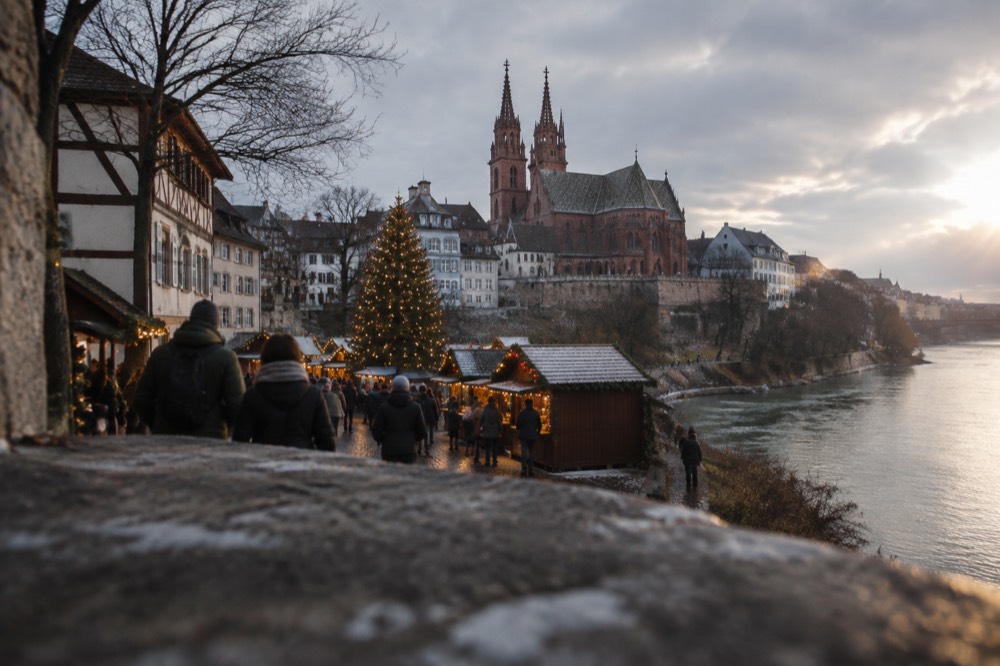
December deserves its own note. Strasbourg's Christmas market ran from 26 November to 24 December in its 2025 edition, and the next edition's dates were still being finalised on the city's Christmas site at the time of this guide's research, so confirm them there before planning around the season. Basel runs its own Christmas market in the same window, and whether markets are better by day or by night is worth settling before you split a season between two cities; the day or night markets question has a clear answer for itinerary planning. For the wider Christmas picture in the region, the Christmas market trip from Paris guide covers how a Basel add-on fits a seasonal itinerary.
One last seasonal angle: the Basel airport is itself a route into the region for some travellers, and the Basel airport to Strasbourg guide covers that transfer in detail if your day trip is part of a wider arrival plan.
Common Questions About A Basel Day Trip
Do I need a passport to go from Strasbourg to Basel?
Switzerland is part of Schengen, so there is normally no routine passport check on cross-border trains between Strasbourg and Basel. You must still carry valid ID, a passport or national identity card, because border controls can happen on either side and carriers can ask for documents.
Can I use euros in Basel?
Not as everyday money. Switzerland uses the Swiss franc, and while some shops close to the station may accept euros, the rate is poor and change comes in francs. Pay by card or withdraw francs once in Basel and keep the currencies separate.
Is one day enough for Basel?
Yes for the old town, the Minster, the Rhine crossings and one museum. It is not enough for Basel's full museum scene, which would fill several days on its own. Choose one collection before you travel and give the rest of the day to walking.
Is Basel cheaper or dearer than Strasbourg?
Basel is dearer. Food, drink and everyday shopping cost more in Switzerland than in Alsace, which is why a market lunch and a café stop are the budget-friendly structure for a day trip, with dinner back in Strasbourg in euros.
What is the best month for a Basel day trip from Strasbourg?
Late spring through early autumn suits the riverbank and the ferries, and December suits the Christmas season. Midwinter days are short and the riverside is cold, so a winter visit should be built around the museums and the covered lanes rather than the open squares.
A Basel day trip is the one excursion from Strasbourg that changes country, currency and pace in a single morning, and it earns its place on any Alsace itinerary of four days or more. Plan the border details, pick one museum, let the Rhine do the rest, and the day tends to deliver more contrast per hour than anywhere else within reach of the city.