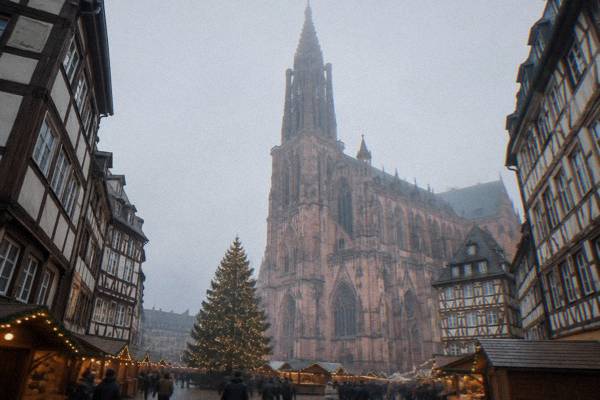
Strasbourg Christmas Market Day Trip From Paris
Strasbourg, in Alsace in north-eastern France, runs its Christmas market from late November to 24 December, and fast trains from Paris make the journey convenient. Here is how to turn that into a single well-planned market day.
Short answer
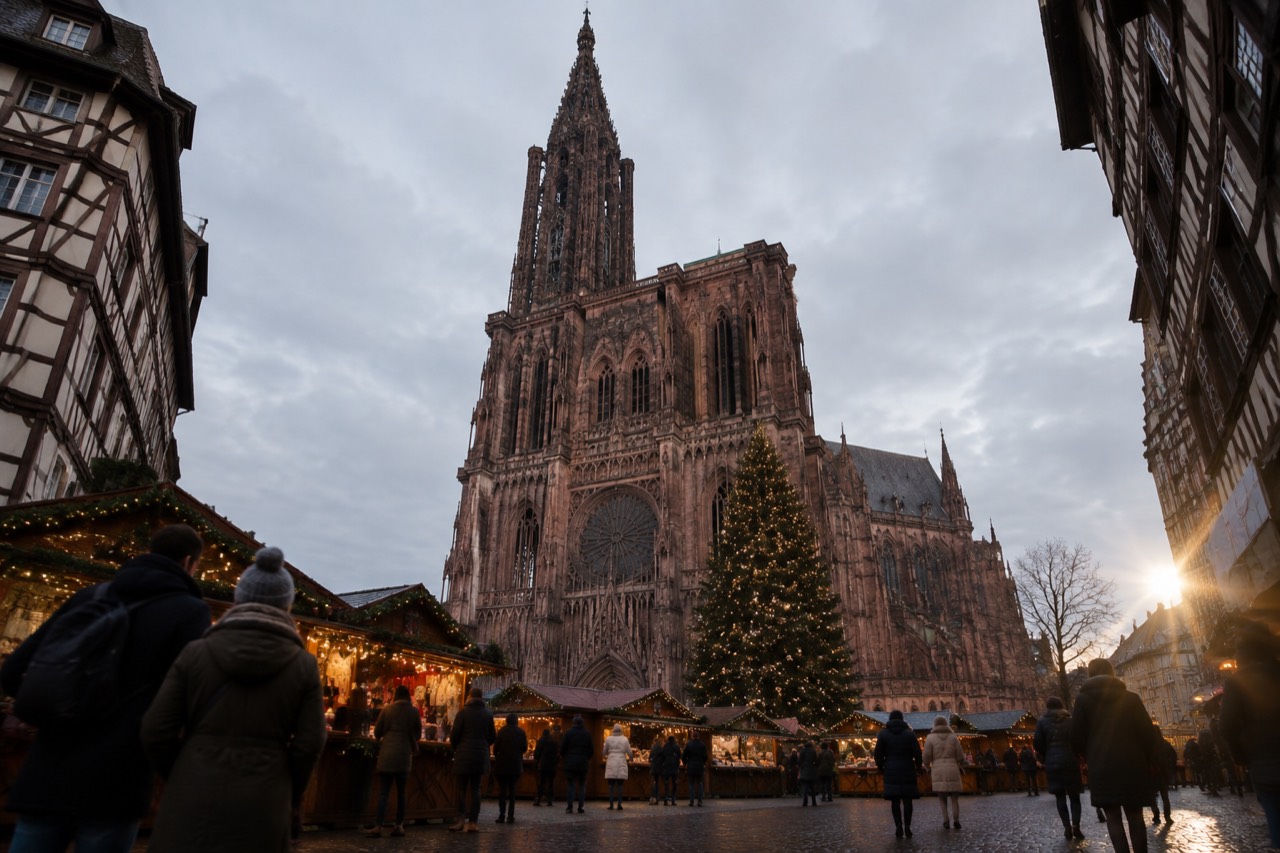
Yes, it is realistic. The market runs late November to 24 December, and the 2025 edition drew 3.05 million visitors. Plan one long day around the Grande Île: cathedral, clock show at 12:30, market chalets, and an evening walk before the train back.
Strasbourg, the prefecture of the Bas-Rhin in Alsace, in the Grand Est region of north-eastern France, sits on the River Ill beside the Rhine, which forms the border with Germany. Each winter it wraps its medieval Grande Île in one of the oldest Christmas markets in France, and the city bills itself as Strasbourg Capitale de Noël. The 2025 edition ran from 26 November to 24 December and drew 3.05 million visitors, down from 3.4 million the year before, according to the city's own press release. Paris is close enough by high-speed rail that a day trip is a genuine option rather than a stunt, and this guide sets out how to do it: the train, the costs on the ground, a route that works in one day, and an honest look at whether the early start is worth it.
Can You Do The Strasbourg Christmas Market As A Day Trip From Paris?
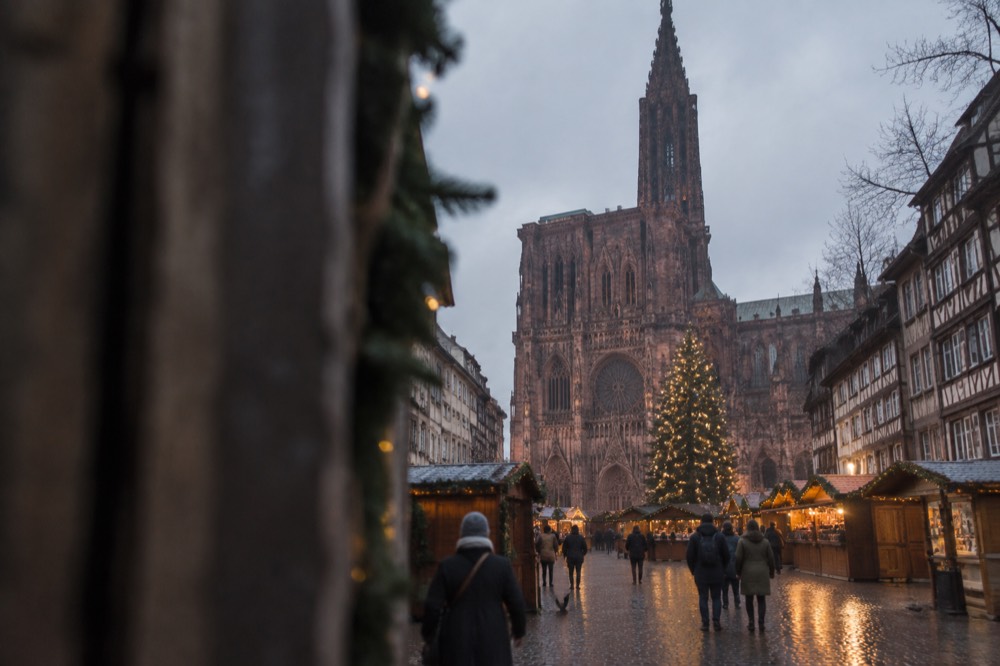
Yes, a day trip works, and the arithmetic is straightforward. The fastest trains between Paris and Strasbourg are reported as quick each way, the market runs from late November to 24 December, and the market's core sits on the Grande Île within walking distance of the station. That gives you a full day on the ground, roughly from mid-morning to late evening, which is enough for the cathedral, the clock show, the main squares and a proper winstub meal.
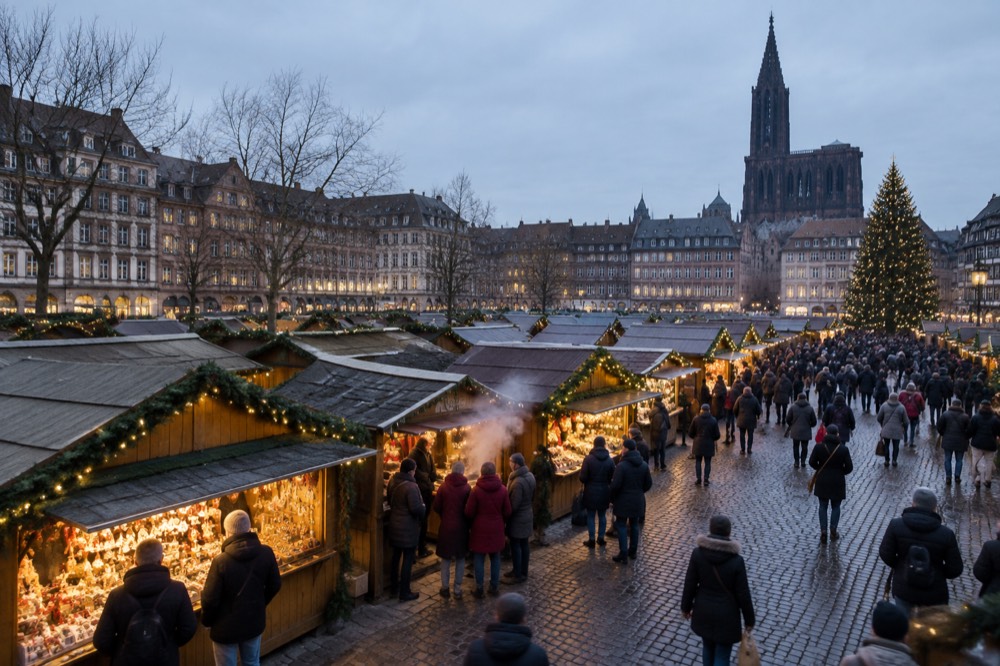
The honest framing first: this is a long day. You leave Paris early, you come back late, and you will walk a great deal on cobbles that are often wet. What makes it worthwhile is concentration. The Christmas market is not spread across a whole region; its chalets cluster around the cathedral, Place Kléber, Place Gutenberg and the Petite France quarter, all inside the UNESCO-listed Grande Île, and the city's tram network stitches the gaps together cheaply. A visitor arriving at Strasbourg station steps into a compact, walkable core.
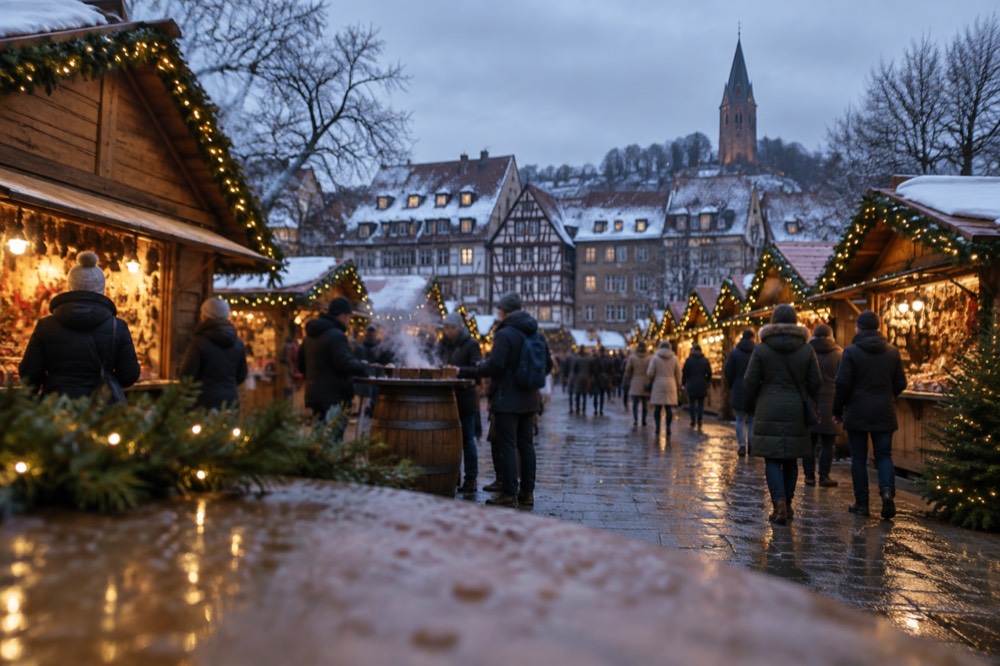
Timing matters more than anything else. The official 2026 dates have not been published yet: the city's Christmas site states that the dates and programme are still being finalised, so confirm them there before booking anything. The usual pattern is an opening in the last week of November and a close on 24 December, with the closing day ending early in the evening. Weekends in December are the crowded period; the market is quieter on weekdays, and the lights are at their best after dark, which in December falls comfortably before dinner. If the day-trip idea appeals, the full Strasbourg Christmas market guide covers the squares in depth, and what are the dates of the Strasbourg Christmas market tracks the calendar question directly.
How To Get From Paris To Strasbourg In Winter
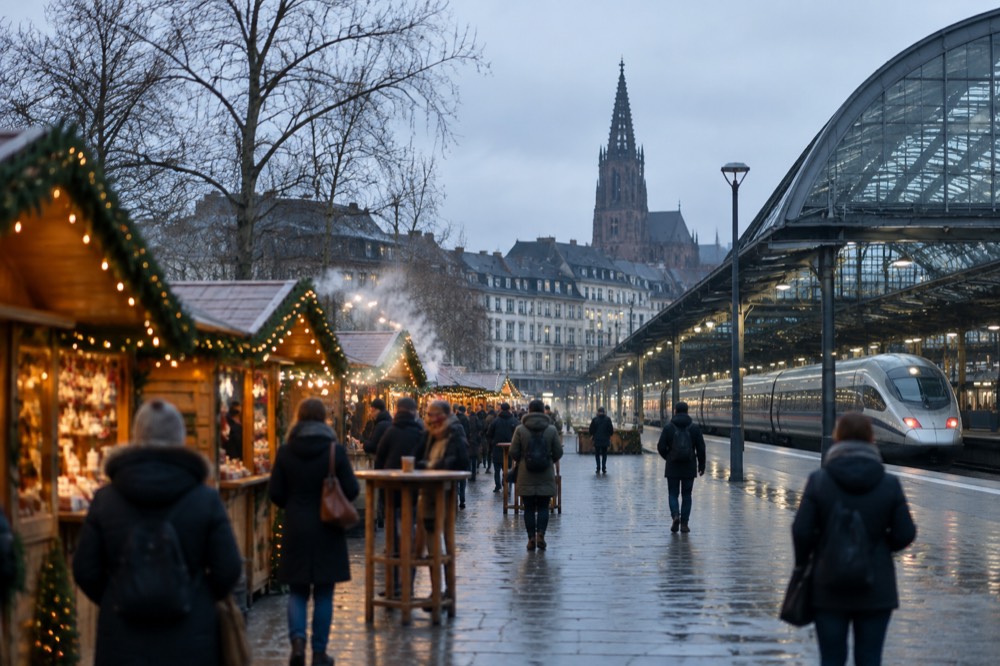
Take a direct high-speed train from Paris to Strasbourg station, which is reported at about 1 hour 45 for the fastest services, and book the earliest departure you can tolerate. Strasbourg station sits a short tram or walk from the Grande Île, so there is no transfer to plan beyond a tram ticket. Buy rail tickets through SNCF Connect, and check your return time against the market's evening rhythm rather than against a fixed closing hour.
The train is the only sensible way to do this trip in one day. The fastest Paris to Strasbourg services are reported at about 1 hour 45, so treat that as approximate and check the live timetable on SNCF Connect rather than trusting any third-party summary. Rail pricing is dynamic, and the only honest answer is the one on SNCF Connect for your own dates. What is certain is the shape of the day. A morning train out and an evening train back gives you the market in daylight and in its lit-up evening state, which are genuinely two different experiences.
Arrival logistics are simple. Strasbourg station is on the western edge of the city centre, and the CTS tram network runs from the station into the Grande Île. A single ticket costs 1.90 EUR bought through the Badgéo card, the CTS app or contactless payment, or 2.50 EUR if bought on board a bus. A 24-hour Solo pass costs 4.60 EUR and a 24-hour Trio pass for two to three people 10.20 EUR, which is the better buy if you will make three or more rides across the day. The tram is frequent and the ride into the centre is short.
One planning note deserves emphasis: December in Strasbourg is genuinely cold and wet, not merely crisp. Meteo-France 1991-2020 normals for Strasbourg-Entzheim give a mean December maximum of 5.9 C, a mean minimum of 0.8 C, 45.2 mm of rain and 10.2 days with 1 mm of rain or more. January is colder still, with a mean maximum of 5.2 C and a mean minimum of -0.2 C. Pack for that reality: waterproof layer, real shoes, gloves. The market runs outdoors and the queues for the cathedral platform are outdoors too.
| CTS ticket | Price | Where to buy |
|---|---|---|
| Single | 1.90 EUR | Badgéo card, CTS app, contactless |
| Single bought on board a bus | 2.50 EUR | On the bus |
| 24h Solo pass | 4.60 EUR | CTS app, ticket machines |
| 24h Trio pass (2-3 people) | 10.20 EUR | CTS app, ticket machines |
The wider question of Paris to Strasbourg travel, including flights and the case for staying overnight, is covered in the Paris to Strasbourg guide and the Strasbourg day trip from Paris guide, which treat the journey outside the Christmas context.
What The Christmas Market Costs Once You Arrive
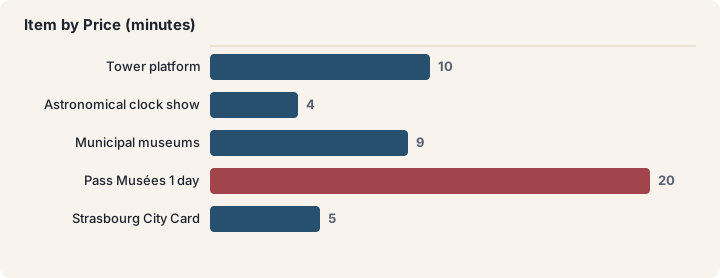
Budget for four things: the market chalets themselves, which are free to stroll, the cathedral attractions, which cost 10 EUR for the platform and 4 EUR for the astronomical clock show, food and drink from the chalets and winstubs, and transit at 4.60 EUR for a 24-hour pass. The market squares are public space, so the only compulsory spend is whatever you choose to eat and drink.
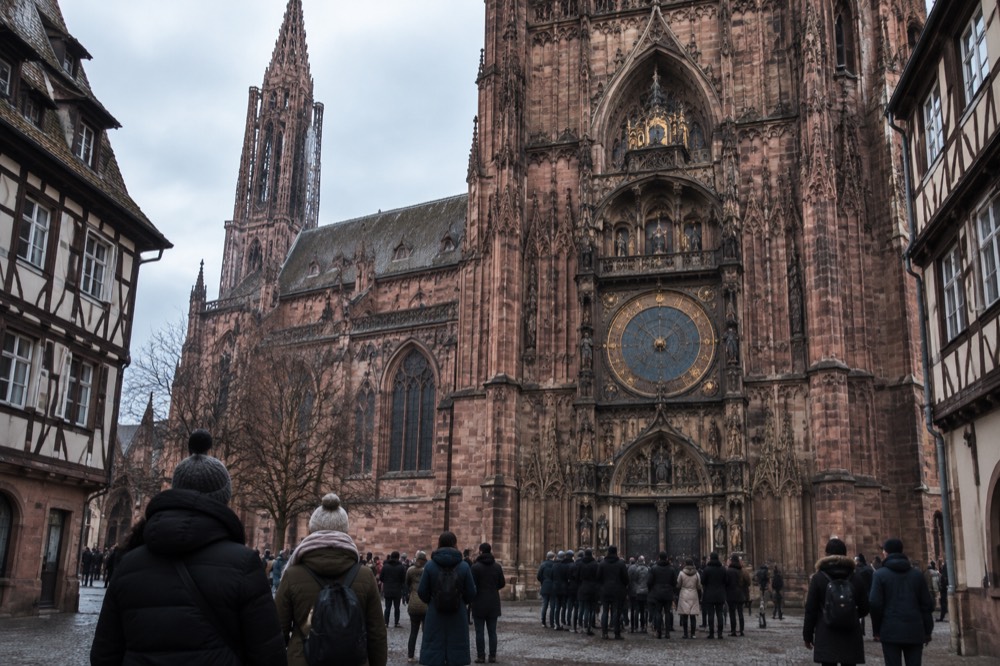
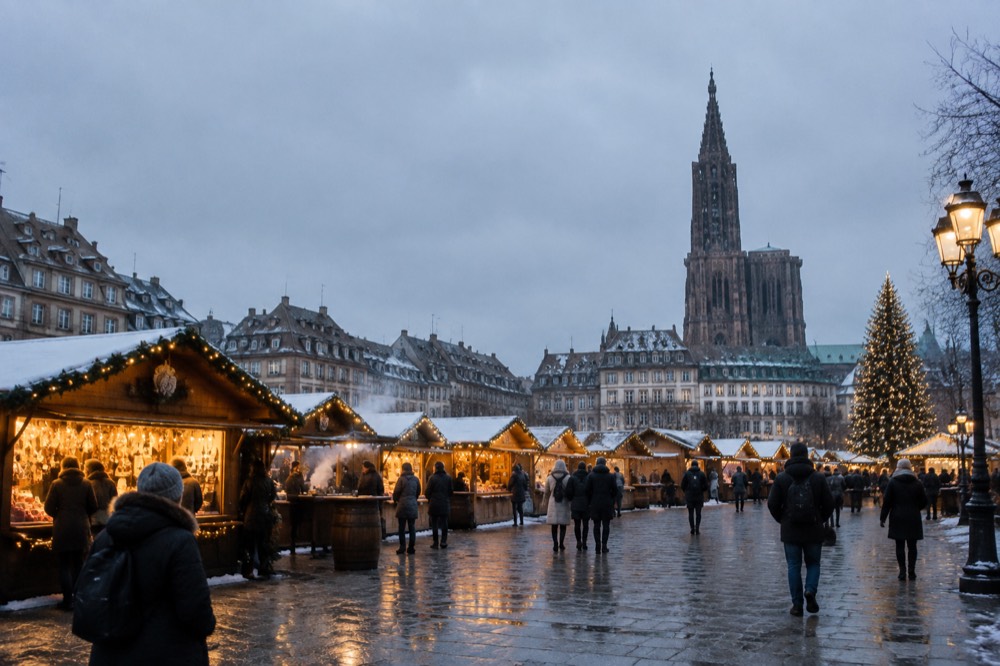
The cathedral is the anchor of the day and its costs are fixed and published. The nave is free to enter during visiting hours, which are Monday to Saturday 08:30-11:15 and 12:45-17:45, and Sunday and feast days 14:00-17:15. During the Christmas market the cathedral stays open continuously Monday to Saturday on the Place du Château side, 08:30 to 17:45, which removes the midday closure problem for a day-tripper. The tower platform, at 66 m up the single spire, costs 10 EUR full fare or 6 EUR reduced, with children under 6 free; platform hours from 1 October to 31 March are 10:00-13:00 and 13:30-18:00, with the last ascent at 17:15.
The astronomical clock deserves a line of its own because it is a timed event, not a drop-in. The full automaton show runs daily at 12:30 sharp, and the ticket costs 4 EUR, with reductions to 3 EUR for groups of 12 or more and students to 25, and 2 EUR for children 6 to 17. Tickets are sold on the day only, with no reservations: sales happen at the cathedral stalls between 10:00 and 11:00 or at the Saint-Michel entrance from 11:30. For a day-tripper arriving on a morning train, that means planning the clock show into the middle of the day deliberately, because there is no second showing to fall back on. The dedicated astronomical clock guide explains the mechanism and the viewing detail.
Beyond the cathedral, the spending is discretionary and food-led. Chalet pricing varies stall to stall and is not published centrally, so treat any food budget as a range you set yourself rather than a figure quoted here. The municipal museums cost 9 EUR full fare or 5 EUR reduced, with a 1-day Pass Musées at 20 EUR, and all municipal museums are free on the first Sunday of every month, which can align neatly with a December day trip if your dates cooperate. Note that the Musée Alsacien is closed for works until 2028 and should not be on any plan. The Strasbourg City Card, at 5 EUR adult or 3.50 EUR child for 7 days, is a discount card rather than an all-inclusive pass, and for a single day it rarely pays for itself unless you stack several paid sights.
| Item | Price | Notes |
|---|---|---|
| Cathedral nave entry | Free during visiting hours | Continuous Mon-Sat during the market, Place du Château side |
| Tower platform | 10 EUR full / 6 EUR reduced | Children under 6 free; platform at 66 m |
| Astronomical clock show | 4 EUR | Daily at 12:30; day-of tickets only |
| Municipal museums | 9 EUR full / 5 EUR reduced | Free first Sunday of each month |
| Pass Musées 1 day | 20 EUR | Covers the municipal museums |
| Strasbourg City Card | 5 EUR adult / 3.50 EUR child | Discount card, 7 days, not all-inclusive |
If you would rather have a guide structure the day than navigate it alone, the roster includes a small-group Christmas markets day tour out of Strasbourg.
Among those options, the Best Of Alsace historical day trip is the one this site features for the region, because it turns a market day into a full picture of Alsace: the wine villages, the countryside and the history that sit beyond the Grande Île. It cannot be squeezed into the same day as a Paris round trip, but for anyone extending to two days it is the natural second act, and the operator's listing carries free cancellation, which matters when December plans shift.
How To Plan One Efficient Day Around The Grande Île
Structure the day as three blocks: mid-morning for the cathedral nave and the market squares in daylight, 12:30 for the astronomical clock show, and afternoon into evening for Petite France, the riverfront and the lit-up chalets before your return train. The platform ascent, if you want it, fits either side of midday within its 10:00-13:00 and 13:30-18:00 windows. Everything on this route is walkable or one short tram ride apart.
The market is really a set of squares, each with its own character, and the cathedral anchors them. Arriving mid-morning, walk from the station or take the tram to the Grande Île and head first for the cathedral while the nave is in its continuous market-season opening. From there the chalets around Place du Château, Place Kléber with its great tree, and Place Gutenberg sit within a few minutes of one another. The 12:30 clock show then fixes lunch: eat before it or accept that you will eat after 13:00, which in Strasbourg is entirely normal.
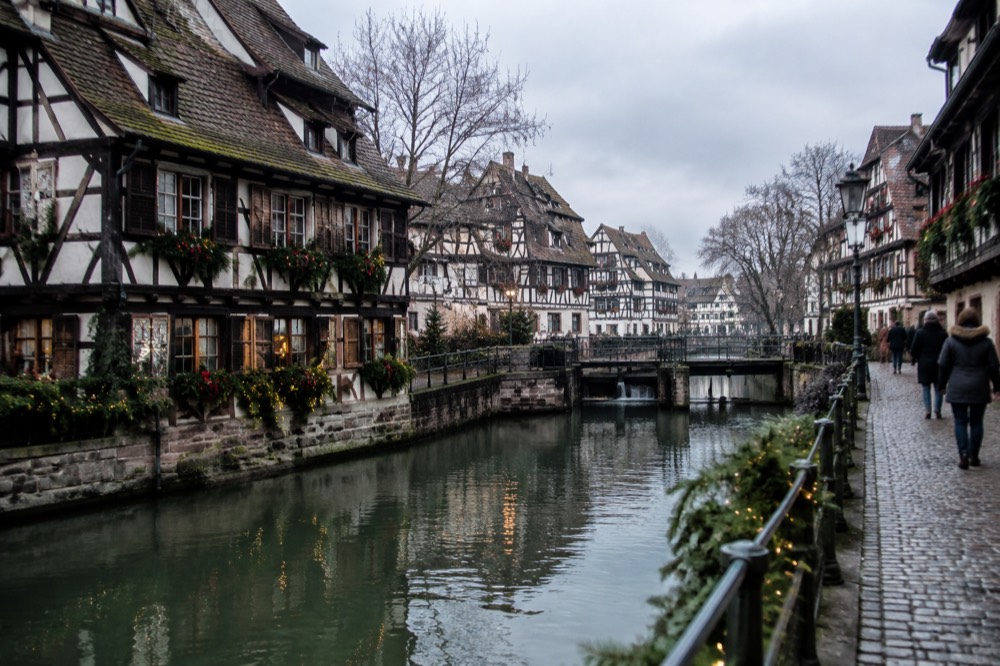
The afternoon belongs to the water. Petite France, the former tanners' and millers' quarter at the western tip of the Grande Île, is the postcard version of Strasbourg: half-timbered houses, canals, weirs. The Barrage Vauban terrace, with seasonal hours of 08:00-19:00 through September and October and shorter winter hours from November, gives the classic panorama over the Ponts Couverts and the spire, though its admission price is not stated on the official page, so check there rather than assuming. The Petite France guide and Barrage Vauban guide cover both in detail. A Batorama river boat is the other classic way to see the city: the long tour costs 16.20 EUR full or 8.90 EUR reduced, and the short tour 12.50 EUR full or 7.20 EUR reduced, with the Red Tour running 1h10 and the Blue Tour 0h45.
| Time block | Where | What it delivers |
|---|---|---|
| Mid-morning | Cathedral nave and Place du Château | Gothic interior, first chalets, daylight photos |
| 12:30 | Astronomical clock | The one timed event of the day, ticket 4 EUR |
| Early afternoon | Lunch in a winstub or from the chalets | Tarte flambée, choucroute, hot spiced wine |
| Late afternoon | Petite France and the riverfront | Canals, weirs, half-timbered streets |
| Evening | Place Kléber and the market squares lit up | The market at its most atmospheric, before the return train |
The evening is the argument for the late return train. The chalets typically open from late morning into the evening, and after dark the whole Grande Île changes character: the tree on Place Kléber, the lights strung over the streets, the queues for hot wine. A day-tripper who leaves at 17:00 sees a market; one who leaves at 20:00 sees the version people travel for. The Christmas market itinerary expands this skeleton into a fuller plan, and are Christmas markets better in day or night takes the timing question head on.
For travellers who want the stories behind the streets rather than just the sights, a hidden-stories walk of the city centre is one way to compress the history, and it pairs well with a free afternoon.
Want the stories behind the streets on your day in the city? Book a free walking tour here.
What To Eat At The Strasbourg Christmas Market
Eat the Alsatian classics where they are cheapest and best: tarte flambée, choucroute garnie, baeckeoffe and kougelhopf, either from market chalets for speed or in a winstub for a sit-down meal. Chalet food is fast and eaten standing; a winstub lunch costs more and takes longer but is the version of Alsatian cooking that made the city's food reputation. Budget by appetite, not by a published price list, because none exists.
The market's food stalls are the engine of the whole event. Tarte flambée, the thin crème fraîche and onion flatbread baked in a wood oven, is the default market meal, cooked in front of you and eaten within a minute of leaving the oven. Choucroute garnie, sauerkraut with sausages and pork, is the heavier sit-down classic. Baeckeoffe, a slow-cooked meat and potato casserole, appears on winstub menus. Kougelhopf, the brioche-like moulded cake, is the thing to carry home. Hot spiced wine is the market's signature drink, and in Alsace it is often made with local white wine rather than red, which surprises first-time visitors.
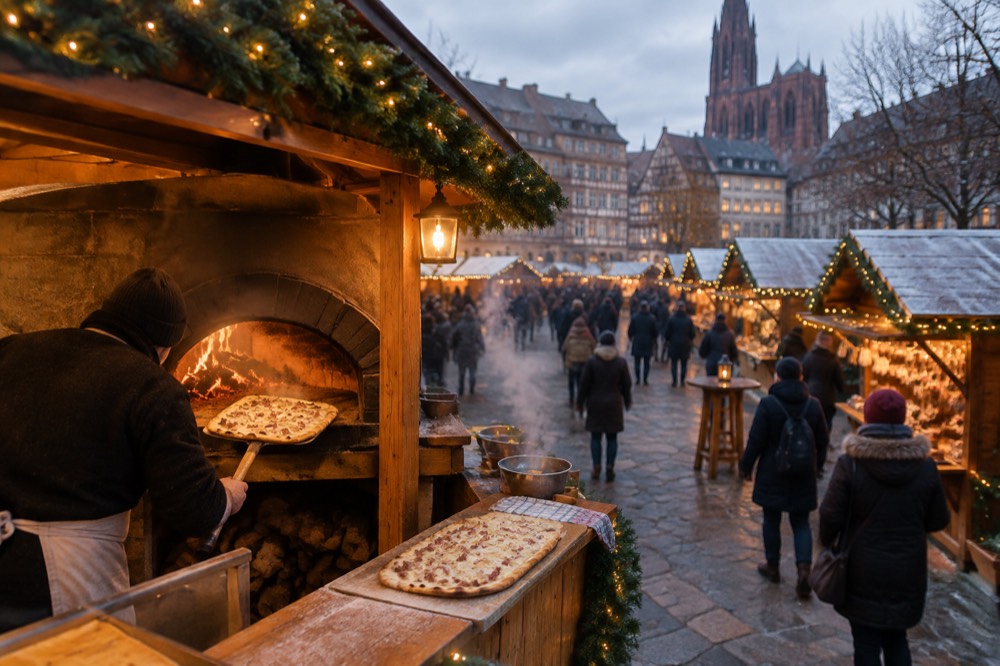
The choice between chalet and winstub is a real one for a day-tripper with a fixed return train. Chalets are fast, standing, and let you keep moving; a winstub is warm, slow and booked out in December. The Christmas market food guide lists what to look for square by square, the winstubs in Strasbourg guide explains the institution, and the individual dish guides on tarte flambée, choucroute and kougelhopf cover the classics one by one. If you want tastings rather than a single meal, a guided food walk with multiple stops is another way through the cuisine, and the roster carries one that fits the bill.
| Food | What it is | Where it works best |
|---|---|---|
| Tarte flambée | Thin flatbread with crème fraîche, onions, bacon | Chalet, eaten standing, straight from the oven |
| Choucroute garnie | Sauerkraut with sausages and salted pork | Winstub, sit-down |
| Baeckeoffe | Slow-cooked meat and potato casserole | Winstub, needs time |
| Kougelhopf | Moulded brioche-style cake with almonds | Chalet or bakery, travels well |
| Hot spiced wine | Mulled wine, in Alsace often white-wine based | Chalet, cup in hand while walking |
Is The Strasbourg Christmas Market Worth The Train From Paris?
For a traveller who wants the most complete Christmas market experience reachable from Paris in a day, yes: the market's setting on a UNESCO-listed medieval island, the single-spire cathedral, the clock show and the food together justify the early start. For a traveller who mainly wants to browse chalets and drink mulled wine, a closer market would deliver that with less travel. The honest answer depends on whether the setting matters to you.
The case for Strasbourg is density and setting. The chalets sit against half-timbered medieval streets and a Gothic cathedral on an island quarter whose World Heritage status covers both the Grande Île and the later Neustadt extension. The market is old, the city calls itself the Capital of Christmas, and the 3.05 million visitors of the 2025 edition reflect that standing. No other market reachable from Paris in under two hours of train travel combines a medieval island, a cathedral of this scale and a food culture this specific, so no figures are offered here for any competing market.
The case against is fatigue and crowding. December weekends around the market are busy, the weather averages 5.9 C daytime and 0.8 C at night with rain on roughly ten days of the month, and a day trip compresses everything into hours. The is the Christmas market in Strasbourg worth it answer weighs this directly, and which Christmas market is better, Strasbourg or Colmar covers the classic pairing question, with the Colmar Christmas market guide on the Colmar side. Colmar is in France, a short regional hop from Strasbourg, and some day-trippers split their day between the two.
One middle path deserves mention: turn the day trip into an overnight. Hotel prices in Strasbourg rise steeply for the market weeks, which is its own subject covered in why is Strasbourg so expensive in December, but a single night converts the rushed evening return into a relaxed morning. The where to stay for the Strasbourg Christmas market guide sorts the neighbourhoods for exactly this decision. This site, Strasbourg Travel Guide, exists for that deeper version of the trip, with guides to every square, museum and day trip in the region.
Beyond The Chalets: Pairing The Market With A Wider Day
If the market alone is not enough, or if you have already seen it, the roster pairs it with two kinds of add-on: guided walks inside Strasbourg that add depth to the streets you would otherwise just photograph, and full-day trips into the surrounding Alsace countryside or across the Rhine into Germany's Black Forest. None of these can be done on the same day as a Paris round trip, but they fit a two-day plan built around one market day.
The guided-walk option is the cheaper and easier pairing. A secrets walk of the city centre fills the gaps a first visit leaves: courtyards, details and stories that a map does not surface. The roster's walking options range from an hour to two and a half hours, at price points from modest to premium, and all are bookable with free cancellation on the operator's listing, which matters when December weather is this changeable.
The regional option goes further afield. The Best Of Alsace historical day trip, this site's featured tour for the region, spends a long day on the wine villages, the countryside and the history beyond the city, and it is the natural companion to a market day for anyone staying over. The Black Forest trip crosses the Rhine into Germany for a different landscape altogether, and the Black Forest day trip guide and Freiburg guide cover that side of the river. Remember that a Black Forest day means leaving France: the Rhine is the border, and both countries use the euro, though no door-to-door times are quoted here.
| Add-on | What it adds | Who it suits |
|---|---|---|
| Secrets walk, 2 hours | Hidden courtyards and stories in the centre | First-time visitors with a free afternoon |
| Best Of Alsace day trip | Wine villages and regional history beyond the city | Travellers staying overnight or longer |
| Black Forest day trip | German scenery across the Rhine | Repeat visitors who know the market already |
| Christmas markets day tour | Multiple market towns in one guided day | Visitors who want chalets without self-driving |
The dedicated Alsace Christmas markets guide maps the wider market landscape, and the question of which market suits which traveller is answered in which Strasbourg Christmas market is best.
Where To Stay If You Decide To Extend The Day
Stay on or near the Grande Île if you want to walk out of your hotel straight into the market, in the Krutenau or Neustadt for a quieter base a short walk or tram away, or near the station if your priority is the earliest possible train back to Paris. The market weeks push hotel prices up sharply, so book as early as your dates allow, and treat the first Sunday of the month as a bonus: the municipal museums are free that day.
The neighbourhood decision is really a decision about what you do with your second day. The Grande Île puts the chalets, the cathedral and the winstubs at the door, at the highest December prices. The Neustadt, the later imperial extension across the Ill, offers grand architecture and more space for less. Krutenau, the student quarter south of the island, is the food-and-drink option. Near the station, the practical choice, everything is a tram ride away but the earliest departure is a walk. The where to stay in Strasbourg guide covers the full city, and the Christmas-specific version narrows it to market weeks.
| Area | Character | Best for |
|---|---|---|
| Grande Île | Medieval streets, market on the doorstep | Maximum atmosphere, shortest walks |
| Neustadt | Grand late-imperial architecture, quieter | Space and relative value |
| Krutenau | Student quarter, winstubs and bars | Food-led evenings |
| Gare district | Practical, trams at the door | Early trains, one-night stops |
A final word on the day trip itself. Done well, with the clock show booked into the middle of the day, the platform or the river fitted around it, and the return train late enough to catch the lights, a Paris day trip to the Strasbourg Christmas market delivers a complete version of the city in a single December day. Done carelessly, it becomes a blur of chalets and a missed clock. The difference is entirely in the planning, and the plan above is the one that works.
Common Questions About A Strasbourg Christmas Market Day Trip From Paris
Is a day trip from Paris to the Strasbourg Christmas market realistic?
Yes. The fastest trains are reported at about 1 hour 45 each way, the market squares sit within walking distance of the station, and a full day covers the cathedral, the 12:30 clock show, the main squares and an evening walk. Book an early outbound and a late return to see the market in daylight and lit up.
What are the dates of the Strasbourg Christmas market?
The official 2026 dates have not been published yet; the city's Christmas site states the dates and programme are still being finalised. The usual pattern is an opening in the last week of November and a close on 24 December. The 2025 edition ran 26 November to 24 December. Confirm your dates on the city's Christmas site before booking travel.
How much does a day at the market cost on top of the train?
The squares are free to stroll. The cathedral platform costs 10 EUR full or 6 EUR reduced, the astronomical clock show 4 EUR, a 24-hour CTS transit pass 4.60 EUR, and a Batorama long river tour 16.20 EUR full or 8.90 EUR reduced. Food from the chalets and winstubs varies by stall, so set your own range rather than expecting a published price list.
Should I take the cathedral platform or the boat tour with limited time?
Both are worthwhile and neither needs long: the platform visit fits inside its 10:00-13:00 and 13:30-18:00 winter windows, and the short Batorama Blue Tour runs 0h45 while the Red Tour runs 1h10. If you can only fit one, take the platform for the view over the market rooftops and the single spire, and save the boat for a longer stay.
Is it better to stay overnight instead of doing it in one day?
An overnight converts a rushed evening into a relaxed morning and lets you pair the market with a winstub dinner at a human pace. December hotel prices in Strasbourg rise sharply for the market weeks, so weigh that cost against the value of a second day. The where-to-stay guides on this site sort the neighbourhoods for both budgets.
What should I pack for a December day in Strasbourg?
Warm and waterproof. Meteo-France 1991-2020 normals for Strasbourg-Entzheim give a mean December maximum of 5.9 C, a mean minimum of 0.8 C, and 10.2 days of measurable rain. Proper shoes for cobbles, gloves, and a layer you can shed indoors all earn their place in the bag.