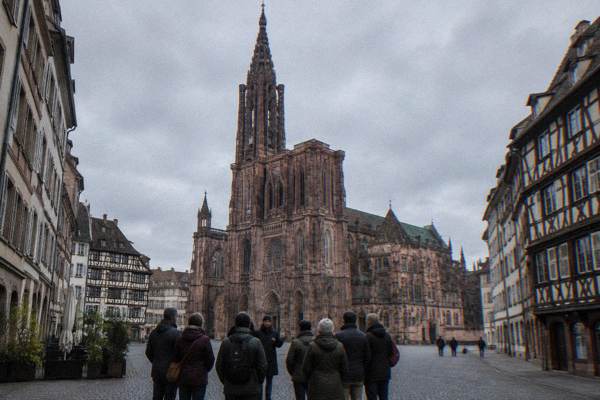
Place Kleber
Place Kleber is the beating heart of Strasbourg, a grand square where centuries of history meet the everyday life of the city. From the neoclassical Aubette to the towering Christmas tree that draws visitors from across Europe, this is where Strasbourg shows its best face.
Short answer
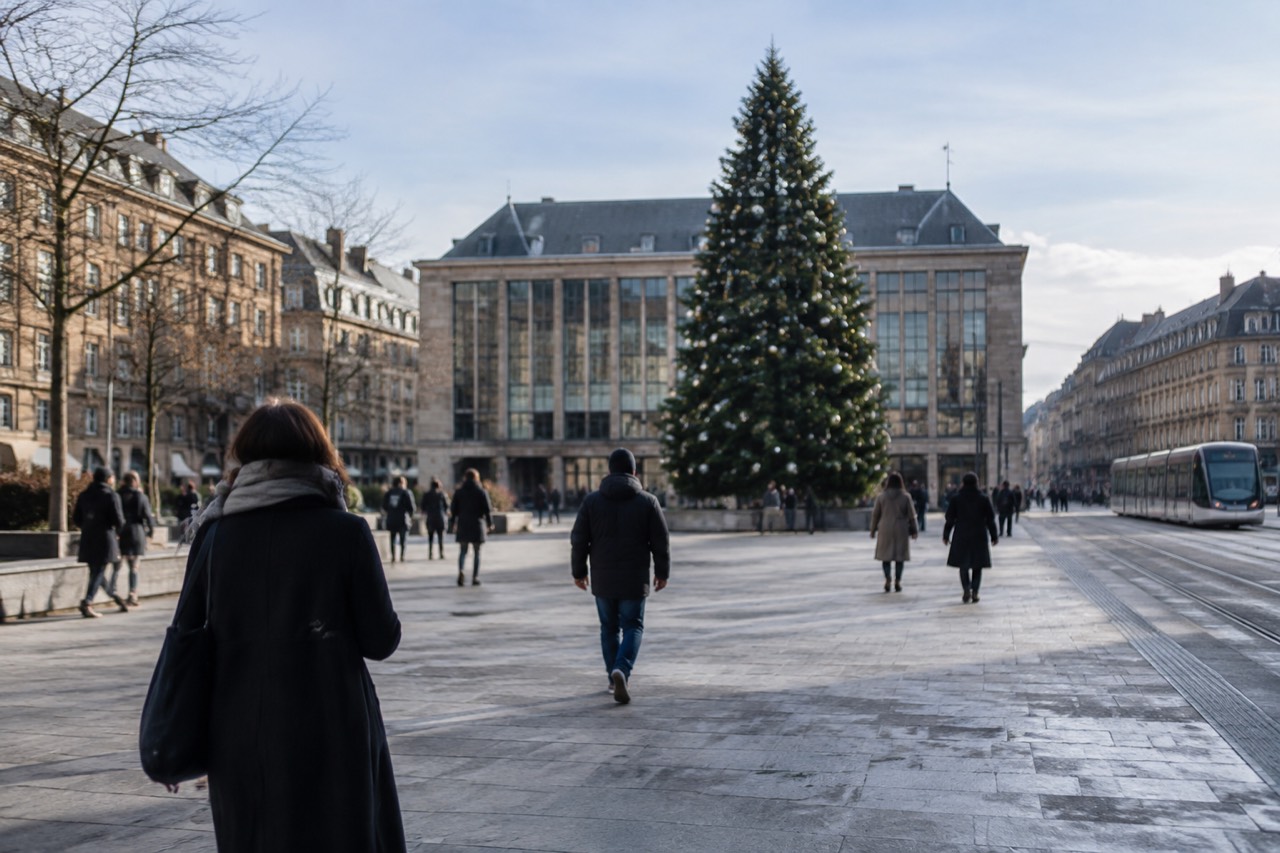
Place Kleber is Strasbourg's largest and most important square, named after the general Kleber, a native son of the city. It is framed by the neoclassical Aubette building and hosts the city's official Christmas tree each winter. The square serves as a central meeting point, a venue for festivals and markets, and the starting point for many walking tours through the historic centre.
Place Kleber is the largest square in Strasbourg and the undisputed centre of the city's public life. Named after Kleber, a Strasbourg-born military commander, it has been a gathering place for centuries and remains the focal point for festivals, markets, and the famous Christmas tree that dominates the square each winter. The square is framed on its northern side by the Aubette, a neoclassical building that once housed a revolutionary avant-garde interior and now contains shops, cafes, and a cultural centre. Strolling across Place Kleber is a daily ritual for many Strasbourg residents, and for visitors it is often the first introduction to the city's blend of French and German influences.
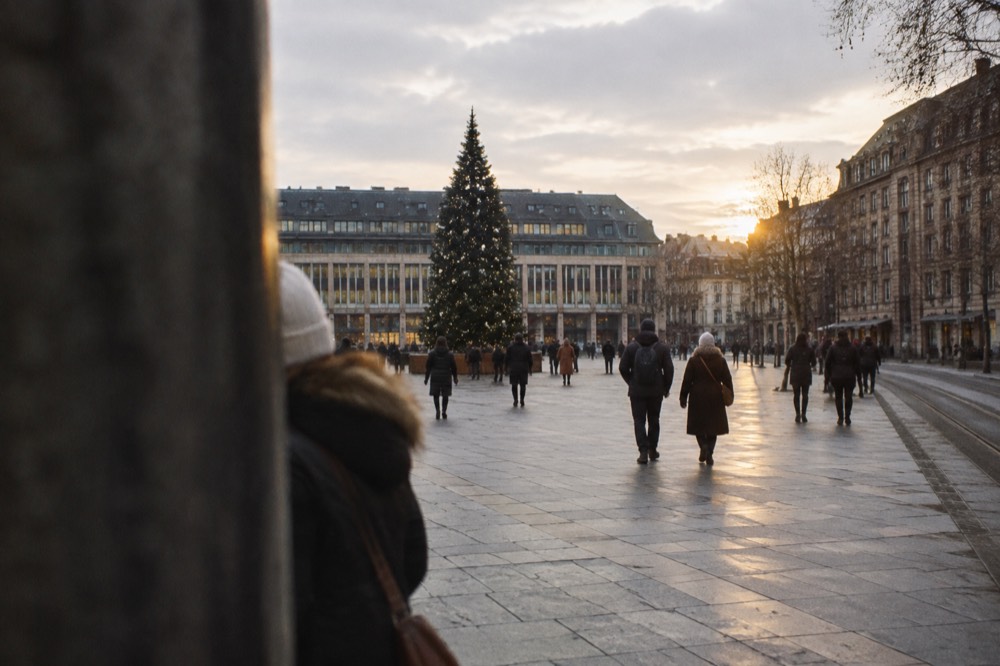
The square sits at the intersection of several major pedestrian streets, making it an unavoidable and welcome part of any exploration of the Grande Île. From here, the cathedral spire is visible to the south-east, while the shopping streets of Rue des Grandes Arcades and Rue du Dome lead off in different directions. In many ways, Place Kleber is the living room of Strasbourg Travel Guide readers will find themselves returning to again and again, whether for a coffee on the terrace, a quick look at the latest exhibition inside the Aubette, or simply to take in the atmosphere of a city that has been a crossroads of Europe for centuries.
What Is Place Kleber And Why Is It Important?
Place Kleber is the central square of Strasbourg, a vast open space that has been the city's main gathering point for centuries. Named after Kleber, it is dominated by the Aubette, a neoclassical building that houses shops, cafes, and a cultural centre. The square hosts the city's official Christmas tree each winter and serves as the venue for markets, concerts, and public events throughout the year.
The importance of Place Kleber goes beyond its physical dimensions. It is the symbolic centre of Strasbourg, the place where the city comes together to celebrate, to protest, and to mark the passing of the seasons. The square was laid out on the site of a former military parade ground, and the decision to create a grand public square reflected the growing prosperity of Strasbourg and its desire to project an image of modernity and openness.
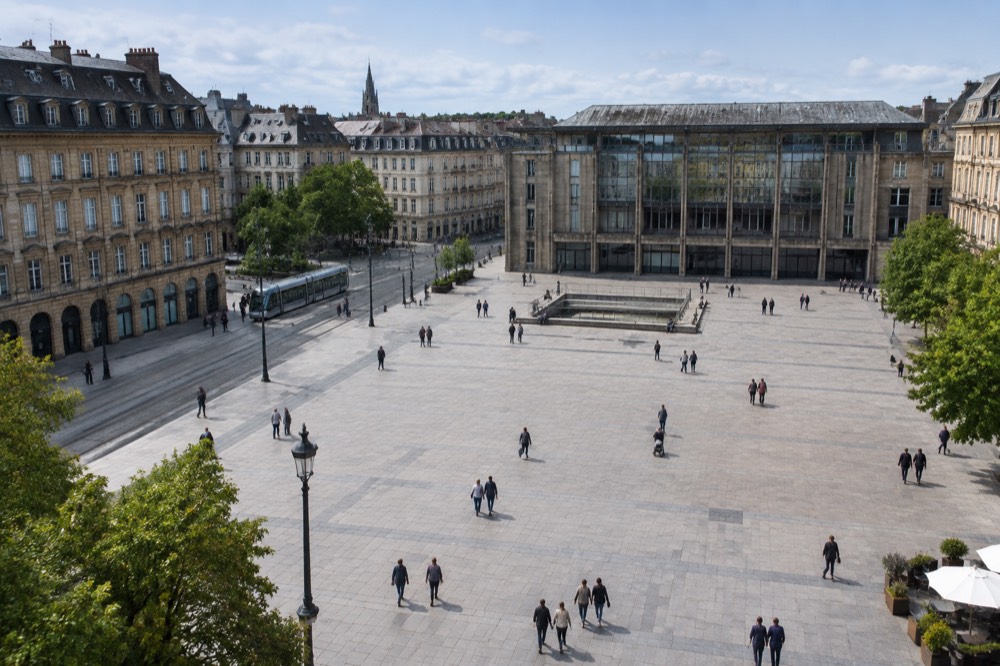
Today, Place Kleber is a pedestrianised zone, accessible only to trams and delivery vehicles, which makes it a pleasant place to linger. The surface is a mix of stone paving and open space, with the statue of Kleber at its centre and the Aubette forming a continuous facade along the north side. The south side is lined with a mix of historic and modern buildings, including the former Galeries Lafayette department store, now undergoing redevelopment. The square is a key node in the city's tram network, with lines B, C, and F stopping at the Homme de Fer station just a short walk away.
The square's role as a public forum is enshrined in local law: it is one of the designated spaces for public gatherings and demonstrations, and it is not uncommon to see political rallies, cultural performances, or impromptu music sessions taking place here. For the visitor, Place Kleber is the natural starting point for any tour of the city centre, and it is often the first place where the scale and beauty of Strasbourg's architecture becomes apparent.
The Aubette: A Neoclassical Landmark
The Aubette is the long neoclassical building that forms the northern side of Place Kleber, originally built as a military guardhouse and later transformed into a leisure complex with a revolutionary avant-garde interior. Today it houses shops, cafes, and a cultural centre, and its restored rooms, known as the 'Sistine Chapel of modern art,' are open to the public for guided visits.
The Aubette's name comes from the French word "aube," meaning dawn, a reference to the time when soldiers would assemble for duty. The facade is a restrained exercise in neoclassical proportions, with a long row of arched windows on the ground floor and a central pediment that breaks the rhythm of the upper storeys.
The interior underwent a radical transformation when avant-garde artists were commissioned to redesign it as a leisure centre. They created a series of rooms that applied geometric abstraction to architecture, covering the Cinema-Dancing, the Foyer-Bar, and the Billiard Room in bold primary colours, diagonal lines, and abstract compositions, turning the interior into a total work of art.
These rooms fell into disuse and were largely forgotten until a major restoration project brought them back to life. Today, the restored rooms are managed by the city's museums and can be visited on guided tours. The contrast between the sober neoclassical exterior and the explosive modernism inside is one of the most surprising experiences in Strasbourg. The Aubette also houses a branch of the city's tourist information office, making it a practical stop for maps and advice.
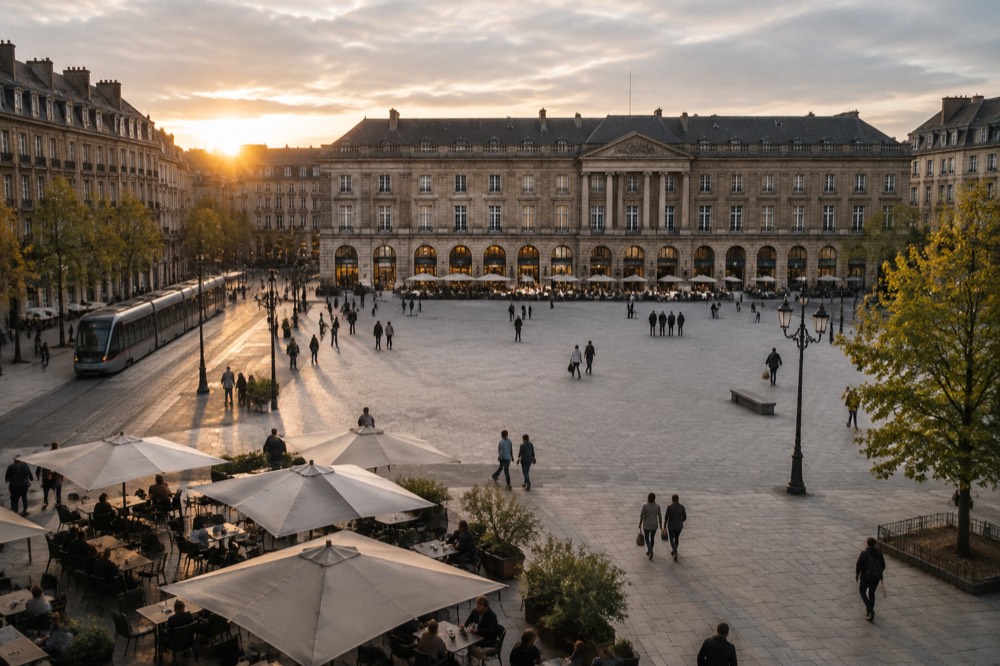
The Aubette's cultural centre also hosts temporary exhibitions, concerts, and events throughout the year. The ground-floor arcade is lined with cafes and shops, and sitting on the terrace with a view of the square is one of the classic Strasbourg experiences. The building is a reminder that Place Kleber has always been more than just an open space: it is a place where the city's cultural and commercial life intersect.
The Statue Of Kleber
The bronze statue of Kleber stands at the centre of Place Kleber, erected to honour the Strasbourg-born military commander who served during the French Revolutionary Wars. The statue depicts Kleber in uniform, holding a sword and a scroll, and is mounted on a stone pedestal bearing his name. It is a popular meeting point and one of the city's most recognisable landmarks.
Kleber rose to prominence during the Revolutionary Wars and served in the Egyptian campaign. His body was repatriated to France and buried in his hometown, and the statue was commissioned as a tribute to his legacy.
The statue's position at the very centre of the square is significant. It places Kleber at the heart of the city he served, and the pedestal's inscriptions reinforce the connection between the man and the place. The statue has survived wars and political upheavals, and it remains a focal point for civic ceremonies and commemorations. During the Christmas market, the statue is often surrounded by chalets, but it still manages to hold its own against the towering tree nearby.
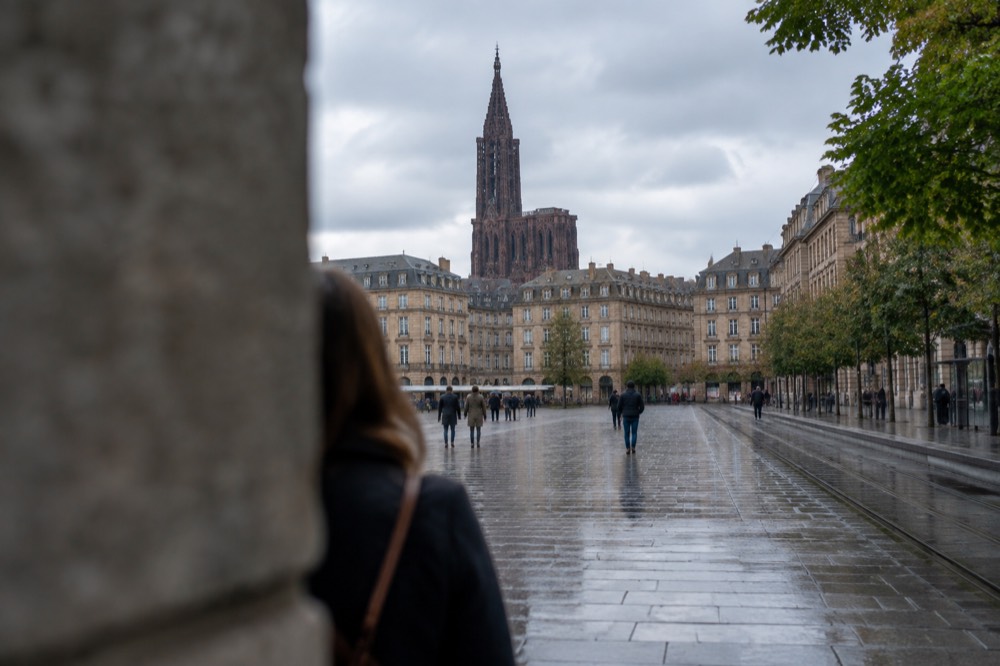
For visitors, the statue is a useful orientation point. From here, the cathedral spire is visible to the south-east, and the pedestrian streets leading to the Petite France quarter and the Strasbourg Cathedral are clearly signed. The statue is also a popular spot for photographs, especially when the square is decorated for the festive season. The bronze has developed a rich patina over the years, and the details of Kleber's uniform and expression reward a closer look.
Place Kleber At Christmas: The Grand Sapin
Place Kleber is home to Strasbourg's official Christmas tree, the Grand Sapin, a towering spruce erected each year in late November and decorated with thousands of lights. The tree is the centrepiece of the city's Christmas celebrations, with the 2025 market drawing 3.05 million visitors. It stands near the statue of Kleber and is illuminated each evening, creating a focal point for the surrounding chalets and festive activities.
The tradition of the Strasbourg Christmas tree is centuries old, with the city among the first in Europe to adopt the custom of decorating a fir tree for the holiday season. The modern Grand Sapin is a carefully selected spruce, often sourced from the Vosges mountains, and its arrival in the square is a major event in its own right. The tree is typically erected in the last week of November and remains in place until early January, with the official lighting ceremony drawing large crowds.
During the Christmas market, Place Kleber is transformed into a festive village, with dozens of wooden chalets selling crafts, gifts, and seasonal treats. The square hosts the main market hub, and the tree serves as a natural meeting point for families and groups. The atmosphere is particularly magical after dark, when the lights of the tree reflect off the neoclassical facades of the Aubette and the surrounding buildings. The 2025 market ran from 26 November to 24 December, and while the 2026 dates have not yet been published by the city, the pattern of a late-November opening and a Christmas Eve close is well established.
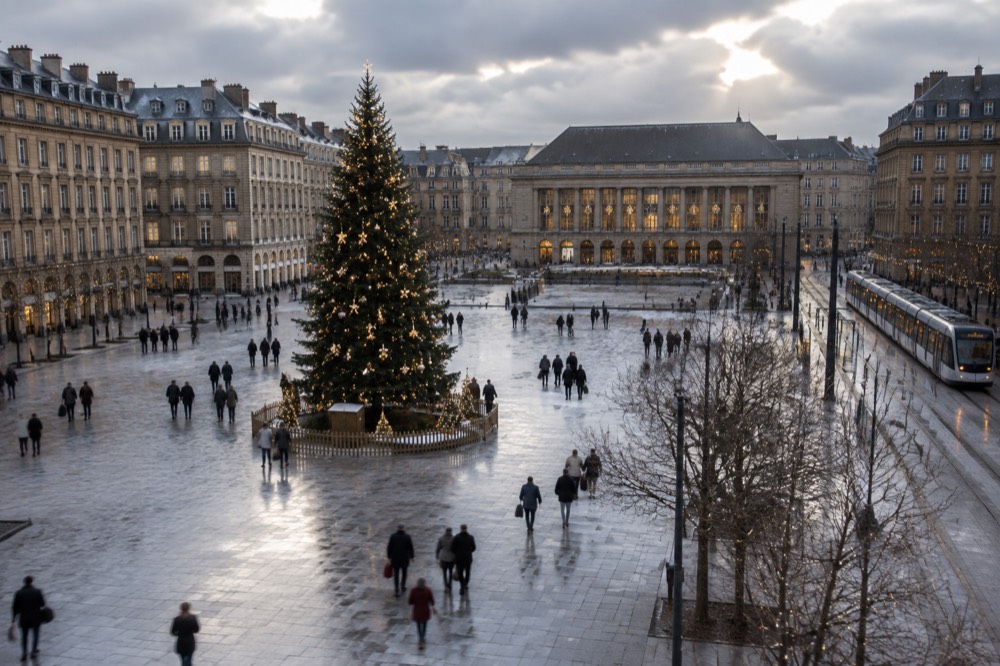
Visitors planning a trip for the Christmas season should check the official Strasbourg Christmas website for the confirmed 2026 dates, as they are typically announced in the autumn. The tree and the surrounding market are free to visit, and the square is easily accessible by tram and on foot from anywhere in the city centre. The combination of the historic setting, the towering tree, and the scent of mulled wine and gingerbread makes Place Kleber at Christmas one of the most memorable experiences in Europe.
The square is also the venue for the Christmas market's main stage, where choirs and musicians perform throughout the season. The tree itself is decorated with a different theme each year, and the lighting display is updated regularly to keep the experience fresh. For many Strasbourg residents, the lighting of the Grand Sapin marks the official start of the holiday season, and the square remains busy well into the evening hours.
Events And Markets Throughout The Year
Place Kleber hosts a wide variety of events and markets throughout the year, from the world-famous Christmas market in winter to the summer book market, the spring carnival, and regular farmers' markets. The square is also used for concerts, public screenings, and cultural festivals. The city's event calendar is published on the tourist office's website, and visitors should check ahead for specific dates.
The Christmas market is the most famous event, but Place Kleber is far from a one-season wonder. In the spring, the square hosts the Strasbourg Carnival, a colourful parade that marks the end of winter. The summer months bring the Marche aux Livres, a large second-hand book market that attracts bibliophiles from across the region. The square is also used for open-air cinema screenings and music festivals, with the neoclassical backdrop of the Aubette providing a dramatic setting.
A regular farmers' market takes place on certain days of the week, offering fresh produce, cheeses, and flowers from local producers. This market is a favourite with residents and provides a glimpse into the everyday life of the city. The square's size and central location make it an ideal venue for these events, and the city's events team works hard to keep the calendar full.
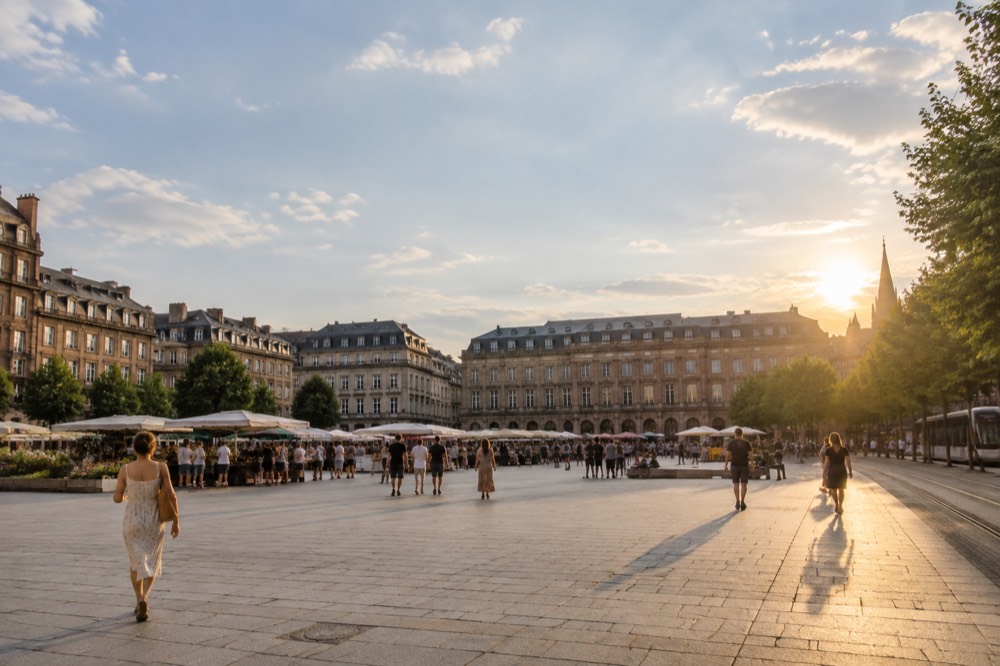
For visitors, the best approach is to check the agenda on the official Strasbourg tourism website before travelling. The square is also a popular spot for impromptu performances, from street musicians to living statues, especially during the warmer months. The combination of planned events and spontaneous entertainment means that Place Kleber rarely feels empty, even outside the peak tourist seasons.
| Event | Typical Timing | Description |
|---|---|---|
| Christmas Market | Late November to 24 December | The city's main Christmas market, with a giant tree, chalets, and festive entertainment. The 2025 edition ran 26 November to 24 December. |
| Jazzdor Festival | 6 to 15 November 2026 | Jazz festival featuring international and local artists. |
| Summer Book Market | Summer months | Large second-hand book market attracting dealers and collectors. |
| Spring Carnival | Spring | Colourful parade and festivities marking the end of winter. |
The square's role as a public forum is also evident during political and social events. Demonstrations and rallies are common, and the city has a long tradition of public debate and protest. While these events are generally peaceful, they can affect access to the square, and visitors should be aware of any planned gatherings. The city's official channels provide up-to-date information on any disruptions.
Where To Eat And Drink Near Place Kleber
Place Kleber is surrounded by a wide range of cafes, restaurants, and bars, from traditional Alsatian winstubs serving choucroute and tarte flambee to modern bistros and international cuisine. The Aubette building itself houses several cafes with outdoor terraces that offer prime views of the square, while the nearby streets of Rue des Grandes Arcades and Rue du Dome are lined with bakeries, patisseries, and casual dining options. Many establishments offer set lunch menus that provide excellent value, and reservations are recommended for dinner, especially during the Christmas market season.
The immediate vicinity of Place Kleber is one of the best places in Strasbourg to sample the local cuisine. Traditional Alsatian dishes are a highlight, and several winstubs within a short walk serve authentic versions of the region's classics. Choucroute garnie, a hearty dish of sauerkraut with sausages and cured meats, is a winter staple, while tarte flambee, a thin-crust pizza-like dish topped with creme fraiche, onions, and lardons, is a year-round favourite.
For a quick bite, the bakeries around the square offer a range of pastries and sandwiches, including the local speciality kougelhopf, a yeasted cake with raisins and almonds. The cafes on the square itself are ideal for a coffee or a glass of Alsace wine while watching the world go by. Many of these establishments have heated terraces in winter, allowing visitors to enjoy the festive atmosphere even on cold days.
The nearby Place Gutenberg and the streets leading to the cathedral also have excellent dining options, and the area around Place Kleber is well served by public transport, making it easy to explore further afield. The city's tram network connects the square to the Krutenau district, known for its student-friendly bars and restaurants, and to the Neustadt, where several high-end dining establishments are located.
How To Get To Place Kleber
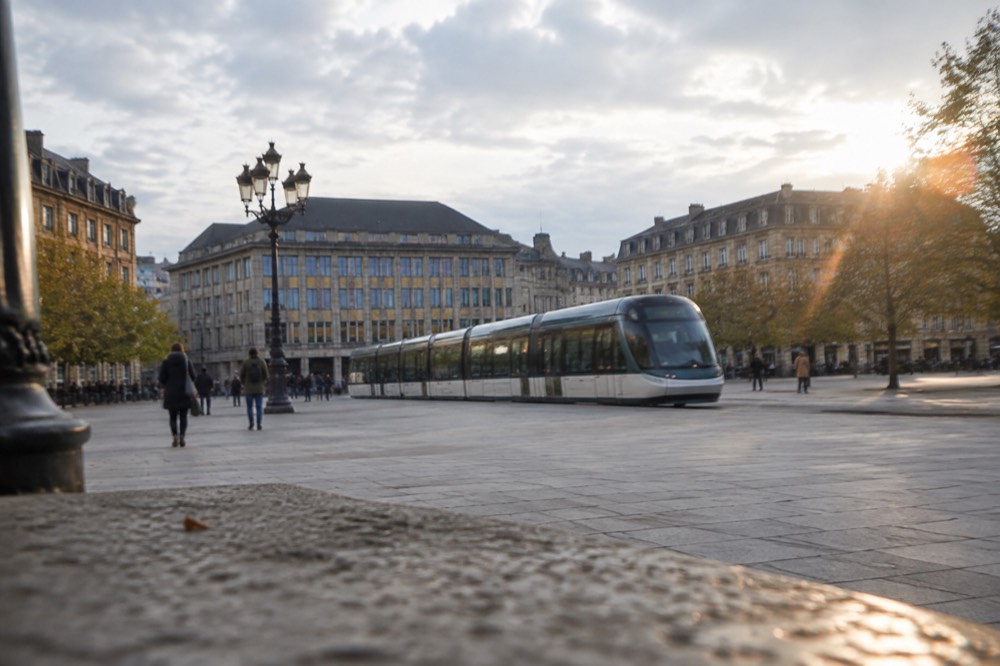
Place Kleber is in the heart of Strasbourg's Grande Île and is easily accessible on foot from anywhere in the city centre. The nearest tram stops are Homme de Fer, served by lines B, C, and F, and Broglie, served by lines B and C, both within a five-minute walk. A single tram ticket costs 1.90 EUR via the CTS app, and a 24-hour pass is 4.60 EUR, covering unlimited travel on trams and buses.
The square is entirely pedestrianised, with only trams and authorised vehicles permitted to enter. This makes it a pleasant and safe place to walk, and the surrounding streets are also largely traffic-free. Visitors arriving by train can take tram line A from the station to Homme de Fer, or simply walk straight down Rue du Maire Kuss and Rue du 22 Novembre, a straightforward route that takes about 15 minutes.
For those driving, several public car parks are located within a 10-minute walk of the square, including Parking Kleber and Parking Gutenberg. However, parking in the city centre can be expensive, and the city's park-and-ride facilities on the outskirts offer a more economical alternative, with tram connections to the centre. The city's bike-sharing scheme, Velhop, also has stations near the square, and cycling is a popular way to get around Strasbourg.
| Ticket Type | Price | Validity |
|---|---|---|
| Single ticket (CTS app/contactless) | 1.90 EUR | One journey, including transfers within one hour |
| Single ticket (on board bus) | 2.50 EUR | One journey, purchased from the driver |
| 24H Solo | 4.60 EUR | Unlimited travel for one person for 24 hours |
| 24H Trio | 10.20 EUR | Unlimited travel for 2-3 people for 24 hours |
| Alsa+ 24H EMS (includes airport train) | 4.60 EUR | Unlimited travel on CTS network plus TER train to Entzheim Airport |
The square is also the starting point for several walking tours that explore the city's history and architecture. The Astronomical Clock at the cathedral is a short walk away, and the Barrage Vauban and the Ponts Couverts are within easy reach. The central location of Place Kleber makes it an ideal base for exploring the city, and many visitors find themselves returning to the square throughout their stay.
Starting your exploration from the square. Book a free walking tour here.
What To See Nearby
Place Kleber is surrounded by some of Strasbourg's most important landmarks, all within a short walk. The cathedral, with its single spire and astronomical clock, is a 10-minute stroll away, while the Petite France quarter and its canals lie to the west. The Palais Rohan, housing three museums, is adjacent to the cathedral, and the European Parliament is a short tram ride away. The square also provides easy access to the city's main shopping streets.
The immediate vicinity of Place Kleber is rich in history and architecture. A walk to the cathedral takes you past the Maison Kammerzell, one of the most ornate half-timbered houses in the city, and the Musee de l'Oeuvre Notre-Dame, which houses a superb collection of medieval and Renaissance art. The cathedral itself is free to enter, and the platform at 66 metres offers panoramic views of the city and the Vosges mountains.
To the west, the Petite France district is a maze of narrow streets and canals, with the Barrage Vauban providing a rooftop terrace with views of the covered bridges. The area is particularly atmospheric in the early morning or late afternoon, when the light catches the half-timbered facades. The Place de la Republique, with its formal gardens and imperial architecture, is a 15-minute walk to the north-east, and the European Parliament is a short tram ride away.
For those interested in museums, the Palais Rohan houses the Musee des Beaux-Arts, the Musee des Arts Decoratifs, and the Musee Archeologique. The MAMCS, the city's modern and contemporary art museum, is also within walking distance. The city's museums are free on the first Sunday of every month, a fact worth noting for budget-conscious visitors.
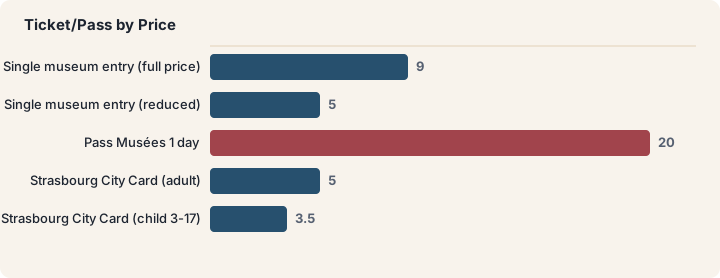
| Ticket/Pass | Price | Coverage |
|---|---|---|
| Single museum entry (full price) | 9 EUR | One municipal museum |
| Single museum entry (reduced) | 5 EUR | One municipal museum, for eligible visitors |
| Pass Musées 1 day | 20 EUR | All municipal museums for one day |
| Strasbourg City Card (adult) | 5 EUR | 7 days of discounts on museums, boat tours, cathedral platform, and more |
| Strasbourg City Card (child 3-17) | 3.50 EUR | Same discounts as adult card |
| Free first Sunday | Free | All municipal museums, first Sunday of every month |
A full-day trip to the Alsace countryside is a natural extension of a visit to Place Kleber, and the square's central location makes it easy to join a tour that takes in the medieval villages of the wine route and the hilltop castle of Haut-Koenigsbourg. The operator's live listing provides details on itineraries and availability.
The square itself is a gateway to the city's shopping district, with the Rue des Grandes Arcades and the Place des Halles shopping centre just a few minutes away. The area around Place Kleber is also well served by cafes and restaurants, making it a convenient place to take a break between sightseeing.
The city's efficient tram network means that even attractions further afield, such as the Jardin des Deux Rives and the Parc de l'Orangerie, are within easy reach. The Strasbourg City Card, priced at 5 EUR for adults and 3.50 EUR for children, offers discounts on museum entry, boat tours, and the cathedral platform, and is valid for seven days.
Practical Tips For Visiting Place Kleber
Place Kleber is a public square open at all hours and free to visit. The square is well lit at night. The nearest public toilets are in the Aubette and nearby shopping centres. The square can be crowded during the Christmas market, but its size means it rarely feels overwhelmingly busy. The surface is flat and accessible for wheelchairs and pushchairs.
The square is a popular meeting point, and the statue of Kleber is a convenient landmark for arranging to meet friends or a tour group. The Aubette's information office provides free maps and brochures, and the staff can assist with booking tours and tickets. The square is also a good place to pick up a free Wi-Fi signal, as the city offers public Wi-Fi in many central locations.
During the Christmas market, the square can become very busy, especially in the evenings and at weekends. Visitors are advised to keep an eye on their belongings and to be aware of pickpockets, as with any crowded tourist area. The market stalls accept both cash and cards, but it is a good idea to carry some small change for smaller purchases.
The square is also a good starting point for a self-guided walking tour of the city. From here, you can follow the signs to the cathedral, the Petite France quarter, and the European institutions. The city's official walking tour app provides a range of themed itineraries, and the tourist office can provide printed maps and guides.
For those planning to use public transport, the CTS app allows you to purchase tickets and plan journeys, and the 24-hour pass at 4.60 EUR offers excellent value. The tram network is reliable and frequent, and the Homme de Fer stop is a major interchange that connects to all parts of the city.
The square is also a good place to try a local speciality, such as a pretzel from a street vendor or a glass of Alsace wine from a cafe terrace. The atmosphere changes throughout the day, from the quiet of the early morning, when the square is being cleaned and the delivery vans are making their rounds, to the lively evenings, when the cafes are full and the lights of the Aubette reflect off the stone paving.
The Architecture Of Place Kleber
Place Kleber is framed by a mix of architectural styles, from the strict neoclassicism of the Aubette to the ornate facades of the buildings on the south side. The square's design reflects the urban planning ideals of its era, with a symmetrical layout and a central focal point in the statue of Kleber. The Aubette's facade is a textbook example of French neoclassical design, with its rhythmic arcades, pilasters, and central pediment, while the surrounding buildings display a range of influences, from Renaissance to Art Nouveau.
The square's history as a military parade ground is still evident in its proportions. The long, open space was designed to accommodate large gatherings, and the Aubette's original function as a guardhouse is reflected in its sober, institutional appearance. The building's later transformation added a layer of modernist history that is unique in Strasbourg, and the contrast between the exterior and the interior is one of the square's most intriguing features.
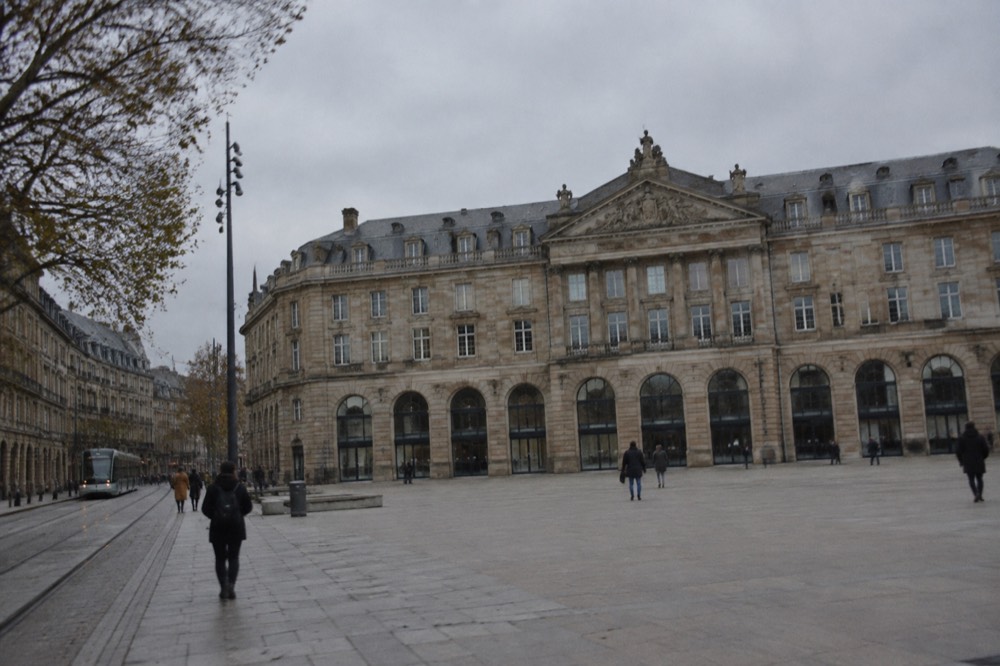
The buildings on the south side of the square are more varied in style, reflecting the different periods in which they were constructed. Some date from the square's early layout, while others were built in later centuries. The former Galeries Lafayette building, with its Art Nouveau ironwork and large windows, is a notable example of the commercial architecture of the Belle Epoque.
The square's paving and street furniture have been updated in recent years, with a focus on pedestrian comfort and accessibility. The installation of the tram line integrated the square into the city's public transport network while preserving its pedestrian character. The result is a space that feels both historic and contemporary, a fitting reflection of Strasbourg's dual identity as a city of tradition and innovation.
A Brief History Of Place Kleber
Place Kleber has been a central public space in Strasbourg since the square was laid out on the site of a former military parade ground. It was later renamed in honour of Kleber. The square has witnessed many of the city's most significant events, from the French Revolution to the return of Alsace to France, and remains a powerful symbol of Strasbourg's civic identity.
The square's origins lie in the military history of Strasbourg, which was a garrison town for much of its existence. The Waffenplatz, as it was known, was used for drills and parades, and the construction of the Aubette as a guardhouse was part of a broader effort to modernise the city's defences. The decision to turn the space into a public square was a significant one, signalling the city's shift from a military stronghold to a centre of commerce and culture.
The square was renamed Place Kleber following the erection of the statue, and it has been known by that name ever since, with the exception of the period of German annexation, when it was called Kleberplatz. The square was the scene of celebrations when Alsace was returned to France, and it was also the site of a speech by General de Gaulle marking the liberation of the city.
Today, Place Kleber is a protected historic monument, and its role as the city's main square is enshrined in local planning regulations. The square's history is told through a series of information panels that are placed around the perimeter, and the Aubette's cultural centre often hosts exhibitions that explore the square's past. For visitors, understanding the history of Place Kleber adds a layer of depth to the experience of simply standing in the space and taking in the view.
Common Questions About Place Kleber
What Is Place Kleber Known For?
Place Kleber is known for being the largest and most important square in Strasbourg, home to the neoclassical Aubette building and the city's official Christmas tree each winter. It is a central meeting point and a venue for markets, festivals, and public events throughout the year.
Is Place Kleber Free To Visit?
Yes, Place Kleber is a public square that is free to visit at any time. The square is open to pedestrians and is not gated or ticketed. The Aubette's cultural centre and tourist information office are also free to enter, though guided tours of the avant-garde rooms may have a charge.
How Far Is Place Kleber From The Cathedral?
Place Kleber is approximately a 10-minute walk from Strasbourg Cathedral, following the pedestrian streets of Rue du Dome and Rue des Grandes Arcades. The route is well signed and takes you past several historic buildings and shops.
When Is The Christmas Tree In Place Kleber?
The official Christmas tree, known as the Grand Sapin, is erected in Place Kleber each year in late November and remains in place until early January. The market ran until 24 December. The 2026 dates have not yet been published, but the pattern of a late-November opening is well established.
Can You Go Inside The Aubette?
Yes, the Aubette building is open to the public and houses shops, cafes, and a cultural centre. The restored avant-garde rooms can be visited on guided tours, which are bookable through the city's museums service.
What Tram Stops Are Near Place Kleber?
The nearest tram stops are Homme de Fer, served by lines B, C, and F, and Broglie, served by lines B and C. Both stops are within a five-minute walk of the square, and the tram network provides easy access to all parts of the city.