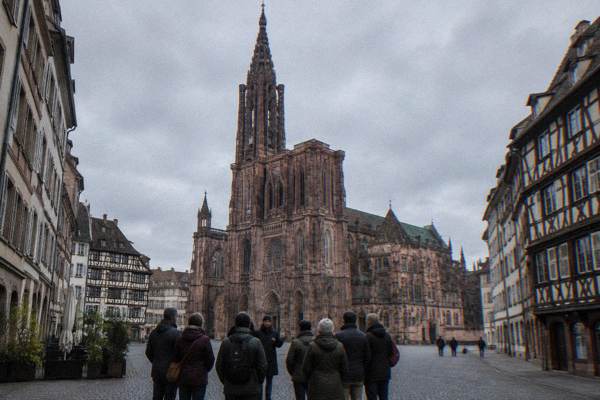
Place De La Republique Strasbourg
Place de la République sits at the heart of Strasbourg's German imperial Neustadt quarter, ringed by the Palais du Rhin, the National Theatre and the National and University Library, a short tram ride from the cathedral and Petite France.
Short answer
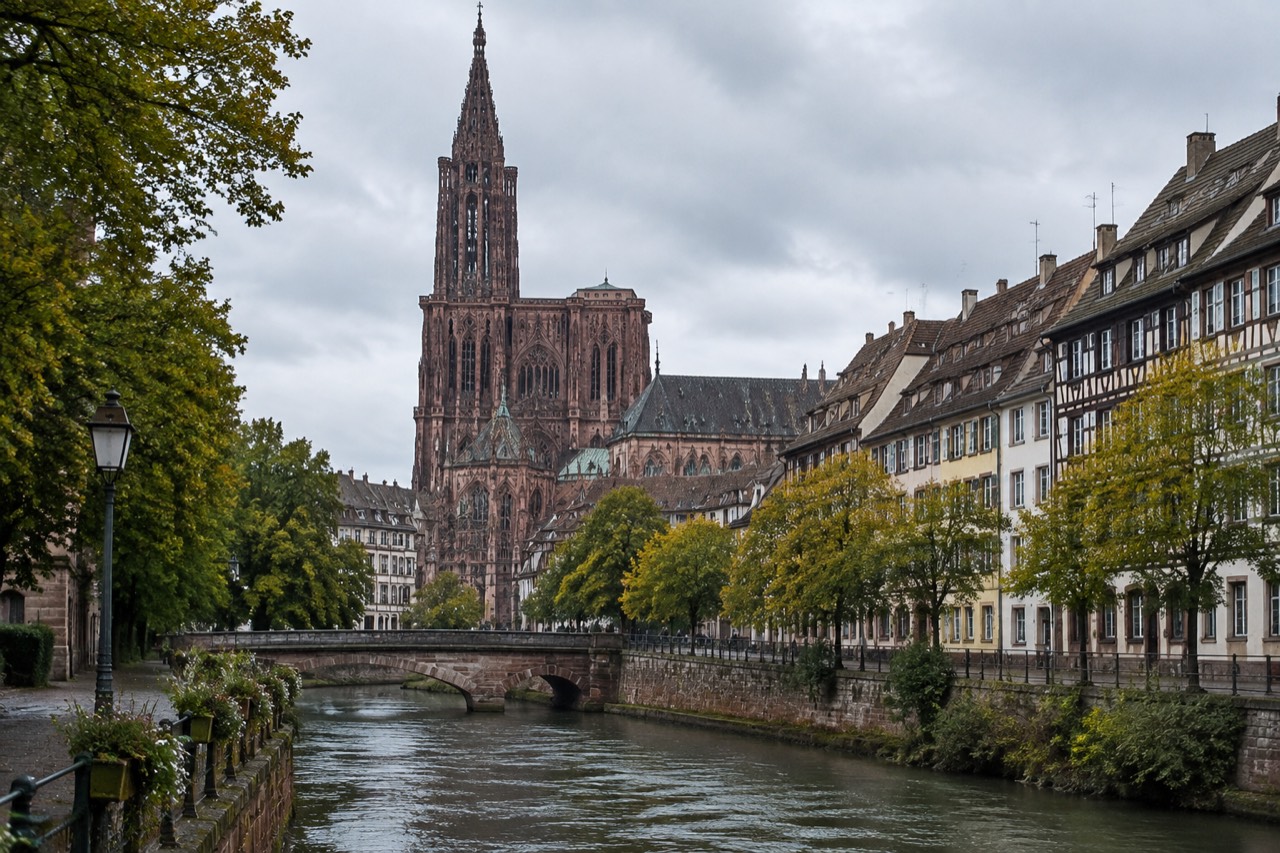
Place de la République is the grand centrepiece of Strasbourg's Neustadt, the German imperial quarter added to the UNESCO World Heritage property in 2017. The square is framed by the Palais du Rhin, the National Theatre and the National and University Library. It is a public square, open at all hours, reached by tram, and pairs naturally with the museums and the European institutions nearby.
Place de la République is the monumental centrepiece of Strasbourg's Neustadt, the German imperial quarter that stretches north and east of the old island city, in Alsace, north-eastern France. The square brings together the Palais du Rhin, the National Theatre, the National and University Library and the Préfecture of the Bas-Rhin around a broad open lawn with fountains, and it sits inside the UNESCO World Heritage property named "Strasbourg, Grande-Île and Neustadt", whose older core is the Grande Île around the cathedral. For visitors basing themselves in Strasbourg, the square works both as a landmark in its own right and as a practical hinge between the medieval city, the museum district and the European quarter further north-east.
What Is Place De La République Strasbourg?
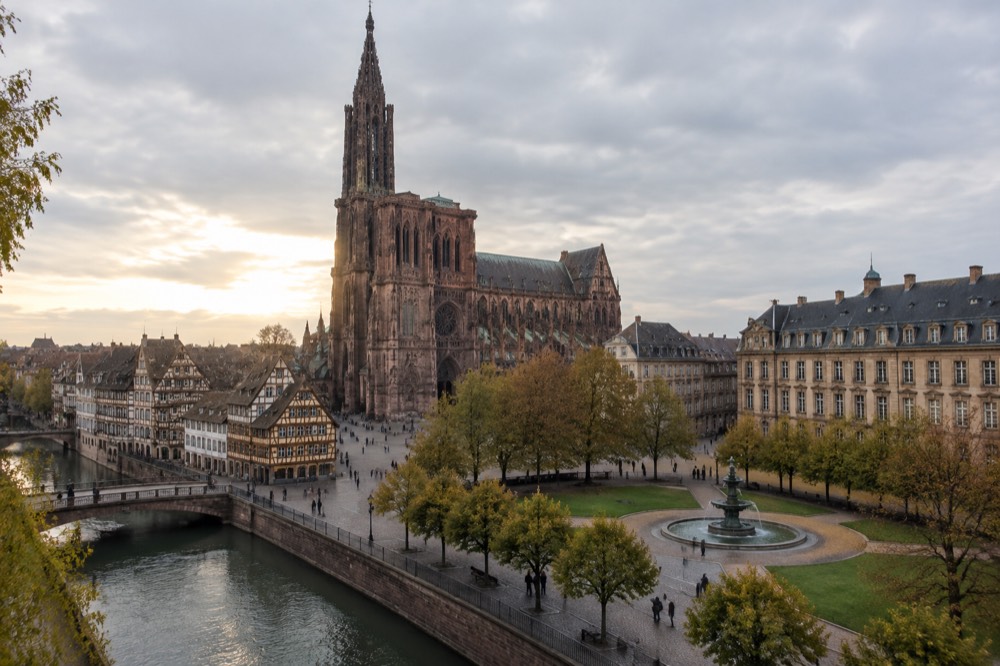
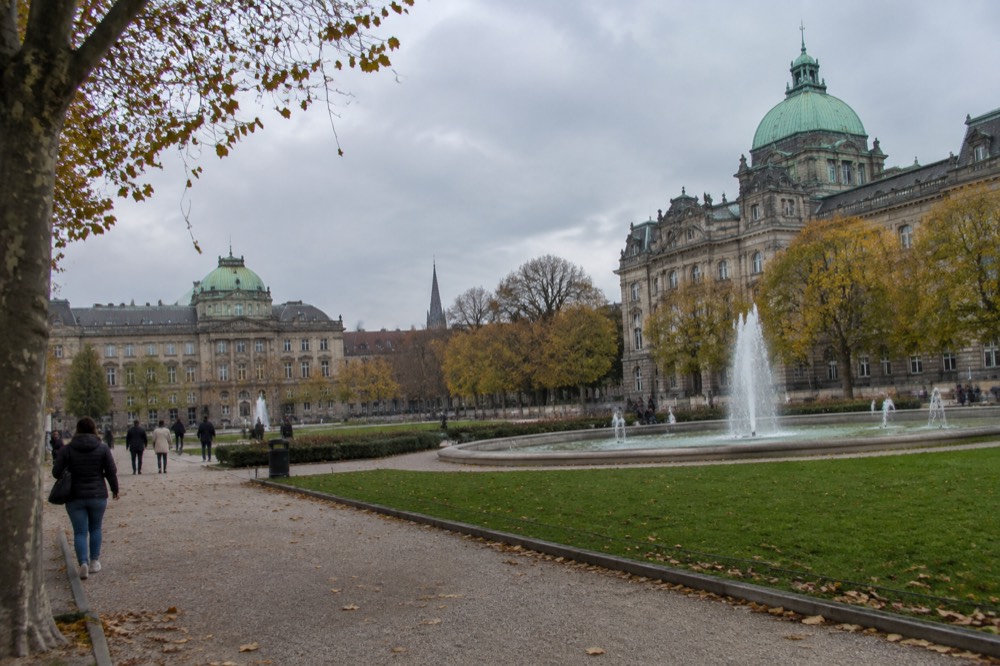
Place de la République is a grand formal square in Strasbourg's Neustadt district, created during the German imperial era as the centerpiece of a planned new quarter. Four major public buildings frame it: the Palais du Rhin, the Théâtre National de Strasbourg, the Bibliothèque Nationale et Universitaire and the Préfecture. Open around the clock, it offers lawns, tree-lined walks and ornamental water, and forms part of the UNESCO-listed Neustadt extension of the city.
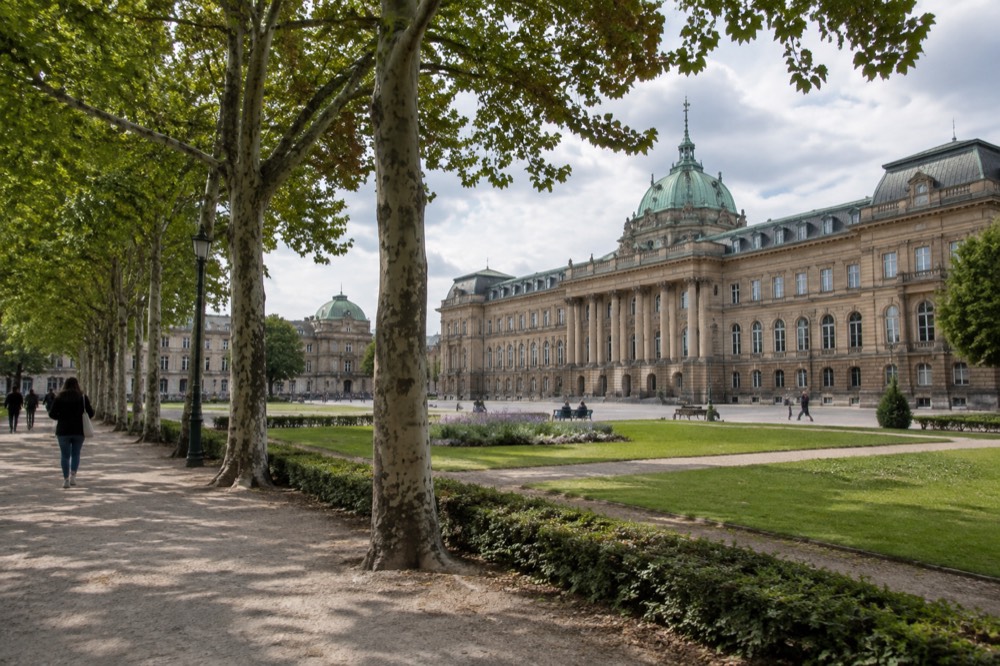
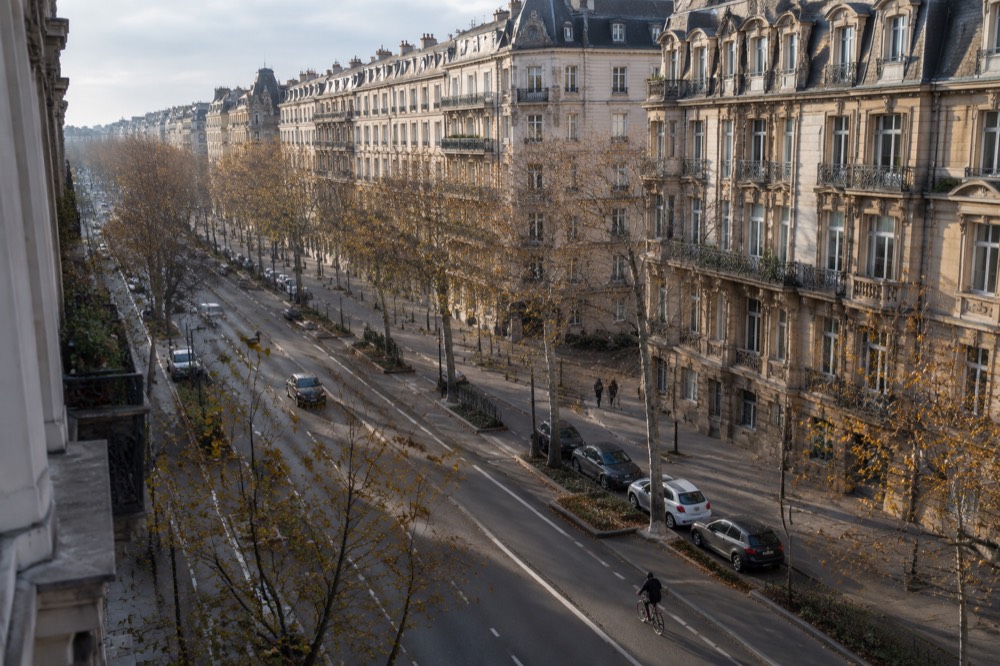
The Neustadt, whose name simply means "new town" in German, was laid out as a deliberate extension of the old city when Strasbourg belonged to the German Empire, and its broad avenues, uniform façades and formal squares are a deliberate contrast with the crooked lanes of the Grande Île. Place de la République was designed as the ceremonial heart of that quarter: a rectangular lawn framed by trees, with the Palais du Rhin closing the view at its northern end. The architecture around the square is monumental in a way the medieval city never attempts, and that contrast is precisely why the square rewards a visit.
The square's everyday life is quieter than its architecture suggests. Students cross the lawns between the library and the university, families use the green space on warm afternoons, and the fountains give the square its focus. The Préfecture, the seat of the Bas-Rhin administration, faces the Palais du Rhin across the lawn, which makes the square a working seat of government as well as a heritage showpiece. Visitors who arrive expecting a café-lined piazza in the French style will find something different: a garden square between institutional façades, with the café life concentrated a few streets away toward Place Kléber and the Grande Île.
The Strasbourg Travel Guide treats the square as a half-hour stop on a walking route rather than a destination for a whole morning, and the sections below set out how to see the buildings, how to reach the square by tram, what the surrounding museums cost, and which guided walks and day tours take in the Neustadt.
What To See Around Place De La République?
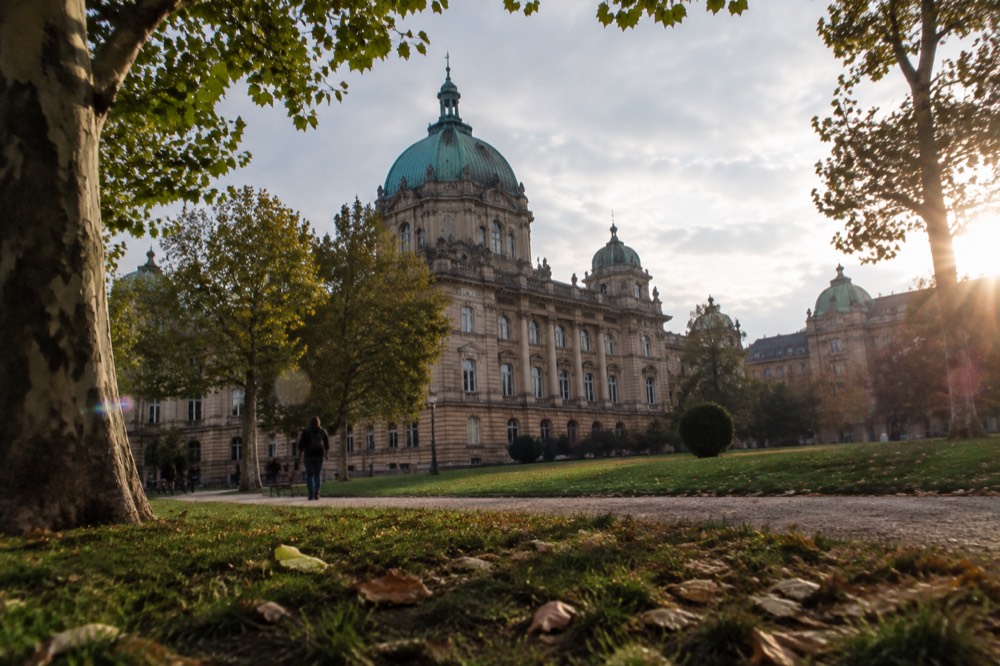
The four buildings around the square are the reason to come: the Palais du Rhin with its domed façade and formal gardens, the Théâtre National de Strasbourg on the eastern side, the Bibliothèque Nationale et Universitaire on the southern edge, and the Préfecture of the Bas-Rhin facing the palace. All are working institutions rather than visitor attractions, so the visit is an architectural one, best done from the lawns and the surrounding streets.
The square also sits directly on the walking route between the Grande Île and the European quarter, which makes it an easy pairing with the cathedral, Petite France and the Palais Rohan museums.
The Palais du Rhin is the visual anchor. Its domed silhouette closes the northern end of the square, and its formal gardens extend behind it. It is a government building rather than an open museum, so the visitor experience is the exterior, the forecourt and the gardens, not the interior. The Théâtre National de Strasbourg and the Bibliothèque Nationale et Universitaire line the eastern and southern sides with long, disciplined façades in the same imperial idiom, and the Préfecture completes the frame. Walk the full perimeter once, at an unhurried pace, and the planning logic of the quarter becomes obvious: this is a square designed to be read as a single composition.
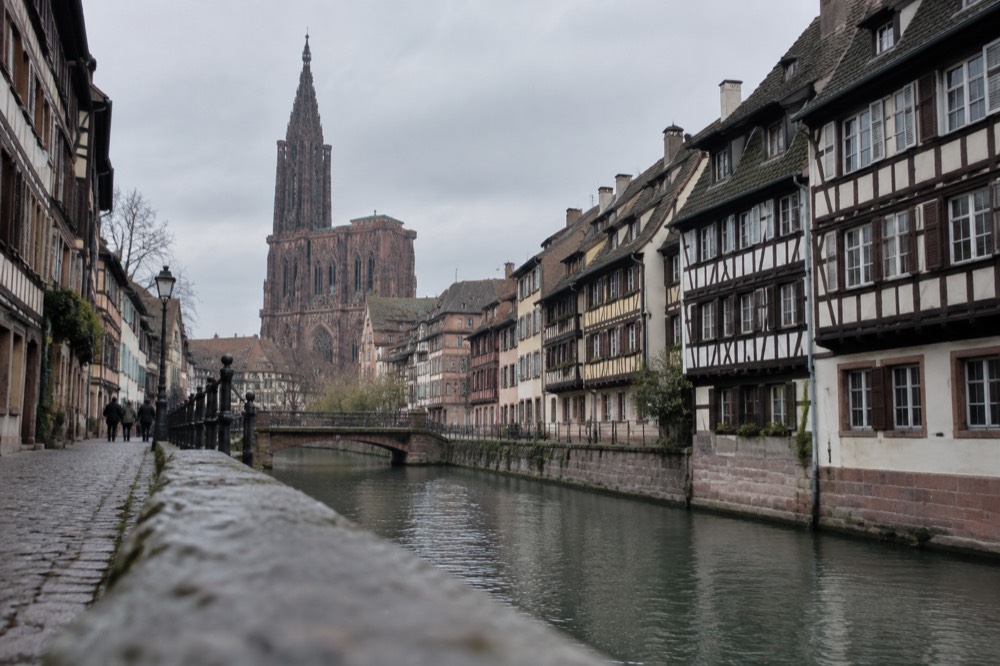
From the square, the rest of the Neustadt opens out in a grid of broad avenues. The quarter's churches, institutional buildings and apartment blocks reward an aimless half hour, and the walking route south-west across the Ill quickly reaches the museum cluster around Palais Rohan and the cathedral. A short walk further brings you to Petite France, the old river quarter of half-timbered houses and canals, which makes a natural second half of any route that starts here.
For travellers who prefer a guide to a self-directed wander, the roster below pairs the square with the city's core sights. The half-day Alsace wine tour pairs well if you are spending a morning in the city and an afternoon in the vineyards; the Petite France walk covers the old quarter on the other side of the river; and the hidden-stories walk digs into the stranger corners of the city's history.
The tours above all depart from the city centre, and the two walking options cover ground you can reach on foot from the square within a comfortable morning. If you would rather explore the Neustadt independently and save the guided time for the countryside, the Alsace wine route half-day is the pairing that works: a morning around the square and the Grande Île, then an afternoon among the vineyards. You can Check availability on the operator's live listing before you commit your itinerary.
How Do You Visit The Buildings On The Square?
You visit Place de la République's buildings mainly from outside: the Palais du Rhin, the National Theatre, the university library and the Préfecture are working institutions, and none of them operates as a drop-in museum. The square itself, its lawns and its surrounding streets are public space with no ticket and no closing time. The paid visit happens at the museums a short walk south-west, where municipal tickets are 9 EUR full price, 5 EUR reduced, and a one-day Pass Musées costs 20 EUR.
The museums are where the paid visit happens. The municipal network, which includes the Musée des Beaux-Arts and the Archaeological Museum at the Palais Rohan, the Musée de l'Œuvre Notre-Dame, the MAMCS modern art museum and the Decorative Arts and Historical museums, charges 9 EUR for a full ticket and 5 EUR reduced, with a one-day Pass Musées at 20 EUR covering the set. Every municipal museum is free on the first Sunday of the month, which is worth building an itinerary around if your dates allow it. One caution: the Musée Alsacien is closed for works until 2028, so do not route a visit there; the city's museum pages list the current state of each site.
| Ticket | Full price | Reduced price | Notes |
|---|---|---|---|
| Municipal museum single entry | 9 EUR | 5 EUR | Applies across the municipal network |
| Pass Musées, one day | 20 EUR | 20 EUR | Covers the municipal museums in one day |
| First Sunday of the month | 0 EUR | 0 EUR | Free entry at all municipal museums |
| Strasbourg City Card | 5 EUR adult | 3.50 EUR child 3-17 | 7-day discount card, not an all-inclusive pass |
The Strasbourg City Card deserves a sentence of explanation because it is often mistaken for a pass. It is a 5 EUR discount card, valid seven days, that reduces prices at museums, the cathedral platform, the astronomical clock and the river boat tours; it does not include entry. For a visitor doing several paid visits, the arithmetic can work in its favour, but read the reductions on the tourist office's shop page before buying.
The cathedral, which sits at the far end of the walking route from the square, has its own ticket structure. The platform at 66 m costs 10 EUR full and 6 EUR reduced, with children under 6 free, and the astronomical clock's daily 12:30 show costs 4 EUR, sold on the day only. The cathedral's own hours page lists the nave's visiting hours, which differ on Sundays and feast days, so check it before you plan a tight morning.
If your visit to the square is part of a first day in the city and you want the orientation done for you, a small-group walk with a local guide covers the historic centre efficiently.
Want the orientation done for you on a first day? Book a free walking tour here.
The Petite France walk above is the natural companion to a morning at the square: it covers the historic centre across the river, and its meeting point sits within walking distance of the Neustadt. Between the square, the museums and the old quarter, a full day fills itself without any transport beyond your feet and a tram ticket.
Where To Eat And Drink Near Place De La République?
The immediate square is institutional rather than gastronomic, with the café and restaurant life concentrated a short walk away around the university streets, the Krutenau quarter to the south-east, and the Grande Île across the river. The Krutenau, Strasbourg's old student quarter, holds winstubs and small independent kitchens within an easy walk of the library. Expect Alsatian standards: tarte flambée, choucroute, baeckeoffe and riesling by the glass.
The winstub, the Alsatian tavern format, is the thing to seek out near the square. These are small rooms with wooden interiors, short menus and local wines, and the Krutenau has a denser spread of them than the more touristed streets near the cathedral. The classic dishes travel with the format: tarte flambée, the thin crème fraîche and bacon tart that arrives on a wooden board; choucroute, the sauerkraut platter; and baeckeoffe, a slow-cooked meat and potato dish. Riesling, pinot blanc and crémant d'Alsace are the local pours, and the vineyards that produce them are close enough to the city that a half-day among them is a realistic add-on.
For the wine itself, the pairing is direct: the Alsace wine route runs from the city's outskirts south through a string of villages, and the half-day wine tour from Strasbourg is the roster's most efficient way to taste where the city's wine comes from. It is worth checking availability for your dates early if you are visiting in the December market period, when the city fills up and guided departures are in demand.
| Area | What it offers | Who it suits | When to go |
|---|---|---|---|
| Krutenau, south-east of the square | Winstubs, student cafés, small kitchens | Travellers wanting local character close to the square | Lunch and early evening |
| Grande Île around the cathedral | Widest choice, biggest crowds | First-time visitors ticking the classics | Midday and evening |
| Place Kléber and rue des Grandes Arcades | Chain and independent cafés, shopping streets | A quick stop between sights | Anytime |
| Neustadt avenues | Quieter bakeries and lunch spots | Visitors staying in the quarter | Weekday lunches |
The square's own edges are not foodless, but the memorable plates sit a few streets away. A practical rhythm is a morning at the square and the Neustadt, lunch in the Krutenau, and the afternoon in the Grande Île with the cathedral and the museums, dinner wherever the day's walking has taken you.
How Do You Get To Place De La République?
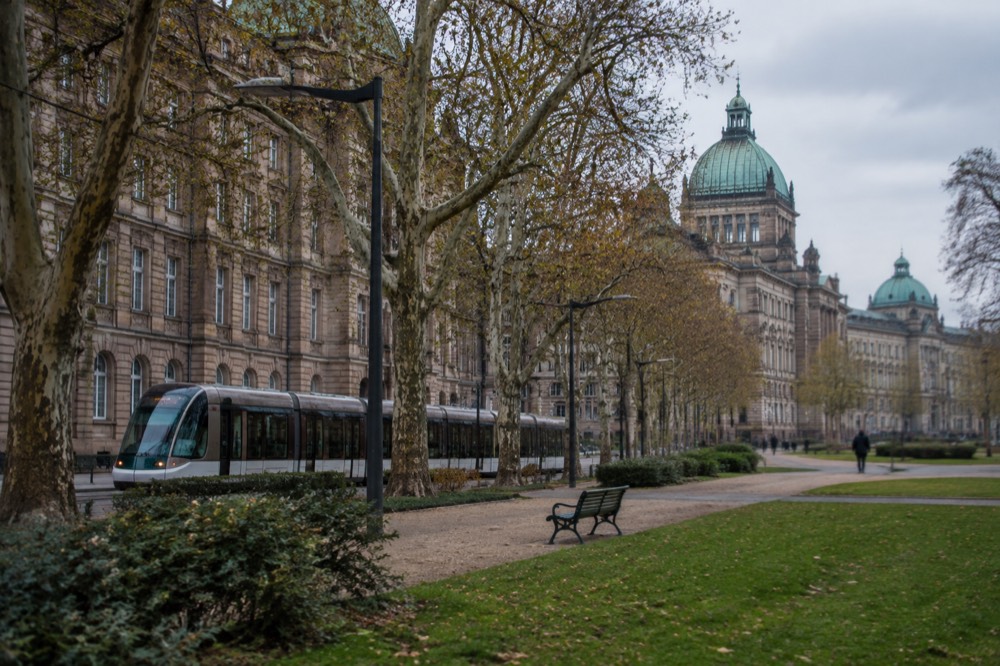
Place de la République is reached by tram on Strasbourg's CTS network, with stops on the lines that serve the Neustadt and connect the station, the Grande Île and the European quarter. A single ticket costs 1.90 EUR bought through the Badgéo card, the CTS app or contactless payment, or 2.50 EUR bought on board the bus. A 24-hour Solo pass costs 4.60 EUR and a 24-hour Trio pass for two to three people costs 10.20 EUR.
The tram is the city's spine. CTS tickets are cheapest bought before boarding: 1.90 EUR via the Badgéo card, the CTS app or contactless bank card, against 2.50 EUR from the driver. For a day of sightseeing the 24-hour Solo at 4.60 EUR pays for itself quickly, and the Trio at 10.20 EUR covers a family or a group of two to three. The CTS fare page lists the current ticket set and the network map, and the tram lines that stop beside the square are shown on every station board, so the practical task is simply knowing your ticket before you board.
| CTS ticket | Price | Where to buy | Notes |
|---|---|---|---|
| Single | 1.90 EUR | Badgéo, CTS app, contactless | Cheapest single option |
| Single, on board bus | 2.50 EUR | From the driver | Tram platforms have no on-board sale |
| 24h Solo | 4.60 EUR | App, machines | One person, 24 hours |
| 24h Trio | 10.20 EUR | App, machines | Two to three people travelling together |
| Airport combined ticket | 4.60 EUR | Station and airport | Train shuttle plus city transport |
Arriving from further afield, the practical anchors are these. The train shuttle between Strasbourg airport and the station runs up to five trains an hour and takes 8 minutes, with a combined ticket covering the shuttle and city transport at 4.60 EUR. From Paris, the TGV covers the distance in under two hours, though exact timetables and fares should be checked on SNCF Connect before booking. Once you are at the station, the square is a short tram ride or a walk through the Neustadt's avenues.
On foot, the square sits on a natural line between the Grande Île and the European quarter, so many visitors never plan a dedicated trip there at all: they pass through it between the cathedral and the European Parliament, which is a perfectly good way to see it. Cyclists will find the quarter's broad avenues among the more comfortable riding in the city, and the riverside route along the Ill connects the square's surroundings to Petite France and the covered bridges without traffic.
When Is The Best Time To Visit The Square?
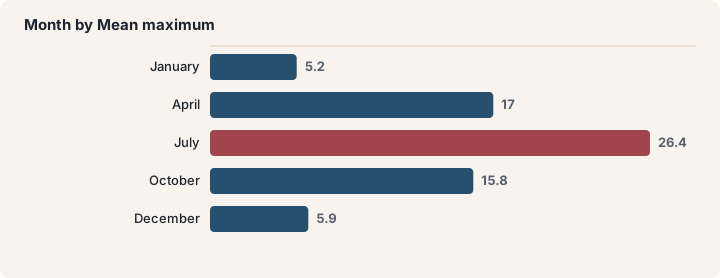
The square is at its best in late spring through early autumn, when the lawns are in use and the semi-continental climate is at its warmest: Meteo-France 1991-2020 normals for Strasbourg give a mean July maximum of 26.4 C against 5.2 C in January, with 635.7 mm of rain spread over 112.3 rain days a year. December brings the Christmas market period, when the city is at its busiest. The square itself is open year-round.
The climate table matters more in Strasbourg than in Mediterranean France because the seasons are sharply drawn. Summer days average a 26.4 C maximum in July and 26.1 C in August, warm enough for the lawns to fill; winter brings a January mean maximum of 5.2 C and a mean minimum of -0.2 C, cold enough that the visit becomes a brisk circuit rather than a sit-down. Rain falls somewhere in most months: December averages 10.2 days with a millimetre or more, and May is the wettest month on the normals at 77.2 mm.
| Month | Mean maximum | Mean minimum | Rain days |
|---|---|---|---|
| January | 5.2 C | -0.2 C | 9.1 |
| April | 17.0 C | 5.7 C | 8.6 |
| July | 26.4 C | 14.9 C | 10.4 |
| October | 15.8 C | 7.2 C | 9.6 |
| December | 5.9 C | 0.8 C | 10.2 |
The Christmas period deserves a special note because it changes the character of the whole city. The market's usual pattern opens in the last week of November and runs to 24 December, with last year's edition running 26 November to 24 December 2025 and drawing 3.05 million visits; the city's Christmas site states that the dates and programme for 2026 are still being finalised, so confirm them there before you book anything. During those weeks the Grande Île is crowded from late morning onward, and the Neustadt around the square is a useful breath of comparative calm within walking distance of the lights.
Photographers should note the square's orientation: the Palais du Rhin's façade faces the lawn from the north, so morning light strikes the library and theatre sides while late afternoon warms the palace end. The fountains and the tree canopy give foreground interest in every season, and the broad lawn means you can work the composition from several angles without crossing traffic.
How Does Place De La République Compare To Place Kléber?
Place de la République is the Neustadt's ceremonial square: institutional, green, planned and quiet, framed by government and university buildings. Place Kléber, in the Grande Île, is the city's commercial and gathering square, lined with shops and the Christmas market's central tree, and carrying the everyday foot traffic of the city centre. The two squares are different experiences a short distance apart, and the contrast between them is the clearest single illustration of Strasbourg's two architectural eras.
Place Kléber sits at the commercial heart of the Grande Île, surrounded by the shopping streets that run toward the cathedral, and it hosts the Christmas market's central attractions each December. Its scale is civic rather than monumental, and its life is retail, events and passing crowds. Place de la République, by contrast, was built as a statement: a formal lawn, a palace, a theatre and a library arranged as one composition, with the Préfecture completing the set. One square is where the city shops; the other is where the empire, and later the state, showed its face.
| Square | District | Character | Best for |
|---|---|---|---|
| Place de la République | Neustadt | Institutional, green, monumental | Architecture, quiet, photography |
| Place Kléber | Grande Île | Commercial, busy, civic | Shopping, events, Christmas market |
| Place Gutenberg | Grande Île | Smaller, café-lined | A rest stop between sights |
| Place du Château | Grande Île | Cathedral forecourt | The astronomical clock and platform visit |
The practical advice is to see both, in that order or the reverse, on the same walk. A route from the cathedral north-east through the Neustadt to the square, or from the square south-west to the cathedral, takes in the full architectural range of the city in under an hour of walking, and both squares have tram stops within a minute or two. Visitors with only a river-cruise stop in Strasbourg should prioritise the Grande Île side and treat the Neustadt as a stretch goal; the cruise-stop guide on this site covers that trade-off in detail.
Which Guided Tours Include The Neustadt And The Square?
The walking tours on this site's roster cover the Neustadt in varying depth: the historic-centre walks focus on the Grande Île, the European-quarter walks start from the institutions north-east of the square, and the hidden-stories walk ranges across the city's stranger corners. A guided walk is the efficient choice for a first visit, because the Neustadt's story is easier to absorb from a guide than from a map. Prices and ratings render from the listings below rather than being quoted here.
The hidden-stories walk is the one to pick if the Neustadt's layered history is what draws you, because its brief is the city's overlooked narratives rather than the standard highlights. The European district walk covers the institutions whose quarter begins where the Neustadt ends. All operate with small groups and free cancellation, which makes them low-commitment additions to an itinerary.
The historic-centre walk below is the generalist option, covering the old town's core with a local guide, and it pairs naturally with a morning at the square because its route begins a short walk away.
For visitors whose interest in the Neustadt is architectural rather than historical, the segway and bike tours on the roster cover more ground per hour than any walking option, and the broad avenues of the German quarter are where those formats are at their most comfortable. The bike tour with a local guide is the roster's established option, and the segway tours cover the European quarter and the riverbanks.
The half-day wine tour below is the countryside pairing: it leaves the city for the vineyards that supply the winstubs a short walk from the square, and it fits an itinerary that spends its morning on the Neustadt's avenues and its afternoon among the vines.
The wine tour above is the natural bookend to a city morning: start at the square in the imperial quarter, walk south-west through the Neustadt's avenues, and finish with a guided afternoon in the vineyards that produce the riesling and crémant poured across the city. Between the two, a full day of Strasbourg's range is complete.
What Is Near Place De La République For A Longer Stay?
Within walking range of the square sit the European institutions to the north-east, the Parc de l'Orangerie beyond them, the museum cluster and cathedral across the river to the south-west, and the riverside walks along the Ill that connect them all. Travellers staying three days or more can add the Alsace wine route, the Haut-Koenigsbourg castle and the Black Forest, all of which the roster reaches on organised day trips.
The European quarter begins where the Neustadt's avenues end. The European Parliament, the Council of Europe and the European Court of Human Rights sit in a line north-east of the square, and the Parlamentarium's visitor offer runs Mondays to Fridays from 09:00 to 18:00 and Saturdays with a split morning and afternoon schedule outside plenary weeks, with an airport-style security check at entry; hours differ during plenary weeks, so check the European Parliament's visiting page before setting out. The Parc de l'Orangerie beyond the institutions is the city's classic park, with lawns, a small lake and a stork enclosure, and it makes a green half hour after the institutional architecture.
| Nearby sight | Direction from the square | What it is | What to check first |
|---|---|---|---|
| European Parliament and Parlamentarium | North-east | EU institution with visitor centre | Visiting page for plenary-week hours |
| Parc de l'Orangerie | North-east, beyond the institutions | Historic city park | Opening arrangements on the city's pages |
| Palais Rohan museums | South-west, across the Ill | Three museums in one palace | 9 EUR full, 5 EUR reduced, free first Sundays |
| Cathedral and astronomical clock | South-west, Grande Île | Gothic single-spire cathedral | Platform 10 EUR, clock show 4 EUR at 12:30 |
| Petite France | South-west, riverside | Half-timbered river quarter | Nothing to book, open streets |
For the countryside, the day tours on the roster cover the ground efficiently. The Best Of Alsace historical day trip and the medieval villages and wine tasting trip both run long days into the wine route and the Vosges foothills, the Colmar and Haut-Koenigsbourg tour covers the southern highlights, and the Black Forest trips cross the border into Germany for a different register of scenery. Basel, Colmar and the wine villages each have their own pages on this site with what to check before travelling.
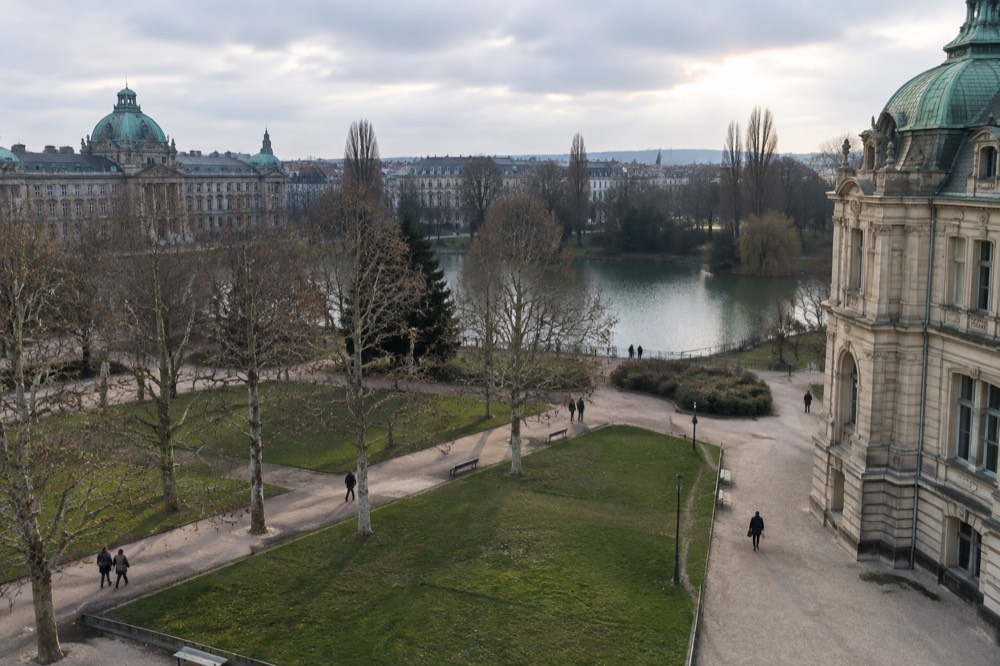
Whether the square ends up as your morning landmark, a pass-through between the cathedral and the European quarter, or the reason you booked a hotel in the Neustadt, it earns its place on any Strasbourg itinerary. The buildings around the lawn tell the city's imperial chapter in a single glance, the tram and the walking routes tie it to everything else, and the museums, winstubs and vineyards that complete a Strasbourg visit all sit within easy reach of its lawns.
Common Questions About Place De La République Strasbourg
Is Place De La République Free To Visit?
The square itself is public open space with no ticket and no closing time, and strolling the lawns and surrounding streets costs nothing. The buildings around it are working institutions rather than ticketed attractions. The paid visits nearby are the municipal museums at 9 EUR full price, 5 EUR reduced, free on the first Sunday of the month, and the cathedral's platform at 10 EUR.
Which Tram Lines Stop At Place De La République?
The square has tram stops served by the lines running through the Neustadt between the station, the city centre and the European quarter. A single CTS ticket costs 1.90 EUR bought via the Badgéo card, the CTS app or contactless, or 2.50 EUR on board the bus, and a 24-hour Solo pass costs 4.60 EUR. The CTS network map shows the exact stop locations.
How Far Is Place De La République From The Cathedral?
The square sits in the Neustadt, north-east of the Grande Île where the cathedral stands, and the two are connected by a straightforward walk through the quarter's avenues and across the Ill. The route is flat and passes through the museum district around Palais Rohan. The tram covers the same trip in a few stops.
Can You Enter The Palais Du Rhin?
The Palais du Rhin is a government building rather than an open museum, so the visit is its exterior, forecourt and formal gardens. There is no routine public interior visit to plan around. The square's other buildings, the National Theatre, the university library and the Préfecture, are likewise working institutions best appreciated from the lawn and the surrounding streets.
Is Place De La République Worth Visiting In December?
Yes, with a caveat about crowds. The Christmas market's usual pattern opens in the last week of November and runs to 24 December, and the 2025 edition drew 3.05 million visits to the city, so the Grande Île is busy from late morning onward. The square's lawns and the Neustadt around it stay comparatively calm, and the walk between the market lights and the imperial architecture is one of the city's better December experiences. Confirm the 2026 dates on the city's Christmas site before booking.
What Is The Best Guided Tour That Covers The Neustadt?
The hidden-stories small-group walk ranges across the city's overlooked narratives and suits the Neustadt's layered history best, while the European district walk covers the institutions at the quarter's north-eastern end. Both, along with the historic-centre walks, appear in the tour listings on this page with their current prices, ratings and durations, and all come with free cancellation.