European Parliament Strasbourg
The European Parliament sits on the River Ill in Strasbourg, in Alsace, north-eastern France, and its visitor offer, the Parlamentarium Simone Veil, is open to the public on weekdays and Saturdays outside plenary weeks. Here is how the visit works, what to check before you go, and how to build a day around it.
Short answer
The European Parliament meets in Strasbourg, in Alsace, north-eastern France, and the public visitor space, the Parlamentarium Simone Veil, opens Mon-Fri 09:00-18:00 and Sat 09:30-12:00 and 13:00-18:00 outside plenary weeks, with an airport-style security check. Plenary-week hours differ, so confirm on the official page. The surrounding European Quarter pairs well with walks, boat tours and the city centre.
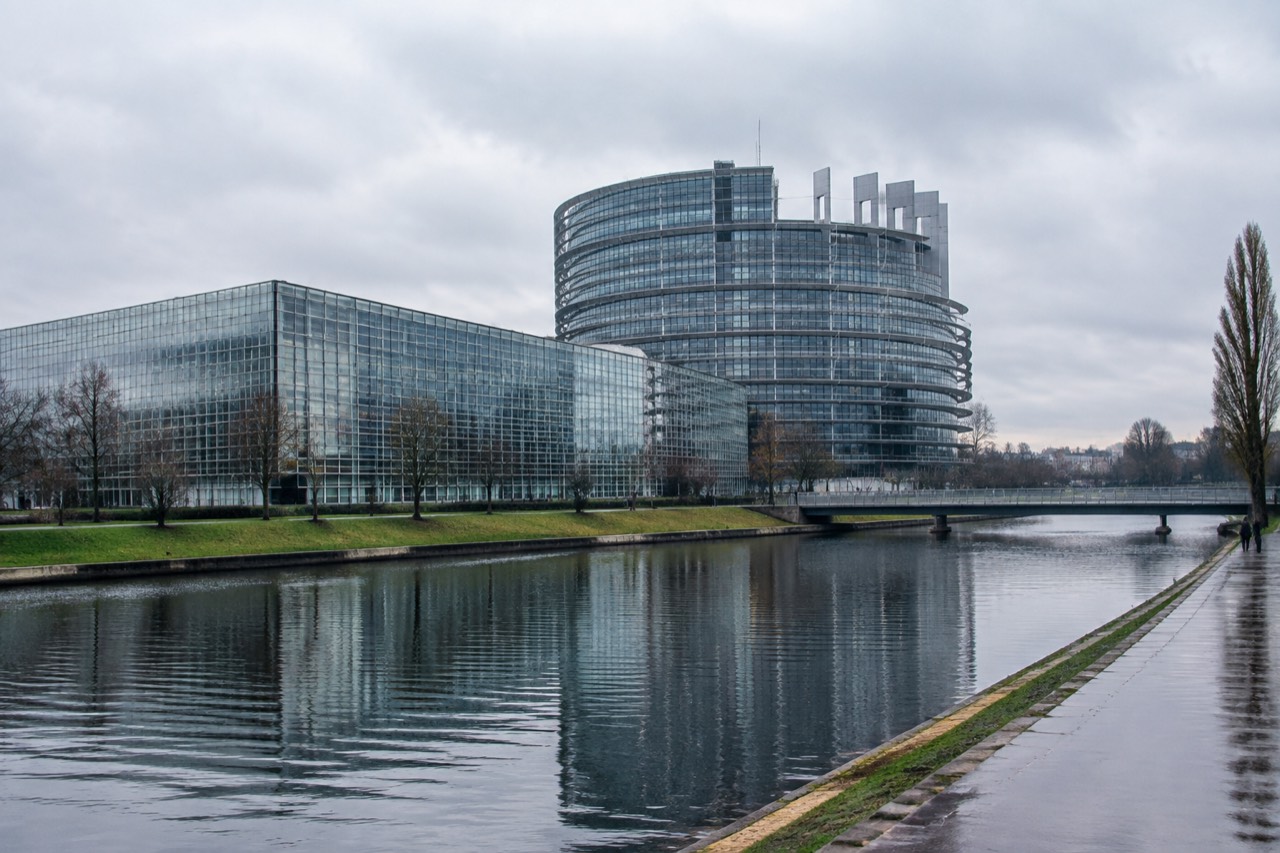
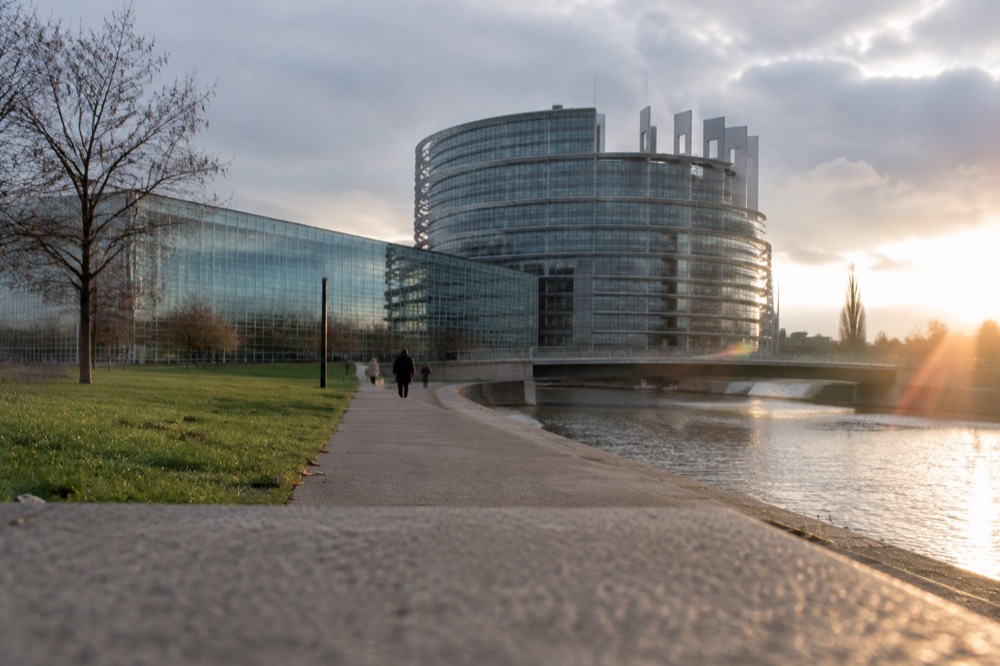
The European Parliament in Strasbourg, in Alsace (Bas-Rhin, Grand Est), north-eastern France, stands beside the River Ill a short hop from the German border, and it is the one Strasbourg sight whose whole purpose is political rather than medieval. The city holds the parliamentary seat, the building dominates its own quarter of modern architecture, and the public visitor offer, the Parlamentarium Simone Veil, gives the building an interior worth queueing for. This guide sets out what the Parliament is, how a visit actually works, what the security check involves, and how to fold the European Quarter into a wider day that takes in the half-timbered old town across the water.
What Is The European Parliament In Strasbourg?
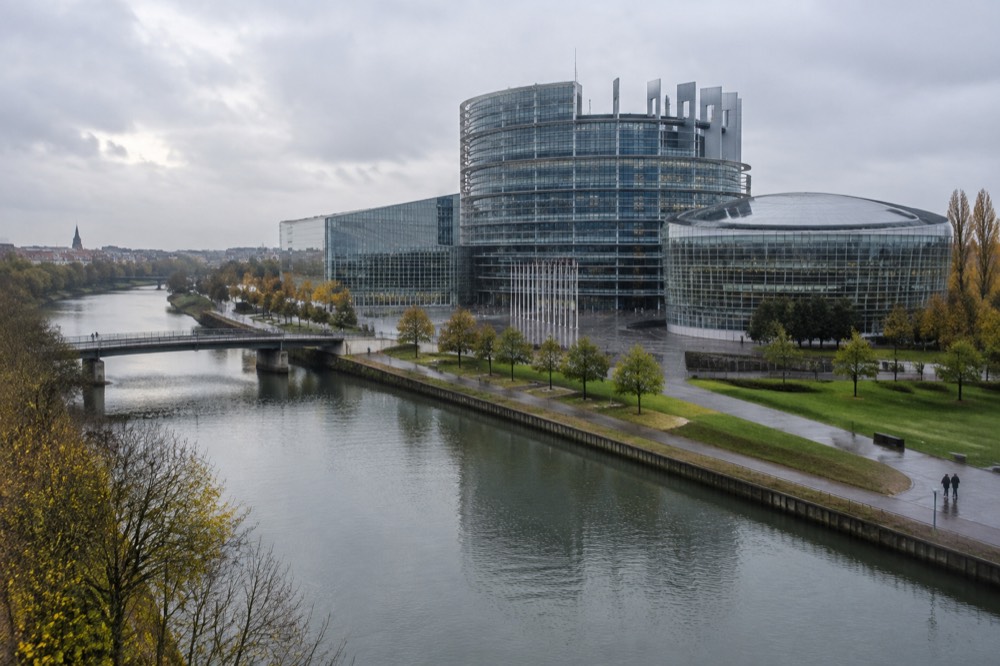
The European Parliament is the directly elected legislative assembly of the European Union, and Strasbourg, in Alsace, north-eastern France, hosts its plenary seat: the chamber where the full house of members gathers for plenary sessions in a building on the River Ill, in a district of modern institutions east of the old centre. The city shares the institution with Brussels and Luxembourg, and that shared arrangement is why the Strasbourg building sits empty for much of the year and fills with members, staff and press when a session is called. For a visitor, the distinction matters because the building you photograph from outside is a working institution, not a museum, and the parts open to the public are organised around that fact.
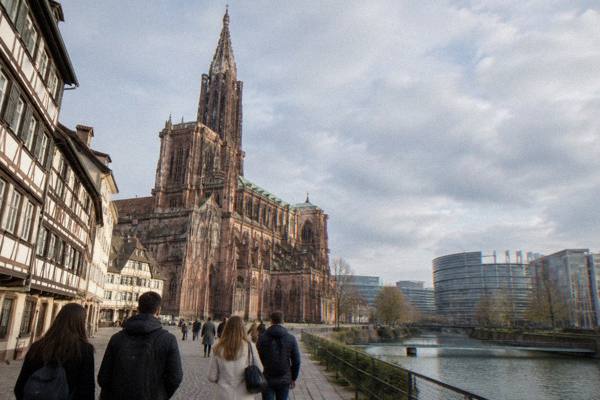
The quarter around it is a deliberate piece of urban planning. Wide lawns, water channels and modern institutional architecture replace the medieval lanes of the Grande Île, and the whole district reads as a statement: Strasbourg is a border city whose identity has been disputed across centuries and is now anchored in shared European institutions. The Parliament is the largest and the most visible of them, and its silhouette, all glass and steel, is the image that ends up in photographs next to the cathedral's single spire.
The Parliament sits among neighbours that belong to the same institutional family, and understanding the cast of characters helps a visit make sense. The Strasbourg Travel Guide covers each of them in depth, and the short version is this: the Parliament legislates, the Council of Europe and the European Court of Human Rights sit nearby but belong to a separate, older organisation, and all three clusters within walkable distance of one another. The European Quarter area guide maps the whole district if you want the geography before the politics.
For context on the institutional geography, the question of where the European Parliament's headquarters sits is answered separately on this site, and the short answer for planning purposes is that Strasbourg holds the plenary seat while much of the day-to-day committee work happens elsewhere. That asymmetry is exactly why the building's public hours shift between plenary and non-plenary weeks, which is the single most important thing to check before you set out.
Can You Visit The European Parliament Building?
Yes, the public can visit, but the visit is organised around the Parlamentarium Simone Veil, the Parliament's visitor centre, rather than an unrestricted wander through the chamber: outside plenary weeks it opens Mon-Fri 09:00-18:00 and Sat 09:30-12:00 and 13:00-18:00, and entry passes an airport-style security check, so arrive with that in mind. During plenary weeks the hours change and the building fills with members and staff, so the official visiting page is the place to confirm the day's schedule before you travel. The experience is an exhibition-style visitor space, not a guided tour of the debating chamber, and that distinction shapes what you get.
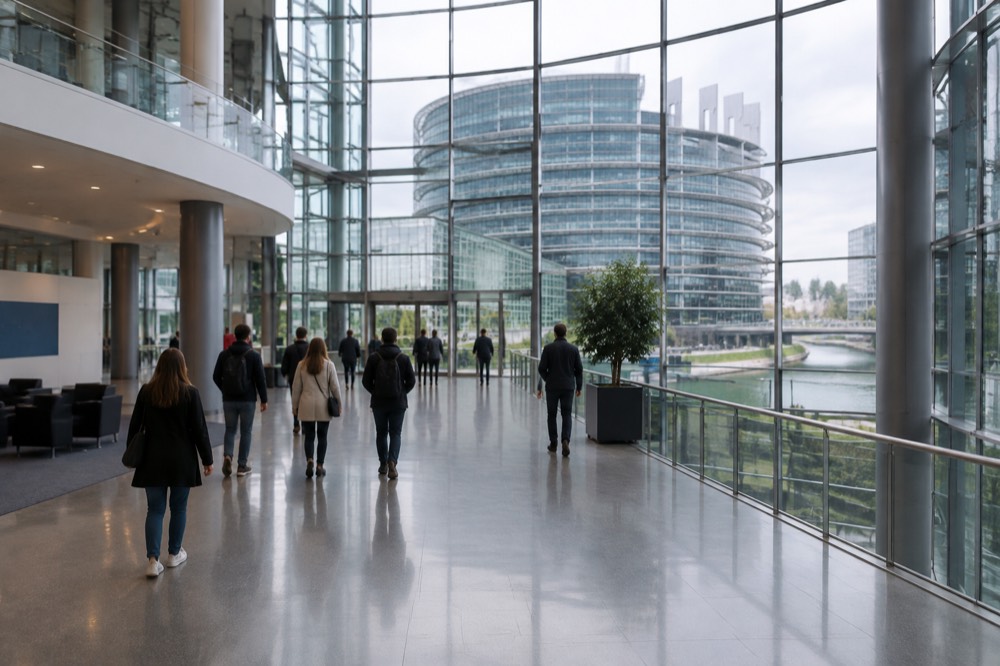
The security check deserves its own sentence because it changes how you pack. Like an airport, it means screening bags and walking through a detector, so the advice is the same as for any secured building: travel light, allow a few extra minutes, and check the official page for what you cannot bring in. Groups and school visits have their own arrangements, and the page lists the current rules for each category of visitor, so a quick read before you leave the hotel saves a wasted walk.
The visitor space itself is built around the story of European integration and the Parliament's role in it, told through interactive displays rather than artefacts behind glass. It is the kind of exhibition that rewards an hour or so, and it works for a wide age range because the displays are visual and the building is fully modern in its accessibility. If your French is stronger than your English or the reverse, the displays handle both, and the staff at the desk can point you to the language options.
Pairing the Parliament with the rest of the city is where a guided format earns its keep, because the European Quarter is a district that explains itself badly on foot alone.
A guided walk through the quarter adds the layer the buildings themselves do not print on their walls: what each institution does, why they sit in Strasbourg at all, and how the district's architecture encodes the politics. The self-guided alternative works too, but plan a route first, because the quarter is bigger than it looks on a map and the signage is aimed at officials, not tourists.
To hear those stories from a guide, book a free walking tour here.
How To Plan A Visit To The Parlamentarium Simone Veil
Plan the Parlamentarium around its non-plenary hours, Mon-Fri 09:00-18:00 and Sat 09:30-12:00 and 13:00-18:00, arrive early enough to clear the airport-style security check without rushing, and confirm the day's status on the official European Parliament visiting page, because plenary weeks change everything and the page states the current arrangements. A weekday morning outside a plenary week is the calmest pattern: the building is working but not full, and the visitor space has room to breathe.
| Period | Days | Hours |
|---|---|---|
| Outside plenary weeks | Mon-Fri | 09:00-18:00 |
| Outside plenary weeks | Sat | 09:30-12:00 and 13:00-18:00 |
| Plenary weeks | Varies | Check the official page |
The Saturday pattern deserves a note: the morning session closes at midday and reopens at 13:00, so a Saturday visit is really two possible visits, and the afternoon block is the longer one. Sunday does not appear in the published hours, so treat the weekend as Saturday-only for planning. None of this is awkward, it simply rewards a traveller who checks the page the evening before rather than trusting a printed guidebook, which is the habit this site recommends for every secured institution in the city.
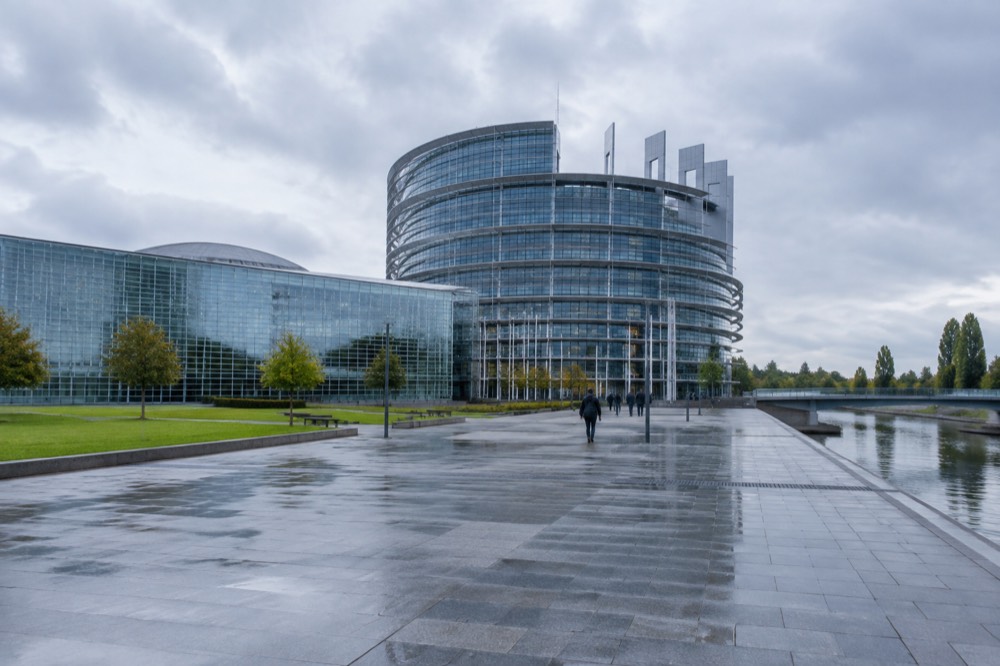
What you should not expect is a chamber tour on demand. The debating chamber is the working heart of the building, and access to it is tied to the parliamentary calendar rather than a walk-up ticket. The visitor space is the public offer, and it is a good one, but a traveller hoping to sit in the gallery during a plenary should read the official page's section on attending sessions, because the arrangements are specific and change with the calendar.
For visitors who want the institutional story with a guide alongside, the roster carries a European District walking tour, and the details, price and meeting point included, live on the operator's live listing:
If the modern history of the Parliament leaves you wanting the darker history of the region, the roster also carries a half-day guided visit to the Natzweiler-Struthof site in the Vosges, a sobering trip that pairs with the European story in a way few other day trips can. Check availability on the operator's listing before committing a day to it, and read the meeting-point details carefully, because the site sits in the mountains and the trip runs to a schedule.
How To Get To The European Parliament
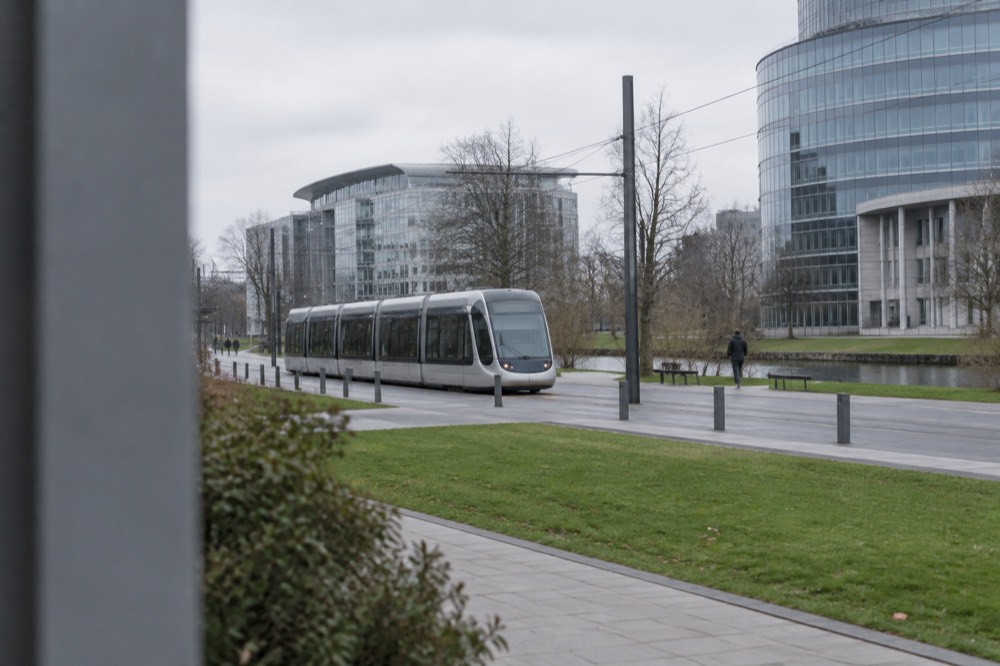
The European Quarter sits east of the old centre across the River Ill, and the CTS tram and bus network serves it with the same tickets used everywhere in the city: a single costs 1.90 EUR bought through the Badgeo card, the CTS app or contactless, or 2.50 EUR bought on board a bus, and a 24h Solo pass at 4.60 EUR covers a full day of hopping between the quarter and the old town. The district is flat, purpose-built and pleasant to walk, so a tram ride out followed by a walk back along the water is the pattern that suits the city best.
| CTS ticket | Price | Notes |
|---|---|---|
| Single | 1.90 EUR | Badgeo, CTS app or contactless |
| Single on board a bus | 2.50 EUR | Buy from the driver |
| 24h Solo | 4.60 EUR | One traveller, all day |
| 24h Trio | 10.20 EUR | Two or three travelling together |
| Airport combined ticket | 4.60 EUR | Train shuttle plus CTS day travel |
The airport row matters for anyone flying in, because Strasbourg Airport's rail shuttle connects into the city's transport system on one combined ticket, and the CTS fare page sets out the current details. Within the city, the tram is the workhorse, and the CTS network page shows the live lines and any works affecting the network, which is worth a glance in a city that periodically reworks its tram routes around the station.
On foot, the quarter connects back to the old town over the Ill, and the walk between the two is one of the pleasantest transitions in Strasbourg: modern lawns and institutional glass give way, within a comfortable stroll, to the half-timbered lanes of Petite France and the cathedral close. A day that starts in the Parliament and ends under the cathedral's single spire is a day that shows both of the city's faces, and it needs no car and no timetable beyond the Parliament's opening hours.
Cyclists have an easy time of it too, because the quarter's broad paths and the riverside routes make the district one of the flattest places to ride in the city. The guide to getting around Strasbourg by bike covers the practicalities if two wheels appeal, and the rental options cluster near the station and the centre, which puts the European Quarter within an easy ride of anywhere you are likely to be staying.
What Else To See Around The European Parliament
The European Quarter holds a tight cluster of institutional sights within walking distance of the Parliament: the Council of Europe, the European Court of Human Rights, the Parc de l'Orangerie and the riverside walks along the Ill, and each pairs naturally with a Parliament visit because they share the same flat, modern, walkable district east of the old centre. A morning in the quarter can reasonably take in the Parliament's visitor space, a look at the neighbouring institutions' facades, and a loop through the park, without transport beyond your own feet.
| Sight | What it is | Who it suits | What to check |
|---|---|---|---|
| Council of Europe | A separate institution from the EU, focused on human rights | History and politics readers | Official page for visitor arrangements |
| European Court of Human Rights | The court that rules on the European Convention | Anyone following the law stories | Official page for visiting rules |
| Parc de l'Orangerie | The quarter's large classic park, with lawns and storks | Families and slow afternoons | Opening pattern on the city page |
| Riverside paths along the Ill | Flat waterside walking and cycling routes | Walkers and photographers | Nothing, they are public ways |
The Council of Europe and the European Court of Human Rights each have their own pages on this site, and the one point worth repeating here is that they are not EU bodies, a confusion that even well-informed travellers carry. The Council of Europe predates the EU and has a far wider membership, and the Court rules on a convention that predates the Parliament's current powers. Knowing which building belongs to which organisation turns a walk past impressive facades into an actual lesson in European institutions.
The Parc de l'Orangerie gives the district its green lung, and it is where the quarter's officials eat their lunches in summer, which tells you the lawns are genuinely pleasant rather than merely photographed. Storks, the emblem of Alsace, are part of the park's story, and the guide to storks in Alsace explains why the bird matters to the region. For families, the park plus the Parliament's visitor space makes a workable day, and the Strasbourg with kids guide builds on exactly that pairing.
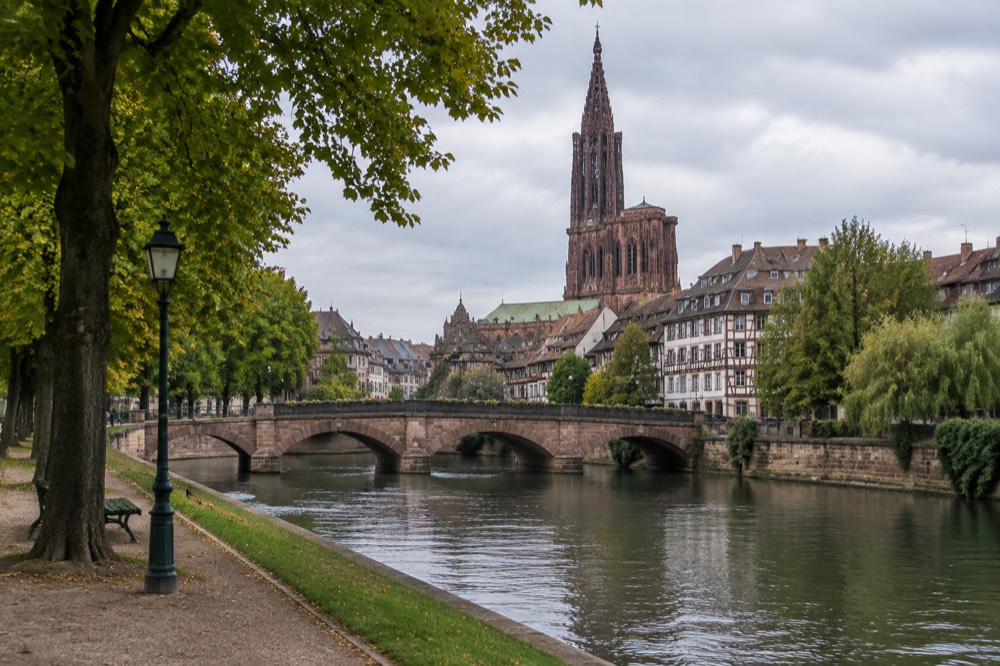
A guided format pulls the quarter's threads together, and the roster's longer European Quarter walk covers the institutions in more depth than a wander allows. The current price, times and meeting point are on the operator's live listing:
For travellers who prefer wheels to walking, a segway format also serves the district, and it suits the quarter's broad, flat paths well. The listing carries the full details, and the operator's page states the requirements for riders before you book.
What Is The Weather Like Around A Parliament Visit?
Strasbourg has a semi-continental climate, which means warm summers and genuinely cold winters: Meteo-France 1991-2020 normals for Strasbourg-Entzheim put the mean daily maximum at 26.4 C in July against 5.2 C in January, with 635.7 mm of rain spread over 112.3 rain days a year, so a Parliament visit doubles as bad-weather insurance in a city where outdoor sightseeing dominates the old town. The visitor space is indoors, heated and dry, which matters more here than in Mediterranean cities.
| Month | Mean maximum C | Mean minimum C | Rain mm | Days rain 1 mm or more |
|---|---|---|---|---|
| Jan | 5.2 | -0.2 | 35.4 | 9.1 |
| Apr | 17.0 | 5.7 | 41.8 | 8.6 |
| Jul | 26.4 | 14.9 | 71.9 | 10.4 |
| Oct | 15.8 | 7.2 | 59.5 | 9.6 |
The seasonal logic is straightforward. In winter, the cold is dry-ish but real, with January nights averaging below zero, and the Parliament's indoor hours fill the gap that the riverside walks leave empty. In summer, the quarter's lawns and the Orangerie are at their best, and the Parliament works as a midday retreat from the heat before an afternoon back outside. Rain falls somewhere in the city on roughly nine or ten days in any given month, so a flexible day with one indoor anchor is simply good planning in Alsace.
The Strasbourg weather guide carries the full monthly table and the reasoning behind the semi-continental label, and the guide to the best time to visit Strasbourg translates the numbers into season-by-season advice. The short version for this page: the Parliament is a four-season sight, and the quarter around it is at its most photogenic from late spring to early autumn, while the Christmas period pulls the crowds back toward the old town.
Is The European Quarter Worth Visiting Without A Guide?
Yes, the quarter stands on its own for a self-guided visitor, because the Parliament's visitor space, the riverside paths and the Parc de l'Orangerie are all open to the public and easy to reach on foot or by tram, but a guide adds the institutional context that the buildings themselves do not explain, and the difference shows most for travellers who care why Strasbourg hosts these institutions at all. The honest split is curiosity: casual sightseers lose little by walking it alone, while politics-minded visitors gain a lot from a guided format.
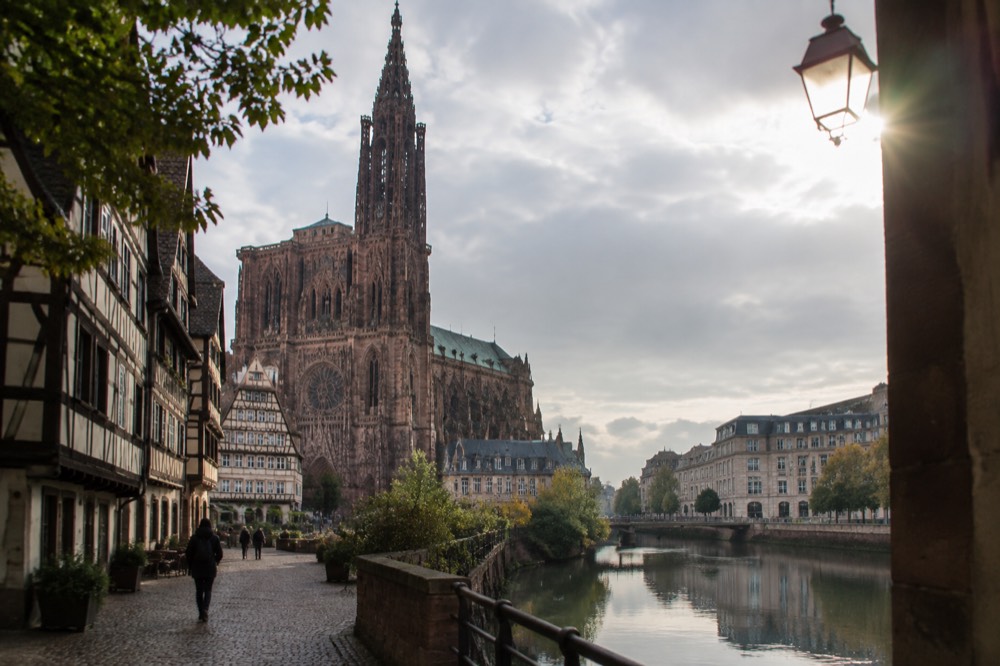
The self-guided route is simple to build. Start at the Parliament, clear the security check and spend an hour in the visitor space, then walk the riverside path toward the Court and the Council of Europe, loop through the Orangerie, and return over the Ill toward the old town. That loop fills a comfortable morning, needs no booking beyond checking the Parliament's hours, and ends within reach of lunch in the centre. The one day in Strasbourg itinerary shows where the quarter sits in a full-day plan.
The guided formats earn their place by answering the questions the facades raise. Why does a French city near the German border host the Parliament's plenary seat? What do the Council of Europe and the Court actually decide? A guide who handles those questions turns a pleasant walk into the most educational hour of a Strasbourg trip, and the roster's European-themed walks are built for exactly that. The segway option below covers the same ground at a faster pace, with the full details on the operator's listing:
Travellers with a full day and a car-free plan can also reach beyond the quarter, and the roster's day trips from Strasbourg cover the Alsace wine route, the Black Forest and the Vosges. The Alsace road trip guide and the Alsace wine route guide lay out the options, and each pairs with a morning in the Parliament if you travel early and plan the return leg carefully.
Planning Your Day Around The European Parliament
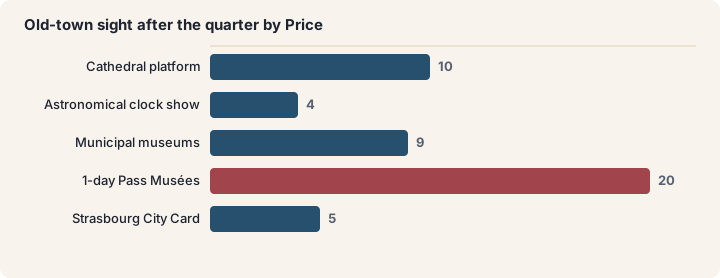
Build the day around the Parliament's fixed hours: start with the visitor space when it opens, hold the riverside and park walking for the middle of the day, and finish in the old town where the cathedral, the astronomical clock and the museums keep their own schedules, with the cathedral platform at 10 EUR full or 6 EUR reduced and the 12:30 clock show at 4 EUR the two old-town anchors that bookend an institutional morning. The pattern works because the two halves of the city sit within one flat, walkable stretch of the Ill.
| Old-town sight after the quarter | Price | Notes |
|---|---|---|
| Cathedral platform | 10 EUR full / 6 EUR reduced | Children under 6 free, platform at 66 m |
| Astronomical clock show | 4 EUR | Daily at 12:30, tickets on the day only |
| Municipal museums | 9 EUR full / 5 EUR reduced | Free the first Sunday of every month |
| 1-day Pass Musées | 20 EUR | Covers the municipal museums for a day |
| Strasbourg City Card | 5 EUR adult / 3.50 EUR child | A 7-day discount card, not an all-inclusive pass |
The first-Sunday rule is the quiet bargain in that table, and it applies to every municipal museum in the city, so a first-Sunday visit stacks the museums onto a Parliament morning at no extra cost. The Strasbourg museums guide lists what is open, and one closure matters enough to repeat: the Musée Alsacien is closed for works until 2028, so do not route a visit toward it. The cathedral guide and the astronomical clock guide carry the full hours and ticket rules for the two old-town anchors.
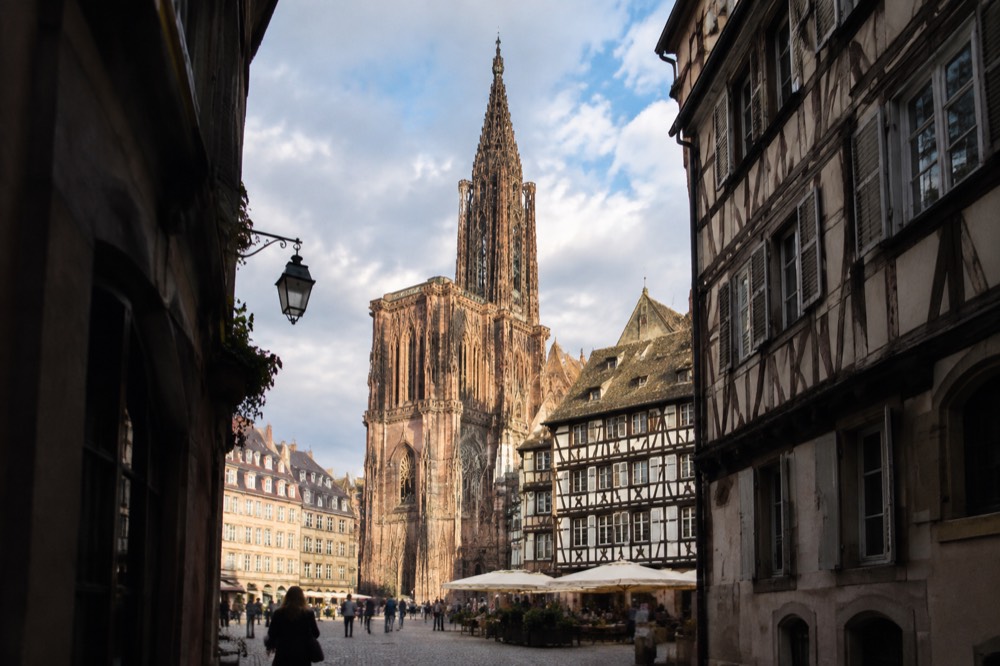
Christmas deserves its own word even on an institutional page, because the market pulls the whole city's rhythm toward the old town from late November. The 2025 edition ran 26 November to 24 December and drew 3.05 million visitors, and the 2026 dates and programme were still being finalised on the city's Christmas site, so confirm them there before planning a festive trip. A December visit that pairs the Parliament's indoor warmth with the market's evening chalets is a strong combination, and the Strasbourg Christmas market itinerary builds it hour by hour.
For the return leg of a longer trip, the guide to getting around Strasbourg covers the transport options beyond the tram, and the Strasbourg train station guide handles arrivals from Paris and beyond, where the fast trains from the capital take under two hours, with current times on SNCF Connect. None of that affects the Parliament itself, but it decides how early you can start and how late you can stay, and the quarter rewards an unhurried pace.
Before the practical questions, here is the roster's wider selection for travellers basing themselves in Strasbourg, covering the history trip, the festive day tour and the Black Forest excursion together:
Common Questions About The European Parliament In Strasbourg
Can you visit the European Parliament in Strasbourg?
Yes. The public offer is the Parlamentarium Simone Veil, the Parliament's visitor space, open Mon-Fri 09:00-18:00 and Sat 09:30-12:00 and 13:00-18:00 outside plenary weeks, with an airport-style security check at entry. Plenary-week hours differ, so confirm the day's arrangements on the official European Parliament visiting page before you set out.
Is the European Parliament in Strasbourg or Brussels?
Both cities host the Parliament, and the division of labour is the point: Strasbourg, in Alsace, north-eastern France, holds the plenary seat where the full house gathers for sessions, while Brussels carries much of the committee work between them. This site answers the headquarters question in full on its dedicated page, and the short planning answer is that the Strasbourg building is the one you can visit on a city trip.
What are the Parlamentarium Simone Veil opening hours?
Outside plenary weeks, the Parlamentarium opens Mon-Fri 09:00-18:00 and Sat 09:30-12:00 and 13:00-18:00. During plenary weeks the hours change, and the official page states the current schedule, so check it the day before your visit rather than relying on a printed timetable.
How do you get to the European Quarter in Strasbourg?
The CTS tram and bus network serves the quarter with the city's standard tickets: a single costs 1.90 EUR via the Badgeo card, the CTS app or contactless, or 2.50 EUR bought on board a bus, and a 24h Solo pass at 4.60 EUR covers a full day. The district is flat and walkable, and the riverside paths link it back to the old town on foot.
Is the European Court of Human Rights part of the European Parliament?
No. The Court belongs to the Council of Europe, a separate organisation from the European Union, and both sit in the same Strasbourg quarter as the Parliament, which is why the three are so often confused. The Council of Europe and the Court have their own pages on this site with their visitor arrangements.
How long should you spend at the European Parliament?
Allow roughly an hour for the visitor space plus time for the security check, and half a morning if you add the riverside walk past the Court and the Council of Europe and a loop through the Parc de l'Orangerie. A full morning in the quarter pairs naturally with an afternoon in the old town around the cathedral.
The European Parliament gives Strasbourg its second, modern identity, and it is the sight that explains why a medieval Alsatian city hosts world politics. Check the official hours, travel light for the security check, and let the quarter's lawns carry you back toward the half-timbered old town when the institutional hour is done.