Where Is The Headquarters Of The European Parliament Located?
The European Parliament's official seat is in Strasbourg, France, in the European Quarter east of the city centre. Here is what that means, and how to visit it.
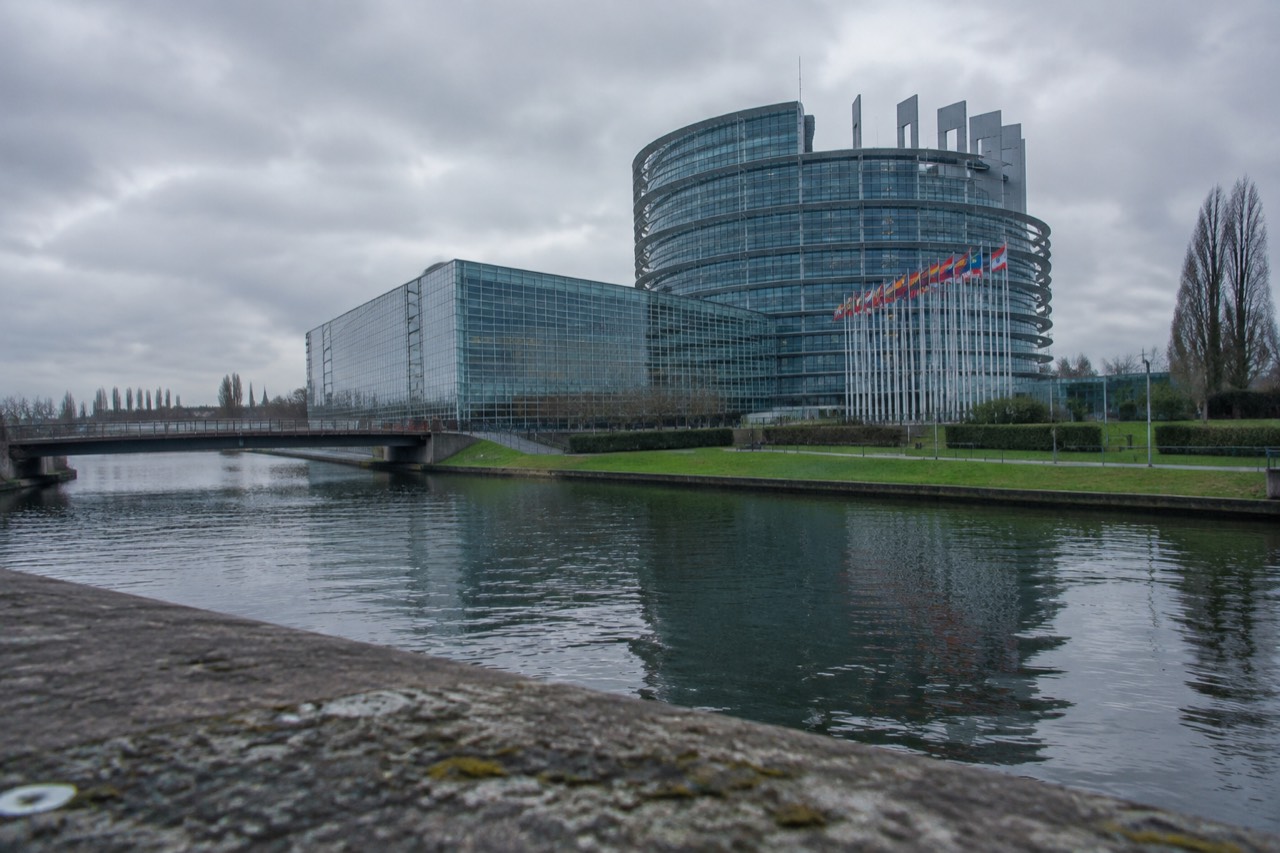
Strasbourg, a city of 293,771 people in the Bas-Rhin department of the Grand Est region, is the official seat of the European Parliament, and the Parliament's principal debating chamber stands in the city's European Quarter, on the Ill river east of the historic centre. France and Germany share the border here: the Rhine marks the line, and the German town of Kehl sits on the far bank. That geography is not incidental. Strasbourg was chosen partly because it embodies the reconciliation between the two countries after the wars fought between them, and the Parliament's presence turns a mid-sized Alsatian city into one of the working capitals of the European Union.
The question sounds simple, and the answer is simple at its core, but the details trip up a lot of travellers. The Parliament has more than one place of work, the building in Strasbourg has a name of its own, and the visitor experience is run from a separate exhibition space called the Parlamentarium Simone Veil. This page sets out what is where, why the seat is in Strasbourg at all, and how a visitor actually gets to see it.
Where Is The Headquarters Of The European Parliament Located?
The headquarters, meaning the official seat of the European Parliament, is located in Strasbourg, France, in the north-east of the country in the Alsace region, on the border with Germany. The chamber building stands in the European Quarter, a district of modern institutional architecture east of the Grande Île and the historic centre, reached by tram along the River Ill. It is here, not in Brussels, that the Parliament holds its plenary sessions.
The distinction between "seat" and "workplace" is the part worth understanding before anything else. The treaties of the European Union name Strasbourg as the Parliament's official seat, and that is where the full plenary sessions take place, the twelve or so times a year when every member of the parliament gathers to debate and vote in chamber. Committees, political group meetings and a great deal of day-to-day administration happen in Brussels, and members and staff travel between the two cities. Visitors often arrive expecting one single capital of Europe and find instead a split arrangement that has been argued over for decades.
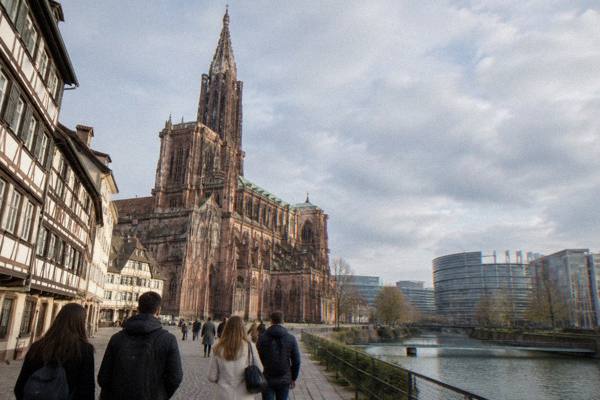
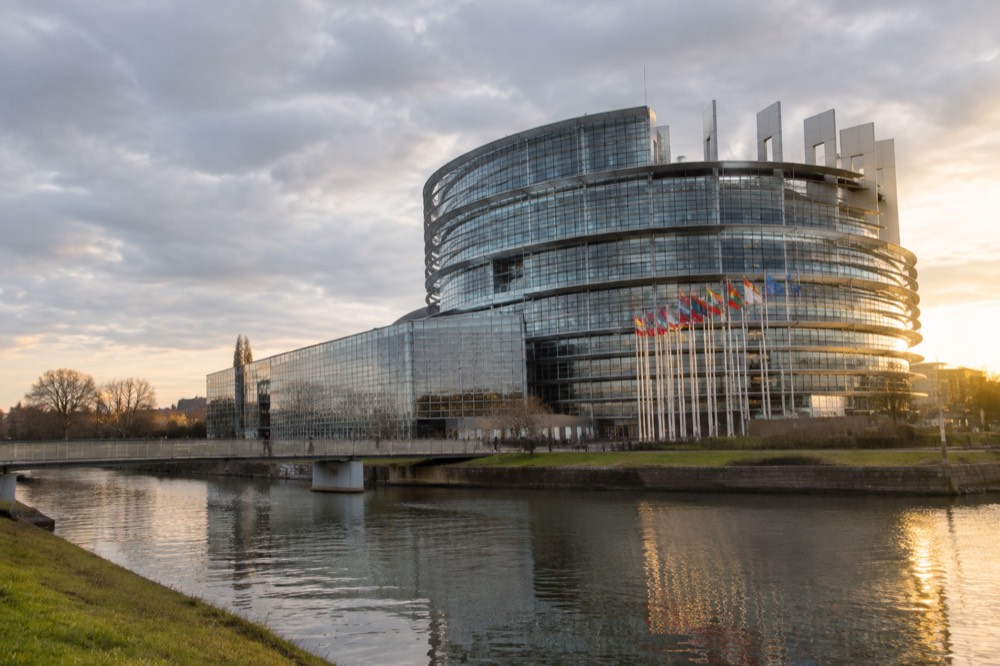
For a traveller, though, the practical answer is the one that matters: the building you can stand in front of, photograph and visit is in Strasbourg. The chamber sits beside the River Ill, and the flag-lined waterfront in front of it has become one of the city's most recognisable modern views, a deliberate counterpoint to the half-timbered streets of Petite France and the single spire of the cathedral on the Grande Île. The full story of the city around it is covered in why Strasbourg is so famous, which explains how a border city ended up as a symbol of Franco-German reconciliation.
A first walk through Strasbourg with a local guide is one of the easiest ways to see how the European Quarter and the medieval city fit together. The tour below is a good example of that format, and its live listing carries the current price and departure details.
Why Does The Parliament Meet In Strasbourg Rather Than Brussels?
The Parliament meets in Strasbourg because the European Union's treaties fix the city as the institution's official seat, a choice made to symbolise peace between France and Germany after the wars fought between them. Strasbourg sits directly on the border, in a region that changed hands between the two countries, and hosting the Parliament here was a deliberate political statement. Brussels hosts committee work, but the plenary votes happen in Alsace.
What can be said plainly is the logic. Alsace is a region whose identity is woven from both French and German culture: the language spoken in older generations is Alsatian, a Germanic dialect, the food and the wine carry both traditions, and the border has moved over the generations. Placing the Union's only directly elected institution on that border was a way of anchoring the whole project in the place where the two countries' rivalry had done its worst damage. The city's own history, including its wartime experience, is traced in was Strasbourg bombed in WWII, and the cultural mix that made the city symbolically suitable is explored in is Strasbourg more German or French.
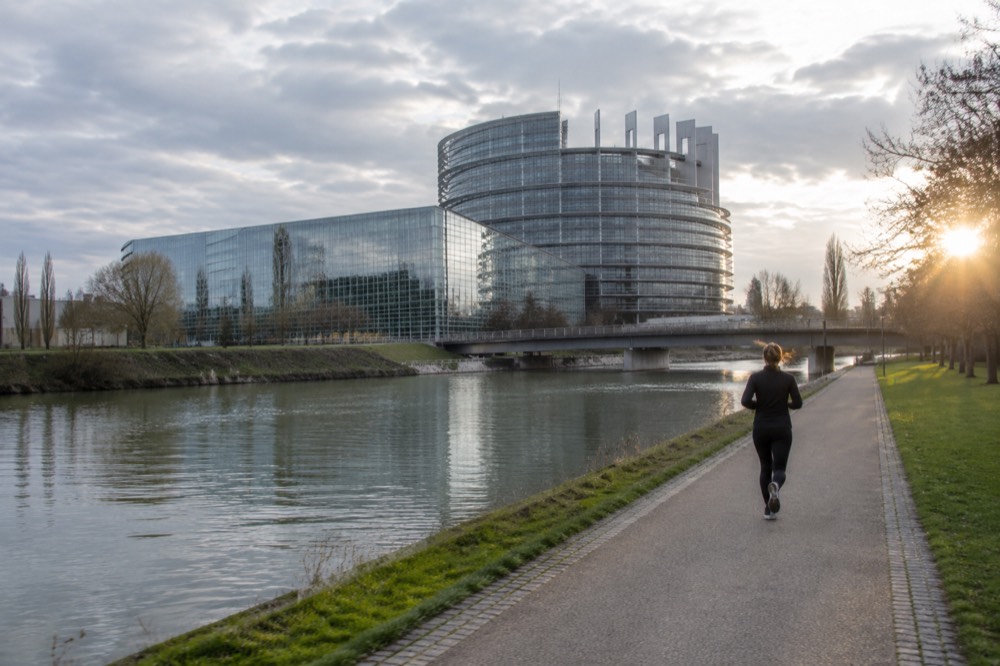
The arrangement has critics, and travellers sometimes hear about the cost of moving thousands of people and their documents between two cities a dozen times a year. That debate is real politics, but it does not change anything on the ground for a visitor. The building in Strasbourg is not a museum piece or an occasional annex: it is the chamber where the Parliament's plenary sessions are held, and the district around it, the European Quarter, is a functioning cluster of institutions, offices and diplomatic missions with its own tram stops, its own restaurants and a noticeably different architectural register from the sandstone and timber of the old town.
For visitors who want the institutional story in one focused outing, a guided walk of the European Quarter pairs well with the historic centre visits above. The quarter is also the subject of its own area guide on this site, the European Quarter of Strasbourg, which goes deeper into the district's layout and its sights.
Keen to explore the institutional quarter with a guide? Book a European District walking tour here.
How To Visit The Parliament And The Parlamentarium?
Visitors enter the Parliament's visitor offer through the Parlamentarium Simone Veil, an exhibition and visitor centre in Strasbourg's European Quarter. Outside plenary weeks it opens Monday to Friday 09:00-18:00 and Saturday 09:30-12:00 and 13:00-18:00, with an airport-style security check at entry. Hours differ during plenary weeks, so the official European Parliament visitor page should be checked before any visit.
The security point is worth taking seriously. This is a working parliamentary building, not a conventional museum, and the entry process resembles an airport: bags are screened and visitors should allow time for it. The visitor offer itself is built around explaining what the Parliament does, how European laws are made and how the institution relates to the citizens who elect it, and it is designed to work for visitors of different ages and levels of interest. Other pages covering the same trip are gathered on Strasbourg Travel Guide.
| Visit detail | Outside plenary weeks | What to check before you go |
|---|---|---|
| Opening days | Monday to Saturday | Closed Sundays outside plenary weeks |
| Monday to Friday hours | 09:00-18:00 | Last entry earlier than closing; see the official page |
| Saturday hours | 09:30-12:00 and 13:00-18:00 | A lunchtime closure splits the day |
| Plenary weeks | Hours differ | The official visitor page lists plenary-week times |
| Security | Airport-style check | Allow extra time at entry |
| Admission | Check the official page | Do not assume; conditions are set by the Parliament |
The official page carries the current booking arrangements. Sessions of the Parliament itself, when members are in the city for plenary sittings, change the character of the whole district: hotels fill, the streets around the buildings are noticeably busier, and the visitor offer runs to its plenary-week schedule instead.
Is a visit worth slotting into a short stay? For travellers with a specific interest in politics or modern architecture, yes, and it is one of the few European institution visits that sits within easy tram reach of a UNESCO-listed old town. For travellers with two days or fewer, the historic centre and the cathedral usually come first, and the question of how many days in Strasbourg is enough is worth reading before committing the half-day. If the Parliament is on the list, a guided orientation walk makes the logistics easier, and the tour below covers the city with a local guide in a small group.
What Else Sits In The European Quarter Of Strasbourg?
The European Quarter holds the European Parliament's seat alongside the Council of Europe and the European Court of Human Rights, making it one of the densest clusters of international institutions in Europe. All three sit within walking distance of one another, east and north-east of Strasbourg's historic centre, linked by tram and by riverside paths along the Ill. The Court's own building faces the water, and its role is distinct from the Parliament's.
The Council of Europe is a separate organisation from the European Union, older in its founding and wider in its membership, and it is headquartered in Strasbourg too. The European Court of Human Rights, which rules on claims under the European Convention on Human Rights, sits beside it. Visitors frequently conflate the three institutions, and the confusion is understandable: all three are "European", all three have flags, and all three are within a short walk of one another in the same district. In practice, each has its own building, its own visitor arrangements and its own purpose, and each is covered in its own guide on this site: the European Parliament as an attraction, and the European Court of Human Rights for the Court.
| Institution in the quarter | What it is | What a visitor sees |
|---|---|---|
| European Parliament (seat) | The EU's directly elected chamber; plenary sessions held here | Chamber building, flags, Parlamentarium visitor offer |
| Council of Europe | A separate organisation, wider membership than the EU | Its main building beside the institutional district |
| European Court of Human Rights | Court ruling on the Human Rights Convention | A riverside building facing the Ill |
| Parlamentarium Simone Veil | The Parliament's visitor centre | Exhibitions, security check, plenary-week schedule changes |
The quarter's architecture is the visible clue that this is not the Strasbourg of postcards. Glass, steel and wide planted avenues replace the narrow lanes of the Grande Île, and the scale is institutional rather than medieval. Some travellers find the contrast jarring; others find it the most interesting thing about the city, evidence that Strasbourg is a working European capital wearing an old-town costume on top. Both readings are fair. The district is flat, walkable and served by tram, so seeing it takes less time than its scale suggests, and it pairs naturally with a riverside walk back toward the centre.
How To Get To The Parliament From Strasbourg City Centre?
The European Quarter lies east of Strasbourg's historic centre, along the River Ill, and tram lines run from the city centre and the station into the district, with stops serving the Parliament and the surrounding institutions. A single CTS ticket costs 1.90 EUR bought through the app, a Badgéo card or contactless payment, or 2.50 EUR bought on board a bus, and a 24-hour Solo pass costs 4.60 EUR.
The tram network is the practical backbone of getting around Strasbourg, and the institutional district was planned around it. The CTS fare structure is simple enough to set out in full, because the figures below are the published ticket prices, and they are the same whether the destination is the Parliament, the station or the old town.
| CTS ticket | Price | What it covers |
|---|---|---|
| Single ticket (app, Badgéo, contactless) | 1.90 EUR | One journey on tram or bus |
| Single ticket bought on board a bus | 2.50 EUR | Same journey, higher on-board price |
| 24-hour Solo pass | 4.60 EUR | Unlimited travel for one person |
| 24-hour Trio pass | 10.20 EUR | Unlimited travel for two to three people |
| Airport combined ticket | 4.60 EUR | Train shuttle, tram and bus, including the 24-hour network |
For the airport specifically: Strasbourg Airport is linked to the city's station by a train shuttle that runs up to five times an hour and takes 8 minutes, and the combined ticket that bundles the shuttle with a day of city transport costs 4.60 EUR. That makes a Parliament visit feasible even on a long layover, though the security check and the plenary-week schedule both argue for checking the visitor page before committing.
Travellers arriving from Paris should note that this page gives no rail journey time: timetables and fares change, and the live schedules on the rail operator's own booking site are the only reliable source. What is safe to say is that Strasbourg's station sits within the city's tram network, so the connection from a long-distance train to the European Quarter is a single local ticket away.
The guided format is worth considering for the institutional district in particular, because the buildings do not explain themselves. A walk led by a local guide turns a cluster of glass facades into a story about why they are there, and the small-group historic centre walk below is one of the options that covers the ground between the old town and the modern institutions.
Whichever way the visit is built, the practical pattern is the same: a tram ride of a few stops from the centre, a security check at the Parlamentarium, and a walk through a district that looks nothing like the postcard Strasbourg but explains a good deal about why the city matters today. The options below cover the three most useful formats for seeing the city and its surroundings with a guide.
The European Parliament's headquarters is in Strasbourg, France, in the European Quarter east of the historic centre, and its plenary sessions are held there under the EU treaties. The visitor offer runs through the Parlamentarium Simone Veil, open Monday to Friday 09:00-18:00 and Saturday 09:30-12:00 and 13:00-18:00 outside plenary weeks, with an airport-style security check and plenary-week hours that differ. Brussels hosts committee work, but the seat and the chamber are in Alsace.
Common Questions About The European Parliament Headquarters
Where is the headquarters of the European Parliament located?
In Strasbourg, France. The Parliament's official seat, its chamber and its plenary sessions are in the European Quarter of Strasbourg, a city in Alsace in the north-east of France on the German border, with the German town of Kehl across the Rhine.
Is the European Parliament in Strasbourg or in Brussels?
Both, in different roles. Strasbourg is the official seat, where plenary sessions are held. Brussels hosts the committee meetings, political group work and much of the administration. The split is set by the EU's treaties and is a long-running political argument, but for a visitor the building to see in Strasbourg is the chamber in the European Quarter.
Can you visit the European Parliament in Strasbourg?
Yes, through the Parlamentarium Simone Veil visitor centre. Outside plenary weeks it opens Monday to Friday 09:00-18:00 and Saturday 09:30-12:00 and 13:00-18:00. Entry involves an airport-style security check, and hours differ during plenary weeks, so the official visitor page should be checked before travelling.
How do I get from Strasbourg city centre to the European Quarter?
Tram lines run from the city centre and the station into the European Quarter, with stops serving the institutional district. A single CTS ticket costs 1.90 EUR via the app, a Badgéo card or contactless, or 2.50 EUR on board a bus, and a 24-hour Solo pass costs 4.60 EUR.
What else can I see near the European Parliament in Strasbourg?
The Council of Europe and the European Court of Human Rights sit in the same quarter, within walking distance of the Parliament. The historic centre, including the Grande Île and the cathedral, lies west along the Ill, and the riverside paths and tram lines connect the two halves of the city in a short ride.
Strasbourg's role as a parliamentary seat is the modern layer of a city that has spent its whole history at the crossing point between France and Germany, and the Parliament's glass chamber beside the Ill is as much a part of the place as the sandstone of the old town. Check the official visitor page for the current hours and admission conditions, pick a tram ticket that matches the length of your stay, and the headquarters of the European Parliament is a straightforward half-day visit from anywhere in the city.