Kehl
Kehl is the German town on the far bank of the Rhine, directly opposite Strasbourg in north-eastern France, and it is the easiest way to add a second country to a Strasbourg trip without booking a tour bus.
Short answer
Kehl is a German town in Baden, on the right bank of the Rhine directly opposite Strasbourg, whose French bank it faces. Both towns use the euro and sit inside the Schengen area, so crossing is a local journey rather than an international one. A CTS single ticket in Strasbourg costs 1.90 EUR from the app or 2.50 EUR on board a bus.
Kehl is the German town on the right bank of the Rhine, directly opposite Strasbourg, the prefecture of the Bas-Rhin in Alsace, north-eastern France. The river between them is the border, and that single geographical fact shapes everything about the visit: two towns, two countries, one shared stretch of water, and a crossing so ordinary that locals make it without a second thought. For a visitor based in Strasbourg, Kehl is the simplest way to stand in Germany before lunch and be back in France for dinner, without a long journey, a border queue or a currency exchange.
This page from Strasbourg Travel Guide looks at what the crossing involves, what Kehl itself offers, how the day pairs with the Strasbourg sights you already have on your list, and what to check before you go. Where a figure matters, a ticket price or a fare, it comes from the operator or the transport body concerned.
Where Is Kehl And What Kind Of Day Out Is It?
Kehl is a German town in the state of Baden-Württemberg, on the right bank of the Rhine, facing Strasbourg across the river that forms the Franco-German border in this stretch. It shares the Strasbourg conurbation in every practical sense: the same euro currency, the same Schengen travel area, the same cross-border rhythm of daily life. The day out it offers is quiet and low-key, a riverside walk, a German town centre and a change of language and atmosphere, rather than a roster of major monuments.
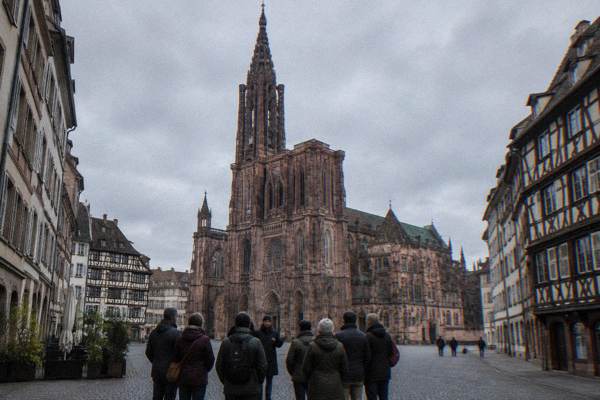
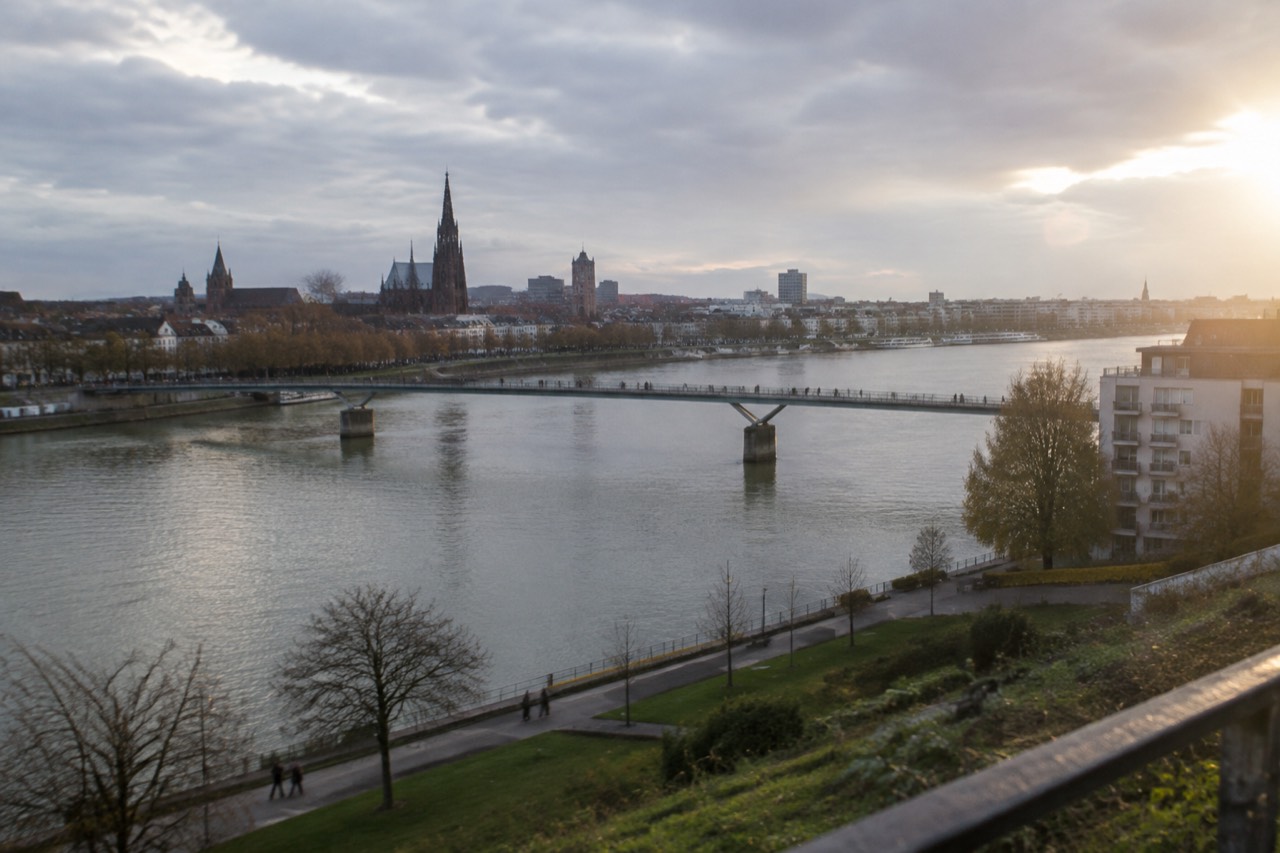
Strasbourg sits on the Ill, a river that flows through the city before joining the Rhine on its eastern edge. The Grande Île, the island core that carries the cathedral and Petite France, sits in the middle of that Ill network. Kehl is what you see when you stand on the French bank and look east across the Rhine: a German town whose history, economy and daily life have been tied to Strasbourg for as long as the two have faced each other across the water. The cathedral's single spire, with its viewing platform at 66 m, dominates the skyline you look back at from the German side.
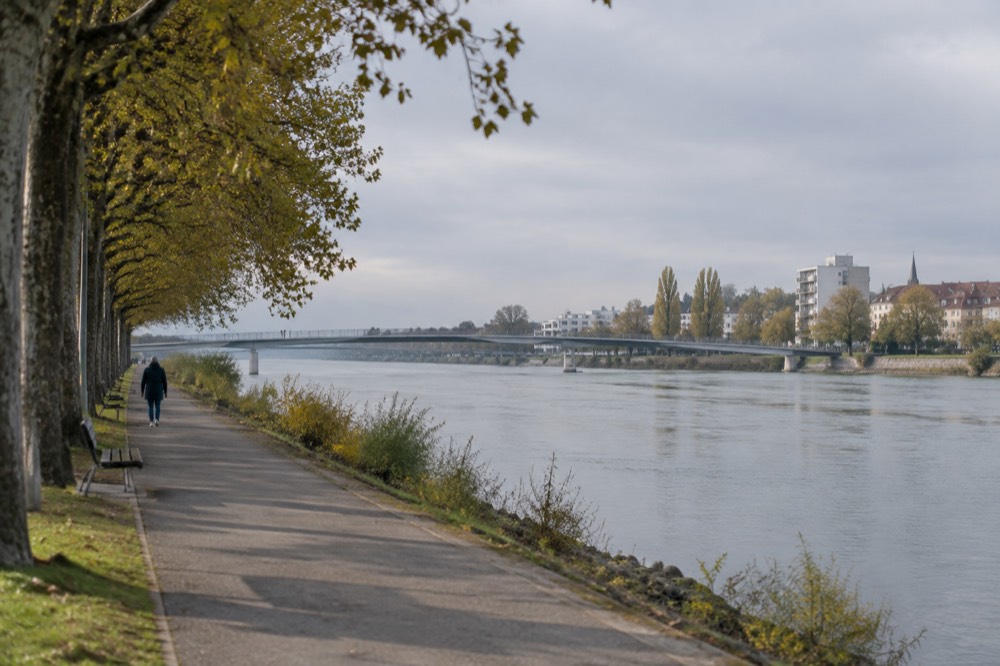
The character of the two banks could not be more different despite the short stretch of water between them. Strasbourg is a cathedral city, a parliamentary city and a World Heritage property, "Strasbourg, Grande-Île and Neustadt", with a medieval core of half-timbered houses and a French regional capital's cultural weight. Kehl is smaller, greener and more workaday, a German border town with riverside parks, cycle paths along the levee and a town centre built on a German rather than a French scale. Travellers who enjoy contrast, rather than another set of headline sights, get the most out of it.
| Strasbourg (France) | Kehl (Germany) | |
|---|---|---|
| Country | France, Alsace, Bas-Rhin | Germany, Baden |
| Bank of the Rhine | Left (west) bank | Right (east) bank |
| Currency | Euro | Euro |
| Language | French | German |
| Character | Cathedral and parliamentary city, World Heritage core | German border town, riverside parks and cycle paths |
How Do You Get From Strasbourg To Kehl?
The crossing is a local cross-border journey, not an international trip: France and Germany share both the Schengen area and the euro, so there is no currency change and no routine border formalities on the way. Several links connect the two banks across the Rhine, and the right one depends on where you are starting and what you want to do first. For current lines, timetables and cross-border coverage, the CTS network map and the SNCF journey planner are the pages to check before you set out.
The CTS network is Strasbourg's tram and bus system, and its fare page gives the numbers that matter for a day of moving around the French side. A single ticket costs 1.90 EUR bought through the Badgéo card, the CTS app or contactless payment, and 2.50 EUR if bought on board a bus. A 24-hour Solo pass is 4.60 EUR, and a 24-hour Trio pass covering two or three people travelling together is 10.20 EUR. Those are the verified CTS prices; for anything involving a line that continues past the river into Germany, confirm the cross-border fare rules on the CTS pages, because cross-border ticketing has its own conditions.
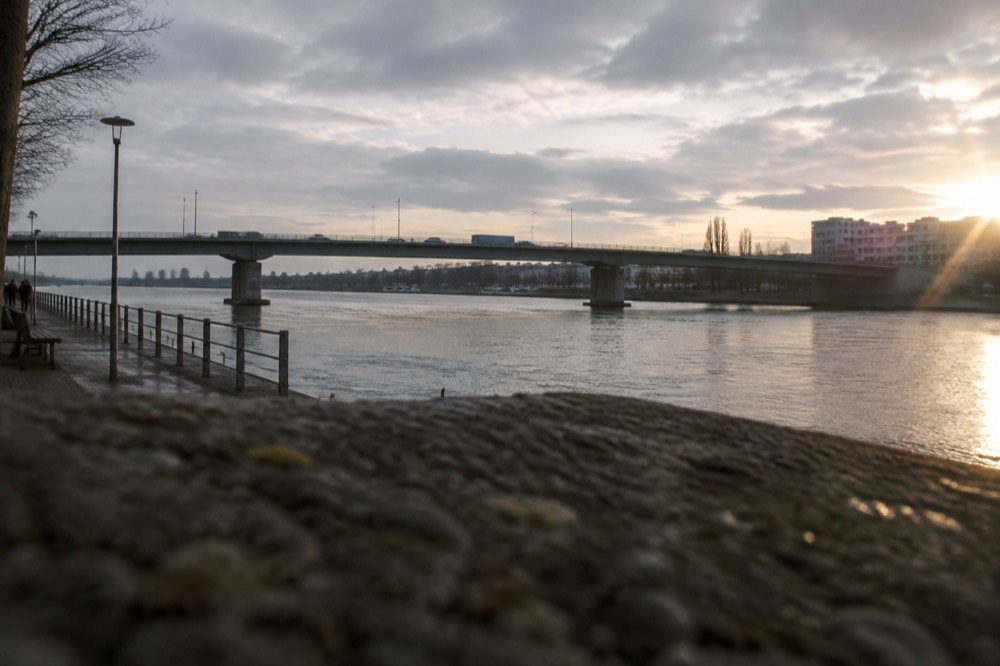
Cyclists and walkers have their own options. The Rhine is one of the great long-distance cycling corridors of Western Europe, and the paths along the levee on the German side are a fixture of the landscape; a bike outing that crosses the river and rolls along the far bank is one of the more enjoyable ways to spend a half day in the area. The Strasbourg bike-tour listings on this site cover guided options, and the city's own bike infrastructure makes the run out toward the river straightforward for anyone comfortable in traffic.
If you prefer to have the Strasbourg side explained before you cross, a guided walk is a good first morning. The guided walk with a local guide is this site's featured choice for the city itself: it covers the Grande Île core, and its figures, price, rating and review count, render on the live listing rather than being quoted here. Check availability
Prefer the Strasbourg side explained before you cross? Book a free walking tour here.
| CTS ticket | Price | Notes |
|---|---|---|
| Single (Badgéo, app, contactless) | 1.90 EUR | Cheapest way to buy a single ride |
| Single bought on board a bus | 2.50 EUR | Buy in advance where you can |
| 24-hour Solo pass | 4.60 EUR | One traveller, unlimited rides for a day |
| 24-hour Trio pass | 10.20 EUR | Two or three people travelling together |
What Can You Actually See And Do In Kehl?
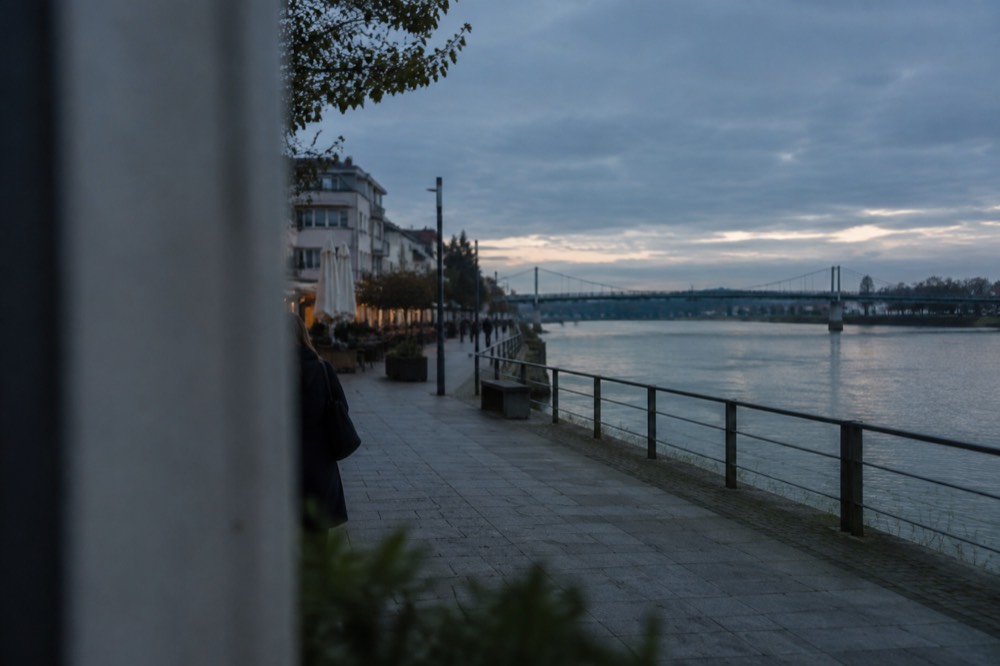
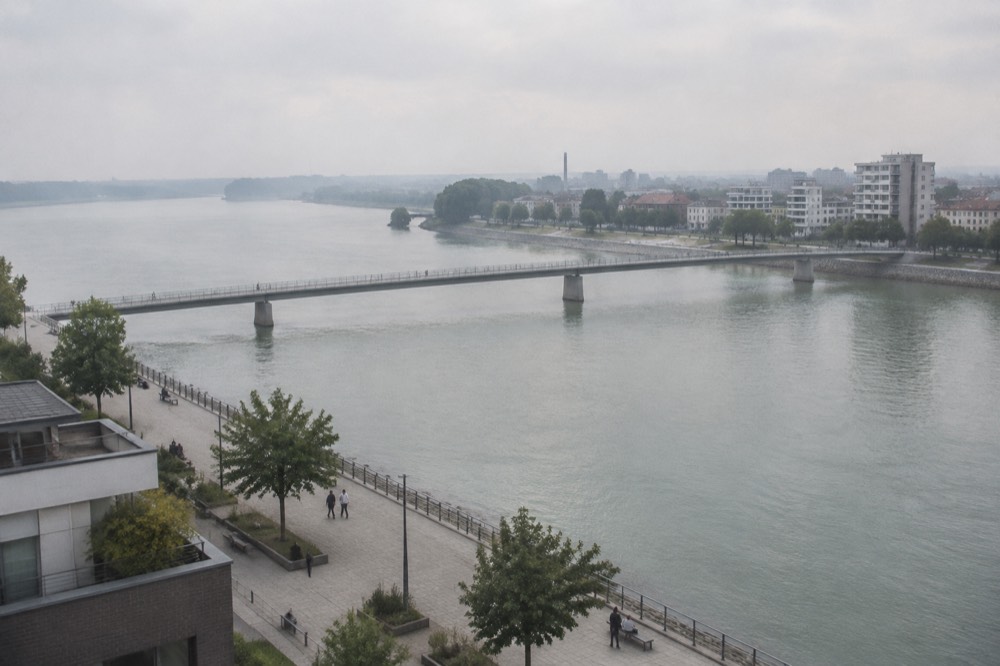
Kehl's appeal is riverside and everyday German life rather than landmark hunting: walks and cycle paths along the Rhine levee, a German town centre with shops and cafés at a German pace, and the panorama back across the water toward Strasbourg's spires. Nothing on the German side carries an entry fee you need to plan around, and the sights that matter are free public space, the riverbank, the paths and the squares. Give it a relaxed half day rather than a full one.
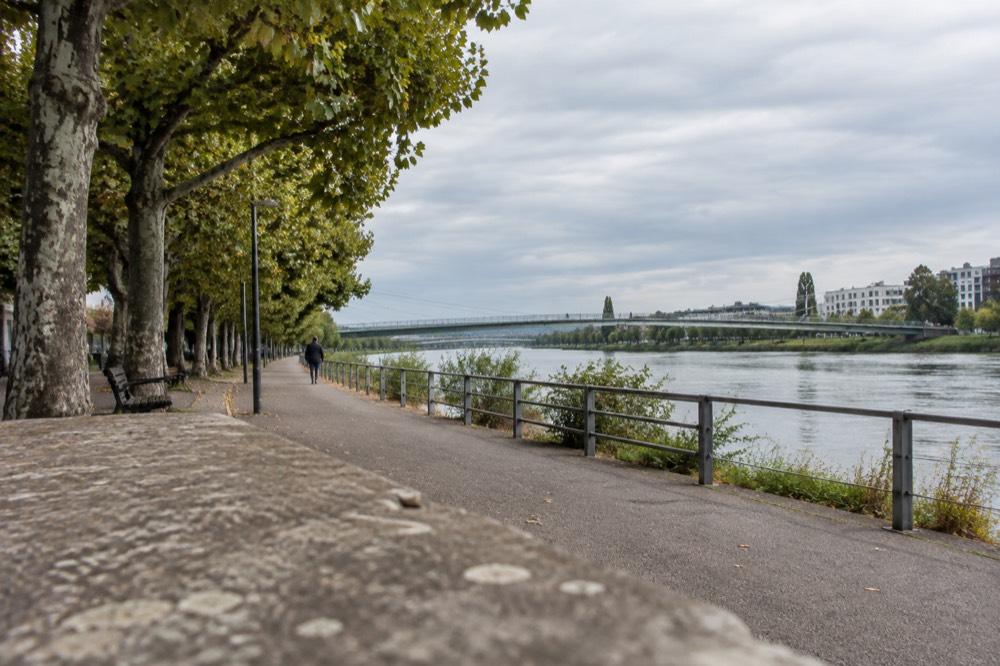
Start with the river itself. The Rhine between the two towns is a working waterway, wide and steady, and the German bank has the calmer, greener edge of the pair: levee paths, mature trees and long sightlines up and down the water. Walking a stretch of it, with the Strasbourg skyline on the far side, is the single activity that justifies the crossing, and it costs nothing but time. The view back takes in the cathedral spire, the tallest thing on the French horizon here, and the low roofscape of a city that was a medieval bridgehead between two worlds.
The town centre is the second half of the visit. Kehl's centre is a conventional German small-town core, pedestrian-friendly in parts, with bakers, cafés and ordinary shops, and it makes a pleasant contrast with Strasbourg's half-timbered tourist core an easy crossing away. This is a place for a mid-morning pastry, a slow coffee and a wander, not for a museum schedule. German bakery culture is worth the trip on its own terms, and the price level of everyday German cafés is something you discover on the spot rather than from a page like this one, since no verified German price figures belong in this guide.
For travellers who want the crossing explained rather than just walked, a guided format on the Strasbourg side frames the border city well. The Segway tour of the European quarter covers the institutional Strasbourg, the parliament district and the modern city beyond the old core, and its price, rating and review count appear on its live listing. It stays on the French side, but it explains the cross-border identity that makes a Kehl detour make sense.
| Kehl activity | What it is | Who it suits | What to check |
|---|---|---|---|
| Rhine levee walk | Riverside paths on the German bank with views back at Strasbourg | Walkers, photographers, anyone wanting quiet | Weather and daylight hours |
| Cycle paths along the river | Long-distance cycling corridor on the levee | Confident cyclists | Bike hire terms in Strasbourg |
| Town centre wander | German shops, bakers and cafés at a local pace | Slow travellers, families | Opening hours, many shops close early |
| Panorama of Strasbourg | The skyline and cathedral spire from across the water | Everyone, first stop of the day | None, it is public space |
How Does Kehl Fit Into A Strasbourg Itinerary?
Kehl works best as a half-day add-on, either on a spare afternoon in a two- or three-day Strasbourg stay or as the wind-down after a morning in the Grande Île. It needs no advance booking, no tour reservation and no timed entry, which makes it the flexible piece of an itinerary: the one excursion you can decide on at breakfast. Pair it with a cathedral morning, whose platform ticket is 10 EUR full and 6 EUR reduced.
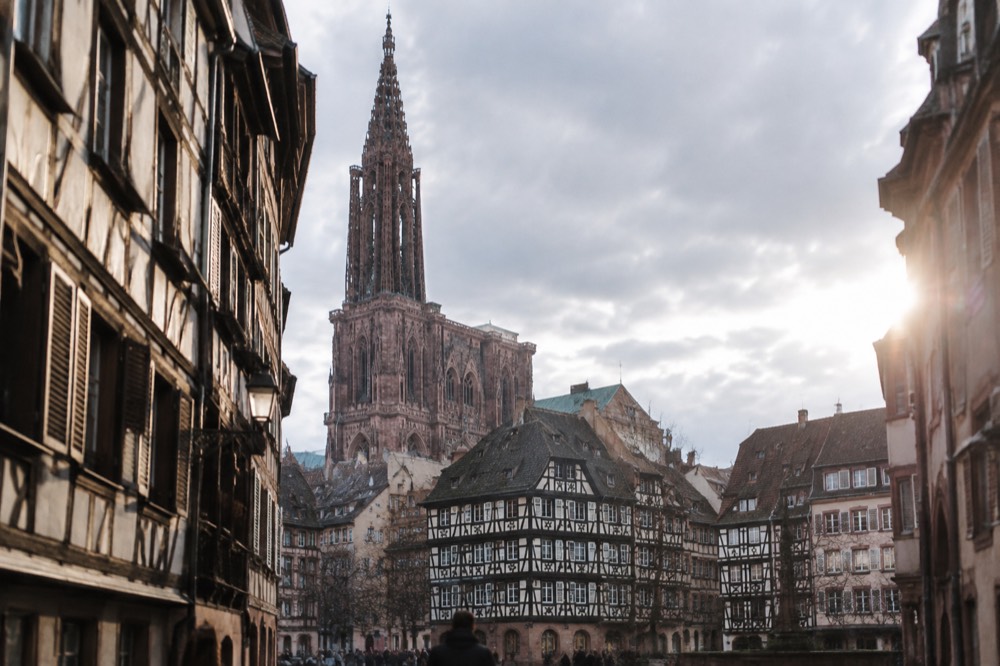
The cathedral anchors any Strasbourg morning. The nave is open Monday to Saturday from 08:30 to 11:15 and 12:45 to 17:45, and on Sundays and feast days from 14:00 to 17:15. The platform at 66 m runs on seasonal hours: from 1 April to 30 September it opens 09:30 to 13:00 and 13:30 to 20:00, with the last ascent at 19:15, and from 1 October to 31 March it opens 10:00 to 13:00 and 13:30 to 18:00, with the last ascent at 17:15. The platform closes on 1 January, 1 May and 25 December. The clock's automaton show runs daily at 12:30 sharp, and its tickets are sold on the day only, at the cathedral stalls between 10:00 and 11:00 or at the Saint-Michel entrance from 11:30, so the clock slots naturally before a crossing to Kehl in the early afternoon.
A second pairing is the museum route. Strasbourg's municipal museums, the Beaux-Arts in the Palais Rohan, the Archaeological Museum, the MAMCS and the Musée de l'Œuvre Notre-Dame among them, charge 9 EUR full and 5 EUR reduced, with a one-day Pass Musées at 20 EUR, and all of them are free on the first Sunday of every month. Note that the Musée Alsacien is closed for works until 2028 and should not be planned into any itinerary. A museum morning on the French side followed by a riverside afternoon on the German bank is a well-balanced day, and the first-Sunday rule can make it a cheap one.
Travellers who prefer a guided structure for the whole day rather than a self-directed one have a Segway option that covers ground quickly, and a bike option for a slower, closer look at the river landscape. Both are Strasbourg-based, both list their own prices and ratings on their live listings, and either can sit in the morning slot before an independent Kehl crossing in the late afternoon light, when the west-facing French skyline is at its best from the German bank.
The guided formats and the independent crossing are not rivals, they are two halves of the same idea. A guided morning gives you the city explained, and the Kehl afternoon gives you the city seen from outside, from another country's riverbank, which is a perspective no walking route inside Strasbourg can offer. If the guided morning appeals, the featured walk on this site is the natural starting point, and its live listing carries the departure details.
What Does A Kehl Day Cost Compared With Strasbourg?
No verified German price figures exist for Kehl, so the honest budget is built from the French side: 1.90 EUR for a CTS single bought through the app or contactless, 4.60 EUR for a 24-hour Solo pass, 10 EUR for the cathedral platform, 4 EUR for the astronomical clock and 9 EUR full entry at the municipal museums. On the German side, plan on everyday café and bakery spending and check prices on the spot rather than from a guide.
The asymmetry is worth being clear about. Everything with a published, checkable figure in this guide is a French-side figure, from the CTS fare page, the cathedral's own pages or the museums' tariff page. German prices in Kehl, a bakery coffee, a lunch, a bike hire if you cross with a German operator, are not in that verified set, and a guide that printed them would be guessing. The practical approach is to carry a small amount of cash or a contactless card, treat German everyday prices as part of the discovery, and keep the fixed costs of the day on the French side where they are known.
| Strasbourg item | Full price | Reduced price |
|---|---|---|
| Cathedral platform (66 m) | 10 EUR | 6 EUR, children under 6 free |
| Astronomical clock show, 12:30 daily | 4 EUR | 2 EUR children 6-17 |
| Municipal museums, each | 9 EUR | 5 EUR |
| Pass Musées, one day, all municipal museums | 20 EUR | First Sunday of each month free |
| Batorama long boat tour | 16.20 EUR | 8.90 EUR |
| Batorama short boat tour | 12.50 EUR | 7.20 EUR |
Two Strasbourg products deserve a place in the budget conversation. The Strasbourg City Card is a 5 EUR discount card, 3.50 EUR for a child aged 3 to 17, valid for seven days, and it takes money off museums, the boat tour, the cathedral platform and the clock; it is a discount card, not an all-inclusive pass, so it suits a sight-heavy stay rather than a single crossing. Batorama's river boats run the long tour in 1h10 and the short tour in 0h45 from the Strasbourg side, and the water perspective they give of the city is a natural companion to the dry-land perspective you get from the German bank.
When Is The Best Time Of Year To Cross The River?
Strasbourg's climate is semi-continental, with Meteo-France 1991-2020 normals for Strasbourg-Entzheim showing mean daily maxima from 5.2 C in January to 26.4 C in July, and 635.7 mm of rain across 112.3 rain days in an average year. The riverside walking and cycling that make up a Kehl day want the warmer, drier half of the year; the December market season belongs on the French side.
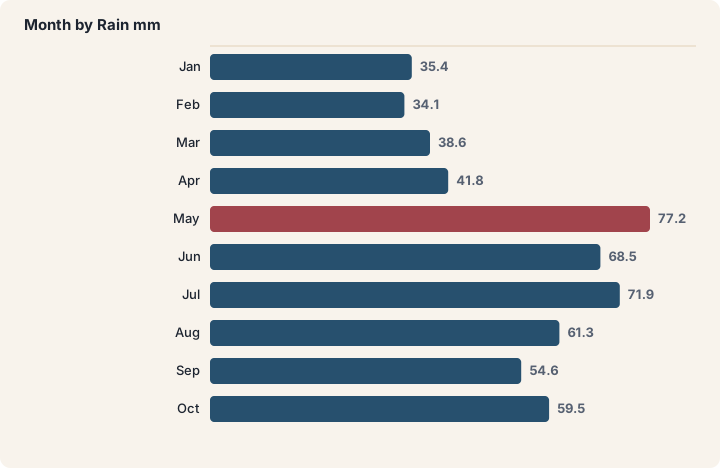
The summer months give the crossing its best form: mean maxima of 24.4 C in June, 26.4 C in July and 26.1 C in August, with mean minima from 13.4 C to 14.9 C, which makes the levee paths comfortable from morning to evening. Rain is part of the picture even then, with 10.2 rain days of a millimetre or more in June, 10.4 in July and 9.5 in August, so a light layer for a shower is sensible in any season. May is the wettest month in the normals table at 77.2 mm, and September dries out to 8.0 rain days with a mean maximum of 21.6 C, which makes early autumn one of the more reliable windows for a long riverside walk.
Winter crossing is a different proposition. December has a mean maximum of 5.9 C, a mean minimum of 0.8 C and 45.2 mm of rain over 10.2 rain days, and January is colder still at 5.2 C and -0.2 C. That is the Christmas market season on the French side, and the market's draw is the reason many travellers are in Strasbourg at all: the market's usual pattern opens in the last week of November and runs to 24 December, with last year's edition running 26 November to 24 December 2025 and drawing 3.05 million visitors. The 2026 dates are not yet published; the city's Christmas site is the page to confirm them. A Kehl walk in that season is short, cold and best treated as a breath of river air between the chalets rather than a destination in its own right.
| Month | Mean max C | Mean min C | Rain mm | Rain days >= 1 mm |
|---|---|---|---|---|
| Jan | 5.2 | -0.2 | 35.4 | 9.1 |
| Feb | 7.3 | 0.0 | 34.1 | 8.3 |
| Mar | 12.1 | 2.6 | 38.6 | 8.5 |
| Apr | 17.0 | 5.7 | 41.8 | 8.6 |
| May | 20.9 | 10.1 | 77.2 | 10.8 |
| Jun | 24.4 | 13.4 | 68.5 | 10.2 |
| Jul | 26.4 | 14.9 | 71.9 | 10.4 |
| Aug | 26.1 | 14.5 | 61.3 | 9.5 |
| Sep | 21.6 | 10.7 | 54.6 | 8.0 |
| Oct | 15.8 | 7.2 | 59.5 | 9.6 |
| Nov | 9.4 | 3.3 | 47.6 | 9.2 |
| Dec | 5.9 | 0.8 | 45.2 | 10.2 |
What Else Can You Pair With Kehl From Strasbourg?
Kehl is the smallest of Strasbourg's cross-border options, and it pairs naturally with the bigger German and Swiss day trips that start from the same city. The Black Forest, Baden-Baden and Freiburg are German destinations reached from Strasbourg across the same river; Basel is Swiss, in Schengen but outside the euro; Colmar and the Alsace Wine Route stay on the French side. A trip that crosses to Kehl is a gentle first step into that wider cross-border map.
The German options are covered in depth elsewhere on this site. The Black Forest day trip guide covers the forest towns and lakes east of the Rhine, Baden-Baden the spa town north of the river, and Freiburg the university city deeper into Baden. Each is a fuller day than Kehl, with travel time and planning to match, so their distances and journey times are left to the dedicated pages. The honest advice is to read the dedicated page for each destination and check its own transport details there.
On the French side, Colmar is the classic companion to a Strasbourg stay, a canal town with its own Christmas season, and the Alsace wine route strings together the villages, Riquewihr, Eguisheim, Kaysersberg and the rest, that give the region its storybook reputation. For travellers with a week rather than a weekend, a sensible shape is a Strasbourg core with the cathedral, the Grande Île and the museums, a Kehl afternoon for the cross-border contrast, and then one or two fuller days into Alsace or across into Germany. Basel needs a separate note: it is in Switzerland, Schengen but not in the euro, so euros are not the currency there, and the Basel day trip guide covers the specifics.
Guided day tours handle the Alsace half of that map well. The Best of Alsace historical day trip is the long-form option, a full day through the region's villages and heritage, and its price, rating and review count are on its live listing rather than in this prose. It pairs with a Kehl crossing in the opposite way a river pairs with its banks: one is a scheduled, guided commitment, the other a spontaneous afternoon, and a balanced trip has room for both.
| Day trip from Strasbourg | Country | What it offers | Where to read more |
|---|---|---|---|
| Kehl | Germany | Riverside walk, German town centre, easy crossing | This page |
| Black Forest | Germany | Forest scenery, lakes and small towns | Black Forest guide |
| Baden-Baden | Germany | Historic spa town | Baden-Baden guide |
| Freiburg | Germany | University city with a cathedral old town | Freiburg guide |
| Basel | Switzerland | Swiss city, Schengen but not euro | Basel guide |
| Colmar | France | Canals, old town, its own Christmas market | Colmar guide |
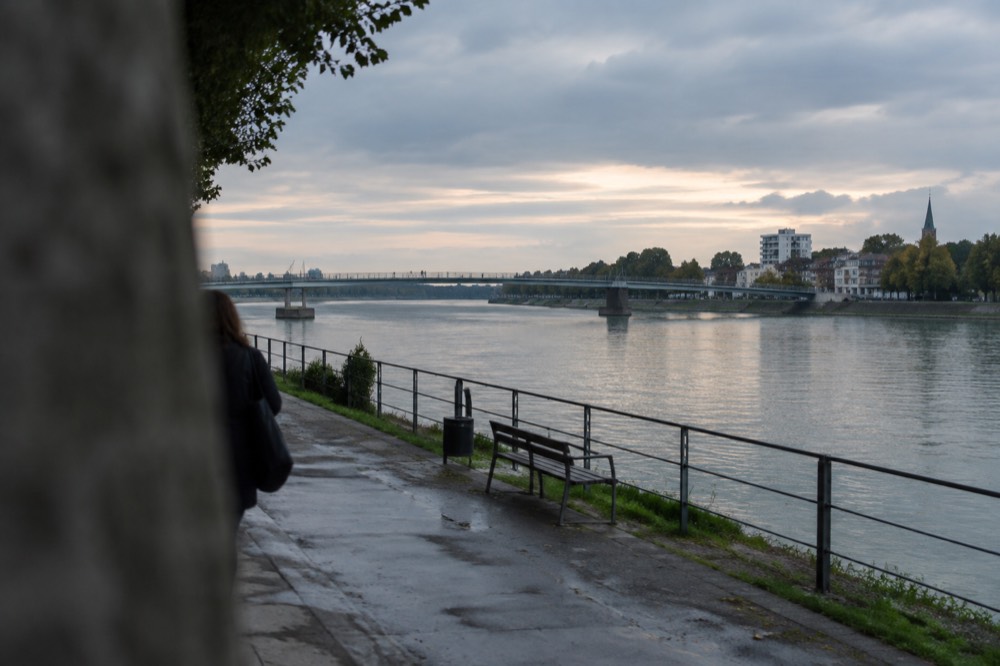
The final word on Kehl is that it rewards modest expectations. Come for a walk on the levee, a coffee in a German square and the sight of Strasbourg's spire from the other country, and the crossing delivers exactly that, cheaply and without any booking at all. Come expecting a second Strasbourg and you will be disappointed, because the point of Kehl is that it is not Strasbourg: it is the ordinary German town across the water, and that ordinariness is the whole attraction.
Common Questions About Kehl
Is Kehl in Germany or France?
Kehl is in Germany, in the state of Baden-Württemberg, on the right bank of the Rhine. Strasbourg is in France, in Alsace, on the left bank, and the river between the two towns is the border. Both towns use the euro and both countries are in the Schengen area, so the crossing is a local journey rather than an international one.
Do you need a passport to cross from Strasbourg to Kehl?
France and Germany are both in the Schengen area, so there is no routine border control on journeys between Strasbourg and Kehl. Carry identification as you would anywhere in Europe, since checks can happen in exceptional circumstances, but the crossing itself is treated as domestic travel.
Can you walk or cycle across the Rhine to Kehl?
The two banks are connected across the Rhine, and the German side has riverside paths along the levee that are a fixture of the landscape. For the current pedestrian, cycle and public transport options, check the CTS network map and the SNCF journey planner before you set out, since cross-border links and their ticket rules are the details that change.
Is Kehl worth a day trip from Strasbourg?
Kehl is worth a relaxed half day rather than a full one, and it suits travellers who enjoy contrast: a riverside walk, a German town centre and the view back at Strasbourg's skyline and cathedral spire. It needs no booking, no timed entry and no advance planning, which makes it the most flexible excursion in the Strasbourg area.
What currency do you use in Kehl?
The euro. Germany and France share the currency, so nothing changes in your wallet when you cross the Rhine. That is one reason the trip is so easy: the same money, cards and coins work on both banks.
How long should you spend in Kehl?
A half day is the natural length: a stretch of the levee path, a wander through the town centre and a coffee or lunch, with the crossing time on top. Travellers who combine it with a Strasbourg morning at the cathedral or the museums usually cross in the early afternoon and return by evening.