Alsace Wine Route
The Alsace Wine Route strings together walled wine villages between Strasbourg and Colmar, and it works as a day trip, a slow weekend or a full touring holiday. Here is how to plan it.
Short answer
The Alsace Wine Route runs south from Strasbourg through wine villages such as Obernai, Riquewihr, Kaysersberg and Eguisheim towards Colmar. You can drive it yourself, join a small-group day tour from Strasbourg, or pair a half-day tasting with time in the city. Autumn and the pre-Christmas weeks are the classic windows.
Strasbourg, in Alsace in north-eastern France, sits at the northern end of the country's most celebrated wine touring road: the Alsace Wine Route. The route threads south from the hills below the city, through walled villages of half-timbered houses, towards Colmar and the southern slopes around Eguisheim and Ribeauvillé. This page lays out how to plan it: which villages deserve a stop, whether to drive yourself or ride with a guide, what the seasons do to the landscape, and what to settle before you leave Strasbourg.
The route is a road trip in the old sense: slow, stop-heavy, built for lingering in a cellar door or a winstub courtyard rather than covering distance. Everything on it sits in France, in the Bas-Rhin and Haut-Rhin departments of the Grand Est region, though the German border and the Rhine are never far to the east. Strasbourg makes a natural base because the route starts practically at the city's southern edge, and the city's own food and wine culture, from riesling by the glass to tarte flambée, is the same one you meet in the villages. If you are still building the wider picture, the Strasbourg Travel Guide homepage gathers the city itself alongside the day trips.
What Is The Alsace Wine Route?
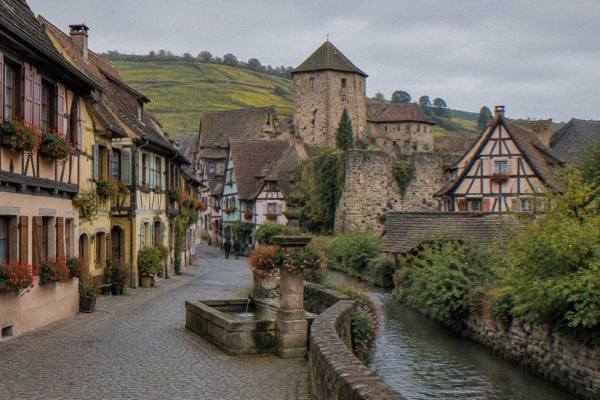
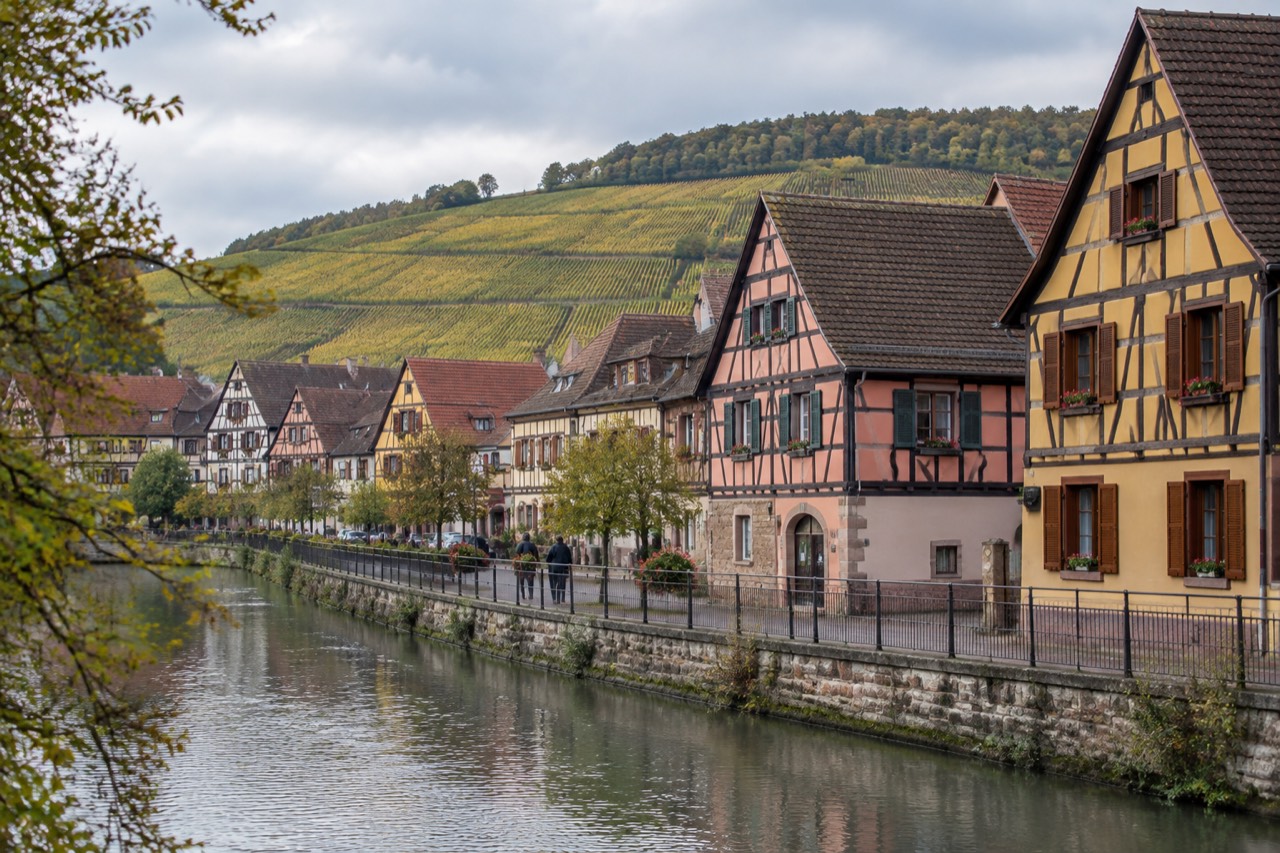
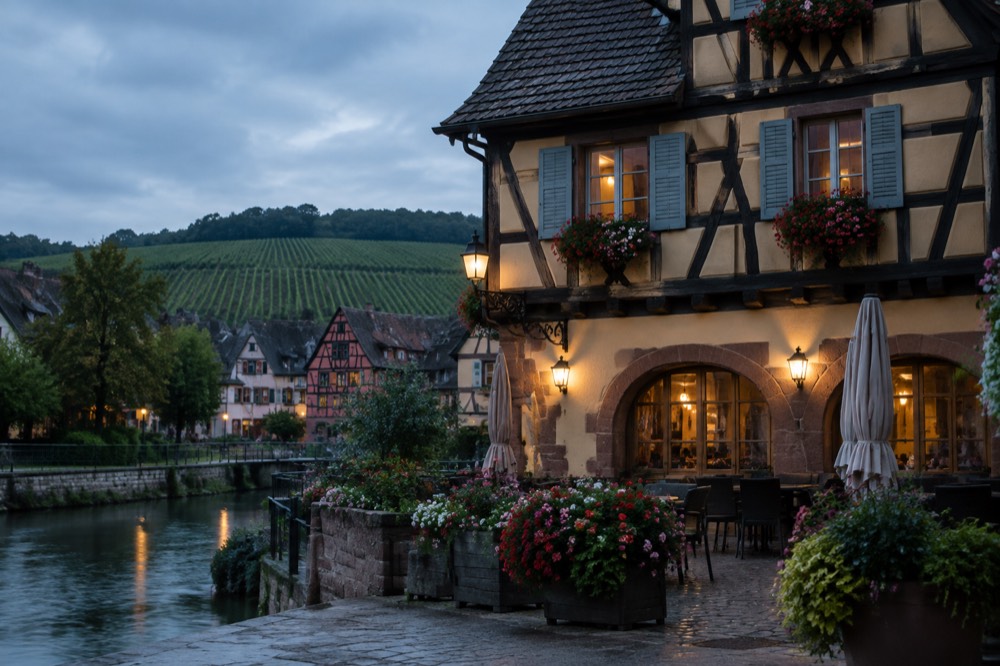
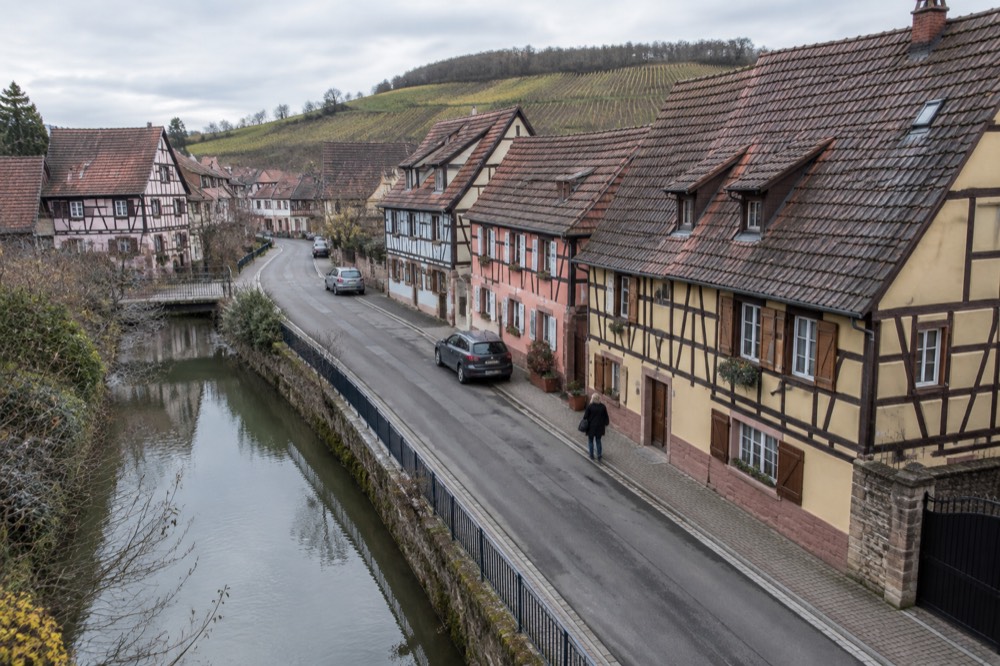
The Alsace Wine Route is a signposted touring road that links the wine-growing villages of the Alsatian foothills between Strasbourg and Colmar, following the slopes where the region's vines grow on soils carried down from the Vosges. It is a route you drive, cycle or ride with a guide rather than a single site you visit, and its stops are working wine villages with cellar doors, ramparts and half-timbered streets, not purpose-built attractions.
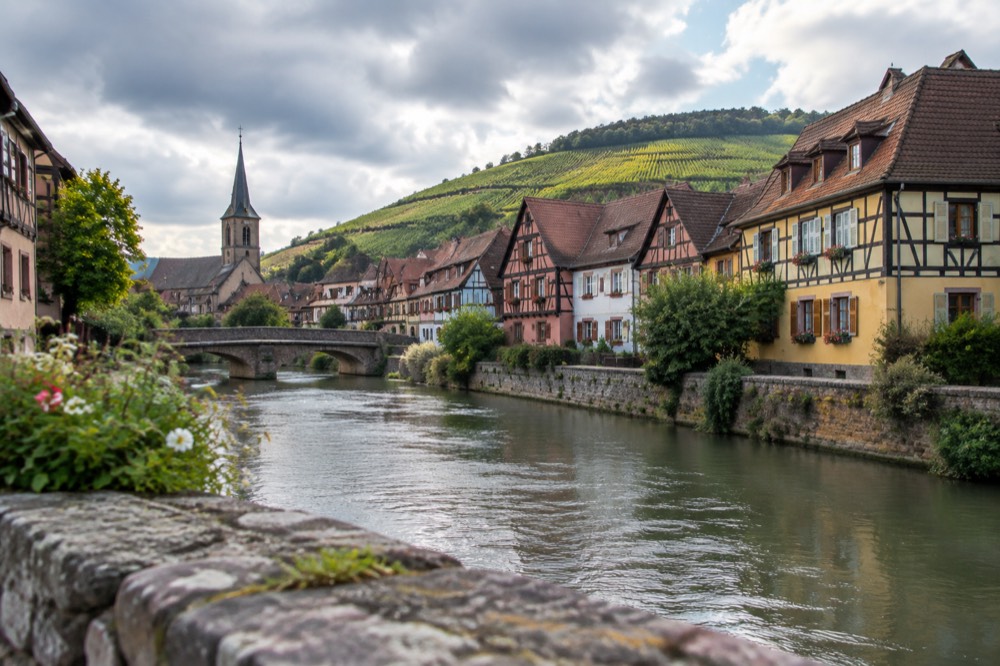
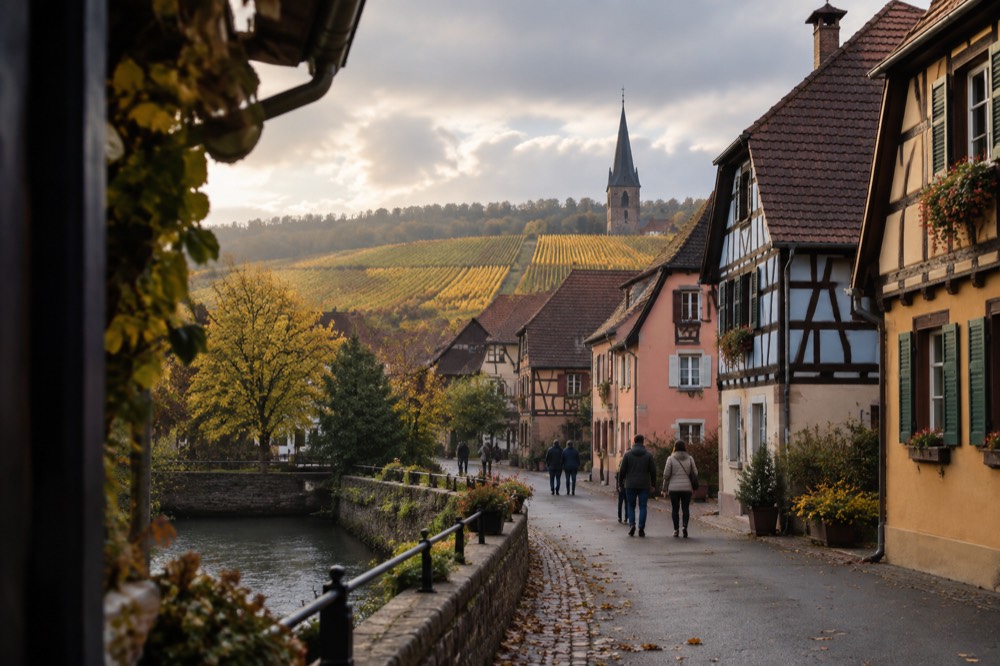
It helps to think of the route as a spine with loops. Villages sit a short detour off the main road, each with its own square, church and tasting rooms, and the landscape between them is the point: rows of vines climbing the hillsides, often in bright soil, with the dark line of the Vosges behind. The grapes grown here are distinctive. Riesling is the flagship, alongside gewurztraminer, pinot gris, sylvaner and muscat, and the region's sparkling crémant gives champagne-style bottles at gentler prices. The site's guide to Alsatian wine and what to drink covers the styles in depth, and the question of whether riesling counts as a cheap wine is worth settling before your first tasting, because the answer shapes what you order.
One honest framing: the route is not a single museum piece. It is a working agricultural region, so harvest weeks, village festivals and the rhythm of the cellar doors dictate what is open. Some tasting rooms welcome walk-ins, others expect a call ahead, and the prettiest square can be quiet on a Tuesday in February and packed on a Saturday in October. Plan around the season, not against it.
Which Villages Should You Stop In?
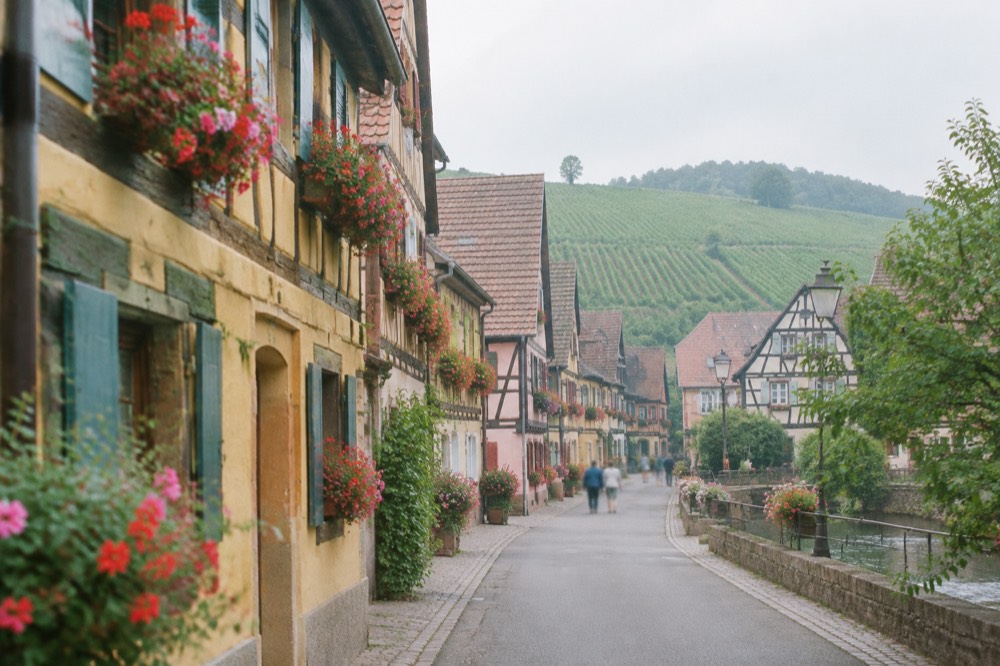
Start with Obernai if you are coming from Strasbourg, then work south through Riquewihr, Kaysersberg and Eguisheim, which are the four names that define the route for first-time visitors. Riquewihr is the classic walled wine town, Kaysersberg pairs its streets with a riverside setting and castle ruins, Eguisheim is the tight circle of lanes around a central square, and each has its own character rather than being interchangeable.
You cannot see them all properly in one day, so choose two or three and give each a real stop. Obernai, the closest of the big names to Strasbourg, has a main square with a bell tower and enough cafés to make it an easy first pause; the site's Obernai guide covers it in full. Riquewihr, wrapped in its original ramparts, is the village on the postcards, and its own page goes into the lanes and the tasting rooms. Kaysersberg, a little further south, is the one many travellers end up ranking above its neighbours because the river runs straight through the middle of town; see the Kaysersberg guide for the walk up to the ruins.
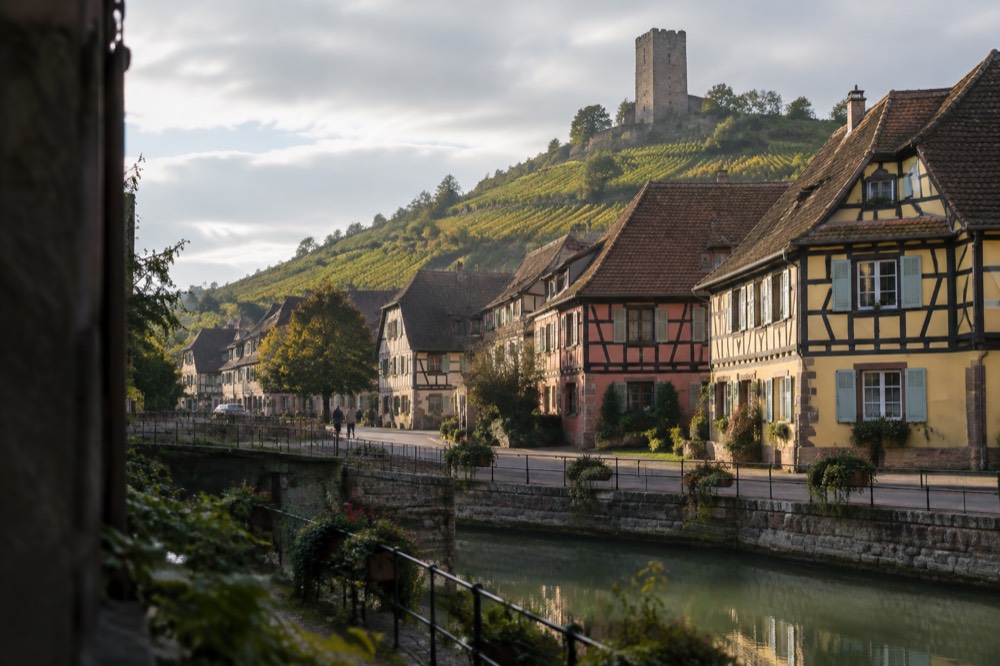
Eguisheim, near Colmar at the southern end, is built in concentric streets around a small square, which makes it a delight to wander and easy to lose your way in; the Eguisheim guide explains the layout. Ribeauvillé has a broader, calmer main street and three castle ruins on the ridge above, and the Ribeauvillé page covers them. If your route runs long, the Colmar guide is the natural southern endpoint, a small city rather than a village, with its own canals and a museum district.
| Village | Character | Best For | What To Check Ahead |
|---|---|---|---|
| Obernai | Busy market town, bell-tower square | First stop from Strasbourg, lunch | Parking on market days |
| Riquewihr | Walled town, ramparts intact | The postcard walk, cellar doors | Tasting room opening hours |
| Kaysersberg | River through town, castle ruins | A slower half day, a viewpoint walk | Weather for the ruin path |
| Eguisheim | Circular lanes around a square | Wandering without a plan | Arriving early or late in high season |
| Ribeauvillé | Broad street, three ridge castles | Escaping the biggest crowds | Castle trail conditions |
A note on pace. The temptation is to treat the villages as a checklist, and the route punishes that: the pleasure is sitting in a courtyard with a glass of the local sylvaner, not photographing a fourth square in the same afternoon. Two villages done well beat five done at a drive-by. If you want the question of which is the prettiest wine region in France answered on the ground rather than in an argument, this is the stretch of road that answers it.
If you would rather leave the driving to someone who knows the cellar doors, a guided day is the straightforward option.
The hidden-stories walk in that band is the site's featured city tour for this page: a small-group walk through Strasbourg's historic lanes that pairs naturally with a wine-route day, since the city's own stories and the region's are the same story told at two scales. It is bookable through the operator's live listing with free cancellation.
Should You Drive The Route Or Take A Tour From Strasbourg?
Drive yourself if there are two or more of you, you want to set your own pace, and someone is happy to spit or skip the tastings; take a small-group tour if you want to drink properly, hate route-planning, or have only one day and no car. A hire car gives full freedom but puts a driver behind the wheel at every cellar door, while a guided day tour handles the roads and the bookings and delivers you back in Strasbourg for the evening.
The self-drive case is strong outside harvest and festival weeks. The roads are quiet, the signage is clear, and stopping wherever a gate looks inviting is the whole charm of the route. The trade-off is the driver's problem: Alsatian tasting rooms pour generous samples, and the sensible driver either spits, samples one in three, or sticks to the wheel while everyone else drinks. Parking in the popular villages fills in the afternoon in high season, so an early start does double duty, giving you empty lanes for photography and a space for the car.
The guided case is equally strong, and not only for the drink. The established day tours from Strasbourg bundle several villages with a guide who narrates the region, and they solve the timing question that defeats self-drivers: how long to give each stop. If the full day is too much, a half-day wine tour from Strasbourg compresses the route into a tasting-led outing that still gets you into the vineyards, and it leaves the afternoon for the city. For travellers combining the region's history with its wine, a medieval villages and wine tasting day trip does exactly what its name promises.
| Way To Travel | Freedom | Drinking | Planning Effort | Who It Suits |
|---|---|---|---|---|
| Own car or hire car | Total | Driver limited | You choose every stop | Groups with a non-drinker |
| Small-group day tour | Set itinerary | Everyone can drink | None | First-time visitors, solo travellers |
| Half-day tasting tour | Set itinerary | Everyone can drink | None | Short-stay visitors |
| Train to one base town | Partial | Everyone | Moderate | Slow travellers, rail pass holders |
One structural point worth knowing: the route also links to non-wine stops that make the day richer. Haut-Koenigsbourg, the restored castle on the ridge above the plain, sits within reach of the central villages and gives the day a panoramic climax, and the Haut-Koenigsbourg guide covers the visit. Mont Sainte-Odile, the convent plateau above the western vineyards, is the other big detour, described in the Mont Sainte-Odile guide. Some guided tours fold the castle in; check the itinerary on the operator's listing before you book, because the combinations change with the season.
How Many Days Do You Need On The Route?
One long day from Strasbourg covers the headline villages at a tasting-room pace, two days let you sleep in a wine village and add either the castle country or the southern villages around Eguisheim, and three or more turn the route into a proper touring holiday with Colmar as a base. The honest minimum for the classic experience is one very full day; the honest recommendation, if you have it, is two.
The single-day version works because Strasbourg is close to the northern villages. Leave early, take in Obernai or Riquewihr before lunch, add Kaysersberg in the afternoon, and be back in Strasbourg for dinner. What a single day cannot do is the unhurried part: the second glass, the walk to the ruins, the festival you stumbled into. Two days fix that, and the natural split is a northern day from Strasbourg and a southern day based on Colmar or Eguisheim, with the middle stretch driven once rather than twice.
For the two-day version, the question of how long the driving itself takes is answered on the site's dedicated page about how long it takes to drive the Alsace Wine Route, which separates the raw road time from the realistic day with stops. The neighbouring touring road, the Route des Crêtes along the Vosges ridge, is the high-country companion to the wine route and can absorb a spare half day if the weather is clear.
Not Sure About Driving The Route Yourself? A small-group day tour from Strasbourg covers the wine villages without a hire car or a designated driver, and free cancellation on the operator's live listing means you can hold a date while your plans settle.
When Is The Best Time To Drive The Alsace Wine Route?
Late September to late October is the classic window, when the harvest brings activity to the villages and the vines turn colour, and the weeks around the Christmas market in late November and December suit travellers who want the route and the festive city in one trip. Spring is quiet and green, summer is the busiest and warmest, and winter outside the festive weeks is low season with short days and closed terraces.
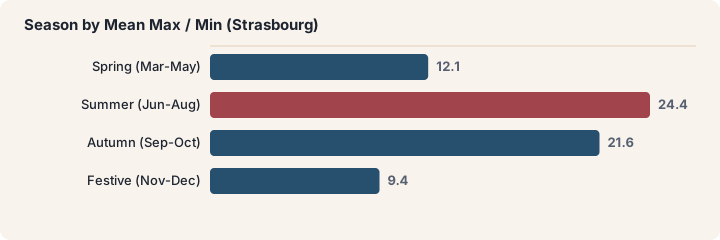
The climate here is semi-continental, which is the fact that shapes all of this. Strasbourg's meteo normals give a mean daily maximum of 26.4 C in July against 5.2 C in January, with 635.7 mm of rain across the year and rain on 112.3 days of it. What that means for the route: summer days are reliably warm enough for every terrace and every walk, but they are also when the famous villages are at their fullest, and October brings both the colour and the harvest traffic. December is cold, with a mean maximum of 5.9 C and a mean minimum of 0.8 C, but the cold is the point if you are pairing the route with the Christmas market, which last year ran from 26 November to 24 December in Strasbourg.
| Season | Mean Max / Min (Strasbourg) | Route Character | Trade-off |
|---|---|---|---|
| Spring (Mar-May) | 12.1 to 20.9 C / 2.6 to 10.1 C | Green vines, quiet lanes | Some cellar doors keep short hours |
| Summer (Jun-Aug) | 24.4 to 26.4 C / 13.4 to 14.9 C | Full season, festivals | Crowds in the big-name villages |
| Autumn (Sep-Oct) | 21.6 to 15.8 C / 10.7 to 7.2 C | Harvest, vine colour | Busy weekends, book ahead |
| Festive (Nov-Dec) | 9.4 to 5.9 C / 3.3 to 0.8 C | Market season, mulled wine | Cold days, early dusk |
Rain is spread evenly through the year rather than concentrated in one wet season, with monthly rain-day counts running from 8.0 in September to 10.8 in May, so no month buys you a dry guarantee. The practical reading is that the route rewards a plan with one indoor fallback, a cellar door or a museum, and the flexibility to swap a walking day for a tasting day. The site's seasonal pages for autumn in Strasbourg and the wider region go further into the shoulder-season case.
What Should You Know About Alsatian Wine Before You Taste?
Alsatian wine is defined by grape variety rather than by village blend: bottles are labelled by riesling, gewurztraminer, pinot gris, sylvaner or muscat, and the region's crémant sparkling wine is made by the traditional method. Dryness varies more than newcomers expect, so ask at the counter before assuming, and the classic pairing is the local food, from choucroute to tarte flambée, not cheese.
The single most useful habit in an Alsatian tasting room is to say what you like and let the pourer steer. Riesling here runs from bone dry to softly sweet depending on the terroir and the intent, gewurztraminer is aromatic and often generous, and pinot gris sits rounder in the mouth than its Italian namesake suggests. The labels carry the grape, the village and often a named lieu-dit, so a single afternoon of tasting teaches you the map faster than any guidebook paragraph. The site's pages on Alsatian wine styles and on riesling's reputation and price cover the detail.
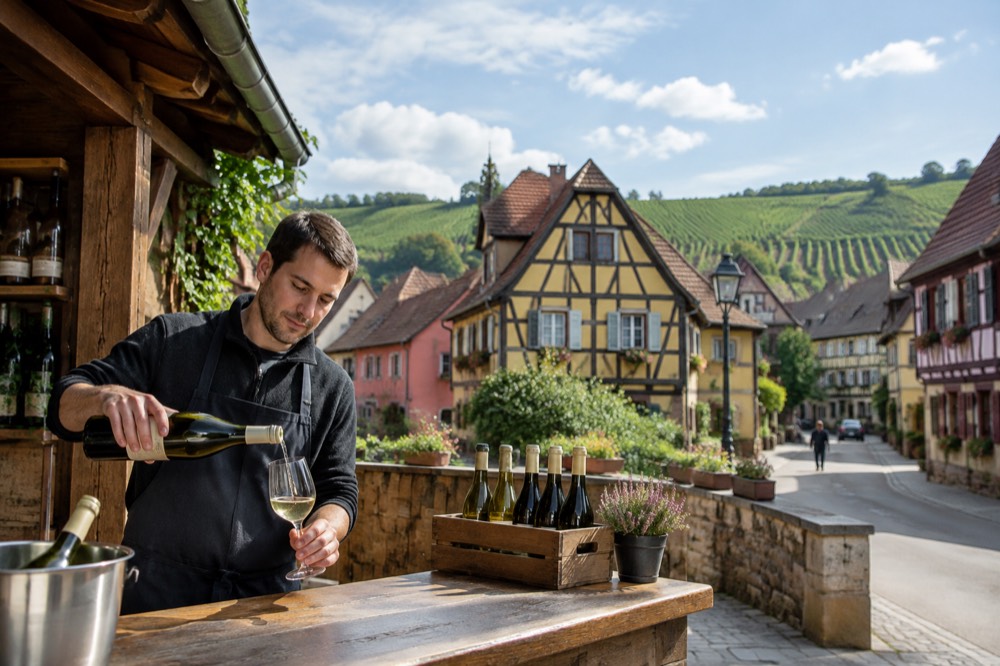
Tasting etiquette is simple and local. Cellar doors in the villages are often family operations, sometimes attached to the house, and hours are posted rather than guaranteed; a short call ahead costs nothing. Tastings are frequently free or tied to a purchase in the smaller rooms, while the larger houses run structured paid tastings, so treat any fee range as a planning question and check the room's own page. If you are buying to take home, ask about shipping, because several of the established producers arrange it, and a case of crémant is a heavy thing to carry onto a train.
For travellers who want the wine without the drive, a medieval villages and wine tasting day trip from Strasbourg is the tour that combines both halves of the region in one outing, and it is a strong pick if the route itself is the reason you came.
Happy to let someone else handle the driving through the wine villages. Book a medieval villages day trip here.
| Grape Or Style | Typical Character | Food It Suits | Order It When |
|---|---|---|---|
| Riesling | Precise, mineral, dry to off-dry | Fish, choucroute | You want the flagship |
| Gewurztraminer | Aromatic, generous, often rich | Spicy dishes, cheese | You like big aromas |
| Pinot gris | Round, textured | Roast pork, mushrooms | You want weight without sweetness |
| Sylvaner | Light, fresh, dry | Everyday lunches | You want the local table wine |
| Crémant d'Alsace | Traditional-method sparkling | Aperitif, celebration | You want bubbles at a fair price |
Where Should You Base Yourself For The Route?
Strasbourg is the best base if the wine route is one part of a wider trip that includes the cathedral, the Christmas market and the European institutions, because the route's northern end starts close to the city. Colmar is the better base if the route is the whole point, since it sits mid-route with the southern villages on its doorstep, and a night inside a wine village itself is the choice for a slow, romantic version of the trip.
The Strasbourg case is the flexible one. You get the city's restaurants and winstubs in the evening, the option of a guided day tour with transport included, and the freedom to swap a wine day for the Black Forest across the border in Germany or Baden-Baden if the weather turns. Remember that the route crosses no border itself, but the day trips around it do: Germany is a short hop over the Rhine, and if you extend to Basel in Switzerland, euros do not work there, so plan cards or francs for that leg.
The Colmar case is the immersion one. Basing there puts Eguisheim, Ribeauvillé and Riquewihr within a short drive of your hotel, and the town itself, canals and all, rewards the evenings. The third option, sleeping in a wine village, is the version that turns the trip from sightseeing into a stay: a room above a tasting room, dinner in the village winstub, and the lanes to yourself before the day visitors arrive. Book that version early for September and October, because the small rooms go first.
| Base | Best When | Route Coverage | Evening Life |
|---|---|---|---|
| Strasbourg | City and route share the trip | Northern villages easily, south with a long day | Rich: winstubs, riverside, cathedral |
| Colmar | The route is the whole trip | Central and southern villages | Charming small-city scale |
| A wine village | Slow, romantic version | One cluster done deeply | Quiet, cellar-door dinners |
What Should You Check Before You Go?
Check three things before you set off: the opening arrangements of the specific cellar doors you care about, the date of any village festival or harvest event that will either delight or block you, and the parking or traffic note for the villages on high-season weekends. Nothing on the route needs booking months ahead except beds in September and October, so the plan can stay light, but the three checks above are the difference between a smooth day and a locked door.
Cellar-door hours are the first check because they are the most variable. A tasting room that welcomed walk-ins in July can run reduced hours after the harvest, and the family houses in the smaller villages keep their own calendars rather than a regional one. The second check is events: village wine festivals in autumn fill squares with stalls and music, which is wonderful if you planned for it and disruptive if you did not. The third is practical: on autumn weekends the famous villages fill their parking early, and a plan that starts at the far end and works back can save an hour of circling.
If a guided day is your choice, the same checks move to the listing: read what the itinerary includes, whether tastings and castle entries are in the price or paid on the day, and what the cancellation terms are. The operator's live listing carries the current details for every tour on this site, and the button below each card reads Check availability rather than promising a price, because product figures live there, refreshed by the operators, rather than frozen on this page. For the wider region, the site's Alsace road trip guide extends the planning beyond the wine road itself.
For travellers who want the historical weight of the region alongside the vines, a best-of-Alsace historical day trip from Strasbourg is the tour that leans into the castles and the old towns, and it suits a day when the weather is too grand to spend indoors.
The route rewards whoever plans the least and lingers the most, but it rewards preparation too, in the shape of open cellar doors and a parking space. Choose your season, pick two villages or three, decide whether the driver drinks, and let the rest of the day follow the road. The three options below cover the standard ways to do it from Strasbourg, from a city walk with the region's stories to a full day among the vines.
Common Questions About The Alsace Wine Route
Can you do the Alsace Wine Route as a day trip from Strasbourg?
Yes. The northern villages such as Obernai and Riquewihr sit close enough to Strasbourg for a comfortable day trip by car or guided tour, and several small-group tours from the city cover multiple villages plus a castle stop in one outing. A single day gives you the headline villages; two days let you sleep in wine country and add the southern cluster around Eguisheim and Colmar.
Do you need a car for the Alsace Wine Route?
No, though a car gives the most freedom. Small-group day tours from Strasbourg handle the driving and the timing, which matters because tasting rooms pour generous samples and someone has to stay sober behind the wheel. Rail links serve the larger towns, and basing yourself in Colmar or a village reduces the need to drive at all.
What is the best month for the Alsace Wine Route?
Late September and October are the classic months: the harvest is under way or just finished, the vines turn colour, and the villages are at their liveliest. The weeks of the Christmas market, from late November to 24 December, pair the route with Strasbourg's festive season. Summer is warmest and busiest, and spring is green and quiet.
Which are the prettiest villages on the Alsace Wine Route?
The four names that define the route are Obernai, Riquewihr, Kaysersberg and Eguisheim. Riquewihr is the walled postcard town, Kaysersberg has a river and castle ruins, Eguisheim is built in a circle of lanes, and Obernai is the lively market town closest to Strasbourg. Ribeauvillé is the quieter alternative with three castles on the ridge above.
Can you buy wine at the cellar and have it shipped home?
Several of the established producers on the route arrange shipping, and it is worth asking at the counter before you commit to carrying bottles. Smaller family cellar doors may not, so if shipping matters to you, buy at the larger houses. Check your own country's rules on importing alcohol before you order a case.