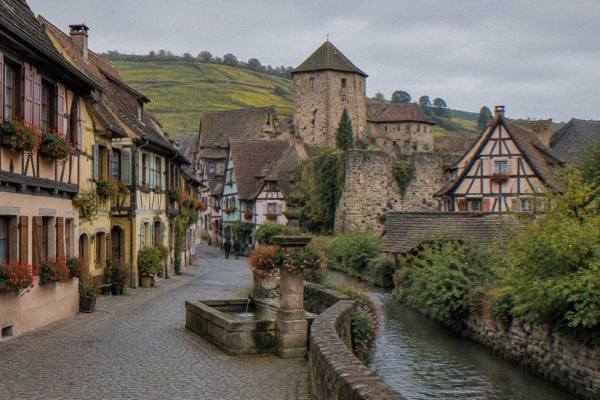
How Long Does It Take To Drive The Alsace Wine Route?
How long the Alsace wine route takes to drive from Strasbourg, what shapes the time, and how many days to give it, with planning advice from the Strasbourg Travel Guide editors.
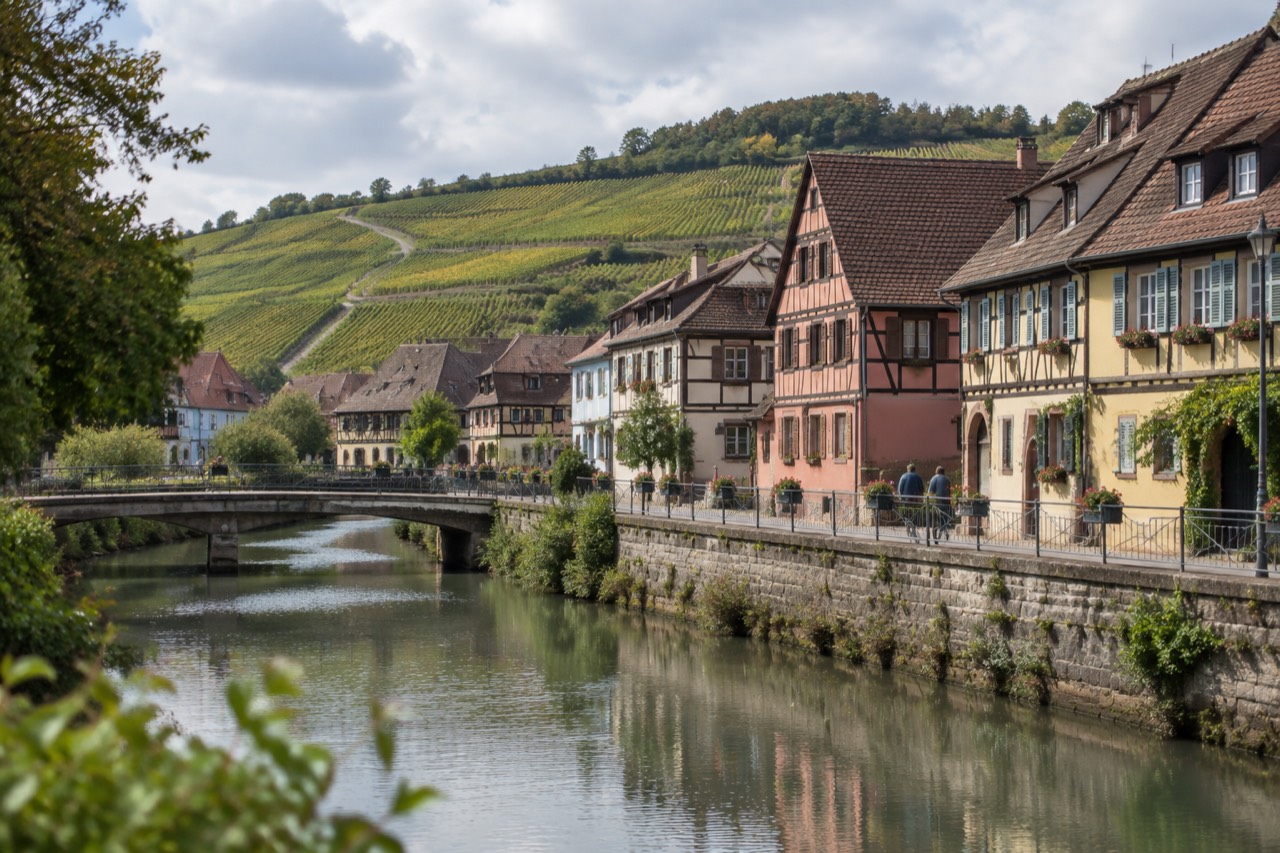
The Alsace wine route is the string of wine villages that runs through the vine-covered hills of Alsace, the region around Strasbourg in north-eastern France, and the question of how long it takes to drive is really two questions in one. The pure driving, village to village on the departmental roads that thread the route, fits inside a single day at the wheel. The visit almost never does, because every village on the route invites you to stop, walk, taste and linger, and that is the whole point of going. This page breaks the question apart: what actually shapes the driving time, how many days different travellers give the route, which stops earn their time, and how the plan changes with the season.
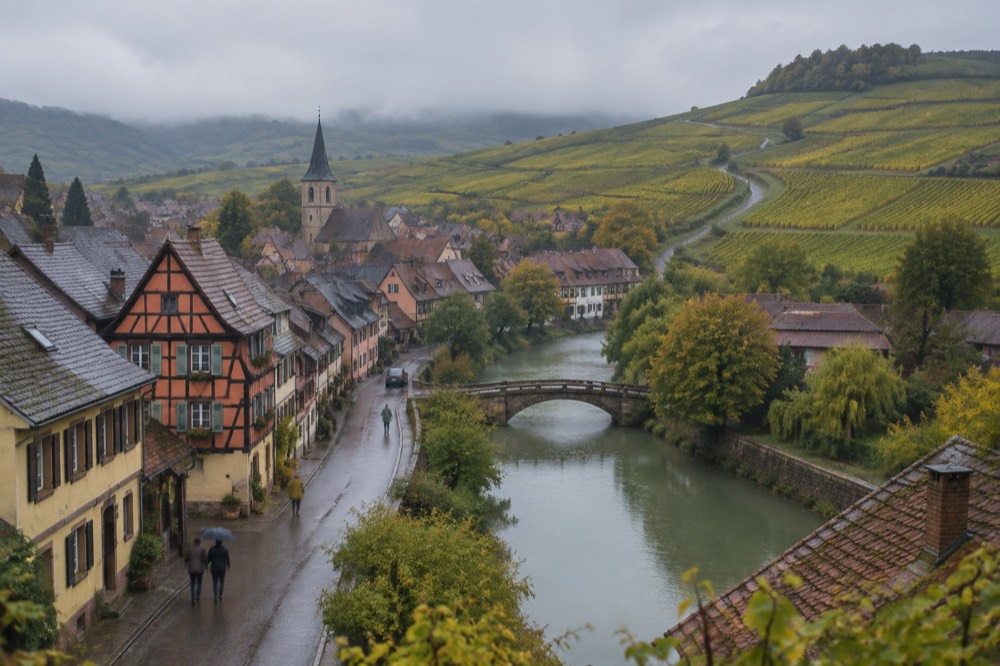
How Long Does It Take To Drive The Alsace Wine Route?
Driven end to end without stopping, the Alsace wine route is a one-day drive on slow, scenic departmental roads through the Alsatian vineyards south and south-west of Strasbourg, in north-eastern France. As a visit rather than a drive, travellers commonly give it two to three days, splitting the villages into digestible halves and adding tasting rooms, castle detours and lunch stops along the way. The road time is the small part; the stops are what stretch the day into a trip.
Thinking of doing the drive yourself? Book a rental car here.
The route is not a motorway project. It exists to be slow. The roads that link the wine villages are narrow, they curve around hillsides, they pass through the middle of every village, and they are at their busiest on weekends and in the harvest period, when agricultural traffic joins the visitor traffic. A driver who treats the route as a transfer will finish it fast and remember nothing. A driver who plans around the stops, one village at a time, with a tasting in the late morning and a long lunch in a winstub, will find that a single day covers only a fraction of what the route offers.
That is why the honest answer is a planning answer rather than a stopwatch figure. No single verified door-to-door time covers "the Alsace wine route", because the route is a chain of destinations rather than one road with one length, and because every traveller chooses a different subset of villages. What can be said firmly is the shape of the answer: the driving is measured in hours, the visit is measured in days, and the number of days you give it is the single biggest decision you make about the trip.
The route also sits inside a bigger landscape of Alsatian travel that this site covers in depth. For the route as a destination in its own right, with the villages, the tasting culture and the practicalities, read the Alsace wine route day trip guide, and for the wines themselves start with the Alsace wine guide. If you are still weighing whether the region deserves the days, the question of what the prettiest wine region in France is is one this site answers separately, and Alsace makes a strong case.
What Shapes The Driving Time?
Three things decide how long the route takes you: how many villages you stop in, what time of year you drive it, and whether you build the trip around tastings or around scenery. The road itself is slow by design, narrow and hillside-hugging, so average speeds stay low even with no traffic. Stop density matters more than distance: a plan with two tastings a day and a lunch runs at a completely different pace from a plan that pauses only for photographs.
The first factor is stop density. A tasting room visit in Alsace is not a ten-minute pour. Wine producers along the route receive visitors in their cellars, walk them through the range, and expect the visit to take its time; building three into one driving day leaves almost no room for the villages themselves. A realistic rhythm is one or two proper stops per half-day, with the rest of the time spent walking the streets, photographing half-timbered houses and ramparts, and eating.
The second factor is season. The vineyards are working farmland, and the harvest period brings tractors, grape trucks and temporary closures on the smallest roads. Summer weekends bring visitor traffic that the village streets were never built for, and winter strips the vines bare, which some travellers prefer precisely because the pace drops. The climate matters too: Meteo-France 1991-2020 normals for Strasbourg-Entzheim show 112.3 rain days a year spread remarkably evenly across the months, from 8.0 days of at least 1 mm of rain in September to 10.8 in May, so a rain plan is worth having in any season.
The third factor is what kind of trip you are building. A scenery-first driver who stops at viewpoints and walks one village in the evening will cover far more ground than a tasting-first traveller. Neither approach is wrong, but they produce different answers to this page's question, and it is worth deciding which one you are before you plan the days.
| Factor | Effect On Driving Time | How To Plan Around It |
|---|---|---|
| Number of tasting stops | Each cellar visit absorbs a generous block of the day | Plan one or two tastings per half-day, not more |
| Season | Harvest traffic and summer weekends slow the village streets | Drive early morning, taste late morning, eat long |
| Stop density | Every village walked adds time no map shows | Choose fewer villages and walk them properly |
| Road type | Narrow hillside roads keep average speeds low | Treat the driving itself as part of the visit |
For travellers who would rather have someone else handle the day, a guided option removes the driving question entirely. The roster below pairs the region's guided day trips with city walks that suit a Strasbourg-first itinerary.
How Many Days Should You Give The Route?
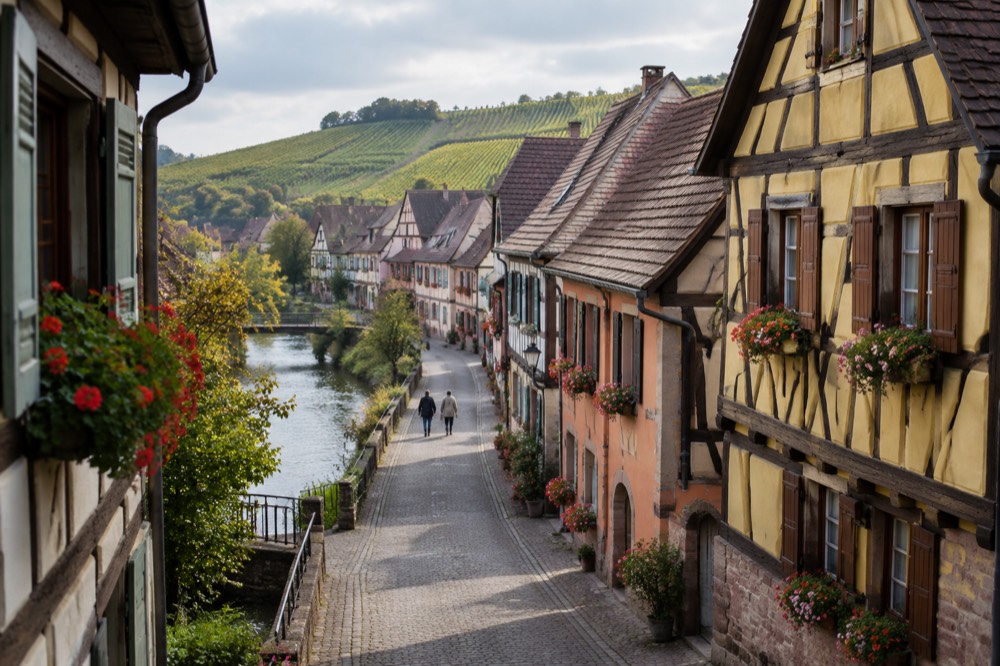
Two days is the practical minimum for a route visit that includes tastings, and three days is the comfortable standard, with the villages split into a northern half and a southern half and an overnight in a wine village or in Colmar between them. One day is possible as a highlight sweep, but it becomes a driving day with brief photo stops rather than a wine route experience. Four or more days suits travellers who want to add castles, hiking ridges and longer lunches.
The two-day split works because the route divides naturally along its own geography. One day for the villages closer to Strasbourg, one day for the southern stretch, with the transfer between them done in the evening when the tasting rooms have closed. The three-day version simply breathes: it adds a castle, a ridge walk or a second tasting region, and it absorbs the slow lunches that make the trip feel like a holiday rather than an itinerary.
| Trip Length | What It Realistically Contains | Who It Suits |
|---|---|---|
| One day | A highlight sweep with photo stops and one tasting | Visitors passing through Strasbourg with a single spare day |
| Two days | Both halves of the route, two or three tastings, one overnight | The standard wine route trip |
| Three days | The route plus a castle, a ridge or a Colmar evening | Travellers who want the region at walking pace |
| Four days or more | The route, the castles, the Vosges ridges and rest days | Slow travellers and returning visitors |
The overnight question is worth a paragraph of its own. Sleeping in a wine village changes the character of the trip: the evening belongs to you once the day visitors have driven off, and the morning light on the vines is the reward for staying. Colmar works well as a base for the southern half, and Strasbourg, which this site covers in its guide to Strasbourg versus Colmar, works as the base for a one-day sweep of the northern half.
If your Strasbourg stay is short and the wine route is one of several regions competing for your days, a contrasting option is to cross the Rhine instead: the Black Forest day trip from Strasbourg to Freiburg, Titisee and Triberg swaps vineyards for pine valleys and waterfalls, and some travellers do one day of each. The guided version of that contrast is a full-day trip from Strasbourg, and the operator's live listing carries the current price, duration and departure details.
Which Villages Are Worth Stopping For?
The route's famous stops, the walled and half-timbered villages such as Riquewihr, Eguisheim, Kaysersberg and Ribeauvillé, each deserve a slow half-day rather than a parking-layby pause, and trying to see all of them in one day is the classic mistake. Choose two or three per day, park at the edge, and walk. The lesser-known villages reward the same pace with none of the crowds, and they are where the tasting rooms have time to talk.
Riquewihr and Kaysersberg carry the postcard fame, and they earn it, but their streets fill by late morning in season. Eguisheim, with its concentric street rings, and Ribeauvillé, with its fountain squares and ruined castles above, hold their charm with a little more room to breathe. This site gives each of them a full page: see the Riquewihr guide, the Eguisheim guide, the Kaysersberg guide and the Ribeauvillé guide for where to park, what to taste and how long to give each one.
The practical rhythm that works is simple. Pick a first village, arrive before the streets fill, walk it while the light is still low, then move to a second village for a tasting and a late lunch, and finish the day in a third place with nothing on the agenda but an evening glass. Two tastings a day is a ceiling, not a target, and a driver should never taste and drive beyond a single shared pour, so plan the route so the last stop is the overnight village.
For travellers who want the wine without the wheel at all, a guided wine day trip from Strasbourg handles the villages, the cellar doors and the driving in one booking. The medieval villages and wine tasting day trip from Strasbourg is built exactly for that, and its live listing carries the current itinerary, price and departure details.
When Is The Best Time Of Year To Drive It?
Late spring through early autumn is the window the route is built for, with the vines in leaf and the tasting rooms on full schedules, and September stands out as the month when the vineyards are at their most photogenic and their busiest. Winter driving is quiet and atmospheric, with bare vines and half-empty streets, but the day is short and some village businesses keep reduced hours. Rain is a factor in every month, so keep the plan flexible.
The climate data backs the flexibility. The Strasbourg-Entzheim normals show the mean daily maximum climbing from 12.1 C in March to 20.9 C in May and peaking at 26.4 C in July, with September still at 21.6 C, and rain days staying between 8.0 and 10.8 across every month of the year. In other words, there is no dry season here, only a warm season, and a wet afternoon in July is as normal as a wet afternoon in November. The vineyards do not mind, and a rain plan, a cellar, a museum, a long winstub lunch, keeps the day moving.
| Season | Vineyards | Streets And Cellars | What To Watch |
|---|---|---|---|
| Spring (Mar-May) | Vines budding, hillsides greening | Quieter than summer, tastings on normal schedules | Rain days run up to 10.8 in May, keep plans flexible |
| Summer (Jun-Aug) | Full leaf, warm hills | Busiest period, especially weekends | Book tastings ahead, drive village streets early |
| Autumn (Sep-Oct) | Harvest colours, the route's famous look | Busy in the harvest window, working farmland traffic | Tasting rooms full, agricultural vehicles on small roads |
| Winter (Nov-Feb) | Bare vines, misty mornings | Quiet streets, some reduced hours | Short days, mean maximum 5.9 C in December |
December brings a different consideration altogether: the wine villages host their own Christmas markets, and the route becomes a string of small lit squares rather than a tasting itinerary. Travellers weighing that period should read this site's answer on whether December is a good time to visit Strasbourg, and those planning the trip around the wine rather than the lights should stay inside the warmer half of the year.
Can You Drive The Route From Strasbourg In One Day?
Yes, as a highlight sweep: leave early, pick three villages at most, book one tasting in advance, and be back in Strasbourg for a late dinner. It is a real and popular way to taste the route from a Strasbourg base, and it is the right choice when the city is the centre of the trip. What it is not is the full route; it is a curated slice of it, and travellers who want the route itself should still plan the overnight version.
The one-day version works best from Strasbourg because the city sits at the northern end of the Alsatian vineyard country, so the first villages arrive quickly and the day is spent in the route rather than driving to it. The discipline is in the choosing. Three villages, one booked tasting, one unhurried lunch, and no attempt to reach the southern end of the route and back in the same day. The sweep should lean on the villages this site documents individually, and the most beautiful villages in Alsace guide is the natural shortlist to choose from.
There is also a middle path that many Strasbourg visitors take: a half-day guided wine tour from Strasbourg, which covers a pair of villages and a cellar visit without the traveller touching a steering wheel, leaving the evening free in the city. The live listing for any of these guided options carries the current price, duration and inclusions, and booking ahead matters in the busy months because the small-group formats fill.
However you drive it, the question this page opened with resolves into a piece of planning advice rather than a number: give the route days, not hours, and let the villages set the pace. The Strasbourg Travel Guide covers every village on the route in its own page, so the itinerary can be built village by village before the car is ever booked.
Common Questions About Driving The Alsace Wine Route
How long does it take to drive the Alsace wine route?
Driven without stops the route fits inside one day on slow, scenic roads, but as a visit it needs two to three days, split into halves with tastings, long lunches and an overnight in a wine village or in Colmar. The stops, not the road, are what stretch the time.
Can you do the Alsace wine route as a day trip from Strasbourg?
Yes, as a highlight sweep of two or three villages with one booked tasting and an unhurried lunch. It is not the full route, but it is a popular and rewarding way to taste it when Strasbourg is the base of the trip.
How many villages should you stop in per day?
Two to three is the comfortable maximum. Each village deserves a walk, and each cellar visit absorbs a generous block of the day, so a plan with more stops becomes a driving day with brief pauses rather than a visit.
When is the best month to drive the wine route?
Late spring through early autumn, with September the standout for the harvest colours, though the vineyards are working farmland then and the small roads carry agricultural traffic. Rain days stay between 8.0 and 10.8 per month all year, so keep the plan flexible in any season.
Do you need to book wine tastings in advance?
In the busy months, yes. The popular villages and the small-group cellar formats fill ahead in summer and the harvest window, and a booked tasting anchors the day's plan. Outside the peak, same-day arrangements are often possible, but booking keeps the rhythm safe.
Is it better to stay overnight in a wine village or return to Strasbourg?
For a two or three day route trip, overnight in a wine village or in Colmar: the evenings belong to you once the day visitors leave. For a one-day sweep from Strasbourg, return to the city, where the winstubs and the evening streets finish the day well.
The route rewards the traveller who gives it time, and the driving, which is the part the question asks about, turns out to be the smallest part of the trip.