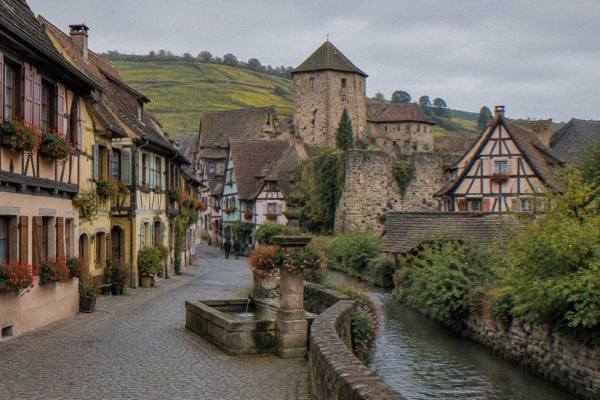
What Is The Prettiest Wine Region In France?
Alsace, reached from Strasbourg, makes the strongest case for the prettiest wine region in France: half-timbered wine villages, the Route des Vins, and Riesling slopes between the Vosges and the Rhine.
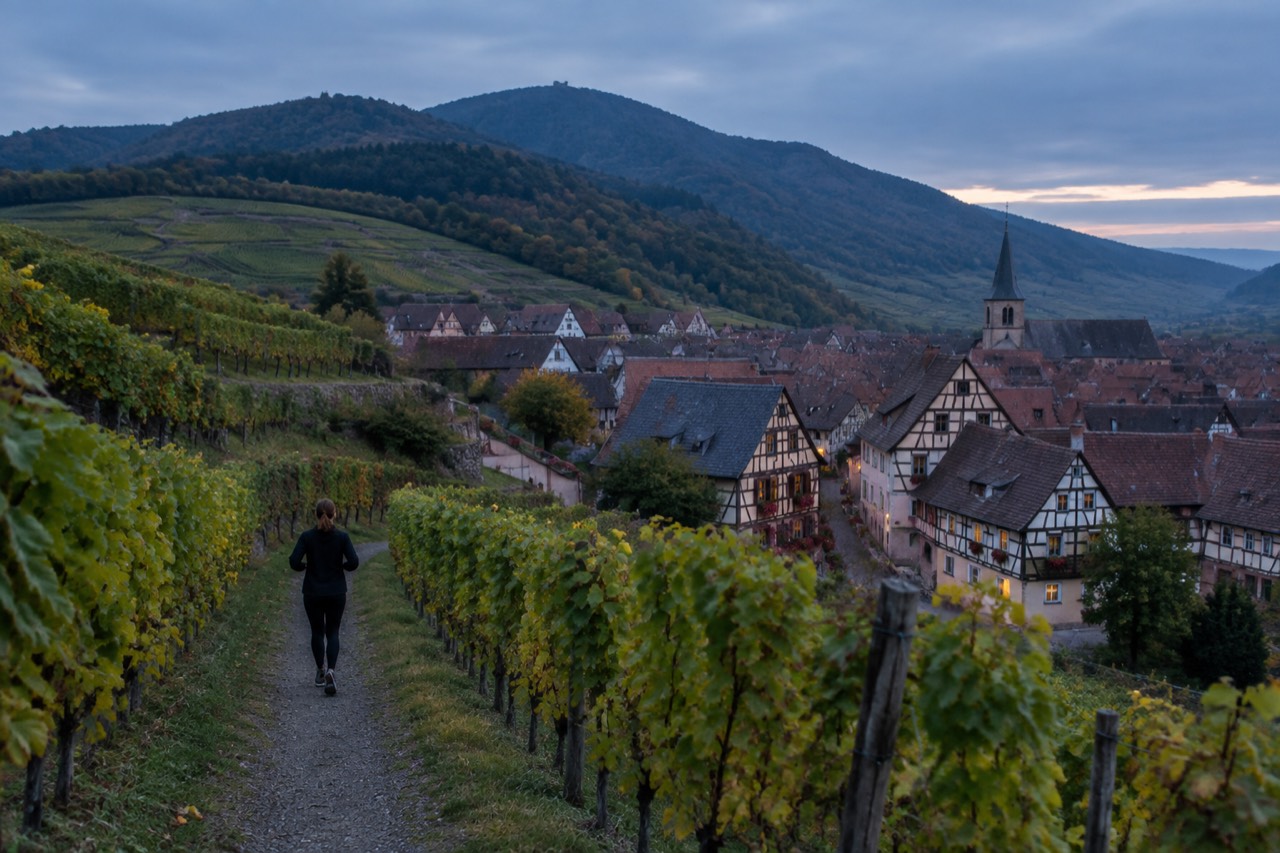
Alsace, the wine region that spreads south of Strasbourg in north-eastern France, between the Vosges foothills and the Rhine border with Germany, is the answer this site argues for when the question is prettiness. That claim needs defending, because France has several beautiful wine countries, from the limestone valleys of the Loire to the hillside estates of Bordeaux and the chalk cellars of Champagne. What separates Alsace is density: half-timbered wine villages, walled towns and striped façades sit almost shoulder to shoulder along a wine route short enough to explore on a long weekend, with Strasbourg as the natural base. The city itself, a commune of 293,771 people at the last INSEE count, sits at the top of the region like a cork in the bottle.
What Is The Prettiest Wine Region In France?
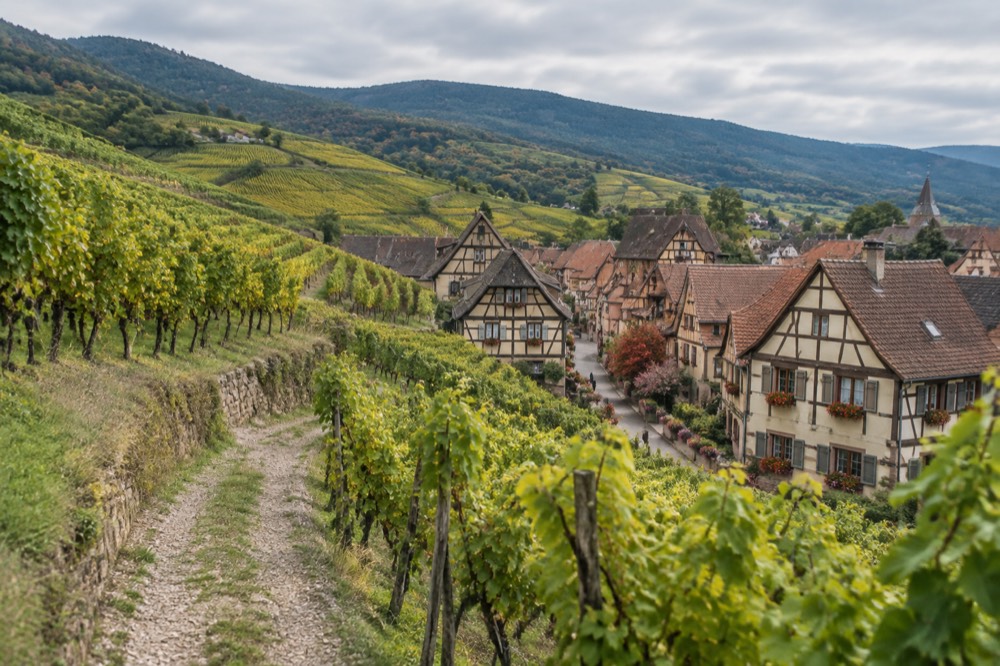
Alsace is the prettiest wine region in France, and the reason is the sheer concentration of beautiful wine villages packed into one small corridor of vineyards between the Vosges mountains and the Rhine plain. Riquewihr, Eguisheim, Kaysersberg and their neighbours are working wine towns of half-timbered houses and cobbled lanes, not museum reconstructions, and they line a single route you can drive across a weekend. Strasbourg, at the northern end, is the base that puts the whole region within an easy day trip.
Prettiness is a judgement, and honest writing should admit that. The Loire has châteaux and a wide, light river. Champagne has rolling hills and deep cellars. Provence has lavender and olive terraces. But those regions spread their beauty thin across long distances, while Alsace compresses it. You can stand in one walled village, see the next one's church tower above the vines, and taste wine from the slope you are looking at before lunch.
The region also behaves differently from the rest of French wine country. Alsace bottles its wines mostly by grape variety, Riesling above all, rather than by village blend, and its signature bottle shape, the tall flûte d'Alsace, is unlike anything used elsewhere in France. Vineyards climb the hillsides in neat terraced rows, oriented to catch sun that the Vosges help shelter from rain, and the villages below them are built of golden sandstone and dark timber. It is a landscape that looks designed for postcards because, in a sense, it was: centuries of wine money paid for the façades.
For travellers who arrive in Strasbourg, this is the practical answer too. The wine route begins a short drive or train ride from the city, the Alsace wine route day trip guide covers how to structure it, and the region's dry, aromatic whites suit the local food in a way that makes tasting feel like part of the scenery rather than a detour from it.
Why Alsace Beats The Other Contenders On Looks
Alsace wins on looks because its beauty is architectural as well as agricultural: the wine villages themselves, with their painted half-timbering, wrought-iron signs and flower-decked lanes, are as visually striking as the vines around them. Other French regions offer one or the other. Alsace offers both at once, village and vineyard in the same frame, and repeats it town after town along a route you can cover without rushing.
Consider what each rival region actually looks like on the ground. Bordeaux is stately but its estates are set apart, behind gates and long drives, and the city is far from the vineyards. The Loire is a river landscape punctuated by châteaux, with stretches of ordinary farmland between them. Champagne is soft and green but its villages are plain; the glamour is underground in the cellars. Provence is gorgeous and immediately recognisable, yet its wine country is only one layer of a landscape better known for its light and its coast.
| Region | Signature landscape | Signature wine | Where the beauty sits |
|---|---|---|---|
| Alsace | Vosges foothill slopes above the Rhine plain | Riesling and other aromatic whites | In the villages themselves, vine to village in one view |
| Loire | Wide river valley with châteaux | Chenin blanc and cabernet franc | In the châteaux and the river light |
| Bordeaux | Estates, gravel terraces and pine avenues | Cabernet and merlot blends | Behind the gates of individual properties |
| Champagne | Rolling chalk hills and farmland | Pinot noir, chardonnay blends | Underground, in kilometres of cellars |
| Provence | Hillsides, lavender rows and olive terraces | Rosé | In the light and the colour of the land |
The Alsace advantage is that you never have to choose between tasting and looking. A cellar door in Riquewihr opens onto a street that is itself the attraction. A tasting of Riesling or Gewurztraminer comes with a view of the slope it grew on. The guide to Alsace wine covers the grapes in depth, including why Riesling carries an undeserved reputation for cheapness, a question examined separately in is Riesling considered cheap wine.
There is also a seasonal argument. Alsace is beautiful twice a year in completely different registers: once in late spring and summer, when the vines are green and the village lanes fill with geraniums, and once in late autumn and December, when the same towns hang lanterns and the vineyards turn copper. Few wine regions reward a winter visit at all. Alsace, with its Christmas traditions, does, and the question of where to find the prettiest Christmas market has an Alsace-shaped answer as well.
Which Villages Make The Alsace Wine Route So Picturesque?
The villages that carry Alsace's claim are Riquewihr, Eguisheim, Kaysersberg, Colmar's old quarter and the smaller stops between them, each a compact cluster of half-timbered houses, wine cellars and walled lanes within a short stretch of the same route. None takes more than an hour or two to wander properly, and together they form the densest run of beautiful wine towns in France.
Riquewihr is the one on the posters, a walled village on the wine route whose main street has barely changed shape in centuries, ringed by slopes that grow some of the region's prized Riesling. Eguisheim is a concentric village, its lanes curling around a central square in a spiral that photographers walk again and again. Kaysersberg sits above a river with a ruined castle look-out and a bridge that frames the timbered houses. Colmar, the wine capital, is bigger, a town of canals and a quarter nicknamed for Venice, and it works as a base in its own right. Other pages covering the same trip are gathered on Strasbourg Travel Guide.
| Village | What it looks like | What to do there | Who it suits |
|---|---|---|---|
| Riquewihr | Walled main street of tall half-timbered houses, vines at the walls | Walk the ramparts, taste in village cellars | First-time visitors, photographers |
| Eguisheim | Circular lanes looping a flower-decked square | Loop the concentric streets, stop at a winstub | Slow wanderers, families |
| Kaysersberg | River bridge, castle ruin above the rooftops | Climb to the ruin, browse the artisan shops | Walkers who like a viewpoint |
| Colmar | Canals, pastel façades, a big old quarter | Museums, boat-style canal ride, cellar visits | Anyone wanting a town base |
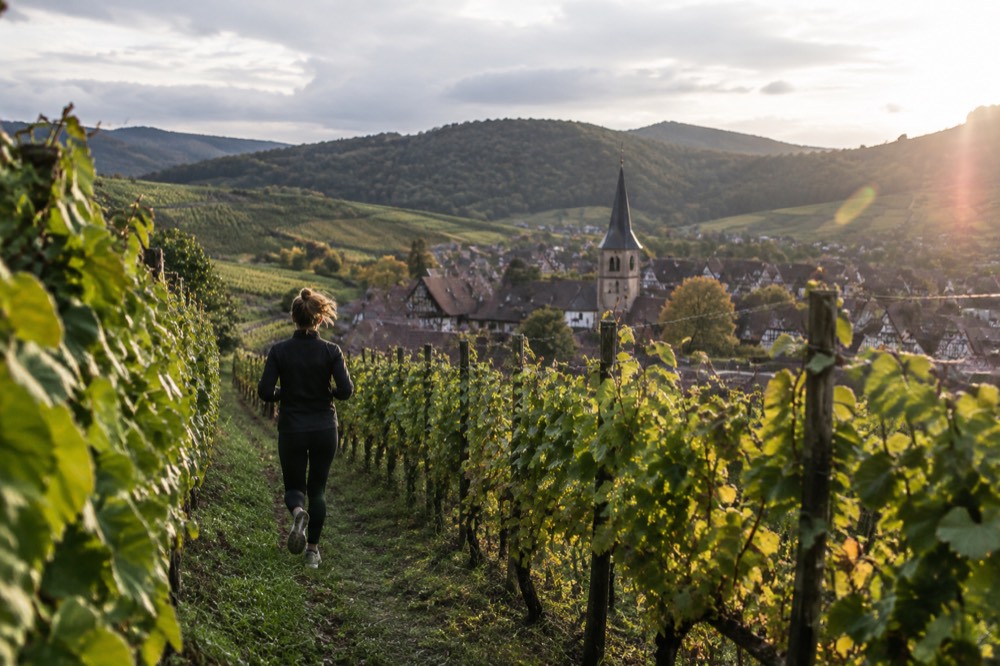
The honest caveat is crowds. These villages are small and famous, so in high summer the lanes fill. The remedy is timing: early morning, midweek, or the shoulder months, when the prettiness is the same and the photo frames are emptier. The practicalities of covering the route, including how long the drive takes, are laid out in how long it takes to drive the Alsace wine route.
A guided walk in Strasbourg itself is a good first evening before heading into the vines, and a local guide's route through the historic centre and Petite France is the featured option on this site: Check availability. Petite France's timbered riverfront is, in miniature, the same architectural language you will meet in the wine villages, so the walk works as a preview of the region.
When Is Alsace At Its Most Beautiful?
Alsace is at its most beautiful from late spring through early autumn for green vines and flowers, and again from late November to 24 December, when the region's Christmas markets light the same villages. The climate is semi-continental, so the seasons are pronounced: warm summers, cold winters, and rain spread fairly evenly through the year. Picking the right month matters more here than in milder parts of France.
The Meteo-France 1991-2020 normals for Strasbourg-Entzheim give the shape of the year: a mean daily maximum of 26.4 C in July against 5.2 C in January, with 635.7 mm of rain across 112.3 rain days annually. What that means for a wine-region visit is warm, bright summer days, a crisp golden autumn, and a cold, atmospheric December. There is no dry Mediterranean summer here, and no mild Atlantic winter either; pack for the season you choose.
| Month | Mean daily maximum | Mean daily minimum | Days with 1 mm of rain or more |
|---|---|---|---|
| April | 17.0 C | 5.7 C | 8.6 |
| June | 24.4 C | 13.4 C | 10.2 |
| September | 21.6 C | 10.7 C | 8.0 |
| October | 15.8 C | 7.2 C | 9.6 |
| December | 5.9 C | 0.8 C | 10.2 |
September and October are the connoisseur's months: harvest brings activity to the cellars, the vine leaves turn, and the tourist peak has passed. December is the other strong answer. Strasbourg's Christmas market, whose last edition ran from 26 November to 24 December 2025 and drew 3.05 million visitors, follows a pattern of opening in the last week of November and closing early on 24 December, and the wine villages run smaller, quieter versions of the same thing. The city posts each edition's dates on its Christmas site, so confirm them there before booking around them.
How To Taste The Region Without Rushing
The best way to taste Alsace is to base yourself in Strasbourg or Colmar, visit two or three villages a day rather than five, and put at least one guided tasting or food walk in the middle so the wine arrives with context. The region's whites, Riesling above all, pair with local food that is heavier and more Germanic than the rest of France, and tasting them where they are grown changes how they read.
To taste the region's whites with some context before you head out, book an Alsace wine tasting here.
The mistake travellers make is treating the wine route as a checklist. Five villages in a day means photographs through a car window and no conversation with a winemaker. Two villages, with a proper lunch stop, a winstub meal of tarte flambée or choucroute, and one cellar visit, gives the region time to work. A guided food walk in Strasbourg before or after the villages is one way to calibrate your palate to the local pairings, and the traditional food walk with tastings is the option this site features for that.
Wine itself deserves the same patience. Alsace's flagship grapes, Riesling, Gewurztraminer, Pinot gris and Muscat, each taste distinctly of where they are grown, and a single afternoon comparing two producers in one village teaches more than a week of drive-by tastings. Ask in each cellar what the vineyard outside the window contributes; the answers are the region's real personality, and they are free with the tasting.
Common Questions About The Prettiest Wine Region In France
What is the prettiest wine region in France?
Alsace, in north-eastern France between the Vosges and the Rhine, makes the strongest case. Its wine villages, Riquewihr, Eguisheim and Kaysersberg among them, are half-timbered working towns set directly among the vines, and they cluster along one route easily reached from Strasbourg. No other French wine region packs this much beauty into so short a distance.
Is the Alsace wine route better than the Loire or Champagne?
For pure scenery per kilometre, yes. The Loire spreads its beauty among châteaux along a long river, and Champagne keeps its glamour underground in cellars, while Alsace puts village architecture and vineyard in the same view, town after town.
Where should I stay to visit the Alsace wine region?
Strasbourg suits first-time visitors, since it combines a historic city, the cathedral and Petite France with easy access to the northern wine route. Colmar works as a southern base closer to the villages. Two or three nights in either lets you visit the route without rushing.
When is the best month to see the Alsace vineyards?
September and October bring harvest and autumn colour with fewer crowds than summer, and late spring gives green vines and flowering lanes. December adds the Christmas markets, which run in the wine villages as well as Strasbourg, from late November to 24 December.
Which wines is the Alsace region known for?
Dry aromatic whites, above all Riesling, plus Gewurztraminer, Pinot gris and Muscat, and a sparkling crémant made in the traditional method. The region bottles mostly by grape variety, which is unusual in France and makes cellar visits easy to follow.
Can you visit Alsace wine country without a car?
Yes, with planning. The region's towns sit on regional rail lines, and guided day trips from Strasbourg cover the wine villages with a driver, which removes both the parking and the tasting-and-driving problem at once. Check the operator's live listing for current availability.
Alsace earns the title not by having one beautiful view but by repeating its beauty, village after village, grape row after grape row, along a route you can actually see in a weekend. Start in Strasbourg, walk Petite France at dusk, then head south into the vines and decide for yourself whether anywhere in France is prettier.