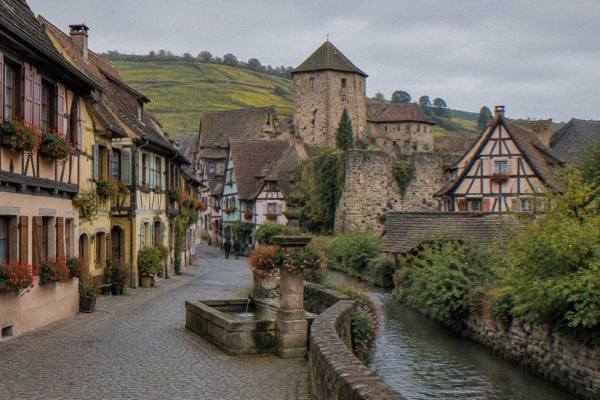
Is Riesling Considered Cheap Wine?
Riesling is not a cheap wine by nature. Around Strasbourg in Alsace, France, it runs from everyday winstub bottles to vineyard-designated Grand Cru, and price follows tier, not the grape.
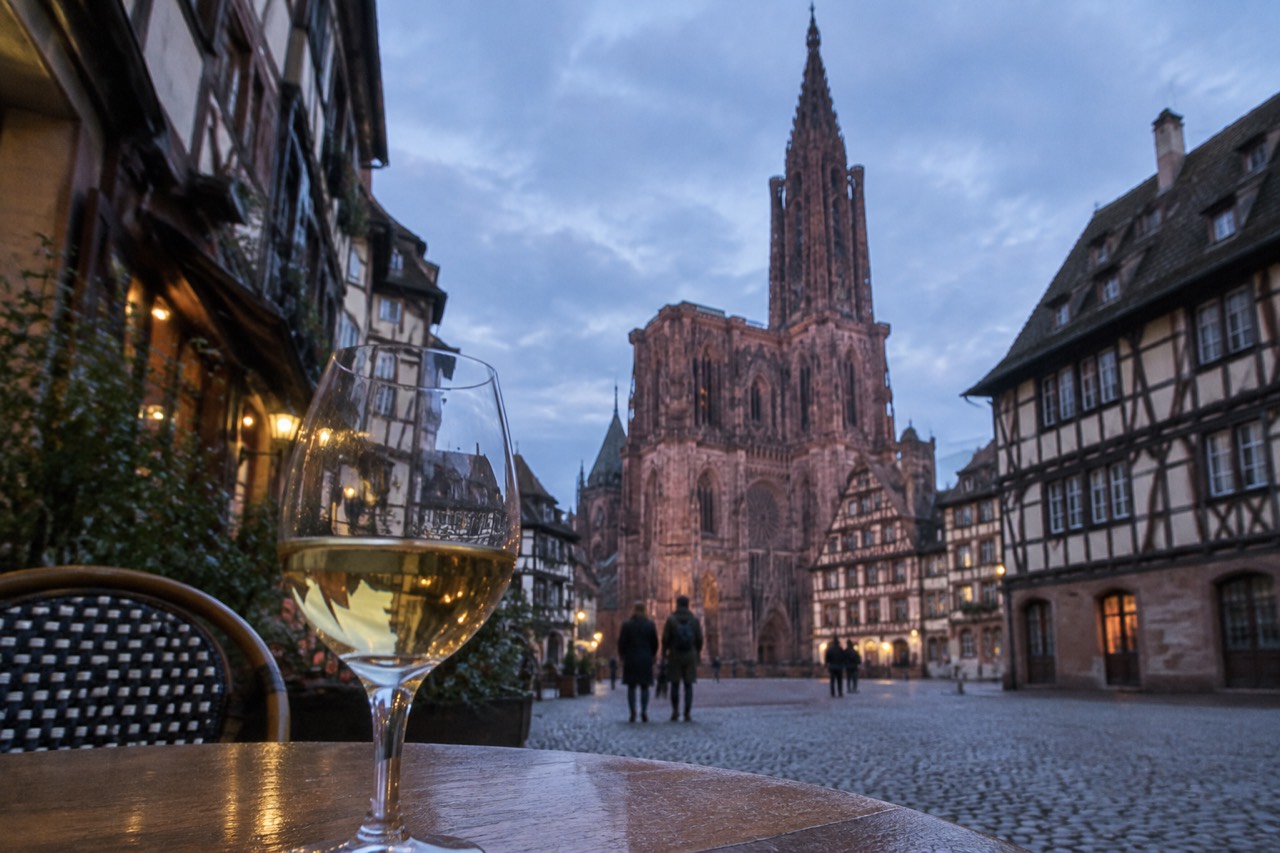
Riesling has spent half a century in the English-speaking world wearing a label it never asked for: the assumption that it is a sweet, inexpensive bottle, the kind of thing picked up without reading the front. In Strasbourg, the capital of Alsace in north-eastern France, that assumption collapses within one evening. The winstubs of the Grande Île pour Riesling by the glass, the wine shops of the city centre stack it from modest everyday bottles to single-vineyard cuvées that command serious money, and the grape sits at the centre of an entire regional wine culture that treats it as a noble variety. The short answer to the question is no, and the reasons why say a great deal about how wine reputations are made and unmade.
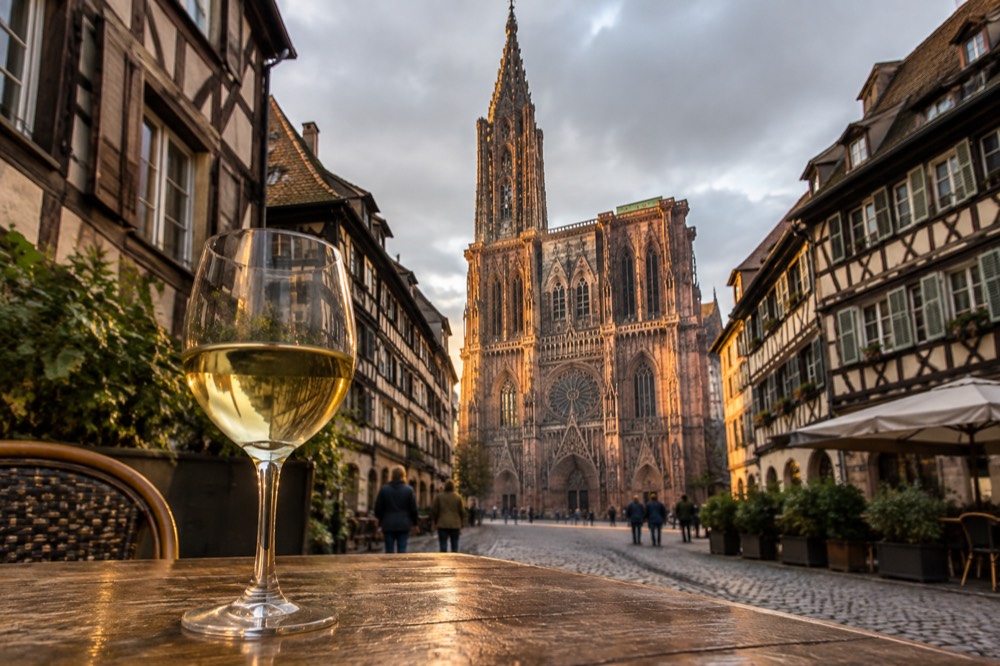
Is Riesling Considered Cheap Wine?
No, Riesling is not considered a cheap wine among people who know it, and in its Alsatian heartland around Strasbourg it is treated as one of the great white grapes of France. The cheap reputation comes from an earlier era of mass-market sweet imports, not from the variety itself, and it lingers mainly in markets where Riesling is rarely tasted in its dry, terroir-driven form. Price follows tier, vineyard and producer, never the grape as a whole.
The reputation problem has a specific shape. In several export markets, Riesling arrived generations ago as a low-cost, sweetened bulk product, and an entire cohort of drinkers formed their impression of the grape from those bottles. The variety itself is another thing entirely: a late-ripening, aromatic grape that transmits the soil it grows in more transparently than almost any other white variety, capable of producing bone-dry wines, gently off-dry wines and dessert-level wines of real complexity. Nothing in that description is cheap by definition.
Alsace is where the correction is easiest to see. The region bottles its wines varietally, naming Riesling on the front label, and its classic style is dry, structured and built for the table. In a Strasbourg winstub, a glass of Riesling arrives alongside choucroute or river fish precisely because the wine's acidity and minerality are considered a match for the local cooking. That is the behaviour of a serious variety, not a budget one. The Alsace wine guide on this site covers the region's other varieties, including Gewurztraminer and Pinot Gris, for readers who want the full picture.
There is also a simple market reality worth stating plainly. Riesling occupies two ends of a spectrum and relatively little in between: inexpensive everyday bottles that do their job honestly, and vineyard-designated wines from top sites that collectors seek out. A shopper who only ever meets the first end assumes the grape is cheap. A shopper who meets the second wonders why anyone ever thought so.
Why Alsace Riesling Escapes The Cheap Wine Label
Alsace Riesling escapes the cheap label because the region's whole structure pushes the grape upward: vineyard classification, varietal labelling, dry food-focused styles and a domestic audience that drinks it as the local standard. Around Strasbourg, Riesling is the default white wine of the region rather than a bargain option, and the vineyards of the Alsace wine route treat it as a flagship variety.
The vineyard geography does part of the work. The slopes that run south from Strasbourg through the wine route villages are a patchwork of distinct soils, and Alsatian producers bottle Riesling site by site, with the top designated vineyards carrying their own Grand Cru labelling. That tiered system is the same logic that governs price in Burgundy or the Mosel: the grape is constant, the site changes, and the site is what you pay for. A reader planning to drive the route can get the practical layout from the Alsace wine route day-trip guide, which covers the villages and how the route strings together.
The second reason is cultural. Strasbourg sits in a wine region that drinks its own production, and the winstub tradition means Riesling is poured constantly, locally and by the glass, in a setting that values food pairing over price per bottle. A grape that is woven into everyday regional dining does not read as a discount product, even at its entry level. The question of how long it takes to drive the Alsace wine route matters here too, because the route's length is exactly why so much of its Riesling never leaves the region.
The third reason is stylistic. Alsatian Riesling is typically fermented fully dry, which places it in the same company as the dry whites of the great French appellations rather than among sweetened entry-level wines. Dryness is not a quality marker on its own, but it removes the sweetness that fed the cheap reputation abroad.
For travellers who want to see the region and its capital in one stay, a guided outing is the practical route, and the three below are the formats this site rates for a first visit.
How To Taste Riesling Around Strasbourg Without Overspending
Tasting Riesling affordably in Strasbourg is easy because the city's wine culture is built on small pours: winstubs sell local whites by the glass, wine bars run Alsatian flight lists, and guided tasting experiences exist that cost less than a restaurant main course. The economical move is to taste by the glass in the city and save bottle purchases for the wine route villages, where cellar-door prices are the producer's own.
Ready to taste Alsatian Riesling for yourself? Book an Alsace wine tasting here.
Start in the winstubs of the Grande Île and the Krutenau, where a glass of Riesling is a normal order alongside tarte flambée. These are restaurants first and wine lists second, but their Rieslings are local and honest, and they set the baseline for what the grape tastes like in its home setting. From there, the dedicated wine bars of the city centre go deeper, pouring several Alsatian Rieslings side by side so the differences between a village wine and a designated-vineyard wine show up in one sitting. There is also a short guided option: a one-hour discovery tasting of Alsace wines runs in Strasbourg, which suits visitors who want the vocabulary explained before they order on their own.
Getting between the neighbourhoods is part of the pleasure. The guided bike tour with a local guide is the format this site features for exactly that: it covers the riverside, the old quarters and the wine-flavoured corners of the city in one loop, with a local guide explaining what you are riding past, and it leaves the evening free for a winstub. Check availability on the operator's live listing if that format suits your dates.
For a shorter spin with a different flavour, the guided Segway tour covers the city's highlights in a compact loop, a format that suits travellers who want the orientation without committing an afternoon. It pairs well with a late-afternoon tasting, since the loop finishes in the centre within strolling distance of the wine bars.
What Separates An Everyday Riesling From A Grand Cru
What separates an everyday Riesling from a Grand Cru is the vineyard, the yield and the ageing: everyday bottles blend fruit from broader holdings and are released young and fresh, while Grand Cru wines come from single designated sites, are held longer before release and gain depth with cellaring. The grape is identical, which is exactly why the price gap surprises people who expected a cheap variety.
The practical way to hold the tiers apart, for a visitor tasting around Strasbourg, is to compare them in the glass rather than read about them. The table below is the qualitative map a first-time taster needs; prices move with vintage and producer, so the honest advice is to ask what each tier costs where you are tasting rather than to quote numbers here.
| Tier | What it is | Typical character in the glass | What it suits |
|---|---|---|---|
| Everyday Alsace Riesling | Blended fruit from standard holdings, released young | Bright, citrus-driven, dry and crisp | Winstub lunches, first tastings, cooking at home |
| Village-level Riesling | Fruit from a named commune's slopes | More body, firmer mineral edge | Dinner pairings, learning the region's styles |
| Grand Cru Riesling | Single designated vineyard site, lower yields | Concentrated, structured, built to age | Special meals, bottles worth carrying home |
| Vendange tardive | Late-harvest style from overripe grapes | Rich, honeyed, dessert-weight | End of a meal, gifts, cellaring |
Two tasting habits make the comparison fair. First, always check the sweetness indication on the label or ask the server: Alsatian Riesling is typically dry, but the region also makes richer styles, and confusing the tiers is how the old sweet stereotype survives. Second, taste the everyday tier first and the Grand Cru second, not the other way round, because the structured wine flattens the fresh one if the palate is already tired. Readers deciding whether the scenery justifies the trip can weigh Strasbourg against other regions in the guide to the prettiest wine region in France, where Alsace's slopes and half-timbered villages are compared with the competition.
When To Visit Riesling Country Near Strasbourg
The months around the harvest, from September into October, are the rewarding window for Riesling country near Strasbourg: the vineyards are at full colour, the tasting rooms are working the new season, and the Strasbourg-Entzheim climate normals give September a mean maximum of 21.6 C with only 8.0 rain days, falling to 15.8 C and 9.6 rain days in October. Early winter trades scenery for Christmas-market atmosphere.
| Month | Mean daily maximum | Mean daily minimum | Rain | Rain days of 1 mm or more |
|---|---|---|---|---|
| September | 21.6 C | 10.7 C | 54.6 mm | 8.0 |
| October | 15.8 C | 7.2 C | 59.5 mm | 9.6 |
| November | 9.4 C | 3.3 C | 47.6 mm | 9.2 |
Those figures are the 1991-2020 Meteo-France normals for Strasbourg-Entzheim, and they describe a semi-continental autumn: warm days early in September, a real drop by November, and rain spread fairly evenly rather than concentrated in a wet season. The practical reading is that September is the comfortable month for the wine route, October is the scenic one, and November belongs to the city rather than the slopes, with the late-November opening of the Christmas market pulling attention back into Strasbourg. The market's dates shift year to year and are confirmed on the city's own Christmas site, so check there before locking a trip.
For travellers who prefer to walk the city before heading out to the vines, the free original walking tour through GuruWalk is a pay-what-you-want format led in English: it costs nothing up front, you tip the guide at the end, and it covers the old town's highlights in a single loop. That format leaves a full day free for the wine route, and it is the budget-friendly way to get oriented before spending anything at all on wine.
Between the free orientation, the bike loop and a day on the wine route, a visitor can build a full Riesling itinerary around Strasbourg without paying for anything twice. The three formats below are the ones this site recommends for that combination.
Common Questions About Riesling In Alsace
Is Riesling considered cheap wine?
No. Riesling is a noble grape variety whose price follows tier, vineyard and producer, and in Alsace around Strasbourg it is poured and priced as the region's flagship white. The cheap reputation comes from old mass-market sweet exports, not from the variety itself.
Is Riesling always a sweet wine?
No. Alsatian Riesling is typically fermented fully dry, with a firm acidic structure built for food. Richer styles exist, including late-harvest bottlings, but sweetness is a deliberate style choice in Alsace rather than the default, and labels indicate it.
Why do people think Riesling is cheap?
Because an earlier era of inexpensive, sweetened bulk Riesling shaped the wine's image in several export markets, and the impression outlived the products that created it. In regions where dry Riesling is drunk regularly, such as Alsace, the grape does not carry that reputation at all.
Where can I taste Riesling in Strasbourg?
In the winstubs of the Grande Île and Krutenau, which pour it by the glass, in the wine bars of the city centre, and through short guided tasting experiences that introduce the region's varieties. The Strasbourg Travel Guide site covers the winstub tradition and the city's food culture in detail.
Is Alsace Riesling expensive compared with other French whites?
It spans a wide range rather than sitting at either end. Everyday Alsatian bottles are modestly priced, while Grand Cru Riesling from top sites commands prices comparable to other classified French whites. The variety's own name on the label is not a price signal in either direction.
Can I visit the Alsace wine route from Strasbourg without a car?
Yes, with planning. Guided wine-route day tours run from Strasbourg, the region's villages are connected by regional rail and bus, and the city itself offers enough tasting venues that a car-free stay is entirely workable. Check the operator's live listing for the formats available on your dates.