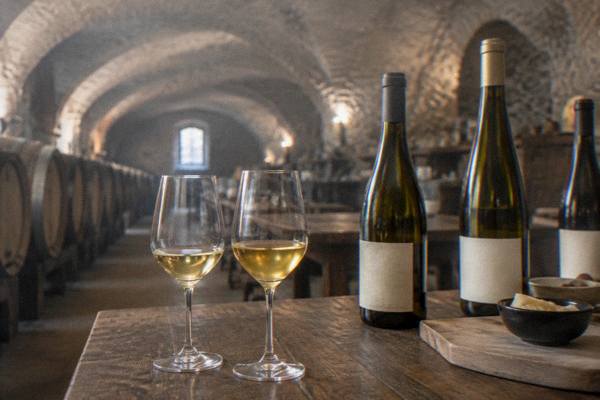
Alsace Wine
Strasbourg, in north-eastern France beside the German border, sits within reach of one of the country's most distinctive wine regions. This guide explains what makes Alsace wine different, where to taste it in the city, and how to plan a route into the vineyards.
Short answer
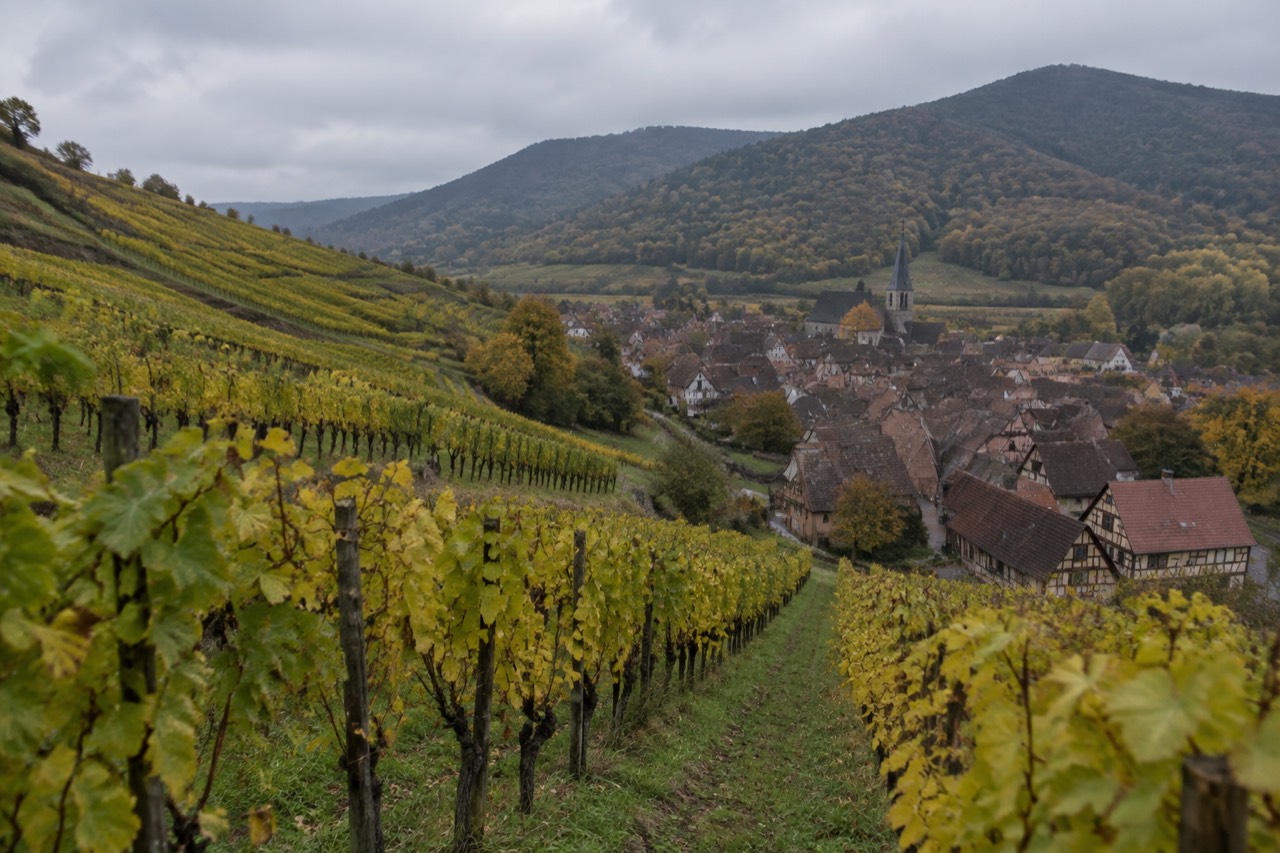
Alsace wine comes from the vine-covered slopes east of the Vosges, a short trip from Strasbourg in north-eastern France. The region is known for aromatic white varieties sold by grape name. A CTS 24-hour Solo pass costs 4.60 EUR for travel in Strasbourg itself, and guided wine tours from the city run from half a day to full days.
Strasbourg, the prefecture of the Bas-Rhin in Alsace, north-eastern France, is a wine city before it is anything else. The River Ill runs past half-timbered quarters that were built on the grain and wine trade, the winstubs of the Grande Île pour local bottles by the carafe, and the vineyards of the Alsace wine route begin a short drive to the south-west. This guide covers the wine itself, the tasting scene inside Strasbourg, and the practical decisions involved in heading out to the villages.
What Is Alsace Wine And Where Does It Come From?
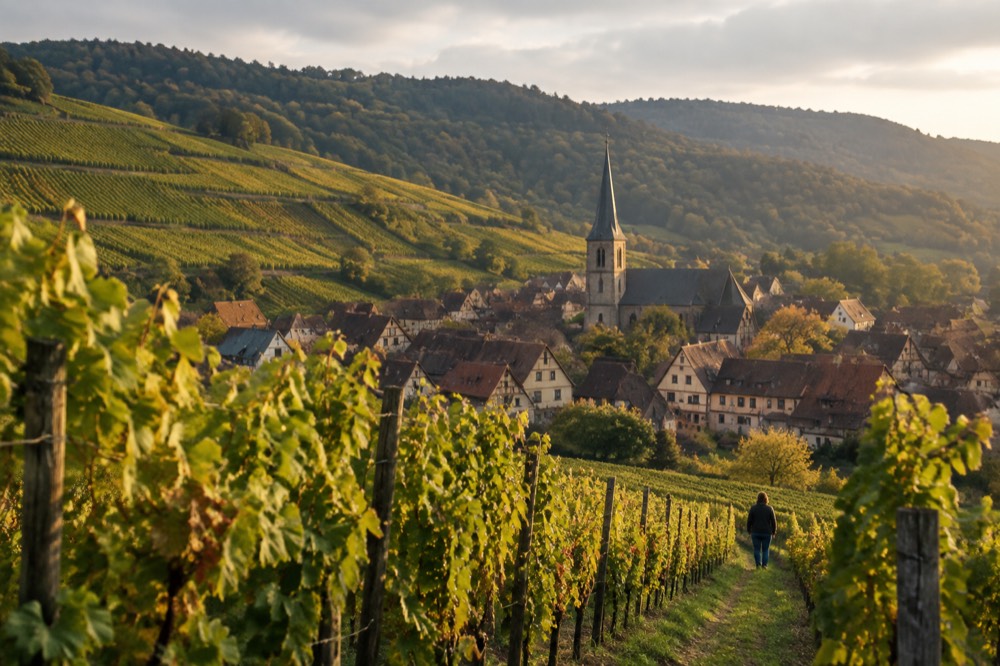
Alsace wine comes from the eastern foothills of the Vosges mountains, in the north-eastern corner of France, where vineyards benefit from a sheltered, sunny climate ideal for grape growing. What sets the region's bottles apart in France is their labelling: unlike most French wines, which are named after villages or appellations, Alsace wines are labelled by grape variety, making it easier for drinkers to know exactly what is in the bottle. The vineyards sit in a rain-shadowed corridor between the Vosges and the Rhine plain, a geography that gives dry, sunny slopes and a long, slow ripening season. Strasbourg, on the Ill beside the German border, is the natural base for the whole region: the city's winstubs, wine shops and tasting rooms pour the local output every day of the week, and the wine villages sit to the south along the plain. The climate here is semi-continental, not Mediterranean, which matters for the wines: crisp acidity and aromatics rather than heavy, jammy fruit.
The region's identity is shaped by that semi-continental climate. Meteo-France 1991-2020 normals for Strasbourg-Entzheim give a mean maximum of 26.4 C in July against 5.2 C in January, with 635.7 mm of rain a year. Long, warm, dry autumns are what ripen the grapes, and the same pattern shapes when to visit: harvest activity and golden vines make early autumn the season winemakers talk about, while winter transforms the same villages into Christmas market stops, a pairing covered in the guide to Strasbourg's Christmas market.
One point of confusion worth settling early: Alsace wine is French wine, but the bottle labels and the grape names look German, because the region changed hands between France and Germany repeatedly across its history and kept its own traditions throughout. The wines themselves are a distinct school, neither French-classic nor German-classic, and the varietal labelling makes them one of the easiest regions in France for a newcomer to learn by taste.
Which Grape Varieties Define Alsace Wine?
Alsace is defined above all by its aromatic white grape varieties: Riesling, Gewurztraminer, Pinot Gris and Muscat form the region's signature quartet, while Sylvaner and Pinot Blanc serve as the everyday workhorses of the local vineyards. For red wine, Pinot Noir is the variety that carries the load, standing alone as the region's principal red grape and rounding out a portfolio otherwise dominated by whites with distinctive aromatics and character. Because bottles carry the grape name on the front label, a tasting flight in Strasbourg teaches you the varieties faster than any amount of reading. Riesling gives lean, mineral, citrus-driven whites that age well. Gewurztraminer is the region's most unmistakable scent, all rose, lychee and spice, and Pinot Gris sits richer and broader between the two. The question of whether Riesling deserves its cheap-wine reputation is worth reading in full: is Riesling considered a cheap wine?.
| Variety | Typical Style | What It Suits |
|---|---|---|
| Riesling | Dry, mineral, citrus and stone fruit, high acidity | Fish, choucroute, long keeping |
| Gewurztraminer | Aromatic, rose and lychee, often off-dry to sweet | Spicy dishes, Munster cheese, aperitif |
| Pinot Gris | Broad, generous, orchard fruit, sometimes smoky | Roast poultry, mushroom dishes |
| Muscat | Fresh, grapey, floral, usually served young | Aperitif, light starters |
| Sylvaner | Light, dry, gently floral | Everyday meals, winstub lunches |
| Pinot Blanc | Soft, balanced, neutral fruit | Quiche, tarte flambée |
| Pinot Noir | The region's red, light to medium, red fruit | Charcuterie, poultry |
Beyond the varieties, the region also bottles sparkling wine in the crémant style, made by the traditional method, and late-harvest and selected-noble-harvest sweet wines from grapes left on the vine to concentrate. The crémant is the local answer to champagne and appears on nearly every winstub list; the sweet late-harvest bottles are poured by the small glass. If you are weighing a sparkling purchase, the comparison is crémant as good as champagne? works through the differences honestly.
The grape-name labelling has one practical consequence for visitors: you can shop by flavour preference rather than by appellation. If you drank a Gewurztraminer you liked, every other Gewurztraminer on the shelf gives you a recognisable starting point, and the differences between producers become the interesting part of the tasting rather than an obstacle. Other pages covering the same trip are gathered on Strasbourg Travel Guide.
How Do You Taste Alsace Wine In Strasbourg Itself?
You do not need to leave the city: Strasbourg tastes its own region's wine in winstubs, specialist wine bars and the Cave Historique des Hospices, and a guided tasting walk or a one-hour seated tasting will cover more ground in an evening than a week of random orders. The winstub is the native format, a wood-panelled dining room where local bottles are poured to accompany tarte flambée and choucroute, and the streets around the cathedral and Petite France hold a dense cluster of them. For a more focused experience, tasting flights that walk you through several varieties side by side are the fastest way to build a palate for the region.
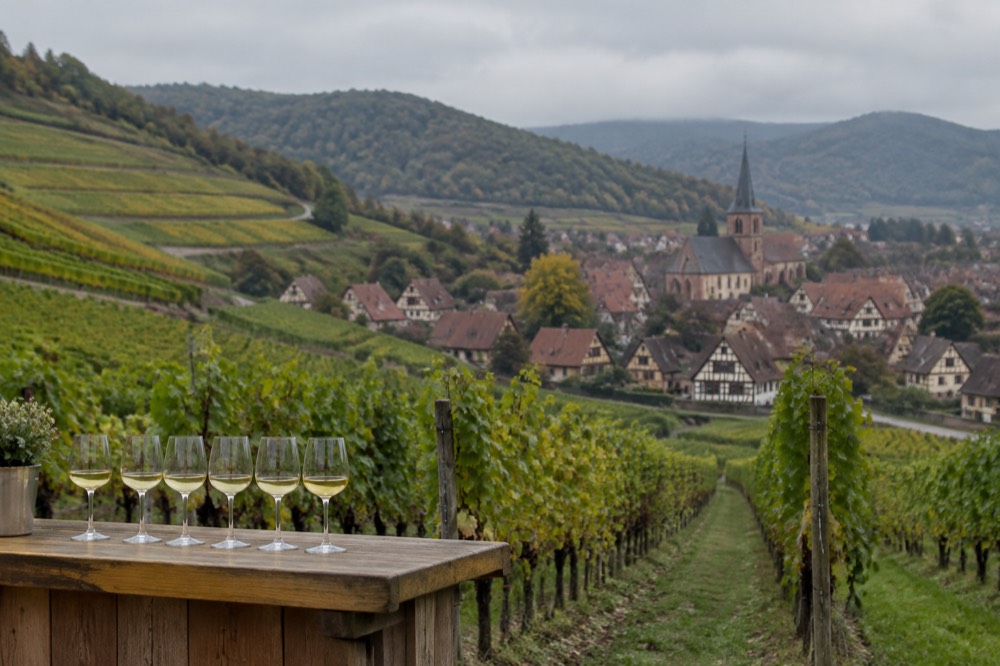
The Cave Historique des Hospices, a historic cellar in the city, is the institution to know about: it holds Alsatian stock and runs tastings, and it is covered in its own guide to the Cave Historique des Hospices. Wine shops around the city centre pour samples of small producers, and the covered markets sell the region's bottles alongside the cheese they should be drunk with. A seated introduction, such as a discovery tasting of Alsace wines poured by a host who explains each variety, turns an evening into a short course; the operator's live listing shows the current price, the venue and what is poured.
| Where | Format | Good To Know |
|---|---|---|
| Winstub | Bottle or carafe with a meal | Book ahead at weekends; pours are generous |
| Cave Historique des Hospices | Cellar visit and tasting | Check the cellar's own page for session times |
| Wine bars around the Grande Île | By-the-glass lists, flights | Ask what is open; lists change with stock |
| Specialist wine shops | Bottle purchase with samples | Good for buying to take home |
| Guided tasting sessions | Seated flight with commentary | Duration and price on the live listing |
Food-led walks are the other way in. A gourmet tour that stops at several addresses, tasting as it goes, pairs the wines with the breads, cheeses and charcuterie of the region in one moving meal; the guide to Strasbourg food tours compares the formats. For travellers who want the wine without the walking, an evening in a single cellar with a flight in front of you is the calmer choice.
What Is The Alsace Wine Route And How Do You Plan It?
The Alsace wine route is a signposted touring road that strings the region's wine villages along the Vosges foothills south of Strasbourg, and the practical decisions are which stretch to drive, whether to taste or just look, and who drives. The route is the region's spine: villages of half-timbered houses, family domaines with tasting rooms, and hillside paths between the rows. The honest answer with planning figures is in how long does it take to drive the Alsace wine route?. The route's own page on this site, the Alsace wine route day-trip guide, covers the stops in detail.
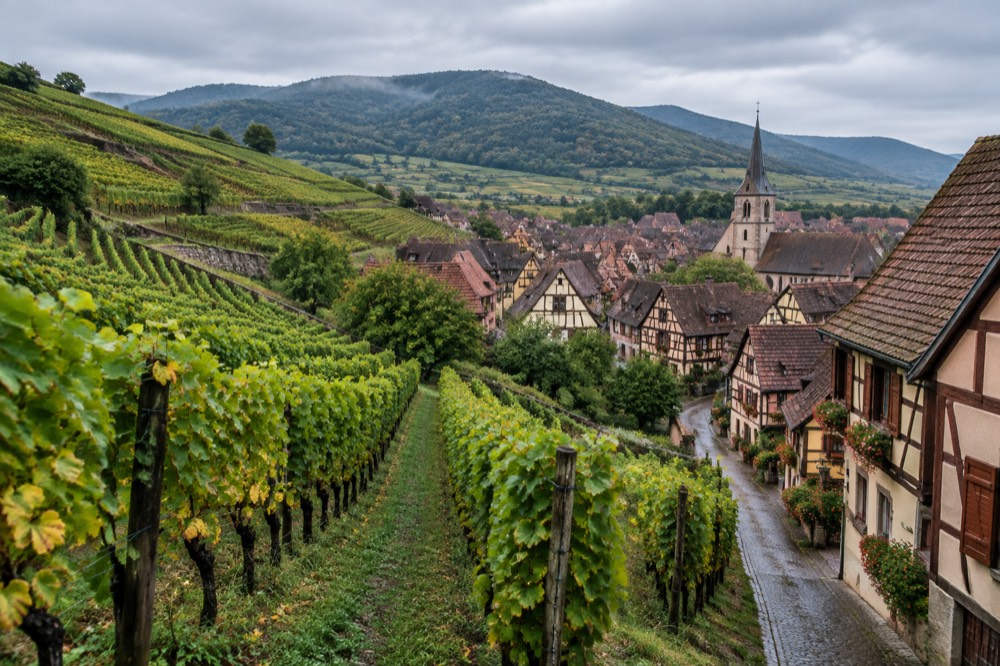
Planning is mostly about restraint. Tasting rooms are small, family-run and close for lunch, so three or four domaines in a day is a full programme, not a cautious one. If you are driving, spit or share; if you would rather not drive at all, guided tours from Strasbourg take the decision away entirely, and the comparison between booking a tour and going independently comes later in this guide. For the villages themselves, the question of which stretch is prettiest is genuinely contested: what is the prettiest wine region in France? makes the case for this one.
| Planning Choice | What It Involves | Who It Suits | What To Check |
|---|---|---|---|
| Self-drive along the route | Hire car, your own pace, tasting stops you choose | Confident drivers, small groups | Opening days of domaines; parking in villages |
| Guided small-group tour | Minibus from Strasbourg, set stops, driver included | First-time visitors, non-drivers | Departure point and included tastings on the listing |
| Half-day wine excursion | Shorter loop, fewer villages | Visitors with a spare half-day only | Which villages are on the itinerary |
| Train plus village base | Stay a night in a wine town | Slow travellers | Luggage and Sunday closures |
| Cycle between villages | Flat valley sections, hills above | Fit travellers in summer | Bike hire and opening hours |
The route pairs naturally with the wider region. The Alsace road-trip guide shows how the wine route fits with the castles and crest roads, and the guide to the most beautiful villages in Alsace lists the stops worth building a day around.
Which Wine Villages Should You Visit From Strasbourg?
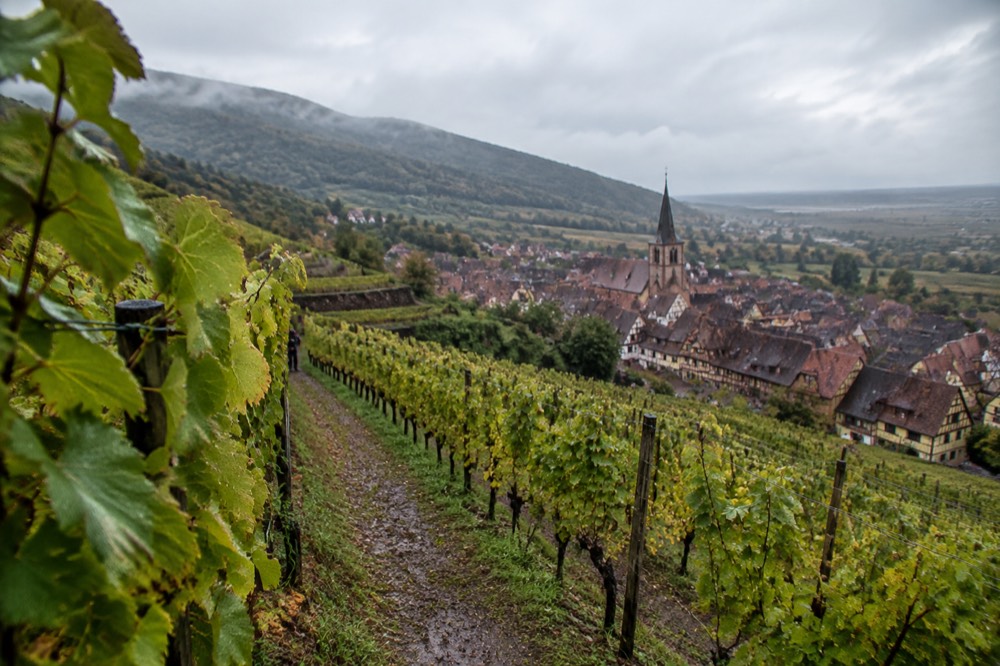
The classic village stops from Strasbourg are Riquewihr, Eguisheim, Kaysersberg, Ribeauvillé and Obernai, each a compact half-timbered town with domaines you can walk between, and each with a character of its own. Riquewihr draws the biggest crowds with its famously preserved old streets, while Eguisheim and Kaysersberg offer a slightly calder pace and equally pretty lanes lined with tasting rooms. Ribeauvillé and Obernai round out the list with their own distinct atmospheres and easy access by car or tour. Riquewihr is the postcard, a walled main street dense with wine houses. Eguisheim is a circular village of concentric lanes, often the one visitors name as their favourite. Kaysersberg adds a ruined castle above the river and a more rugged feel, Ribeauvillé keeps a working-town edge with its own fountains, and Obernai, closest of the well-known stops, balances tourism with everyday Alsatian life. Each has a full page on this site: Riquewihr, Eguisheim, Kaysersberg, Ribeauvillé and Obernai.
| Village | Character | Pair It With | What To Confirm |
|---|---|---|---|
| Riquewihr | Walled, postcard-dense, wine houses in a row | A morning walk before the crowds | Domaine opening days |
| Eguisheim | Circular lanes, gentle, family feel | A slow afternoon and a long lunch | Whether the tasting rooms close midday |
| Kaysersberg | Castle ruin, river, steeper lanes | A viewpoint walk after tasting | Castle path access |
| Ribeauvillé | Working town, fountains, fewer coaches | A quieter lunch stop | Market days |
| Obernai | Lively, closest to Strasbourg, easy by rail | A first-day warm-up trip | Train times and connections |
A guided day that threads several of these villages together, with tastings built in, is the format that suits visitors without a car. One such tour runs from Strasbourg through medieval villages with wine tasting included, and the operator's live listing carries the itinerary, the duration and the price; the guide to day trips from Strasbourg region pages cover the alternatives.
Beyond the famous five, the route holds quieter names that reward a detour: Hunawihr and Bergheim, covered together in the guide to Hunawihr and Bergheim, keep their walls and their calm, and the Colmar guide makes the case for the region's wine capital as a base in its own right, a choice weighed against Strasbourg in is it better to stay in Colmar or Strasbourg?.
How Does Alsace Wine Pair With Local Food?
The short answer is that the region's food and wine grew up together in the same kitchens: Riesling cuts through choucroute, Gewurztraminer stands up to Munster, and Pinot Blanc or a young Sylvaner is the default pour beside tarte flambée. This is a matching made over centuries of shared tables, and the winstub menu is the syllabus. Choucroute, the heaped plate of sauerkraut, sausages and pork, needs a wine with enough acidity to reset the palate between bites, which is exactly what Riesling supplies. The pungent washed-rind Munster cheese finds its mirror in Gewurztraminer's spice. Tarte flambée, the thin cream-and-bacon tart baked in a wood oven, wants something light and dry.
| Wine | Dish | Why The Pairing Works |
|---|---|---|
| Riesling | Choucroute, river fish | Acidity refreshes after rich, salty pork |
| Gewurztraminer | Munster cheese, spicy dishes | Aromatic sweetness meets the cheese's pungency |
| Pinot Gris | Roast poultry, mushrooms | Body matches the weight of the plate |
| Sylvaner or Pinot Blanc | Tarte flambée | Light, dry, unobtrusive beside the cream |
| Pinot Noir | Charcuterie, game | Soft red fruit against cured and roasted meats |
| Crémant d'Alsace | Anything, or nothing | The local method sparkler for celebrations |
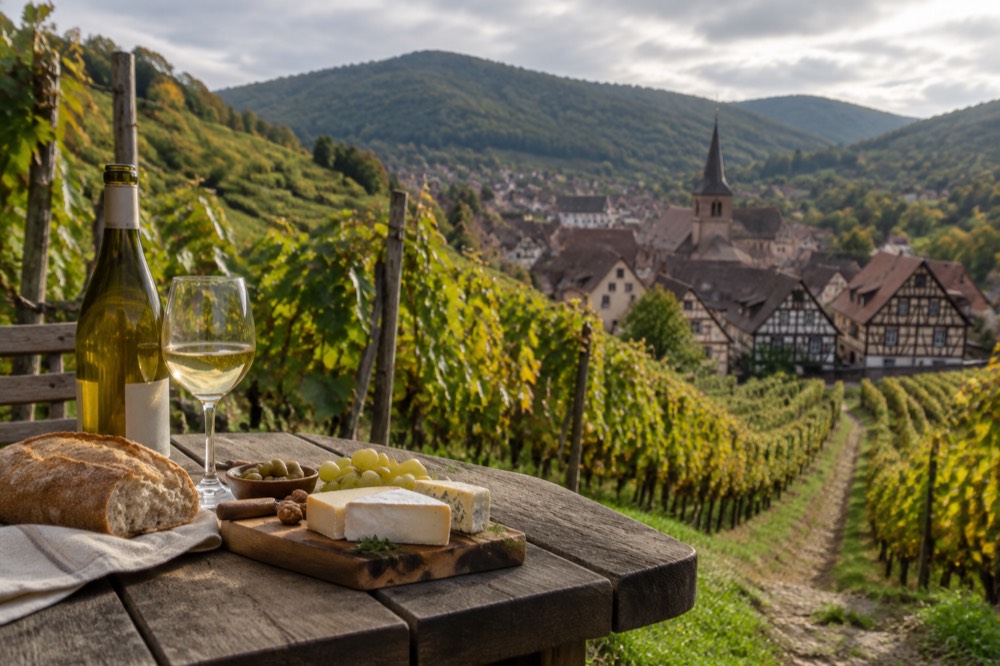
The dishes have their own pages for readers who want depth: choucroute, tarte flambée, baeckeoffe, the winstubs of Strasbourg and the wider guide to Strasbourg food. The dessert answer is kougelhopf, the Alsatian brioche mould, which pairs with a late-harvest pour; see what dessert is Strasbourg known for?. A food-led walk through the city, tasting as it goes, is the way to sample several of these pairings in one sitting; the guide to the best restaurants in Strasbourg covers where to sit down for the full version.
Which Season Suits An Alsace Wine Trip?
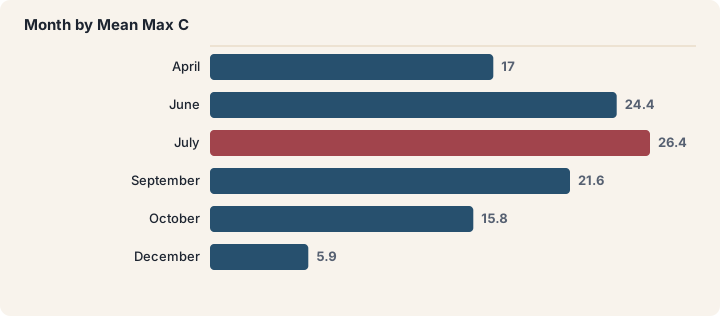
Early autumn is the season the region itself points to, because the vines turn gold, the harvest comes in and the tasting rooms are at their liveliest, though every season has a case: spring blossom and quiet cellars, summer terrace drinking, and winter's Christmas markets in the same villages. The climate is semi-continental, so the calendar matters more here than in Mediterranean regions. The Meteo-France 1991-2020 normals for Strasbourg-Entzheim show the shape of the year: a mean maximum of 21.6 C in September falling to 15.8 C in October, with 8.0 rain days of 1 mm or more in September and 9.6 in October. December, when the markets run, has a mean maximum of 5.9 C and 10.2 rain days.
| Month | Mean Max C | Mean Min C | Rain Days (1 mm or more) |
|---|---|---|---|
| April | 17.0 | 5.7 | 8.6 |
| June | 24.4 | 13.4 | 10.2 |
| July | 26.4 | 14.9 | 10.4 |
| September | 21.6 | 10.7 | 8.0 |
| October | 15.8 | 7.2 | 9.6 |
| December | 5.9 | 0.8 | 10.2 |
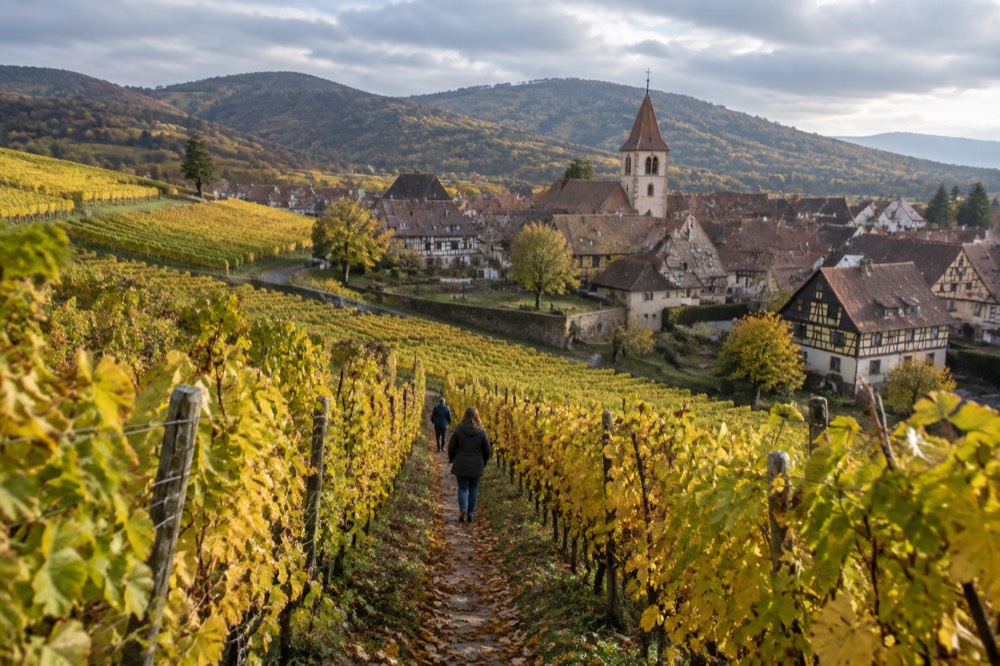
Winter deserves a special mention because the wine villages and the markets are the same trip: the guide to Christmas markets in Alsace and the Colmar Christmas market guide show how the region's towns decorate for the season, and mulled Alsatian wine is poured from the chalets. The trade-off is cold and crowds; the guide to Strasbourg in winter is honest about both. For the full weighing of months, see the best time to visit Strasbourg and the Strasbourg weather guide.
Should You Book A Guided Wine Tour Or Go Independently?
Book a guided tour if you want to taste without driving, if you are short of time, or if you want the context a guide adds; go independently if you have a car, a full day or two, and specific domaines you want to linger in. The independent route gives you control: you choose the villages, stop when a tasting room looks welcoming, and buy bottles at the cellar door. Its costs are the driving, the research into which domaines open when, and the risk that small tasting rooms close for lunch exactly when you arrive. The guided route costs more per person but removes every one of those decisions, and the driver-guide format means everyone in your party can swallow what they taste.
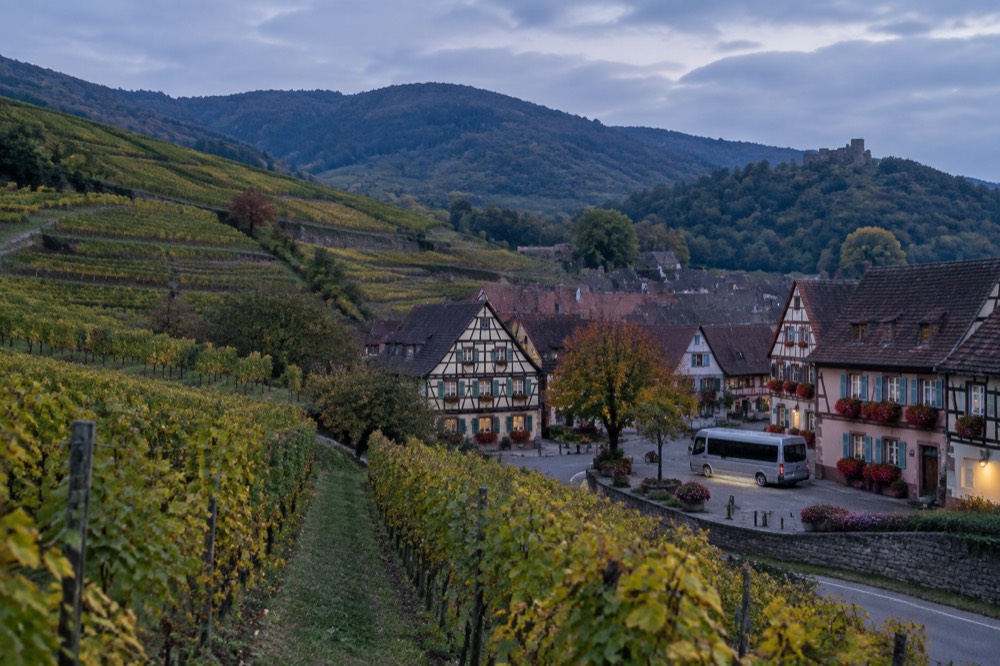
The formats on offer from Strasbourg range from a half-day excursion into the vineyards to full-day loops that add castles or the high road. A half-day wine tour is the taster option for visitors who also want their evening in the city; the operator's live listing shows the current price, the departure point and what is included. Full-day versions cover more villages and usually fold in a lunch stop or a viewpoint, and the longest days pair the wine route with Haut-Koenigsbourg, covered in its own castle guide.
| Format | What You Get | Best For | What To Check On The Listing |
|---|---|---|---|
| Half-day wine tour | Vineyard loop, guided tastings | First taste of the route | Number of tastings included |
| Full-day highlights tour | Several villages, longer commentary | Visitors with one full day | Lunch arrangements |
| Medieval villages and wine day | Villages plus tasting stops | Photographers and food lovers | Walking distance at each stop |
| Food-and-wine walk in Strasbourg | City tastings, no driving | Bad-weather days, short stays | Dietary options |
| Independent self-drive | Total freedom | Repeat visitors, drivers | Domaine opening calendars |
Budget matters too, and not only the tour price: a 24-hour CTS Solo pass for Strasbourg's own trams and buses is 4.60 EUR, which covers city tasting rooms but not the villages; the guide to Strasbourg on a budget and the city pass guide cover the money decisions for the whole stay. If wine is the reason for the trip, a night in one of the villages beats a rushed loop, and the where to stay in Strasbourg guide covers the city end of that choice.
How Do You Bring Alsace Wine Home?
Buy at the cellar door or from Strasbourg's wine shops, ask for the bottles to be packed for travel, and know your own country's duty-free allowance before you load a case, because the region's lighter whites are exactly the bottles that survive a journey well. Cellar-door prices are set by the domaine itself, and buying where you tasted supports the family that made it; the producers will pack bottles in moulded cardboard sleeves for the journey. In the city, specialist shops around the cathedral quarter and the covered markets carry a wider range than any single village, and the Cave Historique des Hospices sells from its own cellar stock.
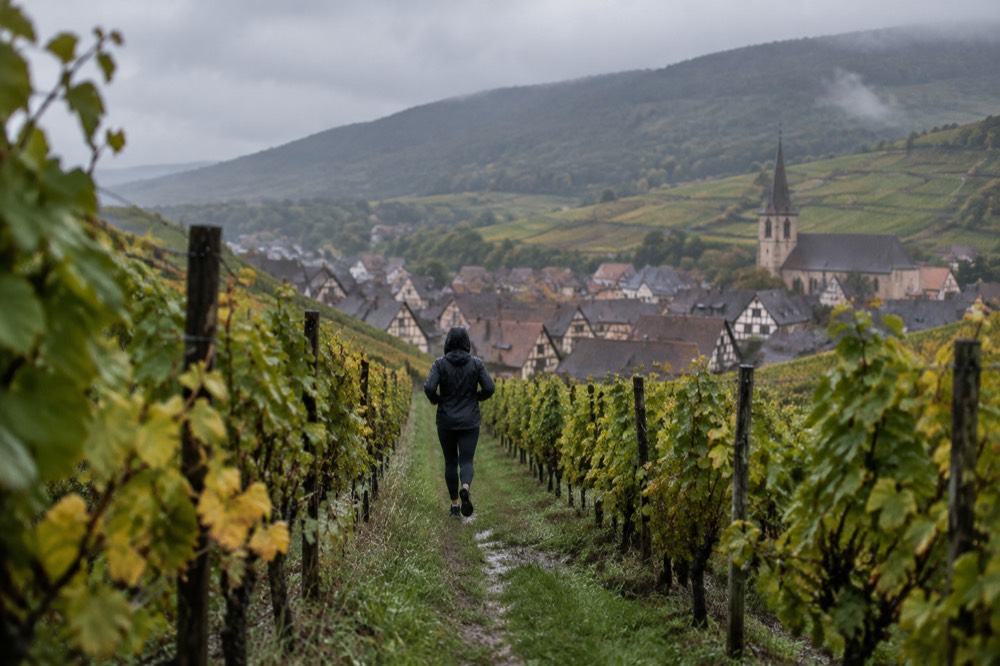
Practical notes: keep bottles out of a hot car boot on the drive back, which in a July or August of 26 C mean maximum is a real consideration, and check with your airline or rail operator about luggage before buying a full case. The screw-cap versus cork question divides the region, with corks still traditional for the top bottles; either way, the aromatic varieties are the ones that reward drinking young and fresh, while Riesling and the late-harvest styles are the ones worth laying down.
Whatever you carry home, the point of the trip is the tasting itself: a flight in a Strasbourg cellar, a carafe in a winstub, or a terrace above the vines with the plain stretching to the Rhine. Plan the route, book the tour or the car, and let the grape names on the labels be your map.
Common Questions About Alsace Wine
Is Riesling considered a cheap wine?
Alsace Riesling is not a cheap wine by ambition: it is a dry, mineral, age-worthy white that the region treats as its signature. Cheap Rieslings exist elsewhere and shaped the grape's reputation, but Alsatian bottles are labelled by variety and domaine, and the serious ones are sought after. The full answer is on the page is Riesling considered a cheap wine?
What is the prettiest wine region in France?
Alsace makes a strong claim: half-timbered wine villages strung along the Vosges foothills, with the vine rows climbing directly above the houses. Bordeaux, Burgundy and Champagne each have their own landscapes, but the density of picture villages on the Alsace route is what visitors remember. The comparison is set out in what is the prettiest wine region in France?
How long does it take to drive the Alsace wine route?
The route is a touring road rather than a single motorway stretch, and the honest answer depends on how many villages and tasting stops you build in. Three or four domaines a day is a full programme because tasting rooms are small and close for lunch. Planning figures and a suggested structure are in how long does it take to drive the Alsace wine route?
Can you taste Alsace wine without leaving Strasbourg?
Yes. The city's winstubs pour local bottles by the carafe, wine bars run flights of several varieties side by side, and the Cave Historique des Hospices holds Alsatian stock in a historic cellar. A seated discovery tasting with a host walking you through each variety is the fastest introduction.
What food goes with Alsace wine?
The pairings grew up in the same kitchens: Riesling with choucroute and river fish, Gewurztraminer with Munster cheese, Pinot Blanc or Sylvaner with tarte flambée, and Pinot Noir with charcuterie and game. Crémant d'Alsace, the region's traditional-method sparkling wine, works with nearly everything.
When is the best time to visit the Alsace wine route?
Early autumn brings golden vines and the harvest, spring offers blossom and quiet cellars, summer suits terrace drinking, and winter turns the same villages into Christmas market stops. The Meteo-France 1991-2020 normals give Strasbourg a September mean maximum of 21.6 C against 5.9 C in December, so pack for the season you choose.