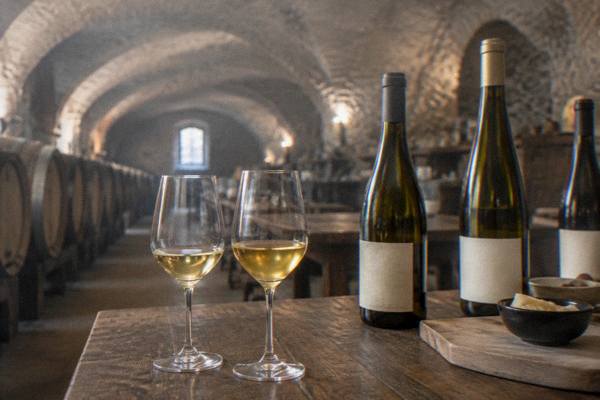
Cave Historique Des Hospices De Strasbourg
A cellar full of Alsace wine sits beneath the old hospital buildings of Strasbourg, in Alsace, north-eastern France. Here is what a visit involves, what it costs to get there, and how to fold it into a day in the city.
Short answer
The Cave Historique des Hospices de Strasbourg is a historic wine cellar in central Strasbourg, Alsace, north-eastern France, tied to the city's hospital heritage and stocked with Alsace wines. Visits centre on tastings of regional varieties; hours and booking details are on the official page. Pair it with the cathedral, whose platform ticket is 10 EUR, and the municipal museums at 9 EUR.
The Cave Historique des Hospices de Strasbourg is a historic wine cellar in Strasbourg, the prefecture of the Bas-Rhin, in Alsace in the Grand Est region of north-eastern France, a city on the River Ill beside the Rhine border with Germany. The cellar belongs to the story of the city's hospital, an institution that received vineyards and barrels as gifts and bequests over the centuries, and today it offers visitors a taste of that inheritance in the form of Alsace wines served in an atmospheric vaulted setting. This guide covers what the visit involves, what the journey there costs, which wines to expect, and how to pair the cellar with the rest of a day in a city whose old centre is recognised as a World Heritage property under the name Strasbourg, Grande-Île and Neustadt.
What Is The Cave Historique Des Hospices De Strasbourg?
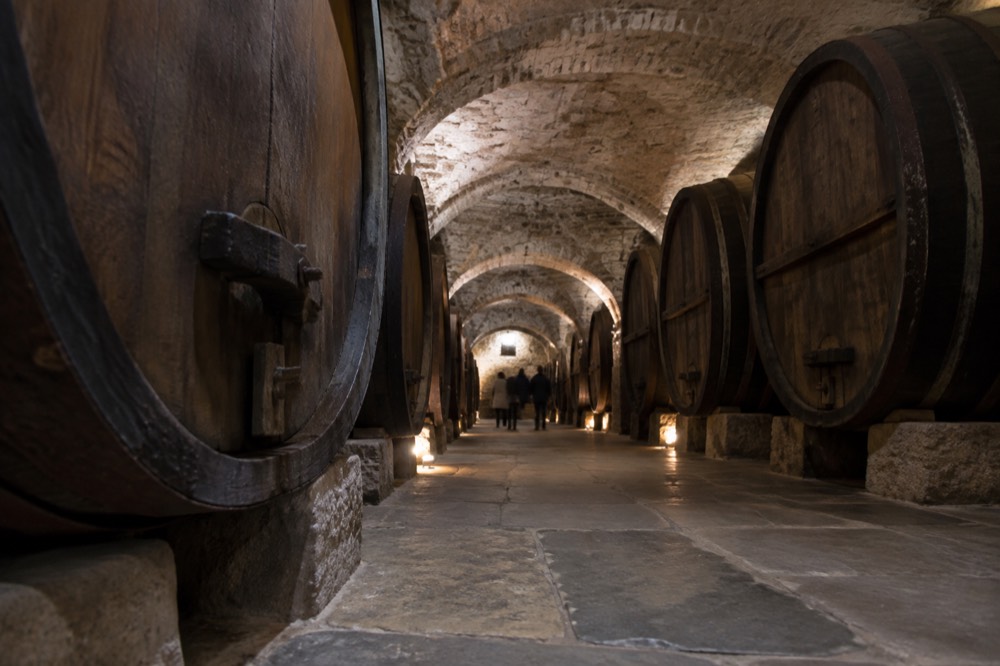
It is the historic wine cellar of Strasbourg's hospital, a vaulted underground space in the city centre where the institution's wine heritage is stored, shown and tasted. The hospital received vineyards and wine as donations over its long history, and the cellar preserves that connection today. Visits combine the setting itself, vaulted stone and old wood, with tastings of Alsace wines, and the official page lists current hours and booking arrangements.
The story behind the cellar is unusual enough to be worth knowing before you go. Hospitals in this part of France were once major landowners, and generous benefactors did not only give money: they gave plots of vines, harvests and barrels. Over the generations that accumulated into a cellar with a genuinely medical as well as agricultural history, because wine was part of hospital life in a way that sounds strange to a modern visitor. The Cave Historique des Hospices keeps that double identity on show, and a visit is as much about the building and its heritage as about what is in the glass.
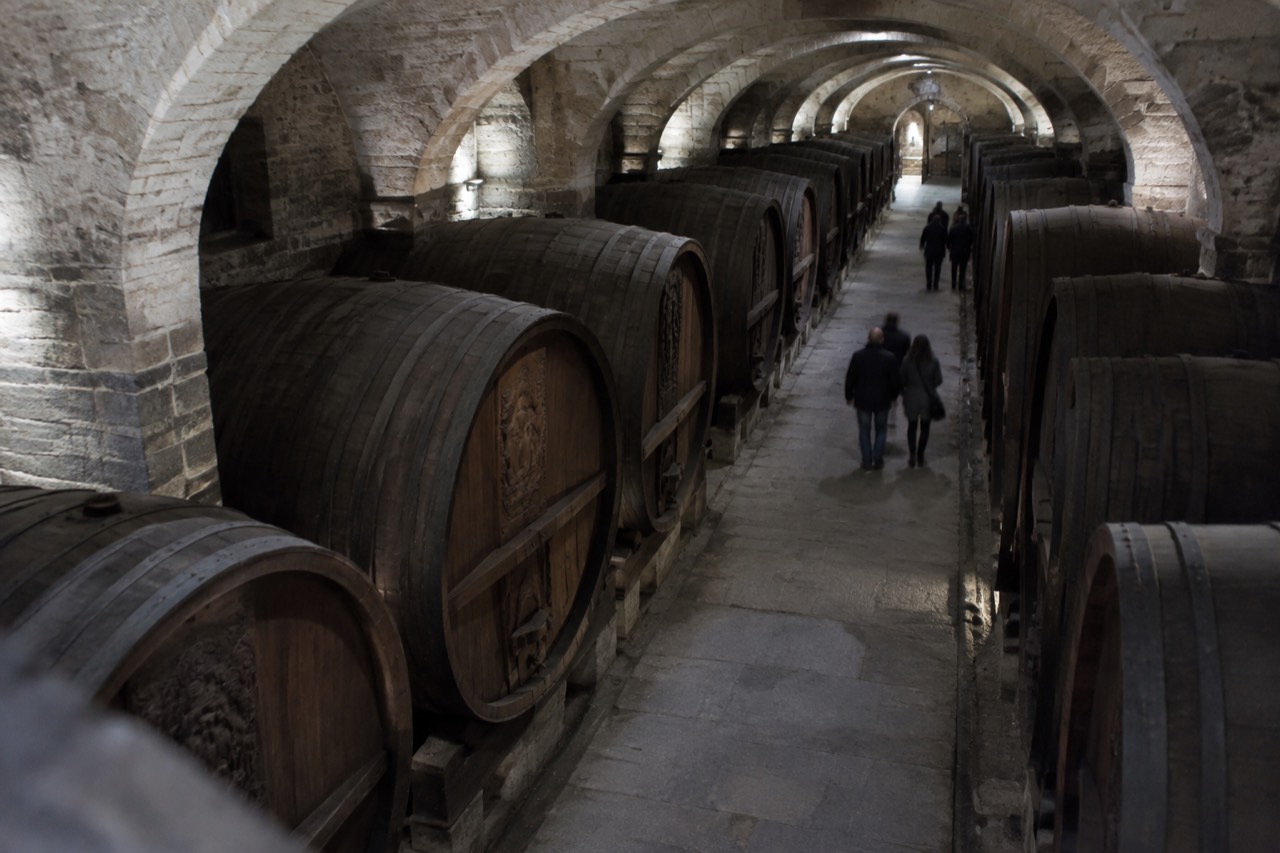
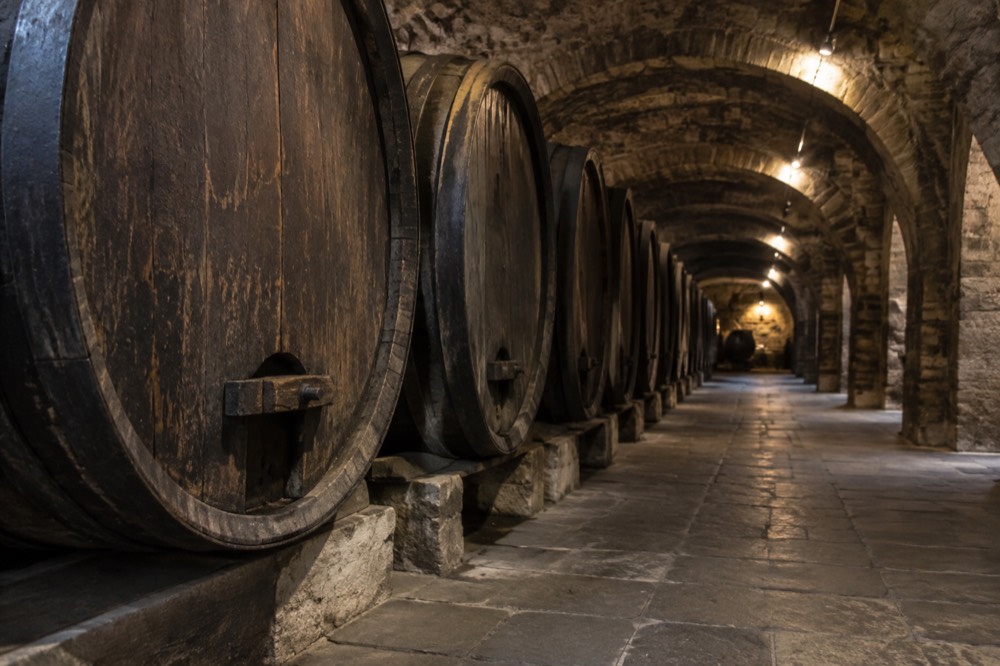
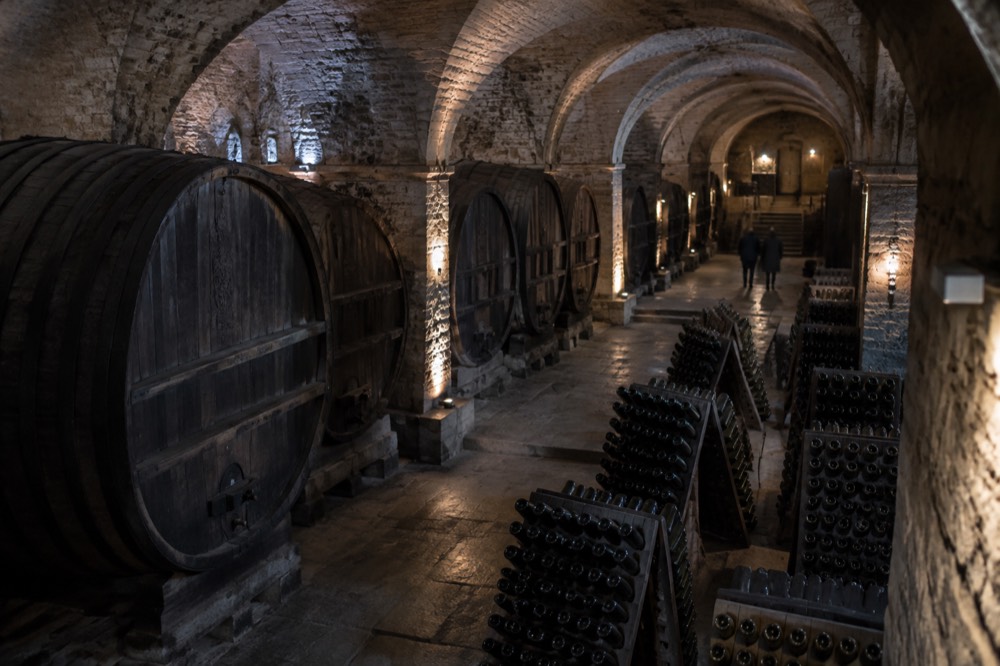
What you experience is deliberately unhurried. The setting is below street level, stone-vaulted and dim, with barrels and bottle racks rather than display cases, which gives the place the feel of a working cellar that happens to welcome the public rather than a museum with a wine theme. Tastings are the practical heart of the visit: an introduction to the cellar, a look at the storage, and then a guided tasting of Alsace wines poured by staff who explain what each variety is and how it is made. The exact format, the number of wines poured and the languages offered are set out on the official page, and they change with the season, so treat the page rather than any summary, including this one, as the authority on the day.
One point of honesty matters here. What this guide can do reliably is everything around the visit: how to reach the cellar for 1.90 EUR on a CTS tram or bus ticket, what the surrounding sights cost in hard figures, and how to build a day that ends underground with a glass of riesling rather than beginning there.
Where Is The Cellar And How To You Get There?
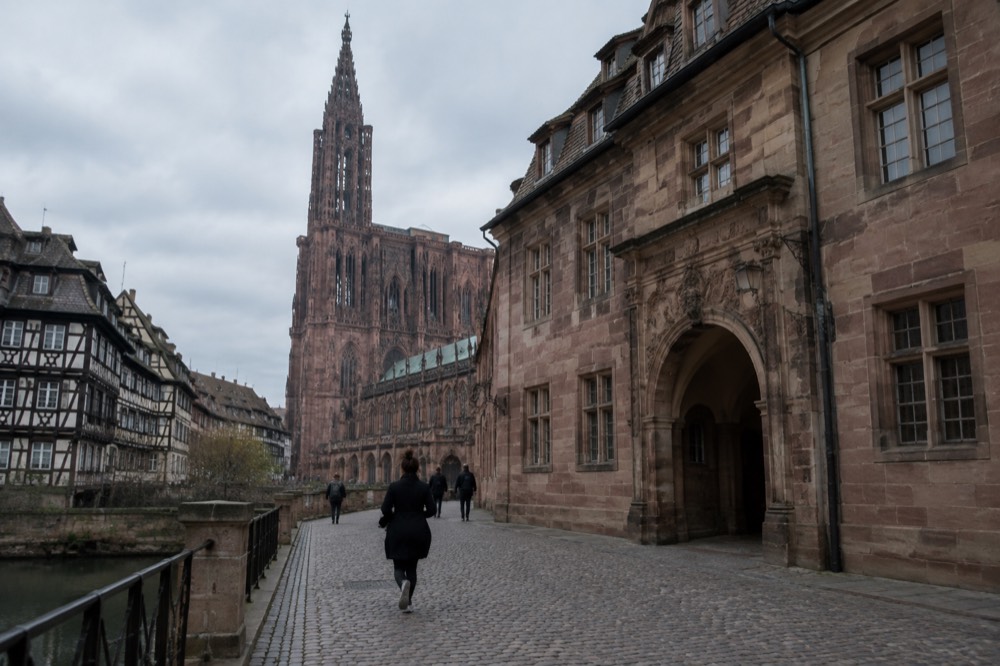
The Cave Historique des Hospices sits in central Strasbourg, in the historic hospital quarter within easy reach of the city's tram network. A single CTS ticket costs 1.90 EUR bought through the Badgéo card, the CTS app or contactless payment, or 2.50 EUR bought on board a bus. A 24-hour Solo pass at 4.60 EUR covers unlimited travel and suits a day that pairs the cellar with other sights.
Strasbourg runs one of the most pleasant public transport systems in France, and the cellar's central position means you will not need a car. Trams and buses converge on the city centre from the station, the airport shuttle and every neighbourhood, and the CTS fare table is simple enough to plan from memory. The airport connection deserves a note: the train between Strasbourg station and Entzheim Aéroport takes 8 minutes with up to 5 trains per hour, and a combined ticket covering the train plus a day of urban travel, the Alsa+ 24h EMS, costs 4.60 EUR. Arriving by air and heading straight for a tasting is therefore entirely reasonable.
| CTS ticket | Price | Where to buy |
|---|---|---|
| Single, 1 journey | 1.90 EUR | Badgéo card, CTS app, contactless on board |
| Single bought on the bus | 2.50 EUR | From the driver |
| 24h Solo pass | 4.60 EUR | CTS app, ticket machines, sales points |
| 24h Trio pass, 2-3 people | 10.20 EUR | CTS app, ticket machines, sales points |
| Airport train + 24h EMS combined | 4.60 EUR | Station and airport machines |
A practical note on timing: the cathedral's astronomical clock show, one of the city's fixed points, runs daily at 12:30 with tickets at 4 EUR sold on the day only, so a morning of sightseeing can be built around it before an afternoon tasting. If you are staying anywhere on the tram network, buy the 24h Solo pass in the app when you start the day and let it carry you from the station to the old town, to the cellar and back. Visitors arriving from Paris by TGV should simply check SNCF Connect for timetables; the fastest connections come in under two hours, and the station sits at the edge of the historic centre.
Walking is the other honest answer. The old centre of Strasbourg is compact, and once you are inside the Grande Île, the distances between the cathedral, the hospital quarter and the riverside lanes are short. Allow the official page to confirm the cellar's exact entrance and any access notes before you set out, since historic buildings sometimes admit visitors through a specific door.
What You Actually See Inside The Cellar?
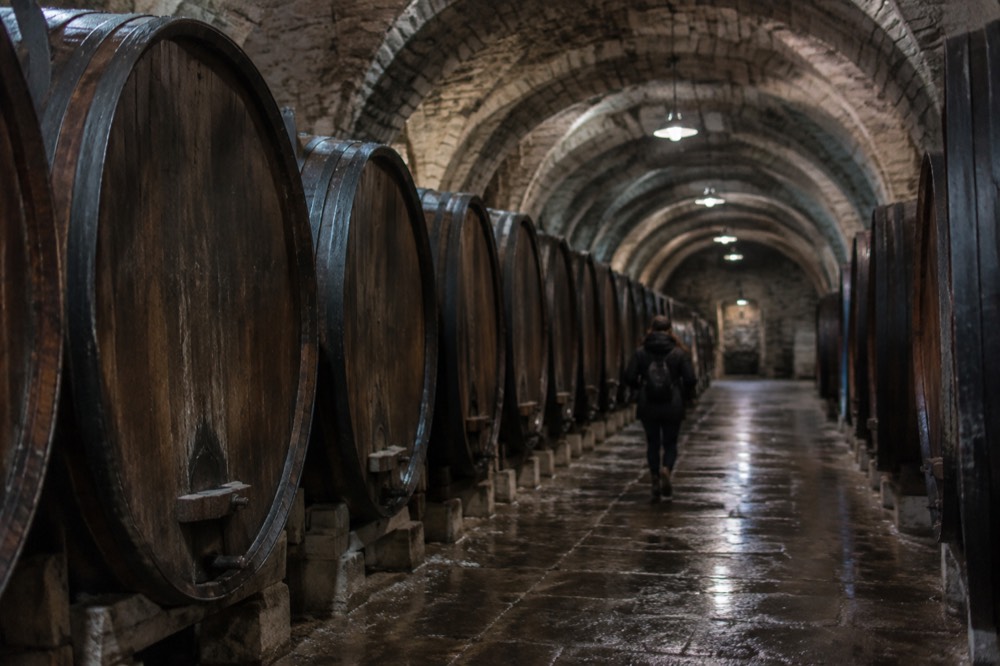
Inside, the visit shows a vaulted stone cellar with barrels, bottle racks and the storage rooms of the hospital's wine collection, followed by a guided tasting of Alsace wines. The atmosphere is dim, cool and fragrant, closer to a working cellar than a museum. Photography is generally welcome, and the official page states the current visit format, durations and any seasonal changes.
The first impression is architectural. Vaulted cellars of this kind were built to keep a constant temperature, and the effect on a visitor is immediate: cool air, low light, stone that has held its shape for centuries and the smell of wood and wine. Guides point out the barrels, the racks of bottles laid down for keeping, and the way the space was organised when the hospital managed its own supplies. The narrative thread is the hospital's relationship with its vineyards, which is a genuinely local story rather than a generic wine talk.
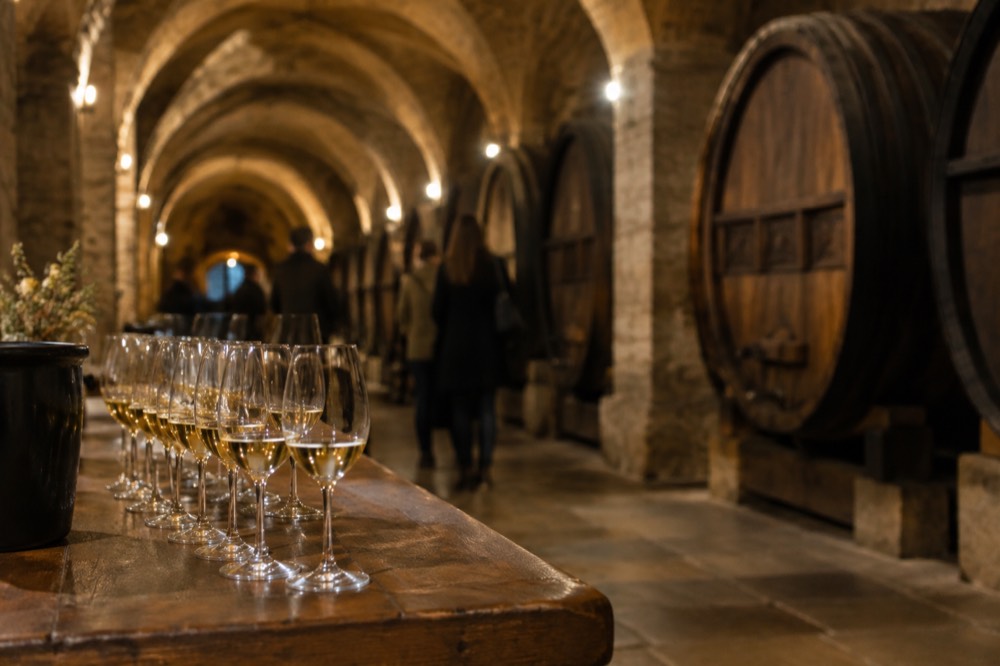
The tasting that follows is structured but informal. Staff pour a selection of Alsace wines, explain the variety in each glass, and answer questions, which makes the experience suitable both for visitors who know Alsace wine already and for those who could not previously have named a single variety. Sessions are held in groups, and the size of the group and the languages on offer are listed on the official page. Because the cellar is underground and the pace is seated and slow, it also works well as a rest stop in the middle of a sightseeing day, a place where the itinerary stops demanding steps.
For visitors who want a deeper dive into Alsace wine than a cellar tasting can offer, a dedicated tasting experience in the city covers the region's varieties in a compact session, and the operator's live listing carries the current price and schedule.
A reasonable question is whether the cellar suits children or visitors who do not drink. The setting interests anyone curious about the building, and non-alcoholic options are a matter for the staff on the day; the official page is the place to check what a non-tasting visit looks like. Families with small children should note that a dim cellar with narrow passages and stationary tasting tables is a calmer outing than a park, and the city offers better playgrounds, but nothing else quite like the atmosphere here.
Which Alsace Wines Do You Taste On A Visit?
Tastings centre on the classic Alsace varieties: riesling, gewurztraminer, pinot blanc and pinot gris, with crémant, the region's sparkling wine, often poured as well. The wines range from dry to aromatic and sweet styles, and staff explain each glass as it is served. The exact line-up changes with the cellar's stock, so the tasting on the day is the definitive menu.
Alsace is a white-wine region first, and the cellar's selection reflects that. Riesling is the variety the region builds its reputation on: dry, precise and mineral. Gewurztraminer is its aromatic opposite, full of rose and spice notes, and the one that surprises first-time tasters. Pinot blanc and pinot gris sit between them in weight, and crémant d'Alsace gives the region its sparkling answer, made by the traditional method used for sparkling wines elsewhere in France. Sylvaner also has a place in the region's history, though what appears in any given tasting depends on what the cellar holds. Other pages covering the same trip are gathered on Strasbourg Travel Guide.
| Variety | Typical character | What to ask about |
|---|---|---|
| Riesling | Dry, mineral, precise | Which vineyard the grapes came from |
| Gewurztraminer | Aromatic, rose and spice, richer body | How sweet the poured example is |
| Pinot blanc | Soft, round, easy drinking | How it differs from pinot gris |
| Pinot gris | Fuller, spicier than pinot blanc | Food pairings from the region |
| Crémant d'Alsace | Sparkling, traditional method | How it is made and how long it rests |
The useful habit inside a tasting is to ask rather than nod. Staff can tell you which styles are dry and which carry sweetness, which matters a great deal if you have a preference, and they can explain how the hospital's vineyard holdings relate to what is in your glass. Sweet wines, the late-harvest styles the region is also known for, appear in some sessions, and a question at the start of the tasting will tell you whether to expect them.
For visitors whose interest turns into an appetite for the vineyards themselves, a half-day wine tour from Strasbourg into the Alsace wine route is the natural next step, with the operator's live listing showing current departures and prices.
Ready to see the vineyards behind those bottles? Book a half-day wine tour here.
How To Pair The Cellar With A Day In Strasbourg?
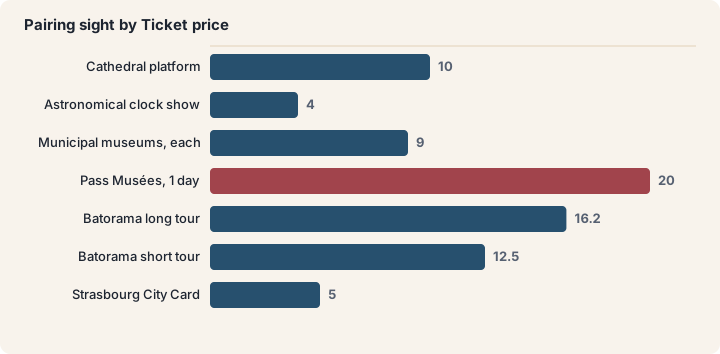
A sensible day pairs the cellar with the cathedral, whose platform ticket costs 10 EUR full and 6 EUR reduced, the astronomical clock show at 12:30 for 4 EUR, and the municipal museums at 9 EUR full and 5 EUR reduced. Batorama's river tours, 16.20 EUR full for the long circuit, add the water-level view. The cellar works best as the afternoon or evening anchor of that itinerary.
The geography makes the pairing easy, because everything on the list sits in or beside the old centre. A morning at the cathedral covers the nave, open Monday to Saturday from 08:30 to 11:15 and 12:45 to 17:45, and on Sunday afternoons from 14:00 to 17:15, with the platform above it reached by stairs for the 10 EUR ticket. The platform stands at 66 m and gives the view over the rooftops that every visitor photographs from below. The clock show at 12:30 then fixes lunch, and an afternoon tasting in the cellar follows naturally, with the evening left for a winstub, the Alsatian tavern style the city is known for.
| Pairing sight | Ticket price | Note |
|---|---|---|
| Cathedral platform | 10 EUR full, 6 EUR reduced, under 6 free | Platform at 66 m, stairs |
| Astronomical clock show | 4 EUR | Daily at 12:30, tickets on the day only |
| Municipal museums, each | 9 EUR full, 5 EUR reduced | Free the first Sunday of every month |
| Pass Musées, 1 day | 20 EUR | Covers the municipal museums for a day |
| Batorama long tour | 16.20 EUR full, 8.90 EUR reduced | Red Tour lasts 1h10 |
| Batorama short tour | 12.50 EUR full, 7.20 EUR reduced | Blue Tour lasts 0h45 |
| Strasbourg City Card | 5 EUR adult, 3.50 EUR child | A 7-day discount card, not an all-inclusive pass |
Two of those pairings deserve a word of caution. The Musée Alsacien, the museum of Alsatian life, is closed for works until 2028 and must stay off any itinerary for now; the city's other municipal museums remain open, and the first Sunday of each month makes them free for everyone. The City Card, at 5 EUR for seven days, is a discount card rather than a pass: it takes money off museums, the boat tours, the cathedral platform and the clock, so it earns its price back only if you are doing several of those things.
For visitors who prefer a narrated city before a narrated wine, a small-group walking tour between history and curiosities covers the old town's stories in a convivial format, and it pairs neatly with a cellar booking later in the day. Check availability on the operator's live listing for departures that leave the afternoon free.
Food is the other half of the pairing. Alsatian cooking is hearty, built around choucroute, tarte flambée and baeckeoffe, and a tasting that ends near dinner time slides easily into a winstub meal. Visitors who want the edible side of the city explained as well as poured can take a gourmet walking tour with tastings, which the operator's listing prices and schedules.
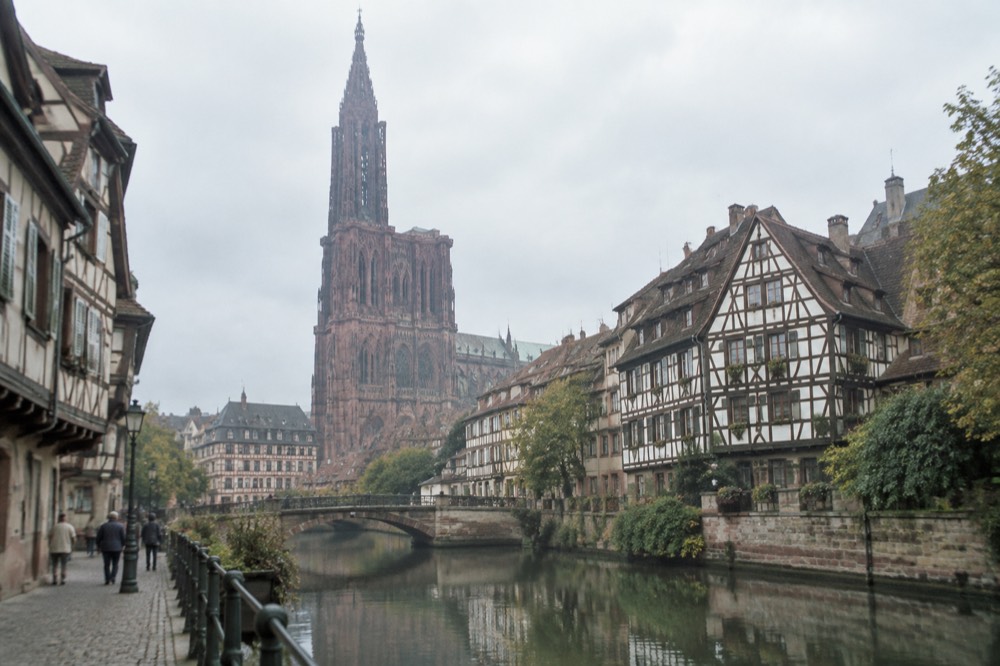
Around the cellar, the walkable roster is long. Strasbourg Cathedral and its 66 m platform dominate the morning, the astronomical clock's 12:30 show fixes lunchtime, and Petite France and its riverside lanes fill the gap before a tasting. Add the Musée de l'Œuvre Notre-Dame for the cathedral's art, Palais Rohan and its museums for a rainy hour, and the view from Barrage Vauban and its terrace over the Ponts Couverts for the golden end of the day. The quai des bateliers riverside walk connects several of them without a single tram ride.
When To Visit: Seasons, Weather And The Christmas Period?
The cellar is an all-season attraction, and its underground setting makes it a reliable choice in the cold months: Strasbourg's January mean maximum is 5.2 C and December's is 5.9 C, while July reaches 26.4 C. The Christmas period, when the market runs from late November to 24 December, is the busiest time to visit, and the city's Christmas site is the place to confirm the 2026 dates.
Strasbourg's climate is semi-continental, which means real winters and warm summers, and the numbers below come from the Meteo-France 1991-2020 normals for the Strasbourg-Entzheim station. What they mean for a cellar visit is simple: in summer the cellar is the coolest room in the city, and in winter it is the warmest sensible place to be after a morning on the streets. Rain falls somewhere between 8 and 11 days a month in every season, so a plan that includes an indoor anchor is never wasted.
| Month | Mean max C | Mean min C | Rain mm | Days rain 1 mm or more |
|---|---|---|---|---|
| January | 5.2 | -0.2 | 35.4 | 9.1 |
| April | 17.0 | 5.7 | 41.8 | 8.6 |
| July | 26.4 | 14.9 | 71.9 | 10.4 |
| October | 15.8 | 7.2 | 59.5 | 9.6 |
The Christmas period deserves its own paragraph, because it changes the whole city. The market's usual pattern is an opening in the last week of November and a run to 24 December, with chalets open from late morning into the evening; last year's edition ran from 26 November to 24 December 2025 and drew 3.05 million visitors, which explains why December in Strasbourg feels busy at every hour. During the market, the cathedral is open continuously on the Place du Château side from 08:30 to 17:45 Monday to Saturday, a small seasonal bonus for sightseers. The 2026 dates and programme are still being finalised, so confirm them on the city's Christmas site before booking anything around them.
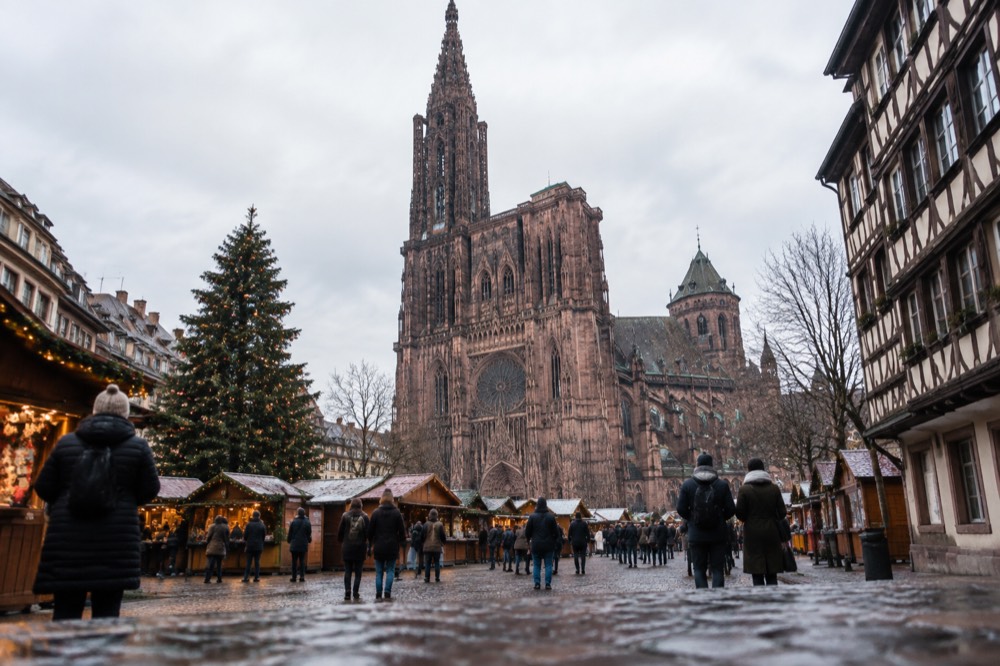
Beyond Christmas, the seasons each give the cellar a different frame. Spring and autumn are the wine traveller's favourites, because they are the seasons of the vineyards around the city, and a tasting in the cellar lands as a preview or an epilogue to time on the wine route. Summer brings the river crowds and long evenings; winter brings the mulled spice of the market into the streets just above the barrels. There is no bad month for a cool room and a glass of riesling.
Planning Your Visit: What To Check Before You Go?
Before you go, confirm four things on the cellar's official page: current opening hours, how tastings are booked, what a visit costs, and whether group or private sessions are available on your date. Transport is the easy part, a 1.90 EUR single or a 4.60 EUR day pass, and the cathedral figures in this guide are stable planning numbers. Nothing about the cellar itself should be planned from second-hand figures.
The reason for that insistence is practical. Cellars that run tastings adjust their schedules with the seasons, with private events and with staffing, and a page that summarised their hours would go stale within a season. The official page carries the live detail, and the honest division of labour is: use this guide for the city around the cellar, and use the official page for the cellar itself. The same applies to purchases: the cellar sells wine to take home, and what is available, and at what price, is a question for the staff and the page rather than for a travel article.
| What to check | Why it matters | Where to confirm |
|---|---|---|
| Opening hours | Seasonal sessions differ | The cellar's official page |
| Tasting bookings | Popular days fill early | The cellar's official page |
| Visit format and languages | Formats vary by session | The cellar's official page |
| Christmas period access | The market season reshapes the city | The city's Christmas site |
| Museum and cathedral hours | For the rest of the day | Each institution's own page |
A few Strasbourg-wide planning numbers are firm and worth repeating in one place. The cathedral platform costs 10 EUR full and 6 EUR reduced, with children under 6 free, and it is closed on 1 January, 1 May and 25 December. The clock show is at 12:30 daily, tickets 4 EUR, sold on the day only. Municipal museums are 9 EUR full and 5 EUR reduced, with a 1-day Pass Musées at 20 EUR. Batorama's long tour is 16.20 EUR full and 8.90 EUR reduced for 1h10 on the water, the short tour 12.50 EUR and 7.20 EUR for 0h45. And a day of trams and buses is 4.60 EUR on the 24h Solo pass. Those are the figures a Strasbourg day is actually built from.
For visitors using the cellar as the start of a wider Alsace trip, the options branch cleanly. Wine-focused travellers head for the vineyards and villages of the wine route; scenery seekers drive the Route des Crêtes ridge road; families combine the eagle park and monkey mountain at Kintzheim with a castle stop; and Christmas visitors in December weigh Strasbourg against the smaller markets of Colmar and the wine villages. In every one of those plans, the cellar plays the same role: the moment the trip stops moving and the region sits down in a glass.
Visitors with limited mobility should ask the cellar directly about access, because historic underground spaces vary in what they can offer, and the official page or the staff will answer honestly what a summary cannot. Allow comfortable shoes for the cobbles above ground and a layer for the cool air below it, and leave the car behind: the trams, the 4.60 EUR day pass and the city's own two feet cover everything in this guide.
Common Questions About The Cave Historique Des Hospices
Is the Cave Historique des Hospices open to the public?
Yes, the cellar welcomes visitors for guided visits and tastings, but sessions run on a schedule that changes with the season. The cellar's official page lists the current opening hours and the days on which visits run, and it is the only reliable source for those details.
Do you need to book a tasting in advance?
Advance booking is the safe approach, especially in the Christmas period and on weekends, when the city is at its busiest. Booking arrangements are explained on the cellar's official page, and visitors arriving without a reservation should expect to check availability there or by phone before turning up.
Which wines are poured in a tasting?
The tastings centre on Alsace varieties: riesling, gewurztraminer, pinot blanc and pinot gris, with crémant d'Alsace, the region's sparkling wine, in many sessions. The exact line-up depends on the cellar's stock, and staff explain each glass as it is poured, so no prior knowledge is needed.
How long does a visit to the cellar last?
Visit lengths vary with the format, from a short cellar viewing to a full seated tasting, and the current timings are listed on the official page. As a planning rule, treat the cellar as a one-to-two-hour experience that leaves the rest of the day free for the cathedral and the old town.
Can you buy wine at the cellar to take home?
Yes, the cellar sells its wines to visitors, and buying a bottle is a natural end to a tasting. What is in stock, and at what price, is a question for the staff on the day or for the official page, since the selection changes with the cellar's holdings.
What else should you see near the cellar?
The cellar sits in central Strasbourg within the reach of a short tram ride or a walk from the cathedral, the astronomical clock, Petite France and the Ponts Couverts. The municipal museums at 9 EUR full and the cathedral platform at 10 EUR are the two paid highlights that pair best with a tasting, and the Batorama river tours add the view from the water.
A final word on how to use this page: the Cave Historique des Hospices rewards visitors who treat it as the quiet centre of a Strasbourg day rather than a box to tick, a cool vaulted room where the city's hospital history and its vineyards meet in a glass. Book the tasting, ride the tram for 1.90 EUR, and let the cellar do what it does best, which is to slow the day down at exactly the right moment.