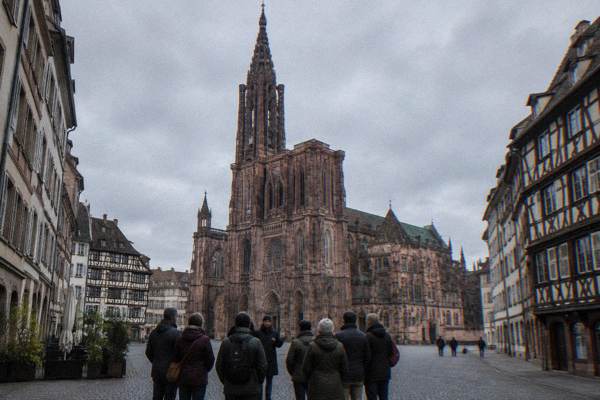
Quai Des Bateliers Strasbourg
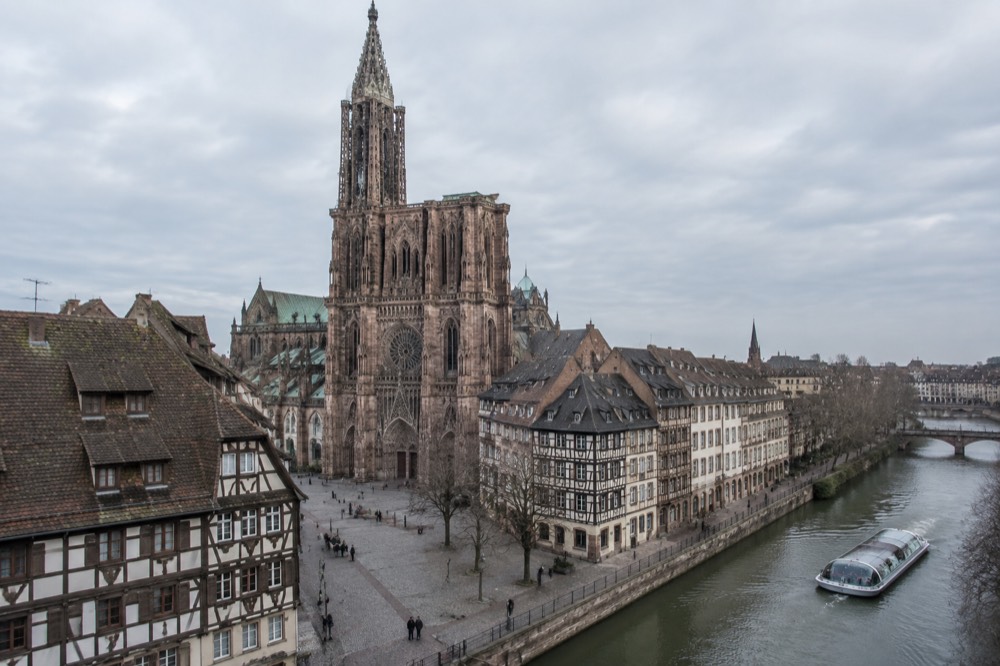
The Quai des Bateliers is a riverside quay on the Ill in Strasbourg, France, running through the World Heritage heart of the city within easy reach of the Ponts Couverts, Petite France and the cathedral.
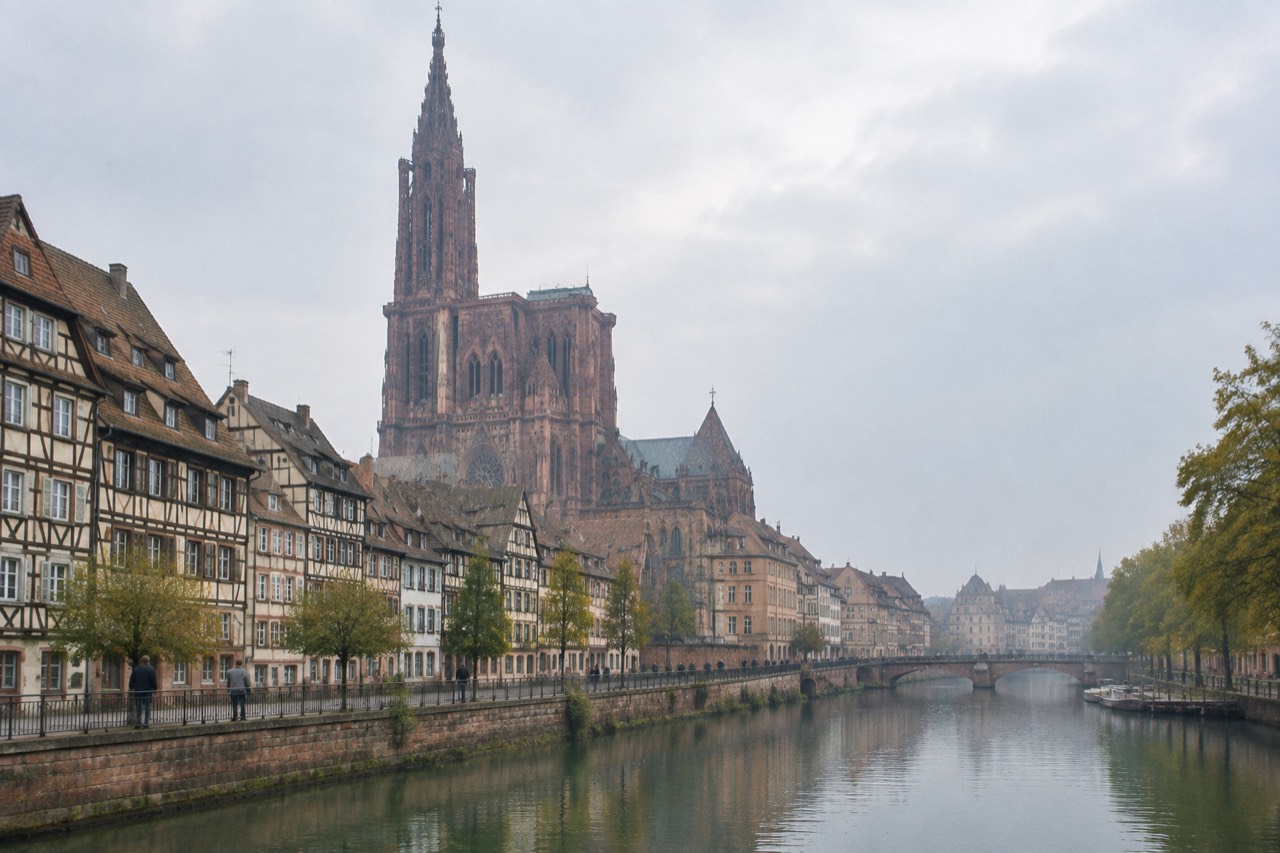
Short answer
The Quai des Bateliers is a riverside quay on the Ill in Strasbourg's Grande Île, a short walk from the Ponts Couverts and Petite France. A Batorama short river tour costs 12.50 EUR full fare and runs 45 minutes; a CTS single ticket is 1.90 EUR. Allow an hour to walk it, longer in December when the Christmas market fills the centre.
The Quai des Bateliers runs along the River Ill in Strasbourg, the prefecture of the Bas-Rhin in Alsace, north-eastern France, a short distance from the German border at Kehl. The name translates simply as the boatmen's quay, and it recalls the trade that once moved along this slow branch of the Rhine system through the middle of the city. Today the quay is a walking street in the Grande Île, the river island that forms the historic centre and that UNESCO lists, together with the Neustadt district, as a World Heritage property. Visitors use it as one of the pleasantest ways to move between the cathedral quarter, the tanners' quarter of Petite France and the covered bridges at the island's western tip.
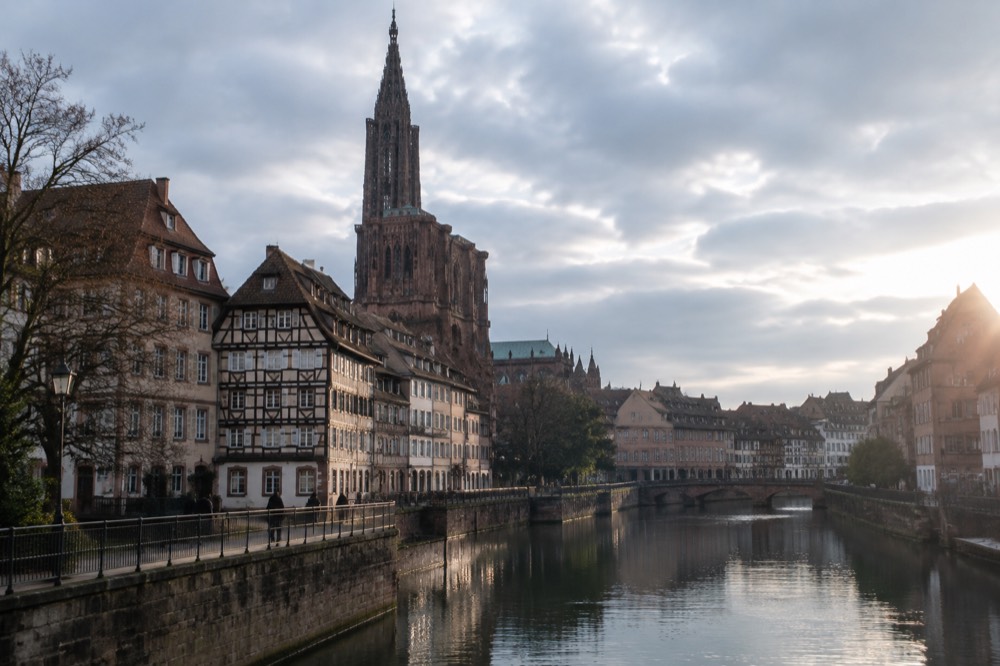
Where Is The Quai Des Bateliers In Strasbourg?
The Quai des Bateliers sits running along the Ill between the area around Saint-Pierre-le-Jeune and the tanners' quarter of Petite France toward the south. The whole length lies inside the UNESCO property "Strasbourg, Grande-Île and Neustadt". The covered bridges and the Barrage Vauban stand at the downstream end of the same stretch of water, and Strasbourg Cathedral is a few blocks east through the old streets. Nothing on the quay requires a ticket: it is a public street, and the riverside walk itself is open at all hours like any other street in the city.
That geography is the reason the quay earns a place on so many itineraries. Strasbourg's old centre is compact, and the Ill loops around it in a way that makes the water a natural route for anyone exploring on foot. A walker leaving the cathedral can drift downhill through the lanes, reach the quay, follow the water south past the church of Saint-Pierre-le-Jeune, and arrive in Petite France without ever crossing heavy traffic. The tram network runs close by on the parallel streets, but the riverside line itself stays quiet, which is exactly what many travellers want after the busier squares.
The name deserves a moment, because it explains the street. Bateliers were boatmen, the men who worked the flat river craft that carried goods along the Ill and the Rhine. The quay that carries their name is a reminder that this stretch of the city was a working waterfront long before it became a postcard. The river still works, in a gentler way: passenger boats pass along the Ill all day, and the Batorama company runs its river circuits through the heart of the city, a connection covered in detail further down this page.
For orientation, think of the quay as the western spine of the island. Across the water lies the Krutenau and the newer districts beyond; to the east, the lanes climb toward the cathedral. South, the water broadens around Petite France and the Ponts Couverts, where the Ill splits into channels. North, the quay continues toward the Palais Rohan and the museums cluster around it. Everything in the table below is reachable on foot from the quay without needing a fare or a timetable.
| Sight | What It Is | Admission Or Hours |
|---|---|---|
| Ponts Couverts | Historic covered bridge towers where the Ill divides around Petite France | Public bridge, open at all hours |
| Barrage Vauban terrace | Panoramic rooftop viewpoint over the river channels | Seasonal hours: 08:00-19:00 in September and October, 08:30-16:00 from November to February; price on the official page |
| Petite France | Half-timbered former tanners' quarter on the river channels | Public streets, open at all hours |
| Strasbourg Cathedral | Gothic cathedral with a single spire and a viewing platform at 66 m | Platform 10 EUR full, 6 EUR reduced; nave hours on the cathedral's page |
| Astronomical clock | Working automaton clock inside the cathedral, show at 12:30 daily | 4 EUR, tickets bought on the day only |
| Musée de l'Œuvre Notre-Dame | Museum of cathedral sculpture and Upper Rhine art | 9 EUR full, 5 EUR reduced |
| Place Kléber | The central square of the city, a short walk east | Public square, open at all hours |
What To See Along The Quai Des Bateliers?
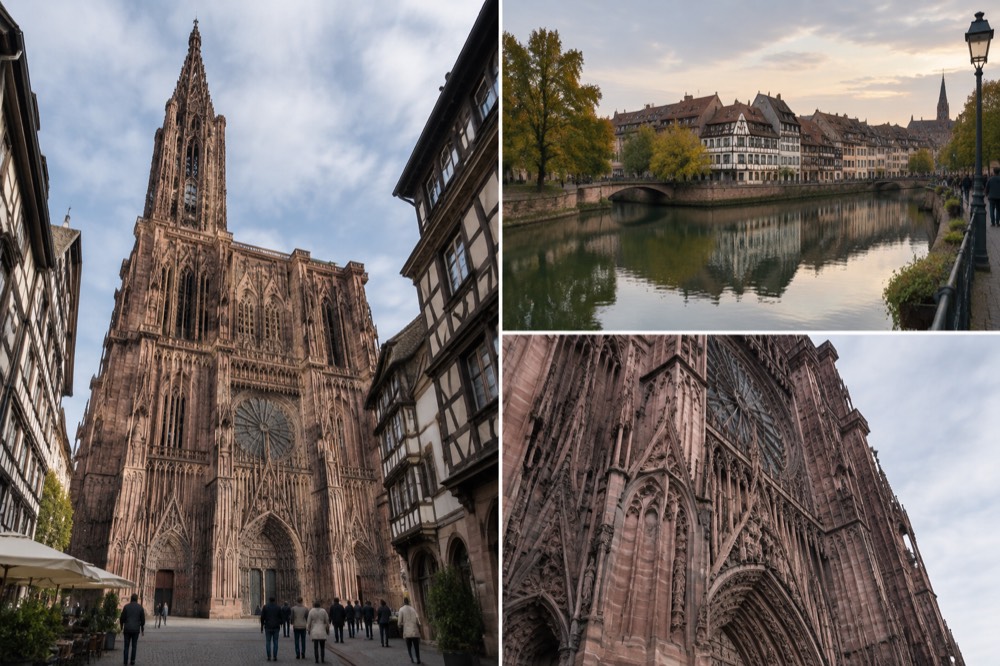
The quay rewards slow looking rather than a checklist: the river traffic, the reflections of half-timbered facades in the Ill, the towers of the Ponts Couverts at the downstream end, and the church of Saint-Pierre-le-Jeune are the sights that define the walk. In December the walk gains a second layer, because Strasbourg's Christmas market spreads across the historic centre, with dozens of chalets across several squares, and the riverside lanes sit inside that festive footprint. Between the water and the buildings, the quay is a place for photographs, river watching and unhurried wandering rather than paid attractions.
Start at the northern end if you arrive from the cathedral side. The church of Saint-Pierre-le-Jeune, with its mix of Gothic and Romanesque elements, anchors the top of the walk; its interior is one of the quiet surprises of the island, and the cloister beside it is a restful stop. From there the quay opens onto the water, and the perspective changes with every few steps because the Ill bends and the buildings on the far bank step down to their own quays. Photographers tend to work this stretch in the morning, when the light comes up the river from the east and the water is still.
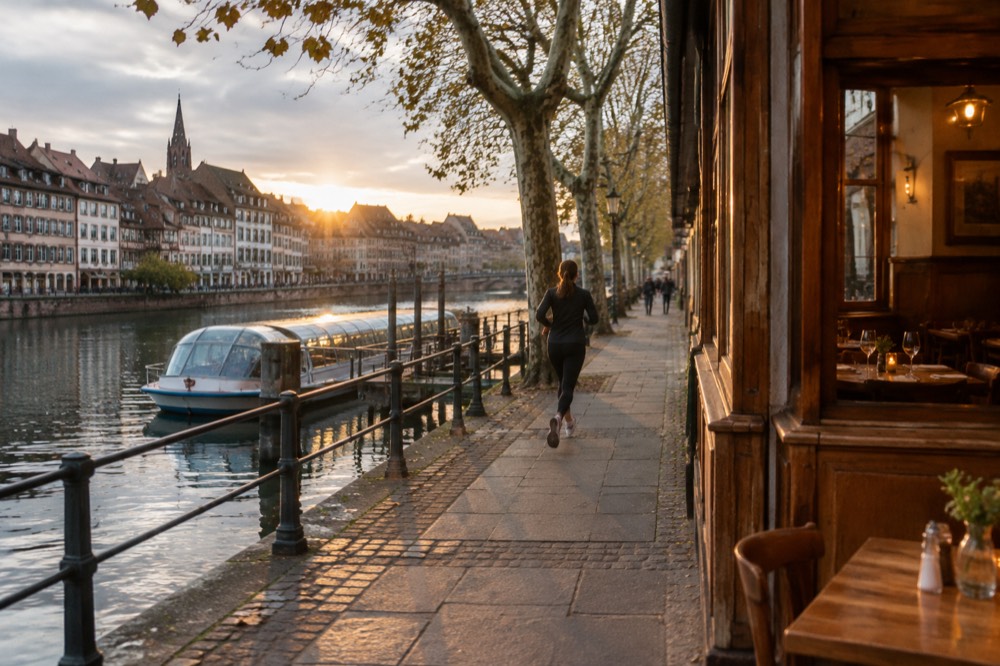
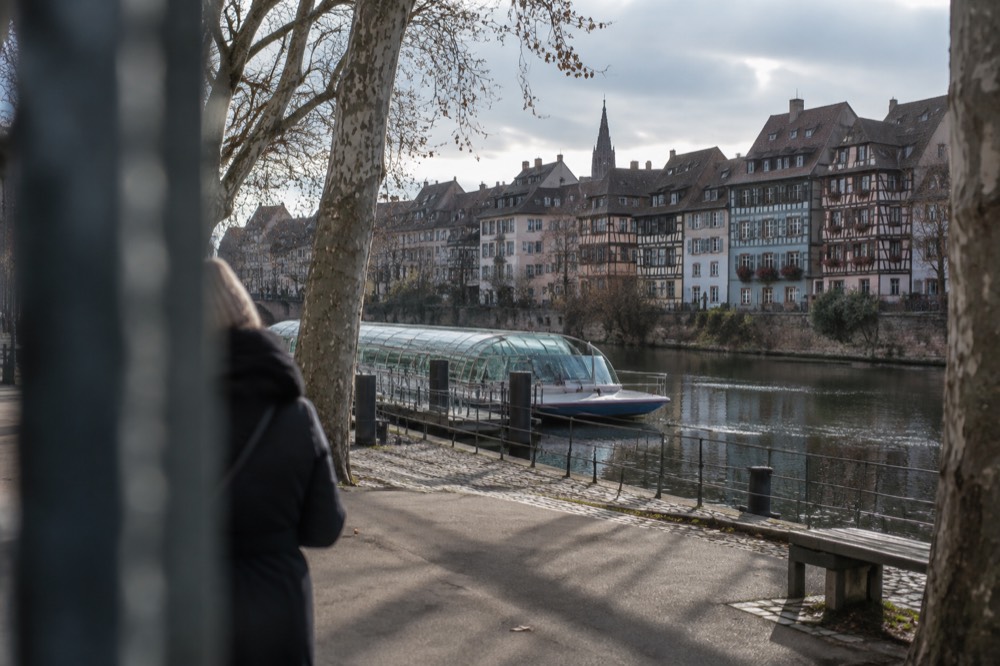
The middle of the quay is where the street's own character shows. The buildings here mix periods, from solid merchant houses to the half-timbered fronts that visitors associate with Strasbourg, and the ground floors hold small shops and places to eat. The river side is a line of moorings and landing stages, and it is common to see one of the passenger boats sliding past at walking pace, its commentary drifting over the water. There is no single monument at which to stop and take a ticket; the quay is the attraction, and the pleasure is in the continuity of it.
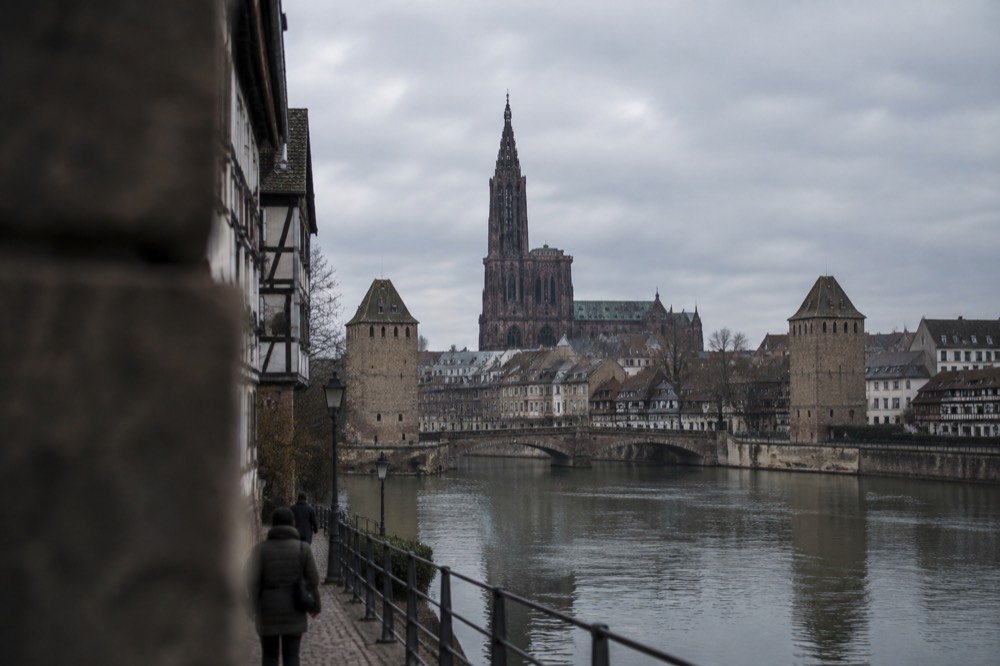
The southern end delivers the payoff view. As the quay approaches Petite France, the Ill splits into the channels that powered the old tanners' mills, and the Ponts Couverts rise over the water with their square towers. From the Barrage Vauban terrace nearby, reached by a short walk over the river, the whole fan of channels, bridges and roofs opens out in one frame; the terrace's seasonal hours are in the table above, and the price is on the official page. Anyone wanting the view with a guide attached has options too: a small-group curiosities walk covers the old town's stories, and the Euro Segway tour rolls a longer loop of the city with a local leading.
The Segway format divides opinion, but for the quay it has a specific use: it covers the riverside, the island and the newer districts in one loop, which suits a first day when the legs are still fresh and the map is still blank. Travellers who prefer their own pace can hire a bicycle and ride the same flat riverside lines, and the city's bike infrastructure makes that easy. The question is really one of appetite for a guide versus appetite for solitude, and both are well served here.
Between those two formats sits a wide middle ground of walking tours, from hour-long introductions to the historic centre to longer small-group walks that dig into hidden stories. The free, pay-what-you-want English walks that run through GuruWalk are another way to get an orientation, with the tip settled at the end. Whichever format appeals, the quay itself needs no booking at all; it is a public street, and the guided options are simply a way to attach names, dates and stories to stone that visitors would otherwise walk past.
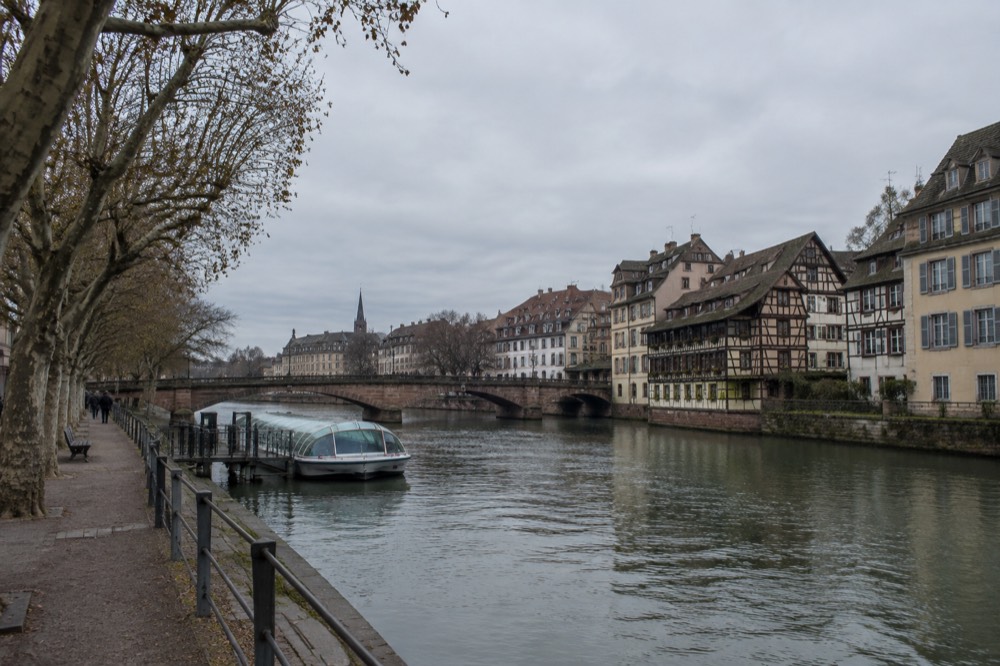
How To See The Quay From The Water?
Batorama, Strasbourg's established river cruise operator, runs two main circuits on the Ill: a long tour at 16.20 EUR full fare and 8.90 EUR reduced, lasting 1 hour 10 minutes, and a short tour at 12.50 EUR full and 7.20 EUR reduced, lasting 45 minutes, both passing through the heart of the Grande Île. The short Blue Tour is the one that fits a quay-centred visit, because its loop stays close to the island and gives the riverside facades, the covered bridges and the Vauban dam from water level. The long Red Tour extends beyond the old centre and adds the European institutions on the way.
Seeing the quay from a boat reverses the perspective in a way that surprises people. On foot, the river is a companion at your side; from the water, the quay becomes a wall of facades and gables, and the towers of the Ponts Couverts pass overhead rather than sitting in the distance. The boats are glassed-in for the cooler months, which matters in a city where January's mean maximum sits at 5.2 C and December's at 5.9 C. In summer, with July means of 26.4 C by day, the open decks and the moving air make the river one of the comfortable ways to sightsee.
Curious to see the quay from the water with your own group? Book a private boat cruise here.
| Batorama circuit | Duration | Full fare | Reduced fare |
|---|---|---|---|
| Red Tour, long circuit | 1 h 10 | 16.20 EUR | 8.90 EUR |
| Blue Tour, short circuit | 0 h 45 | 12.50 EUR | 7.20 EUR |
| Parliament-Cathedral return shuttle | 17 min | Price on the operator's site | Price on the operator's site |
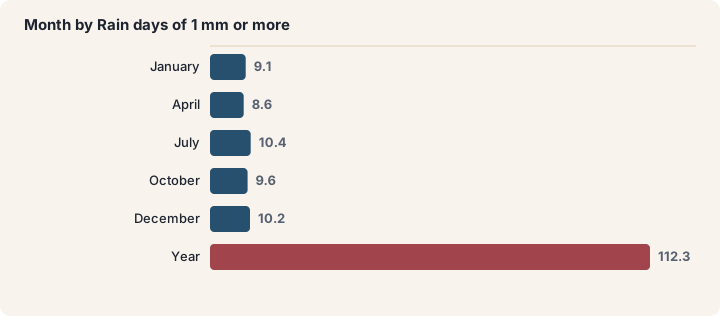
Tickets and timetables are on Batorama's own site, and the open-ticket format means a bought fare is not locked to a single departure, which helps when the weather turns. That flexibility matters more than visitors expect: Strasbourg's climate is semi-continental, with 112.3 rain days of a millimetre or more in an average year, and a grey afternoon can clear into a golden evening within hours. A river circuit also pairs naturally with the rest of a day here, because the landing stages sit within the same walkable core as the cathedral, the museums and the Christmas market in season.
For travellers using the quay as a base and wanting to push beyond the city, the same logic applies on a larger scale. The vineyards, medieval villages and castle country of Alsace begin a short drive outside Strasbourg, and a guided day trip removes the need to plan roads, parking and cellar hours. The Best Of Alsace historical day trip is the one this site features for that purpose, and its listing carries the current price, duration and departure details.
Where To Eat Near The Quai Des Bateliers?
The streets running back from the quay hold a dense concentration of the city's traditional eating places, the winstubs, where Alsatian classics such as tarte flambée, choucroute, baeckeoffe and kougelhopf are served in wood-panelled rooms, and a guided food walk is the efficient way to taste across several of them in one outing. A winstub is the Alsatian cousin of the tavern: wine, hearty plates, and a setting that has changed little in spirit even where the decor has. Around the Grande Île they cluster within a few blocks of the river, so a riverside walk and a long lunch compose a natural afternoon.
The classic plates are worth knowing before you sit down, because menus in the old town are long and mostly seasonal. Tarte flambée is the region's signature flatbread, a thin rolled dough baked fast with cream, onions and bacon, and it arrives at the table within minutes of ordering. Choucroute is the dish travellers photograph: sauerkraut cooked long and slow, served with sausages and salted pork. Baeckeoffe is a casserole of meats marinated and baked together, a farmer's dish that has become a restaurant centrepiece. Kougelhopf, the moulded cake with almonds and raisins, is the sweet that ends many of these meals, and it also travels well as a gift.
| Dish or drink | What it is | Where to try it |
|---|---|---|
| Tarte flambée | Thin flatbread baked with cream, onions and bacon | Winstubs across the old town, a short walk from the quay |
| Choucroute garnie | Slow-cooked sauerkraut with sausages and salted meats | Traditional winstubs in the Grande Île |
| Baeckeoffe | Marinated meats and potatoes baked in a covered dish | Winstubs specialising in slow-cooked Alsatian fare |
| Kougelhopf | Moulded cake with almonds and raisins | Bakeries and winstubs citywide |
| Alsace white wines | Dry and aromatic whites, including riesling and crémant | By the glass in winstubs and wine bars near the river |
A guided tasting walk solves the problem of choosing. The Taste Of Tradition food tour by Do Eat Better moves through the old quarter with a local guide and stops at several kitchens and counters, which suits travellers who want the food and the stories without committing a whole evening to one table. There are other formats too: a three-hour gourmet tastings walk, a longer traditional food walk, and a shorter culinary stroll, all covering similar ground with different appetites in mind. The wine side has its own entry point, with a one-hour Alsace wine tasting that fits neatly between a morning on the river and an evening winstub.
The Cave Historique des Hospices, the historic cellars of the city's hospitals, is the deeper cut for wine-minded visitors, and it is covered on its own page on this site: Cave Historique des Hospices in Strasbourg. For the practical question of where to sit on any given night, the honest answer is that the winstubs nearest the river fill first in the December market season, and a table booked a day ahead removes the wait.
How To Get To The Quai Des Bateliers?
The quay is inside Strasbourg's walkable core, and the cheapest way to reach it is the CTS network: a single ticket costs 1.90 EUR bought through the Badgéo card, the CTS app or contactless payment, or 2.50 EUR bought on board a bus, while a 24-hour Solo pass is 4.60 EUR and a 24-hour Trio pass for two to three people is 10.20 EUR. The tram lines that cross the Grande Île stop within a few blocks of the water on the parallel streets, and the whole fare structure is published on CTS's own fare page, which is the place to confirm anything before travelling.
Arriving from further out changes the arithmetic. The airport at Entzheim connects to the central station by a train shuttle that runs up to five times an hour and takes 8 minutes, with a combined train-plus-network ticket at 4.60 EUR that covers the shuttle and a day's travel on the city network. From the station, the historic centre is a straightforward walk or a short tram hop, and the quay sits on the western side of the island once you are in the old streets. Travellers coming from Paris should expect the fast train to take under two hours, with times and fares on SNCF Connect.
| CTS ticket | Price | What it covers |
|---|---|---|
| Single, Badgéo, app or contactless | 1.90 EUR | One journey on tram or bus |
| Single, bought on board a bus | 2.50 EUR | One journey, bus purchase only |
| 24h Solo | 4.60 EUR | One person, unlimited travel for 24 hours |
| 24h Trio | 10.20 EUR | Two to three people travelling together |
| Airport combined ticket | 4.60 EUR | Entzheim shuttle train plus 24-hour city travel |
Once in the old town, the walking is the transport. The Grande Île is closed to through traffic in large part, and the lanes between the cathedral and the river were built to a pedestrian scale centuries before anyone drew an itinerary. Cyclists do well here too: the city is flat, bike hire is straightforward, and a guided bike tour with a local covers the island, the riverside and the newer quarters in one loop. The practical advice is to buy the day pass if a river cruise, the cathedral platform and a museum are all on the plan, and to walk everything inside the island itself.
Parking, for anyone driving in, is its own subject with its own page: parking and car hire in Strasbourg is not the right link, so use the site's dedicated transport guides instead. The honest summary is that the underground car parks at the edge of the pedestrian zone are the sensible choice, and the tram finishes every journey. Full details, including the car parks closest to the river, are in this site's guide to getting around Strasbourg on foot and by tram.
When To Walk The Quai Des Bateliers?
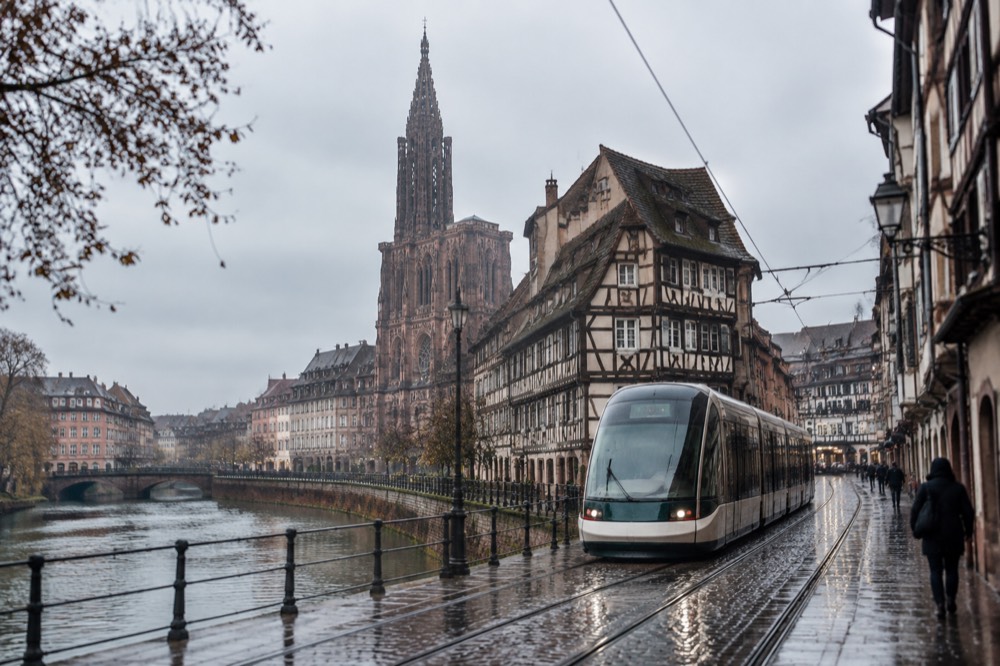
The quay is walkable year round, but the character changes sharply with the seasons: summer brings mean maxima of 26.4 C in July and the busiest river traffic, autumn softens the light from October, and late November to 24 December brings the Christmas market, whose last edition ran from 26 November to 24 December 2025 and drew 3.05 million visitors to the city. Winter walking is entirely practical, with January means of 5.2 C by day and -0.2 C at night, provided the clothing matches. Rain is spread evenly: 10.2 days of December and 9.1 days of January reach a millimetre or more in an average year.
The December period deserves its own planning, and not only for the atmosphere. Hotel prices in the old town rise for the market weeks, and the riverside lanes carry a steady flow of visitors between the squares holding chalets. The market's pattern is stable in shape: it opens in the last week of November and runs to 24 December, with the final day closing early in the evening. The 2026 dates and programme were still being finalised on the city's Christmas site, so confirm them there before locking travel plans. Chalets typically open from late morning to evening, which makes the riverside walk a good early-morning activity before the stalls fill.
| Month | Mean maximum | Mean minimum | Rain days of 1 mm or more |
|---|---|---|---|
| January | 5.2 C | -0.2 C | 9.1 |
| April | 17.0 C | 5.7 C | 8.6 |
| July | 26.4 C | 14.9 C | 10.4 |
| October | 15.8 C | 7.2 C | 9.6 |
| December | 5.9 C | 0.8 C | 10.2 |
| Year | 16.0 C | 6.9 C | 112.3 |
Spring is the connoisseur's choice. The April means of 17.0 C by day sit in the sweet spot for long walking, the summer visitor waves have not started, and the plane of the river carries the season's light. May is wetter, at 77.2 mm across the month, but the showers move through and the streets dry fast. Whatever the month, the semi-continental climate rewards layers: even in July the nights average 14.9 C, and a riverside evening in any season wants a jacket.
For photographers, the timing question is about light rather than weather. The quay faces the water, and the buildings on the far bank catch low sun in the early morning and again toward evening. Midday flattens the scene, and that is the hour better spent inside the cathedral, up on its 66 m platform, or in one of the museums, all of which are a short walk away and are covered in this site's guide to Strasbourg's museums and rainy-day options. The first Sunday of each month, when all the municipal museums open without charge, is a good day to combine a museum morning with a riverside afternoon.
Pairing The Quay With An Alsace Day Trip?
The quay is a morning or an afternoon, not a day, and the strongest itinerary pairs it with the Alsatian countryside: the Best Of Alsace historical day trip from Strasbourg is the featured option on this site, covering the region's medieval villages and castle country in a single guided outing, with the price, duration and itinerary on the operator's live listing. The logic is simple. Strasbourg's old centre rewards two unhurried days, and the villages that made Alsace famous, the wine route towns of Riquewihr, Eguisheim, Kaysersberg and their neighbours, sit beyond the reach of a casual stroll. A guided trip turns that distance into a seat on a coach.
The alternatives are worth naming, because they suit different travellers. A medieval villages and wine tasting day trip covers similar ground with cellar stops built in. A full-day Alsace highlights tour moves faster and sees more. A half-day wine tour suits anyone with only a spare afternoon. And for the castle-minded, the Haut-Koenigsbourg fortress above the plain, the eagle park and monkey mountain at Kintzheim, and the Route des Crêtes through the Vosges high country each have their own pages on this site, linked below, with what they offer and what to check before going.
| Day trip | What it offers | How it pairs with the quay |
|---|---|---|
| Best Of Alsace historical day trip | Medieval villages and castle country with a guide | The featured pairing: riverside morning, countryside day |
| Medieval villages and wine tasting trip | Wine route towns with cellar tastings | Suits travellers who want the vineyards, not only the streets |
| Half-day Alsace wine tour | A shorter vineyard loop with tastings | Fits a two-night stay with one full city day |
| Eagle park and monkey mountain | Flights of birds of prey and a Barbary macaque reserve | A family-focused alternative in the Vosges foothills |
| Route des Crêtes | High Vosges ridge driving with viewpoints | For travellers with a car or a longer stay |
None of these trips needs the quay to work, but the quay makes the city end of the plan better. A traveller who has walked the riverside, taken the short boat circuit and eaten in a winstub has seen the essence of Strasbourg's island core, and the day trip then supplies the other Alsace: the vineyards, the fortified villages, the silhouette of a castle on a wooded hill. This site's guide to the Alsace wine route from Strasbourg and its page on Kintzheim's eagle park and monkey mountain carry the details for each of those options, and the Alsace region overview pages help with the wider map.
For the practical booking question, the live listing holds the answers: departure point, current price, what is included and the cancellation terms. Check availability on the operator's page before committing the day, because the popular village routes fill first in the Christmas weeks and again in the wine harvest period of late September and October.
What Makes The Quai Des Bateliers Worth The Walk?
The quay earns its place because it is the one street that ties together everything Strasbourg is visited for: the river that shaped the city, the half-timbered architecture of the Grande Île, the covered bridges and Petite France at its southern end, and the cathedral quarter a few lanes east, all without a single admission ticket along the water itself. It is also the street that connects the city to its region, since the boatmen it is named for were the link between the island and the Alsace countryside that day trips now explore by road. Few quays anywhere carry a World Heritage listing on both banks.
That is the honest case for the walk, and it is worth being precise about what the quay is not. It is not a museum with opening hours, and there is no visitor centre dedicated to it. It is a public riverside street that happens to run through one of the most photographed stretches of a historic city, and its value depends on the pace of the person on it. Rushed, it is a route between two sights. Walked slowly, with a stop on a bench facing the water and a boat passing in the middle distance, it is the part of a Strasbourg visit that people describe first when they get home.
The Strasbourg Travel Guide site covers every sight the quay connects: the Strasbourg Cathedral and its single spire, the astronomical clock inside it, the covered bridges and the Barrage Vauban terrace, the Palais Rohan and its museums, the Place Kléber and the Saint-Thomas church on the island's other side. The quay is the thread that stitches them, and this page is the guide to the thread.
Common Questions About The Quai Des Bateliers
Is The Quai Des Bateliers In Petite France?
The quay runs along the Ill on the Grande Île and leads into Petite France at its southern end, but the two are distinct: Petite France is the quarter of half-timbered former tanners' houses where the river splits into channels, while the quay is the riverside street approaching it. Walking the quay south delivers you into Petite France; the covered bridges stand where the two meet.
Do You Need A Ticket To Walk The Quai Des Bateliers?
No. The quay is a public street, open at all hours like any street in the city, and strolling it costs nothing. The paid sights sit just off the water: the cathedral platform at 10 EUR full and 6 EUR reduced, the astronomical clock show at 4 EUR, and the museums at 9 EUR full and 5 EUR reduced, with every municipal museum free on the first Sunday of each month.
Can You Take A Boat Along The Quai Des Bateliers?
Yes. Batorama's river circuits travel the Ill through the heart of the city: the long Red Tour at 16.20 EUR full fare lasting 1 hour 10 minutes, and the short Blue Tour at 12.50 EUR full lasting 45 minutes, with reduced fares of 8.90 EUR and 7.20 EUR respectively. Departure points and timetables are on the operator's own site.
Is The Quai Des Bateliers Good At Christmas?
It is one of the quieter threads through the festive centre. The Christmas market spreads across the historic centre from late November to 24 December, with dozens of chalets across several squares, and last year's edition ran 26 November to 24 December 2025 and drew 3.05 million visitors. The 2026 dates were still being finalised on the city's Christmas site, so confirm them there before booking travel.
How Much Time Should You Give The Quay?
An hour walks it; two hours with a bench stop, a boat passing and a look inside Saint-Pierre-le-Jeune does it justice. Travellers pairing it with Petite France, the Barrage Vauban terrace and the cathedral should treat the whole riverside loop as a half-day, and December visitors should add time for the chalets along the way.
What Is The Closest Tram To The Quai Des Bateliers?
Tram lines cross the Grande Île on the streets parallel to the water, with stops a few blocks from the quay in every direction. A CTS single ticket is 1.90 EUR via the Badgéo card, the CTS app or contactless, or 2.50 EUR bought on board a bus, and a 24-hour Solo pass is 4.60 EUR. The network map on the CTS site shows the stop nearest your starting point.