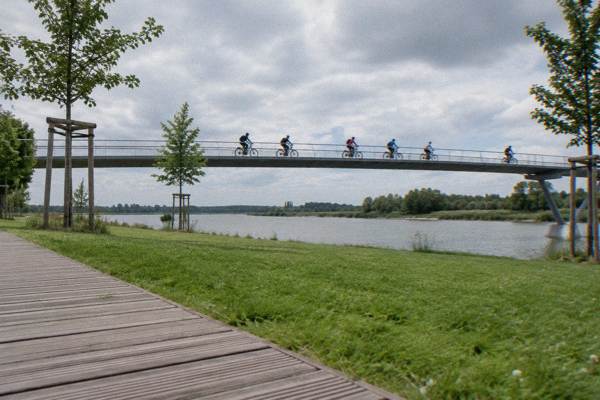
Jardin Des Deux Rives
The Jardin des Deux Rives is the park where Strasbourg, in Alsace, north-eastern France, meets Kehl in Germany across the Rhine, a stretch of lawns, paths and planted terraces shared by two countries.
Short answer
The Jardin des Deux Rives is a cross-border park on the Rhine between Strasbourg in Alsace, north-eastern France, and Kehl in Germany. A CTS single ticket costs 1.90 EUR and a 24h Solo pass 4.60 EUR. Strasbourg's semi-continental climate gives July mean maxima of 26.4 C and January mean maxima of 5.2 C.
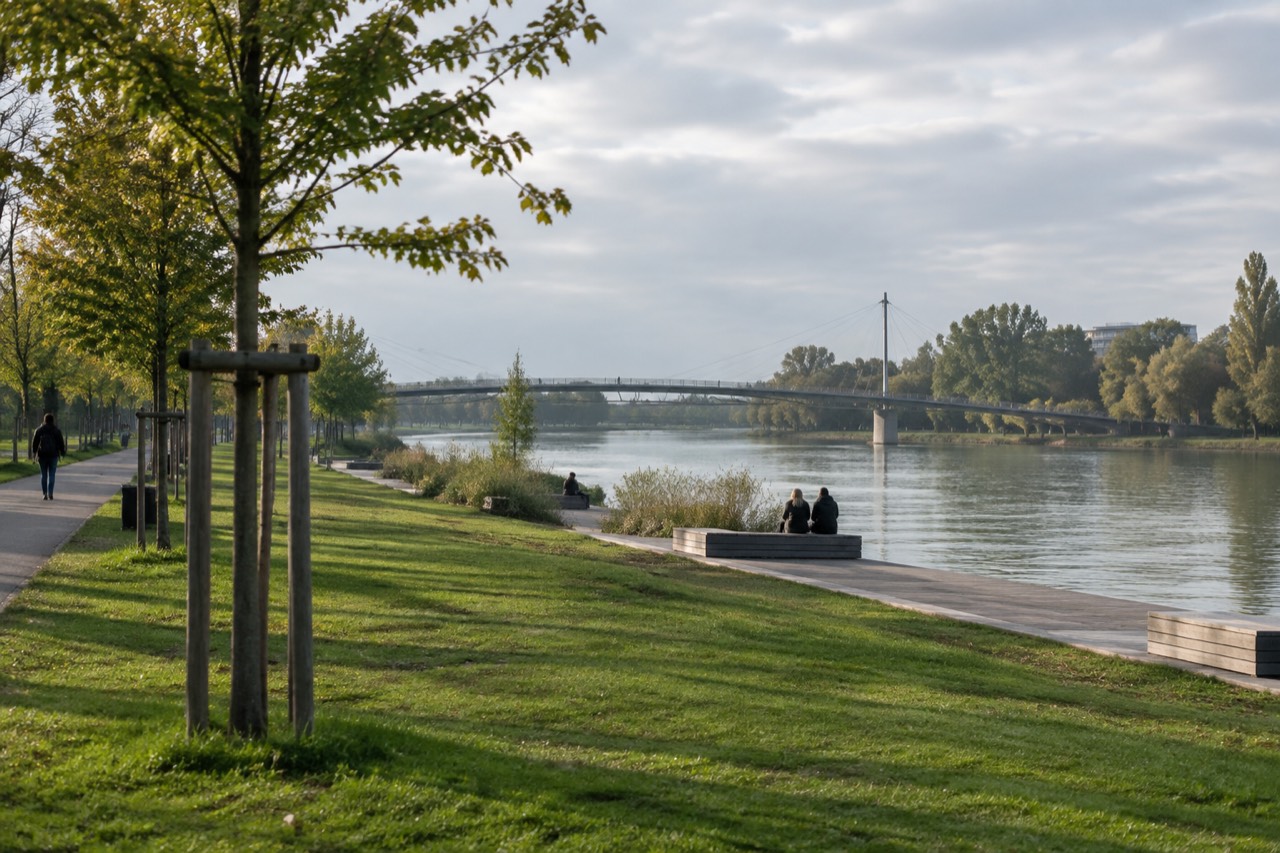
On the eastern edge of Strasbourg, the capital of the Bas-Rhin and the historic heart of Alsace in north-eastern France, the Jardin des Deux Rives follows the Rhine, the broad river that forms the border with Germany. Kehl sits on the far bank, and the park itself is the rare kind of place where two countries share one continuous stretch of designed landscape. You can stand on a lawn in France, look across the water at Germany, and walk between the two in a single afternoon without ever showing a passport, because both countries sit inside the Schengen Area and both use the euro.
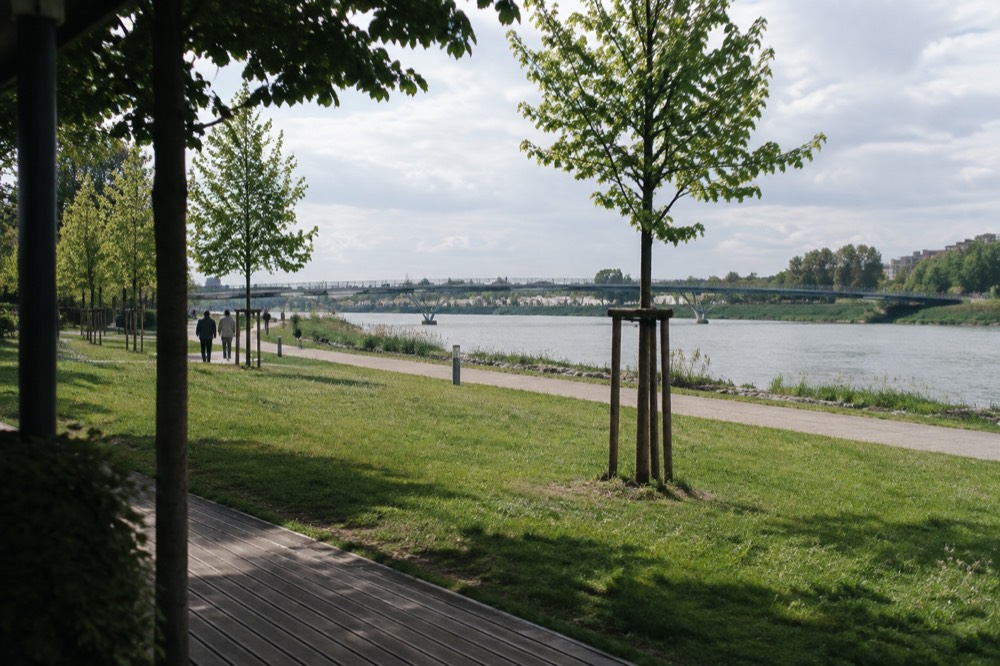
The park is the quietest of Strasbourg's headline spaces, and that is precisely its appeal. The Grande Île, the medieval river island at the centre of the city, draws the crowds to its cathedral and half-timbered lanes, while the Rhine banks a short tram ride away remain a place for walking, cycling and riverside idleness. This guide, part of Strasbourg Travel Guide's coverage of the city's parks and sights, covers what the park is, how to reach it with the city's CTS network, what the climate does across the year, which guided experiences pair well with it, and how to fold it into a wider stay in Strasbourg and the Alsace region.
What Is The Jardin Des Deux Rives In Strasbourg, France?
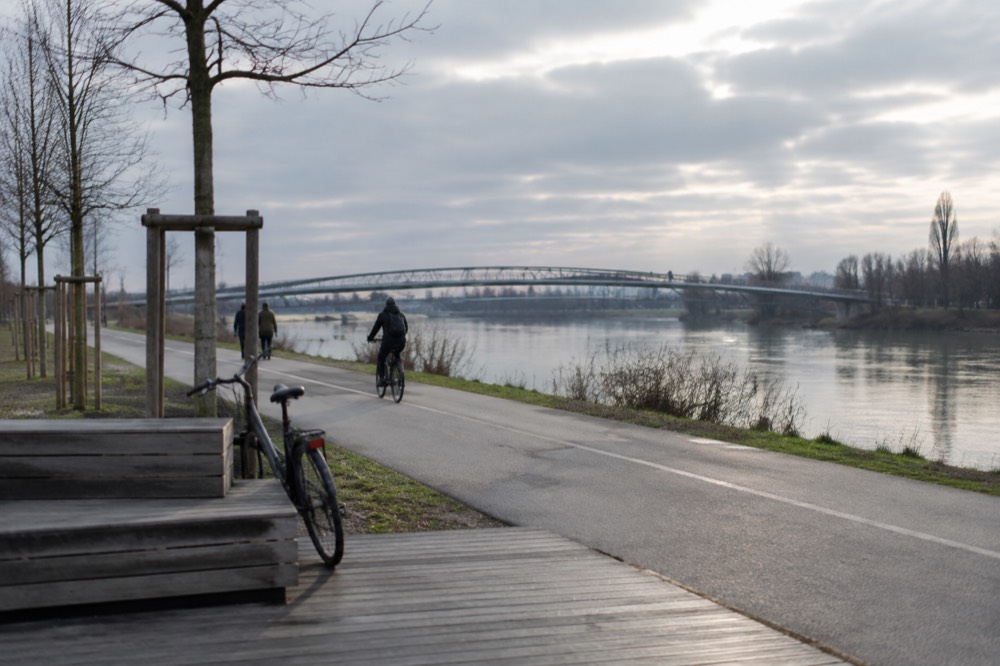
The Jardin des Deux Rives is a cross-border park on the banks of the Rhine, which separates Strasbourg in Alsace, north-eastern France, from Kehl in Germany. Lawns, walking paths and planted terraces run along the water, and a pedestrian and cycle bridge links the two countries, with no border formalities because both sit inside the Schengen Area.
The name translates literally as "garden of the two banks", and the concept is exactly that: one landscape composed of two riverbanks, one French and one German, treated as a single public space. On the Strasbourg side the park opens out from the city's eastern neighbourhoods toward the water. On the Kehl side it continues as a mirrored stretch of green. The link between them is a dedicated foot and cycle bridge over the Rhine, a structure best known for its sweeping curved form, and crossing it on foot is one of the small pleasures of a Strasbourg visit: the current below, the flat Alsace plain on one side, the Black Forest hills far off on the other.
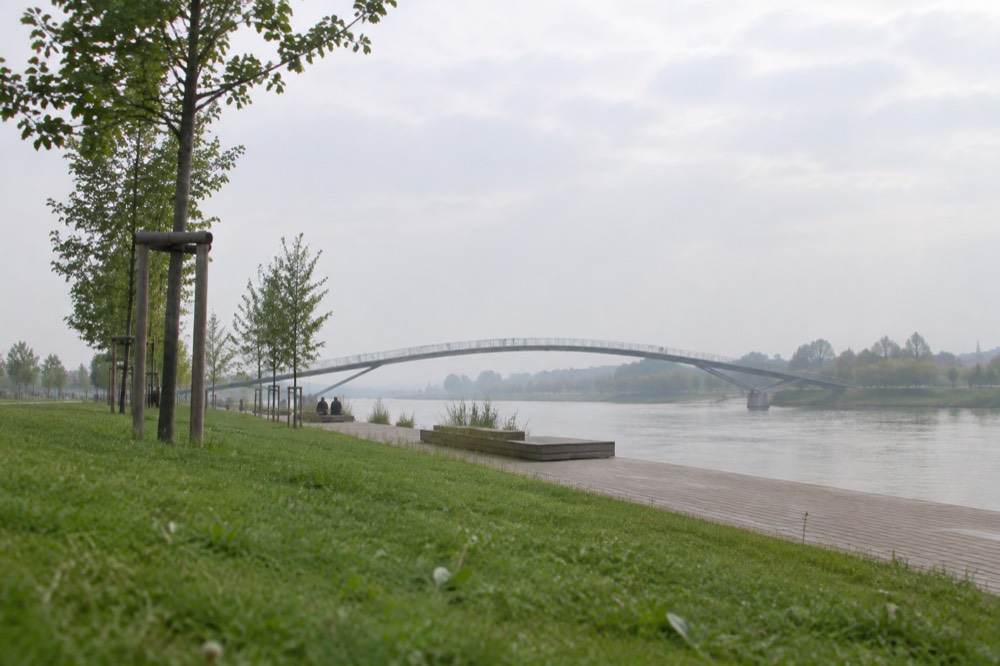
What makes the park unusual in European terms is its cross-border character. Strasbourg is already a city built around international institutions; the European Parliament, the Council of Europe and the European Court of Human Rights all sit in the European Quarter, and the city's identity is famously bilingual, sitting between French and Alsatian traditions with Germany directly across the water. The Jardin des Deux Rives is the landscape expression of that position. A walker who crosses the bridge steps from France into Germany in a few minutes, and the change is marked more by signage and the style of the street furniture than by anything dramatic: the same river, the same sky, the same planted embankments.
For planning purposes, treat the park as an open-air space rather than an attraction with a gate, a queue and a ticket. There is no single entrance, no fixed circuit and no closing time in the way a museum closes. What the park offers instead is scale and calm: room for a long walk, a cycle ride, a picnic on the grass, or simply a stretch of river to watch. Visitors who want structure around their day will find it in the guided experiences that use the city's paths and riverfront, covered further down this page, and in the nearby sights of central Strasbourg, which pair naturally with an afternoon here.
How To Get To The Jardin Des Deux Rives By Tram, Bus Or Bike
The CTS network, Strasbourg's tram and bus system, serves the eastern districts along the Rhine, and its tickets are among the cheaper urban fares in France. A single costs 1.90 EUR bought through the Badgeo card, the CTS app or contactless payment, or 2.50 EUR on board a bus, while a 24h Solo pass costs 4.60 EUR and a 24h Trio pass, covering two to three people, costs 10.20 EUR.
The practical starting point for any visit is the fare structure, because CTS pricing rewards a little planning. Buying on board a bus costs more than buying ahead, so anyone arriving with a contactless bank card or the CTS app pays the lower single fare automatically. A day of sightseeing that includes the park, the Grande Île and the European Quarter is usually best served by the 24h Solo pass, and a family or trio of travellers saves with the Trio ticket. The same fare table applies across the whole urban network, so a ticket bought for a ride to the Rhine banks also covers a later trip to the station or the museum district.
| CTS ticket | Price | What it covers |
|---|---|---|
| Single, bought via Badgeo, the CTS app or contactless | 1.90 EUR | One journey on the network |
| Single, bought on board a bus | 2.50 EUR | One journey on the network |
| 24h Solo | 4.60 EUR | A full day of travel for one person |
| 24h Trio | 10.20 EUR | A full day of travel for two to three people |
| Airport combined ticket, train plus tram or bus plus 24h EMS | 4.60 EUR | Entzheim airport into the city, then a day of urban travel |
For the airport arrival specifically, the combined ticket deserves a note. Strasbourg-Entzheim is connected to the central station by a regional TER shuttle that runs up to five trains an hour and takes 8 minutes, and the 4.60 EUR combined fare folds that train ride, the onward tram or bus and a 24h urban pass into one purchase. Travellers landing at Entzheim can therefore reach the city, drop bags and still hold a valid day ticket for the ride out to the Rhine banks. The CTS fare page and the airport's own access page carry the current details.
Cyclists have an even simpler proposition. Strasbourg is one of the flattest and most cycle-friendly cities in France, and the paths along the Ill and the canal network connect the centre to the Rhine without a single serious climb. The bridge between the two banks is open to cycles as well as pedestrians, which makes a loop possible: out along the French side, across the bridge into Kehl, and back along the German bank. Riders who prefer a guide and a supplied bike will find options on the tour roster, discussed in the touring section below, and anyone planning a longer stay can read more about the network in the site's coverage of getting around and cycling in Strasbourg.
What To See And Do Across The Two Banks
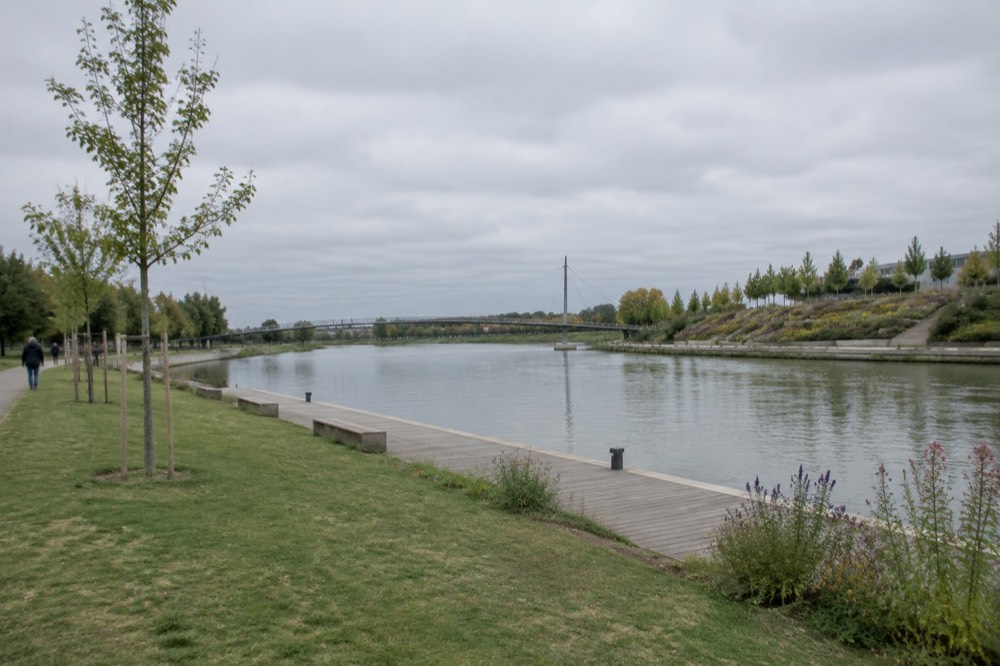
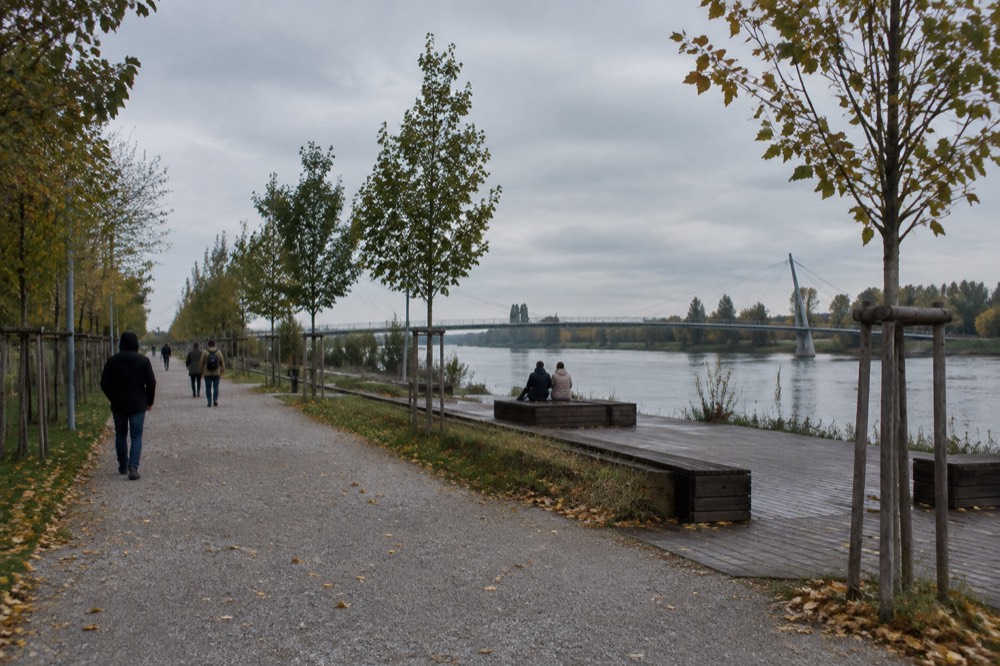
The park's core experiences are walking, cycling and riverside rest rather than ticketed sights. On the Strasbourg side, expect open lawns, planted terraces and wide gravel paths; on the Kehl side, a continuation of the same landscape; and between them, the curved pedestrian and cycle bridge over the Rhine, the single structure that defines a visit.
A good walk begins on the French bank and works toward the water. The planted terraces step down to the river, and the views open out in both directions: upstream toward the industrial reaches of the Rhine, downstream toward the bridges that carry road and rail traffic between the two countries. The bridge itself is the destination for plenty of visitors, a graceful arc of steel that carries nothing but foot and cycle traffic. Crossing it takes minutes, and the reward is the odd, quietly satisfying fact of having walked from France to Germany without stopping.
The two banks have slightly different temperaments, and repeat visitors tend to develop a preference. The Strasbourg side is the one that fills first on sunny afternoons, with picnics, ball games and families spread across the grass. The Kehl side is generally the quieter of the two, and its paths connect into Kehl's own riverside walks, so a determined walker can turn the visit into a proper exploration of both towns' waterfronts. The table below sketches the parts of the park and what each suits; treat it as a planning aid rather than a fixed itinerary, because the park rewards wandering above all.
| Part of the park | Character | Who it suits | What to check |
|---|---|---|---|
| French bank lawns | Open grass with river views, the livelier stretch | Picnickers, families, sunbathers | Weather, since shade is limited on the open lawns |
| Planted terraces | Stepped gardens running down to the water | Photographers, slow walkers | Seasonal planting, which changes through the year |
| The foot and cycle bridge | A curved crossing reserved for walkers and bikes | First-time visitors, cyclists | Wind on the exposed deck in cooler months |
| German bank paths | Quieter walking and cycling routes into Kehl | Runners, riders, anyone seeking calm | Opening state of any kiosks or facilities on the Kehl side |
| River margins | Gravel and grass at the water's edge | Anglers, birdwatchers, waders in summer | Water levels, which vary with the season |
Eating well around the visit deserves a mention, because the park sits at the end of a food-mad city. Strasbourg's winstubs, its traditional Alsatian taverns, serve choucroute, baeckeoffe and tarte flambée, and a long riverside walk earns every one of them. A structured way to meet that side of the city is a traditional food walking tour with tastings, which moves through the historic centre with a guide and stops at several eateries; the operator's live listing carries the current price, schedule and cancellation terms.
When Is The Best Time Of Year To Visit The Garden?
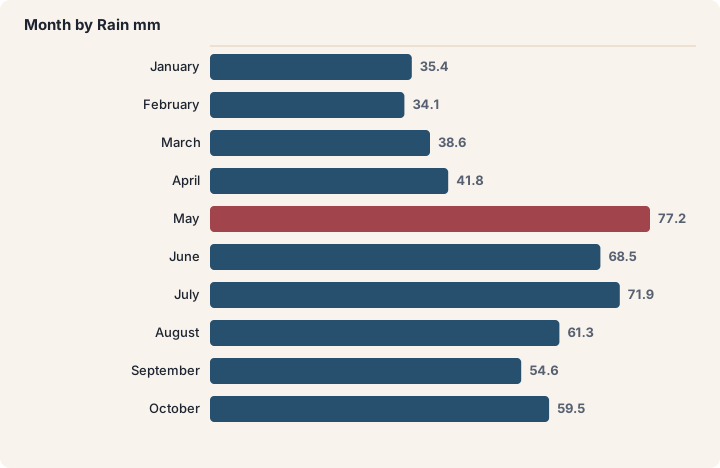
Meteo-France 1991-2020 normals for Strasbourg-Entzheim put the July mean maximum at 26.4 C and the January mean maximum at 5.2 C, with 635.7 mm of rain spread over 112.3 rain days a year. The climate is semi-continental, so summers are genuinely warm and winters genuinely cold, and the park's best months are the warm, drier stretches from late spring through early autumn.
The numbers matter here more than in a museum city, because the Jardin des Deux Rives is an outdoor space with almost no shelter. May carries the heaviest rainfall of the year at 77.2 mm, yet it also brings a mean maximum of 20.9 C and the first reliable warmth; June, July and August hold mean maxima of 24.4 C, 26.4 C and 26.1 C respectively. September is the connoisseur's month: a mean maximum of 21.6 C, 54.6 mm of rain and just 8.0 rain days, the driest of the summer shoulder. October cools to a 15.8 C mean maximum, and by November the mean maximum falls to 9.4 C.
| Month | Mean max C | Mean min C | Rain mm | Rain days of 1 mm or more |
|---|---|---|---|---|
| January | 5.2 | -0.2 | 35.4 | 9.1 |
| February | 7.3 | 0.0 | 34.1 | 8.3 |
| March | 12.1 | 2.6 | 38.6 | 8.5 |
| April | 17.0 | 5.7 | 41.8 | 8.6 |
| May | 20.9 | 10.1 | 77.2 | 10.8 |
| June | 24.4 | 13.4 | 68.5 | 10.2 |
| July | 26.4 | 14.9 | 71.9 | 10.4 |
| August | 26.1 | 14.5 | 61.3 | 9.5 |
| September | 21.6 | 10.7 | 54.6 | 8.0 |
| October | 15.8 | 7.2 | 59.5 | 9.6 |
| November | 9.4 | 3.3 | 47.6 | 9.2 |
| December | 5.9 | 0.8 | 45.2 | 10.2 |
Winter visits are still worth considering, with the right clothes and the right expectations. December brings the city's famous Christmas market, which runs in the late-November-to-24-December pattern that draws visitors from across Europe; the 2025 edition ran from 26 November to 24 December and drew 3.05 million visitors, and the city posts each edition's dates on its Christmas site, so confirm them there. A riverside walk in cold weather is a fine counterweight to the crowded chalets, and the mean December maximum of 5.9 C with a mean minimum of 0.8 C asks for a proper coat rather than a decision against going. Frost on the lawns and low sun on the water can be beautiful, and the park is at its emptiest exactly when the centre is at its fullest.
Timing within the day matters almost as much as the season. The bridge and the lawns face west into the evening light on the French side, which makes late afternoon the photographer's window in summer. Early morning belongs to runners and anglers. Anyone visiting in July or August should note that the mean minimum stays above 13 C, so evenings on the grass stay comfortable long after the day's heat has gone, and a picnic supper on the bank is one of the simple, free pleasures of a Strasbourg summer, in the sense that strolling and sitting in public space costs nothing.
Which Guided Tours Pair Well With A Visit To The Park?
The park pairs best with experiences that cover ground or water: a guided bike tour with a local guide uses Strasbourg's flat cycle network and supplied bicycles, a private boat cruise on the Ill with a skipper shows the city from the water, and a traditional food walk with tastings ends a riverside day in the winstubs of the historic centre. Each is booked through the operator's live listing.
Cycling is the most natural pairing. Strasbourg's bike culture is built on flat terrain and separated paths, and a guided ride with a local guide covers far more of the city's riverside landscape than a walker can manage, with bicycles included so there is nothing to rent or carry. The Rhine banks and the crossing into Kehl sit comfortably within a longer loop that takes in the Ill, the canals and the European Quarter. Riders who want to cover the same ground at a gentler pace, or who prefer two wheels with a motor, will also find Segway options on the city's tour roster.
The water pairing works in the other direction. The park looks east along the Rhine, while Strasbourg's classic boat territory is the Ill, the smaller river that threads through the heart of the city past Petite France and its half-timbered lanes and the covered bridges. A private cruise with a skipper aboard turns that stretch into a personal itinerary, and the contrast is instructive: the Ill is intimate, half-timbered and medieval, the Rhine broad and international. Doing both in one day, a boat hour on the Ill and a walking hour on the Rhine banks, gives a visitor the two rivers that made the city, and the two characters that still define it.
For travellers who prefer to anchor the day in food, the traditional food walking tour with tastings is the bridge between the park and the table. It moves through the historic centre with a guide and stops for Alsatian specialities along the way, which makes it a natural afternoon or evening after a morning on the riverbanks. The full picture of what the city's guided walks and tastings offer, from free pay-what-you-want walking tours through GuruWalk to small-group history walks, is gathered on this site's tours pages, and the food tour itself can be checked on the operator's live listing: Check availability.
What To Do Nearby On The Same Day
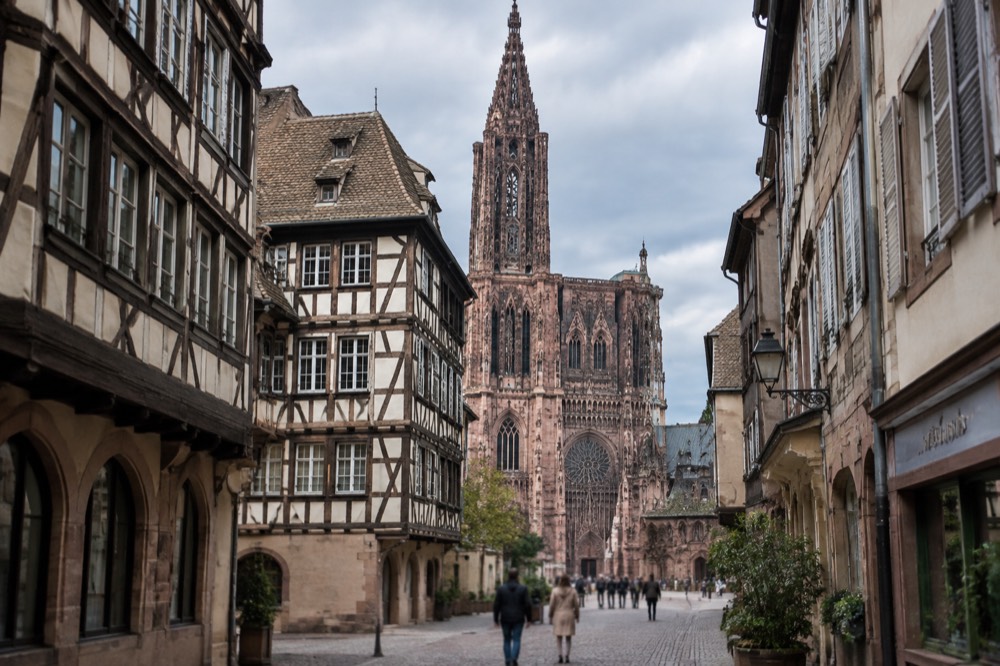
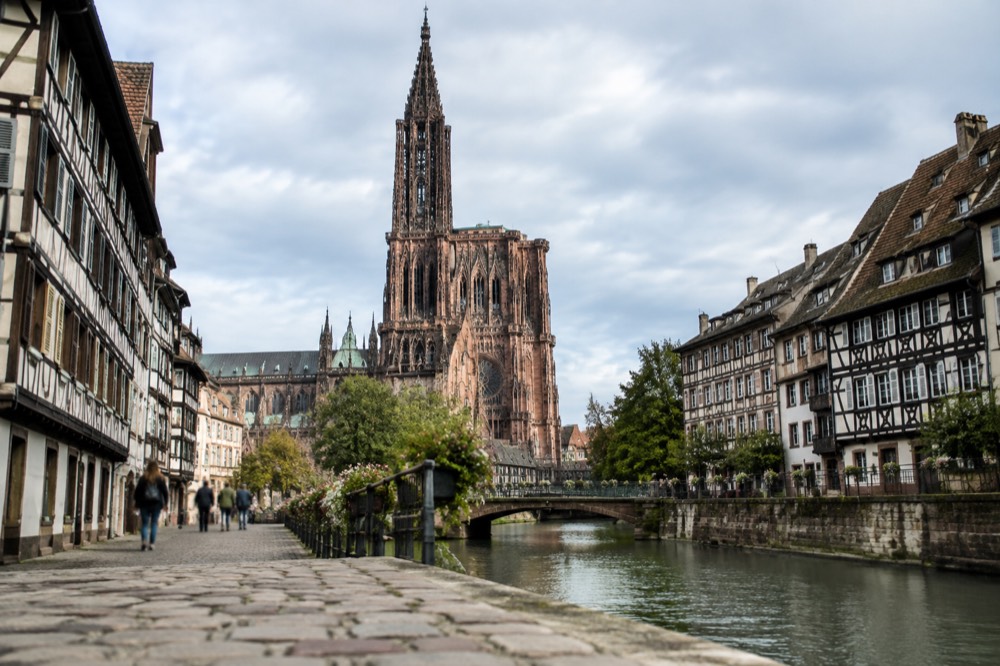
The park sits on the eastern edge of the city, and the rest of Strasbourg's headline sights cluster around the Grande Île and the rivers a short tram ride west. Petite France's half-timbered lanes, the single-spired cathedral with its 66 m platform, the quays along the Ill and the Ponts Couverts with the Barrage Vauban terrace form a natural second half of the same day.
The historic centre sits a short tram ride west of the park. Book a free walking tour here.
The classic pairing is morning in the park, afternoon in the centre. The Strasbourg Cathedral dominates the Grande Île, a single spire over a Gothic [nave that the city's own hours page opens Monday to Saturday from 08:30 to 11:15 and 12:45 to 17:45, and on Sunday afternoons from 14:00 to 17:15. The tower platform, at 66 m, costs 10 EUR full fare or 6 EUR reduced and rewards the climb with the whole Alsace plain laid out to the Rhine, which you will have just walked beside. The astronomical clock inside performs its automaton show daily at 12:30 sharp, with tickets at 4 EUR sold on the day only. The full detail, including the seasonal platform hours](https://www.cathedrale-strasbourg.fr/horaires_acces), is on this site's cathedral and clock pages.
| Nearby sight | What it offers | How it pairs with the garden |
|---|---|---|
| Strasbourg Cathedral | A Gothic nave, a single spire and a 66 m platform at 10 EUR full fare | The vertical counterpoint to the flat riverbanks, a short tram ride west |
| Astronomical clock | A daily automaton show at 12:30, tickets 4 EUR on the day only | A fixed-time anchor around which to plan the afternoon |
| Petite France | Half-timbered riverside lanes on the Grande Île | The medieval, intimate river scene against the Rhine's open scale |
| Ponts Couverts and Barrage Vauban | Historic bridge towers and a panoramic terrace over the Ill | The viewing platform that frames the old city from the water level |
| Quai des Bateliers | A riverside quay with boat departures and café terraces | The natural link between the centre and the water |
| Parc de l'Orangerie | Lawns, a lake and a small zoo in the European Quarter | A green half-day that pairs with the European institutions nearby |
Two practical notes shape the pairing. First, the municipal museums, including the Musée de l'Œuvre Notre-Dame and the Museum of Modern and Contemporary Art, charge 9 EUR full fare or 5 EUR reduced, with a 1-day Pass Musées at 20 EUR, and every municipal museum is free on the first Sunday of the month; the Musée Alsacien, however, is closed for works until 2028 and should not be planned into any itinerary. Second, the Barrage Vauban terrace keeps seasonal hours, 08:00 to 19:00 through September and October and shorter hours in the winter months, and its admission terms are best confirmed on the city's own page for the site. The terrace, with the Ponts Couverts in view, gives the best single panorama of the old city's rooftops, and it costs nothing to stroll the public squares and streets around it.
The European Quarter makes a third half-day option for visitors with institutional interests. The Parlamentarium at the European Parliament opens Monday to Friday 09:00 to 18:00 and Saturday mornings and afternoons outside plenary weeks, with an airport-style security check at the door and different hours during plenary sessions, so its page is worth a look before travelling. The Council of Europe and the European Court of Human Rights sit nearby in the same quarter, and the Parc de l'Orangerie beside them is the closest thing the city centre has to the Jardin des Deux Rives in spirit: lawns, water and room to breathe. For a fuller treatment of the quarter and its institutions, this site's European Parliament and Council of Europe pages carry the detail.
Can You Combine The Garden With A Day Trip Beyond Strasbourg?
Yes, and the park's position on the eastern edge of the city makes it a natural first stop before heading further into Alsace or across into Germany. Guided day trips from Strasbourg reach the wine villages, Colmar and the Haut-Koenigsbourg castle country to the south-west, and the Black Forest across the Rhine, and the park's riverbank is the right place to start understanding why the region straddles the border.
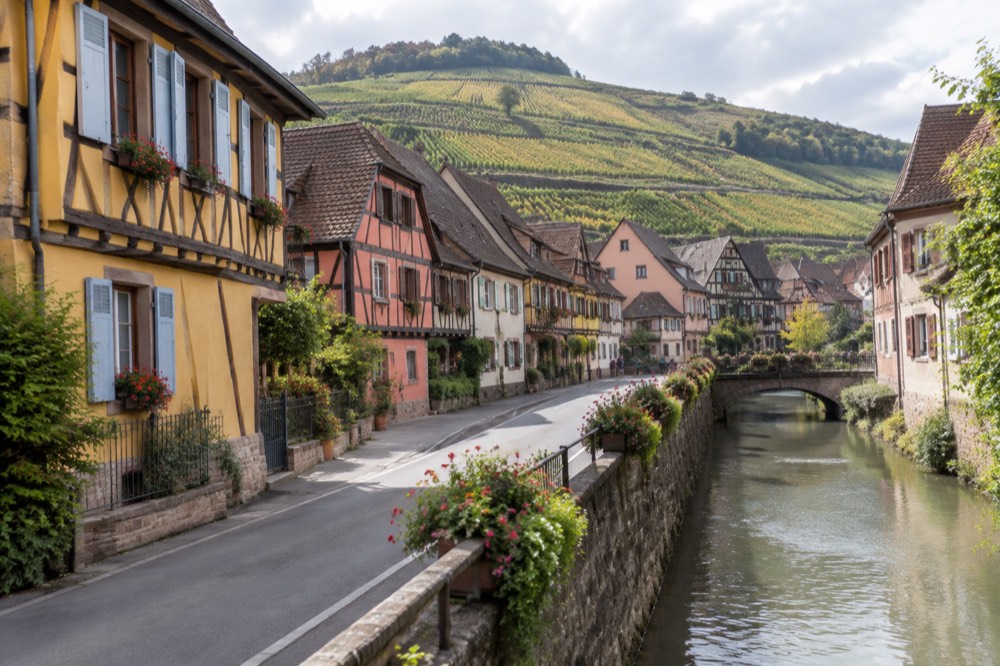
A full-day guided trip taking in Colmar, Riquewihr and Kaysersberg with the Haut-Koenigsbourg castle covers the wine-route country that people picture when they think of Alsace: vineyards, ramparts and half-timbered streets. The Rhine park is the useful prologue to that day, because it shows the flat river plain the vineyards rise out of, and it explains at ground level why this region has been fought over, shared and blended for as long as it has. The operator's live listing carries the current price, dates and inclusions.
| Day trip from Strasbourg | What the area is known for | What to confirm before travelling |
|---|---|---|
| Colmar and the wine villages | Canals, vineyards and half-timbered townscapes | Tour inclusions and which villages the route visits |
| Haut-Koenigsbourg castle country | A hilltop fortress above the Alsace plain | Castle opening dates and any seasonal closures |
| Route des Crêtes | A high forest drive through the Vosges with summit views | Seasonal road conditions and access |
| Kintzheim eagle park and monkey mountain | Birds of prey displays and a walk-through monkey reserve | Feeding and display times on the official page |
| The Black Forest, via Kehl | German hills, lakes and timber towns across the Rhine | Cross-border transport options and opening hours |
| Kehl itself | The German partner town at the far end of the park's bridge | Nothing beyond the bridge; walk across and explore |
Travellers with a car or a taste for heights should also look at the Route des Crêtes, the high Vosges drive this site covers in full, and at the Kintzheim eagle park and monkey mountain, which pairs well with the castle country in one long day. Across the river, the Black Forest begins almost as soon as the bridge ends, and the German towns beyond Kehl are a straightforward extension of a park visit for anyone with a bicycle or a rail pass; the site's Black Forest pages carry the planning detail. Whatever the direction, the same rule applies as everywhere in this guide: no distance, journey time or opening detail should be trusted from memory, and the official pages for each destination carry the current figures.
Common Questions About The Jardin Des Deux Rives
Where exactly is the Jardin des Deux Rives?
It runs along both banks of the Rhine between Strasbourg, in Alsace, north-eastern France, and Kehl in Germany. The French side is reached from Strasbourg's eastern neighbourhoods, and the German side from Kehl, with a pedestrian and cycle bridge joining the two.
Do I need a passport to cross the bridge into Germany?
No border formalities apply, because France and Germany are both inside the Schengen Area. A walker or cyclist crosses the bridge as easily as crossing any city bridge. Carrying ID is still wise, as it is anywhere in Europe, since spot checks remain legally possible.
How much does it cost to travel to the park in Strasbourg?
A CTS single ticket costs 1.90 EUR bought through Badgeo, the CTS app or contactless payment, or 2.50 EUR on board a bus. A 24h Solo pass costs 4.60 EUR and a 24h Trio pass for two to three people costs 10.20 EUR.
What is the best month to visit the garden?
September combines a 21.6 C mean maximum with the lowest rain-day count of the warmer months at 8.0 days of 1 mm or more. June through August are the warmest stretch, with mean maxima from 24.4 C to 26.4 C, and May is the wettest month at 77.2 mm.
Can I visit the park and the cathedral on the same day?
Yes, and it is a natural pairing. The cathedral nave opens Monday to Saturday 08:30 to 11:15 and 12:45 to 17:45, and Sunday afternoons from 14:00 to 17:15, with the tower platform at 66 m costing 10 EUR full fare or 6 EUR reduced. A morning on the Rhine banks and an afternoon on the Grande Île is the classic shape of the day.
Are there guided tours that include the riverside paths?
Guided bike tours with a local guide and supplied bicycles cover Strasbourg's flat riverside network, private boat cruises with a skipper cover the Ill through the historic centre, and food walks with tastings end the day in the winstubs. Each is booked through the operator's live listing, which carries current prices and times.
The Jardin des Deux Rives is the calmest argument for staying an extra day in Strasbourg: a landscape shared by two countries, reached for the price of a tram ticket, and best understood with the climate table in one pocket and a food walk booked for the evening. Walk out along the French bank, cross the curved bridge into Kehl, and the city's whole cross-border story explains itself without a single word of commentary.