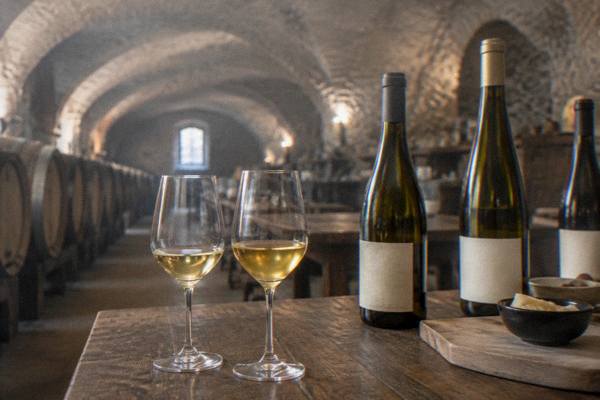
Is Crémant As Good As Champagne?
An honest comparison of Crémant d'Alsace and champagne for visitors to Strasbourg, in Alsace, France: how the two sparkling wines differ, when each one wins, and how to taste crémant on a day trip from the city.
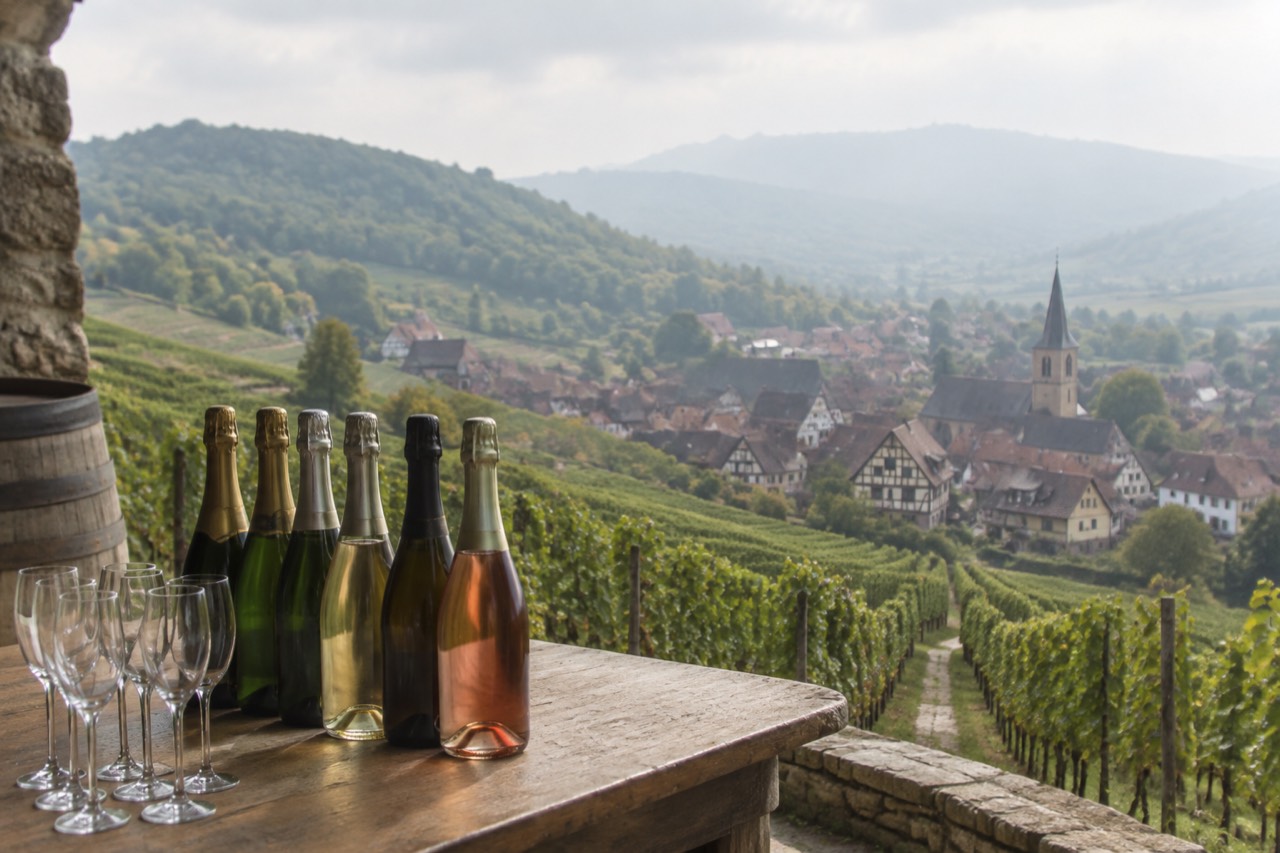
Crémant d'Alsace is the sparkling wine that Strasbourg, the prefecture of the Bas-Rhin in Alsace, north-eastern France, pours by the glass in its winstubs, pairs with its tarte flambbee, and ships to the rest of France in serious volume. Visitors tasting it for the first time often ask the same question: is it actually as good as champagne, or is it a cheaper stand-in? The honest answer is that the two wines are closer than the price gap suggests, because the production method is shared, and the difference lies mostly in the grapes, the ground they grow in, and the name on the label. This page sets the two side by side, in plain terms, for travellers basing themselves in Strasbourg.
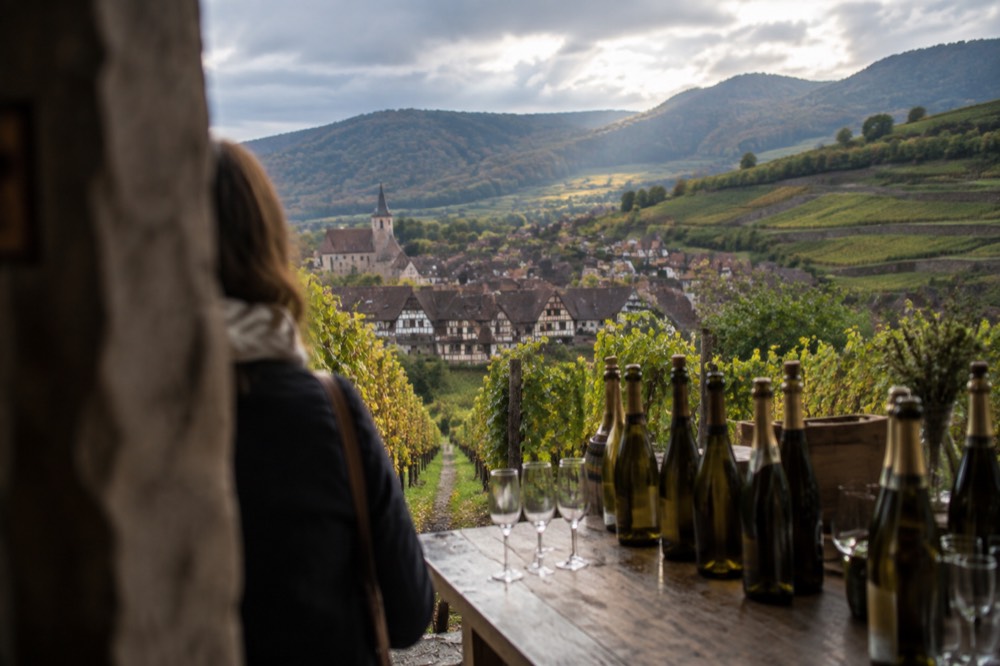
Is Crémant As Good As Champagne?
For quality of method, yes: crémant is made by the same traditional bottle-fermentation process that defines champagne, and in Alsace it is held to appellation rules on grape sourcing, hand harvesting and time on lees. Where champagne keeps an advantage is in the prestige of its name, the chalk-driven depth of its cellars and its long record with age-worthy vintage wines. Blind-tasted at a festive table, a good Crémant d'Alsace holds its own.
The word "as good" needs unpacking, because it means two different things. If it means "made with the same care and the same technique", then crémant qualifies without argument: French appellation law requires the traditional method for every crémant, which means the bubbles come from a second fermentation inside the very bottle you buy, exactly as in champagne. If it means "identical in flavour and ageing potential", then no, and it is not trying to be. Champagne's chalk soils, its cool northern climate and its centuries of blending craft give it a particular tension and toastiness; Alsace gives its crémant a fruitier, often rounder profile built on the grape varieties that thrive on the Alsatian side of the Vosges.
There is also a practical point that matters to visitors. Strasbourg sits at the northern gateway of the Alsace wine route, and crémant is not an import here, it is a local product, tasted a short drive from the slopes that grew it. Champagne, by contrast, is a day's travel away. Freshness of access is a real quality of its own.
What Makes Crémant Different From Champagne?
The three differences that matter are place, grapes and price positioning. Champagne can only come from the delimited Champagne region; crémant is the name for traditional-method sparkling wine made in other French regions, with Crémant d'Alsace among the best regarded. Alsace builds its crémant largely from the pinot family and other local varieties rather than champagne's classic trio. And because you are not paying for the Champagne name, the money goes into the bottle.
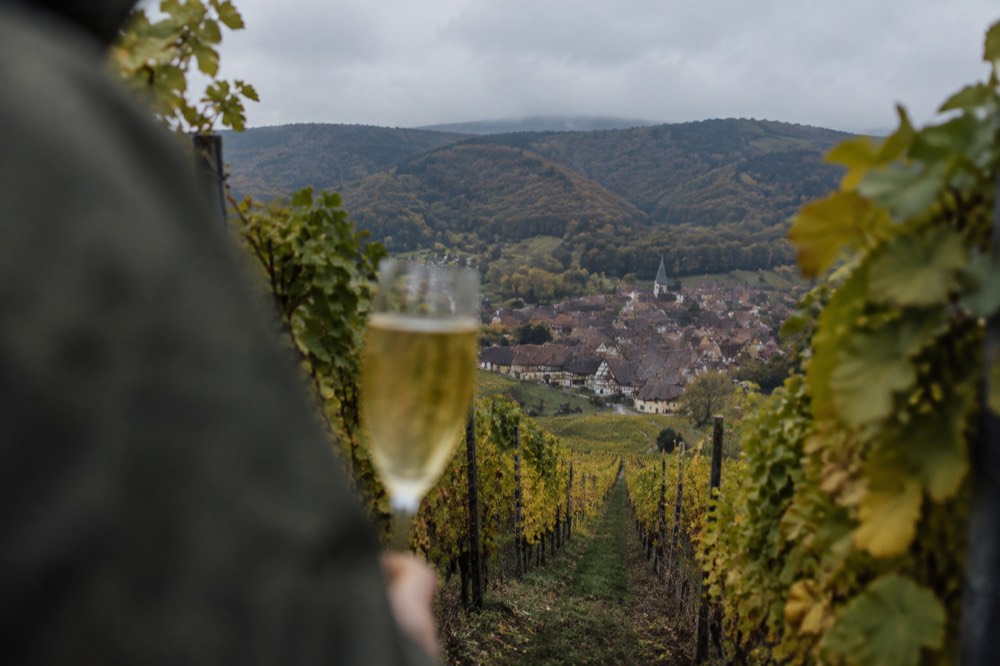
The shared part deserves stating plainly, because it is the reason the comparison is fair at all. Both wines are made by the traditional method: a still base wine is bottled with a small dose of sugar and yeast, a second fermentation happens in the bottle, and the spent yeast is then disgorged after a period of maturation on the lees. That is where the fine, persistent bead of a quality sparkling wine comes from, and crémant gets it by the same route champagne does.
What separates them:
| Aspect | Crémant d'Alsace | Champagne |
|---|---|---|
| Where it can be made | The Alsace appellation area, on the eastern slopes of the Vosges | Only inside the delimited Champagne region |
| Production method | Traditional method, second fermentation in bottle | Traditional method, second fermentation in bottle |
| Typical grape base | Varieties approved for the Alsace appellation, with the pinot family prominent | The classic champagne varieties, led by chardonnay and pinot noir |
| Typical flavour lean | Fruit-forward, often rounder, sometimes with a floral edge | Drier tension, brioche and toast notes, chalky minerality |
| What the label buys you | Wine from a named regional appellation without the Champagne premium | The protected Champagne name and its global prestige |
The label point is not trivial snobbery, it is law. "Champagne" is one of the most protected names in European food and wine, and the producers of the region have spent generations defending it. Crémant is the honest alternative for every other French region that makes serious traditional-method sparkling wine, from Alsace to the Loire and Burgundy. The question is usually asked about Alsatian bottles rather than any other.
For travellers who want to taste that difference where the grapes grow, the wine route starts a short drive or train ride south of Strasbourg, and guided options exist for every budget of time. The medieval villages and wine tasting day trip from Strasbourg is the fullest version, and Check availability if the idea of half-timbered villages and cellar stops in one day appeals.
Why Alsace Crémant Suits A Strasbourg Visit
Crémant d'Alsace is the local pour in Strasbourg, which means it is fresh, well stocked and served by people who know it. It appears by the glass in winstubs, by the bottle at family tables, and at the Christmas market stalls that turn the city into a seasonal destination. For a visitor, choosing it is not a compromise, it is the regional thing to drink, the way cider is in Normandy.
The Christmas connection is worth a paragraph of its own. The stalls run on mulled wine, but the restaurants and winstubs around them run on crémant. Last year's edition drew 3.05 million visitors to the city, and the local sparkling wine is what a good number of them toasted with. If the festive side of the city is the reason for the trip, the pages on the real story behind the Christmas tree and on Strasbourg or Colmar for Christmas markets cover the wider context.
Alsatian food is rich: choucroute, baeckeoffe, tarte flambbee, munster cheese. The dry, gently fruity profile of a Crémant d'Alsace cuts through that food better than a lean vintage champagne would, and it costs less regret when the second bottle is opened. Champagne is a wine for celebration; Alsatian crémant is a wine for dinner, and dinner is what Strasbourg does exceptionally well. The site's pages on why Strasbourg is so famous touch on that food culture at more length.
How To Taste Crémant Around Strasbourg
The fastest way is a glass in a winstub; the deepest way is a cellar visit on the wine route itself. Within Strasbourg, wine bars and traditional restaurants pour Crémant d'Alsace by the glass all year. Outside the city, the Alsace wine route strings together producers who welcome visitors, and guided tours from Strasbourg handle the driving so the tasting is the only work of the afternoon.
The deepest way is a cellar visit on the wine route itself. Book a half-day Alsace wine tour here.
For planning, the choice is mostly about how much of a day you want to give:
| Option | What it involves | Best for |
|---|---|---|
| A glass in a Strasbourg winstub | Zero planning; order alongside tarte flambbee or choucroute | An evening in the city, no travel |
| A half-day guided wine tour from Strasbourg | A guided loop into the wine route with tastings, back in the city the same afternoon | A first taste of the region with a light schedule |
| A full-day villages and tasting trip | Medieval villages such as Riquewihr and Eguisheim, cellar stops, a guide handling logistics | Travellers who want scenery and wine in one day |
| An independent train trip south | Self-guided visits to wine towns on the route, at your own pace | Confident independent travellers with a full free day |
The guided options on this site's roster cover that spread well. The half-day Alsace wine tour is the gentlest introduction, and the full-day highlights tour is the broader scenic version.
The full-day highlights tour suits visitors who want the postcard villages and the tasting rooms stitched into a single loop from the city, with a guide explaining what is in the glass at each stop.
One practical note for anyone planning around the city itself: the Musée Alsacien, which normally shows the domestic Alsatian world these wines come from, is closed for works until 2028, so do not build a museum afternoon around it. The other municipal museums are open, at 9 EUR full fare, with a 1-day Pass Musées at 20 EUR, and all of them are free on the first Sunday of the month.
When Champagne Is The Better Choice
Champagne earns its premium in three situations: a milestone you want to mark with the name itself, a long-living vintage wine meant for the cellar, and pairings that call for its drier, toastier tension rather than Alsatian fruit. If none of those apply, the crémant route delivers the same method, a local story and a bottle that fits the table you are actually sitting at.
The honest version of this comparison admits that prestige is a real pleasure. A wedding toast with champagne is not the same act as a wedding toast with crémant, whatever is in the glass, and no amount of blind-tasting argument changes that. Equally, the top of the champagne range produces age-worthy, complex wines that Alsace's crémant appellation does not set out to rival; the two categories have different ambitions at the summit.
But the everyday case tilts the other way. A chilled bottle shared over tarte flambbee in a half-timbered dining room, a pour at the end of a day on the wine route, a toast at a Christmas table within sight of a spire: these are moments built for the regional wine, and drinking champagne in them would be the odd choice. The Strasbourg Travel Guide position, after tasting what the city pours, is simple: drink the crémant here, and save champagne for the occasions that ask for it by name.
Common Questions About Crémant And Champagne
Is crémant as good as champagne?
In method, yes: crémant is made by the same traditional bottle fermentation as champagne, and Crémant d'Alsace is held to strict appellation rules. In prestige, ageing ceiling and the resonance of the name, champagne keeps its edge. At a festive table in Strasbourg, a good Crémant d'Alsace is a genuinely fine pour, not a consolation prize.
Is crémant the same thing as champagne?
No. Champagne comes only from the delimited Champagne region of France; crémant is the protected name for traditional-method sparkling wine made in other French regions. The technique is shared, but the grapes, soils and appellations differ, and only one of them can carry the word champagne on the label.
What does Crémant d'Alsace taste like?
Expect a fruit-forward, rounded sparkling wine, often with a floral or appley edge from the Alsatian grape base, a fine bead from bottle fermentation, and a dry finish in the standard brut style. It tends to read juicier and less toasty than champagne in its youth, which is why it pairs so easily with Alsatian food.
Can you visit crémant producers from Strasbourg?
Yes. The Alsace wine route begins a short distance south of the city, and many producers along it welcome visitors for tastings. Guided day and half-day tours from Strasbourg handle the driving; independent travellers can reach several wine towns by regional train and visit on their own.
Is crémant cheaper than champagne?
Generally, yes, and the gap is structural rather than a sign of lesser craft: you are not paying for the Champagne name, so more of what you spend goes into the wine itself. Specific prices vary by producer and vintage, so check the shelf or the producer's own page rather than relying on a fixed figure.
Which should you order with Alsatian food?
Crémant d'Alsace. Its dry, gently fruity profile cuts through choucroute, baeckeoffe and munster better than a lean champagne would, and it is the pour the region's own tables default to. Champagne shines with lighter, finer dishes or on occasions where the name itself is part of the point.
The short version, then: crémant is not champagne and does not pretend to be, but in Alsace it is the sparkling wine that belongs to the table, and it is made with the same care in the bottle. Taste both, if the trip allows, and let the cellar decide.