Why Is Strasbourg So Famous?
Why Strasbourg, in Alsace in north-eastern France, is famous: its World Heritage old town, its cathedral, its Christmas market, its European institutions and its food and wine.
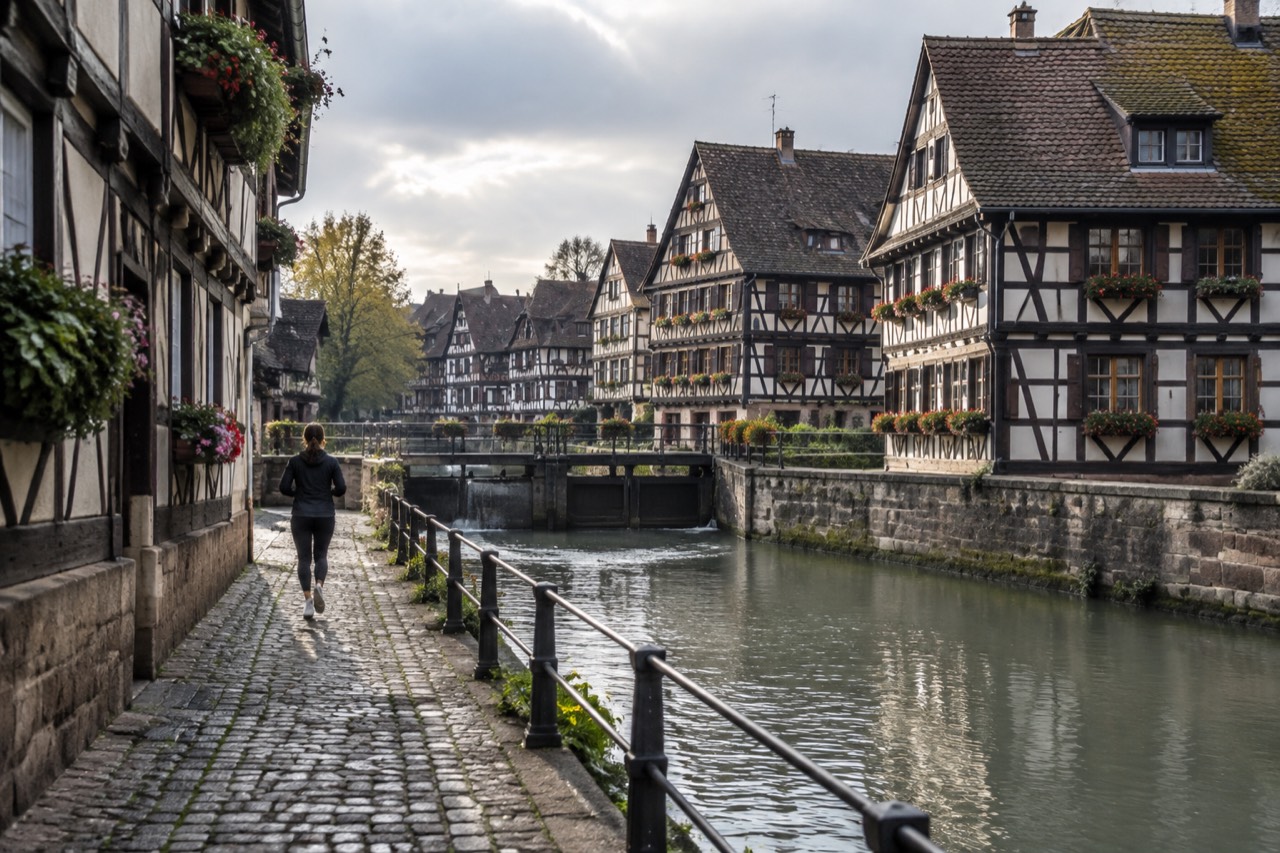
Strasbourg, the prefecture of the Bas-Rhin in Alsace, in the Grand Est region of north-eastern France, is famous for an unusual combination of reasons. It is a border city on the River Ill beside the Rhine, with Kehl in Germany on the far bank, and its fame rests on five pillars: a medieval old town inscribed on the UNESCO World Heritage list, a cathedral with a single spire and a viewing platform at 66 m, a Christmas market whose 2025 edition drew 3.05 million visitors, the seat of the European Parliament, and a winstub food culture built on Alsatian wine and tarte flambée. Few cities of 293,771 people carry that much weight in European affairs, heritage and gastronomy at the same time. That population figure is the commune count from INSEE, and it makes the city's outsized reputation all the more striking.
Why Is Strasbourg So Famous?
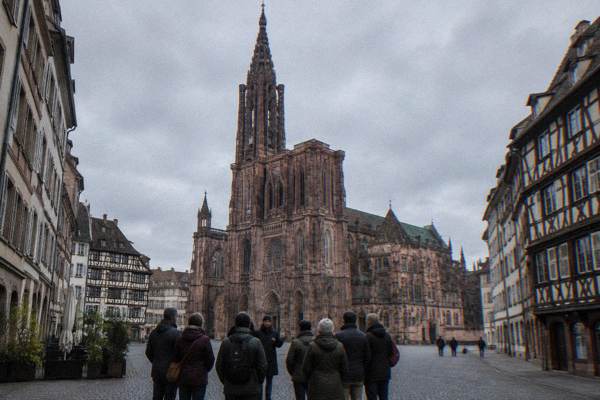
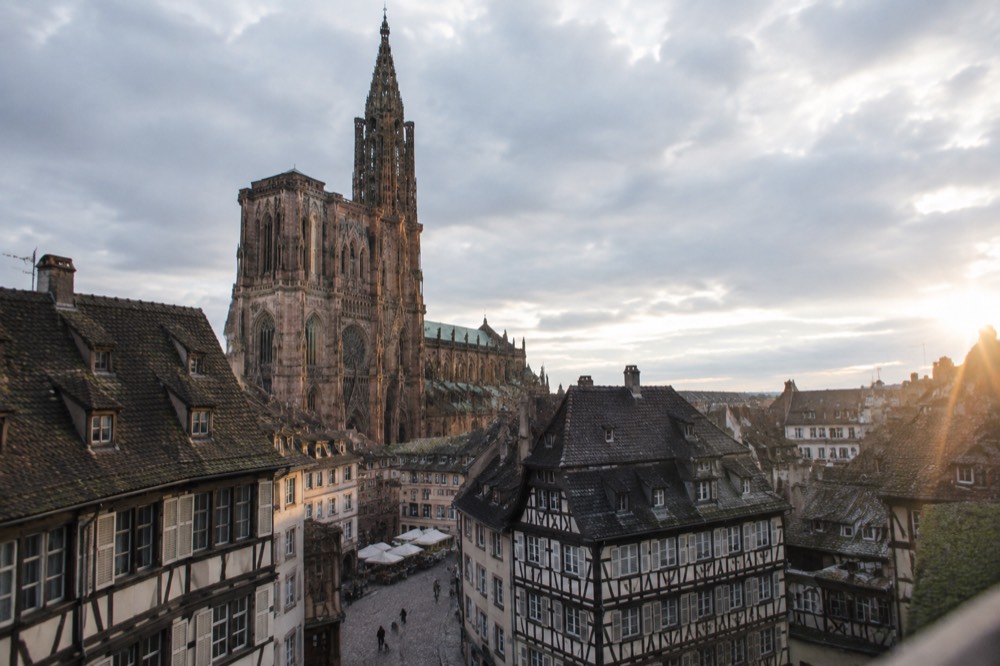
Strasbourg is famous because it concentrates five claims to renown in one walkable centre: the UNESCO-listed Grande Île and Neustadt old town, the single-spired Cathedral of Notre-Dame with its astronomical clock, the Capital of Christmas market tradition, the European Parliament and related institutions, and an Alsatian food and wine culture expressed in winstubs and riesling. Each claim is verifiable on the ground in a city of 293,771 people.
That answer deserves unpacking, because the five pillars reinforce one another. The World Heritage listing draws heritage travellers; the Christmas market draws a second, seasonal wave of them; the European institutions bring a permanent population of officials, journalists and lobbyists who fill restaurants midweek; and the food culture gives every visitor something to do in the evenings. A city that had only one of these would be a regional destination. Strasbourg has all five inside a compact historic core that can be crossed on foot.
The fame is also structural rather than accidental. Strasbourg sits at a crossing point of the Rhine, and its history has swung between France and Germany, which is why the old town looks half-French and half-German to first-time visitors. That hybrid identity, which the site explores in detail in Is Strasbourg More German Or French?, is itself part of the draw: nowhere else in France does the architecture, the food and the street names change character so visibly within a few hundred metres of a river.
| Pillar of fame | What it actually is | Where you see it |
|---|---|---|
| World Heritage old town | The Grande Île and Neustadt, UNESCO property ref. 495 | The entire historic centre |
| Cathedral of Notre-Dame | Single-spired Gothic church, platform at 66 m, astronomical clock | Place du Château |
| Capital of Christmas | A late-November to 24 December market tradition; 3.05 million visitors in 2025 | Place Kléber and surrounding squares |
| European institutions | European Parliament, Council of Europe, European Court of Human Rights | The European Quarter north-east of the centre |
| Alsatian food and wine | Winstubs, tarte flambée, choucroute, riesling and crémant | Petite France and the Krutenau |
What Makes The Grande Île A World Heritage Site?
UNESCO lists "Strasbourg, Grande-Île and Neustadt" as a World Heritage property, reference number 495, inscribed in 1988 and extended to the Neustadt district in 2017. The Grande Île is the island core of the medieval city, surrounded by the River Ill, and the Neustadt is the grand German-built extension of the city. Together they cover the entire historic centre visitors come to see.
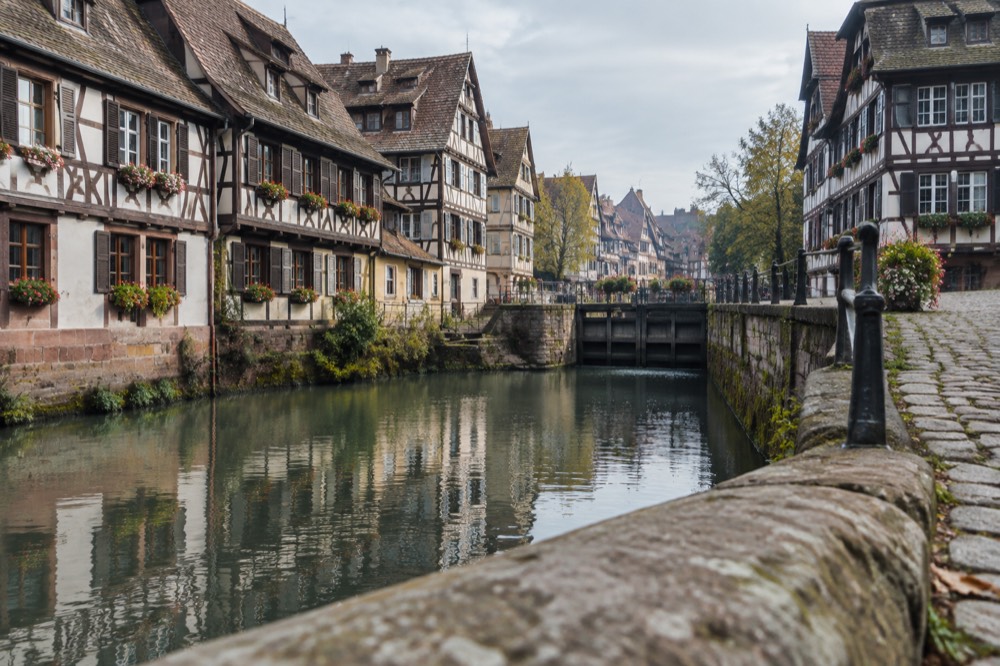
The Grande Île earns its status through density rather than size. Within one island you have the cathedral, the Musée de l'Œuvre Notre-Dame, the Kammerzell house on the cathedral square, the church of Saint-Thomas, the Ponts Couverts, the Barrage Vauban terrace, the Palais Rohan and the tanners' quarter of Petite France. The Neustadt addition matters because it is unusual: UNESCO rarely inscribes the expansion district of a city alongside its medieval core, and here the broad Imperial German boulevards, the Place de la République and the Saint-Pierre-le-Jeune church were judged to complete the story of a city shaped by both nations.
For a visitor, the practical consequence is that almost any walk through the centre is a walk through inscribed territory. A guided walk such as the Check availability option on the operator's live listing typically threads the cathedral quarter and Petite France together, which is precisely the route that shows the heritage listing off. The Strasbourg Travel Guide covers each of these monuments individually for readers who want to go deeper.
To thread those streets with a local, book a guided walking tour here.
The listing also has a protective effect worth knowing about. Because the core is inscribed, alterations to it are tightly controlled, which is why the half-timbered streets around Petite France retain their scale even as the city modernises around them. The trade-off is crowds in the narrow lanes in December, when the Christmas market funnels millions of visitors through the same inscribed streets. Visitors with only a day can read How Many Days In Strasbourg Is Enough? before committing to a pace.
Why Is Strasbourg Called The Capital Of Christmas?
Strasbourg holds the oldest Christmas market tradition among the major French markets, and the city brands itself "Strasbourg, Capital of Christmas". The 2025 edition ran from 26 November to 24 December and drew 3.05 million visitors, a figure published in the city's own bilan. The market's usual pattern opens in the last week of November and closes early in the evening on 24 December.
The Christmas fame rests on a specific historical claim: the city presents its Christmas market, the Christkindelsmärik, as a tradition reaching back further than any other French market, and the decorated tree on Place Kléber is the modern emblem of that claim. The 2026 dates had not been published when the city's Christmas site stated that the programme was still being finalised, so anyone planning a 2026 visit should confirm dates there rather than rely on secondary pages. The scale is genuinely city-wide: chalets spread across several squares in the historic centre rather than clustering in one place, and the market wraps around the cathedral and along the Ill.
| Christmas market fact | Verified figure or pattern |
|---|---|
| 2025 edition dates | 26 November to 24 December 2025 |
| 2025 attendance | 3.05 million visitors (city press release) |
| 2024 attendance | 3.4 million visitors |
| Usual opening pattern | Last week of November |
| Usual closing | 24 December, early evening close |
| 2026 dates | Not yet published; confirm on the city's Christmas site |
December is also the most expensive month to visit, a consequence of that demand, which Why Is Strasbourg So Expensive In December? examines in detail. The market's reputation extends beyond Alsace; readers comparing destinations often arrive via What Is The Most Famous Christmas Market In France?, where Strasbourg's claim sits alongside Colmar's.
Why Does Strasbourg Host The European Parliament?
Strasbourg is the official seat of the European Parliament, and it also hosts the Council of Europe and the European Court of Human Rights, which makes it one of the few cities that is simultaneously a French prefecture, a European parliamentary seat and an international legal capital. The European Quarter sits north-east of the historic centre, and the Parlamentarium Simone Veil visitor centre is open to the public.
The plenary sessions bring thousands of officials, interpreters and journalists into the city roughly one week a month, and that rhythm shapes hotel prices and restaurant bookings across the whole year. For visitors, the quarter is reachable by tram and combines well with a morning in the old town; the Parlamentarium's hours outside plenary weeks run Monday to Friday 09:00-18:00 and Saturday mornings and afternoons, with an airport-style security check at entry, and plenary-week hours differ, so the official page is the place to confirm before going.
A guided walk focused on this side of the city explains the architecture and the politics in one loop:
The European fame also explains something that puzzles first-time visitors: the sheer number of international restaurants, bookshops and signage in languages other than French. A city of 293,771 people hosts diplomatic missions and media bureaux on a scale normally associated with capitals, and that is a direct consequence of the parliamentary seat. The question of which institutions sit where is unpacked in Where Is The Headquarters Of The European Parliament Located?.
How French And German Is Strasbourg?
Strasbourg is French by nationality and binational by history, architecture and language. It has changed hands between France and Germany several times, its historic core was substantially rebuilt under German rule, and its local dialect and cuisine remain Alsatian rather than purely French. This hybrid identity is a genuine part of its fame, visible in the street names, the half-timbering and the food.
The clearest evidence is architectural. The Neustadt's broad boulevards, official buildings and church styles are German Imperial in character, and they sit directly beside the French classical facades of the Place Broglie area. The language question is equally layered: French is the official language, the Alsatian dialect persists among older residents, and German is common in commerce because Kehl is just across the Rhine. Readers who want the full picture can follow Do People In Strasbourg Speak French Or German? and the deeper heritage question in Are Alsatians Ethnically French Or German?.
This history has a darker chapter too, and the city does not hide it. The Second World War period, including the question of bombing and reconstruction, is covered in Was Strasbourg Bombed In WWII?. The result today is a city whose fame partly consists of being a living demonstration that a border can be a seam rather than a scar, a point the Council of Europe's presence here underlines.
What Food And Wine Is Strasbourg Famous For?
Strasbourg is famous for winstub culture: timbered tavern rooms serving tarte flambée, choucroute garnie, baeckeoffe and kougelhopf, paired with Alsatian riesling, gewurztraminer and crémant. The city sits at the northern end of the Alsace wine route, and its food identity is distinct from the rest of France because it borrows openly from German kitchens while using French technique.
The signature dish question has a clear local answer, tarte flambée, the thin cream-and-bacon flatbread that winstubs serve on wooden boards, and the signature drink is riesling, the grape that dominates the surrounding slopes. The winstub itself is part of the fame: these are not themed restaurants but working taverns, several of them long-established, where the menu changes with the market and the wine comes from independent Alsace growers. Visitors planning around meals rather than monuments can start with What Drink Is Strasbourg Famous For? and the wider regional picture in What Is Alsace Famous For?.
| Famous food or drink | What it is | Where it fits the city's fame |
|---|---|---|
| Tarte flambée | Thin flatbread with cream, lardons and onion | The signature winstub dish |
| Choucroute garnie | Sauerkraut with sausages and pork | The German-influenced centrepiece |
| Baeckeoffe | Slow-baked meat and potato casserole | The traditional Sunday dish |
| Kougelhopf | Alsatian ring-shaped brioche | The emblematic pastry, baked in earthenware moulds |
| Riesling and crémant | The leading Alsace still and sparkling wines | The wine route begins near the city |
The gastronomic fame is inseparable from the wine economy around the city. Alsace is one of France's most distinctive wine regions, and Strasbourg functions as its urban gateway, which is why food and wine tours are among the most-booked experiences on the roster. The wine route itself, with villages like Riquewihr and Eguisheim, extends the city's fame into the countryside for visitors with more than a weekend.
How Walkable Is The Famous Strasbourg Old Town?
The famous Strasbourg old town is highly walkable: the Grande Île is flat, compact and largely pedestrianised, and the main sights from the cathedral to Petite France sit within a short walk of one another. The tram network covers the rest, with a single CTS ticket at 1.90 EUR bought via the app or contactless, or 2.50 EUR on board a bus.
Walkability is the quiet enabler of all five pillars of fame. A visitor can see the cathedral in the morning, cross into Petite France before lunch, reach the Ponts Couverts and the Barrage Vauban terrace in the afternoon and still have time for the European Quarter by tram. The climate is semi-continental, with Meteo-France 1991-2020 normals giving a mean maximum of 5.2 C in January and 26.4 C in July, so the walking city works year-round, though December visitors should plan for the cold rather than expect mild weather, as Is December A Good Time To Visit Strasbourg? explains.
For travellers arriving from Paris, the rail connection is fast and the practicalities, including why fares run high, are covered in Why Is The Train From Paris To Strasbourg So Expensive?. Once in the city, the combination of a pedestrian core and a tram network means a car is more burden than benefit, and the parking question is best settled before arrival.
Common Questions About Strasbourg's Fame
Why is Strasbourg so famous?
Strasbourg is famous for its UNESCO-listed Grande Île and Neustadt old town, its single-spired cathedral and astronomical clock, its Capital of Christmas market tradition, its role as the seat of the European Parliament, and its Alsatian winstub food and wine culture, all inside a compact, walkable centre.
Is Strasbourg more famous for Christmas or for the European Parliament?
Both, for different audiences. The Christmas market draws the larger seasonal crowds, 3.05 million visitors in the 2025 edition, while the European Parliament shapes the city's year-round identity, its international population and its hotel market.
What is the single most famous building in Strasbourg?
The Cathedral of Notre-Dame, with its single spire and its viewing platform at 66 m. Its astronomical clock performs a full automaton show daily at 12:30, and the nave is open to visitors every day outside service times.
Is the Strasbourg Christmas market the biggest reason people visit?
In December, yes: the market transforms the entire historic centre, running from the last week of November to 24 December. Outside December, the cathedral, the World Heritage old town and the food culture are the main draws.
Do you need a guide to appreciate why Strasbourg is famous?
No, the old town explains itself on foot, but a guided walk adds the binational history and the European politics that the facades alone do not reveal. Guided options with a local guide are listed on the operator's live listings.
How many days does a first visit need to cover the famous sights?
Two days covers the cathedral, Petite France, a river view from the Barrage Vauban terrace and the European Quarter comfortably. A third day allows a wine route or Alsace village excursion.
Strasbourg's fame, in the end, is a compound claim: no single monument or event explains it. A World Heritage core, a cathedral that has anchored the city for centuries, a Christmas tradition measured in millions of visitors, a parliamentary seat that keeps Europe's business in town, and a table culture that fuses two nations, all packed onto one island and its extensions beside the Rhine. That combination, more than any one of its parts, is the answer to why this modest-sized French border city is known far beyond Alsace.