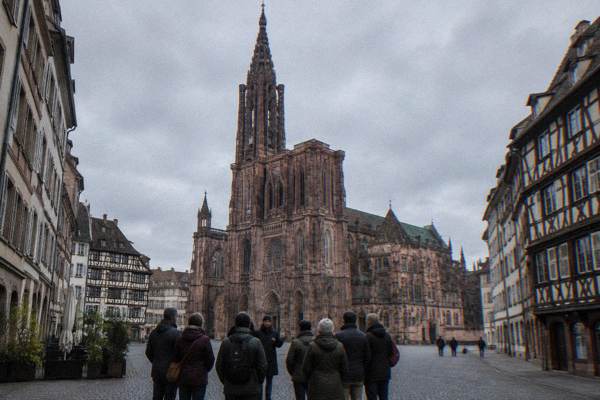
Is Strasbourg More German Or French?
Strasbourg sits on the French side of the Rhine but wears its German past openly. An honest look at the language, food, architecture and daily life of Alsace's capital.
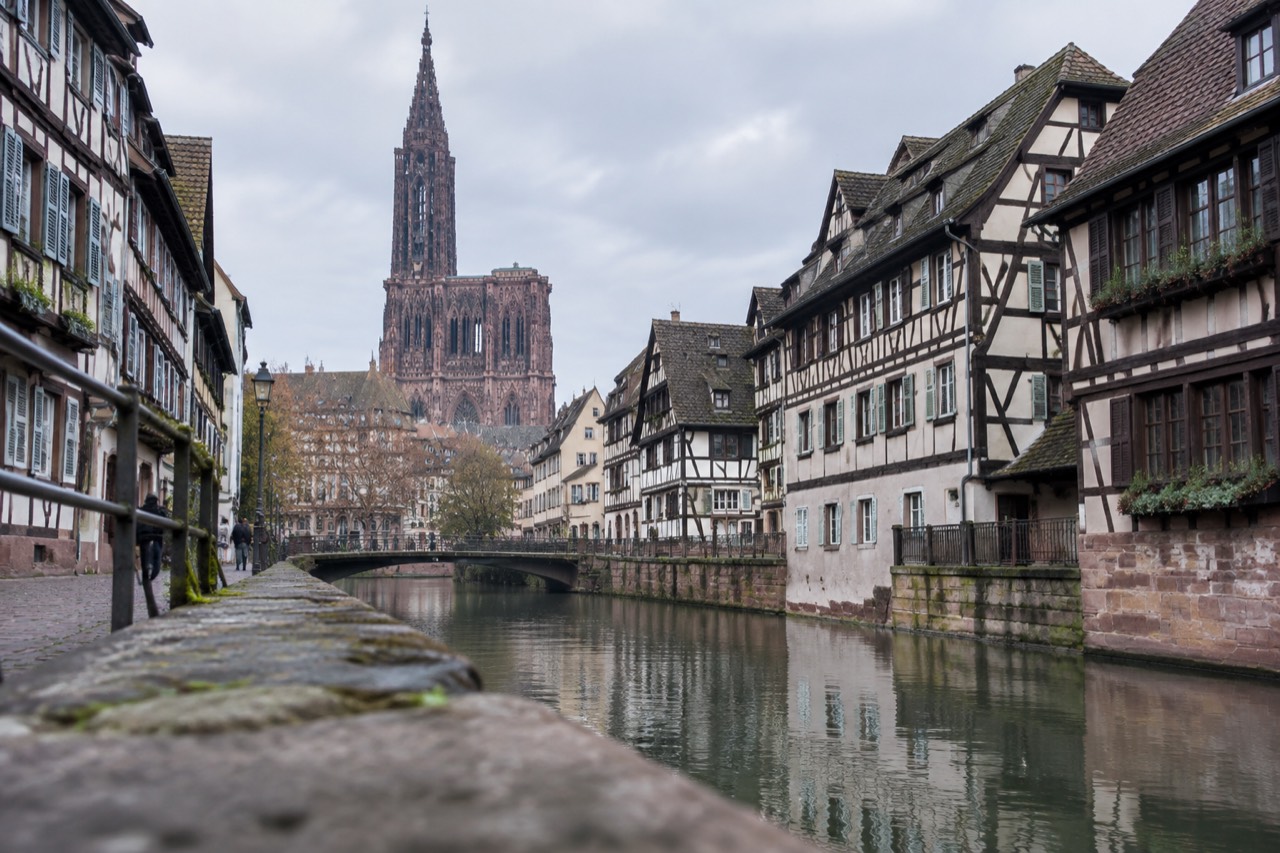
Strasbourg, the prefecture of the Bas-Rhin in Alsace, in the Grand Est region of north-eastern France, sits on the River Ill a short way from the Rhine, and the German town of Kehl stands on the far bank. Ask a Parisian and the city is provincial France. Ask a visitor fresh off the train and the half-timbered houses look like something from a German picture book. Both impressions are honest, and the tension between them is the whole point of the place. This page sets out what is French about Strasbourg, what is German about it, and what is neither, purely Alsatian.
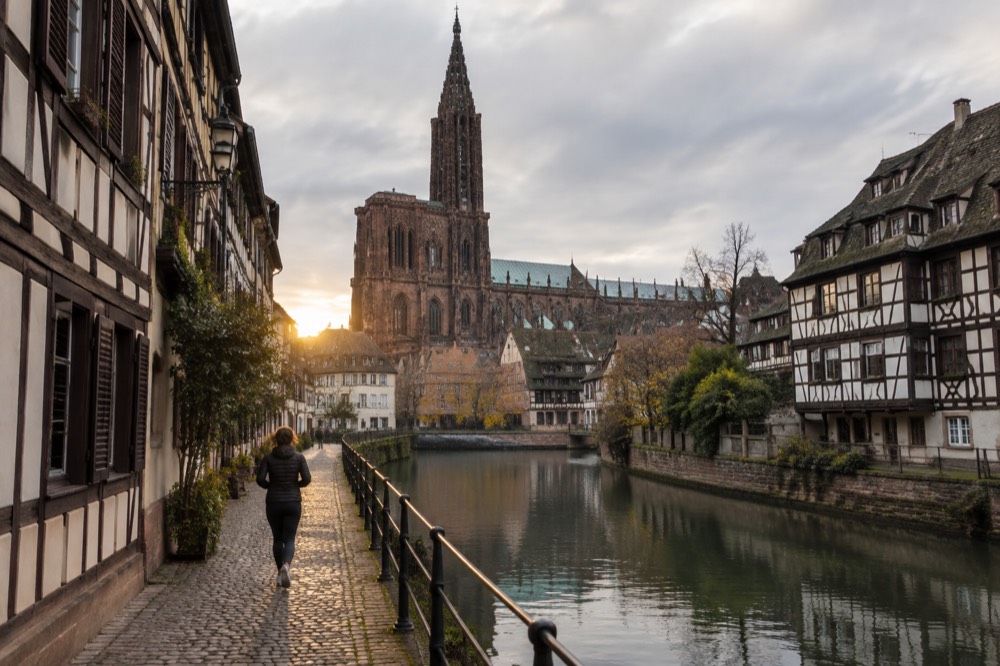
Is Strasbourg More German Or French?
Strasbourg is French, full stop, in law, government, currency and schooling, and it has been anchored in the French state through the modern era, but its built fabric, its food and its family names carry a Germanic inheritance that no border change ever erased. The honest answer is that the city is French with a German accent, or, better, Alsatian first. Anyone expecting a tidy either-or will leave disappointed, and that layered identity is exactly what makes the city worth understanding.
The city passed back and forth between French and German control across the centuries, and each period left a layer. The street grid of the Neustadt, the wide boulevards and heavy official buildings of the German imperial era, sits beside the medieval core of the Grande Île, which is older than either modern nation. UNESCO lists the two together as a single World Heritage property, "Strasbourg, Grande-Île and Neustadt", one of the few inscriptions that spans two national styles in one city. The cathedral, with its single spire and its platform at 66 m, belongs to a building tradition that drew craftsmen and ideas from both sides of the Rhine.
What confuses visitors is that the visual shorthand they carry for "Germany", half-timbering, steep roofs, geranium boxes, is really regional shorthand for the Upper Rhine valley, a cultural zone that straddles the border. Colmar and Riquewihr on the French side and Freiburg on the German side share it. Strasbourg looks "German" to someone arriving from Paris or Provence for the same reason a Texan might find Montreal looks European: the frame of reference is doing the work, not the map.
Which Language Do People In Strasbourg Speak?
The everyday language of Strasbourg is French, the language of schools, administration, shops and signage, and everyone in the city speaks it. Alongside it survives Alsatian, a Germanic dialect in the Alemannic family, still heard among older speakers and in some villages more than in the city centre, and standard German is a common school subject and a working language across the border. English serves in hotels and museums. A visitor needs French, not German, to be understood.
The short version is that Alsatian is not French with an accent, nor book German, but a distinct regional speech, and its decline across generations is tied to schooling and to the political turbulence of the last century. Younger Alsatians largely speak French at home; the dialect lives on in place names, on menus, in jokes and in the countryside.
German itself is not exotic here. Kehl, on the German bank, is a tram ride away, cross-border workers move in both directions, and German shoppers come into Strasbourg on Saturdays. The city's own tourist ecosystem runs in French, English and German side by side, which says a great deal about where its visitors come from.
How Close Is Germany, And Does The Border Matter Day To Day?
The German border is the Rhine itself, with Kehl directly opposite Strasbourg, close enough that the two cities form a single cross-border living area, and France and Germany are both in Schengen and both use the euro, so there is no passport stop and no money to change when you cross. The border is real on the map and almost invisible on the ground. You can breakfast in France and lunch in Germany without noticing the moment you crossed.
That nearness shapes the city's character more than any treaty. Strasbourg hosts the European Parliament, the Council of Europe and the European Court of Human Rights, institutions that exist here precisely because the city sits where France meets Germany. The European district is a working neighbourhood of glass and diplomacy a tram ride from the medieval core, and the contrast between the two is one of the sharpest in any European city.
For travellers, the border is also an itinerary. A day trip into Germany is logistically trivial, and the Black Forest begins within reach of a morning drive. One option that makes the crossing explicit is the Check availability link for the full-day Black Forest and Baden-Baden trip, which pairs the German spa town with forest villages and returns you to Strasbourg the same evening.
If a guided border crossing appeals, the European district walk covers the institutions and the reasoning behind them, and a food walk covers the other border, the edible one.
If a guided border crossing appeals, book a free walking tour here.
What Does Alsatian Identity Look Like On The Ground?
Alsatian identity is a third thing, not a blend of two halves, with its own flag, its own dialect, its own dishes and its own stubborn pride. The Alsatian half-timbered house, the winstub, the stork and the kougelhopf all belong to Alsace whether the ruler at any given moment spoke French or German. The region's loyalty is local before it is national.
The pattern shows up in small daily markers. Menus offer choucroute, tarte flambée and baeckeoffe, dishes that read German in their ingredients but are cooked and argued over as Alsatian property. Wines are Riesling, Gewurztraminer and Pinot Gris, bottled in the tall flutes of the Alsace wine route, sold under French appellation rules from grape varieties that Germany made famous. The half-timbered facades of Petite France are photogenic in a way that draws the "little Germany" comment, yet the quarter was a working tannery district of the French city, and its name is French.
| Aspect | The French side | The German side | The distinctly Alsatian layer |
|---|---|---|---|
| Language | French in schools, offices and shops | Standard German taught widely, spoken across the Rhine | Alsatian dialect, Alemannic family, still heard |
| Table | Wine culture, appellation labelling, long lunches | Choucroute, sausages, Riesling grape, beer halls | Winstub tradition, tarte flambée, kougelhopf |
| Streets | Place Kléber, café terraces, French shopfronts | The Neustadt's imperial boulevards and heavy facades | Half-timbered houses of the Grande Île |
| Symbols | The tricolore on public buildings | Family names ending in -mann and -bach | The Alsatian flag, the stork, the headdress of festival costume |
None of those rows is a purity test. A family in Strasbourg can carry a Germanic surname, speak French at home, cook a dish from the Germanic repertoire and cheer for the French rugby team without sensing any contradiction, because for them there is none.
How German Is The Food And Wine, Really?
The food of Strasbourg is Germanic in its raw materials and French in its technique and self-regard: pork, cabbage, sauerkraut and Riesling on one side, butter-rich pastry craft, restaurant culture and appellation discipline on the other. Choucroute garnie is the emblem of the overlap, a dish Germany recognises and Alsace owns. The wine is the clearest case of dual inheritance, German grape varieties vinified in a French style.
A short table makes the overlap easier to read than a paragraph does.
| Dish or drink | Its Germanic roots | Its Alsatian or French expression |
|---|---|---|
| Choucroute garnie | Sauerkraut with sausages and pork | Alsace's signature platter, served in winstubs with local Riesling |
| Tarte flambée (flammekueche) | Thin bread, cream, bacon, onion | A wood-fired Alsatian speciality with its own devoted following |
| Baeckeoffe | A slow meat-and-potato casserole tradition | A one-pot Alsatian Sunday dish marinated in Alsatian wine |
| Kougelhopf | A yeasted ring cake of the Upper Rhine | The Alsatian cake of Sundays and celebrations, baked in an earthenware mould |
| Riesling | A grape variety at home on both banks | Bottled as Alsace AOC, dry, often served with the fish of the Ill |
The winstub, the Alsatian tavern of wood panelling and bench seats, is where the two inheritances are least separable. It looks German, it serves Germanic food, and it is the most French thing in the city, a temple of long meals and regional pride. Reading the winstubs of Strasbourg before a visit is the fastest way to understand the city's idea of itself.
Does The Old Town Feel German Or French To Walk Around?
Neither, and both: the Grande Île, the island core of Strasbourg, is a medieval European city that predates the modern national styles visitors try to project onto it, with the cathedral's single spire, the canals of Petite France and the Ponts Couverts forming a townscape that belongs to the Upper Rhine rather than to either nation. The German imperial Neustadt around it is the counterpoint, deliberately grand, wide and ordered. Walking from one to the other is the clearest demonstration of the city's double inheritance.
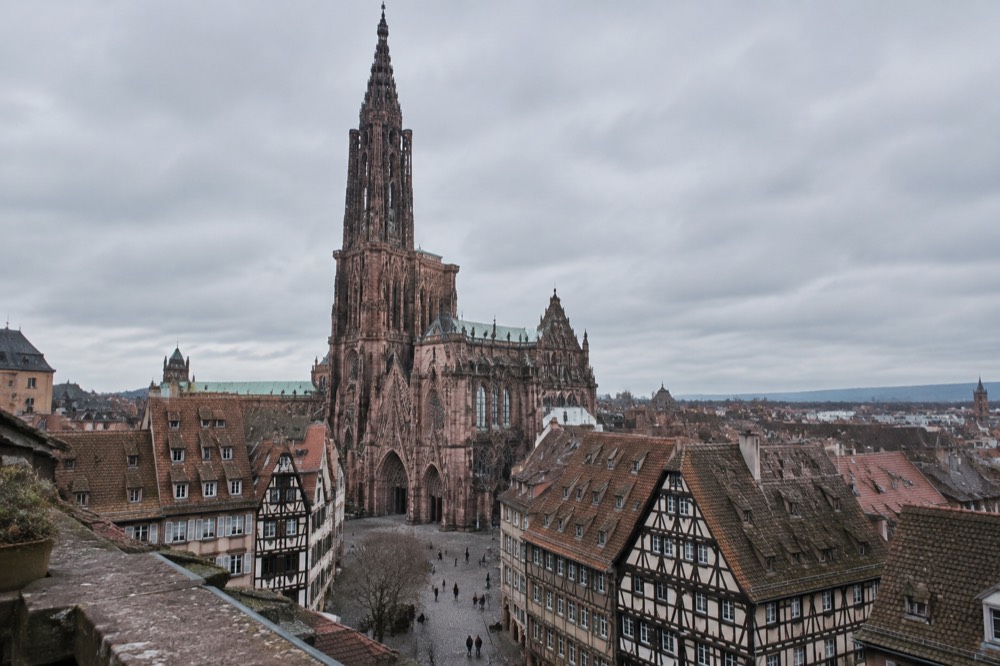
Practical details underline the French frame. The cathedral nave keeps French opening hours published on its own site, the platform ticket costs 10 EUR full price and 6 EUR reduced, the astronomical clock show runs at 12:30 daily with a 4 EUR ticket sold on the day only, and the municipal museums charge 9 EUR full price, free on the first Sunday of every month. The Musée Alsacien, which would be the natural home of this whole identity debate, is closed for works until 2028, so the argument has to be settled in the streets instead.
The climate belongs to neither nation's stereotype, either. Alsace is semi-continental, colder in winter than oceanic France and warmer in summer, with Meteo-France 1991-2020 normals for Strasbourg showing a mean maximum of 5.2 C in January against 26.4 C in July, and 635.7 mm of rain across the year. That continental edge, shared with the German side of the valley, is part of why the food is hearty and the wine is crisp.
So Which Answer Should You Carry Around The City?
Carry a three-part answer: Strasbourg is French in state and language, Germanic in stock, architecture and table, and Alsatian in the way those two are fused into something that no longer needs to choose. The city's whole modern role, as the seat of European institutions built to bind France and Germany together, flows from that position. It is not a French city pretending to be German or a German city lost to France. It is the place where the question stopped mattering.
That is also why the city rewards a longer stay. A day trip covers the cathedral and Petite France; two or three days let the layered identity come through in the Neustadt, the European district, the winstubs and a crossing into Germany. The question of how many days are enough depends on how far into that layering you want to go, and the deeper you go, the more the German-or-French question dissolves into something more interesting.
For anyone whose curiosity runs toward the ethnicity and ancestry behind the dialect and the family names, the question of whether Alsatians are ethnically French or German takes the story back another step, and the question of which German city is closest to Strasbourg covers the practical side of the border. The Strasbourg Travel Guide homepage gathers the full picture, from the famous landmarks to the practical pages on getting around.
Common Questions About Strasbourg's Identity
Is Strasbourg more German or French?
Strasbourg is French in law, administration and everyday language, and Germanic in architecture, food and family heritage, with a strong Alsatian identity that fuses the two. The city is best understood as Alsatian first: a Rhine-valley culture that no longer fits either national box neatly.
Do people in Strasbourg speak German?
Most residents speak French as their first and daily language. Standard German is widely taught and used across the border with Kehl, and the Alsatian dialect, a Germanic language of the Alemannic family, survives among older speakers. Visitors can get by entirely in French or English.
Was Strasbourg ever part of Germany?
The city changed hands between French and German rule several times across its history, and each period left visible layers, from the medieval core to the imperial Neustadt. The city's modern identity is French, with that history openly present in its streets and buildings.
Why does Strasbourg look German?
The half-timbered architecture visitors associate with Germany is really an Upper Rhine valley style shared by Alsace and the Black Forest on both banks of the river. Strasbourg's Grande Île predates the modern nations, and the Neustadt district was built in a deliberately German imperial style.
Is Alsace in France or Germany?
Alsace, including Strasbourg, is in France, within the Grand Est region, with the German border along the Rhine. Both countries are in the Schengen area and use the euro, so crossing between them involves no passport control and no currency exchange.
Is Strasbourg a good base for visiting Germany?
Yes. Kehl sits directly across the Rhine and the border is open under Schengen, with the same euro on both sides. Day trips into the Black Forest and Baden-Baden run regularly from the city, making Strasbourg a practical base for two countries at once.