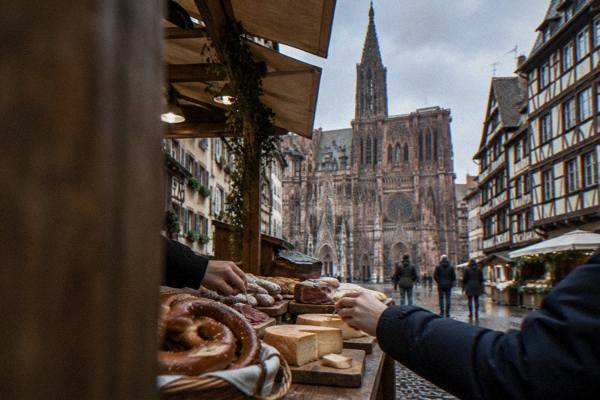
Winstub Strasbourg
The winstub is the traditional tavern of Strasbourg, in Alsace, north-eastern France, and it is where the city's food culture actually lives. This guide explains what a winstub is, what to order, how the table customs work and how to find the ones worth sitting down in.
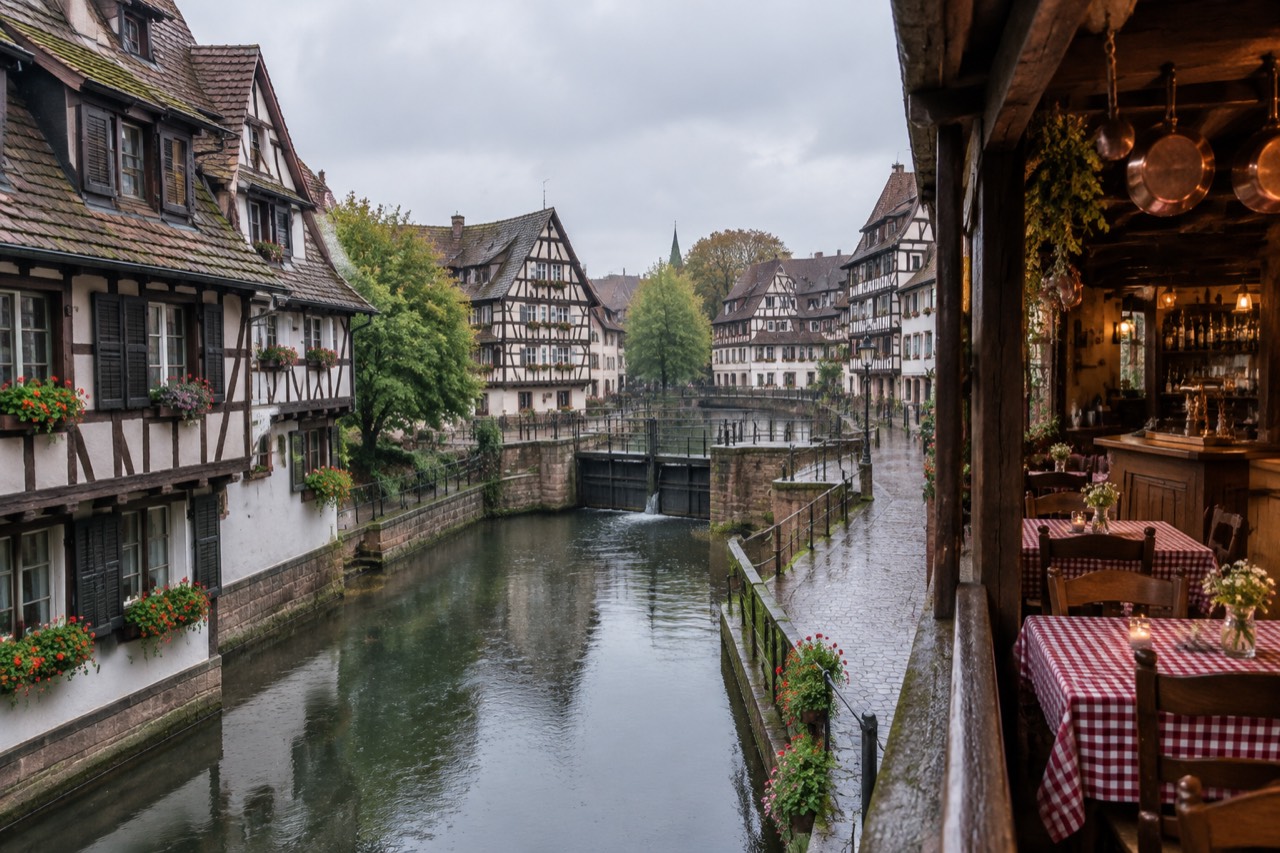
Short answer
A winstub is a traditional Alsatian tavern found across Strasbourg, France, serving hearty regional dishes such as choucroute, baeckeoffe and tarte flambée alongside local white wines by the glass. Expect checked tablecloths, wooden beams, small rooms and a short menu. The best ones cluster in the Grande Île, Petite France and the Krutenau quarter.
The winstub is the traditional eating house of Strasbourg, the prefecture of the Bas-Rhin in Alsace, north-eastern France, and no other single place tells you more about how this border city likes to eat. The word itself is Alsatian: "winstub" means wine room, a room where local wine was once sold by the glass and simple food came alongside it. That idea survived every political change the region went through, and today the winstub sits somewhere between a pub, a family dining room and a wine bar, with checked tablecloths, dark beams, stoneware plates and a menu short enough to read in two minutes. This guide from Strasbourg Travel Guide covers what a winstub actually is, what belongs on the table, how the customs work, and how to tell a proper one from a place that has learned the decor but not the cooking.
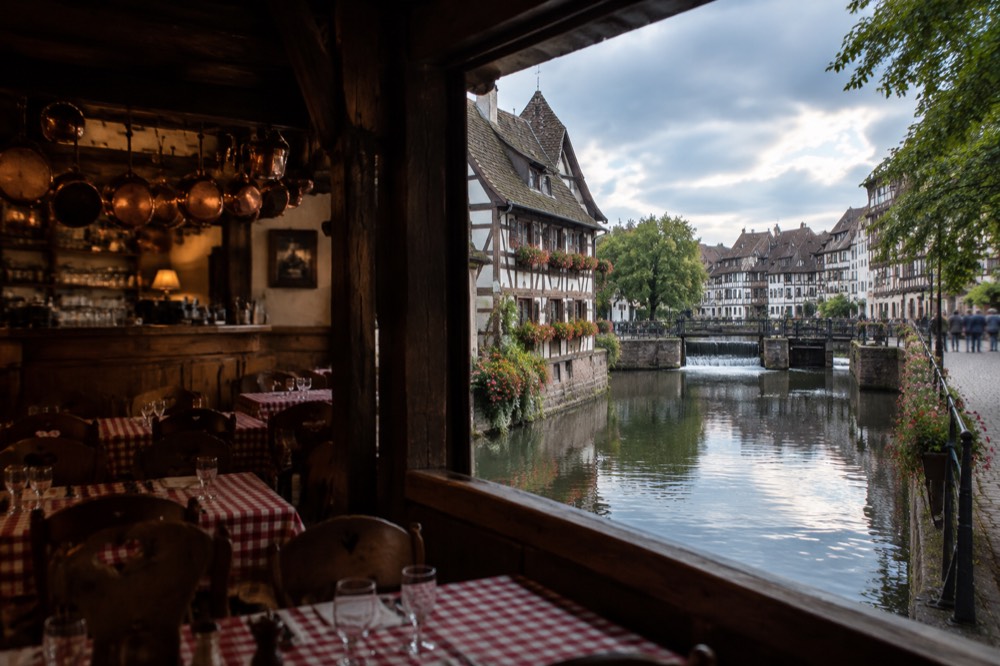
What Is A Winstub In Strasbourg, France?
A winstub is a small, traditional Alsatian tavern serving regional dishes and local wines by the glass, and in Strasbourg it is the everyday counterpart to the city's formal restaurants. The format barely changes from one house to the next: one or two small rooms, wooden tables set close together, a menu built on the cooked dishes of the Alsatian farmhouse kitchen, and a wine list that reads like a short tour of the local slopes. Nothing about the concept is aimed at visitors in particular. Winstubs open at midday for the people who work around them, fill again in the evening, and close when the kitchen runs out, which is a genuine part of the tradition rather than a marketing trick.
The word splits into two Alsatian parts: "win", wine, and "stub", a heated room, the warm room of a house. That origin explains the feel of the place better than any description of the food. A winstub is built for staying. The chairs are wooden, the lighting is low, the plates are generous, and the service runs at the pace of a room where nobody is hurrying you back onto the street. In a city whose historic centre, the Grande Île, is listed by UNESCO as part of the World Heritage property "Strasbourg, Grande-Île and Neustadt", the winstub is the living half of that heritage, the half you can eat in.
It helps to know what a winstub is not. It is not an Alsatian-themed restaurant with a gift rack by the door, and it is not a wine bar with small plates designed for standing. The cooking is farmhouse cooking, meant as a full meal, and the wine is meant to accompany it. The distinction matters when you are choosing where to sit down, because plenty of places in the centre have adopted the decor without adopting the kitchen, and the difference shows up on the plate within one course. The sections below take that problem in order: what to order, how to spot the real thing, and where the good ones are.
What To Order In A Winstub: The Classic Alsatian Dishes
Order the slow, regional dishes that a winstub kitchen exists to cook: choucroute garnie, baeckeoffe, tarte flambée, and kougelhopf to finish, with a carafe of local white wine alongside. These four names cover the core of the winstub menu, and a kitchen that does all four well is a kitchen worth returning to. The dishes are described in detail in the site's dedicated food guides, but the short version belongs here, because ordering with confidence is half the experience. The waiter in a good room will steer you right if you ask, but arriving with the names already in mind turns a first visit into a proper meal.
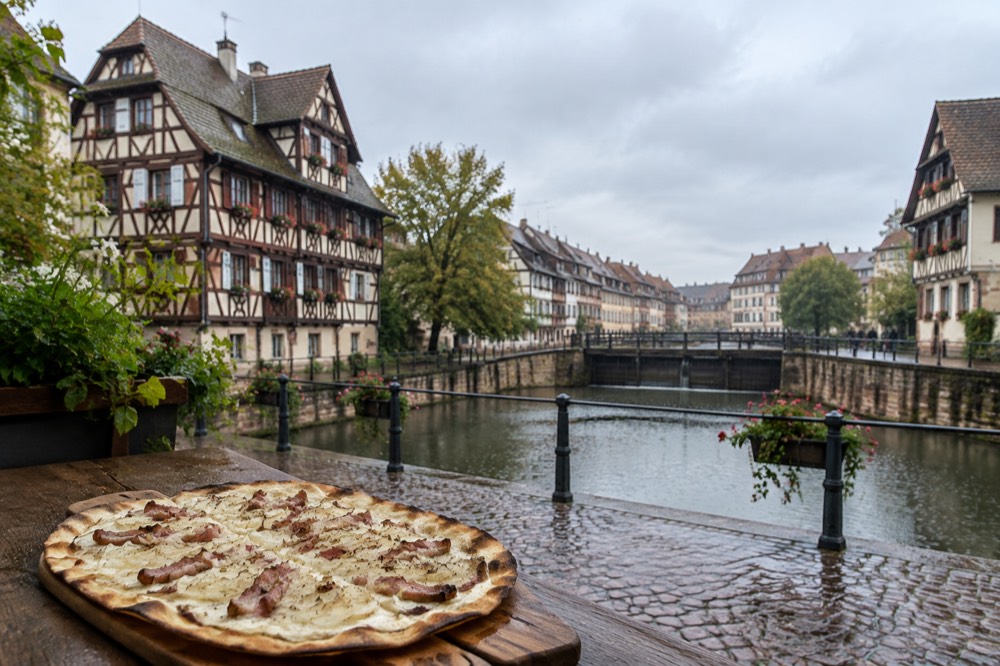
Choucroute is the signature: fermented cabbage cooked long with white wine and piled with cured and boiled meats, the dish people picture when they picture Alsace. Baeckeoffe is the opposite temperament, a slow-baked casserole of three meats and potatoes left to cook in a sealed dish, a dish with a baker's-oven history behind it. Tarte flambée, or flammekueche in the Alsatian form, is the thin cream, bacon and onion tart that comes on a wooden board, folded or flat, and is ordered by the board rather than the plate. Kougelhopf is the ring-shaped brioche that ends the meal, and the site's tarte flambée guide and kougelhopf guide cover both in depth.
| Dish | What It Is | How It Arrives | When To Order It |
|---|---|---|---|
| Choucroute garnie | Cabbage cooked in wine with a platter of cured and boiled meats | On a large oval platter, family style | The cold months, as the main event |
| Baeckeoffe | Slow-baked casserole of meats and potatoes | In its own baking dish, often still sealed | A midday meal, unhurried |
| Tarte flambée | Thin tart of cream, bacon and onion | On a wooden board, folded or flat | Any time, often shared |
| Kougelhopf | Ring-shaped brioche, sometimes with raisins | Sliced, often with coffee | The finish, or breakfast |
| Riesling by the carafe | Dry local white wine | In a small carafe or stoneware jug | Alongside any of the above |
Beyond the big four, a winstub menu carries the rest of the regional repertoire: spaetzle, the soft egg noodles served as a side or under melted cheese; presskopf, the set pork terrine sliced cold; and liver dumplings in broth, a dish that separates the serious kitchens from the decorative ones. The site's choucroute guide and the wider Strasbourg food guide walk through these one by one. A practical ordering rule: if the menu is long and covers several cuisines, it is not a winstub menu. The real thing reads like a farmhouse kitchen's week, and the waiter will tell you what finished that day.
For travellers who want the dishes explained while tasting them, a guided culinary walk does the translation work.
How To Tell A Good Winstub From A Tourist Trap
A good winstub has a short menu, a handwritten plat du jour, local wine by the carafe and a room that fills with people speaking French and Alsatian, while a tourist trap has a multilingual menu with photographs, a host on the street and a wine list of sweet, heavy pours. None of those signs is fatal alone, but together they form a reliable pattern, and the pattern is worth learning because the centre of Strasbourg has both kinds of place within fifty metres of each other.
The menu is the first test. A winstub kitchen cooks a small repertoire and changes it with the market, so the menu is short, seasonal and often partly handwritten. Photographs of food on a menu are a warning sign in any country and a loud one here. The second test is the wine list: a proper winstub pours the dry local whites, above all Riesling, by the carafe or the glass, and lists them by grape and village rather than by sweetness. The third test is timing. Winstubs fill at midday with people who work nearby, and a room that is empty at half past one but has a queue at seven in the evening is telling you exactly who it cooks for.
| Sign | Good Winstub | Place To Walk Past |
|---|---|---|
| Menu | Short, seasonal, partly handwritten | Long, laminated, with photographs |
| Wine | Local whites by the carafe, listed by grape | Sweet pours pushed at the door |
| Host | Nobody on the street, you open the door yourself | A host inviting you in from the pavement |
| Crowd | Local voices, regulars greeted by name | Coach parties and set menus only |
| Hours | Closes when the food runs out | Open all evening regardless |
The location question runs the other way from what many visitors expect. Being near the cathedral does not disqualify a winstub, because the Grande Île is where the historic eating houses have always been. What disqualifies it is a kitchen that has stopped cooking for the neighbourhood. The best restaurants in Strasbourg guide separates the two categories across the city, and the winstub test above applies to any street in the centre.
A guided food walk solves the first-evening problem neatly, because a local guide has already done the sorting.
Between a self-guided evening and a guided one there is a middle path: pick two winstubs from the neighbourhood guide below, order one course in each, and treat the walk between them as the digestion. That is a very Strasbourg way to spend an evening, and it halves the risk of a bad first table.
How The Table Customs Of A Winstub Work
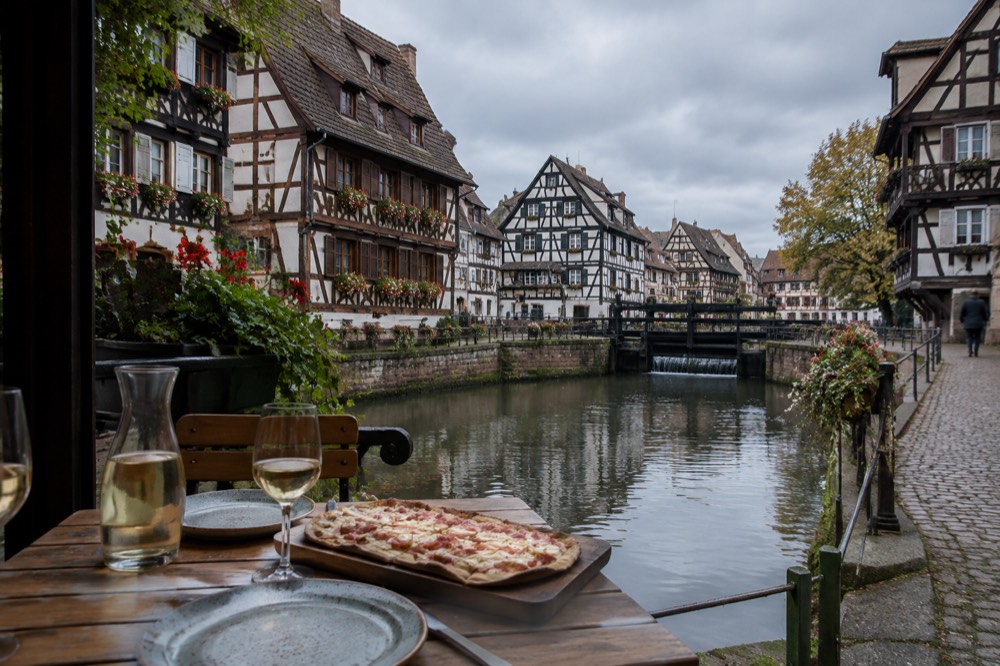
Winstub customs are informal but firm: you may be seated with strangers at a shared table, the plat du jour is the safest order, wine comes by the carafe, and the table is yours for the evening unless you ask for the bill. Nothing here requires practice, but knowing the shape of the meal removes the small hesitations that spoil a first visit, and it explains behaviour that can look odd to a visitor used to being turned around quickly.
The shared table is the custom that surprises people. In the smaller winstubs the rooms are tight, and a lone diner or a couple may be placed at a table already partly occupied. Conversation is not compulsory and nobody will think it strange if you eat in silence, but a greeting when you sit down is expected, and a "bonjour" or its Alsatian equivalent at the door is the minimum politeness everywhere in the city. The waiter in a winstub is a fixture of the room rather than a rotating service role, and the service style matches: unhurried, direct, and much warmer once the order is in.
| Custom | What To Do | Why It Matters |
|---|---|---|
| Greeting on entry | Say bonjour to the room | It is the baseline politeness of the region |
| Shared tables | Accept the seat you are given | Small rooms, long tradition |
| Plat du jour | Order it when unsure | It is what the kitchen cooked that day |
| Wine by the carafe | Order the local dry white | The winstub began as a wine room |
| The bill | Ask for it when ready | Nobody will hurry you out |
The pace is the last custom and the most important one. A winstub evening is not a refuelling stop. Courses arrive when they are ready, the carafe empties slowly, and the bill comes when you ask for it. Visitors sometimes read this slow service as inattention; locals read it as the point. If you have a train to catch, say so when you order, and the kitchen will work with you. If you do not, settle in and let the evening take its length.
Which Wines And Drinks Belong With A Winstub Meal
The winstub drinks list is built on the dry white wines of Alsace, above all Riesling, with Sylvaner and Pinot Blanc alongside, plus the local beer for the tarte flambée and a kir for the start of the evening. The region's whites are the reason the winstub exists as a wine room, and ordering them by grape rather than by brand is the local habit. The site's Alsace wine guide covers the grapes in full; the short pairing logic belongs here because it changes what you order.
Riesling is the workhorse: dry, precise, and the classic pour against choucroute, where its acidity cuts through the richness of the cabbage and the meats. Pinot Blanc and Sylvaner are the softer everyday choices, the wines that arrive in the stoneware jug at the tables of regulars. Gewurztraminer, aromatic and unmistakable, is the wine people either love or find too much, and it suits the cheese course far better than the cured meats. For tarte flambée, plenty of tables drink beer instead, and the city's own brewing tradition, covered in the Strasbourg beer guide, makes that a fully local choice rather than a fallback.
| Drink | Style | Best With |
|---|---|---|
| Riesling | Dry, precise white | Choucroute, presskopf |
| Pinot Blanc | Soft, everyday white | Spaetzle, baeckeoffe |
| Sylvaner | Light, dry white | Tarte flambee, cold starters |
| Gewurztraminer | Aromatic, powerful | Cheese, kougelhopf |
| Local beer | Alsatian lager styles | Tarte flambee, salted meats |
Crémant, the region's sparkling wine, is the celebration pour and the answer to the question of what to drink when the meal is the event; the site's piece on whether crémant matches champagne takes that comparison seriously. A tasting-led evening is also a good way to learn the grapes before committing to a carafe, and a guided walk with tastings does exactly that.
Want to meet crémant and the rest of the region's whites properly? Book an Alsace wine tasting here.
One practical note on ordering: the carafe sizes vary from house to house, and a quarter litre for one person or a half litre for two is the ordinary rhythm. Ask for the house white by the carafe and you will be drinking what the room drinks, which is the whole idea.
Where To Find The Best Winstubs In Strasbourg
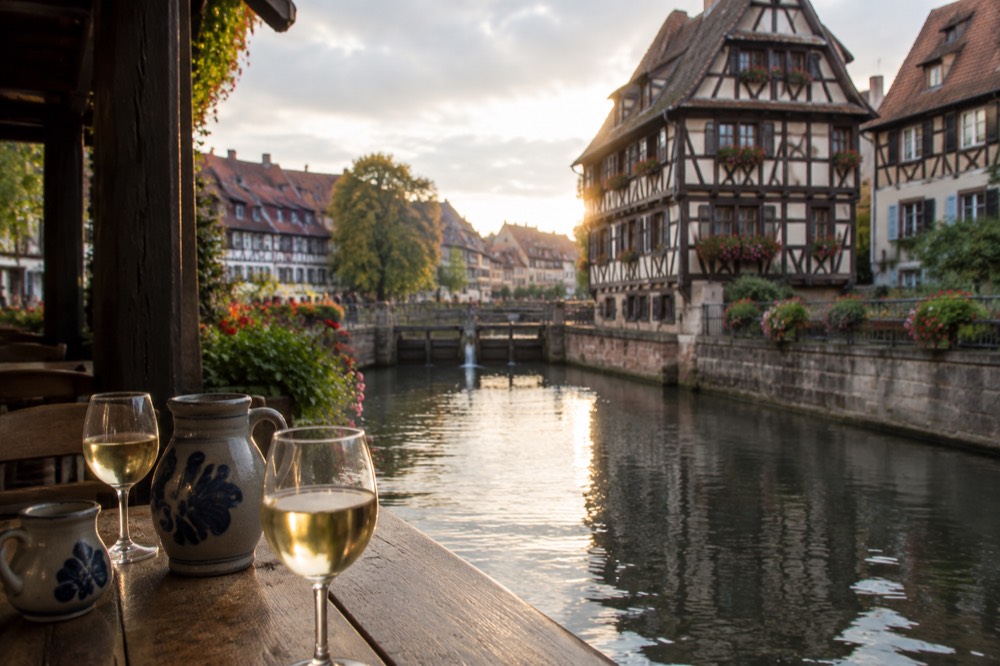
The winstub quarters of Strasbourg are the Grande Île around the cathedral, Petite France along the river, and the Krutenau just south of it, with each area offering a different balance of tradition and price. The historic centre holds the oldest rooms, Petite France holds the prettiest settings, and the Krutenau, the old boatmen's and fishermen's quarter turned student neighbourhood, holds the places where locals eat on ordinary evenings. The where to stay in Strasbourg guide maps the same quarters for sleeping; this is the eating version of the map.
Around the cathedral and through the Grande Île, the winstubs are the historic ones, small rooms in buildings that have held them for generations. The setting is the draw as much as the plate, and the tourist-trap test above earns its keep here, because the streets around Place Kléber and the cathedral carry both kinds of door. Petite France, the former tanning quarter of half-timbered houses and canals, is the postcard version: beautiful, popular, and still holding some genuinely good rooms among the ones trading on the view. The Petite France guide covers the quarter street by street.
| Quarter | Character | The Winstub Scene | Best For |
|---|---|---|---|
| Grande Île, around the cathedral | Medieval streets, historic rooms | The oldest houses, tightest rooms | A first classic evening |
| Petite France | Half-timbered houses, canals | Riverside settings, popular rooms | Atmosphere and photographs |
| Krutenau | Old working quarter, student life | Where locals eat midweek | Value and everyday cooking |
| Neustadt | German-era boulevards | Fewer, quieter rooms | A calm evening off the circuit |
The Krutenau rewards the walk. Ten minutes south of the cathedral, it keeps the winstub tradition at neighbourhood prices, and its tables fill with people who live there rather than people passing through. The Grande Île guide and the Krutenau guide cover both quarters in detail for anyone planning an evening around a table rather than a sight.
A natural pairing for a first evening is a guided walk that ends in the old centre: the cathedral guided tour finishes close to the winstub streets, and the walk from the west front to Petite France passes through the best of the eating quarter. Check availability if that order appeals, then book the table for an hour after the tour ends.
When To Visit A Winstub: Seasons, Hours And The Christmas Period
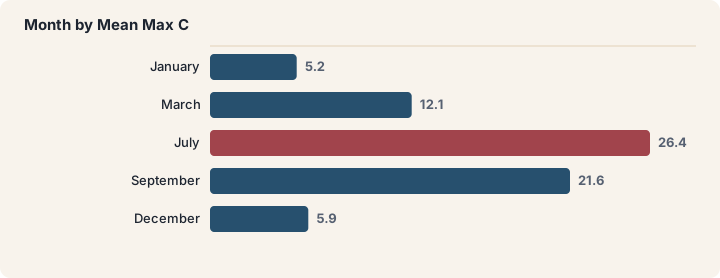
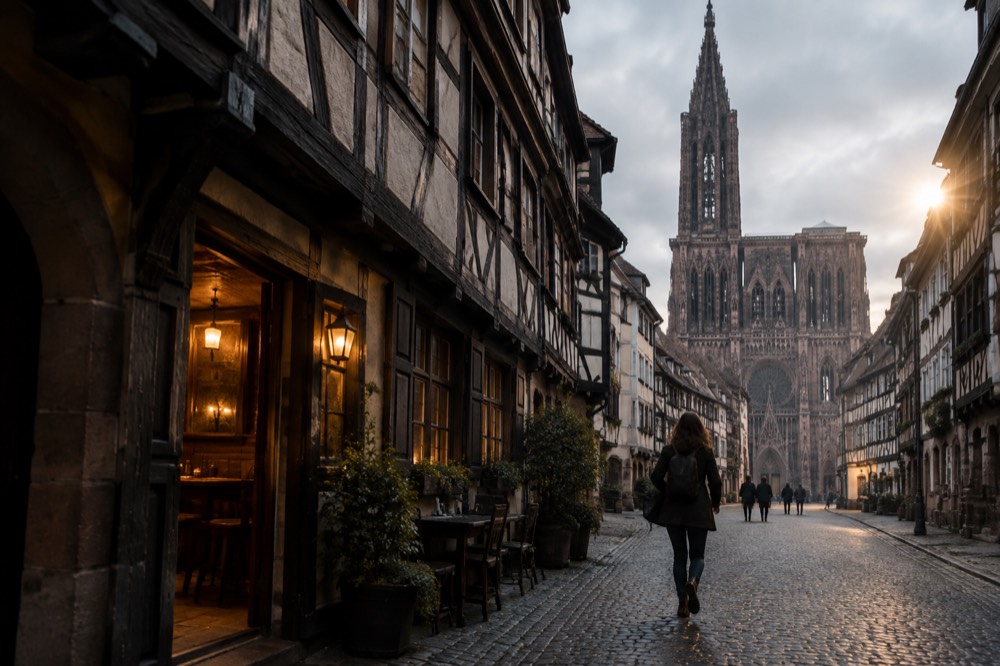
Winstubs run all year, but the experience changes with the season: the slow cooked dishes suit the cold months, terraces open from late spring, and the Christmas period from late November to 24 December fills every room in the centre. The city's semi-continental climate drives the menu as much as any tradition does. Meteo-France's 1991-2020 normals for Strasbourg-Entzheim put the mean daily maximum at 5.2 C in January against 26.4 C in July, with 635.7 mm of rain across the year, and the winstub kitchen has always answered that calendar.
| Month | Mean Max C | Mean Min C | Rain Days 1mm Or More | What It Means For A Winstub |
|---|---|---|---|---|
| January | 5.2 | -0.2 | 9.1 | Choucroute weather, quiet rooms |
| March | 12.1 | 2.6 | 8.5 | The menu turns to spring |
| July | 26.4 | 14.9 | 10.4 | Terraces, lighter dishes, tarte flambee |
| September | 21.6 | 10.7 | 8.0 | New wine season, best balance |
| December | 5.9 | 0.8 | 10.2 | Full rooms, Christmas cooking |
The Christmas period is the exception to every quiet rule. Strasbourg's Christmas market, covered in the site's Strasbourg Christmas market guide, opens in the last week of November and runs to 24 December, with the final day closing early in the evening. The 2025 edition ran from 26 November to 24 December and drew 3.05 million visitors, and in that window the winstubs of the centre are full from midday onward. The Christmas market food guide covers what to eat in that season, and the winter in Strasbourg guide covers the rest of the cold months. Reserve for the Christmas period, and expect to eat early or late.
Outside that five-week window, the rhythm is simple: midday service from around noon, an evening service from around seven, and a kitchen that stops when the day's cooking is finished. Sunday lunch is a family institution and the rooms show it. The best time to visit Strasbourg guide weighs the seasons for the whole trip, and the honest winstub answer is that the cold half of the year is when the cuisine was built to be eaten.
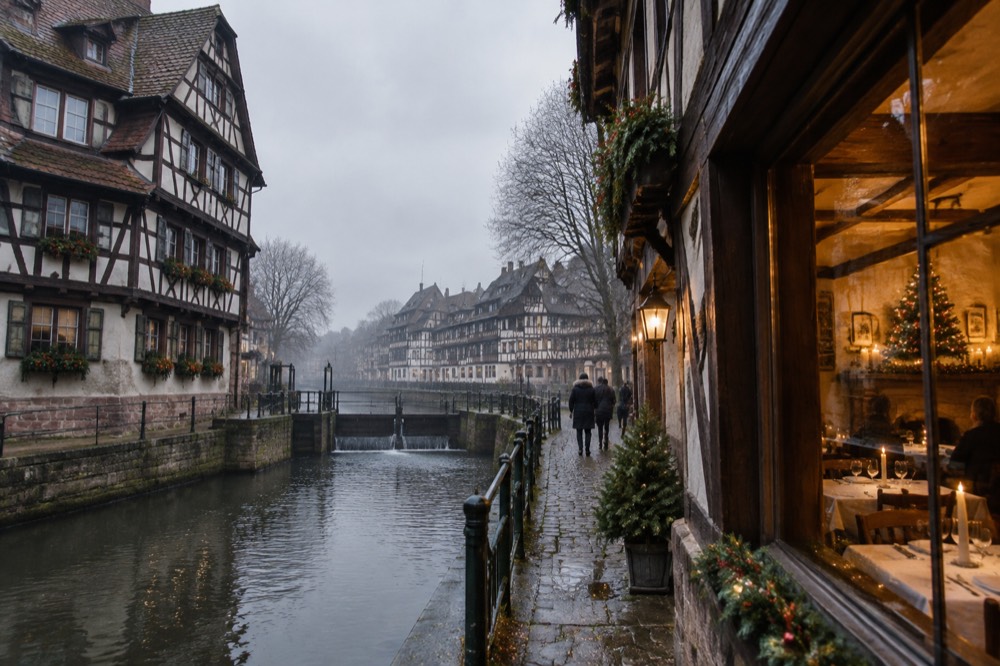
Winstub Or Modern Bistro: Which Strasbourg Table Suits You?
Choose a winstub for the traditional dishes, the local wine and the old rooms, and choose Strasbourg's modern bistros for lighter cooking, contemporary dining and a menu that changes freely. The city has both in strength, and the choice is a genuine one rather than a ranking. The winstub is a fixed format by nature, built around a repertoire that has been cooked the same way for generations; the bistro is where the same regional ingredients go somewhere new. The best restaurants guide holds the full field, and the comparison below keeps the two formats side by side.
| Winstub | Modern Bistro | |
|---|---|---|
| Menu | Fixed regional repertoire | Changes with the market and the chef |
| Wine | Local whites by the carafe | Wider list, local and beyond |
| Room | Small, wooden, traditional | Contemporary, often larger |
| Pace | Slow, table yours for the evening | Ordinary restaurant rhythm |
| Best for | The classic dishes done properly | A lighter or more inventive meal |
The two formats answer different evenings. A wet Tuesday in January belongs to a winstub, a choucroute and a carafe. A June evening with a terrace free belongs to the bistro, or to a winstub terrace, because plenty of them open one in summer. Families will find both work, though the winstub's unhurried pace suits children better at midday than late in the evening; the Strasbourg with kids guide covers the family angle across the city.
For visitors who want the traditions explained rather than merely served, the guided food walks are the bridge between the two worlds, and two of the strongest are worth setting beside each other.
The tasting walks differ mainly in length and in how much ground they cover, and the longer traditional format spends more time on the dishes a winstub exists to cook. Either way, the walk ends with a shortlist of rooms to return to, which is worth more than any single meal.
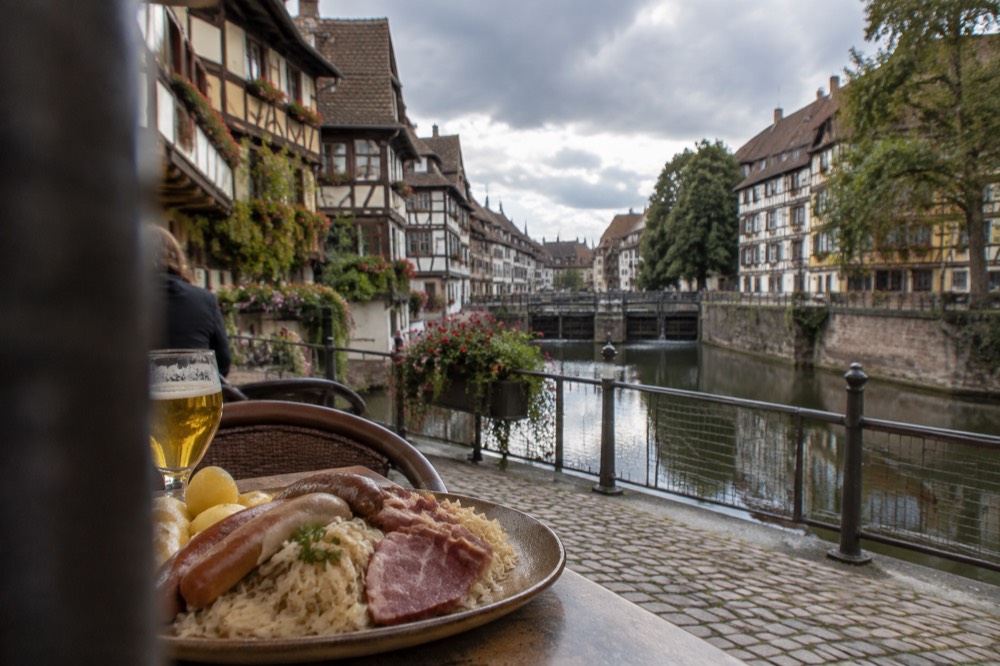
A Practical Evening Plan Around The Winstub Tables
A good winstub evening in Strasbourg runs: one classic room for the main course, a short walk through the old centre, and a second stop for kougelhopf or a final glass, with the whole route fitting inside the Grande Île and its edges. The plan works because the eating quarter is compact and the rooms are close together, and it turns a single dinner into the shape of an Alsatian evening.
Start with the choice of table using the quarter guide above, and if the first evening lands in the Christmas period, book ahead and eat on the early side. If it lands on an ordinary midweek evening, walk in without a reservation and let the host place you. Order the plat du jour where it exists, the carafe of Riesling where it does not, and leave room for the second stop. Between the two, the walk from the cathedral's west front down through Petite France is the classic digestion, and it passes the Ponts Couverts and the Barrage Vauban terrace, whose seasonal hours are listed on the city's own page for the site.
The route itself needs no timetable. Begin with the main course in a classic room in the Grande Île, take the walk down through the half-timbered streets toward the water, and finish in Petite France or the Krutenau with kougelhopf and a last glass. A simpler alternative is to give the whole evening to one table in the Krutenau and let the room set the pace, which is what the regulars do.
For anyone whose trip is short, the one day in Strasbourg guide builds a full day around this same geography, and the winstub evening slots into its final third. For a longer stay, the three days in Strasbourg guide spreads the quarters across days, and the winstub plan above becomes the repeatable core of each evening.
The guided option remains the shortcut for a first night, and the third of the strong tasting walks rounds out the set.
Whichever way the first evening goes, the winstub habit is easy to acquire: one room, one carafe, one slow dish, and the table for as long as you want it. That is the whole tradition, and it is still the best introduction to eating in Strasbourg that the city can offer.
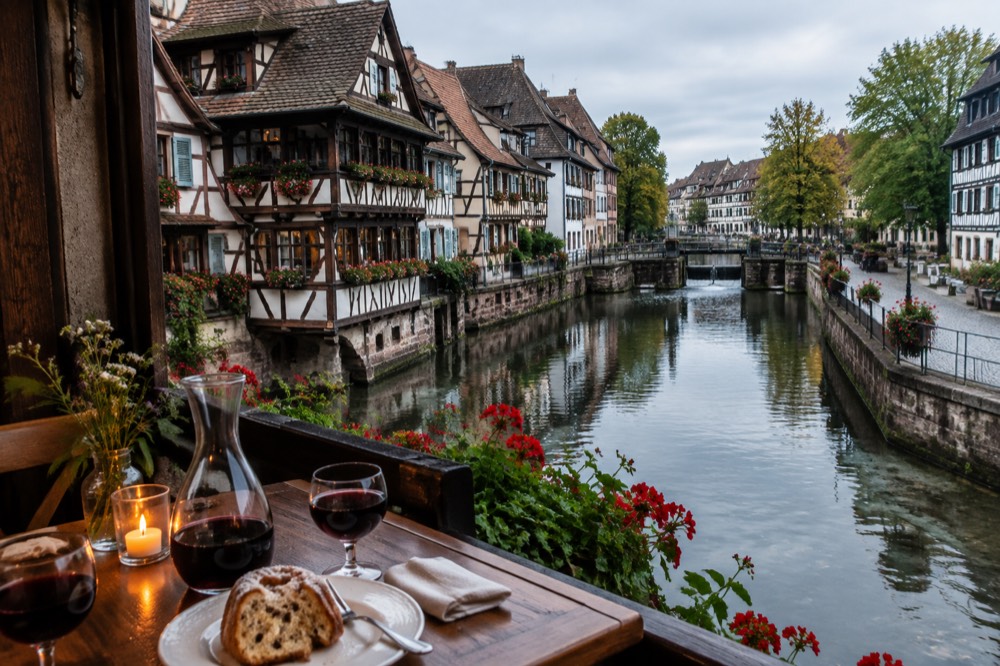
Common Questions About Winstubs In Strasbourg
What Is A Winstub In Strasbourg?
A winstub is a traditional Alsatian tavern serving regional dishes such as choucroute, baeckeoffe and tarte flambée, with local white wines by the carafe. The word means wine room in Alsatian, and the format is a small, wooden, unhurried room where the table is yours for the evening.
Do You Need To Book A Winstub In Strasbourg?
On an ordinary midweek evening, no: walk in and the host will seat you, possibly at a shared table. During the Christmas period, from late November to 24 December, and on Sunday lunchtimes, booking ahead is the sensible course, because the rooms are small and the centre is busy.
What Should You Order In A Winstub?
Order the slow regional dishes the kitchen exists to cook: choucroute garnie, baeckeoffe or tarte flambée, with a carafe of dry local white wine, and kougelhopf to finish. If unsure, take the plat du jour, because it is what the kitchen cooked that morning.
How Do You Spot A Tourist Trap Winstub?
Look for a short, seasonal, partly handwritten menu, local wine listed by grape, no host working the street, and a room with local voices in it. Photographs on the menu, a laminated card in four languages and a pushy door greeting are the signs to walk past.
Is A Winstub Suitable For Children?
Yes, and the midday service suits families best, because the pace is slow, the rooms are forgiving and the dishes are plain. A shared tarte flambée is the ordinary family order, and the portions are generous enough to split.
Where Are The Best Winstubs In Strasbourg?
The classic rooms cluster in the Grande Île around the cathedral, the prettiest settings are in Petite France, and the neighbourhood-value tables are in the Krutenau quarter just south of the centre. Each quarter is covered in the area guides linked above.