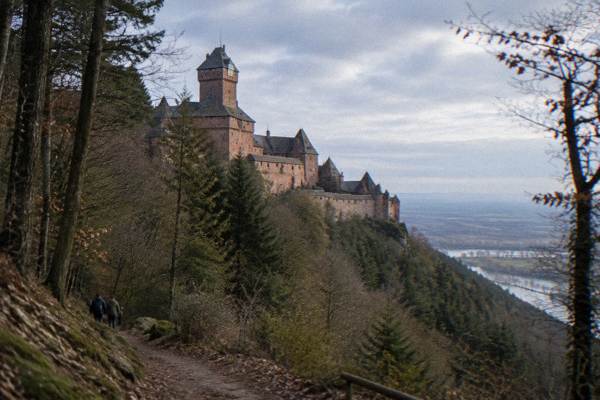
Riquewihr
Riquewihr is the walled wine village that postcards of Alsace are made of, a short hop from Strasbourg through the vineyards of the Wine Route. This guide covers what the village actually offers, what to taste, which neighbours pair with it, and how to build the day.
Short answer
Riquewihr is a small, fully walled wine village on the Alsace Wine Route, reached from Strasbourg in Alsace, France, by car, by organised day tour, or by rail with a local connection. Plan on half a day inside the walls, wine tasting in the cellars, and pairing it with Kaysersberg, Ribeauvillé or Haut-Koenigsbourg rather than treating it as a full day alone.
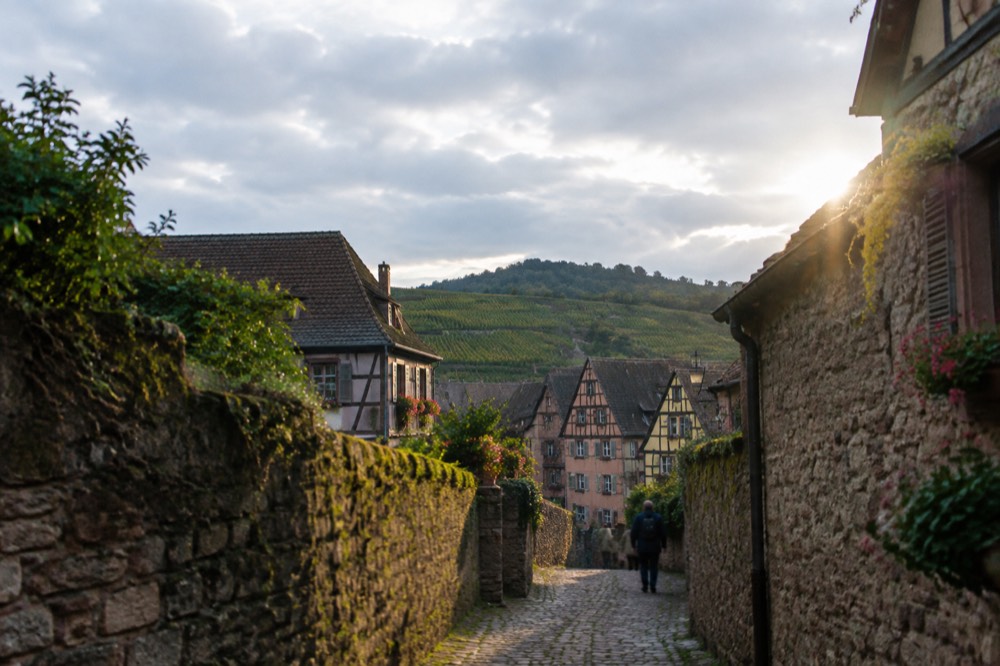
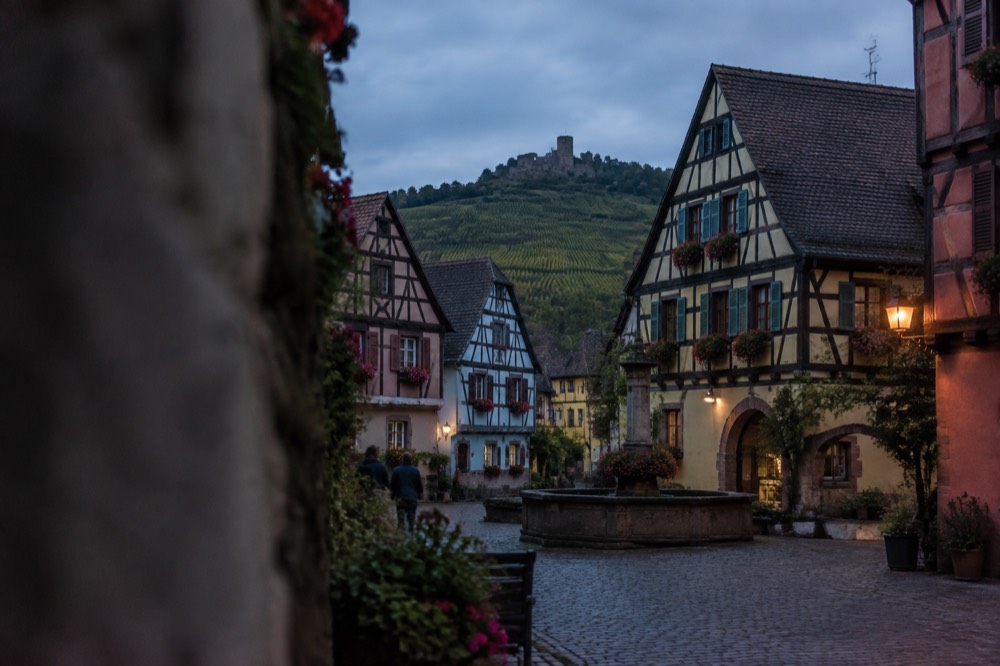
Riquewihr is the wine village that people picture when they imagine Alsace: ramparts still standing, rows of vines climbing the hillsides, and a main street of half-timbered houses painted in colours that change with the light. It sits on the Alsace Wine Route between Strasbourg and Colmar, and it works as a day trip from Strasbourg, in the Bas-Rhin department of the Grand Est region of north-eastern France, provided you go with a clear plan. The village is small enough to walk end to end in well under an hour, which is exactly why the plan matters: arrive without one and you will see one pretty street and leave; arrive with one and you get the walls, the cellars, the vineyard paths and a neighbouring village or castle in the same day.
Why Is Riquewihr The Famous Walled Village Of The Alsace Wine Route?
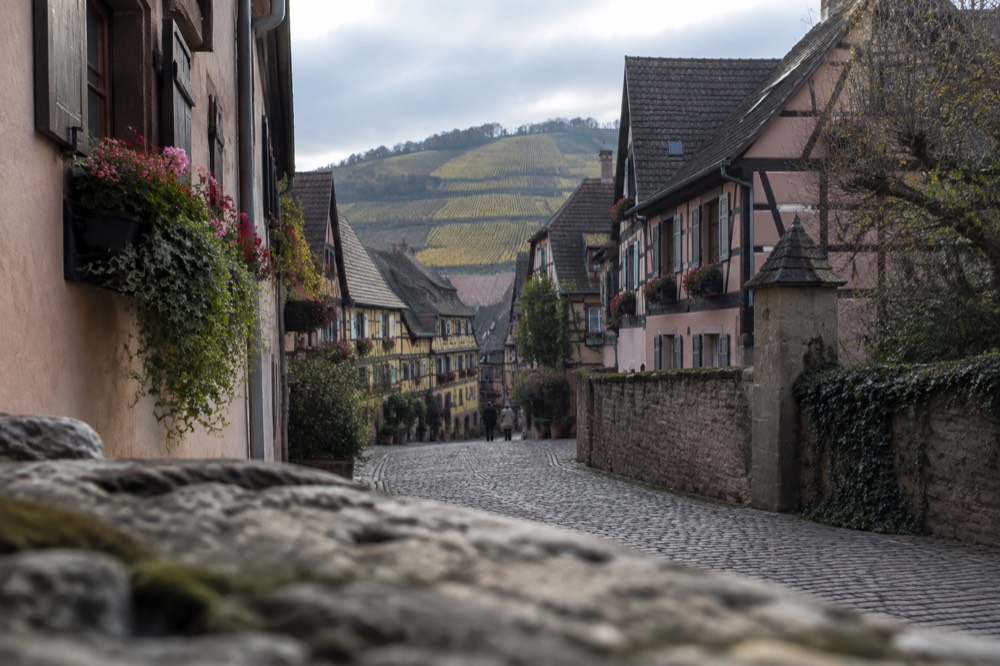
Riquewihr earns its reputation through completeness rather than size: it is one of the few villages on the Wine Route whose defensive walls and towers survive almost whole, wrapped around a single cobbled main street lined with half-timbered winemaker houses. It is a working wine village first and a sight second, with cellar doors along the high street and vineyard paths leaving directly from the ramparts. That combination, intact walls plus working cellars, is what separates it from its neighbours and draws day trippers from Strasbourg and Colmar alike.
The village belongs to the string of wine communities that runs down the eastern foothills of the Vosges, and it is that position, on the sunny slope with the mountains sheltering it from the west, that makes the wine worth talking about. The grapes grown on the hillsides above the houses feed directly into the cellars below them. You can stand on the wall walk, look at the rows of vines, and then walk down into a cellar and taste what those rows produced, all within a few hundred metres.
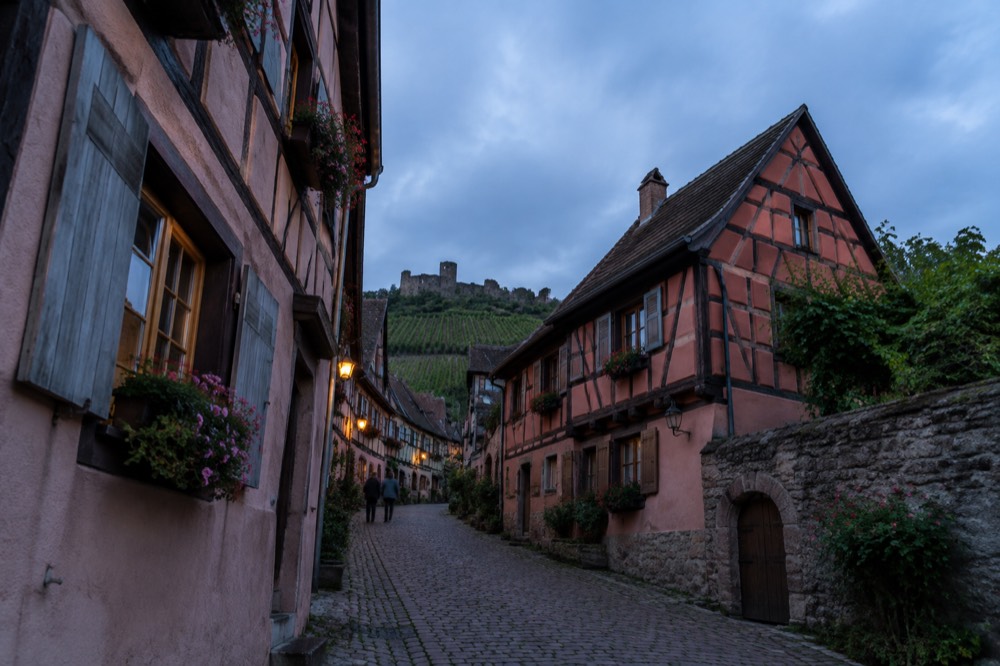
What surprises first-time visitors is the scale. This is not a town with a medieval quarter; it is a medieval village that has stayed a village. The main street carries the whole weight of the visit, and the side lanes off it are quiet within a minute's walk of the crowds. The architecture is the classic Alsatian mix you will also see in Colmar and Eguisheim: timber frames, deep roofs, and shopfronts and doorways painted in strong colours, with carved details around the older facades. Nothing here requires a ticket or a guide to appreciate, which makes it an easy place to absorb at walking pace.
| What Riquewihr offers | What you actually find | Why it matters for the day |
|---|---|---|
| Intact ramparts | Walls and towers encircling the old village | You can trace the full perimeter on foot |
| A single cobbled main street | Half-timbered winemaker houses, shops, cellar doors | The whole core is one easy walk |
| Working wine cellars | Tasting rooms along and just off the high street | Tasting is the main activity, not a side note |
| Vineyard paths | Tracks leaving from the edge of the village | A walk into the vines takes minutes |
| Small scale | The old village is compact and walkable | Half a day inside the walls is enough |
The Strasbourg Travel Guide editorial desk covers Riquewihr as a day trip rather than a base, and that is deliberate: the village is at its best in the morning and late afternoon, when the day-trip traffic thins, and staying overnight to catch those hours is a different kind of trip. For a visitor based in Strasbourg, the question is not whether Riquewihr is worth the journey but what else to bolt onto it, which the rest of this guide answers.
How Do You Get From Strasbourg To Riquewihr?
There is no direct train to Riquewihr, so the realistic options from Strasbourg are three: drive yourself on the Wine Route, join an organised day tour that includes the village, or take a rail journey toward Colmar and arrange the last leg locally. Each has a different character: the car gives freedom to hop between villages, the tour removes all planning and adds a guide, and the rail option suits travellers who would rather not drive abroad. The choice is control versus convenience.
Driving the route yourself is the classic way to do the Wine Route, because the whole point of the road is the hopping: Riquewihr, Kaysersberg, Ribeauvillé and Eguisheim sit close enough together that a car turns a day into a proper circuit. Rental firms operate from Strasbourg, and the drive itself is part of the appeal, passing through vineyard country the whole way. The trade-off is parking and patience in high season, when the small village centres fill with visitors and the car parks fill with coaches.
The organised tour is the option that removes every decision, and for Riquewihr specifically it is a strong one, because the tours that run the Wine Route from Strasbourg typically pair Riquewihr with a neighbouring village, a castle or a tasting stop. A guide also explains what you are looking at, which matters more here than in a city: the vineyard classifications, the grape varieties and the story of the walls are not obvious from the street. Check the operator's live listing for what each itinerary actually includes, because the combinations differ.
The rail-plus-local-leg option exists but needs care. Riquewihr itself is not on a rail line; the regional network serves the larger towns of the plain, and the connection from there to the village is by bus or taxi. Confirm the last leg on the day you travel, because local connections in rural Alsace are not frequent, and a missed link can strand an afternoon. For anyone who wants the details of rail travel in the region, the Alsace Wine Route guide covers how the villages string together.
| Way of getting there | What it involves | Who it suits | What to check before you go |
|---|---|---|---|
| Self-drive hire car | Driving the Wine Route and parking at the village edge | Groups, families, anyone wanting to hop villages | Parking arrangements and opening times of cellars |
| Organised day tour | Minibus or coach from Strasbourg with a set itinerary | First-time visitors, non-drivers, anyone short on planning time | Which villages and tastings each itinerary includes |
| Rail with local connection | Regional train toward Colmar, then bus or taxi for the last leg | Travellers avoiding driving abroad | Timings of the local connection on your travel day |
| Private driver for the day | A hired car and driver following your own route | Small groups wanting flexibility at a higher cost | The day rate and what the driver's waiting time covers |
Whichever way you travel, the timing rule is the same: Riquewihr rewards the early start. The village is small, and its carrying capacity for visitors is finite in a way that a city never is. Arriving before the midday coaches means you see the main street as a village rather than a corridor, and the same is true in reverse in the late afternoon, when the tours pull out and the light comes low across the rooftops.
What Should You See Inside Riquewihr's Walls?
The sights inside Riquewihr are the walls themselves, the two fortified gates, the cobbled main street with its half-timbered winemaker houses, the small museum of vineyard life in the old winemakers' quarter, and the church of Saint-Jacques with its Gothic interior. None of these is a half-day attraction on its own; together they make a walk of a couple of hours that covers the whole old village. The honest advice is to treat the village as one single sight, walked slowly, rather than a list of stops.
Start at the upper gate, the Dolder, which is the village's landmark tower and the postcard view from the top of the main street. The tower is the thickest piece of the old fortifications and the easiest to orient from. From there, walk the length of the high street at a slow pace, looking up at the facades rather than into the shop windows: the carved lintels, the dates and initials cut into beams, and the painted signage of the old winemaking families are the real decoration of the place. The lower gate at the far end completes the spine of the village.
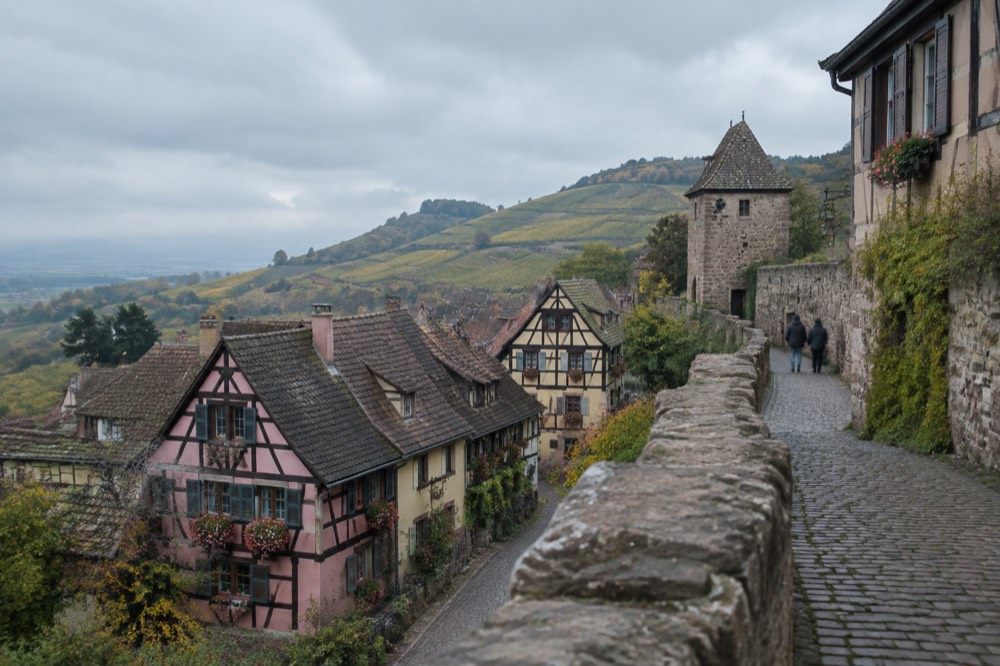
From either gate, the walls are walkable around almost the whole perimeter, and this loop is the thing many day visitors miss. A few minutes off the main street puts you on the outside of the ramparts looking back at the roofs, or up at the vineyard slopes, with nobody else in the frame. The church sits a street off the main drag and holds a quiet Gothic interior worth ten minutes. The museum of Alsatian vineyard life, in a historic house off the main street, shows the tools and interiors of the winemaking tradition; check its opening days before you count on it, as small village museums keep seasonal hours.
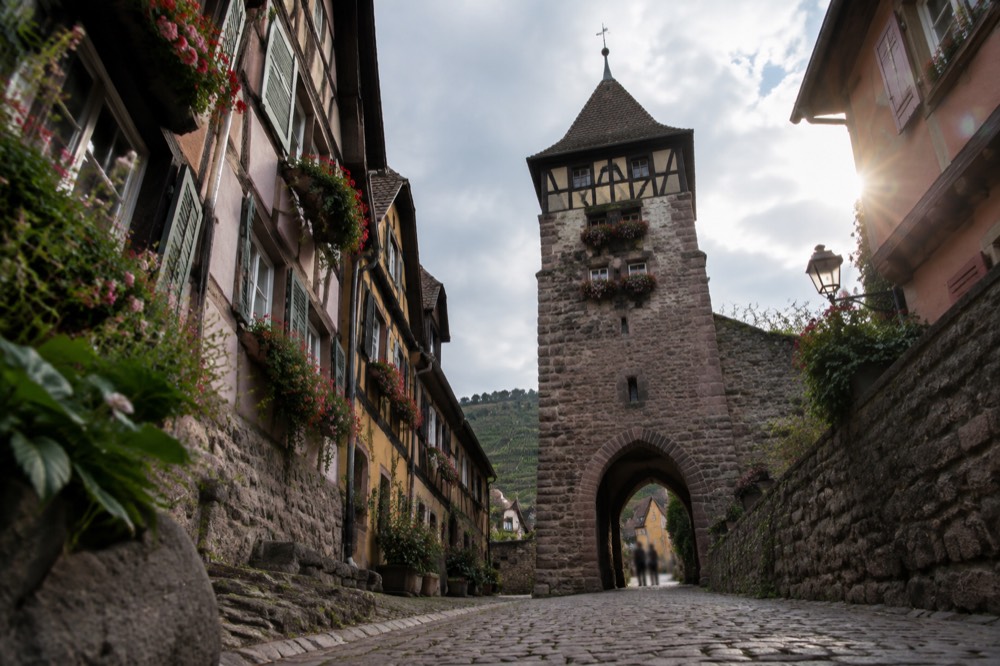
Then leave the walls on foot. The vineyard tracks start at the edge of the village, and a short walk up among the rows gives you the view the village cannot: Riquewihr seen as a whole, walls and roofs against the slope. This is the point of the trip for photographers and for anyone who wants to understand why the village sits where it sits. The slopes above the village are the source of its reputation in the bottle, and standing among them makes the geography plain.
If the crowd on the main street builds while you are there, the walls and the vineyard paths are the pressure valve. The interior of the village is never more than a few minutes from an empty lane, and the rhythm of a good visit is alternating: a stretch of the busy street, then a quiet stretch of wall or vineyard, then back. That rhythm, more than any single sight, is what people remember from Riquewihr.
What And Where Should You Eat And Drink In Riquewihr?
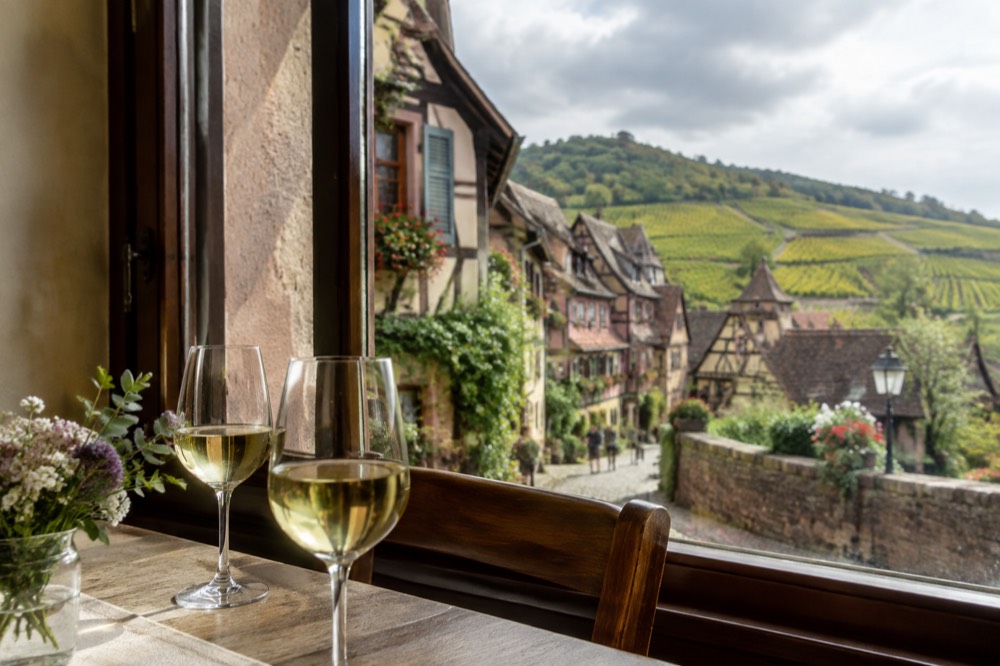
Riquewihr's food and drink identity is wine first and everything else second: the cellars along the main street pour the classic Alsatian varieties, led by Riesling and Gewurztraminer, often straight from the producers whose vines you can see on the slopes. The food follows the wine: tarte flambée, kougelhopf and the pork and cabbage dishes of the Alsatian tradition, served in winstub-style rooms and terrace tables. Tasting is the main activity of a visit, and it is the one thing you should book or time deliberately.
The wine to focus on is what grows above the village. Alsace's signature varieties, Riesling above all, reach some of their most concentrated expression on these slopes, and the cellars of Riquewihr pour them in tasting flights that let you compare side by side. Ask in the cellar what comes from the hillside you can see through the door; the answer is usually yes, and it changes how the tasting reads. Some cellars charge for tastings and refund against a purchase, others pour freely; ask the policy at the door rather than assuming either.
| What to taste | What it is | How it fits the day |
|---|---|---|
| Riesling | Dry, structured white, the signature grape of these slopes | The core flight in any cellar on the main street |
| Gewurztraminer | Aromatic, rich white with a distinctive spice | The variety visitors either love or remember; try it once |
| Pinot Gris | Rounder, fuller white | The middle ground between the two above |
| Crémant d'Alsace | The region's traditional-method sparkling wine | A celebratory stop, and a good lunch toast |
| Tarte flambée | Thin flatbread with cream, onions and bacon, baked fast | The standard lunch order in the village restaurants |
| Kougelhopf | The Alsatian yeasted cake baked in a fluted mould | The bakery stop, best with a coffee mid-afternoon |
For lunch, the restaurants along and just off the main street serve the hearty Alsatian repertoire, and the ones with terraces on the street let you eat with the village as the backdrop. The classic order is tarte flambée, which arrives fast and suits a day built around walking; the slow-cooked meat and cabbage dishes are the cold-weather alternative and want a longer table. Reservations are wise in the busy season, because the village's dining capacity is small relative to its visitor numbers. For the deeper background on these dishes, the guides to tarte flambée and kougelhopf cover the traditions properly.
The bakery stop is the underrated one. A slice of kougelhopf or a plain butter pastry eaten on the wall walk, with a view over the vines, is the Riquewihr moment that costs the least and stays with people the longest. Do the bakery before the last cellar of the day, not after, and the walk back up the slope will feel earned rather than punishing.
Riquewihr Or Its Neighbours: Which Village Suits Your Day?
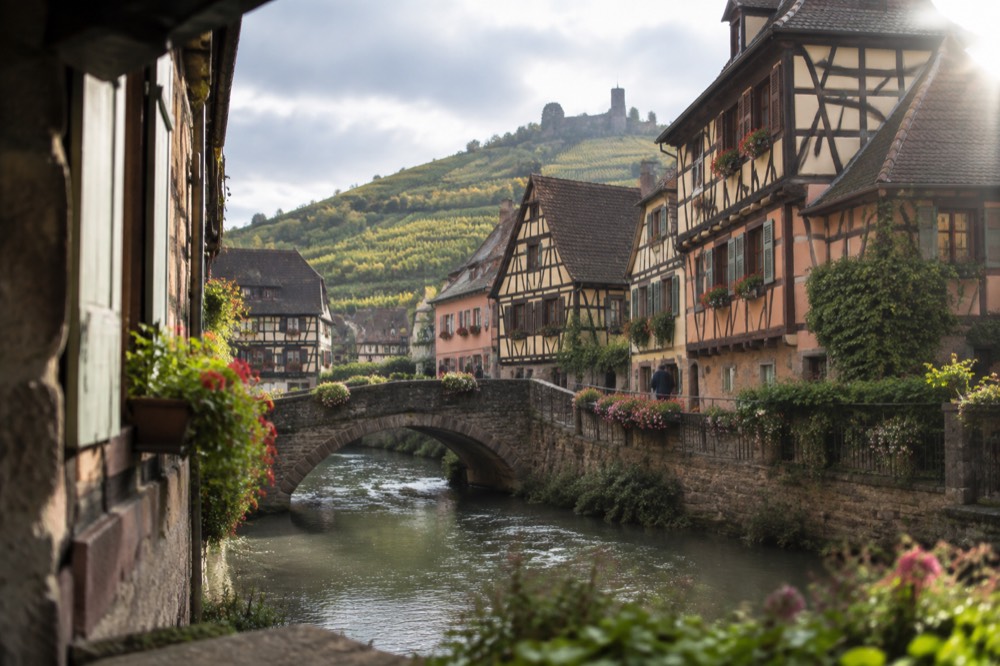
Riquewihr is the most complete walled village of the group, but it is not automatically the best single choice for every day trip: Kaysersberg has the more dramatic setting on its river, Ribeauvillé is quieter with a stronger working-town feel, Eguisheim is the most compact, and Colmar itself is the only one that fills a full day alone. The strongest day trips combine two or three of these rather than betting everything on one. The pairing question matters more than the ranking question.
The reason to combine is simple arithmetic: each of these villages is small, and a day from Strasbourg has room for more than one of them. Riquewihr and Kaysersberg are the classic pairing, close enough that a morning in one and an afternoon in the other is unhurried. Add Ribeauvillé and you have a three-village day that still leaves time for a castle. The castle in question is Haut-Koenigsbourg, which stands on the ridge above the Wine Route and turns a village day into a village-and-castle day; the Haut-Koenigsbourg guide covers what a visit involves and what to check before committing to it.
| Village or sight | Character | Who it suits | How it pairs with Riquewihr |
|---|---|---|---|
| Kaysersberg | River setting, ruined castle above, half-timbered bridge | Photographers, anyone wanting scenery with the streets | The classic same-day pairing |
| Ribeauvillé | Working wine town, quieter streets, old fountains | Visitors avoiding the heaviest crowds | An easy third stop or a calmer substitute |
| Eguisheim | Circular village, very compact, close to Colmar | Short-stay visitors pairing villages with a town | Pairs better with Colmar than with Riquewihr |
| Colmar | Town-scale, canals, museums, full dining scene | Anyone who wants a full day in one place | An alternative base rather than a pairing |
| Haut-Koenigsbourg | Restored mountaintop castle above the vineyards | Families, anyone wanting structure over streets | Turns the day into villages plus a castle |
If you have only one day and no car, the organised tours solve the pairing problem for you, and the strongest of them for this exact itinerary is the full-day circuit that strings Colmar, Riquewihr and the castle together with the driving handled. It is the format that gets a non-driver from Strasbourg to all three headline sights of the region in one day, and the trade-off, less freedom in each stop, is one many travellers accept gladly on a first visit.
If one day and no car is your situation, book a full-day Alsace day trip here.
The honest comparison point is Colmar, because every visitor eventually asks whether to skip the villages for the town. Colmar gives you scale, museums and evening dining; the villages give you walls, quiet lanes and cellar doors. A two-day stay in the region can do both. A single day forces the choice, and if walls and wine are what brought you to Alsace, the villages win it.
When Is The Best Season To Visit Riquewihr?
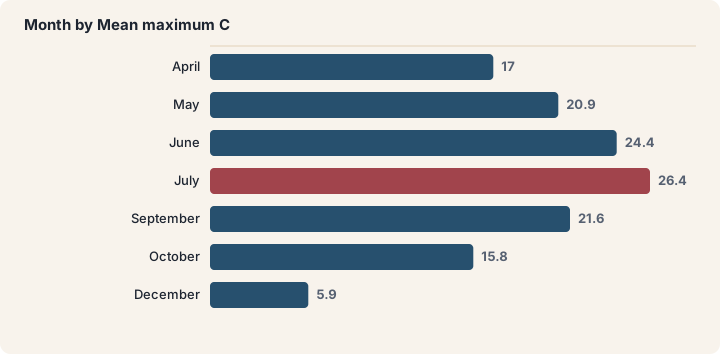
The best season to visit Riquewihr depends on what you want: late spring to early autumn offers warm walking weather and green vineyards, with July the warmest month at a mean maximum of 26.4 C, while December transforms the village into a Christmas-market scene at a chilly mean maximum of 5.9 C. Since rain falls on roughly 8 to 11 days per month year-round, no season is truly dry; you are choosing between warmth and crowds, or cold, atmosphere and mulled wine.
The climate here is semi-continental, which means real summers and real winters rather than the mild year-round pattern of France's Mediterranean coast. The Meteo-France 1991-2020 normals for Strasbourg-Entzheim, the nearest long-term station, show the shape of the year clearly: mean maximum temperatures climb from 5.2 C in January to 26.4 C in July, and the annual rainfall total is 635.7 mm spread across 112.3 days with a millimetre or more. What that means practically for a village day trip is layers: even in summer, a morning in the vineyards can start cool, and in winter the cobbles and the wind on the wall walk bite.
| Month | Mean maximum C | Mean minimum C | Days with 1 mm of rain or more |
|---|---|---|---|
| April | 17.0 | 5.7 | 8.6 |
| May | 20.9 | 10.1 | 10.8 |
| June | 24.4 | 13.4 | 10.2 |
| July | 26.4 | 14.9 | 10.4 |
| September | 21.6 | 10.7 | 8.0 |
| October | 15.8 | 7.2 | 9.6 |
| December | 5.9 | 0.8 | 10.2 |
The December period deserves its own word, because Alsace in December is a phenomenon. The villages of the Wine Route, Riquewihr included, dress themselves for Christmas, and the region's market tradition draws visitors from across Europe; the 2025 edition of Strasbourg's own market ran from 26 November to 24 December and drew 3.05 million visitors, and the village markets share that energy in miniature. The trade-off is weather and crowds together: a mean December maximum of 5.9 C, ten rain days in the month, and streets at their fullest. If a December trip is the plan, read the Strasbourg in winter guide alongside this one, and confirm the dates of the village markets on the official pages before travelling, because the small-town schedules are set locally.
Between those poles, the shoulder months are the connoisseur's pick. Spring brings the vines back to life and the village lanes stay quiet, and the autumn harvest period gives the slopes their richest colour and the cellars their busiest, most atmospheric weeks. Rain is a constant possibility in every month, so the plan should always include an indoor fallback, and in a wine village that fallback is easy: one more cellar.
How Should You Structure A Full Day Around Riquewihr?
A strong Riquewihr day has four blocks: an early arrival and a first slow walk of the main street while it is quiet, a mid-morning climb into the vineyards or around the walls, a long lunch and a cellar tasting in the early afternoon, and a final stop in a neighbouring village or at Haut-Koenigsbourg before returning to Strasbourg. The mistake to avoid is arriving at midday, which puts your only quiet hours in the car or the train and your whole village time at peak crowding.
The early block is the one that pays. Getting into the village before the coaches means the Dolder gate and the top of the main street are yours, and the light on the facades is at its best in the morning. Use this window for the photography and the slow looking, because by early afternoon the same angles have people in them. The vineyard walk fits naturally before lunch: it is the steepest part of the day, so it belongs before the tarte flambée rather than after it.
| Block of the day | What to do | Why it belongs there |
|---|---|---|
| Early morning | Arrive, walk the main street gate to gate | The village is quiet and the light is low and warm |
| Late morning | Wall loop, then a vineyard path above the village | The climb before lunch; the view at its clearest |
| Midday and early afternoon | Long lunch, then one or two cellar tastings | Tastings are unhurried after the table has cleared |
| Mid-afternoon | Drive or ride to Kaysersberg, Ribeauvillé or the castle | The second sight lands before the light goes |
| Evening | Return to Strasbourg, or stop in Colmar if the day allows | Colmar's canals are at their best as the day cools |
The afternoon block is where the car and the tour diverge. With a car, Kaysersberg is the natural second village, and the drive between them is short and lovely. On a tour, the second stop is chosen for you, and the value of the guide kicks in on the stretch between villages, when the landscape and the wine classifications get explained. Either way, do not build a day that is only Riquewihr: the village supports about half a day of attention at a comfortable pace, and the second stop is what turns a pleasant outing into a memorable one.
Can You Visit Riquewihr Without A Car?
Yes, and for many visitors the no-car version is the better one: organised minibus tours from Strasbourg run the Wine Route with Riquewihr as a headline stop, and they handle the one genuine difficulty, which is that the village has no rail line of its own. The no-car day costs more than self-driving and gives less freedom inside each village, but it removes navigation, parking and the designated-driver problem entirely. The rail-plus-local-connection route exists but needs checking on the day.
The designated-driver point deserves emphasis. This is a day built around tasting, and tasting and driving do not mix, legally or ethically. A tour, a private driver, or a rail journey with a planned local connection lets everyone at the table drink the flight. That single fact converts many visitors from the self-drive plan to the guided plan, and it is the reason the Wine Route tours are so consistently full.
For travellers who want the region's headline experiences in one stay, the pairing logic extends beyond the vineyards. A morning or afternoon on the water in Strasbourg itself, on a private cruise on the Ill with a skipper, is the complement to a wine-village day: one day among the vines, one on the river through the city. The private boat option carries up to four people with a captain aboard, and it is booked through the operator's live listing. Check availability
And before or after the Wine Route day, a walking tour of Strasbourg's own historic centre is the natural bookend: the city's Grande Île, a UNESCO World Heritage property together with the Neustadt district, holds a density of medieval and Renaissance streets that no village can match, and a short guided walk of the centre frames the whole region nicely. One day in the vines, one walk in the city, one evening on the river: that is a Strasbourg-based Alsace trip that covers the region's three faces without ever moving your luggage.
What Should You Check Before You Go?
Before travelling, check four things: the opening days of the village museum and the cellars you care about, the parking and coach situation if you are driving, the timings of the local rail connection if you are not, and the season, because winter hours and market-period crowds change the shape of a Riquewihr day completely. Small villages publish their own schedules, and the regional tourist information covers the Wine Route as a whole. None of these checks takes long, and each one protects a chunk of the day.
Cellar hours are the first check, because a tasting room that is shut on your chosen weekday changes the plan more than anything else on the list. The village's own information point lists what is open, and the larger winemaking families keep reliable published hours. Museum hours come second: the vineyard-life museum keeps a seasonal schedule, and assuming it is open is how visitors end up disappointed on a Monday in the shoulder season.
The Christmas period is its own check. Alsace's December markets draw a very large seasonal crowd, and the 2025 edition of Strasbourg's market alone counted 3.05 million visitors, with the whole region feeling that pressure in its villages. If your trip falls in that window, expect full streets, book lunch ahead, and confirm the village market's running days on the official local pages before you commit, because the 2026 schedules are finalised and published locally rather than centrally.
Finally, the weather. With 112.3 rain days a year in the long-term record, a wet hour is always possible, and the plan should hold a cellar or a long lunch as the shelter. Riquewihr in rain is not a lost day: the cellars are indoors, the winstub rooms are warm, and the streets empty fast, which for some visitors is a fair trade for a wet wall walk.
Common Questions About A Riquewihr Day Trip
Is Riquewihr worth visiting from Strasbourg?
Yes, provided it is not the only stop of the day. The village is small, and its walls, main street and cellars fill a comfortable half day at walking pace. Paired with Kaysersberg, Ribeauvillé or Haut-Koenigsbourg, it makes one of the strongest day trips available from Strasbourg.
How long do you need in Riquewihr?
Half a day inside the walls is enough for the main street, the wall loop, the church, one museum visit and one or two cellar tastings. Add time for lunch and a walk into the vineyards above the village, and the visit stretches naturally to a full afternoon.
Can you get to Riquewihr by train from Strasbourg?
Not directly. The village has no rail line. The realistic public-transport route is a regional train toward Colmar followed by a local bus or taxi connection, and the timings of that last leg should be confirmed on your travel day. An organised day tour or a hire car avoids the connection entirely.
What is Riquewihr famous for?
Two things together: its nearly intact medieval ramparts and towers, and its position on the slopes of the Alsace Wine Route, where the Riesling and Gewurztraminer poured in the village cellars are grown on the hillsides visible from the walls. The half-timbered main street between the two gates is the postcard that carries both.
Is Riquewihr crowded?
At midday in the high season and throughout the December market period, yes, the main street carries heavy visitor traffic. Early morning and late afternoon are much quieter, and the wall walk and vineyard paths stay calm even at peak times. Arriving early is the single best crowd tactic.
Where should you eat in Riquewihr?
The winstub-style restaurants along and just off the main street serve the classic Alsatian dishes, with tarte flambée as the fast, reliable lunch order and the slow-cooked pork and cabbage dishes as the cold-weather alternative. Book a table in the busy season, because the village's dining capacity is small, and finish with a kougelhopf from a bakery eaten on the walls.
Riquewihr rewards the traveller who treats it as what it is: a small, complete, working wine village that gives up its best to anyone who arrives early, walks its walls, climbs into its vines and tastes what grows on the slope above the street. Build the day around it, pair it with a neighbour, and it earns its reputation without a word of hype.