Strasbourg To Colmar
Colmar is the Alsatian town of canals, half-timbered houses and wine-cellared streets, and it pairs naturally with a stay in Strasbourg. This guide covers how the trip works, what to see, and how to decide between going independently and joining a guided day tour.
Short answer
Colmar sits in the Alsace wine country south of Strasbourg in north-eastern France, reached by a short regional train ride. One day covers the old town, the canals of Little Venice and the Unterlinden area. Guided Alsace day tours from Strasbourg bundle Colmar with wine villages, while independent travellers can build the same day around the train.
Strasbourg, in Alsace in north-eastern France, makes an obvious base for the region. The two towns anchor opposite ends of the Alsace wine route: Strasbourg the larger, political, cathedral city on the Ill, Colmar the smaller, canal-threaded wine town further south. Both are French, both sit in the same semi-continental climate of hot summers and cold winters, and both trade on half-timbered architecture in remarkable condition. This page lays out how the day trip works in practice, what Colmar rewards you with when you arrive, and how to choose between doing it yourself and letting a guided tour handle the road.
Why Visit Colmar From Strasbourg?
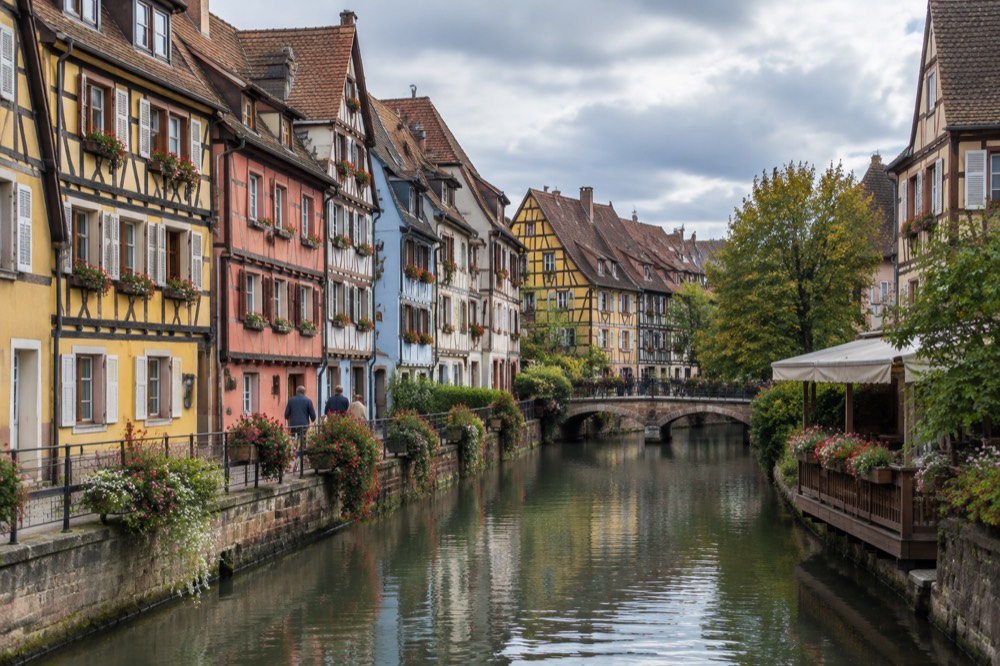
Colmar is the showcase town of the Alsatian wine country, small enough to walk end to end in a day and distinct enough from Strasbourg that the pairing does not feel redundant. Where Strasbourg offers a single-spired cathedral, European institutions and a working river quarter, Colmar offers canals, wine-cellared lanes and a dense concentration of painted, half-timbered burgher houses. The old town is compact, the atmosphere is slower, and the surrounding vineyards begin at the edge of the built-up area. For travellers using Strasbourg as a base, Colmar delivers the second face of Alsace without a change of hotel.
The comparison comes up constantly, and it is worth taking seriously rather than treating Colmar as a mini-Strasbourg. The two towns share a architectural tradition, the same wine culture and the same Franco-German history, but they serve different purposes on an itinerary. Strasbourg is a city with the weight of institutions; Colmar is a town built around wine and trade. If you have already wandered Petite France and the Grande Île, Colmar gives you a different register of the same region, quieter and more rural in feel. The site's fuller treatment of the head-to-head is in Strasbourg versus Colmar compared, which works through the trade-offs for travellers deciding where to spend nights.
Colmar also works as a gateway. The wine route villages that make Alsace famous sit clustered around the town, and a day built on Colmar can stretch into the vineyards without much extra planning. That makes it a hinge rather than a dead end: you can visit Colmar as a single day trip, or use it as the anchor for a wider swing through the wine country. Both approaches are covered below, with the village options laid out in a later section.
How Do You Get From Strasbourg To Colmar?
The practical choices are the regional train, a guided day tour by minibus or coach, or a self-drive day. The train links the two town centres directly and needs no car; guided tours bundle Colmar with the wine villages and remove all planning; self-drive gives the loosest schedule and the widest reach. No single option is best for everyone, and the deciding factors are usually how much of the wine route you want, whether you want to taste wine, and how much scheduling you can tolerate on a holiday.
| Option | What it involves | Best for | What to check |
|---|---|---|---|
| Regional train | Direct town-centre to town-centre service, no car needed | Travellers content with Colmar alone | Timetables and fares on the SNCF Connect site before travelling |
| Guided day tour | Coach or minibus, guide commentary, several stops | First-time visitors wanting villages plus wine | What is included, on the operator's live listing |
| Self-drive | Hire car, own route through the wine country | Independent travellers, flexible days | Parking in Colmar old town, which is restricted |
| Small-group tour | Fewer passengers, more village time | Travellers who dislike large coaches | Group size and stops, on the live listing |
The train is the option that suits the largest number of visitors. It is a short regional ride, and both stations sit at the edge of their respective old towns, so the transfer time at each end is a walk rather than a connection. Buy tickets through SNCF Connect or at the station, and check the return timetable in the morning rather than trusting memory, because evening frequencies matter if you want to stay for dinner. Nothing about the journey needs a car, and the station in Colmar opens straight into the town.
Self-driving suits travellers who want the wine route villages on their own clock. The trade-off is parking: Colmar's old centre is restricted, so you park at the periphery and walk in, and the village streets are narrow in high season. A middle path is a guided day tour, which covers the road, the parking and the route planning in one booking. The site's Alsace wine route day trips guide goes deeper on the self-drive version if that is the direction you are leaning.
For travellers who prefer to lock the day in early, the full-day Alsace highlights tour from Strasbourg is the roster's flagship option for exactly this trip. It is a booked seat, a set route and a guide, which converts a day of logistics into a day of looking out of the window. The half-day wine tour is the shorter alternative for anyone who wants tasting without surrendering the whole day, and the Petite France walking tour covers the Strasbourg side if you are splitting your stay between the two towns. Full details, prices and availability are on each operator's live listing.
What Should You See In Colmar In One Day?
One day in Colmar divides cleanly into the old town core, the canal quarter known as Little Venice, the covered market hall for food, and one museum or church if the weather turns. All of it sits within walking distance, and none of it requires a ticket except the museums, whose hours and prices are on the Colmar municipal pages. The town rewards slow walking far more than it rewards a checklist, so treat the list below as a route rather than a schedule.
| Area or sight | Character | Who it suits | Notes |
|---|---|---|---|
| Old town lanes | Painted half-timbered houses, wine cellars, squares | Everyone, first stop | Free to wander, best early or late in the day |
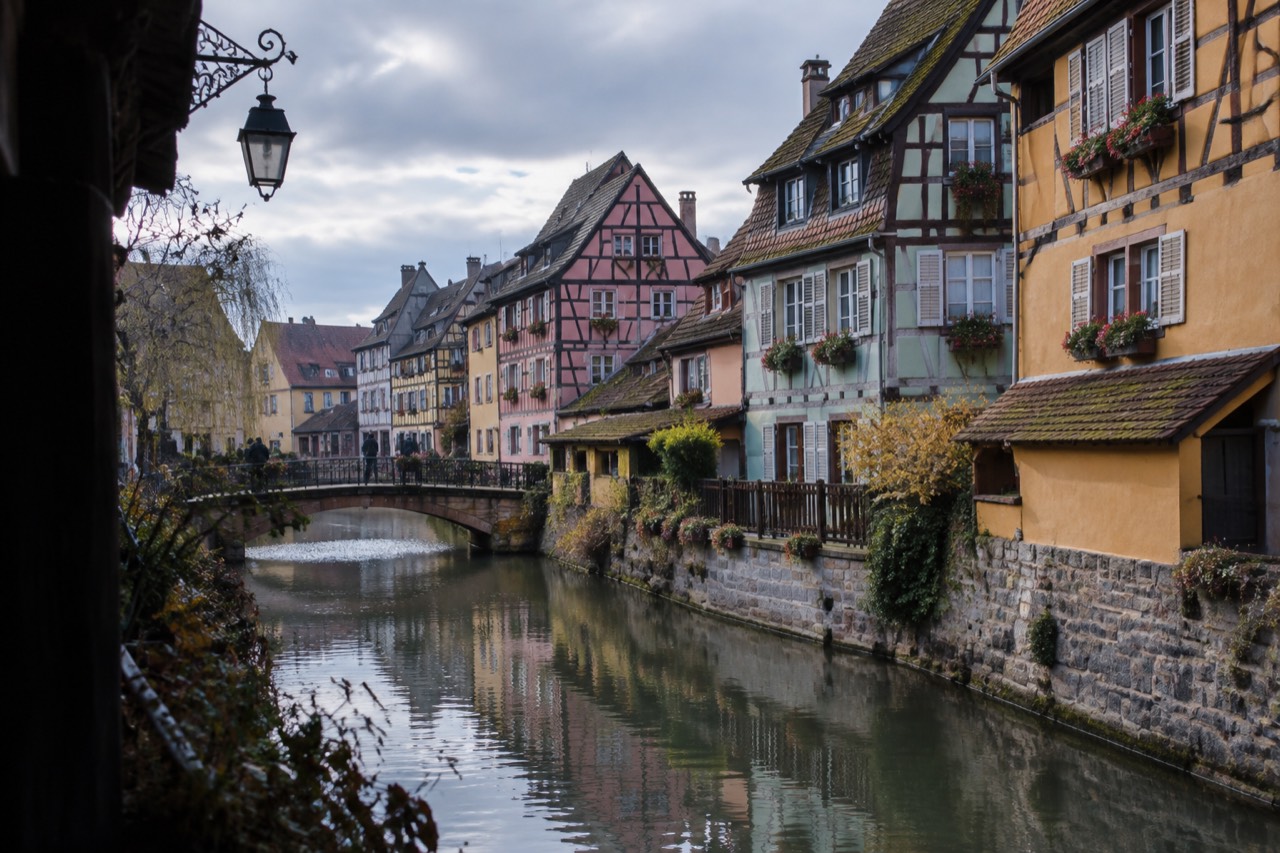
| Little Venice canals | Water, flowers, former fishermen's and tanners' quarter | Photographers, slow walkers | Viewed from the banks or a flat-bottomed boat |
| Covered market | Regional foodstuffs, produce, wine | Food travellers | Check the market's own days and hours |
| Unterlinden museum | Art and archaeology in a former convent | Rainy hours, art lovers | Hours and tickets on the museum's own page |
| Dominican church | Gothic interior, significant paintings | Art-inclined visitors | Check the parish or museum pages for access |
| Rue des Marchands | Main shopping and eating street | Souvenir and gift buyers | Busiest in the middle of the day |
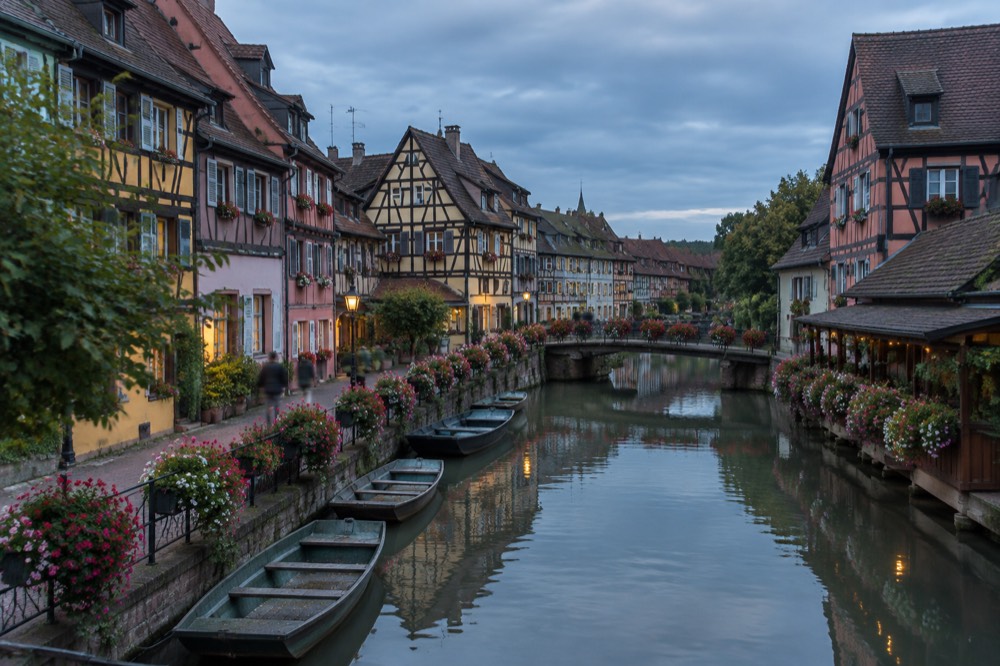
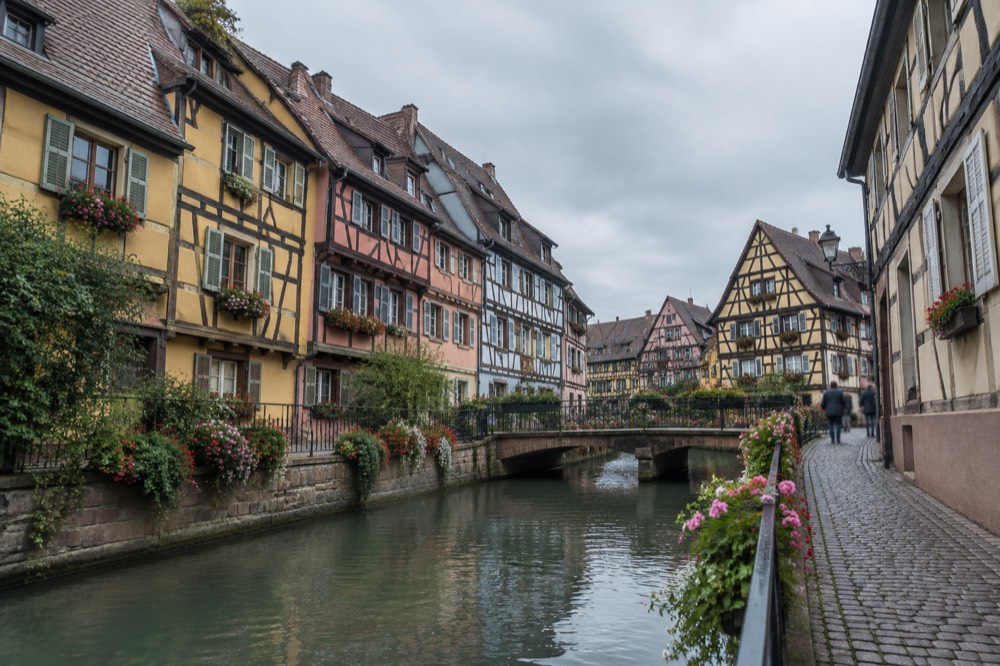
Start on the old town lanes before the day-trip crowds thicken. Colmar's centre is a mesh of narrow streets lined with burgher houses whose facades are painted in strong colours and dated by carved inscriptions, and the pleasure is in the wandering rather than any single monument. Little Venice, the canal quarter a few minutes south, is the image the town is known for: low houses standing at the water's edge, once the domain of fishermen and market gardeners. The banks are public, and a flat-bottomed boat trip on the water runs in season, with details on the operator's own page.
Food deserves a deliberate stop rather than whatever is nearest when hunger arrives. The covered market hall gathers regional producers under one roof, and the surrounding streets carry the wine-cellared restaurants of the region. The local cooking leans on the same dishes Strasbourg is known for, tarte flambée, choucroute and baeckeoffe among them, and the site's pieces on tarte flambée and choucroute explain what to expect on the plate. For a fuller treatment of eating in the bigger city, see where to eat in Strasbourg, but in Colmar the equivalent pleasure is a winstub-style lunch inside the old town.
Museums are the insurance policy against the region's weather. The Alsace plain is semi-continental, and Meteo-France's 1991-2020 normals for Strasbourg-Entzheim, indicative for the plain as a whole, show rain on 8.0 to 10.8 days per month with 1 mm or more, and a mean maximum of 5.2 C in January against 26.4 C in July. A cold, wet afternoon in Colmar is not a rarity in winter, and the Unterlinden museum, in a former convent, is the natural place to spend it. Check the museum's own pages for hours and ticket prices rather than relying on second-hand figures, and note that Colmar's municipal arrangements are separate from Strasbourg's, where the municipal museums are 9 EUR full, 5 EUR reduced and free on the first Sunday of each month.
Before leaving Strasbourg, one small point of orientation: the Petite France quarter that visitors love at home has its own guide, and a walking tour of it is a good first-evening activity on the day you return from Colmar. The site's Petite France guide covers the quarter in depth.
That Petite France walk, run with a local guide, pairs well with a Colmar day because the two towns show two halves of the same architectural tradition. Availability and times are on the operator's live listing.
Should You Take A Guided Tour Or Travel Independently?
Independent travel wins if Colmar alone is the goal and you want to control the clock; a guided day tour wins if you want the wine villages too, since the villages are scattered and awkward by train, and a driver-guide removes the route, the parking and the tasting logistics in one booking. The honest answer is that the decision is less about Colmar than about the wine route around it.
If the wine villages alongside Colmar appeal more than the train alone, book an Alsace historical day trip here.
Colmar by train and on foot is a genuinely easy day. You arrive, you walk, you eat, you leave, and nothing in the old town requires a guide to make sense of it. The villages are the part that resists improvisation. Riquewihr, Eguisheim, Kaysersberg and their neighbours sit on country roads with thin public transport, and the day can dissolve into timetables if you try to chain them by bus. A guided tour exists precisely for that: the coach follows the wine route, the guide fills the drive with context, and the tasting stops are pre-arranged with cellar doors that expect groups.
| Format | What the day looks like | Who it suits | Main trade-off |
|---|---|---|---|
| Train plus walking | Colmar old town at your own pace | City-focused travellers | Villages are out of reach |
| Full-day guided coach tour | Colmar plus several wine villages | First-time Alsace visitors | Fixed schedule, less wandering time |
| Half-day wine tour | Tasting-focused, shorter day | Travellers with an evening plan in Strasbourg | Less of the old town |
| Small-group minibus tour | Same territory, fewer passengers | Travellers who avoid big groups | Check the live listing for dates |
| Self-drive | Any route you choose | Confident drivers | Parking and navigation are yours to solve |
The featured full-day highlights tour from Strasbourg is the strongest single answer for travellers who want the whole picture in one day: Colmar, the wine country and the road between them, handled. Book it through the operator's live listing, where the current price, dates and inclusions are shown, and read the cancellation terms there before committing. Check availability if that format fits your dates.
One honest caution belongs here. Colmar's popularity is real, and in July, August and the Christmas period the old town carries heavy foot traffic. The question of whether that tips the town into feeling like a tourist trap is one the site answers directly in is Colmar a tourist trap, and the short version is that the crowds concentrate on a few streets at a few hours. Early morning and the late afternoon belong to the residents; the middle of the day belongs to everyone else. Plan around the peak and the town gives plenty back.
Which Alsace Villages Pair Well With Colmar?
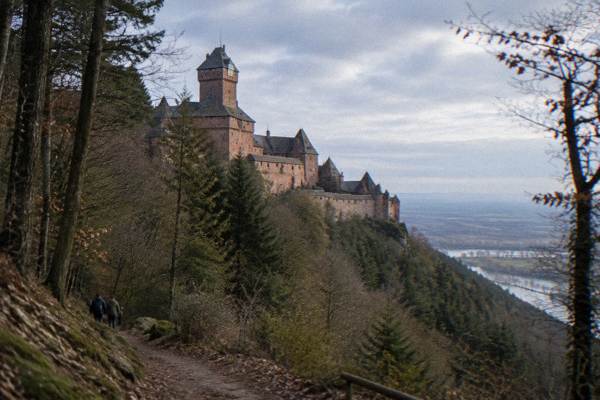
The classic pairings are Eguisheim and Riquewihr, both within easy reach of Colmar by road, with Kaysersberg and Ribeauvillé as the next ring out and Haut-Koenigsbourg castle as the headline monument of the whole wine region, and each village has its own character and its own full guide on this site, so treat the table below as a shortlist rather than the last word. A day that tries to see all of them becomes a day of parking lots, so pick two and enjoy them slowly.
| Village or sight | Known for | Pairs with Colmar how | Full guide |
|---|---|---|---|
| Eguisheim | Concentric lanes, wine-growers' houses, storks | Closest headline village, half a day | Eguisheim guide |
| Riquewihr | Walled wine village, the region's postcard | The classic second stop | Riquewihr guide |
| Kaysersberg | Ruined castle above the street, river | Quieter than Riquewihr | Kaysersberg guide |
| Ribeauvillé | Old town, vineyard walks | Adds a working-town feel | Ribeauvillé guide |
| Obernai | Half-timbered centre north of Colmar | Pairs with the Strasbourg side instead | Obernai guide |
| Haut-Koenigsbourg | Restored medieval castle, hilltop views | The monument stop on a full loop | Haut-Koenigsbourg guide |
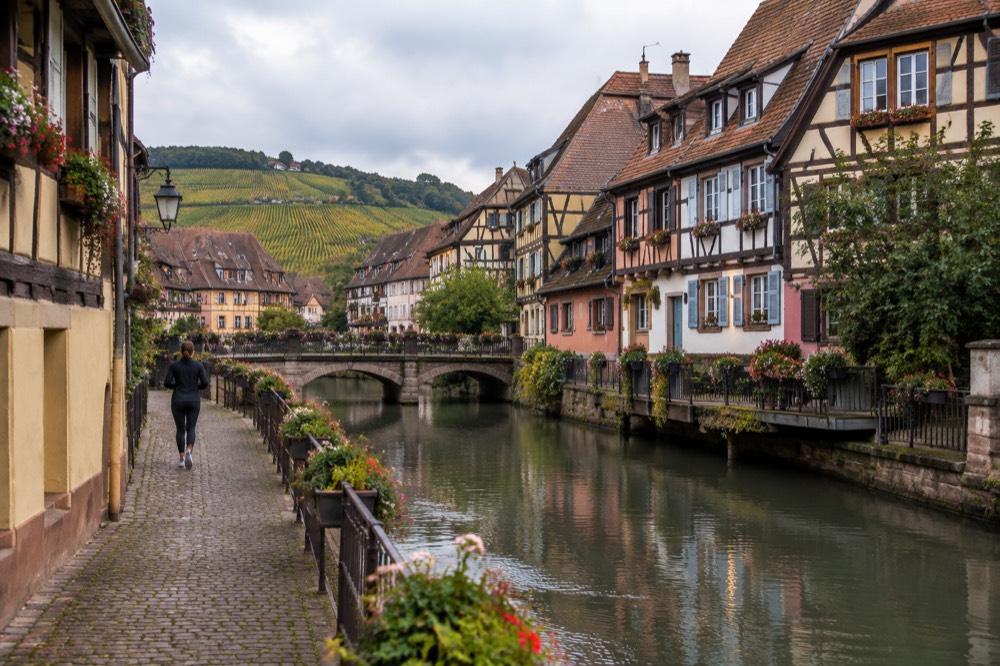
A sensible rule is two villages plus Colmar in one day, three at the outside. The guided tours that bundle the region generally follow that arithmetic, because each village asks for a slow loop of its lanes and a pause at a cellar door, and a day that tries to see five of them becomes a day of parking lots. Travellers who want the deeper version can read the site's most beautiful villages in Alsace roundup, and those planning a wider trip should start from the Alsace road trip guide.
If wine is the point of the day rather than the scenery, a dedicated tasting tour earns its place. The half-day Alsace wine tour from Strasbourg keeps the day short and the glasses full, and the medieval villages and wine-tasting day trip strings the vineyard stops together over a longer route. Both are booked through their operators' live listings. The wider set of guides lives on Strasbourg Travel Guide.
The medieval villages and wine-tasting trip is the fuller version of the same idea, covering more ground and more cellars across a long day. Its current price, dates and inclusions are on the operator's live listing.
When Is The Best Time Of Year For This Trip?
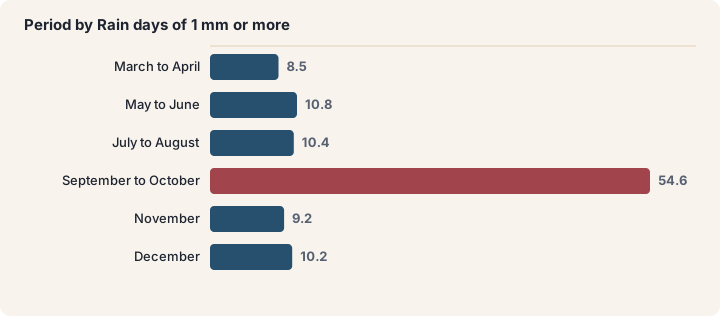
The warm months from May to September give the fullest experience, with long evenings and the vines in leaf, while December turns Colmar into a Christmas-market town with a completely different atmosphere, and the shoulder months of April and October trade thinner crowds against cooler, wetter weather. There is no bad month, only different trade-offs, and the climate table below, drawn from Meteo-France's 1991-2020 normals for Strasbourg-Entzheim as the reference station for the Alsace plain, shows the shape of the year.
| Period | Mean max / min at Strasbourg-Entzheim | Rain days of 1 mm or more | What it means for Colmar |
|---|---|---|---|
| March to April | 12.1 to 17.0 C / 2.6 to 5.7 C | 8.5 to 8.6 per month | Cool, quiet, blossom in the vines |
| May to June | 20.9 to 24.4 C / 10.1 to 13.4 C | 10.8 and 10.2 | Warm, green, busiest with tour groups |
| July to August | 26.4 and 26.1 C / 14.9 and 14.5 C | 10.4 and 9.5 | Hot, full old town, long evenings |
| September to October | 21.6 to 15.8 C / 10.7 to 7.2 C | 54.6 to 59.5 | Harvest colour, softer light |
| November | 9.4 C / 3.3 C | 9.2 | Grey, quiet, pre-market calm |
| December | 5.9 C / 0.8 C | 10.2 | Cold, festive, market season |
December deserves its own paragraph because it changes the town rather than decorating it. Colmar runs its own Christmas market alongside the one in Strasbourg, and the two together draw a very large seasonal crowd; Strasbourg's 2025 edition alone ran 26 November to 24 December 2025 and drew 3.05 million visitors according to the city's own bilan, and the city posts each edition's dates on its Christmas site, so confirm them there. Colmar's equivalent dates are on the town's own Christmas pages. The site's Colmar Christmas market guide covers the season in detail, and the question of which Christmas market is better, Strasbourg or Colmar, is answered separately.
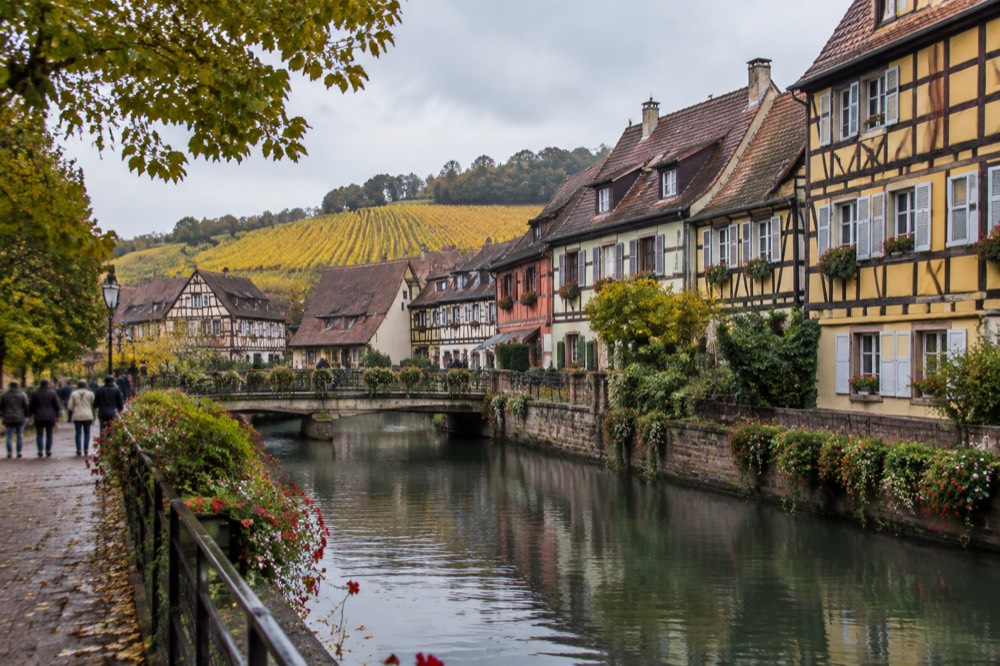
Summer is the season of the fullest experience and the fullest streets. The vines are in leaf, the restaurant terraces are open, and the evenings run long, but the old town lanes carry the year's heaviest foot traffic and the wine villages fill with coaches by late morning. Spring and autumn are the connoisseur's compromise: April and October in particular offer thin crowds and reasonable temperatures, at the price of a real chance of rain, which the normals put at 8.6 and 9.6 rain days respectively.
Where Should You Eat And Drink In Colmar?
Eat inside the old town at lunchtime, favour the cellar restaurants one street back from the street-front terraces, and treat Alsatian white wine as the point of the meal rather than an accompaniment, because Colmar sits in the middle of one of France's great white-wine regions and pours its riesling, gewurztraminer and pinot gris everywhere from the market hall to the candle-lit cellars. The town takes its food as seriously as its facades.
The regional cooking is the same family Strasbourg serves, which is no criticism: tarte flambée, the thin flatbread baked with cream and onions, choucroute garnie with its sausages and salted meats, and baeckeoffe, the slow-baked meat and potato dish, all appear on Colmar menus. Dessert is kougelhopf, the Alsatian ring-shaped cake, and the site's guide to kougelhopf explains its place in the region's kitchens. Wine is the local pride; the site's overview of Alsace wine covers the varieties, and the question of what drink Strasbourg is famous for has its own answer page.
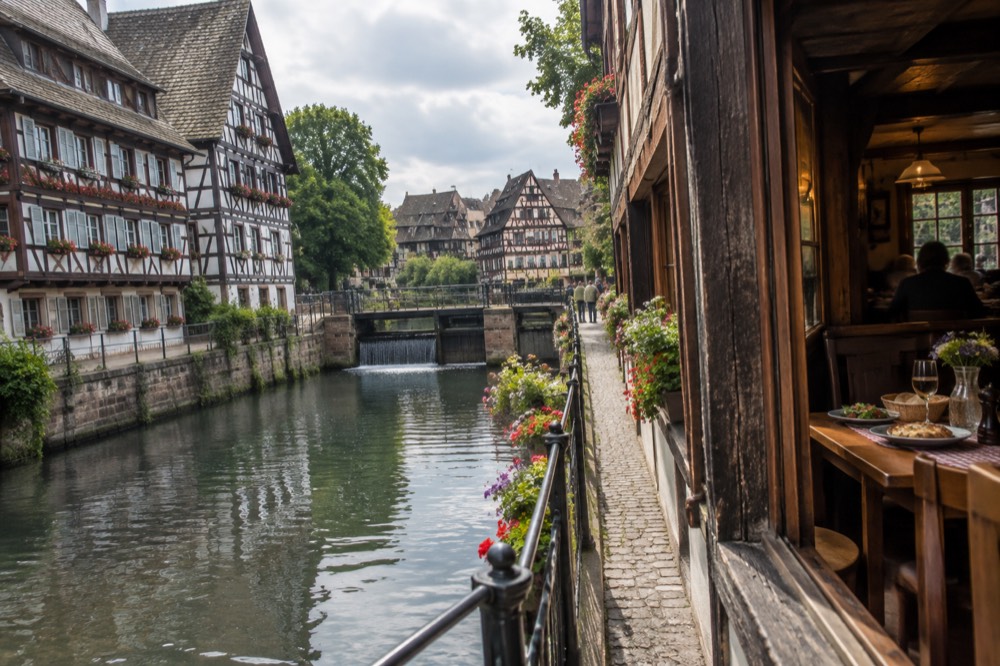
A practical lunch strategy: eat earlier or later than the 12:00 to 14:00 window that the day-trip crowd fills, and walk one street back from the main drag to find the cellar rooms. Reservations matter in July, August and the Christmas weeks, when the better tables book out. For travellers who prefer their calories delivered with commentary, a food tour is the structured version of the same meal, and the site's Strasbourg food tour guide explains how those work in the larger city.
What Does A Realistic One-Day Plan Look Like?
A realistic day is the morning train or an early tour departure, the old town and Little Venice before midday, a proper cellar lunch, one museum or one village in the afternoon, and a return that leaves you in Strasbourg for dinner or stays in Colmar for the evening light on the canals. The plan below assumes the train version; the tour version replaces the legs with a set itinerary and a driver.
| Time of day | What to do | Why in that order |
|---|---|---|
| Early morning | Depart Strasbourg; arrive Colmar as the lanes empty | The old town is at its best before the coaches |
| Morning | Old town lanes, then Little Venice canals | Photography and wandering before the crowds |
| Midday | Cellar lunch inside the old town | Eat before the 12:00 to 14:00 peak or after it |
| Early afternoon | Covered market, or Unterlinden museum | Food shopping or weather insurance |
| Late afternoon | One village by tour or car, or a canal boat | The day's second act, if energy allows |
| Evening | Return to Strasbourg, or stay for the evening | Evening light on the canals is the town's best hour |
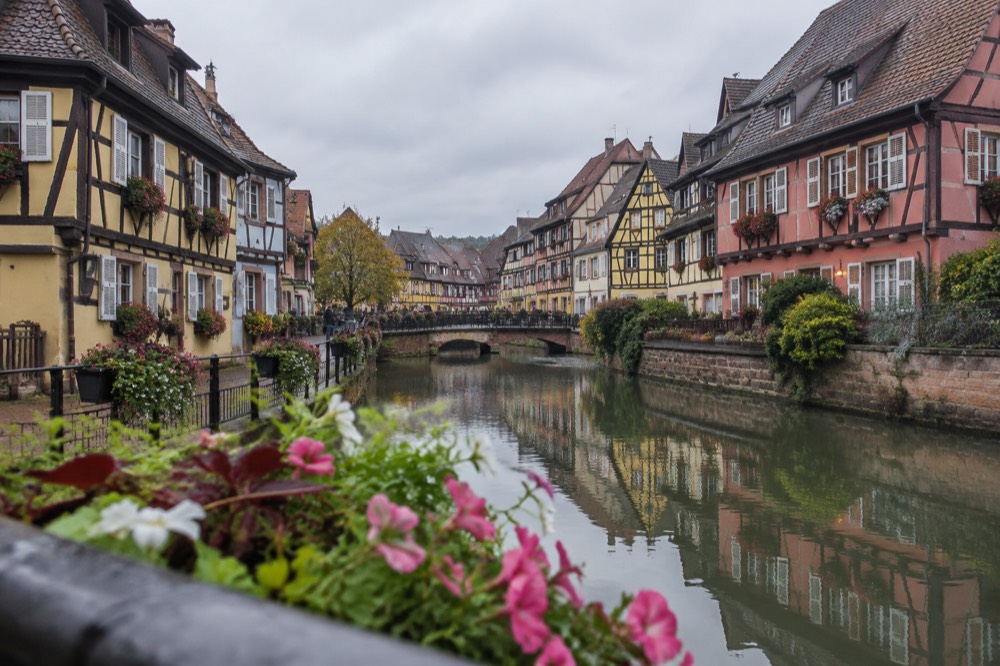
Two refinements make the day better. First, check the return timetable in the morning and decide your evening before lunch, because the choice between dinner in Colmar and dinner in Strasbourg shapes the whole afternoon. Second, hold one flexible hour in reserve: the Alsace plain produces rain on roughly 8 to 11 days per month depending on season, and a museum hour is the difference between a shortened day and a good one.
Travellers who want more than one day in the region should read the site's pieces on how many days in Colmar is enough and whether it is better to stay in Colmar or Strasbourg. The two-town itinerary question is covered in the Strasbourg and Colmar itinerary, which builds the overnight version of this trip.
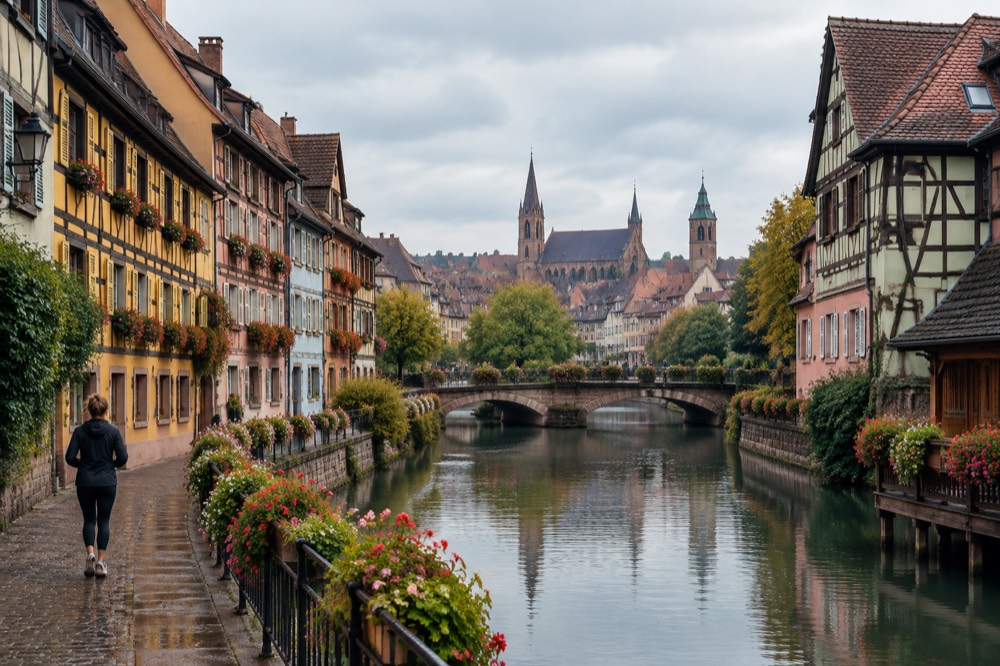
The wider question of how the two towns fit into a whole Alsace trip, including the Black Forest and Baden-Baden across the Rhine in Germany, is handled in the site's Alsace region guide, and the day-trip options east of the border start with the Black Forest guide and Baden-Baden. For the trip this page is about, the essentials are simple: Colmar is close, walkable, food-obsessed and best seen either early, late or with a guide who knows which streets the coaches skip.
Common Questions About The Strasbourg To Colmar Trip
How close is Colmar to Strasbourg?
Colmar lies south of Strasbourg in the same region, Alsace in north-eastern France, connected by a short regional train ride and by road through the wine country. The site's dedicated answer on how close Colmar is to Strasbourg covers the practical detail, and the honest planning point is that the trip is short enough to be a day trip and long enough that you should not plan a same-day return flight around it.
Is one day in Colmar enough?
One day covers the old town, Little Venice, a cellar lunch and either a museum or one village. Two days let you add the wine route properly. The site's answer on how many days in Colmar is enough works through the trade-offs.
Should I take a tour or go by train?
Take the train if Colmar alone is the goal, and take a guided day tour if you want the wine villages as well, because the villages are scattered and thin on public transport. The tour also removes parking and route planning, which matters in July and August.
Is Colmar worth visiting in winter?
Yes, with the right clothes. December brings the town's Christmas market and a distinctly festive atmosphere, and the site's Colmar Christmas market guide covers the season. The mean December maximum at the Strasbourg-Entzheim reference station is 5.9 C, so pack for cold.
Can I visit Colmar and the wine villages in one day?
Yes, and that is exactly what the guided day tours are built for: Colmar plus two or three villages is a standard full-day route. Independently, by car, the same arithmetic works; by public transport it does not, which is the honest argument for the tour.
Where do I eat in Colmar on a day trip?
Lunch inside the old town, ideally in a cellar restaurant one street back from the main drag, and ideally outside the 12:00 to 14:00 peak. The cooking is the Alsatian repertoire: tarte flambée, choucroute, baeckeoffe, kougelhopf, poured with local riesling or gewurztraminer.
Colmar rewards a day trip from Strasbourg in almost every season, and the choice between train, car and guided tour comes down to how much of the wine country you want attached to the town itself. Pick the format that matches your appetite, book the parts that need booking, and leave at least one unplanned hour for a street the guidebooks did not mention.