Freiburg Day Trip From Strasbourg
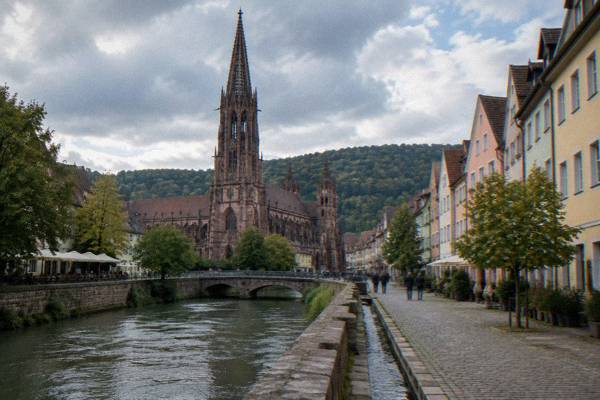
Freiburg sits across the Rhine from Strasbourg in Alsace, north-eastern France, and pairs a medieval German old town with the Black Forest at its back door. This guide covers what a one-day visit can hold, how the guided tours work, and what to check before you cross the border.
Short answer
Freiburg is a German city on the edge of the Black Forest, reached from Strasbourg in north-eastern France by crossing the Rhine into Germany; both cities sit inside the Schengen area and use the euro. A day trip works best as an old town walk, a minster visit and a viewpoint climb, or as a guided Black Forest tour that adds Titisee and Triberg.
Strasbourg, in Alsace in north-eastern France, sits close enough to Germany that a Black Forest day trip is a normal Saturday plan rather than an expedition. Freiburg is the German city that answers the question best: a university town of red sandstone, narrow lanes and little water channels, sitting where the Rhine plain meets the first hills of the Black Forest. The two cities share the euro as currency and sit inside the Schengen area, which means the crossing itself is a non-event for most travellers. This guide lays out what a Freiburg day trip from Strasbourg can realistically hold, how the guided options on the roster compare with going independently, and what to check before you set off.
Why Freiburg Works As A Day Trip From Strasbourg
Freiburg works because it compresses the classic German day trip into one walkable package: a medieval old town around a red sandstone minster, a hill viewpoint above the rooftops, and the Black Forest beginning at the edge of the city, all in a country that shares the euro and the Schengen border with France. Nothing about the trip asks you to change money or clear a passport check. That combination is unusual. Basel, the other big neighbour, is Swiss and outside the euro, so a Freiburg trip is the simpler cross-border day out of Strasbourg for anyone who wants Germany without logistical friction.
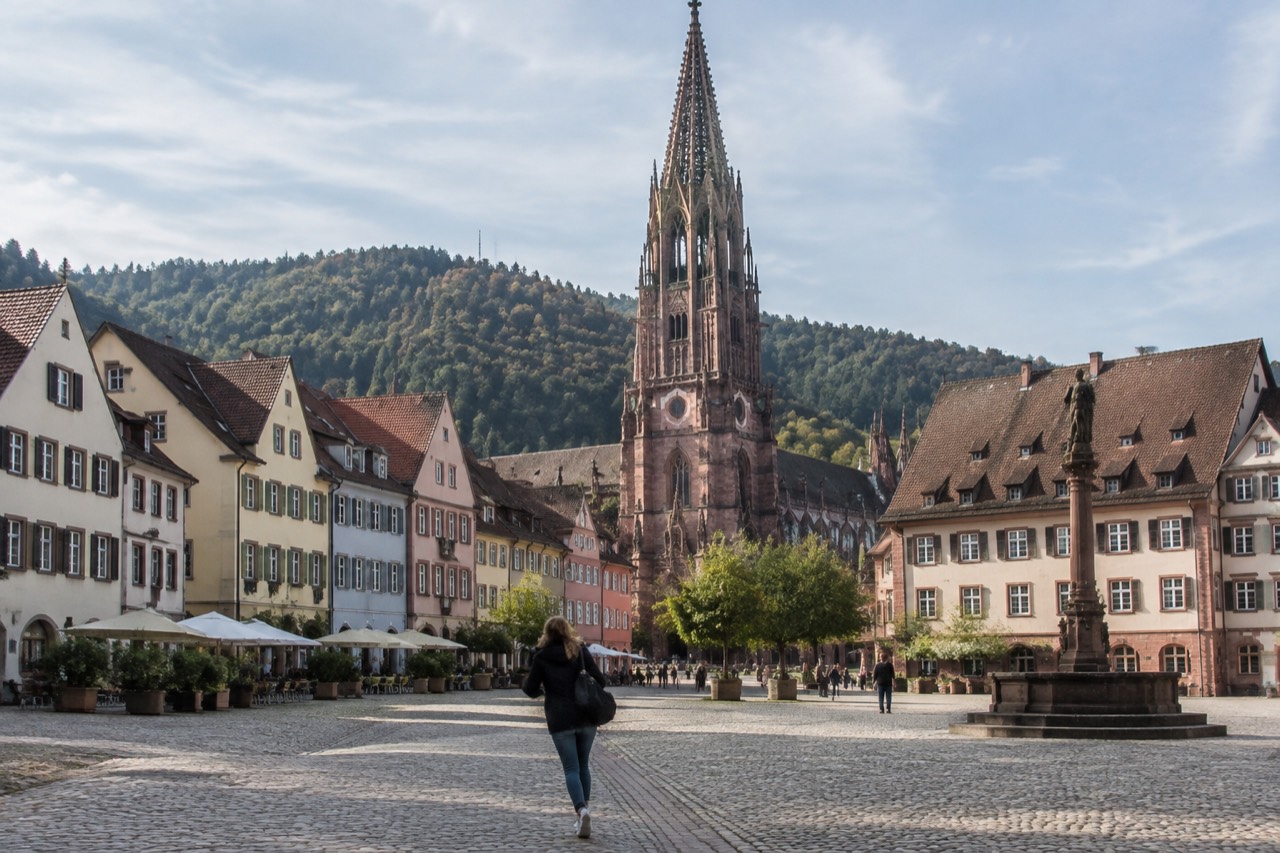
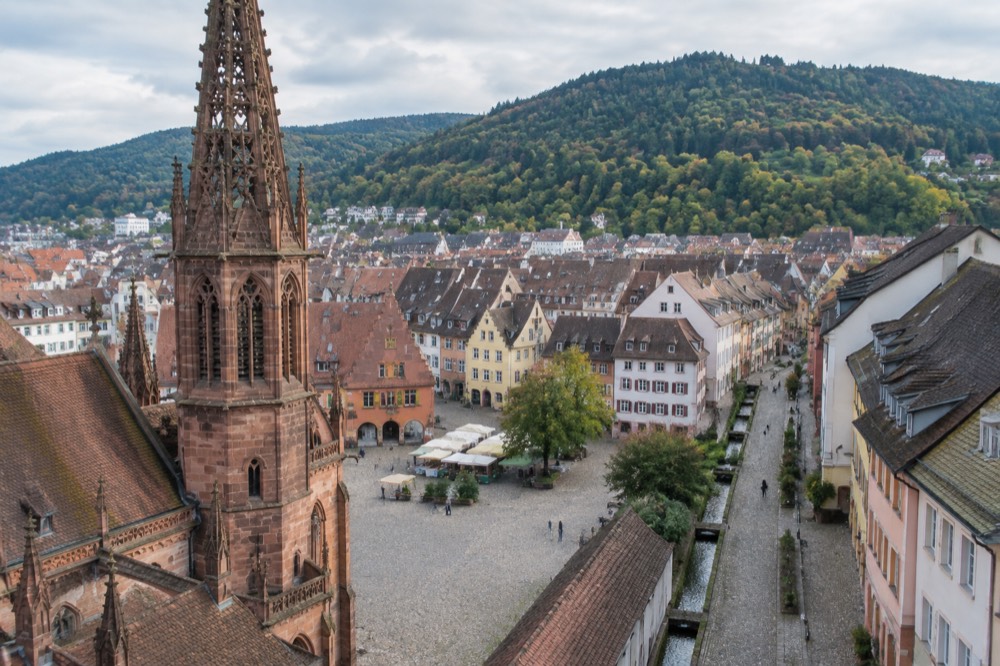
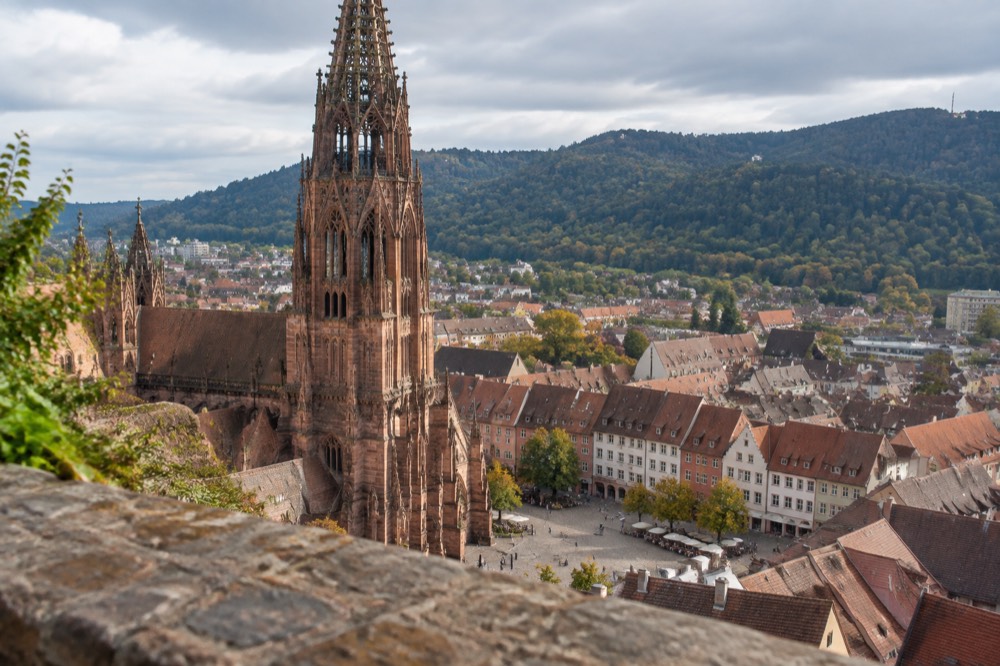
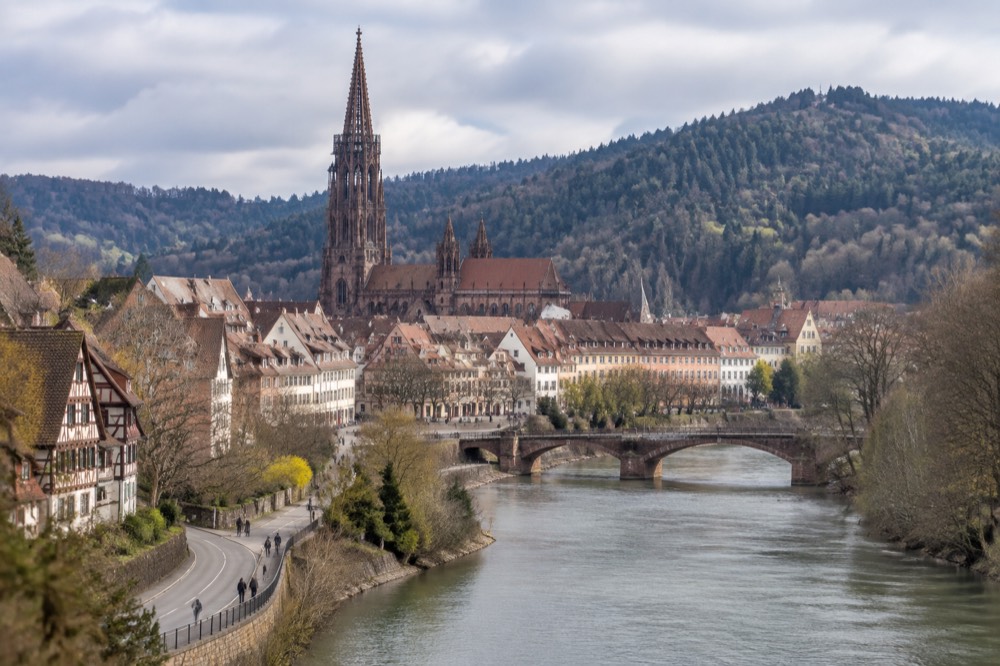
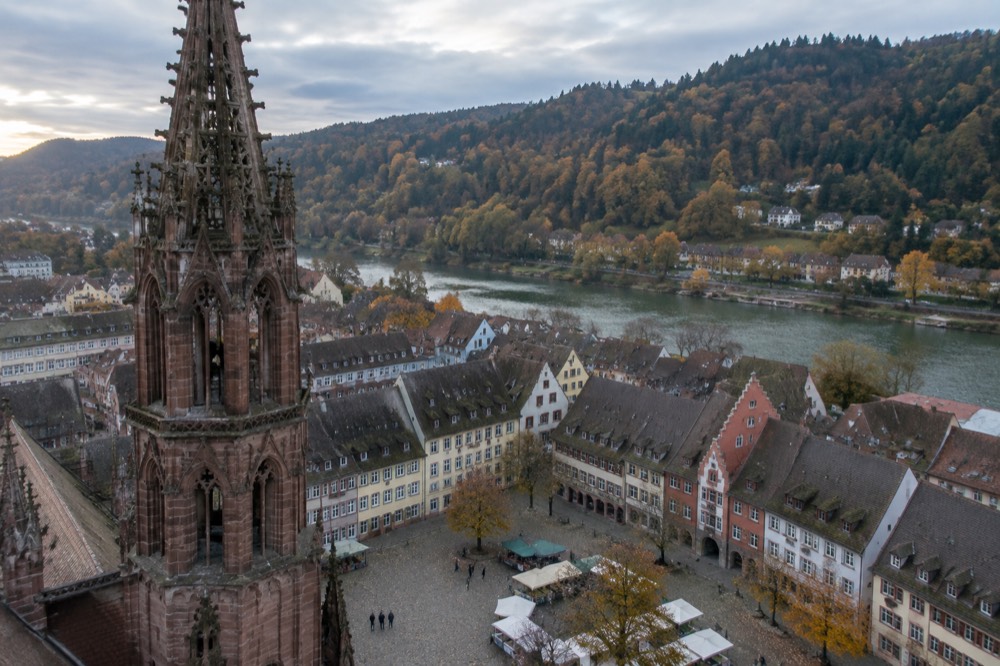
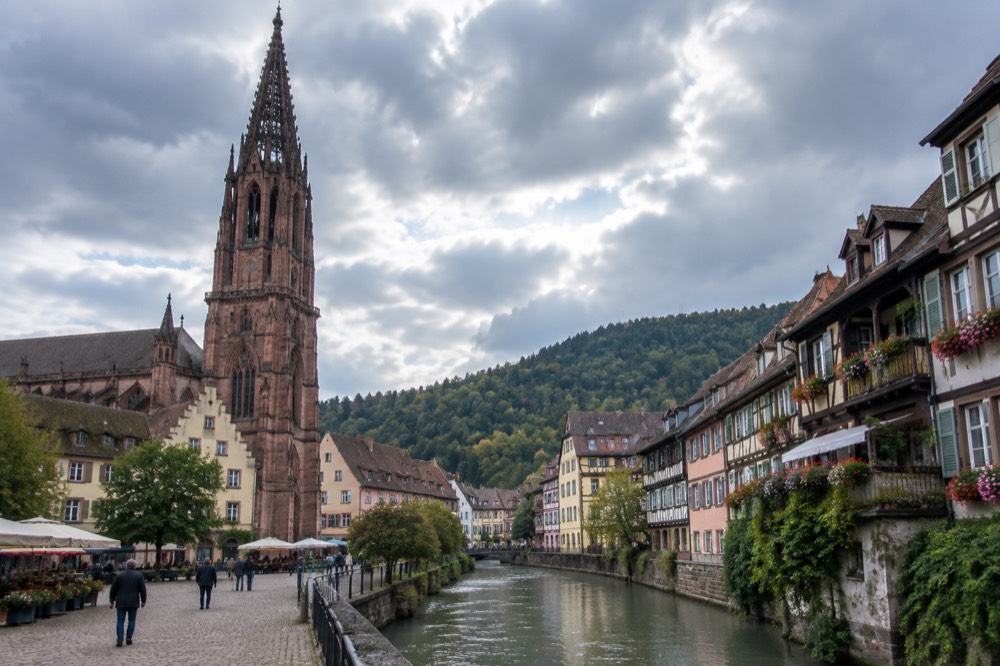
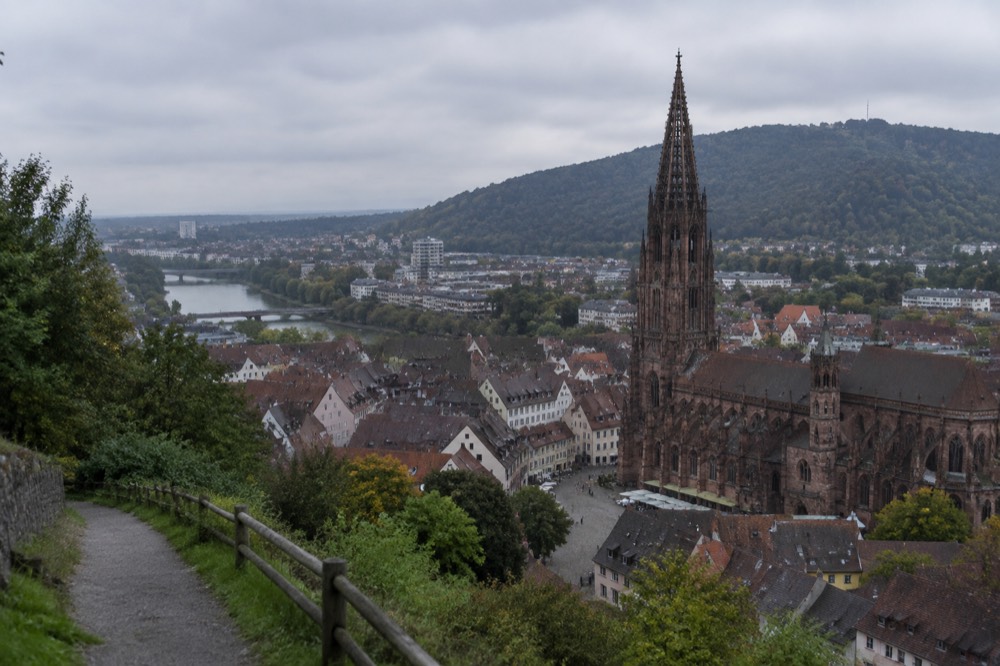
The city's character explains the draw. Freiburg is a university city, which keeps the old town lively and the café tables full, and its lanes carry the Bächle, the small open gutters of running water that line many streets. The minster, the Münster, dominates the centre with a single tall tower of red sandstone, and the square around it forms the heart of the old town. Behind the rooftops, the Schlossberg hill rises with paths and a viewpoint, and beyond it the Black Forest proper begins. A visitor gets a cathedral square, a viewpoint and a forest edge in a compact space, which is exactly what a day trip needs.
For Strasbourg-based travellers the comparison with the home city is part of the pleasure. Strasbourg's Grande Île and Neustadt form a UNESCO World Heritage property centred on its own single-spired cathedral; if you have already walked that, covered in the one day in Strasbourg itinerary, Freiburg offers a recognisable cousin with a different accent. The half-timbering looks German rather than Alsatian, the beer culture runs deeper than the wine, and the scale of the old town is easy to absorb in a single day.
It is also a flexible trip. You can build it entirely around the city, or you can treat Freiburg as one stop in a Black Forest loop that takes in the lake at Titisee and the waterfalls and cuckoo clock workshops at Triberg. The guided version of that loop is the featured option later in this guide; the independent version rewards a car but can be done on regional trains. Either way, the day starts and ends in France.
How To Get To Freiburg From Strasbourg
The practical choices are three: a regional train that crosses the Rhine, a self-driven run across the border, or a guided day trip that handles the whole journey. France and Germany are both in the Schengen area and both use the euro, so there is no currency exchange and, for most travellers, no border formalities to plan around. No single door-to-door time or fare is quoted here; check the operators' own pages before you travel. That honesty matters more on this crossing than on a domestic trip, because fares and timetables on cross-border regional routes shift with the seasons.
The train is the car-free answer. The route runs out of Strasbourg's station, across the river into Kehl, the German town on the far bank, and onward into the Black Forest foothills toward Freiburg. It is a short-hop regional journey rather than a high-speed one, and the German side is served by regional trains that connect through to Freiburg's main station, which sits a short walk from the old town edge. The German rail operator's own journey planner is the place to confirm times and fares for the day you travel; the French and German systems sell these tickets through their respective sites and apps.
Driving gives you the Black Forest afterwards. The crossing from Strasbourg is by bridge over the Rhine, and once in Germany the roads bend into the hills within a short distance of the city. A car makes sense if Titisee or Triberg is on the plan, since the forest villages are strung along valley roads that trains serve thinly. The trade-off is city parking: Freiburg's old centre limits cars, and the park-and-ride lots on the city fringe are the usual answer, so check the city's parking information before you commit to driving into the centre.
If the forest loop is on the agenda, wheels help, book a rental car here.
The third option removes all of this. A guided day trip from Strasbourg handles the border, the driving and the parking, and drops you into the old town with a local guide and a schedule. For a one-day visit, that structure is the difference between seeing Freiburg and understanding it, and it is the option the rest of this guide keeps returning to. If your wider trip includes more of the German side, the Black Forest day trip guide covers the region in depth, and Baden-Baden pairs with Freiburg on longer plans.
What To See In Freiburg In One Day
A one-day Freiburg visit should hold three anchors: the Münster and the square around it, the old town lanes with their running Bächle gutters, and a climb or funicular up the Schlossberg for the view over the rooftops toward the Black Forest. Around those, the Augustinerplatz steps, the old merchants' hall and the river meadows fill a day without any rush. The city rewards walking slowly rather than collecting sights, and its centre is compact enough that nothing on this list needs more than a stroll between stops.
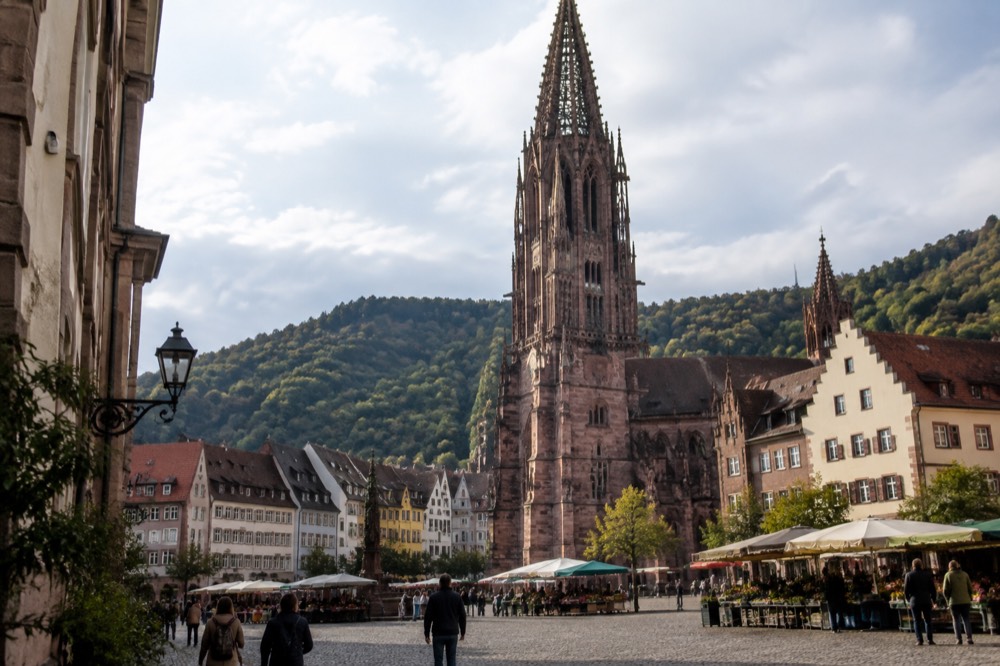
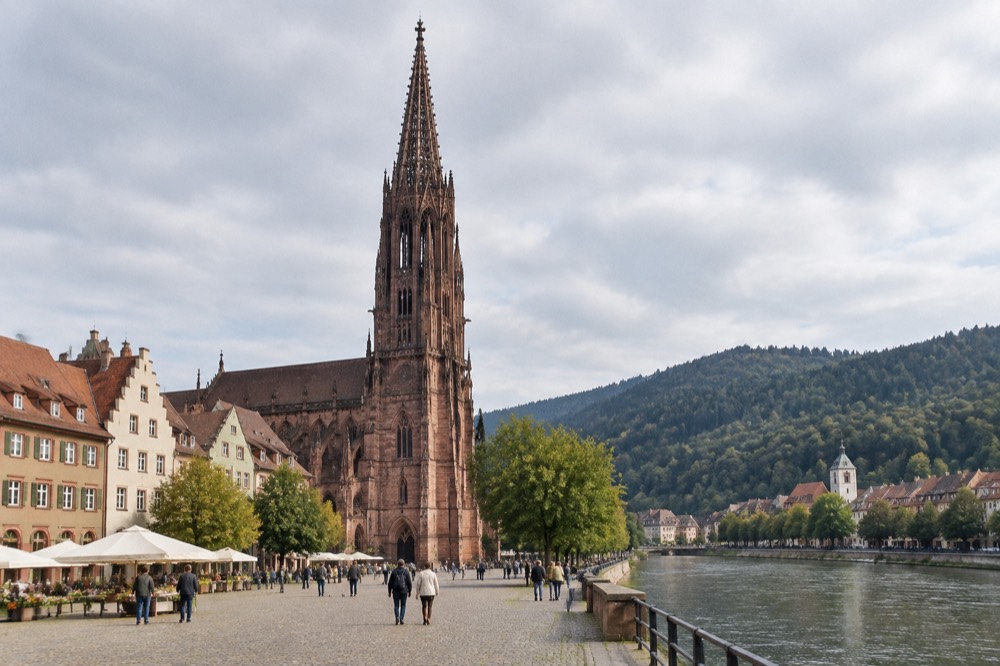
The Münster is the centrepiece. It is a red sandstone minster with a single tall tower, and its square, the Münsterplatz, is ringed by gabled houses and the old merchants' hall, the Historisches Kaufhaus, whose red and gold facade is one of the city's signature views. The square itself is the old town's market place; whether stalls are running on the day you visit is a matter for the city's own information, so treat the square as architecture first and market second. Inside the minster, the glass and the scale are the draw, and the tower climb, where open, gives the rooftop perspective from above rather than from the hill.
The Bächle are the detail visitors remember. These shallow channels run alongside many old town streets, fed by stream water, historically a water supply and now a fixture of the city's identity. Local tradition holds that stepping in one means you will marry a Freiburger; the practical tradition is that they are slippery. Walking the lanes with an eye on the water is the simplest way to feel the city's texture, and it costs nothing to look.
The Schlossberg closes the loop. Paths and a funicular lift you above the centre to viewpoints over the old town, with the Black Forest ridge behind and, on clear days, the Rhine plain opening toward France. Allow the late afternoon for this: the light comes across the rooftops from the west, and the walk back down drops you near the river meadows, the grassy parkland along the Dreisam where the city exhales. Between the anchors, Augustinerplatz, a stepped square beside the old Augustinian monastery complex, is the student city's living room, and the streets around it carry the cafés and bakeries that make the day feel German rather than French.
If the weather turns, the city has indoor answers: museums in the old monastery buildings, and covered shopping arcades in the centre. Rain in this corner of Europe is not a footnote; Strasbourg's own Meteo-France 1991-2020 normals record 112.3 rain days a year on the French side of the border, and the German side is similar. A wet-day fallback plan is worth having, and the rainy day in Strasbourg guide shows the same thinking applied to the French side.
Freiburg With The Black Forest: Titisee And Triberg
The strongest argument for a guided day trip is that Freiburg alone is only half the region's offer: the Black Forest begins at the city's edge, and the classic loop adds the lake at Titisee and the waterfalls and clock-making town of Triberg, a combination that is awkward to string together independently in one day but natural with a driver and a plan.
Titisee is the forest's front door. The lake sits in a glacial valley surrounded by wooded hills, with a promenade along the shore and the small town of Titisee-Neustadt beside it. It is the place where the Black Forest stops being an idea and becomes scenery you can stand inside: dark slopes, still water, and the tourist infrastructure that comes with a lake everyone wants to photograph. In winter the same setting shifts to a Christmas market mood, and the question of daylight versus evening markets, which the day or night Christmas markets answer covers for Alsace, applies to the German side too: lights after dark, stalls and lake views before it.
Triberg is the deeper stop. The town is known for its waterfalls, among the highest in Germany, and for the cuckoo clock tradition, with workshops and a clock museum in and around the town. The falls are reached on a short forest walk with an admission charge at the gate; the price is set by the falls' own operator and changes with season, so treat it as a check-on-arrival item rather than a budgeted figure. The town's main street is a run of clock shops and Black Forest cake cafés, and the cake, Schwarzwälder Kirschtorte, is the region's signature dessert, a chocolate and cherry and cream construction that Freiburg and Triberg both claim with conviction.
The tour that strings these together is the natural fit for a first visit. The featured day trip covers Freiburg, Titisee and Triberg in one guided run out of Strasbourg, and you can Check availability on the operator's live listing. What it removes is the day's entire friction: the cross-border driving, the forest roads, the parking at each stop and the clock-watching between them. What it adds is a guide who can tell you which clock workshop still builds in the town and why the lake is the colour it is.
There is a second Black Forest tour on the roster that makes the same loop with a different operator, worth comparing on the listing for group size and inclusions before you book either:
A note on scale: no journey times, distances or fares for this route are quoted in this guide. The tour listings state their durations, and the rail operators' planners state theirs; those are the two numbers that matter, and both render live on their own pages.
How A Guided Tour Compares To Going Independently
A guided tour wins on structure and on the forest loop, and independence wins on flexibility and cost control inside Freiburg itself: if your day is the old town, the minster and the viewpoint, going alone by train or car is simple and cheap to run, while if the day must include Titisee and Triberg, a tour is the format that actually fits them in. The decision is really about how much of the Black Forest you want, not about Freiburg.
For a city-only day, the independent plan is straightforward. Arrive, walk, climb, eat, return. Freiburg's centre is pedestrian-friendly, the anchors are within a stroll of each other, and the only timings that matter are the return train and the minster's visiting hours, which the minster's own site publishes. The cost is transport plus whatever you spend on food and any tower or museum tickets, and every one of those is priced by its own operator.
For the forest loop, the arithmetic changes. Titisee and Triberg sit on different lines through the hills, and linking them by public transport in a single day, with a Freiburg old town visit on top, asks a lot of the timetable. A car solves the driving but adds three parking problems and a navigation load. The guided tour is the only format where all three stops arrive pre-sequenced, and where the border crossing, which is trivial by itself, becomes entirely someone else's concern.
The featured tour is the Freiburg-centred version of that structure, running the city together with Titisee and Triberg in a single guided day out of Strasbourg:
The honest counterpoint is freedom. On an independent day you can linger at the Augustinerplatz steps for an hour, change the plan when the rain arrives, or spend the afternoon in a winstub-style café you stumbled into, and no schedule is waiting. Guided tours trade that for certainty, and the trade is worth making on a first visit or with a group, and worth skipping for travellers who enjoy the logistics as much as the place. This site's Strasbourg tours overview lays out the same trade-off for the French side.
When To Go: Seasons And Weather On Both Sides Of The Rhine
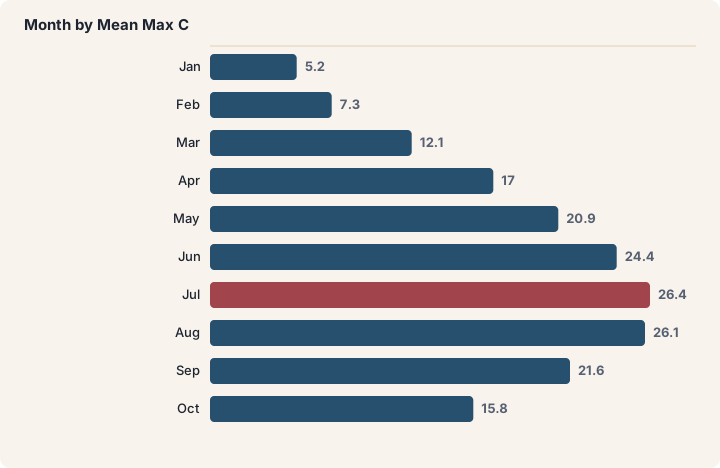
The best weather window for a Freiburg day trip runs from late spring through early autumn, matching the Strasbourg side of the border, where Meteo-France 1991-2020 normals give mean maximums of 20.9 C in May, 26.4 C in July and 21.6 C in September; winter brings a different reward, with Christmas atmosphere in the old town and the forest under snow, but December averages 5.9 C maximum and 0.8 C minimum on the French side. The climate on both banks is semi-continental: warm summers, cold winters, and rain spread across the year rather than concentrated in a wet season.
The table below is the verified normals for Strasbourg-Entzheim, the departure side of the trip. Freiburg's climate is similar, sitting on the same plain a short distance east, but check a German forecast before you go.
| Month | Mean Max C | Mean Min C | Rain Days (1 mm or more) |
|---|---|---|---|
| Jan | 5.2 | -0.2 | 9.1 |
| Feb | 7.3 | 0.0 | 8.3 |
| Mar | 12.1 | 2.6 | 8.5 |
| Apr | 17.0 | 5.7 | 8.6 |
| May | 20.9 | 10.1 | 10.8 |
| Jun | 24.4 | 13.4 | 10.2 |
| Jul | 26.4 | 14.9 | 10.4 |
| Aug | 26.1 | 14.5 | 9.5 |
| Sep | 21.6 | 10.7 | 8.0 |
| Oct | 15.8 | 7.2 | 9.6 |
| Nov | 9.4 | 3.3 | 9.2 |
| Dec | 5.9 | 0.8 | 10.2 |
Season by season, the choice shapes the day. Spring brings the river meadows back to life and thin crowds, but May carries the wettest month in the table at 10.8 rain days. Summer is the reliable walking season and the busiest, with the Schlossberg at its best and the lake at Titisee at its swim-and-ice-cream mood. Autumn is the forest's finest hour, with colour on the Black Forest slopes and 8.0 rain days in September, the driest figure in the table. Winter is the specialist option: cold, short in daylight, and centred on Christmas markets and snow-dusted forest, with the caveat that German market dates, like the French ones, are published late in the year on each city's own site.
Whenever you go, pack for the semi-continental swing. A rain layer belongs in the bag in every month of the table, and in winter the hills around Triberg hold cold that the riverside plain does not. The best time to visit Strasbourg guide applies the same normals to the French side if your trip spans more than this one day.
Where To Eat And What To Expect To Spend
Food is the easy part of a Freiburg day: the old town runs on bakers, sausage stalls and Black Forest specialities, with Schwarzwälder Kirschtorte, the chocolate, cherry and cream cake, as the signature dessert, and the whole day is spent in euros on both sides of the border, so there is no currency exchange and no card trickery to plan for. No individual prices are quoted here; treat food spending as a running tally rather than a budgeted figure, and check any café's card before ordering.
The German eating rhythm suits a day trip. Bakeries open early, which solves breakfast on arrival; sausage stalls and market-square food solve lunch without a table; and the old town's taverns serve the hearty Black Forest register, pork and dumplings and sauce, at dinner weight. Flammkuchen's German cousin appears on menus here too, a nod to how close the two kitchens sit across the river; the Alsatian original is covered in the tarte flambée guide. Beer is the local drink in a way it is not in wine-country Strasbourg, and the difference is one of the day's small pleasures.
| Meal | What To Look For | Notes For The Day |
|---|---|---|
| On arrival | Bakery window, coffee, pastry | Old town bakeries open early; grab before the minster square |
| Lunch | Sausage stall or market-square food | Standing lunch saves an hour of the day |
| Afternoon | Schwarzwälder Kirschtorte and coffee | The Black Forest cake, in its home region |
| Early evening | Tavern dinner, pork and dumplings | Hearty portions; check the card before sitting |
| Any time | Street snack from a stall | Cash is still welcomed in smaller German shops |
On money generally, the practical notes are few and useful. Both countries use the euro, so nothing changes in your pocket at the border. Germany remains more cash-friendly than France in small shops and stalls, so a small float of coins and notes is worth carrying for the market square and the falls gate at Triberg. And because the trip crosses Schengen lines, carry ID as a matter of course; checks are not routine, but the right to ask for documents exists on both sides.
Other Day Trips To Weigh Against Freiburg
Freiburg competes with a strong field: within the same cross-border orbit, Strasbourg also reaches Baden-Baden for spa elegance, the Black Forest proper for scenery, Basel for Swiss city life, and Colmar and the wine villages for the French side's half-timbered charm, so the choice usually comes down to whether the day wants Germany, Switzerland or Alsace. Freiburg is the pick when the answer is Germany with a forest attached.
| Destination | Country | What The Day Is For | Who It Suits |
|---|---|---|---|
| Freiburg | Germany | Old town, minster, Black Forest gateway | First-time visitors to the German side |
| Baden-Baden | Germany | Spa town elegance, parks, baths | Slow days, couples, culture over hiking |
| Black Forest villages | Germany | Lakes, waterfalls, clock towns | Drivers and guided-tour takers |
| Basel | Switzerland | Swiss old town, museums, the Rhine | City walkers; note the Swiss franc, not the euro |
| Colmar | France | Canals, wine-town architecture, museums | Wine and photography days, no border at all |
| Heidelberg | Germany | Castle, river, student romance | Longer days, castle-and-town classics |
Each of these has a full guide on this site: the Baden-Baden day trip, the Basel day trip, the Colmar day trip and the Heidelberg day trip cover their own logistics in depth. The Alsatian alternative, the Alsace wine route, is the mirror image of the Freiburg day: French villages, wine cellars, no border. If Freiburg's appeal is partly that it is German, the wine route is the day for when you want the opposite.
One further option blends the two countries: a Black Forest and Baden-Baden tour on the roster pairs the forest with the spa town in a single guided day, a good fit when the trip is longer than a weekend and the German side deserves two days rather than one.
A Sample Day Plan And A Packing Note
A workable independent day runs: arrive mid-morning, walk the Bächle lanes to the Münsterplatz, see the minster, lunch from a stall in the square, climb the Schlossberg in the afternoon light, cake and coffee on the way down, and a river-meadow stroll before the return train; the tour version replaces the navigation with a guide and inserts Titisee and Triberg around the Freiburg stop. The plan below is deliberately loose, because the joy of the city is the walking between the anchors.
| Block | Focus | Why It Sits There |
|---|---|---|
| Mid-morning | Arrival and first lanes | Bakeries are open, the square is waking |
| Late morning | Münster and Münsterplatz | The centrepiece before lunch queues |
| Midday | Market-square lunch, standing | Saves the day's biggest time sink |
| Afternoon | Schlossberg climb and viewpoint | West light across the rooftops |
| Late afternoon | Cake, coffee, Augustinerplatz | The student quarter at its liveliest |
| Early evening | River meadows, then return | A calm end before the border crossing |
Packing is short: comfortable shoes for cobbles and the hill path, a rain layer in any month, ID for the Schengen crossing, a little cash for stalls and small German shops, and nothing heavier. If the day is the tour version, the list shrinks further to shoes, layer and ID, because the driving and the timing are handled.
For travellers building a longer stay around Strasbourg, this site, the Strasbourg Travel Guide, carries full itineraries from one day to three, plus deep pages on every sight and quarter on the French side. Freiburg is the German chapter of that story, and it reads well in a single day.
Common Questions About A Freiburg Day Trip From Strasbourg
Is Freiburg easy to reach from Strasbourg?
Yes, in the ways that matter: the two cities sit across the Rhine from each other inside the Schengen area, both use the euro, and the crossing is a bridge rather than a checkpoint for most travellers. Regional trains run the route via Kehl, and guided day trips handle the whole journey. Check the rail operators' own planners for times and fares on your travel date.
Do I need my passport to cross into Germany?
Carry ID as a matter of course. France and Germany are both in the Schengen area, so routine border checks are not part of the journey, but the authorities on both sides retain the right to ask for documents, and a day trip is not the place to test that.
Can I use euros in Freiburg?
Yes. Germany uses the euro, so the money in your pocket from Strasbourg works unchanged across the river. Smaller German shops and market stalls remain friendlier to cash than their French counterparts, so keep a few notes and coins for stalls and gate tickets.
What is the single best thing to see in Freiburg in one day?
The Münster and the square around it. The red sandstone minster with its single tall tower anchors the old town, the gabled square around it holds the old merchants' hall, and every other stop in the city, the Bächle lanes, the Schlossberg viewpoint, the Augustinerplatz steps, sits within a walk of it.
Is a guided tour better than going independently?
It depends on the ambition of the day. For Freiburg alone, independence is simple and the centre is walkable. For a day that adds Titisee and Triberg in the Black Forest, a guided tour is the format that fits all three stops into one crossing, with the driving, parking and forest roads handled.
What should I check before setting off?
Three things: the return train time or tour pickup if you are going independently, the weather on both sides of the Rhine, since the climate is semi-continental with rain in every month, and the current dates and hours for anything time-specific, such as German Christmas markets in winter, which each city publishes on its own site late in the year.