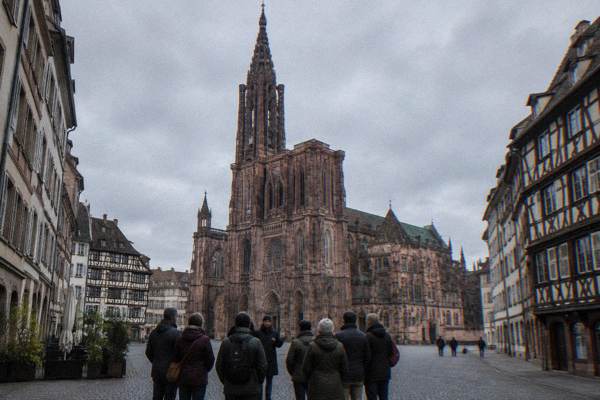
Strasbourg Tours
Strasbourg, in Alsace in north-eastern France, packs a UNESCO-listed island core, a working European quarter and a wine region into one compact city, and the tour options reflect that spread.
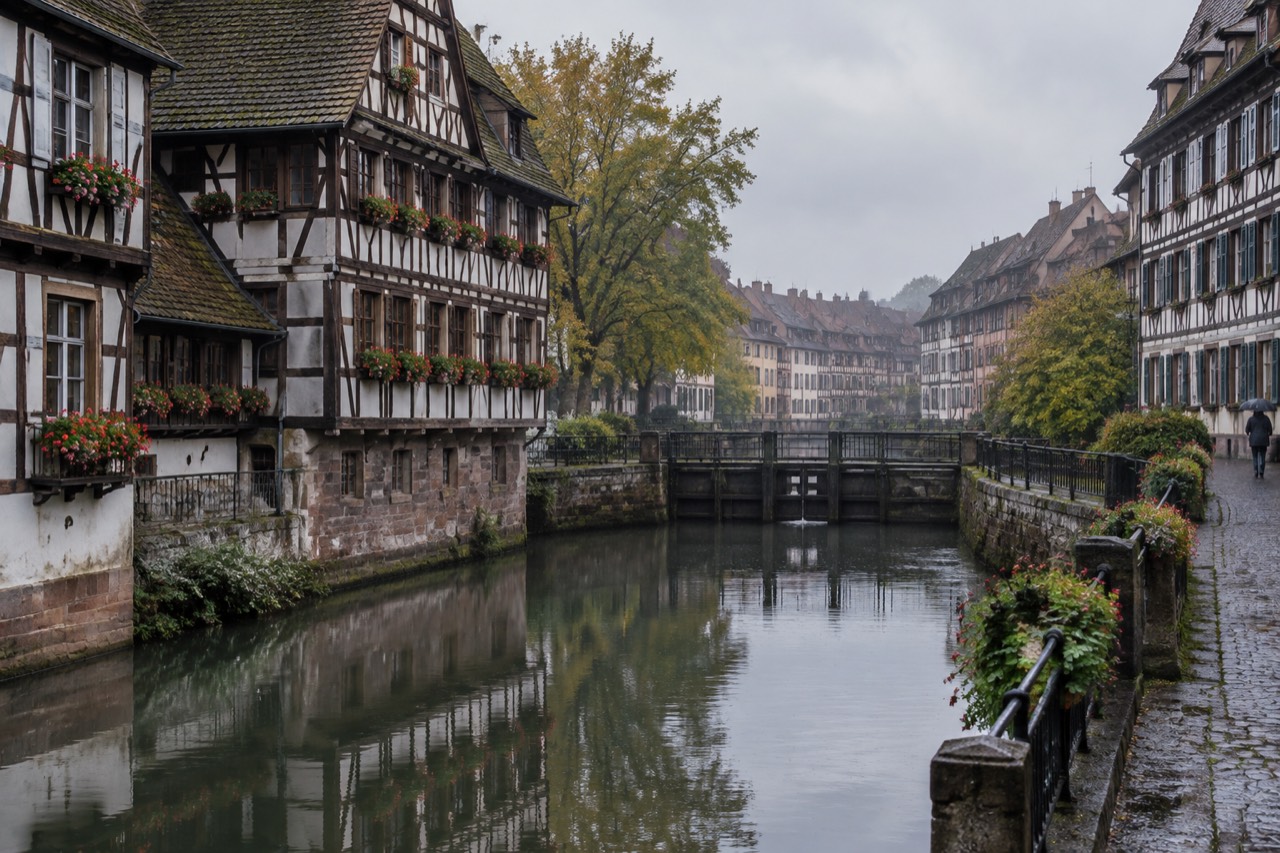
Short answer
Strasbourg tours fall into six families: guided walks of the Grande Île, food and drink tastings, river boat circuits, bike and Segway rides, European-institution visits, and full-day trips into the Alsace wine country and the Black Forest. Walking tours start from around $23 per person, day trips from around $135, and the city's own sightseeing tickets (cathedral platform 10 EUR, Batorama boat 12.50-16.20 EUR) can be bought directly.
Strasbourg, the prefecture of the Bas-Rhin in Alsace, sits in north-eastern France on the River Ill, a short distance from the Rhine and the German border. Its historic core, the Grande Île, is a UNESCO World Heritage property of half-timbered lanes and a single-spired cathedral, and around it spreads a city that also hosts the European Parliament, a student-heavy Krutenau quarter and a network of canals. That mix is why the tour offering here is unusually broad for a city of 293,771 people (INSEE 2023): you can spend a morning on a medieval lane, an afternoon tasting Alsatian wine, and the next day crossing into Germany. This guide from Strasbourg Travel Guide sets out what you can actually book, what the city's own sightseeing tickets cost, and how to match a tour to the time you have.
What Kinds Of Strasbourg Tours Can You Book?
Strasbourg tours come in six practical families: guided walking tours of the historic centre, food and drink experiences with tastings, boat circuits on the Ill, bike and Segway tours, visits tied to the European institutions, and day trips into the surrounding Alsace and Black Forest. Within each family the format varies from brief orientation walks to small-group excursions that fill most of the day, so the first decision is not which company but which shape of day you want.
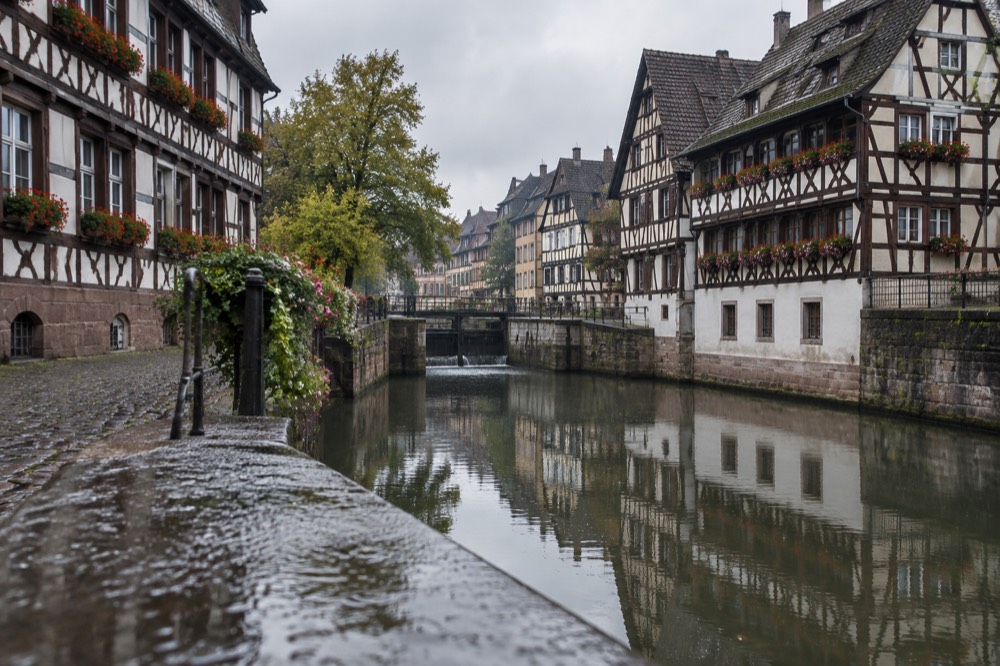
The walking-tour family is the deepest pool. Some walks stick to the Grande Île and Petite France; others push into the Neustadt, the German-built extension of the historic centre that also belongs to the World Heritage property, or into the Krutenau, where the street art lives. Food tours range from short tasting walks to longer circuits that stop at winstubs, the traditional Alsatian taverns; the dishes themselves are covered in our guide to Strasbourg food.
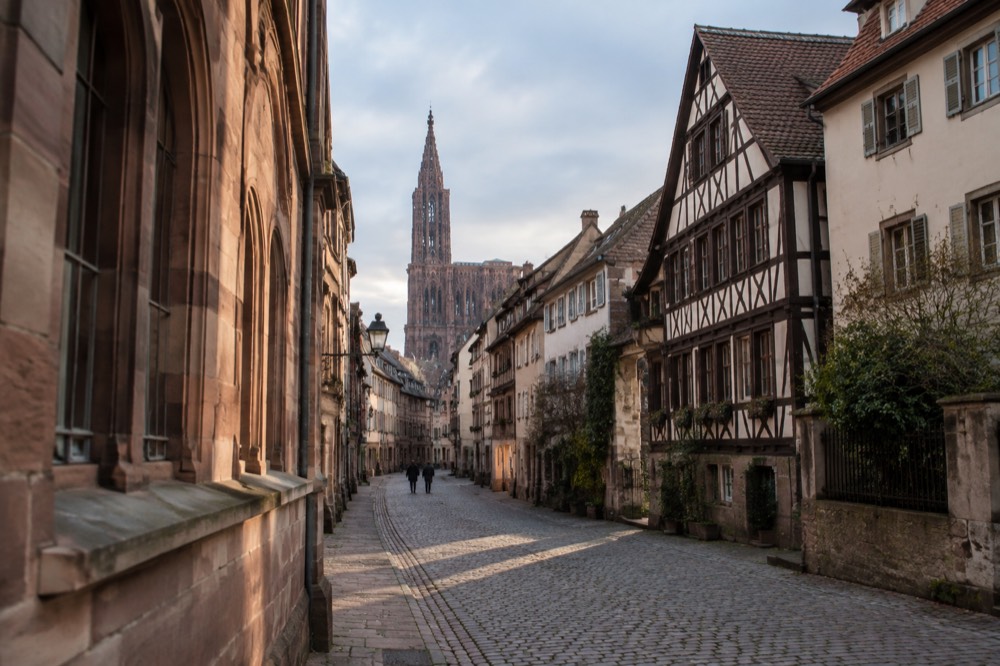
Boat tours run on the Ill rather than the Rhine, looping past the Ponts Couverts, the Barrage Vauban and the European quarter. The city's main operator, Batorama, sells its own tickets directly at 16.20 EUR full fare for the long tour and 12.50 EUR for the short tour, with reduced fares of 8.90 EUR and 7.20 EUR; the Red Tour lasts 1 hour 10 minutes and the Blue Tour 45 minutes. Those figures come from the operator's own ticket page, and a private boat with a skipper is a separate product booked through tour platforms.
Day trips split along the border: Alsatian wine villages and castles to the south-west, the Black Forest and Baden-Baden to the north-east. Both directions reward planning, and the choice between them is largely a choice between French wine culture and German forest towns.
Which Walking Tours Of Strasbourg Are Worth Booking?
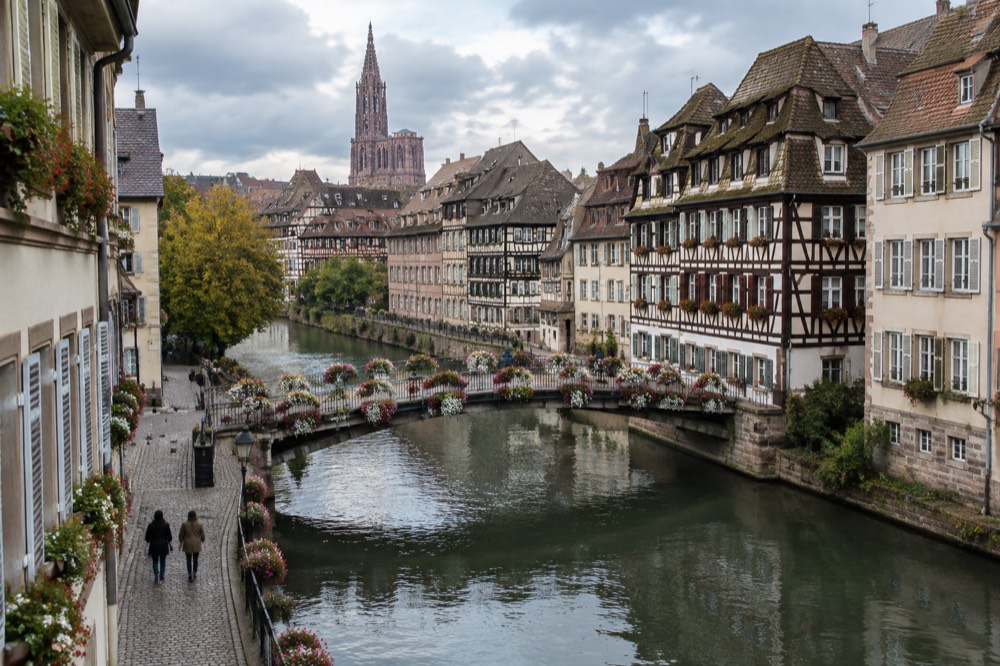
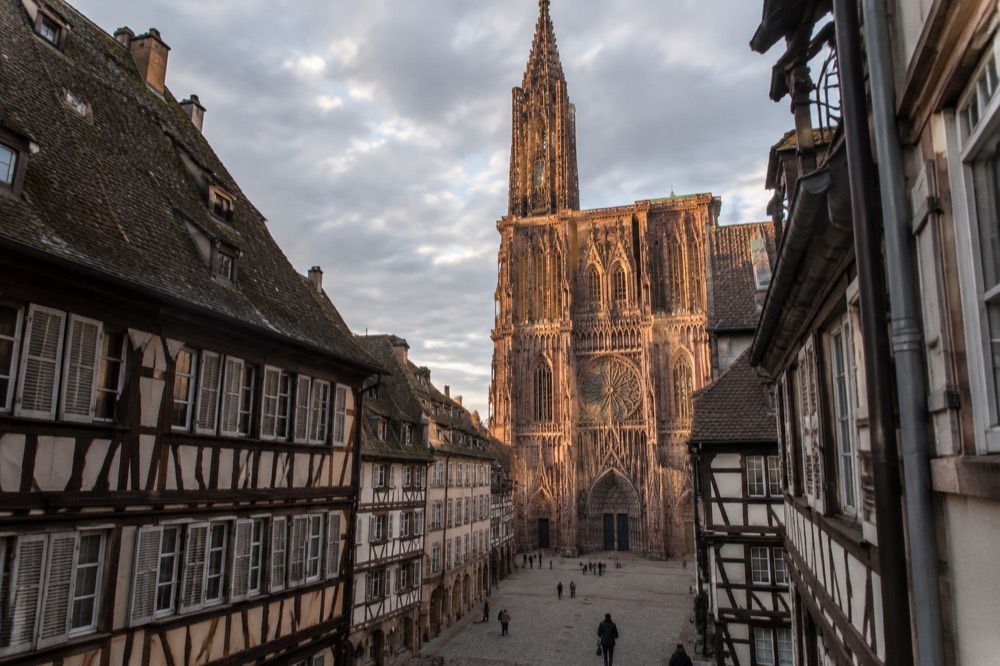
A two-hour guided walk of the Grande Île is the single highest-value tour format in Strasbourg, because the historic centre is compact, pedestrianised and dense with detail a guide can unlock: the astronomical clock, the Maison Kammerzell, the covered bridges and the layout of the canals. Shorter walks suit a stopover, longer 2.5-hour small-group walks suit travellers who want stories and hidden corners rather than a checklist. The street-art walk is the one that leaves the tourist core entirely.
The standard walks all cover similar ground: the cathedral and its Place du Château, Place Kléber, Place Gutenberg, the Petite France river quarter and the Ponts Couverts. What differs is group size, pace and how far the guide goes beyond the postcard streets. The hidden-stories and secrets walks lean on anecdote and side alleys; the historian-led options lean on the city's complicated French-German past, a story told in more depth in our is Strasbourg worth visiting guide.
The street-art walk is the outlier. It routes through the Krutenau and the gare district, where murals and paste-ups change with each student intake, and it is the related tour for this page: Check availability on the operator's live listing if contemporary work appeals more than another cathedral square. For the no-cost alternative, read our free things to do in Strasbourg guide.
One practical note on timing: the cathedral nave is open Monday to Saturday 08:30-11:15 and 12:45-17:45, and on Sunday afternoons from 14:00, so a morning walk that promises the interior needs to start after the midday closure or before 11:15. The astronomical clock show runs at 12:30 sharp daily, and tickets are sold on the day only, at the cathedral stalls between 10:00 and 11:00 or at the Saint-Michel entrance from 11:30. A guide cannot reserve those for you.
| Walk format | What it covers | Who it suits | What to check before booking |
|---|---|---|---|
| One-hour orientation walk | Cathedral exterior, Place Kléber, one canal view | Cruise passengers, short stopovers | Start point and end point |
| Two-hour classic walk | Grande Île loop including Petite France | First-time visitors | Group size and language |
| 2.5-hour small-group walk | Classic loop plus hidden lanes and stories | Travellers who want depth | Whether cathedral interior is included |
| Street-art walk | Krutenau and gare district murals | Repeat visitors, art lovers | Weather, most walls are outdoors |
| Free pay-what-you-want walk | Core highlights at a brisk pace | Budget travellers | Meeting point, tip in cash |
How Do Food And Drink Tours In Strasbourg Work?
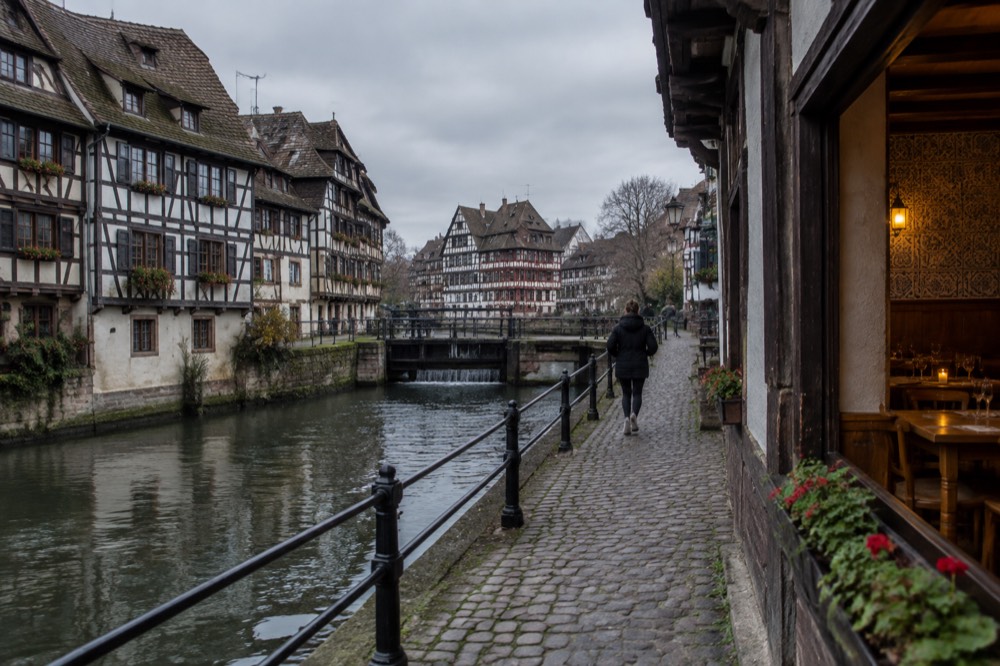
Food tours in Strasbourg pair a guided walk with stops at winstubs, bakeries and markets, typically including several tastings of tarte flambée, kougelhopf, cheese and Alsatian wine; drink-focused tours concentrate on wine cellars or craft breweries, sometimes before opening hours. Tasting walks run longer than sightseeing walks because each stop takes time, and dietary needs should be flagged at booking rather than on the day.
The culinary side of the city is the reason many travellers book a tour at all: Alsatian food is specific, regional and hard to order confidently without a guide. The dishes to know are tarte flambée, the thin flatbread topped with cream, bacon and onion; choucroute, the Alsatian take on sauerkraut with cured meats; and kougelhopf, the ring-shaped brioche that doubles as dessert and breakfast. A tasting walk that stops at three or four of these in one afternoon does the work of an evening of restaurant guesswork.
Wine-focused options range from a seated tasting of Alsace varietals to vineyard trips out on the wine route. The short in-city tasting suits a first evening; the vineyard day suits a second or third day. Beer tours are a smaller but real family, and one unusual option runs before the brewery opens to the public, which means a fixed early start.
Between the two, a food tour and a walking tour cover different ground: the food tour moves slowly and eats well, the walking tour moves quickly and sees more. Travellers on a two-day stay usually fit one of each, and a sensible itinerary slots one into each afternoon.
| Experience type | What is typically tasted | Time of day it runs | Who it suits |
|---|---|---|---|
| Winstub food walk | Tarte flambée, cured pork, cheese, dessert | Late morning or evening | First-time visitors |
| Market-based walk | Bread, cheese, seasonal produce | Morning | Travellers who like markets |
| Seated wine tasting | Alsace varietals, sometimes crémant | Afternoon or evening | Wine-curious beginners |
| Brewery visit | Local craft beers, sometimes with a snack | Afternoon, or before opening hours | Beer drinkers, small groups |
Are Free Walking Tours In Strasbourg Really Free?
Yes, in the sense that there is no fixed charge: Strasbourg has several English-language pay-what-you-want walks that run through GuruWalk, and you tip the guide in cash at the end according to what you felt the walk was worth. There is no published price, no fixed duration and no guaranteed departure time on those listings, so treat them as informal and check the listing for the meeting point and schedule rather than assuming a timetable.
The free walks cover the same core sights as the paid ones: the cathedral, Place Kléber, Petite France and the Ponts Couverts. They are a genuine option for budget travellers, and they pair well with the no-cost sights listed in our free things to do in Strasbourg guide and the money-saving tactics in Strasbourg on a budget. The trade-off is group size, which can run large on a busy summer afternoon, and pace, which is set for a mixed crowd.
Want that day one orientation without a fixed price? Book a free walking tour here.
A reasonable pattern is to take a free walk on day one for orientation, then spend money on a specialist tour, food experience or day trip on day two, where a paid guide adds something the free format cannot. The cathedral itself, incidentally, costs nothing to enter during nave hours, though the tower platform and the clock show are ticketed, as set out below.
Which Strasbourg Tours Go Beyond The City Centre?
Beyond the historic core, Strasbourg tours branch in four directions: the European quarter and its institutions, the Neustadt's grand boulevards, bike and Segway circuits that cover both banks of the Ill, and full-day excursions into the Alsace wine villages, Haut-Koenigsbourg castle, Colmar or the Black Forest. The bike and Segway formats exist precisely because the city is flat and the interesting ground is spread out.
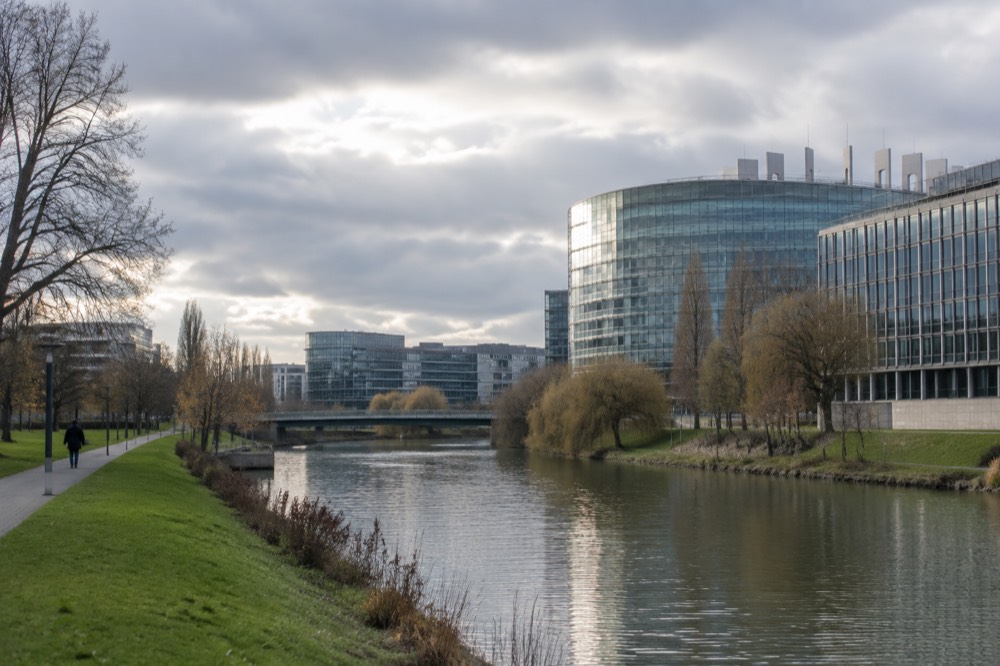
The European quarter is unique to Strasbourg: no other French city can walk you past the European Parliament, the Council of Europe and the European Court of Human Rights in one loop. The Parlamentarium visitor centre is open Monday to Friday 09:00-18:00 and Saturday mornings and afternoons outside plenary weeks, with an airport-style security check at the door, and plenary-week hours differ, so check the official page before you go.
Bike tours suit the city's geography: the centre is flat, the cycle network along the Ill and through the Neustadt is extensive, and a guided ride reaches the Jardin des Deux Rives, where a footbridge crosses to Kehl in Germany. Segway tours cover similar ground at a higher price per person and need a short training session first. Both formats run in the warmer months and shrink or pause in deep winter.
Day trips are the biggest single spend and the biggest single time commitment. The classic Alsace circuit strings together wine villages such as Riquewihr, Eguisheim or Kaysersberg, sometimes with Haut-Koenigsbourg castle and a cellar tasting; the German option crosses to Freiburg, Titisee or Triberg in the Black Forest, or to Baden-Baden. What each place is actually for, and how to choose between them, is a question of whether your trip leans toward wine villages or forest towns.
Check times on the operator's listing or the official rail pages when planning connections.
How Much Do Strasbourg Sightseeing Tickets Cost?
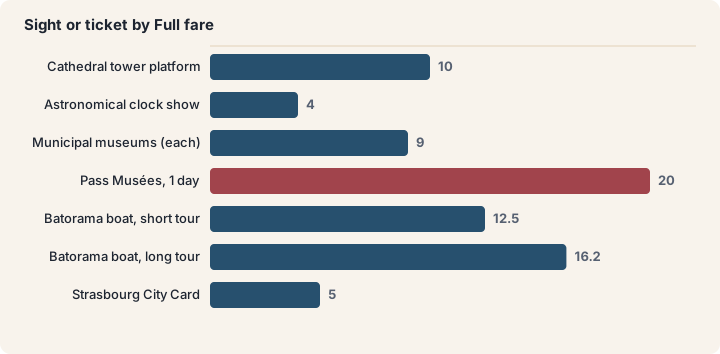
The city's own sightseeing tickets are cheap by big-city standards: the cathedral tower platform costs 10 EUR full fare or 6 EUR reduced, the astronomical clock show 4 EUR, municipal museums 9 EUR full or 5 EUR reduced, the Batorama boat 12.50-16.20 EUR, and the one-day Pass Musées 20 EUR. All municipal museums are free on the first Sunday of every month, and the Strasbourg City Card at 5 EUR is a discount card, not an all-inclusive pass.
Those figures come from the official pages of each sight, and they are the ones to compare against a bundled tour: a guided walk that includes the tower saves you queueing but not the ticket, which is sold separately at the platform entrance. The platform sits at 66 m up the single spire, reached by stairs, and its hours shift with the seasons: 09:30-13:00 and 13:30-20:00 from April to September, 10:00-13:00 and 13:30-18:00 from October to March, with the last ascent earlier than the closing time.
| Sight or ticket | Full fare | Reduced | Notes |
|---|---|---|---|
| Cathedral tower platform | 10 EUR | 6 EUR (6-18, students) | Under 6 free; closed 1 Jan, 1 May, 25 Dec |
| Astronomical clock show | 4 EUR | 3 EUR groups and students to 25, 2 EUR children 6-17 | Day-of purchase only, show at 12:30 |
| Municipal museums (each) | 9 EUR | 5 EUR | Musée Alsacien closed until 2028 |
| Pass Musées, 1 day | 20 EUR | resident and annual rates exist | Covers the municipal museums |
| Batorama boat, short tour | 12.50 EUR | 7.20 EUR | Blue Tour, 45 minutes |
| Batorama boat, long tour | 16.20 EUR | 8.90 EUR | Red Tour, 1 hour 10 minutes |
| Strasbourg City Card | 5 EUR adult, 3.50 EUR child | 7 days | Discount card only, not a pass |
The City Card deserves its own sentence because it is widely misunderstood: it costs 5 EUR for adults and 3.50 EUR for children aged 3 to 17, lasts seven days, and gives reductions at museums, the boat, the cathedral platform and the clock rather than included entry. Whether it pays back depends on how many of those you visit; the arithmetic is worked through in our Strasbourg City Card guide.
When Is The Best Season For Strasbourg Tours?
The best season for outdoor tours in Strasbourg is May to September, when the Meteo-France 1991-2020 normals show mean daily maxima of 20.9 C to 26.4 C, though May through July each carry 10 or more days with 1 mm of rain or more. December is cold, with a mean maximum of 5.9 C and a mean minimum of 0.8 C, but it is the month the Christmas market fills the city, and indoor formats, food tours and market walks carry the season.
The climate here is semi-continental, not Mediterranean: hot summers, cold winters and rain distributed across every month of the year, 635.7 mm annually over 112.3 rain days on average. That means a walking tour in July can be genuinely hot on unshaded Place Kléber, and a December walk can end in the dark by late afternoon, which is a real consideration for photography.
| Month | Mean max C | Mean min C | Rain mm | Rain days >= 1 mm |
|---|---|---|---|---|
| March | 12.1 | 2.6 | 38.6 | 8.5 |
| May | 20.9 | 10.1 | 77.2 | 10.8 |
| July | 26.4 | 14.9 | 71.9 | 10.4 |
| September | 21.6 | 10.7 | 54.6 | 8.0 |
| December | 5.9 | 0.8 | 45.2 | 10.2 |
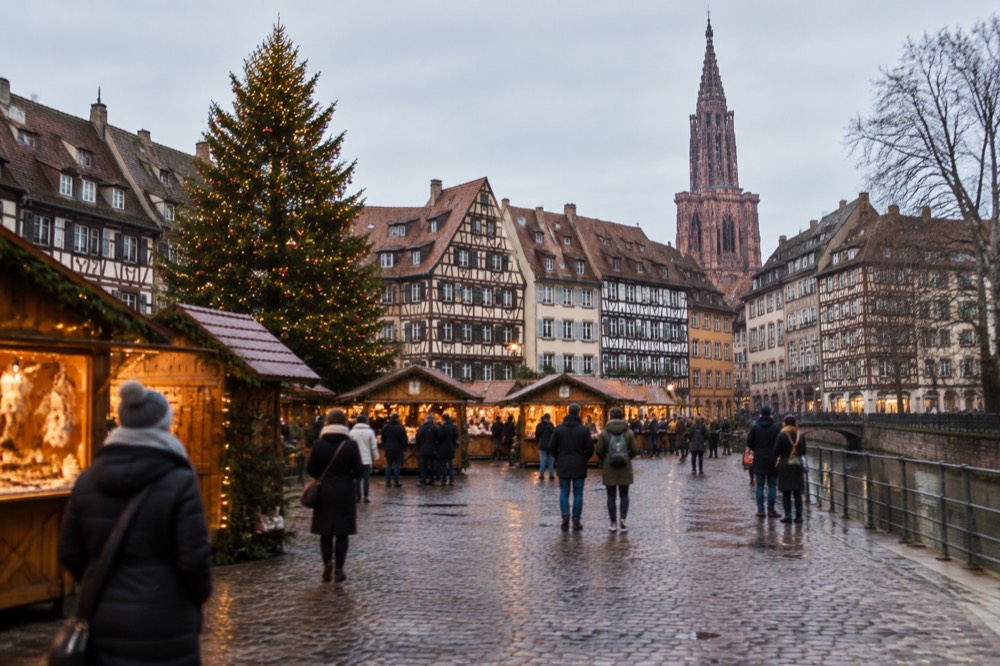
Seasonal formats follow the calendar. Boat tours and Segway tours run at full frequency in the warm months; the Christmas period, late November to 24 December, brings its own market-focused offer, with the 2025 edition having run from 26 November to 24 December and drawn 3.05 million visitors. The 2026 dates are not yet published, so confirm them on the city's Christmas site, and read our Strasbourg Christmas market and Strasbourg in winter guides before committing to a December trip.
How Do You Get To A Strasbourg Tour Meeting Point?
Strasbourg's tour meeting points sit inside the pedestrianised Grande Île or at its edge near the station, and the city's tram and bus network run by CTS reaches them for 1.90 EUR a single ticket bought in the app or by contactless, 2.50 EUR bought on board the bus, or 4.60 EUR for a 24-hour Solo pass. From the airport, a train shuttle runs to the station in 8 minutes, with a combined train-plus-city ticket at 4.60 EUR.
Those transport figures matter to tour planning more than they first appear: a day trip departs early, usually from near the Gare Centrale, so staying within a short tram ride of the station saves a stressful morning. Where to base yourself is covered in where to stay in Strasbourg.
| Ticket | Price | Validity | Where to buy |
|---|---|---|---|
| Single | 1.90 EUR | One journey with changes | Badgéo card, CTS app, contactless |
| Single on board | 2.50 EUR | One journey with changes | From the bus driver |
| 24h Solo | 4.60 EUR | 24 hours, one traveller | CTS app, sales points |
| 24h Trio | 10.20 EUR | 24 hours, two or three travellers | CTS app, sales points |
| Airport combined ticket | 4.60 EUR | Train shuttle plus 24h city travel | Airport station, rail channels |
One detail worth knowing: the airport shuttle runs up to five trains an hour and takes 8 minutes to Strasbourg station, so a landing even two hours before a walking tour's start time is workable. The same cannot be said for a day trip, which leaves on a coach with no waiting.
How To Choose Between A Guided Tour And Exploring Alone
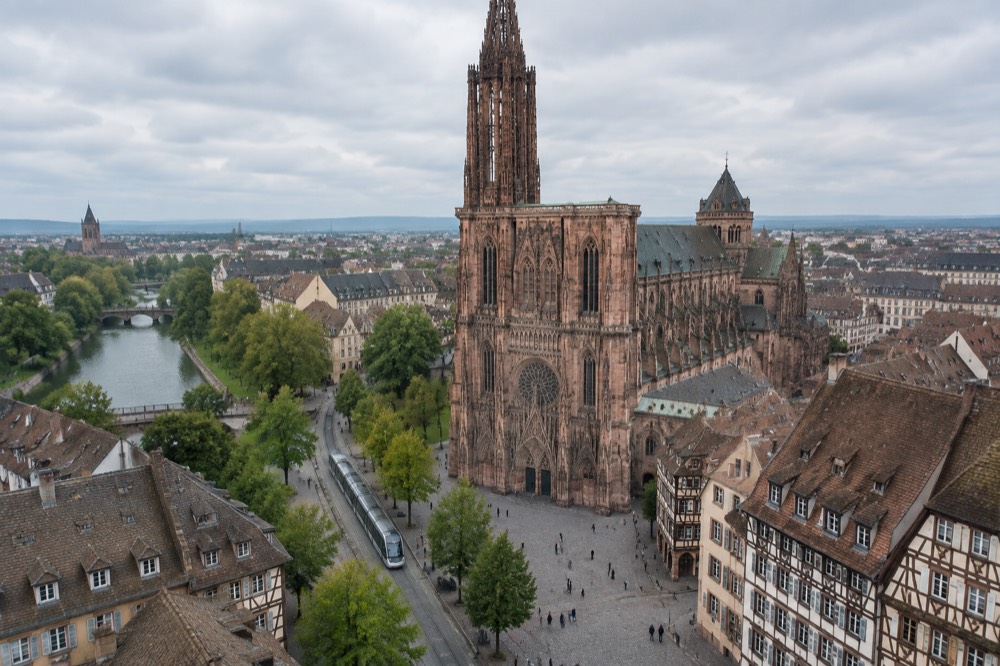
Choose a guided tour when the value is in interpretation or access: the cathedral's layers, the European institutions, a wine cellar, a language barrier at a winstub. Explore alone when the pleasure is simply wandering, because the Grande Île is compact, pedestrian-friendly and generous to unguided visitors. A sensible split for a two- or three-day visit is one paid walk or food tour, one self-guided day, and one day trip if the stay allows.
The honest case for going alone is strong. The historic core is walkable, the cathedral nave is open daily for visits during the hours above, the public squares cost nothing to stroll, and the museums can be entered individually at 9 EUR or on the 20 EUR one-day pass, free on the first Sunday of each month. A single well-planned day can cover the cathedral, Petite France and a boat circuit without any guide at all.
The honest case for a guide is equally strong in specific places. The astronomical clock makes little sense unexplained; the Neustadt's architecture rewards context; the Krutenau's walls change too fast for a printed guide; and an Alsatian wine list is genuinely hard to navigate without help. That is where the paid formats earn their price, and where the free walks earn their tips.
The final split is time. A traveller with one full day should walk the core alone and take the boat, because both are cheap and quick. A traveller with three days can add a food tour and a day trip, and the sequencing falls out naturally from the first two days. Whatever the choice, book the timed products, the day trips, ahead rather than on arrival, and check each operator's cancellation terms on the live listing before paying.
Common Questions About Strasbourg Tours
How far in advance should I book a Strasbourg tour?
For walking tours in summer and any tour during the Christmas market period, book several days ahead, because December fills the city, 3.05 million people came to the 2025 edition. In shoulder season a day or two ahead is usually enough for walks, though day trips with small groups can sell out earlier. The clock show is the exception in the other direction: tickets are sold on the day only, from 10:00 at the cathedral stalls or from 11:30 at the Saint-Michel entrance.
Can I visit Strasbourg Cathedral on a guided tour?
Yes. The nave is open to visitors Monday to Saturday 08:30-11:15 and 12:45-17:45, and Sunday 14:00-17:15, and several guided walks include the interior in their route. The tower platform at 66 m is ticketed separately at 10 EUR full fare or 6 EUR reduced, and a dedicated cathedral guided tour exists on the roster for travellers who want the building rather than the city.
Are the free walking tours in Strasbourg a scam?
No. The English-language free walks run through GuruWalk on a pay-what-you-want basis: there is no charge to join, and you tip the guide at the end. The listings carry no fixed price, duration or departure time, so read the listing for the meeting point and schedule, and bring cash for the tip.
Which Strasbourg tour is best for a short stop?
For a half-day stop, a one-hour or two-hour walking tour of the Grande Île plus the short Batorama boat circuit at 12.50 EUR full fare covers the core sights efficiently. For a full day, add the cathedral platform and a food walk, or swap the food walk for the long boat tour at 16.20 EUR.
Do Strasbourg day trips include wine tasting?
Several do. Wine-route day trips typically combine one or more villages such as Riquewihr, Eguisheim or Kaysersberg with a cellar tasting, and some include Haut-Koenigsbourg castle. Check the inclusions on the operator's live listing before booking, since the stops vary between departures.
Is a boat tour or a walking tour better in Strasbourg?
They do different jobs. The boat, from 12.50 EUR for the 45-minute Blue Tour, shows the city from the water, including the Ponts Couverts and the European quarter on the long circuit. A walking tour gets you inside the lanes, the cathedral and the squares. With a full day, the two fit together, since the boat departs from the quay near the historic centre.