Free Things To Do In Strasbourg
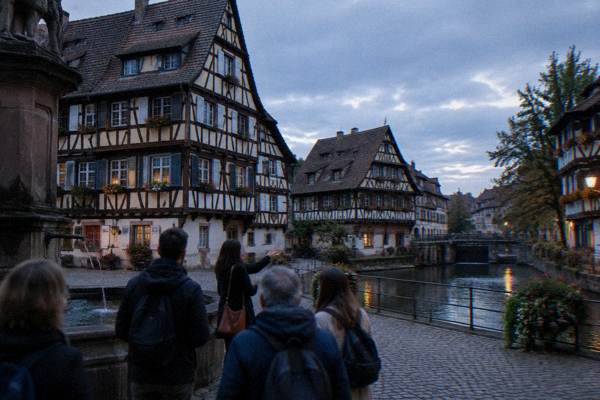
Strasbourg gives away its core appeal for nothing: a UNESCO-listed river island of public streets, canals and squares that no turnstile guards.
Short answer
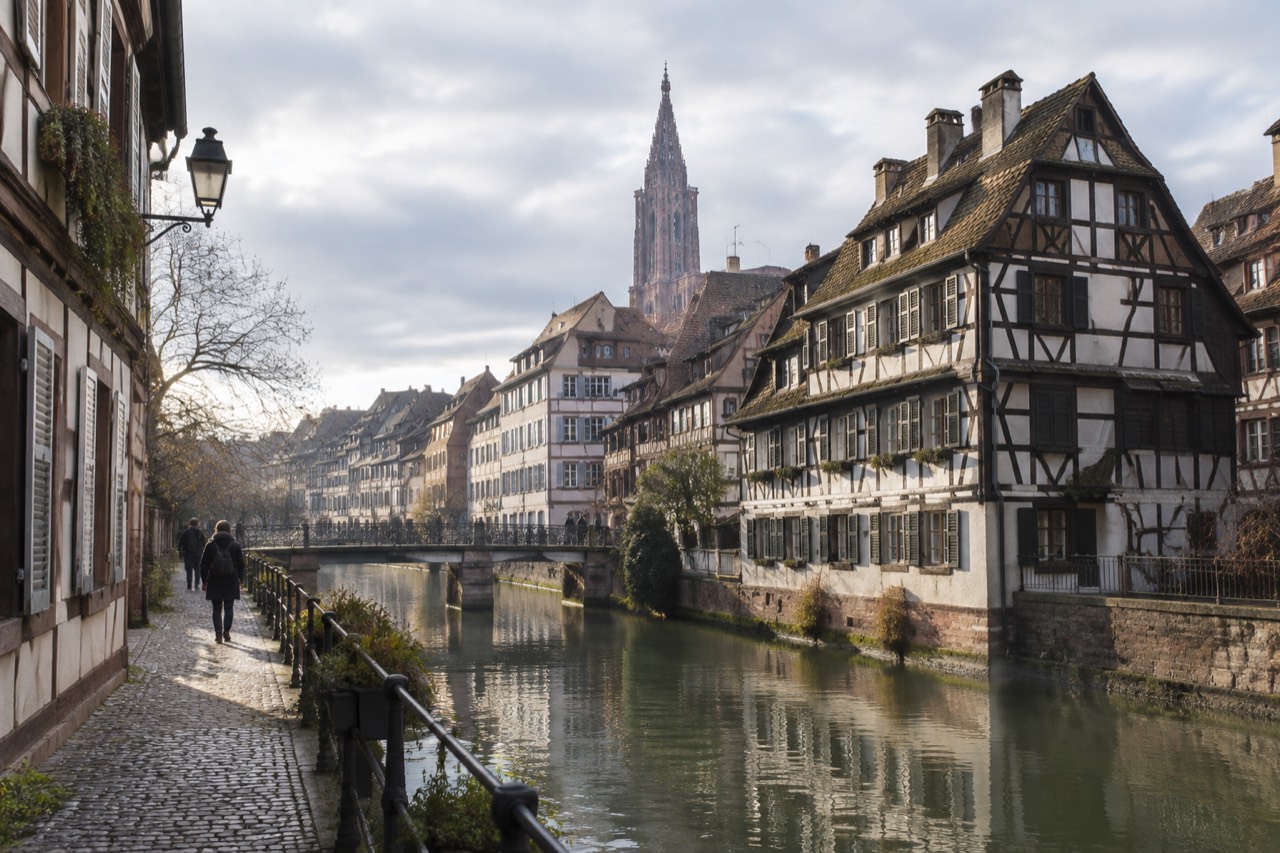
Strolling costs nothing: the Grande Île, Petite France's canals, Place Kléber and the riverside quays are public ground. The cathedral nave keeps daily visiting hours, the platform at 66 m is 10 EUR and the 12:30 clock show 4 EUR. Municipal museums are free the first Sunday of each month, otherwise 9 EUR.
Strasbourg, the capital of Alsace in north-eastern France, sits on the River Ill a short distance upstream of the Rhine, which forms the border with Germany here. The city's core appeal is public property. The Grande Île, the river-island old town listed with the Neustadt on the UNESCO World Heritage list as "Strasbourg, Grande-Île and Neustadt", is a streetscape of half-timbered lanes, canals and open squares that no turnstile guards, and a day built around it can run from morning to night at little or no cost. This guide sets out what genuinely costs nothing, where the only honest answer is to check the official page, and how the paid extras, from the cathedral platform to guided walks, fit around the free core.
What Can You Do In Strasbourg Without Spending Money?
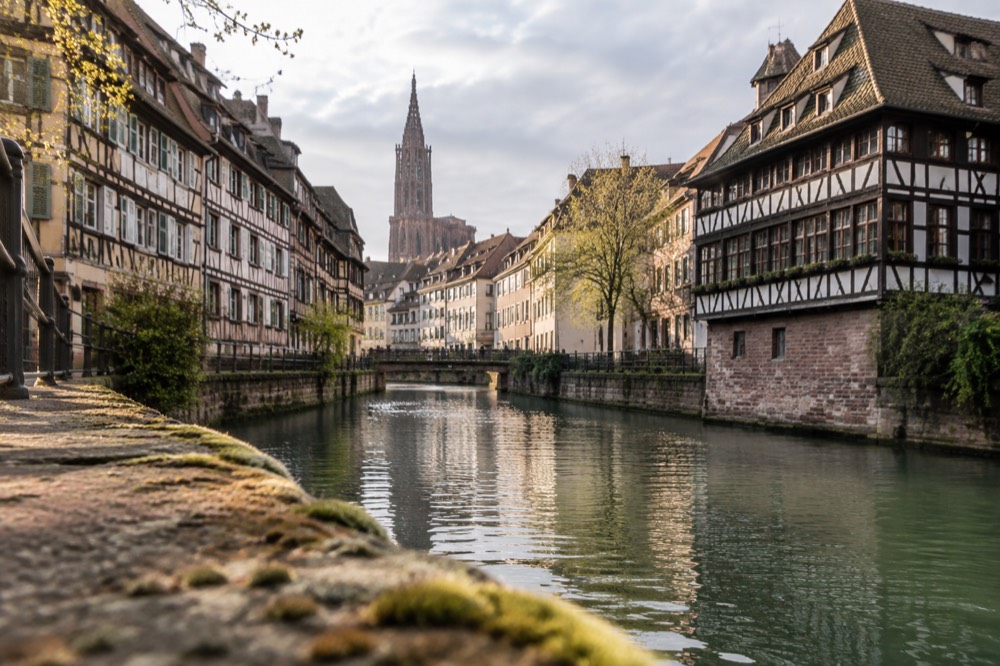
A remarkable share of the city is public ground. The Grande Île, the UNESCO-listed old town, the canals of Petite France, Place Kléber, Place Gutenberg and the quays along the Ill are open streets you can wander without a ticket. The municipal museums drop their 9 EUR entry on the first Sunday of every month, and English-language, pay-what-you-want walking tours run through the historic centre on a tip basis.
The short version is that the old city itself is the free attraction. Place Kléber, the city's central square, and Place Gutenberg, a few lanes east, are simply open public space, and the lanes between them carry the half-timbered fronts that people cross borders to photograph. The Ponts Couverts, the old covered bridges at the mouth of the Ill, stand in public view day and night, and the riverside walk that links them to the quays is one of the pleasantest free circuits in eastern France.
What is genuinely free and what merely looks free are worth separating early, because Strasbourg mixes the two deliberately. The table below is the honest ledger for a first visit: what costs nothing, what carries a small charge, and what to check before you go. Prices for the paid cathedral extras are official figures from the cathedral's own pages; museum figures come from the municipal museums' tariff page.
| Activity | Cost | What to know |
|---|---|---|
| Grande Île streets, canals and squares | Nothing | Public ground, open at all hours |
| Petite France quarter on foot | Nothing | Public lanes and canal banks |
| Cathedral nave visiting hours | Check the entry page | Hours listed below; charges answered on our cathedral entry page |
| Cathedral platform at 66 m | 10 EUR full, 6 EUR reduced | Under 6 free; seasonal hours |
| Astronomical clock show at 12:30 | 4 EUR adult | Day-of purchase only, no reservations |
| Municipal museums | 9 EUR full, 5 EUR reduced | Free the first Sunday of every month |
| Pay-what-you-want English walks | Tip basis | Booked through GuruWalk |
The pattern that emerges is simple: the outdoor city is the gift, and the indoor city charges modestly. A traveller who spends a full day on the streets, the riverbanks and the squares spends nothing at all beyond lunch, and even the paid extras, the platform, the clock show and a museum or two, add up to less than a typical restaurant main course in the old town. For a wider budget picture, our Strasbourg on a budget guide breaks down the full cost of a visit, and the Strasbourg hidden gems guide lists quieter corners that cost the same nothing.
Which Squares And Canals Cost Nothing To Explore?
The entire Grande Île is free to walk: Petite France's canal-side lanes, Place Kléber, Place Gutenberg and the Ponts Couverts are all public space. The Barrage Vauban terrace keeps seasonal hours, 08:00-19:00 in September and October and 08:30-16:00 from November to February, and its admission price is not published on the city's page, so check the official listing before you climb.
Start with Petite France, the former tanners' and millers' quarter at the western tip of the island, where the Ill splits into channels and the half-timbered houses lean over the water. Nothing here is ticketed. The lanes, the canal banks and the views from the bridges are public, and the quarter is compact enough that an unhurried loop takes a relaxed morning. The Petite France guide maps the best angles, and a guided option, the Petite France walk with a local guide, is there if you want the stories attached to the walls.
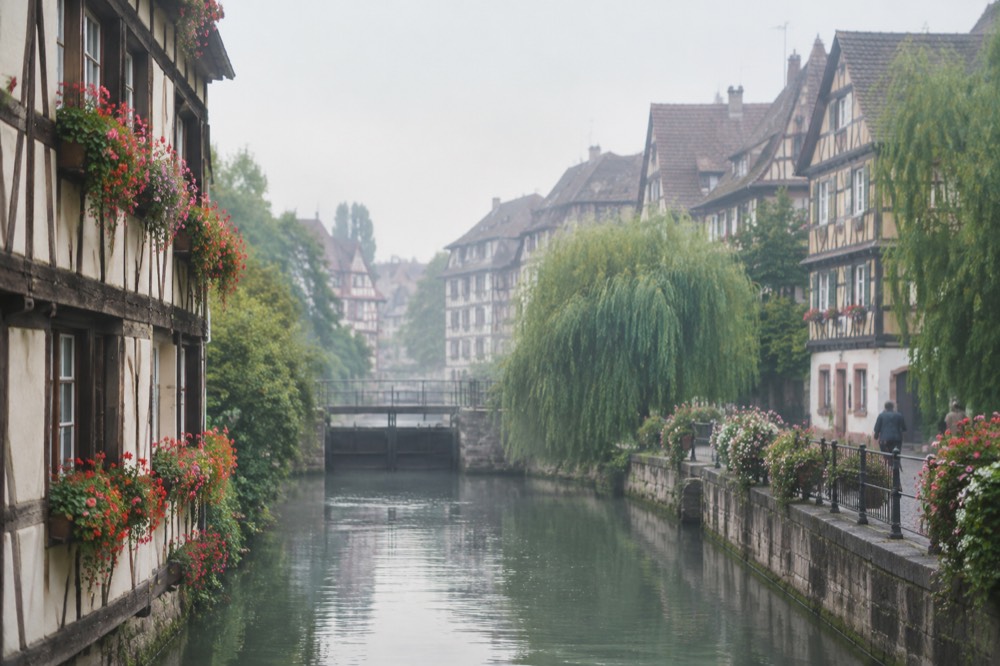
From Petite France, walk east along the river to the Ponts Couverts, the medieval covered bridges that once closed the city to attack, and the Barrage Vauban just upstream, a defensive weir whose rooftop terrace is one of the classic panoramas over the old town. The terrace's hours are seasonal and published by the city; the price of admission is not stated on that page, so treat the view as check-first rather than assume-free. The panorama itself, taking in the cathedral spire over a sea of roofs, is the single most rewarding free-ish moment on the island.
East again, the squares take over. Place Kléber is the city's main square, a broad open space framed by shops and cafés, and Place Gutenberg, a few minutes away, is quieter and framed by half-timbered fronts. Both are public, both are at their best in the early morning before the crowds build, and both sit inside the UNESCO-listed island, so the heritage you came for is all around you at no charge. The Grande Île guide walks the whole island in order.
| Place | What you get for nothing | Note |
|---|---|---|
| Petite France | Canal-side lanes, timbered houses, weeping willows | Public at all hours |
| Ponts Couverts | Old covered bridges over the Ill channels | Viewable from the banks anytime |
| Barrage Vauban terrace | Panoramic view over the old town | Seasonal hours; admission not stated on the city page |
| Place Kléber | The city's central square | Open public space |
| Place Gutenberg | Quieter timbered square | Open public space |
| Quai des Bateliers | Riverside walk east of the centre | Public embankment |
When Is The Cathedral Open To Visitors?
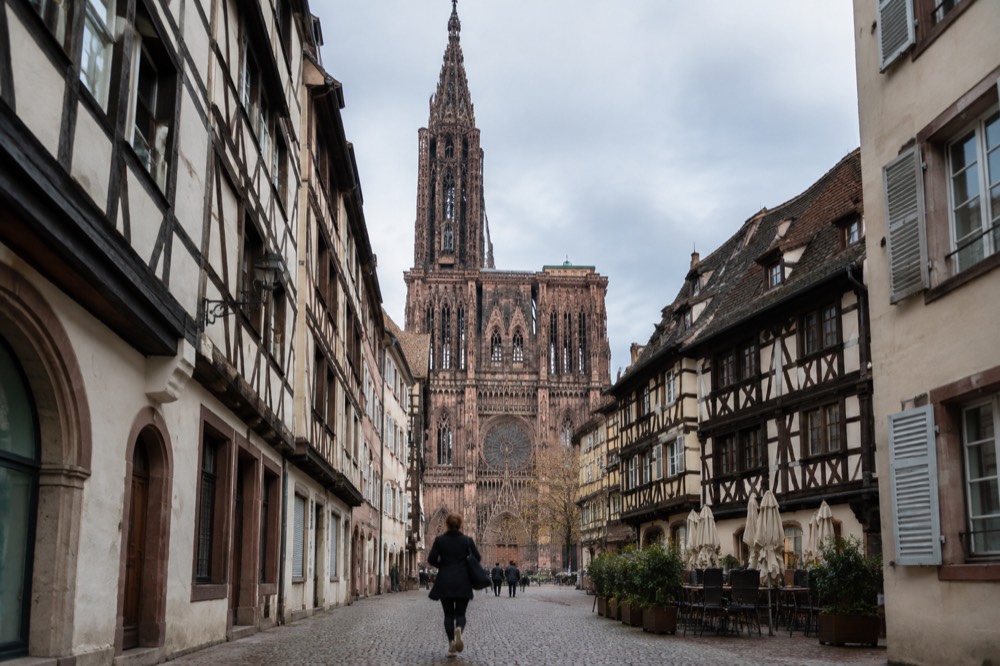
The nave keeps visiting hours of 08:30-11:15 and 12:45-17:45 Monday to Saturday, and 14:00-17:15 on Sundays and feast days, with continuous opening on the Place du Château side during the Christmas market. The platform at 66 m costs 10 EUR full and 6 EUR reduced, and the astronomical clock show runs at 12:30 sharp with tickets at 4 EUR bought on the day only.
Strasbourg Cathedral, with its single spire, is the fixed point of any visit, and the question of what it costs is answered in detail on our page is Strasbourg Cathedral free to enter. The nave's hours above come from the cathedral's own access page. During the market season the cathedral stays open continuously on the Place du Château side from 08:30 to 17:45, Monday to Saturday, which makes a December visit easier to plan than the split hours suggest.
The paid extras are cheap and well defined. The platform, reached by stairs to a height of 66 m, runs on a summer schedule of 09:30-13:00 and 13:30-20:00 from April to September, and 10:00-13:00 and 13:30-18:00 from October to March. It shuts on 1 January, 1 May and 25 December. The clock show is the stricter booking: tickets are sold on the day only, at the cathedral stalls between 10:00 and 11:00 or at the Saint-Michel entrance from 11:30, and there are no reservations, so a December traveller needs to build the morning around the purchase window.
| Cathedral element | Hours | Ticket |
|---|---|---|
| Nave, Mon-Sat | 08:30-11:15 and 12:45-17:45 | See our entry page |
| Nave, Sun and feast days | 14:00-17:15 | See our entry page |
| Platform, 1 Apr-30 Sep | 09:30-13:00 and 13:30-20:00, last ascent 19:15 | 10 EUR full, 6 EUR reduced |
| Platform, 1 Oct-31 Mar | 10:00-13:00 and 13:30-18:00, last ascent 17:15 | 10 EUR full, 6 EUR reduced |
| Astronomical clock show | 12:30 daily | 4 EUR, day-of purchase only |
A guided cathedral tour adds the art-historical layer that the free visit leaves out, and the cathedral guided tour on our roster is built exactly for that, with the figures and times on the operator's live listing.
Which Museums Are Free And When?
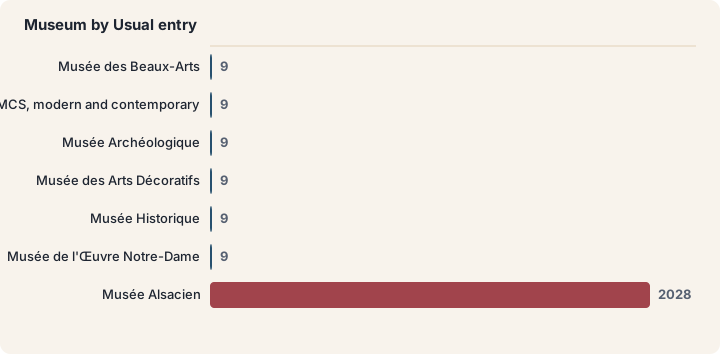
Every municipal museum in Strasbourg is free on the first Sunday of every month, a standing policy confirmed by the city's culture pages. On other days entry is 9 EUR full and 5 EUR reduced, with a 1-day Pass Musées at 20 EUR. The Musée Alsacien is closed for works until 2028 and must not be planned into a visit.
The free-Sunday policy is the single best money fact in the city for a museum-minded traveller. It applies to the whole municipal set: the Musée des Beaux-Arts in the Palais Rohan, the Musée d'Art Moderne et Contemporain, the Archaeological Museum, the Musée des Arts Décoratifs, the Musée Historique, and the Musée de l'Œuvre Notre-Dame, the cathedral workshop museum whose medieval sculpture collection sits a few steps from the platform exit. Time a Sunday arrival and the entire museum day costs nothing.
The one closure that catches people out is the Musée Alsacien, the folk-life museum, which is shut for renovation works until 2028 and appears on some older lists as a highlight. Do not route a visit to it. The other municipal museums have no announced closures, and the Strasbourg museums guide covers each one in detail, including the Palais Rohan's three museums under one roof.
| Museum | Usual entry | Free moment |
|---|---|---|
| Musée des Beaux-Arts | 9 EUR full, 5 EUR reduced | First Sunday of the month |
| MAMCS, modern and contemporary | 9 EUR full, 5 EUR reduced | First Sunday of the month |
| Musée Archéologique | 9 EUR full, 5 EUR reduced | First Sunday of the month |
| Musée des Arts Décoratifs | 9 EUR full, 5 EUR reduced | First Sunday of the month |
| Musée Historique | 9 EUR full, 5 EUR reduced | First Sunday of the month |
| Musée de l'Œuvre Notre-Dame | 9 EUR full, 5 EUR reduced | First Sunday of the month |
| Musée Alsacien | Closed for works until 2028 | Not visitable |
One card deserves a mention here because it is often mistaken for a pass. The Strasbourg City Card is a 5 EUR discount card, 3.50 EUR for children aged 3 to 17, valid seven days, and it takes money off museums, the boat trip, the cathedral platform and the clock show rather than including them. Our Strasbourg City Card guide runs the arithmetic on when it pays off.
Can You Walk Strasbourg With A Free Tour Guide?
Yes: four English-language, pay-what-you-want walking tours run through Strasbourg's historic centre, booked through GuruWalk, a platform for tip-based walks. You pay nothing up front and tip the guide at the end according to what you felt the walk was worth. No price, fixed duration or departure time should be assumed; each is stated on the walk's own listing.
The free-walk model suits Strasbourg well because the product is the streetscape, and a local guide's value is in the stories layered over it. The original happy free tour is the long-running option with the deepest review pool on the platform; the historian-led free walk of the historic Strasbourg and Petite France is the choice when you want dates and context rather than a general sweep; and the free highlights walk covers the must-see stretch including Petite France for travellers with a single morning. A fourth, the free tour listed for the current year, rounds out the set. Durations and meeting points live on each listing, and the model is honest by design: the guide only earns if the walk delivered. Everything else covered here is indexed on Strasbourg Travel Guide.
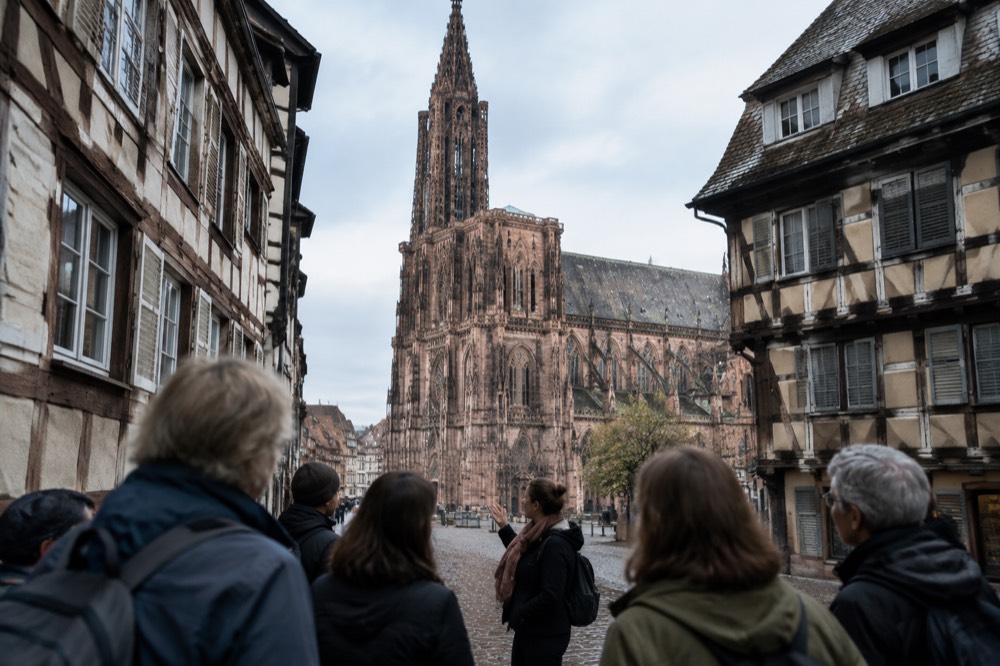
Our free walking tour guide compares all four in depth. The honest caveat about tip-based walks is pacing: they run on the guide's route and the group's questions, so if you have a fixed list of things to see in a short window, a booked walk with a stated duration can serve you better than a tip-based one whose length is not fixed. That is the trade, and it is worth making consciously.
For travellers who want the route pinned down in a single booked hour, the walk with a local is the roster's shortest paid option, and it pairs naturally with a free afternoon of self-guided wandering: Check availability.
Want the route pinned down by a local? Book a guided walking tour here.
What Free Things Does Each Season Add To The City?
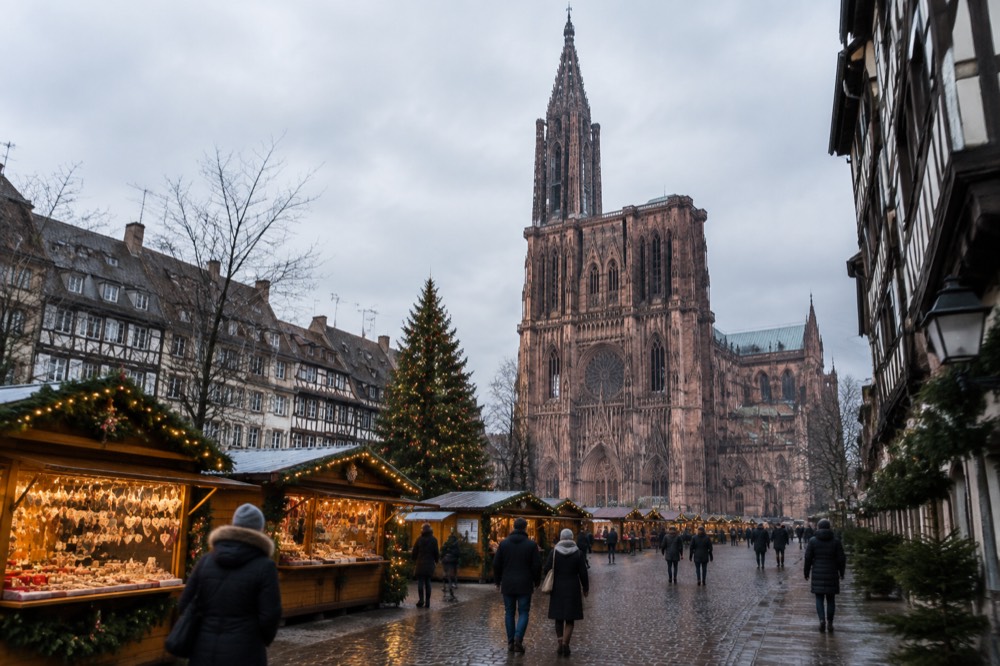
Winter adds the Christmas market, whose next edition's dates are not yet published; the pattern is an opening in the last week of November and a run to 24 December, and last year's edition ran 26 November to 24 December 2025 and drew 3.05 million visitors. Spring and summer add the parks and riverside lawns; the Orangerie park and the Two Shores garden are public and free to enter at any time of year.
The seasonal headline is the Christmas market, and the honest position on it is that the 2026 dates and programme are still being finalised on the city's Christmas site, so confirm them there before booking anything. The verified reference point is the 2025 edition, which ran from 26 November to 24 December, with chalets typically open from late morning into the evening and an early-evening close on 24 December. Strolling the markets themselves costs nothing; the spending happens at the mulled-wine and gift stalls, which is a different discipline entirely. Our Strasbourg Christmas market guide covers the layout, and the Christmas markets in Alsace guide and Colmar Christmas market guide extend the idea across the region.
Outside the market season, the parks carry the free day. The Parc de l'Orangerie, the city's oldest public park, sits a walk from the European institutions and holds lawns, tree-lined avenues and a small free zoo corner; the Jardin des Deux Rives, on the Rhine border itself, is a cross-border park joined by a footbridge to Kehl on the German bank, and walking it is one of the few free experiences that puts you in two countries in a single afternoon. The best time to visit Strasbourg guide weighs the seasons against crowds and cost.
The climate sets the terms for all of this. Strasbourg is semi-continental, with Meteo-France 1991-2020 normals showing a mean maximum of 5.2 C in January against 26.4 C in July, and 635.7 mm of rain across 112.3 rain days in an average year. The outdoor, free city is therefore a fair-weather proposition in the warmer half and a wrapped-up one in winter, and December, with a mean maximum of 5.9 C and 10.2 rain days of a millimetre or more, rewards the layered clothing the market crowds all wear.
| Month | Mean max C | Mean min C | Rain days of 1 mm or more |
|---|---|---|---|
| March | 12.1 | 2.6 | 8.5 |
| June | 24.4 | 13.4 | 10.2 |
| September | 21.6 | 10.7 | 8.0 |
| December | 5.9 | 0.8 | 10.2 |
Does Free Mean Compromising On The Experience?
Not materially. The elements that make Strasbourg worth crossing a border for, the UNESCO-listed island, the canals, the cathedral's exterior and the riverside walks, are all free to experience in full. What money buys is depth: the platform view, the clock automaton, museum interiors and a guide's commentary. A traveller who spends nothing still sees the city that others remember.
The honest framing is that Strasbourg's paid layer is thin and optional rather than essential. The platform view is magnificent but the spire itself is free to photograph from every street on the island. The clock show is a genuine spectacle, but the astronomical clock's case stands in the south transept for anyone inside the nave during visiting hours. The museums are excellent, but the first Sunday of the month dissolves that cost entirely for anyone with a flexible calendar.
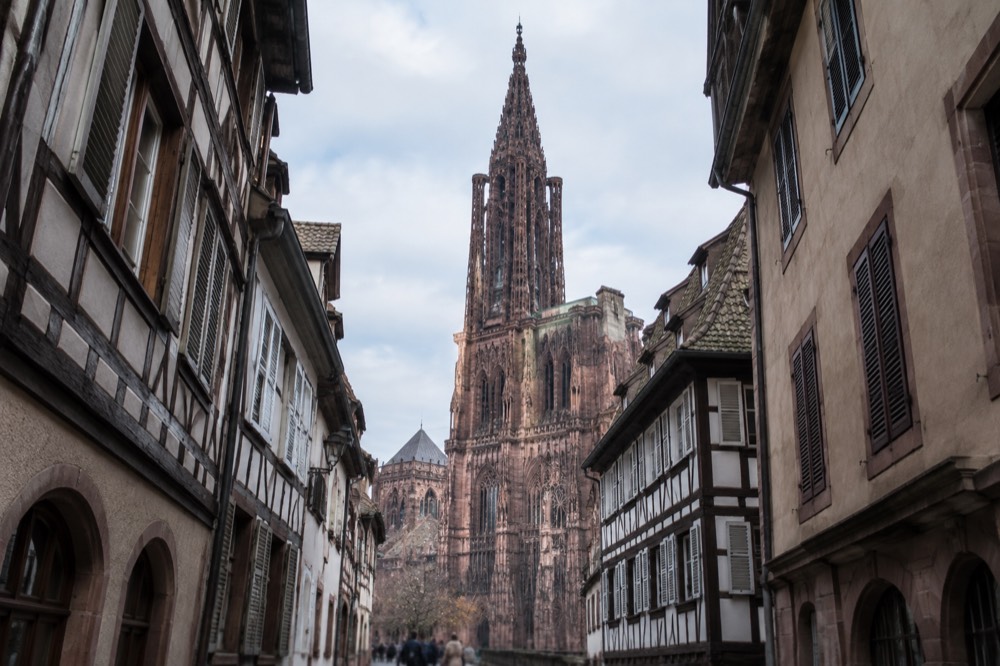
Where a small budget genuinely improves the day is in commentary and orientation. The old town's story, German and French, imperial and republican, is not visible on the surface of the timbered houses, and a guide converts walls into narrative. That is the case for the paid walks on this site's roster, including the local walk that opens this article's recommendations, and it is also the case for the food walks, where the tastings are the point and the price reflects them. The Strasbourg food guide covers what to eat, and the winstubs guide names the traditional taverns, none of which is free but all of which is optional.
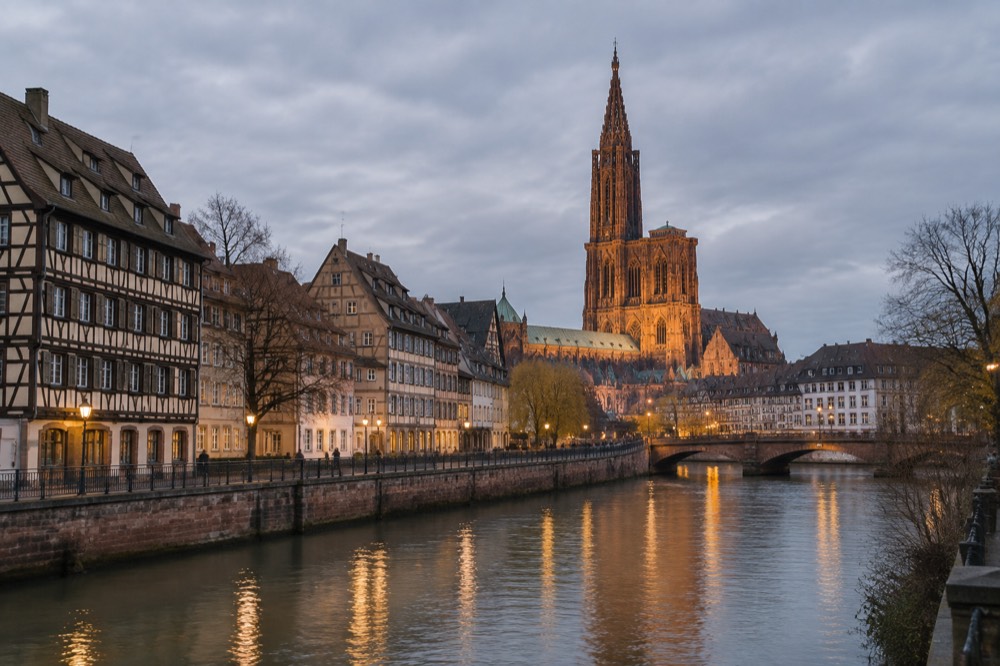
For evening plans, the Strasbourg at night guide shows that the city stays lively past dusk: the illuminated old town, the river reflections and the cathedral floodlighting are all public spectacle, and the winter version of that is covered in Strasbourg in winter.
How Do You Plan A Zero-Cost Day In Strasbourg?
Start at Place Kléber at opening time, walk west through the Grande Île to Petite France and the Ponts Couverts, climb the Barrage Vauban terrace within its seasonal hours for the panorama, then loop back east past the cathedral, timing the nave's visiting window, and finish on the quays. Every step of that circuit is public ground, and the only optional charges are the clock show and lunch.
The shape matters because the free city rewards sequencing. The terrace and the platform both have hours, the clock tickets have a purchase window, and the market, in season, is best early before the lanes fill. A day built around those constraints still leaves long stretches of pure wandering, which is the part of Strasbourg that costs nothing and delivers the most.
| Time | Place | Why it works |
|---|---|---|
| Morning, from opening | Place Kléber, then west to Petite France | Empty lanes, best light on the canals |
| Late morning | Ponts Couverts and Barrage Vauban terrace | Terrace inside its 08:00-19:00 September-October hours |
| 12:30 | Cathedral, clock show if ticketed that morning | Show runs daily at 12:30 sharp |
| Afternoon | Nave visiting hours, then the quays and squares | Split hours on non-market days |
| Evening | Riverside walk, illuminated old town | Public spectacle, no charge |
If a single booked hour would anchor the day better than a self-drawn map, the short local walk with a guide is the shortest paid option on the roster and leaves the rest of the day free: Check availability.
Common Questions About Free Things To Do In Strasbourg
What can you do in Strasbourg without spending money?
Walk the Grande Île, Petite France, Place Kléber, Place Gutenberg, the Ponts Couverts and the riverside quays, all public ground. Visit municipal museums on the first Sunday of the month when entry is free, and join a pay-what-you-want English walking tour booked through GuruWalk.
When are Strasbourg's museums free?
Every municipal museum is free on the first Sunday of every month, a standing city policy. On other days entry is 9 EUR full and 5 EUR reduced, with a 1-day Pass Musées at 20 EUR. The Musée Alsacien is closed for works until 2028.
Is the Strasbourg Christmas market free to enter?
Strolling the markets costs nothing; the spending happens at the stalls. The 2026 dates are not yet published, so confirm them on the city's Christmas site. The 2025 edition ran 26 November to 24 December and drew 3.05 million visitors.
How much does the cathedral platform cost?
The platform at 66 m costs 10 EUR full and 6 EUR reduced, with children under 6 free. It runs seasonal hours and closes on 1 January, 1 May and 25 December. The astronomical clock show at 12:30 costs 4 EUR, bought on the day only.
Are the free walking tours in Strasbourg really free?
They are pay-what-you-want: nothing is paid up front and you tip the guide at the end. They are booked through GuruWalk, and each walk's duration and meeting point are stated on its own listing rather than fixed by the city.
What is the best free view over Strasbourg?
The Barrage Vauban terrace looks over the old town and the cathedral spire, with seasonal hours of 08:00-19:00 in September and October and 08:30-16:00 from November to February; its admission price is not stated on the city's page, so check before you climb. The riverside quays give a no-charge alternative panorama at any hour.
A free day in Strasbourg is not a lesser day. The city's essential experiences, its UNESCO-listed streets, its canals, its squares and the sight of that single spire over the rooftops, carry no price, and the paid extras are optional depth rather than gatekept essentials. Plan around the hours that do exist, the terrace, the platform, the clock's ticket window and the museums' free Sundays, and the rest of the city is yours for the cost of a comfortable pair of shoes.