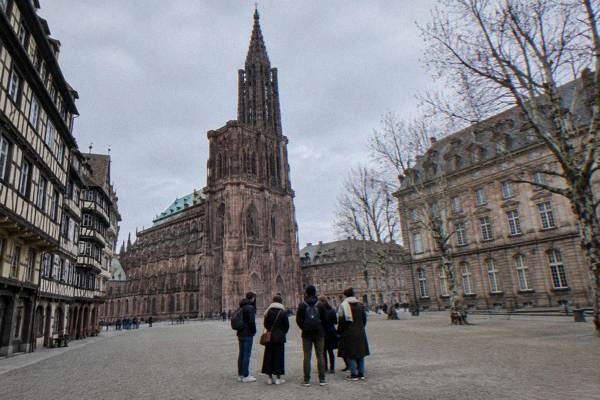
Strasbourg Hidden Gems
Strasbourg, the prefecture of the Bas-Rhin in Alsace, north-eastern France, keeps its best surprises away from the cathedral square. This guide walks through the quiet corners, small museums and riverside quarters that guided groups pass at speed, with verified prices, hours and transport fares.
Short answer
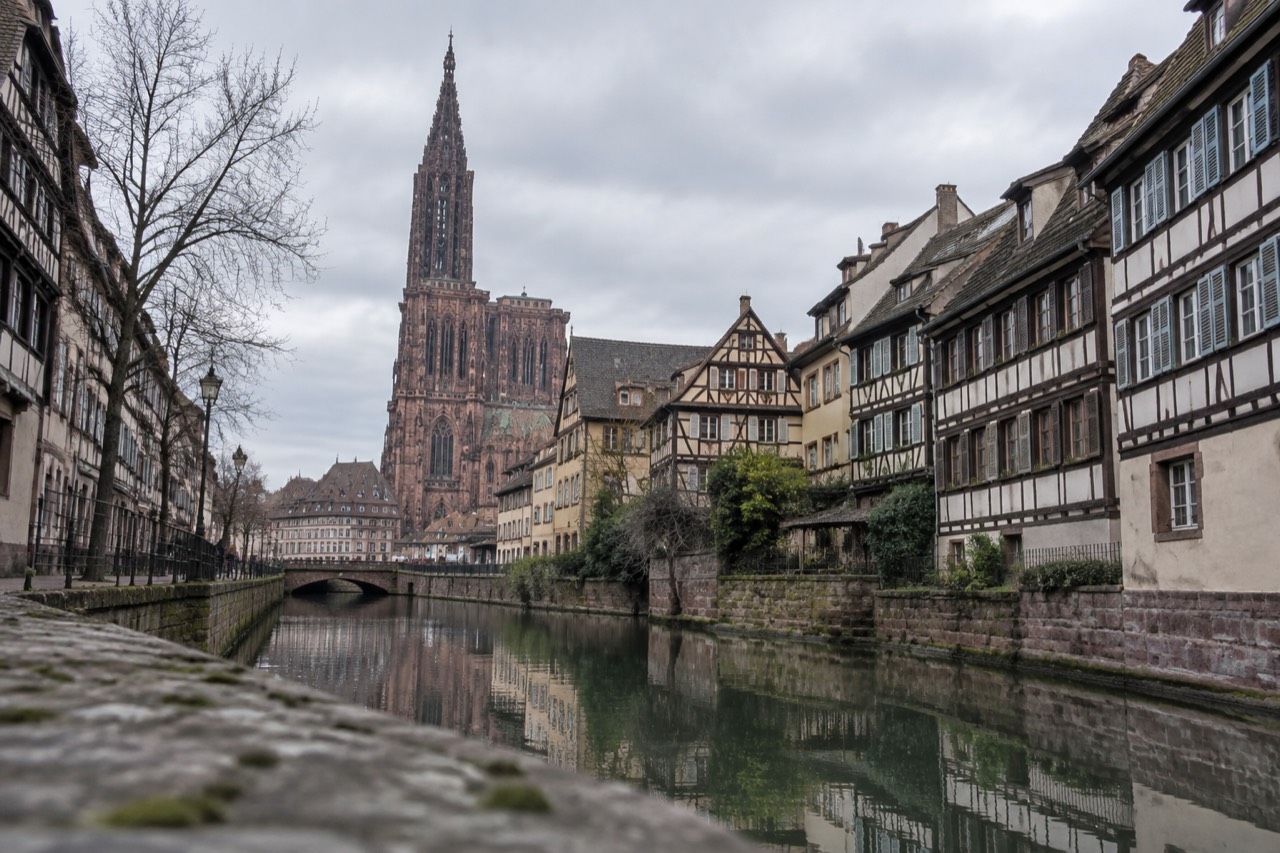
Strasbourg's hidden gems cluster in three rings: the back lanes of the Grande Île, the riverside quarters of Krutenau and Neustadt, and the parks of Robertsau. Museum entry is 9 EUR full price, a CTS day pass is 4.60 EUR, and the cathedral platform costs 10 EUR, so a full day of quiet sights costs less than a single restaurant dinner.
Strasbourg, in Alsace in the north-eastern corner of France, is a city where the famous sights are packed into a compact island and the quiet pleasures are spread around it. The cathedral draws the crowds, Petite France draws the cameras, and everything else, the half-empty museums, the student quarter along the Ill, the terrace above the old river barrage, tends to get skipped by visitors on a tight circuit. That imbalance is what this page is for.
What Are The Best Hidden Gems In Strasbourg, France?
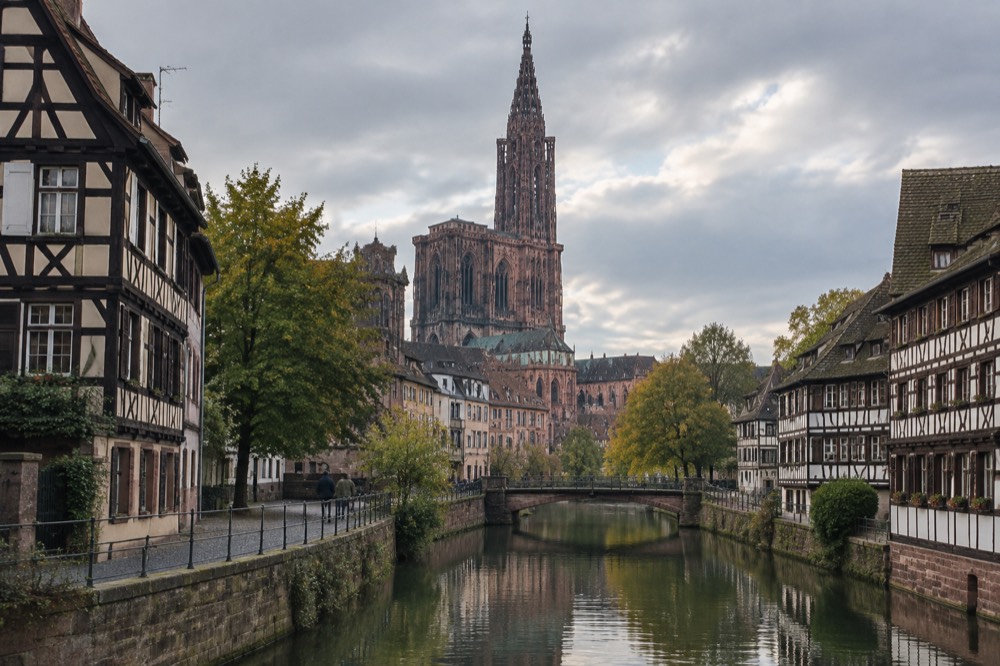
The best hidden gems in Strasbourg are the Musée de l'Œuvre Notre-Dame beside the cathedral, the panoramic terrace of the Barrage Vauban, the Krutenau quarter's canals and street art, the Parc de l'Orangerie in Robertsau, and the Jardin des Deux Rives straddling the French-German border. Each sits within a short tram or walk of the centre, and each costs little or nothing compared with the city's headline sights.
The pattern behind Strasbourg's overlooked corners is simple. The city's visitors arrive, see the cathedral and Petite France, and leave, while the commune's 293,771 residents (INSEE, 2023) get on with living in the parts in between. Those parts are where the rewards are. The Grande Île and the later Neustadt extension together form a UNESCO World Heritage property, and the quietest stretches of that property are often a single street away from the busiest.
Planning matters more here than in larger cities, because opening hours are the main constraint. Small museums close one day a week, the cathedral's tower platform keeps seasonal hours, and the Barrage Vauban terrace shortens its day in winter. The city's climate is semi-continental, with Meteo-France 1991-2020 normals showing mean maxima from 5.2 C in January to 26.4 C in July and 635.7 mm of rain a year, so a wet afternoon is a real possibility in any season and an indoor backup is worth having. The best time to visit Strasbourg depends partly on these numbers, and the question of where Strasbourg actually sits matters too: the German border, with Kehl on the far bank of the Rhine, is close enough that one of the gems below crosses it.
| Hidden gem | Quarter | What it offers | Good time to go |
|---|---|---|---|
| Musée de l'Œuvre Notre-Dame | Grande Île | Medieval sculpture in a half-timbered building, 9 EUR full, 5 EUR reduced | A rainy afternoon |
| Barrage Vauban terrace | Petite France edge | Roof-level view over the Ponts Couverts and the city spire, seasonal hours | Late afternoon light |
| Krutenau canals | Krutenau | Watermills, student life, street art, quiet banks of the Ill | Morning or early evening |
| Parc de l'Orangerie | Robertsau | Parkland, stork enclosure, small lake | A sunny weekend morning |
| Jardin des Deux Rives | Rhine bank | A park bridging France and Germany across the Rhine | A dry day |
| Musée Zoologique | Neustadt edge | A historic natural history collection, 9 EUR full, 5 EUR reduced | Any weather |
Which Quiet Corners Of The Grande Île Do Walkers Miss?
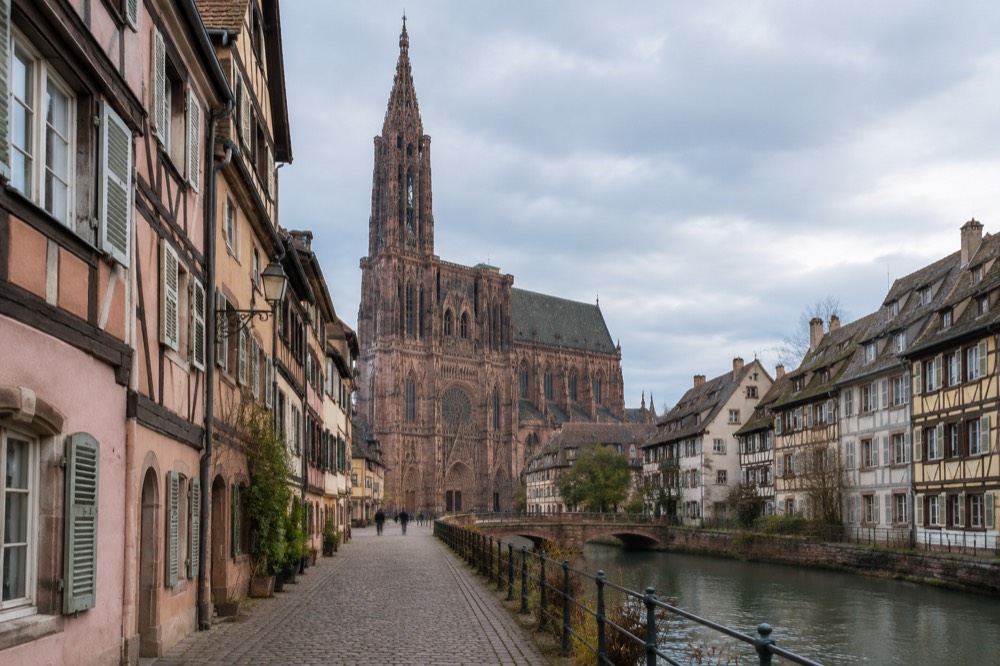
The quiet corners of the Grande Île are the Rue des Tonneliers and its side lanes behind the cathedral, the cloistered yard of the Musée de l'Œuvre Notre-Dame, the terrace of the Barrage Vauban, and the Ponts Couverts at dusk. The cathedral's own tower platform, at 66 m, costs 10 EUR full and 6 EUR reduced, and the astronomical clock show at 12:30
The Grande Île is small enough that missing something feels impossible, yet it happens constantly. The cathedral dominates attention so thoroughly that the building beside it, the Musée de l'Œuvre Notre-Dame, often has empty galleries in the middle of the day. Its collection of medieval sculpture is the direct companion to the cathedral's own stonework, and a platform ticket even carries a reduced rate there. Entry is 9 EUR full price, 5 EUR reduced, and free on the first Sunday of every month along with every other municipal museum.
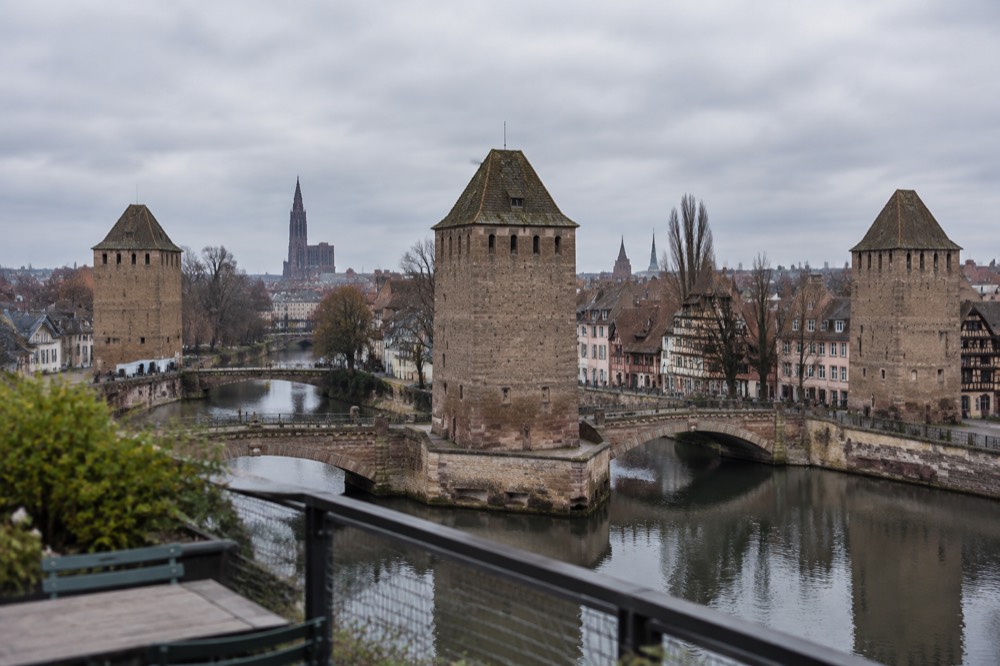
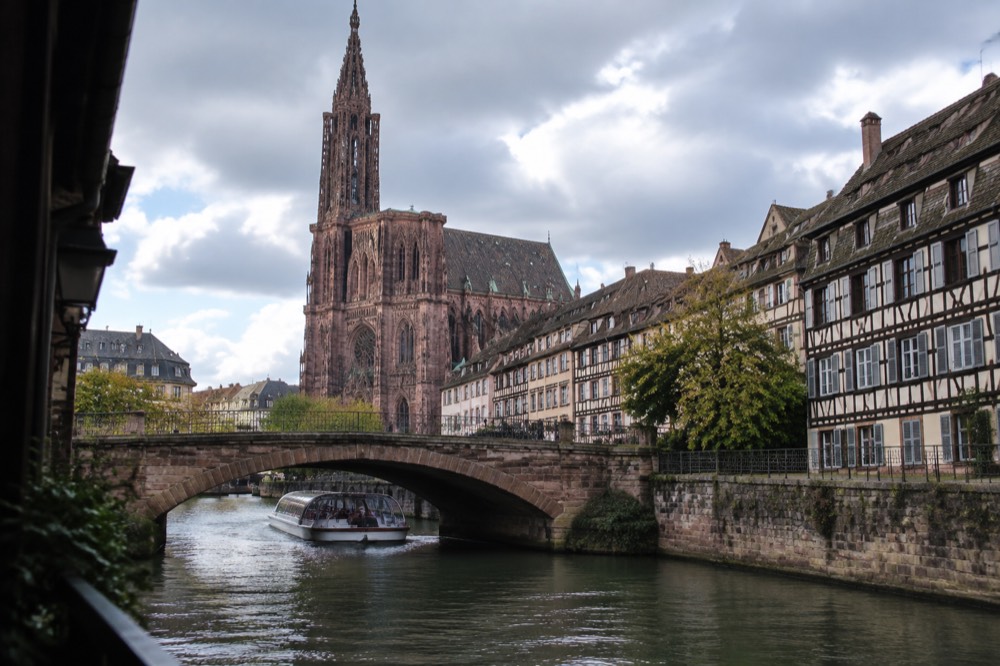
The Barrage Vauban is the other routine miss. Walkers cross the Ponts Couverts, photograph them from street level, and move on, when the defensive structure just upstream has a panoramic terrace on its roof. The terrace keeps seasonal hours, 08:00-19:00 from March to April and September to October, and 08:30-16:00 through the November to February stretch; the city's page for the site is the place to confirm the day's opening before a special trip. From the terrace the whole sweep of the Ponts Couverts, the Ill and the cathedral's single spire lines up in one frame.
The cathedral itself rewards slow handling. The nave opens Monday to Saturday 08:30-11:15 and 12:45-17:45, and on Sundays from 14:00-17:15. The tower platform runs 09:30-13:00 and 13:30-20:00 from April to September, with the last ascent at 19:15, and 10:00-13:00 and 13:30-18:00 from October to March, with the last ascent at 17:15. The clock's automaton show begins at 12:30 sharp, and tickets, 4 EUR for adults, are sold on the day only, at the cathedral stalls in the morning or at the Saint-Michel entrance from 11:30. There are no luggage lockers at the cathedral, so travel light.
For travellers who like their history told rather than read off plaques, a hidden-stories walk covers the lanes and legends that signage skips. The Secrets Walk, a guided route, is one option, and the operator's live listing carries the current price and schedule.
Curious about the stories behind the quiet lanes? Book a small group walking tour here.
A different way into the same streets is through their food. The Grande Île hides a handful of old winstubs behind unmarked doorways, and a guided culinary walk that stops at several of them, with tastings along the way, is an efficient way to find the ones worth returning to. The city after dark changes character completely, and an evening food walk doubles as a low-effort introduction to it.
| Grande Île sight | Entry cost | Hours to plan around |
|---|---|---|
| Cathedral nave | Check the cathedral's hours page | Mon-Sat 08:30-11:15, 12:45-17:45; Sun 14:00-17:15 |
| Tower platform, 66 m | 10 EUR full, 6 EUR reduced, under 6 free | Apr-Sep 09:30-13:00, 13:30-20:00; Oct-Mar 10:00-13:00, 13:30-18:00 |
| Astronomical clock show | 4 EUR adults, day-of purchase only | 12:30 daily, tickets from 10:00 or at Saint-Michel entrance from 11:30 |
| Musée de l'Œuvre Notre-Dame | 9 EUR full, 5 EUR reduced | Closed one day a week; free first Sunday of the month |
| Barrage Vauban terrace | Check the official page for admission | Mar-Apr and Sep-Oct 08:00-19:00; Nov-Feb 08:30-16:00 |
Which Small Museums In Strasbourg Reward A Slow Afternoon?
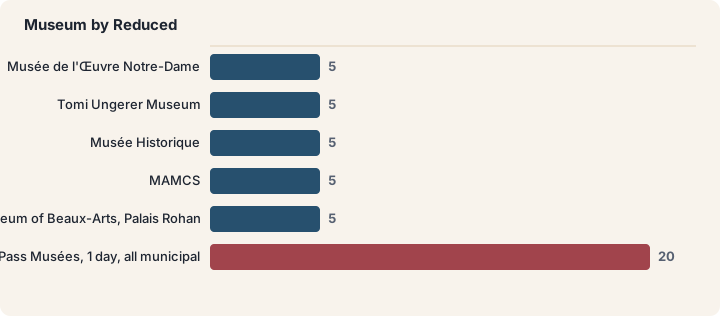
The small museums that reward a slow afternoon are the Musée de l'Œuvre Notre-Dame for medieval art, the Tomi Ungerer Museum for illustration and graphic satire, the Musée Historique for the city's own story, and the MAMCS for modern art. Every municipal museum charges 9 EUR full price and 5 EUR reduced, all are free on the first Sunday of every month, and the 1-day Pass Musées at 20 EUR covers them all.
Strasbourg's museum network is unusually generous for a city of its size, and the pricing is simple once you know it. A single ticket category, 9 EUR full and 5 EUR reduced, applies across the municipal museums, including the Archaeological Museum, the Museum of Decorative Arts, the Museum of Beaux-Arts and the MAMCS. The 1-day Pass Musées at 20 EUR pays for itself on any day involving three museums or more. One exception matters: the Musée Alsacien, the folk-life museum that would otherwise head a hidden-gems list, is closed for works until 2028 and should not be planned into any itinerary. The full picture, including what is open and when, is in the guide to Strasbourg's museums.
The Tomi Ungerer Museum is the quiet star of the set. It holds the drawing archive of the Strasbourg-born illustrator in a former villa by the river, and its galleries are small enough that an hour covers them properly. The Musée Historique, in a former slaughterhouse building on the Grande Île, walks through the city's past with scale models and artifacts; it is the museum that explains why Strasbourg looks the way it does, and it does so without the crowds of the bigger institutions.
The MAMCS, the modern and contemporary art museum on the river's edge, is the one small museum that behaves like a large one. Its rooftop terrace is a genuine hidden gem in its own right, looking over the Ill and the Vauban dam. First-Sunday timing turns a museum afternoon into a free one, and the city's free sights page collects the other no-cost options, from the squares and riverside walks to the same monthly museum window.
| Museum | Full price | Reduced | Closed or limited |
|---|---|---|---|
| Musée de l'Œuvre Notre-Dame | 9 EUR | 5 EUR | Weekly closing day |
| Tomi Ungerer Museum | 9 EUR | 5 EUR | Weekly closing day |
| Musée Historique | 9 EUR | 5 EUR | Weekly closing day |
| MAMCS | 9 EUR | 5 EUR | Weekly closing day |
| Museum of Beaux-Arts, Palais Rohan | 9 EUR | 5 EUR | Weekly closing day |
| Musée Alsacien | Closed | Closed | Closed for works until 2028 |
| Pass Musées, 1 day, all municipal museums | 20 EUR | 20 EUR | Valid one day |
Which Hidden Gems Sit Beyond The City Centre?
Beyond the centre, the hidden gems are the Krutenau quarter's canals and street art, the Neustadt's imperial boulevards, the Parc de l'Orangerie and the Musée Zoologique in Robertsau, and the Jardin des Deux Rives on the Rhine. All sit on the CTS tram network, where a single ticket costs 1.90 EUR from the app or a contactless card and a 24-hour pass costs 4.60 EUR.
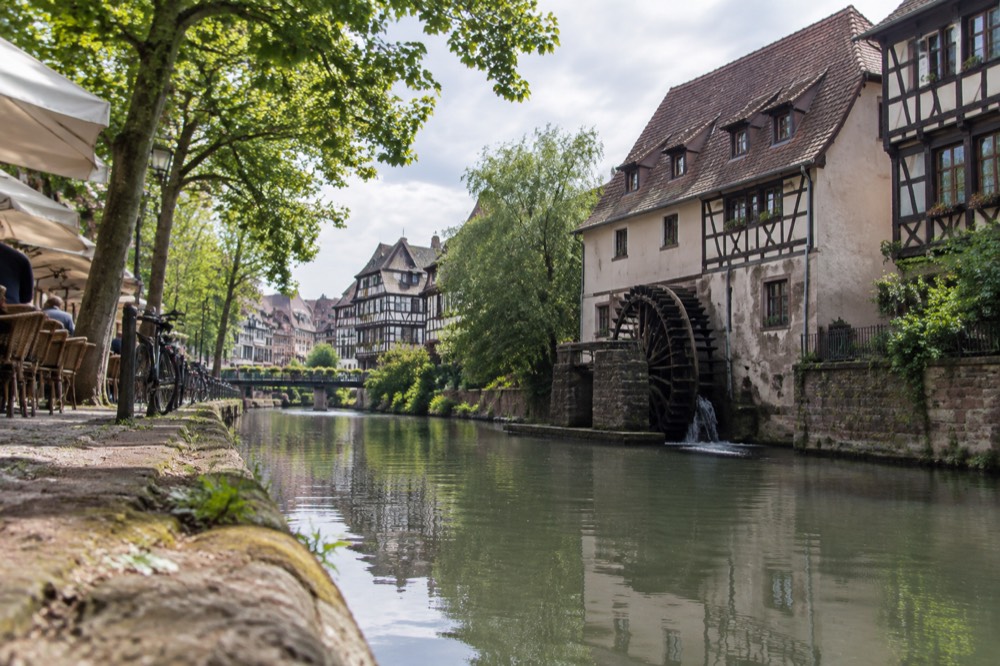
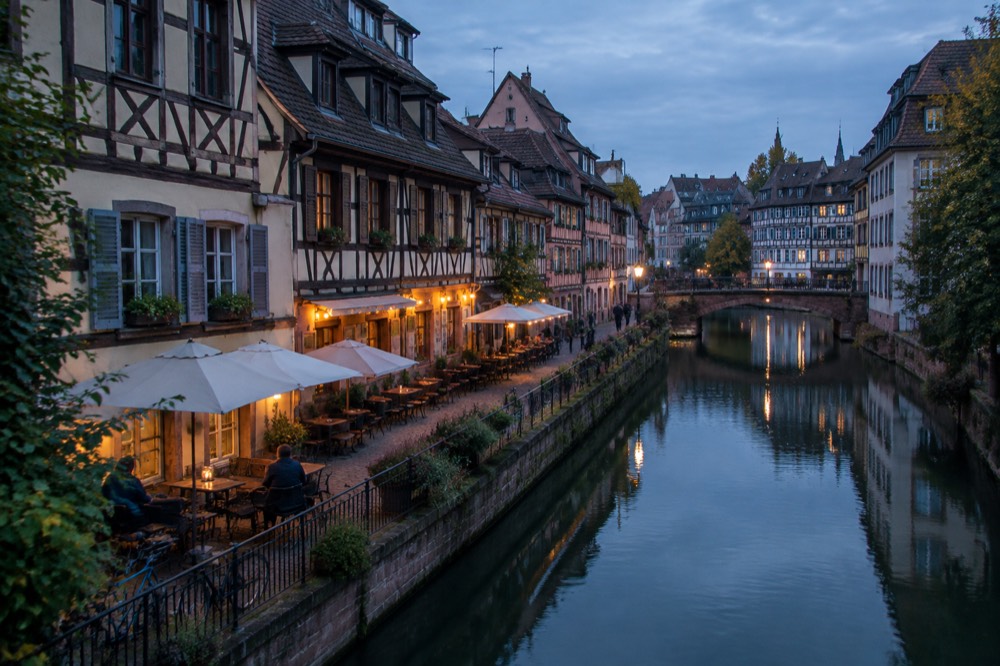
The Krutenau, immediately south-east of the Grande Île, is the quarter locals prefer to the postcard streets. Old watermills sit along the Ill, the university keeps the lanes lively, and the walls carry a changing gallery of street art. A dedicated street-art walk with a guide covers the murals and the stories behind them, and it is one of the few tours in the city that goes where the standard walks do not.
Across the Ill to the north and east lies the Neustadt, the late-nineteenth-century German imperial extension that joined the Grande Île on the UNESCO World Heritage listing as a later extension. Its boulevards, institutional buildings and apartment blocks are a completely different architectural register from the half-timbered centre, and the Place de la République and the Imperial quarter are usually quiet. The Musée Zoologique sits at this quarter's edge, a historic natural history collection behind a grand facade, at the standard 9 EUR full and 5 EUR reduced municipal pricing.
Further out, Robertsau holds the Parc de l'Orangerie, the city's oldest park, with a small lake, an aviary and a stork enclosure that ties into the Alsatian stork story. The Jardin des Deux Rives is the most unusual of the lot: a park laid out on both banks of the Rhine, joined by a footbridge, so a walk can cross from France into Germany and back on foot. Kehl, the German town on the far bank, is part of the same conurbation in daily life, and the question of how safe Strasbourg feels extends across the bridge; the border is a formality within Europe's Schengen area, and both countries use the euro.
One half-day destination beyond the city deserves a place on this list despite its sombre character. The Natzweiler-Struthof site, the former concentration camp in the Vosges hills south of Strasbourg, is visited by a fraction of the city's tourists and is the most consequential of all the region's overlooked places. A guided half-day from Strasbourg handles the mountain drive and the historical context, which is the right way to approach it.
Which Hidden Gems In Strasbourg Cost Little Or Nothing?
The cheapest hidden gems are the squares and riverside walks, which cost nothing; the municipal museums on the first Sunday of every month; the tram ride out to Robertsau at 1.90 EUR; and the Strasbourg City Card, at 5 EUR for seven days, which discounts the museums, the boat tours, the cathedral platform and the clock. A 24-hour CTS pass at 4.60 EUR covers a full day of moving between them.
The economics of a Strasbourg day tilt heavily in favour of the walker. The streets, squares and riverbanks of the Grande Île and Krutenau are public space, and the cathedral's nave hours are published on the cathedral's own access page for anyone planning a visit. The first Sunday of each month removes the 9 EUR museum ticket entirely, and the city states plainly that all its museums are free that day. The budget guide works through the full arithmetic of a cheap visit, and the City Card explainer covers what the 5 EUR card does and does not include: it is a discount card, not an all-inclusive pass, with a child version at 3.50 EUR for ages 3 to 17.
Public transport is the other lever. CTS sells a single ticket at 1.90 EUR through the Badgeo card, the CTS app or contactless payment, and at 2.50 EUR if bought on board a bus, so the app is always the cheaper move. The 24h Solo pass at 4.60 EUR and the 24h Trio at 10.20 EUR for two to three people cover unlimited travel for a day. The airport shuttle deserves a special mention: the combined train-plus-tram ticket at 4.60 EUR includes the 8-minute TER ride from Entzheim to the central station and a day of city transport, which is one of the better-value transport products in the region.
| Item | Price | Notes |
|---|---|---|
| CTS single ticket, app or contactless | 1.90 EUR | Badgeo card, CTS app or contactless |
| CTS single ticket, bought on board | 2.50 EUR | Bus purchase only |
| CTS 24h Solo pass | 4.60 EUR | One person, 24 hours |
| CTS 24h Trio pass | 10.20 EUR | Two to three people |
| Airport combined ticket | 4.60 EUR | TER train plus 24h city transport |
| Municipal museums, first Sunday | Free | Every municipal museum, monthly |
| Strasbourg City Card | 5 EUR adult, 3.50 EUR child | Seven days, discounts only |
How Do You Reach Strasbourg's Hidden Gems Without A Car?
Every hidden gem in this guide is reachable without a car: the Grande Île and Krutenau on foot, Robertsau and the Neustadt by tram on the CTS network, the Rhine park by tram and footbridge, and the Vosges and Black Forest destinations by booked coach tour or regional train. The Batorama river boats add a short tour from 12.50 EUR, and the long tour from 16.20 EUR, both departing from the city centre.
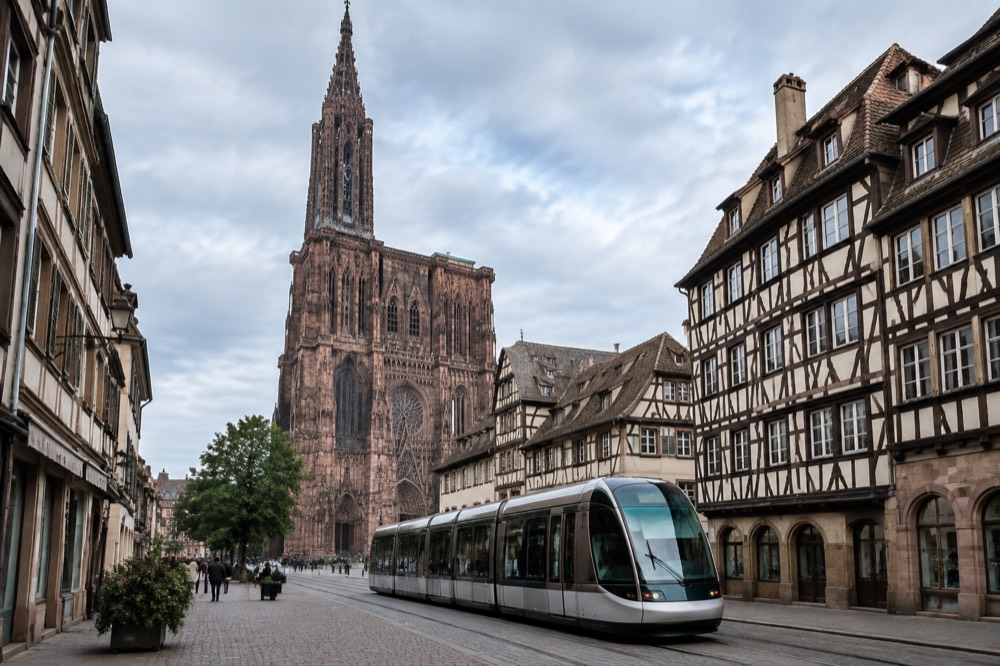
Strasbourg is one of the easiest car-free cities in France. The tram network reaches the Neustadt, Robertsau, the Rhine bank and the station, and the fares above make a day of hopping between quarters cheap. Cycling is the other natural mode: the city is flat, the Ill has towpaths, and a guided bike tour with a local guide is a structured way to cover the Krutenau, the Neustadt and the riverside in one loop. The same logic applies to Segway tours for those who prefer wheels with a motor assist.
The river itself is an underrated transport option. Batorama, the city's boat operator, runs two sightseeing circuits from the quays: a long tour at 16.20 EUR full and 8.90 EUR reduced, covering the Red Tour's route in 1h10, and a short tour at 12.50 EUR full and 7.20 EUR reduced, covering the Blue Tour in 0h45. The boats pass under the Ponts Couverts and around the Grande Île, and the short circuit doubles as a rest for tired legs between two of the museums above.
For the destinations beyond the tram's reach, the choice is between regional trains and booked day tours. The Black Forest trips across the Rhine run as guided coach tours from the city, which removes the need for any rail planning. Within the city, the practical advice is to buy the 24h pass on any day involving three or more tram rides, and to keep the app installed for contactless single tickets on lighter days.
| Batorama circuit | Duration | Full price | Reduced price |
|---|---|---|---|
| Red Tour, long circuit | 1h10 | 16.20 EUR | 8.90 EUR |
| Blue Tour, short circuit | 0h45 | 12.50 EUR | 7.20 EUR |
| Parliament-Cathedral shuttle crossing | 17 min | See operator's ticket page | See operator's ticket page |
Which Hidden Day Trips From Strasbourg Reward Curious Travellers?
The hidden day trips that reward curiosity are the Struthof memorial in the Vosges hills, the craft towns and waterfalls of the Black Forest around Triberg, Titisee and Freiburg, and the small Christmas-market towns of the wider Alsace in the season. Each runs as a guided coach tour from Strasbourg, which matters because the Vosges site and the forest villages are awkward to reach by public transport in a single day.
The Natzweiler-Struthof site is the day trip this guide keeps returning to, because it is the one place near Strasbourg that changes how a visitor reads the whole region. The camp sits high in the Vosges, and a guided half-day from the city covers the memorial, the grounds and the history with a guide who handles the context. It is not a pleasant outing, and it is not meant to be; it is the counterweight to the prettiness of the wine villages, and it stands out as the most memorable part of the trip. The operator's live listing carries the current price, the departure point and the schedule.
East across the Rhine, the Black Forest trips reach Triberg's waterfalls and clock-making towns, the lake at Titisee and the university city of Freiburg. These are full-day coach tours, and they pair naturally with a Strasbourg base because the border crossing is a formality within the Schengen area. Germany uses the euro, so there is no currency planning to do. The Black Forest guide on this site covers what each stop is for in detail.
In the late-November-to-late-December season, the same logic applies to the Alsatian market towns. Strasbourg's own Christmas market is the headline, and its 2025 edition ran from 26 November to 24 December and drew 3.05 million visitors, so the quietest Christmas experiences are often in the smaller towns around it. A guided day tour to the Alsatian markets reaches several of them in one loop. The 2026 dates for the city's market were still being finalised on the city's Christmas site, so confirm them there before planning. The seasonal food angle, from bredele to vin chaud, has its own page.
| Hidden day trip | What it is | Who it suits | How it is booked |
|---|---|---|---|
| Natzweiler-Struthof memorial, Vosges | A guided half-day at the former camp site | Travellers who want the region's full history | Guided coach tour from Strasbourg |
| Triberg, Titisee and Freiburg, Black Forest | Waterfalls, forest towns and a university city | Curious travellers who want the German side | Guided full-day coach tour |
| Alsatian market towns, in season | Smaller Christmas markets beyond the city | December visitors avoiding the biggest crowds | Guided full-day coach tour |
| Kehl, Germany | A German town on the Rhine's far bank | Anyone with a spare hour and a tram ticket | Tram and footbridge, no booking |
The three tours below are the ones that pair best with the hidden-gems itinerary on this page: the Struthof half-day for depth, the Alsatian markets tour for the season, and the Black Forest loop for the cross-border detour.
Common Questions About Strasbourg Hidden Gems
What are the best hidden gems in Strasbourg?
The Musée de l'Œuvre Notre-Dame, the Barrage Vauban terrace, the Krutenau canals, the Parc de l'Orangerie and the Jardin des Deux Rives are the sights that reward a second look. All sit within the tram network, and the museums among them cost 9 EUR full price or nothing on the first Sunday of the month.
Is the Musée Alsacien open in Strasbourg?
No. The Musée Alsacien is closed for works until 2028 and should not be planned into an itinerary. The Musée de l'Œuvre Notre-Dame and the Musée Historique cover the city's medieval and civic story in the meantime, at the standard municipal pricing of 9 EUR full and 5 EUR reduced.
What does the Barrage Vauban terrace cost?
The city's page for the Barrage Vauban does not state an admission price, so check the official page before visiting. The terrace keeps seasonal hours, 08:00-19:00 in the March-April and September-October periods and 08:30-16:00 from November to February.
How much does it cost to visit Strasbourg's small museums?
Every municipal museum charges 9 EUR full price and 5 EUR reduced, and all of them are free on the first Sunday of every month. The 1-day Pass Musées at 20 EUR covers the whole network for a single day.
Can you reach Strasbourg's hidden gems without a car?
Yes. The Grande Île and Krutenau are walkable, the Neustadt and Robertsau sit on the CTS tram network, and the Rhine park is a tram ride plus a footbridge. A 24-hour pass costs 4.60 EUR, and a single ticket costs 1.90 EUR from the app or a contactless card.
Which hidden day trips from Strasbourg are worth booking?
The Struthof memorial half-day in the Vosges and the Black Forest loop to Triberg, Titisee and Freiburg are the two that reward a guide and a coach, because both are awkward to reach independently in a day. In the Christmas season, a guided tour of the smaller Alsatian market towns is the third.
Strasbourg rewards the traveller who slows down, and this Strasbourg Travel Guide keeps the quiet corners, the small museums and the cross-border parks in one place so the planning takes minutes rather than afternoons. Buy the 24-hour tram pass, pick two museums and one riverside quarter, and the city's hidden half opens up on its own.