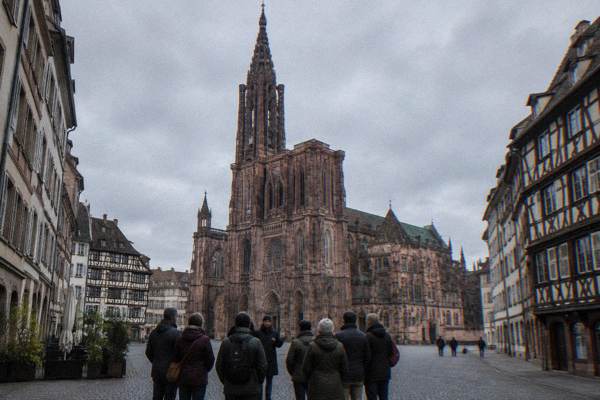
Where Is Strasbourg
Strasbourg is in Alsace, in the Bas-Rhin department of the Grand Est region, in north-eastern France, on the River Ill beside the Rhine, which forms the border with Germany.
Short answer
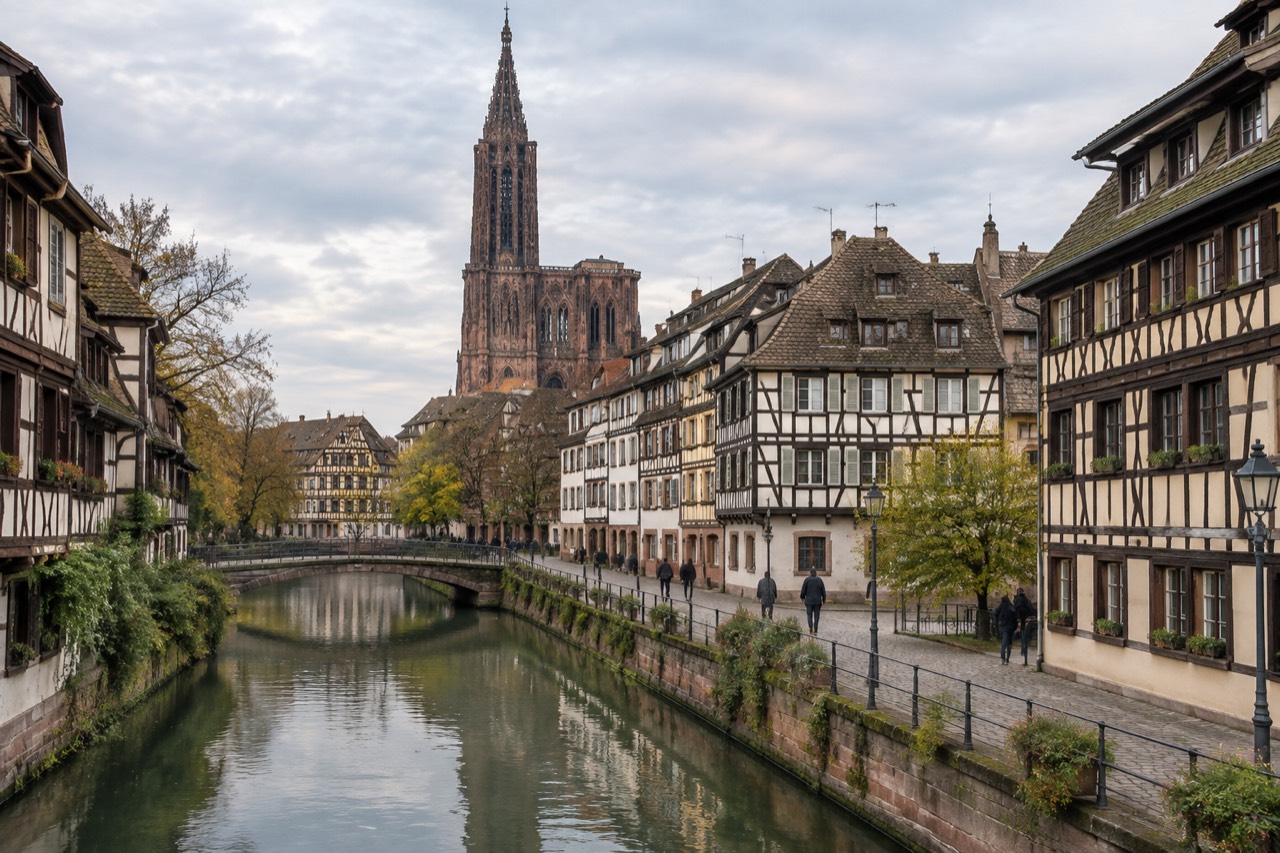
Strasbourg is a city in north-eastern France, the prefecture of the Bas-Rhin department in Alsace, within the Grand Est region. It stands on the River Ill, a few kilometres upstream of where that river meets the Rhine, and the Rhine is the border with Germany, with the German town of Kehl on the far bank. The commune counted 293,771 residents in the 2023 INSEE figure.
Strasbourg is a city in north-eastern France, the prefecture of the Bas-Rhin department, in Alsace, within the Grand Est region. It stands on the River Ill, just upstream of the point where the Ill flows into the Rhine, and the Rhine is the border with Germany: the German town of Kehl sits directly on the far bank, connected by bridges. The commune counted 293,771 residents in the 2023 INSEE figure, which makes Strasbourg the largest city in Alsace and one of the notable cities of eastern France. Its old centre, the Grande Île, is a World Heritage property listed by UNESCO as "Strasbourg, Grande-Île and Neustadt", with the Neustadt as the later extension of the protected area.
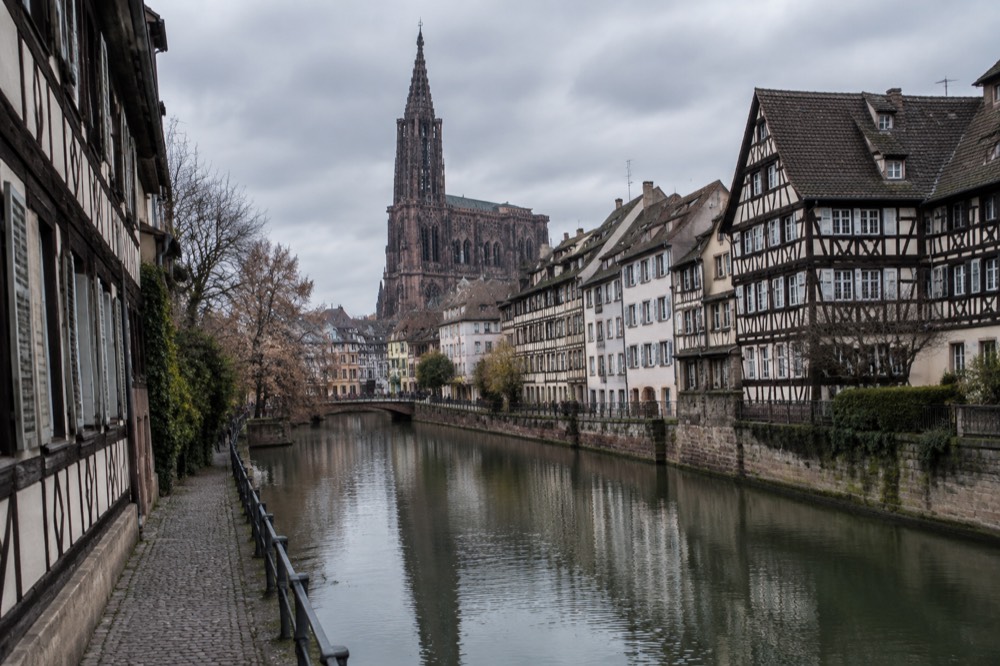
That position, French city on a German border, explains nearly everything a first-time visitor notices: the half-timbered architecture, the wine, the food, the bilingual street signs, and the fact that two European institutions, the European Parliament and the Council of Europe, have their seats here. This Strasbourg Travel Guide page sets out exactly where the city lies, what surrounds it, and how its geography shapes a visit.
Curious to explore this border city with a guide? Book a free walking tour here.
Where Exactly Is Strasbourg On The Map?
Strasbourg sits in the Upper Rhine plain. The city is in the Bas-Rhin department of Alsace, which is itself the northern half of the historic region now folded into Grand Est. To its east, immediately across the Rhine, lies Germany; to its south, the Swiss border near Basel; the Vosges mountains rise to the west.
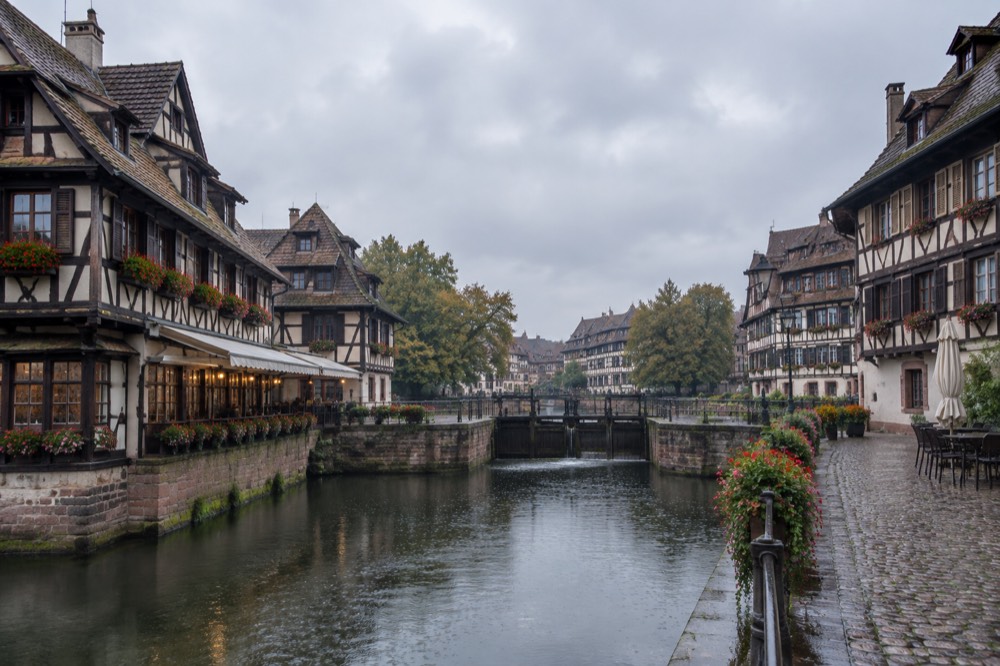
The Ill, the river that gives the city its riverside character, flows through the city in a series of arms, including the ones that water Petite France, before joining the Rhine downstream. This is why Strasbourg looks and feels like a canal city even though none of its urban waterways is a canal in the engineering sense: they are natural branches of the Ill, divided and channelled over centuries.
The commune population of 293,771 (INSEE, 2023) covers the city proper. The wider metropolitan area spreads across both banks of the Rhine in practice, since Kehl functions as a German satellite town with tram and rail links into Strasbourg.
For orientation purposes, three reference points fix the city on a mental map: the cathedral in the middle of the Grande Île, the main station (Gare Centrale) just north-west of the old centre, and the European Quarter on the north-eastern edge along the Ill. Everything a short visit covers lies within or between those three points.
| Fact | Detail |
|---|---|
| Country | France |
| Region | Grand Est |
| Historic region | Alsace |
| Department | Bas-Rhin (prefecture: Strasbourg) |
| River | The Ill, joining the Rhine downstream |
| Border | The Rhine, with Germany (Kehl) on the far bank |
| Commune population | 293,771 (INSEE, 2023) |
| Old centre | The Grande Île, part of a World Heritage property |
What Region Is Strasbourg In, And Why Does It Matter?
Strasbourg is in Alsace, the strip of France between the Vosges mountains and the Rhine, which is now administered as part of the larger Grand Est region. Alsace is divided into two departments, Haut-Rhin to the south and Bas-Rhin to the north, and Strasbourg is the prefecture of Bas-Rhin and the effective capital of the whole region. The Alsatian identity, its dialect, its wine and its food, remains distinct from both French and German norms.
The administrative label matters less to a traveller than the cultural one. Alsace changed hands between France and Germany several times across the modern era, and no date or ruler is needed to see the result: street names in two languages, timber-framed houses that would look at home across the Rhine, and a wine tradition built on Riesling, Gewurztraminer and other grape varieties that France's other regions barely grow.
That heritage also shapes the practical side of a visit. The local food culture, the winstub tradition, the Christmas market custom that the city has exported across France, and the dense cluster of wine villages along the Alsace Wine Route all sit within a short drive or train ride of the city. The Alsace wine route guide and the Alsace region overview cover those in depth.
For trip planning, the key point is that Strasbourg works as a base for the whole of northern Alsace and beyond: Colmar to the south, the wine villages on the foothills of the Vosges, and German destinations across the river. The Strasbourg and Colmar itinerary shows how the two anchor cities pair in a single route.
A guided walk is the fastest way to absorb this layered geography on the ground, and the Strasbourg guided walking tour pairs a local guide with the core of the Grande Île. Check availability
How Close Is Strasbourg To Germany?
The German border is the Rhine itself, and the city centre is only a few kilometres from the river, with Kehl, the first German town, directly across the water. The two towns are linked by bridges and by a tram line that crosses the river, so a visitor can be in Germany within a half-day outing without a car or a passport check, since France and Germany are both in the Schengen area and both use the euro.
Kehl is the practical answer to "how close": close enough that its residents commute into Strasbourg and that the Strasbourg transport network reaches it. The Kehl guide covers the crossing in detail, including what to expect on the far bank.
Because both countries are in Schengen, there is no routine border control on the bridges or the tram, and because both use the euro, no money changing is needed. That combination makes Strasbourg one of the easiest border cities in Europe for a casual two-country day. The Black Forest begins not far beyond Kehl on the German side, and the Black Forest guide covers those routes, including the option of an organised day trip rather than self-driving.
The border position has a second consequence worth knowing: several day trips from Strasbourg are easier than visitors expect. Baden-Baden, Freiburg and the German side of the Rhine plain are all standard outings from the city, and tour operators run them regularly. The Baden-Baden guide and Freiburg guide outline what each offers. The operator's own listing states the schedule for each trip.
What Rivers Shape The City?
Two rivers define Strasbourg: the Ill, which flows through it, and the Rhine, which flows past it and forms the German border. The Ill splits into several arms inside the city, and those arms are what a visitor actually sees: the water around the Grande Île, the canals of Petite France, and the channels that carry the sightseeing boats. The Rhine is wider, straightened for shipping, and sits at the eastern edge of the urban area.
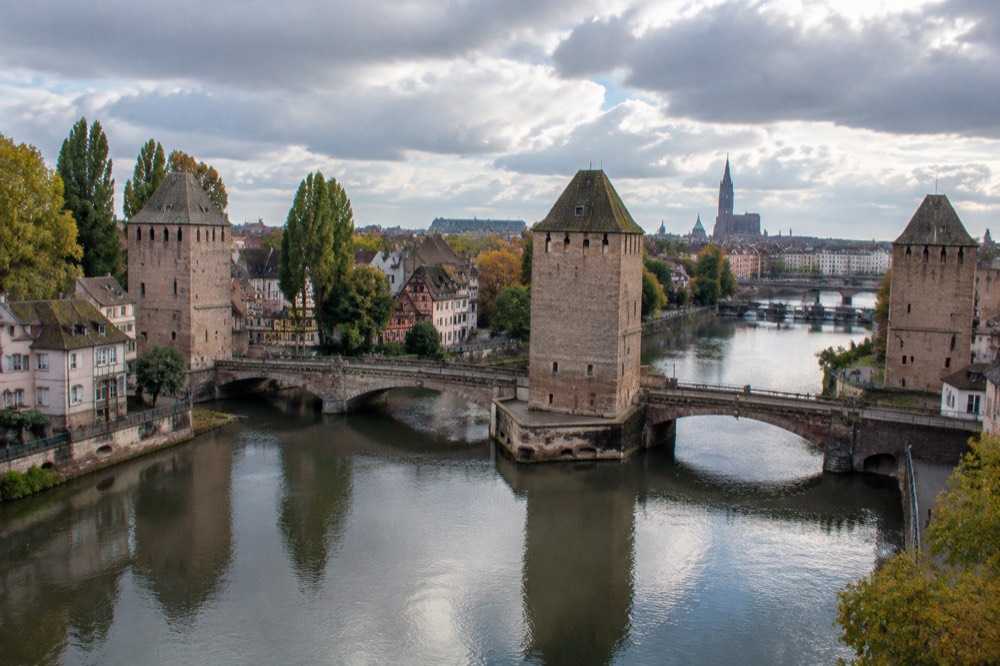
The distinction matters when choosing what to look at. The Ill's arms are the scenic water: Petite France, the Covered Bridges, the Barrage Vauban terrace view over the rooftops, and the boat tours that loop the old centre. The Barrage Vauban terrace has seasonal opening hours, and the verified hours are 08:00-19:00 in the September-October and March-April windows, with shorter 08:30-16:00 hours from November to February; the admission price is not stated on the official page, so check it there.
The Rhine, by contrast, is a working river. Its straightened channel carries commercial barges past the city, and its far bank is Germany. The Jardin des Deux Rives, a park laid out on both banks around a footbridge, is the one place where the river itself becomes a destination; the Jardin des Deux Rives guide covers it.
Batorama, the main sightseeing boat operator, runs its tours on the Ill. The verified prices are 16.20 EUR full and 8.90 EUR reduced for the long tour, and 12.50 EUR full and 7.20 EUR reduced for the short tour, with the Red Tour lasting 1h10 and the Blue Tour 0h45. The Strasbourg boat tour guide compares the circuits.
| Waterway | Where It Sits | What It Gives A Visitor |
|---|---|---|
| The Ill (main arm) | Through the city centre | Riverside quays, boat tours, the Grande Île setting |
| Ill arms at Petite France | South-west of the Grande Île | The half-timbered water views, the Covered Bridges |
| The Barrage Vauban | Downstream of Petite France | Panoramic terrace over the old town (seasonal hours) |
| The Rhine | Eastern edge, border with Germany | Shipping channel, two-rivers park, Kehl crossings |
How Do You Get To Strasbourg?
Strasbourg is reached by air through Strasbourg Airport (Entzheim), a small airport connected to the city by a train shuttle that runs up to five times an hour and takes 8 minutes to the main station, or by rail through Gare Centrale, which has TGV links to Paris in under two hours and regional links across Alsace and into Germany. Both France and Germany are in Schengen and use the euro, so arriving from either side involves no border formalities.
The airport shuttle deserves its own note because it is unusually convenient for a regional airport. The combined "train + tram/bus + 24H" ticket costs 4.60 EUR and covers the rail link plus a day of urban transport, which the Strasbourg airport to city centre guide explains step by step. The airport's route map includes Volotea and EasyJet services, and the airport's own press release confirms new Jet2 winter routes to Edinburgh, Manchester and London Stansted, twice weekly from late November 2026.
On the rail side, the fastest Paris connection is under two hours on the TGV; SNCF Connect has the live timetables and fares, and the Paris to Strasbourg guide covers the route, including why tickets vary in price. From the German side, regional trains cross at Kehl, and the Basel airport to Strasbourg guide covers the Swiss arrival route, where the currency changes: Switzerland is in Schengen but not in the euro, so euros do not work as local money in Basel.
Within the city, the CTS network of trams and buses is the practical way around. The verified single fare is 1.90 EUR bought via the app, a Badgéo card or contactless, or 2.50 EUR bought on board a bus, and the 24-hour passes are 4.60 EUR for one traveller and 10.20 EUR for two or three. The getting around Strasbourg guide has the full detail.
| CTS Ticket | Price | Notes |
|---|---|---|
| Single (app, Badgéo, contactless) | 1.90 EUR | Valid across tram and bus |
| Single bought on board a bus | 2.50 EUR | Higher on-board fare |
| 24H Solo | 4.60 EUR | One traveller, 24 hours |
| 24H Trio | 10.20 EUR | Two or three travellers together |
| Airport combined ticket | 4.60 EUR | Train shuttle plus 24H urban travel |
What Is The Climate Like In Strasbourg?
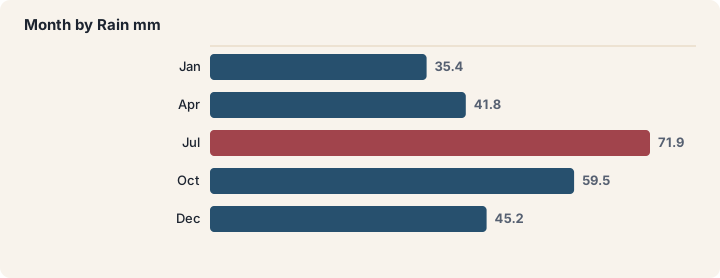
Strasbourg has a semi-continental climate, not a Mediterranean or an oceanic one: Meteo-France 1991-2020 normals for the Strasbourg-Entzheim station give a mean daily maximum of 5.2 C in January and 26.4 C in July, with 635.7 mm of rain spread over 112.3 rain days a year. Winters are cold enough for the Christmas market to feel seasonal, summers are warm, and rain falls fairly evenly across the year.
The semi-continental label means the city sits far enough from the Atlantic to lose its moderating effect and far enough from the Mediterranean to miss its summer dryness. In practice: July and August are the warm months, with mean maxima of 26.4 C and 26.1 C, and January and December are the cold ones, with mean minima of -0.2 C and 0.8 C. December, the Christmas market month, has a mean maximum of 5.9 C, a mean minimum of 0.8 C, and 10.2 days of rain of 1 mm or more, which is what "bring a warm coat and expect some wet days" looks like in numbers.
| Month | Mean Max C | Mean Min C | Rain mm | Rain Days >=1 mm |
|---|---|---|---|---|
| Jan | 5.2 | -0.2 | 35.4 | 9.1 |
| Apr | 17.0 | 5.7 | 41.8 | 8.6 |
| Jul | 26.4 | 14.9 | 71.9 | 10.4 |
| Oct | 15.8 | 7.2 | 59.5 | 9.6 |
| Dec | 5.9 | 0.8 | 45.2 | 10.2 |
Those normals feed directly into choosing when to come. The best time to visit Strasbourg guide weighs the seasons against crowd levels, and the seasonal pages, Strasbourg in spring, Strasbourg in summer, Strasbourg in autumn and Strasbourg in winter, break each one down. The Strasbourg weather guide holds the full month-by-month table.
Why Is A French City So Close To Germany?
Strasbourg's position reflects its history as a Rhine city that belonged, at different periods, to German states and to France, and the border has moved around it rather than the city moving away from the border. The result visible today is a genuinely hybrid culture: Alsatian dialect and cuisine, Germanic architecture, French administration, and a city that houses European institutions precisely because it embodies the reconciliation of the two countries.
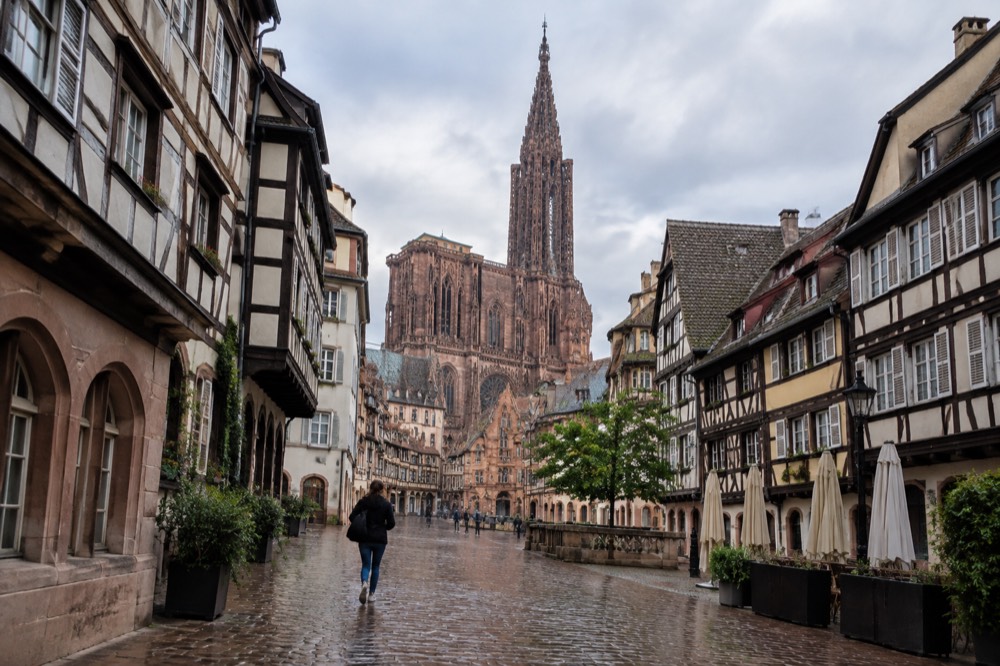
No dates or rulers are needed to make that point, and none are printed here. What a visitor can verify on the ground is the evidence: the half-timbered building stock of the Grande Île and Petite France, the winstubs serving food with one foot in each tradition, the Protestant and Catholic churches standing near each other, and the Neustadt, the wider district laid out during the city's German period, now protected jointly with the Grande Île under the World Heritage listing. The Strasbourg history guide tells the full story.
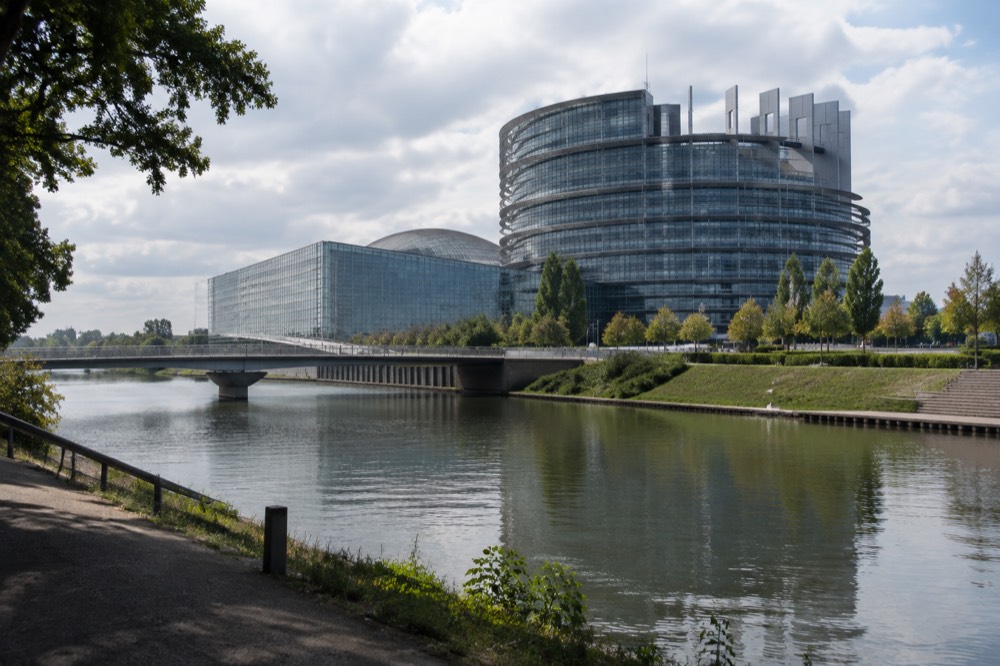
The European institutions are the modern expression of that position. The European Parliament holds its plenary sessions in the city, the Council of Europe is headquartered here, and the European Court of Human Rights sits alongside it in the European Quarter. The European Parliament guide, the Council of Europe guide and the European Court of Human Rights guide cover visiting each. The Parlamentarium, the parliament's visitor centre, is open Mon-Fri 09:00-18:00 and Sat 09:30-12:00 and 13:00-18:00 outside plenary weeks, with an airport-style security check; plenary-week hours differ, so check the official page before going.
For travellers who want the story told on the street, a themed walk is the efficient route. The secrets walk of Strasbourg digs into the odd corners of that layered past, and its operator's live listing shows the current departure options.
What Sits Around Strasbourg?
Strasbourg is ringed by three different kinds of countryside: the Alsatian wine route and its villages on the Vosges foothills to the west and south, the German Black Forest across the Rhine to the east, and the broader Upper Rhine plain that carries travellers toward Basel, Freiburg and the Vosges mountain passes. Each direction is a standard day trip, and several organised tours from the city cover them.
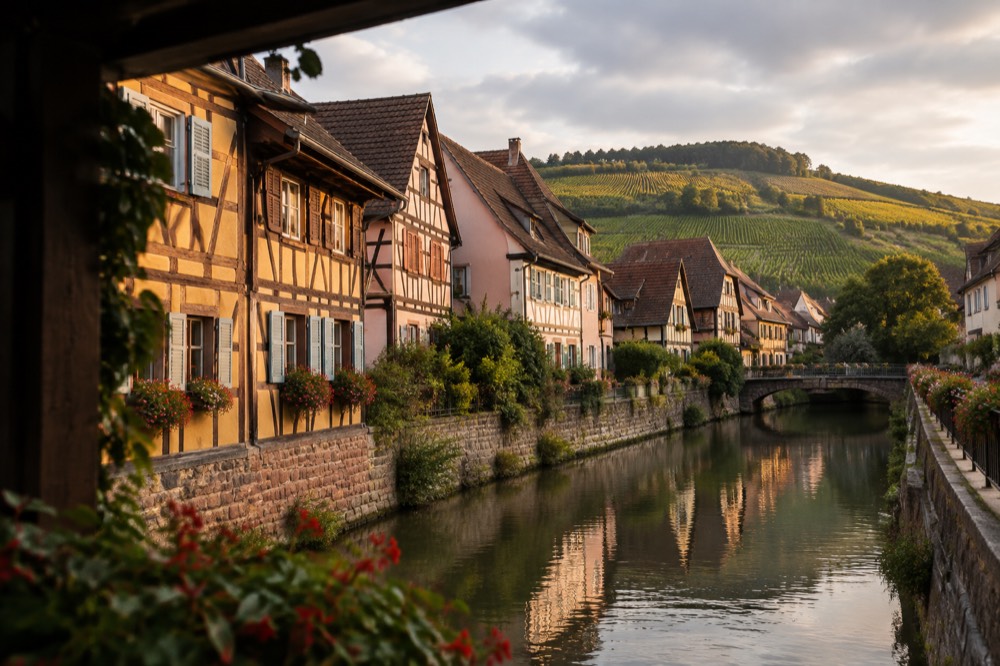
To the south and west lies the classic Alsatian circuit: Colmar, Riquewihr, Eguisheim, Kaysersberg, Obernai and the wine route that strings them together, with Haut-Koenigsbourg castle above the plain. The Colmar guide, the Riquewihr guide and the Haut-Koenigsbourg guide introduce each stop, and the Alsace road trip guide assembles them into a driving route.
Across the river, Germany begins immediately. The Black Forest, Baden-Baden and Freiburg are the standard outings, and Europa-Park, Germany's large theme park, is another family option covered in the Europa-Park guide. Switzerland, via Basel, is also reachable for a longer day, with the currency caveat noted above. The Basel guide covers that direction.
| Direction | What Is There | Best For | What To Check |
|---|---|---|---|
| West (Vosges foothills) | Wine route villages, Mont Sainte-Odile | Wine, villages, scenery | Opening hours of cellars; the Mont Sainte-Odile guide |
| South | Colmar and the southern wine villages | Half-timbered towns, wine | The Colmar guide |
| East (across the Rhine) | Kehl, Black Forest, Baden-Baden, Freiburg | Forest, spas, German towns | Operator listings for day-trip schedules |
| South-east (longer day) | Basel and Switzerland | Cities, museums | Currency: Switzerland is not in the euro |
Organised tours handle the driving for visitors without a car. The Best of Alsace day trip covers the historic villages in one long outing, and its operator's live listing shows dates and availability. A half-day option also runs for the nearer vineyards, and the half-day Alsace wine tour is the one to compare it against.
How Big Is Strasbourg, And How Walkable Is It?
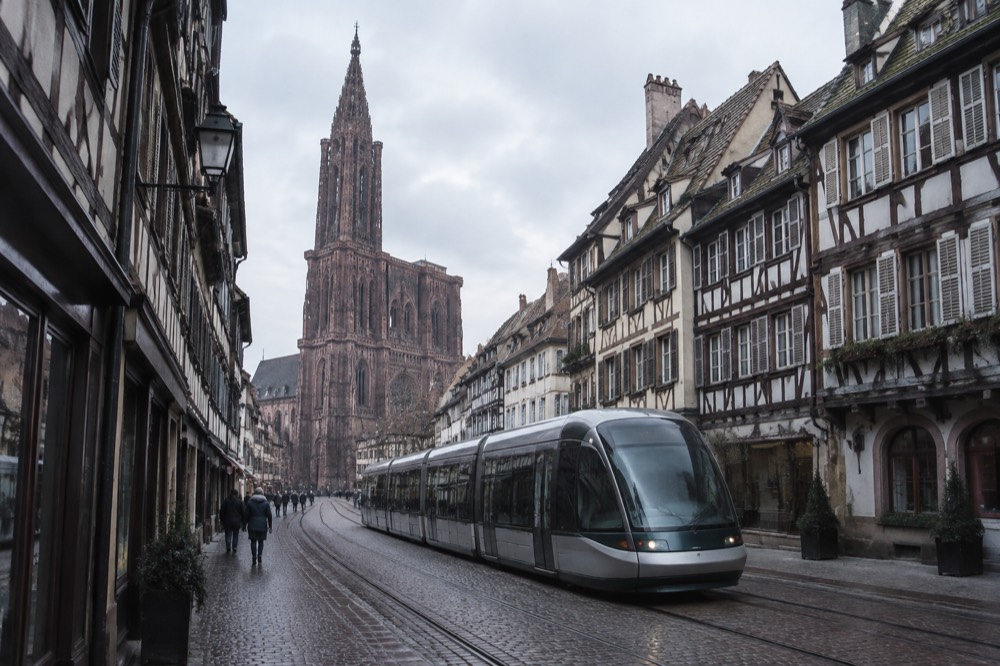
The commune counted 293,771 residents in the 2023 INSEE figure, and the built-up area extends well beyond that into surrounding communes and across the river into Kehl. The historic core, though, is compact: the Grande Île, Petite France, the cathedral quarter and the station area are all within an easy walk of each other, and the tram network stitches the wider city together. A visitor without mobility constraints can cover the old centre entirely on foot.
The walkable core is the point. The Grande Île is an island, bounded by the Ill's arms, and its main sights cluster tightly: the cathedral and its platform at 66 m, Place Kléber, Place Gutenberg, the Palais Rohan museums, Petite France at the south-west corner, and the Covered Bridges beyond it. The one day in Strasbourg itinerary and the two days in Strasbourg itinerary route all of it on foot, with tram hops for the European Quarter and the Neustadt.
For visitors who prefer a guide to a map, the Strasbourg walking tour with a local guide covers the core in about two hours, and its operator's live listing shows the current times. The is Strasbourg worth visiting page addresses the same concern from a planning angle, and the Strasbourg accessibility guide covers it for travellers with mobility needs.
Cyclists are also well served: the city is flat, and the Strasbourg by bike guide covers hire and routes, including the riverside paths that follow the Ill out of town.
Does The Location Change How You Plan A Visit?
Yes, in three concrete ways: the city is a two-country destination, so a passport is worth carrying even though Schengen removes routine checks; the semi-continental climate sets the packing list, cold in December, warm in July; and the border position makes Strasbourg a base town rather than a single-sight destination, with day trips in three directions. Visitors who treat it as a base get far more out of it than those who treat it as a stopover.
The two-country point is practical. Day trips into Germany are routine, and while there is no routine border control, identification can be requested on either side. The currency is the euro on both banks of the Rhine, which simplifies everything except the Swiss direction, where Basel requires Swiss francs or a card.
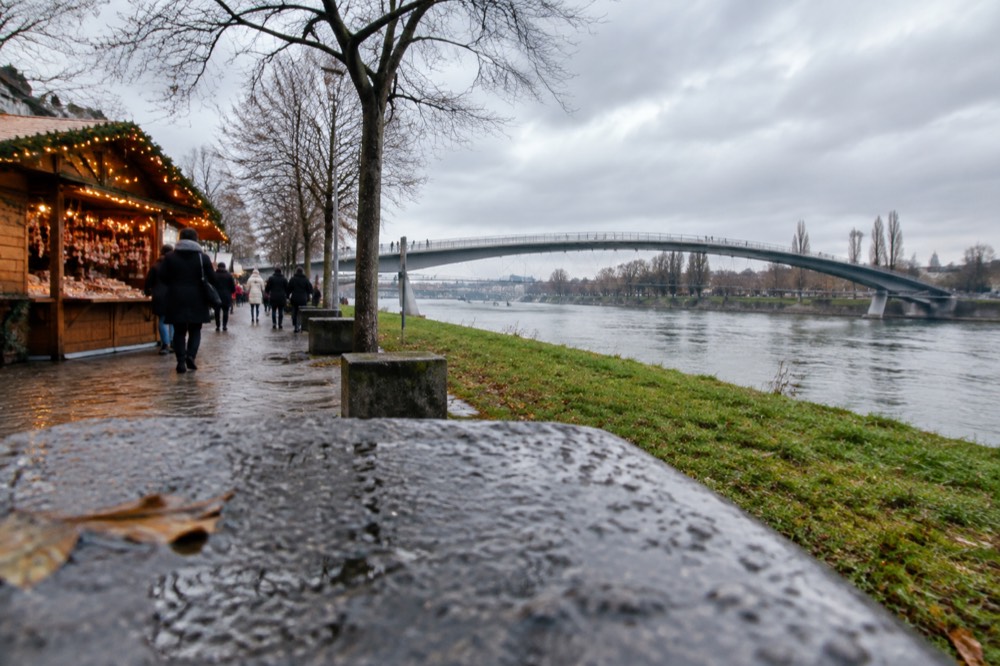
The climate point decides the wardrobe. December's mean maximum of 5.9 C and mean minimum of 0.8 C mean real winter clothing for the Christmas market, which is the city's peak season. That market follows a stable pattern: it opens in the last week of November and runs to 24 December, closing early on the final evening. The 2025 edition ran 26 November to 24 December 2025 and drew 3.05 million visitors according to the city's own press release; the city posts each edition's dates on its Christmas site, so confirm them there. The Strasbourg Christmas market guide and the Christmas markets in Alsace guide cover the season in full, including where to stay for the Strasbourg Christmas market and the Christmas market food guide.
The base-town point is where the location pays off. Staying in Strasbourg and radiating outward, to the wine villages, to the Black Forest, to Colmar, is the standard pattern, and the where to stay in Strasbourg guide sorts the neighbourhoods for it. Budget travellers should read the Strasbourg on a budget guide and the free things to do in Strasbourg guide, and the Strasbourg City Card guide explains the 5 EUR discount card, with its 3.50 EUR child rate and 7-day validity, that shaves money off museums, the boat and the cathedral platform.
| Planning Question | What The Location Decides |
|---|---|
| Passport | Carry it: Germany is across the river, checks are rare but possible |
| Currency | Euro on both banks of the Rhine; Swiss francs in Basel |
| Packing | Semi-continental: warm coat in December, light layers in July |
| Trip shape | Base town with day trips west, south and east |
| Peak season | Late November to 24 December, the Christmas market window |
What Should A First-Time Visitor Do With This Geography?
A first visit should anchor on the Grande Île: the cathedral, Petite France, the riverside quarters and the boat tour, all walkable in a day or two. The second layer is the European Quarter and the Neustadt, reached by tram or a longer walk along the Ill. The third layer is the outward radii, the wine villages, the Black Forest and Colmar, each a full day. A three-day stay covers all three layers without rushing.
The three days in Strasbourg itinerary sequences exactly that. Families have their own angle in the Strasbourg with kids guide, river cruise passengers arriving for a day have the Strasbourg river cruise stop guide, and visitors deciding between the region's two anchor cities can read the Strasbourg versus Colmar comparison. Safety questions are answered in the is Strasbourg safe guide, and the sceptics' case in is Strasbourg worth visiting.
Evening and rainy-day plans round out the picture: the Strasbourg at night guide and the rainy day in Strasbourg guide, the latter leaning on the museums, whose municipal tickets are 9 EUR full and 5 EUR reduced, with the 1-day Pass Musées at 20 EUR and free entry to all municipal museums on the first Sunday of every month. The Musée Alsacien is closed for works until 2028 and should not be planned into any visit; the Strasbourg museums guide lists what is open instead.
For those who want the geography explained while walking it, a small-group guided walk is the efficient choice, and the Welcome to Strasbourg small-group walking tour is built for first arrivals. Its operator's live listing shows the current departure options.
Common Questions About Where Strasbourg Is
Where Is Strasbourg?
Strasbourg is in north-eastern France, in the Bas-Rhin department of Alsace, within the Grand Est region. It stands on the River Ill beside the Rhine, which forms the border with Germany, with Kehl on the far bank. The commune counted 293,771 residents in the 2023 INSEE figure.
Is Strasbourg In France Or Germany?
Strasbourg is in France. It has belonged to German states at periods in its history, which explains the Germanic architecture and the Alsatian dialect, but today it is the prefecture of the Bas-Rhin department in the French Grand Est region.
How Close Is Strasbourg To The German Border?
The border is the Rhine, at the eastern edge of the urban area, and the German town of Kehl sits directly across the river, connected by bridges and a tram line. Both countries are in the Schengen area, so there is no routine border control on the crossing.
What Is The Nearest Airport To Strasbourg?
Strasbourg Airport at Entzheim is the city's own airport, linked to the main station by a train shuttle that runs up to five times an hour and takes 8 minutes. A combined ticket covering the shuttle plus a day of urban transport costs 4.60 EUR. Basel and Frankfurt airports are also used by some visitors; the site's guides to both routes cover the trade-offs.
What River Runs Through Strasbourg?
The Ill runs through the city, splitting into the arms that water the Grande Île and Petite France before joining the Rhine downstream. The Rhine itself flows past the eastern edge of the city and forms the German border.
Is Strasbourg Near The Black Forest?
Yes, the Black Forest lies across the Rhine in Germany and is a standard day-trip direction from Strasbourg, along with Baden-Baden and Freiburg. The site's Black Forest guide covers the options, including organised tours that handle the border crossing and driving.
Strasbourg's position, a French regional capital sitting on a river that is also an international border, is not a footnote to the visit; it is the visit. The half-timbered old town, the wine villages to the west, the German forest to the east and the European institutions along the Ill all grow out of that single geographic fact, and a traveller who understands it before arriving will read the city differently from the first hour onward.